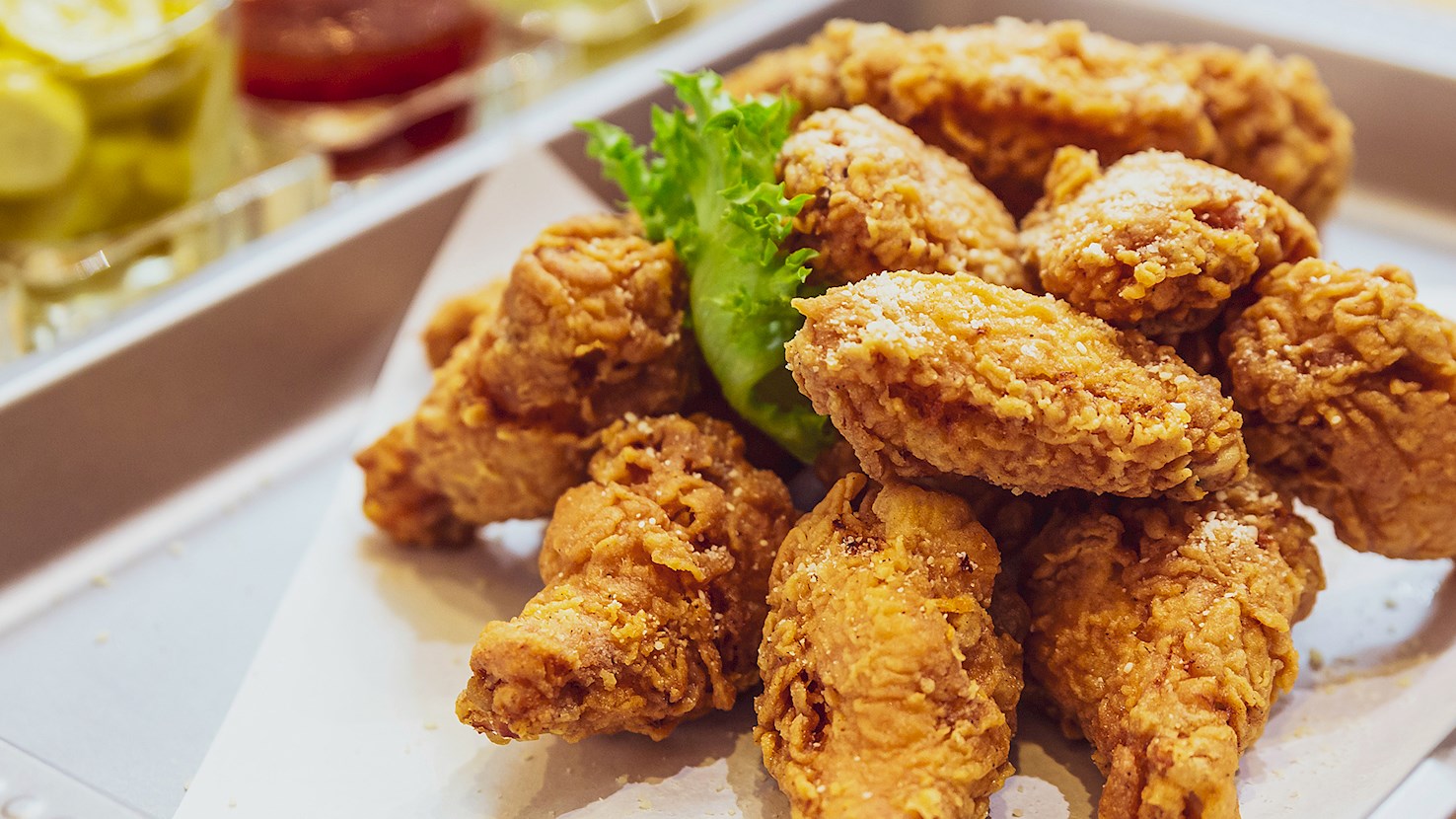
Chikin, or Korean fried chicken (KFC), is a popular dish in Korean cuisine that consists of battered and deep-fried chicken pieces. Fried chicken was introduced to South Korea by the American military during the Korean War in the 1950s. American soldiers brought the concept of fried chicken to the country, and it quickly gained popularity among Koreans. In the 1970s and 1980s, the fried chicken industry in South Korea expanded with the emergence of various fried chicken restaurant chains. These chains started experimenting with different flavors and sauces, moving beyond the original, stripped-down version of fried chicken. Finally, at the beginning of the 21st century, Korean fried chicken gained international popularity, mostly because of its unique preparation methods, distinct flavors, and crunchy texture. A few key characteristics differentiate Korean fried chicken from other types of fried chicken. One of the defining features of Korean fried chicken is the double frying technique. The chicken is first fried at a lower temperature to cook the meat thoroughly, then fried at a higher temperature to achieve a crispy and crunchy outer layer. Korean fried chicken is often served with various flavorful sauces and seasonings. Some popular sauce options include spicy gochujang (Korean red pepper paste), soy garlic, honey butter, sweet and tangy, and more. These sauces can be applied to the fried chicken either by tossing the chicken in the sauce or by drizzling the sauce over the chicken. Korean fried chicken is served with various side dishes, such as pickled radishes, coleslaw, and even refreshing slices of watermelon, and is often accompanied by beer (this combination is known as chimaek).
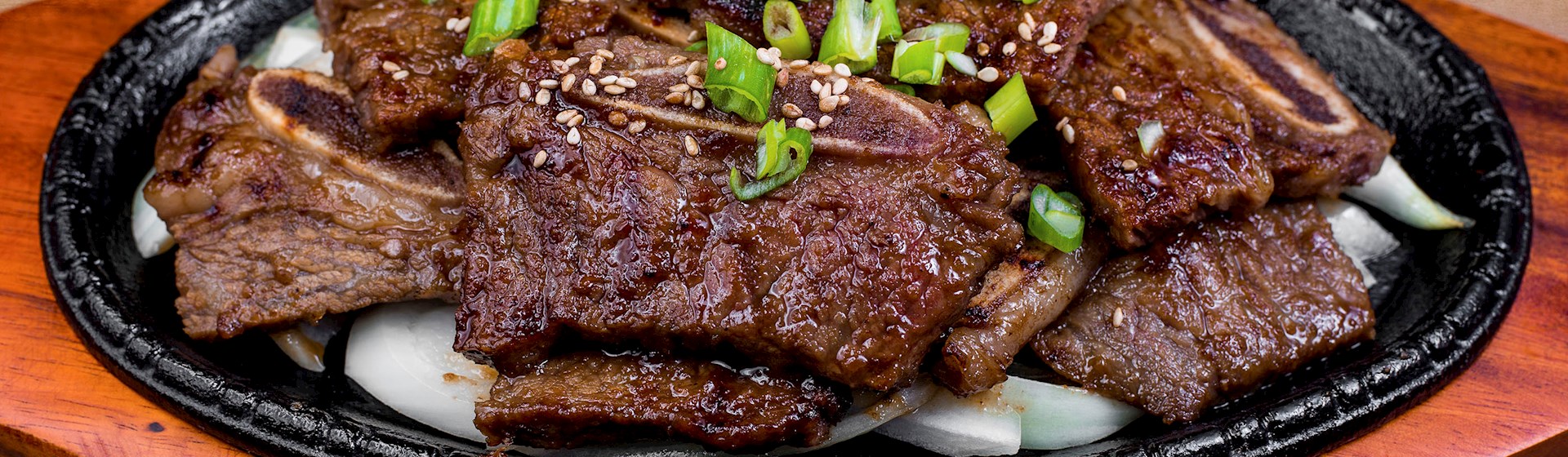
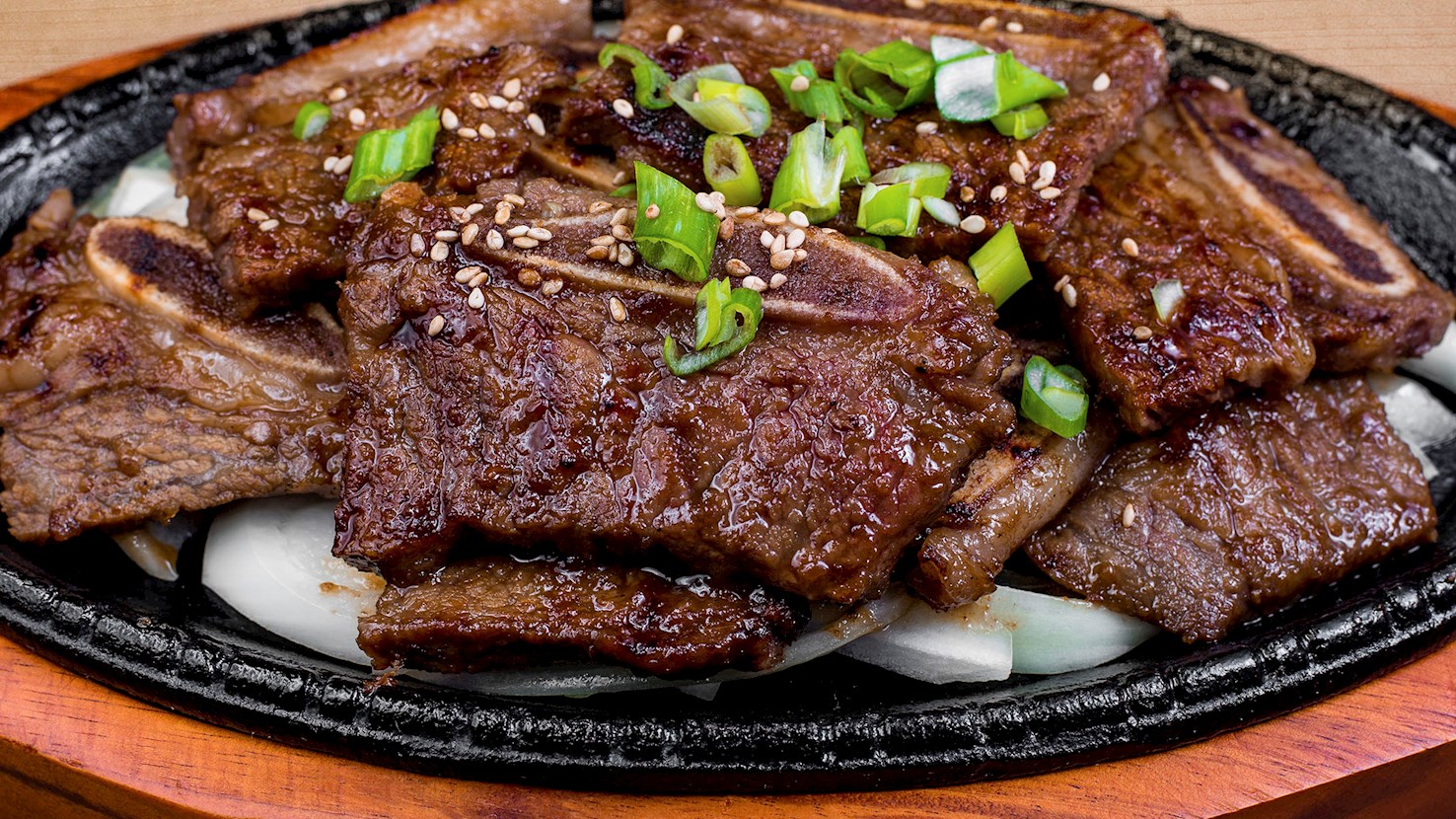
Galbi or kalbi refers to a variety of grilled beef short ribs dishes popular in South Korea. The ribs are marinated in a sweet sauce consisting of soy sauce, sugar, rice wine, sesame oil, and garlic. Although the name of the dish translates to ribs, chicken or pork meat can also be used. The dish originates from 18th-century Korea, when killing cows was strictly forbidden. As workers were building the Hwa Castle, they needed to be well-fed, so King Jeongjo allowed the opening of only one slaughterhouse in the whole country to process beef and feed the hungry workers. Of course, it didn't stop at just one slaughterhouse, and that is the best recommendation for trying the dish for yourself. Galbi is typically accompanied by kimchi, red bean paste or rice, but it can also be wrapped up in lettuce leaves with a variety of other vegetables. Due to galbi's great balance of sweet and savory flavors and rising popularity, the dish even has its own annual festival since 1995, called the Suwon Galbi Festival, offering the visitors a chance to indulge in this celebrated delicacy.
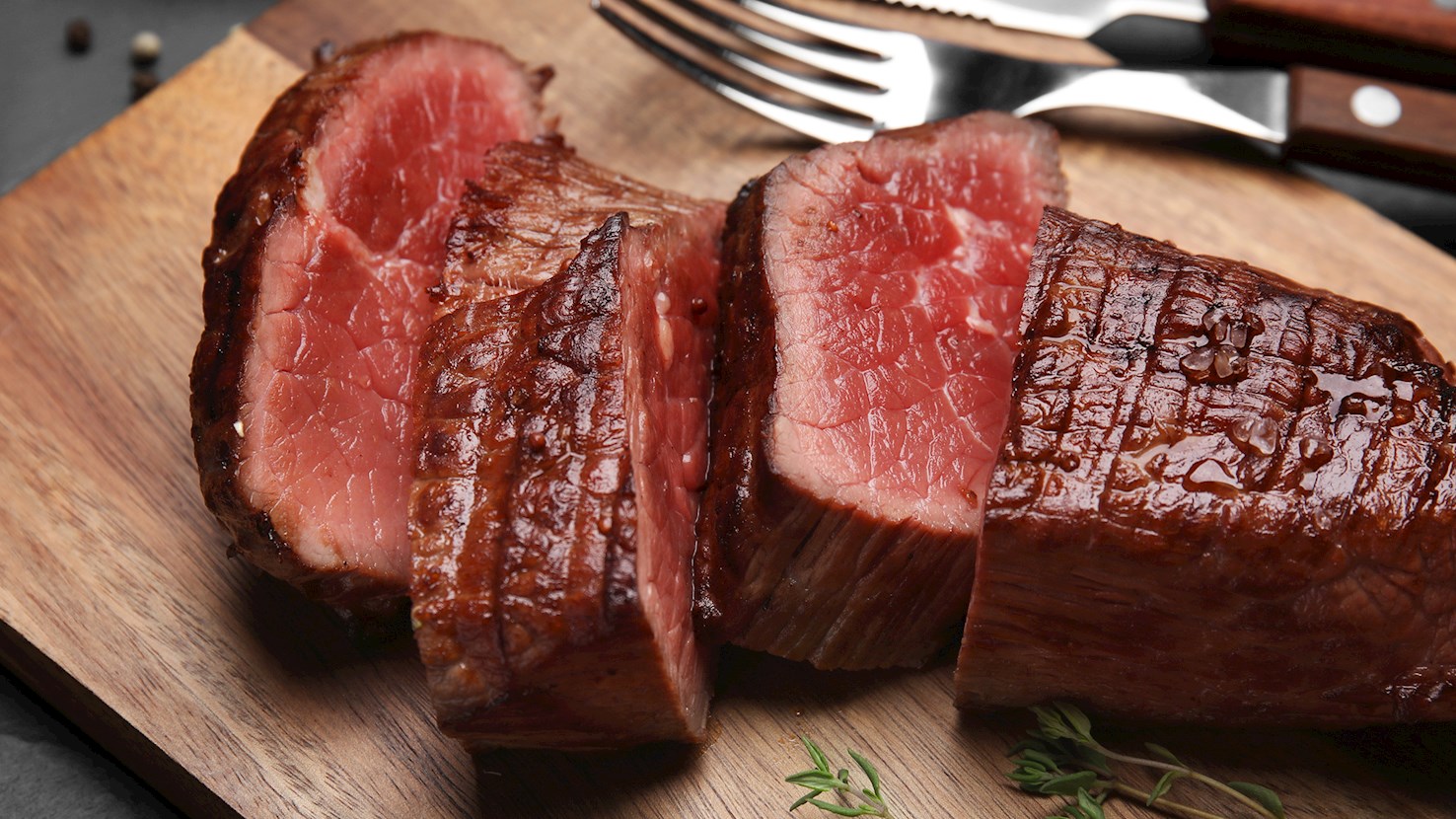
In the American, French, German, Brazilian, and Korean systems of primal beef cuts, the tenderloin is a cut from the loin, which is located towards the back of the cow, nestled under the ribs, next to the backbone. It spans two primal cuts: the short loin and the sirloin. The tenderloin is one of the most tender cuts of beef as it comes from a muscle that doesn't get much exercise. It is also one of the most highly prized and correspondingly expensive cuts of beef, due to its tenderness and flavor. Given the tenderness of this cut, the tenderloin is often cooked quickly over high heat, with methods such as grilling or broiling. It's often served slightly rare to maintain its tender texture.
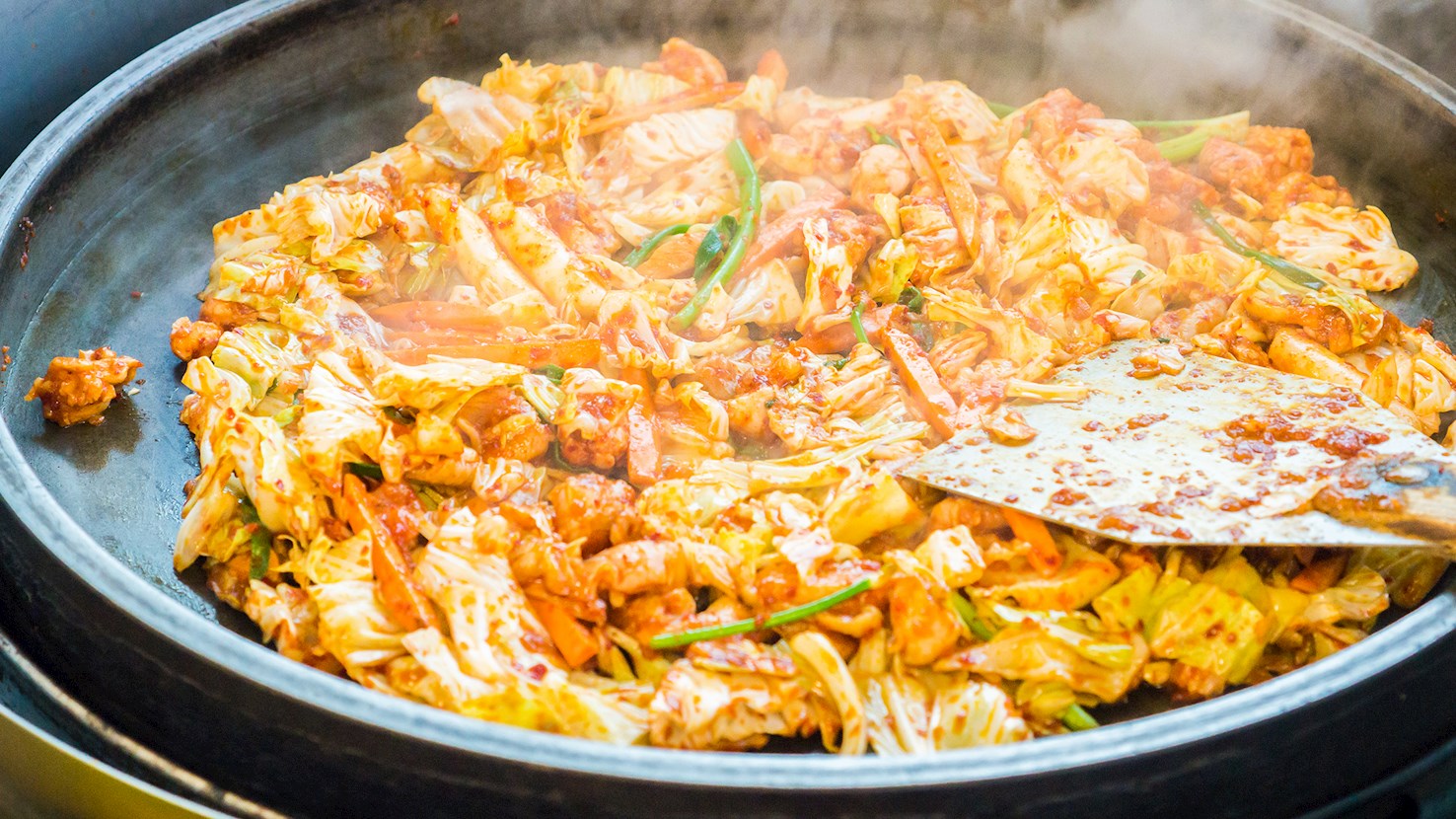
Dak galbi is the South Korean variety of stir-fried chicken. It is a communal dish that's cooked tableside, on large cast iron skillets. Typical elements in dak galbi include various chicken cuts, cabbage, tteok rice cakes, carrots, chili peppers, and sweet potatoes. When served in restaurants, the server will bring all the ingredients and cook the dish for the guests. Occasionally, perilla leaves are incorporated into dak galbi, but the final addition is always a generous amount of spicy sauce made with spicy chili paste, chili flakes, soy sauce, garlic, ginger, and onions. It is put on top of dak galbi and mixed until all the elements are completely coated in it. At the end of the meal, when there is still some food left in the skillet, a common tradition is for the server to add rice into the skillet and create an unusual variety of fried rice. Several vegetable side dishes are usually served alongside dak galbi, and lettuce or perilla leaves are occasionally used instead of utensils as crunchy wrappers. Dak galbi is now considered a Korean classic, but it originated as a frugal dish in the 1960s. Since then, it has spread from Chuncheon to other parts of South Korea. Although it can be prepared at home, it is typically eaten in specialized dak galbi restaurants.
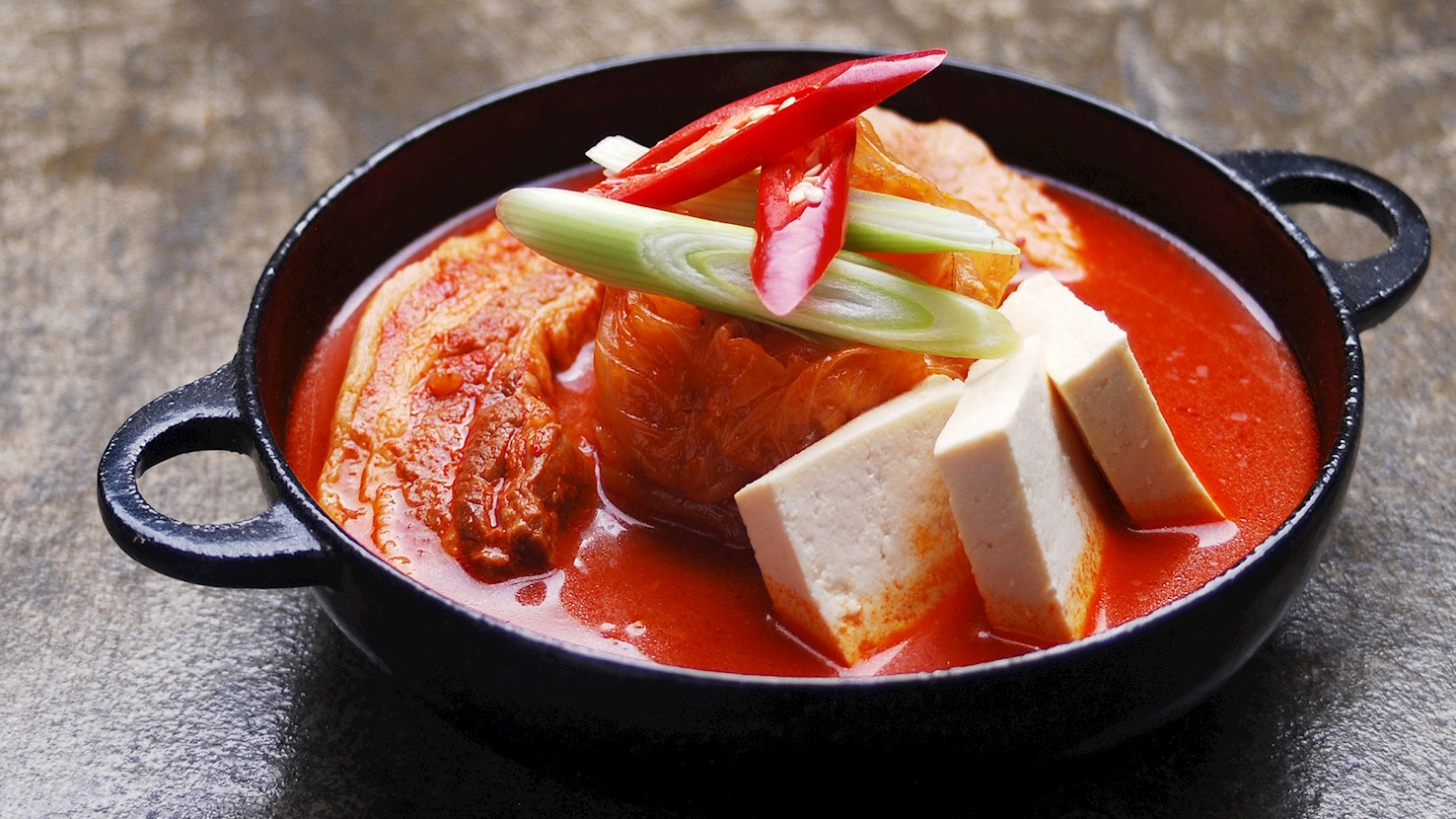
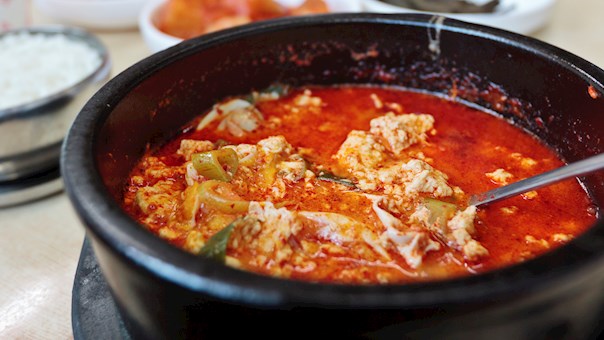
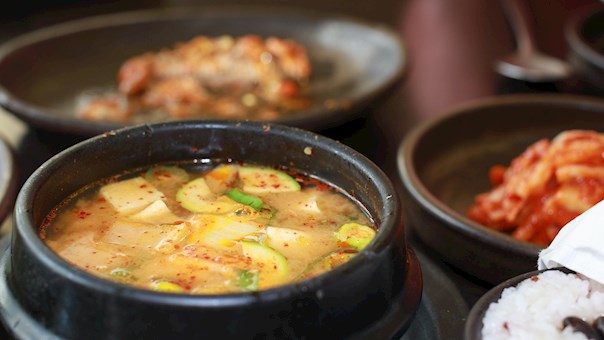
Kimchi jjigae is a flavorful Korean stew that employs kimchi as its base ingredient. Other elements usually include diced tofu, pork, or seafood, along with scallions and other vegetables such as potatoes or zucchinis. Kimchi stew is one of the most common dishes enjoyed in South Korea, and it is traditionally served as a communal meal, and should always be piping hot. The dish is best prepared with older kimchi since it tends to impart more flavor to the stew. Kimchi jjigae is usually served with rice on the side, as well as other traditional Koran sides (banchan).
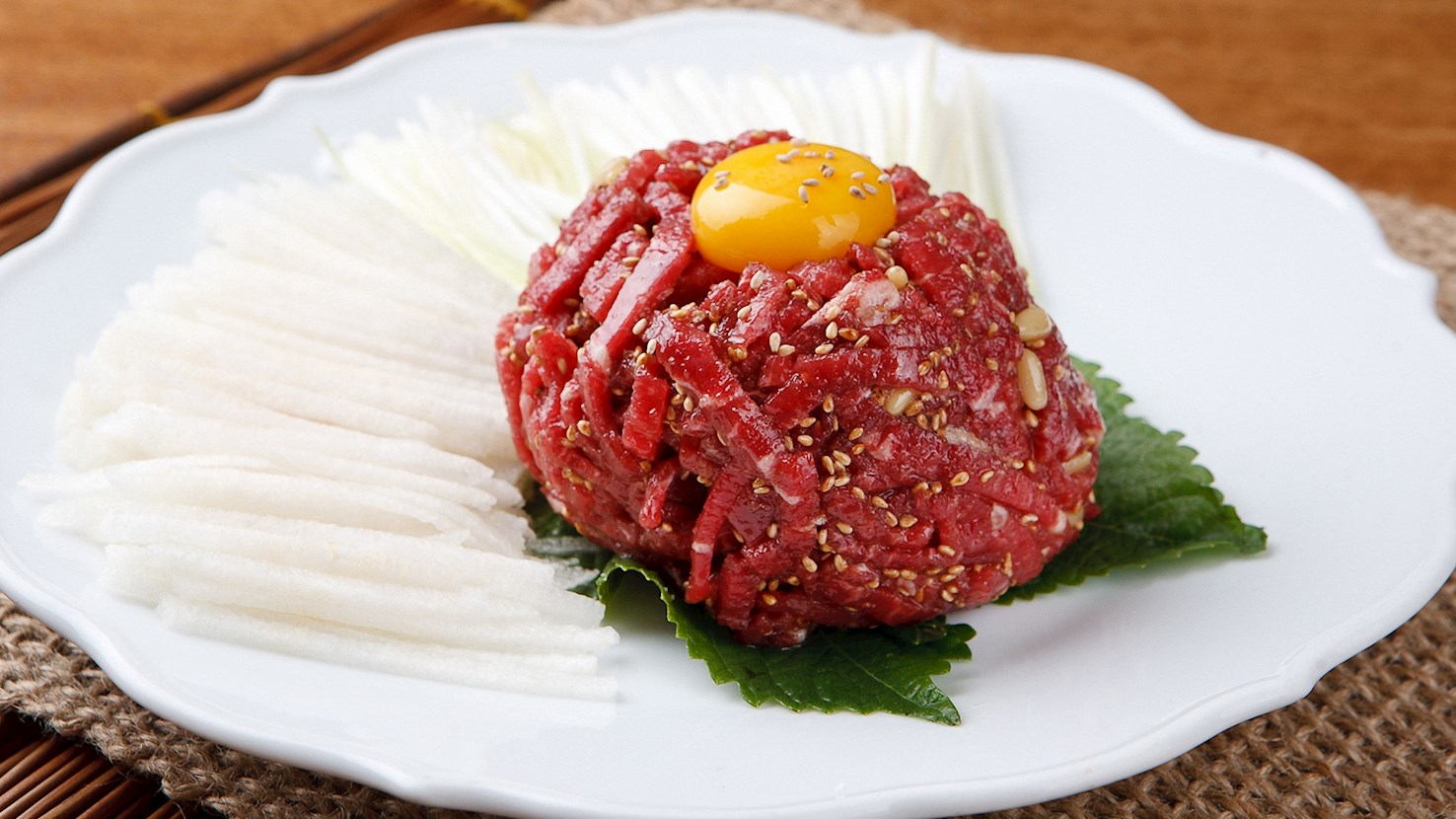
Yukhoe is the Korean version of steak tartare, consisting of thinly sliced beef marinated in soy sauce, sesame oil, garlic, and sugar. The concoction is then seasoned with salt and pepper. The dish is always served with a raw egg yolk on top, while thinly sliced Korean pear is an often-seen addition served on the side. The name of the dish is derived from two words: yuk, meaning meat, and hoe, meaning sashimi. No one is yet sure about the origins of yukhoe, but some say it originated in China, while the others claim it was first served at the Korean Royal Court. Today, the dish is traditionally consumed by dipping the meat in raw egg yolks or in chogochujang sauce, consisting of chili, sugar, vinegar, and honey.
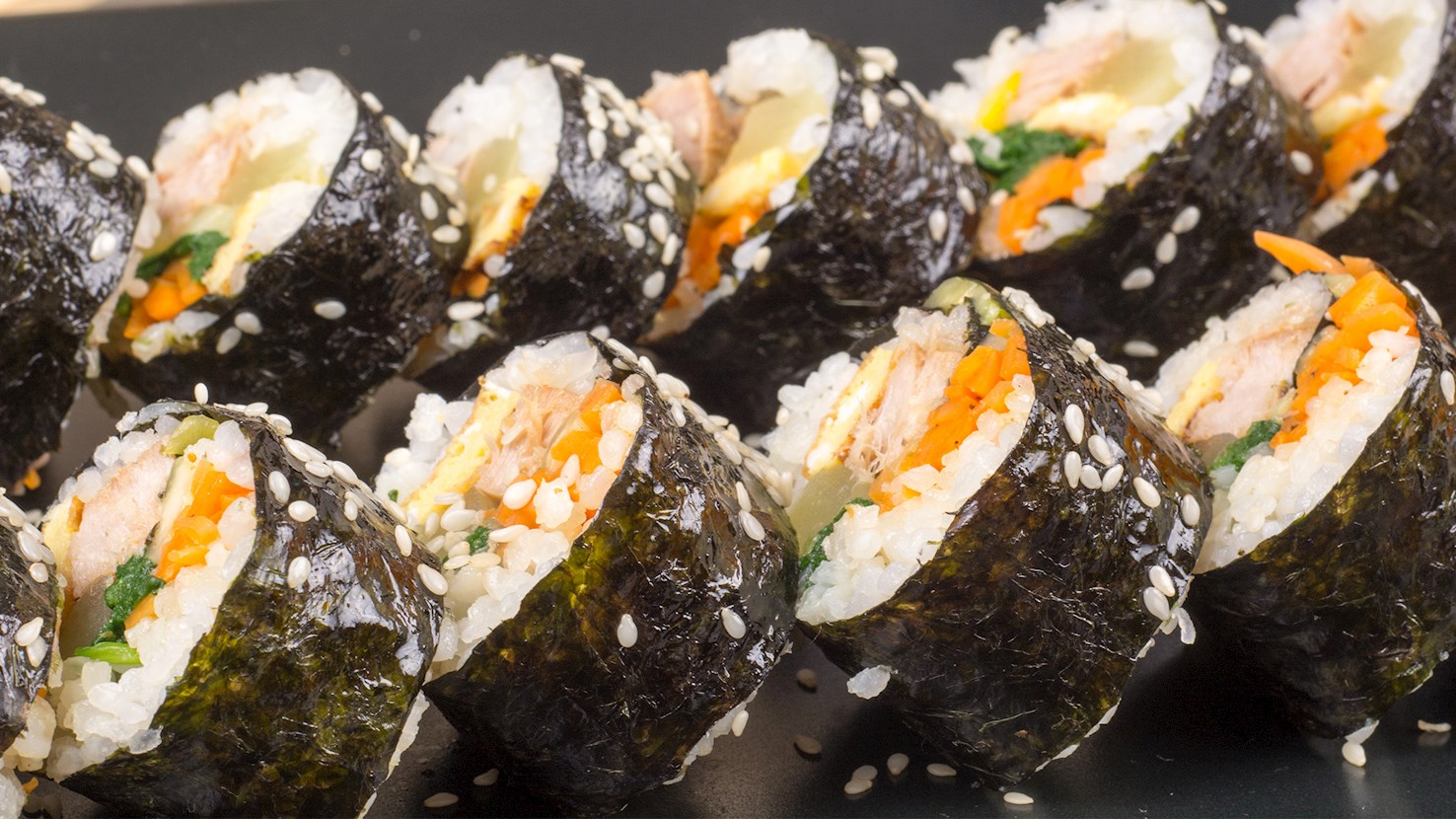
This gimbap (Korean rice roll) is made with canned tuna. Apart from rice and fish, the fillings may include other ingredients that are typically used in gimbap such as fresh or pickled vegetables, eggs, or fish cakes, while the tuna is often mashed and then combined with mayonnaise, mustard, and spices. The roll is traditionally wrapped in toasted seaweed, and it is served sliced into small, bite-size pieces.
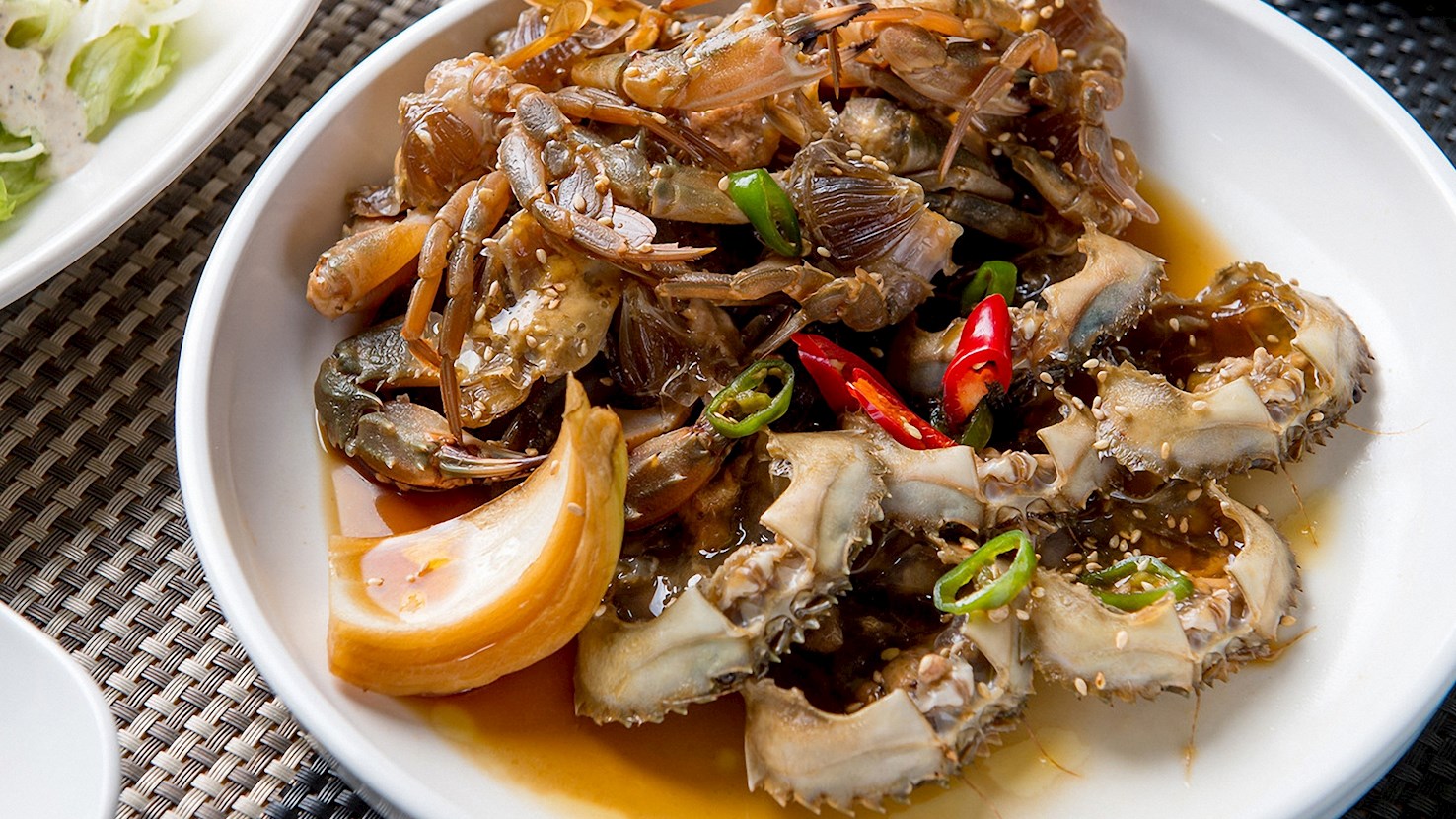
Gejang is raw crab seasoned and marinated in Korea, most commonly in an aromatic soy-sauce brine or a red chili mixture, then eaten with steamed rice. The flesh stays soft and translucent, with a slippery, almost creamy texture that differs sharply from the firm flakes of steamed crab. Ganjang gejang, the soy-marinated form, emphasizes the crab’s sweetness beneath a salty, savory seasoning; yangnyeom gejang coats cut pieces in a thicker mixture of chili flakes, garlic, and other seasonings. Both are served in the shell, and roe-bearing females are especially prized for the orange roe and rich contents beneath the carapace. Gejang developed through Korean methods of salting and preserving seafood, though its inventor and birthplace remain unknown. By the late Joseon period, crab was being preserved in both soy sauce and salt, and older versions could be substantially saltier than those commonly served now. Freshwater crabs, including mitten crabs known as chamge, had an important place in these earlier practices. Many contemporary versions use marine crabs and a milder marinade, with refrigeration and a short holding period replacing the prolonged preservation expected from a heavily salted product. The distinction matters: a bowl of modern gejang is perishable raw seafood, not a shelf-stable preserve. Soy sauce is fermented, but that doesn't mean every serving of crab has undergone long fermentation. The crab most closely associated with present-day gejang is kkotge, literally “flower crab,” a swimming crab abundant along Korea’s western coast. Incheon and the coastal areas of South Chungcheong Province are particularly associated with it. Spring females are valued for their developed roe, while autumn crabs are sought for their substantial meat. Male crabs are also used, and a good serving does not depend entirely on the presence of roe. The species, size, season, and condition of the crab all affect how much flesh it contains and how it responds to the marinade. For ganjang gejang, the shells are thoroughly scrubbed, and the crabs are drained before being submerged in seasoned brine. Cleaning and opening practices vary, with some methods leaving the crab largely intact until serving. The marinade combines soy sauce with water and aromatics such as onion, garlic, ginger, and chili. Kelp may add savory depth, while apple, Asian pear, sugar, or a little rice wine can soften the saltiness and contribute sweetness. These additions vary by household and restaurant; the essential point is a brine that seasons the crab without making its flesh taste only of soy sauce. The liquid is usually boiled separately to extract the aromatics, then cooled completely before it touches the crab. This preserves the raw texture rather than partially cooking the surface. The crabs remain submerged under refrigeration while the seasoning penetrates, commonly for a few days. Some methods drain the brine, boil it again, cool it, and return it to the crab. That repeated treatment manages the marinade, not the crab itself. Longer soaking isn't necessarily better: the meat can become excessively salty and lose its structure. Yangnyeom gejang follows a different approach. The upper shell is removed, the gills are discarded, and the body is cut in half or into quarters so the seasoning reaches the exposed flesh. Gochugaru, Korean red chili flakes, supplies the red color and much of the heat, usually alongside soy sauce, garlic, ginger, and a sweetener. Scallions and sesame seeds are common additions, while some versions include grated fruit or plum syrup. Gochujang isn't required; many mixtures use chili flakes instead of fermented chili paste. The coating clings to the shell and cut surfaces, delivering a more immediate chili-and-garlic flavor than the liquid marinade in ganjang gejang. It generally needs less marinating time and is also kept cold. Regional differences depend as much on the crab as on the seasoning. In Yeosu, on the southern coast, dolgejang uses smaller, hard-shelled crabs called dolge and is closely associated with baekban, a set meal of rice, soup, and side dishes. The city’s Bongsan neighborhood has many restaurants specializing in these meals, often serving both soy-marinated and spicy crab. Elsewhere, larger kkotge may serve as the centerpiece of a more expensive restaurant, while chamgejang preserves the association with freshwater mitten crabs. At the table, the crab is separated into manageable sections and the soft flesh extracted with fingers, chopsticks, or suitable shell-cracking utensils. Hard shell fragments should remain on the plate. A particularly familiar way to finish ganjang gejang is to spoon warm rice into the upper shell and mix it with the roe, rich crab contents, and a little marinade. Roasted gim, or seaweed sheets, can wrap small mouthfuls. Gejang’s nickname, bap doduk, means “rice thief” and reflects its reputation for encouraging another bowl of rice, a useful clue to how it is meant to be eaten: in concentrated bites alongside a relatively plain staple. Light soup and vegetable banchan cut through the salt and richness. Water or unsweetened barley tea suits the meal, while soju is a common pairing when the crab is served with drinks.
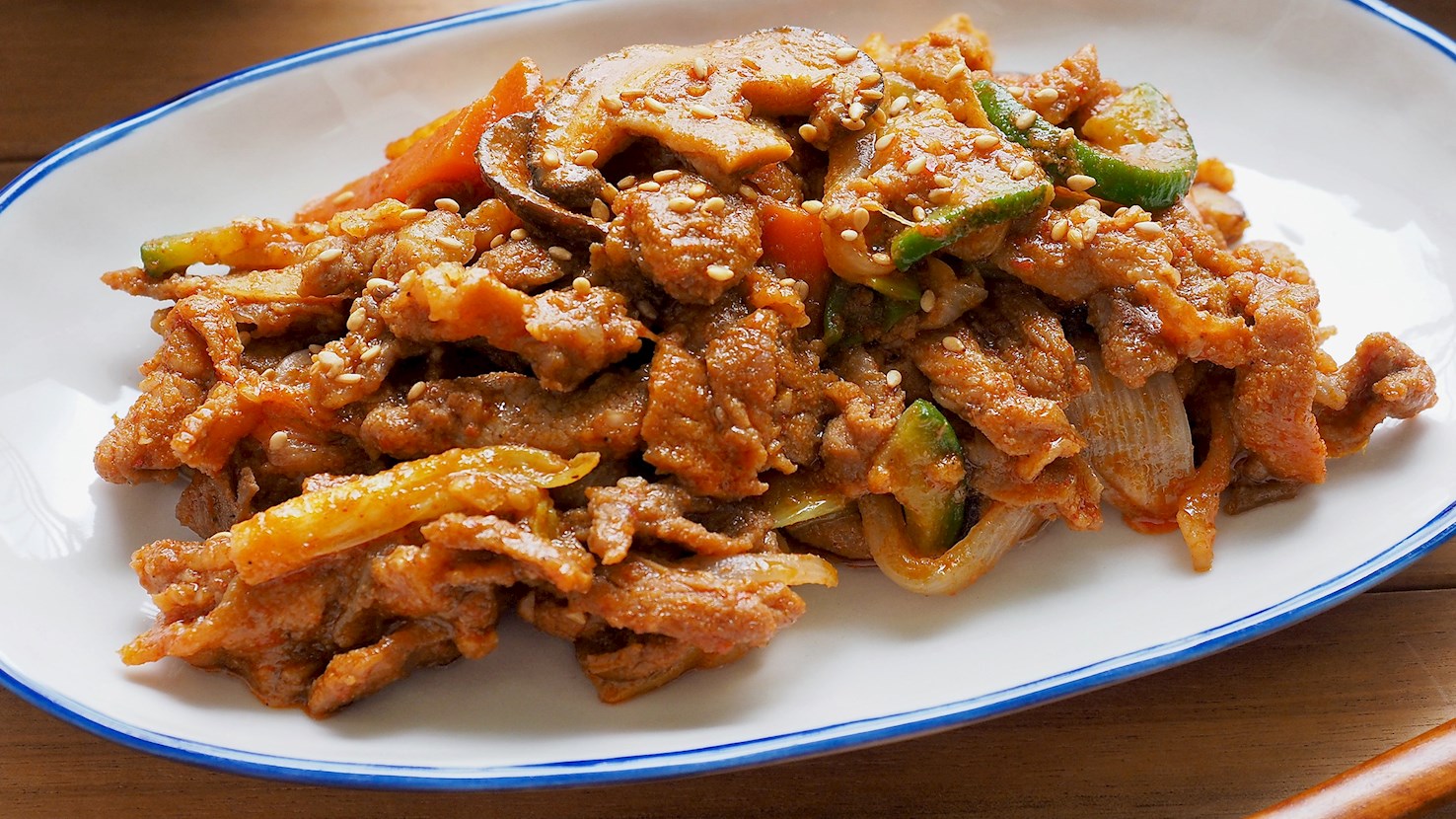
This South Korean classic consists of thinly sliced fatty pork cuts that are marinated and then grilled or pan-fried. The marinade is based on gochujang - a spicy Korean chili paste - and additions such as soy sauce, chili flakes, rice wine, garlic, and ginger. Also known as dwaejigogi bokkeum, this pork dish is commonly prepared at home, and it is a staple at Korean restaurants. Jeyuk bokkeum is usually served with lettuce or perilla leaves that are meant to be used as wrappers, while other accompaniments include ssamjang and kimchi.
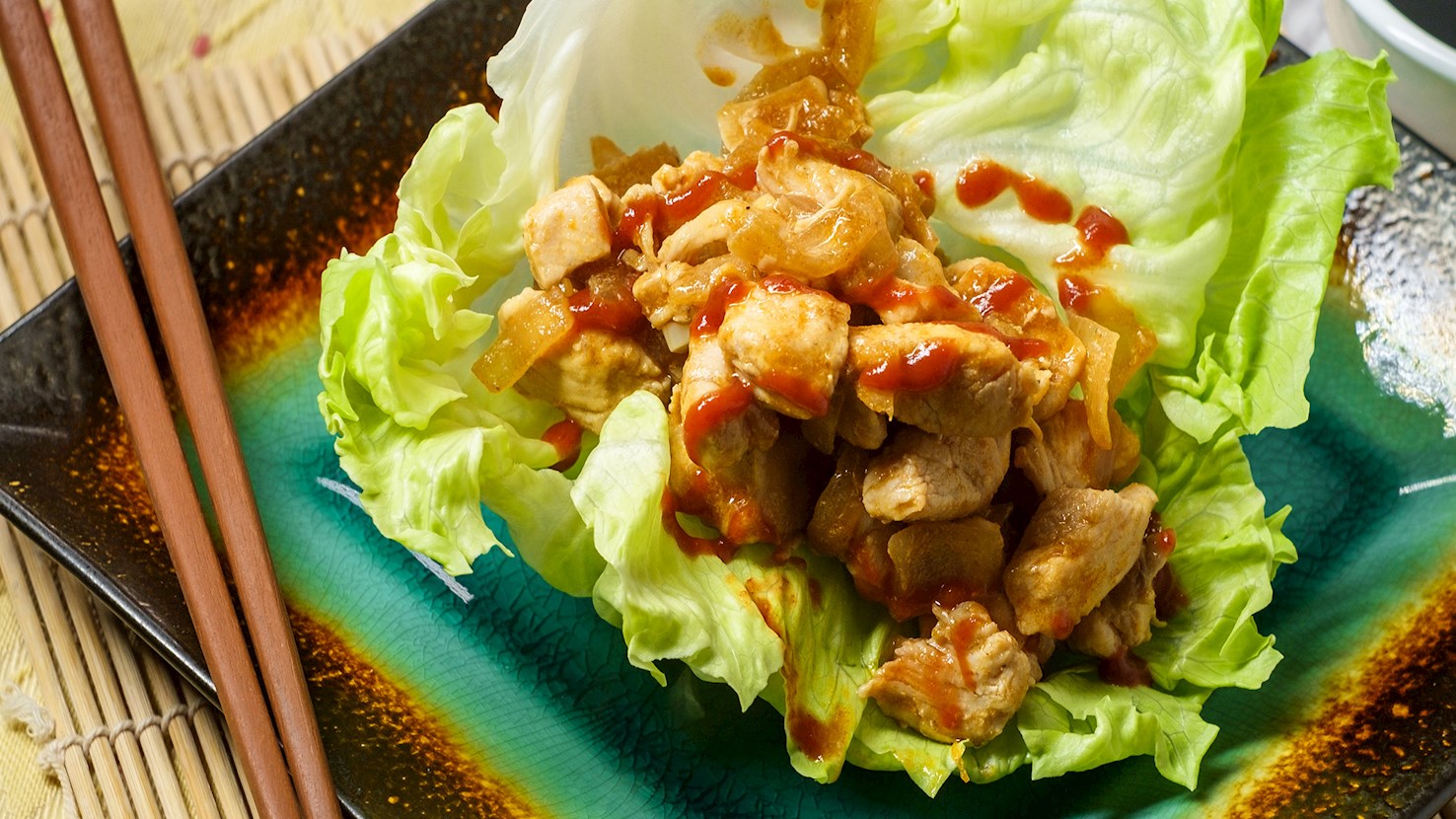
Sangchu is a ssam variety that always wrapped in lettuce. The fillings typically include rice, sliced meat, and condiments such as gochujang past, ssamjang dip, or fresh and pickled vegetables. All the elements are usually served separately, and each person is able to customize the wrapper according to their preference. Apart from meat, typically galbi (short ribs) or bulgogi, the main ingredients may also include fish or other types of seafood.
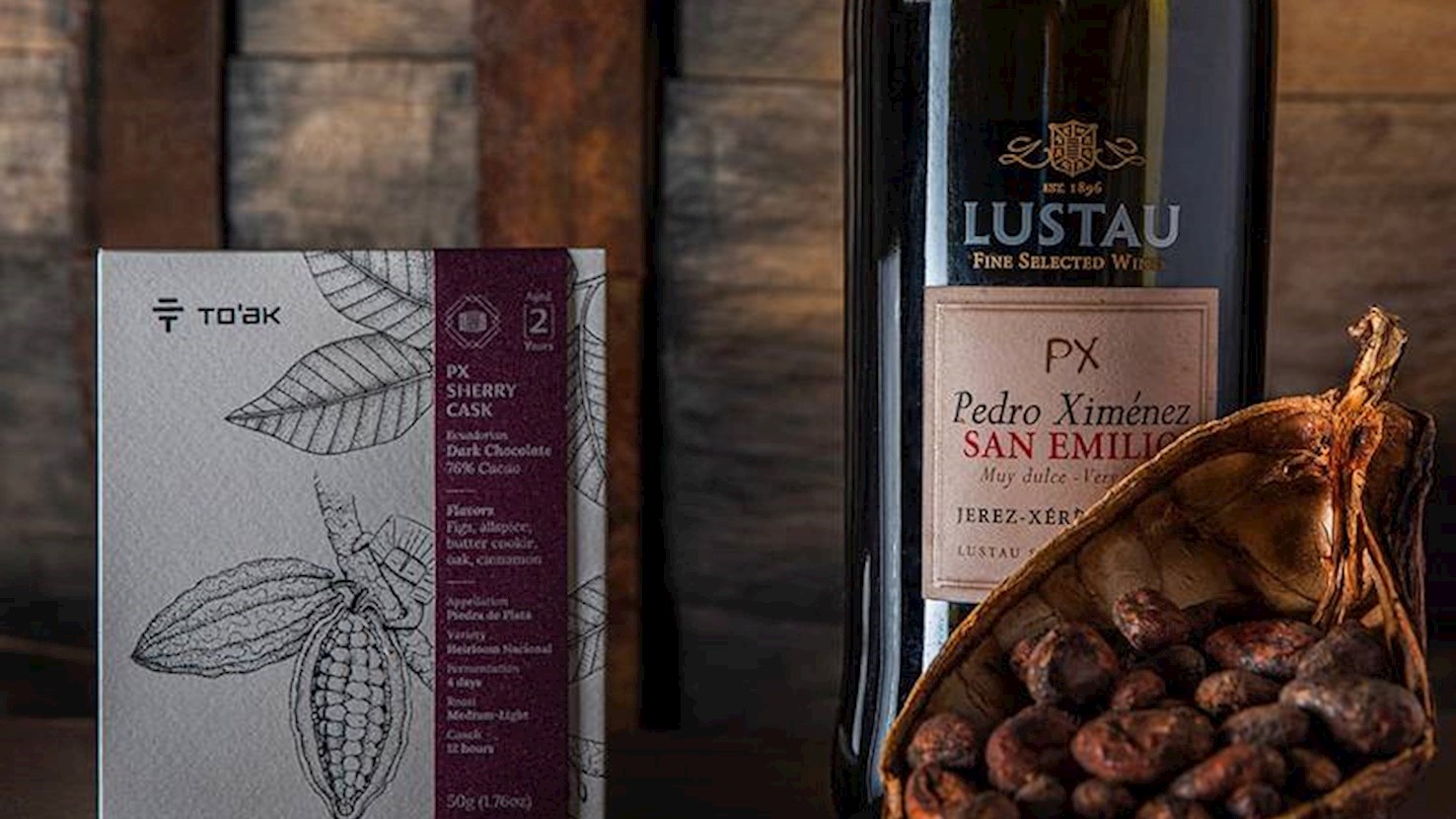
Cacaodada is a craft chocolate maker based in Seoul, South Korea. They specialize in producing small-batch, bean-to-bar chocolate, focusing on the quality and source of the cocoa beans used in production.
Cacaodada collaborates with local artists for their unique packaging designs, highlighting the artisanal aspect of their products.
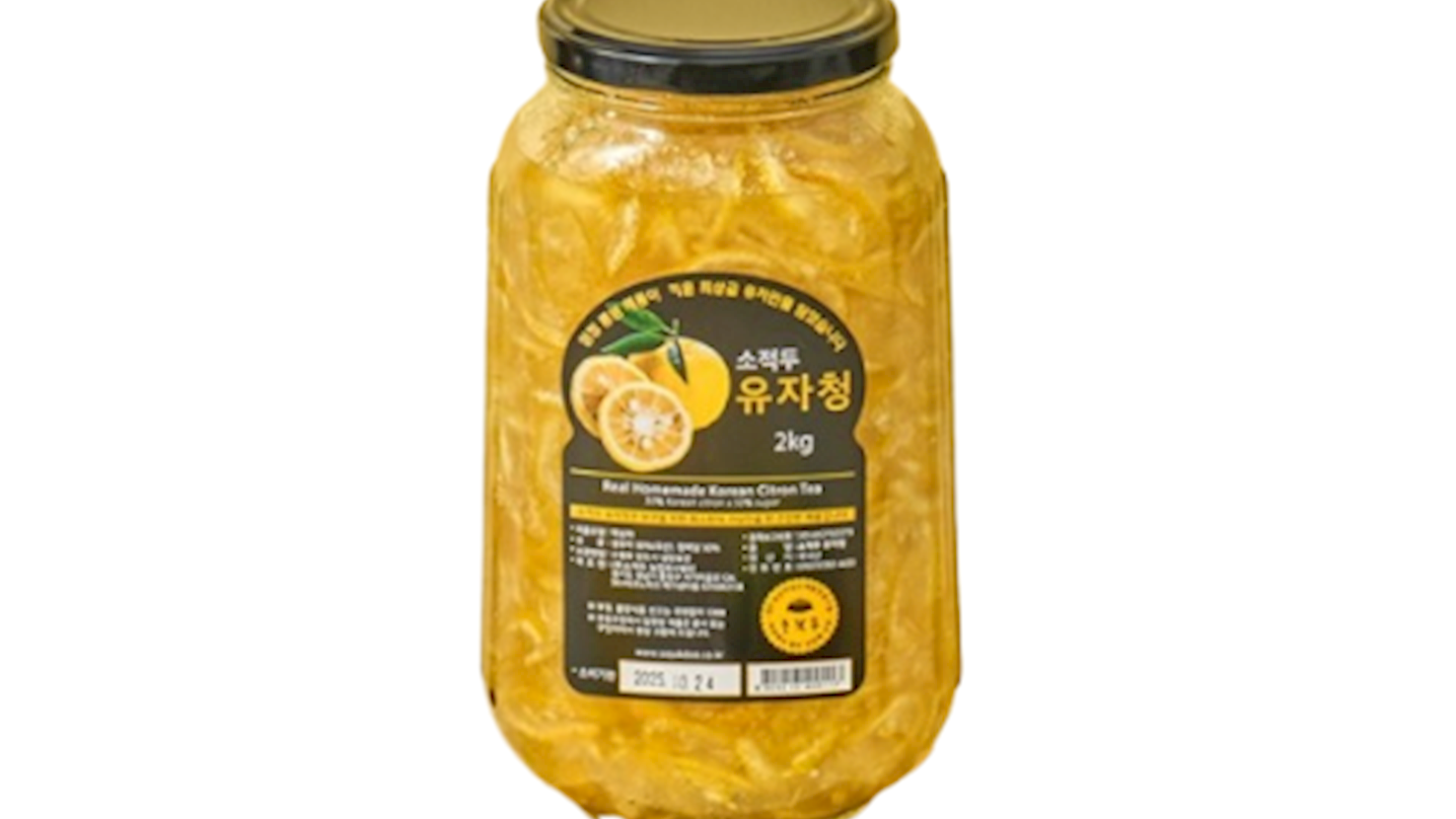
Sojeokdu Agricultural Corporation positions itself as a jam producer within a distinctive niche of the South Korean market, where fruit preserves are seen not only as sweet spreads but as functional products with clear origin and purpose. Its jams are developed through a close connection with local agriculture, using domestically sourced ingredients such as yuja citrus, red beans, and other traditional crops.
Rather than following an industrial model, Sojeokdu relies on simple formulations and carefully controlled processing that preserve the natural aroma and texture of the raw materials. The jams retain a strong sense of ingredient identity, without masking flavors with excessive sweetness or artificial notes.
Particular attention is given to balancing natural acidity, sweetness, and aromatic depth, which makes the products suitable not only for breakfast use but also for beverages, desserts, and contemporary culinary applications. Raw materials are supplied through contracted local farms, ensuring traceability and consistent quality from field to final product.
Sojeokdu does not present itself as a mass producer, but as a specialized brand that connects traditional Korean preservation methods with modern consumer expectations. Its jams are designed to offer more than basic sweetness - they function as versatile ingredients with gastronomic value.
In this way, the company contributes to redefining the role of jam in modern food culture. The focus remains on authenticity rather than trends.
This approach allows Sojeokdu to build a clear identity based on raw material quality and long-term consistency, rather than short-term marketing effects.
NRCOFFEE (느린커피) is a South Korean company involved in the production and distribution of chocolate and coffee products. The company emphasizes using high-quality ingredients and traditional methods.
Its offerings include a variety of chocolate bars and coffee blends. The company also promotes sustainability and ethical sourcing practices in its production processes.
Public Chocolatory is a premium chocolate brand based in South Korea. The company focuses on creating high-quality, handcrafted chocolates using ethically sourced cacao beans.
They offer a variety of products, including single-origin chocolates and specialized flavor profiles. Public Chocolatory often collaborates with local artists and designers for their packaging.
TasteAtlas food rankings are based on the ratings of the TasteAtlas audience, with a series of mechanisms that recognize real users and that ignore bot,
nationalist or local patriotic ratings, and give additional value to the ratings of users that the system recognizes as knowledgeable.
For the “Top 100 Korean Foods” list until October 21, 2026, 8,481 ratings were recorded, of which 7,563 were recognized by the system as legitimate.
TasteAtlas Rankings should not be seen as the final global conclusion about food. Their purpose is to promote excellent local foods,
instill pride in traditional dishes, and arouse curiosity about dishes you haven’t tried.
The initial list of top producers was compiled based on available reviews, awards, local recommendations, media and blog coverage, and consumer reviews.
The list will be updated with ratings from TasteAtlas local ambassadors and TasteAtlas users.









What People Say