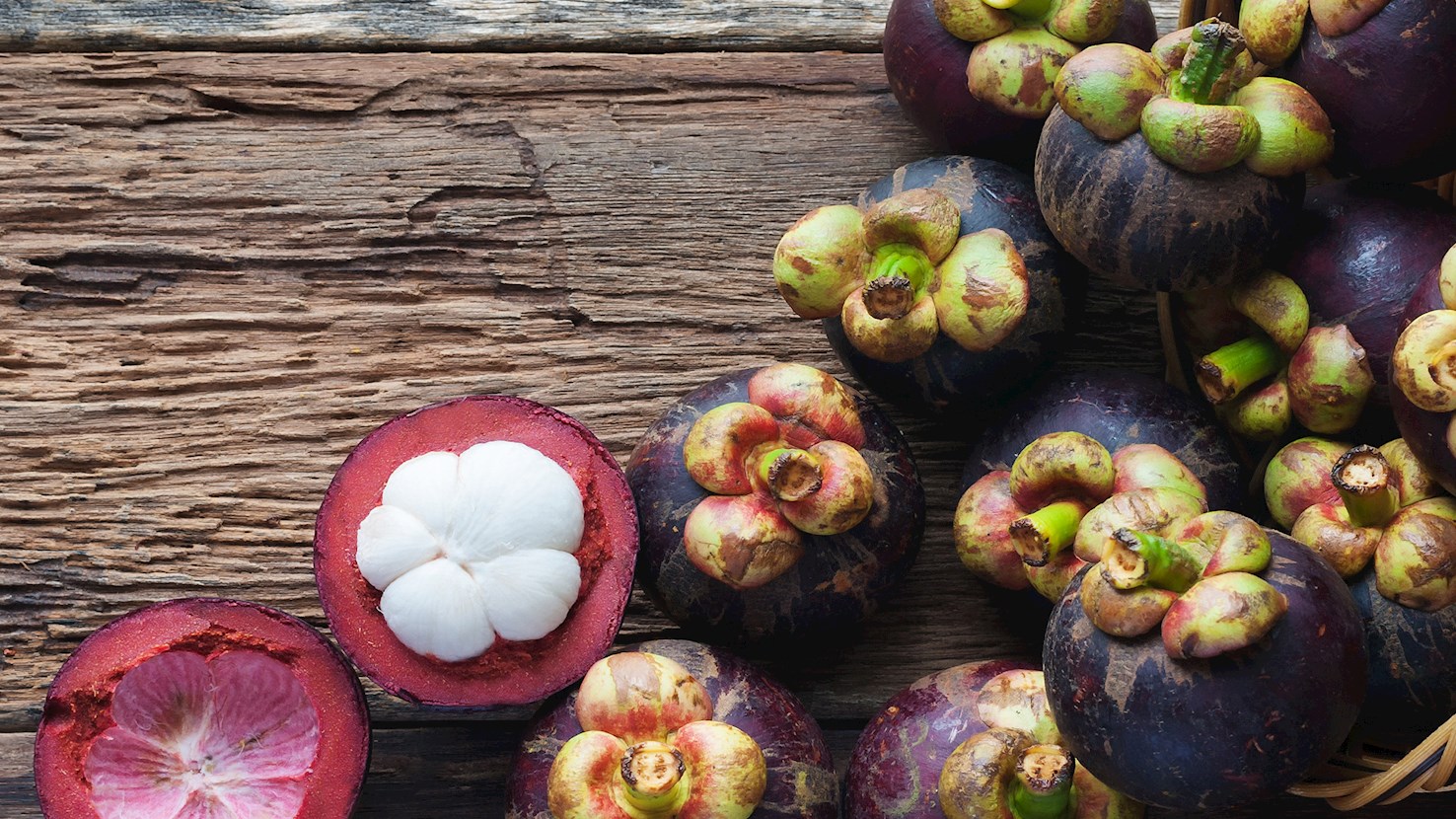
Mangosteen, also known as purple mangosteen, is a tropical plant grown for its sweet fruit. Its origin is believed be on the Sunda Islands, now divided between Indonesia, Malaysia, Brunei, and East Timor. Mangosteen is characterized by its dark purple, firm shell which covers and protects the edible white fruit. The texture of the fruit is soft, juicy, and delicate, while the flavor is sweet with slight hints of tartness. The fruit is usually enjoyed plain, but it can also be incorporated in various baked desserts, mixed salads, custards, smoothies, teas, or ice creams. Mangosteen is found throughout Southeast Asia, and it is available in many markets around the world. It's especially popular in Vietnam.
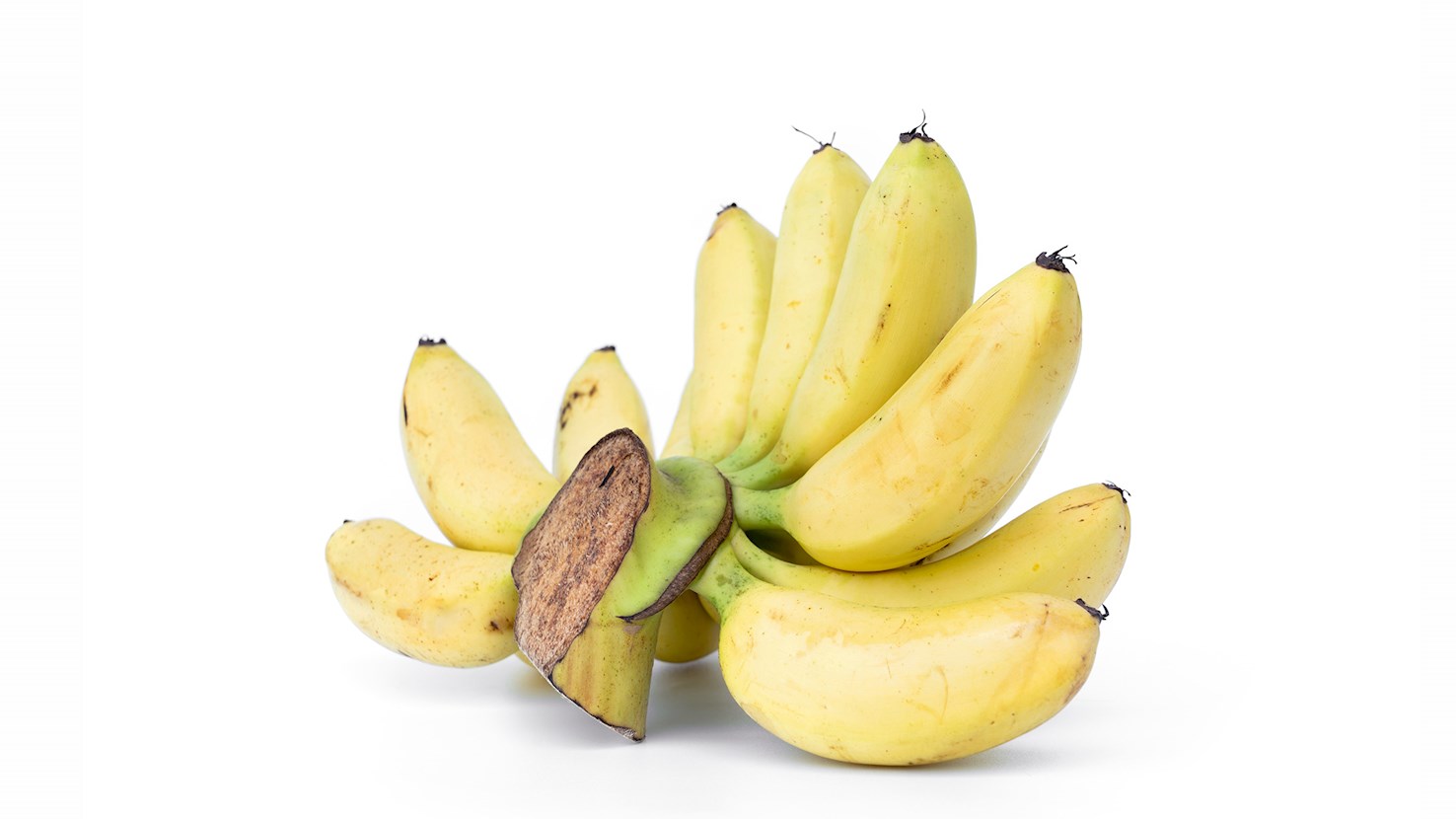
Lady Finger banana is a small, sweet variety of banana distinguished from others by its size, taste, and texture. It is significantly smaller and thinner than the more commonly known Cavendish banana, typically measuring about 4 to 6 inches (10 to 15 centimeters) in length. What sets the Lady Finger banana apart is its exceptionally sweet flavor and creamy texture, making it a favorite for fresh eating. Its sweetness is often compared to that of honey, and it has a delicate, almost floral flavor profile. The skin of the Lady Finger banana is thin and the flesh is less dense compared to larger banana varieties, contributing to its unique texture. Cultivated in tropical and subtropical regions around the world, the Lady Finger banana is a popular variety in its native Southeast Asia, as well as in Australia, Thailand, and the Philippines. Despite its delicious flavor and nutritional benefits, including being a good source of vitamins C and B6, potassium, and dietary fiber, it is less commonly found in global markets. This scarcity is due to its greater sensitivity to damage during transportation and its shorter shelf life compared to the more robust Cavendish bananas. Lady Finger bananas are often enjoyed fresh, but they can also be used in a variety of culinary applications, from desserts and baked goods to smoothies.
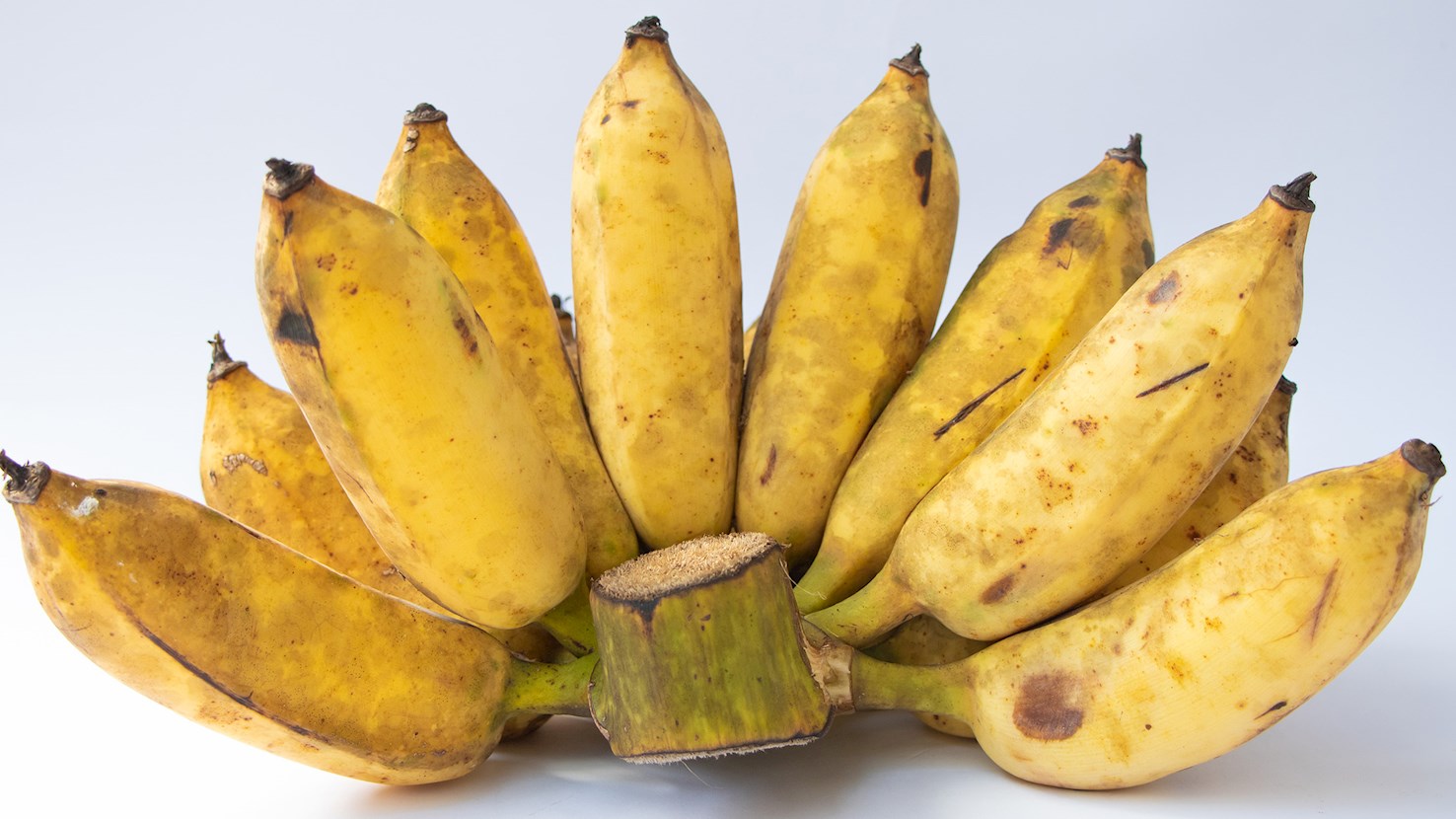
Pisang raja (lat. Musa paradisiaca var. Raja) is a highly prized variety of banana in Indonesia and other parts of Southeast Asia. The name pisang raja literally translates to "king of bananas" in Indonesian, reflecting its esteemed status among banana varieties due to its superior taste and texture. Pisang raja bananas are known for their delightful sweetness, creamy texture, and a slight hint of citrus. This makes them highly sought after for both fresh consumption and culinary use. Characteristically, pisang raja bananas have a long and slightly curved shape, with a thick skin that turns a deep yellow with slight green tips when fully ripe. The flesh of the banana is dense, yet it melts in the mouth, offering a burst of rich, sweet flavor with nuances that some describe as similar to honey or vanilla. Pisang raja is especially popular for traditional desserts and culinary preparations. In Indonesia, it is often used in the making of pisang goreng (fried bananas), a popular snack where the bananas are coated in batter and deep-fried until golden brown. The variety's natural sweetness and firm texture make it ideal for cooking, as it holds its shape well and enhances the flavor of the dishes.
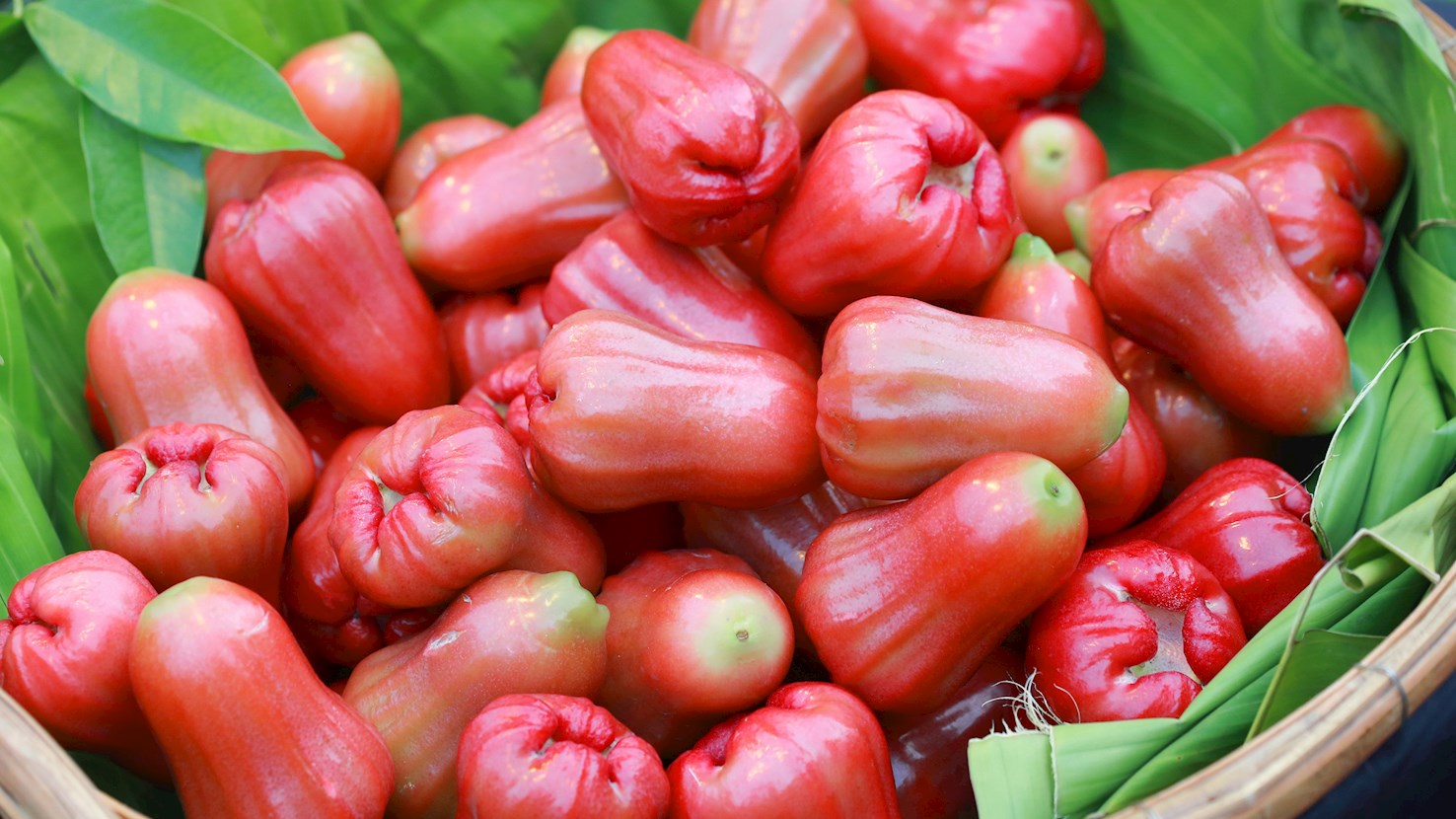
Water apple is a tropical fruit native to Southeast Asia and the Malay Archipelago, produced by the evergreen tree Syzygium malaccense and widely cultivated in regions such as Malaysia, where it is known locally as jambu bol and consumed primarily for its high water content and crisp flesh rather than for sweetness or acidity. Its spread beyond its native range followed maritime trade and botanical exchange during the late eighteenth century, and plants were later introduced to the Caribbean, including Jamaica, where it became known as Otaheite apple after its route of introduction from the Pacific rather than its place of origin. Preparation in its native region is minimal, as the fruit is most often eaten fresh, washed and consumed whole or sliced, with the thin skin left intact and the central seed removed, and it may also be used in light preserves, juices, or briefly cooked preparations that emphasize moisture and texture. The flesh is firm and watery when just ripe and softens quickly, which limits storage and favors immediate consumption close to harvest. Water apple is typically served at ambient temperature or lightly chilled and eaten casually as a snack rather than as part of a structured meal. It is commonly sold in markets and eaten at home, often paired with salt, chili, or light sugar, and accompanied by water or mild fruit drinks that reinforce its clean, hydrating character without competing with it.
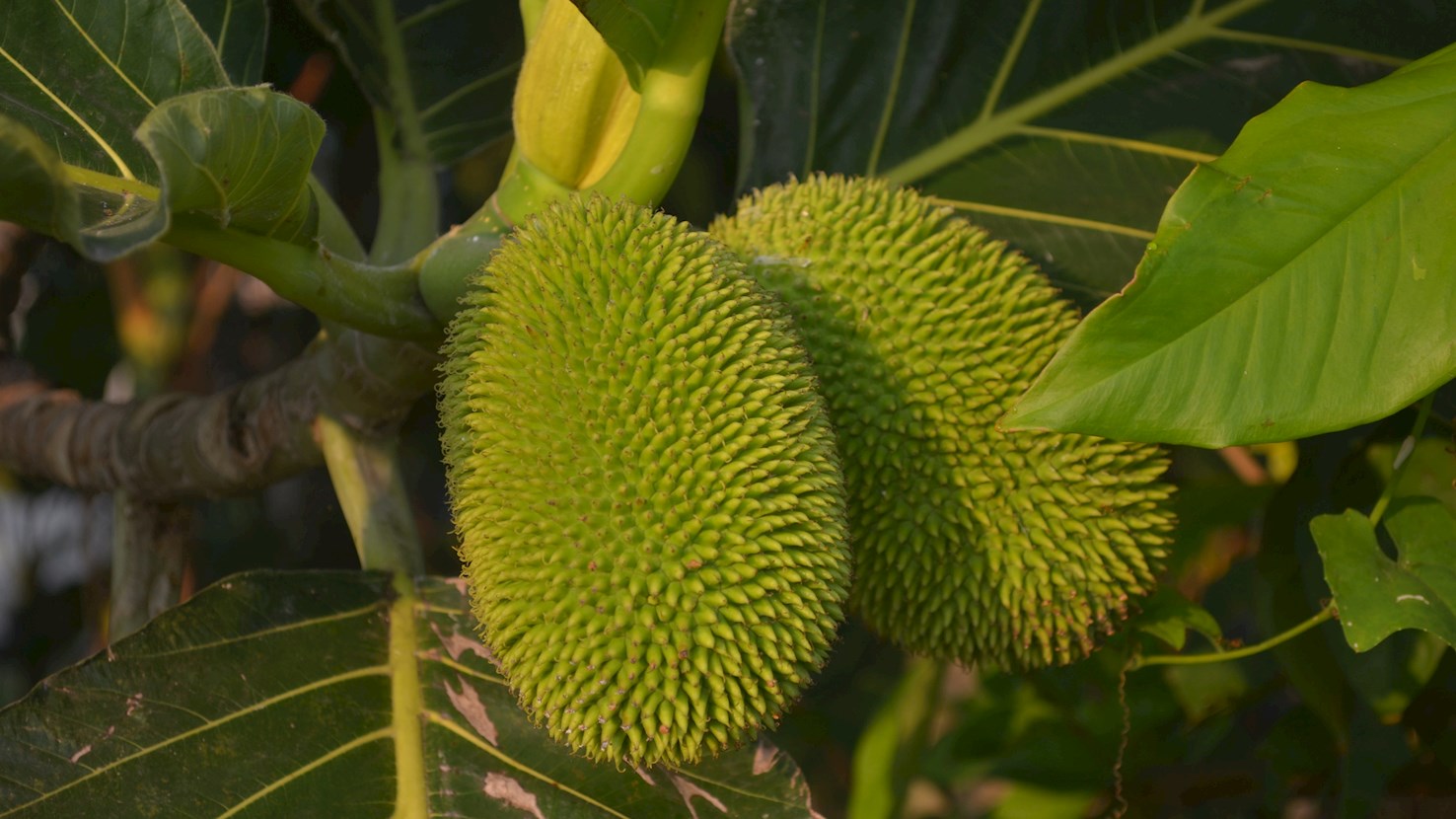
Breadnut is a starchy tropical fruit that comes from New Guinea and the surrounding islands of eastern Indonesia, where it is known by names such as kapiak and sukun berbiji. Its scientific name is Artocarpus camansi, and it is closely related to breadfruit but distinct because its fruits are filled with numerous large seeds. The tree produces round, spiny fruits that are harvested when mature but still green. Inside, the flesh is pale and firm, and the seeds are large enough to be separated and cooked on their own. The flavor of breadnut flesh is mild and starchy, while the seeds have a nutty taste and can be boiled, roasted, or added to stews as a filling ingredient. In the Philippines, where it is commonly called kamansi or kolo, breadnut is often prepared by peeling and slicing the immature fruit, then simmering it in coconut milk with spices and sometimes meat or seafood. The cooked flesh absorbs the flavors of the sauce and softens to a texture similar to firm potatoes. In some regions, the seeds are the main focus of cooking, valued for their nutritional content and dense texture. Unlike breadfruit, which is often eaten when fully ripe and soft, breadnut is harvested while still firm to make it easier to handle and preserve. The tree itself is valued for its resilience, as it grows well in humid, lowland environments with minimal care. Botanists have identified breadnut as the likely ancestor of the seedless breadfruit varieties cultivated across Oceania. The domestication process involved selecting trees that produced progressively fewer seeds, ultimately leading to the breadfruit most people recognize today. Breadnut continues to be planted in home gardens and small farms because it provides a dependable food supply during periods when other crops are scarce. Its seeds are high in starch and contain significant amounts of protein, making them a versatile ingredient in both savory and sweet preparations. In some regions, breadnut wood is used for making lightweight tools and utensils.
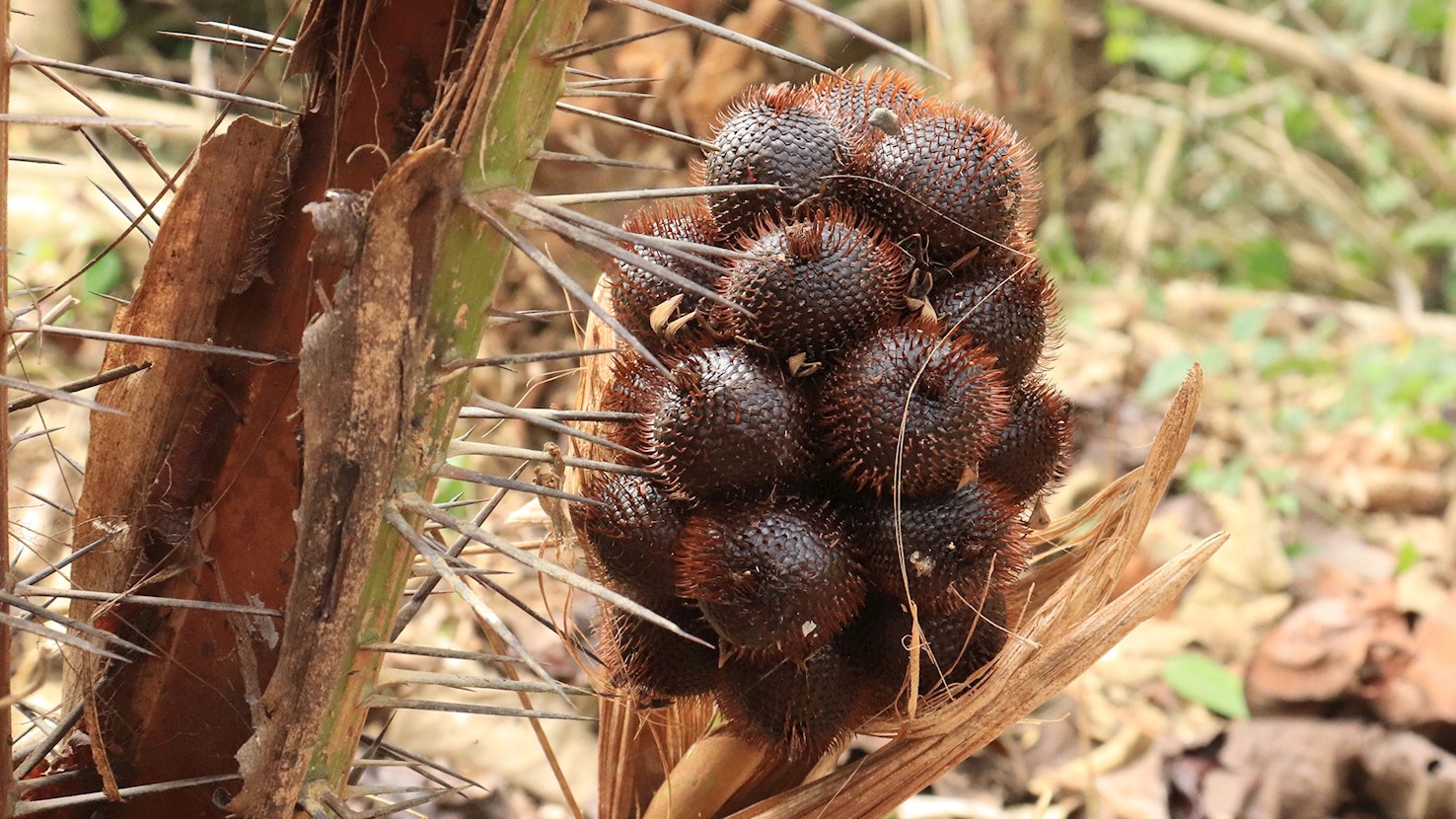
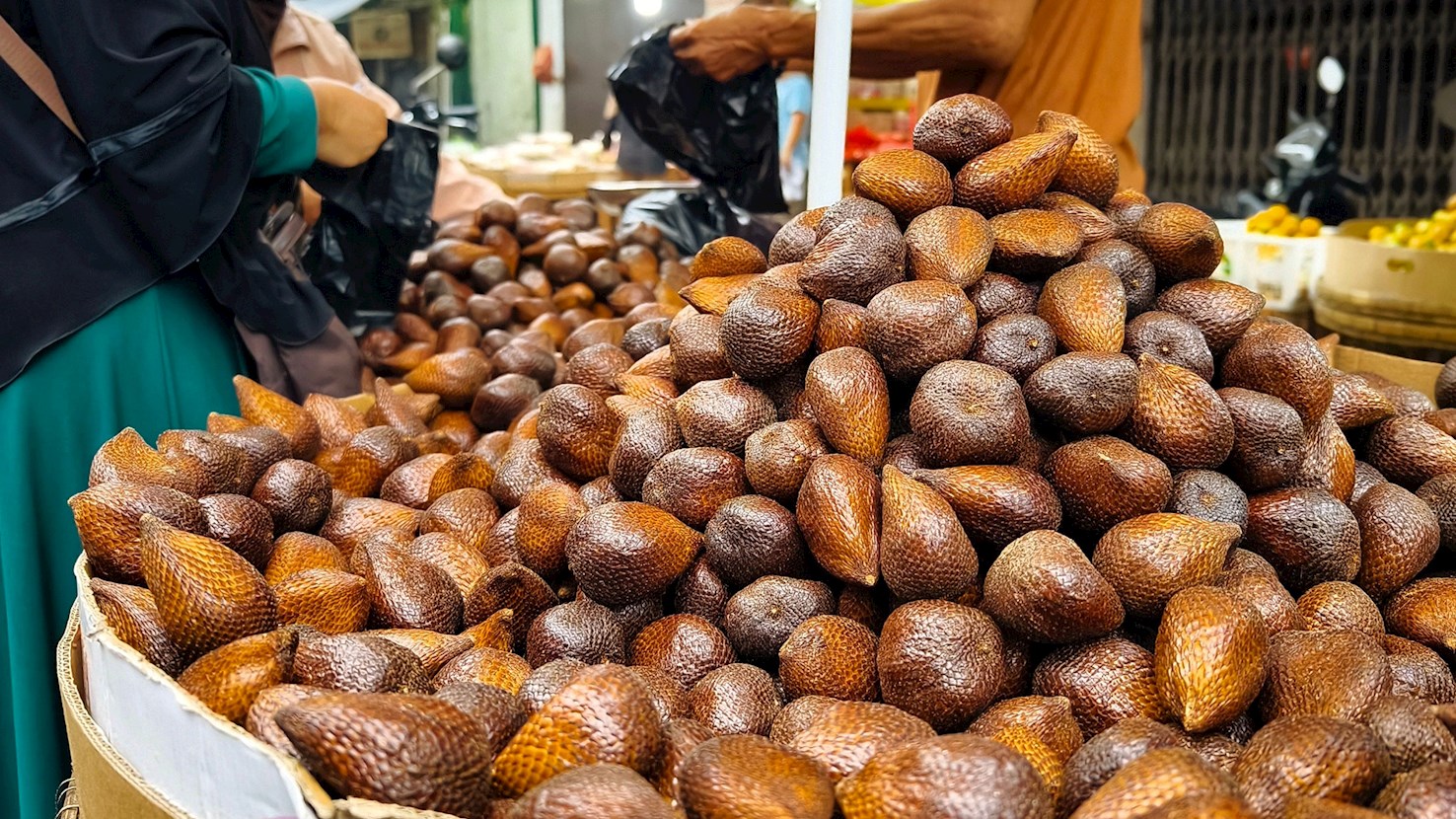
Salak is a scaly-skinned palm fruit native to Java and Sumatra in Indonesia, widely grown across Indonesia, and best known internationally as snake fruit. It comes from salacca zalacca, a short, thorny palm in the arecaceae family, with fruits that grow in compact clusters near the base of the plant rather than hanging from high branches. The fruit is small to medium-sized, usually oval or fig-shaped, and covered with a brittle reddish-brown to dark brown rind made of tight overlapping scales. Once peeled, it separates into pale cream lobes with one or more hard seeds, and its texture is firm, crisp, and slightly dry, often compared to apple, young coconut, or firm pear. Its flavor depends heavily on the cultivar and stage of ripeness: some salak is sweet and aromatic, some is sharp and sour, and some has a noticeable drying astringency known in Indonesian as sepat. The species is native to Java and Sumatra and is now cultivated in many other Indonesian regions, including Bali, Lombok, Sulawesi, Maluku, Timor, and Papua. Salak has been grown in Indonesia for a long time, and different islands and growing areas have developed their own forms through local selection, climate, soil, and farmer preference. Java is strongly associated with salak pondoh from Yogyakarta, especially Sleman, a cultivar valued for sweetness, aroma, and low astringency, while Bali is known for salak bali, including types with honeyed, pineapple-like, grapefruit-like, or sharper acidic flavors. North Sumatra has salak sidimpuan, including red-fleshed varieties with a juicier, sweeter-sour character, and Jakarta’s Condet area is linked to salak Condet, a heritage Betawi fruit known for its strong fragrance and a more rustic, sweet-sour-astringent profile. There are at least dozens of Indonesian salak cultivars, and the best-known commercial names usually reflect their place, color, texture, or flavor rather than a single uniform standard. Salak is usually eaten fresh. The tip of the fruit is pinched or cracked, and the skin is peeled away in small scaly pieces until the pale lobes are exposed. The thin inner membrane may be removed if it is too astringent, and the hard seeds are discarded. Good fruit should feel firm and heavy for its size, with skin that is not shriveled and flesh that is crisp, clean, and aromatic. Very sour or very sepat fruit is often better suited to processing than eating plain. In Indonesia, salak is also made into chips, pickles, sweets, syrup, dodol-like confections, preserves, candied fruit, fruit leather, and fermented drinks, especially in areas where harvests are abundant and fresh fruit prices drop. Salak gula pasir from Bali is sometimes used to make salak wine due to its strong sweetness. It is eaten across Indonesia as a market fruit, snack, regional souvenir, and processed fruit product, especially in Java, Bali, Sumatra, and other salak-growing regions. It pairs well with salt, chili, palm sugar, lime, tamarind, rujak seasoning, yogurt, coconut, mild cheese, and fresh tropical fruits such as mango, pineapple, papaya, and banana. For beverages, it works best with tea, young coconut water, light sparkling drinks, citrus-based drinks, or, in processed form, salak wine and fruit syrups.
Salak pondoh is an Indonesian snake fruit cultivar from Sleman, Yogyakarta, known for its scaly brown skin, crisp pale flesh, sweet aromatic taste, and unusually low astringency compared with many other salak fruits. It belongs to salacca zalacca, a thorny palm whose fruits grow in tight clusters near the base of the plant, hidden among sharp leaf stalks and protected by a brittle rind that looks like snakeskin. Once peeled, the fruit separates into firm cream-colored lobes wrapped around glossy brown seeds, with a texture somewhere between apple, young coconut, and firm pear. What made salak pondoh famous is its friendly eating quality: it can be sweet even before it is fully ripe, with less of the dry puckering sensation known in Indonesian as sepat, a quality often mentioned as one of the reasons it stands apart from more astringent salak types. The fruit’s flavor is clean, crunchy, and fragrant rather than soft or syrupy. A good salak pondoh should crack easily at the tip, peel without much effort, and reveal flesh that is firm, dry enough not to feel sticky, but still juicy enough to taste fresh. Its sweetness may carry light notes of honey, pineapple, pear, banana, or young coconut, depending on ripeness and the particular selection, while its acidity keeps the fruit from becoming flat. The best examples are balanced rather than aggressive: sweet first, lightly tart after, with only a faint tannic finish. This makes it more approachable than many older salak varieties, which can be sharp, chalky, or strongly astringent if eaten too early. Salak pondoh is closely tied to the slopes of Mount Merapi in Sleman, especially fruit-growing villages around Turi and nearby areas. Salak had been cultivated in the region before pondoh became famous, but older local plantings were not always productive or commercially reliable. By the late 20th century, it had become one of Yogyakarta’s most recognizable fruits, sold along roads, in markets, at agrotourism farms, and as a regional souvenir. Sleman’s link with salak pondoh is now more than an informal reputation. Salak pondoh Sleman has geographical indication certification, which recognizes that its distinctive qualities are tied to its place of origin and local production conditions. This connection matters because the fruit is shaped not only by variety, but by the Merapi foothills: volcanic soils, humid tropical air, shaded gardens, careful pollination, and farmer knowledge built over many harvests. The plants themselves are difficult to manage, with dense thorns and fruit bunches that form low near the ground, so good cultivation depends on experience. Farmers must judge maturity by skin color, firmness, aroma, season, and familiarity with the plant, because a salak that looks ready may still be too sour, while pondoh is prized precisely because it reaches sweetness earlier and more reliably. Several pondoh forms are recognized, including pondoh hitam, pondoh gading, pondoh super, and pondoh madu, each differing in rind color, sweetness, size, and market appeal. Pondoh hitam tends to have a darker peel, pondoh gading is paler and more ivory-yellow, pondoh super is selected for larger, attractive fruits, and pondoh madu is valued for honeyed sweetness. The fruit is usually eaten fresh, peeled by hand, and served as a snack, table fruit, or gift from Yogyakarta. It can also be processed into chips, sweets, pickles, syrup, dodol, preserves, and other local products.
Salak Kersikan is a local snake fruit from Pasuruan Regency, known for its scaly rind, crisp watery flesh, sweet-sour flavor, and status as a traditional Pasuruan fruit. It belongs to salacca zalacca, the Indonesian snake fruit palm whose fruits grow in clusters near the base of a thorny plant and are covered in brittle, overlapping scales. The fruit’s name comes from Kersikan, the village where it is most closely associated, and this connection is important because salak Kersikan is not just a general-market salak but a local fruit identity tied to one growing area in Pasuruan. The fruit has the rough, snakeskin-like peel of salak, usually brown to yellowish-brown, with a thin shell that breaks away when pinched and peeled. Inside, the flesh is pale, firm, and divided into lobes around hard seeds, with a texture that is crunchy, juicy, and slightly fibrous rather than soft. Compared with very sweet salak pondoh from Yogyakarta, salak Kersikan is often more watery and more acidic, with a brighter sweet-sour profile and a lightly drying finish. It can be refreshing and pleasant when mature, but it is not always a polished dessert fruit bred only for high sweetness. A good salak Kersikan should feel fresh and firm, peel cleanly, and have flesh that snaps in the mouth with enough sweetness to balance its sourness. Salak Kersikan is considered a village fruit in Kersikan, where residents have long grown salak palms and passed them down through generations. It is often an ancestral inheritance because some trees owned by local people have survived for decades, and the harvest is a village event, with fruit often bought directly by sellers or visitors who come to the gardens. All that makes salak Kersikan different from newer branded salak fruits: its identity comes from household gardens, local cultivation, repeated harvests, and the reputation of a specific village rather than from a controlled commercial breeding program. The plant itself requires close manual care. Salak palms are spiny and dense, and the fruit forms low on the plant, making harvesting more difficult than picking from an ordinary fruit tree. The fruiting process involves manual pollination, where male flowers are cut and placed into female flowers on another plant, a common practice in salak cultivation when farmers want reliable fruit set. This work is part of what gives the fruit its value, even when the market price is modest. The grower has to manage thorny plants, judge ripeness, and harvest fruit that can spoil or lose appeal if it is not sold quickly. Salak Kersikan is usually eaten fresh, served as a snack or table fruit, but its acidity and high moisture also make it suitable for processing. It can be turned into sweets, pickles, syrup, chips, preserves, dodol-like products, or other local snacks.
Salak Bangkalan is a local snake fruit from Bangkalan Regency on Madura Island, known for its scaly rind, crunchy flesh, and sweet-sour taste. It belongs to salacca zalacca, the same Indonesian snake fruit species that includes better-known types from Yogyakarta and Bali, but salak Bangkalan has its own character because it developed in Madura’s drier landscape and village-based fruit gardens rather than in the volcanic orchards of Sleman or the agroforestry gardens of Karangasem. The fruit is usually brown to yellowish-brown, covered in brittle scales, and inside it holds pale lobes wrapped around hard seeds. Its texture is crisp and firm, often closer to apple, young coconut, or water chestnut than to soft tropical fruit, while its flavor can range from sweetness to acidity to the dry puckering sensation called sepat. The history of salak Bangkalan is tied to Madura’s local agriculture and to villages where salak became part of household income, small trade, and regional food identity. Bangkalan has long been recognized as an area with strong salak agricultural potential, and researchers have studied the diversity of salak plants there for breeding and identification. Kramat is one of the centers of salak plantations in Bangkalan, where processed salak products have been developed as local culinary souvenirs, while Bilaporah in Socah District has been identified as one of the largest local salak production areas in the regency. What makes salak Bangkalan interesting is its diversity. East Javanese and Madurese salak are not limited to a single uniform variety, and there are several Bangkalan types, including salak mangga, salak aren, salak nangka, salak pandan, and salak pepaya, names that suggest local distinctions based on aroma, flavor, shape, or farmer recognition. Some fruits are small and sweet, some are more watery and acidic, and some are firmer, drier, and more tannic. This range is part of the fruit’s appeal, but also part of its problem. Consumers often prefer sweeter, more consistent salak, so Bangkalan growers and researchers have examined cultivation practices, product development, and processing to improve quality and sustain demand. Salak Bangkalan is usually peeled by pinching or breaking the pointed end, then removing the scaly skin in small pieces. The best fruits should feel firm and fresh, with flesh that snaps cleanly and tastes sweet enough to balance its acidity and astringency. It is not necessarily the easiest salak for people who expect pure sweetness, but it offers a more rustic profile: crisp, juicy, slightly sour, sometimes tannic, and often more refreshing than heavy tropical fruits. When the harvest is abundant, or the fruit is too acidic for fresh eating, it can be processed into chips, sweets, syrup, jelly candy, dodol-like products, fruit leather, pickles, or other local souvenirs. Hence, community and food-technology projects in Kramat and Bangkalan have focused on developing processed salak products, including fruit leather and other value-added foods, because fresh salak can be difficult to market outside the region, and farmers may face low prices during peak harvest.
Salak Condet is a traditional Betawi snake fruit cultivar from the Condet area of East Jakarta, known for its fragrant aroma, thick flesh, sweet-sour-astringent taste, and status as one of Jakarta’s historic fruit symbols. It belongs to salacca zalacca, the Indonesian snake fruit palm whose fruits are covered in brittle brown scales and grow in clusters near the base of a thorny plant. The fruit looks rough and dry on the outside, with a small oval to egg-like shape and a skin that cracks into thin, scaly pieces when pressed. Inside, the flesh is pale, firm, and divided into lobes around hard seeds, but salak Condet is remembered less for perfect sweetness than for its old-fashioned balance of flavors: fragrant, sweet, acidic, and lightly sepat, the Indonesian word for the dry puckering sensation that many salak fruits leave on the tongue. The fruit’s identity is inseparable from Condet, a part of East Jakarta historically known for Betawi settlement, rice fields, and fruit gardens along the Ciliwung River. Before Jakarta’s urban expansion swallowed much of the area, Condet was associated with orchards of salak, duku, durian, gandaria, jackfruit, and mango, and the survival of these gardens was part of what made the area culturally important. In the 1970s, Governor Ali Sadikin designated Condet as a cultural heritage area and later as a fruit conservation area, at a time when traditional Betawi agriculture was still visible, and Betawi residents still made up a large part of the local population. The history of salak Condet is also a history of decline. From the 1960s through the 1980s, it was deeply woven into Betawi life, used in celebrations, offerings, dowries, souvenirs, and local dishes, and Jakarta’s governor designated it as one of the city’s symbols in 1989. As Jakarta grew denser, however, land that had once held salak gardens was sold, paved, or converted into housing, and the fruit became increasingly difficult to find in ordinary markets. Balekambang, on the banks of the Ciliwung River, is often described as one of the last strongholds of the fruit, since salak Condet and duku Condet were once grown there on much larger stretches of land. Conservation efforts now focus on places such as the Condet fruit conservation garden in Balekambang, Kramat Jati, where salak Condet plants are maintained as part of Jakarta’s effort to preserve the fruit. As an eating fruit, salak Condet is more rustic than the very sweet salak pondoh that now dominates many Indonesian markets. Its flesh is usually thicker, its aroma stronger, and its flavor more varied, with some fruits leaning sweet, some sour, and some more noticeably sepat. This variability is part of its charm. It is not a standardized modern dessert fruit bred only for sugar and easy transport, but a local salak whose value lies in aroma, memory, and connection to place. A good salak Condet should be firm but not dry, fragrant before it is peeled, and lively in the mouth, with enough sweetness to balance its acidity and enough astringency to remind the eater of older salak types. Salak Condet is usually eaten fresh, peeled by hand, and served as a snack, but it has also appeared in Betawi culinary traditions. One known local preparation is pecak oncom salak, a Betawi dish made with grilled fermented oncom, chilies, shallots, galangal, and mashed salak Condet. The fruit may also be used in sweets, pickles, syrups, preserves, or rujak-style preparations, especially when its acidity and tannic edge need balancing with sugar, salt, or chili.
TasteAtlas food rankings are based on the ratings of the TasteAtlas audience, with a series of mechanisms that recognize real users and that ignore bot,
nationalist or local patriotic ratings, and give additional value to the ratings of users that the system recognizes as knowledgeable.
TasteAtlas Rankings should not be seen as the final global conclusion about food. Their purpose is to promote excellent local foods,
instill pride in traditional dishes, and arouse curiosity about dishes you haven’t tried.








What People Say