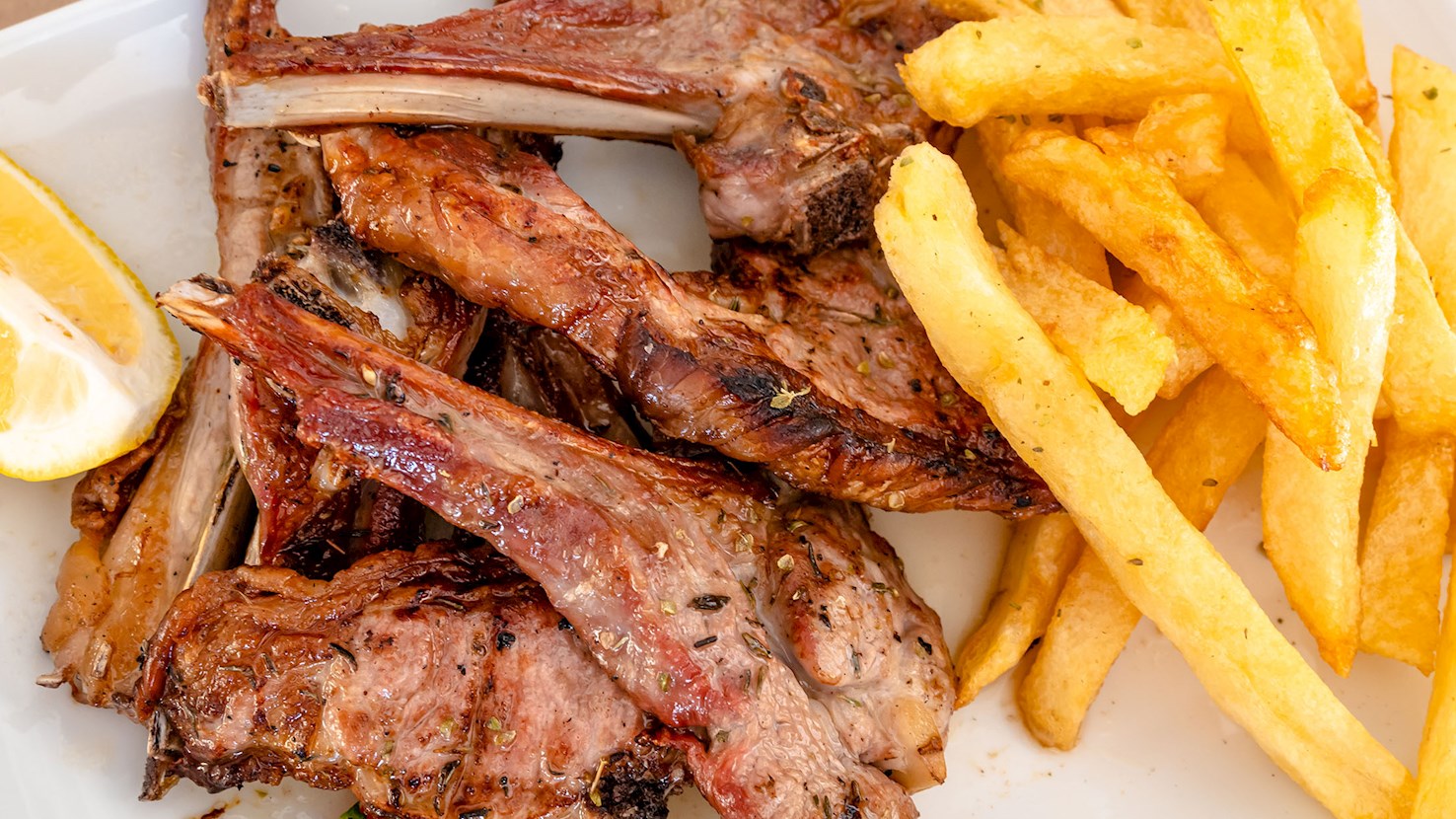
Grilled lamb chops are a traditional Greek dish that is popular throughout the country and usually enjoyed as the main course. Lamb chops are usually marinated in various combinations of olive oil, lemon juice, and a variety of fresh herbs before they are grilled on traditional charcoal barbecues. They are commonly paired with potatoes, salads, or the creamy and refreshing tzatziki sauce.
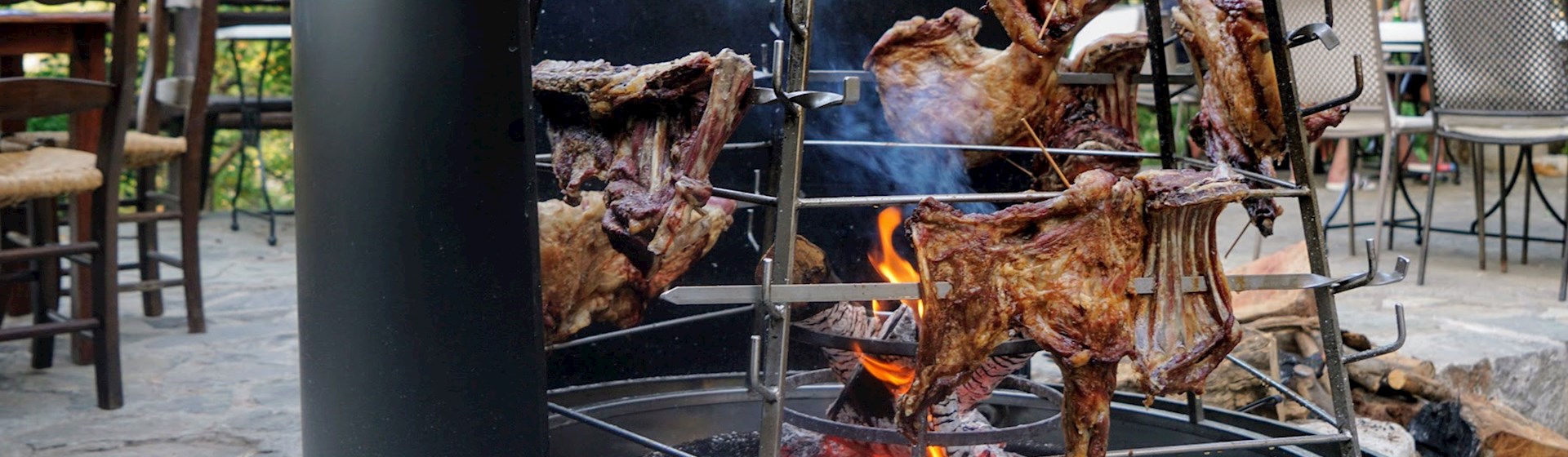
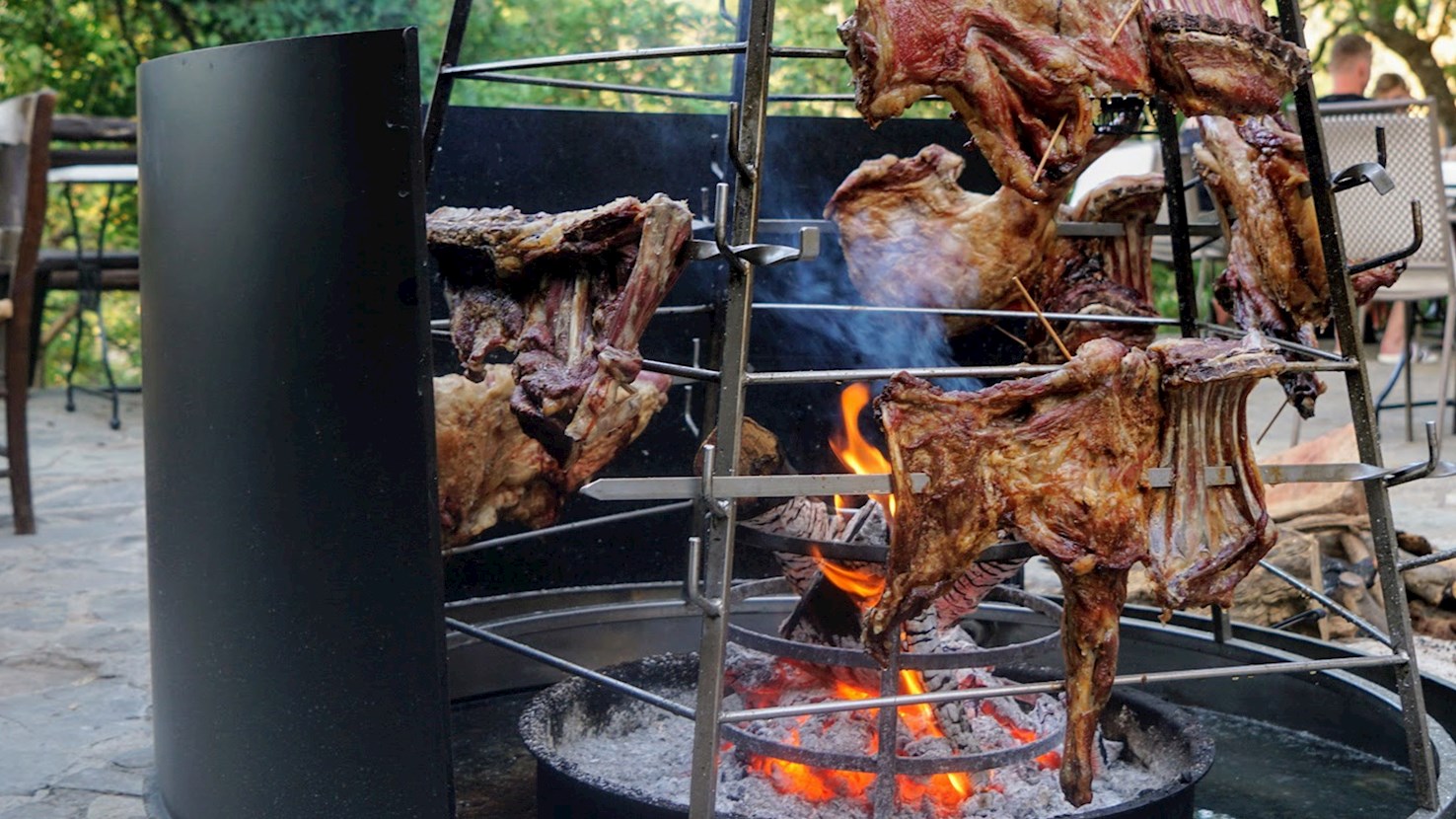
Antikristo is a traditional technique of cooking meat on Crete. A young lamb (or a goat, on rare occasions) is cut into four pieces (called goulidia), salted, then placed on big wooden skewers that are arranged around the fire in a circular formation, taking into consideration the direction of the wind, the intensity of the fire, and the distance between the fire and the meat. This process lets the meat cook in its own fat and salt with the heat coming from the flames instead of coals. The name antikristo means across the fire, describing this unique technique. The meat is slowly cooked, sometimes up to 6 hours, and it develops different flavors in the process. In the past, antikristo was common in the villages of Psiloritis mountain, but nowadays it can be found anywhere in Crete. Traditionally, it's prepared and cooked exclusively by men, most often shepherds.
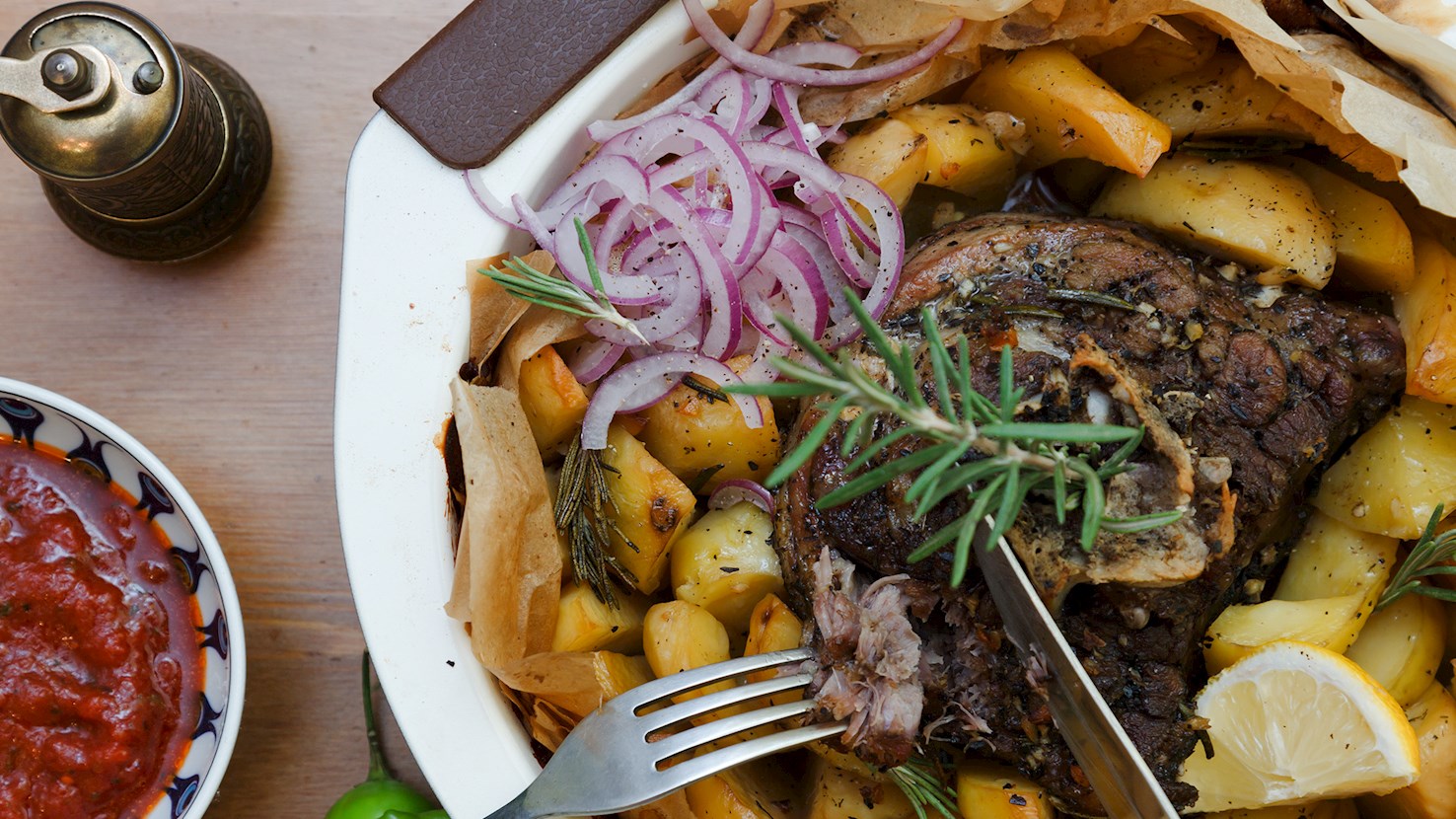
This Greek classic consists of an oven-roasted combination of potatoes and a leg of lamb, which can be marinated or seasoned with olive oil and fresh herbs. The dish is mainly prepared for special occasions or family gatherings, and it is typically served with a drizzle of lemon juice. This hearty main course is best enjoyed with various salads and bread on the side.
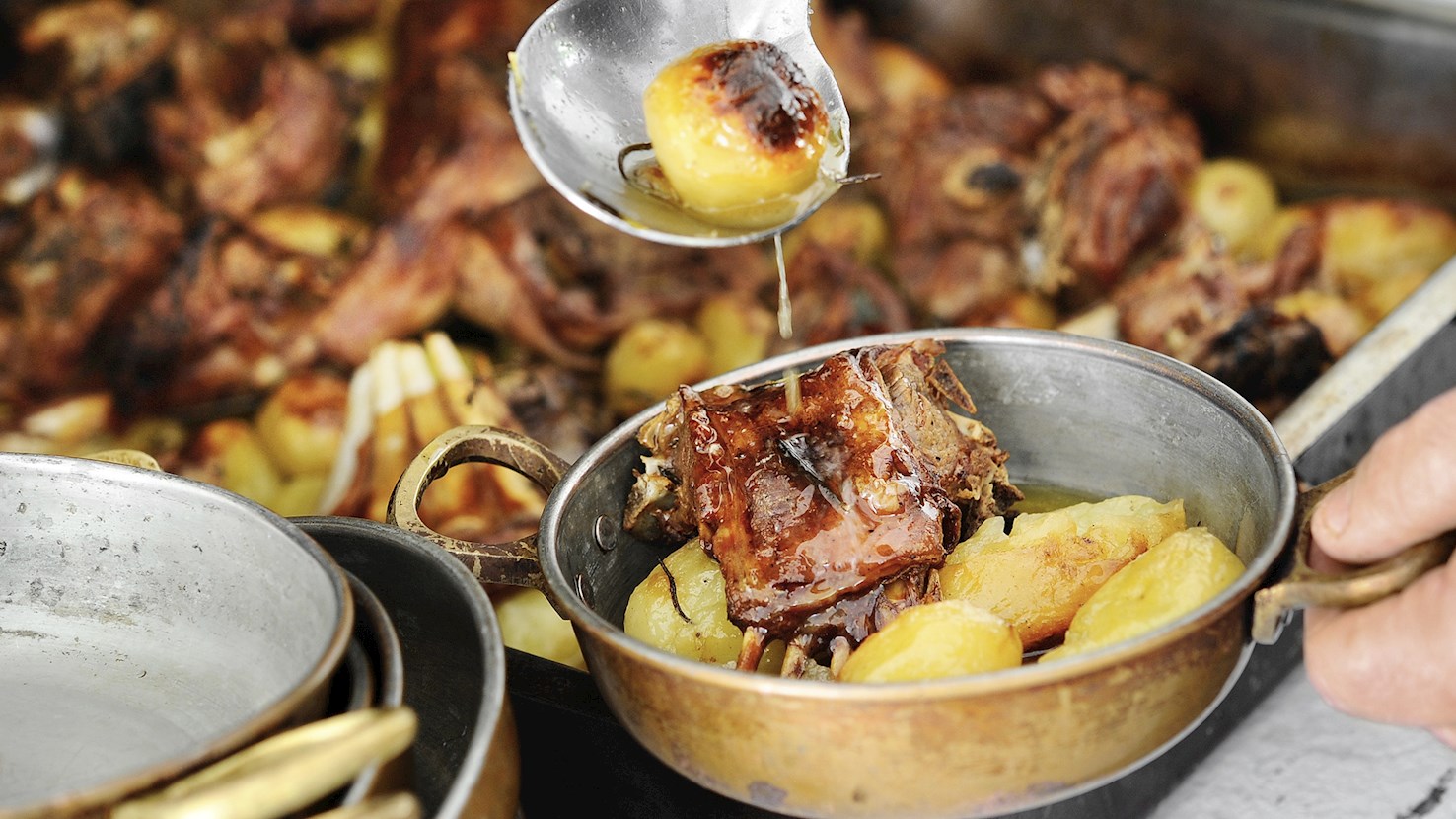
Kleftiko is a typical Greek dish that is commonly prepared at festive events and celebrations, consisting of a succulent piece of lamb or goat meat that is wrapped in foil and baked in airtight ovens. Also spelled as klephtiko, the name comes from the Klephts, mountain rebels from the Greek Revolution who cooked the food underground, so that no aromas or steam could escape, as it could reveal their positions. The cooked food was typically stolen, as klepht is also the root of the word kleptomaniac, describing a person with the urge to steal. Today, the meat is slowly cooked in a bowl so that it remains juicy and falls off the bone. Kleftiko is usually cooked with potatoes that soak up some of the flavorful meat juices. Other accompaniments may include red peppers and tomatoes. It is recommended to pair the dish with a glass of red wine on the side.
Tsigaristo is a traditional dish originating from Crete. It's prepared by sautéeing the onions in olive oil, then adding seasoned lamb meat and frying it in the pan or a clay pot over low heat. Near the end of cooking, a bit of lemon is added to finish the dish. However, there are many variations on the dish, and some cooks use additional ingredients such as garlic and wine. What's important is that the meat is slowly cooked for several hours until it becomes incredibly tender. In the past, people used meat that wasn't eaten on the first day, but was just 'refreshed' in a frying pan with olive oil and onions.
Maouri or mouri is the name of a traditional lidded clay dish or pot for baking, and the meat delicacy that’s cooked in it. The dish consists of a whole lamb or goat kid that is typically sprinkled generously with salt and pepper and slathered all over with fresh butter before it is stuffed with a combination of chopped lamb’s liver, rice, onions, tomatoes, olive oil, and red wine. The mixture is usually flavored with aromatic herbs and spices such as bay leaves, cinnamon, cumin, cloves, spearmint, rosemary, allspice, oregano, dill, and pepper. Other common ingredients contained in the filling include pine nuts, currants, eggs, cheese, and ground meat. Once stuffed, the animal is placed in the clay pot, covered with a lid, and allowed to cook in a traditional wood-fired oven for many hours. Traditionally, the pot is sealed with dough or mud in order to trap the heat and aromas inside, resulting in incredibly succulent, tender, and flavorful meat. Another interesting fact about this specialty is that people used to seal up the whole oven with bricks and mud to ensure no smoke or odor would come out of the pot. This practice is believed to have arisen out of the necessity for the islanders to hide their food from the invading Turks and pirates. On Kalymnos, this meat delicacy is customarily prepared and served on Easter. Similar dishes with slight variations are also enjoyed throughout the rest of the Dodecanese Islands.
Byzanti is a Karpathian meat specialty that is an inevitable part of traditional Greek Easter feasts on the island. It usually consists of either a goat kid or lamb that’s filled with a mixture of chopped offal, rice or bulgur, and scallions. The filling is typically flavored with cloves, cumin, cinnamon, garlic, dill, pepper, pine nuts, and raisins. Once stuffed, the animal is placed in a traditional wood-burning oven, sealed with mud and clay, and allowed to cook slowly over the course of a whole night. This long and slow cooking process imparts a unique flavor to the meat and makes it incredibly succulent. The following day, on Easter Sunday, the stuffed animal comes out of the oven and straight onto the table for lunch. Locals typically enjoy this delicacy with plenty of fine Karpathian wine.
TasteAtlas food rankings are based on the ratings of the TasteAtlas audience, with a series of mechanisms that recognize real users and that ignore bot,
nationalist or local patriotic ratings, and give additional value to the ratings of users that the system recognizes as knowledgeable.
For the “Top 7 Greek Lamb and Mutton Dishes” list until October 15, 2026, 1,001 ratings were recorded, of which 507 were recognized by the system as legitimate.
TasteAtlas Rankings should not be seen as the final global conclusion about food. Their purpose is to promote excellent local foods,
instill pride in traditional dishes, and arouse curiosity about dishes you haven’t tried.





What People Say