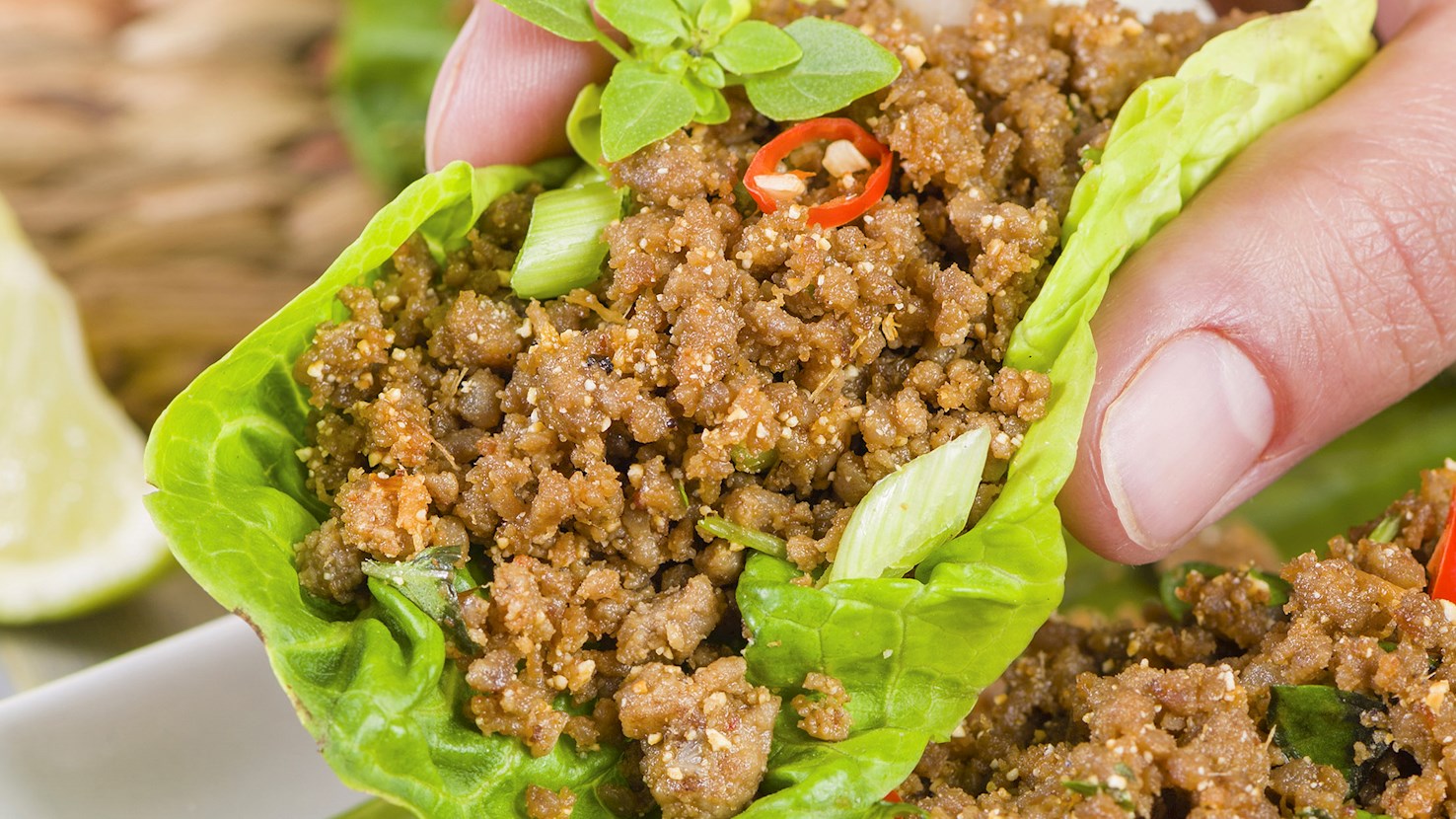
Larb, also spelled laap or larp, is a seasoned minced meat salad originating from Laos, where it functions as a national dish, and widely consumed throughout the Isan region of northeastern Thailand. The dish developed among ethnic Lao agrarian communities along the Mekong River basin as a method to process fresh livestock, wild game, or river fish immediately following slaughter, serving as a focal point for communal labor exchanges and ceremonial feasts. Preparation involves finely hand-chopping lean meat and offal, most commonly pork, beef, chicken, duck, or fish, and quickly blanching or cooking it in a small amount of broth before tossing the warm meat with fermented fish sauce (padaek or nam pla), lime juice, ground dried chili flakes, sliced red shallots, chopped mint, cilantro, and culantro. What distinguishes larb from other Southeast Asian seasoned meat preparations is the essential addition of khao khua, a coarse powder produced by dry-roasting raw glutinous rice grains until golden brown and grinding them, which acts as a textural thickening agent that binds the citrus-herb dressing to the minced protein while imparting a roasted, nutty flavor profile. Northern Thai variants (larb Lanna) differ by substituting lime juice and fish sauce with a complex blend of dried spices, including long pepper, dried ginger, and star anise, often incorporating fresh bile or blood for bitterness. Larb is eaten at room temperature or warm during daily family meals, market stalls, and village gatherings across Laos and northern Thailand. Diners eat the dish by hand, rolling small portions of warm steamed sticky rice (khao niao) into balls to scoop up the minced meat alongside raw vegetable garnishes including cabbage wedges, Thai eggplant, green beans, and cucumber slices, pairing the meal with cold lager beer, crushed sugar cane juice, or iced green tea.
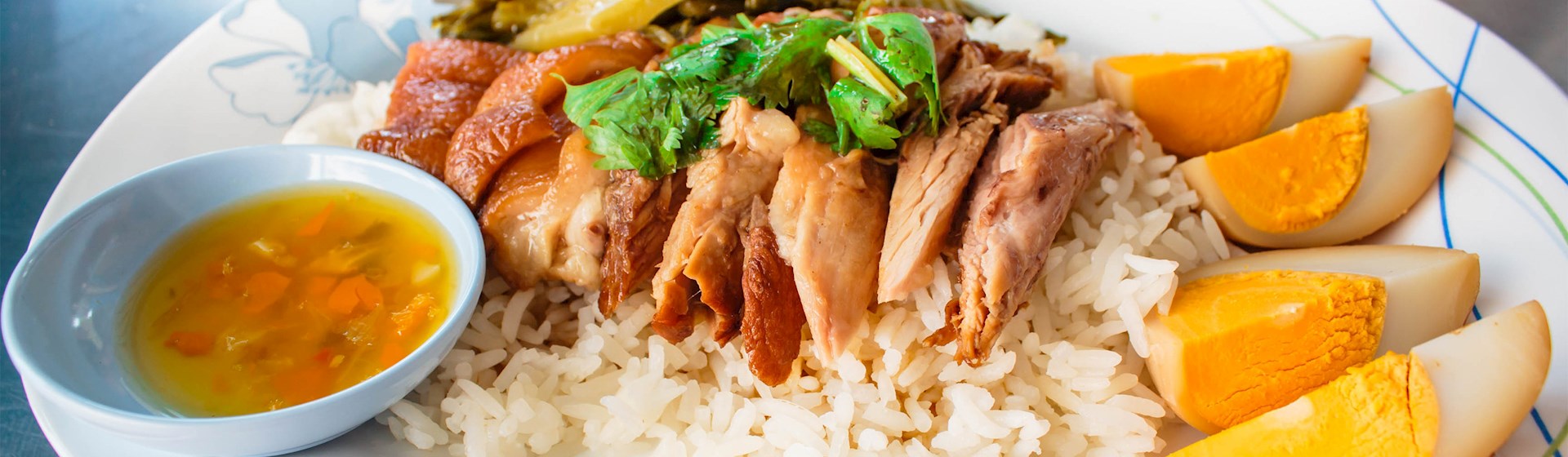
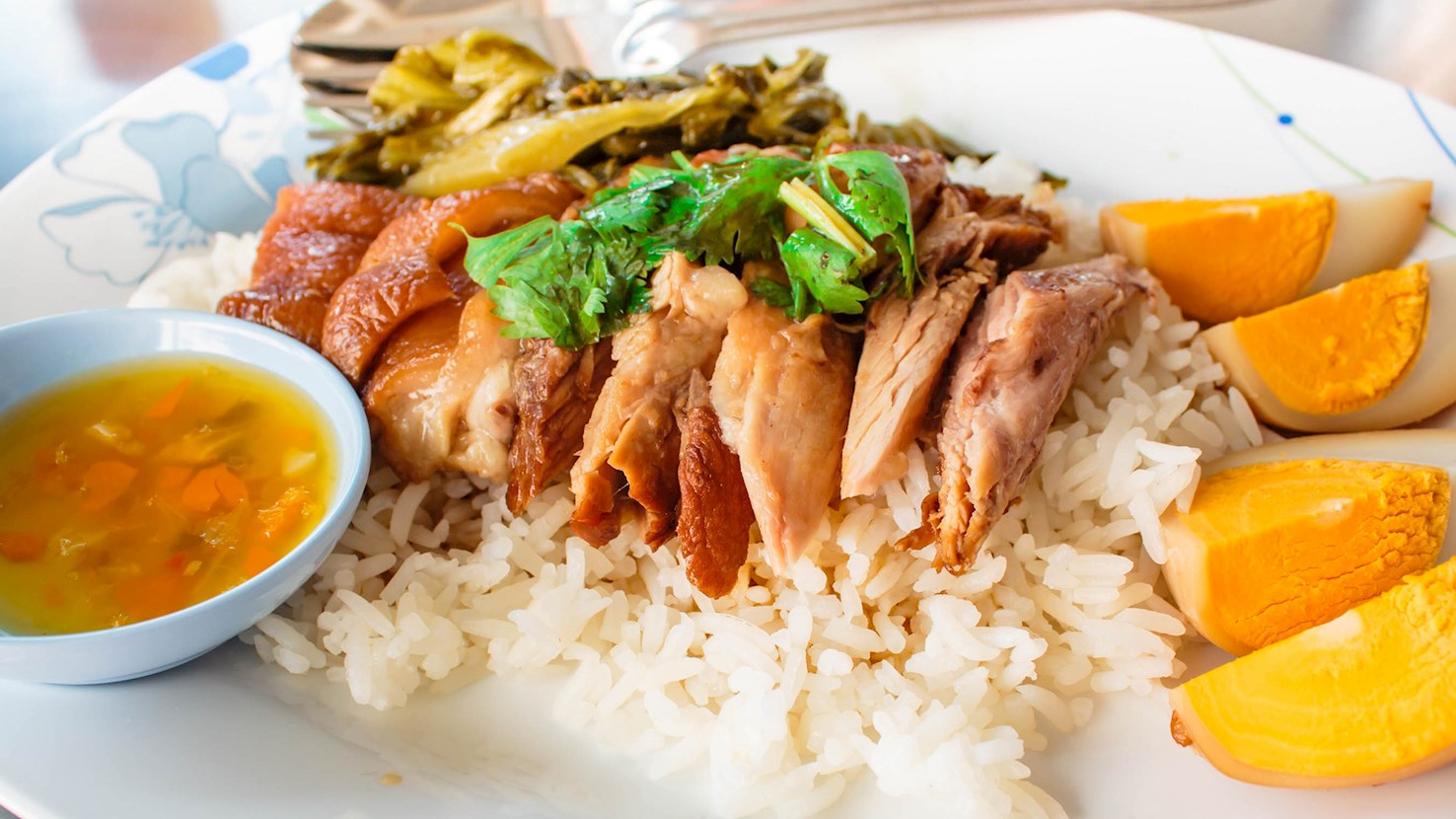
Khao kha mu is a dish which consists of braised pork leg served over rice, complemented with a variety of side dishes and flavorful condiments. The leg is shortly seared and then braised in a flavorful broth which is usually spiced with anise, coriander, five spice powder, soy sauce, brown or palm sugar, and cinnamon. The spices infuse the meat, and the whole process results in a tender, succulent, and incredibly flavorful dish. Boiled eggs, mustard greens, and the leafy Chinese broccoli kana are also added and cooked in the same broth. In Thailand, khao kha mu is usually sold by numerous street vendors who exclusively prepare it as their specialty. At many street food stalls, it is possible to order the entire leg, accompanied by rice and various side dishes and condiments, or choose a small serving of rice, topped with sliced pieces of tender pork meat. Every serving should include a piece of lean meat, chunks of thick, glutinous skin, and a side of broccoli, mustard greens, and sliced boiled eggs. Raw garlic and fresh chili peppers are occasionally served on the side, but they are more commonly incorporated into a sour and fiery sauce which is used to generously season this exquisite Thai dish.
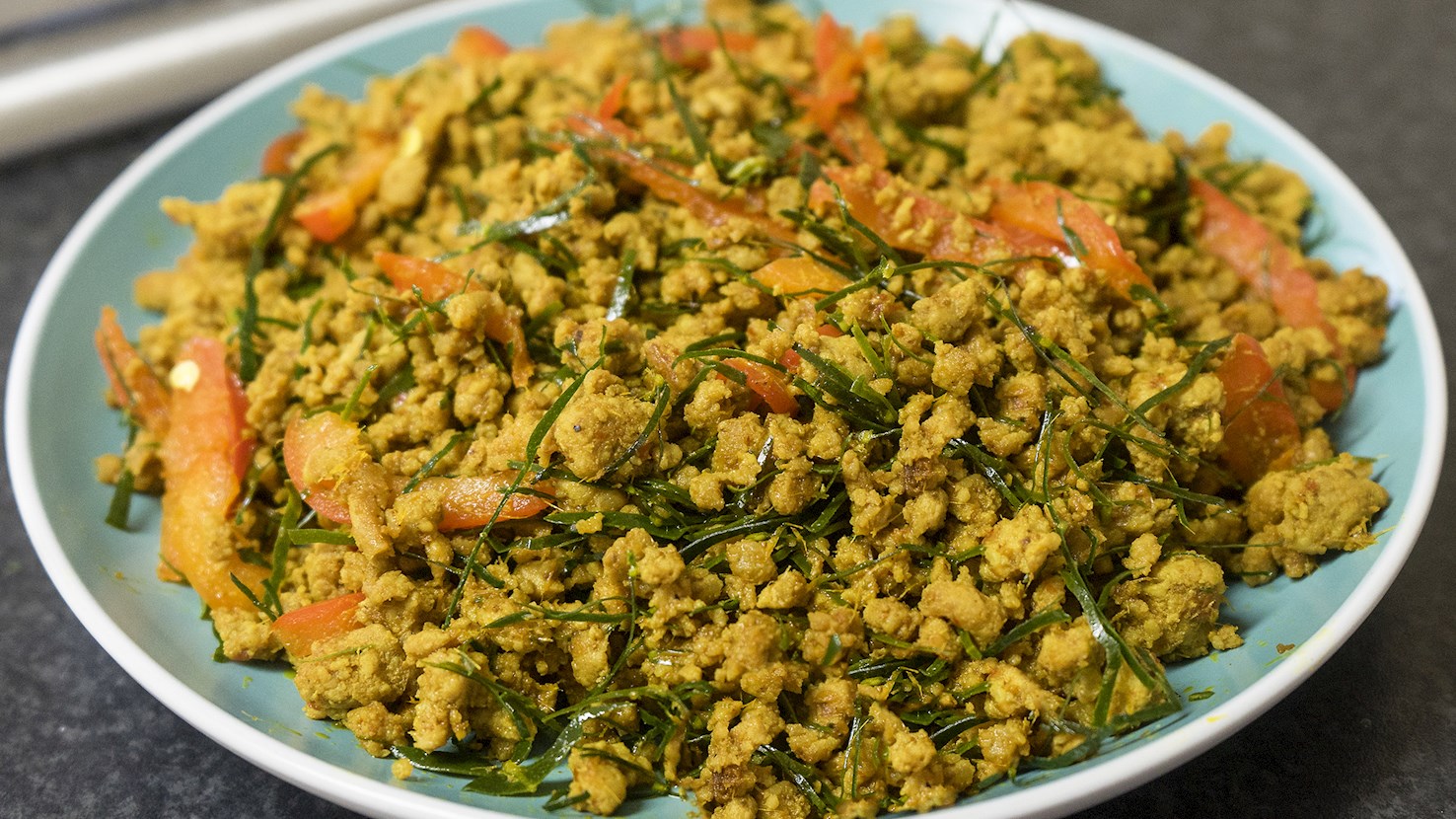
This southern Thai variety of dry curry combines spicy curry paste and ground pork. The fragrant paste consists of red chili peppers, lemongrass, garlic, turmeric, cilantro, galangal, and shrimp paste, while the whole dish is seasoned with palm sugar and fish sauce. No liquid is added to the curry, allowing the pork to be thoroughly coated in the curry paste and producing an almost dry version of a stir-fry. The dish is usually served with fresh vegetables and rice on the side.
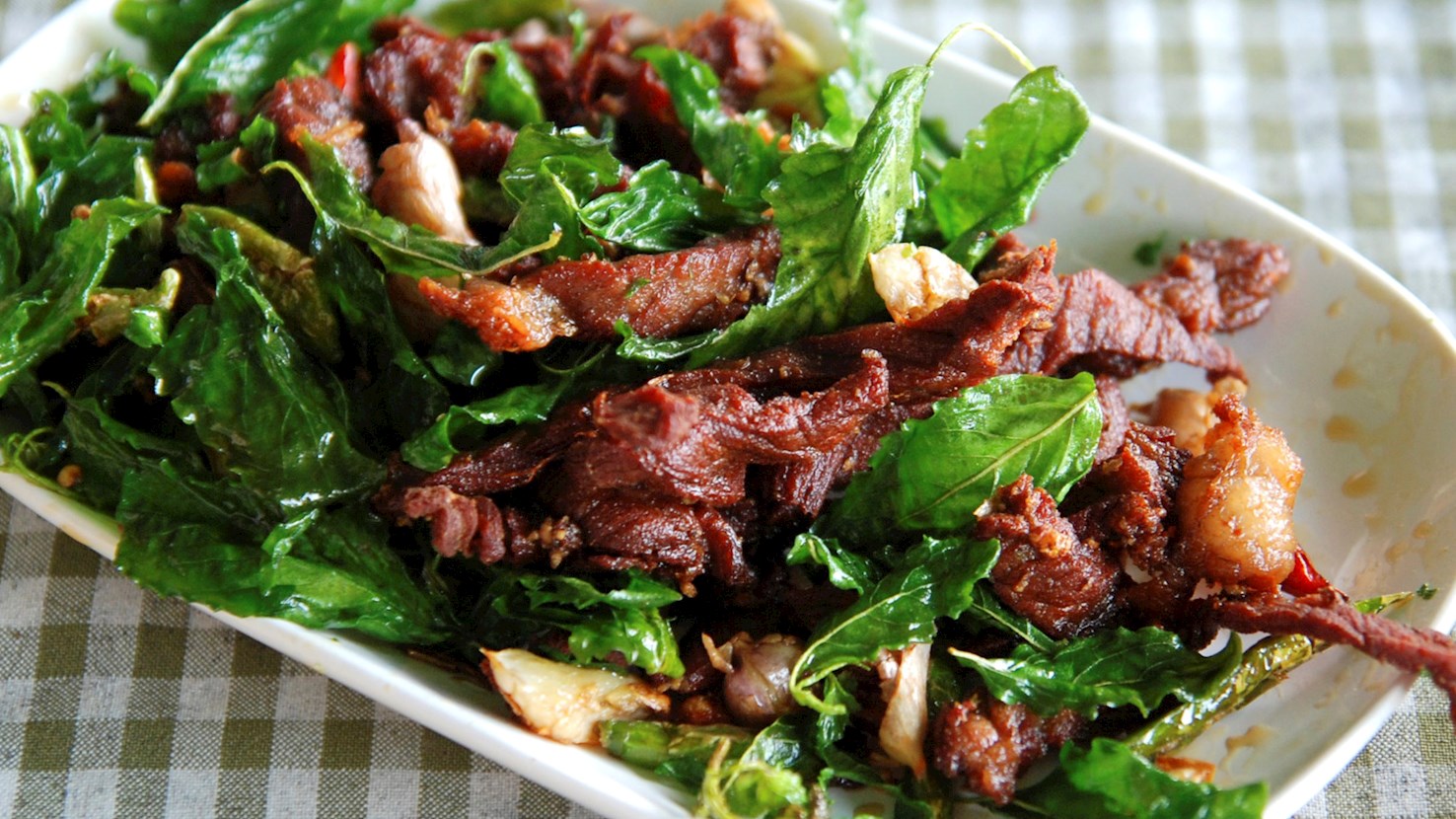
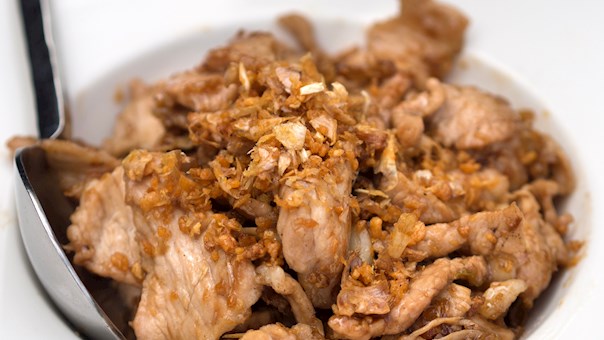
Mu daet diao is an authentic Thai dish made with sliced pork meat that is soaked overnight or for a few hours in a marinade of salt and fish sauce. It is then allowed to dry in the sun for several hours before preparation. For added flavor, the marinade can be flavored with chopped garlic, pepper, coriander seeds, light soy sauce, oyster sauce, and sugar. The sun-dried pork slices are deep-fried in heated oil until nice and fragrant, then served with cooked sticky rice, tomato slices, green lettuce leaves, and hot chili sauce for added spiciness. This Thai-style pork jerky is commonly sold by som tum vendors.
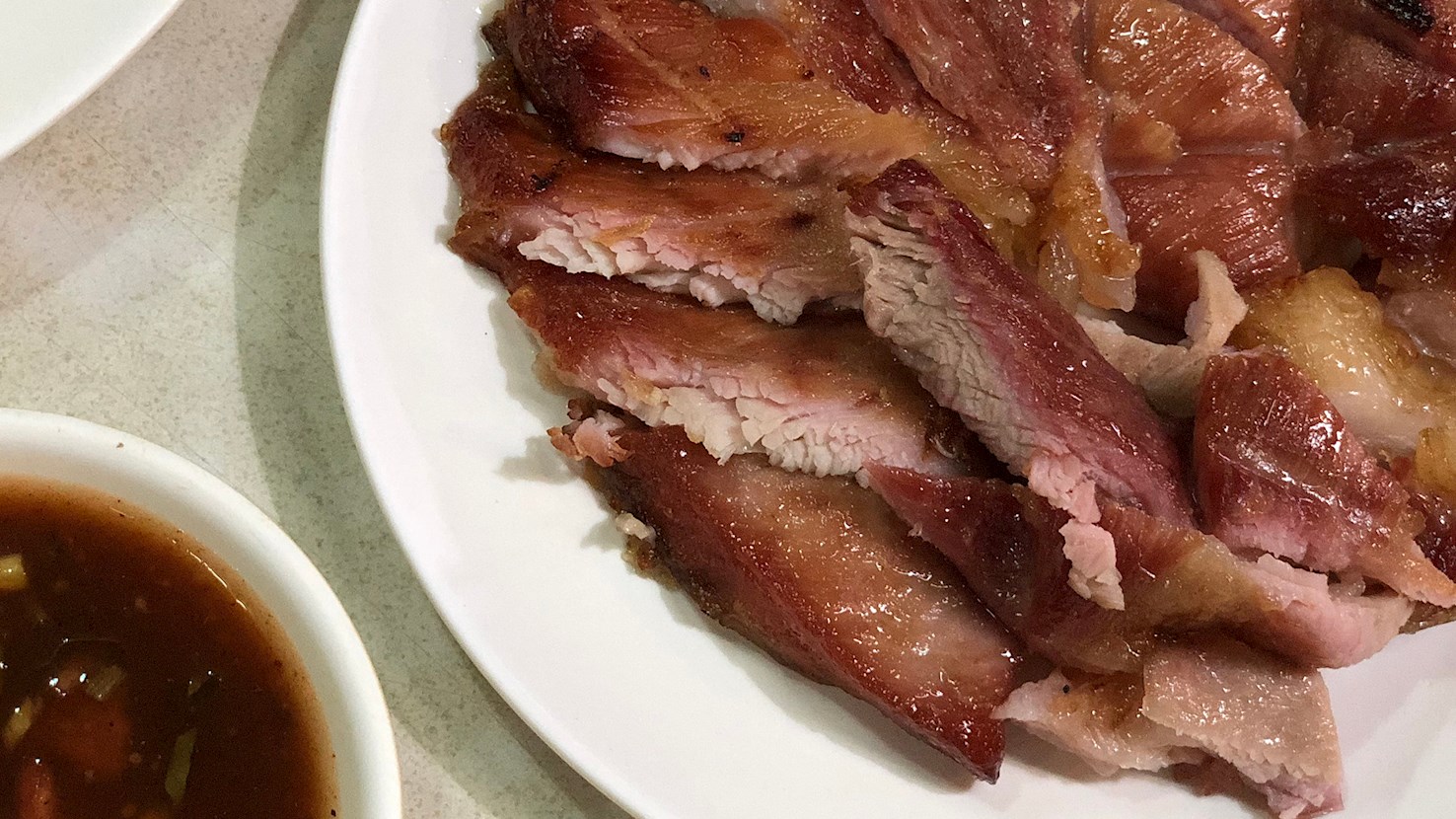
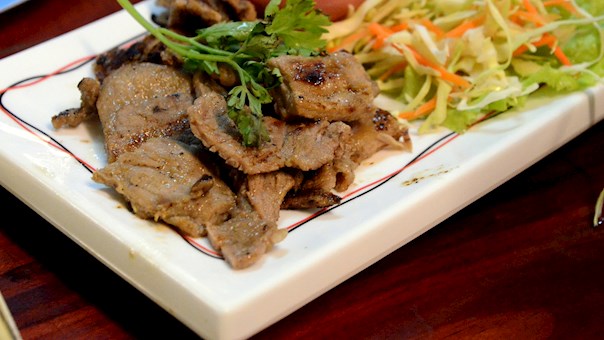
The star ingredient in this simple Thai dish is grilled pork, most commonly grilled pork neck (ko mu yang). Before grilling, the meat is usually marinated in a flavorful combination of fish sauce, palm sugar, soy sauce, lime juice, and Thai whiskey. The dish is usually served with rice, fresh vegetables, or salads on the side. Apart from various sides, mu yang is always accompanied by a bowl of jaew dipping sauce.
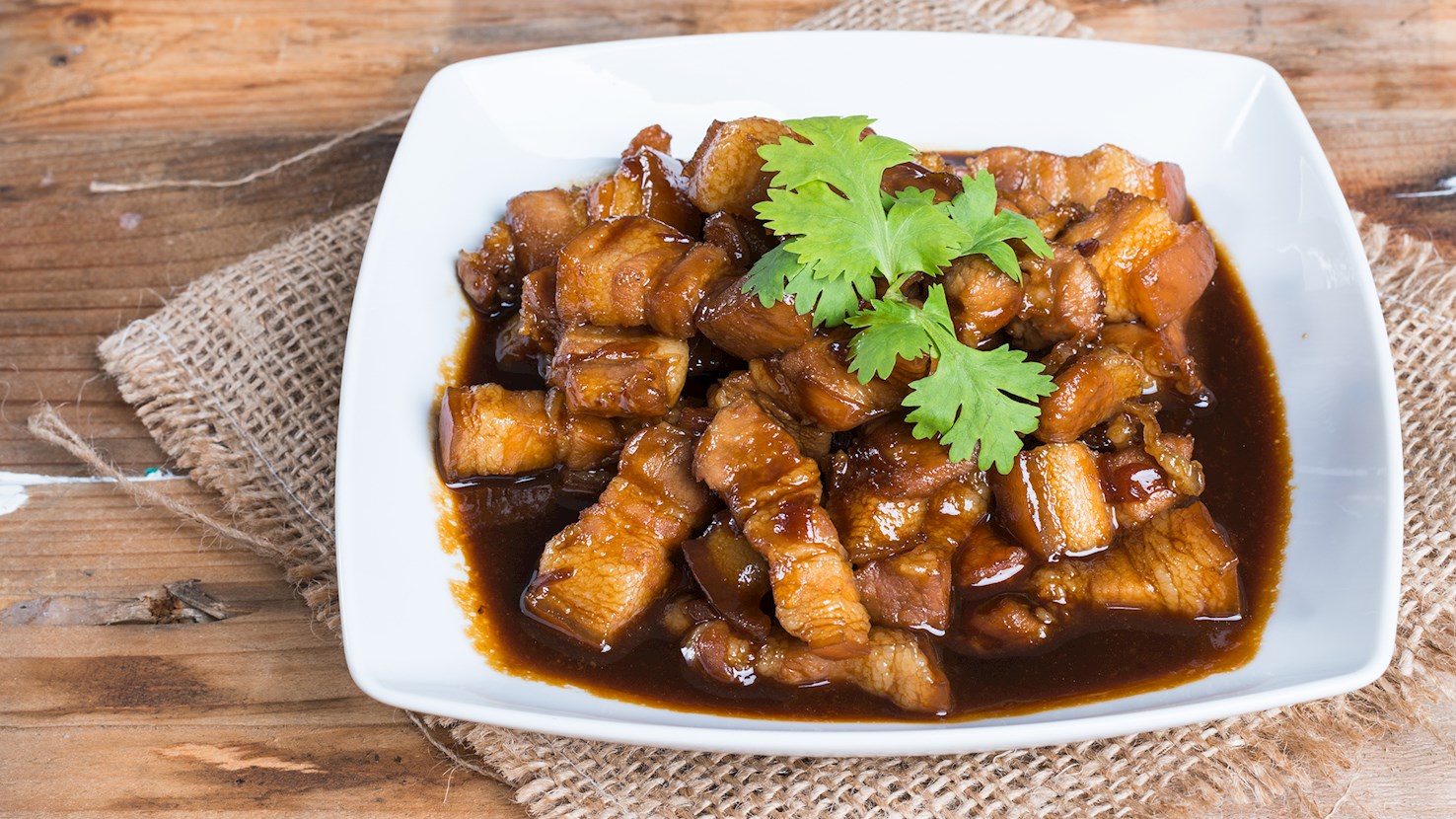
This traditional Thai dish is prepared with various pork cuts that are cut into bite-sized pieces before they are fried in a subtly sweet combination of sugar and spices. Best prepared with fatty cuts such as pork belly, neck, or shoulder, the meat is thoroughly coated with a thick, caramelized sauce that usually employs palm or brown sugar, garlic, and fish or soy sauce. Mu wan is rarely enjoyed on its own, and it is typically served alongside steamed rice or green papaya salad (som tam).
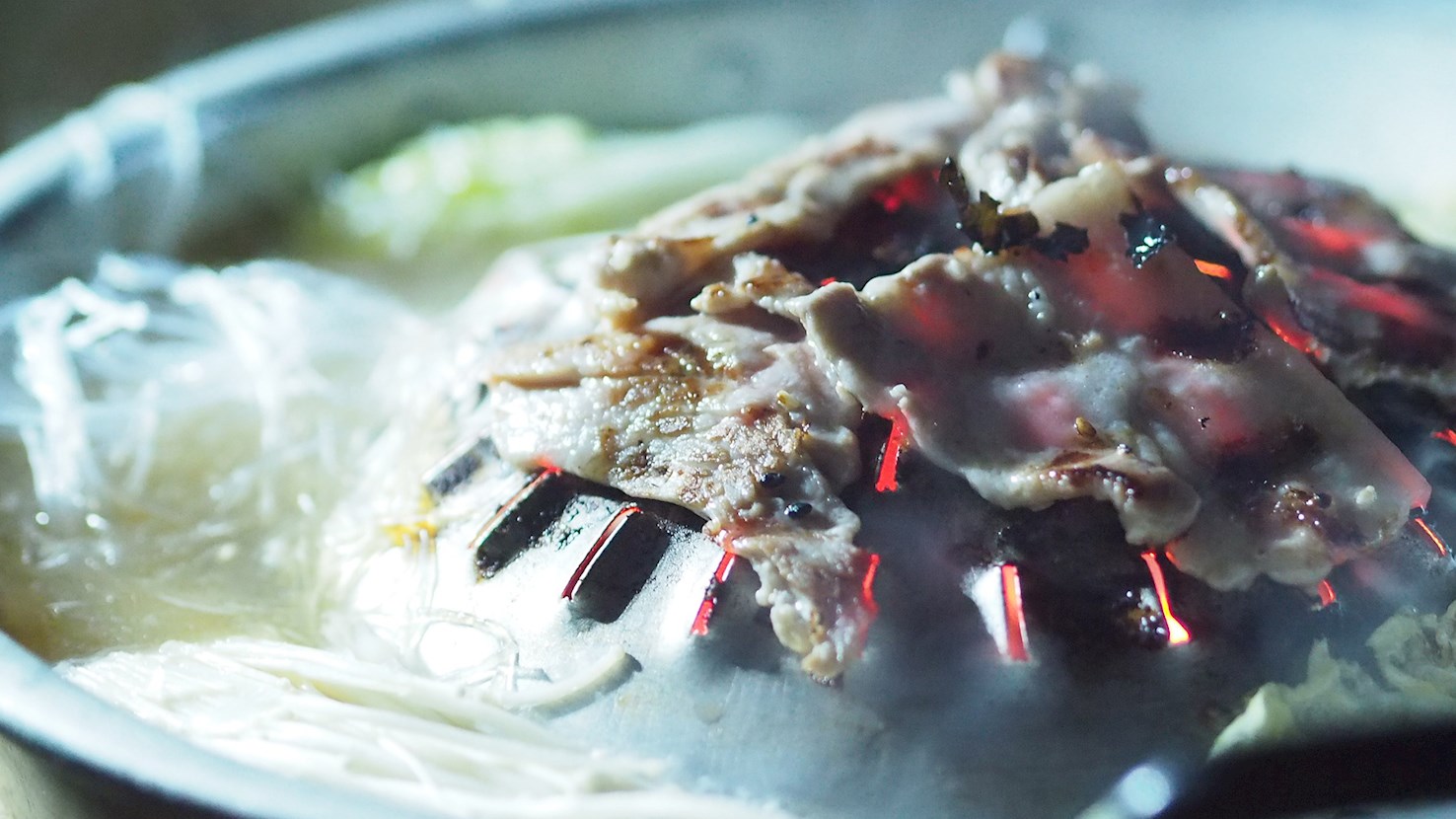
This Thai pork dish is a crossover between Korean barbecue and Chinese hot pot. Slices of meat are grilled on top of a dome in the middle of the pan, which is surrounded by a broth in which other ingredients such as vegetables, fish balls, or mushrooms are cooked, hence the similarity to the Chinese hot pot. The mu kratha pan is heated over charcoal, as opposed to the Korean barbecue which is cooked on a gas stove, but the setup is similar. Mu kratha is usually accompanied by various types of spicy dipping sauces known as nam chim.
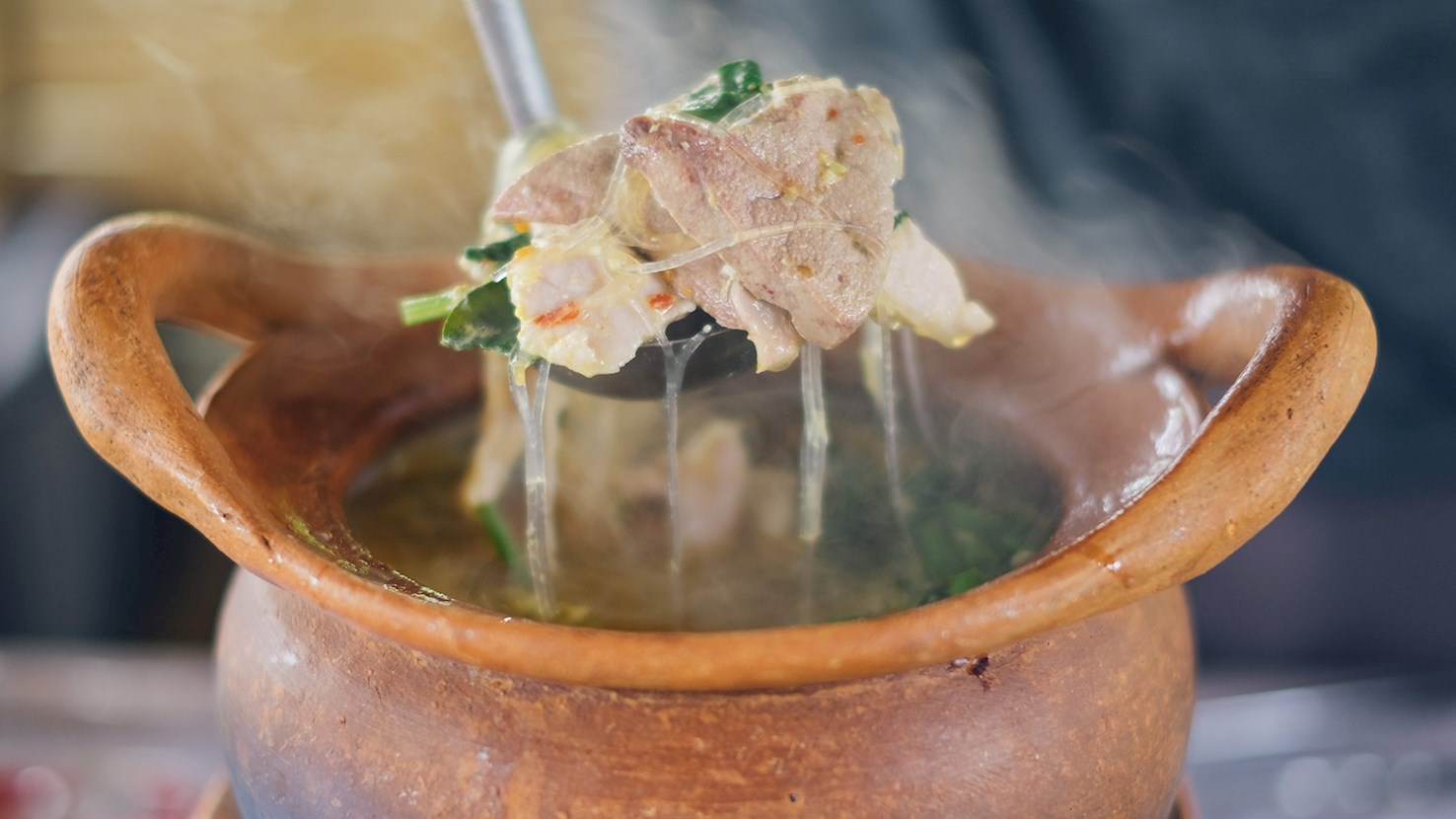
The term chim chum refers to a traditional Thai dish as well as the earthenware pot in which the dish is cooked. The preparation starts with a broth that is flavored with galangal, lemongrass, and Thai basil. Various vegetables are added next, and the broth is served together with marinated pork, chicken, or tofu - which the guest shortly simmer until cooked. Chim chum, which roughly translates as drip and drop, is intended to be eaten as a communal meal, and it is usually served with nam chim - a dipping sauce consisting of garlic, chili peppers, fish sauce, lime juice, coriander, shallots, and palm sugar.
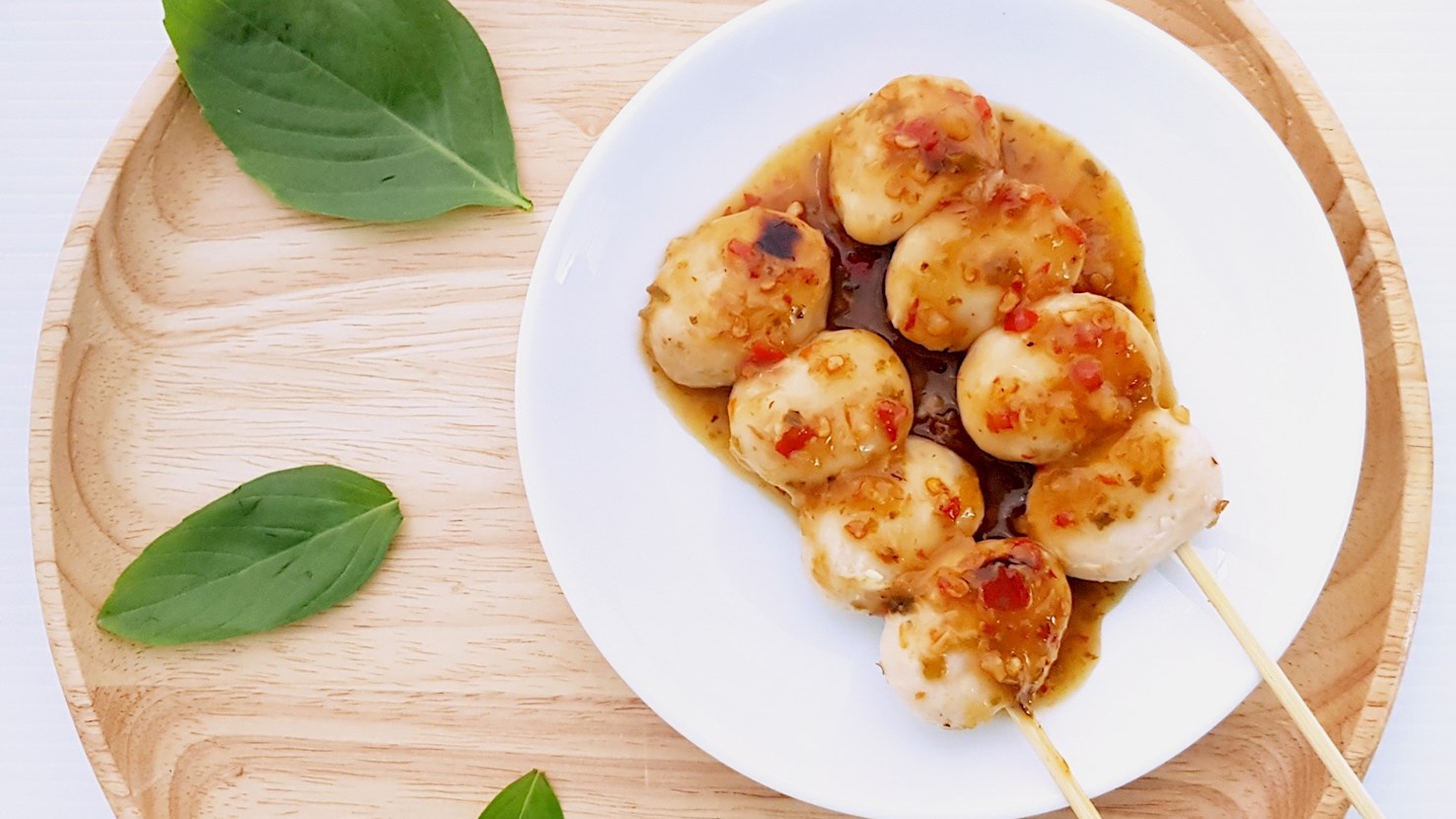
This Thai snack consists of grilled or deep-fried meatballs made with a mixture of ground meat (usually beef or pork) combined with herbs and seasonings. The dish is served on a bamboo skewer, typically accompanied by a sweet-and-spicy dipping sauce. Luk chin ping is sold by many street vendors in Thailand and it is beloved by children and adults alike.
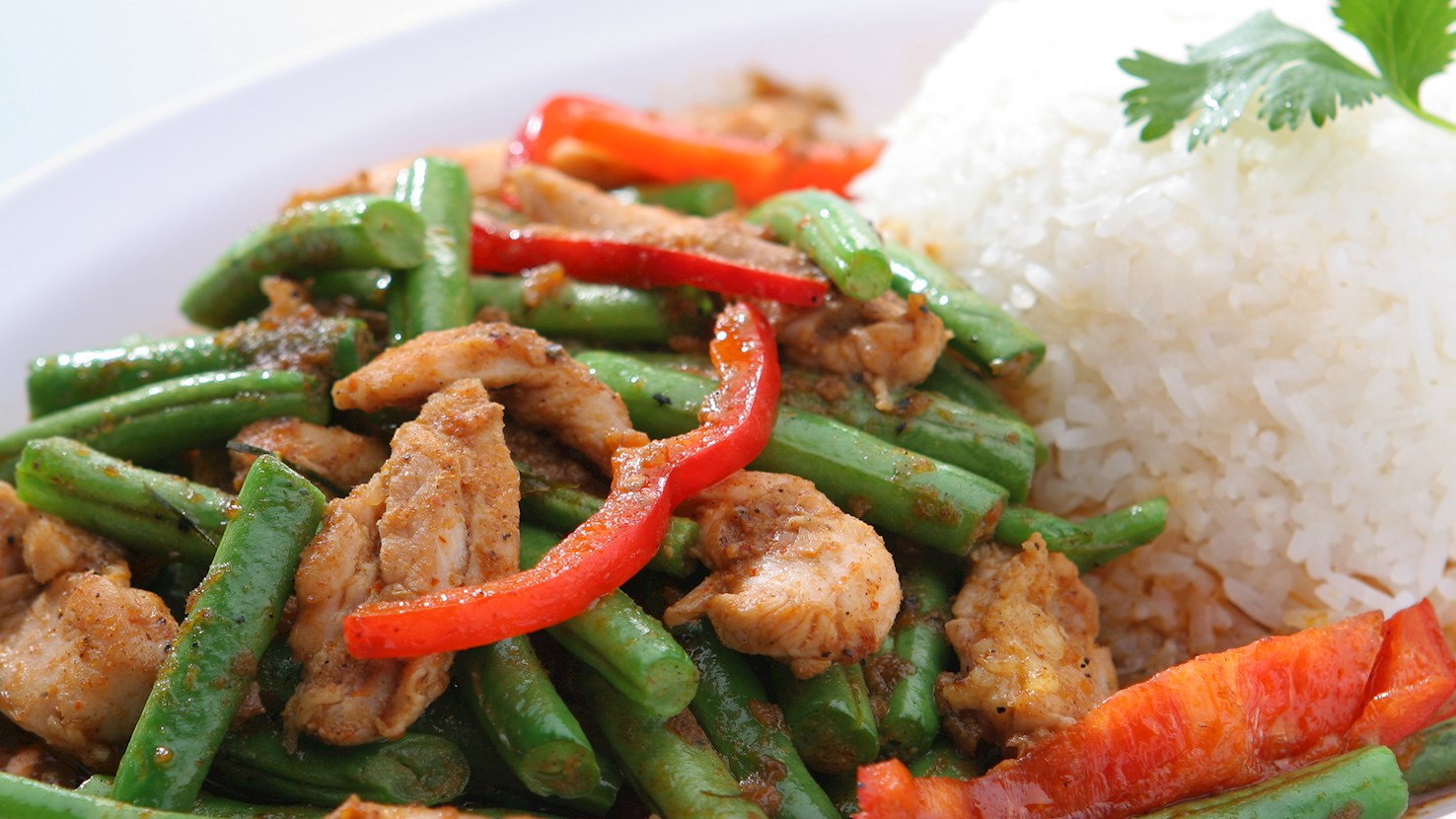
Phat phrik is a variety of dry Thai curry that usually combines green beans and a choice of fish, pork, or tofu. Just like other types of Thai curries, the dish is based on a thick paste consisting of different spices such as chilis, lemongrass, galangal, shallots, or kaffir lime leaves, and optionally ginger. The paste is fried before other ingredients are added, and the dish is usually seasoned with fish sauce and palm sugar. Phat phrik is typically served alongside steamed rice.
TasteAtlas food rankings are based on the ratings of the TasteAtlas audience, with a series of mechanisms that recognize real users and that ignore bot,
nationalist or local patriotic ratings, and give additional value to the ratings of users that the system recognizes as knowledgeable.
TasteAtlas Rankings should not be seen as the final global conclusion about food. Their purpose is to promote excellent local foods,
instill pride in traditional dishes, and arouse curiosity about dishes you haven’t tried.





What People Say