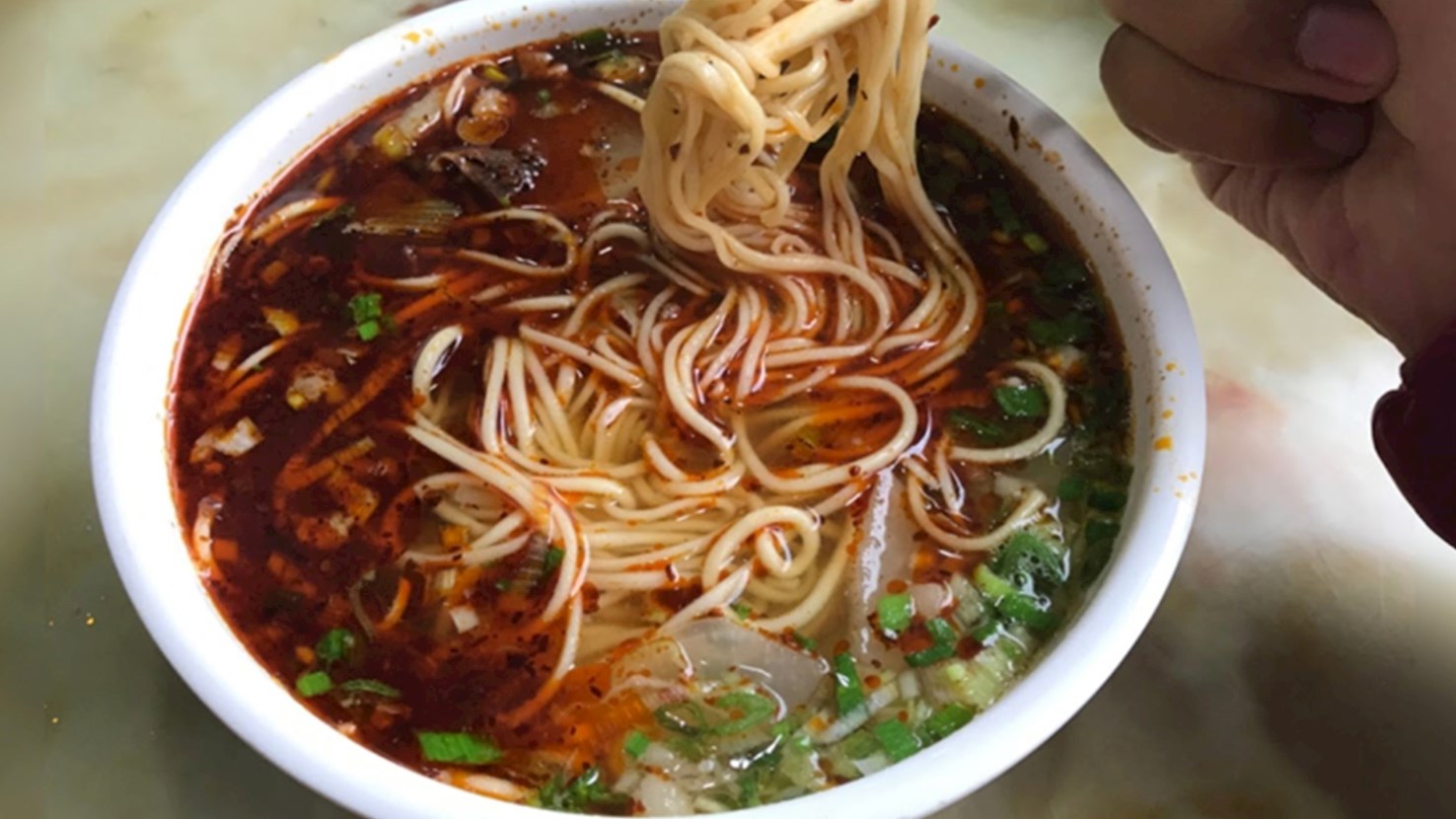
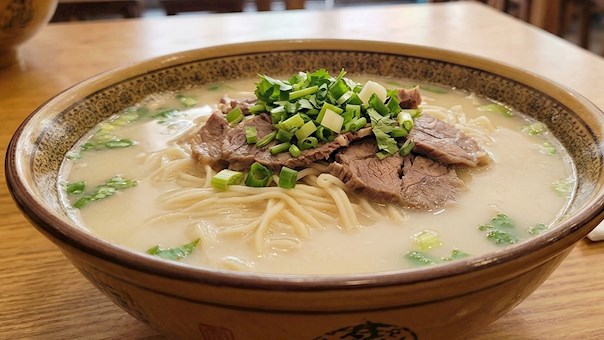
Lanzhou lamian is a Chinese noodle dish known for its hand-pulled noodles, originating from Lanzhou. "Lamian" translates to "pulled noodles", as the dough is stretched and folded repeatedly by hand to create long, thin noodles with a perfect chewy texture. This technique not only aligns the gluten but also enhances the texture of the noodles. The resulting noodles are cooked in a rich beef broth that is clear and flavorful, without the use of soy sauce, allowing the natural flavors of the ingredients to shine through. Lanzhou lamian is often served with thinly sliced beef and various toppings, and is traditionally garnished with fresh cilantro, chili oil, and slices of white radish, adhering to a visual principle of the "five colors": clear broth, white radish, green cilantro, red chili oil, and yellow noodles. This dish has gained immense popularity across China and is often recognized as one of the country's top noodle dishes. The origins of Lanzhou lamian date back to the Tang Dynasty, with its modern form believed to have been popularized in the early 19th century by a Hui Muslim vendor named Ma Baozi. Today, it is commonly found in numerous noodle shops throughout China, particularly those owned by Hui families who serve halal food.
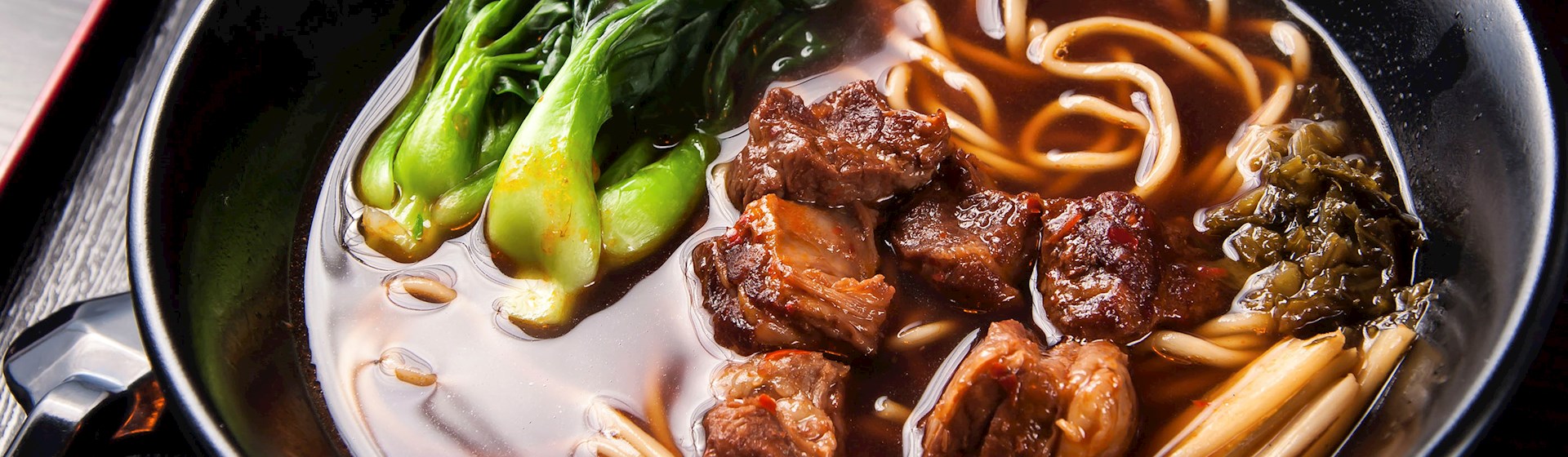
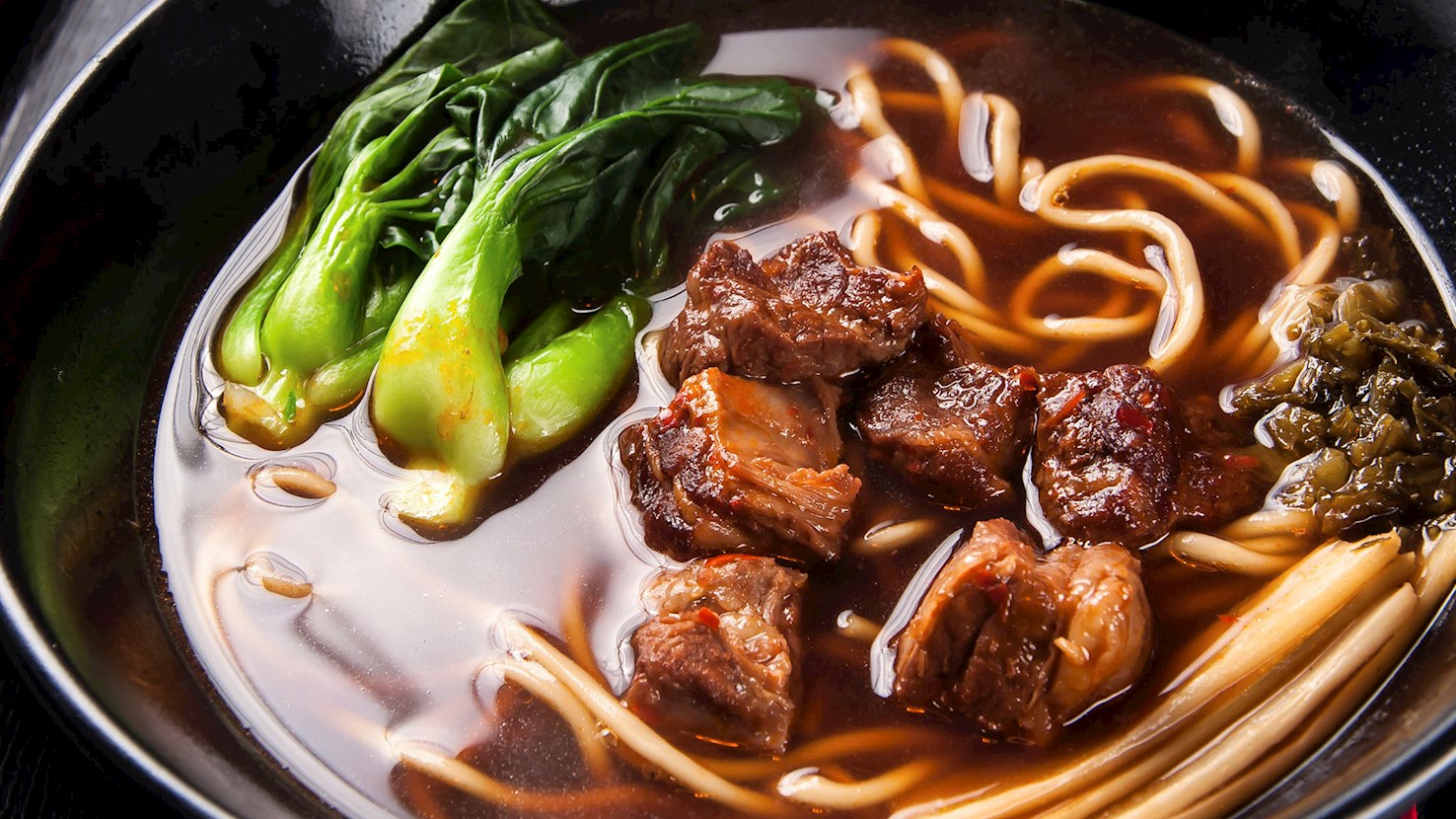
The savory, spicy beef noodle soup is the national dish of Taiwan and the source of immense pride for the locals. The dish is an ideal winter comfort food, typically consisting of beef, broth, vegetables, noodles, and spices. Beef noodle soup has a great Sichuan influence dating back to the 1940s, when China was in civil war and many Chinese people moved to Taiwan, creating this cross-provincial dish and incorporating chili bean sauce and Sichuan peppercorns into it along the way. Variations are endless when making this long-simmering stew, and in Taiwan, there are numerous side dishes to accompany it, such as seaweed and braised dried tofu. Today, there is even an annual Beef Noodle Festival held in Taipei, where various restaurants and cooks compete for the prestigious title of Best Beef Noodle.
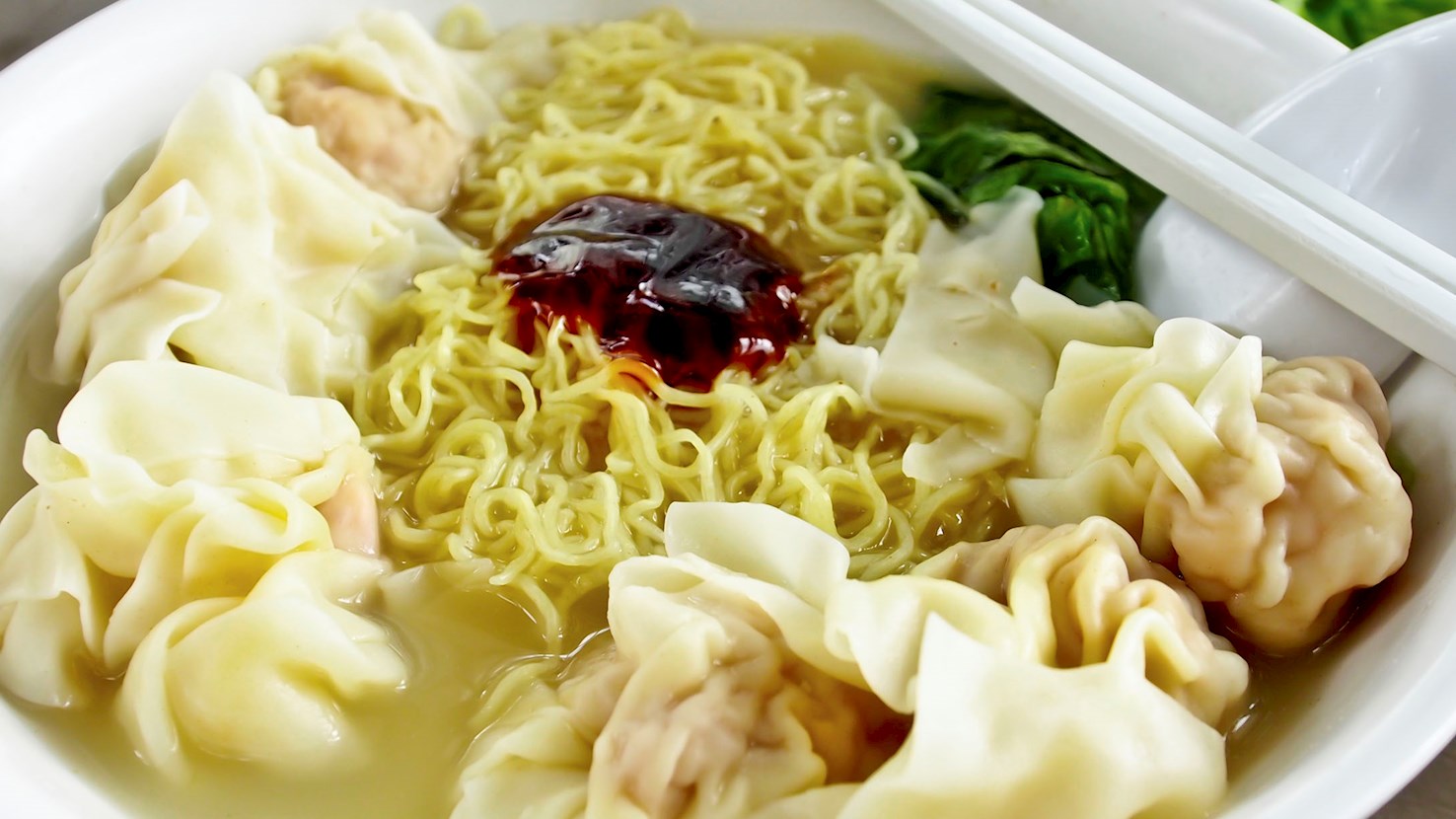
Wonton noodles is a popular Cantonese noodle dish with many regional varieties found throughout Southeast Asia. Traditionally, it consists of chewy egg noodles and wonton dumplings, combined and served in a flavorful chicken, pork, or seafood broth. The dumplings are usually filled with a combination of minced pork and shrimps, lightly flavored with sesame oil, soy sauce, and grated ginger. The stringy thin egg noodles are the most common variety found in many versions of the dish. The choice of garnishes is region-specific and is influenced by common culinary traditions of the particular area where wonton noodles are found. The traditional Cantonese version is typically served with sliced chives and scallions sprinkled on top of the assembled soup. In Malaysia, Singapore, and Thailand, slices of barbecued pork are the most common addition, usually placed on top of the soup. Malaysian versions are often adapted with the addition of green leafy vegetables and use pickled green chilis as a standard condiment. The dish is also widely popular in dry form, in which the noodles are drained and served alongside dumplings, meat, and vegetables, while the fragrant broth is served on the side. Whether it is favored as a clean and original Cantonese variety or the more nutritious version found in other Asian countries, wonton noodles is one of the classic dishes that is considered a staple of Chinese and Asian cuisine.
Over the bridge rice noodles (guo qiao mi xian) is a rice noodle soup, a specialty of Yunnan cuisine. When broken into segments, the soup consists of chicken soup, rice noodles, sliced meat, and vegetables, as well as some additional ingredients used for garnishing and seasoning. The dish originated from Mengzi County over 100 years ago. What's peculiar about this soup is the way in which it is prepared; a bowl of hot soup, a bowl of rice noodles, and a platter with sliced ingredients are brought to the table where the dish is assembled and cooked. Ingredients are added one by one, starting with meat. Next are quail eggs, squid, and tofu skin, followed by vegetables, often only bok choy, Chinese mushrooms, and herbs. Rice noodles are saved for the end, and the finished soup gets divided into individual bowls. Given that the soup can be somewhat bland, the taste can be adjusted to personal preference with soy sauce, vinegar, pickled vegetables, and chili sauce. The rice noodle soup is often served in restaurants and sold by street vendors, but the price is determined by the number of ingredients - the more, the pricier.
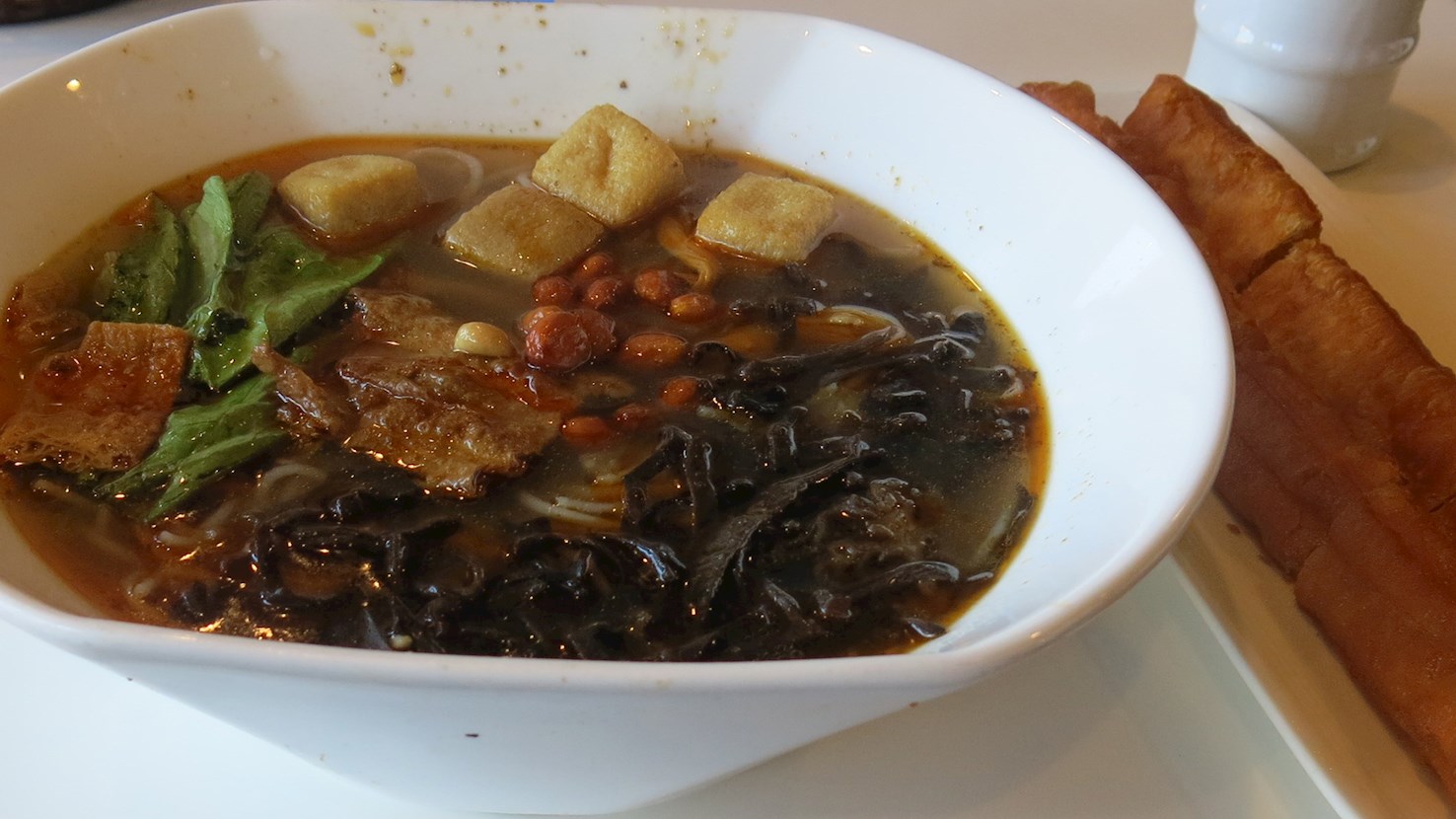
Luosifen, a native to Liuzhou in China's Guangxi province, is a dish consisting of a snail-based broth, rice noodles, and an array of additional ingredients, typically including pickled bamboo shoots, peanuts, tofu skins, and green vegetables. The hot and spicy taste comes from an elaborate concoction of spices and herbs that's used to make the broth, as well as a sizable amount of chili oil that's added to the finished soup at the end. Luosifen is typically sold by street vendors and only rarely served in restaurants, with each place having their secret recipe. Recently, specialized luosifen restaurants started to appear in numerous Chinese cities, but also abroad.
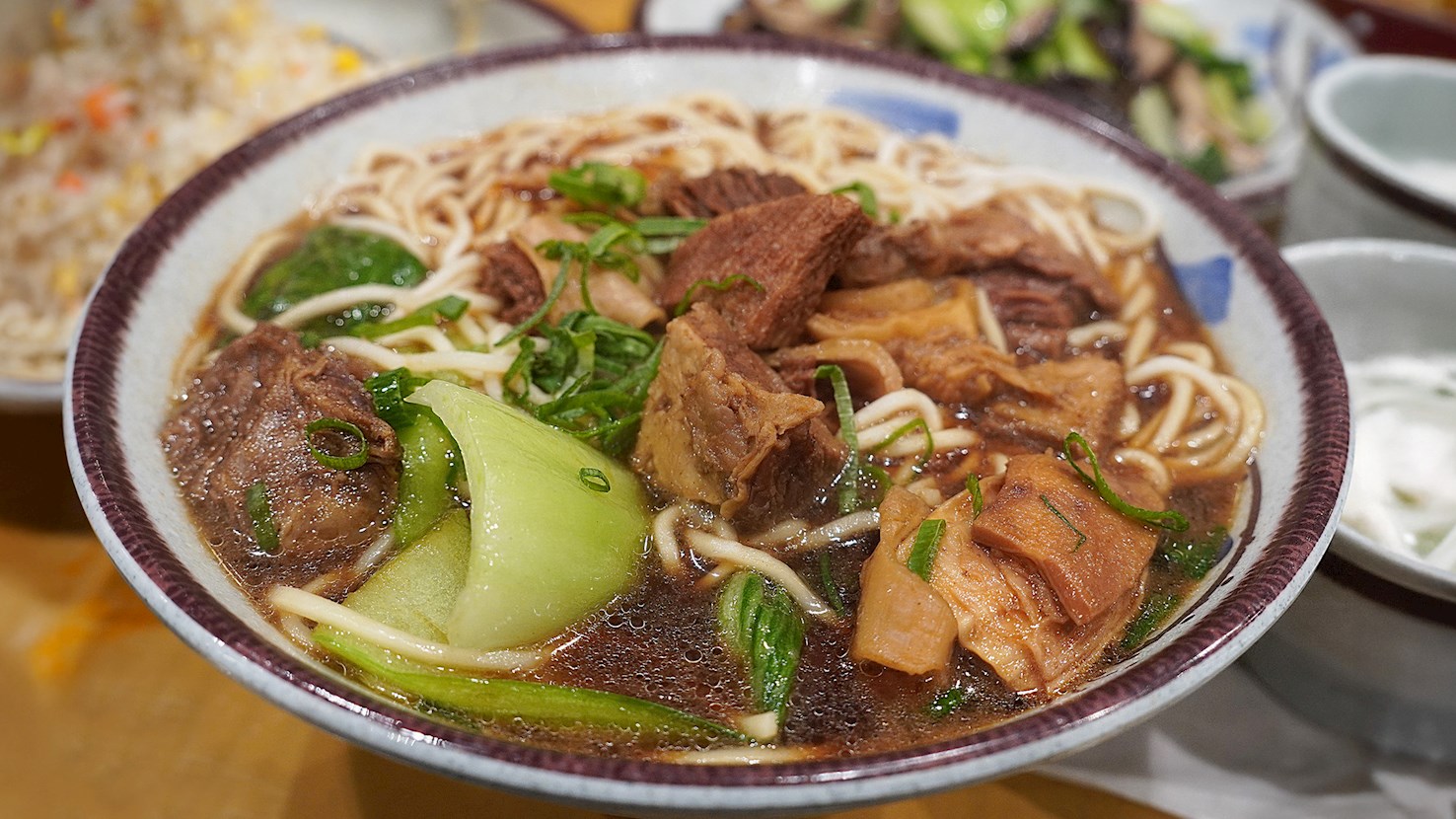
Braised beef noodle soup, is a well-known dish from China that has become especially prominent in Taiwan, where it is considered a staple of local food culture. It consists of wheat noodles served in a savory broth with chunks of soy sauce–braised beef, often accompanied by vegetables and pickled greens. The dish can be traced back to Chinese beef-braising techniques, particularly from Sichuan region where beef was more commonly eaten. When migrants brought these cooking styles to Taiwan in the mid-twentieth century, they adapted them to local tastes, creating the red-braised version that has since become a hallmark of Taiwanese street food and restaurant menus. Over time, regional variations emerged, with some emphasizing spiciness, others focusing on clear broth, and many blending influences from different parts of China to suit local preferences. Preparation begins with beef shank or brisket, which is cut into chunks and slowly braised with soy sauce, rice wine, ginger, garlic, star anise, and other aromatics until tender. The braising liquid is often combined with stock to form the base of the soup. Wheat noodles are cooked separately and placed in bowls, topped with the beef and broth, and sometimes garnished with blanched greens, scallions, and pickled mustard stems. The dish can be adjusted for depth and spice, with some versions adding chili bean paste or dried chilies to enhance heat and complexity. Today, braised beef noodle soup is eaten widely in both mainland China and Taiwan, with Taiwan in particular treating it as an everyday meal available in night markets, noodle shops, and restaurants ranging from casual to upscale. It is enjoyed at any time of day, from a quick lunch to a filling dinner.
Lǔ dàn miàn is a Chinese noodle dish that combines wheat noodles with soy-braised eggs, creating a meal that is both simple and flavorful. It is most closely associated with central and eastern China, where soy-braising techniques are widely used to prepare eggs, meats, and tofu. The practice of braising eggs in soy sauce, spices, and aromatics dates back centuries, rooted in methods of preserving and flavoring food. Eggs simmered in a seasoned liquid not only lasted longer but also absorbed a rich, savory taste that elevated them beyond a plain boiled egg. When paired with noodles, lu dan became an easy yet hearty topping that added both protein and depth of flavor to the bowl. Over time, this pairing spread through noodle shops as well, reinforcing its place in local food culture. The preparation begins with making the braised eggs. Hard-boiled eggs are peeled, then simmered in a mixture of soy sauce, water, sugar, star anise, cinnamon, and sometimes Sichuan peppercorns or dried chili. This process allows the eggs to absorb color and seasoning, giving them a dark, savory exterior and a layered taste. Meanwhile, wheat noodles are boiled until chewy and served with a light broth or a seasoned sauce, depending on the style. The braised eggs are halved and placed on top, often alongside vegetables such as bok choy or spinach. Garnishes like scallions or a drizzle of sesame oil may be added to complete the bowl. Today, lǔ dàn miàn is enjoyed in households and small eateries across China and Taiwan, often as a quick but filling meal. It is eaten at any time of day, especially for lunch or dinner, and is a common offering in noodle stalls where braised ingredients are central to the menu.
Shāchá miàn is a noodle dish especially associated with Xiamen and nearby coastal cities, where it is prepared with wheat noodles served in a broth seasoned with shāchá sauce, a savory paste made from dried seafood, spices, peanuts, and aromatics. It developed in a region with a long history of overseas trade and migration, during which southeast Asian satay sauces influenced local cooking, and Fujian cooks adapted those flavors into a paste suited to their soups and stir-fries. Over time, shāchá sauce became a staple in markets and home kitchens, and noodles cooked with it formed a recognizable regional dish often sold in small eateries and breakfast stalls. Preparation begins with a clear broth, usually made from pork bones, dried shrimp, or a mix of both, which is simmered until lightly flavorful. Shāchá sauce is then added and mixed until it dissolves into the liquid, creating a broth with a slightly opaque, amber appearance. Fresh wheat noodles are blanched separately and placed into a bowl, then topped with sliced pork, thinly cut beef, offal, seafood, or fish balls depending on local preference. The hot shāchá broth is poured over everything, and some cooks finish the bowl with garlic oil, chopped scallions, or fried shallots. Certain vendors offer dry versions by tossing the noodles directly with shāchá sauce and serving the broth on the side. The dish is eaten throughout the day in Xiamen and surrounding areas, commonly for breakfast or as a quick meal at small shops, night markets, and household tables. It pairs well with light teas, soy milk, or simple side dishes such as boiled greens, fried dough sticks, or pickled vegetables that balance the rich, aromatic broth.
Chángdé niúròu fěn is a beef rice noodle soup from Changde in Hunan province, known for its rich broth, tender beef, and smooth, slippery noodles. It is one of the most representative breakfast foods in the city and has become an essential part of the local food culture, often found in street stalls and small eateries that serve it from early morning until midday. The dish is deeply tied to Changde’s culinary identity and reflects the region’s preference for hearty, savory flavors balanced with spice and aroma. Its origins trace back to local noodle shops that began preparing beef noodles as a nourishing and affordable meal for workers and travelers in the early 20th century. Rice noodles had long been a staple in Hunan due to the region’s abundant rice cultivation, and beef became a favored addition as cattle rearing grew more common in inland China. Over time, cooks refined the recipe to highlight the beef’s flavor through slow cooking and seasoning techniques typical of Hunanese cuisine, which favors depth and intensity over subtlety. The dish’s popularity spread beyond the city, and it is now considered a benchmark example of how local flavors shape noodle-based meals in southern China. Preparation begins with the broth, which is the foundation of the dish. Beef bones and cuts with connective tissue are simmered slowly for several hours with ginger, garlic, scallions, star anise, and sometimes dried tangerine peel, creating a deep and aromatic stock. Thin slices of beef, often brisket or shank, are stewed separately with soy sauce, Shaoxing wine, and chili paste until tender and infused with flavor. The rice noodles, made from finely ground rice flour and water, are briefly blanched to maintain their delicate texture before being added to the hot broth. The stewed beef is then layered on top, and the bowl is finished with chopped scallions, pickled vegetables, chili oil, and occasionally a splash of beef fat to enrich the flavor. Chángdé niúròu fěn is most often eaten as a breakfast or lunch dish, commonly enjoyed at small family-run noodle shops where bowls are prepared to order and served steaming hot. It is sometimes paired with pickled side dishes or small plates of cold vegetables, and in colder months, diners may add extra chili paste or fermented bean sauce to increase the warmth and depth of flavor.
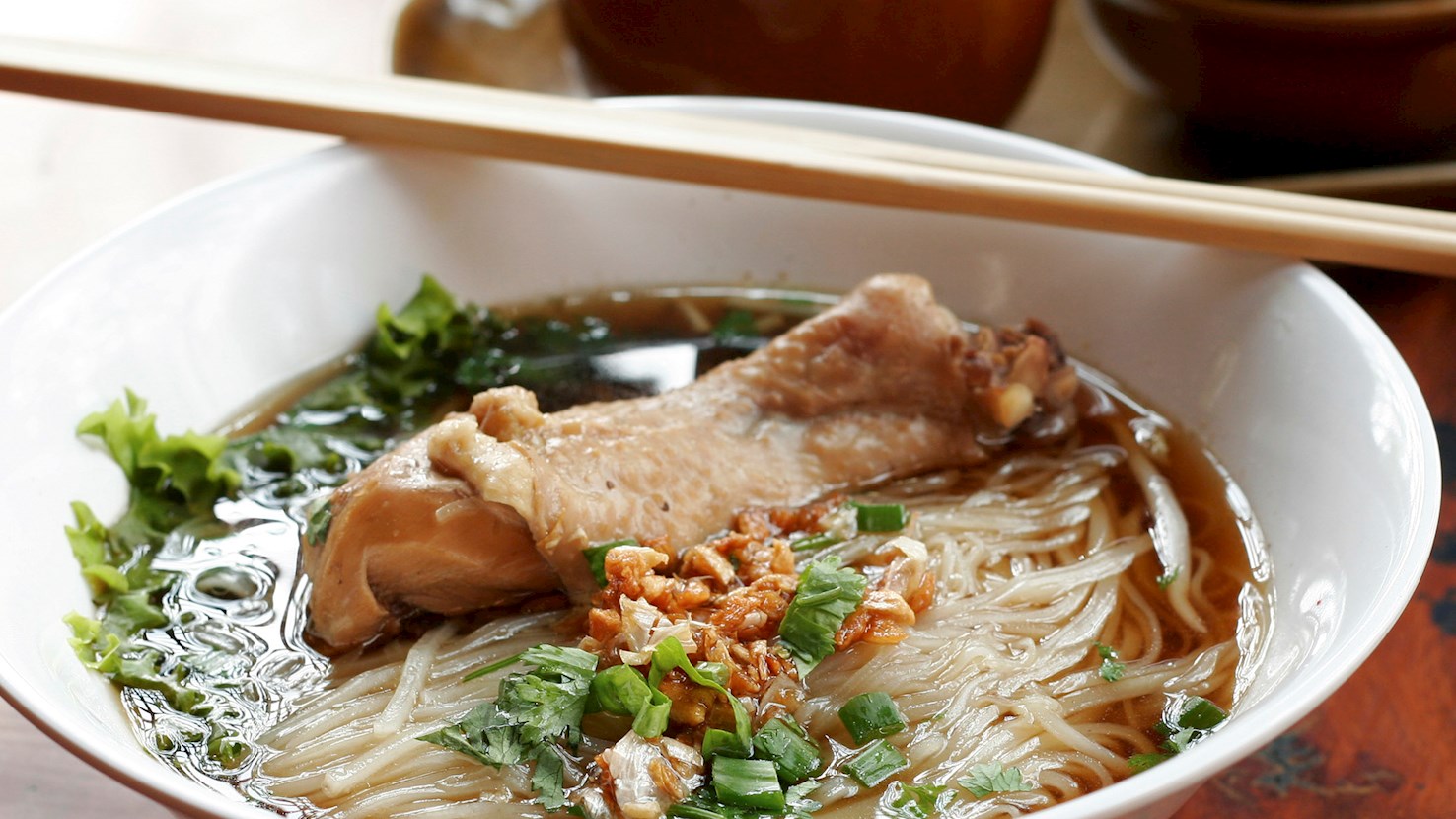
Xiānggū jītuǐ miàn is a Chinese noodle soup made with chicken drumsticks and shiitake mushrooms, enjoyed for its savory broth and balanced flavors. Originating from Chinese home kitchens, it draws on the long-standing culinary pairing of poultry with mushrooms, a combination valued for both taste and nourishment. In many regions of China, chicken soup has been associated with comfort and recovery, while mushrooms have been prized for their depth of flavor, and bringing them together in a noodle bowl reflects both practicality and culinary tradition. The development of this dish is linked to the availability of ingredients in Chinese markets. Shiitake mushrooms, whether fresh or dried, are widely used in southern and eastern China, and chicken has always been a cornerstone of daily cooking. Over time, cooks began incorporating these ingredients into noodle soups, allowing them to serve as either an everyday meal or something more restorative for special occasions. Because of its simple base of chicken and mushrooms, the dish could be easily adapted across households, making it widespread and versatile. Preparation usually begins with simmering chicken drumsticks in water or stock, along with ginger and scallions, until the broth becomes clear yet richly flavored. Dried shiitake mushrooms are often rehydrated in warm water, their soaking liquid added back into the soup for extra umami. The mushrooms and chicken are then cooked together, seasoned with light soy sauce, Shaoxing wine, and a touch of white pepper. Wheat noodles are boiled separately until chewy and then combined with the broth, with the chicken served on the bone and the mushrooms sliced or left whole. Garnishes like scallions, cilantro, or a drizzle of sesame oil may be added at the end. Today, xiānggū jītuǐ miàn is eaten in households and small noodle shops across China, especially during cooler seasons when warm and nourishing soups are most welcome. It is served as a main meal at lunch or dinner, and because of its straightforward preparation, it remains both accessible and comforting for families.
TasteAtlas food rankings are based on the ratings of the TasteAtlas audience, with a series of mechanisms that recognize real users and that ignore bot,
nationalist or local patriotic ratings, and give additional value to the ratings of users that the system recognizes as knowledgeable.
TasteAtlas Rankings should not be seen as the final global conclusion about food. Their purpose is to promote excellent local foods,
instill pride in traditional dishes, and arouse curiosity about dishes you haven’t tried.






What People Say