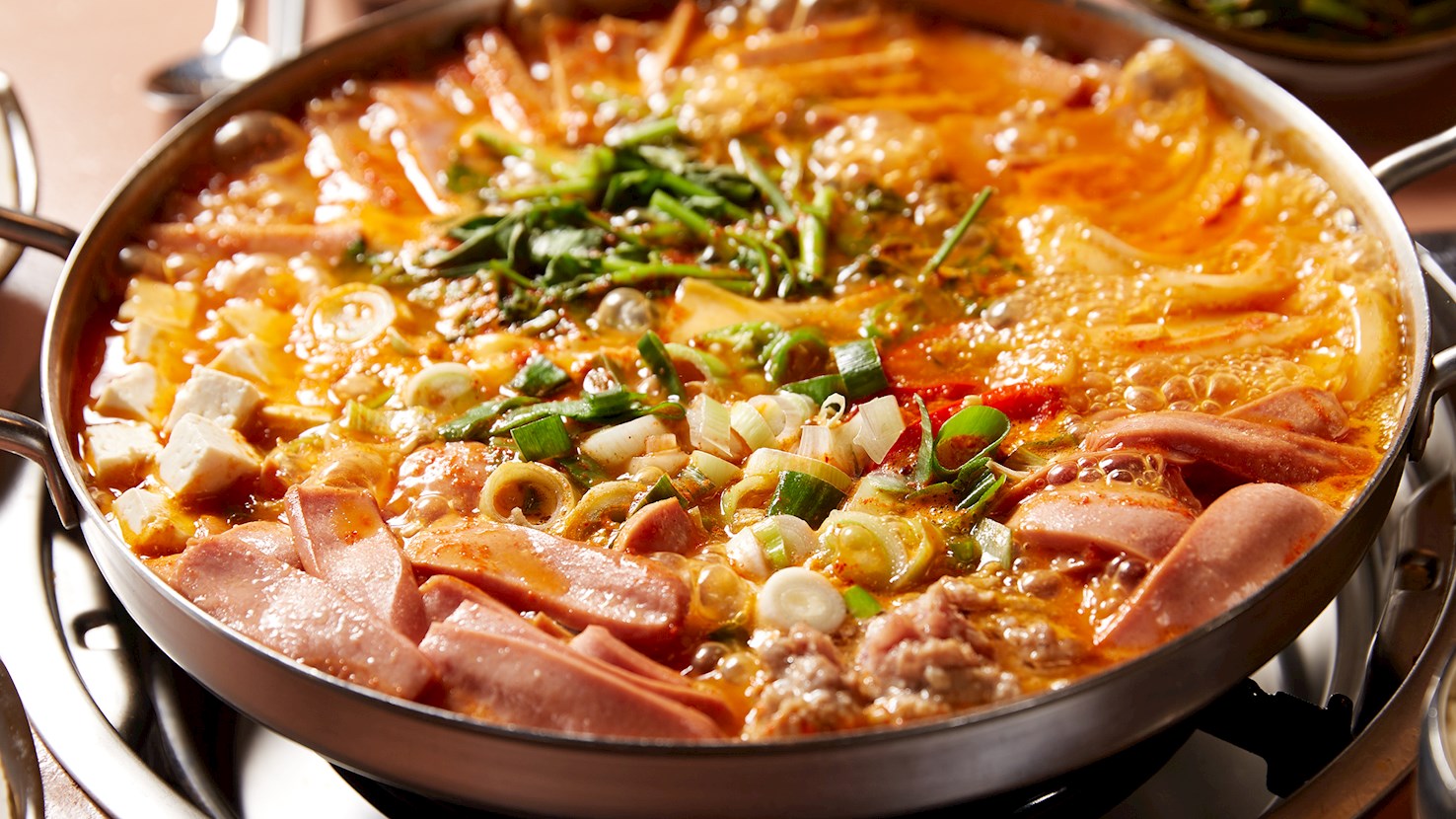
This Korean stew usually combines kelp and anchovy stock with kimchi, baked beans, spam, and hot dog sausages, while the common addition also includes ramen noodles, pork, potato noodles, rice cakes, or tofu. Also known as army stew, budae jjigae was created as a true fusion dish sometime in the 1950s, in the aftermath of the Korean War. Since the food was scarce, the locals would smuggle processed meat products that they could find at American army bases, and through ingenuity and resourcefulness, they created budae jjigae. The dish is believed to have originated at an army base located in Uijeongbudong.
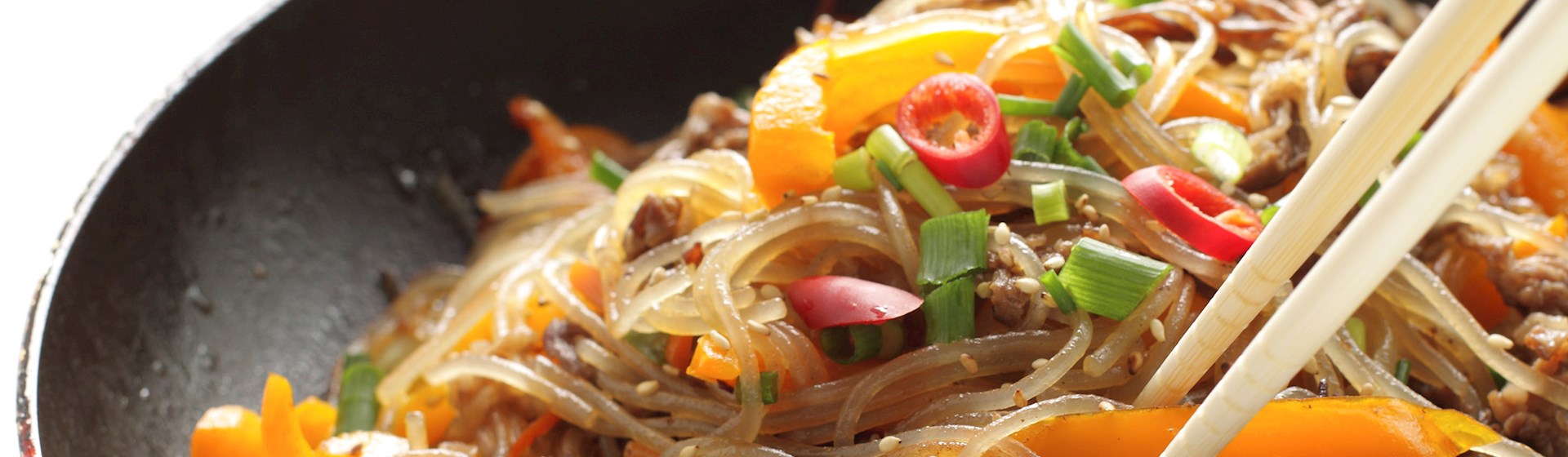
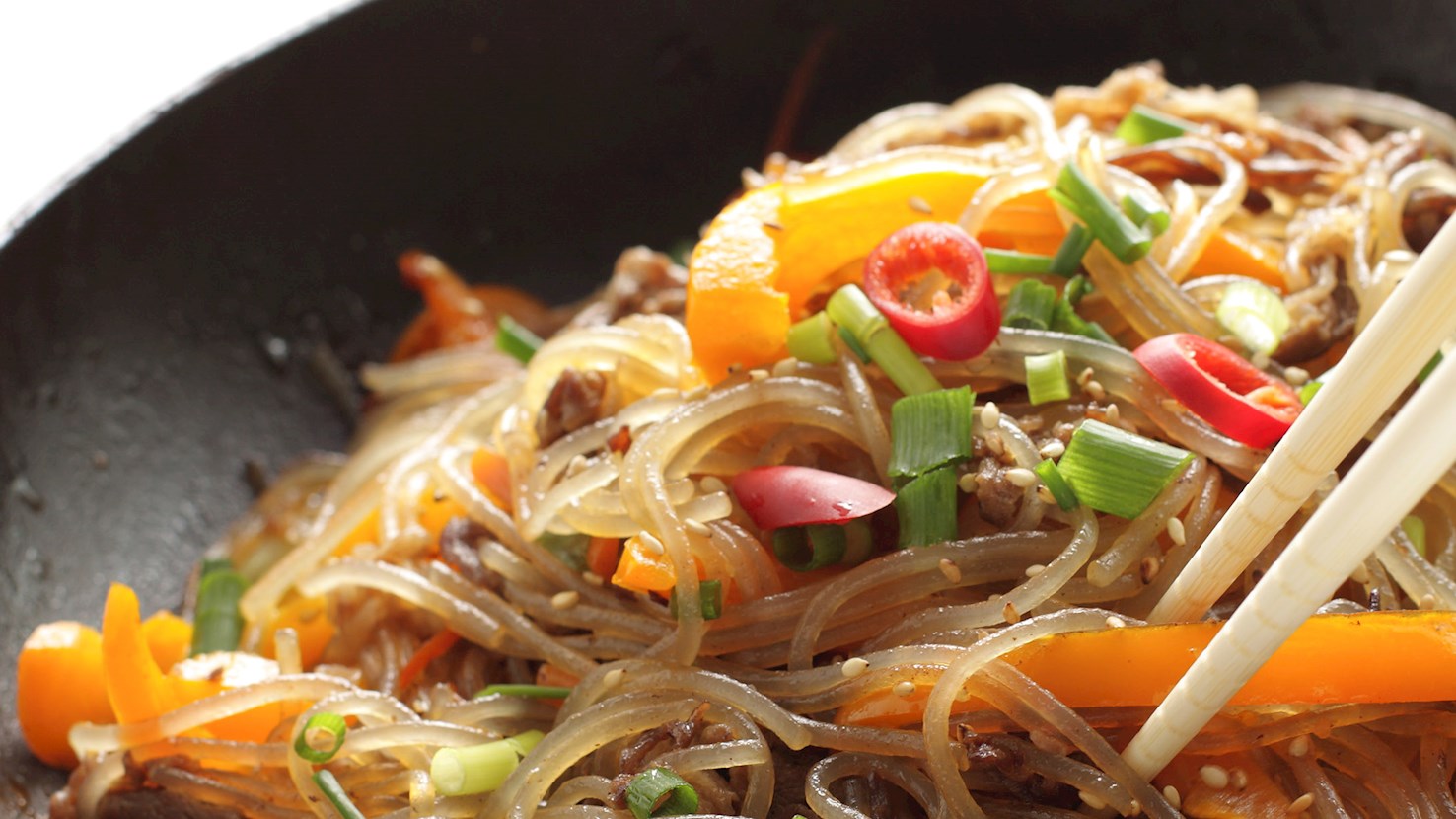
Japchae is a sweet-and-savory stir-fry of translucent, chewy sweet potato starch noodles tossed with a richly seasoned mixture of finely sliced vegetables and marinated meat. The origins trace back to the early seventeenth century during the Joseon era, specifically originating at a royal banquet hosted by King Gwanghaegun. A royal subject named Yi Chung invented the item, and the monarch favored it so much that Yi Chung was subsequently promoted to a high-ranking political position as the Secretary of the Treasury. The earliest iterations contained absolutely no noodles; the name translates directly to "mixed vegetables," and it was strictly a platter of finely shredded greens, root crops, and mushrooms. The defining slippery strands were incorporated much later in the early 20th century. After a major dangmyeon factory opened in Sariwon in 1919, sweet potato starch noodles became widely accessible and fundamentally transformed the plate into the highly recognized version consumed today. As the recipe evolved over centuries, numerous variations emerged to highlight specific ingredients or exclude the noodles entirely, heavily reflecting the original royal concept. Gochu-japchae focuses intensely on shredded fresh green chili peppers, buchu-japchae relies on heaps of garlic chives, and kongnamul-japchae features crisp soybean sprouts. When seafood is preferred, haemul-japchae incorporates shrimp and squid, while a purely mushroom-based version is known as beoseot-japchae. Constructing the typical version involves a highly specific, labor-intensive method in which every component receives individual attention. The base requires boiling the dried sweet potato starch noodles until soft, draining them, and immediately coating them with toasted sesame oil to prevent clumping. Following this, spinach is quickly blanched, squeezed dry, and seasoned with soy sauce and garlic. Carrots, onions, scallions, shiitake mushrooms, wood ear mushrooms, and strips of beef are each julienned into thin, uniform pieces and pan-fried separately. This isolated technique ensures every ingredient maintains its distinct color and optimal texture without steaming together in a single pan. Once all the individual parts are fully finished, they are combined in a large mixing bowl and tossed thoroughly with a sweet dressing made from dark soy sauce, sugar, minced garlic, black pepper, and extra sesame oil. The final assembly is frequently garnished with toasted sesame seeds, delicate folded egg ribbons known as jidan, and fine chili threads called silgochu. Serving this stir-fry offers incredible flexibility, as it functions equally well when presented steaming hot right off the stove, at room temperature for a massive banquet, or even slightly chilled straight from the refrigerator. It serves as an accompanying banchan side item, an essential centerpiece at celebratory events like sixtieth birthdays and weddings, or a hearty main course when served generously over a bed of warm white rice, a specific serving style known as japchae-bap.
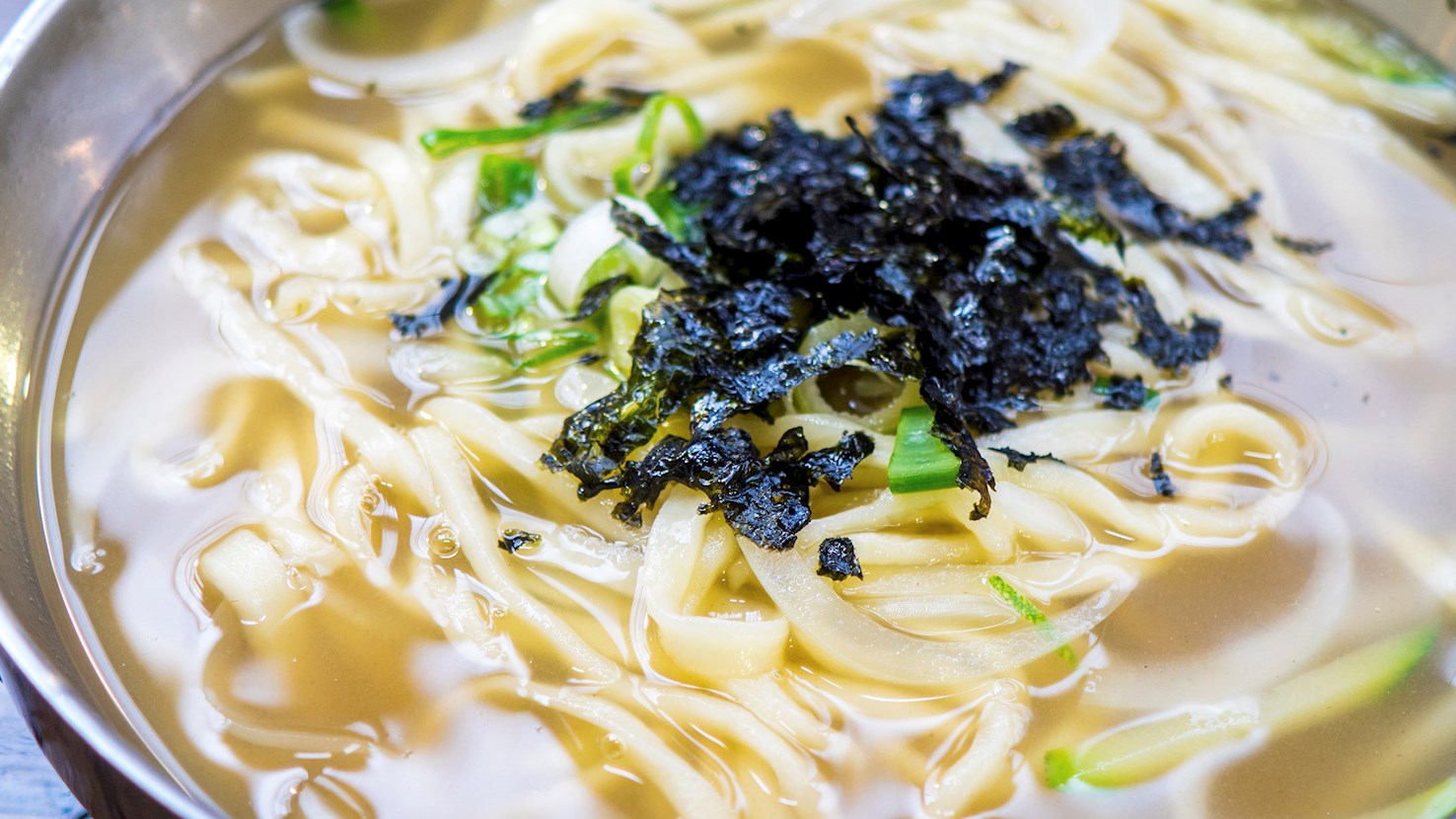
Kalguksu is a favorite summertime dish of many South Koreans, usually served during rainy seasons and on windy summer days. It consists of handmade wheat flour and egg noodles in a broth that is usually made with shellfish, dried anchovies, and kelp. The noodles are cut with a knife, giving the dish its name, kalguksu, which literally means knife noodles. Although seafood kalguksu is the most popular variety, there are other versions of kalguksu such as spicy (jjanppong kalguksu), chicken (dak kalguksu), and mushroom kalguksu (beodeot kalguksu). Typically, kalguksu is served with side dishes such as kimchi or barley combined with cabbage and soybean paste sauce. Kalguksu originated during the Joseon Dynasty era, and the first recipe for the dish was found in an old cookbook called Eumsik Dimibang, written by Lady Jang in 1670. Traditionally, kalguksu was consumed during the Yudu holiday, when barley and wheat were harvested. It was also a custom to serve the dish on a child's first birthday, as a sign of longevity, virtue, and health, but today, kalguksu is enjoyed by everyone as an inexpensive, hearty, and nourishing dish.
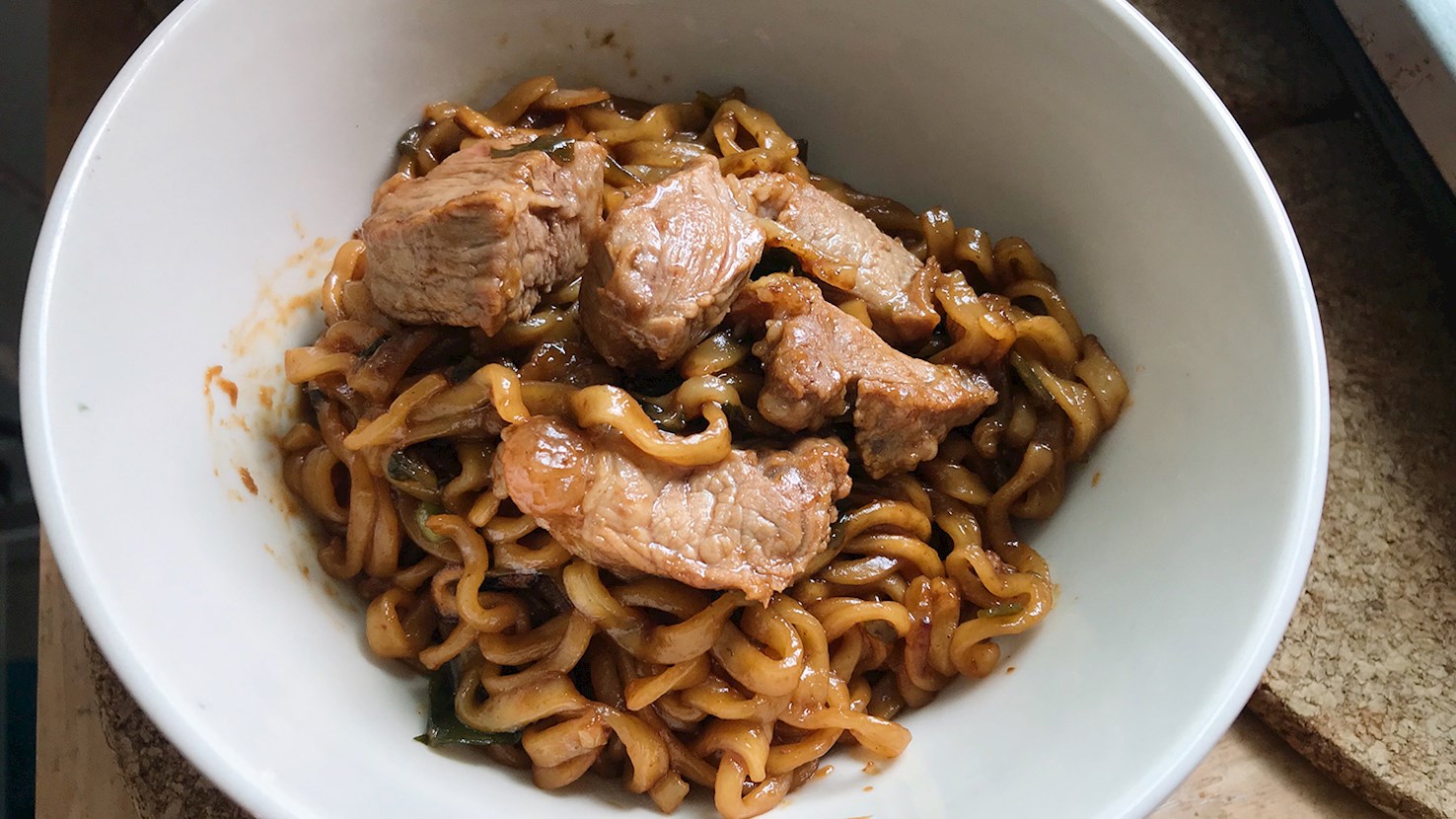
Jjapaguri is a Korean dish that consists of two types of instant noodles. It's also known as ram-den, a made-up word popularized in Boong Joon-Ho's movie Parasite, denoting a combination of ramen and udon. Jjapaguri combines Korean instant noodles such as Chapagetti (jajang ramen noodles) and Neoguri (udon noodles in a spicy seafood broth) for a budget comfort food item, while in the movie Parasite, the dish looks a bit fancier because it's topped with premium beef (hanu), showing how affluent the upper-class family really is. In order to prepare ram-don at home, just combine Chapagetti and Neoguri, then top it with a well-marbled sirloin steak and garnish it with chopped green onions, if desired.
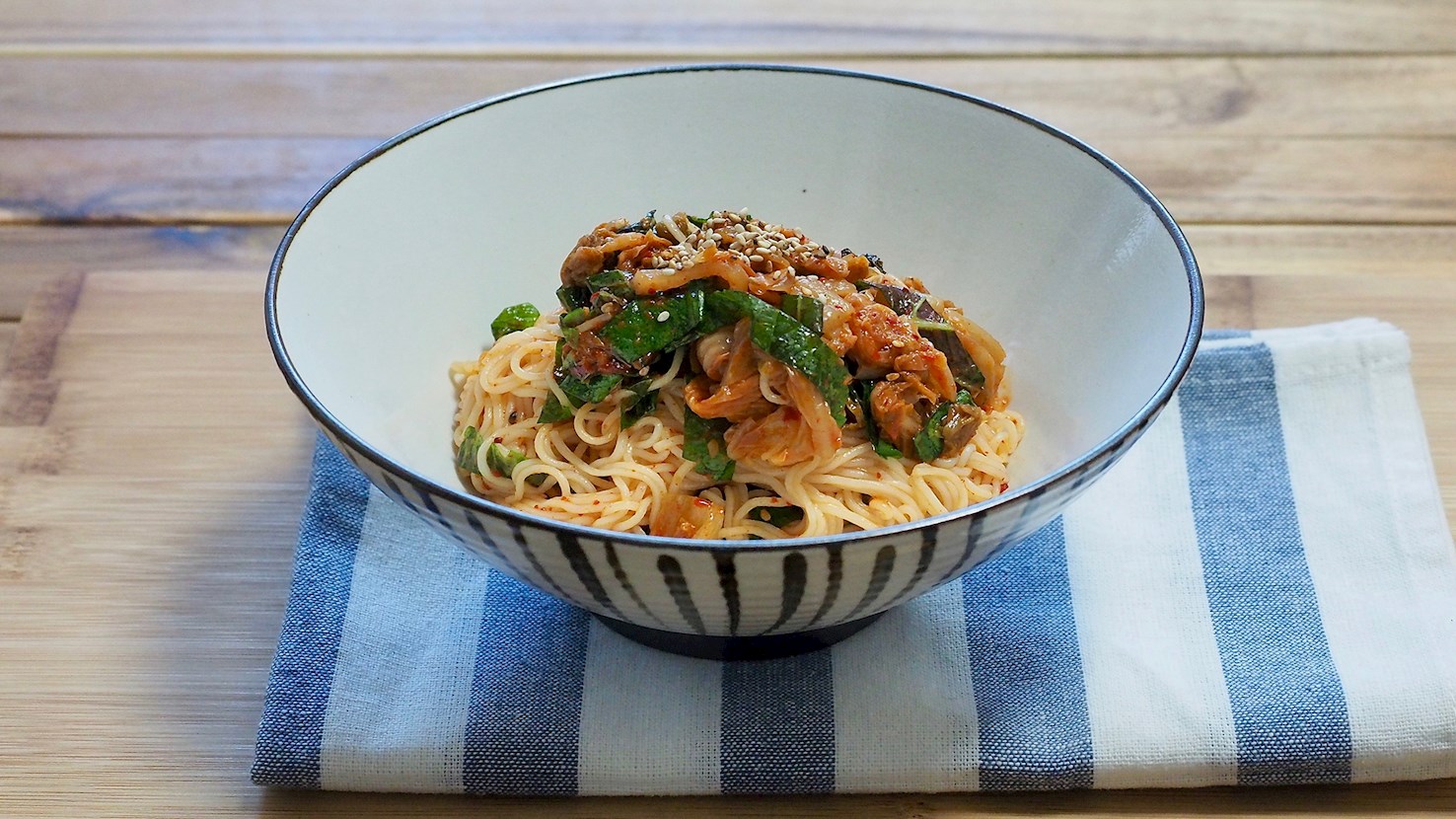
Thin somyeon noodles make the base of this spicy Korean dish. The noodles are cooked and tossed with a cold sauce that usually combines gochujang (chili paste), rice vinegar, soy sauce, and sesame seeds, while the toppings typically include sliced, fresh vegetables, kimchi, hard-boiled egg, seaweed, pickled radishes, or sprouts. The dish is always served cold, and it is usually enjoyed as a refreshing and nourishing summer classic.
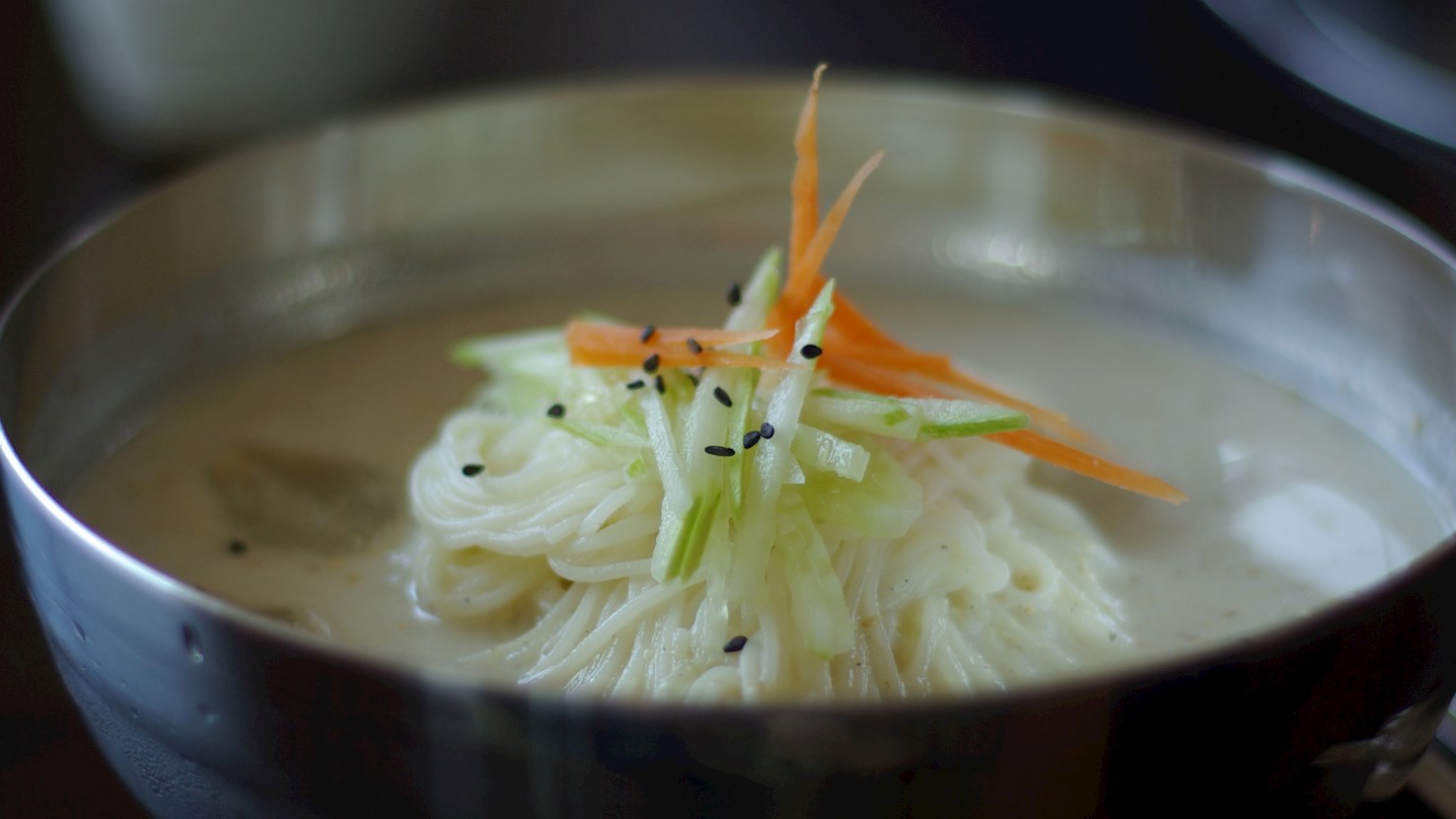
Kongguksu is a Korean summer classic that combines noodles and a cold, soy milk broth. Traditionally, the broth is made from scratch by cooking and puréeing soybeans, occasionally with the addition of sesame seeds or different nuts. The dish is usually prepared with somyeon noodles, and it is finished off with the addition of different toppings such as finely sliced cucumbers or tomatoes. Occasionally, ice cubes can be added to chill the soup.
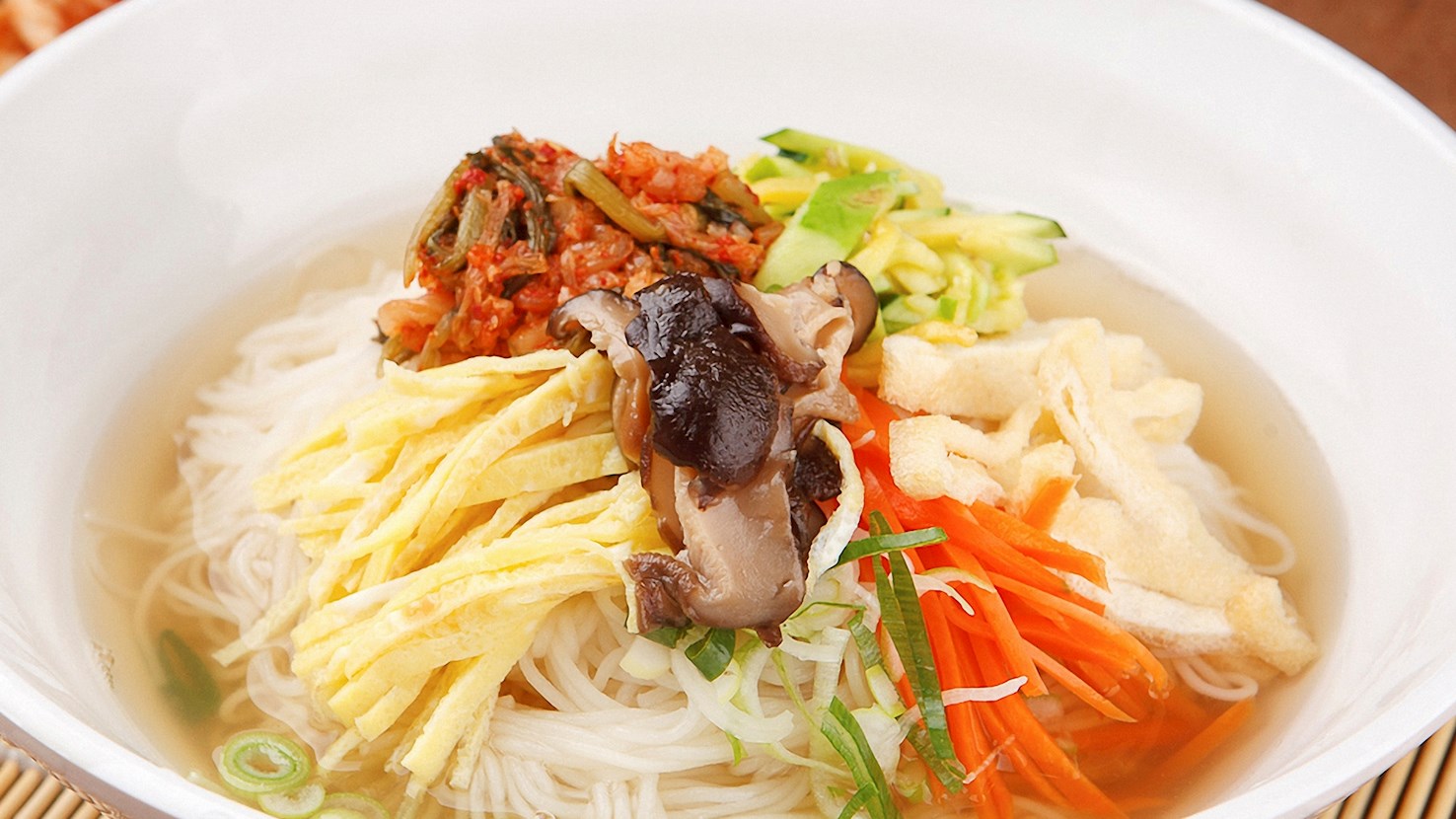
Janchi guksu is a Korean dish consisting of somyeon wheat noodles served in a clear anchovy or beef broth, which is occasionally flavored with kelp. The dish is typically garnished with thinly sliced egg (jidan), seaweed (gim), carrots, shitake mushrooms, or zucchinis, and it usually served with yangnyeomjang – a spicy, soy sauce-based dip. The name janchi translates as a banquet, suggesting that the dish was once traditionally served on special occasions.
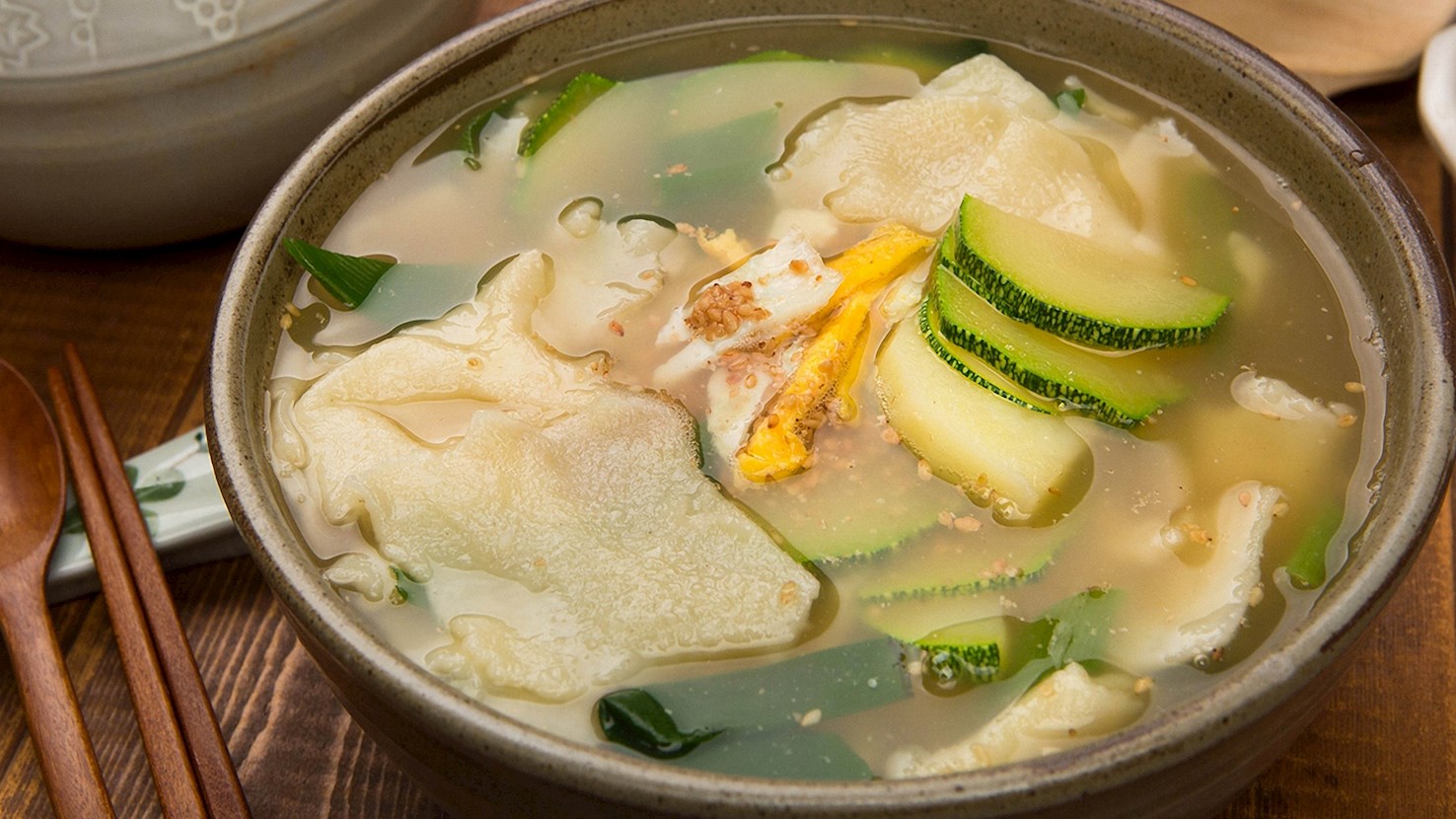
Hand-pulled, wheat noodles are the star ingredient in this hearty Korean soup. The broth is traditionally flavored with anchovies, dry seaweed, and occasionally shellfish, while the additional elements may include sliced vegetables such as scallions and potatoes, or kimchi. The dish was once considered a rarity that was only enjoyed on special occasions, but nowadays it is a common home-cooked meal. The name sujebi roughly translates as hand folded—referring to the process of pulling small pieces of dough by hand.
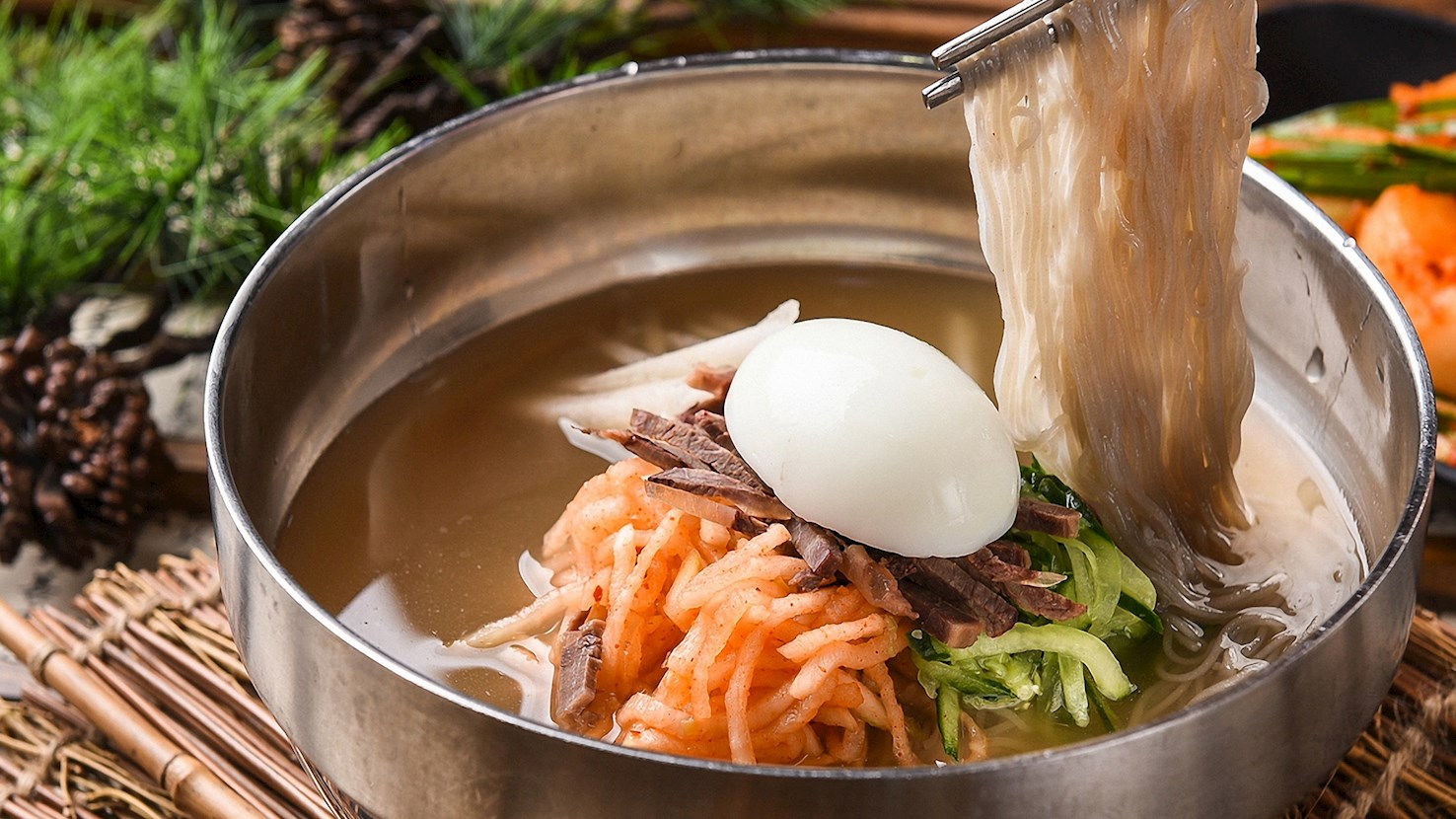
In many ways similar to its North Korean counterpart naengmyeon, which is based on buckwheat noodles, this Busan specialty is differentiated by the use of wheat noodles. The dish usually combines icy cold broth with wheat noodles, while the toppings include boiled eggs, cucumbers, radishes, and beef. Although there are many theories about its origin, the most probable says that milmyeon first appeared during the Korean War when many North Koreans fled to Busan. In an attempt to recreate their favorite dish, they replaced buckwheat with wheat since it was widely available through the American army. Just as naengmyeon, the dish is offered in two versions: as a cold broth (mul milmyeon) or with a spicy, gochujang-based paste (bibim milmyeon).
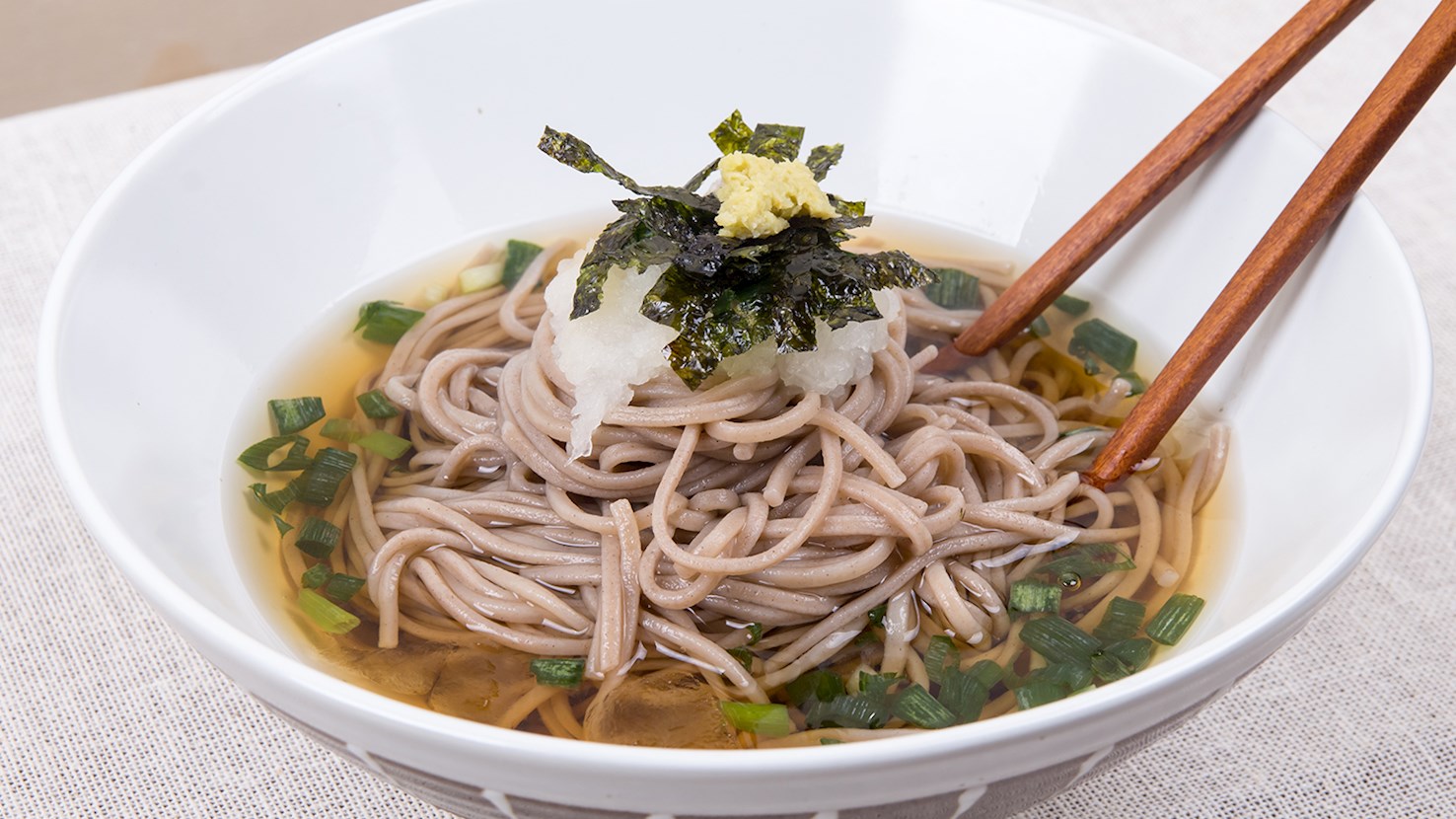
Memil guksu is a traditional South Korean soba noodle soup, hence the name, with memil meaning buckwheat, and guksu meaning noodle soup. The dish consists of buckwheat noodles, eggs, green onions, and seaweed. They're boiled in a broth made from guksijangguk and Japanese hondashi. Once cooked, the noodles are topped with the eggs and toasted seaweed strips. The dish can be enriched with lemon juice, and it's sometimes served with a dipping sauce based on tsuyu and rice wine on the side. Memil guksu noodles are always served cold.
TasteAtlas food rankings are based on the ratings of the TasteAtlas audience, with a series of mechanisms that recognize real users and that ignore bot,
nationalist or local patriotic ratings, and give additional value to the ratings of users that the system recognizes as knowledgeable.
TasteAtlas Rankings should not be seen as the final global conclusion about food. Their purpose is to promote excellent local foods,
instill pride in traditional dishes, and arouse curiosity about dishes you haven’t tried.




What People Say