Krapfen was probably the first European-style doughnut to appear, followed by similar varieties in other countries. These pastries are traditionally prepared with leavened dough that is deep-fried until golden and crispy on the outside, while they remain soft, light, and airy on the inside. Though krapfen can be prepared plain, they are most often filled or topped with jams, and vanilla or chocolate custards, while the top is usually dusted with powdered sugar or drizzled with chocolate. The origin of the word krapfen dates back to 9th century, and the recipes in German can be found as early as the 14th century. The sweet versions of the pastry became predominant, and have remained closely associated with the Carnival, a festive period which precedes Christian Lent. Interestingly, during the Carnival, one krapfen in a batch filled with jam and fruit preserves might contain a filling of mustard as a prank. It is believed that doughnuts spread throughout many central European countries, which adopted the technique but used different regional names. Consequently, krapfen in Germany goes under Berliner, pfannkuchen, faschingskrapfen, krebbel, or kreppel. In Poland, they are known as pączki or krepel, Hungarians refer to them as fánk, Slovak as šišky, while the Czechs use the term koblihy. In Slovenia, they are better known as krofi, while the standard name throughout Croatia, Bosnia, and Serbia is krofne or krafne. In St. Petersburg, Russia, the doughnuts are known as pyshki (either ring-shaped or without a hole), and there is a local café that has been serving pyshki prepared from the original recipe since the 1960s.
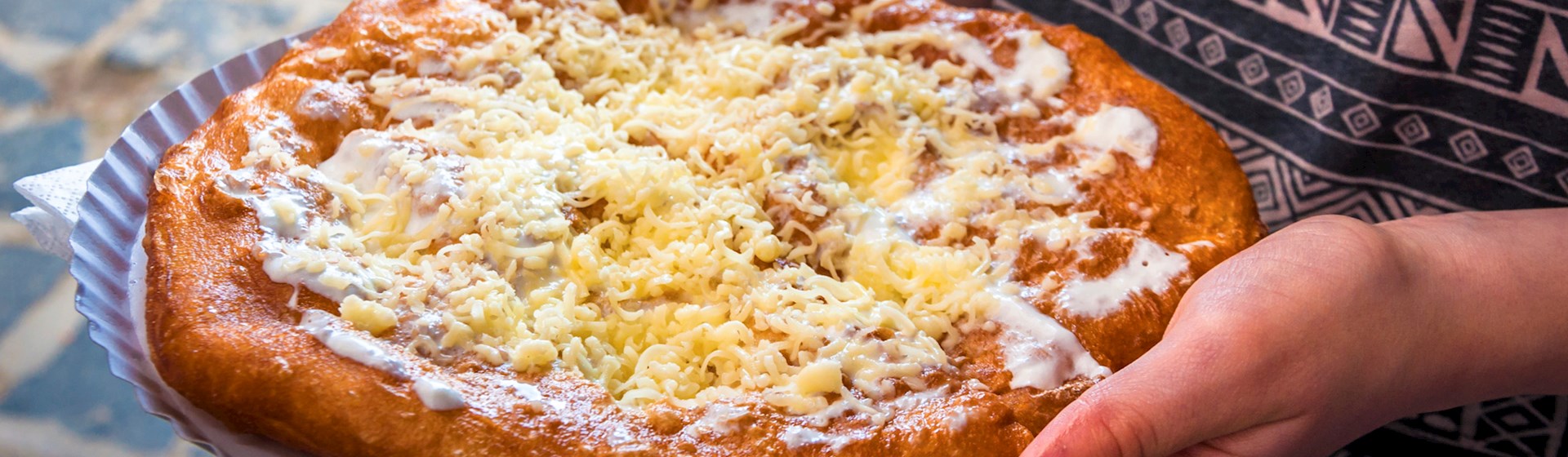
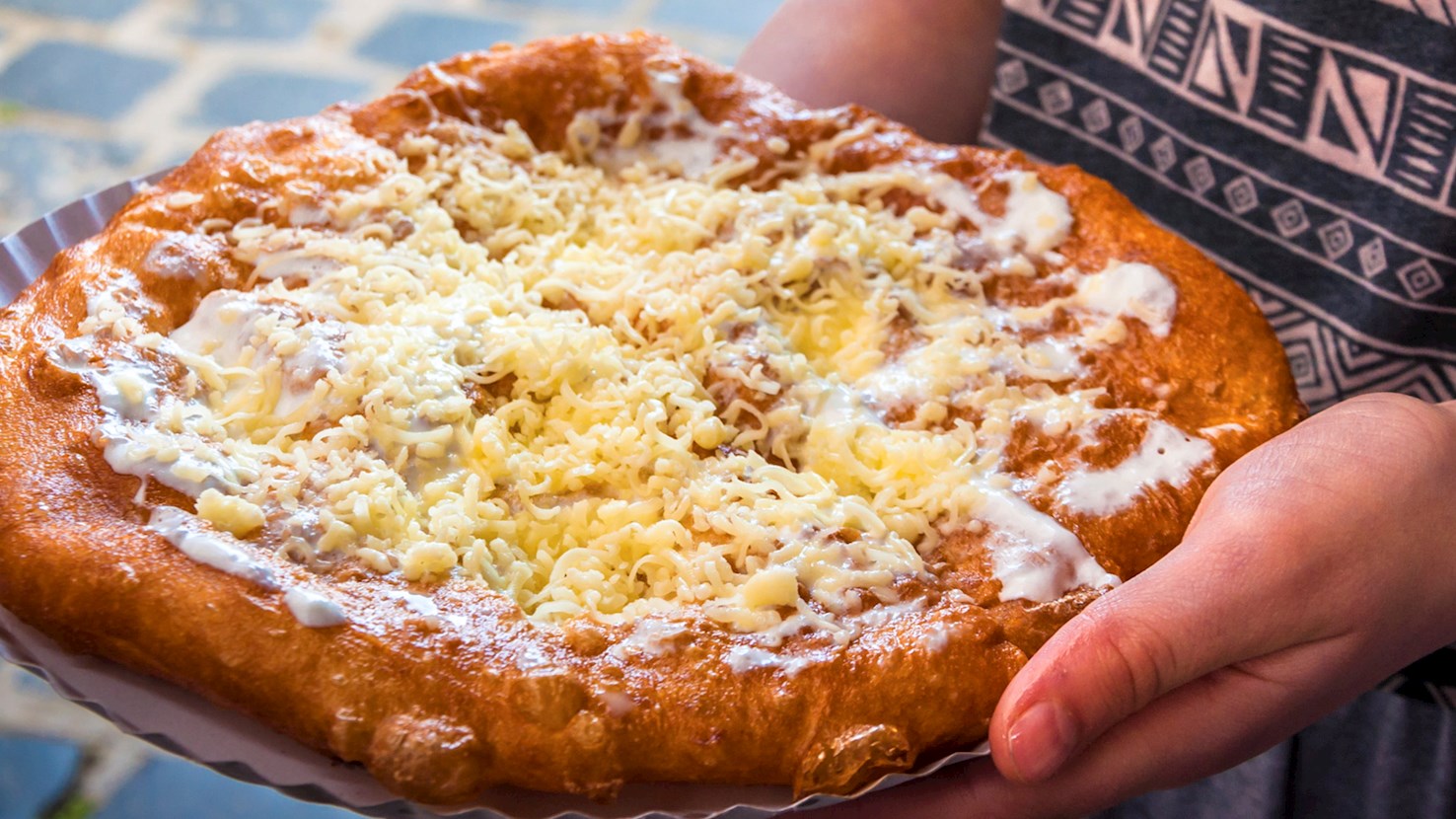
Lángos is a thick, yeast-leavened flatbread that is stretched by hand and deep-fried in hot fat until the exterior forms a crispy, blistered crust while the interior remains soft and airy. Its name originates from the word "láng," meaning "flame," reflecting its earliest form as a simple morning snack baked at the very front of a wood-fired brick oven, alongside glowing embers. Before the 1950s, making this bread was closely tied to the weekly routine of baking large household loaves. Bakers scraped the sticky leftover dough from the sides of large wooden kneading troughs, a practice that earned the scraps the slang term "vakolat," which translates to plaster. These days it can be found throughout Hungary, Austria, Croatia, and Romania. These flattened pieces were baked quickly in the receding heat and consumed fresh with butter, animal fat, or sour cream for breakfast on baking days. As rural households urbanized and domestic bread-making declined rapidly during the mid-20th century, the item shifted from a baked household good into a ubiquitous commercial street food submerged entirely in large vats of boiling oil or pork lard. The dough is made by dissolving active yeast in warm milk with a pinch of sugar to activate it, then thoroughly kneading it with wheat flour, salt, and lukewarm water. After the mixture rests in a warm environment until it doubles in size, individuals coat their hands in oil to effortlessly tear off small portions, stretching them into wide circles with slightly thinner centers before dropping them into the hot frying fat. The heavily favored standard topping involves brushing the hot, blistered surface with crushed raw garlic or garlic water, then heavily blanketing it with thick sour cream and piling on a massive mound of grated yellow cheese. More modern takes include toppings such as chopped fresh dill, pungent sheep's milk cheese, sliced sausages, roasted bell pepper stews, or bits of ham. Entirely different structural variations include potato lángos, which have boiled, mashed tubers mixed into the raw flour mixture to create a denser, heavier bite, and cabbage lángos, which feature braised cabbage incorporated into the batter before frying. Vendors also offer a folded version in which savory meat fillings are encased entirely within the dough, creating a sealed pocket. Older baked variations resembling thick, rustic pizzas still exist under regional names like langalló, kenyérlángos, or töki pompos, heavily topped with bacon and onions, and baked in an oven rather than deep-fried. The freshly fried discs function strictly as immediate, calorie-dense meals, primarily purchased at summer lakeside resorts, outdoor markets, and busy transit hubs, eaten exclusively by hand while standing or walking. Because the fried structure degrades and turns rubbery rapidly as it cools, consuming it steaming hot straight from the oil is absolutely mandatory.
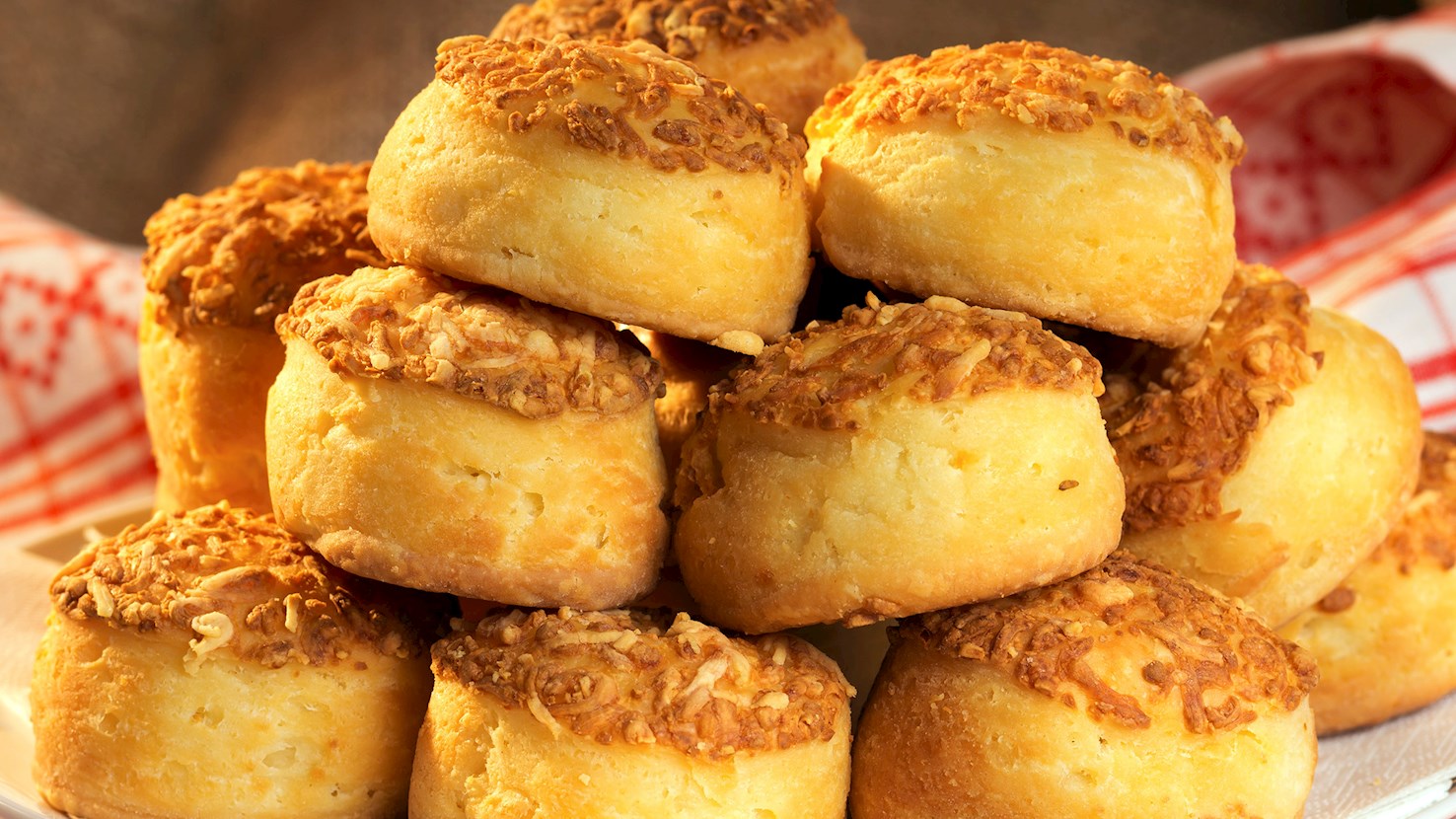
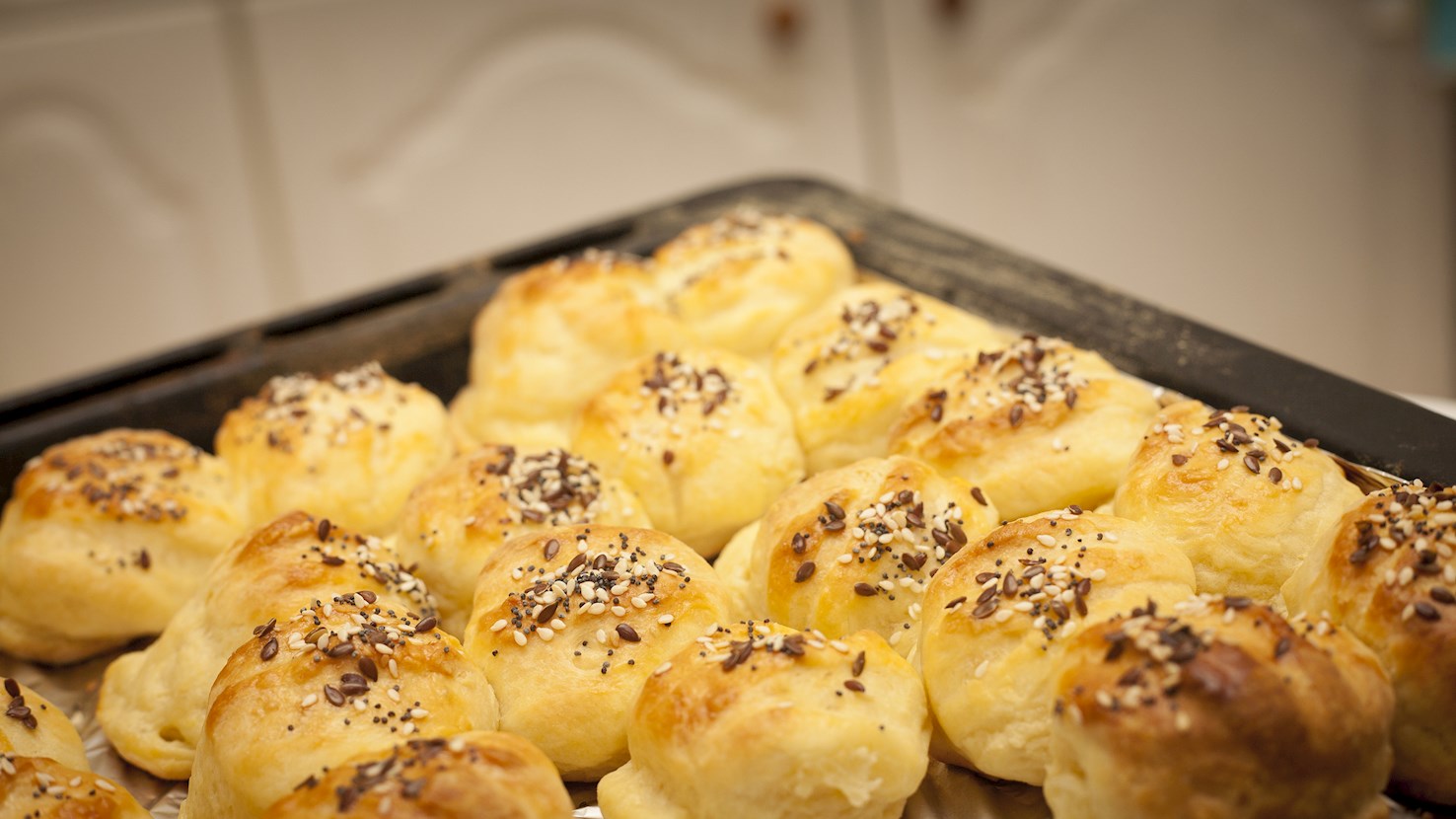
Pogácsa is a popular Hungarian snack consisting of a small, bite-sized pastry that can be either sweet or savory. Preferably, it should be eaten while still hot. Although there are differences in size and flavor, all pogácsa pastries are commonly prepared in a round shape. Their diameter may vary from that of a thimble to that of a drinking tumbler. There are numerous varieties of pogácsa - cheese, cabbage, potatoes, bacon, and pumpkin seeds, to name a few. In Hungarian folk tales, the main hero always takes a pogácsa baked in embers as food for his adventures and long journeys, which is a strong testament to the Hungarians' love for these traditional snacks.
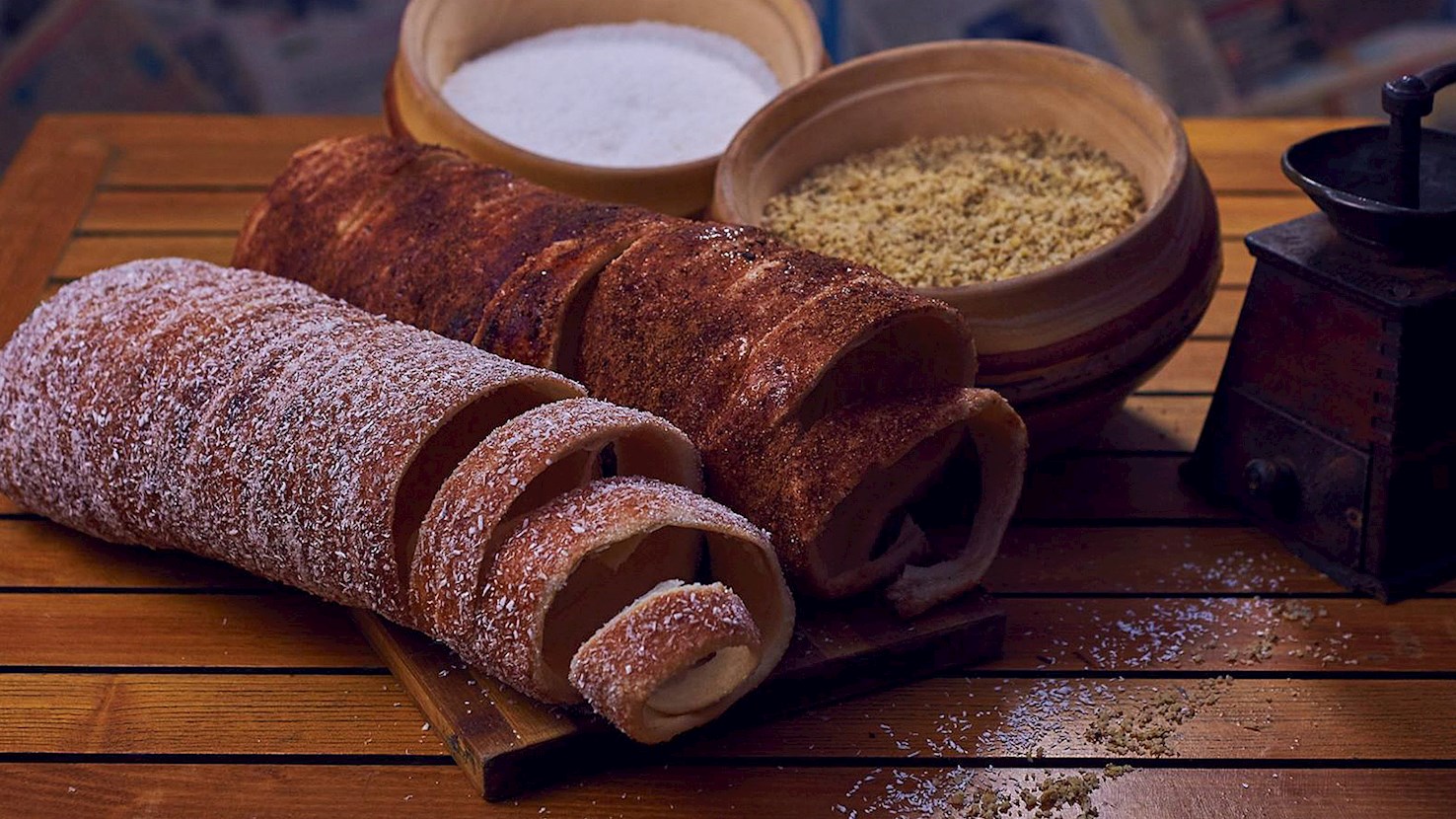
This Hungarian tube-shaped pastry popularly known as chimney cake traces its origin to the medieval era Székely Land—back then a part of the Kingdom of Hungary. The first known recipe titled Kürtős kaláts’ à la Mrs Poráni was found in a 1784 cookbook written by Transylvanian countess Mária Mikes de Zabola. The pastry shells are made from sweet yeast dough that is rolled in granulated sugar, basted in melted butter, and spit-roasted over charcoal. Freshly baked, kürtőskalács shells can be topped with additional ingredients such as ground walnuts or powdered cinnamon, but they're also often filled with ice cream or whipped cream. Kürtőskalács was once a festive treat favored by the Hungarian upper class, but over time it spread among the common people and became a part of everyday consumption, readily available as a street snack, and a big hit at festivals or similar outdoor events. An almost identical but slightly smaller Czech version of this sweet pastry goes under the name trdelník. Though it is highly disputed where it originally appeared, the pastry has undoubtedly become a vital part of Czech and Hungarian street food culture. Slovakian version, known as Skalický trdelník holds a PGI (Protected Geographical Indication) status under the EU law.
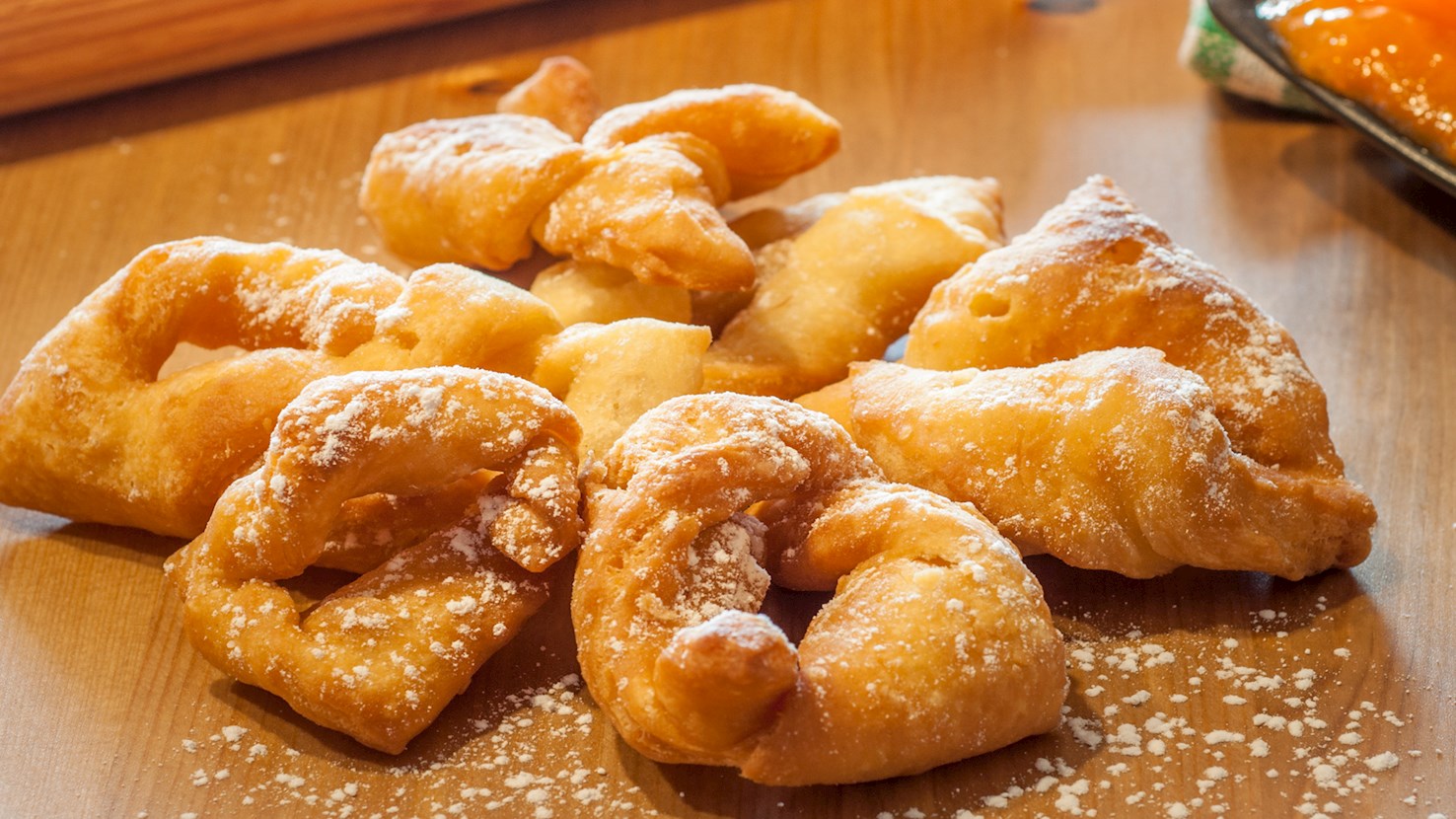
Csöröge are essentially the Hungarian version of angel wings. These sweet and crispy pastries are made with a dough consisting of egg yolks, flour, baking powder, sugar, and salt. The dough is traditionally twisted into thin bows or ribbons, and it is then deep-fried before being sprinkled with powdered sugar. Csöröge are especially popular during the festive Christmas season.
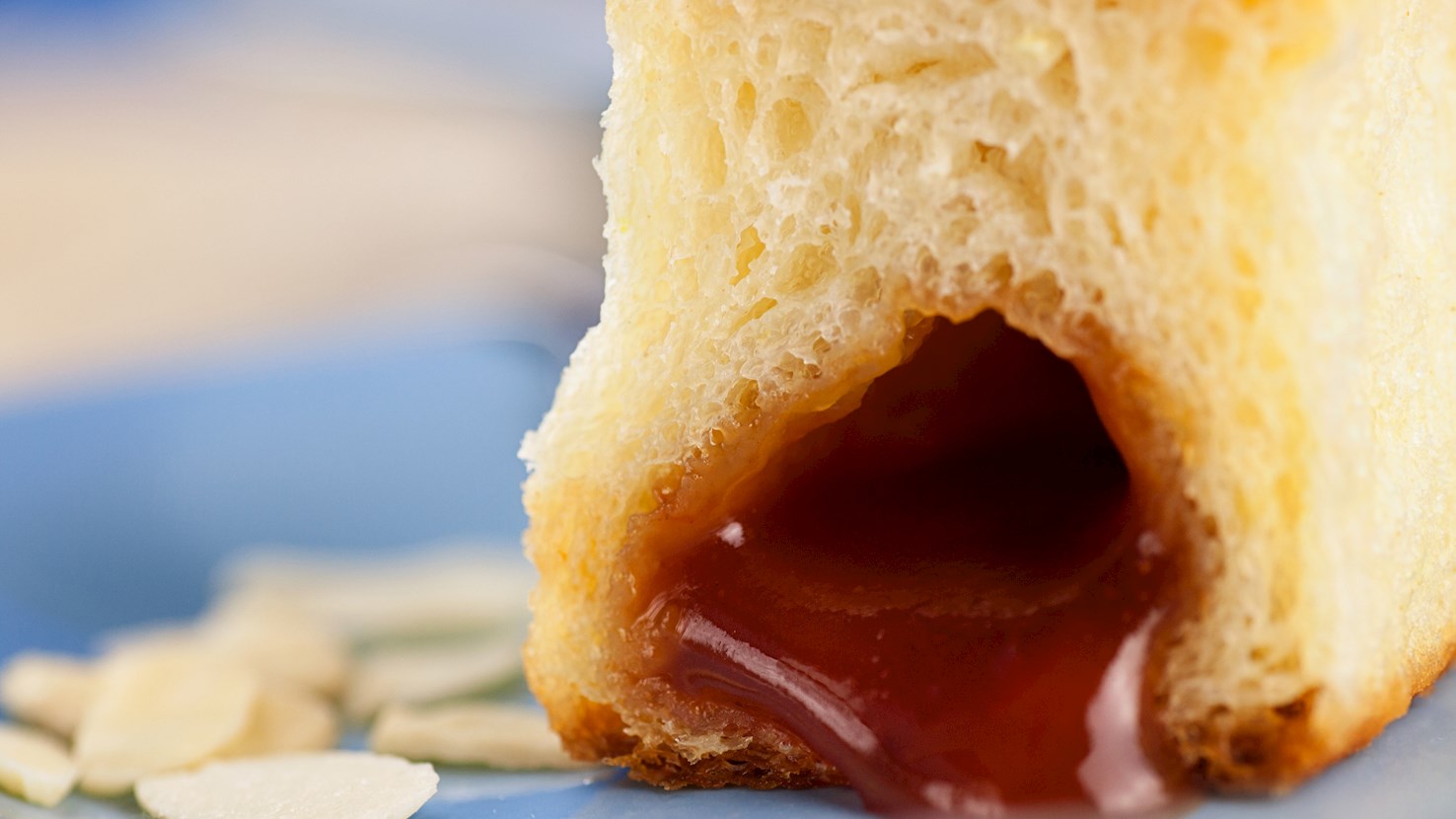
Lekváros bukta is a sweet yeast bun filled with thick fruit preserve, most characteristically plum lekvár. The buns are arranged closely together in a baking dish, so they rise and bake into one connected batch, leaving their sides particularly soft when pulled apart. Bukta belongs to a wider Central European family of filled yeast pastries that includes Czech buchty and Austrian Buchteln. These closely related buns spread across the former Habsburg lands by the 19th century, but the exact origin of lekváros bukta cannot be traced to a single town or date. In Hungary, the pastry became firmly associated with home baking and with the country’s long tradition of preserving fruit as lekvár. The dough is made from wheat flour, milk, yeast, sugar, eggs or egg yolks, butter, and a little salt. Fresh yeast is traditionally dissolved in lukewarm milk with a small amount of sugar before being mixed with the other ingredients. The dough is kneaded until smooth and elastic, then left in a warm place until it has roughly doubled in volume. After rising, the dough is rolled out and cut into squares or rectangles. A spoonful of thick lekvár is placed near the center of each piece. Plum lekvár, or szilvalekvár, suits the pastry particularly well because its dense consistency keeps it inside the bun during baking without running out. The dough is folded around the preserve and sealed carefully. Each bun is brushed with melted butter, including the sides, before being placed seam-side down in a buttered baking dish. The buns are positioned close together rather than spaced apart. They are allowed to rise again briefly before baking. In the oven, the individual buns expand against one another and form a single connected batch with golden tops and pale, tender sides. The butter between them keeps them from sticking too firmly, so they separate easily after baking. A well-made lekváros bukta should have a light, soft, slightly buttery crumb surrounding a concentrated fruit filling. Once baked, the buns are usually allowed to cool slightly and then dusted generously with powdered sugar. They are commonly eaten warm or at room temperature as a sweet breakfast, afternoon pastry, or simple dessert. Although related forms of bukta use other fillings, the classic lekváros version is defined by its thick fruit preserve. Plum remains the filling most closely associated with the dish, reflecting the importance of szilvalekvár, traditionally made by slowly cooking ripe plums into a very thick, dark preserve, sometimes without any added sugar.
Soproni mandulás rétes is a variety of a traditional Hungarian strudel that is considered a specialty of Sopron cuisine. It typically consists of a thin pastry dough that's been filled with a fruit preserve or jam and almond cream (similar to frangipane) before it's baked until nicely colored and crispy. According to the traditional recipe from Cuisine of Hungary, a cookbook written by the famous restaurateur and cookbook writer George Lang, this sweet delicacy is made with strudel dough, melted lard or butter, raspberry or strawberry jam, ground almonds, sugar, and eggs. Once baked, the strudel is usually enjoyed while it's still warm, and it's traditionally dusted with powdered sugar. There's a similar strudel variety mentioned in another traditional Hungarian cookbook called A magyarok asztalánál, but this version calls for accompanying the dessert with a rum crème anglaise.
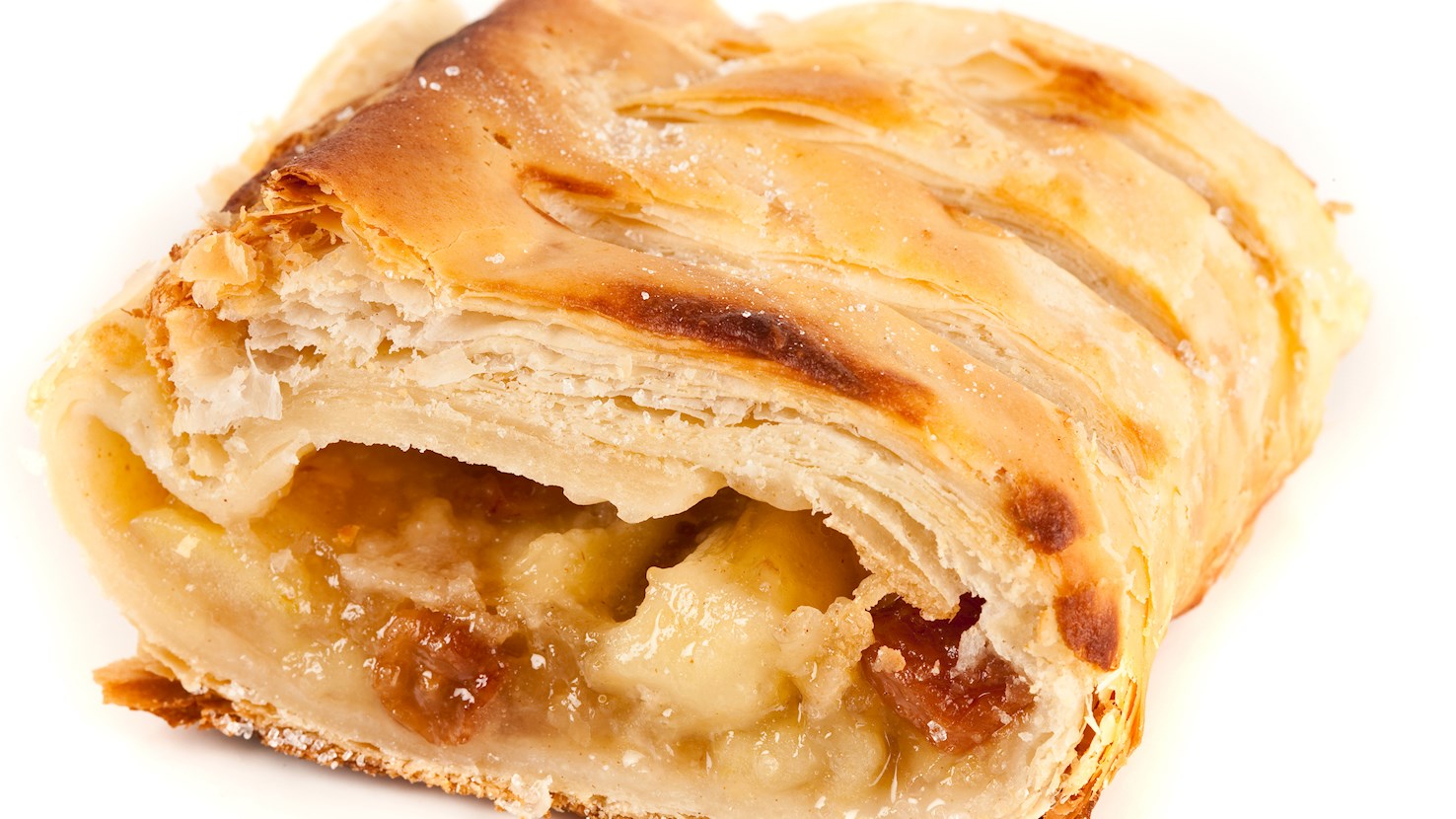
Rétés is a filled pastry originating from Hungary, known for its thin, elastic dough rolled around sweet or savory fillings and baked until crisp and golden. Closely related to Central European strudel, it is one of Hungary’s most emblematic desserts, although savory versions are also common. Its roots go back several centuries, shaped by the exchange of culinary techniques across Central and Eastern Europe during the Austro-Hungarian period. The concept of thinly stretched dough enclosing a filling likely reached the region through Ottoman influences, where layered pastries and filled doughs were already well established. Over time, Hungarian bakers refined the technique into their own version, with a unique emphasis on dough that is stretched by hand until almost translucent and rolled rather than layered. By the 18th and 19th centuries, rétés had become a fixture in Hungarian households and cafés, often associated with festive occasions and family gatherings. Preparation begins with a soft, elastic dough made from flour, water, a little fat, and salt. Once rested, it is stretched across a floured cloth until paper-thin, a process that requires patience and skill to avoid tearing. The filling is then spread over the surface, leaving space at the edges, and the pastry is rolled up using the cloth to help lift and guide it. Popular sweet fillings include apples with cinnamon, sweetened cottage cheese, sour cherries, poppy seeds, or walnuts, while savory versions might feature cabbage or minced meat. The rolled pastry is brushed with melted butter or oil, baked until crisp and golden, and sometimes dusted with powdered sugar before serving. It is often enjoyed warm, either as a dessert, a snack, or part of a larger meal. In Hungary, rétés is widely available in cafés, bakeries, and markets, often sold in long, sliced pieces. It is commonly served with coffee or tea, and sweet versions pair well with dessert wines such as Tokaji or lightly sparkling wines. Savory types are sometimes eaten with sour cream or alongside soups and stews.
Hailing from Sopron, babos pogácsa or babpogácsa is a variety of Hungarian pogácsa, a small, round, savory pastry with beans incorporated in the dough. This pogácsa is typically made with a combination of flour, cooked and mashed beans, lard or another type of fat (such as butter or margarine), sour cream, eggs, baking powder, salt, and pepper. The dough is usually shaped into round portions, which are then brushed with egg yolks and (optionally) sprinkled with grated cheese, sesame seeds, or sunflower seeds before they’re baked until golden brown. The pastries are also commonly studded with a cooked bean in the top’s center before baking, while some versions call for decorating the pastry’s surface with a special pattern. Bean pogácsa is believed to be one of the bean-based specialties of Sopron’s famous poncichters (a corruption of the German word for bean growers, Bohnenzüchter) -traditional winegrowers- who used to grow beans between their vineyards. Hungarians usually enjoy these bean-based pastries as savory snacks, accompanied by a glass of wine on the side.
A specialty of Sopron, édes babos rétes or sweet bean strudel is a variety of Hungarian strudel that consists of thin layers of pastry filled with sweet bean paste. The filling is typically prepared with a combination of cooked and puréed white beans, milk, sugar, egg yolks, whipped egg whites, lemon zest, vanilla, and butter or margarine. After it's been spread with butter or margarine and sprinkled with breadcrumbs, the strudel dough is topped with the sweet bean paste before it is rolled into a log and baked. Depending on the recipe, the filling may also contain other ingredients such as apricot jam, toasted semolina flour, or cream. Like other strudel varieties, this sweet delicacy is best enjoyed warm, straight from the oven, and it is usually dusted with vanilla powdered sugar before serving.
TasteAtlas food rankings are based on the ratings of the TasteAtlas audience, with a series of mechanisms that recognize real users and that ignore bot,
nationalist or local patriotic ratings, and give additional value to the ratings of users that the system recognizes as knowledgeable.
For the “Top 11 Hungarian Pastries” list until September 15, 2026, 1,997 ratings were recorded, of which 1,576 were recognized by the system as legitimate.
TasteAtlas Rankings should not be seen as the final global conclusion about food. Their purpose is to promote excellent local foods,
instill pride in traditional dishes, and arouse curiosity about dishes you haven’t tried.






What People Say