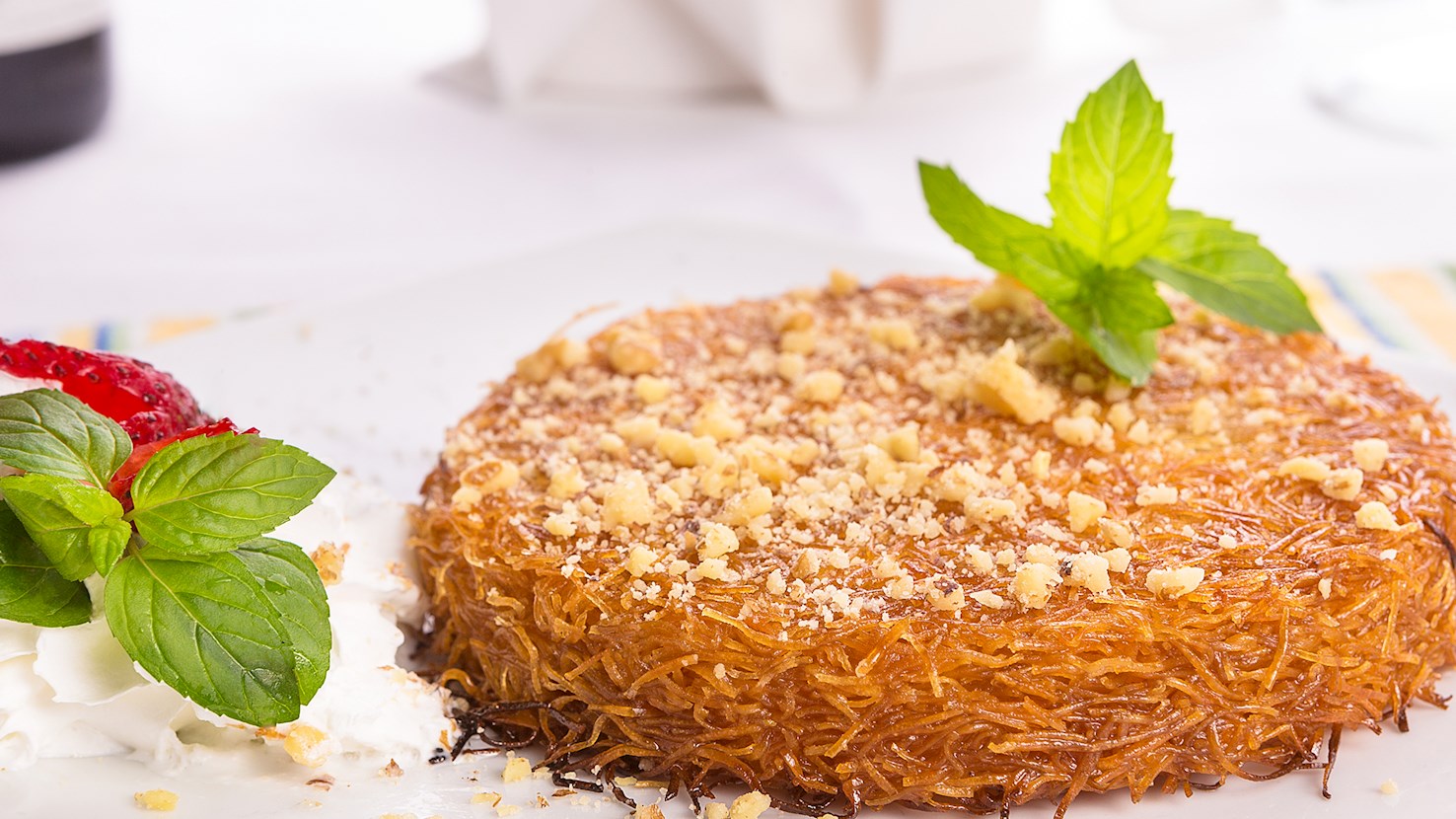
Kunāfah consists of two crunchy layers of shredded and buttered kataifi or knefe dough, filled with a luscious cheese cream that's often flavored with orange zest and cardamom, then drenched in a sugar syrup infused with lemon juice and orange blossom water. Turkish künefe is traditionally made with Hatay, Urfa, or Antep cheese. It is usually topped with pistachios and is best served warm. Elegant and amazingly simple to make, this dessert is nothing short of what cheese-filled pastry dreams are made of. Some authors speculate that it originated from the Fatimid Egypt or pre-Islamic Syria, while others claim that the Palestinian city of Nablus is its birthplace - hence the name kanafeh nabulsieh. Nevertheless, this decadent dessert has been a part of a long culinary tradition in Türkiye and Egypt, and it is listed as one of Egypt's national dishes.
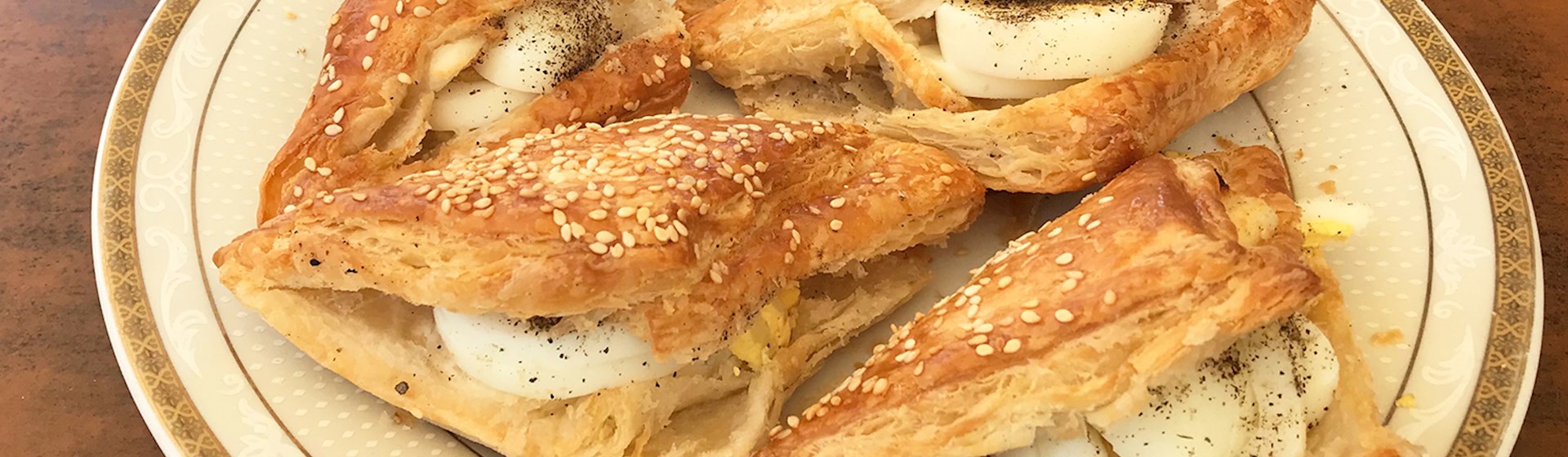
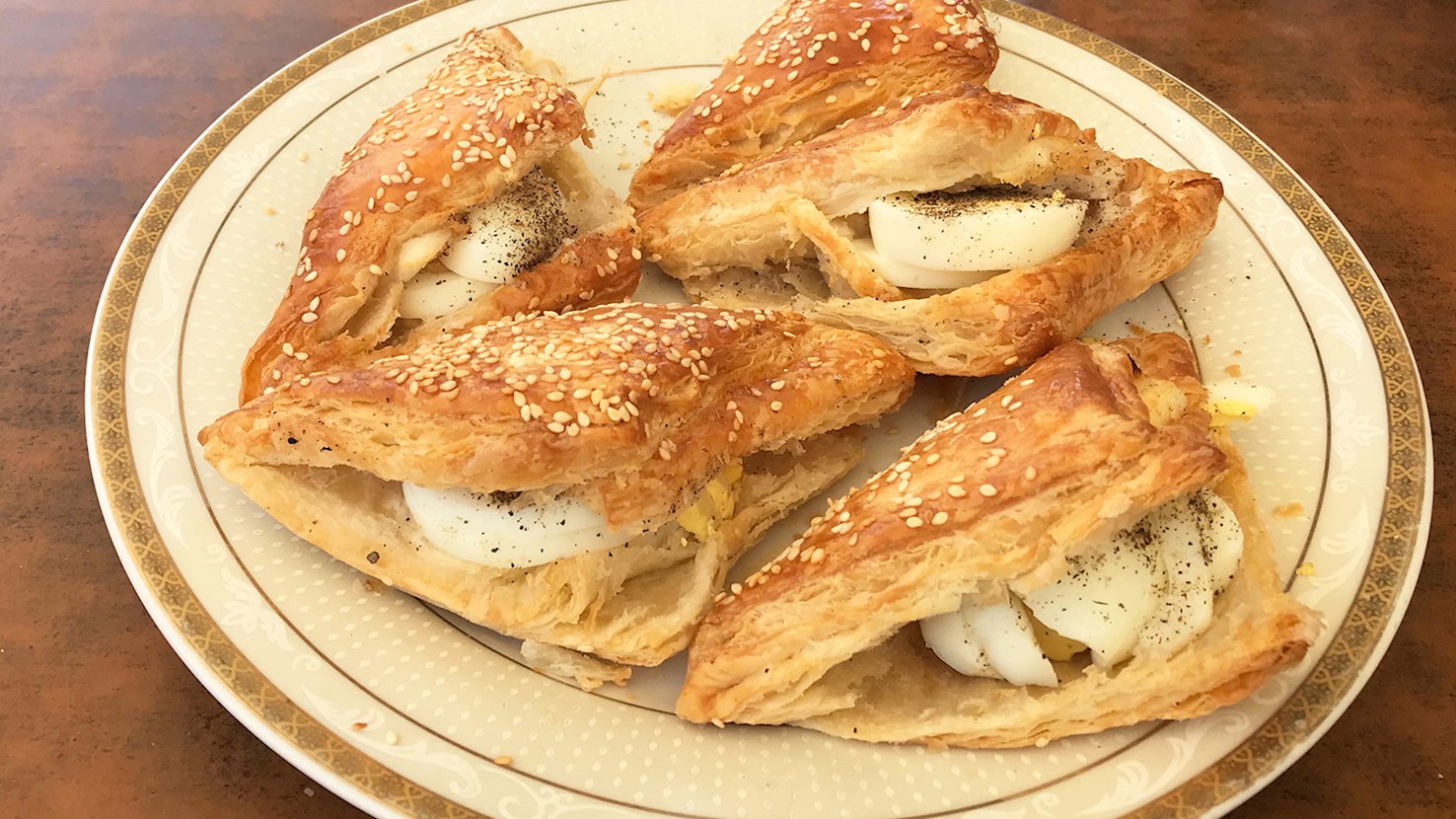
Bourekas are savory pastries popular throughout Israel and other parts of the Middle East, made from thin layers of dough filled with cheese, potatoes, spinach, mushrooms, or meat. They are typically prepared with phyllo or puff pastry, producing a crisp exterior and soft, flavorful filling. Bourekas are found in bakeries, markets, and cafés across Israel, where they are commonly eaten as breakfast, snacks, or light meals. Their name and form trace back to the Ottoman-era pastries known as börek, which spread across the Balkans, North Africa, and the Levant through Turkish influence. The pastry was introduced to Israel primarily by Sephardic and Mizrahi Jewish immigrants from Turkey, the Balkans, and North Africa during the 20th century. Each community brought variations reflecting local ingredients and culinary customs. In Ladino-speaking communities, they were called bourekas, a name derived from the Turkish börek. Over time, these pastries were adapted to Israeli tastes, often made with neutral fillings like cheese or potato and standardized shapes that indicated their contents: triangular for cheese, square for potato, and rectangular for spinach. In Israeli bakeries, bourekas became a familiar and accessible street food, appreciated for their portability and long shelf life. To prepare bourekas, dough is rolled thin or purchased pre-made as phyllo or puff pastry. The filling is typically made by combining ingredients such as mashed potatoes, feta or white cheese, sautéed mushrooms, or spinach seasoned with salt, pepper, and herbs. A small amount of filling is placed on a square or triangle of dough, which is then folded, sealed, and brushed with beaten egg. The pastries are sprinkled with sesame or nigella seeds before baking until golden brown and flaky. Some versions include an egg wash mixed with a touch of yogurt or milk for extra color and sheen. The texture depends on the dough used: phyllo-based bourekas are crisp and layered, while puff pastry versions are lighter and airier. Bourekas are typically served warm or at room temperature, often accompanied by hard-boiled eggs, pickles, and fresh vegetables. In Israeli cafés and convenience stores, they are sold as quick meals, sometimes with a cup of thick yogurt or a glass of ayran-style drink on the side. They also appear in family meals, picnics, and gatherings, reflecting their versatility and ease of preparation. They are eaten throughout the day, from breakfast to late-night snacks. The most common pairings include Turkish coffee, mint tea, or cold soft drinks. In bakeries, bourekas are often displayed alongside other pastries like sambusak and rugelach, forming part of Israel’s broader hybrid baking culture that blends European and Middle Eastern influences.
Rugelach is a filled pastry of Ashkenazi Jewish origin, associated primarily with Jewish communities in Central and Eastern Europe and widely popular in Israel and Jewish bakeries around the world. It consists of a rich dough rolled around sweet fillings such as fruit preserves, chocolate, cinnamon, nuts, or poppy seeds, shaped into small crescents or spirals. The name comes from Yiddish, derived from the word “rog” meaning corner or twist, referring to the pastry’s rolled shape. Though similar pastries appear in other European cuisines, rugelach developed a distinct form and flavor profile within Jewish baking, where dairy-based doughs and fruit or nut fillings became characteristic. Rugelach emerged in Jewish households in regions like Poland, Galicia, and Hungary, where sweet pastries were often made for Sabbath and holiday celebrations. The earliest versions were prepared with a yeast-based dough enriched with butter or sour cream. In the 20th century, as the recipe spread to Jewish communities in North America, bakers began using a cream cheese dough, which created a tender, flaky texture and became a defining feature of modern rugelach. The pastry reflects a combination of European influences, including Austrian kipferl and other crescent-shaped pastries, adapted to kosher dietary requirements and available ingredients. To prepare rugelach, flour is combined with butter or margarine, cream cheese or sour cream, sugar, and a pinch of salt to form a soft, pliable dough. The dough is chilled to rest, then rolled into a thin circle or rectangle. A thin layer of filling is spread evenly across the surface, typically apricot or raspberry jam, finely chopped nuts, sugar mixed with cinnamon, or melted chocolate. The dough is cut into wedges or strips, then rolled tightly from the outer edge toward the center to create small crescents. The pieces are brushed with egg wash and sometimes sprinkled with coarse sugar or cinnamon sugar before baking. They are baked until golden brown and slightly crisp, with the filling caramelized inside. In Israel, bakeries often sell yeast-leavened rugelach glazed with syrup, giving them a shiny surface and denser crumb, while American versions tend to be smaller, drier, and made with cream cheese dough. Rugelach is served at room temperature and often accompanies tea or coffee. It is eaten during holidays, festive meals, and casual gatherings, as well as sold year-round in Jewish bakeries and cafés. The pastry pairs well with black tea, espresso, or dessert wine such as Tokaji or sweet sherry, which complements its richness and sweetness. Its lasting popularity lies in the simplicity of its preparation, adaptability of flavors, and its place as a familiar, comforting dessert in Jewish culinary culture.
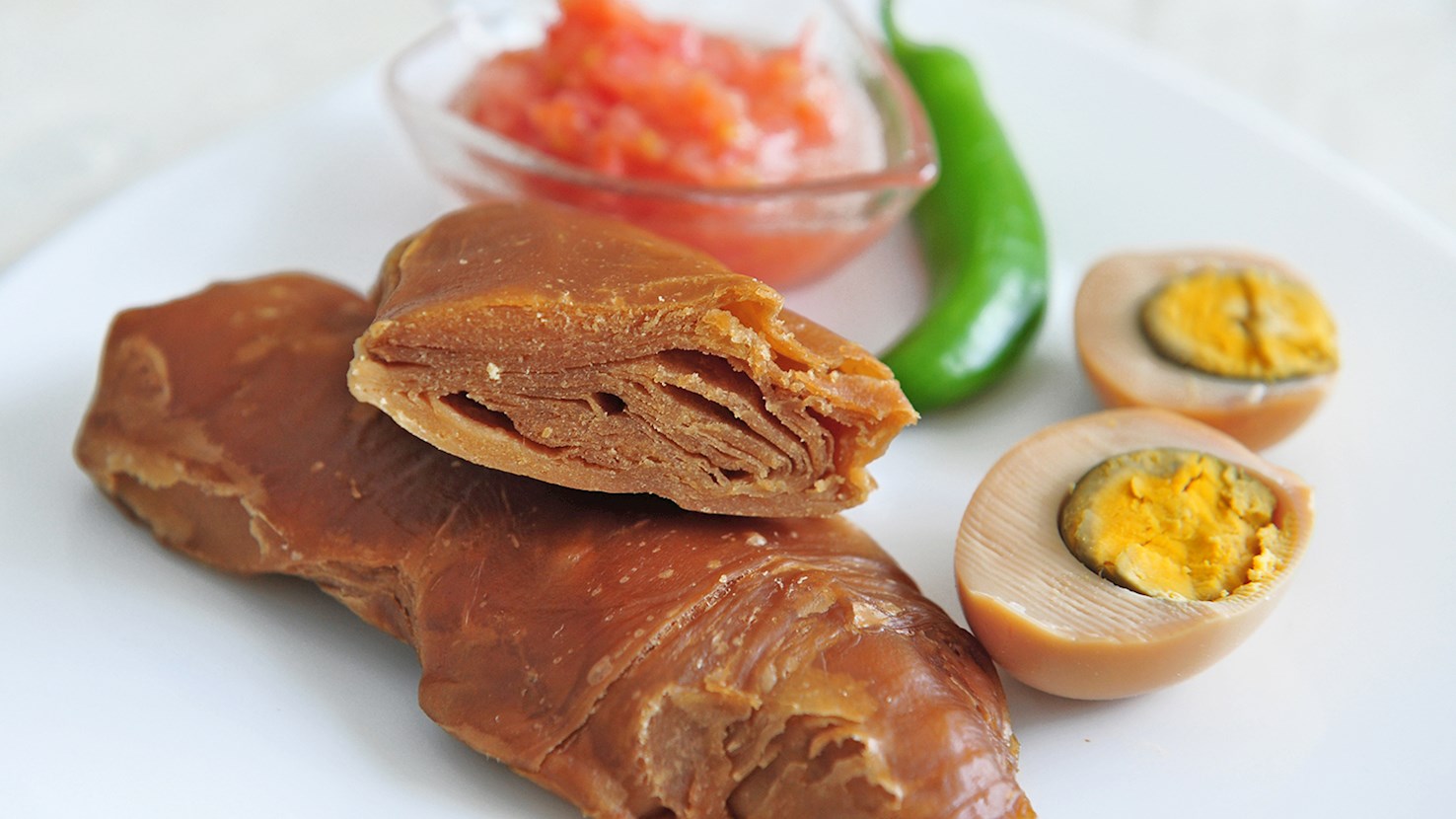
Jachnun is a slow-cooked, rolled dough dish from the cuisine of Yemenite Jews, prepared for consumption on Shabbat morning and today widely eaten in Israel. It consists of thinly stretched dough brushed with fat, rolled tightly, placed in a pot, and cooked at low heat overnight until it becomes soft, amber-colored, and slightly sweet. Its development took place among Jewish communities in Yemen, where cooks adapted local dough-making practices to meet the requirement of preparing Shabbat food in advance without active cooking on the day of rest. The long, low-temperature cooking method made use of the communal oven or a covered home vessel that maintained steady heat until morning. The ingredients were simple and based on what was reliably available, such as flour, water, clarified butter or later margarine, and a small amount of sweetener, with the slow cooking contributing strongly to the final flavor and texture. Preparation begins by kneading a soft, elastic dough and allowing it to rest so it can be stretched easily. The dough is then rolled out very thin, brushed with fat, folded and rolled into a compact cylinder, and arranged in a lidded pot. A small amount of fat or parchment is placed at the bottom to prevent sticking, and eggs in their shells are often added to the pot so they slowly cook alongside the jachnun. The pot is kept at low heat, traditionally overnight, until the dough darkens and takes on a tender, layered consistency. Jachnun is eaten in Israel in homes, bakeries, cafés, and weekend food stalls, especially on Saturday mornings. It is served with grated tomatoes, hard-boiled eggs, schug, and sometimes yogurt-based sauces depending on the household custom. It pairs well with tea or light herbal infusions, and in modern settings it is sometimes served with fresh salads or simple cold drinks that balance its richness and mild sweetness.
Sufganiyah is a round, deep-fried doughnut filled most commonly with jam and widely associated with Jewish communities, particularly in Israel, where it is produced in large quantities during Hanukkah and sold in bakeries, cafés, and markets. Its development traces to earlier European jelly-filled pastries such as the German Berliner and Central European sufganiyot-style fried doughs that Jewish migrants adopted and adapted, eventually becoming integrated into local cuisines in the Levant during the twentieth century when commercial bakeries began standardizing the recipe and promoting it as a convenient holiday food that aligned with the regional emphasis on cooking with oil during the season. The dough is usually made from flour, eggs, yeast, sugar, and fat, mixed into a soft enriched dough that is left to rise before being shaped into small rounds, proofed again, and fried in oil until golden, after which they are filled through a small opening with jam, custard, chocolate, halva cream, or other fillings introduced by modern bakeries; the surface is often dusted with powdered sugar. One notable element is the ring-less shape that sets it apart from American-style doughnuts and the focus on post-frying filling rather than mixing the flavor into the dough, a method that preserves a clear contrast between the soft interior and the filling. It is eaten primarily during Hanukkah in Israel and Jewish communities worldwide but is available year-round in many places, served with coffee, tea, hot chocolate, and other warm drinks that balance the sweetness and richness of the fried dough.
TasteAtlas food rankings are based on the ratings of the TasteAtlas audience, with a series of mechanisms that recognize real users and that ignore bot,
nationalist or local patriotic ratings, and give additional value to the ratings of users that the system recognizes as knowledgeable.
For the “Top 5 Israeli Pastries” list until October 15, 2026, 1,290 ratings were recorded, of which 681 were recognized by the system as legitimate.
TasteAtlas Rankings should not be seen as the final global conclusion about food. Their purpose is to promote excellent local foods,
instill pride in traditional dishes, and arouse curiosity about dishes you haven’t tried.




What People Say