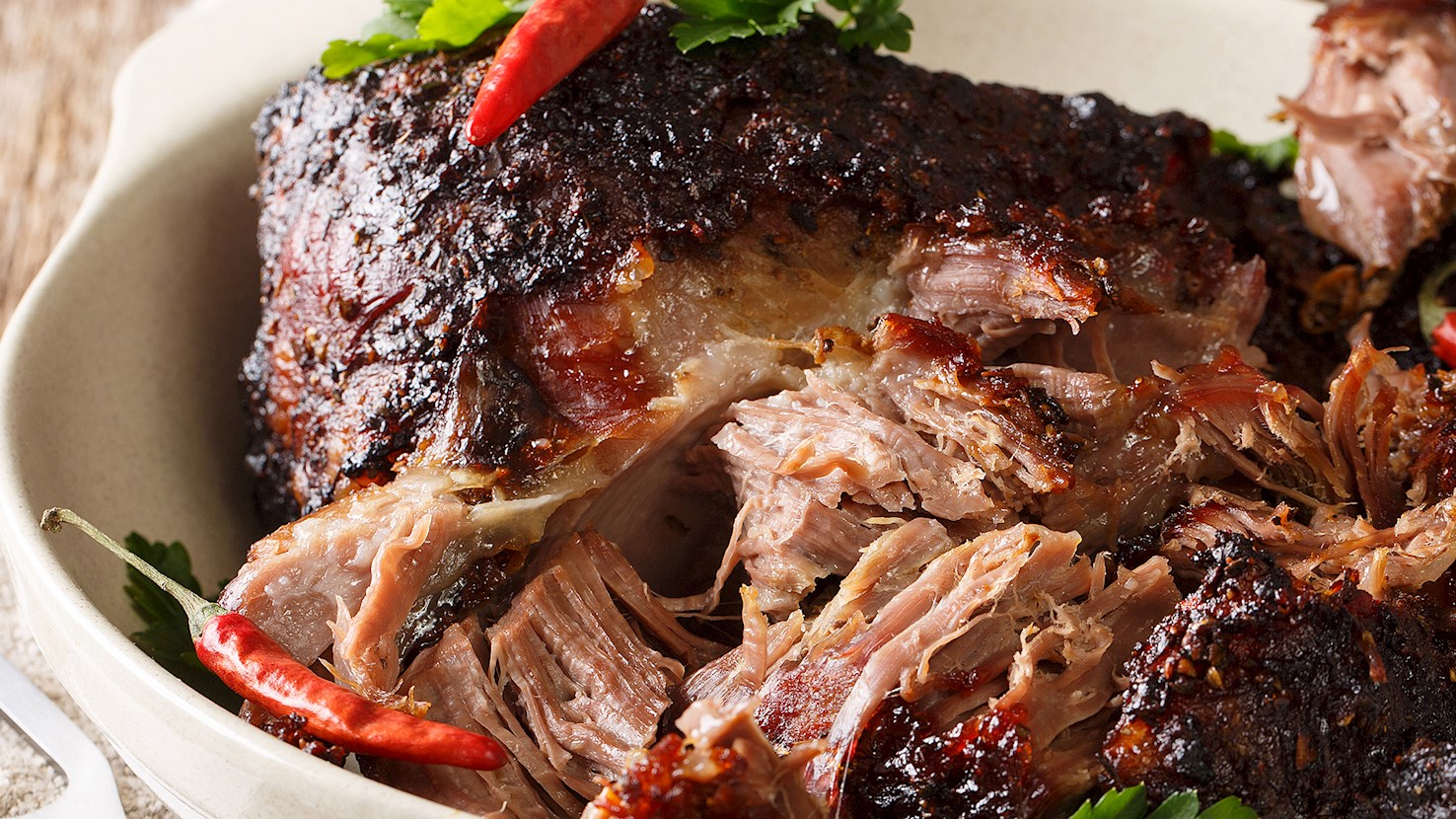
Pernil is one of Puerto Rico's most famous dishes, a succulent roasted pork shoulder that is traditionally seasoned in a marinade called adobo mojado, consisting of paprika, salt, vinegar, garlic, and oregano. The name of the dish is derived from the Spanish word pierna, meaning leg, but it is also a Catalan word for ham, referring to the traditional recipe that calls for fresh ham. Because pork shoulder is more available and costs less than ham, it has become a key ingredient in pernil. Many people prefer it since it is believed to be much more flavorful than ham. The dish is a staple at numerous Puerto Rican festivities such as birthdays or weddings, where many people feast on the crunchy skin and tender meat that falls off the bone.
Griot is a typical Haitian dish consisting of pork meat cubes slowly simmered in a sweet, spicy, and tangy marinade of chile peppers, onions, and orange, lime, or lemon juice until tender, then fried in a skillet. Instead of developing the flavor from the pan drippings, the sauce acts as a cooking liquid, typically reduced to a shiny glaze. The dish is an homage to the griot, a person of high social status in many West African countries, traditionally a local historian, diplomat, warrior, tribal chief, community leader, or a teacher. As pork meat was scarce and expensive in Haiti, the dish was made only for special occasions and festive events, and the link between the two griots is obvious - they are both very important to their respective cultures. Today, it is considered Haiti's national dish and is made more often than in the past. Like the African griot, the dish is also special for its flavors - heat from the chiles, the sweet and sour acidity of citrus juices, the richness of meat, and the unique, browned exterior.
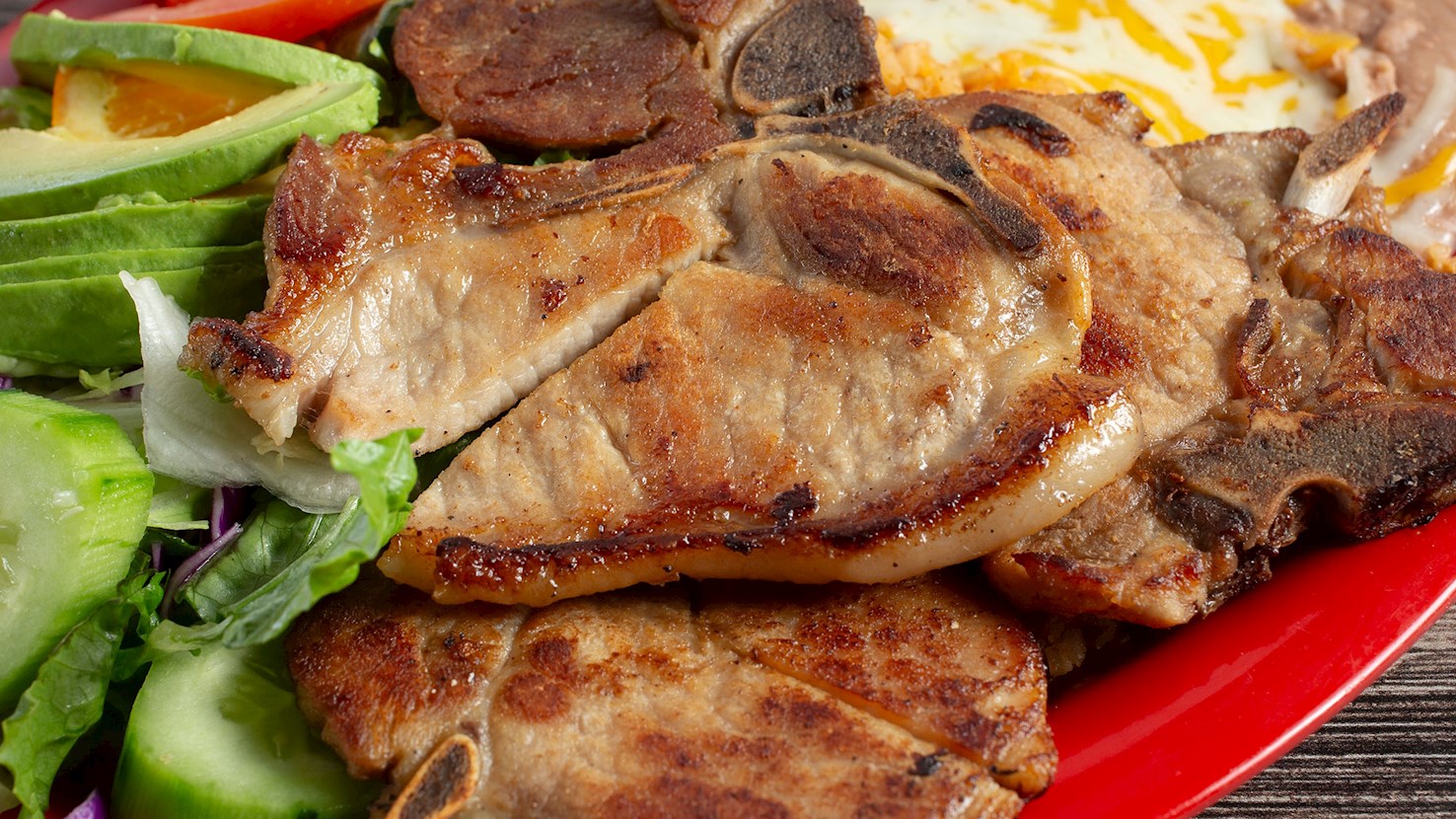
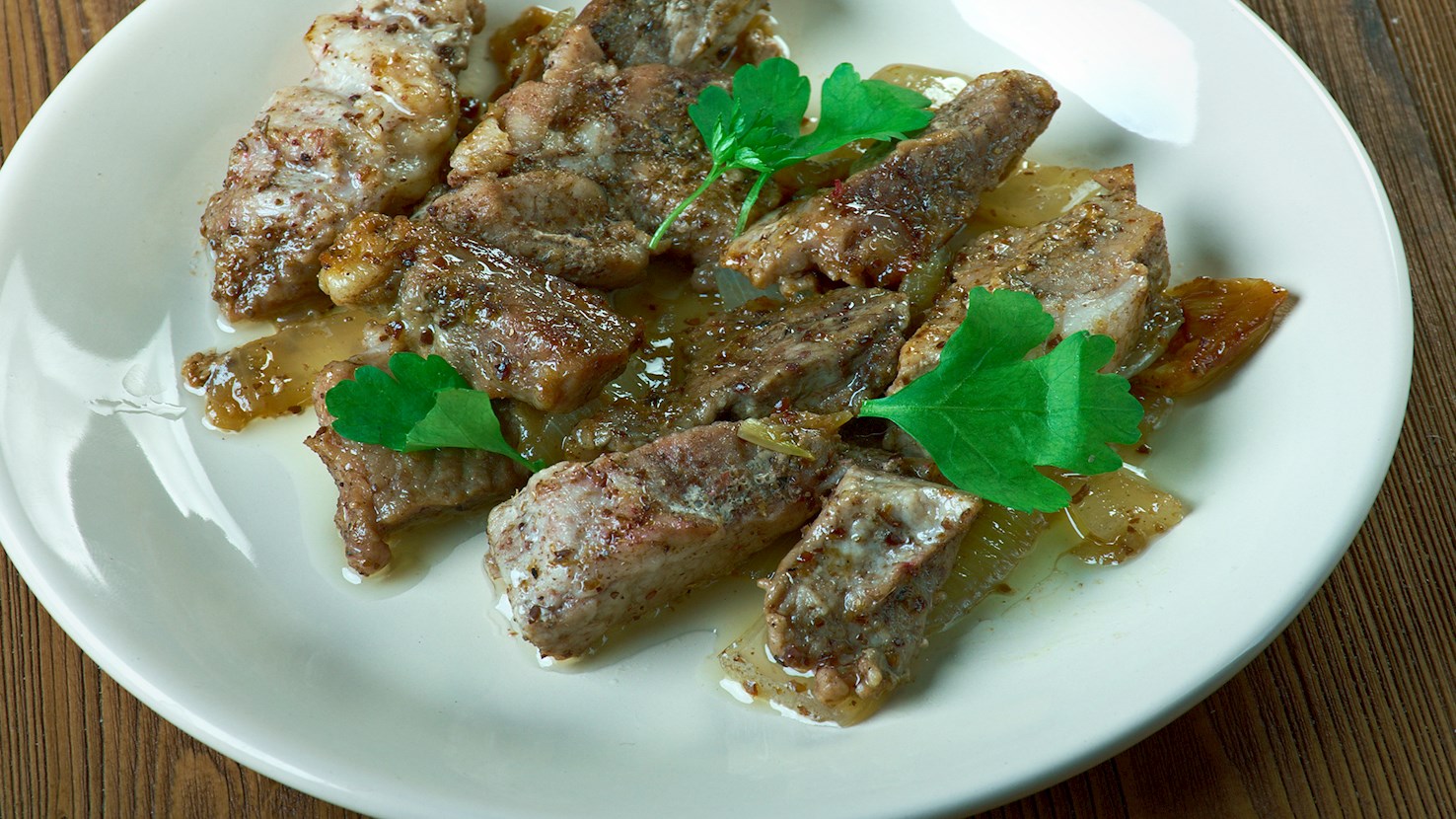
Chuletas de puerco is a traditional way of preparing pork chops. The dish is made with a combination of pork chops, cumin, oregano, garlic, sour oranges, olive oil, onions, and seasonings. The meat is marinated in a mixture of sour orange juice, garlic, oregano, and seasonings. Once fully marinated, the pork chops are fried in olive oil on both sides, then topped with sautéed onions and pan juices. This dish is characterized by the use of traditional Cuban spices such as sour orange juice, cumin, and oregano. Once served, it is often enjoyed with rice and beans on the side. A dish with the same name is often eaten in Mexico, and it's usually prepared with tomato salsa.
Pan con lechón is a traditional sandwich originating from Cuba, but it's also very popular in Miami. This pressed sandwich is made with Cuban bread, lechón roasted pork, butter, onions, and mojo sauce. The bread is cut lengthwise, buttered on both sides, then topped with roasted pork, mojo sauce, and yellow onions – either raw or sautéed. Once assembled, it's placed on a sandwich press, then served. The meat is usually marinated in garlic, orange juice, oregano cumin, and lime juice before it's roasted, while the mojo sauce consists of garlic, oregano, sour orange juice, salt, and black peppercorns.
This exotic dish comes from Antigua and Barbuda, consisting of grilled pork chops paired with grilled banana chunks wrapped in bacon. It is recommended to sprinkle the banana chunks with lemon juice before grilling. The pork chops are usually flavored with cumin, butter, salt, and pepper, while the banana chunks are skewered in order to cook more easily.
Barbecue pigtail is a traditional Trini dish that is also often prepared in Barbados and throughout the Caribbean. The dish is made with pigtails cured in brine, garlic, barbecue sauce, bay leaves, and green seasoning. Once they have been boiled with the aromatic ingredients, the pigtails are dipped in barbecue sauce and placed on a hot grill until golden brown. It is recommended to serve barbecued pigtails with pepper and barbecue sauce on the side.
Geera pork is a Trini way of preparing pork by cutting it into small pieces, then seasoning the meat with cumin seeds (geera), garlic, pepper, onions, chives, and hot peppers. The meat is marinated, then cooked in water until most of the liquid is absorbed and pork is well cooked. The dish is a staple at Trini bars, where it is regularly served either in cups or with hops bread. It is believed that the pepper in the dish makes it harder for people to get intoxicated, so that is the reason why geera pork is so popular in bars.
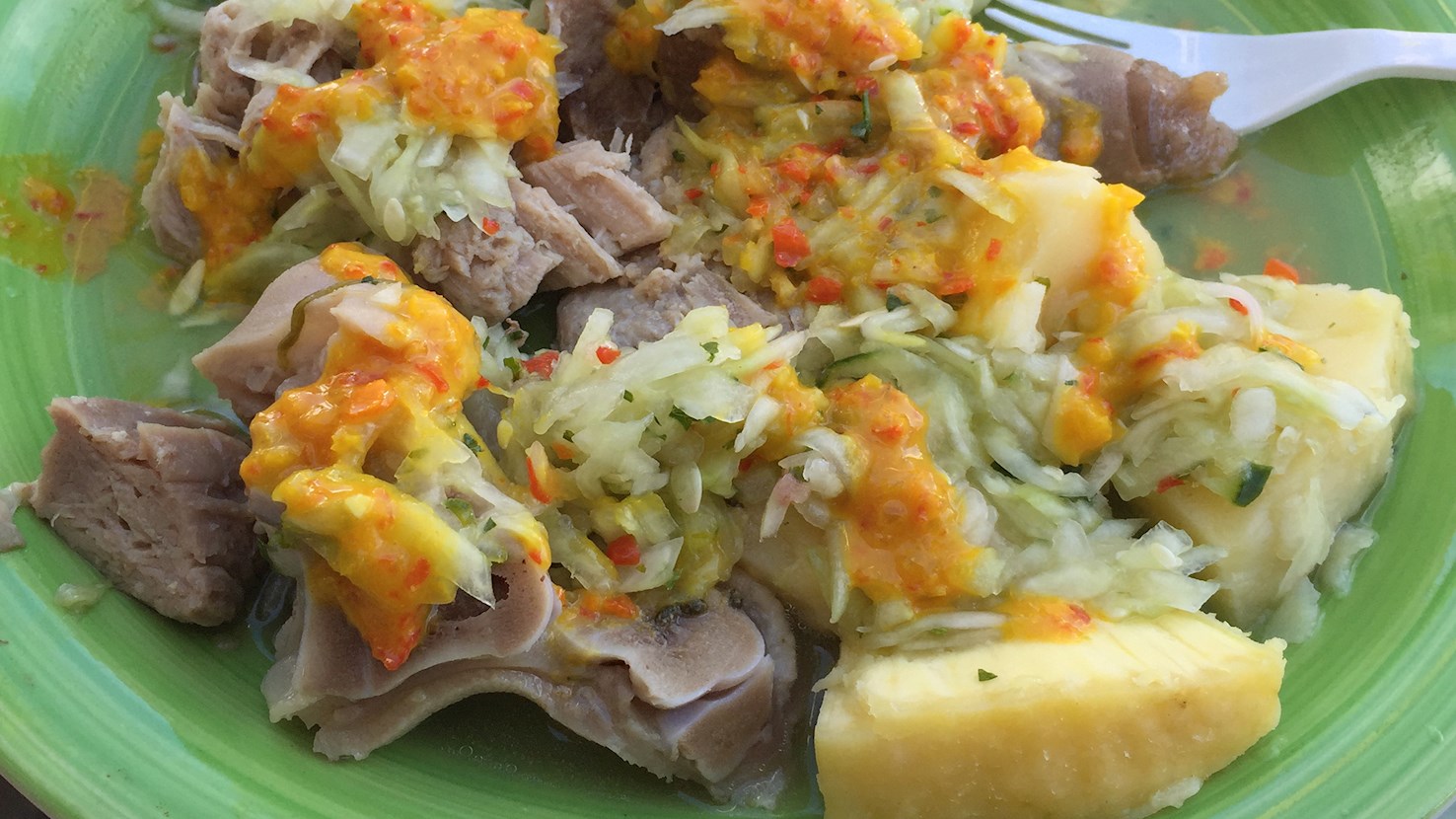
Pudding and souse is a traditional dish that is served exclusively as a Saturday lunch, consisting of two separate items: pudding, or steamed sweet potatoes, and souse, or pickled pork that is traditionally served in pork intestines. The meat is usually pickled in lime juice and served with pickled onions, cucumbers, and peppers. On the island, everyone has their favorite lunch spot to enjoy this hearty meal.
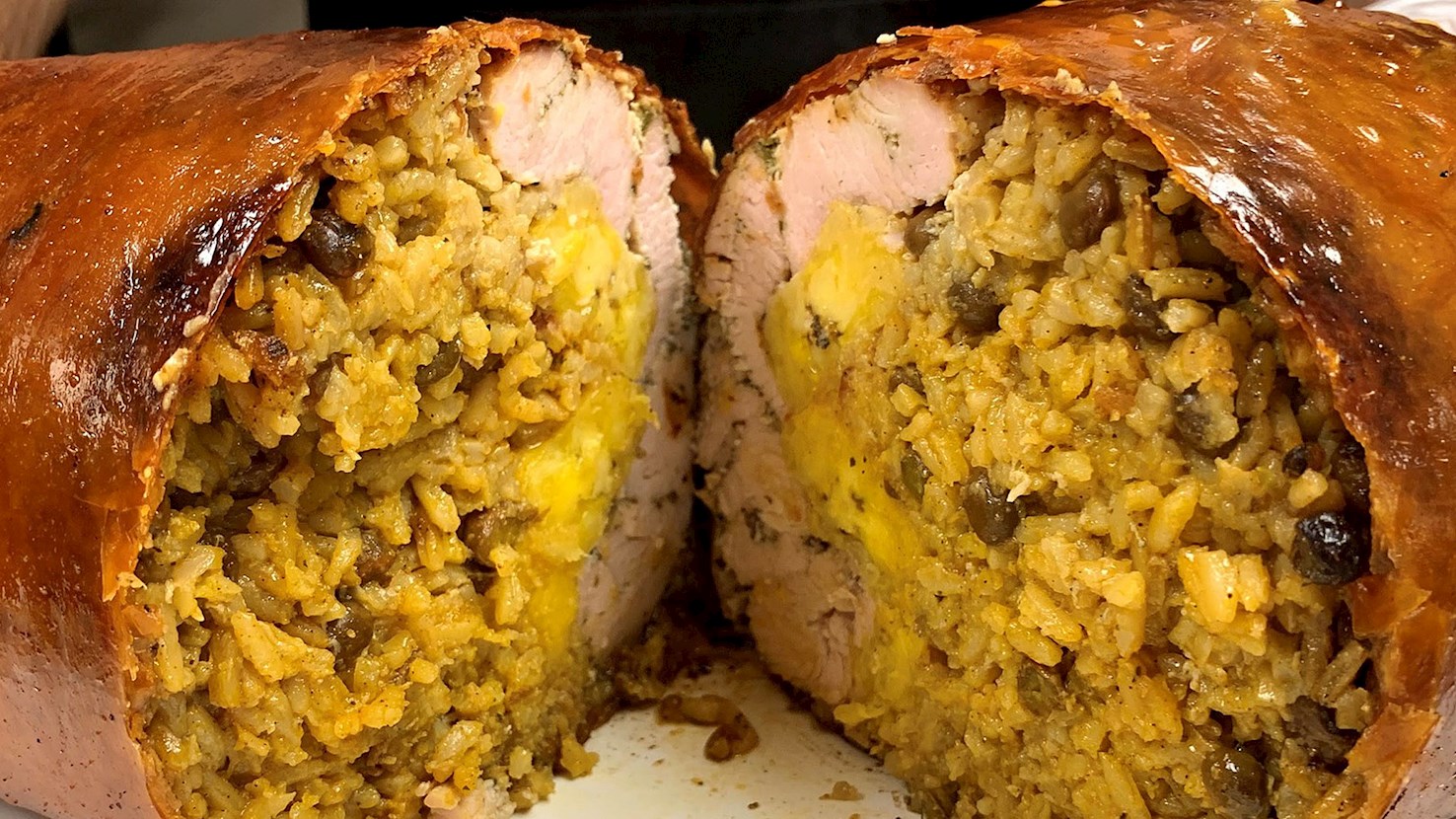
Cuerito relleno is a dish from Puerto Rico, consisting of a large cut of raw pig skin, formed into a pouch and tightly packed with a seasoned filling of rice, pigeon peas, and chopped meats. The culinary practice of stuffing pork skins emerged from rural butchery methods across the Spanish-speaking Caribbean, where cooks sought practical ways to maximize the utility of a slaughtered animal by using the durable, fatty skin as a functional roasting casing to flavor inexpensive grains and legumes. To prepare the item, a cook lays out a rectangular slab of pork skin, frequently with a thin layer of belly fat attached, and spoons a dense mixture of seasoned rice, such as arroz con gandules, along with ground pork or smoked meats directly into the center. The skin is then folded over the filling, securely tied with butcher's twine or sewn shut to prevent the contents from escaping, and roasted in a high-temperature oven until the exterior hardens into a crispy texture and the internal grains absorb the rendered pork fat. The thick skin functions as a sealed steaming chamber during the cooking process, simultaneously cooking the internal rice mixture with trapped moisture while the outside reaches a high enough temperature to fry in its own fat. It is eaten at large gatherings, holiday events, and specialized local eateries throughout Puerto Rico and various expatriate communities in Florida, where diners consume it by slicing the cooked pouch into thick cross-sections, using a heavy knife to chop through the hardened skin, and serving the pieces on a flat plate alongside the spilled filling. Typical food pairings meant to be eaten with the heavy meat include acidic sides like a sharp cabbage slaw or pickled red onions, which help balance the dense, rendered fat, while standard beverage choices feature ice-cold light lagers, carbonated malt beverages, or rum mixed with fresh citrus juices to provide a sharp, palate-cleansing contrast.
TasteAtlas food rankings are based on the ratings of the TasteAtlas audience, with a series of mechanisms that recognize real users and that ignore bot,
nationalist or local patriotic ratings, and give additional value to the ratings of users that the system recognizes as knowledgeable.
TasteAtlas Rankings should not be seen as the final global conclusion about food. Their purpose is to promote excellent local foods,
instill pride in traditional dishes, and arouse curiosity about dishes you haven’t tried.




What People Say