

shutterstock

Top 77 Southeast Asian Rice Dishes

Last updated on May 15, 2026
01

Nasi goreng ayam

4.3 ·

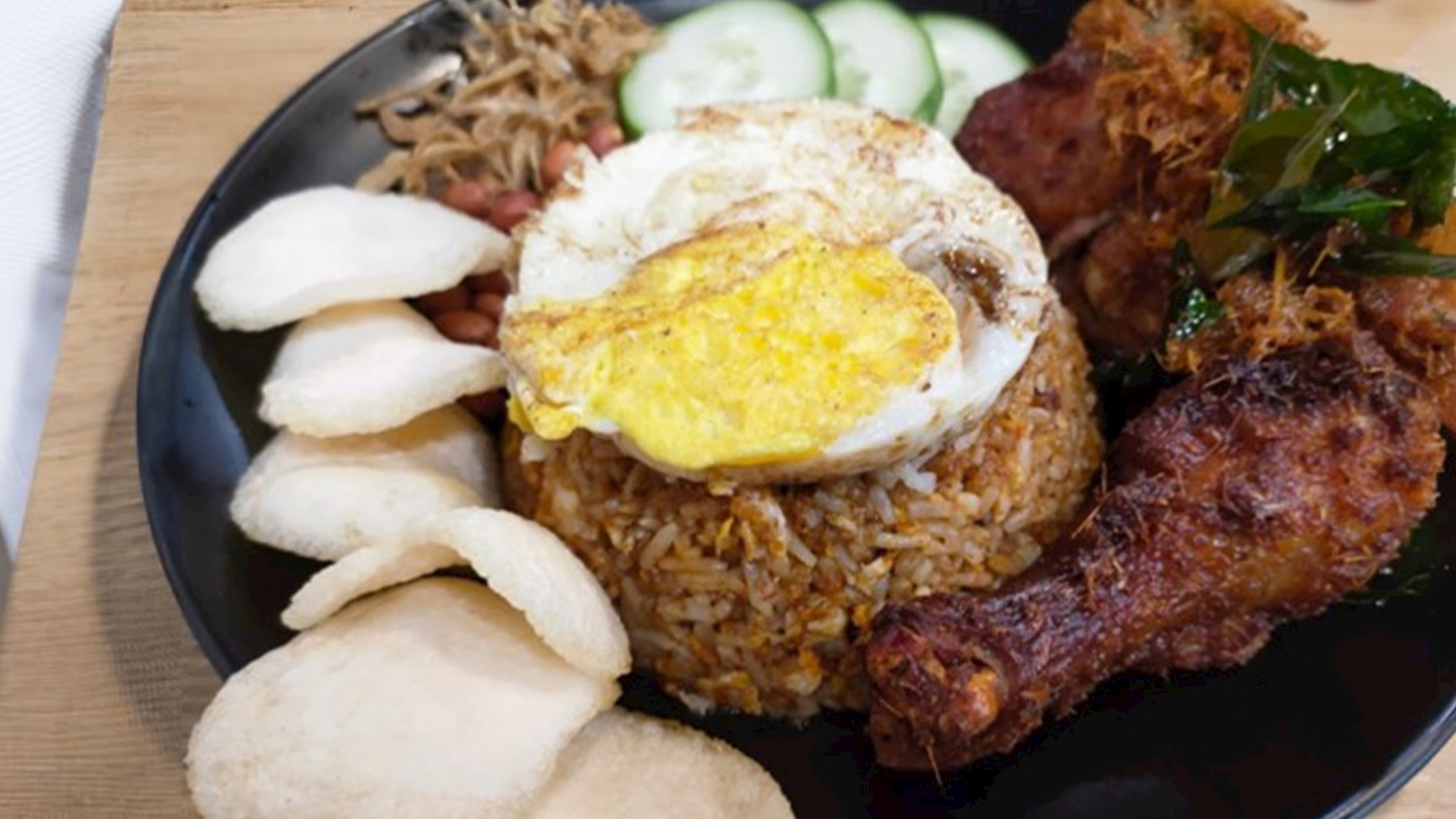
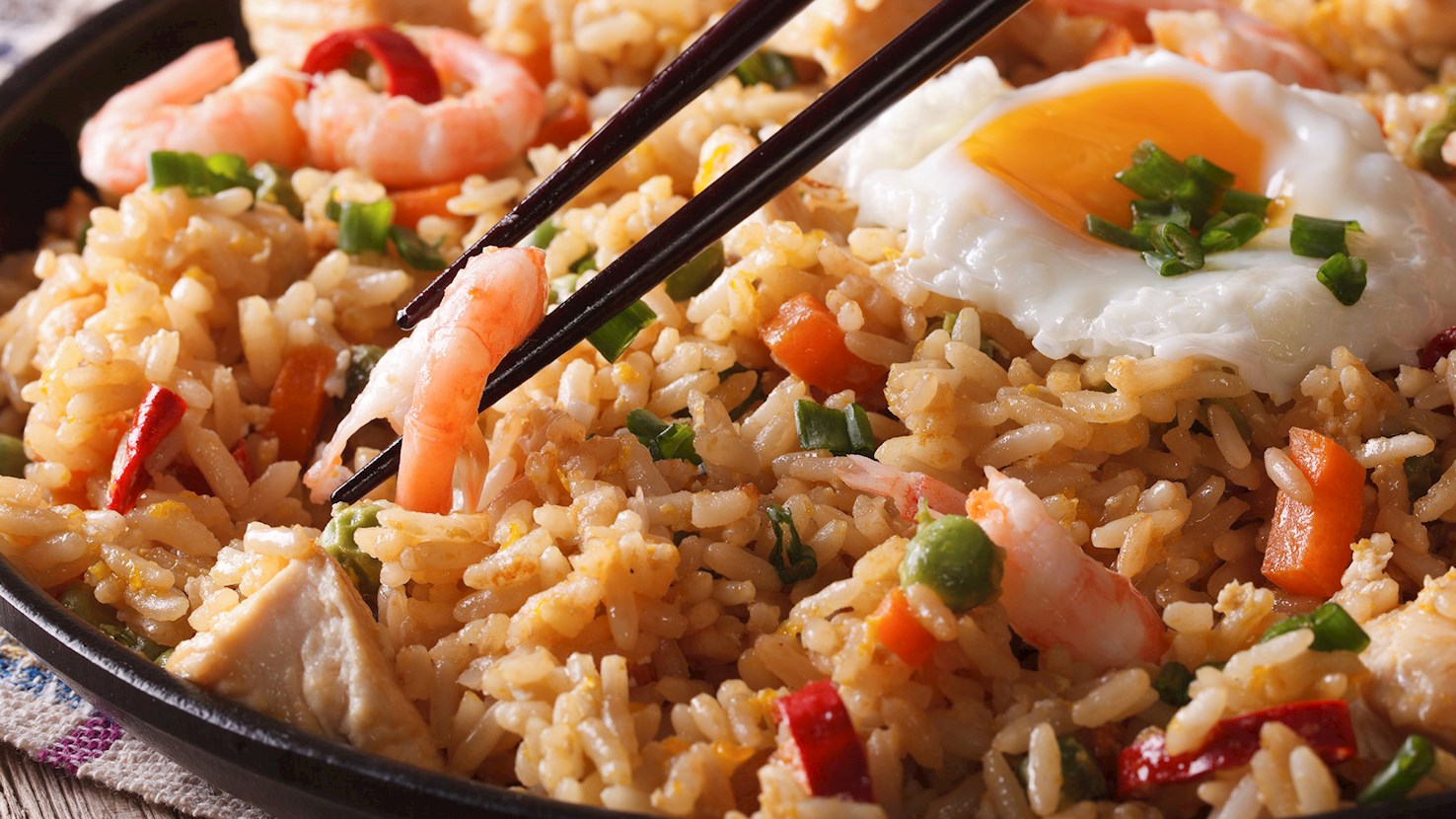
Nasi goreng ayam is a traditional fried rice dish that's also popular in Singapore, Brunei, and Malaysia. Although there are many versions of this nasi goreng variety, it is usually made with a combination of chicken thighs, oil, salt, white pepper, shallots, rice, turmeric, soy sauce, fish sauce, galangal, ginger, garlic, scallions, kecap manis, and hot peppers. Most of the ingredients are fried with rice, and the dish is then topped with fried eggs, fried shallots, and sliced chili peppers. It's recommended to serve nasi goreng ayam with prawn crackers on the side.

02

Bubur ayam

4.3 ·

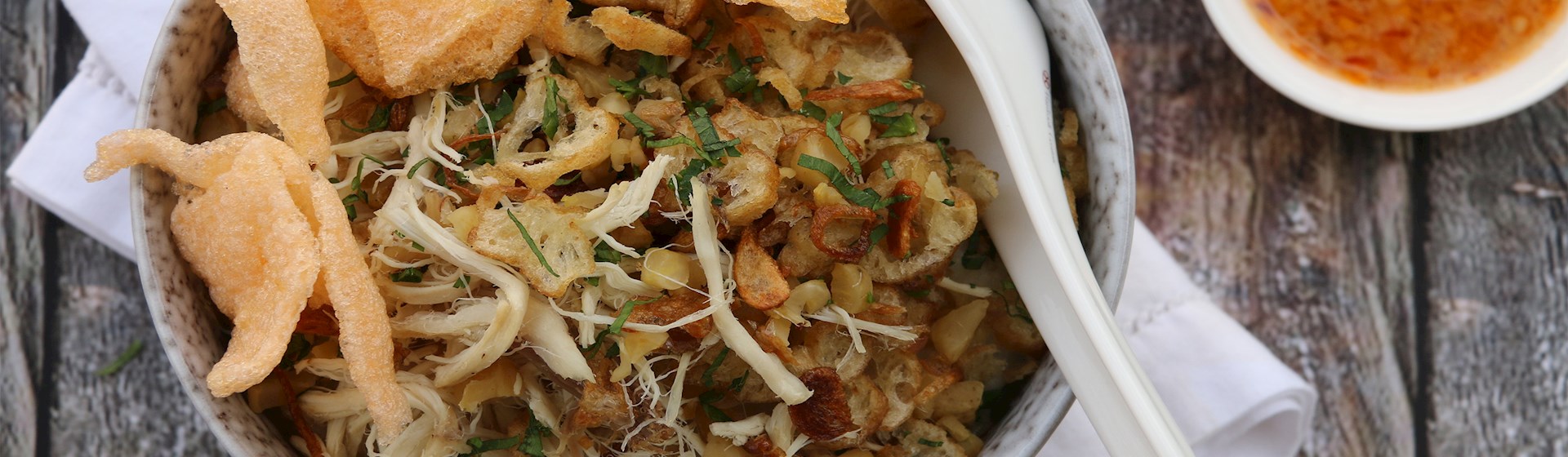
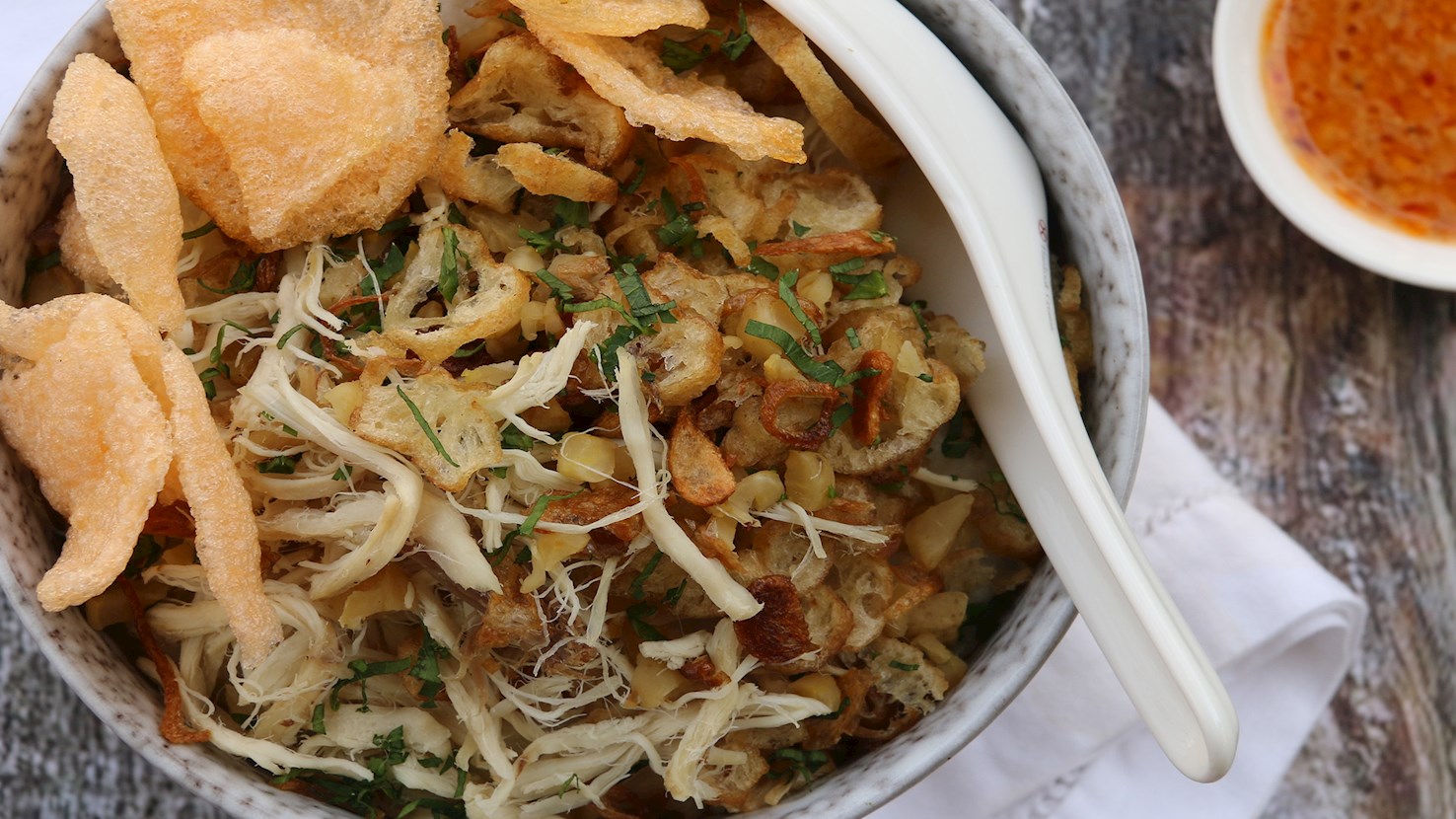
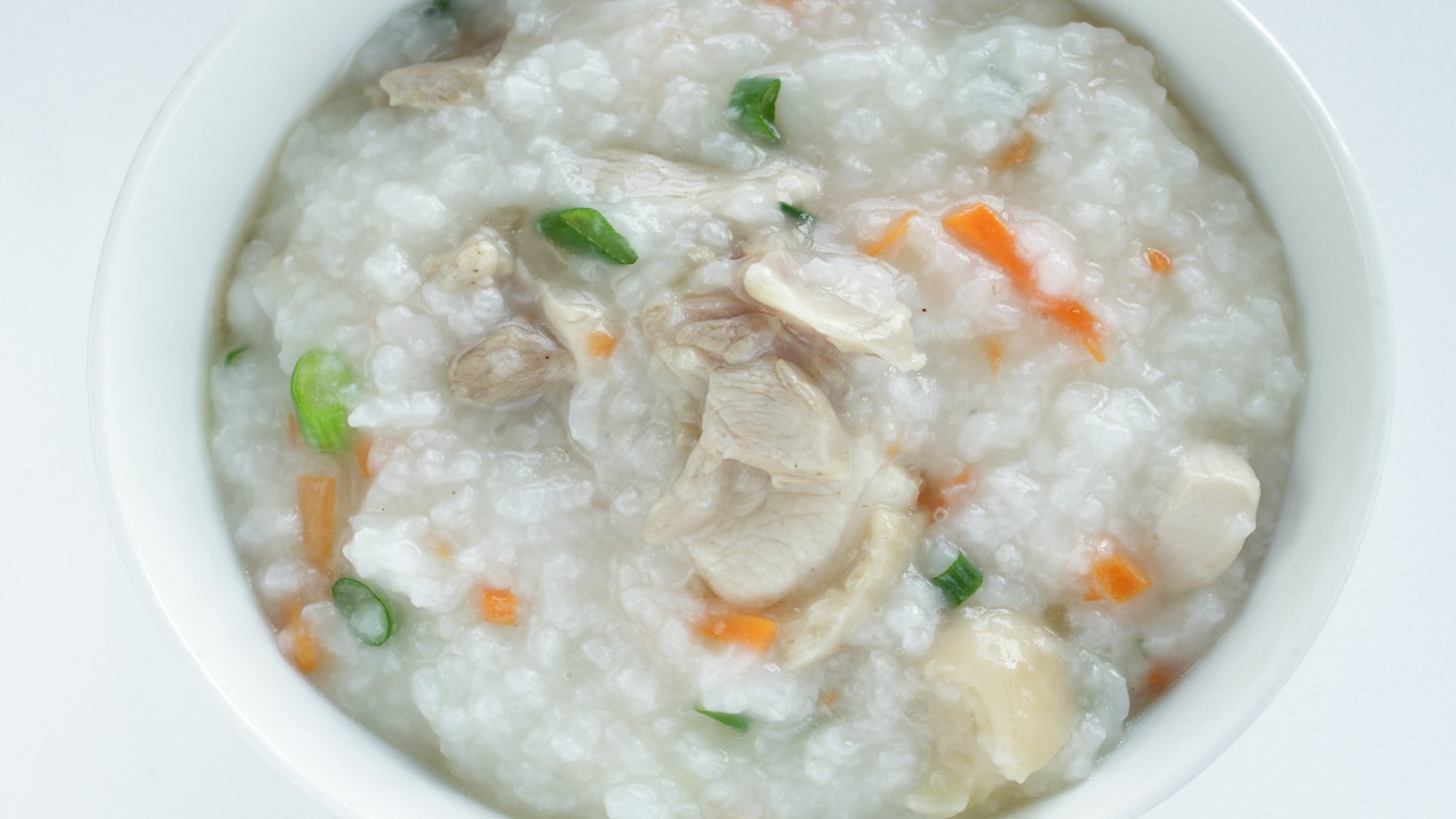
Bubur ayam is the Indonesian version of chicken congee, a thick rice porridge topped with shredded chicken and various savory condiments. This breakfast staple probably originates from the Chinese rice porridge, but it employs regionally available ingredients and toppings to create an authentic Indonesian dish. The process starts with boiling chicken (usually darker, on the bone pieces), and the same broth is typically used to cook the rice until it becomes dense in consistency. Besides rice porridge and shredded chicken, bubur ayam can employ a myriad of other ingredients. It is commonly topped with sliced scallions, crispy fried shallots, chopped cilantro, crushed peanuts, fried crullers, and sliced boiled eggs. Before it is served, bubur ayam is usually generously doused with soy sauce, sesame oil, or fish sauce. Unlike other traditional Indonesian dishes, this chicken porridge is not overly spicy, but the fiery sambal sauce can be served on the side, if desired. Bubur ayam is one of the most common street food varieties in Indonesia - each morning, numerous street vendors can be seen selling this comforting porridge as a nutritious breakfast dish.

03

Nasi uduk

4.2 ·

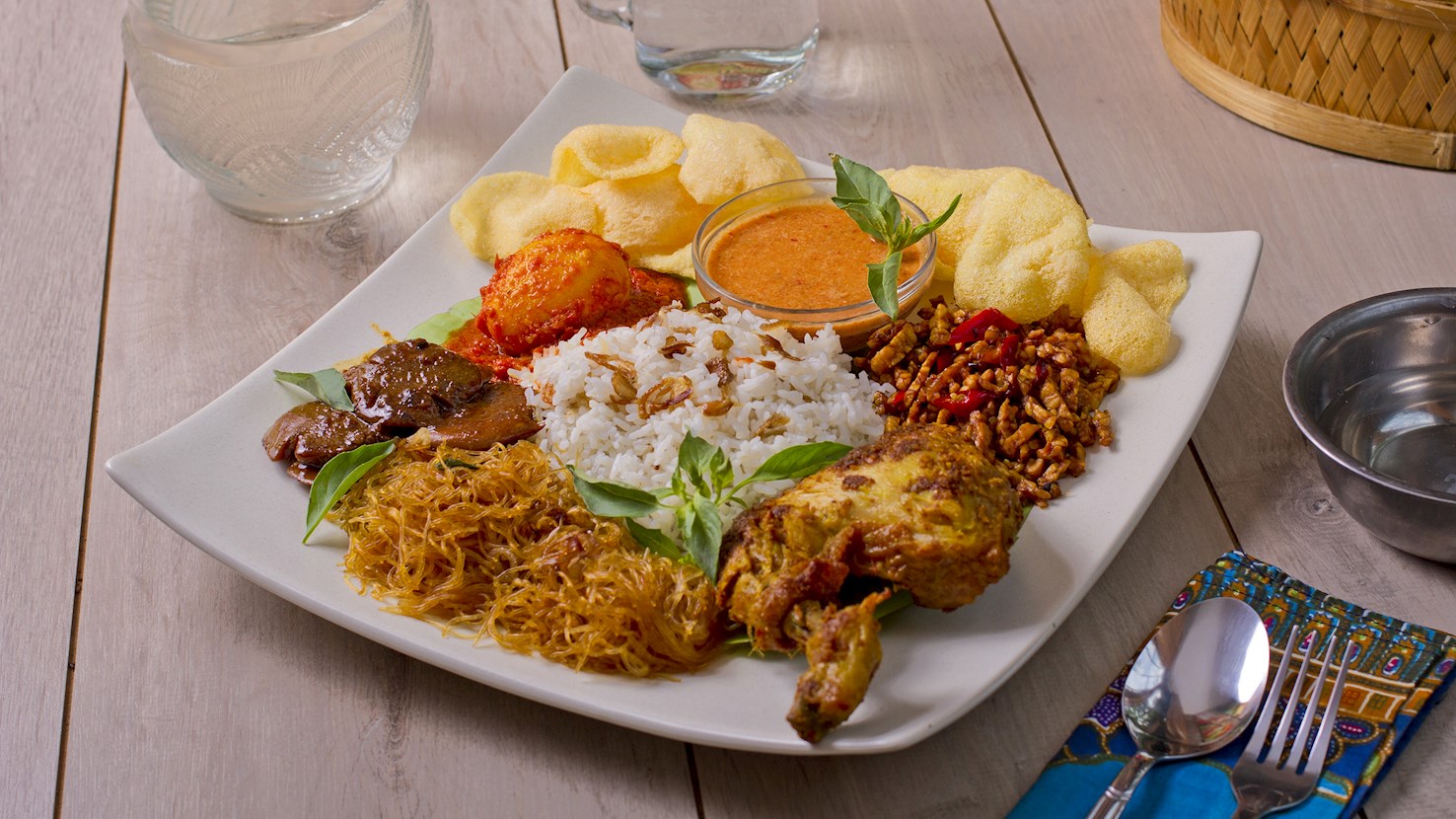
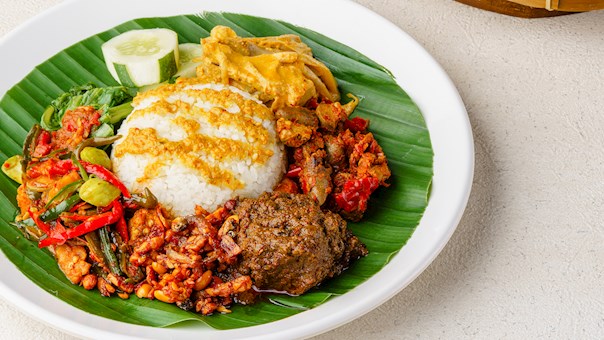
Nasi uduk is one of numerous Indonesian rice-based dishes. The rice in nasi uduk is cooked in coconut milk together with lemongrass, cloves, pandan leaves, and cinnamon. The process results in wonderfully fluffy, fragrant rice, and right before it is served, each portion is usually topped with fried shallots. It is a dish rarely eaten on its own, but rather served with a variety of side dishes and condiments. Most commonly a variety of stewed and fried meat, rice noodles, eggs, tempeh, tofu, fried anchovies, and rice crackers are served alongside rice. Regular sambal, the spicy Indonesian hot sauce, or peanut sambal are the most common condiments served with nasi uduk. However, it is usually the customer who can choose the additional ingredients and create their version of the meal. The dish is usually served in warungs, traditional Indonesian eateries, or at Indonesian food stalls. It can also be bought already prepared and wrapped in fresh banana leaves. Nasi uduk is believed to have originated in Jakarta, but it can be found in other parts of Indonesia as well.

04

Cơm tấm (Broken Rice)

4.2 ·

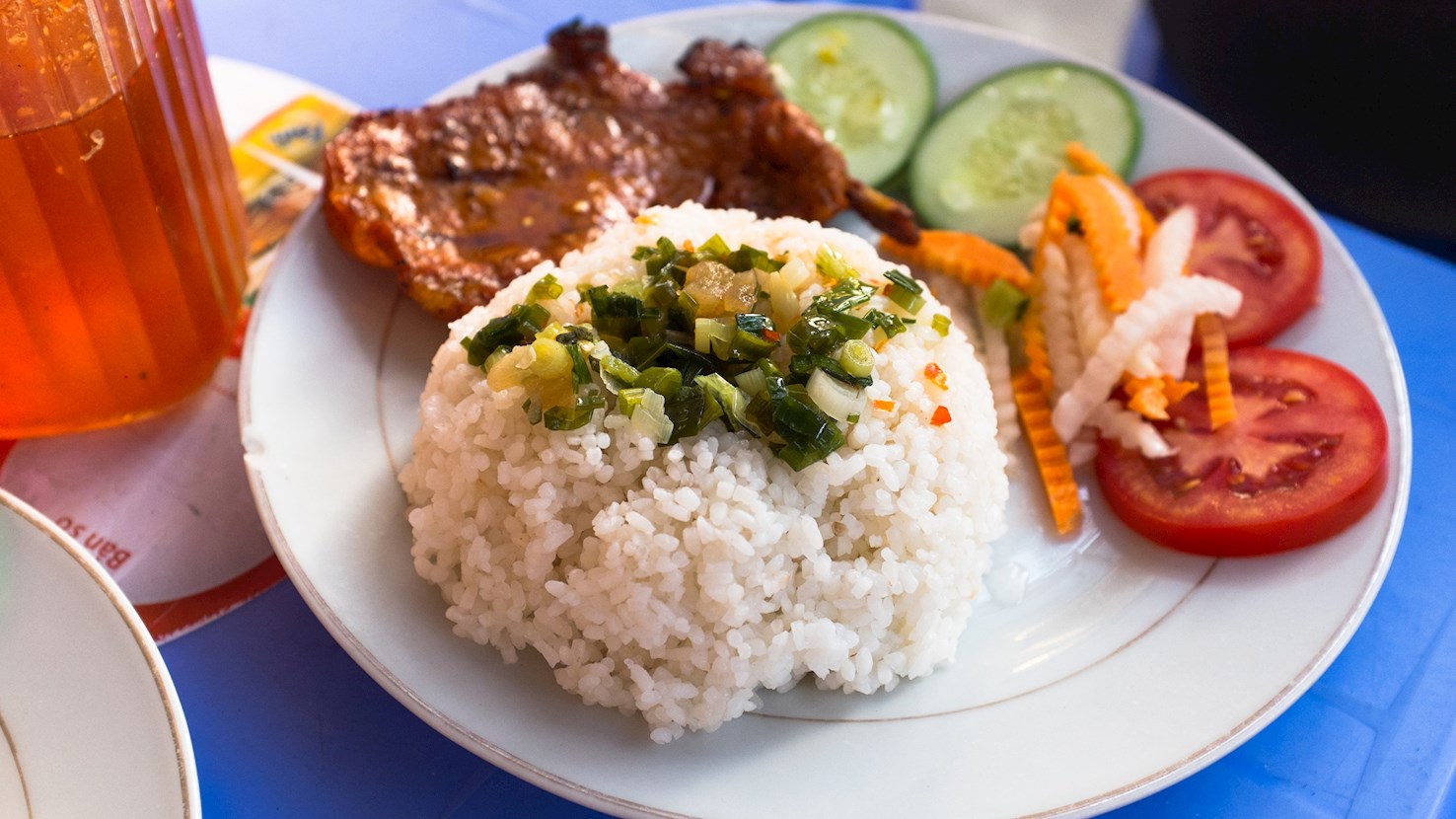
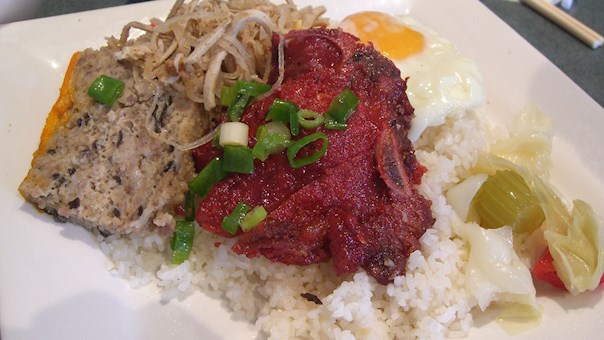
Cơm tấm is a traditional dish that's typically sold as street food. It consists of broken and imperfect rice grains that were traditionally chucked away after the milling process, but nowadays it's a signature dish of Ho Chi Minh City. Broken rice has a texture that's similar to normal rice, just smaller. When served, cơm tấm is accompanied by numerous toppings such as fried eggs, shredded pork skin, grilled pork chops, or deep-fried fish patties. The usual garnishes include lime wedges, chopped spring onions, and mint, while accompaniments served on the side include sliced tomatoes and cucumbers, pickled vegetables, or dipping sauces. Local cơm tấm eateries are easily found because they usually have a coal-fired grill on the street, dispersing the smoke scented with lemongrass and charred meat, a result of preparing the accompaniments for broken rice. In the past, these broken rice grains were usually used as animal feed or eaten by the farmers and their families.

05

Nasi goreng

4.2 ·

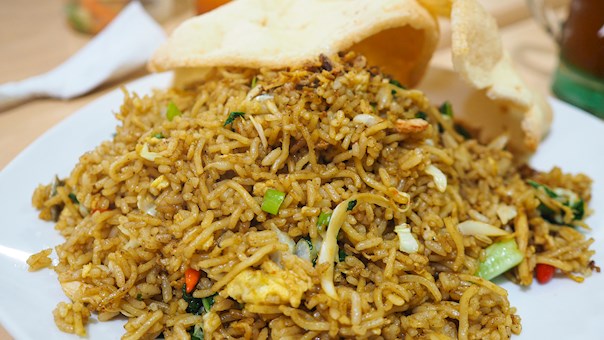
Nasi goreng is often referred to as the Indonesian version of fried rice. Although it is considered to be the national dish of Indonesia, it is also commonly eaten in Malaysia and Singapore. It is believed that the tradition of frying rice in Indonesia came from the Chinese culture, when the trade between the two countries started to develop. Indonesians adopted the Chinese tradition based on the belief that it is sinful to waste food, and soon, like many other versions of fried rice, nasi goreng was created. Since it was developed out of a practical need, it is usually eaten for breakfast and made with leftover rice from the previous day. Precooked rice is usually fried in a small amount of oil, then spiced up with shallots, garlic, chili, or ginger. Indonesian fried rice is distinguished by the generous use of sweet soy sauce, and because of that, it has a deeper and spicier flavor than other varieties of fried rice. Nasi goreng is commonly served with eggs. Usually, they are mixed in the rice or fried and served on the side.

06

Arroz caldo

4.2 ·

Arroz caldo is the Filipino variety of congee, a thick rice porridge that is ubiquitous in many Asian countries. It is also one of many congee varieties found in the Philippines. Distinguished by the addition of chicken, arroz caldo is usually cooked in a ginger-infused broth and served with various accompaniments and seasonings. Although congee is originally Chinese, this particular variety is believed to have been developed and adapted to suit the tastes of the large Spanish community that was present in the country during colonial times. This comforting rice dish is usually enjoyed as a filling breakfast or a satisfying midday meal.

07

Khao phat

4.1 ·

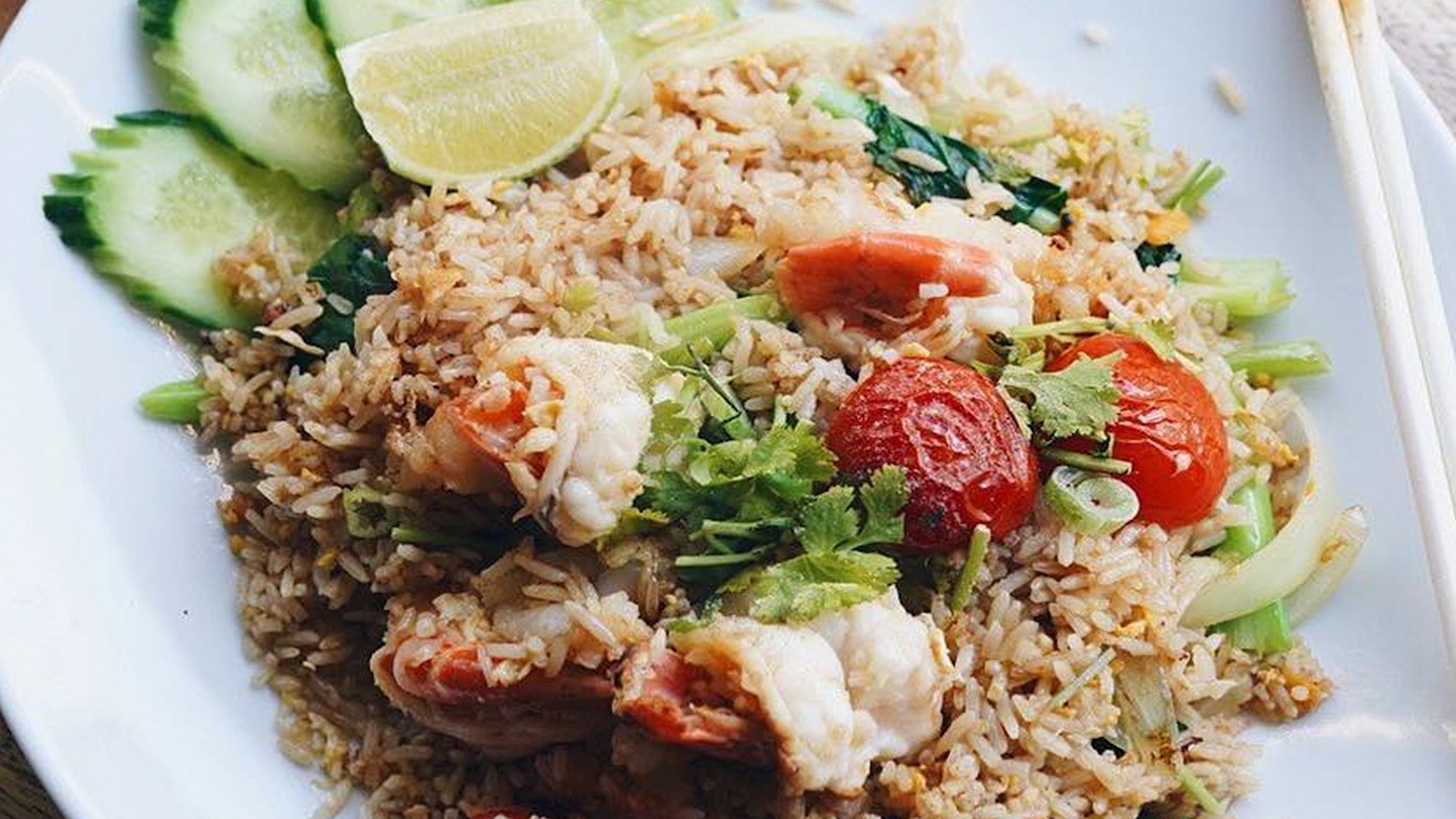
Khao phat is a simple Thai dish of stir-fried rice with vegetables that is traditionally prepared with jasmine rice, unlike the Chinese version which calls for plain white rice. Cooked jasmine rice is typically stir-fried with ingredients such as onions, garlic, and green onions, and it is then enhanced with fish sauce, thin soy sauce, a light dusting of white pepper, and a drizzle of fresh lime juice. Another essential component of the dish is the addition of scrambled eggs, which are fried alongside rice and vegetables before they are entirely blended into the mixture. In Thailand, the traditional way of eating this dish is with a crispy-fried egg on top, and khao phat is usually accompanied by a lime wedge and a spicy dipping sauce called nam pla prik (fish sauce mixed with Thai chilis) on the side. Thai fried rice is a typical street food item and a staple dish at stir-fry restaurants in the country, and it sometimes contains meat or seafood such as chicken or shrimps.

08

Nasi kuning

4.1 ·

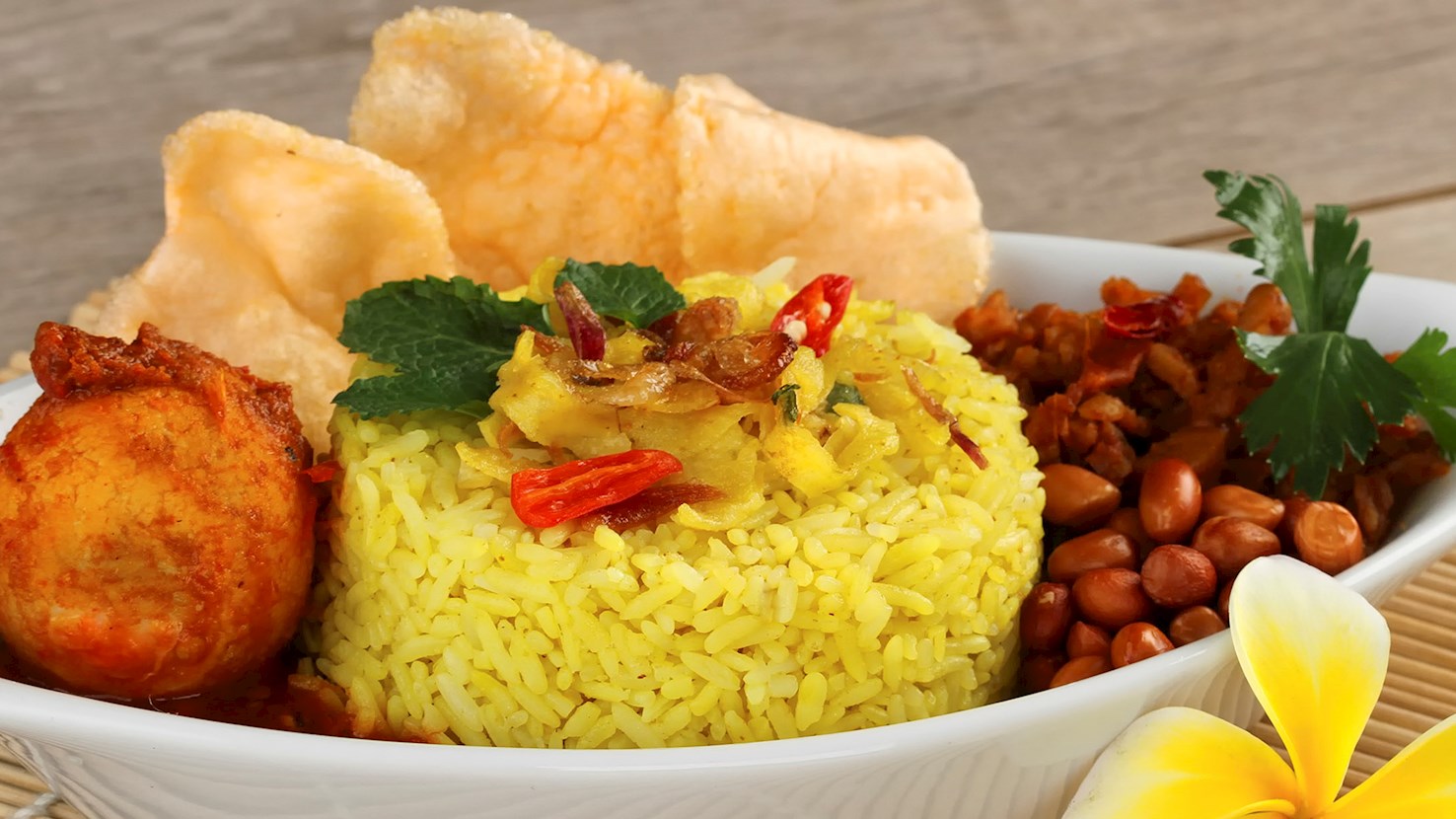
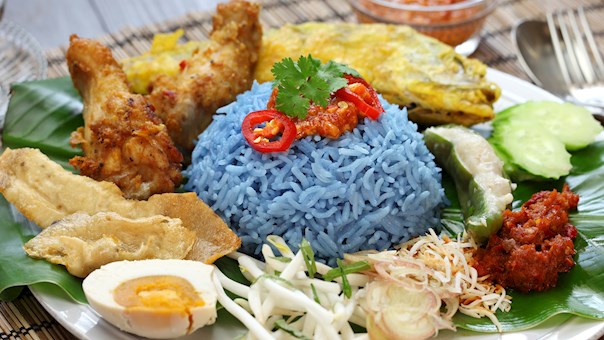
This traditional Indonesian dish consists of rice cooked in coconut milk that is usually seasoned with turmeric, lemongrass, and kaffir lime leaves. Even though yellow rice is the star of nasi kuning, the dish is assembled out of other Indonesian dishes and complements, such as fried chicken, potato fritters, sliced omelet, fried anchovies, shrimps, or fried tempeh. Sambal, the traditional Indonesian chili sauce, and serundeng (spicy fried coconut flakes) are often served as condiments. Nasi kuning is always served neatly organized on the plate, and the rice should always be placed in the middle. It is traditionally associated with the island of Java, which is considered to be the place of origin of this authentic Indonesian dish.

09

Nasi lemak

4.1 ·

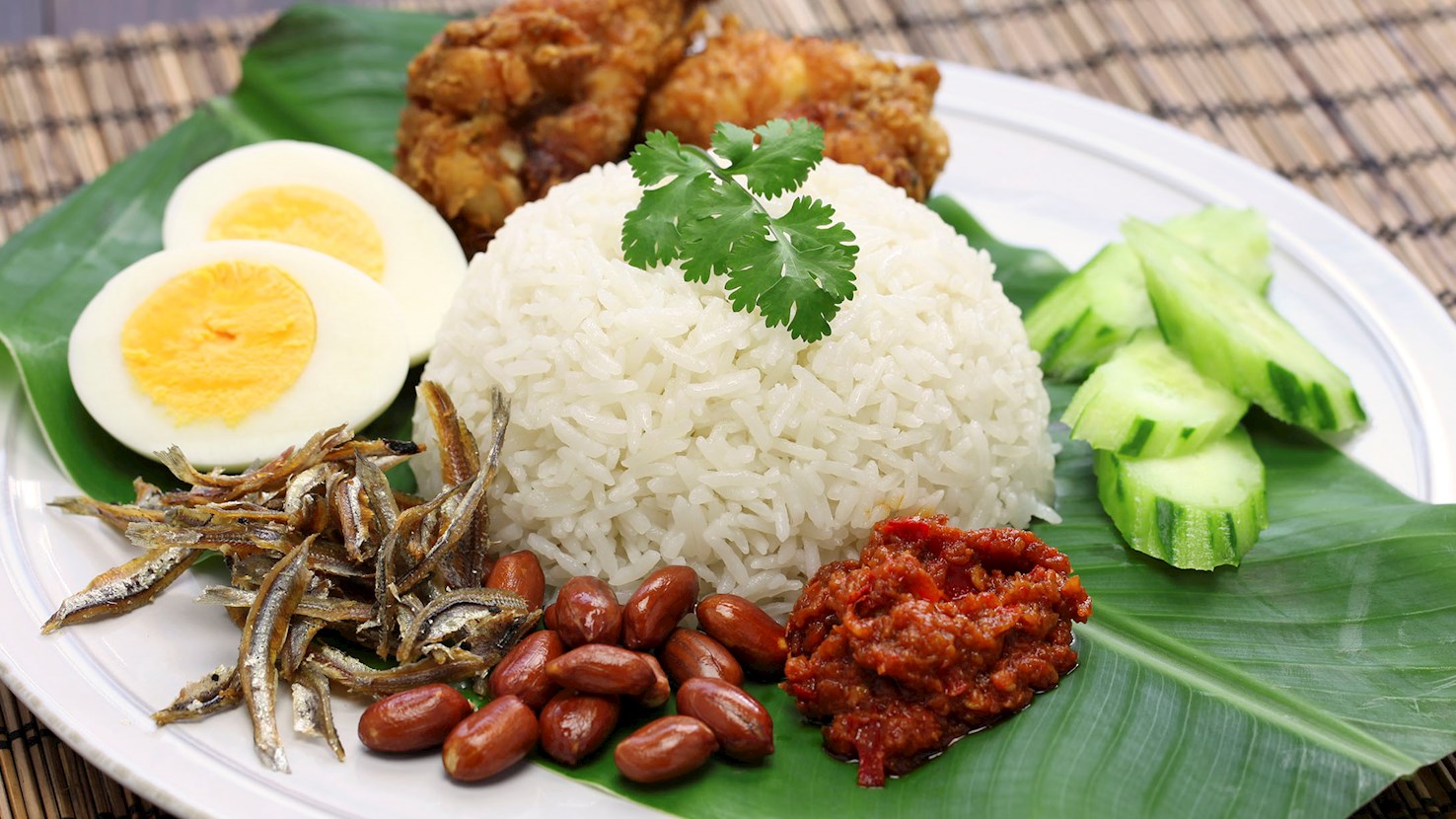
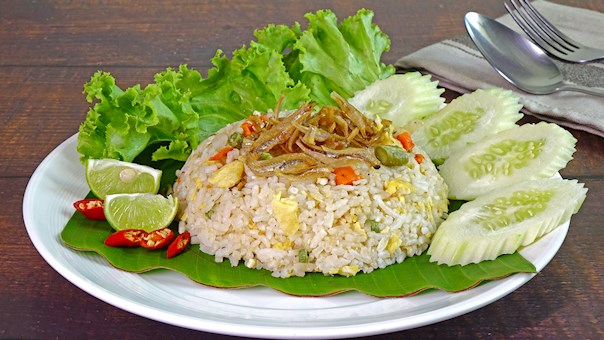
No other dish in Malaysia is as famous as nasi lemak. It consists of rice cooked in coconut milk that is traditionally served with anchovies, cucumbers, peanuts, and boiled eggs. The dish is rounded up with the addition of a spicy chili paste called sambal. Although originally invented as a breakfast dish, soon it surpassed its original purpose and became the Malaysian national dish which can be eaten at any time. Its invention occurred from the mere necessity to exploit all ingredients which were at hand, and the popularity of nasi lemak has continually risen since the 1980s, when this farmer’s meal evolved into a dish that is frequently sold by Malaysian street vendors. Eventually, the dish became a comfort food staple for the majority of Malaysians. With its popularity came different variations of the dish, and nowadays chicken, fried fish, fried eggs, or even curry are served on the side of nasi lemak. It is traditionally served hot and packed in banana leaves.

10

Cơm chiên (Vietnamese Fried Rice)

4 ·

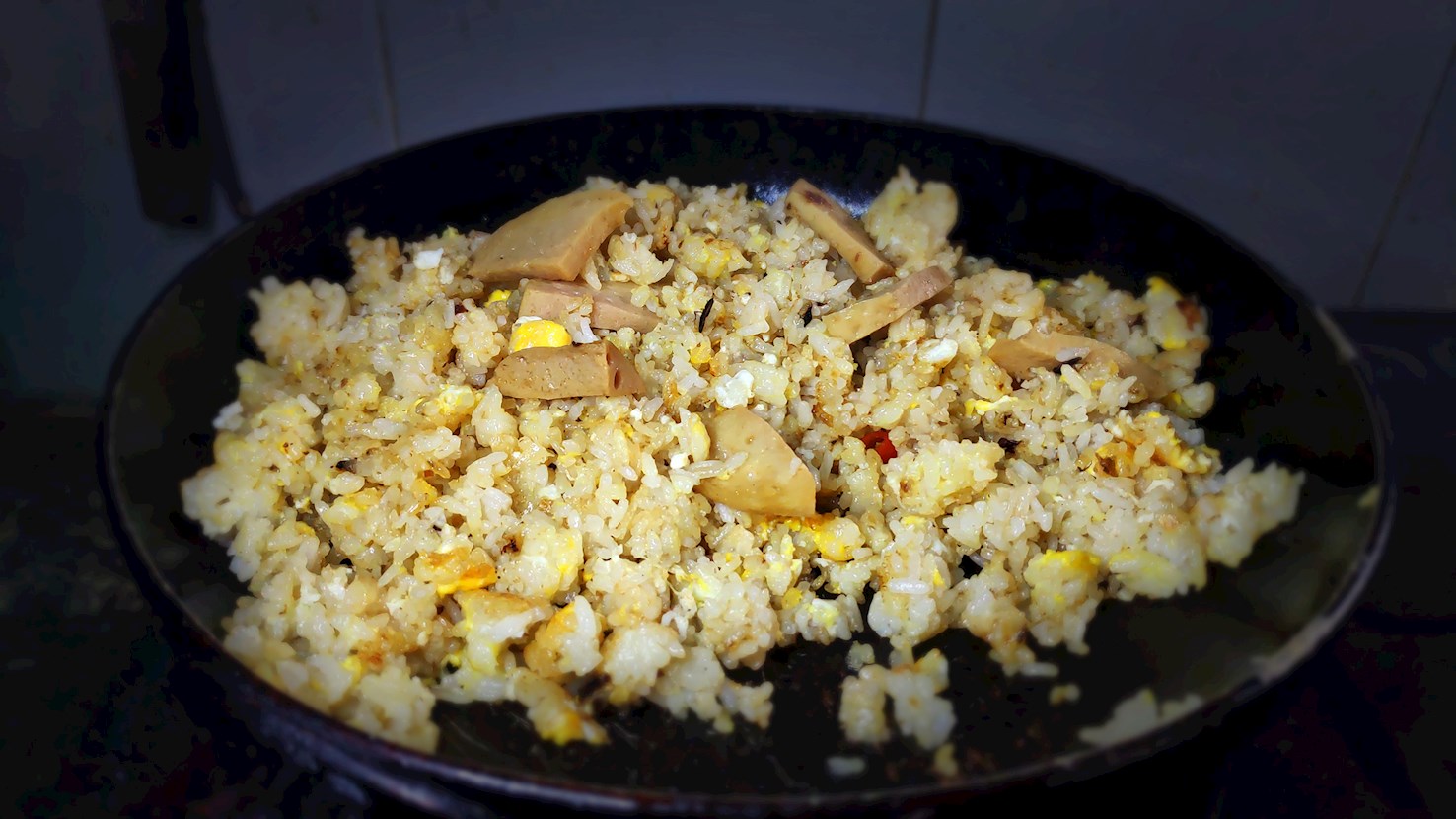
Cơm chiên is the Vietnamese take on fried rice. The dish is very versatile because almost anything can be added to the rice to enrich it, but it's usually prepared with white rice, garlic, salt, and pepper. The rice is cooked and it's then stir-fried in hot oil. Cơm chiên is served while still hot, and it can be enriched with various vegetables, eggs, or sausage meat. Soy sauce or fish sauce can be used as a seasoning, while chopped spring onions provide extra texture and a nice visual contrast to the rice.

Read more
View all
View map
About this ranking

TasteAtlas food rankings are based on the ratings of the TasteAtlas audience, with a series of mechanisms that recognize real users and that ignore bot, nationalist or local patriotic ratings, and give additional value to the ratings of users that the system recognizes as knowledgeable. For the “Top 77 Southeast Asian Rice Dishes” list until May 15, 2026, 2,830 ratings were recorded, of which 2,021 were recognized by the system as legitimate. TasteAtlas Rankings should not be seen as the final global conclusion about food. Their purpose is to promote excellent local foods, instill pride in traditional dishes, and arouse curiosity about dishes you haven’t tried.

Similar lists