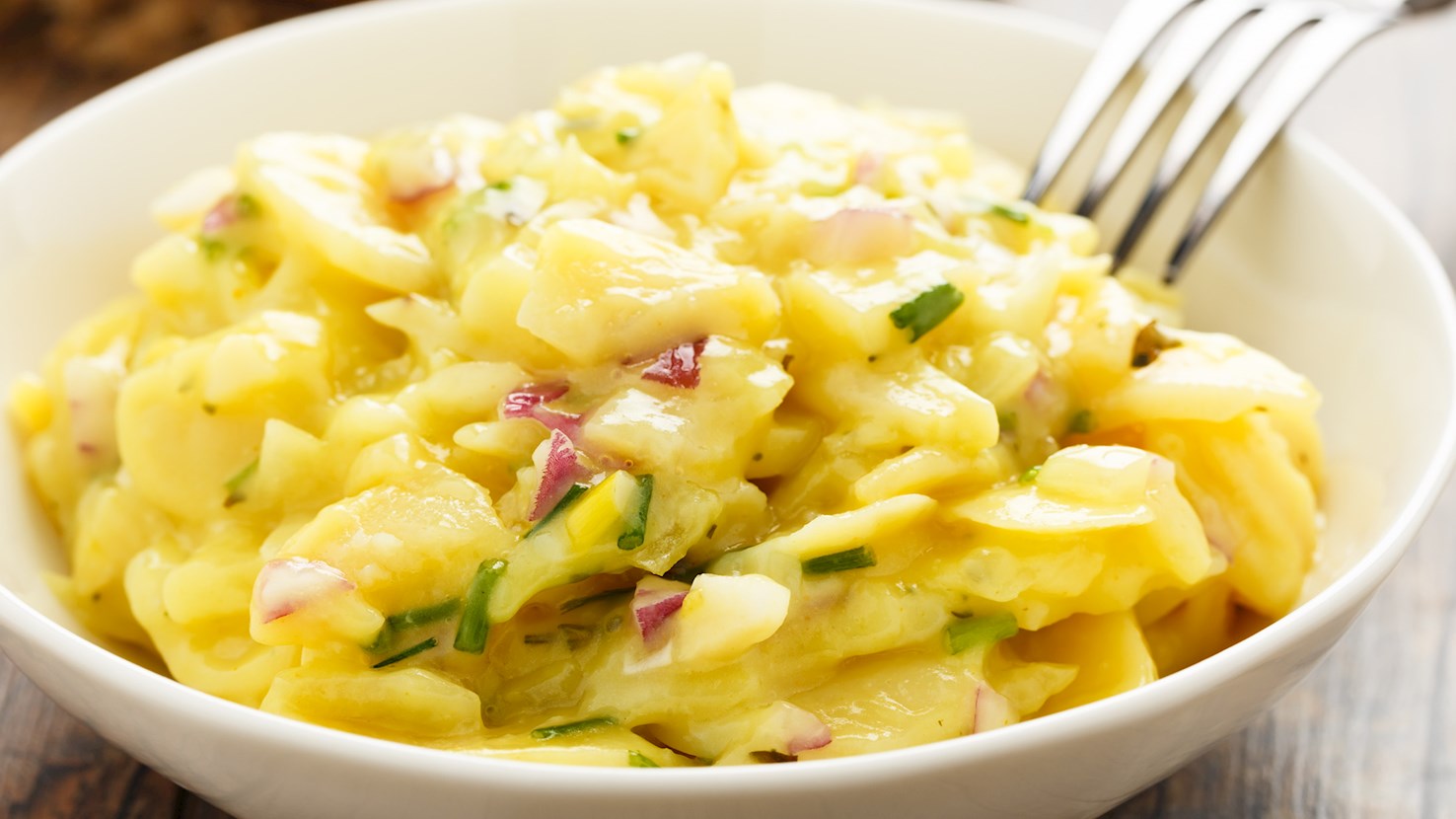
Kartoffelsalat is a potato salad from Germany made from cooked potatoes mixed with other ingredients, with two main preparation families defined by whether the dressing contains mayonnaise or not. Kartoffelsalat has sliced or cubed potatoes that stay tender but intact, coated either in a clear, savory, mildly acidic marinade or in a creamy, tangy dressing, and it commonly includes components such as vinegar, oil, salt, pepper, mustard, broth, onions, pickles, bacon cubes, eggs, apples, and fresh herbs depending on the version. The oldest known potato-salad recipe is dated 1621 in Nova Typis Navigatio by the Austrian abbot Caspar Plautz, similar potato salads appeared in German recipes around 1800, and named recipes such as Tarfuffeln-Salat were printed in 1752 and Erdäpfelsalat in 1770 as potatoes became integrated into everyday cooking. Waxy or mostly waxy “salad” potatoes are preferred because they do not fall apart easily when mixed, and some recipes include a small portion of floury potatoes to create a slightly thicker consistency. Basic preparation starts by cooking the potatoes either peeled in salted water or in their skins, cutting them into slices, and combining them with the chosen dressing, with the timing of cutting and dressing shaped by the regional style. For mayonnaise-based kartoffelsalat common in northern Germany, the potatoes are often processed a day after boiling to gain extra firmness before mixing with the dressing, while in southern styles the potatoes are often dressed while still warm so the marinade absorbs more deeply, and some methods lightly crush the potatoes instead of slicing them. One established non-mayonnaise method uses a hot mixture of meat broth, vinegar, oil, salt, pepper, and mustard poured over sliced potatoes, with optional additions such as finely cut onions, fried bacon cubes, garlic, or cucumber pieces, and the result can be eaten warm or cold. A specific Swabian method called “grated potato salad” uses day-old cooked potatoes grated on a kitchen grater and combined with onion, vinegar, oil, salt, pepper, and warm meat broth. In parts of Styria and Burgenland pumpkin seed oil is used for dressing, and in Franconia chives are treated as required. Mayonnaise-based kartoffelsalat is also associated with Silesian and Bohemian cooking, the Rhineland often adds gherkins or apples, northern variants often feature apples and hard-boiled egg, and Brandenburg combinations include gherkins with radishes or finely sliced onion, with optional additions such as roast leftovers, matjes, sausage pieces, and fresh herbs, and yogurt can replace mayonnaise as a lighter option. Kartoffelsalat is used as a flexible side dish and party food served with sausages, cutlets, and fried or baked fish, and as Erdäpfelsalat it is a classic accompaniment to Wiener Schnitzel, with many families in Germany eating Kartoffelsalat with bratwurst, bockwurst, or Wiener on Christmas Eve and a 2020 survey naming sausages with potato salad as the most popular Christmas Eve meal in Germany. Regional naming reflects local potato words, including erdäpfelsalat in southern Germany and Austria and härdöpfelsalat in Upper Swabia and Swiss German, alongside many dialect forms used for local variants.
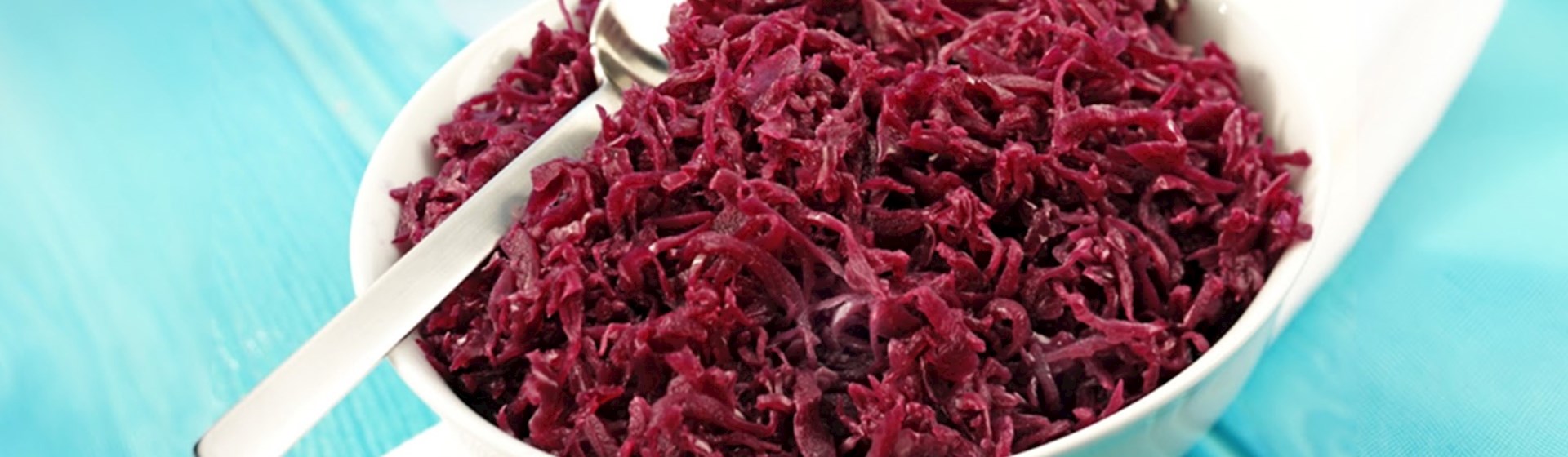
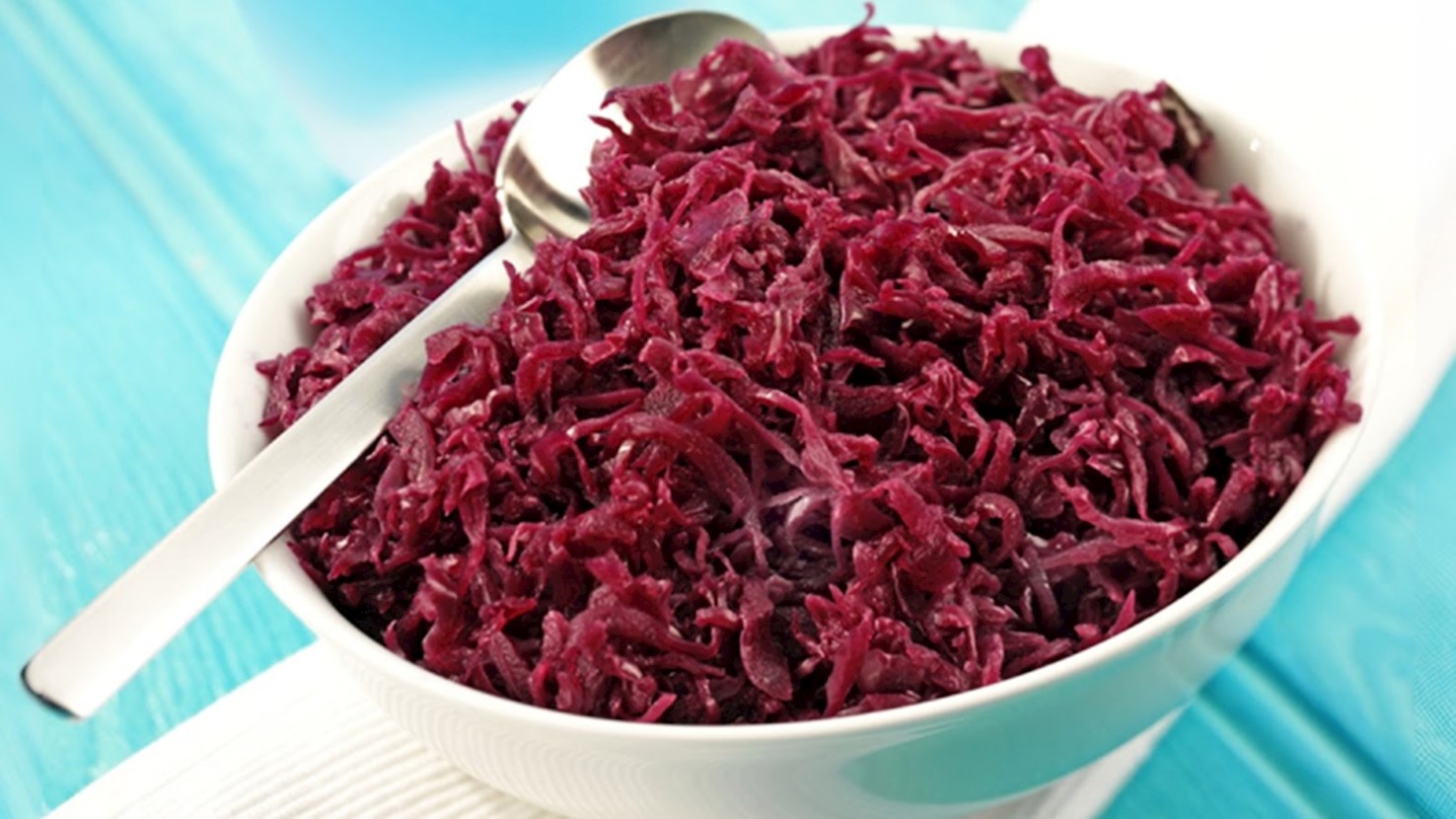
Rotkohl is a traditional salad and side dish made from red cabbage that is finely shredded and then braised or slow-cooked with ingredients like apples, onions, vinegar, sugar, and various spices such as cloves, bay leaves, and sometimes juniper berries. The dish is known for its sweet and sour flavor, which comes from the combination of sugar and vinegar, and its deep purple color, which can be enhanced by adding a bit of acidic liquid like apple cider vinegar or red wine during cooking. Rotkohl is often served as a side dish, particularly with hearty German meals such as roast pork, sausages, duck, or goose. It's especially popular in the colder months and is a common accompaniment to festive meals during Christmas.
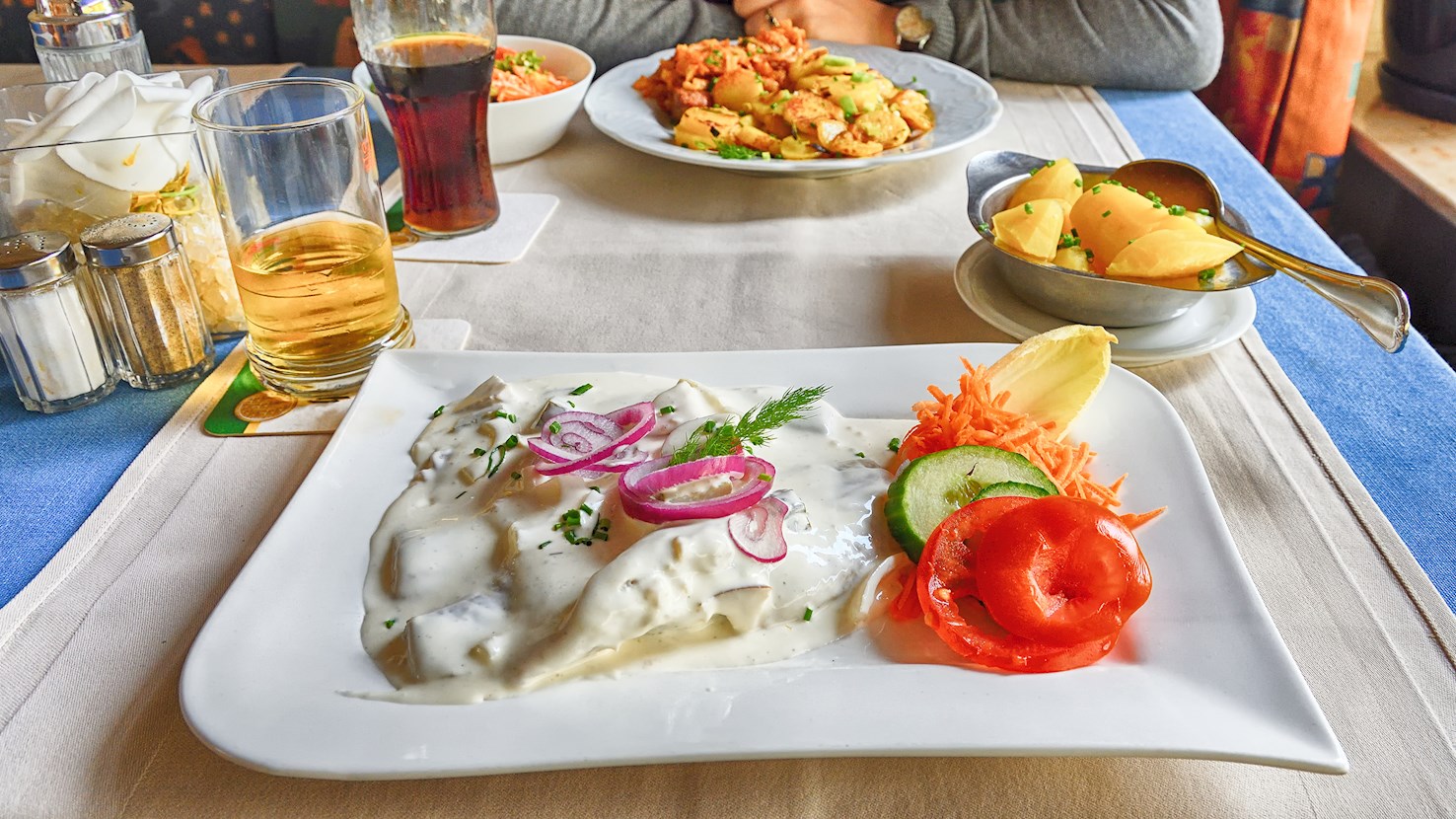
Pickled or salted herring fillets are doused in a sweet and sour sauce of cream, yogurt, pickling liquid, and fresh herbs along with apples, pickles, and onions in this German specialty called sahnehering. Typical varieties of herring fillets used in this specialty include bismarck herring, matjes herring, or Baltic herring, and the dish is often finished with freshly chopped chives on top before serving. The refreshing combination is usually enjoyed chilled with boiled jacket potatoes and a cucumber salad on the side, but it can also be spread on a slice of buttered brown bread. Sahnehering is usually consumed as a side or snack, and it is a traditional fasting dish that's mainly prepared in northern Germany and the Rhineland.
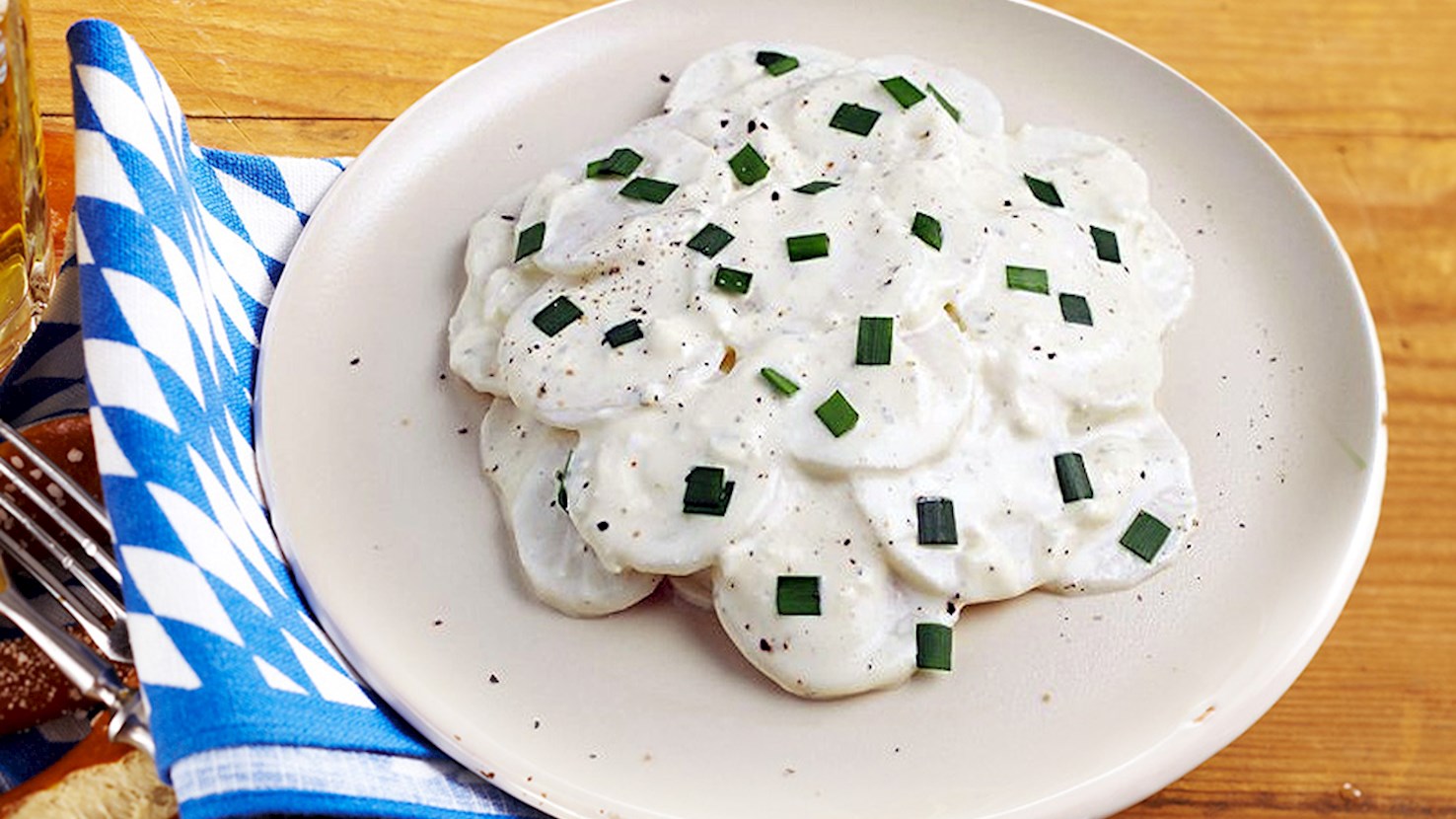
Rettichsalat is a traditional salad originating from Bavaria. This Bavarian classic is made with a combination of white radish, chives, white wine vinegar, vegetable oil, salt, and black pepper. The radish is peeled and sliced into thin disks. The vinegar is mixed with salt, pepper, and oil. The radish slices are simply tossed with the dressing and then garnished with chives before serving. Rettichsalat is often served as an accompaniment to meat dishes.
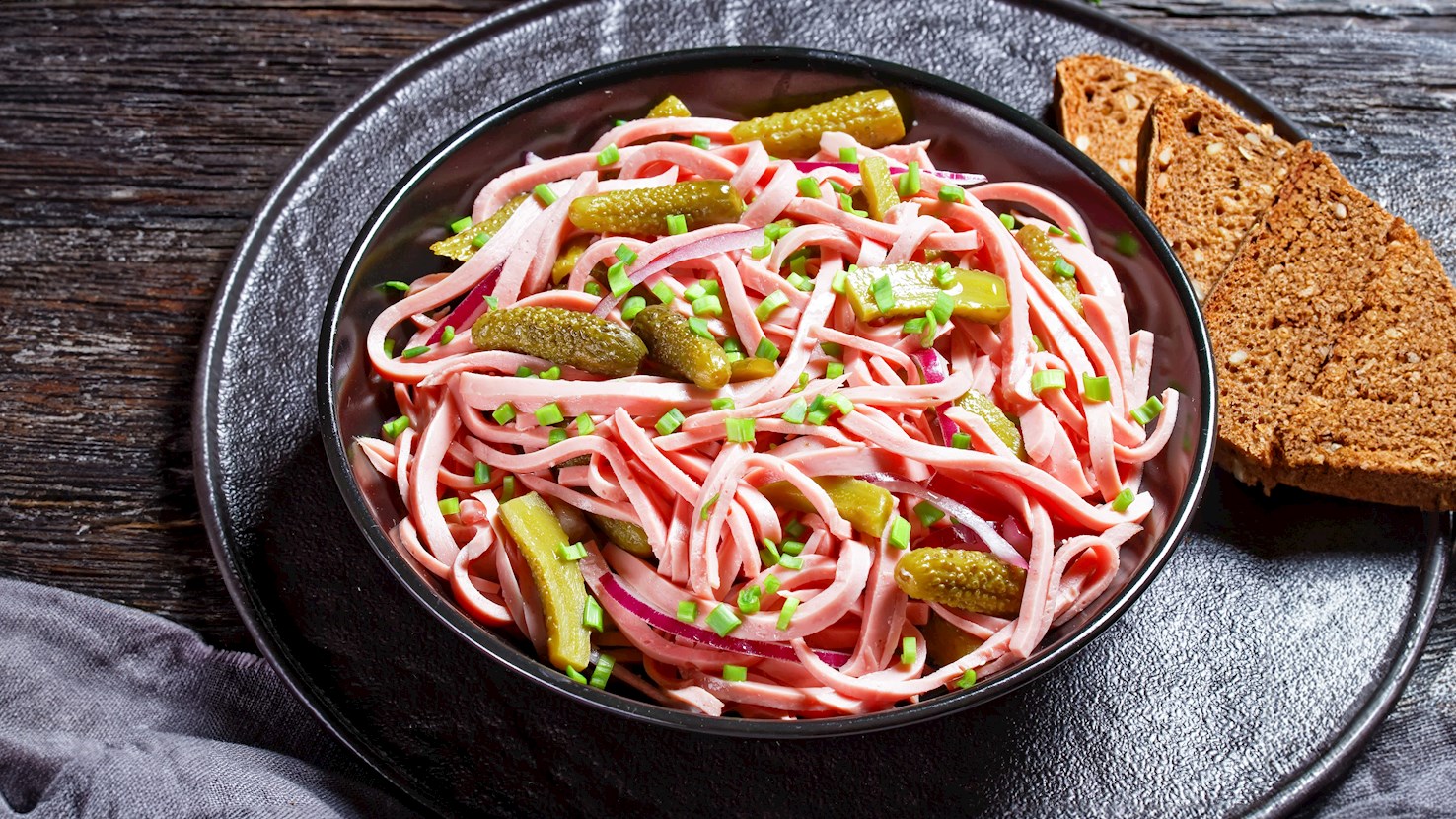
Bayerischer Wurstsalat is a traditional salad originating from Bavaria. It's made with Regensburger knockwurst sausage, diced onions, olive oil, wine vinegar, salt, pepper, and paprika. The wurst is peeled and sliced thinly, then tossed with the onions, olive oil, vinegar, and seasonings. Before serving, it's chilled, then dusted with paprika on top. The salad is sometimes also served as an appetizer, and it's recommended to serve it with beets, pickles, bread rolls, and butter.
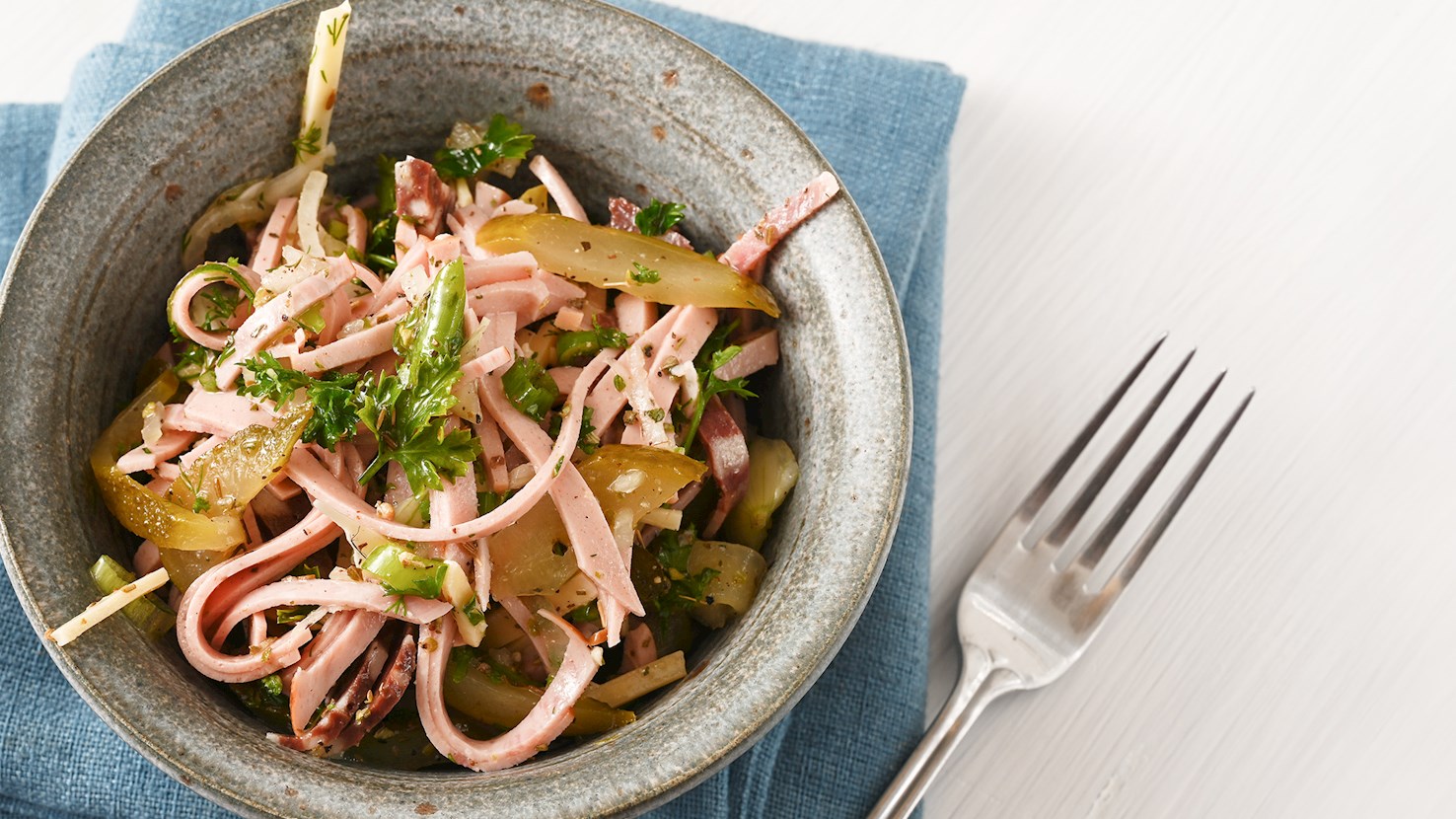
Wurstsalat is a traditional salad from Germany (especially southern parts), Switzerland, Austria, and Alsace in France made with strips of sausage. It's a popular dish often consumed as a light meal in beer gardens or traditional inns, especially during the warm summer months. The main ingredient in wurstsalat is thinly sliced sausage. The most commonly used type is Lyoner, fleischwurst, or stadtwurst, although the Swiss variant often uses cervelat. These are all types of cooked sausage that are similar to bologna or frankfurter. The sliced sausage is mixed with chopped onions, and the salad is dressed with a simple vinaigrette made from oil, vinegar, salt, and pepper. The dish is typically marinated for a few hours or overnight to allow the flavors to meld together. There are several regional variations of Wurstsalat. For example, in Switzerland and in the Swabian and Bavarian regions of Germany, it's common to add pickles and cheese, typically Swiss Emmental, to the salad. In some regions, it's also common to add other ingredients such as radishes, boiled eggs, tomatoes, or bell peppers. Wurstsalat is typically served chilled, often accompanied by bread or pretzels. It can be a standalone dish or part of a larger meal. Despite its simplicity, wurstsalat is beloved for its tangy, hearty flavors and refreshing qualities.
Bayerischer Krautsalat is a tangy and refreshing cabbage salad from Bavaria in southern Germany, known for its simple preparation and robust flavor profile that balances acidity, sweetness, and spice. Made primarily from finely shredded white cabbage, this salad is typically marinated in a warm dressing of vinegar, oil, salt, sugar, and caraway seeds, often enhanced with a touch of onion or a splash of broth to add depth. The cabbage is usually kneaded or lightly salted before marinating to soften its texture and release its natural juices, allowing the dressing to be fully absorbed. Served chilled or at room temperature, Bayerischer Krautsalat is a staple accompaniment in Bavarian cuisine, particularly alongside roasted meats, sausages, or schnitzel. Its roots lie in the agrarian cooking of Bavaria, where cabbage was a reliable and long-lasting ingredient, especially during colder months. Krautsalat offered a way to enjoy vegetables even when fresh produce was scarce, and its acidity helped cut through the richness of pork-heavy meals. The caraway seeds lend a warm, slightly nutty flavor that is characteristic of many German salads and breads, while the balance of sweet and sour reflects the broader culinary style of the region. This salad is commonly found in beer gardens, local taverns, and home kitchens across Bavaria, and while variations exist throughout Germany, the Bavarian version is noted for its clarity of flavor and straightforward ingredients.
Schmandsalat is a German salad made with schmand (German sour cream with 20% to 24% fat) and ingredients such as lettuce, cucumber, onions, herbs, salt, pepper, and a small amount of vinegar or lemon juice. The salad developed alongside the spread of schmand as a household staple in German kitchens, where fresh vegetables and cultured dairy were combined into simple dishes that could be prepared quickly and served cold. Preparation usually starts with stirring schmand until smooth, seasoning it lightly with salt, pepper, and vinegar or lemon juice, and then folding in freshly prepared vegetables so they are evenly coated without breaking down, with the salad usually rested briefly so the flavors combine while remaining fresh. Common variations include the choice of vegetables, the addition of apples, radishes, or chives, adjustments in acidity, and occasional inclusion of sugar or mustard to balance the dressing. The salad is served cold and eaten as a side dish or light meal in homes and restaurants, most often alongside boiled potatoes, grilled or roasted meats, sausages, or fish, and pairs naturally with bread and mild beverages such as beer or mineral water.
Rheinischer kartoffelsalat is a potato salad from the Rhineland that is made from potatoes, mayonnaise, onions, pickles, pickle liquid or vinegar, salt, pepper, and frequently apples or boiled eggs. Potatoes became a staple food in the Rhineland during the eighteenth century as agriculture expanded along the Rhine, and potato salads developed in a region shaped by trade, preserved foods, and a preference for dishes that could be prepared ahead and served cold. Preparation commonly involves boiling waxy potatoes in their skins, cooling and peeling them, cutting them into slices or cubes, mixing them with finely diced onions and pickles, and folding them into a dressing of mayonnaise seasoned with pickle liquid or vinegar, salt, and pepper, often lightened with a small amount of broth or yogurt, followed by a resting period so the flavors blend evenly. Common variations include the addition of diced apples for freshness, chopped hard-boiled eggs, mustard for sharper seasoning, or herbs such as chives or parsley, and some versions reduce the amount of mayonnaise in favor of sour cream or yogurt, while vinegar-only dressings are uncommon. The salad is eaten cold or at room temperature and is served in homes, taverns, butcher shops, and at gatherings, most often alongside sausages, cold cuts, roast meats, or fish dishes, with bread and beer or local wine typically accompanying it.
Berliner kartoffelsalat is a style of potato salad from Berlin that consists of sliced or cubed waxy potatoes, coated in a smooth, thick dressing made from mayonnaise and mustard, and mixed with diced onions, chopped pickles, hard-boiled eggs, and sometimes additional savory elements. Potato salads in Berlin developed as the city grew through the eighteenth and nineteenth centuries amid a blend of urban home cooking and the influence of surrounding regions, and creamy versions became widespread in household and city kitchens where readily available preserved ingredients and eggs were incorporated into everyday dishes. Preparation according to the Berliner Art generally begins with cooking waxy potatoes in their skins until tender, cooling and peeling them, slicing or cutting them into bite-sized pieces, blanching or finely dicing onions, chopping pickles and hard-boiled eggs, and then combining all ingredients in a bowl before folding in a seasoned mayonnaise dressing made with mustard, pickle liquid or vinegar, salt, and pepper and letting the salad rest so the flavors unify. Common variations include adjustments to the amount of mayonnaise or mustard, the inclusion of apples for a mild sweetness, additions of cooked sausage or bacon in some households, the use of herbs such as parsley or chives, and the degree of acidity from vinegar or pickle brine, while vinegar-only dressings without mayonnaise are less common in this style. The salad is eaten cold and is served in homes, delicatessens, and at social meals throughout Berlin, most often alongside cold cuts, sausages, fried or roasted meats, and bread, and it frequently appears on buffet spreads and family tables.
TasteAtlas food rankings are based on the ratings of the TasteAtlas audience, with a series of mechanisms that recognize real users and that ignore bot,
nationalist or local patriotic ratings, and give additional value to the ratings of users that the system recognizes as knowledgeable.
For the “Top 20 German Salads” list until August 15, 2026, 639 ratings were recorded, of which 564 were recognized by the system as legitimate.
TasteAtlas Rankings should not be seen as the final global conclusion about food. Their purpose is to promote excellent local foods,
instill pride in traditional dishes, and arouse curiosity about dishes you haven’t tried.







What People Say