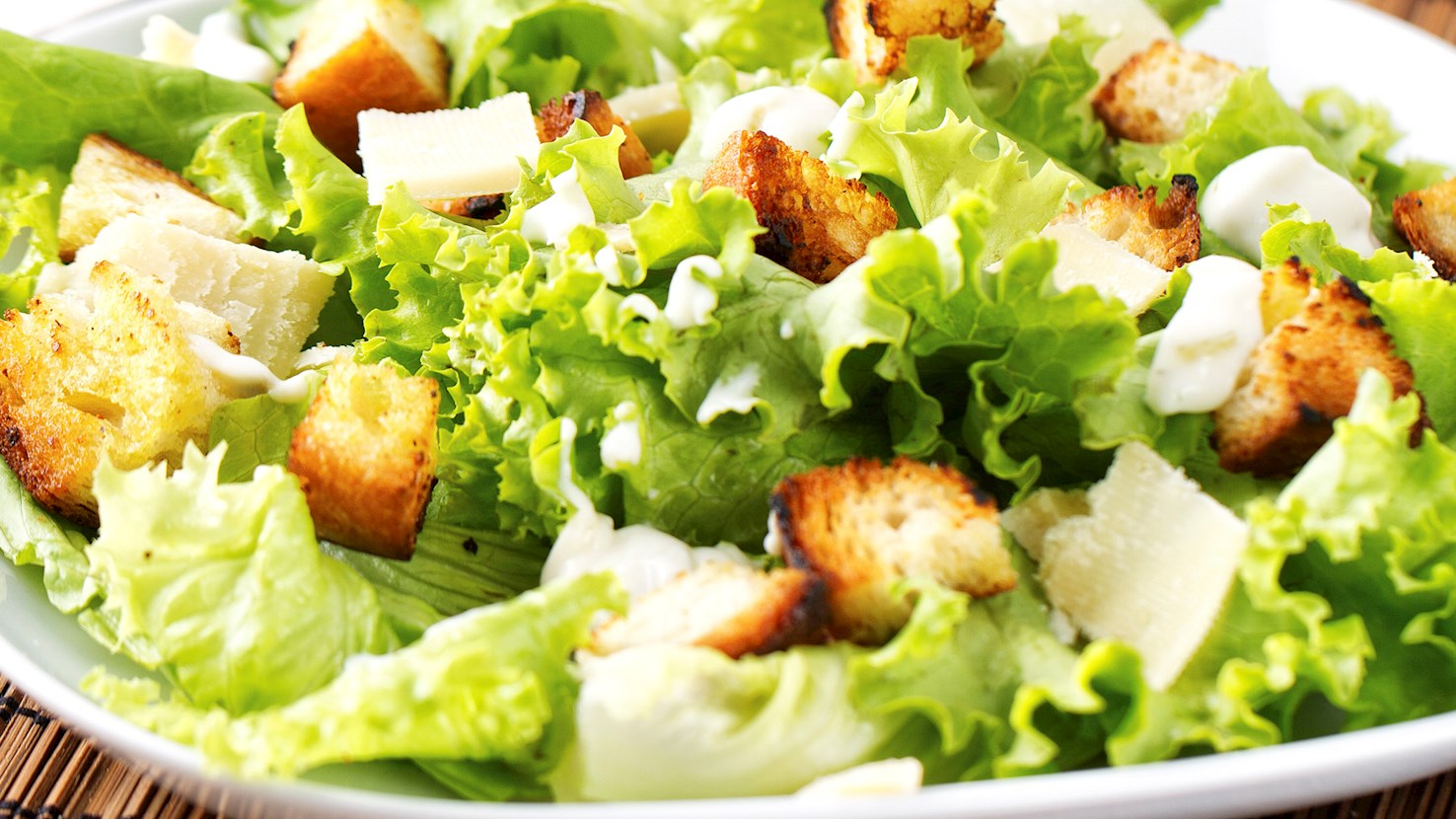
The iconic Caesar salad was named after its creator Cesare (Caesar) Cardini, an Italian immigrant who lived in San Diego but, circumventing Prohibition laws in the United States, operated a popular restaurant in Tijuana, just south of the Mexican border. Back then, in the 1920s, during the Prohibition era, Tijuana was flourishing as many Californians, including Hollywood jet set, would often drive over to party and enjoy the good life. And just like it was the case with many other world-famous dishes, Caesar salad was invented through sheer ingenuity and improvisation. In 1924, on a busy 4th of July weekend, Cardini's restaurant was packed so when the renowned restaurateur realized he's running low on food supplies, as he didn't want to disappoint the customers, Caesar concocted a salad with what was left over in the kitchen. To animate the guests and add some flair to his new invention, Cardini prepared the salad tableside, as many restaurants still do today, tossing the crisp romaine lettuce with creamy coddled eggs, garlic-flavored croutons, parmesan cheese, olive oil, and Worcestershire sauce. Originally, the romaine leaves were coated with the dressing and placed on a serving plate in a circle, stem side out, so that the diners could enjoy their salad with fingers. In 1926, Alex Cardini, a former ace pilot in the Italian Air Force during WWI, joined his brother Caesar at his Tijuana restaurant. Back then, the dish was named Aviator's salad in honor of the pilots from San Diego's Rockwell Field Air Base who, reportedly, one morning – after a long night of drinking and missing curfew – woke up at Caesar's restaurant and enjoyed the salad prepared by Alex Cardini for breakfast. Later on, as the salad gained popularity with other Californian visitors, it was renamed to Caesar salad. Alex also added other ingredients to the already famed concoction, in particular anchovies, even though Caesar was said to be against that inclusion, claiming that the Worcestershire sauce was enough to provide the faint fishy flavor. Moreover, in 1948 Caesar Cardini established a patent on the salad dressing which is still today produced and marketed by Caesar Cardini Foods, Inc. as Cardini's Original Caesar dressing mix. Regardless of the two slightly different recipes and dressing variations, Caesar salad became a sensation sought after from coast to coast, eventually even becoming a success in Europe; especially after the Paris-based International Society of Epicures in 1953 proclaimed it as "the greatest recipe to originate from the Americas in 50 years".
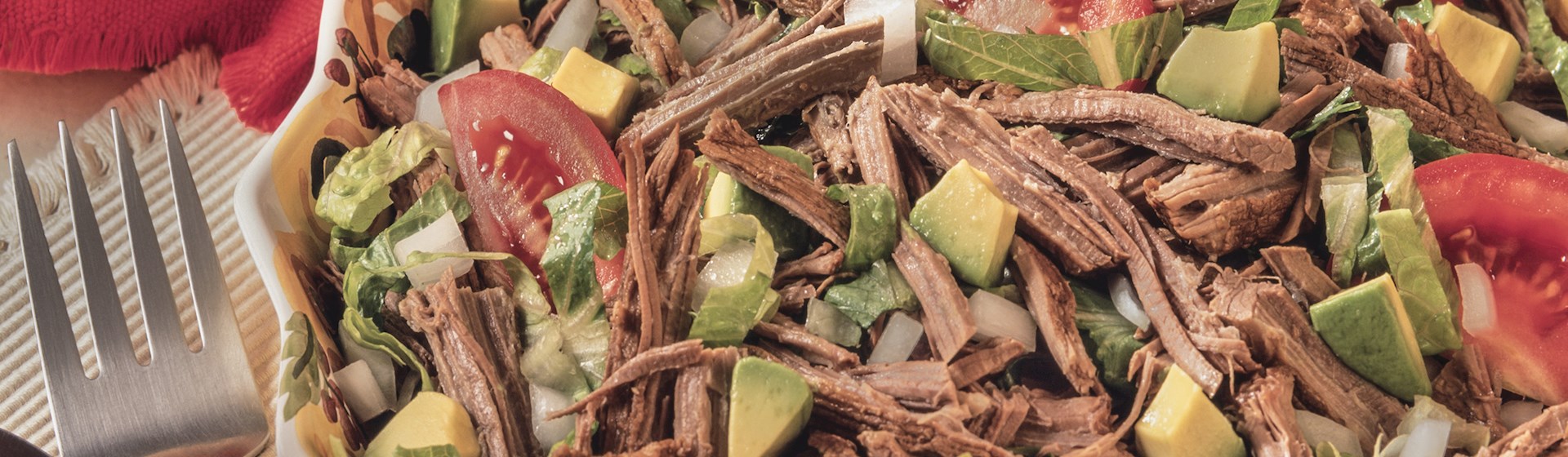
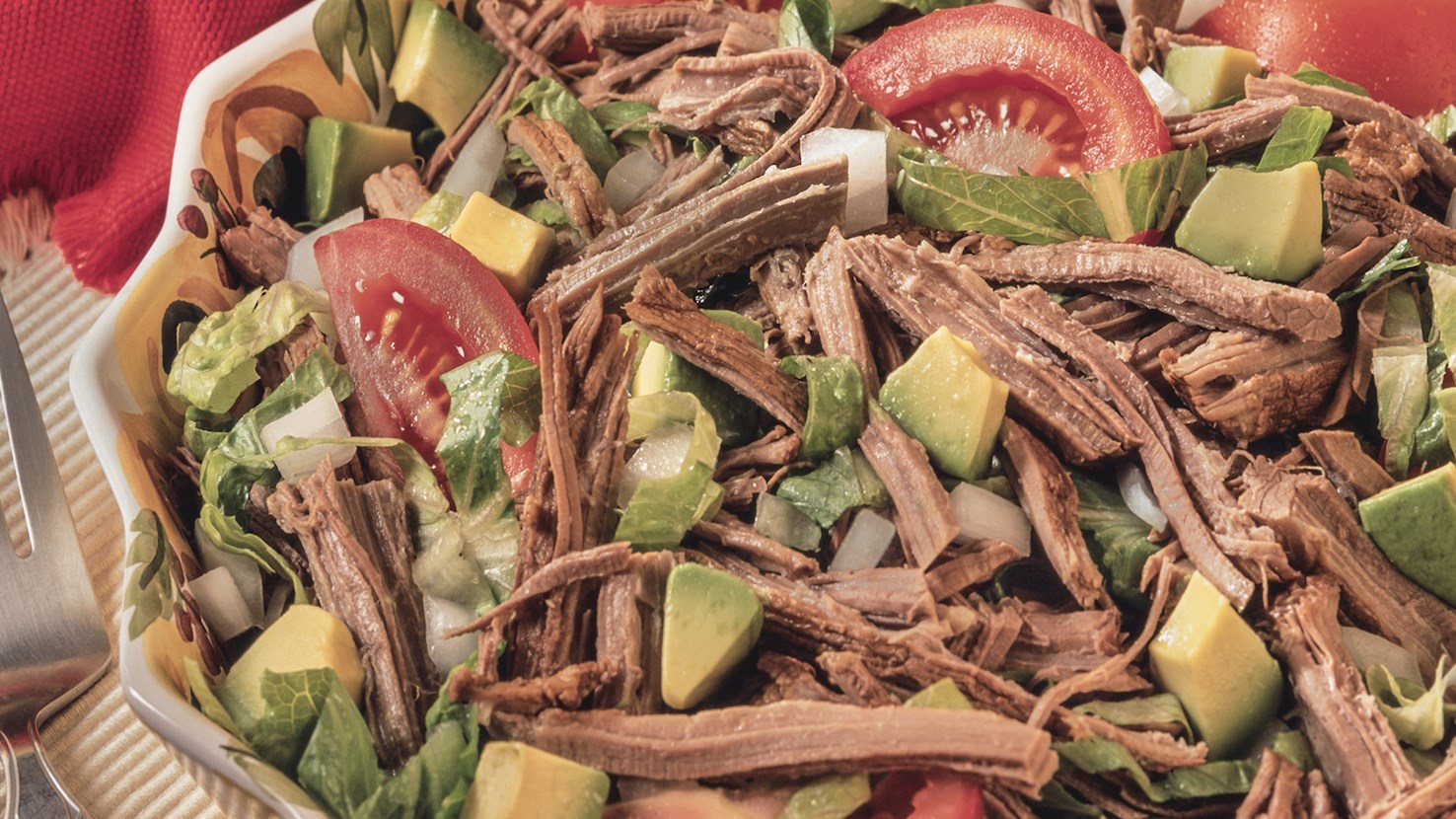
Salpicón de res is a flavorful Mexican salad that is popular throughout Latin America. It consists of beef steak pieces, onions, tomatoes, hot chiles, and avocado slices. The salad is usually seasoned with lime juice, salt, pepper, vinegar, olive oil, and oregano. It can be consumed on its own or used as a topping for tostadas and tortillas.
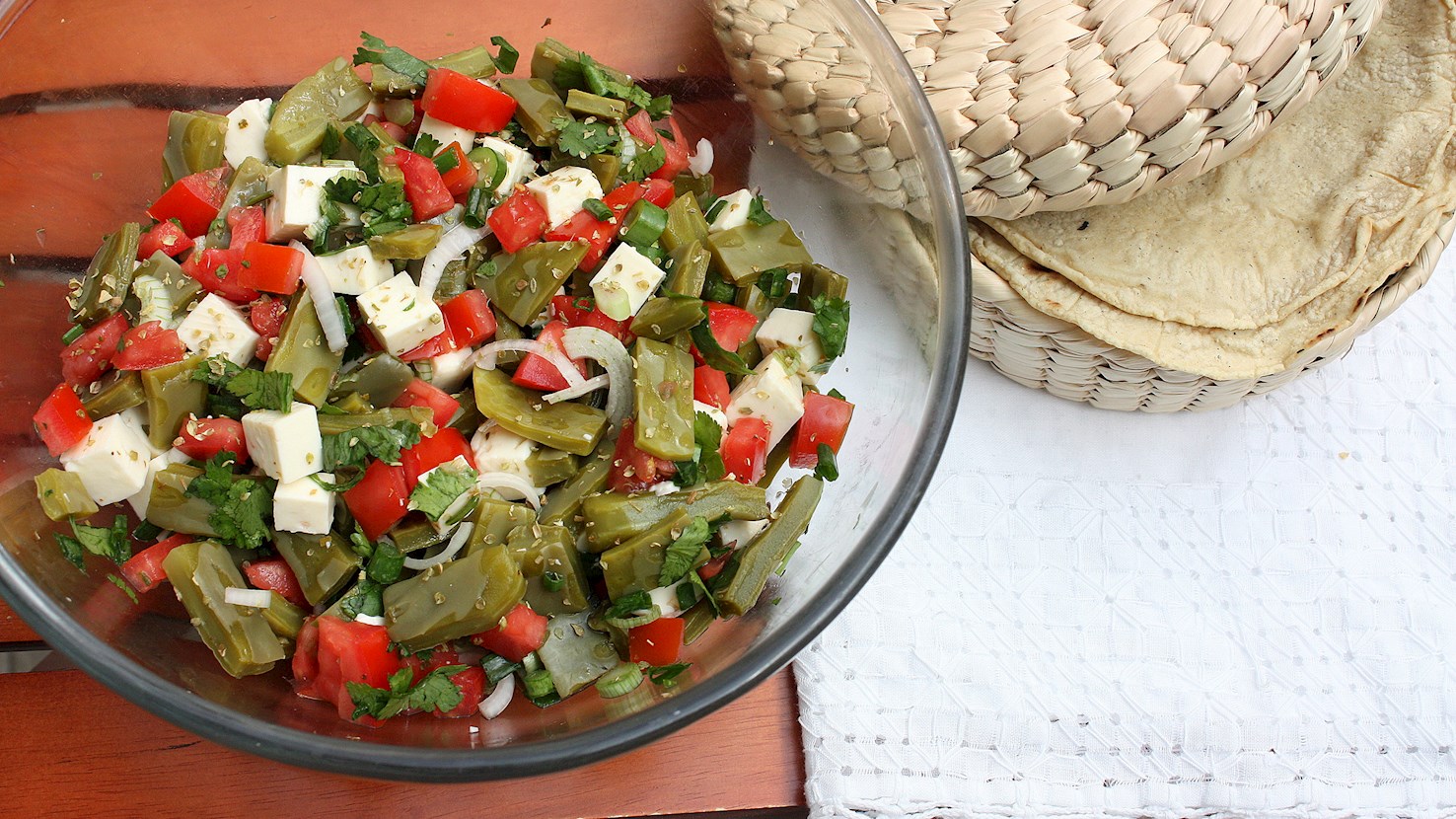
Ensalada de nopalitos is a traditional salad originating from Central Mexico. Although there are many versions, it's usually made with a combination of nopal cactus pieces, lime juice or vinegar, olive oil, oregano, onions, salt, and cilantro. The salad ingredients are simply mixed and set aside for the flavors to blend, for about an hour. When served, a dish is lined with lettuce leaves and the salad is placed on top. It is then topped with jalapeño strips, sliced onions, crumbled queso fresco, and tomato pieces.
Betabeles is a traditional beet salad. It's usually made with a combination of beets, sugar, cornstarch, orange juice, lemon juice, grated orange zest, salt, and pepper. The beets are boiled in a saucepan until the skin blisters, and the beets are then drained, cooled, and the skin is peeled off. Other ingredients are mixed in a saucepan and boiled until the sugar and cornstarch dissolve. The beets are added to the pan, the mixture is seasoned with salt and pepper and heated until the beets become hot. This beet salad is served immediately, while still warm.
Berros regionales is a traditional dish that's prepared throughout Mexico. Often served as a salad or an appetizer, berros regionales is usually made with a combination of watercress, chopped bacon, walnuts, pine nuts, lemon juice, Worcestershire sauce, and salt. The watercress leaves are washed, placed into a salad bowl, then mixed with the pine nuts, chopped walnuts, lemon juice, Worcestershire sauce, and bacon that's been fried over medium heat until browned and crisp. The ingredients are simply mixed together until everything is combined and the dish is then seasoned with salt and served immediately.
TasteAtlas food rankings are based on the ratings of the TasteAtlas audience, with a series of mechanisms that recognize real users and that ignore bot,
nationalist or local patriotic ratings, and give additional value to the ratings of users that the system recognizes as knowledgeable.
For the “Top 5 Mexican Salads” list until October 15, 2026, 880 ratings were recorded, of which 531 were recognized by the system as legitimate.
TasteAtlas Rankings should not be seen as the final global conclusion about food. Their purpose is to promote excellent local foods,
instill pride in traditional dishes, and arouse curiosity about dishes you haven’t tried.





What People Say