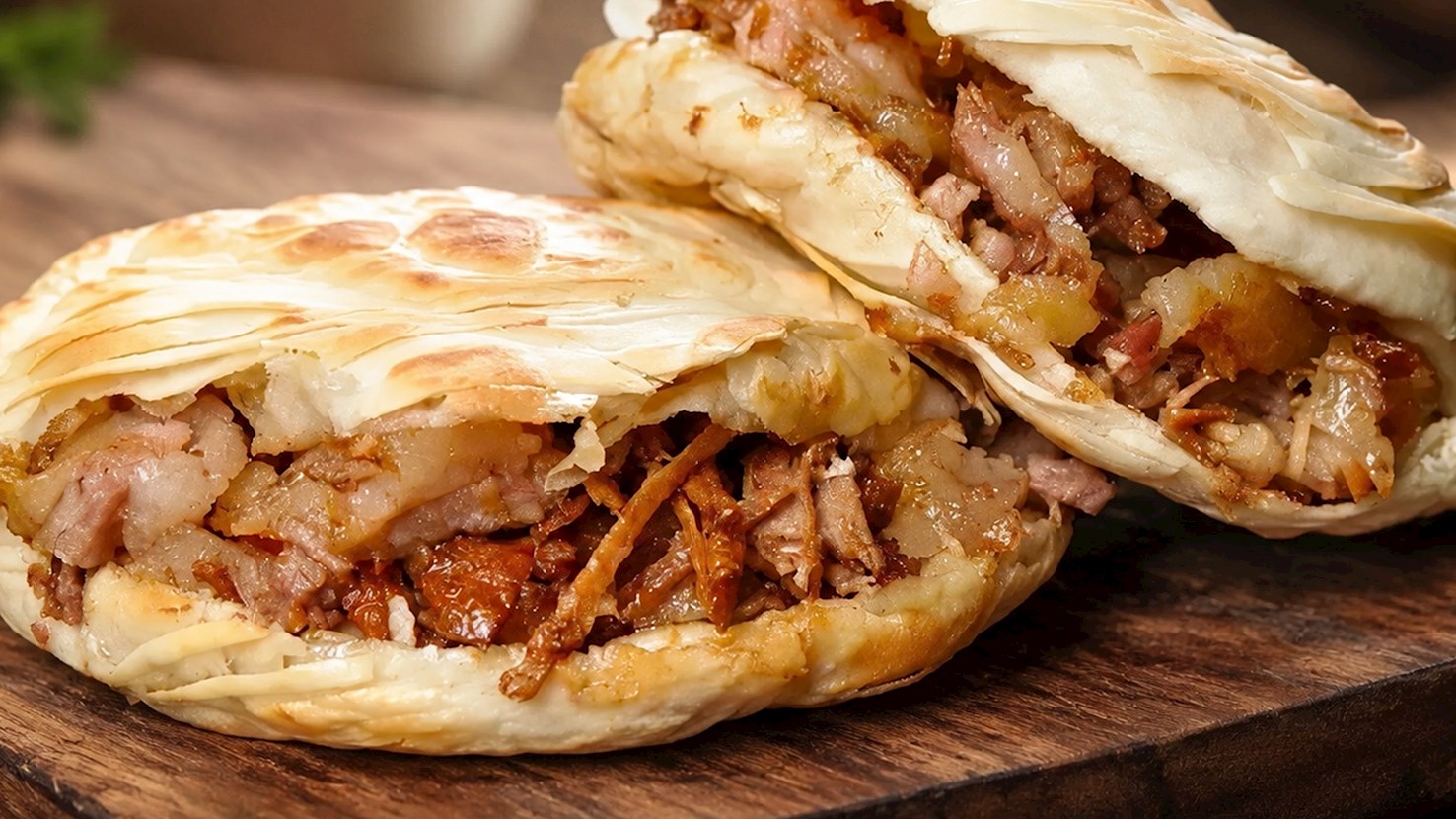
Ròujiāmó is a type of street food from Shaanxi province, often described as a meat-filled flatbread that has become one of the most recognizable snacks from the region. Its roots go back centuries, reflecting the long-standing bread culture of northern China, where wheat rather than rice dominates the diet. Over time, the idea of baking or pan-frying a dense, chewy flatbread and filling it with slow-cooked meat found a strong foothold in Xi’an and its surroundings, where food traditions were shaped by the city’s position as the starting point of the Silk Road. The preparation begins with the bread, called báijiǎo or mò, made from wheat flour, water, and a leavening agent. The dough is kneaded, left to rest, then shaped into discs and baked or griddled until crisp on the outside and soft within. The filling most commonly uses pork belly, simmered with soy sauce, rice wine, star anise, cinnamon, ginger, and other aromatics for several hours until tender enough to shred. The meat is chopped finely with a cleaver before being packed into the warm bread, soaking into its crumb and creating a balance between chewy and juicy textures. In Muslim communities of the region, beef or lamb replaces pork, giving rise to variations equally tied to local identity. Today it is eaten not only at roadside stalls and markets in Xi’an but also in cities across China where it has become a common fast food, enjoyed on its own or alongside bowls of liangpi cold noodles or soups. It pairs well with hot green tea in winter or with sour plum juice in warmer months, each beverage cutting through the richness of the meat.
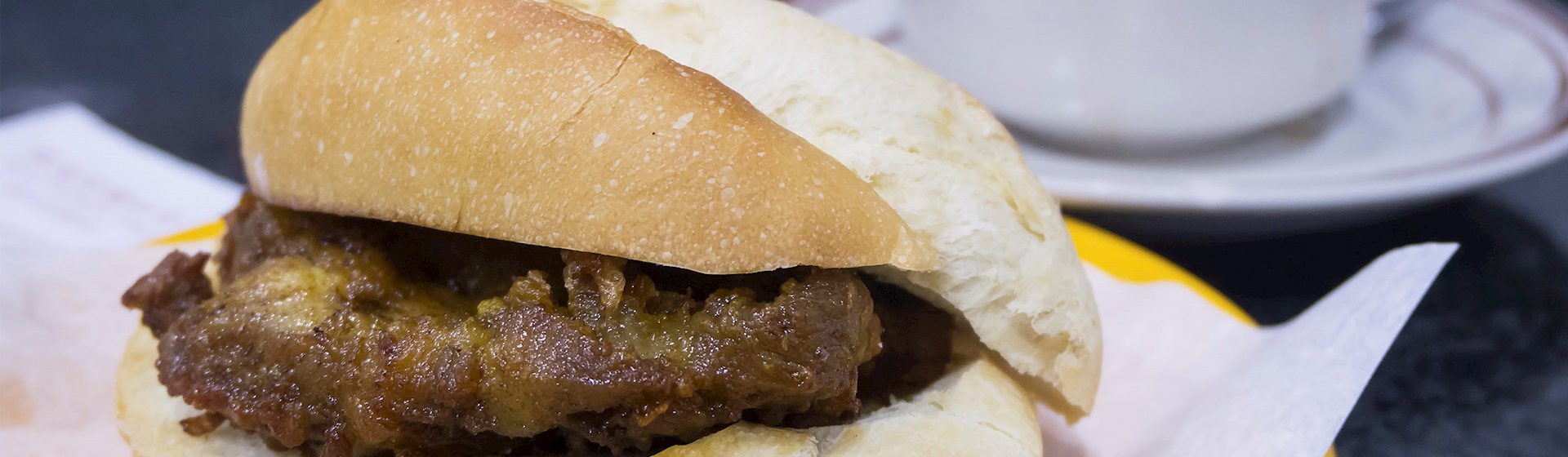
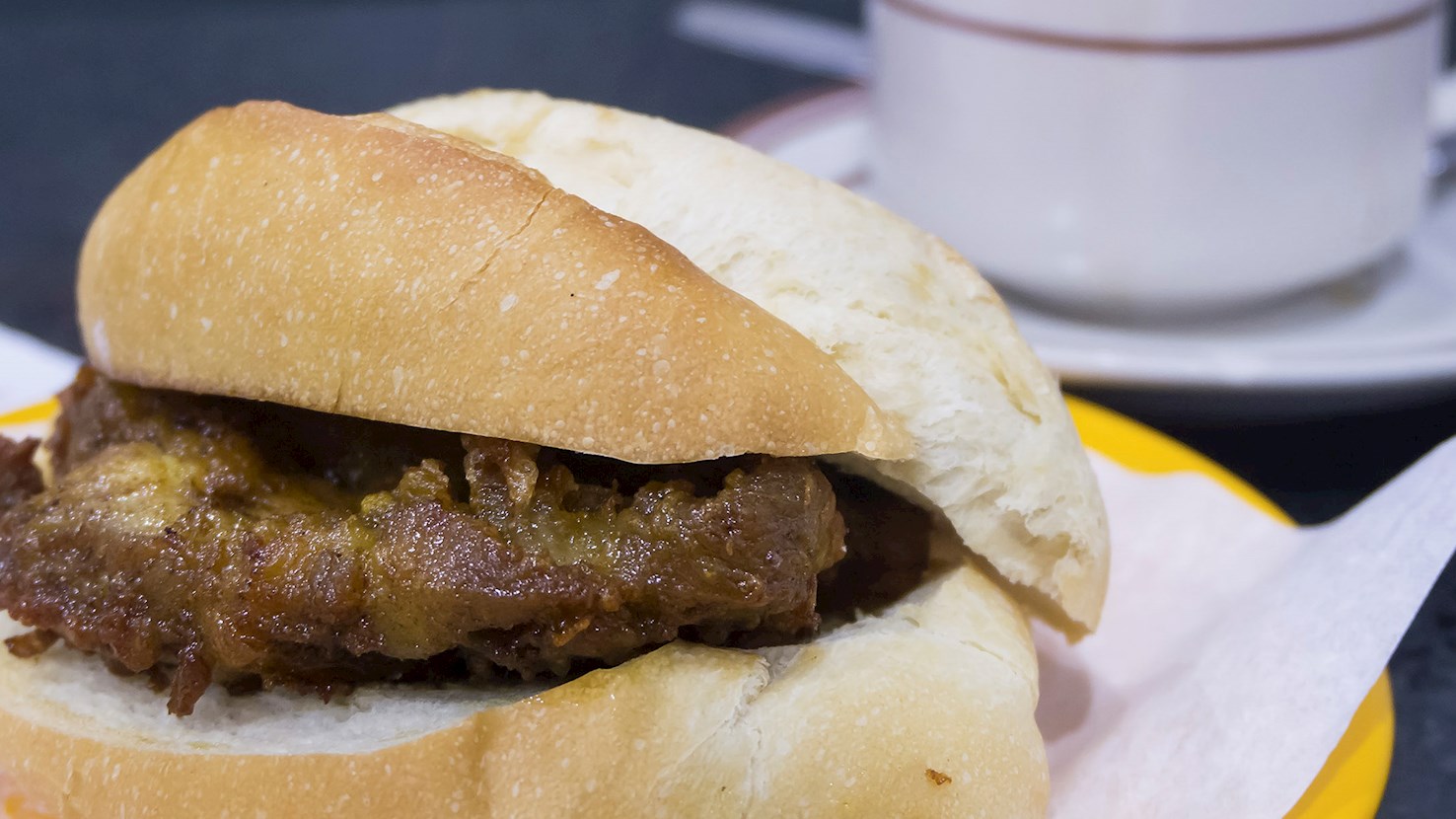
Pork chop bun is a Macanese specialty and one of the most famous dishes in the region. Although it is reminiscent of a typical sandwich or a hamburger, it doesn't have a lot in common with them. For a long time, Macau has been a Portuguese colony and the pork chop bun, in a way, represents a fusion of Portuguese and Asian cuisine and culture. It is praised for its simplicity because it consists of two main ingredients: a bun and a pork chop. The bun is also known as piggy bun, and it is traditionally made in Hong Kong. The inside of the bun is soft, while the outside is covered in a perfectly crunchy crust. The shape of the bun is originally Portuguese, and in Portugal it is used to make the famous bifana sandwich. Pork chop bun is distinguished by the usage of a pork chop on the bone, instead of the more typical pork cutlet. Simplicity is the main characteristic of this dish; it does not have any standard condiments or toppings, such as salad greens, cheese, or mayonnaise - the only thing that is added to pork chop bun is soy sauce, used to marinate the pork chop, and garlic, which is usually fried together with the pork chop or added to the marinade.
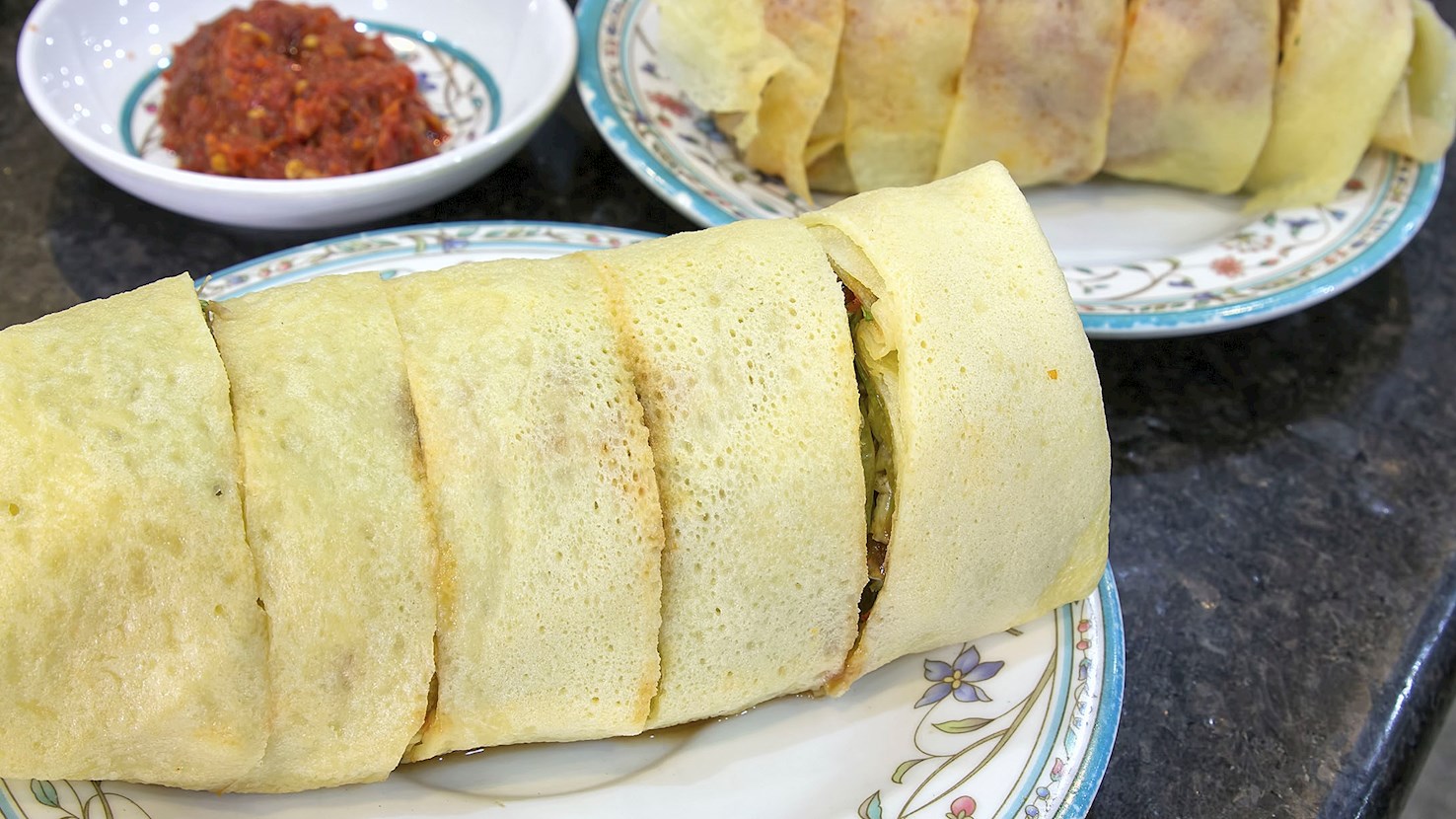
Popiah is a traditional roll, wrapped and filled with a variety of ingredients. Often compared to the more famous spring rolls, the main difference is that popiah is never deep-fried. The crepe-like wrappers for popiah are delicate and light, but easily foldable to hold all the ingredients together. The fillings are extremely versatile, but usually have four essential components: the main fillings, garnishes, spices, and sauces. The main fillings vary from meat and seafood to vegetables, while thinly sliced condiments most commonly include cucumbers, Chinese sausages, or eggs. Popiah is usually assembled according to preference, but most often a thin layer of spicy or sweet sauce is put on the wrapper, followed by a salad leaf that helps in holding all the ingredients together. When wrapped, and before it is served, popiah is cut into bite-sized pieces. However, the most common way to enjoy this traditional dish at parties is to serve all the ingredients separately and to allow the guests to assemble popiah according to personal preferences. Even though it originated in the Chinese Fujian province, popiah is also a part of the cuisines of Singapore and Malaysia, with different varieties popular in other Asian countries.
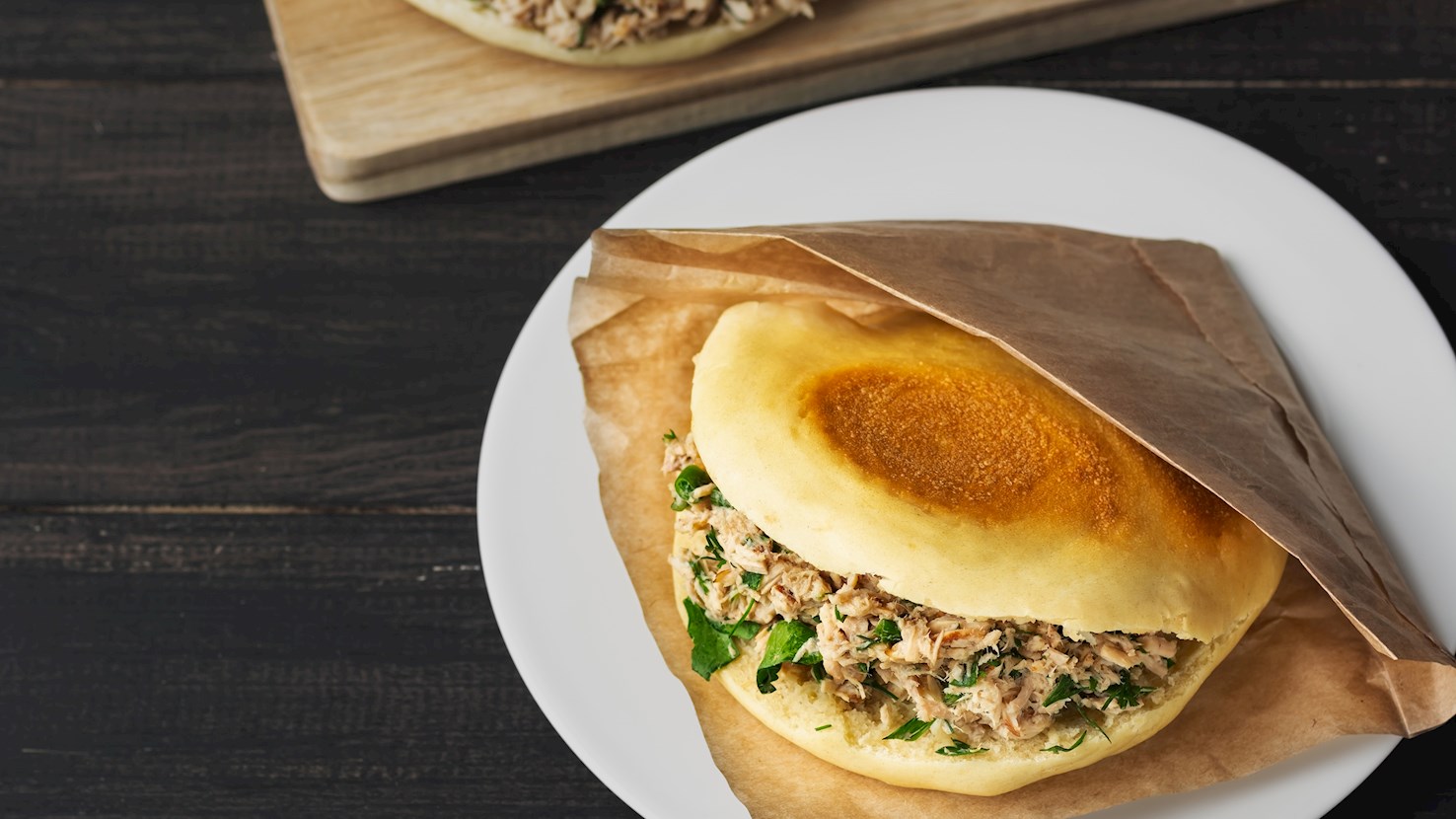
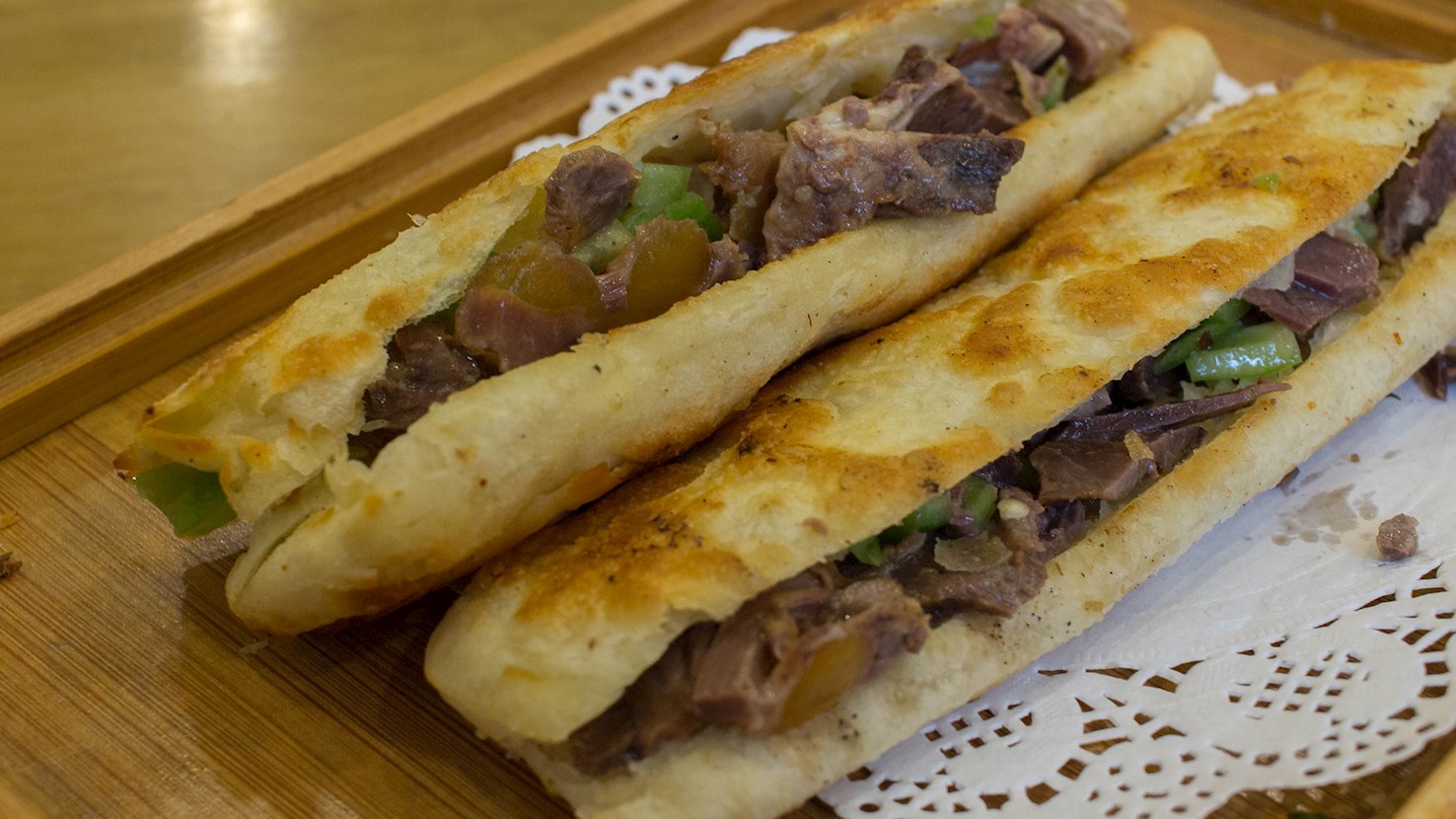
Donkey burger is a unique Chinese hamburger that is especially popular in Baoding and Hejian. It is prepared by filling a shao bing roll with shredded donkey meat, green peppers, and coriander leaves. The meat is usually served cold, and the burger can be found both on street corners and in upscale restaurants. Baoding donkey burger is served in a round shao bing, while the Hejian variety is served in a rectangular shao bing. It is believed that the practice of consuming donkey meat dates back to the time of Ming Dynasty.
Kǎoyā ròujiāmó is a variation of the famous Shaanxi street food, ròujiāmó, where the usual braised pork or beef filling is replaced with roast duck, often inspired by Beijing’s renowned kǎoyā or Peking duck. It brings together two culinary traditions: the bread-centered snack culture of northwestern China and the rich, lacquered duck cooking of the capital. This hybrid form is less old than the pork-based original, but it has found a place in markets and casual eateries, especially in cities where regional Chinese cuisines blend and adapt to modern tastes. The preparation of the bread remains much the same, using wheat flour dough formed into discs and baked on a griddle or in clay ovens until crisp on the outside but pliable enough to split open. The duck, however, changes the profile of the dish. Instead of long-braised meat, the filling comes from roast duck with its rendered skin and tender flesh, chopped together with scallions, cucumber, and sometimes a brush of sweet bean sauce or hoisin-like condiments. This introduces both a smoky and slightly sweet note, contrasting with the denser, savory character of the original pork version. Kǎoyā ròujiāmó is usually eaten as a quick meal in food courts, markets, or roadside stalls, and it can serve either as a snack or as part of a larger spread that might include cold noodles, dumplings, or soups. It pairs well with sour plum juice, chrysanthemum tea, or even light lagers, all of which balance the richness of the duck.
TasteAtlas food rankings are based on the ratings of the TasteAtlas audience, with a series of mechanisms that recognize real users and that ignore bot,
nationalist or local patriotic ratings, and give additional value to the ratings of users that the system recognizes as knowledgeable.
TasteAtlas Rankings should not be seen as the final global conclusion about food. Their purpose is to promote excellent local foods,
instill pride in traditional dishes, and arouse curiosity about dishes you haven’t tried.



What People Say