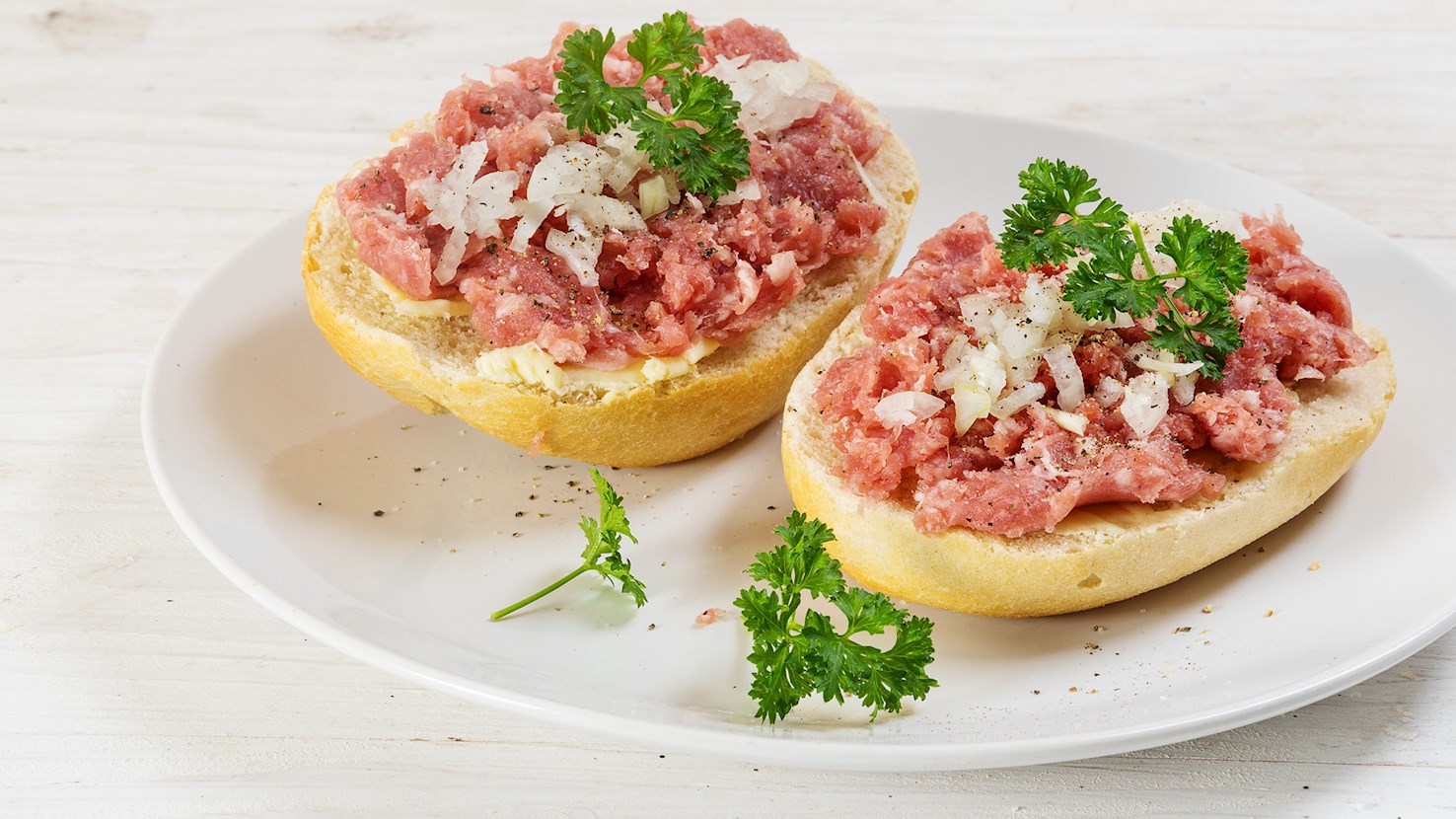
Mettbrötchen is a type of sandwich consisting of a fresh brötchen (a German bread roll) and mett (raw pork mince). The bread roll is sliced, then topped with a layer of mett, which is usually seasoned with salt and pepper and garnished with slices of raw onions on top. This sandwich is a typical breakfast item in Germany, and it is typically enjoyed in northern parts of the country. Interestingly, Mettwoch is a German custom of savoring mettbrötchen on Mittwoch (Wednesday).
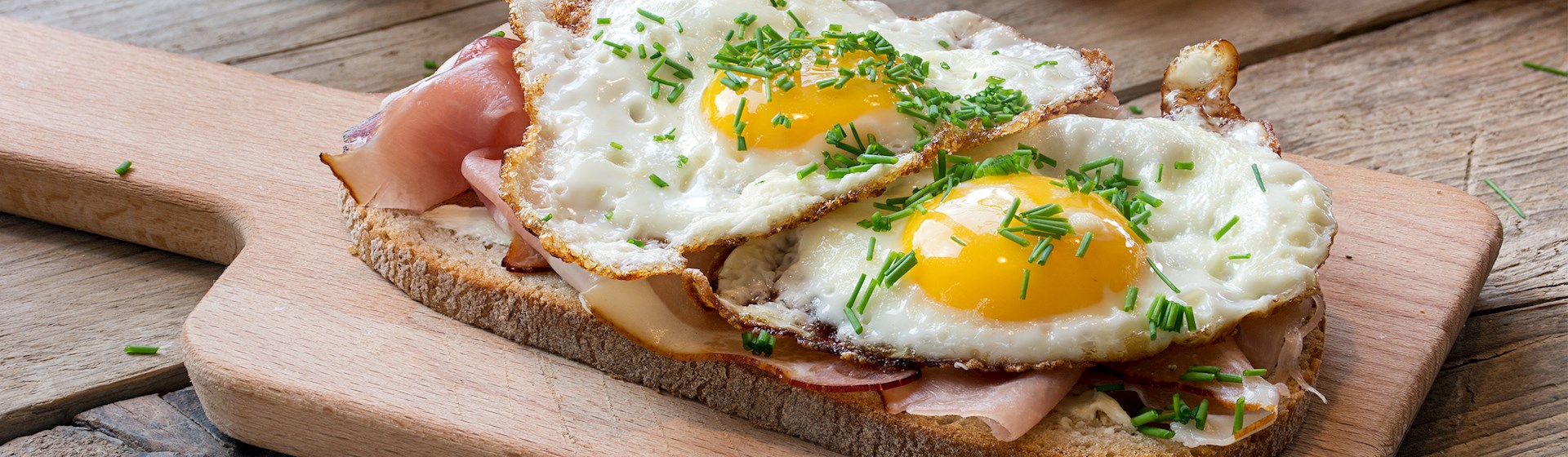
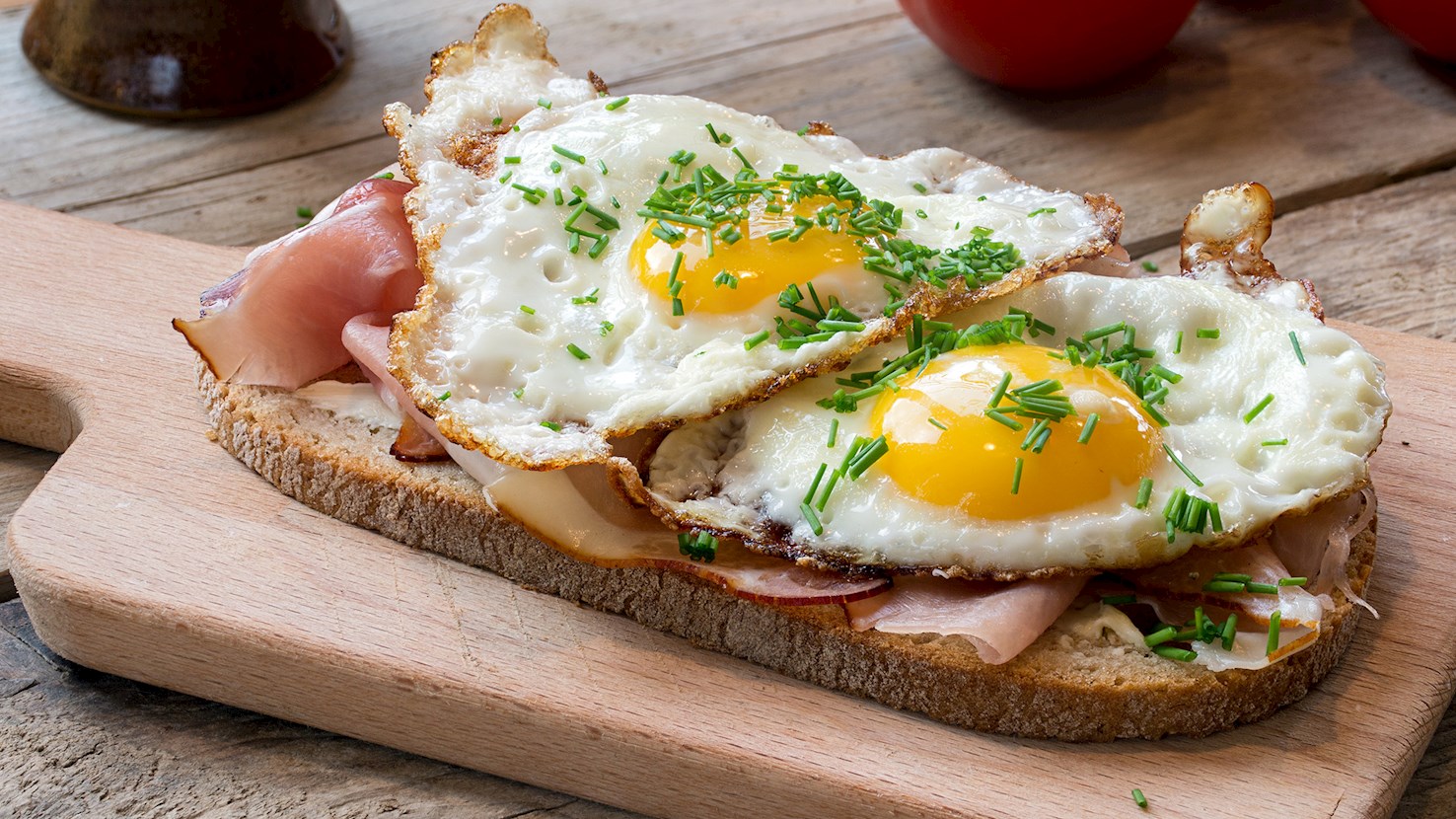
Strammer Max is a German open-faced sandwich that's served warm and has numerous variations. It's usually made with a slice of rye or wheat flour bread that can be toasted and buttered or fried in oil or butter. The bread is seasoned with salt, pepper, and (sometimes) mustard. It is then topped with slices of cured ham and a fried egg to finish it off. Due to the fact that it's quick and easy to prepare the sandwich, it spread throughout the country, but it's especially popular in Berlin, where it's an integral part of the city's food culture. Nowadays it can be found anywhere from street food stands and pubs to upscale restaurants. The most popular variations include Stramme Lotte, made with cooked ham, and Strammer Otto, with slices of salami or beef. In Bavaria, the sandwich is made with a slice of leberkäse, while a ladle of goulash as the topping is a specialty of Cologne.
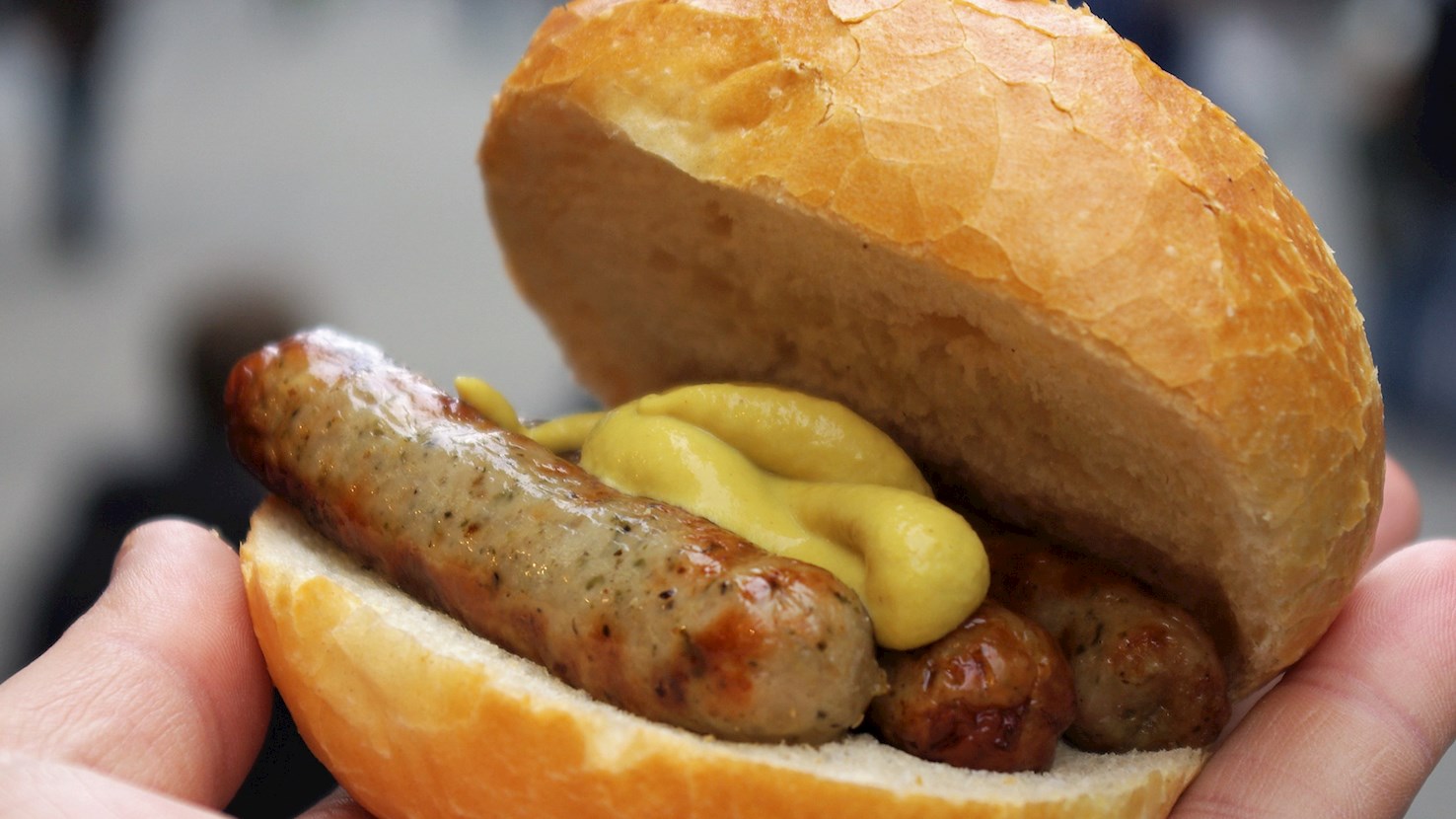
Drei im Weggla is a staple street food in Nuremberg. The sandwich consists of a circular bun that's cut in half and stuffed with three (drei in German) grilled Nürnberger Rostbratwurst sausages with a charred and crunchy skin. The sandwich is completed when the sausages are slathered with sharp yellow mustard. Some vendors even offer sauerkraut on top of it all, but let's be honest, the beauty of this sandwich lies in its simplicity. The bun must be perfectly crisp on the exterior while the inside should be chewy, dense, and yeasty. In the city, Drei im Weggla can be found at restaurants and in numerous food stands, huts, and carts scattered throughout Nuremberg.
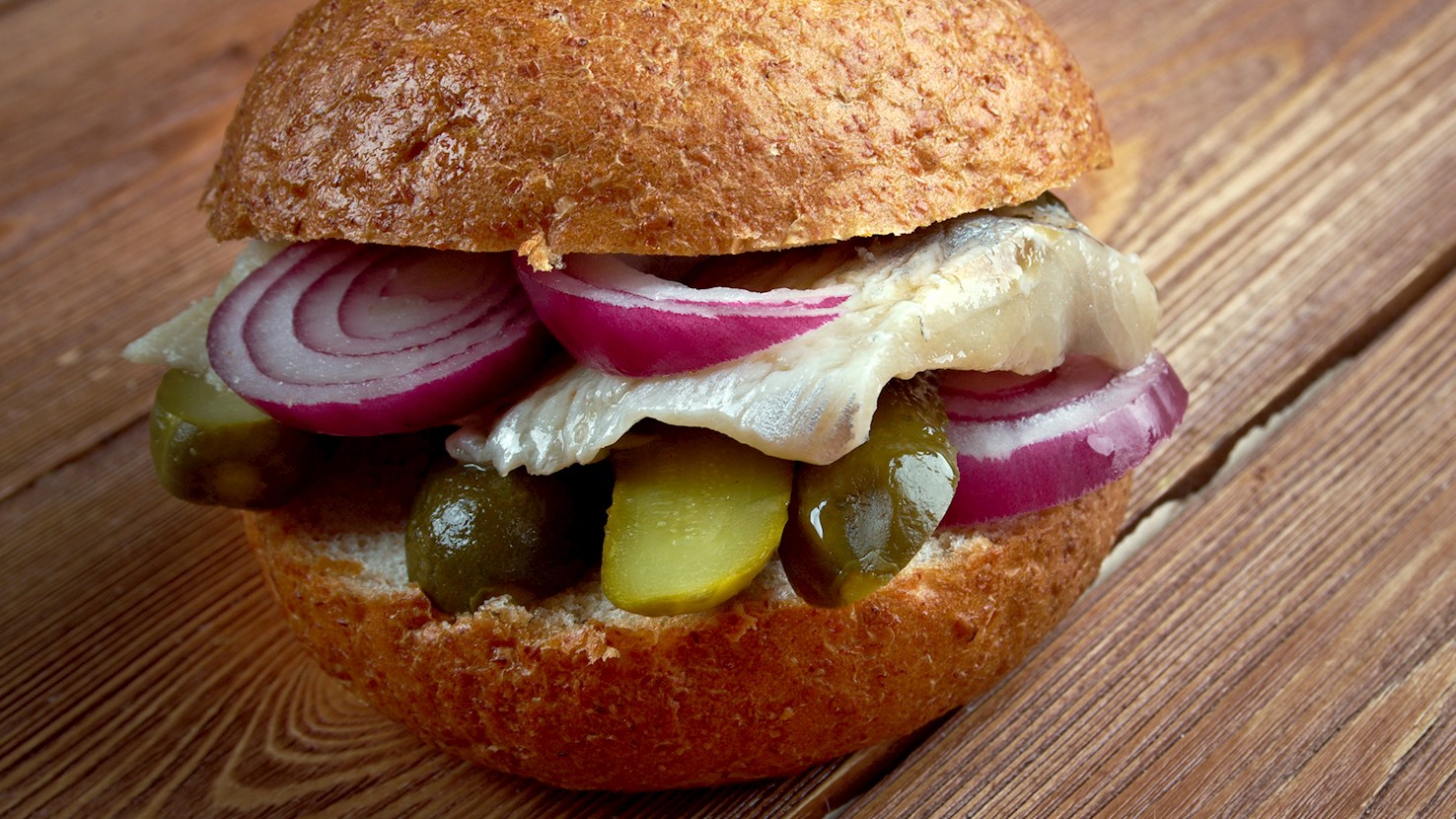
Fischbrötchen is a commonly consumed sandwich in Northern Germany, made with fish and a variety of other ingredients such as pickles, remoulade, onions, lettuce, or horseradish. The ingredients are typically placed in round or elongated bread buns, while the type of fish used in the sandwich is variable – herring, sprat, salmon, and mackerel are among the most common fish used in the preparation of this sandwich, which is commonly served at fast-food stands in the region.
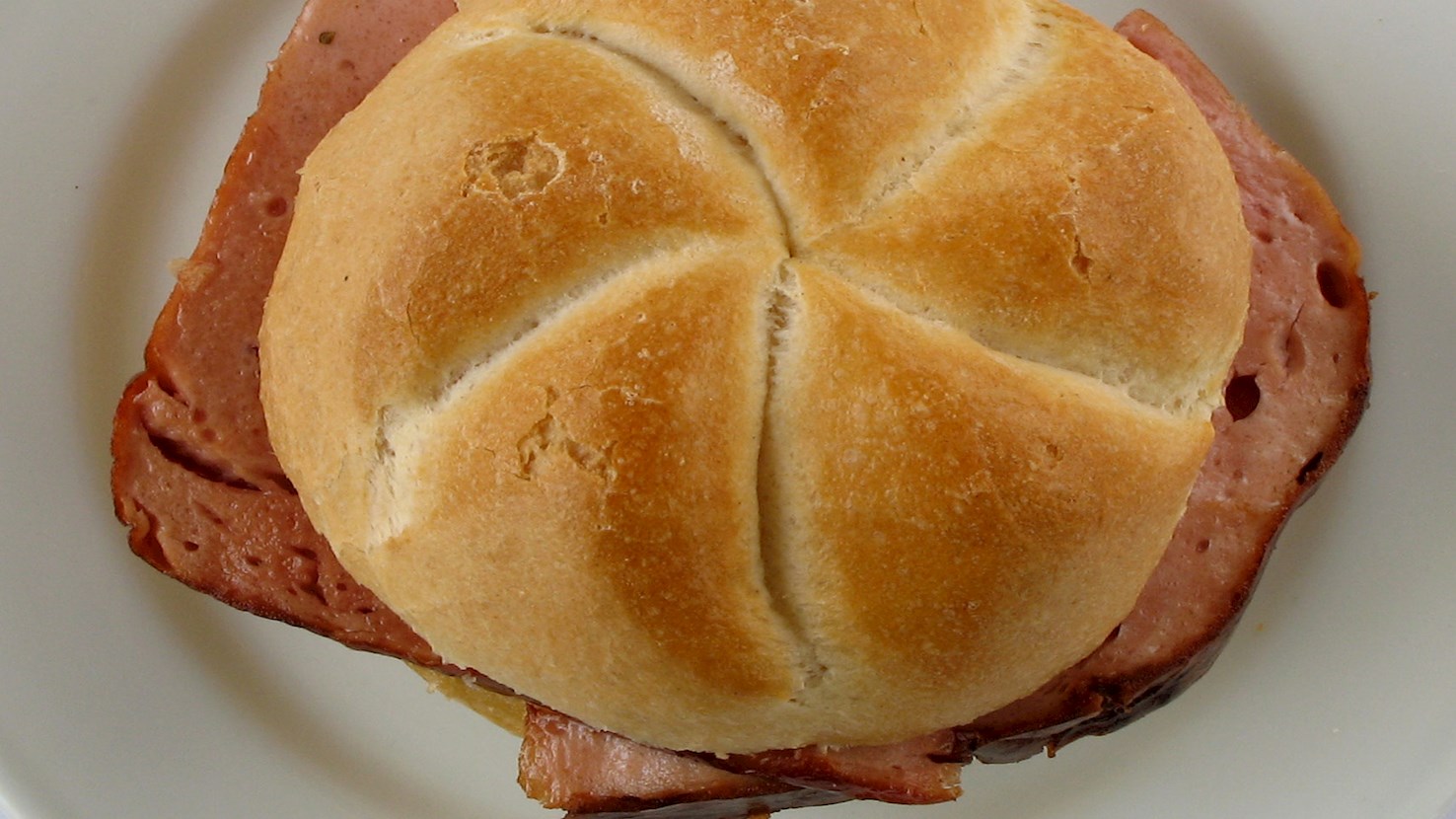
This classic Bavarian and Austrian sandwich consists of a thick slice of leberkäse—a product consisting of ground meat that is baked into a meatloaf—which is served inside a halved bread roll (semmel). Typically, the sandwich will also include a generous slather of sweet mustard. In Bavaria, leberkässemmel is usually served in beer gardens, while the Austrian version is typically prepared and sold at street kiosks.
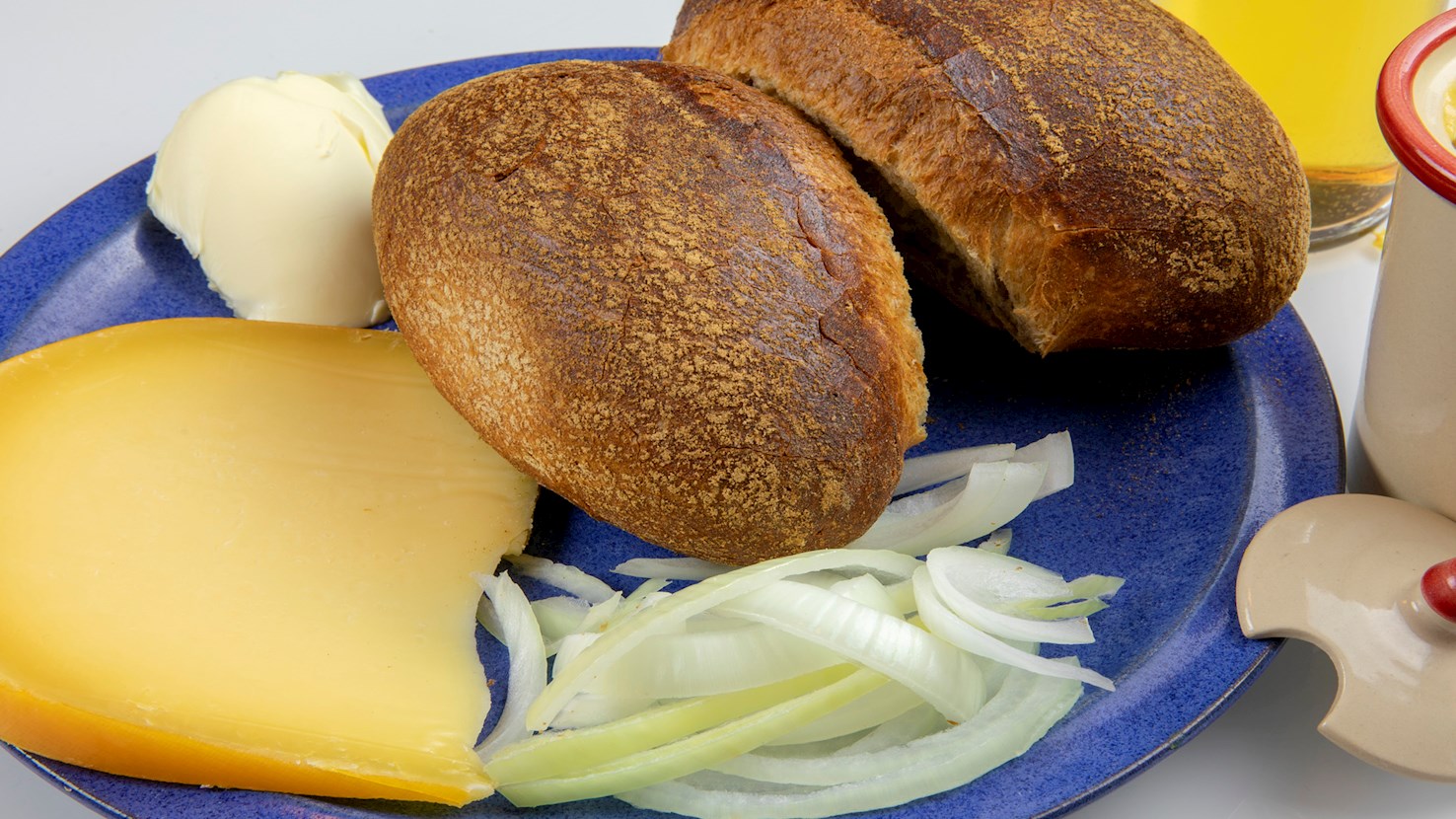
Halve hahn is a Rhenish sandwich consisting of a split rye roll (röggelchen) that is typically buttered and topped with a thick slice of medium-ripe gouda cheese, pickles, and raw onions. Mustard is commonly added as well. It is popular throughout the Rhineland, especially in the cities of Cologne and Duesseldorf, where it can be found at most restaurants, pubs, and beer gardens. The origins of this dish are debated, but halve hahn most likely originated from Cologne in the 1870s. It is eaten as a snack between gulps of kölsch beer.
Although its ingredients aren't exactly traditionally German, toast Hawaii is a modern German classic - it was popularized by a TV cook Clemens Wilmenrod in the 1950s. In a similar way that the Americans have ruined pizza for some (mostly Italians) by adding pineapple to it, the Germans have also done the same thing to a sandwich. Toast Hawaii is an open-faced sandwich consisting of a buttered slice of toasted white bread that's topped with a slice of ham, a slice of pineapple, and a slice of Gouda or Swiss cheese. The sandwich is placed under the broiler until the cheese melts, and the hole in the middle is then garnished with a cocktail cherry. The ingredients used in this sandwich are a result of the time when it was invented – due to the fact that almost every household had canned pineapple and cheese slices at the time, it made this easily prepared sandwich seem exotic or even upscale. Shortly after its invention, toast Hawaii started to appear on West German restaurant menus, usually accompanied by a bottle of Worcestershire sauce on the side.
Kottenbutter is a hearty open-faced sandwich from the Bergisches Land region, made with buttered dark bread and topped with smoked sausage and other savory ingredients.The sandwich developed in the Bergisches Land among the Schleifer, the metal grinders who worked in water-powered workshops called Kotten along the Wupper River between Solingen, Remscheid, and Wuppertal, where they needed a quick, energy-dense meal to eat during short breaks while grinding steel. Preparation is straightforward: dense, dark bread is sliced, butter is spread on one or both slices, smoked sausage (usually either pork or pork-and-horse meat sausage) is placed on top, thin rings of raw onion are added, and spicy mustard may be spread beneath the sausage or on the bread, with no cooking required before eating. Common variations include using different types of smoked sausage, such as panhas or other coarse pork sausages, and spreading mustard more or less heavily, while the defining structure of buttered dark bread with smoked sausage and onion remains consistent. Kottenbutter is eaten cold and is served as a snack or lunch in homes, taverns, at local festivals, and at gatherings in the Bergisches Land, and it is commonly paired with a mug of strong coffee or a local beer.
TasteAtlas food rankings are based on the ratings of the TasteAtlas audience, with a series of mechanisms that recognize real users and that ignore bot,
nationalist or local patriotic ratings, and give additional value to the ratings of users that the system recognizes as knowledgeable.
TasteAtlas Rankings should not be seen as the final global conclusion about food. Their purpose is to promote excellent local foods,
instill pride in traditional dishes, and arouse curiosity about dishes you haven’t tried.





What People Say