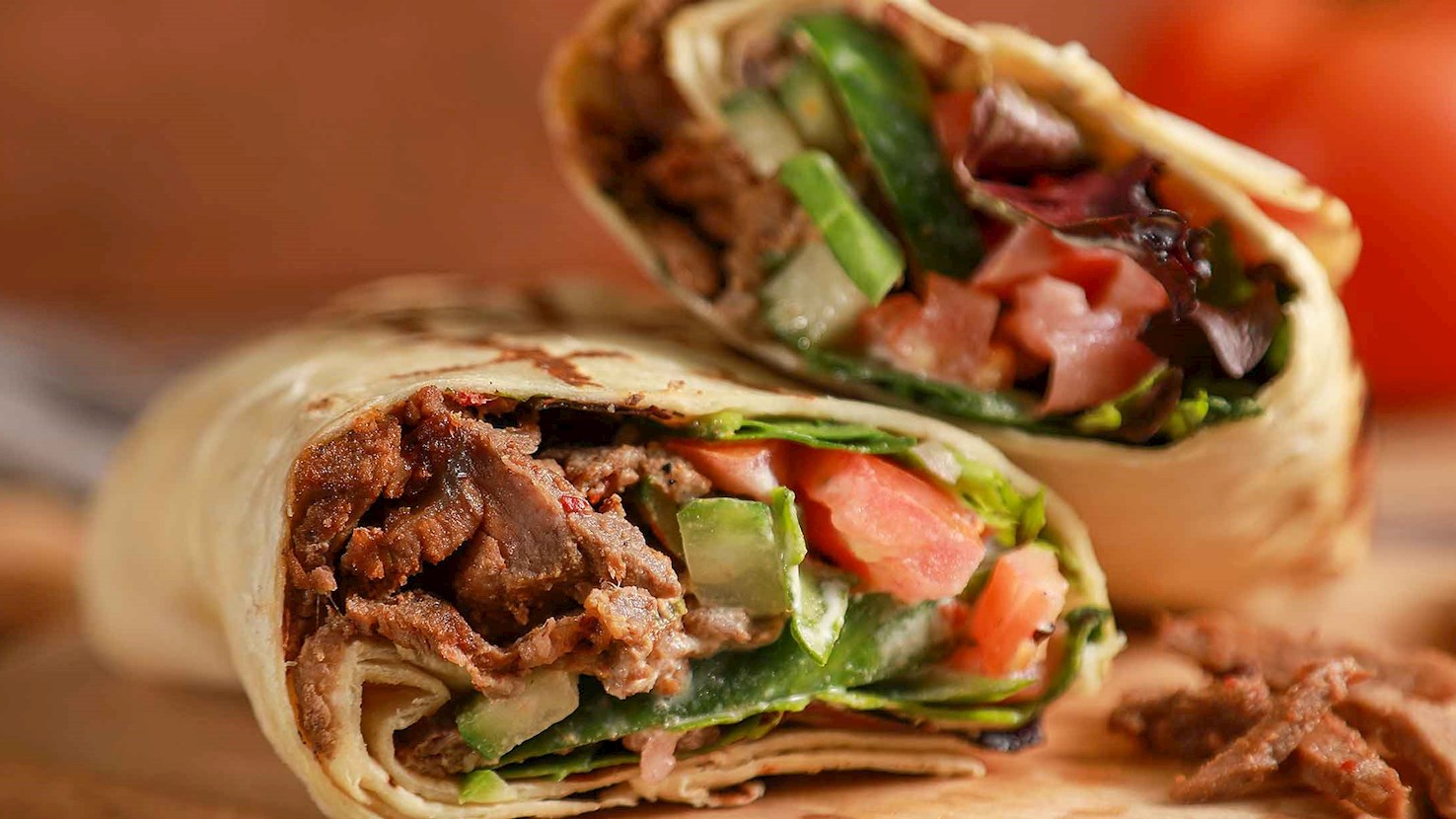
Marinated and spit-roasted, shawarma is a delicious Middle Eastern meat treat whose origins can be traced back to the Ottoman Empire era, while its name stems from the Arabic pronunciation of the Turkish word çevirme (lit. to turn; turning), and refers to the rotating skewer on which the meat is cooked. Shawarmas are made with either lamb, turkey, chicken, beef, or a mix of different meats which are slow-cooked for hours and basted in their own juices and fat, gaining an incomparable succulence, but the real secret to a perfect shawarma is in the marinade. Depending on the variety, the meat must be marinated for at least a day, preferably two, especially when using beef. These marinades are either yogurt or vinegar-based and typically include spices and flavorings such as cinnamon, cloves, cardamom, nutmeg, black pepper, allspice, dried lime, spicy paprika, garlic, ginger, lemon, bay leaf, and sometimes even orange slices. Shawarma is traditionally served either on its own or enjoyed tucked inside a warm flatbread such as pita or lavash. However, what really sets it apart from the Turkish döner kebab, Greek gyros, or other similar foods is the extent of garnishes and condiments offered with it. For example, Israeli shawarmas are typically topped with tahini and come with generous servings of hummus and pickled mango slices, while in other countries, shawarma is often complemented with garlic mayo or a zesty toumaia garlic sauce, both fresh and pickled vegetables, salads like tabbouleh or fattoush, and amba sauce–a tangy chili and mango pickle dip. Once a common staple of the Middle Eastern working man, shawarma has today become the ultimate Arabic street food, found not only in Arabia and Levant but in virtually any nook and corner of the globe.
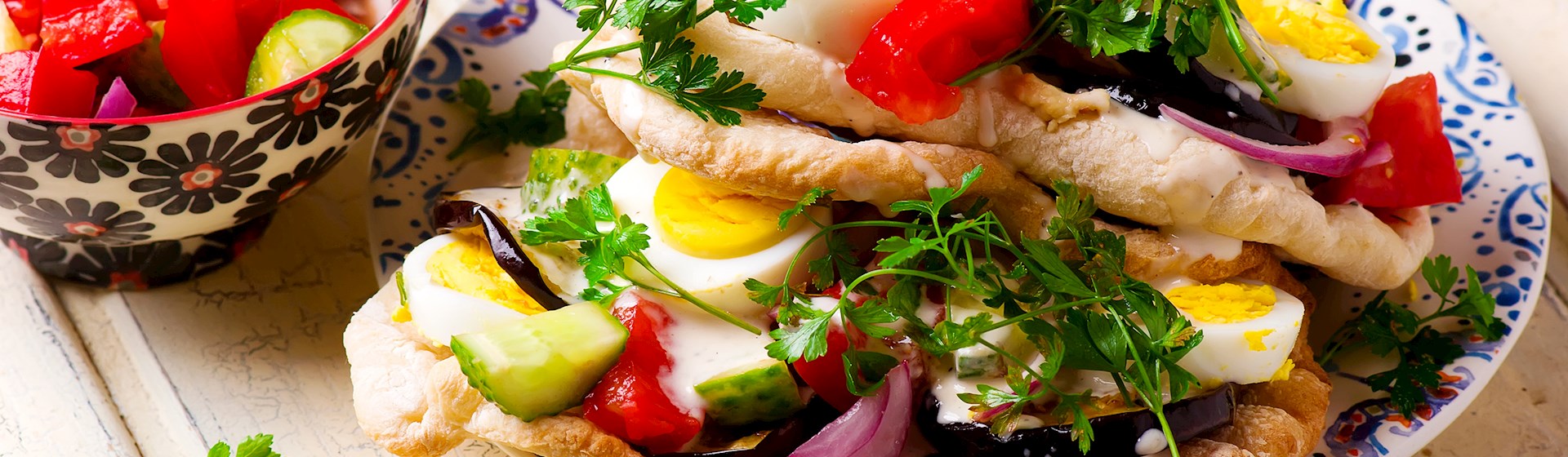
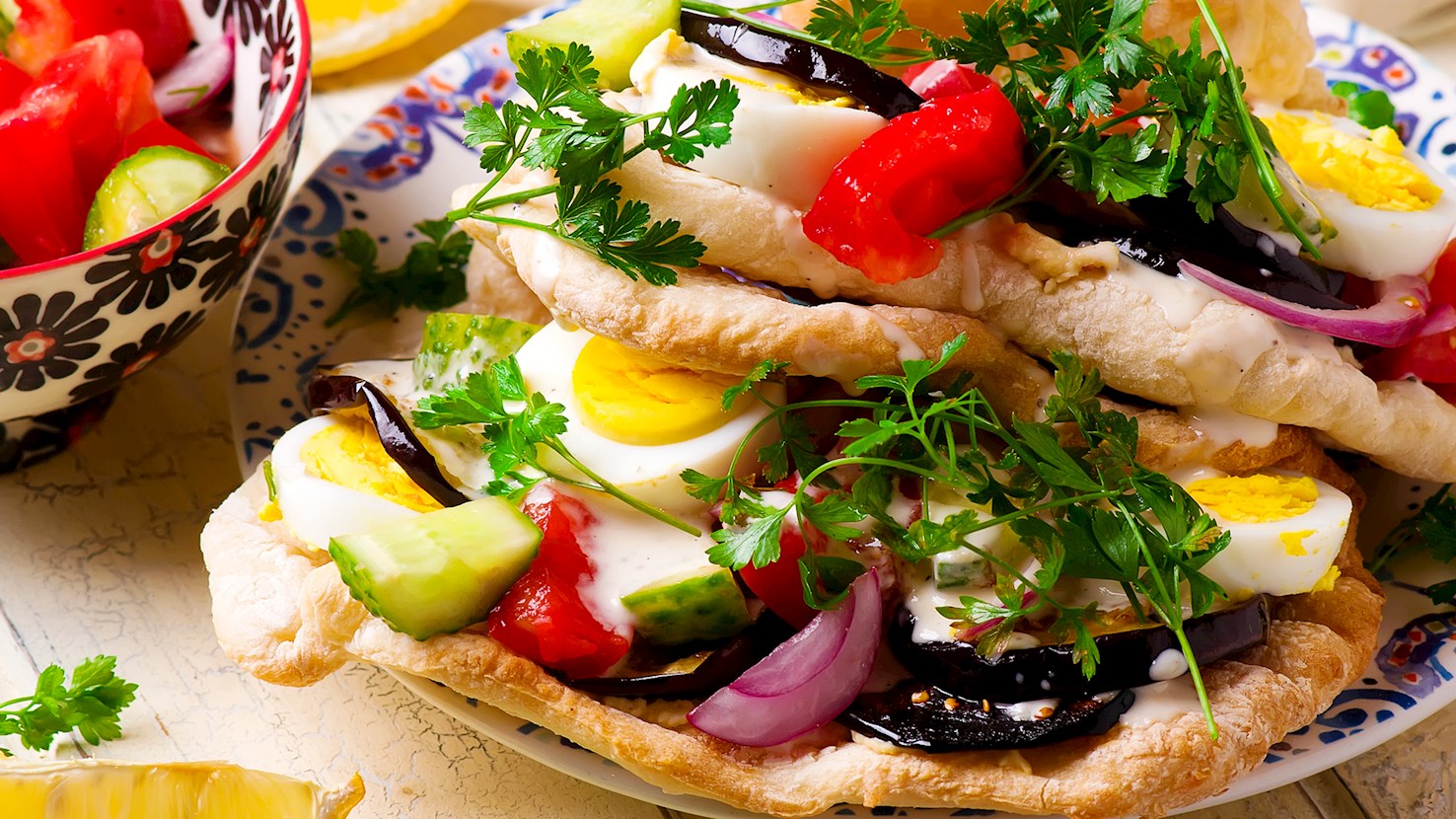
Sabich is an Israeli street food dish consisting of pita bread filled with fried eggplant, hard-boiled eggs, hummus, tahini, Israeli salad, and pickles, often topped with amba, a tangy mango pickle sauce. It is a vegetarian sandwich with Iraqi Jewish origins that has become a well-known part of Israel’s urban food culture, particularly popular as a breakfast or lunch option. The combination of ingredients represents a fusion of Middle Eastern and Iraqi Jewish flavors adapted into the context of Israeli fast food. The dish originated among Iraqi Jews who immigrated to Israel in the mid-20th century. Many of them brought with them their Sabbath morning meal, which included fried eggplant, hard-boiled eggs, and salads served cold due to religious restrictions on cooking during the day of rest. In Israel, these elements were eventually assembled together inside pita bread for convenience, creating a portable meal. The sandwich format emerged in the 1960s in Ramat Gan, where vendors began selling sabich from small stands, and it quickly became associated with the city’s Iraqi Jewish community before spreading throughout the country. To prepare sabich, thin slices of eggplant are salted, dried, and deep-fried or pan-fried until golden and soft. Hard-boiled eggs are peeled and sometimes seasoned with salt or a sprinkle of cumin. Pita bread is slightly warmed or toasted, then spread with hummus and tahini. The fried eggplant and eggs are layered inside, followed by diced tomato and cucumber salad, pickled vegetables, and a drizzle of amba sauce. Some versions include parsley, chopped onion, or boiled potatoes, depending on regional or personal preference. The amba, a key element, adds a sharp and slightly spicy note that balances the richness of the eggplant and sesame sauce. Sabich is usually served as a handheld sandwich, but it can also be presented as a plate with the same components arranged side by side. The flavors are complex but balanced, creamy from the tahini, acidic from the pickles and amba, and earthy from the eggplant and eggs. The sandwich is typically vegetarian, though some modern versions include additions like feta cheese or hot sauce. It is eaten throughout the day, especially as a filling breakfast or quick street lunch. In Israel, sabich is commonly sold alongside falafel and shawarma in similar establishments, though it appeals especially to those looking for a meatless meal. It pairs well with cold drinks such as lemonade, ayran, or mint-infused soda water. Its mix of textures, temperature contrast, and depth of flavor have made sabich one of the defining examples of Israeli street food rooted in diaspora home cooking.
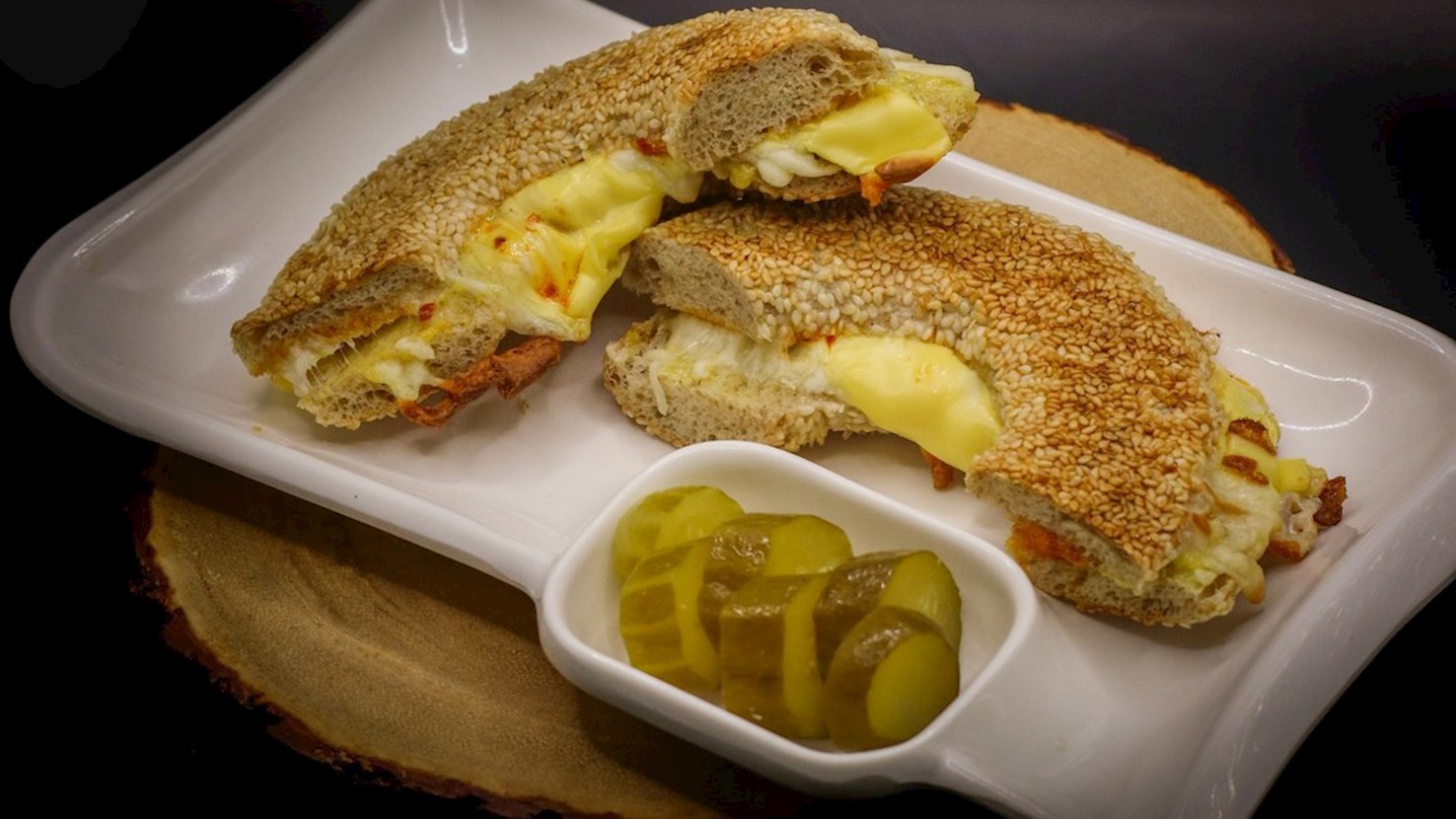
Bagel toast is a grilled sandwich prepared using a sliced bagel filled with cheese and various additions, commonly made in Israel where it is sold in cafés, kiosks, and home kitchens as a quick meal or snack. It developed after the bagel became more widely available in Israel in the late twentieth century, particularly in urban areas where American-style bagels entered local bakeries, and cooks adapted the format of the common “toast” sandwich by using a bagel instead of standard bread. The dish uses a bagel that is sliced horizontally, filled with cheese (often yellow cheese or mozzarella) and sometimes vegetables such as tomatoes, olives, or mushrooms, as well as condiments like pesto, zhug, or spreads that vary by café. The assembled bagel is then grilled in a panini press or sandwich toaster until the cheese melts and the exterior becomes crisp. A notable detail is that the dense structure of the bagel allows the sandwich to retain its shape and texture during grilling more effectively than softer breads, which creates a result that is chewy inside and firm on the outside. Bagel toast is eaten throughout Israel in casual dining spots, school canteens, and home settings, usually at breakfast or as a light lunch or afternoon snack, and it pairs well with coffee, iced coffee, fresh juices, or soft drinks depending on the time of day and the additions used inside the sandwich.
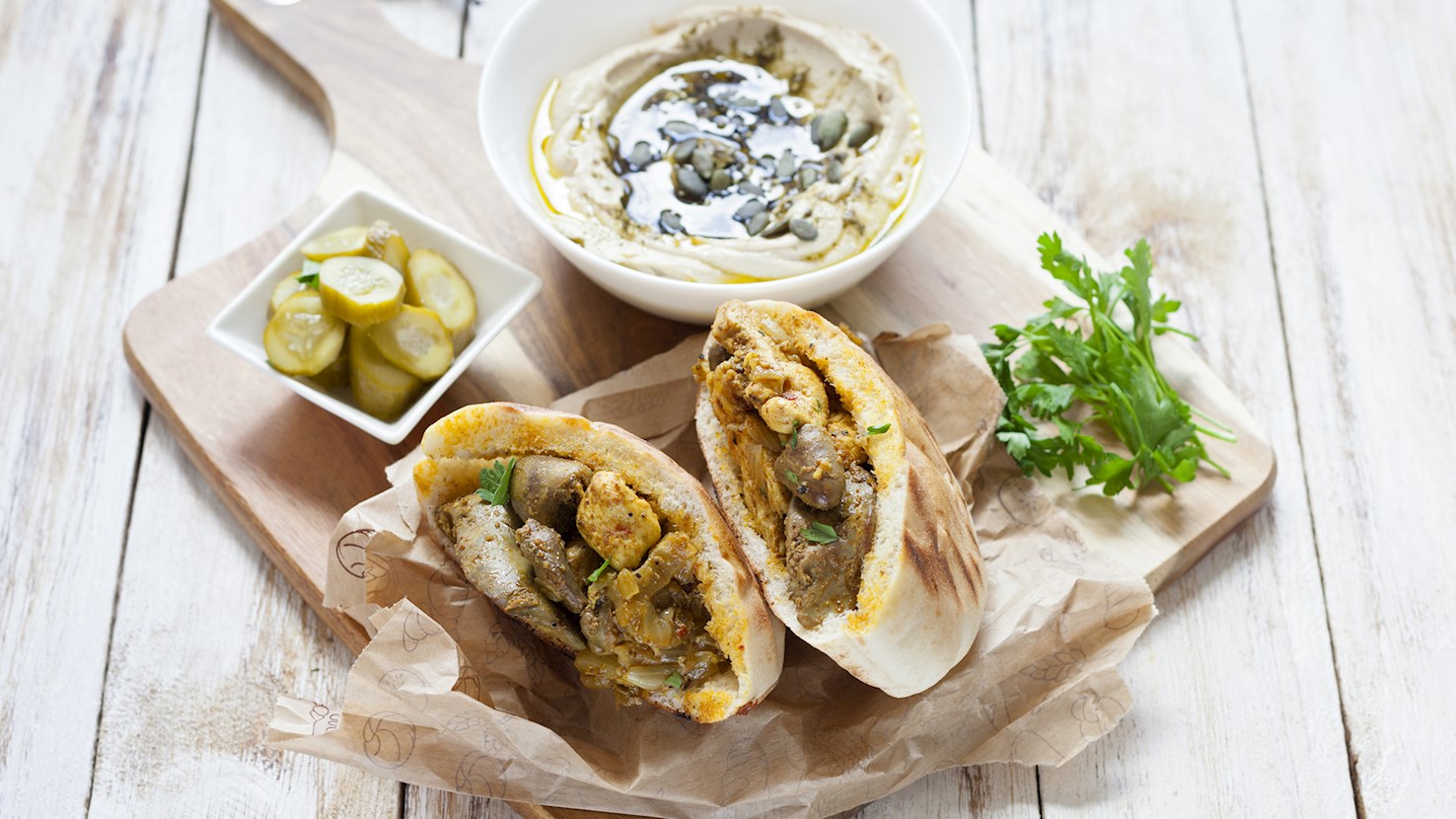
Jerusalem mixed grill is a street-food dish from Jerusalem made by sautéing or grilling small cuts of meat, most commonly chicken hearts, livers, and spleens, often combined with pieces of chicken breast or thigh, and seasoned heavily with spices. It emerged in the mid-twentieth century in the area of the Mahane Yehuda market, where butchers and grill operators used readily available offal and small cuts to create a quick, flavorful meal for workers and shoppers. Vendors refined their seasoning blends over time, incorporating spices such as cumin, paprika, black pepper, turmeric, and sometimes curry powder or cardamom, and the dish became closely linked to the stalls that sold it in pita or on plates beside salads and sauces. Preparation typically begins by cleaning and trimming the meats, cutting them into bite-sized pieces, and cooking them over high heat on a flattop griddle or grill while mixing in the spice blend so it coats the meat evenly as it cooks; onions may be added for sweetness and moisture, and some cooks finish the dish with a small amount of fat or broth to keep it juicy. Jerusalem mixed grill is eaten throughout Israel in restaurants, market stands, and home kitchens, usually served in pita with salads, pickles, and tahini or on a plate with rice, chips, or grilled vegetables. It pairs well with cold beer, lemon-based drinks, sparkling water, and dry white wines that complement the spice profile without overwhelming the dish.
TasteAtlas food rankings are based on the ratings of the TasteAtlas audience, with a series of mechanisms that recognize real users and that ignore bot,
nationalist or local patriotic ratings, and give additional value to the ratings of users that the system recognizes as knowledgeable.
For the “Top 4 Israeli Sandwiches and Wraps” list until August 15, 2026, 1,637 ratings were recorded, of which 858 were recognized by the system as legitimate.
TasteAtlas Rankings should not be seen as the final global conclusion about food. Their purpose is to promote excellent local foods,
instill pride in traditional dishes, and arouse curiosity about dishes you haven’t tried.



What People Say