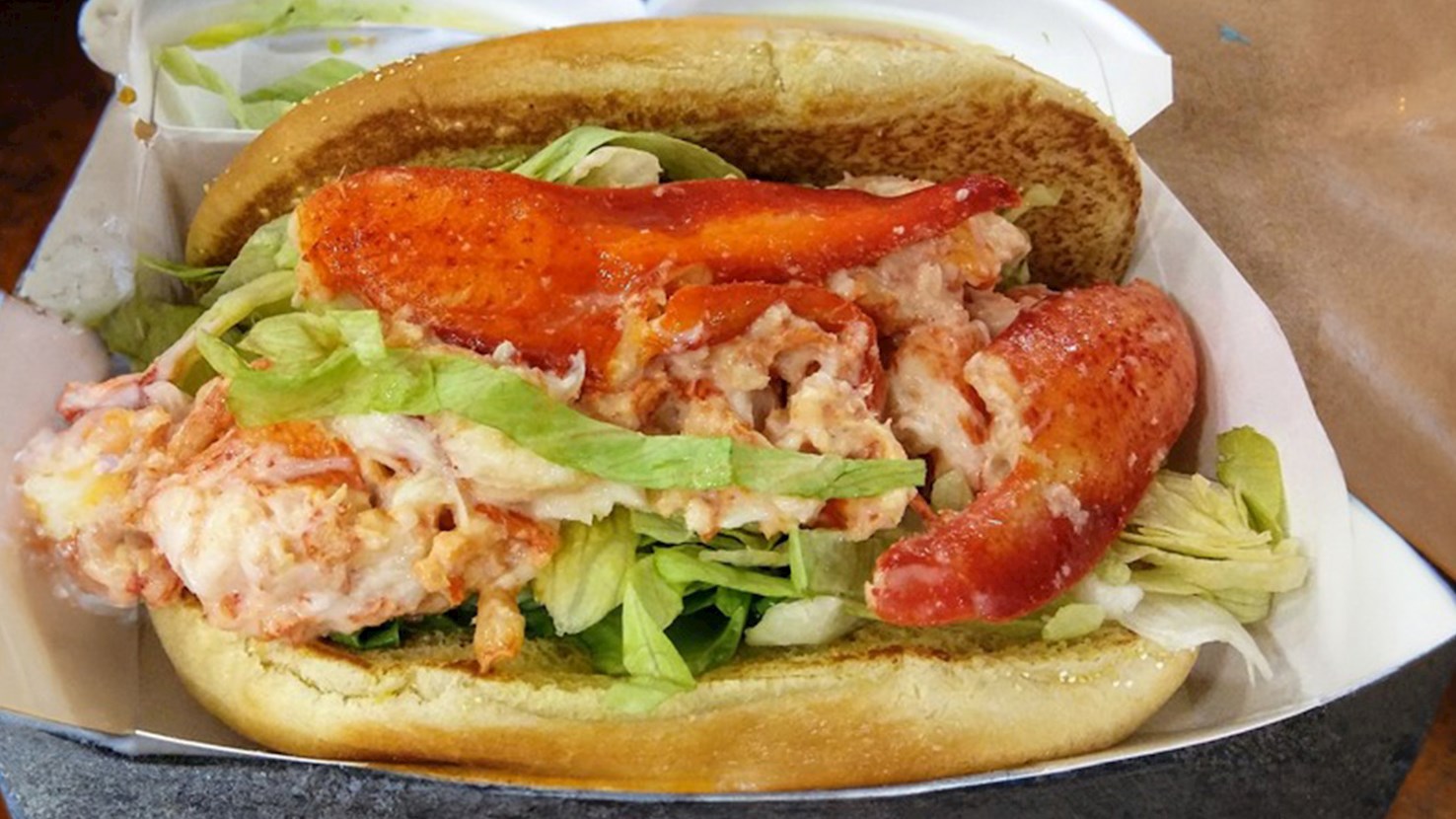
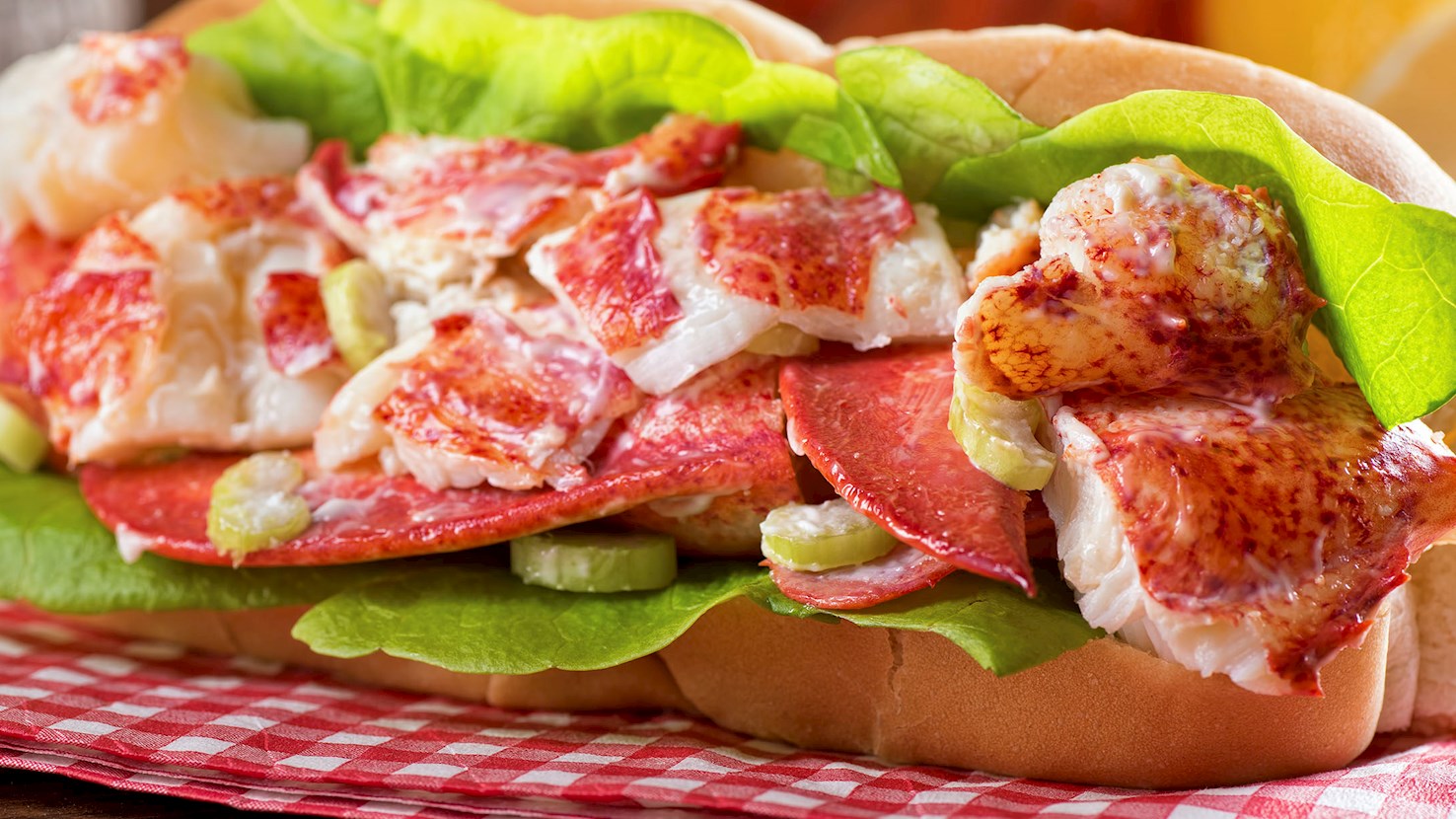
One of New England cuisine staples, the Maine-style lobster roll consists of a chilled lobster salad tucked into New England-style split-top buns. The lobster salad, at its basic, is made with knuckle and claw meat that is dressed in mayonnaise and mixed with finely chopped celery, seasoned only with salt and pepper. Variations typically include ingredients like lemon juice, mustard, and chives. Because the buns are buttered and toasted, the result is a lobster roll with contrasting texture and flavor: a warm, buttery, toasted bun vs. a cold, crunchy lobster salad. It is unknown when it was invented and by whom. What is known is that it started to first appear sometime in the 1950s due to the explosion of summer tourism, but it boomed in the 1970s thanks to the increase in the roadside lobster roll stands. Red Eat's, the most famous restaurant on Route 1 in Maine, had a big role in popularizing it. Also, even though the Connecticut-style lobster roll appeared earlier, the Maine-style one is the more popular of the two. When it comes to serving, the most typical pairing is a Maine lobster roll and either creamy clam chowder or seafood chowder. But at seafood shacks or food stands, it is typically served with salt and vinegar potato chips, coleslaw, pickles, and onion rings.
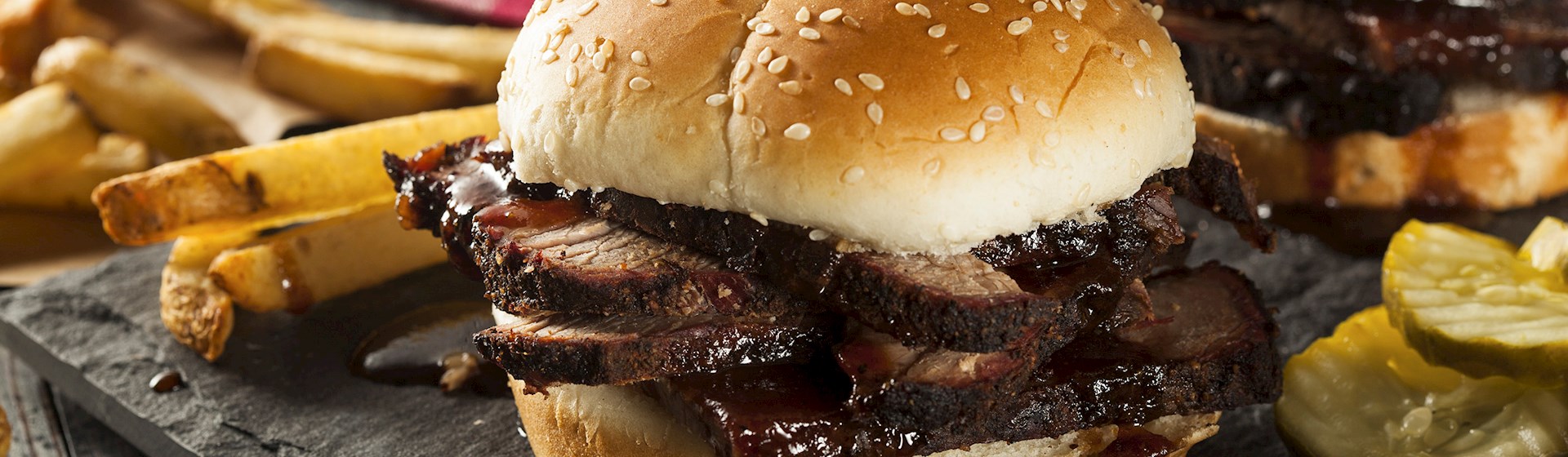
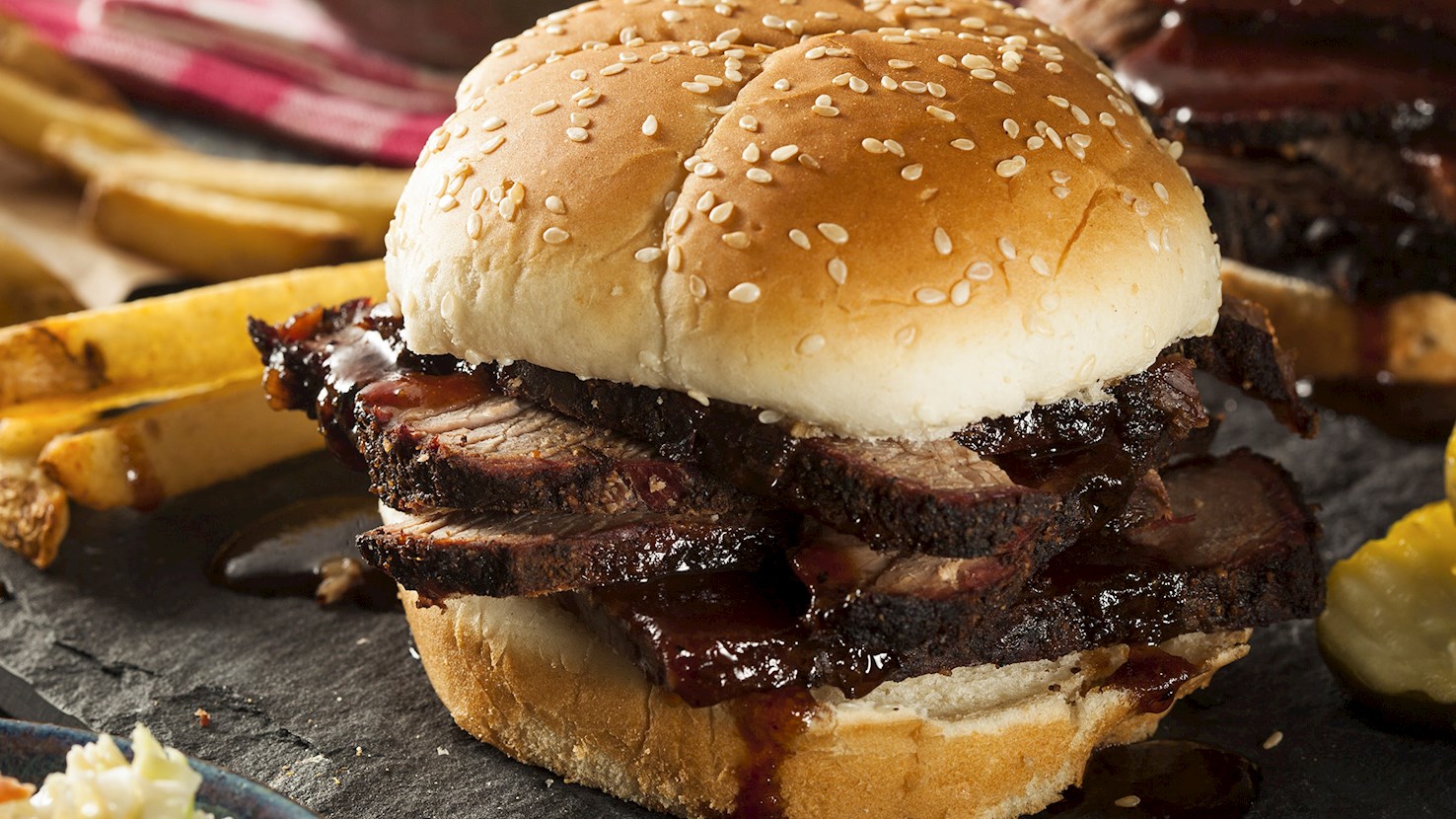
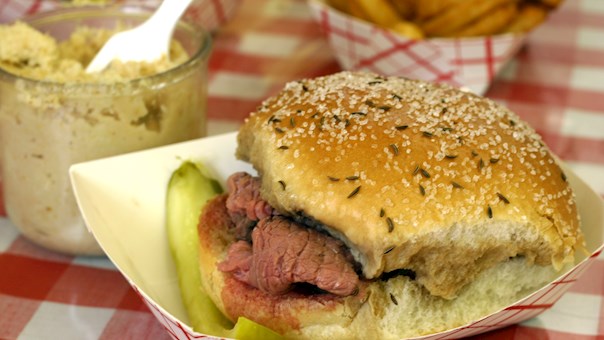
The practice of smoking brisket has a long tradition in Texas, and this juicy, fatty treat also works great as a flavorful sandwich filling. Texas brisket sandwiches can be considered more of a concept than a recipe - various toppings and sorts of bread can be used, but the undisputed star remains the slow-smoked brisket, whether chopped or sliced. It can be tucked between slices of bread or piled on a toasted bun, served on its own or drenched in sauce, and garnished with toppings such as cheese, pickles, and onions - whatever the combination, the fatty brisket meat with a smoky crust guarantees a mouthwatering perfection in each bite.
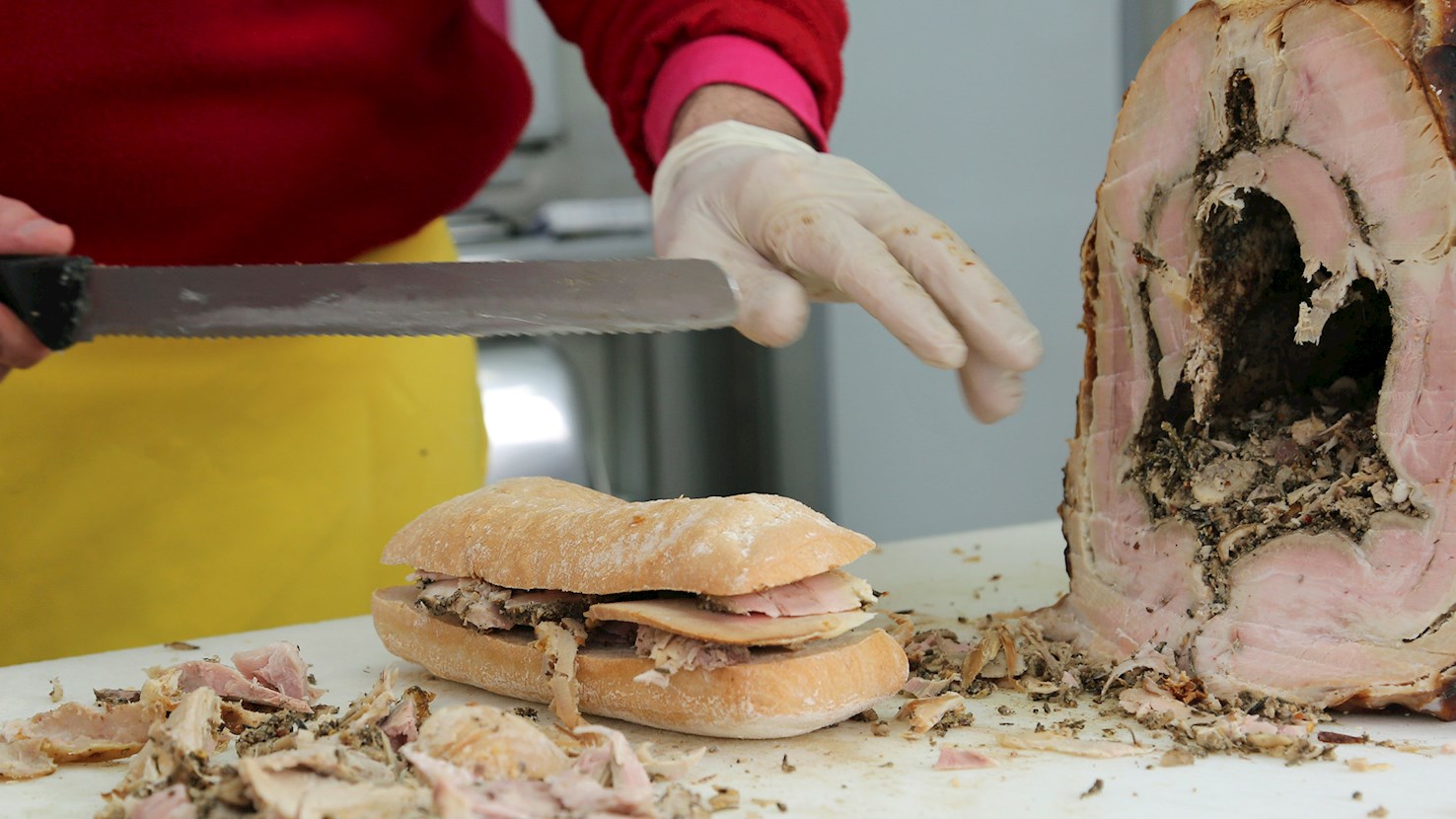
Panino con la porchetta is a popular type of sandwich from central Italy made with slices of porchetta that are tucked in between two slices of homemade bread. The sandwich is especially popular among Italian-Americans and in Rome, with both Umbria and Lazio claiming to be the birthplace of its main ingredient, porchetta. Traditionally, no other ingredients are needed, as porchetta is very greasy and has lots of herbs and seasonings, which is also why homemade bread is preferred since it soaks up the fat from the meat well without falling apart. Also, the crispy skin on the porchetta should not be removed. However, there are variations that include other ingredients, most typically cheese and different sauces and are made with various kinds of bread, like ciriola, ciabatta, and rosetta.
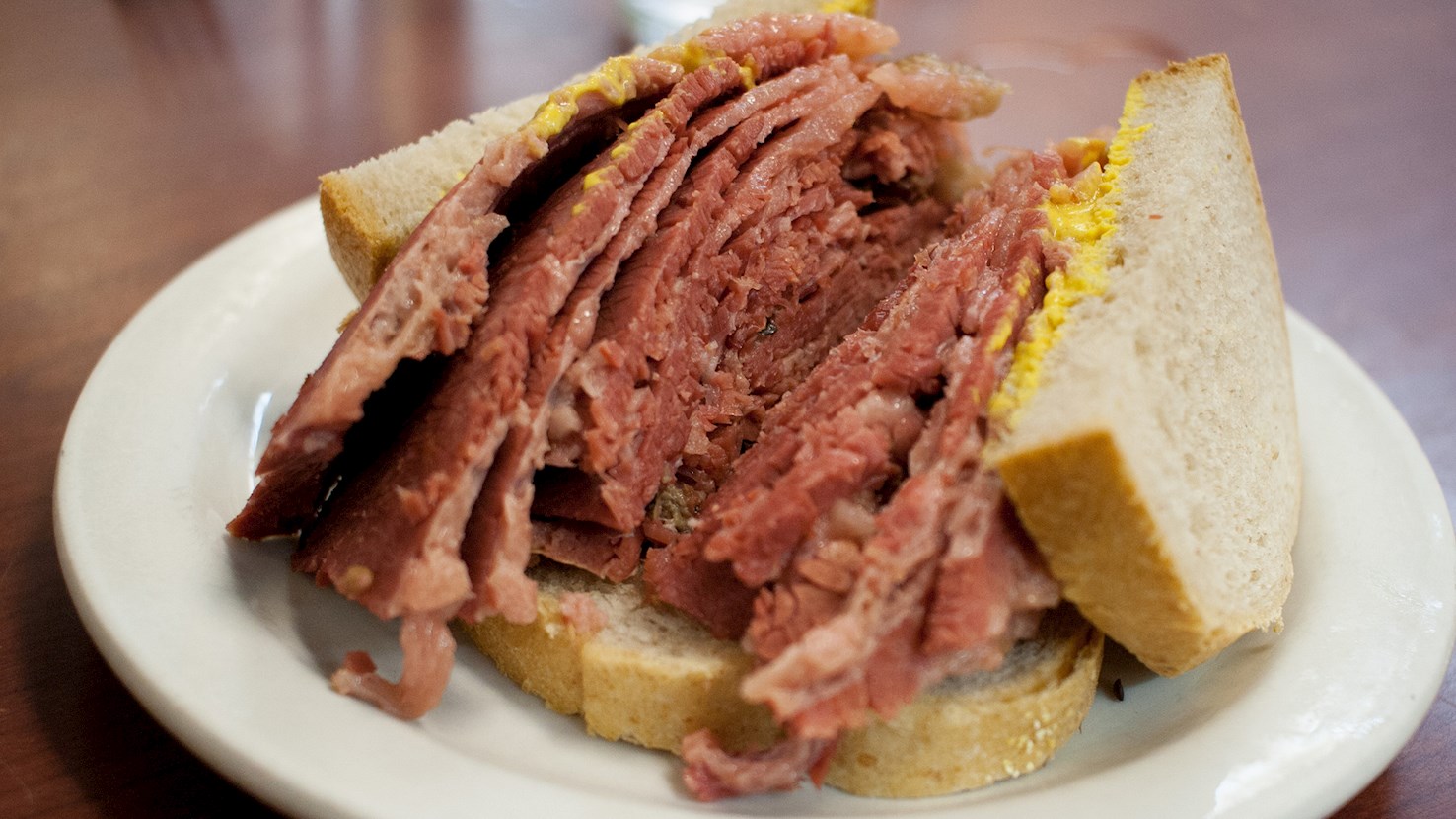
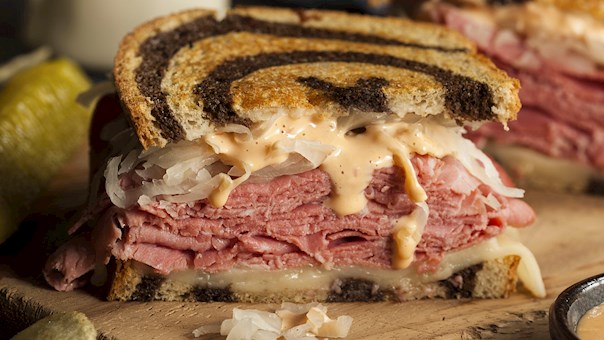
Montreal smoked meat is a type of deli meat sandwich that originated in Montreal, Canada. It's similar to corned beef and pastrami sandwiches, but the meat used has its own distinct preparation process and flavor profile. Pastrami was invented in Romania, a cured beef product prepared by pickling and smoking the fatty and succulent cuts of brisket, then covering them with a coating of various spices and peppercorns. Reuben Schwartz, a Romanian immigrant, started making smoked meat in Montreal in 1928, a product similar to the original pastrami. Called viande fumé in the Quebec province, it is a much sturdier product with an intense, smoky flavor. Prime beef brisket is marinated for at least ten days in a mixture of herbs and spices, and is then smoked, hand-sliced, and placed in delicious, mouth-watering rye-bread sandwiches, accompanied by French fries, pickles, coleslaw, yellow mustard, peppers, or olives. It is no wonder that there are huge lines in front of Schwartz's Deli in Montreal because everyone wants to try this world-famous smoked meat sandwich.
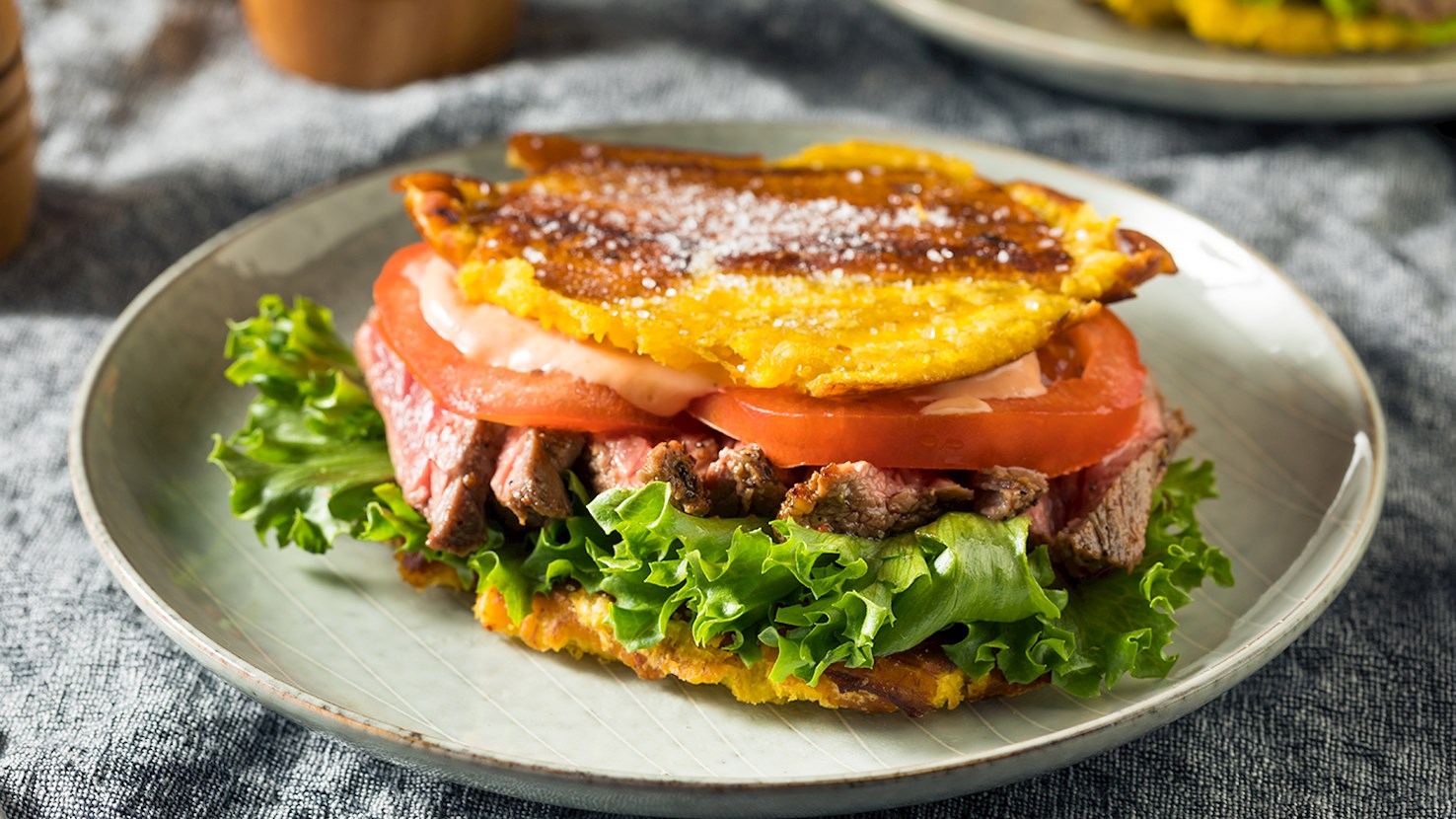
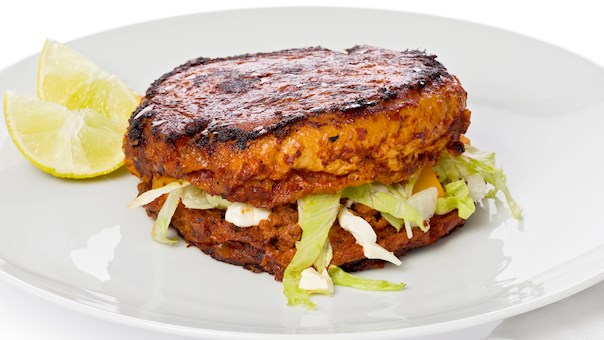
Jibarito is a unique Puerto Rican sandwich made with smashed, fried plantains instead of bread. The sandwich is typically filled with garlic mayonnaise, meat, lettuce, tomatoes, and cheese. The origins of jibarito are somewhat hard to untangle, as some claim that the sandwich is originally a Puerto Rican invention, while others claim that it was created by Juan Figueroa at the Borinquen Restaurant in Chicago in 1996. The most probable theory says that the sandwich was invented by Coquí Feliciano and Jorge Muñoz at Plátano Loco restaurant in Aguada, Puerto Rico, and Figueroa probably read about it, which inspired him to make another version in Chicago.
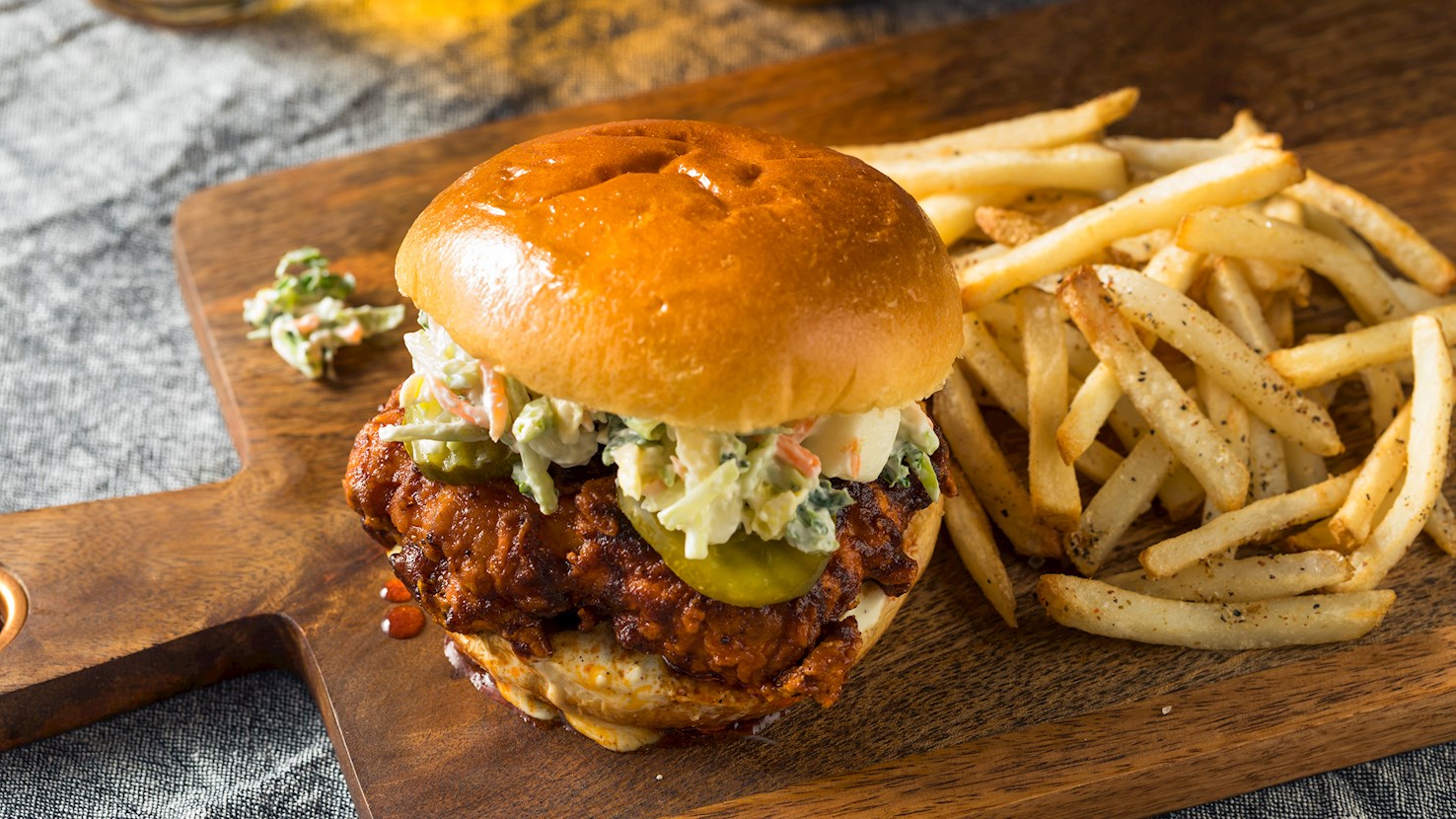
Hot chicken sandwich is Nashville’s signature dish, consisting of crispy fried, marinated chicken pieces served on a toasted white bun. Various cuts of chicken can be used: breasts, thighs, or wings, and once fried, the meat is covered in a cayenne pepper-based hot sauce that penetrates the crispy coating. The heat is balanced by the addition of pickles, shredded lettuce, mayonnaise or a sour cream dressing enriched with various herbs. Known both for its heat and flavor, this spicy sandwich nowadays has an iconic reputation, and it is one of the most popular local treats.
Lobster roll is a Maine specialty consisting of cooked lobster meat that is, ideally, drizzled with melted butter and placed into long hot dog rolls. Additionally, the sandwich might include lettuce, lemon juice, salt, and black pepper. Traditional accompaniments include potato chips or french fries on the side. Some claim that lobster roll first appeared at Perry's in Milford, Connecticut, while others claim it was first prepared at Red's in Wiscasset, Maine. Regardless of the origins, the entire state of Maine continues to honor the tradition by offering more version of lobster rolls than the first inventor could have possibly imagined, starting an endless debate over how it should be made and who makes the best rolls. For example, most Mainers eat the roll filled with cold lobster salad made with mayonnaise, sometimes with the addition of diced celery and no melted butter whatsoever.
The first type of lobster roll to exist, the Connecticut-style lobster roll, is characterized by the fact that it's warm; both the lobster meat and the roll are. The lobster meat is steamed or boiled, tucked into a toasted and warm New England-style bun, and then drizzled over with drawn butter. Typically, knuckle and claw meat, but sometimes tail as well, are preferred, and there is very little seasoning, usually only salt, pepper, and lemon juice. Variations will typically include ingredients, herbs, and spices like chives, dill, and paprika. You will also find it often includes lettuce as well, since it prevents the sandwich from going too soggy by creating a barrier between the meat and the bun. This style of the lobster roll was invented in the 1920s by Harry Perry, the owner of a restaurant Perry's in Milford, Connecticut, for a regular, Ted Hales. Once it became a success, he also commissioned French's Bakery to make him a suitable bun, which was similar to a submarine sandwich roll, that he would cut a V-notch wedge at the top of it, remove the crumb inside and load it with lobster meat. Serving-wise, Connecticut-style lobster roll typically comes with a side of potato chips or fries and dill pickles. Also, a creamy potato salad works well with this lobster roll.
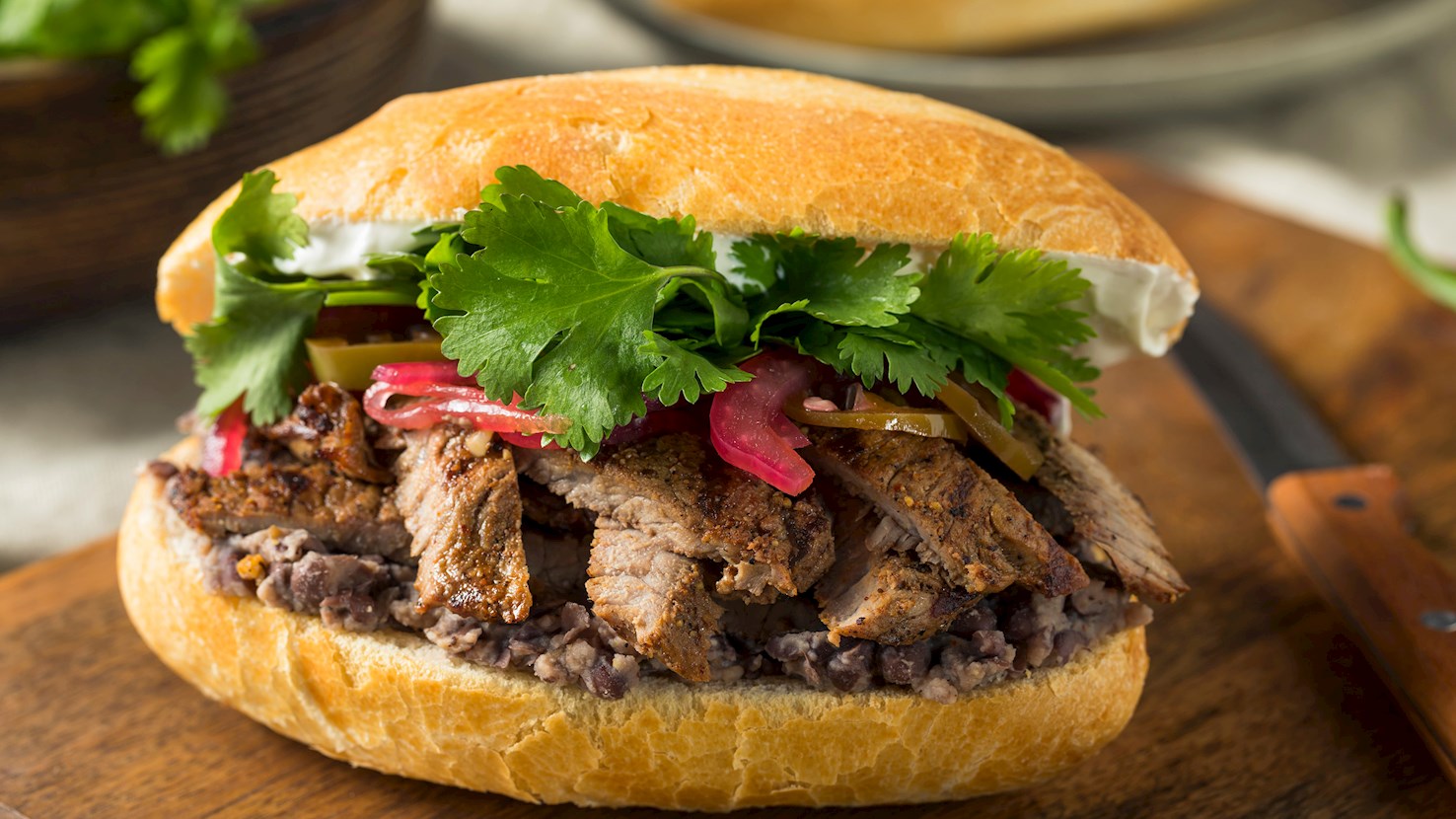
Mexican tortas are luscious traditional sandwiches filled with delicious, mostly authentic Mexican ingredients. They are a unique Mexican creation, considering they are served in bread rolls, an ingredient that is not so often associated with Mexico. There are two bread varieties usually incorporated in tortas, the traditional French influenced bolillos, and the similar round teleras, which are an authentic Mexican product from Puebla. The rolls are sliced horizontally, buttered, and stuffed with the most popular Mexican ingredients such as beans, avocados, ham, queso, jalapeños, and a myriad of other typical Mexican dishes like fried beef or chicken, shredded beef, roasted pork, and even tamales. Tortas are traditionally served cold, but in the 1960s, the hot, grill-heated varieties started to appear and soon became equally famous. There is not much known about the origin of this hearty sandwich, but it is believed that during the French colonization, French bakers introduced their tradition of baking bread to Mexicans, who modified it and created their popular varieties, which later became a staple of Mexican cuisine. The birthplace of the torta is usually associated with the city of Puebla, the place where traditional telera originated, but the location where they flourished was Mexico City. Although tortas have not been widely recognized outside of Mexico as tacos, burritos, and tortillas, they are a favorite meal eaten throughout the country. Tortas are usually sold at food stalls and small restaurants, popularly called torterias, widespread across Mexican cities. The variations and regionally influenced creations of tortas are endless. The most common ones are cubana, which usually combines at least four meat varieties and two types of cheese; pepito, made with marinated sliced steak; cochinita, made with slowly roasted pork; and agohada, a Guadalajara favorite made with pork and served in tomato sauce.
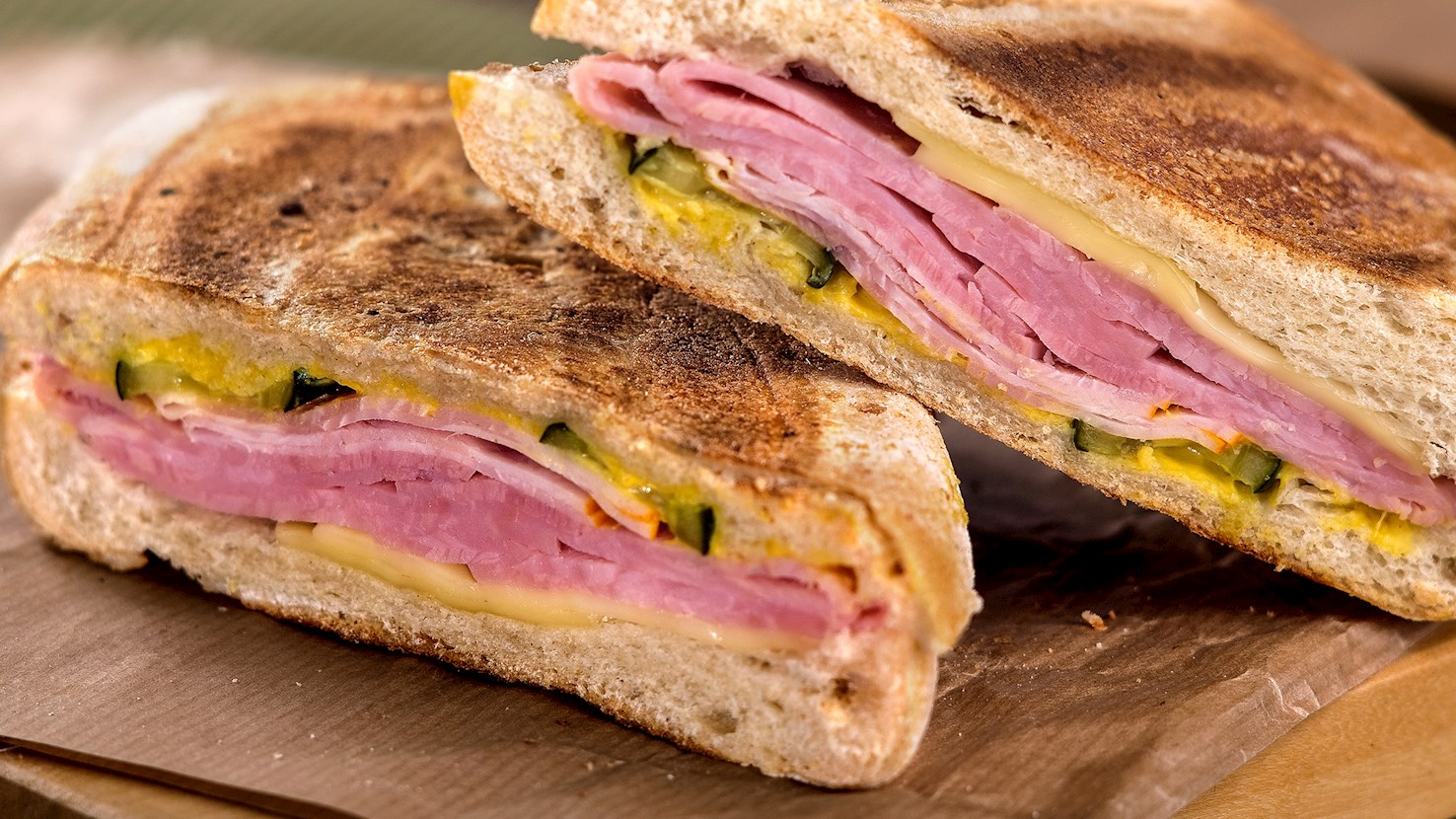
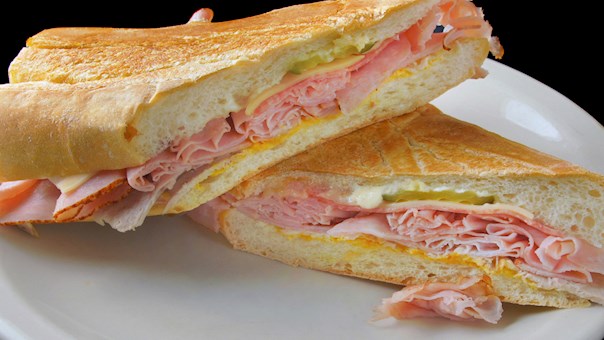
A Cuban or a Cubano is a grilled, pressed sandwich made with Cuban bread that is filled with ham, roasted pork, Swiss cheese, pickles, and mustard. It was originally invented by Cuban immigrants in Florida, who wanted to make their own variation on a classic grilled ham and cheese sandwich. Today, there are numerous variations on the Cubano, so some use different bread or add ingredients such as lettuce, tomatoes, and mayonnaise.
TasteAtlas food rankings are based on the ratings of the TasteAtlas audience, with a series of mechanisms that recognize real users and that ignore bot,
nationalist or local patriotic ratings, and give additional value to the ratings of users that the system recognizes as knowledgeable.
For the “Top 100 North American Sandwiches” list until September 15, 2026, 11,503 ratings were recorded, of which 9,553 were recognized by the system as legitimate.
TasteAtlas Rankings should not be seen as the final global conclusion about food. Their purpose is to promote excellent local foods,
instill pride in traditional dishes, and arouse curiosity about dishes you haven’t tried.






What People Say