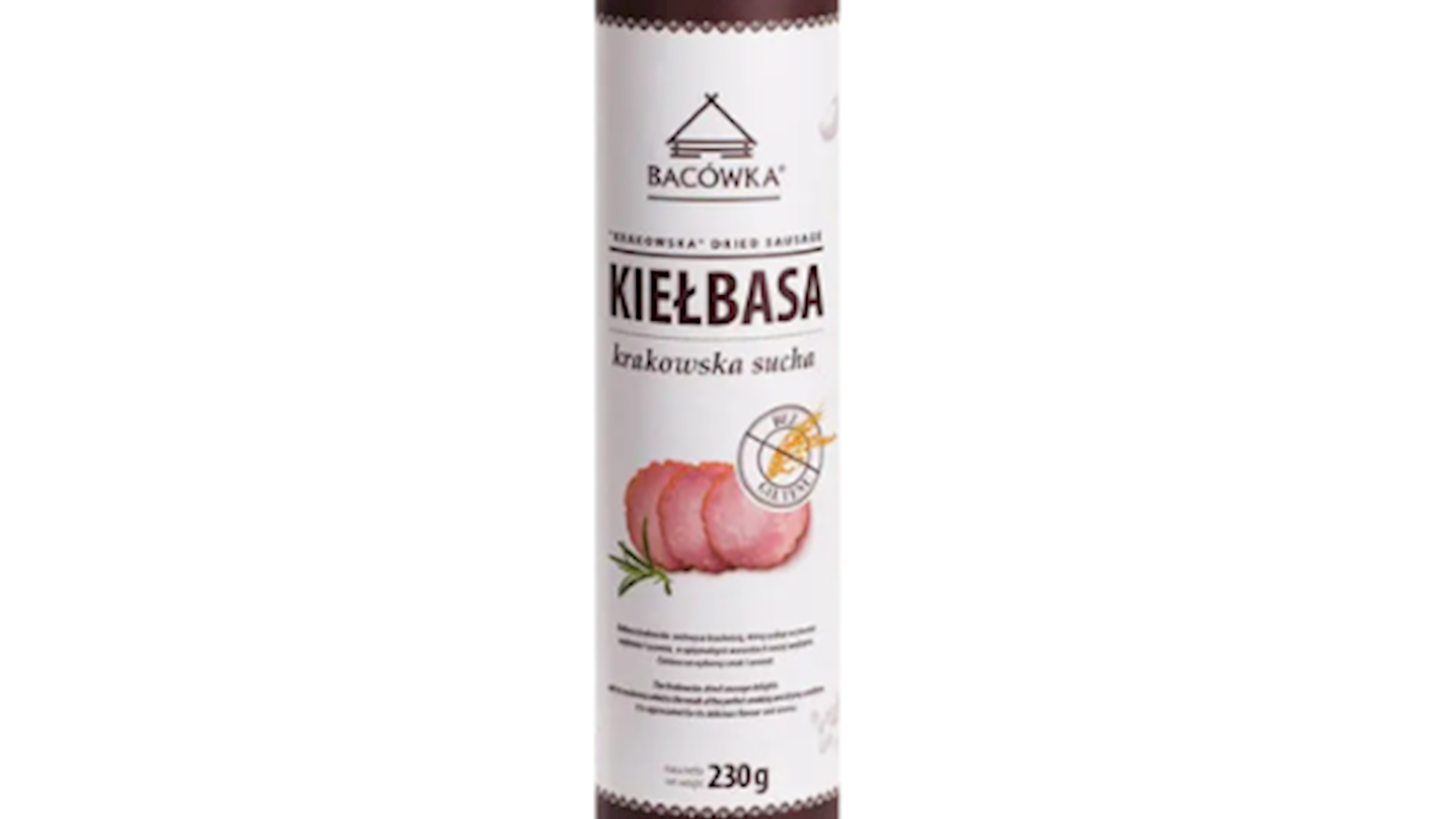

Bacówka Towary Tradycyjne is a Polish brand dedicated to preserving and presenting traditional food products through authentic recipes, local raw materials, and craft-based production methods. Built on the idea of bringing the flavors of rural Polish cuisine closer to modern consumers, the brand offers a broad portfolio that includes cured meats and sausages prepared by natural drying and wood smoking, as well as ready-to-eat traditional dishes, pâtés, spreads, mustards, and sauces. A strong emphasis is placed on minimal processing, clean labels, and the absence of unnecessary additives, resulting in products with a clearly defined, honest taste. The assortment also includes dairy products, pasta, flours, and fruit and vegetable preserves, positioning Bacówka Towary Tradycyjne as a brand that reflects the full spectrum of a traditional Polish table. Its products are aimed at consumers who value traceable origin, consistent quality, and food that is closely connected to regional culture and culinary heritage.
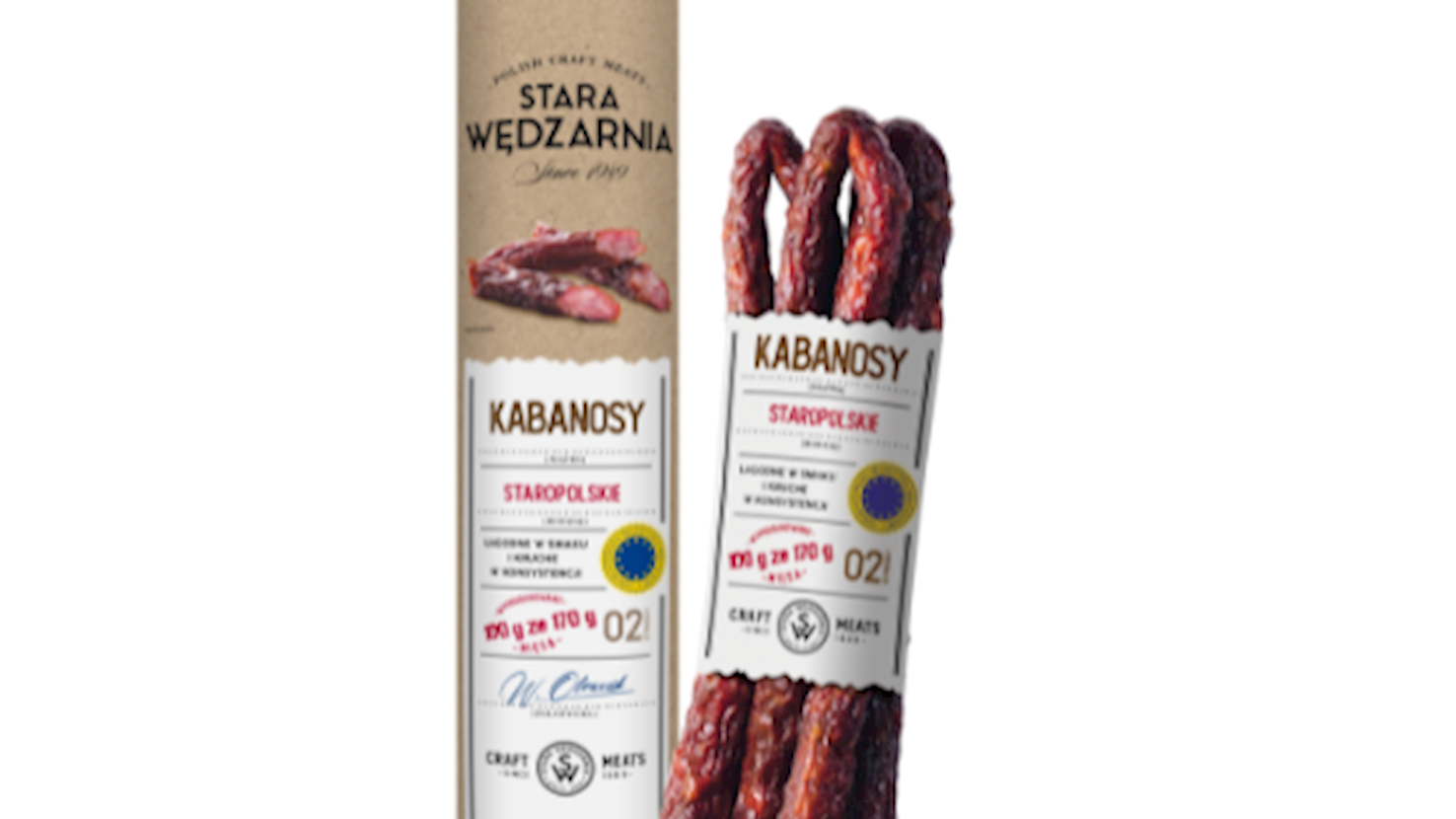
Stara Wędzarnia is a Polish company based in Drobin, in the Mazovia region, specializing in the production of traditional meat delicacies and hospitality services. With over 35 years of experience, the company is renowned for its high-quality meat products, including the famous Kielbasa and Kabanosy Staropolskie. Their products are crafted according to old Polish recipes, using carefully selected meat, natural spices, and traditional smoking methods, without any artificial preservatives or additives - preserving the authentic taste and nutritional value.
The assortment includes a wide variety of sausages, hams, and cured meats, available in specialty stores as well as directly from the producer. Lovers of traditional food particularly appreciate the deep, smoky aroma and rustic character of these offerings.
In addition to production, Stara Wędzarnia also operates a Grill Bar within its facility in Drobin. This restaurant combines tradition with a modern culinary approach, serving guests authentic Polish dishes made from fresh, locally sourced ingredients. It is a place where craftsmanship, flavor, and hospitality come together to celebrate Poland’s rich gastronomic heritage.
Staropolska Masarnia Sp. z o.o. is a Polish company specializing in traditional meat processing. Based in Gostynin, in the Masovian Voivodeship, the company is dedicated to producing high-quality meats and cold cuts, following time-honored recipes and artisanal methods. Staropolska Masarnia places strong emphasis on the authenticity of flavors, sourcing carefully selected meats and using natural spices to maintain the rich culinary heritage of Poland. Their product range typically includes smoked sausages, hams, pâtés, and specialty meats, all crafted to reflect traditional Polish taste. Combining modern technology with old-world techniques, Staropolska Masarnia ensures strict quality control while preserving the characteristic textures and aromas that define their products.
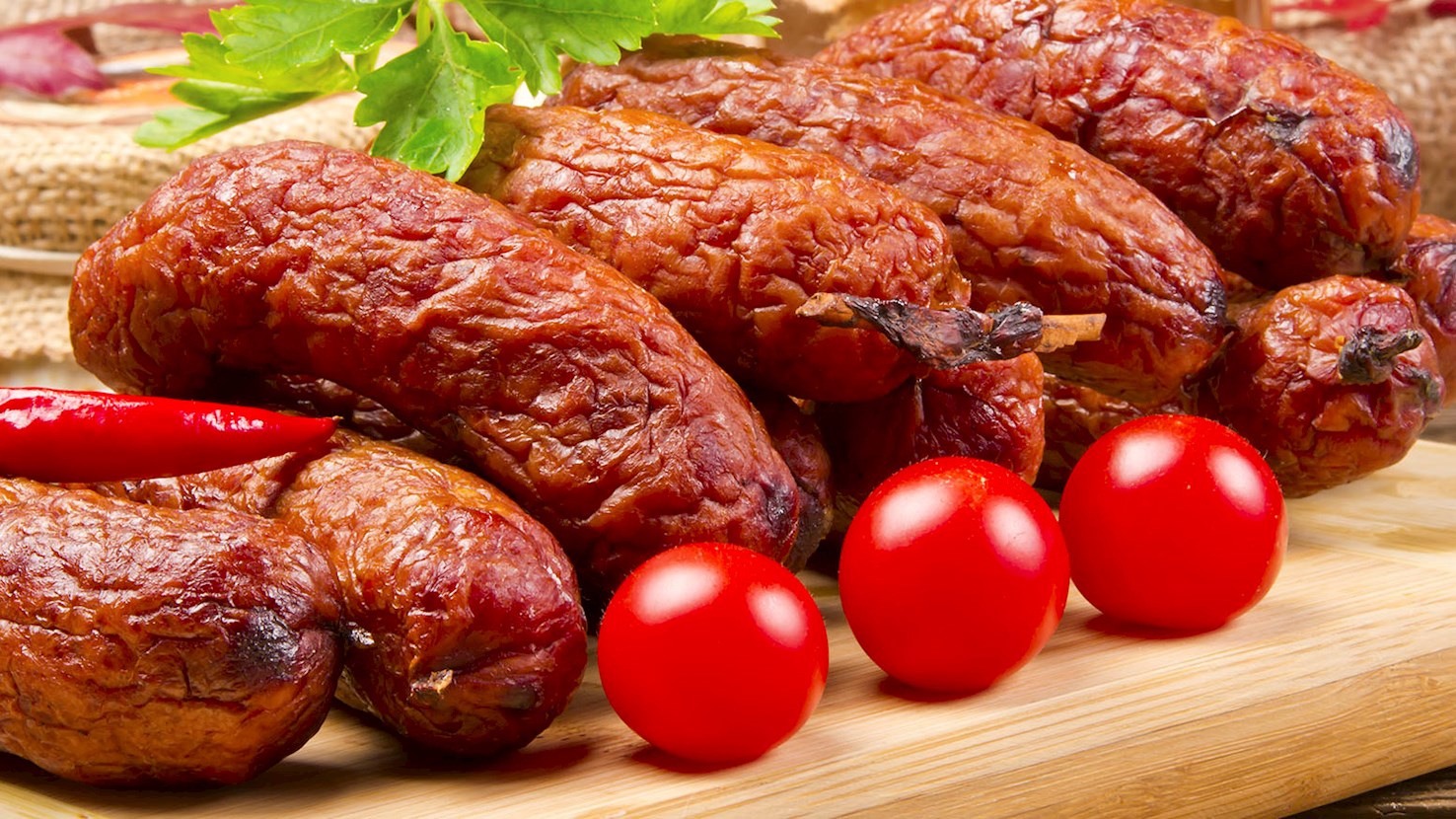
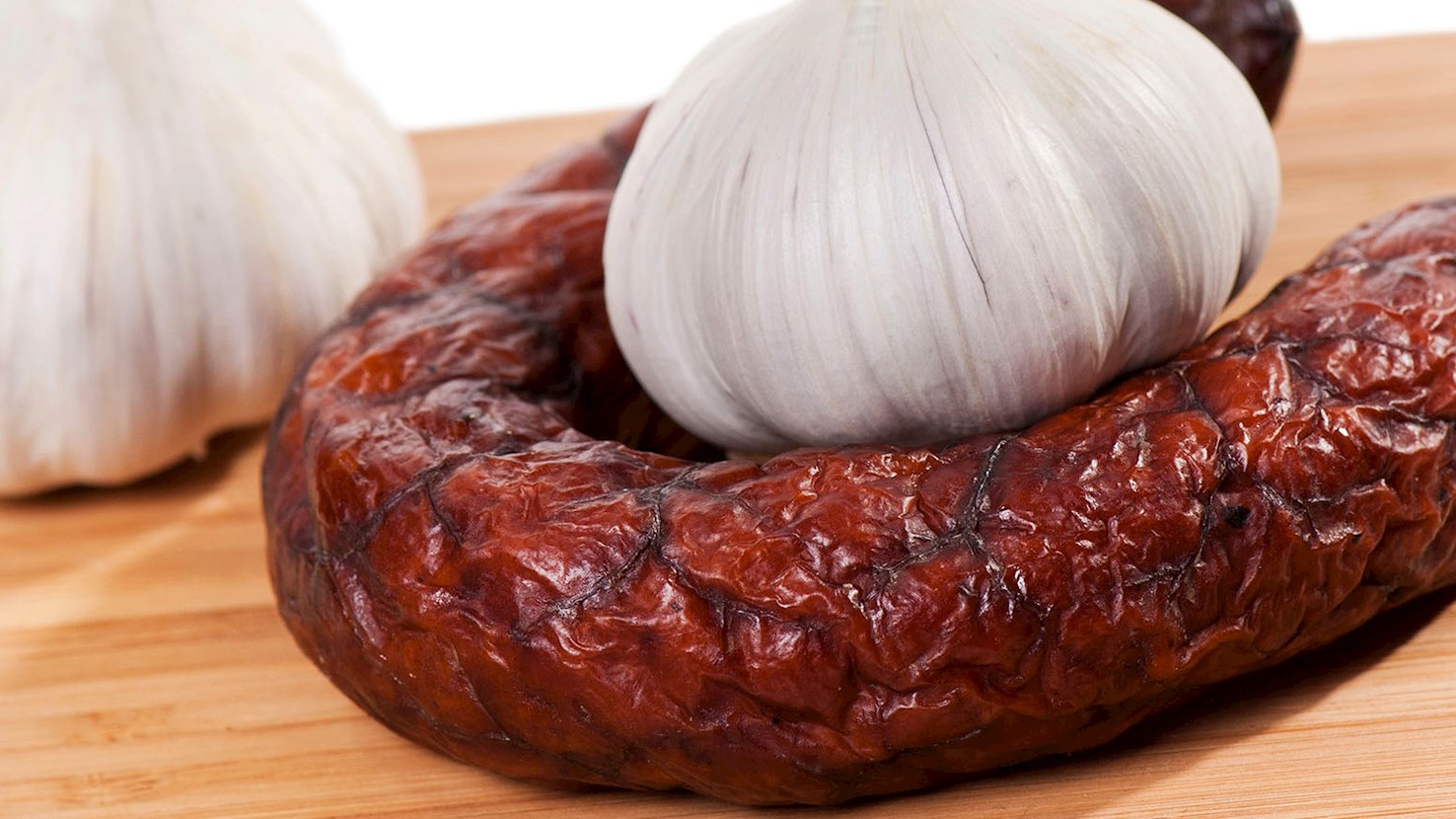
Kiełbasa myśliwska is a traditional smoked and dried sausage made from pork. It got its name from the Polish word for hunter (myśliwy), so it is also known as hunter's sausage. Due to the fact that it is a semi-dry, short sausage with low moisture content (making it resistant to spoilage), it made an ideal snack for hunters on their trips. It has a dark brown exterior and wrinkly skin, with the appearance and shape of a curved sickle. The sausage has a unique flavor of tender, cured, baked and smoked pork meat, flavored with a blend of selected spices including juniper, pepper, sugar, and garlic. The meat is so tender and succulent due to the tenderisation process that's achieved with a mix of vinegar, water, and oil. Because of the long drying process, the sausages have an exceptionally long shelf-life and are mostly enjoyed on travels, outings, and picnics.
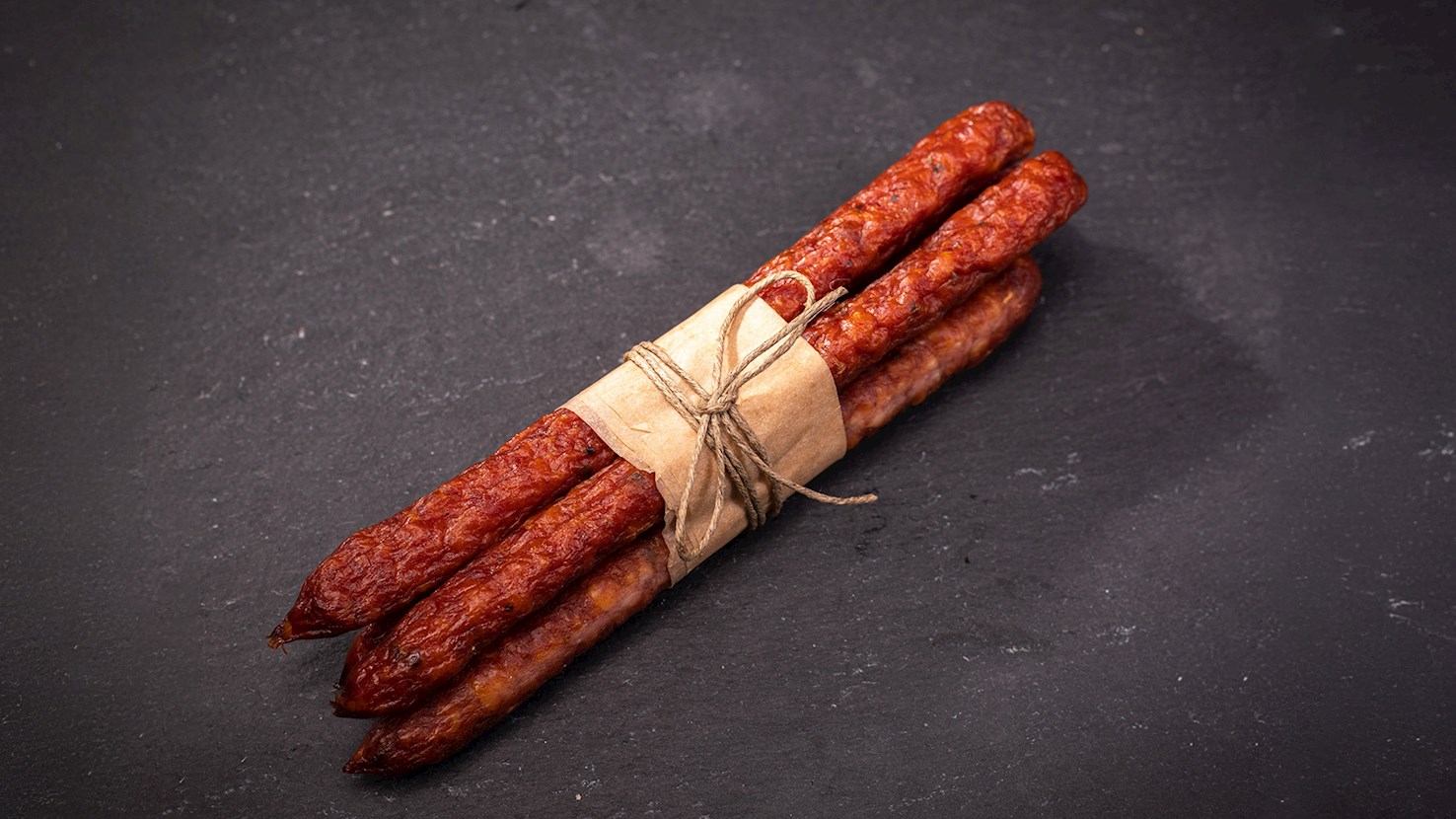
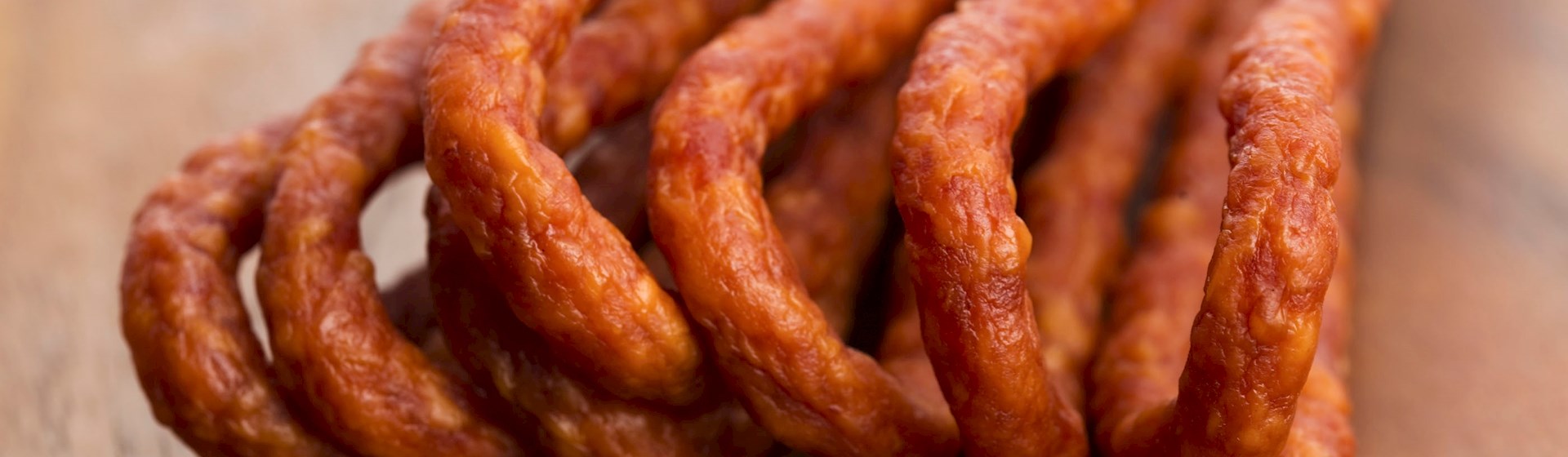
Kabanosy are long, thin, and sometimes very dry sausages that come in pairs. Their name refers to a 19th-century term kaban or kabanek - young hogs that were fattened with potatoes, and their meat was commonly called kabanina. The pigs are fattened until they weigh up to 120 kilograms, after which their meat is cut into even-sized chunks, mixed with pepper, nutmeg, sugar, and caraway, stuffed into sheep casings, smoked, baked, and hung to dry until the sausages develop their distinctive shape and dark red color. Kabanosy sausages have an exceptional aroma, an intense flavor of baked and cured pork, and a unique, delicate, smoky aftertaste of pepper and caraway. These sausages are usually consumed as appetizers or snacks.
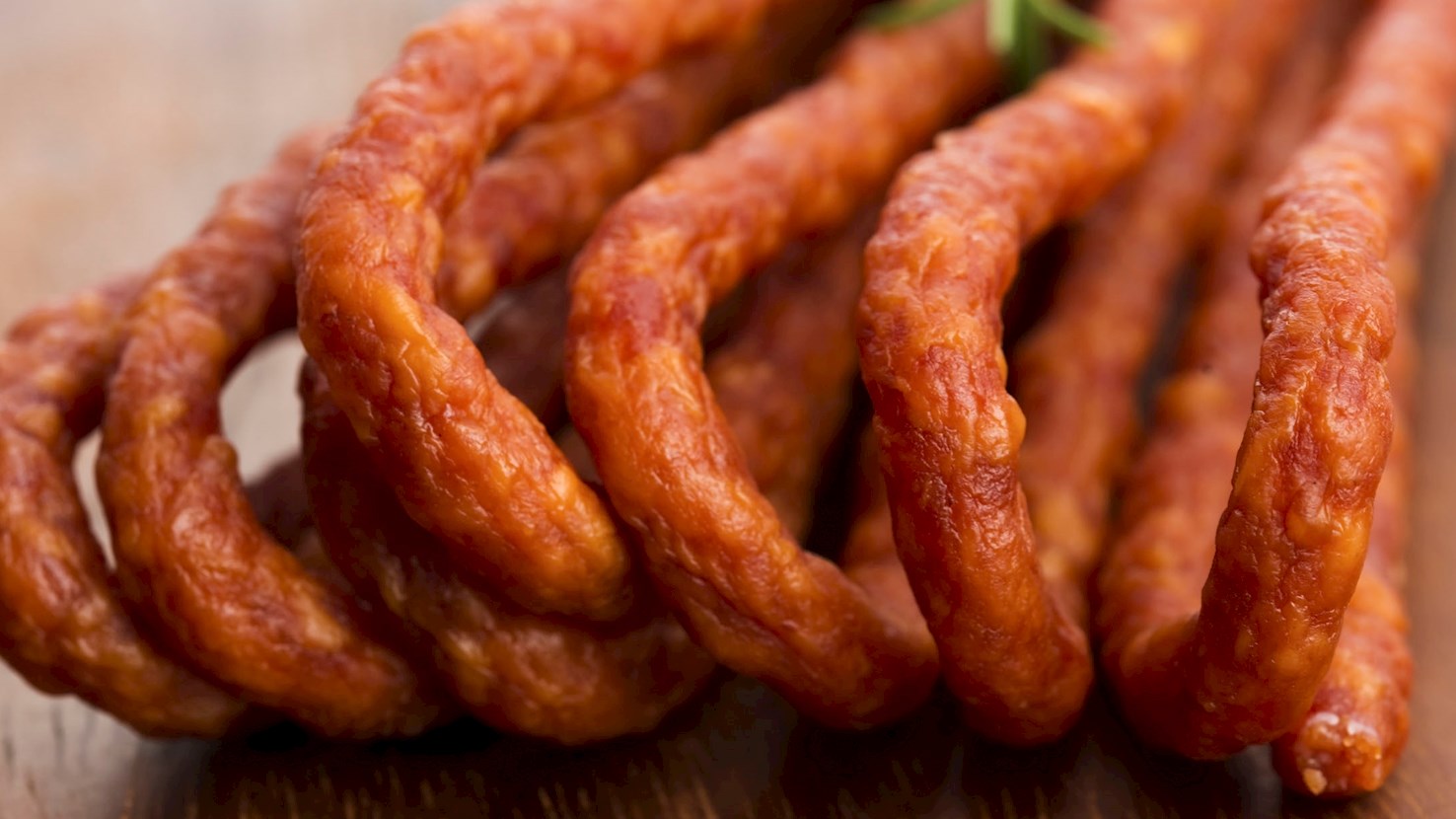
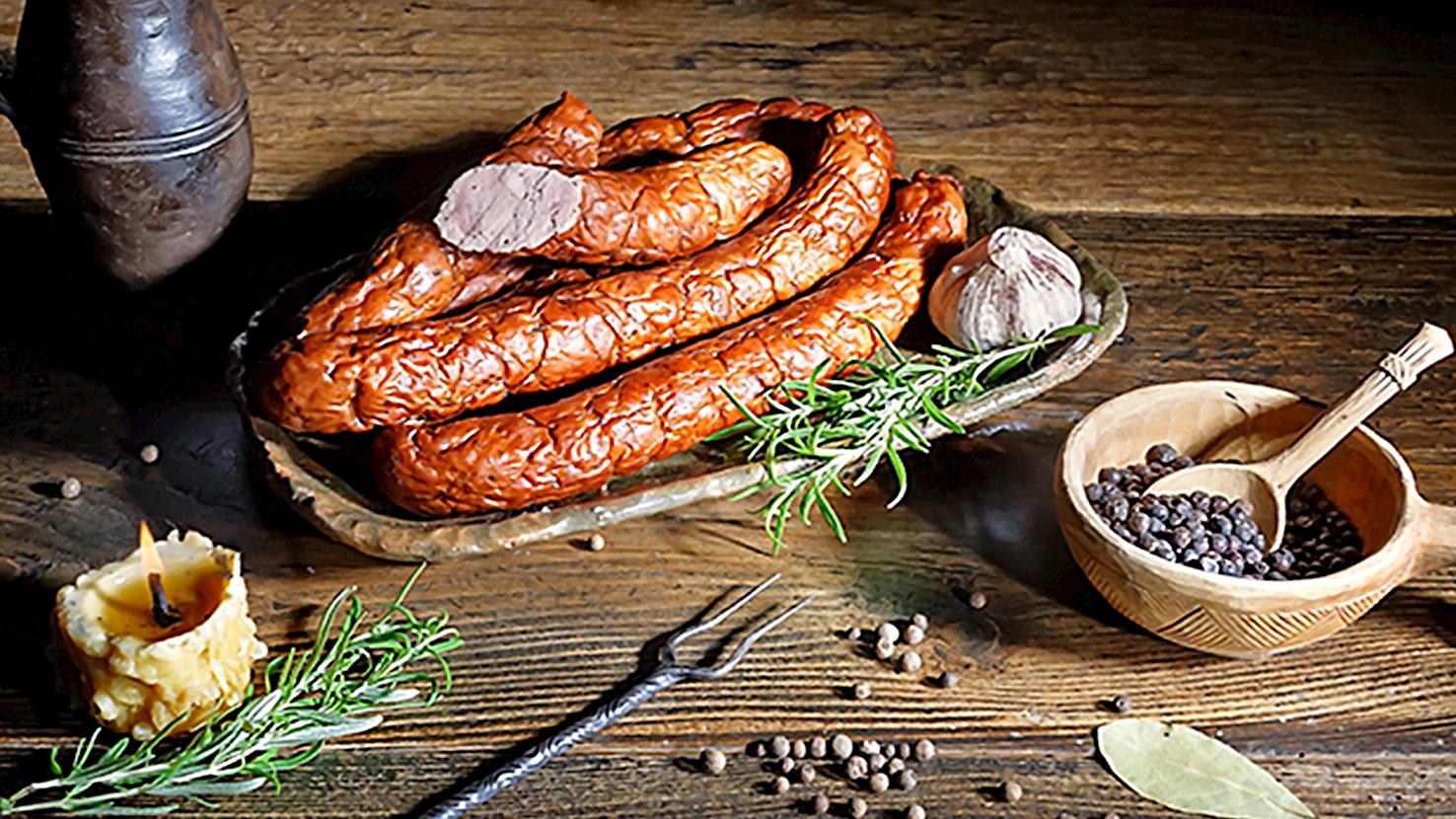
Kiełbasa jałowcowa is a unique sausage in the form of an evenly wrinkled stick in the shape of a garland, made from fattened pigs' meat. Finely chopped juniper berries, pepper, and sugar are combined with the meat before it is stuffed into pig intestines that are later shaped into small or large garlands. The sausages are baked and smoked over juniper branches, and then dried for up to five days to produce the final product with a dark brown color and an exceptional piney flavor and aroma. The sausage is commonly eaten on its own, as a snack or as a cold cut that's ideal for sandwiches.
Kabanos is a traditional Polish dry-cured sausage, instantly recognizable by its thin, long shape, smoky aroma, and distinctively chewy texture. A beloved staple of Polish culinary heritage, kabanos (plural: kabanosy) is often enjoyed as a ready-to-eat snack, thanks to its long shelf life, compact form, and satisfying flavor. Its name derives from kaban, an old Eastern Polish word for a young, fattened pig, pointing to its pork-based origins, though modern versions can also include beef, poultry, or game meats. Made using lean, finely ground meat, kabanos is seasoned simply with salt, black pepper, garlic, and occasionally caraway or nutmeg, then lightly smoked and air-dried to create its signature firm yet flexible texture. The sausage is typically twisted into long, rope-like links, often slightly curved and with a dark reddish-brown color. The drying process intensifies the flavor, giving kabanos a rich, meaty taste with a delicate smokiness that makes it highly appealing to a wide range of palates. Kabanos is not only a cultural icon in Poland, but also a popular snack across Central and Eastern Europe, especially in Germany, Austria, Hungary, and the Czech Republic, where it is often sold under variations like cabanossi or kabanosi. In Germany and Austria, cabanossi is frequently used in charcuterie platters, sandwiches, and as a topping for pizzas or flatbreads, while in South Africa and Australia, the sausage has gained popularity in its own right, often slightly adapted to local tastes with added spices or alternative meats. Though regional variations exist, the essence of kabanos remains consistent: it is portable, protein-rich, and deeply flavorful, making it ideal for travel, hiking, school lunches, or simply as a rustic snack. In traditional Polish cuisine, it’s often paired with pickles, cheese, and dark rye bread, or sliced and added to scrambled eggs, pasta, or soups for extra depth.
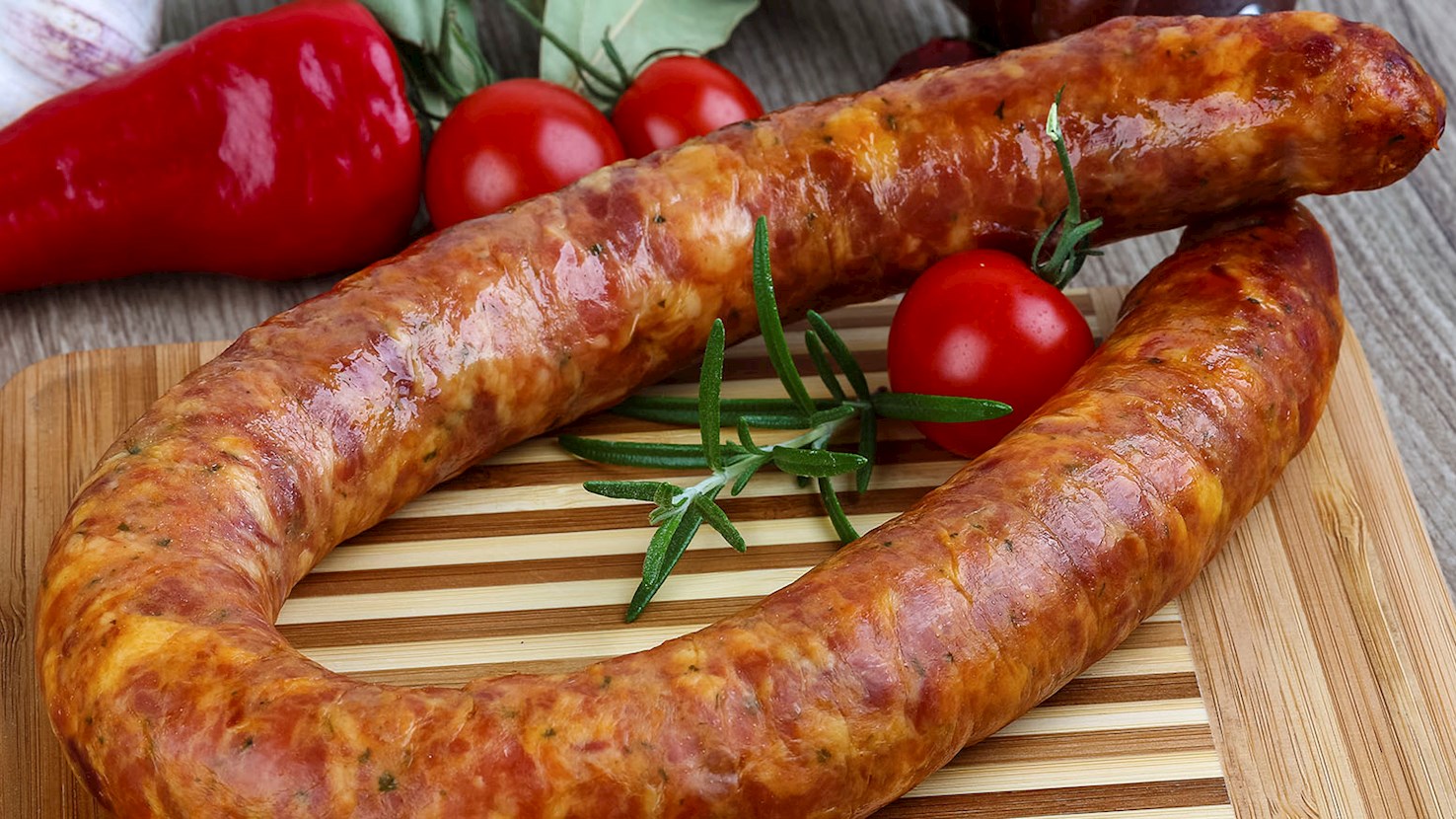
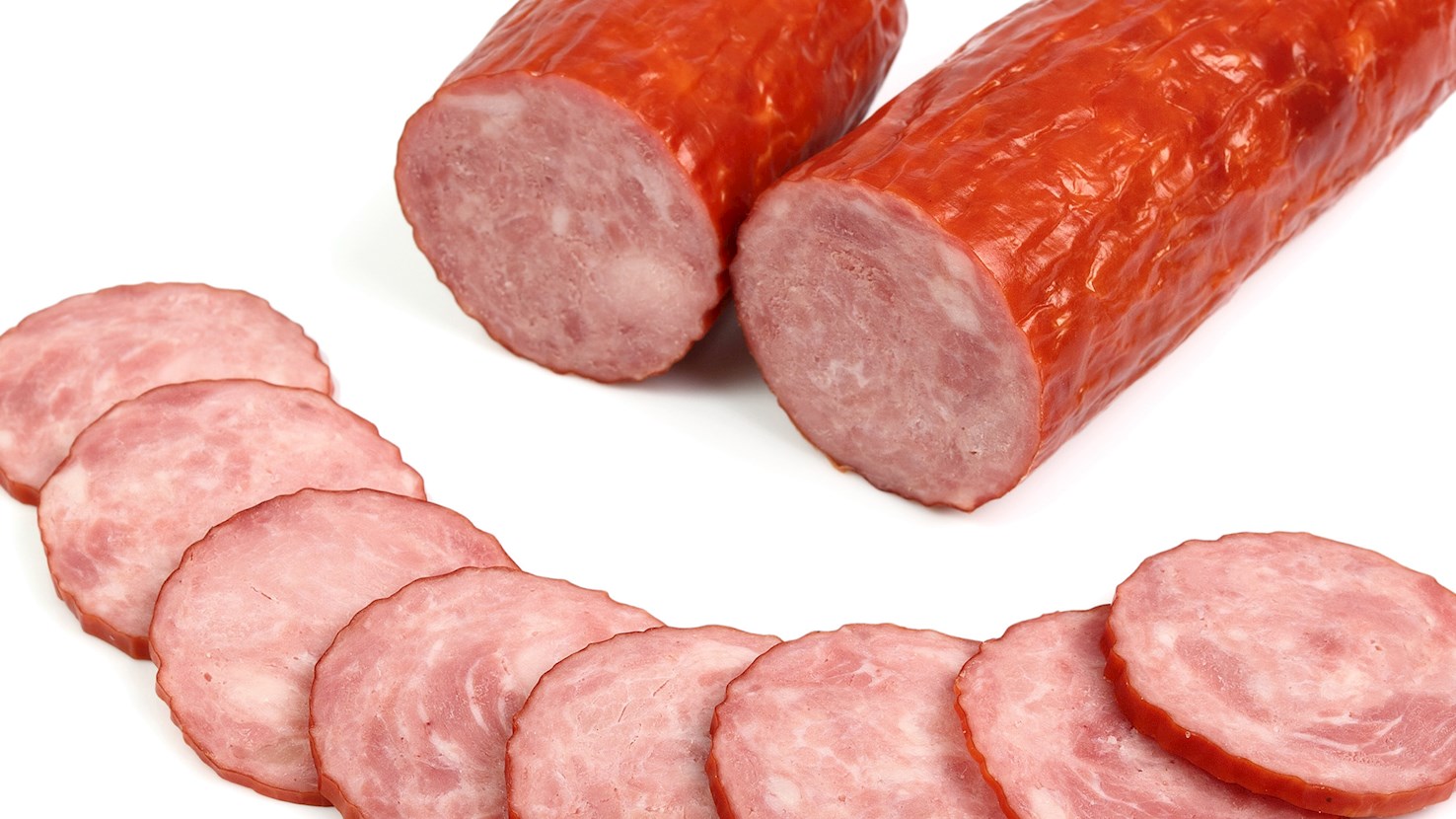
Kiełbasa Lisiecka is a smoked sausage made from top-quality pork. It's been produced in the Kraków District, Malopolskie Voivodship in Poland since 1930, when local butchers first started to make it. The production continues to this day, thanks to the traditional recipe. The name of the sausage comes from a small village named Liszki, close to Kraków. The sausage is shaped like a ring and is dark brown due to the smoking process. Carefully selected pieces of ham and loin are chopped with the addition of spices and the mixture is then stuffed into a natural casing. The flavor of spiced pork is dominant, while gentle hints of garlic, salt, and pepper provide a unique aroma. Its distinctive aroma is that of pure pork and smoke from alder, beech, or fruit trees. This sausage has won many awards at various competitions, and even Britain's Prince Charles and the president of Malaysia are known to have tasted it and loved it.
Kiełbasa piaszczańska is a semi-dry cured pork sausage produced in the village of Piaski Wielkie, renowned for the production of meat and cured meats, especially sausages. The locals, known as Kijacy, developed a special process of marinating the meat in a mixture of herb stock and rock salt, which distinguishes kiełbasa piaszczańska from other sausages. Spices used in the marinade are allspice, bay leaves, juniper berries, cloves, ground black pepper, and nutmeg. Smoking is also an important step - initially, it was done in earthen pits, but nowadays it takes place in smoking chambers. The finished kiełbasa piaszczańska has a strong smoky flavor with a pronounced juniper aftertaste.
Kiełbasa krakowska sucha staropolska is a is a long-lasting, smoked, cooked and dried sausage made with coarsely ground lean pork and spices. Enclosed in a natural casing, it has a dark brown outer color with a shiny, slightly wrinkled and dry surface, while the ends are tied or stapled together. This sausage has a strong flavor of cured, smoked meat, with distinctive peppery overtones and a delicate aftertaste of nutmeg and garlic, which serves not only as a flavor enhancer, but also extends the shelf life of the product.
TasteAtlas food rankings are based on the ratings of the TasteAtlas audience, with a series of mechanisms that recognize real users and that ignore bot,
nationalist or local patriotic ratings, and give additional value to the ratings of users that the system recognizes as knowledgeable.
For the “Top 7 Polish Sausages and Salamis” list until June 10, 2026, 692 ratings were recorded, of which 567 were recognized by the system as legitimate.
TasteAtlas Rankings should not be seen as the final global conclusion about food. Their purpose is to promote excellent local foods,
instill pride in traditional dishes, and arouse curiosity about dishes you haven’t tried.
The initial list of top producers was compiled based on available reviews, awards, local recommendations, media and blog coverage, and consumer reviews.
The list will be updated with ratings from TasteAtlas local ambassadors and TasteAtlas users.