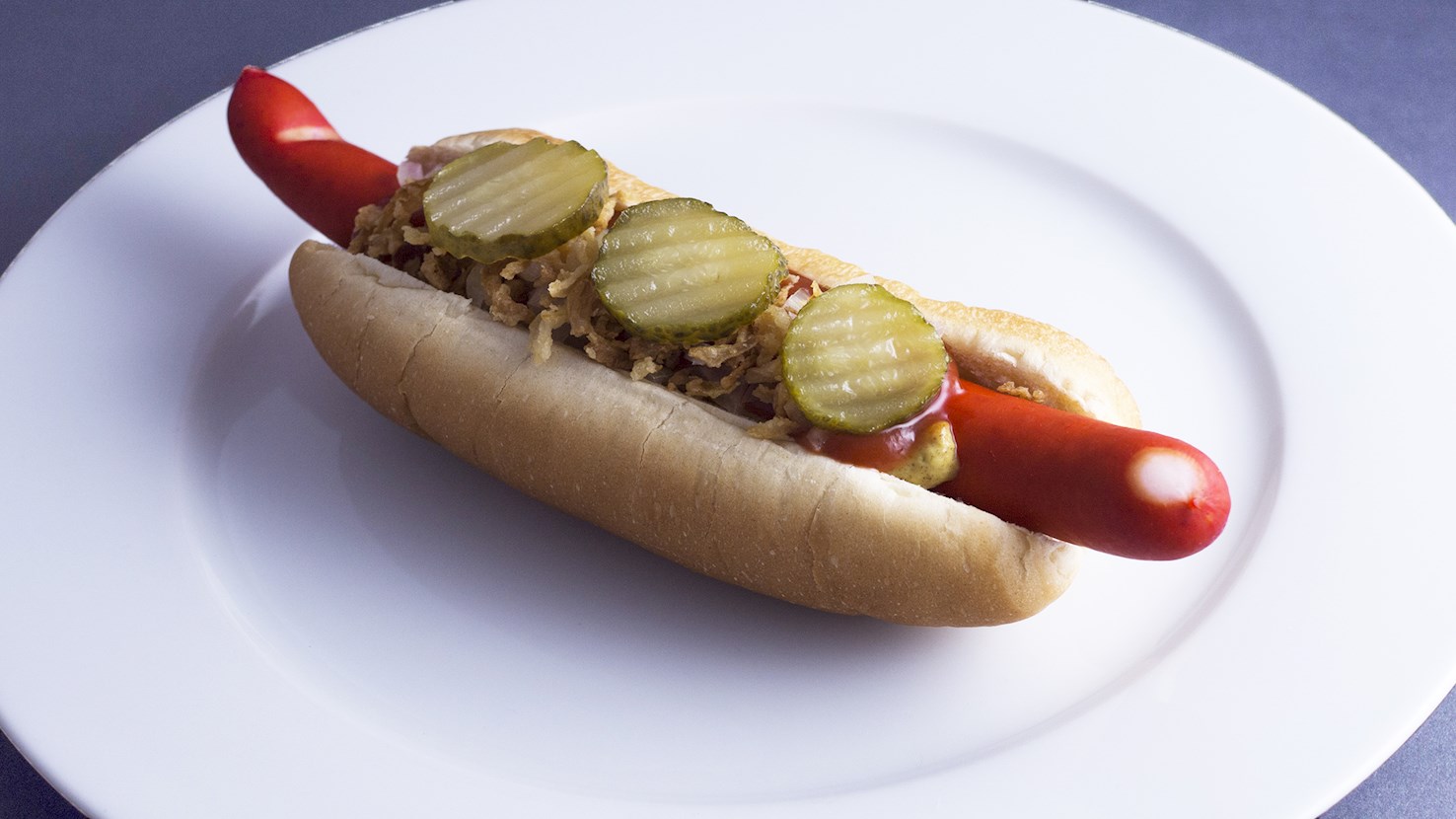
These popular Danish sausages are prepared with pork meat and beef (or veal) and are lightly smoked over beech wood. They are characterized by their distinctive red color and the use of spices that typically include nutmeg, allspice, and cardamom. It is said that they were created in the 1920s by resourceful vendors who would color stale sausages with red dye and sell them at a slightly lower price. The invention soon became a popular option, and the tradition was continued to cater to the customers. Long and thin, rød pølses are usually boiled in a seasoned broth and are often accompanied by various condiments. However, they are best known as a part of the Danish variety of hot dog, also named pølser, in which they are placed in hot dog buns and come served with ketchup, mustard, Danish rémoulade, onions, and sliced pickles on top.
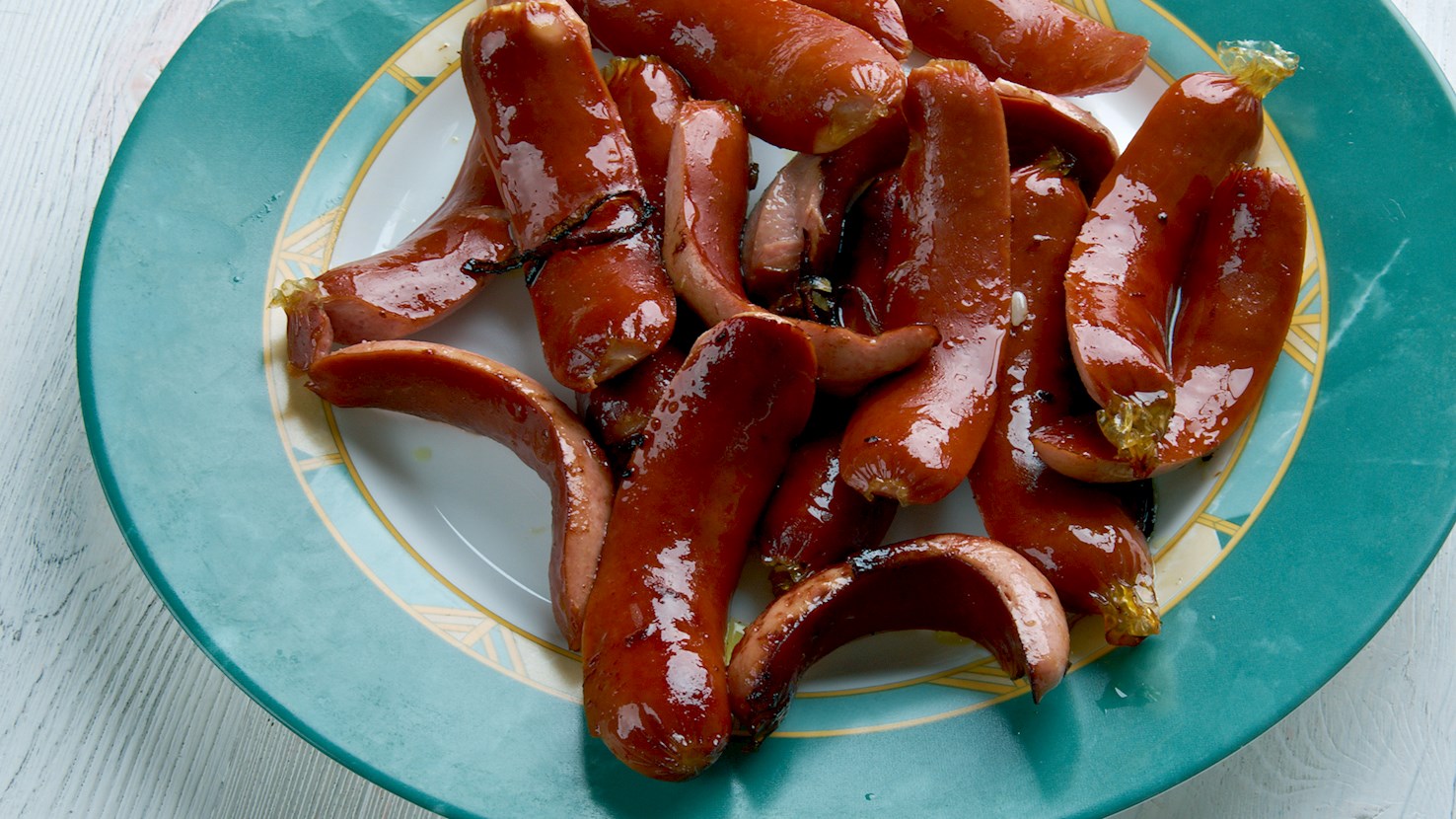
The spicy medisterpølse is one of the classic Danish pork sausages. Nowadays, it is usually prepared with pork, lard, onions, and a variety of spices such as cloves, allspice, and pepper. It is typically poached for a few minutes before it is cut into smaller pieces, fried, and served doused in brown gravy alongside potatoes, mustard, and pickled vegetables.
This Swedish sausage was invented in 1805 by a Viennese butcher, Georg Lahner. Prinskorv is made with spiced pork and veal and it is mainly enjoyed as a snack, fried and served with mustard on the side. It is also a popular element of julbord, the traditional Swedish Christmas buffet-style table. In southern Sweden, during the midsummer party, it is enjoyed alongside Janssons frestelse, a Swedish casserole consisting of potatoes, onions, pickled sprats, and cream. Prinskorv, literally translated as prince sausage, got its name after specific cuts at each end, which resemble small crowns.
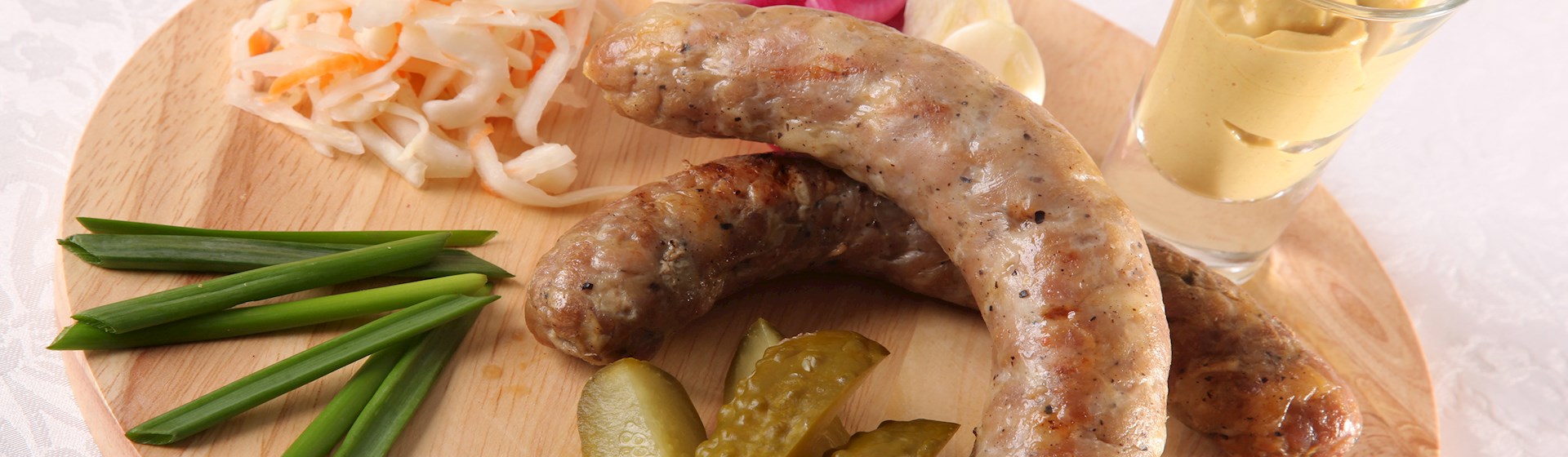
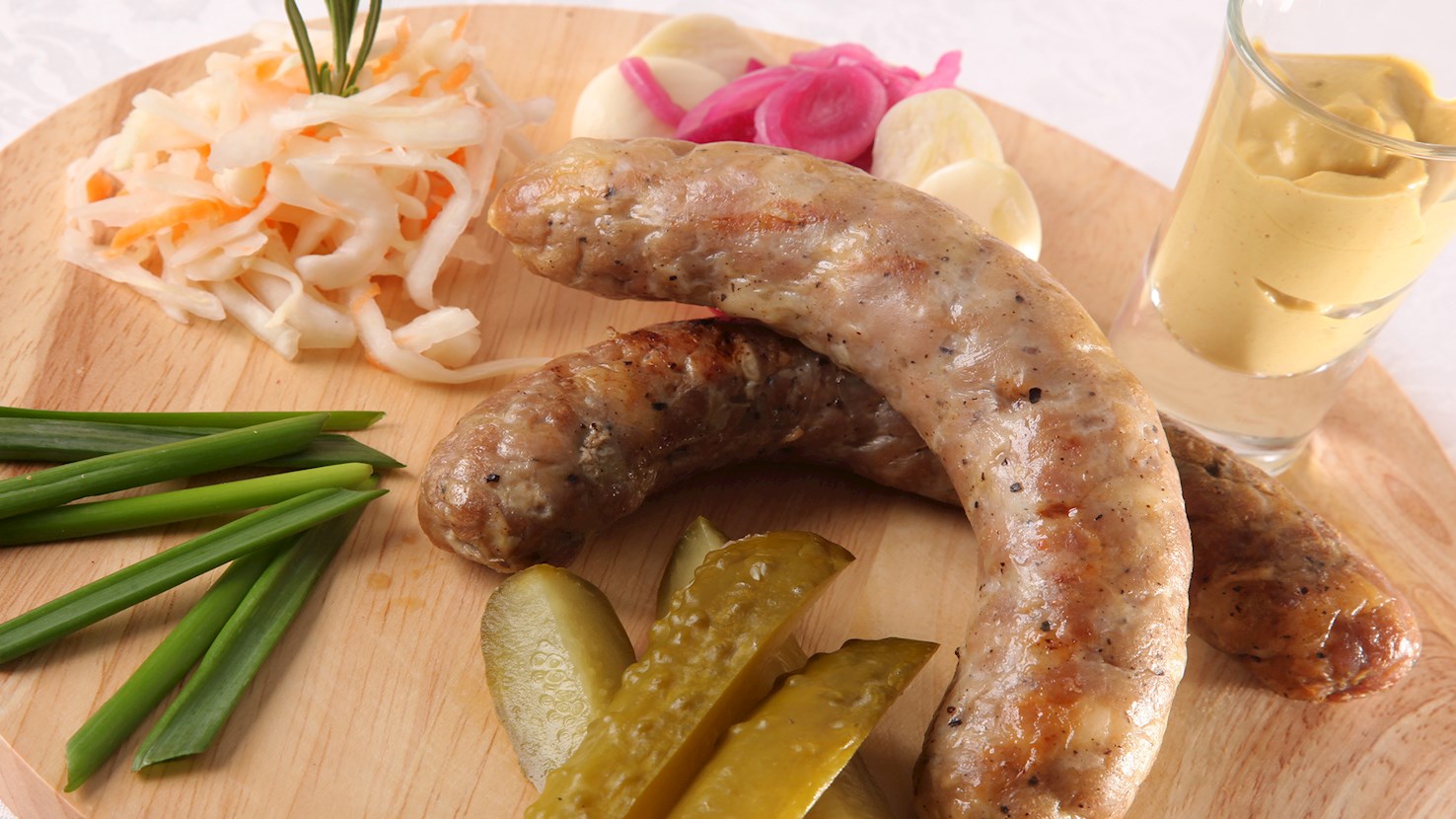
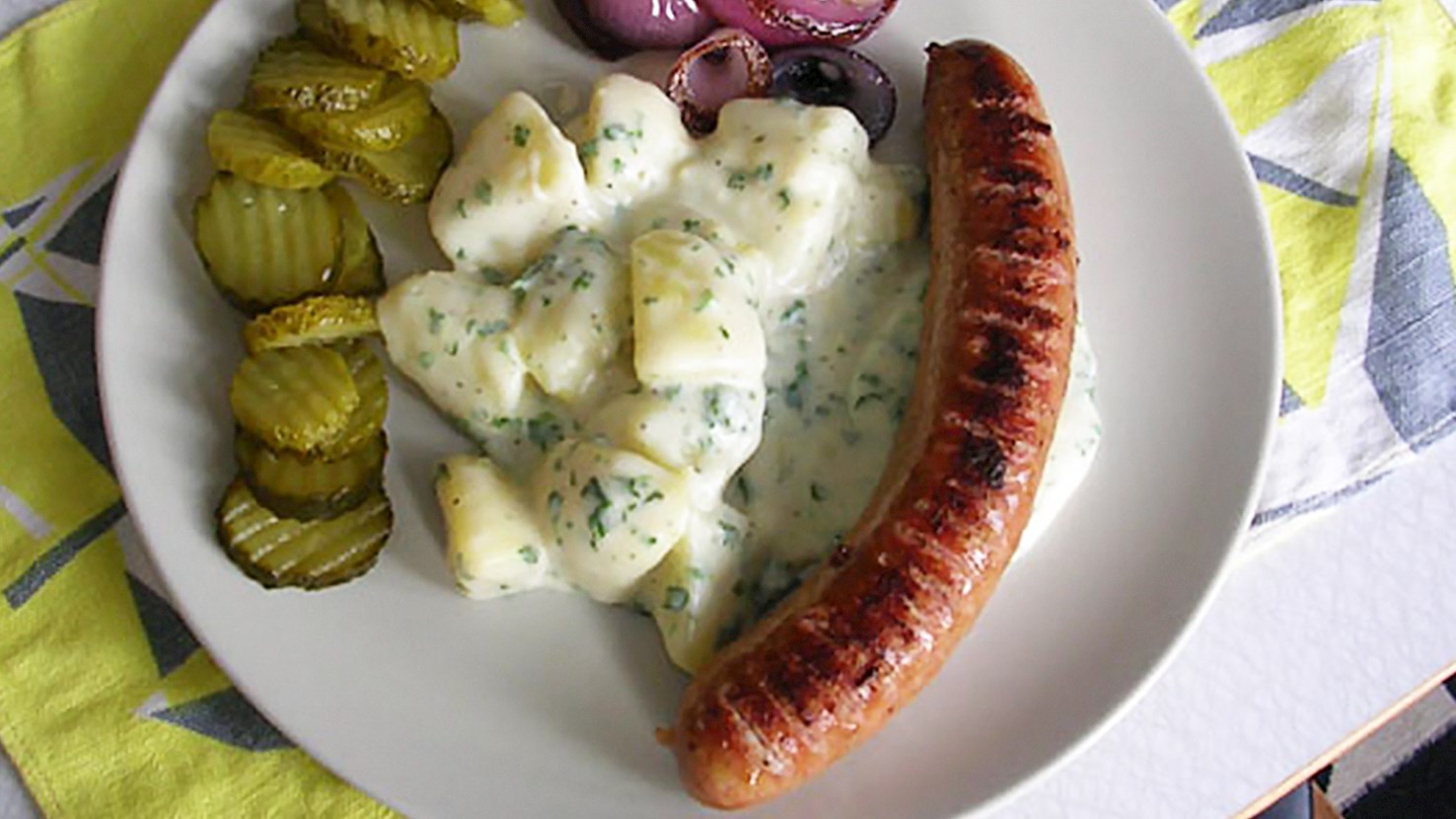
In its simplest form, this lightly smoked Swedish sausage consists of coarsely ground pork, barley, spices, lard, and (optionally) potatoes or onions. Characterized by its slightly sour flavor, isterband comes in numerous regional varieties that may differ in the basic ingredients, but they are all traditionally shortly dried before being lightly smoked. The sausages can be pan-fried or oven-baked, and they are usually accompanied by pickled beets and potatoes doused in a creamy dill-based sauce.
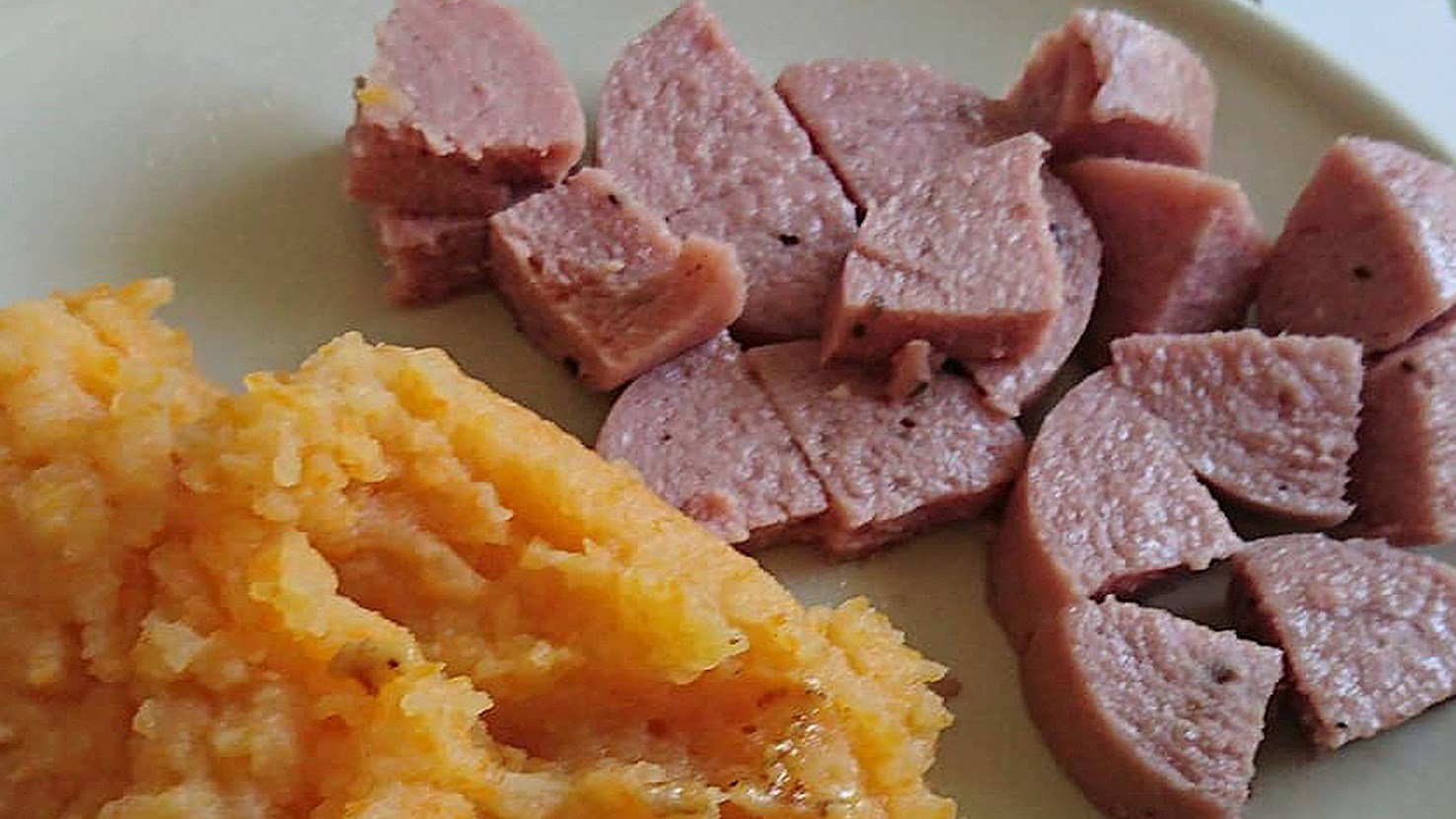
Fläskkorv is one of Sweden’s traditional raw sausages along with julkorv, grynkorv, and värmlandskorv. As its name suggests, this type of sausage is mainly composed of pork meat and fat which is seasoned and placed in a natural or artificial encasing. Swedish pork sausages are often found on the traditional julbord (Christmas buffet) and are a typical accompaniment to brunkål (brown cabbage). They go nicely with a side of mashed potatoes, boiled potatoes, sauerkraut, pickled beets, mixed steamed vegetables, or rotmos (root mash). Fläskkorv is available both raw and premade in Swedish supermarkets.
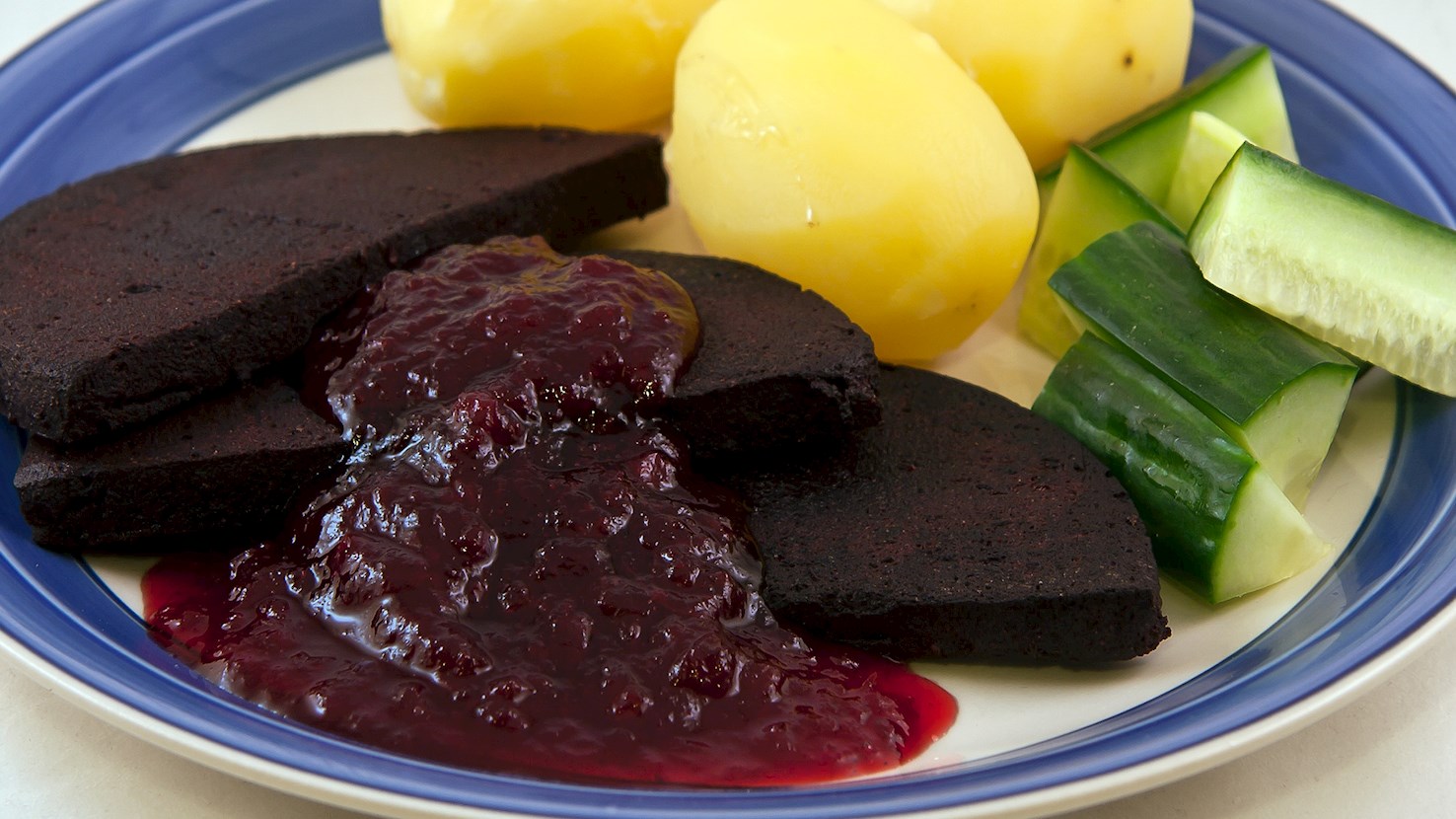
Blodpudding is one of traditional Swedish dishes made with animal blood. It is typically prepared with pig blood that is mixed with flour, beer or svagdricka, butter, and seasonings, then cooked in the oven. Once prepared, it is thinly sliced and fried with a little butter or oil until slightly crispy on the surface. The traditional way of serving it is with lingonberry jam, crispy bacon, and Swedish snaps. A variant of this dish is blodkorv (blood sausage), to which pork fat, raisins, and spices are added besides the usual ingredients. As intriguing as this dish might seem to a foreigner, blood pudding is a very popular and common food eaten for lunch or dinner in most Swedish households. In fact, the Swedes have not abandoned their habit of eating food made with animal blood since they consider this ingredient very nutritious and healthy. Children commonly have it at school, served with potato cakes (potatisbullar) and lingonberries. Premade blood pudding can be bought from any Swedish supermarket, making it a convenient and nutritious meal for students and busy individuals alike.
Onsala korv is a type of sausage originating from Onsala in the Västra Götaland region of Sweden. Known for its robust flavor and firm texture, this sausage reflects the culinary practices of southern Sweden, where locally sourced meats and careful seasoning create products that are both hearty and distinctive. The development of Onsala korv is closely tied to the agricultural and butchering traditions of the area, where families crafted sausages as a way to preserve meat and extend its use through the colder months. The recipe includes a blend of finely ground pork, salt, pepper, and often a mix of other spices such as allspice and garlic, contributing to its characteristic taste. Over time, Onsala korv gained popularity beyond its place of origin, featured in markets and local eateries across Sweden. Preparation involves grinding pork meat and fat to a fine consistency, then mixing it thoroughly with spices and curing agents. The mixture is carefully stuffed into natural casings and smoked at low temperatures, a process that imparts a distinctive aroma and helps preserve the sausage. The final product is firm, with a well-developed flavor that is both rich and mildly spiced. Onsala korv is typically served hot or cold, often sliced and enjoyed on crispbread or as part of a smorgasbord, accompanied by mustard or pickled vegetables. It is a common feature at family meals and festive gatherings throughout the region.
Värmlandskorv is a rustic, unsmoked sausage from the Värmland region of Sweden, characterized by its pale appearance and substantial girth. The filling consists of a blend of ground pork and beef combined with raw potatoes, lard, and onions. This mixture creates a distinctively coarse, slightly grainy texture. The flavor profile is gentle and savory, seasoned with white pepper, salt, and allspice. The sausage emerged from agricultural communities where potatoes were an abundant crop. It was developed as a practical method to extend limited meat supplies, utilizing the tubers to provide bulk and caloric density for families. Over time, it gained recognition beyond local farms and was documented in literary works by the early 1900s, establishing itself as a respected regional staple. Making Värmlandskorv begins with peeling and grating or finely chopping raw potatoes and onions. These are thoroughly mixed with ground meat, lard, and spices to form a uniform binding. The mixture is stuffed loosely into natural hog intestines to allow for expansion during cooking, which helps prevent bursting. The casings are typically treated externally with a cure of salt, sugar, and saltpetre before the sausages are gently simmered in water until the potato starch is fully cooked and the meat is set. Recipes differ primarily in the proportion of meat to starch. Many versions utilize a ratio of roughly thirty percent meat, relying more heavily on potatoes to create a lighter consistency. Adjustments to the onion and spice levels are also common. In commerce, similar products are sometimes sold simply as potatiskorv (potato sausage). A specific date in August is dedicated to celebrating this local specialty annually. Värmlandskorv is served hot, often accompanied by boiled or mashed potatoes, root vegetable purees, and mustard. It serves as a hearty main course. Beverage pairings typically include milk, light beer, or mild lagers.
Vitkorv is a fresh, unsmoked sausage from Sweden, with a color that ranges from off-white to light gray. It features a mild, savory flavor profile seasoned with gentle spices such as white pepper, allspice, and nutmeg. The texture ranges from soft to moderately firm, depending on the ingredient ratio. The filling is based on finely ground pork mixed with binders, including onion, milk, eggs, and often barley or barley flour. The sausage is deeply rooted in Sweden's agrarian history, developed as a method to extend meat supplies during the winter months. By combining pork with readily available farm staples like grains and dairy, households created a nutritious and economical dish. Unlike many preserved sausages, vitkorv focused on digestibility and sustenance rather than heavy smoking or curing. The first step is to finely mince the pork and blend it with chopped onions, milk or cream, eggs, salt, and spices. In traditional recipes, barley or barley flour is added to soften the texture and increase volume. The mixture is stuffed into natural casings. Because the sausage is fresh and the filling can be delicate, it is cooked gently—typically simmered in water or pan-fried over low heat—to prevent the casing from bursting while the interior sets. Recipes vary significantly by region and occasion. Värmlands vitkorv is famous for its softness, thanks to its high barley and milk content. Skånsk vitkorv, from the south, tends to be firmer and more meat-focused, sometimes incorporating veal or beef. Julvitkorv is a festive version prepared for Christmas, often made richer with extra eggs and cream. Modern butcher versions may omit grains entirely, relying on a fine emulsion of pork and cream while maintaining the traditional pale appearance. Vitkorv is always eaten hot, serving as a central component of home-cooked and seasonal meals. It is traditionally accompanied by boiled potatoes, mustard, lingonberry jam, or light sauces. Due to its mild and creamy character, it pairs best with beverages that do not overpower it, such as cold milk, light beer, or crisp lager.
TasteAtlas food rankings are based on the ratings of the TasteAtlas audience, with a series of mechanisms that recognize real users and that ignore bot,
nationalist or local patriotic ratings, and give additional value to the ratings of users that the system recognizes as knowledgeable.
For the “Top 9 Scandinavian Cooked Sausages” list until May 15, 2026, 236 ratings were recorded, of which 202 were recognized by the system as legitimate.
TasteAtlas Rankings should not be seen as the final global conclusion about food. Their purpose is to promote excellent local foods,
instill pride in traditional dishes, and arouse curiosity about dishes you haven’t tried.