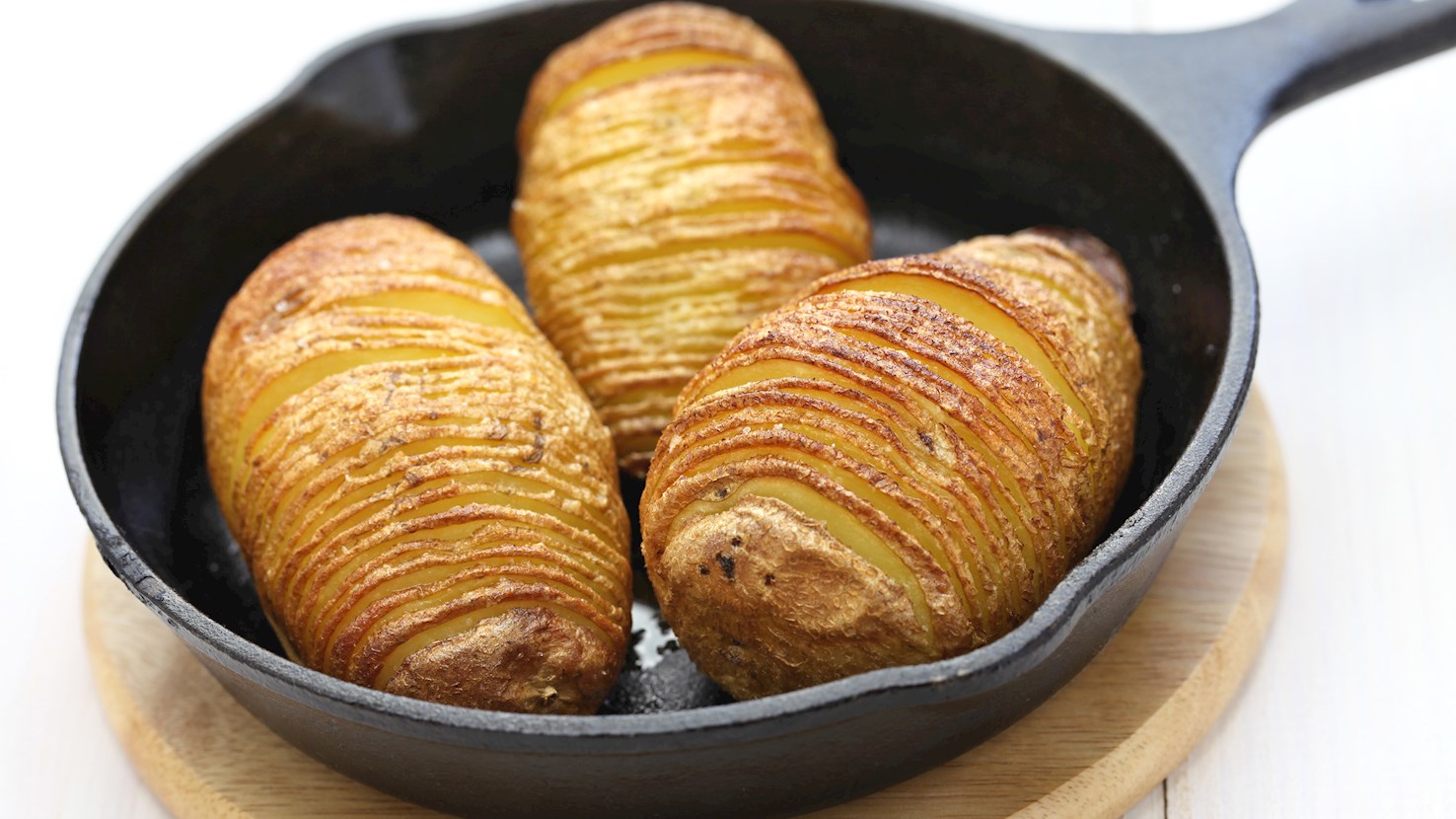
Hasselbackspotatis are Swedish roasted potatoes. The dish is made in a unique way – the potatoes are cut into thin slices about halfway through, making them visually attractive. Various toppings can be added on the potatoes, such as breadcrumbs, cheese, sour cream, bacon bits, or parsley. The dish was invented in 1953 by Leif Elisson, a trainee chef at the Hasselbacken restaurant in Stockholm, hence the name. It is recommended to serve hasselbackspotatis with roasted meat or poultry dishes.
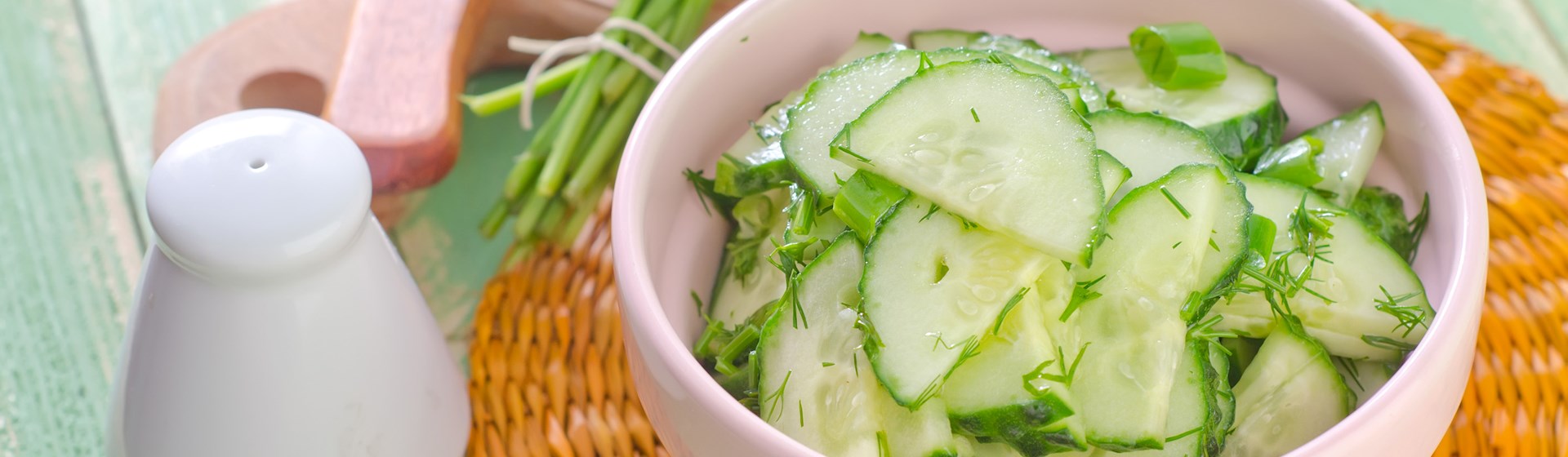
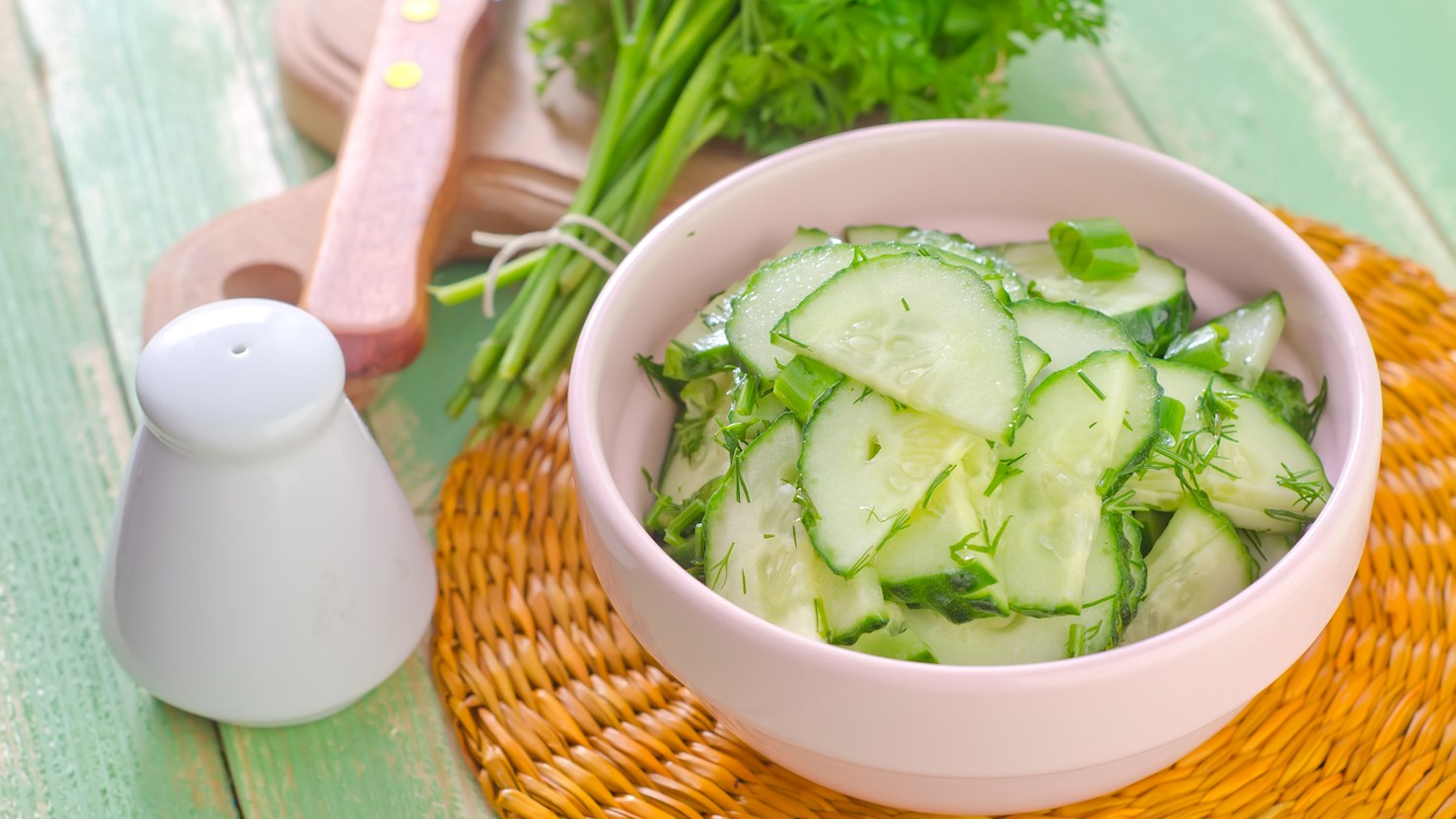
Agurksalat is a traditional cucumber salad originating from Norway. This refreshing salad is especially popular in the summer and has many variations. It's usually made with sliced cucumbers, water, sugar, salt, white pepper, parsley, and white wine vinegar. Thinly sliced cucumbers are simply mixed with the dressing, chilled for about half an hour, sprinkled with chopped parsley, then served, often as an accompaniment to fish such as salmon or mackerel. If properly prepared, the salad should be crunchy and have a nice balance of sour and salt with hints of sweetness from the sugar.
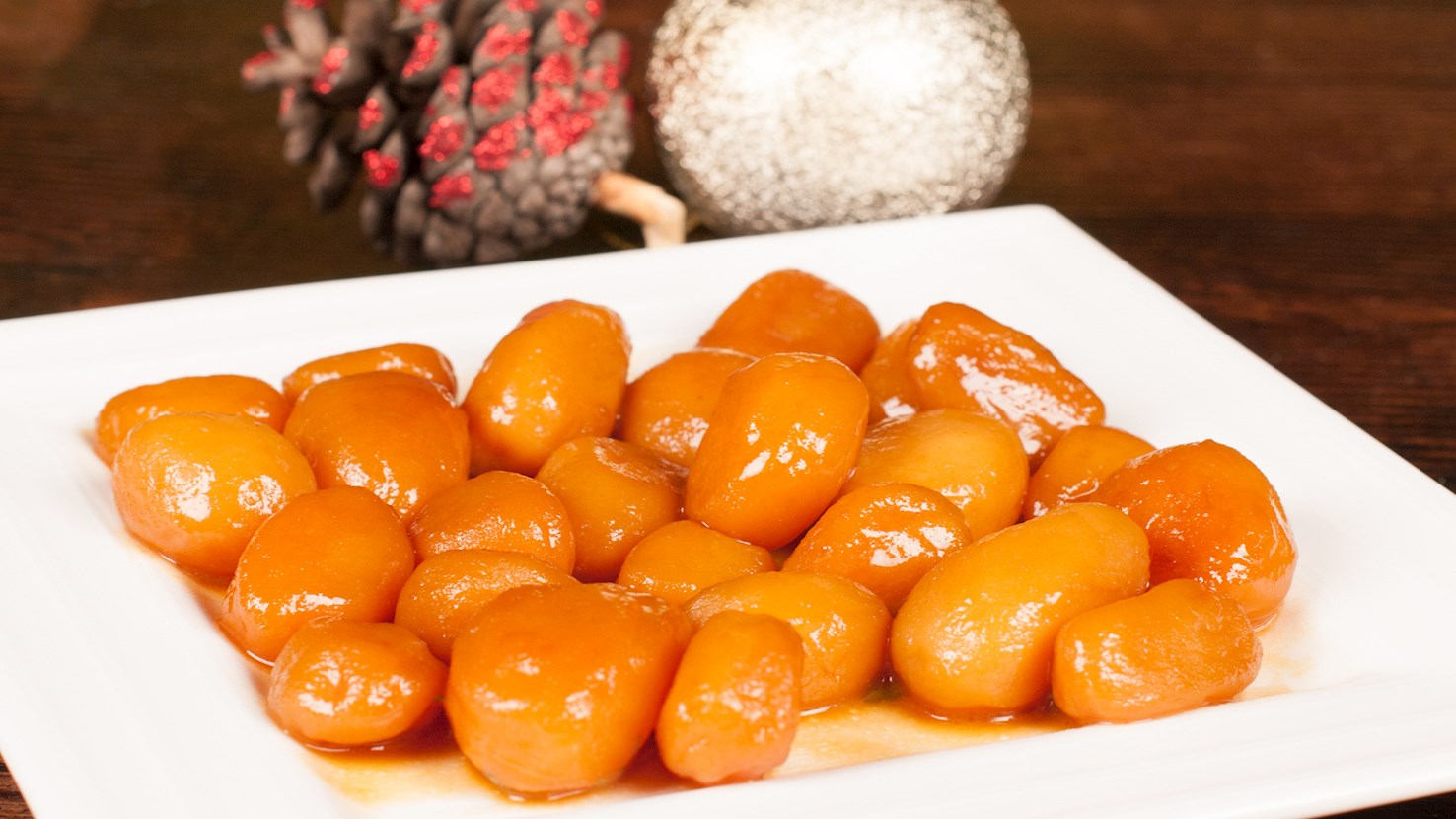
Traditionally associated with Christmastime, brunede kartofler (lit. caramelized potatoes) is a simple, yet immensely flavorful Danish dish, also eaten in the Northern Germany. The dish is usually made with a combination of new potatoes, butter, nutmeg, salt, and sugar. The butter, salt, sugar, and nutmeg are mixed together, and the mixture is poured over boiled new potatoes that have been lined in a greased gratin dish. The ingredients are gently tossed so that all of the potatoes are coated with the mixture. The dish is baked until lightly browned and crisp. Karamellkartoffeln is typically served as an accompaniment to kale ste
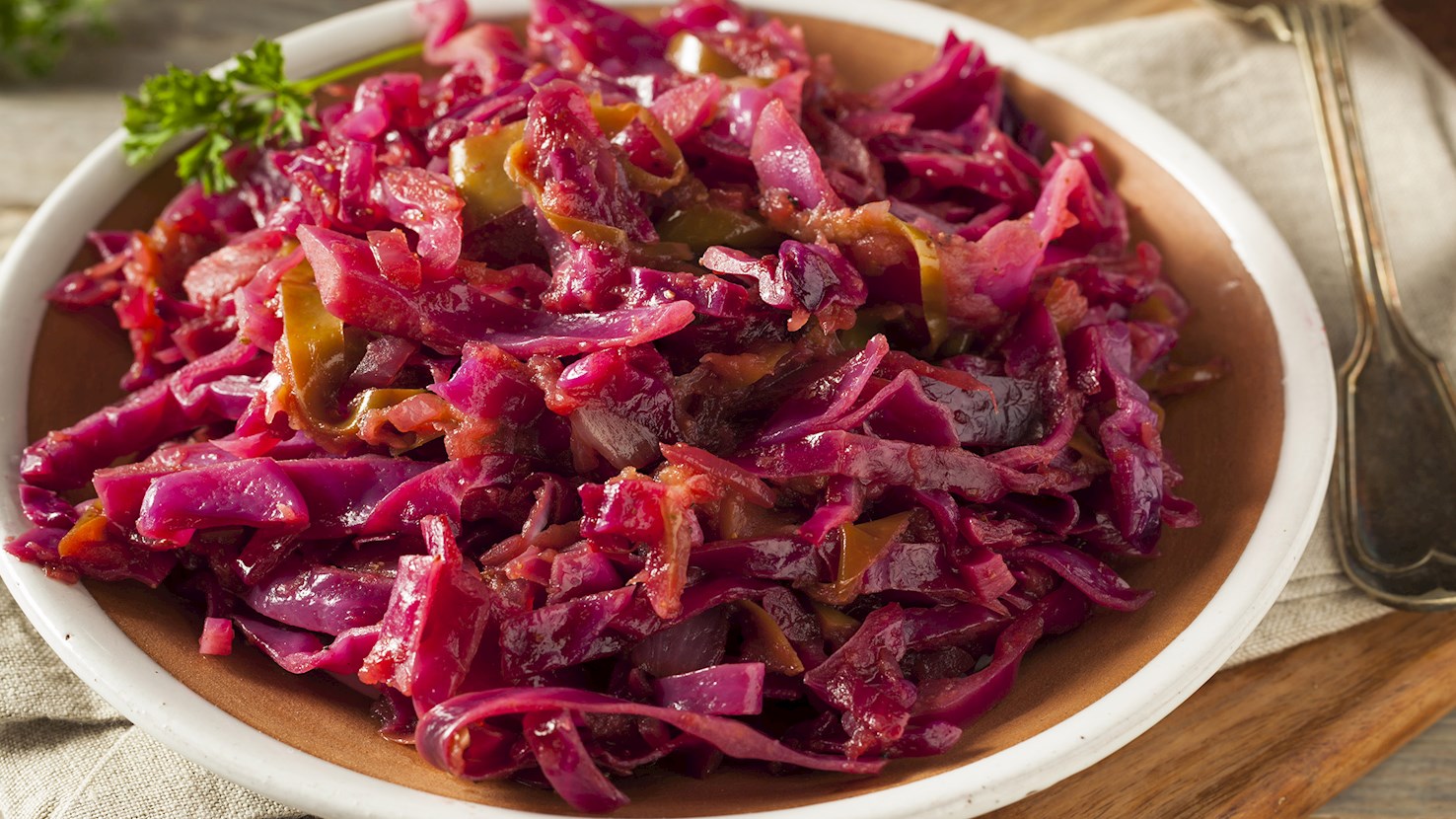
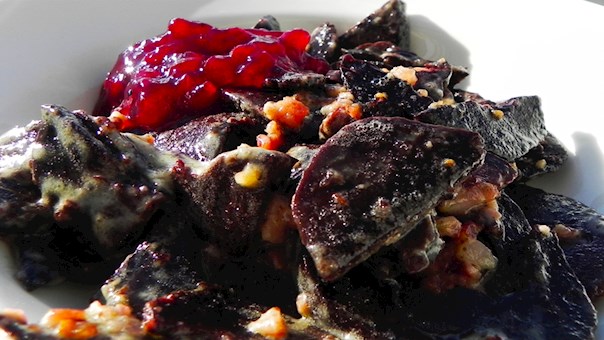
Rødkål is a sweet-and-sour side dish made by slowly braising shredded red cabbage with vinegar, sugar, and warm winter spices until it is completely tender. Making a batch requires halving a dense head of raw red cabbage, removing the tough core, and slicing the leaves into thin, uniform ribbons. The raw ribbons go into the melted duck fat and butter, wilting slightly before absorbing a heavy splash of apple cider vinegar and a handful of white sugar. A peeled, tart apple usually gets grated directly into the pot, dissolving completely during the simmer to add natural pectin and a fruity acidity. Whole cloves, a stick of cinnamon, and bay leaves drop into the purple liquid to infuse the vegetables with deep, earthy aromatics. The pot is covered, and the mixture simmers on low heat for at least two hours, stirring occasionally until the tough leaves break down into a glossy, jam-like consistency. The origins of this sweet-and-tart preservation method lie deep within Northern European agricultural practices. Before modern refrigeration, hard winter crops like cabbage had to last through months of freezing temperatures. Boiling the hardy leaves in a highly acidic vinegar-and-sugar bath significantly extended their shelf life while breaking down the fibrous cell walls. Over the centuries, this practical survival method became a mandatory holiday staple, heavily associated with massive winter feasts and Christmas Eve dinners. Minor tweaks to the liquid base regularly change the final flavor profile. Many households swap the white sugar entirely for a generous scoop of red currant jelly, which adds a brilliant ruby gloss and a sharper, berry-forward tang. Some kitchens pour in a splash of robust red wine or dark berry juice to deepen the color and introduce a complex fruitiness to the acidic braise. You will also see chunks of raw onion tossed into the hot fat alongside the cabbage to build a stronger savory backbone. The steaming-hot purple ribbons arrive at the dining table in a large serving bowl, serving as the necessary acidic counterpart to heavy, fat-laden meats. A massive scoop of sweet-and-sour cabbage always sits right next to thick slices of roasted pork belly with crackling skin, or a whole roasted duck. Beyond large holiday dinners, cold leftovers often serve as a bright, crunchy garnish atop open-faced rye bread sandwiches stacked high with warm pork meatballs.
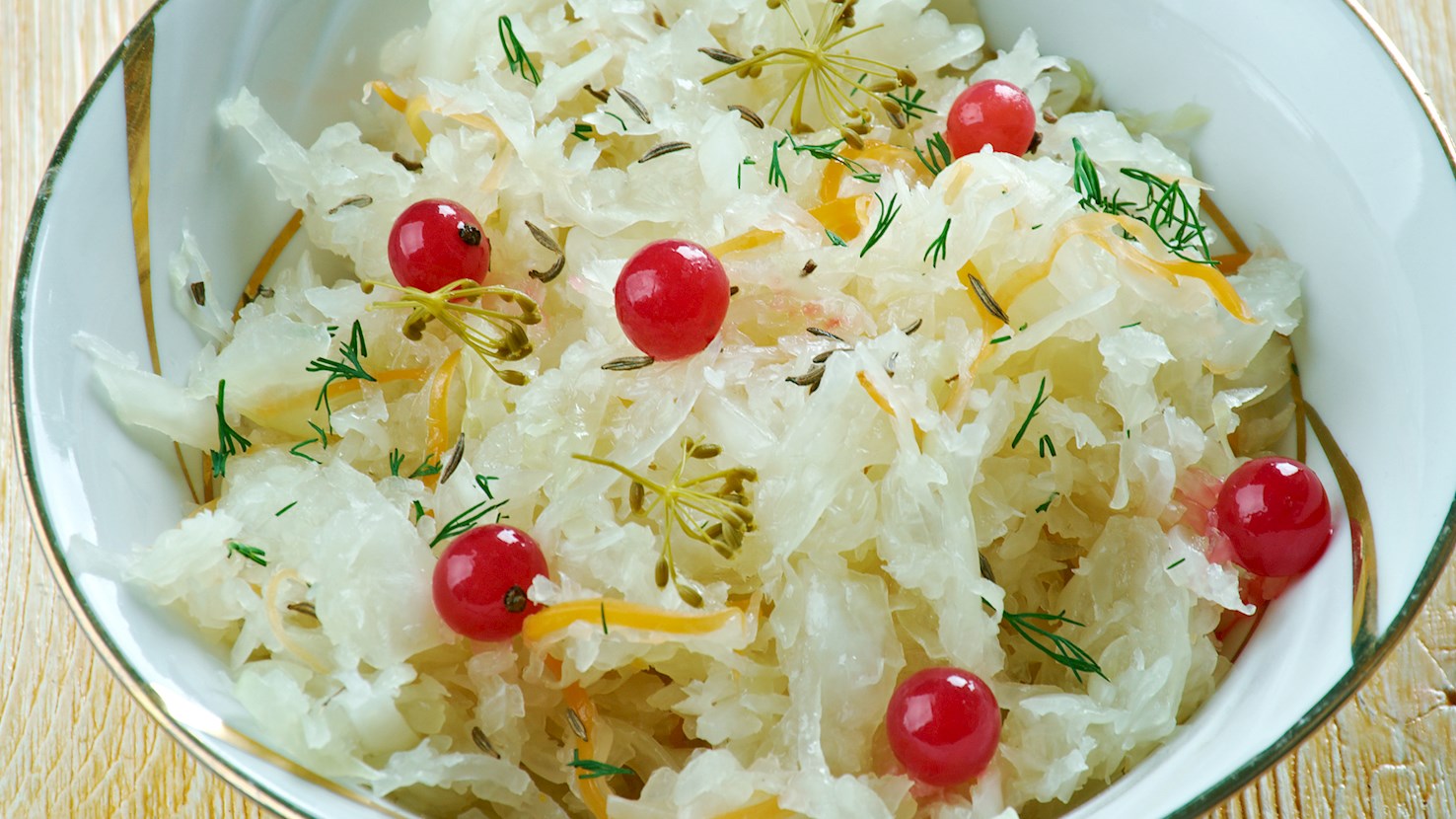
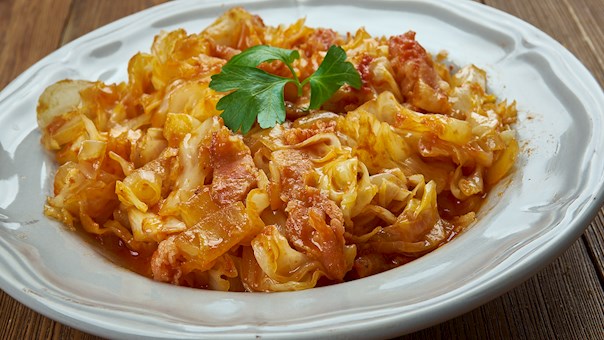
Even though it is popular in many Scandinavian countries, surkål is traditionally associated with Norway. Characterized by the unusual combination of sweet and sour flavors, this simple dish consists of finely sliced green or red cabbage stewed in vinegar, sugar, and various spices, with the occasional addition of sliced apples and caraway seeds. In many Scandinavian households, it is one of the essential side dishes served during the festive Christmas period.
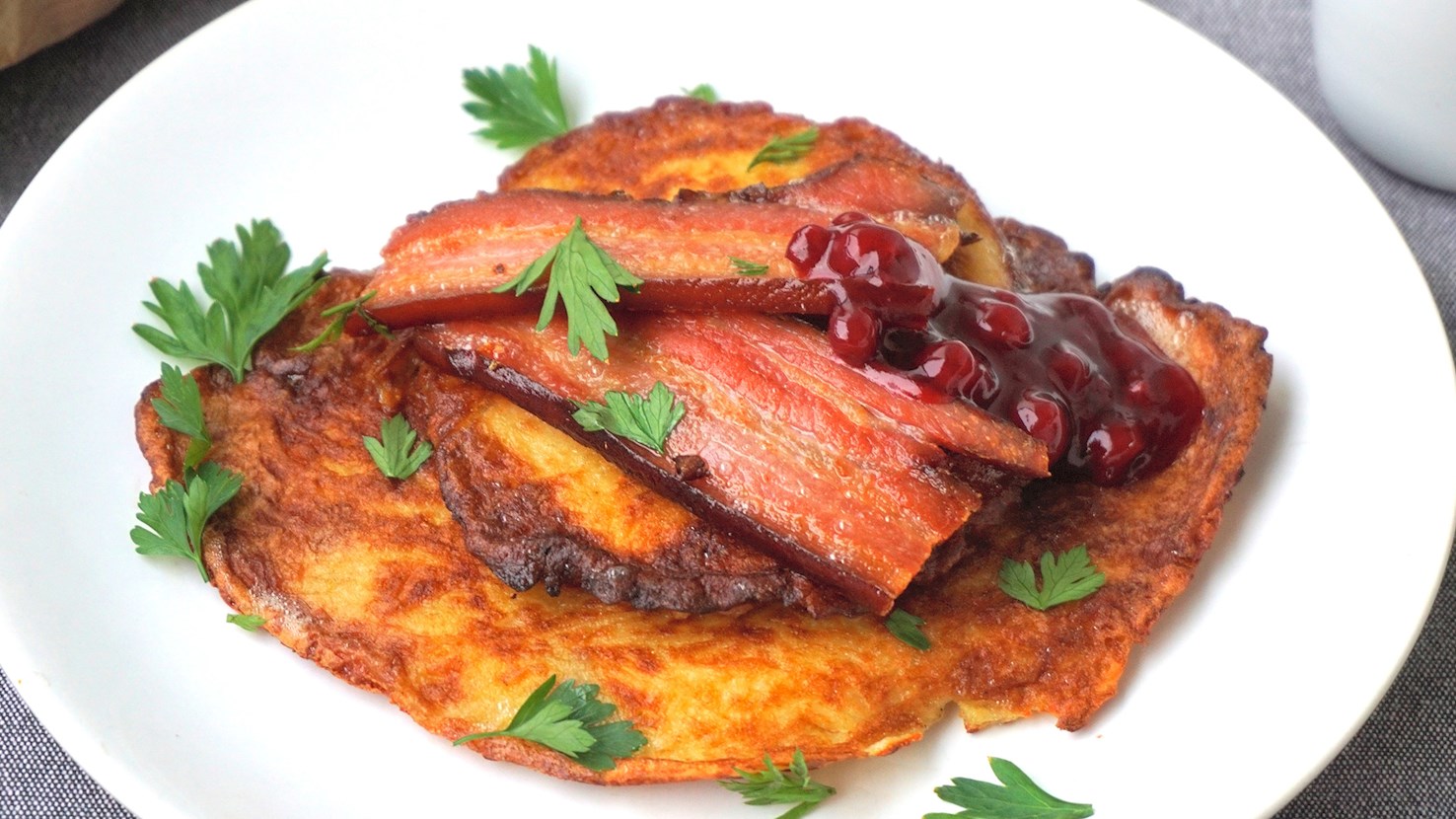
Raggmunk is a classic Swedish potato pancake made with milk, flour, salt, eggs, and grated potatoes. The batter is spread out in the pan, and it's then fried in butter on both sides, until it becomes golden brown and crispy on the edges. Once done, raggmunk is traditionally served with salted pork or unsmoked bacon and a dollop of lingonberry jam. It's important not to use new potatoes because they don't have enough starch to hold the pancake together. This dish is especially popular in winter and during the festive Christmas season.
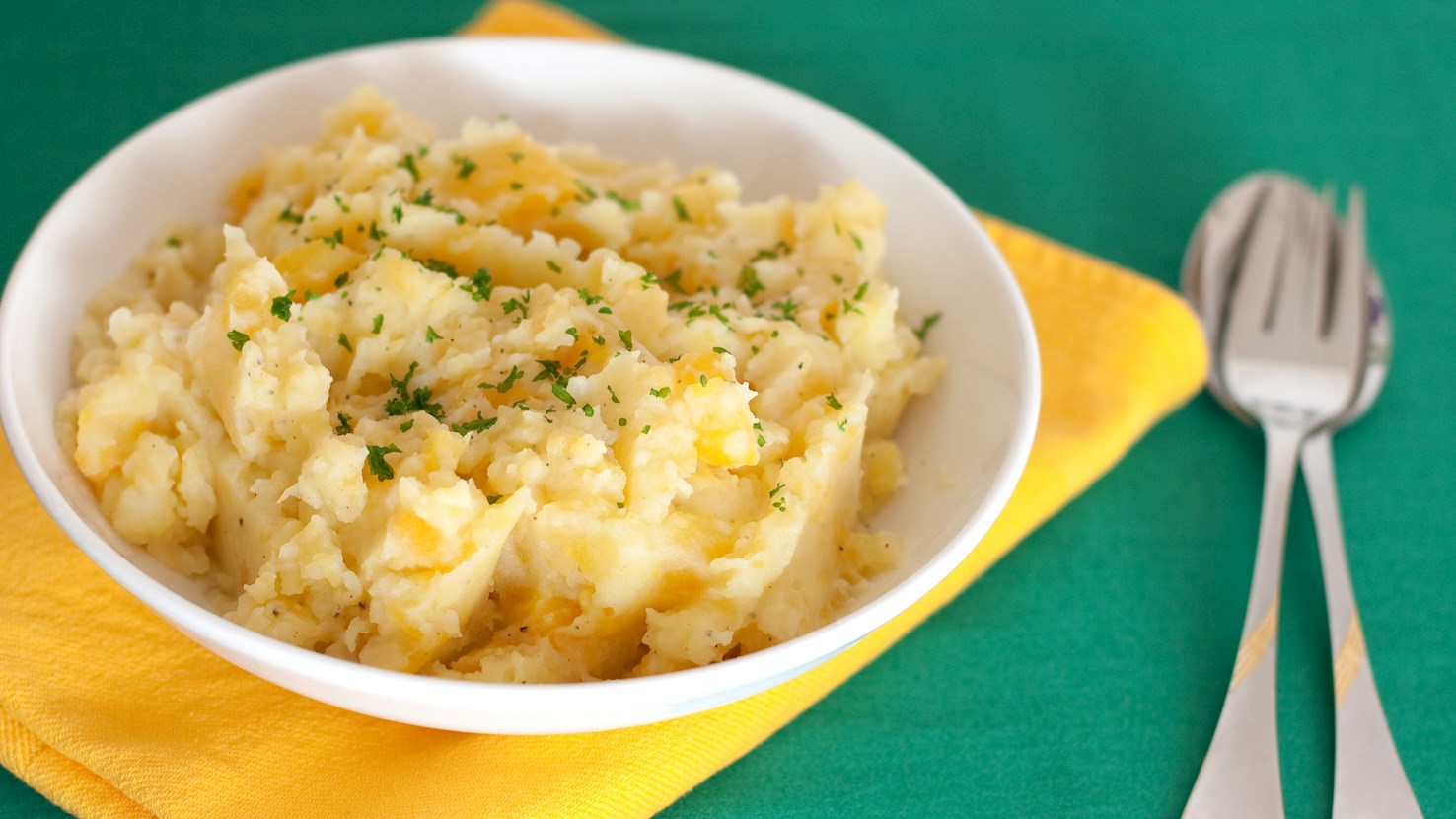
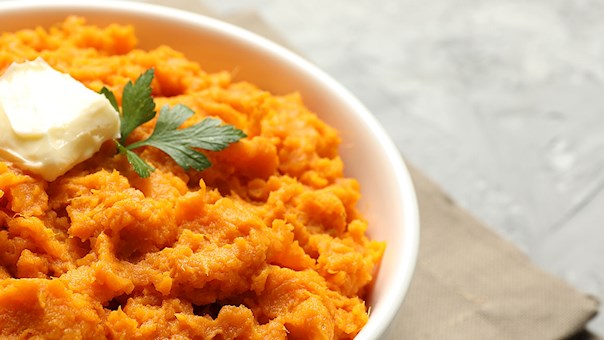
Kålrotstappe is a traditional dish originating from Norway. It's usually made with a combination of rutabagas, potatoes, cream, nutmeg, salt, white pepper, and water. The rutabagas are peeled, sliced, and boiled in salted water. They're drained and mashed with warm potatoes. The dish is seasoned with salt, white pepper, and often nutmeg. Cream and a bit of water or broth is added to the mixture, and kålrotstappe is garnished with parsley before serving. Kålrotstappe is traditionally served alongside pinnekjott, a dish of cured lamb ribs.
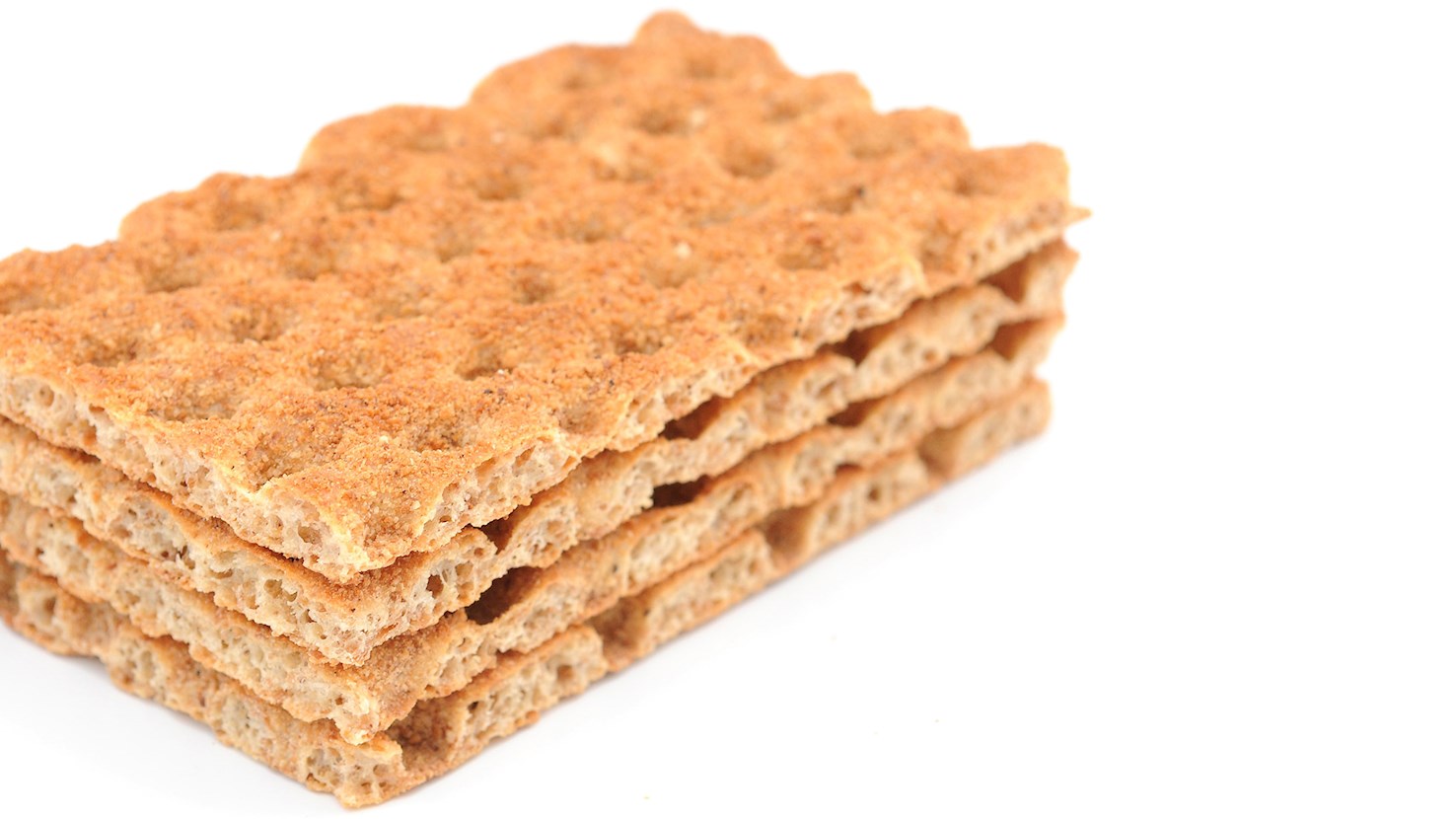
Knäckebröd is the original name of this famous Swedish crispbread. Even though it is regarded as a bread variety, its crunchy texture and thin form have more similarities to crackers. The key ingredient is rye flour, which was the main element in the original version. Today, a variety of seeds such as sesame, sunflower, pumpkin, or flax seeds are used to create different versions of this crispy bread. The tradition of preparing knäckebröd in Sweden appeared in a time of hardship, approximately 500 years ago, when bread was considered a rare and luxurious food item. This way of preparation, which uses a small percentage of water, allows the bread to stay crispy and fresh for a longer period of time. Today, most of these crackers are factory-produced, but easy preparation and convenient storing make it a standard homemade option. Light, easy to crack and to handle, it is a perfect accompaniment that is served alongside a variety of appetizers, dips, sauces, cold meat cuts, smoked salmon, cheese, and fruit spreads. In Sweden, it is a staple breakfast ingredient that is also commonly consumed as a snack or a light dinner.
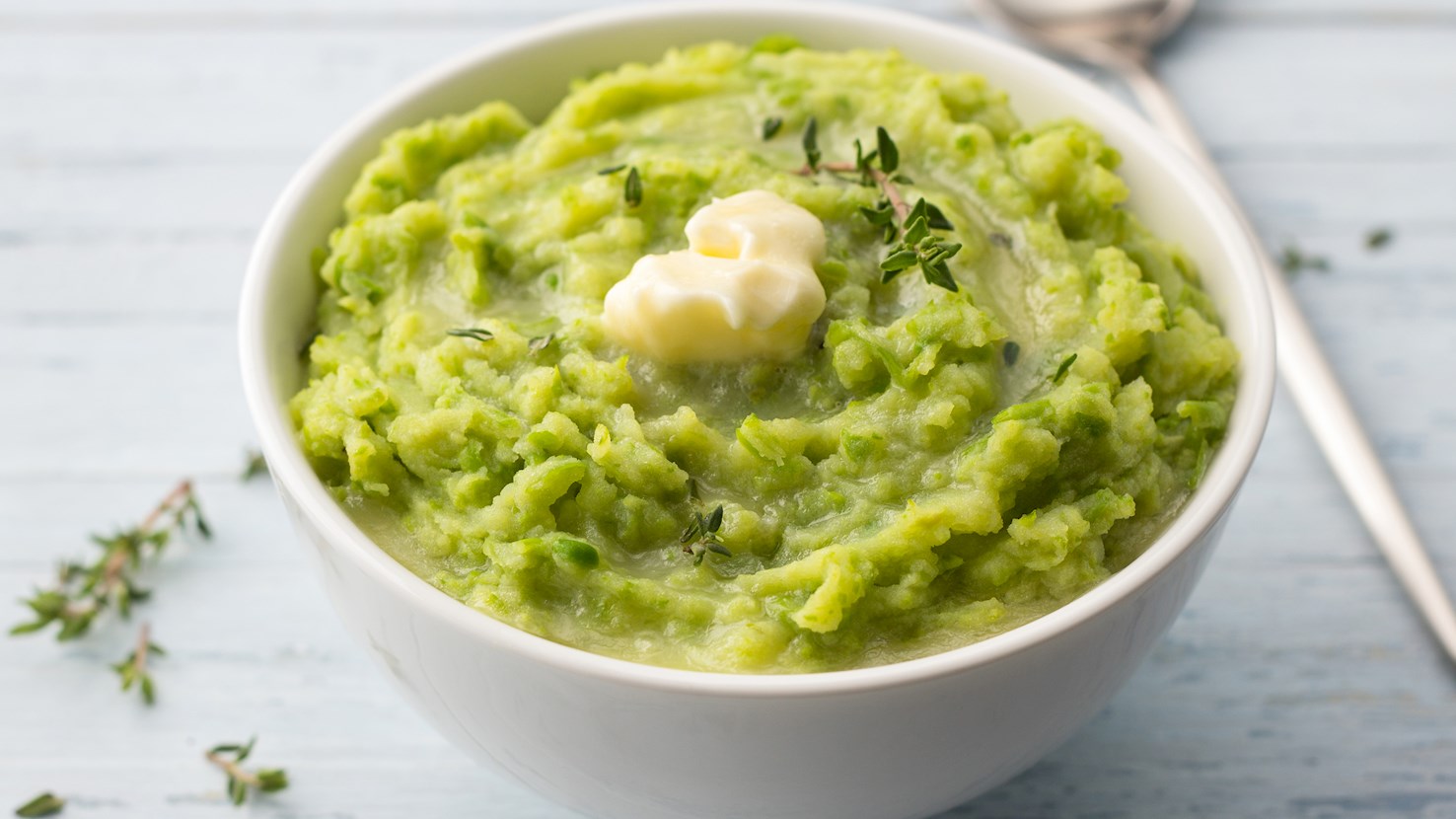
Grønn ertestuing is a traditional dish originating from Norway. This dish is usually made with a combination of peas, flour, water, butter, sugar, and salt. The peas are soaked overnight, then gently simmered in the same water for about 2 hours. A mixture of butter and flour is added to the pot, along with sugar and salt. During the last hour of cooking, diced carrot can also be added to the combination. Creamed green peas are often served as an accompaniment to lutefisk or meatballs.
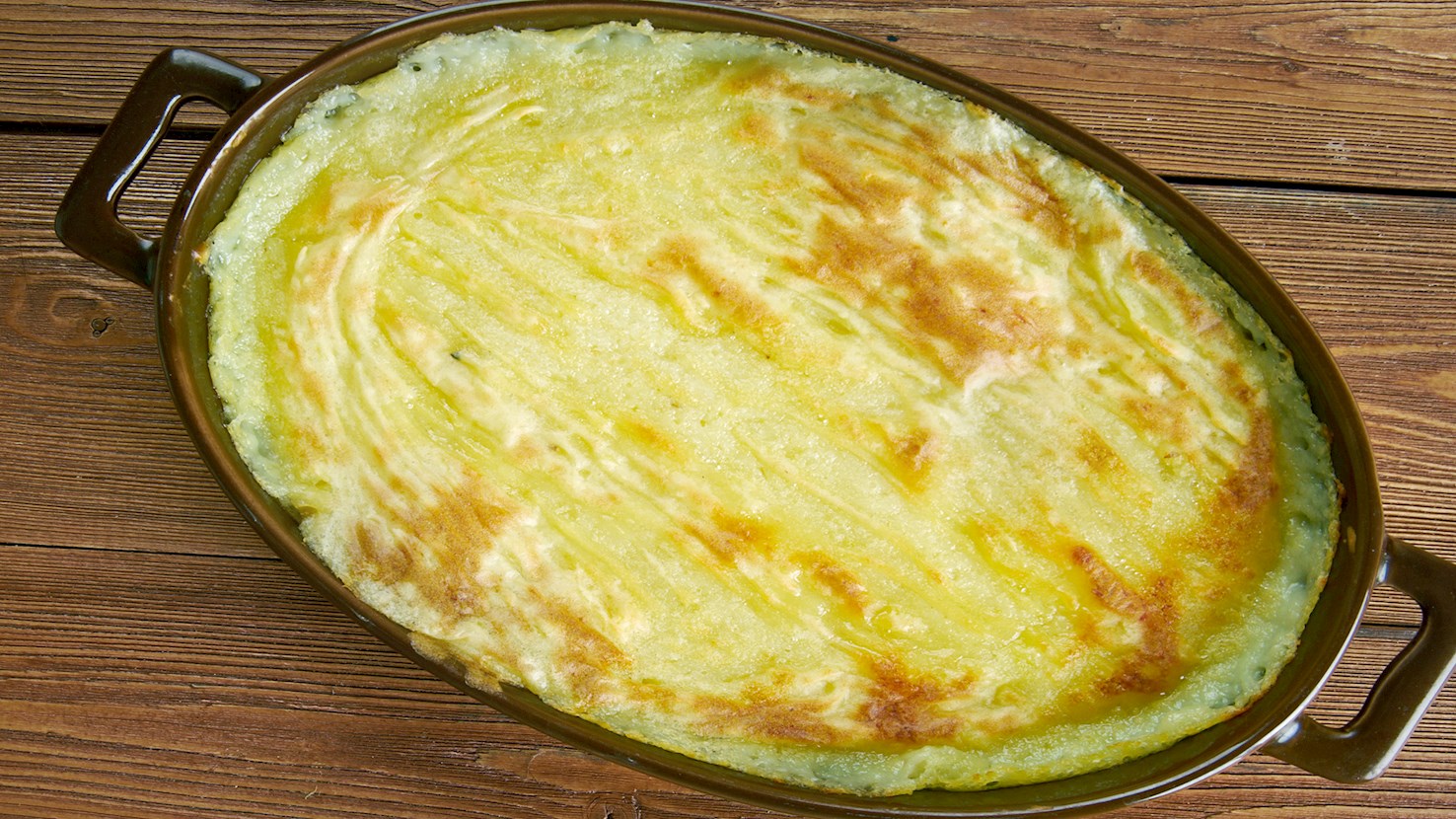
This traditional Finnish casserole is characterized by its long cooking time and a subtle sweetness. It is prepared with a combination of mashed potatoes and wheat flour that is stored in a warm place for hours, allowing the starch to break down and provide the natural sweetness. The dish is sometimes additionally sweetened and seasoned with nutmeg before it is baked until a golden-brown, crispy crust forms on top. Traditionally associated with Christmastime, this creamy, starchy casserole is usually enjoyed as a side dish.
TasteAtlas food rankings are based on the ratings of the TasteAtlas audience, with a series of mechanisms that recognize real users and that ignore bot,
nationalist or local patriotic ratings, and give additional value to the ratings of users that the system recognizes as knowledgeable.
For the “Top 14 Northern European Side Dishes” list until September 15, 2026, 674 ratings were recorded, of which 597 were recognized by the system as legitimate.
TasteAtlas Rankings should not be seen as the final global conclusion about food. Their purpose is to promote excellent local foods,
instill pride in traditional dishes, and arouse curiosity about dishes you haven’t tried.




What People Say