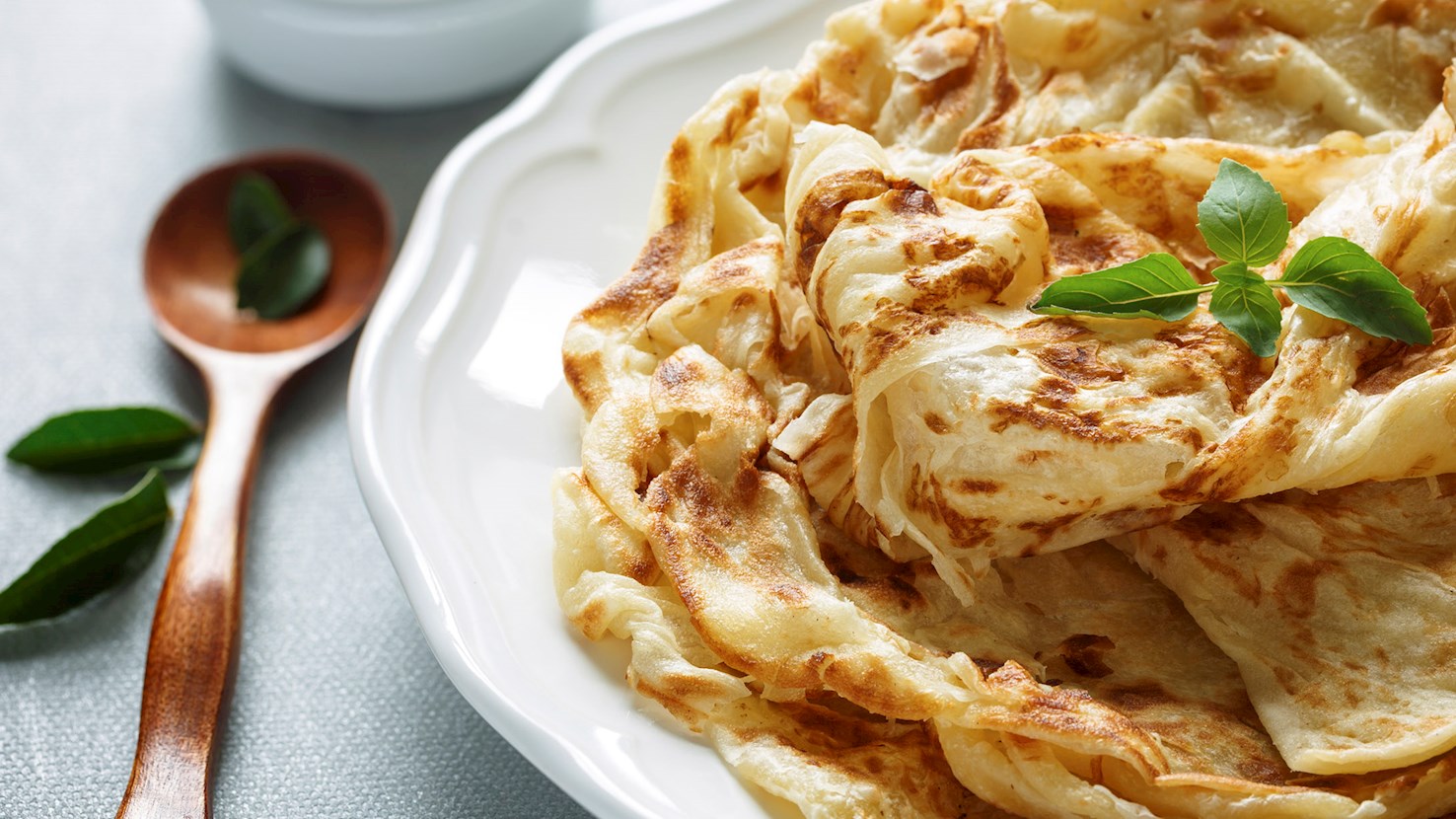
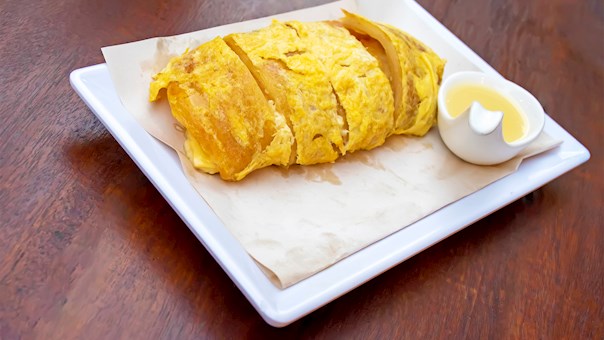
Roti canai is a traditional pan-fried flatbread made with flour, water, eggs, and fat of Indian origin, but mainly associated with Malaysia, and surrounding countries like Indonesia, Brunei, and Thailand. The dough for roti canai is repeatedly folded, so the final product has a layered texture, a soft interior, and a crispy outer layer. The most common fat used in roti canai is ghee, the traditional Indian clarified butter. It is believed that the dish originated in India when the Indian laborers who migrated to Malaysia brought the recipe and the tradition of preparing this crispy pastry to the foreign country. Usually, it is served plain in its traditional round form, as an accompaniment to curries. It can be served on the side or torn into pieces and mixed with the curry. However, roti canai is often served as the star dish, accompanied by different savory and sweet fillings and ingredients. If additional fillings are added, roti canai is usually shaped into rectangles. For example, in Malaysia, one can find various roti canai types, which are differentiated by the type of filling — egg, onion, egg and onion, banana, sardines, margarine and sugar, Maggi instant noodles, cheese, vegetable, and pork filling are some of the many available. However, roti canai doesn't have to have a filling but only a topping, such as fried eggs, curry, beans, lentils, and coffee beans. But martabak, a thick roti filled with meats, eggs, onions, and spices, is probably the best-known type of roti canai. Apart from Malaysia, it can also be found in Saudi Arabia, Yemen, and a few other countries. Other than Malaysia, a very similar type of flatbread can be found in Singapore, where it's called roti prata. This crispy bread is usually sold by street vendors called mamaks.
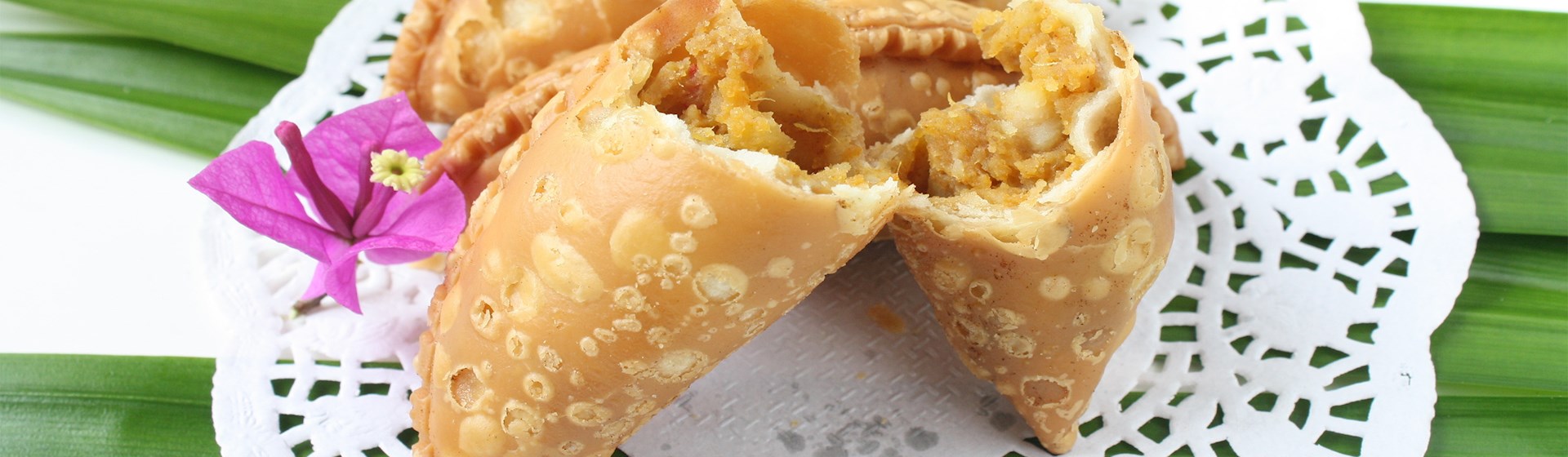
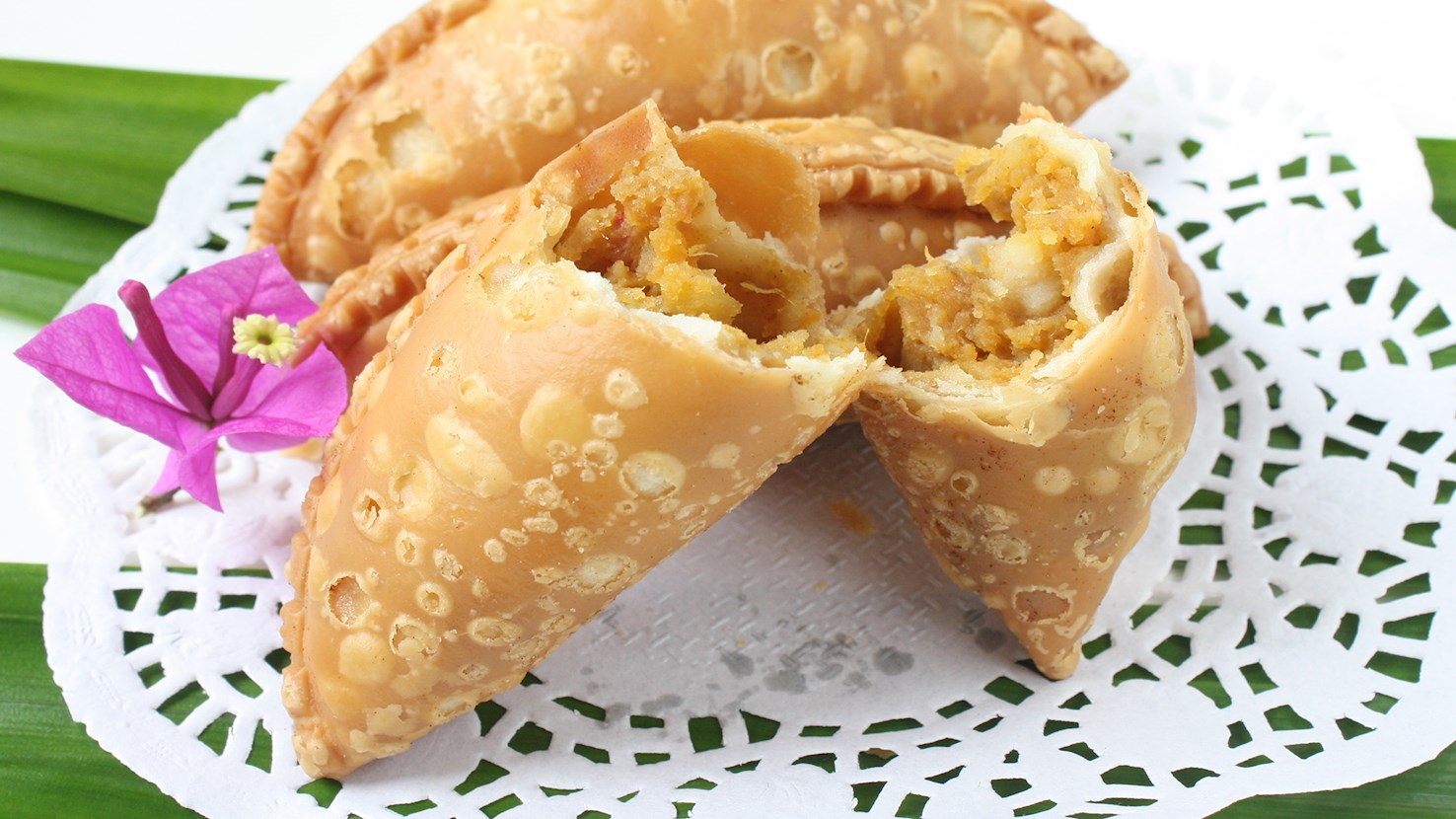
Karipap or curry puff is a small, deep-fried or baked pastry shell filled with thick chicken and potatoes curry. It is believed that the flavorful snack was invented by the Malays from the Malay Peninsula and parts of Sumatra and Borneo. It is a popular breakfast item or an afternoon snack which can be found at numerous stores, bars, and markets. Because of its simplicity and flavor, karipap quickly became popular outside Malaysia, especially in Thailand and Singapore. Today there are numerous versions of karipap, so instead of potato and chicken curry, it can be filled with various other ingredients such as tuna, sardines, and beef rendang. Crispy and flaky on the exterior, hot and soft on the interior, karipap is a snack that remains a staple of Southeast Asian cuisine.
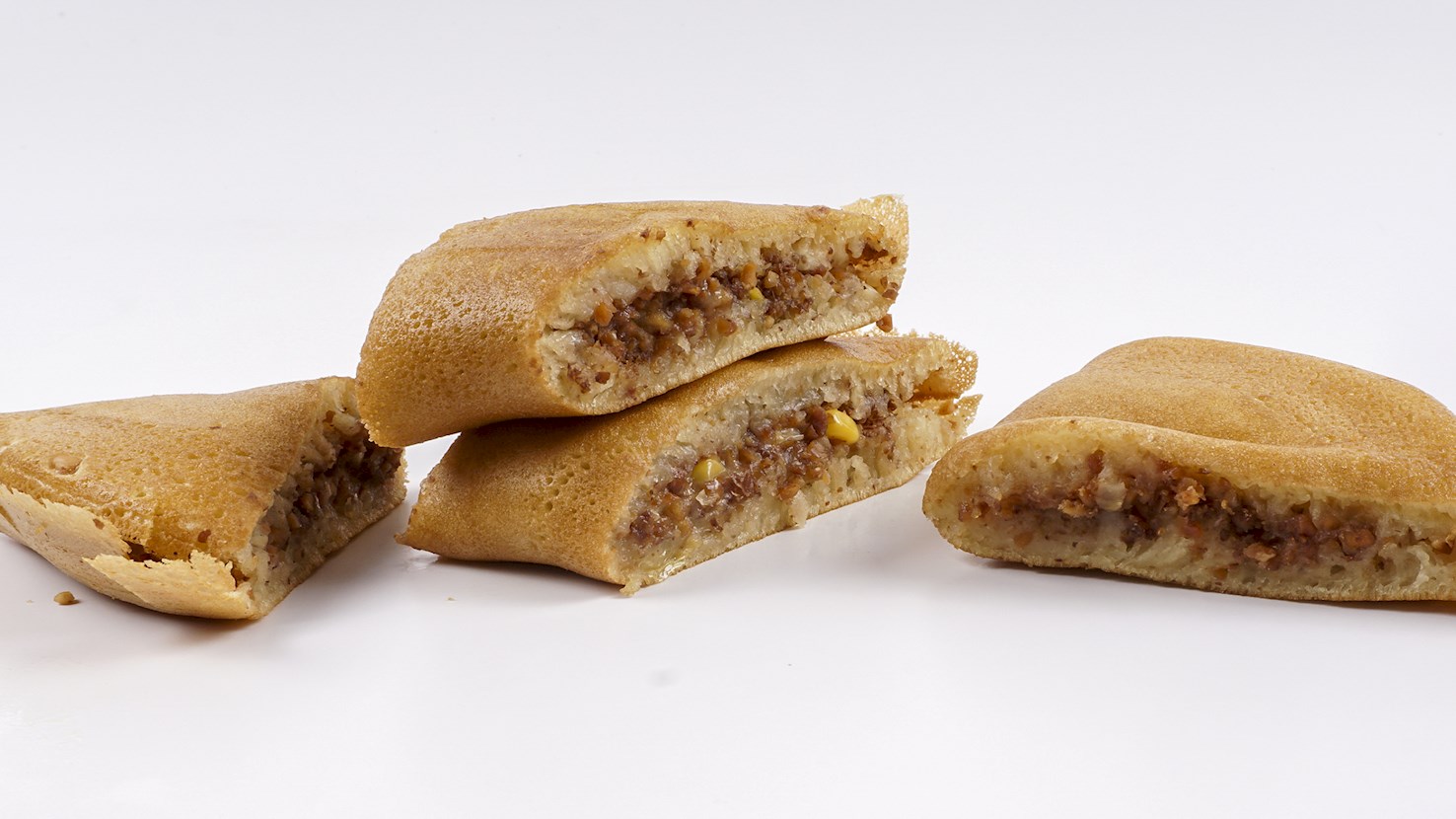
This sweet turnover pancake comes under various names throughout Malaysia, Indonesia, Brunei, and Singapore. Regardless of the location, it can be prepared either in a thin and crispy variety or as a thick and soft pancake. Traditional fillings typically include a combination of ground or roughly chopped peanuts, sugar, and butter, but the modern varieties may include anything from corn, chocolate chips, and raisins to grated cheese or condensed milk. Though not much is known about its origin, it is believed that is was first introduced in Penang by the Chinese who migrated from the province of Fujian.
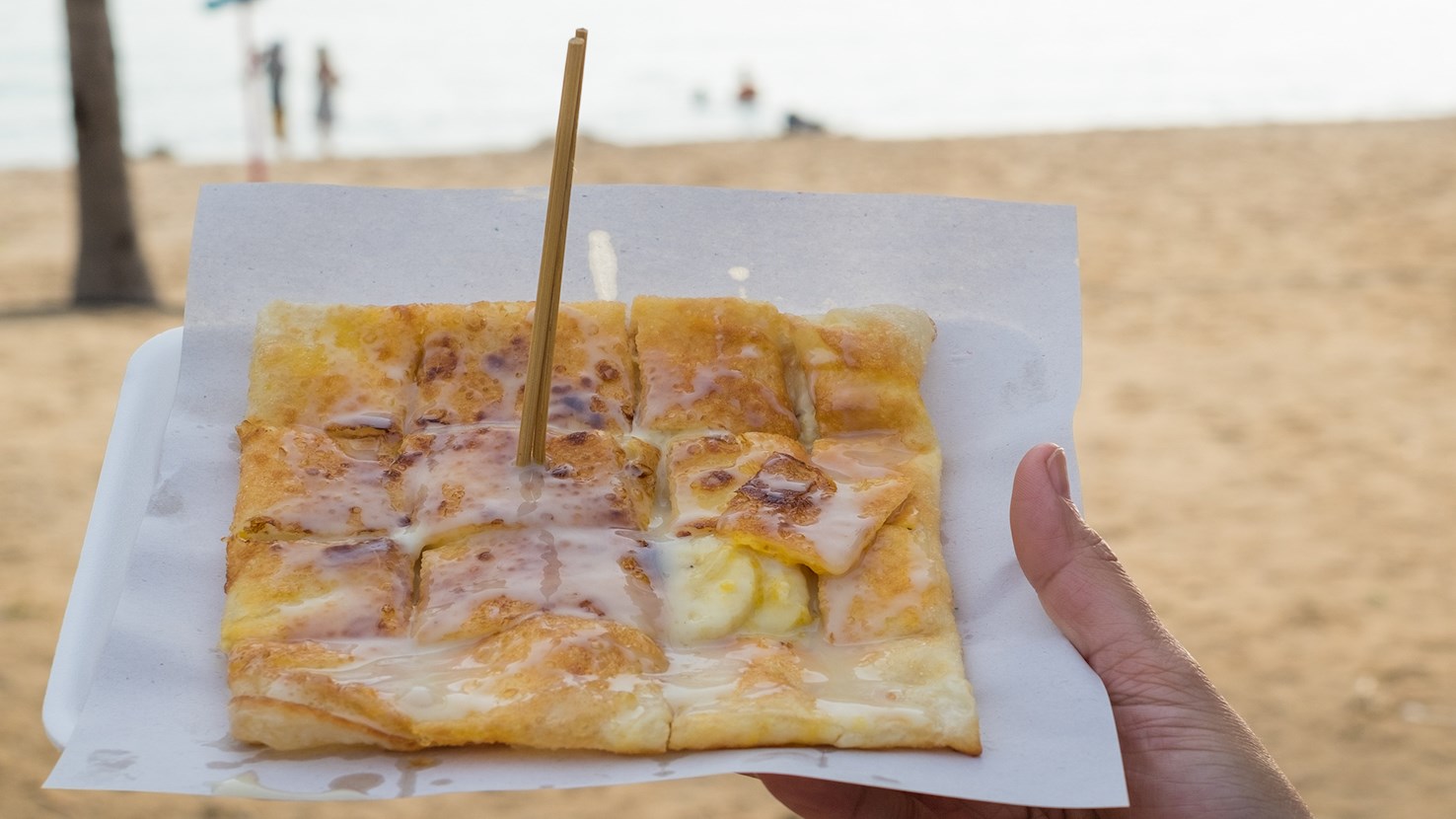
This sweet variety of the traditional Malaysian roti employs bananas as the star ingredient. The unleavened roti dough is stretched until thin, and the combination of sliced bananas, eggs, and sugar is then wrapped in the dough. Roti is usually pan-fried until golden, and it comes served cut into bite-sized pieces that are dusted with sugar and drizzled with condensed milk. The dish is a classic street food item that is usually enjoyed as a sweet and filling breakfast or an afternoon snack.
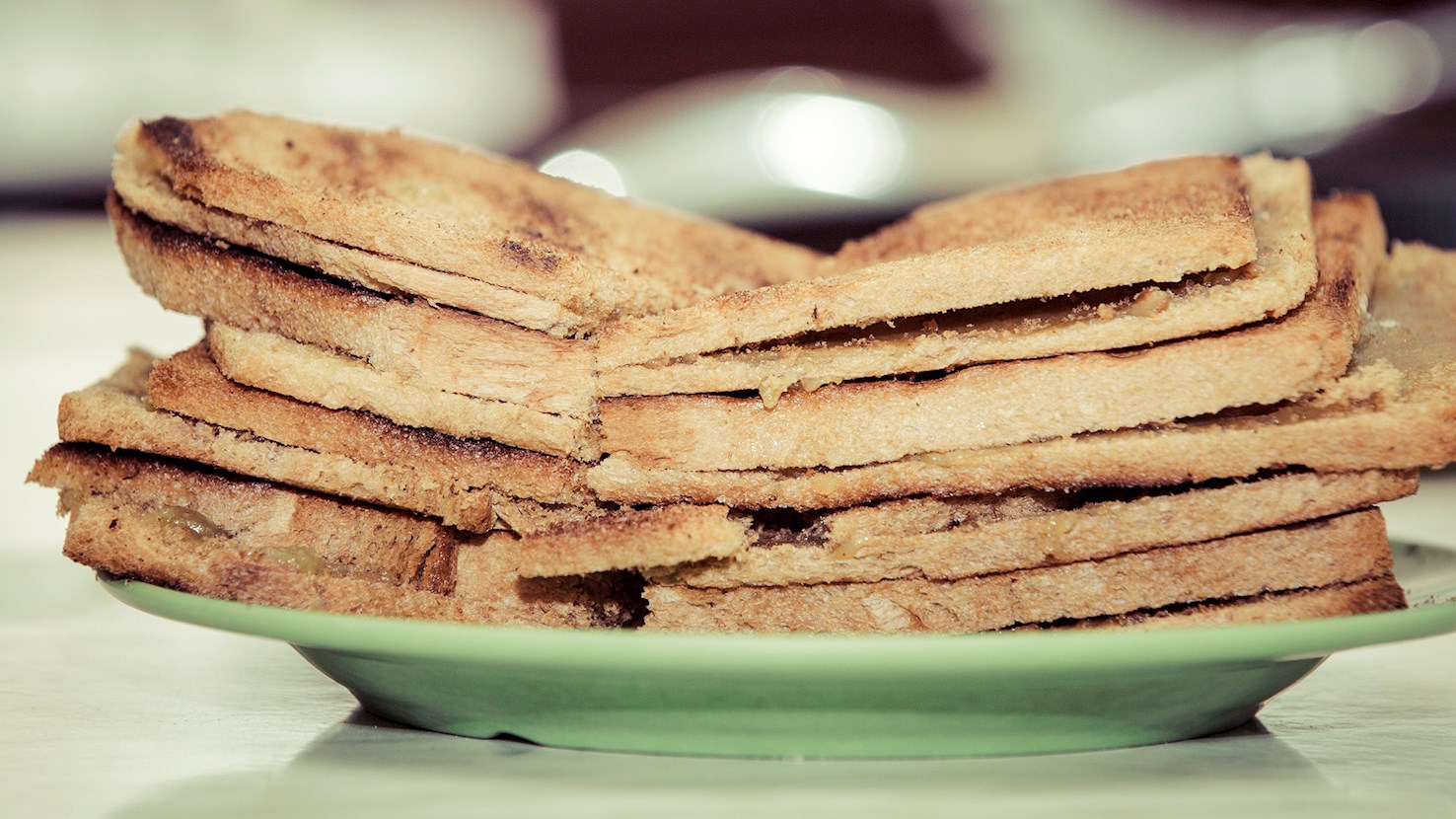
Kaya toast is a popular Malaysian and Singaporean breakfast consisting of two slices of toasted bread filled with kaya, a traditional spread made with sugar, eggs, coconut milk, and pandan flavoring. The dish is typically served with a slice of butter and two semi-boiled eggs on the side, paired with a cup of milk tea or hot coffee. It is believed that the dish originated with Hainanese people who worked on British ships as cooks. Eventually, they settled in Singapore and started to sell their food to the locals, who then replaced the British jams with local coconut spreads. Today, there is a variety of kaya toasts such as cracker kaya toast, steamed kaya toast, and French kaya toast.
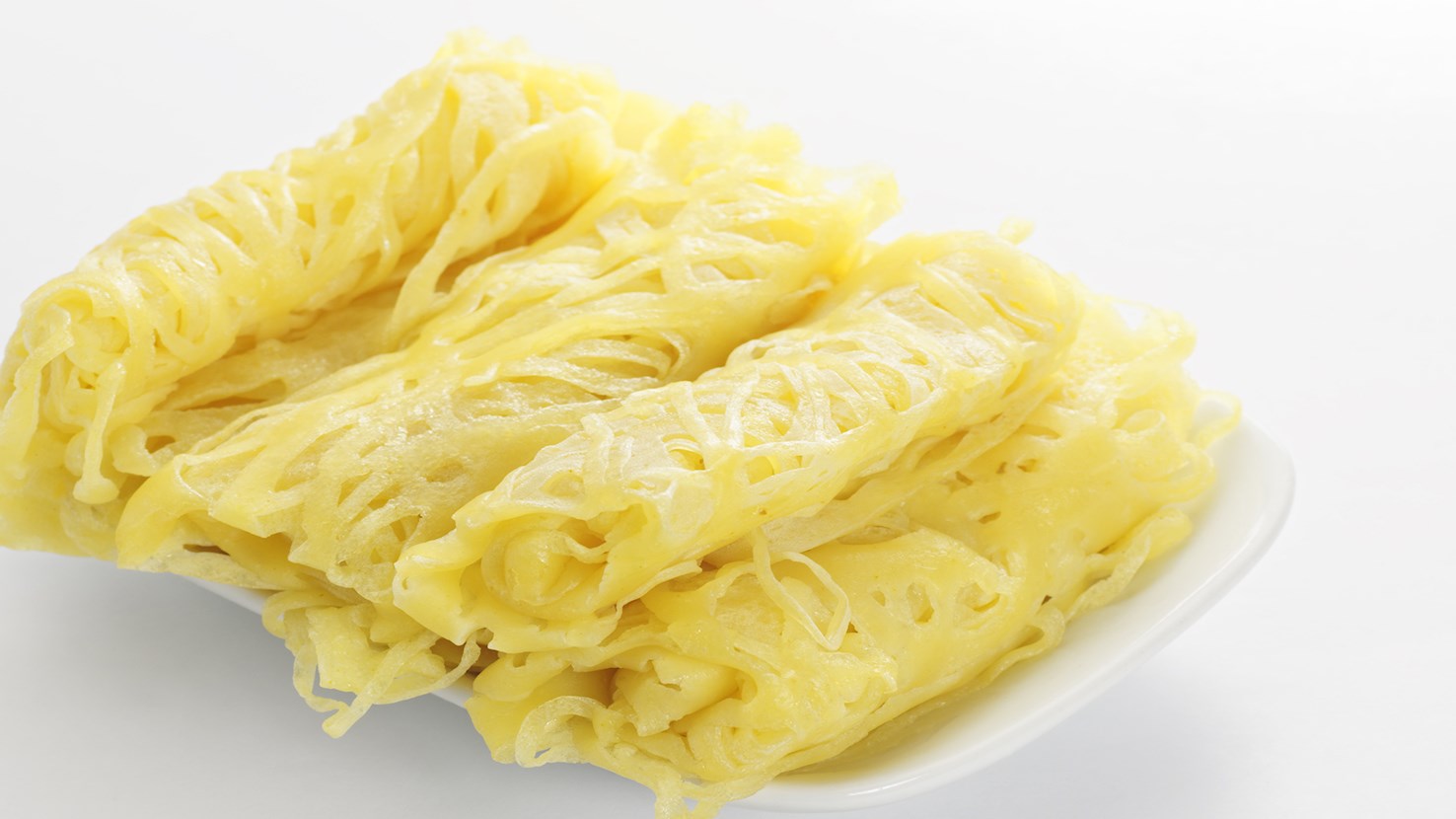
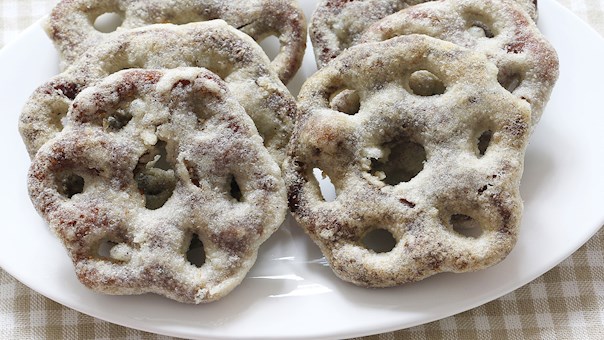
Roti jala is a popular Malaysian snack, a savory crepe consisting of flour, eggs, milk, and turmeric powder. Literally translated, roti jala means net bread, referring to its intricate net design inspired by the nets of Malaysian fishermen. The snack is commonly served warm alongside curries (especially potato and chicken curry), and it is recommended to pair it with a cup of tea. Traditionally, it is prepared for numerous Malaysian festivities and celebrations such as weddings and birthdays. Because roti jala is quite small, it is often served in sets of three or four pieces when accompanying curries, but it can also be consumed on its own throughout the year in numerous Malaysian eateries.
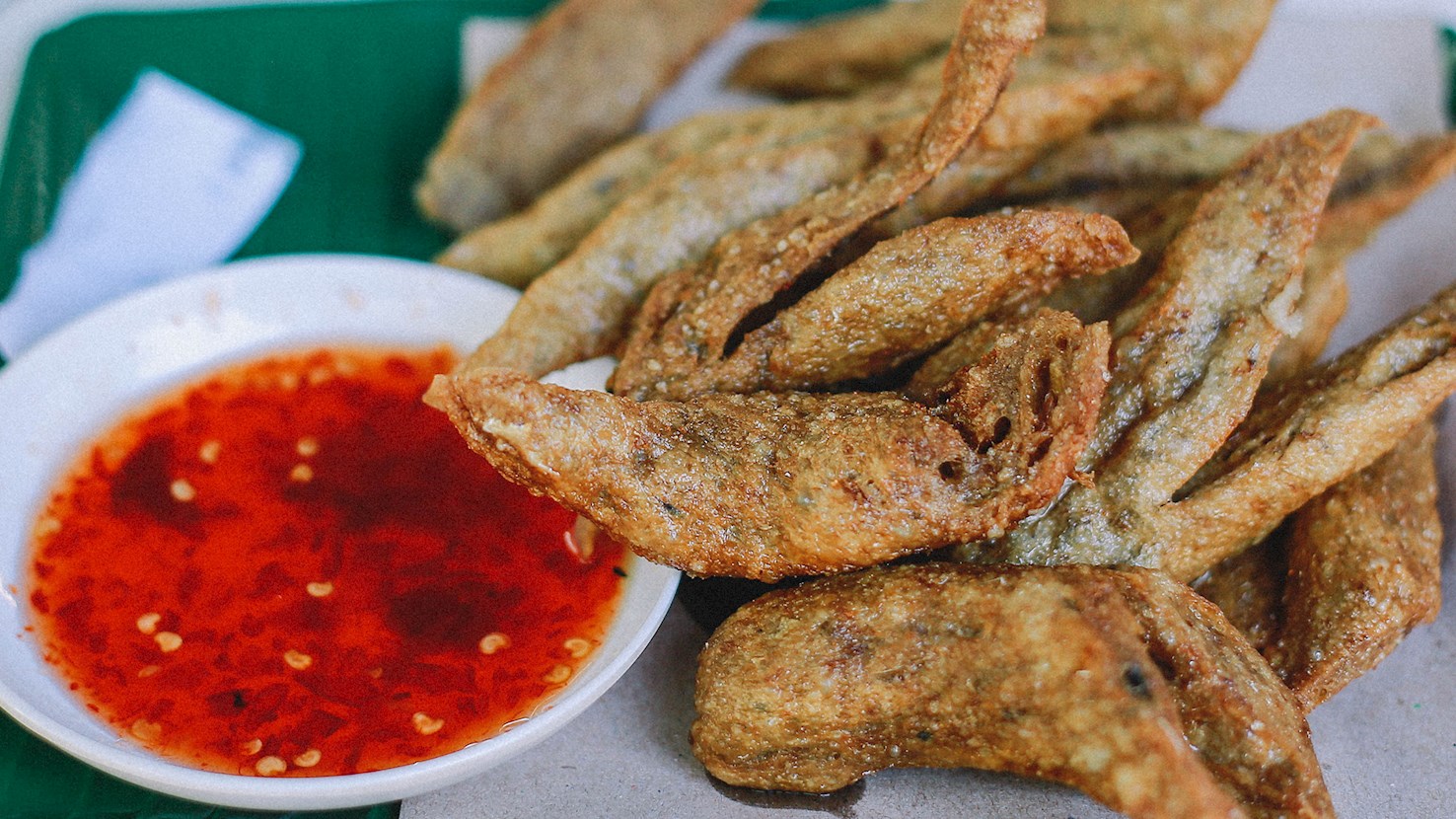
Keropok lekor is a chewy fish snack from Terengganu on the east coast of Peninsular Malaysia, made by mixing finely minced fish with starch, shaping it into thick rolls, and boiling or frying. The boiled version has a moist, springy texture and a grayish exterior; frying gives it a browned surface while leaving the center soft and elastic. Its flavor is distinctly savory and fish-forward, usually sharpened by a sweet, hot chili dipping sauce. Although English often describes it as a fish sausage, it has no casing, and its texture depends on the combination of fish and starch rather than a sausage-style mix of meat and fat. Terengganu’s coastal fishing communities provide the setting for its development, but a precise invention date or individual creator is not securely established. Kampung Losong in Kuala Terengganu is particularly associated with making and selling keropok lekor, and its name frequently appears alongside the snack. That strong local association does not establish a single birthplace: production belongs to a wider network of households and small businesses along the coast. Fish such as ikan selayang (mackerel scad) and ikan kerisi (threadfin bream) are used, with the choice varying by availability and the maker’s preferred flavor and texture. The flesh is separated from the bones and minced or pounded into a cohesive paste. Careful deboning matters because the finished roll should have an even, yielding bite without hard fragments. Sago starch is closely associated with keropok lekor, while tapioca starch is also widely used, either alone or in a blend. These ingredients differ: sago comes from the pith of certain palms, while tapioca comes from cassava roots. Both absorb water and thicken when heated, but the starch type changes how firmly the mixture sets and how it behaves when fried. Salt seasons the fish and helps its proteins bind the mixture, while water or ice allows the paste to be worked to the required consistency. Some formulas also include sugar or extra seasoning, but an elaborate spice mixture isn't necessary; the fish should remain readily identifiable. The balance between flesh, starch, and moisture is central to the eating quality. A high proportion of starch can mute the fish flavor and create a firmer, doughier bite, though the specific starch and cooking method also affect texture. The mixture is kneaded until evenly combined, then rolled on a work surface into cylinders. Their dimensions vary, from relatively slender sticks to substantial lengths that are cut before serving. Even thickness allows the center to heat through without leaving the outside in the water unnecessarily long. During boiling, the fish proteins set and the starch gelatinizes, turning the raw paste into a cohesive, elastic roll. Properly made keropok lekor should bend and give under the teeth rather than crumble. Its gray or gray-brown color is normal, depending on the fish used, and the boiled surface lacks the golden color frying produces. Once drained, keropok lekor rebus can be eaten warm with sauce. It offers a softer surface and a more direct impression of the fish than the fried version. For keropok lekor goreng, people commonly cut the rolls into shorter pieces or slices and fry them until the exterior browns and becomes lightly crisp. The contrast is strongest soon after frying, before moisture from the center softens the crust. Thick pieces retain more chew, while thinner slices have more crisp edges. This should be distinguished from keropok keping, the thin, dried fish crackers also associated with Terengganu. Those undergo an additional slicing and drying stage before frying, producing a light, expanded cracker that stays crisp throughout. Fresh lekor retains enough moisture to remain dense and springy inside. The usual dipping sauce is as important as the choice between boiled and fried: chilies add heat, sugar adds sweetness, and vinegar or tamarind adds acidity, with garlic appearing in many versions. Its consistency varies, but it should coat a piece without entirely covering the fish flavor. Keropok lekor is sold at roadside stalls, markets, and specialist shops, and packaged chilled or frozen rolls allow it to be finished at home beyond Terengganu. It is commonly eaten as an afternoon snack or shared between meals, with the sauce served separately so each bite can be dipped. Hot tea suits the boiled version, while iced tea or a lime drink pairs well with a freshly fried serving; keeping the drink lightly sweetened leaves room for the sweetness already in the chili sauce.
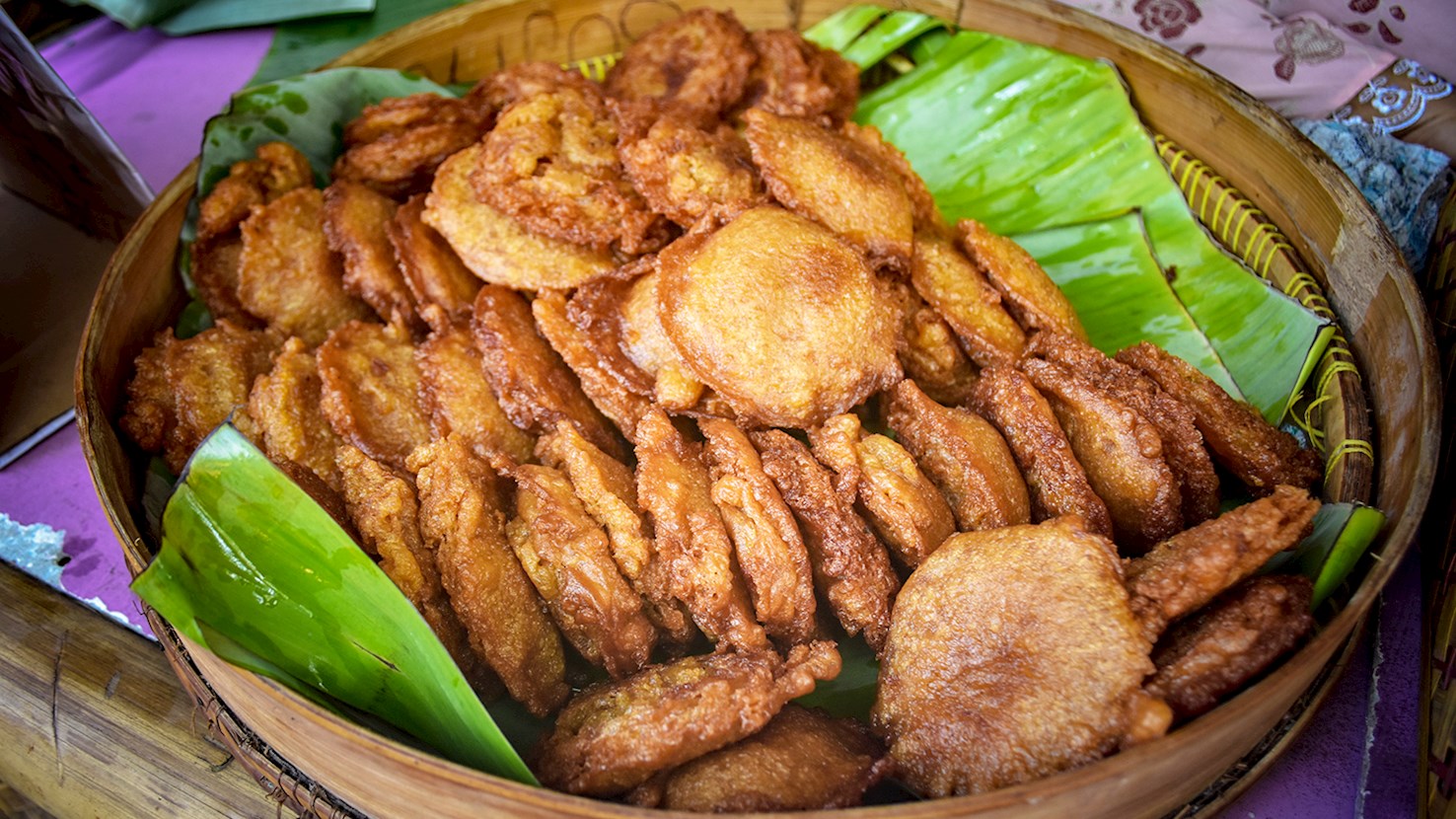
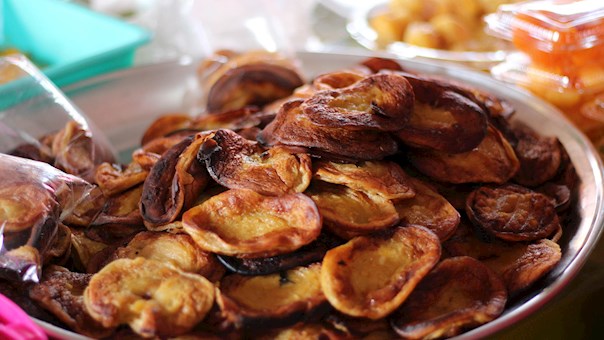
Kue cucur is a traditional snack that's also popular in Malaysia (kuih cucur) and Thailand (khanom fak bua), a type of deep-fried rice flour cake made with a simple batter of rice flour, palm sugar, and water. Its iconic shape, a thick, chewy center with a lacy, crisp rim, emerges naturally during frying, giving it a visual appeal that sets it apart from other traditional sweets. Despite its humble ingredients, the technique of preparing kue cucur requires skill and experience, particularly to achieve the perfect balance of textures and the signature golden crown that forms around its edges. The batter is made by dissolving rich, dark palm sugar in water, which is then mixed with rice flour to form a smooth, pourable mixture. This is allowed to rest so that the starches can hydrate fully, contributing to the chewy texture. When poured into hot oil in a specific, controlled motion, the batter spreads and begins to puff, forming its distinctive shape as the center remains thick and the edges bubble outward into a crisp, almost floral ring. The cooking process is as much a test of patience as it is of temperature control, as kue cucur can easily become greasy or misshapen if not handled properly. Kue cucur is often served at traditional ceremonies, family gatherings, or as an everyday street snack, where it’s typically displayed in neat stacks on banana leaves or sold fresh from roadside vendors. Its deep sweetness, which comes entirely from palm sugar, pairs well with a cup of hot tea or coffee.
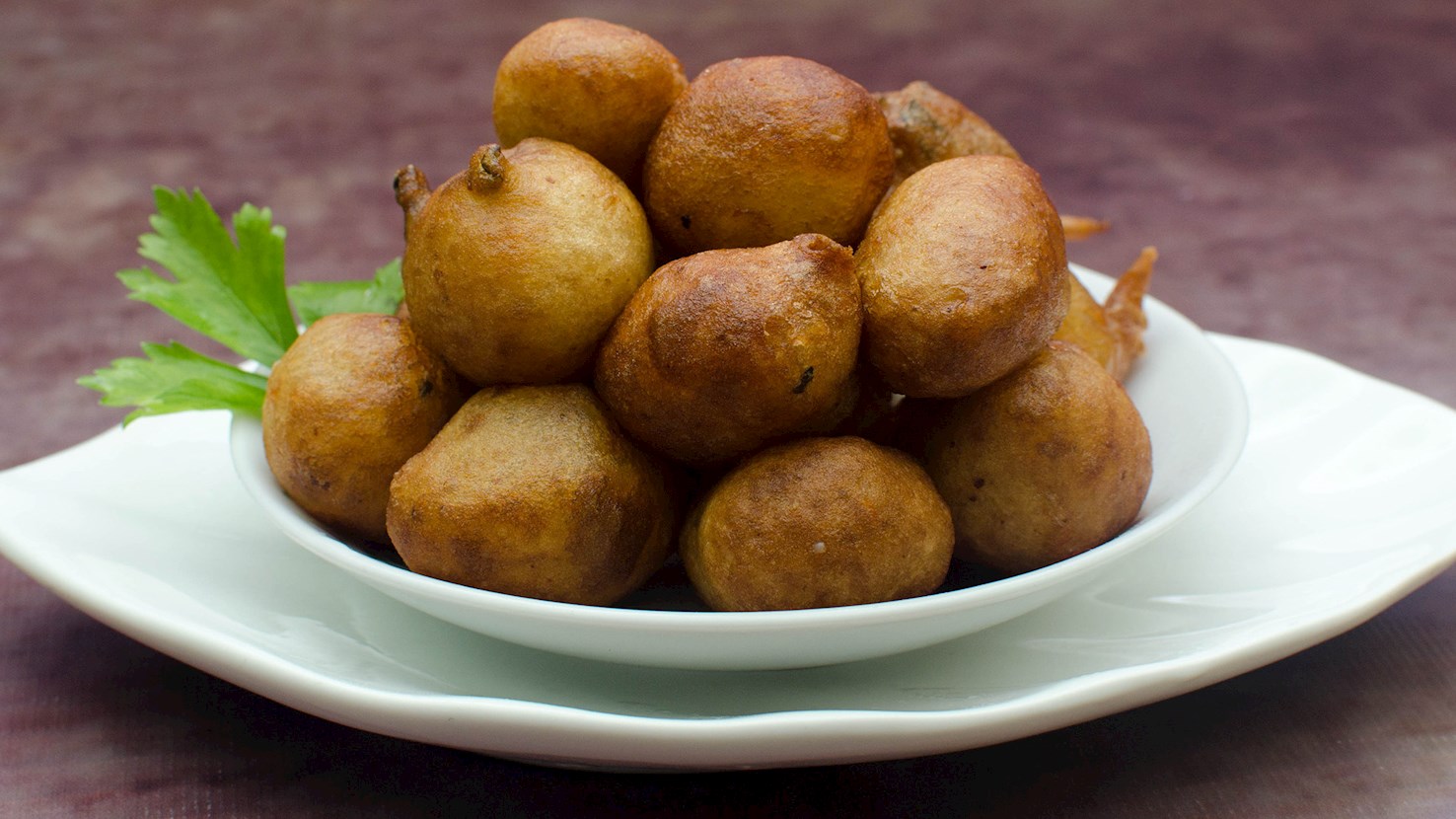
These Malaysian fried snacks can be found under many names and many varieties - both sweet and savory. The dish consists of round dough balls, made with flour (usually a mix of wheat and rice flour), combined with a variety of other ingredients, depending on the type of cokodok. The most common version uses mashed bananas, sugar, baking soda, and salt for a sweet, chewy inside and a crispy outside. It can be eaten with coffee or tea, so it is excellent as a breakfast snack or when served at tea-time. An easy-to-make, easy-to-eat dish, cokodok is beloved in Malaysia, Brunei, Indonesia, and Singapore. Other recipes may use anchovies, prawns, onions, or maize as a substitute for bananas.
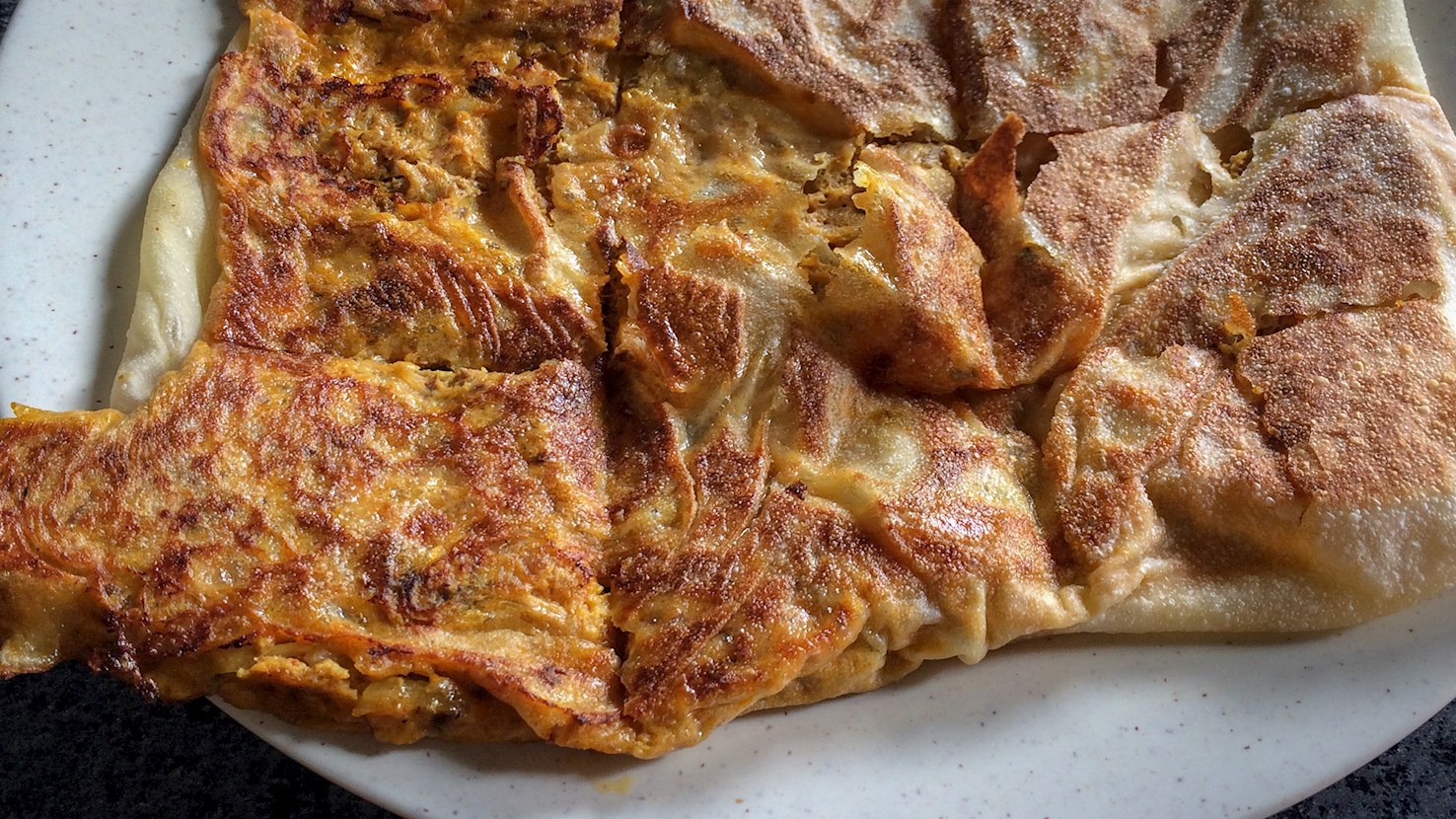
Roti sardin is a Malaysian flatbread dish, adapted from the Indian style of roti (translated as "bread", both in Hindustani and Malay languages). This variety is stuffed with canned sardines, sliced onions, chilies, and beaten eggs that hold everything together. Often times, it is eaten alongside ketchup, different kinds of curry or sambal (a south-east Asian type of hot sauce). The roti is pan-fried and served either as a breakfast dish or an all-day snack food.
TasteAtlas food rankings are based on the ratings of the TasteAtlas audience, with a series of mechanisms that recognize real users and that ignore bot,
nationalist or local patriotic ratings, and give additional value to the ratings of users that the system recognizes as knowledgeable.
For the “Top 17 Malaysian Snacks” list until October 15, 2026, 1,059 ratings were recorded, of which 636 were recognized by the system as legitimate.
TasteAtlas Rankings should not be seen as the final global conclusion about food. Their purpose is to promote excellent local foods,
instill pride in traditional dishes, and arouse curiosity about dishes you haven’t tried.



What People Say