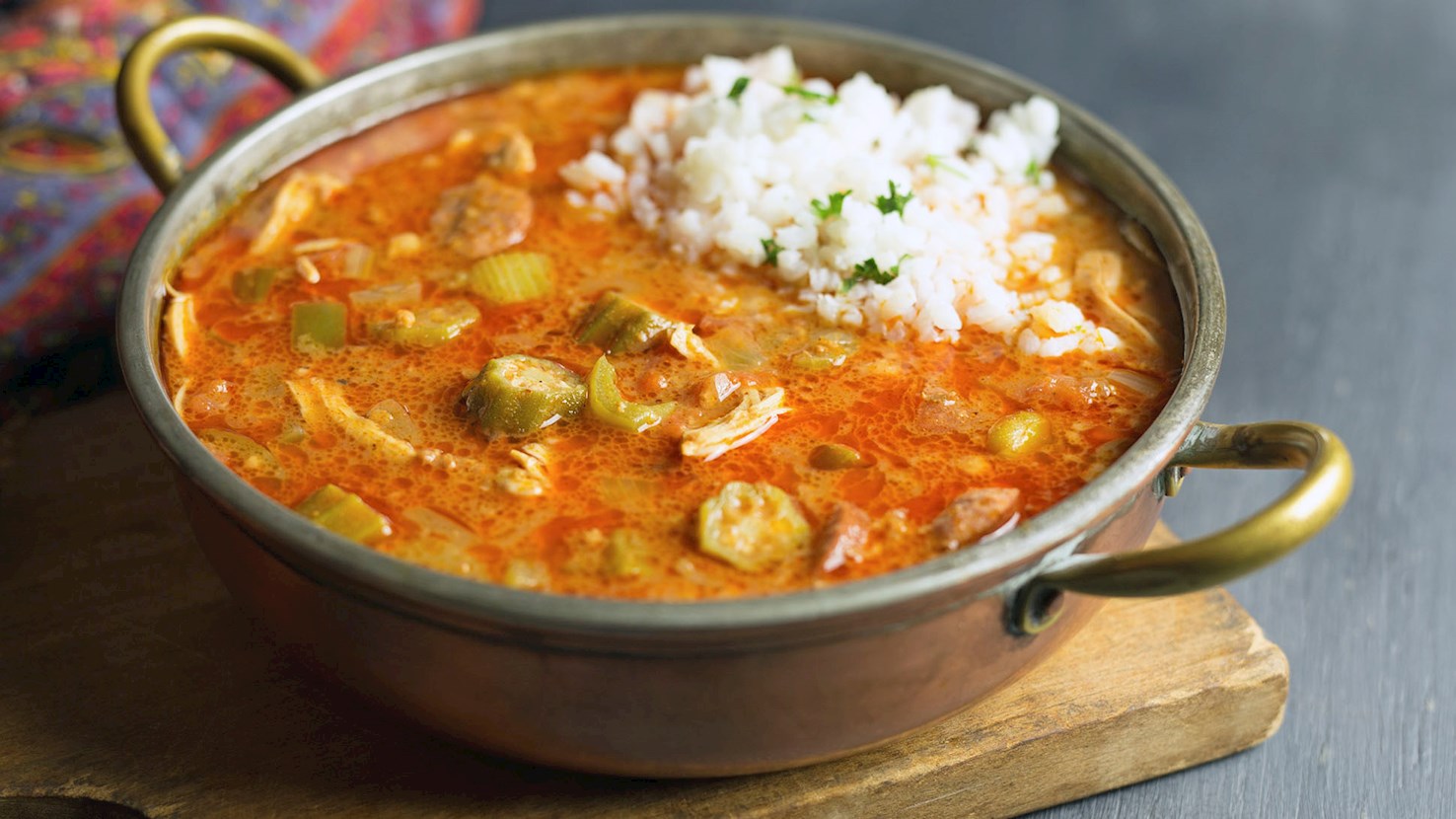
There is nothing better to represent a true taste of New Orleans than gumbo, a filling soup that is usually prepared in large, black, iron pots. A cultural and gastronomical symbol of Louisiana, it can be based on seafood and okra with tomatoes, or on turkey and chicken with added ham, sausage, and poached oysters. Perhaps rabbit or a wild duck will be the main stars, accentuated in flavor by tasso ham. Regardless of its base, gumbo is always intensely fragrant and aromatic with onions, garlic, bay leaf, and thyme, its thick and rich liquids ladled into bowls with an accompaniment of steamed white rice. Gumbo evolved from the French pot-au-feu, when the slaves from West Africa added okra as a thickener to the already roux-thickened French stew. If okra was not in season, filé powder was added, made from dried and crushed sassafras leaves, giving the dish a new layer of viscosity and a unique flavor. Whatever its variety of ingredients may be, gumbo must always include rice, roux (a combination of fat and browned flour that changes the flavor and modifies the thickness), and another thickener, be it okra or filé powder, but never both at the same time. Filé is typically used in thicker gumbos with sausages and chicken, while okra is used in lighter gumbos with seafood. Finally, a note for all gumbos - the ones that taste the best are those which had been left for a day or two and were then reheated, giving the ingredients a chance to combine into a flavorful and complex dish.
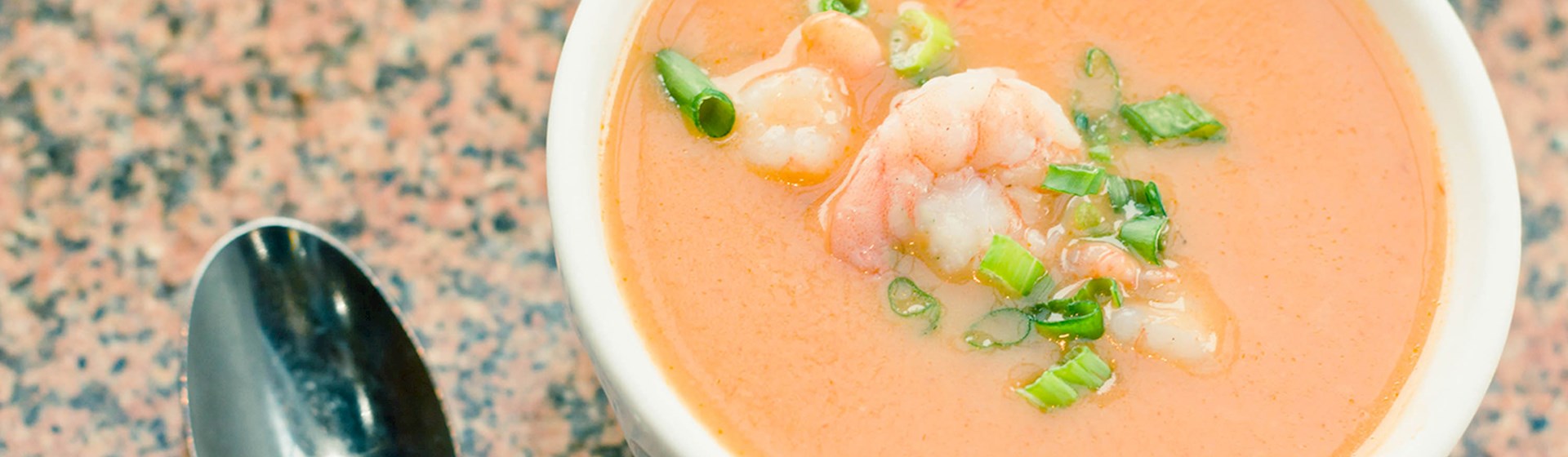
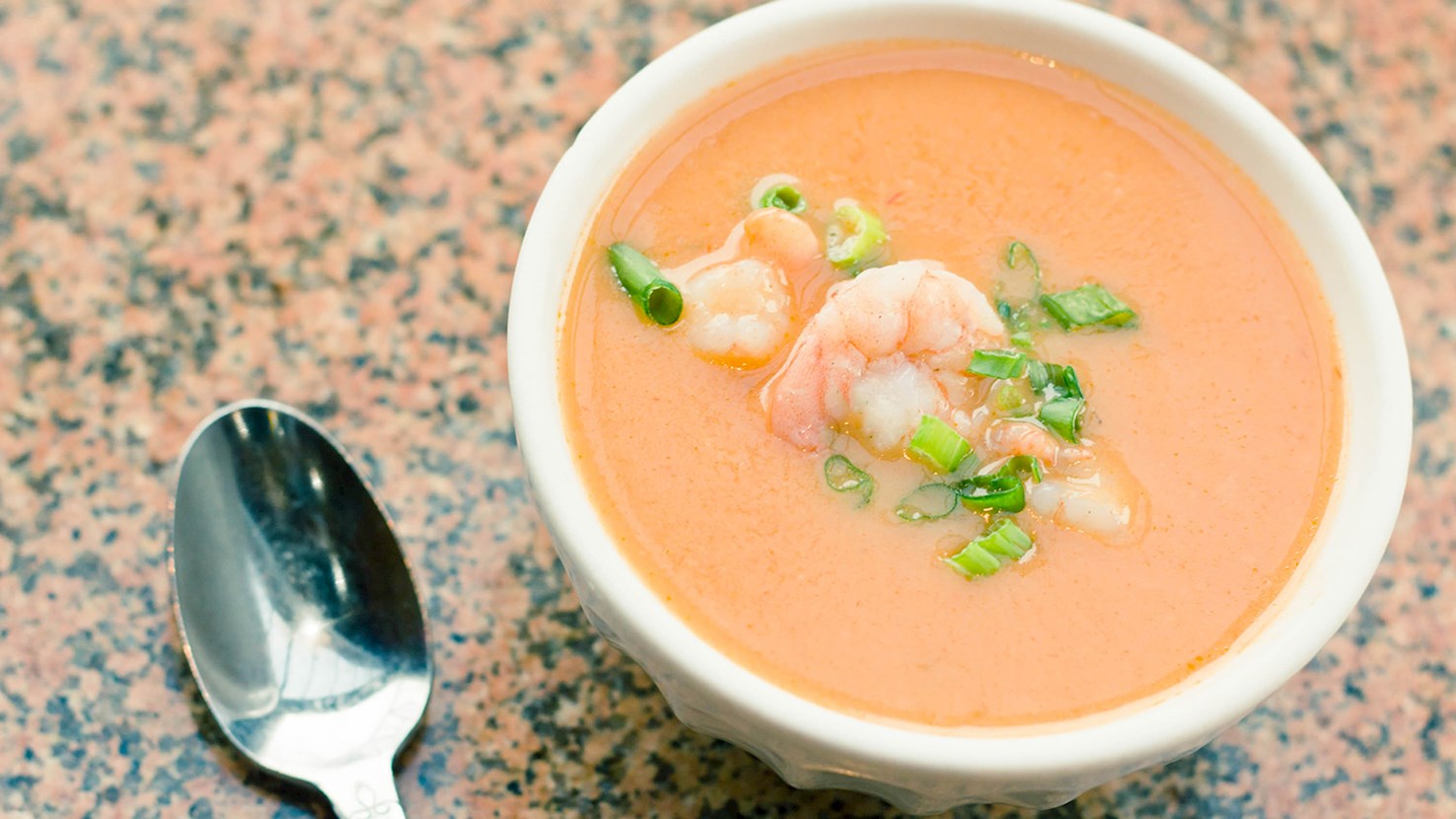
Shrimp bisque is a traditional Cajun dish originating from Louisiana. The soup is usually made with a combination of large shrimp, seafood broth, shrimp broth, butter, bell peppers, shallots, garlic, flour, cream, brandy, hot sauce, and seasonings. The shrimps are simmered in the broth until the liquid is reduced, while a combination of butter, bell peppers, shallots, and garlic is sautéed and sprinkled with flour and mixed with brandy and cream until the combination becomes thick. The cooked shrimps are added to the pot and simmered until hot, and the dish is then served, often garnished with sliced green onions or parsley. It's recommended to serve shrimp bisque with French bread on the side for mopping up the juices.
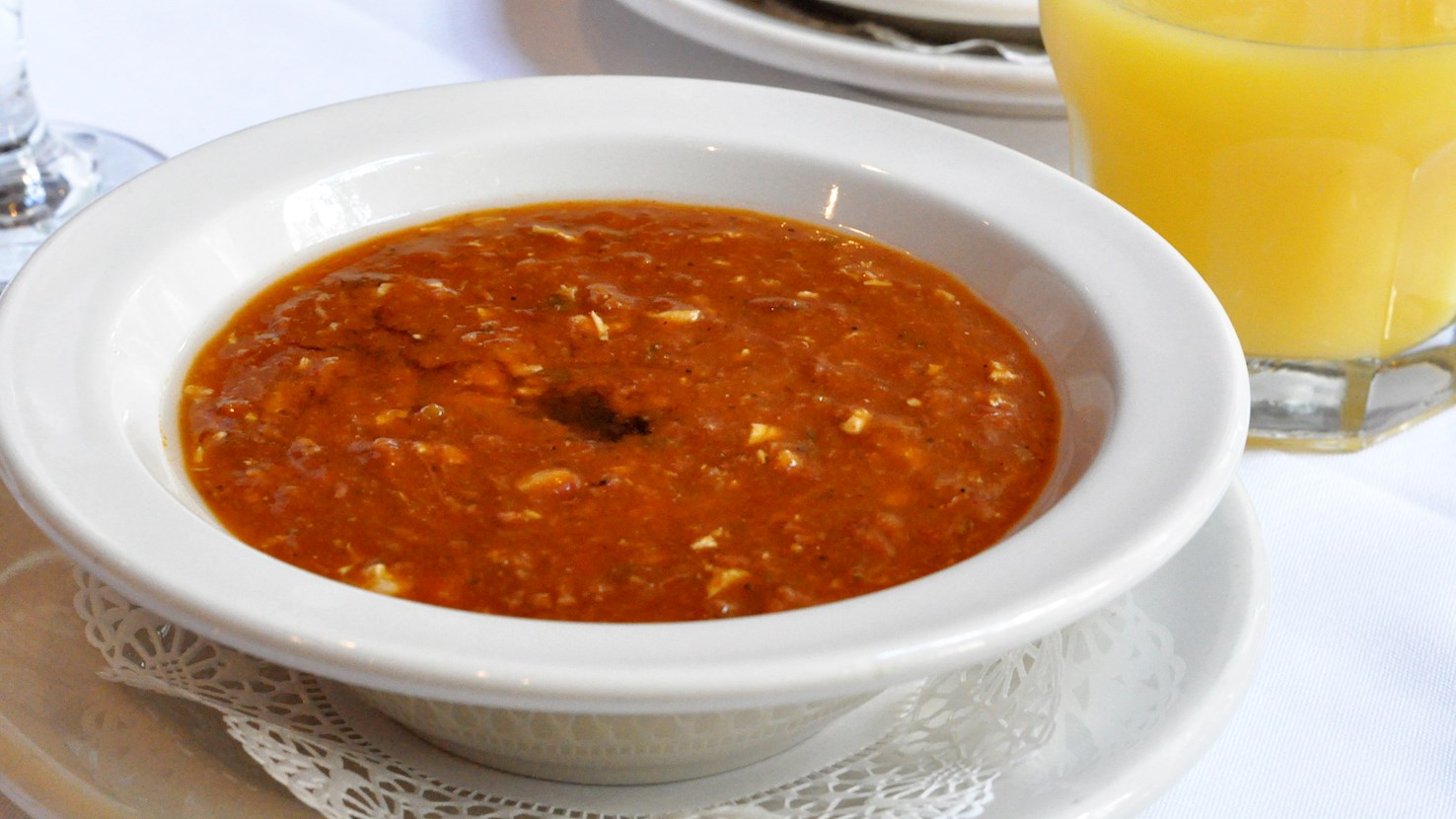
Turtle soup is a traditional soup originating from Louisiana. This dark soup is so robust that it borders on a stew. It's typically made with turtle meat, a roux of butter and dark flour, sherry, tomatoes, stock, diced hard-boiled eggs, lemon juice, and a variety of herbs and spices such as parsley, paprika, cumin, coriander, and allspice. Once done, the soup is served in individual bowls, often with sherry, lemon wedges, or crusty bread on the side. The turtles used for the soup are alligator snapping turtles, but nowadays they come from farms, not from the wild because commercial collection of this species has been outlawed in Louisiana in 2004.
Shrimp Chippewa is an American dish hailing from New Orleans. It was invented by Paul Prudhomme in a restaurant called Commander's Palace. The dish is a simple combination of sautéed shrimp, shallots, mushrooms, and garlic. Other ingredients include butter, chicken broth, and chopped spring onions and parsley. Although it's technically a soup, shrimp Chippewa is more of a main dish. It's traditionally served with lots of French bread to soak up the garlic and butter sauce. The word Chippewa in the name of the dish refers to Chippewa Street in the Irish Channel.
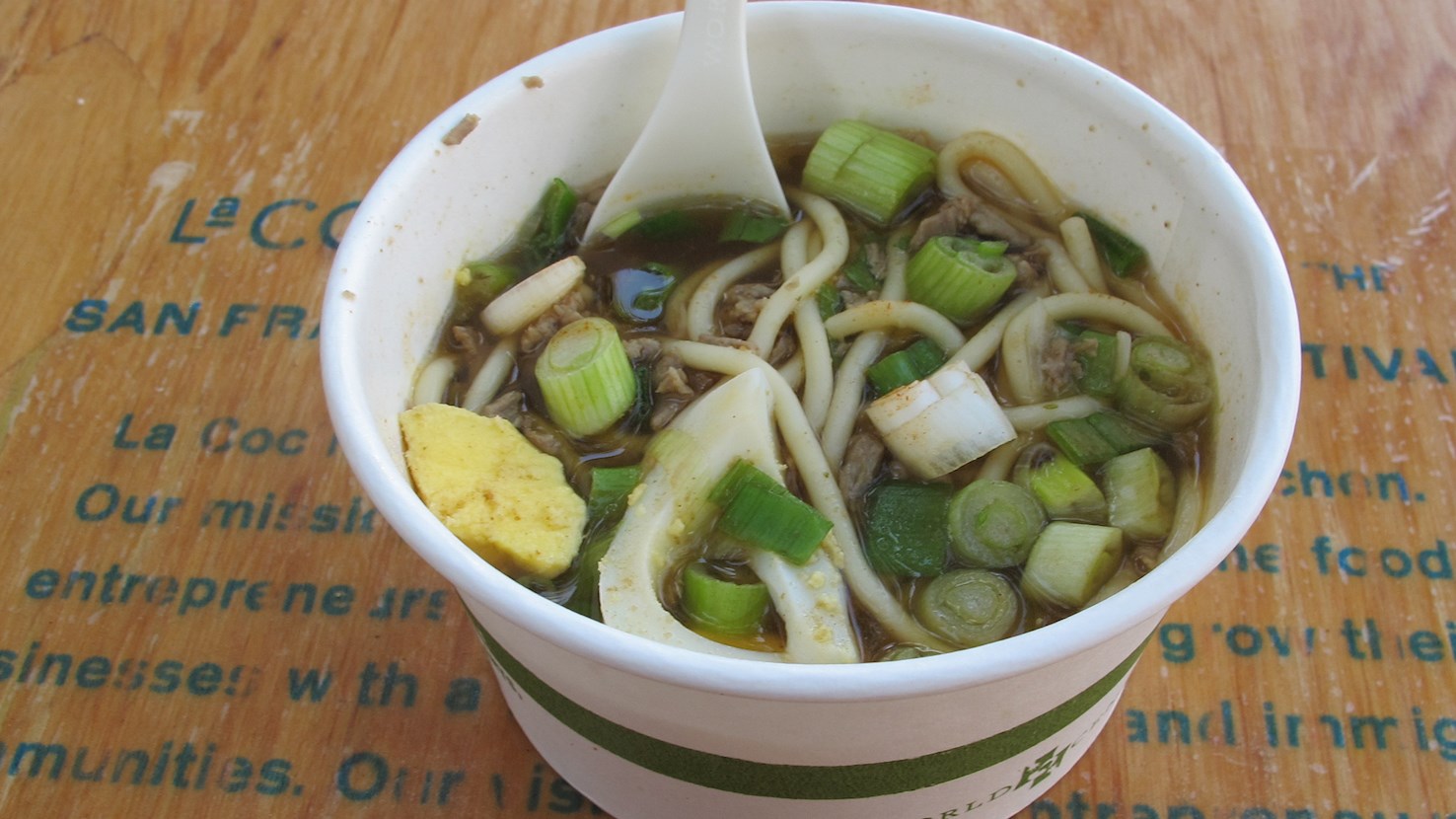
With no written recipe and of mysterious origin, yaka mein is one of the best-kept secrets of New Orleans. The soup is made with stewed meat (typically beef), meat broth, spaghetti noodles, and garnishes such as hard-boiled eggs and green onions. Chili powder, Tabasco sauce, sriracha, or Creole seasoning are often added to the broth in order to elevate its flavors. Yaka mein is a great hangover cure, which is why it’s sometimes referred to as Old sober. Although the locals love this soup, it is not well known outside of New Orleans and the surrounding areas.
TasteAtlas food rankings are based on the ratings of the TasteAtlas audience, with a series of mechanisms that recognize real users and that ignore bot,
nationalist or local patriotic ratings, and give additional value to the ratings of users that the system recognizes as knowledgeable.
TasteAtlas Rankings should not be seen as the final global conclusion about food. Their purpose is to promote excellent local foods,
instill pride in traditional dishes, and arouse curiosity about dishes you haven’t tried.




What People Say