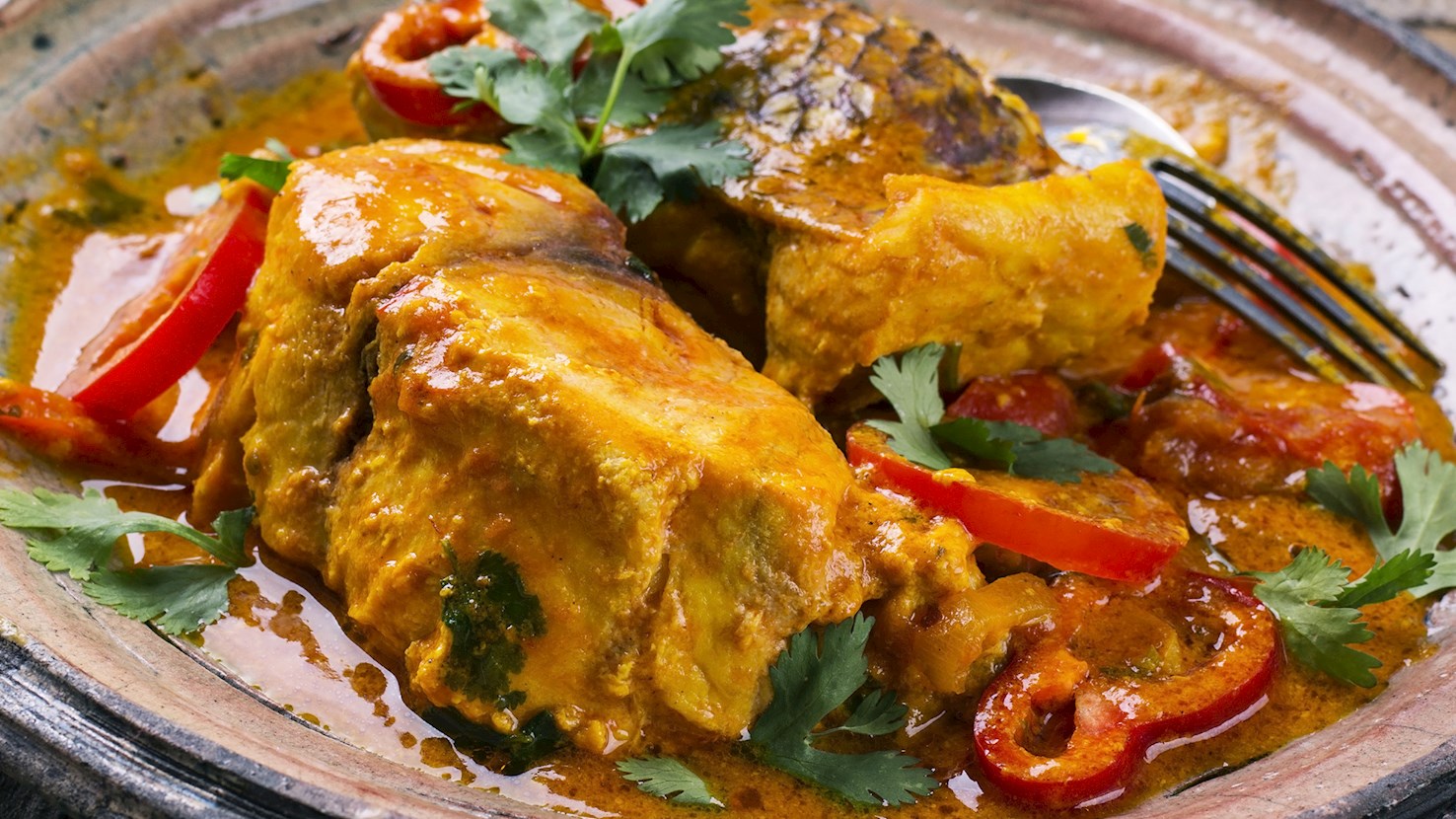
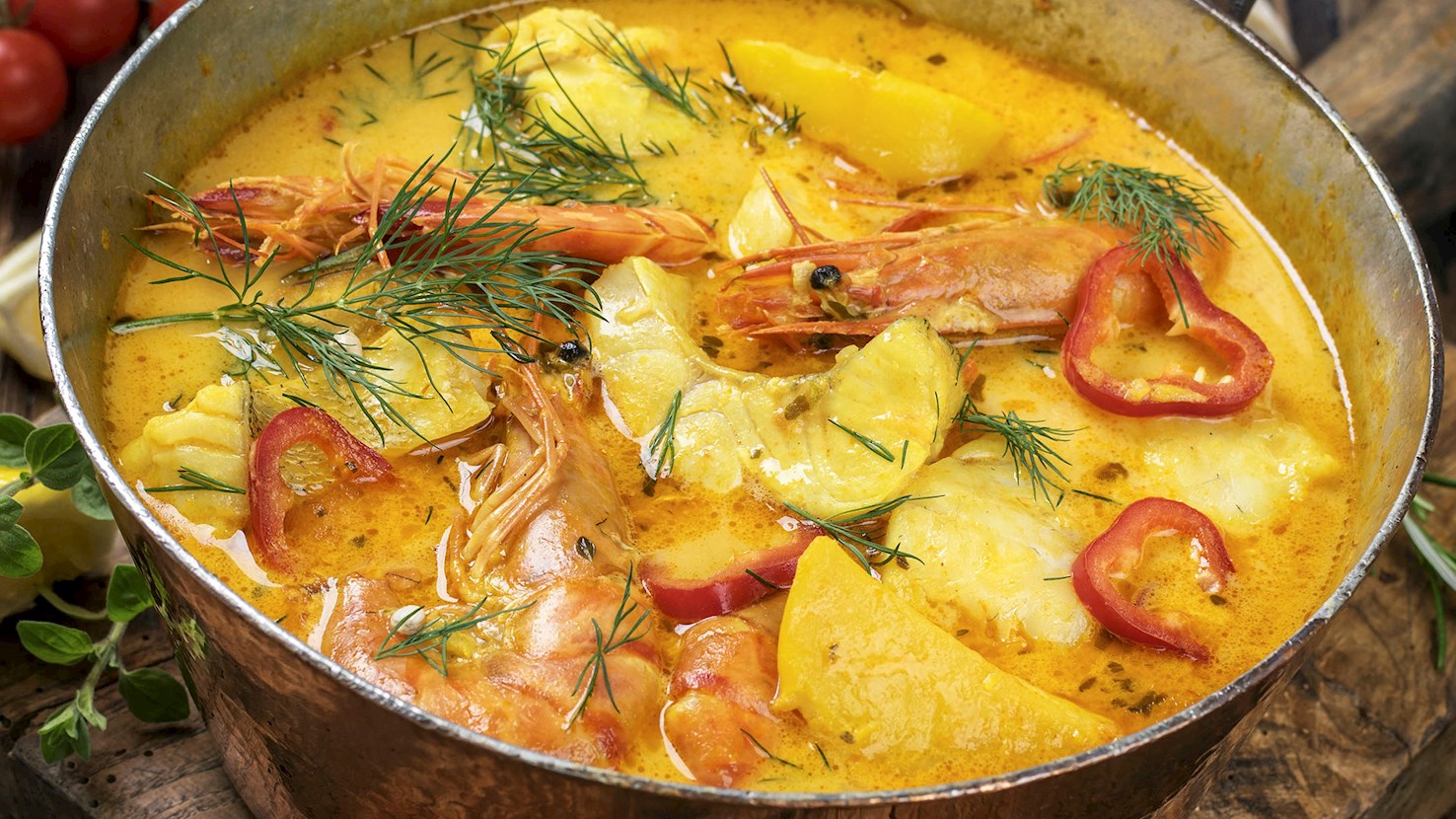
Moqueca Baiana is a seafood stew originating from the Brazilian state of Bahia, hence the word Baiana in its name. It consists of white fish, shrimps, or other seafood combined with coconut milk, dendê oil, lime juice, and various vegetables such as red and yellow peppers, tomatoes, spring onions, garlic, onions, and sometimes ginger. When done, the dish is typically garnished with chopped coriander, then served with rice and farofa. This seafood stew was originally prepared by the native people of Brazil. Over time, new elements were added to the stew, such as coconut milk, which was first introduced to Brazil by Portuguese colonists, and palm oil, which was brought over to the country by African slaves.
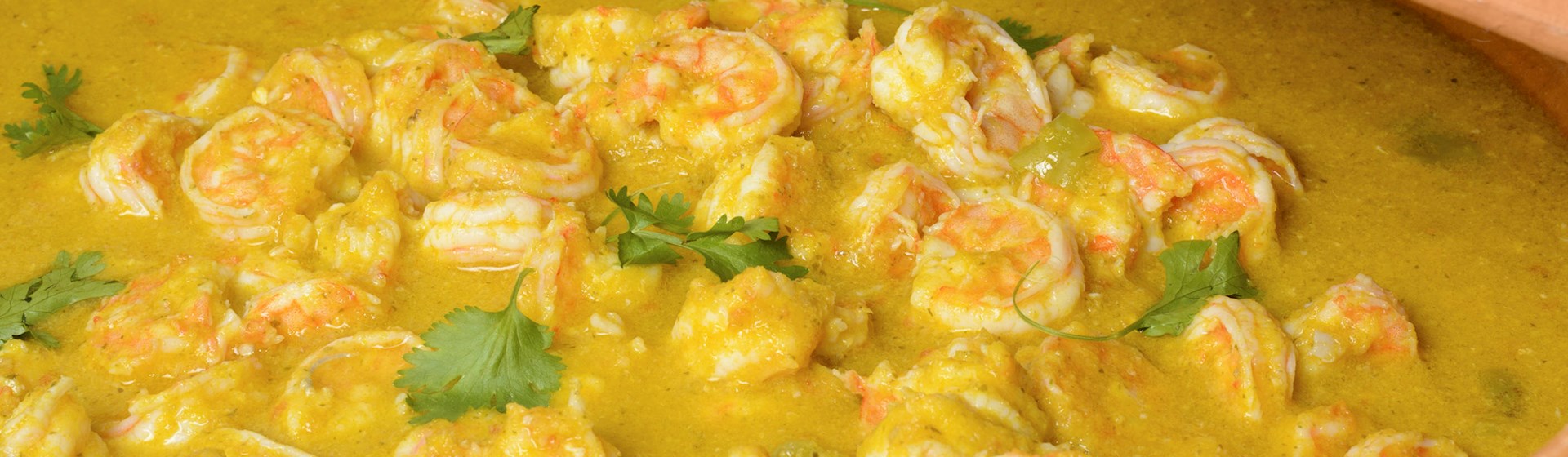
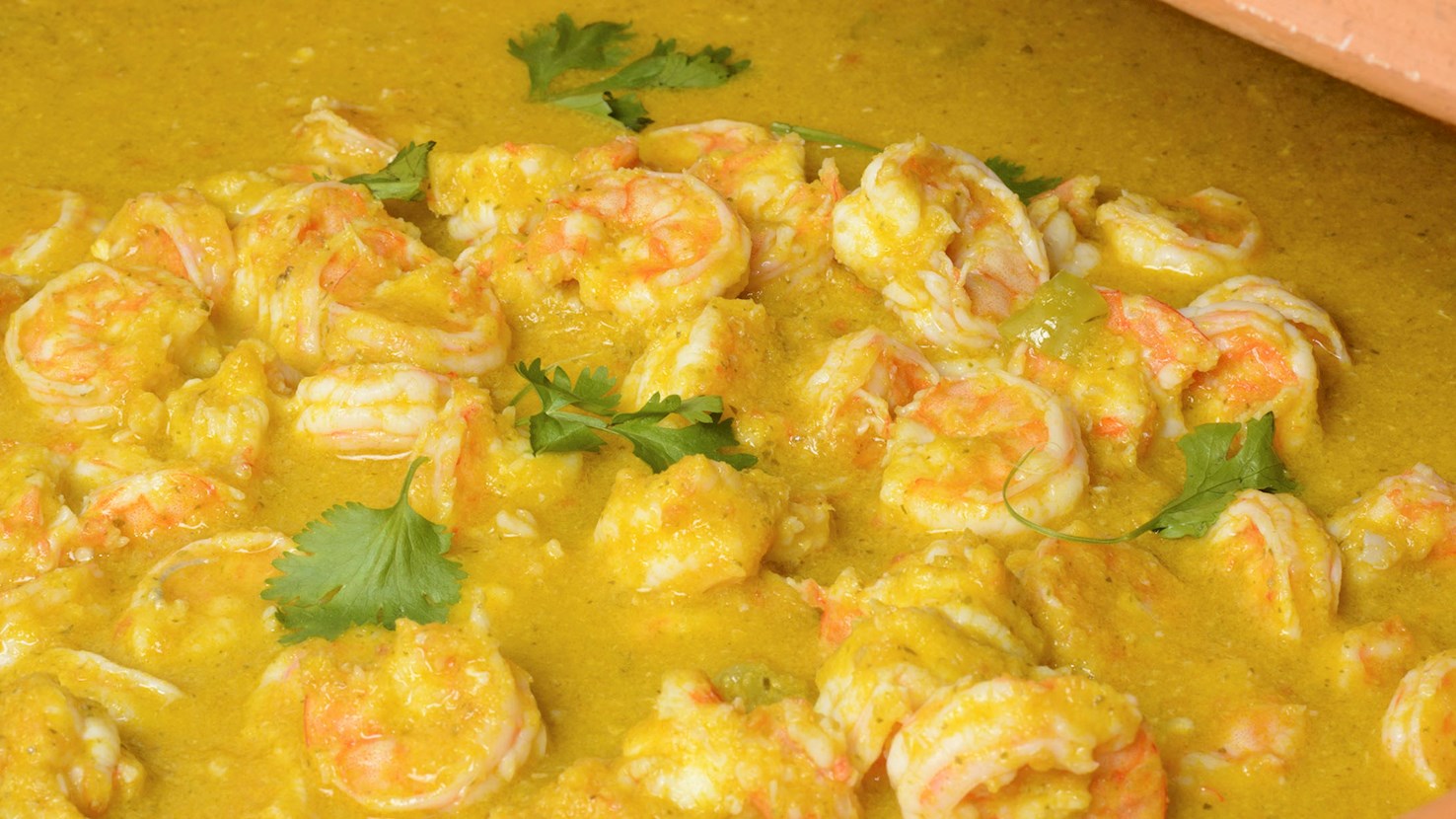
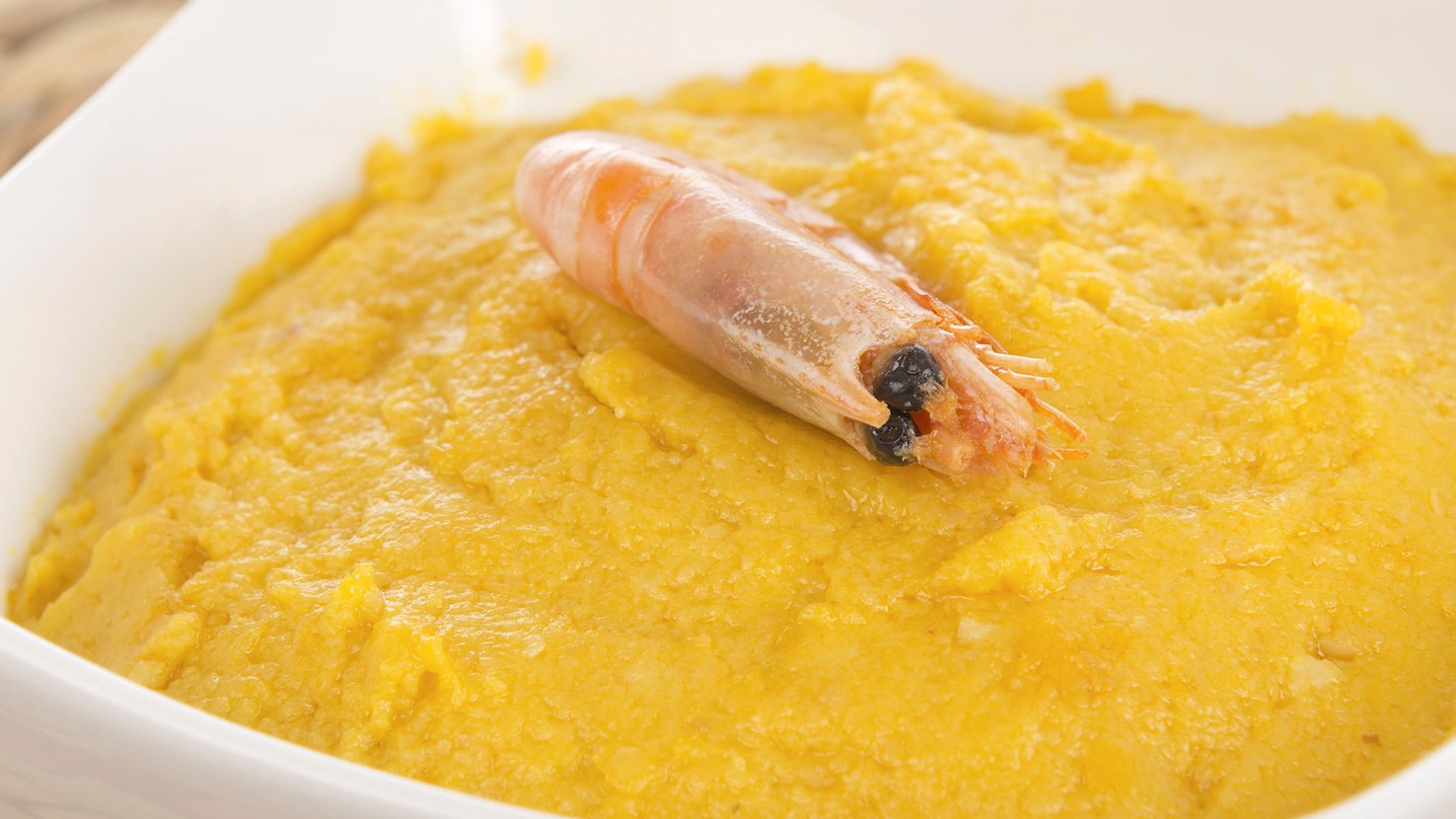
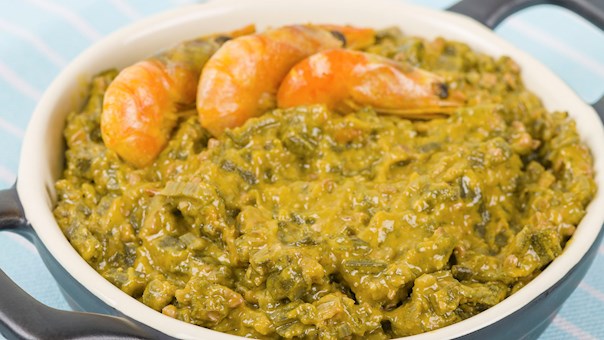
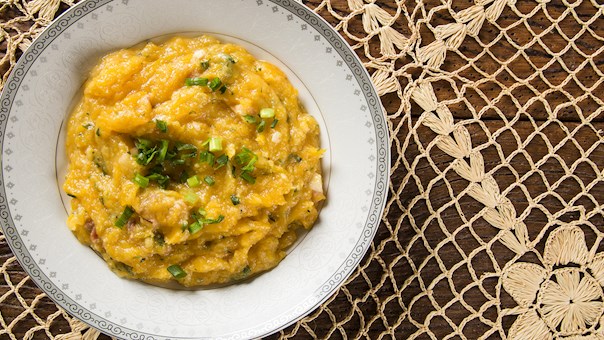
A classic dish of the Brazilian Bahia region, bobó de camarão is a stew made with puréed cassava (bobó), fresh shrimps, coconut milk, and dendê palm oil. The word bobó comes from the Ewe people who were brought to Brazil as slaves, denoting a dish made with beans, although there are no beans in bobó de camarão as we know it today, due to the fact that the Afro-Brazilians enthusiastically took to cassava when they were first introduced to it. The dish is traditionally accompanied by rice on the side, and is a staple of most traditional Brazilian eateries and Bahian self-service restaurants.
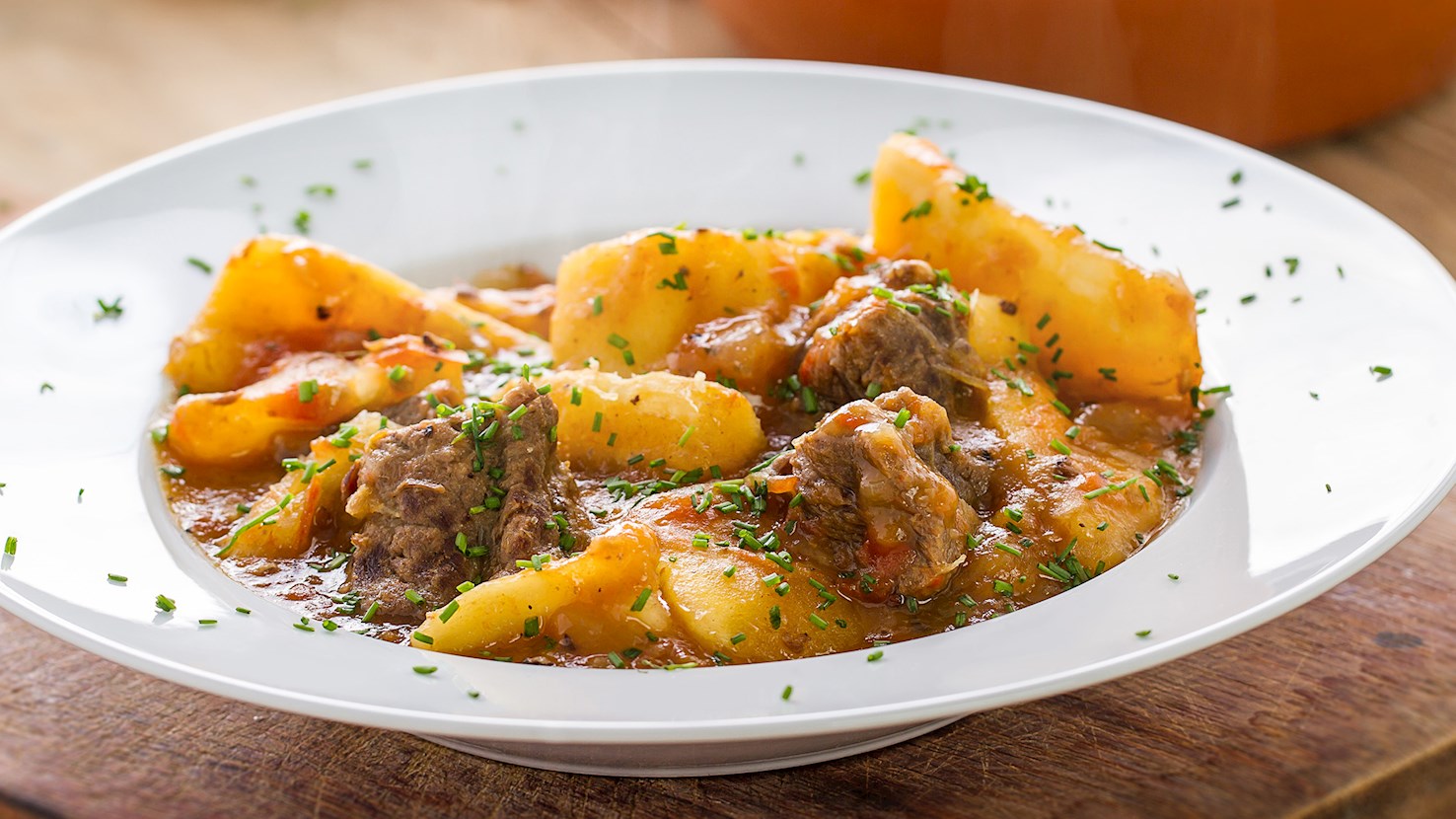
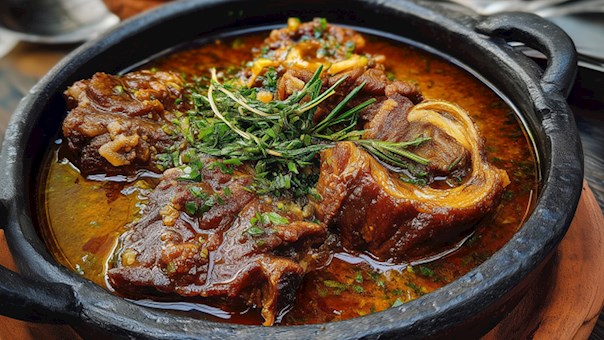
Vaca atolada is a Brazilian meat dish prepared with beef ribs, garlic, onions, tomatoes, parsley, cassava, chili peppers, and (if available) ground colorau (urucum seed). The marinated meat is cooked and drenched in a thick sauce, hence the alternative name for the dish – cow stuck in the mud. This spicy meat dish is traditionally served with white rice, while fresh green salads are often served on the side. Vaca atolada is especially popular in the inner regions of Brazil, particularly the state of Minas Gerais.
Moqueca is a seafood stew with a base of palm oil and coconut milk or olive oil, combined with fish or shrimps (or both). The dish is stewed in traditional clay pots along with vegetables and fresh herbs, and it is traditionally served over rice. It can be traced back to 300 years ago, when it was first invented due to the fact that the Portuguese brought coconuts to the country, and slaves from Africa introduced palm oil to Brazilian cuisine. There are numerous versions of moqueca, such as moqueca Capixaba, or moqueca Baiana, from the Bahia state in the northeast of the country. The dish is traditionally garnished with fresh chopped cilantro on top, and accompanied by rice, pirão, or farofa.
Rich, substantial, and tropically flavored - vatapá is one of the most famous Brazilian dishes, a main course consisting of a combination of stale bread, fish (usually cod), shrimp, coconut milk, manioc flour, dendê palm oil, and cashews. The dish is often consumed with white rice, or as a filling for acarajé fritters, another popular Brazilian dish. Bright yellow in color, vatapá is a specialty of Bahia, a state on the country's northeastern coast that is heavily influenced by the West Africans who were brought to the country as slaves. Although the origins of this dish are unknown, most culinary historians agree that it was invented in Bahia, even if the basic concept for the dish came from Africa.
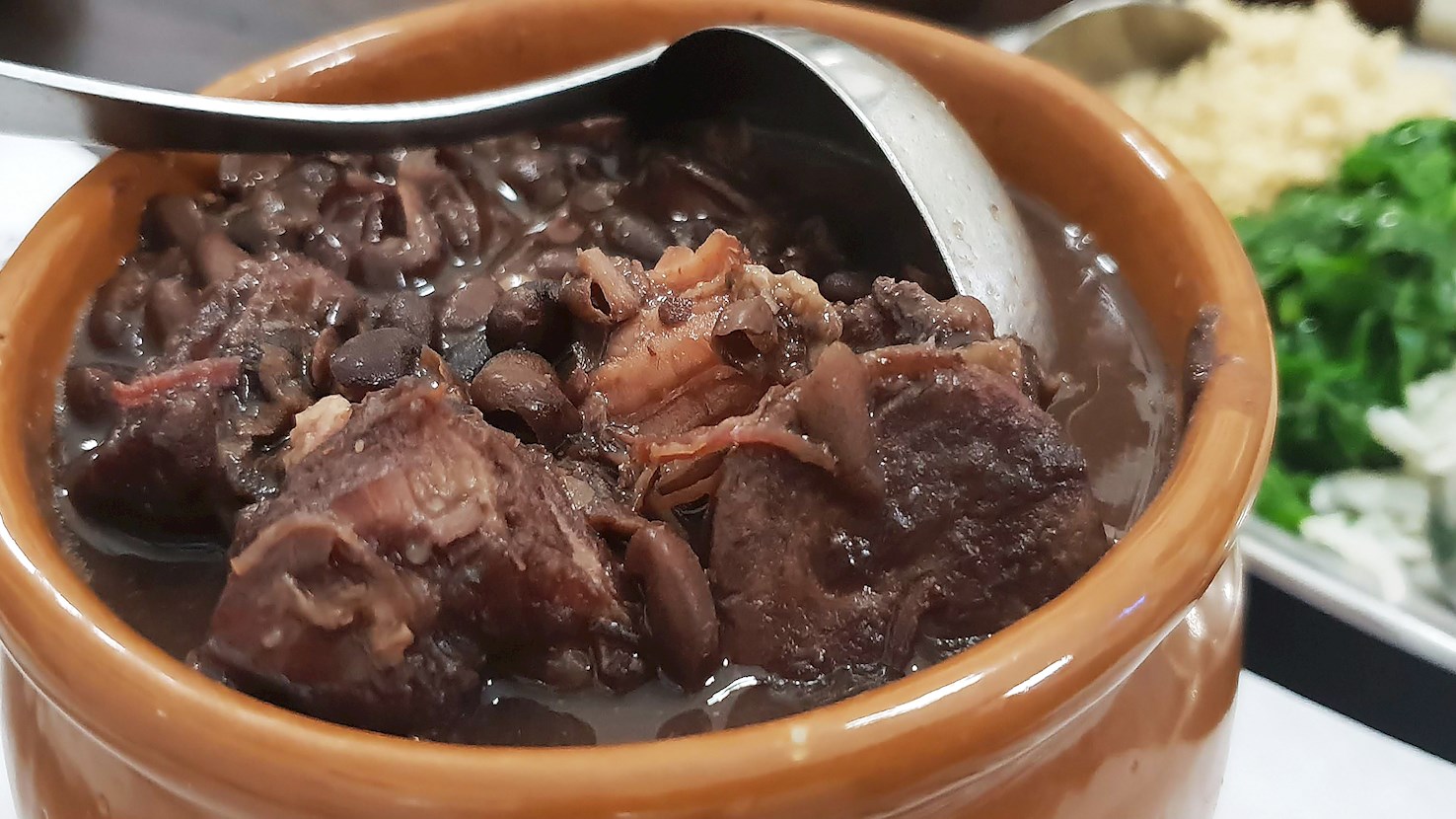
Feijoada or feijoada completa is Brazil's national dish, a hearty stew featuring pork and black beans. The dish is consumed throughout the country, and every family in Brazil has their own, special recipe. Sautéed greens, cheese rolls, rice, and fresh, sliced oranges are served as an accompaniment to the smoked pork and richly flavored black beans. Traditionally, it is prepared for Saturday lunch, so that the consumers may sleep it off. The beans are flavored with onions, tomatoes, coriander, and garlic, while pork meat can be additionally enriched with dried beef and smoked pork sausages. Before the main meal, consumers are offered caldinho de feijao, a bean broth served in shot glasses or small ceramic cups and garnished with pork rinds known as torresmos. The name feijoada is derived from the Portuguese word for beans, feijão, and it probably originated in the 1600s in Recife, on sugar plantations built by the Portuguese colonists, although some believe that it was created in Rio de Janeiro. The Brazilian version usually uses black beans, while the Portuguese one typically uses white or kidney beans. Feijoada is artfully displayed on platters full of ingredients, so that the consumers may choose their favorites and enjoy them at a leisurely pace. The meats are sliced and placed on platters; the beans served in large serving bowls, and the accompaniments include Brazilian rice, kale, cassava with butter or hard-boiled eggs, sliced oranges, and hot pepper-lime sauce. During the meal, cachaca, a sugarcane brandy and Brazil's most popular liquor, is served as a traditional accompaniment to feijoada.
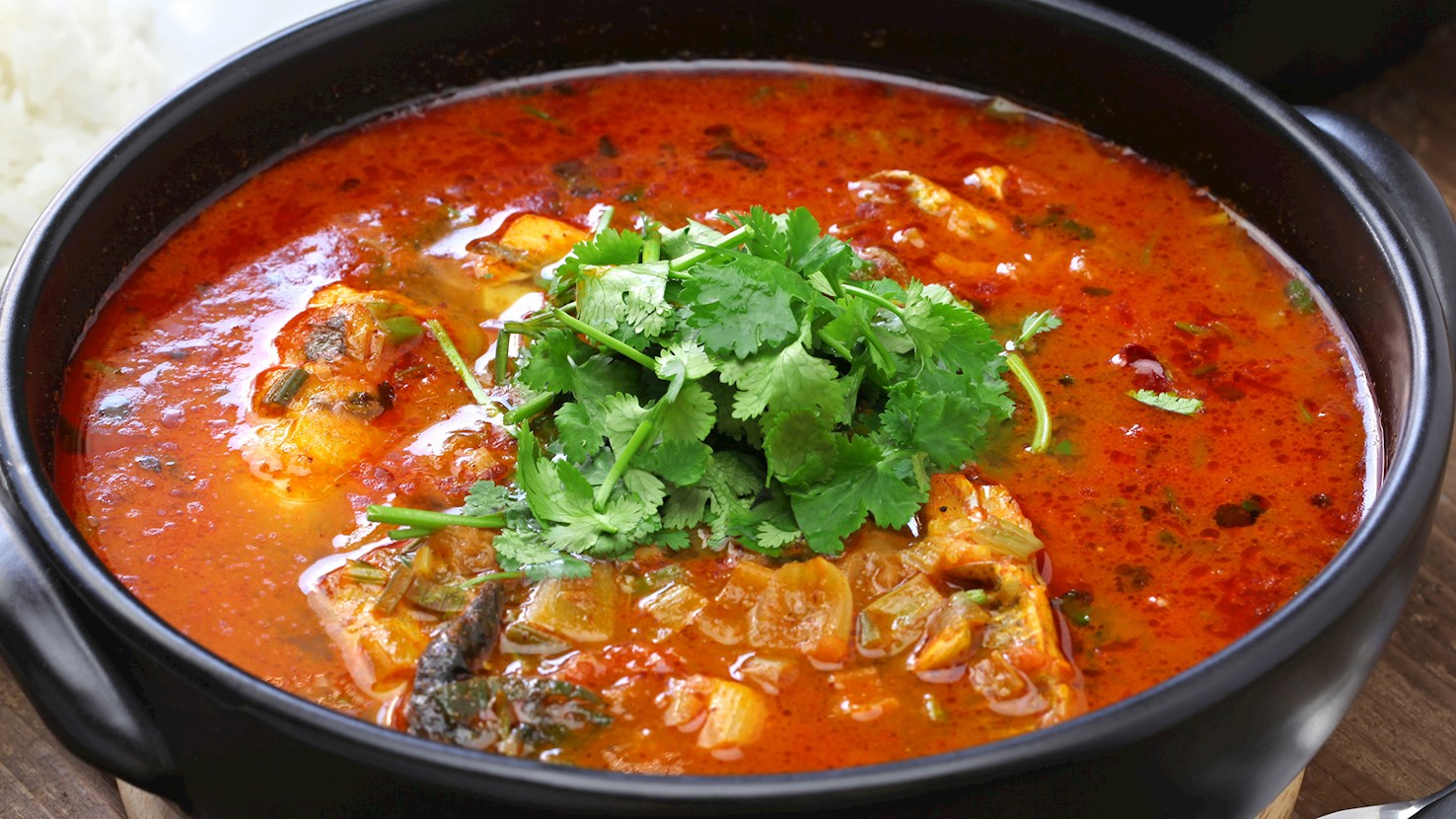
Moqueca capixaba is a traditional stew originating from the region of Espírito Santo. It is prepared with fish, lime juice, coriander, and vegetables such as onions, tomatoes, and garlic, all nicely colored with annatto. Traditionally, the stew is cooked in a clay pot called panela de barro – the seafood should only be layered with other ingredients and the heat is turned up for the stew to simmer on its own. In some cases, chili peppers are added for a bit of heat. When served, moqueca capixaba is typically accompanied by white rice or a creamy manioc porridge called pirão.
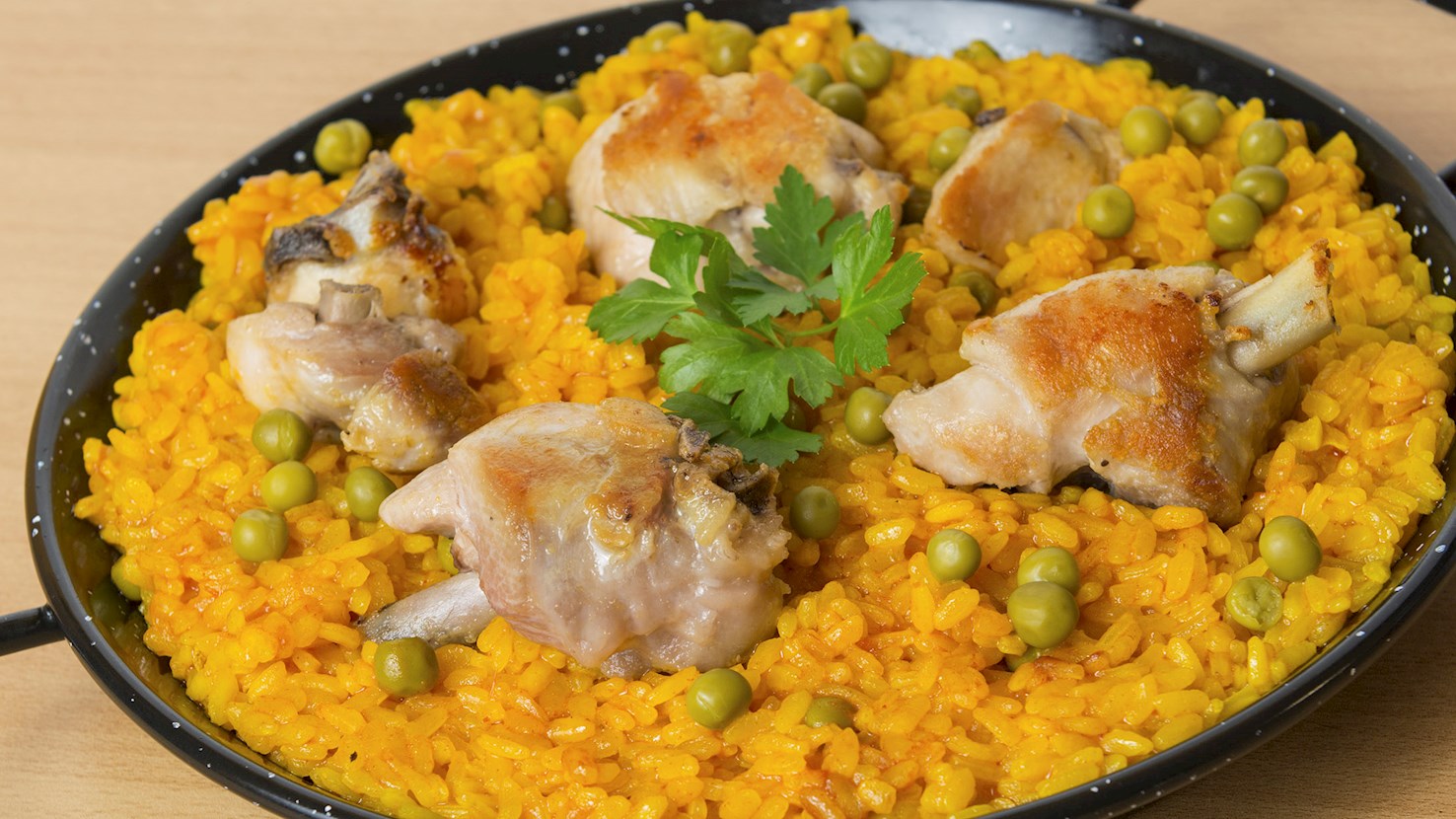
Galinhada is a one-pot dish consisting of bone-in chicken pieces and rice stewed together with a vibrant array of aromatics, vegetables, and spices. To execute the classic recipe, cooks begin by intensely marinating cuts of poultry—most commonly thighs, drumsticks, and occasionally breasts—in a sharp blend of lime juice or vinegar, crushed garlic, salt, and black pepper. Then, the meat is aggressively seared in a large, heavy-bottomed pan or iron skillet until the fat renders and the skin develops a deep, golden-brown crust. Once the chicken reaches proper caramelization, chopped onions, bell peppers, and tomatoes are folded directly into the rendered fat to build a highly flavorful, aromatic base, effectively dissolving the savory browned bits from the bottom of the cookware. Long-grain white rice is then stirred into this rich mixture, briefly toasting the grains to coat them before the simmering liquid—usually homemade chicken broth or water—is introduced. The entire pot is tightly covered and left to cook slowly over low heat, allowing the rice to swell and absorb the deeply savory liquid while the chicken becomes meltingly tender. While this fundamental cooking method remains constant across Brazil, significant regional variations fundamentally alter the dish's final flavor profile and visual presentation. In the state of Minas Gerais, cooks impart a vibrant golden-yellow hue to the meal using ground annatto seeds or turmeric, frequently folding whole kernels of corn, sweet peas, and fresh green beans into the simmering pot. Conversely, the iteration originating from the central-western state of Goiás relies heavily on pequi, a highly aromatic native savanna fruit that imbues the rice with a distinctly floral, earthy flavor and a bright yellow tint, often accompanied by guariroba, a uniquely bitter native heart-of-palm. The widespread culinary footprint of this hearty meal stems directly from its 17th-century roots, driven by the bandeirantes—colonial explorers and fortune hunters who traversed the rugged Brazilian interior. These lengthy expeditions necessitated sustaining single-vessel meals that used readily foraged ingredients alongside easily transportable staples like rice, eventually transitioning to locally raised poultry as permanent farming settlements developed along the established trade routes. Today, this deeply historic dish is almost exclusively served family-style, brought directly to the center of the dining table in the pot in which it was cooked, for communal sharing. It is traditionally presented alongside simple, highly acidic accompaniments designed specifically to cut through the heavy richness of the rendered chicken fat, such as a sharp tomato and onion vinaigrette (vinagrete), fiery local malagueta chili sauce, crispy toasted cassava flour (farofa) for added texture, and a generous scattering of freshly chopped parsley and scallions applied immediately before eating.
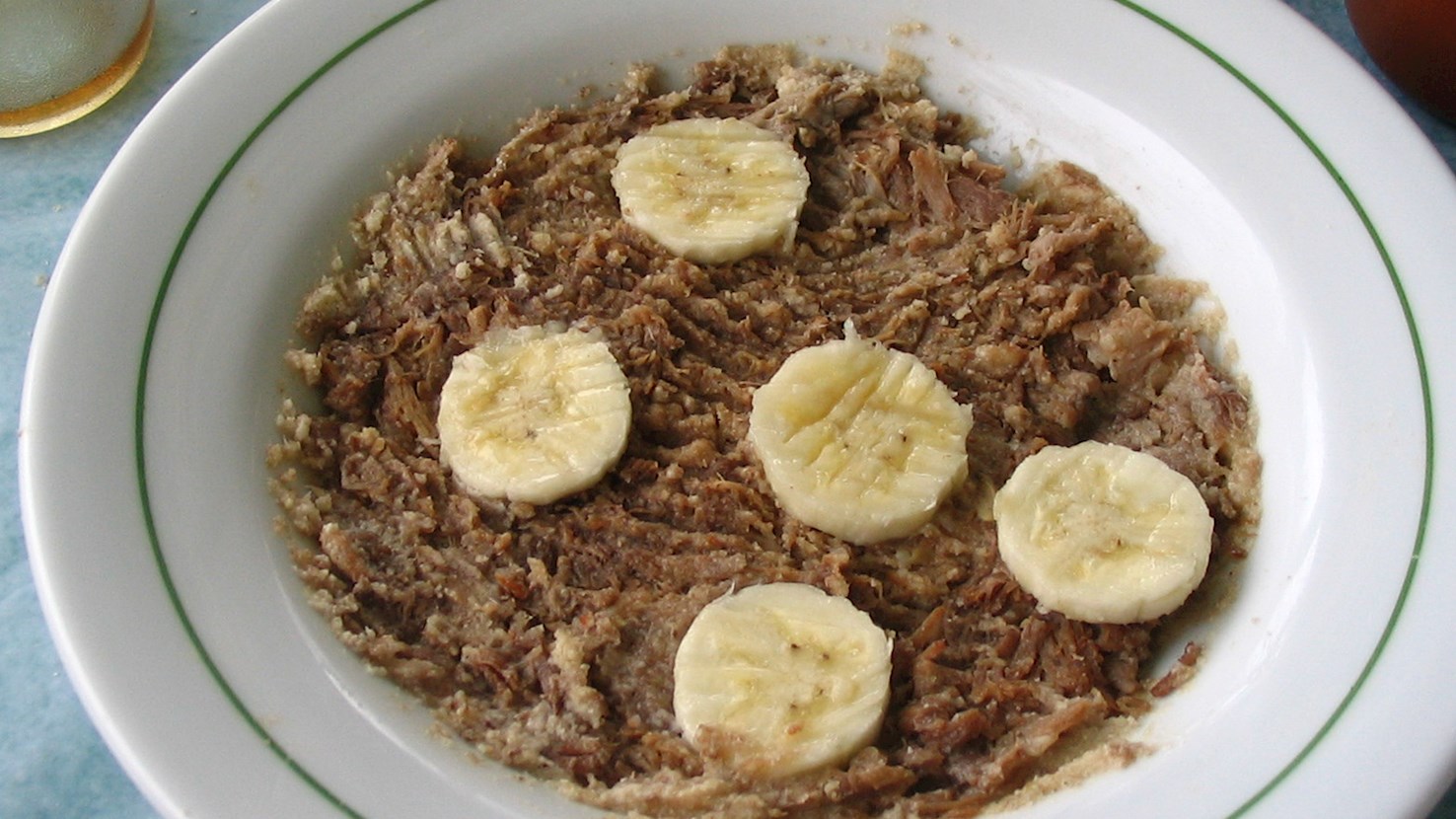
Barreado is a Brazilian Carnival staple dish originating from the state of Paraná. This hearty stew is made with beef (usually second-grade cuts of tougher meat with lots of fat), onions, tomatoes, beef bouillon, cumin, bay leaves, and fried bacon. The ingredients are placed in a clay pot, and then water is added until all the ingredients are covered. The clay pot is traditionally sealed with a ring of dough made from manioc flour and wheat flour. Once prepared, the stew is left to simmer over a low flame anywhere from 12 to 48 hours, resulting in extremely tender meat that falls apart. The name of the dish means covered in mud, referring to the seal of dough on the clay pot. Barreado is usually served over manioc flour to form a gravy, and it is accompanied by rice and sliced bananas.
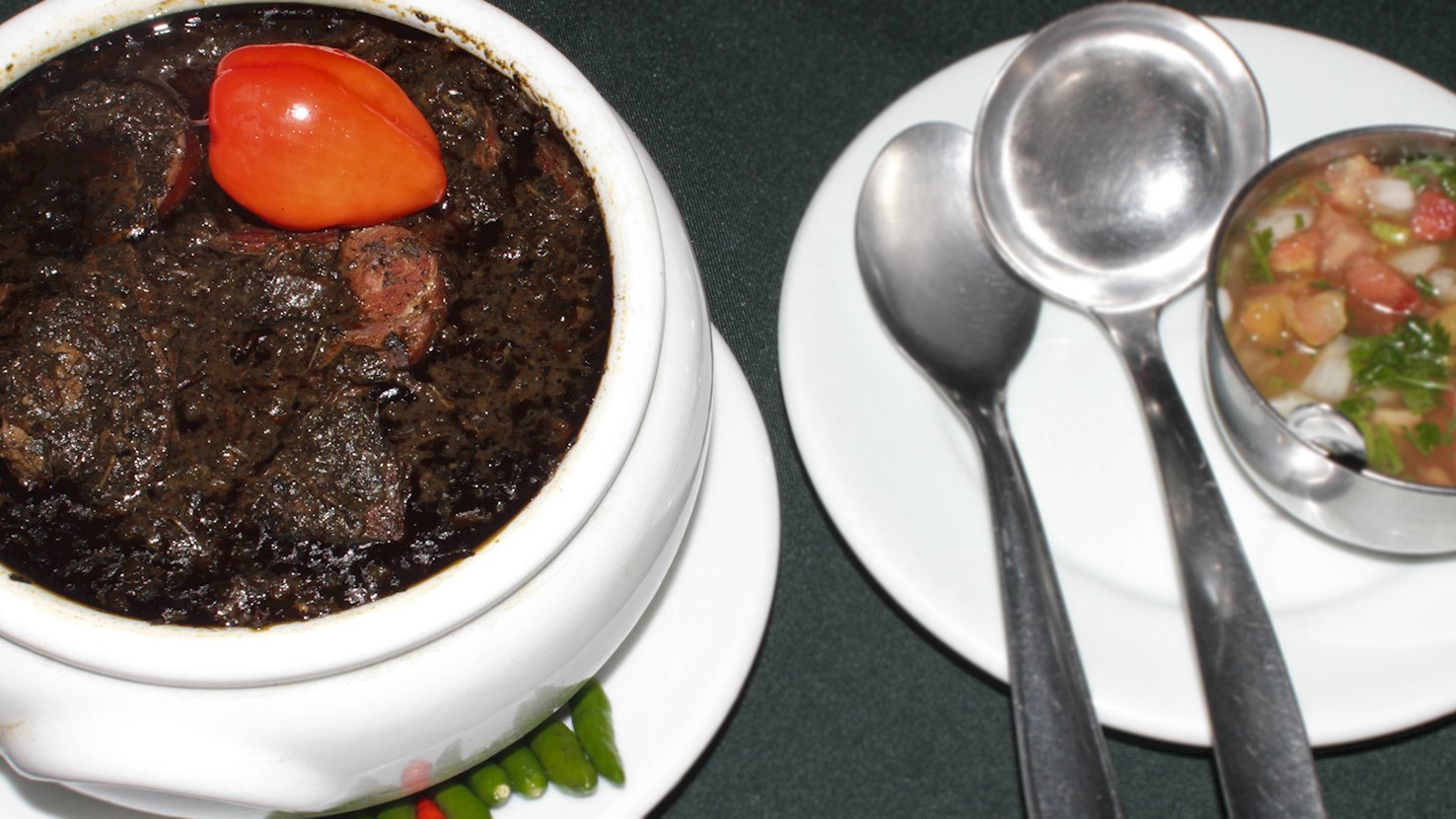
A specialty dish from the Brazilian regions of Pará and Bahia, maniçoba is a part of the feijoada family of Brazilian dishes. In addition to dried meat, salted pork, bacon, and sausages, chopped cassava leaves are used instead of beans which are commonly used in a traditional feijoada. One must be extra careful when preparing the dish due to the toxic cyanides found in cassava leaves, which is why they need to be ground and boiled for at least one week in order to remove the toxins. Since it is a lengthy process, maniçoba is mostly prepared for festivities and religious celebrations, when it's consumed by large groups of people. In Bahia, peppers and farofa are often added to the dish, while in Pará, the usual accompaniment is white rice.
TasteAtlas food rankings are based on the ratings of the TasteAtlas audience, with a series of mechanisms that recognize real users and that ignore bot,
nationalist or local patriotic ratings, and give additional value to the ratings of users that the system recognizes as knowledgeable.
For the “Top 17 Brazilian Stews” list until October 15, 2026, 1,830 ratings were recorded, of which 1,270 were recognized by the system as legitimate.
TasteAtlas Rankings should not be seen as the final global conclusion about food. Their purpose is to promote excellent local foods,
instill pride in traditional dishes, and arouse curiosity about dishes you haven’t tried.





What People Say