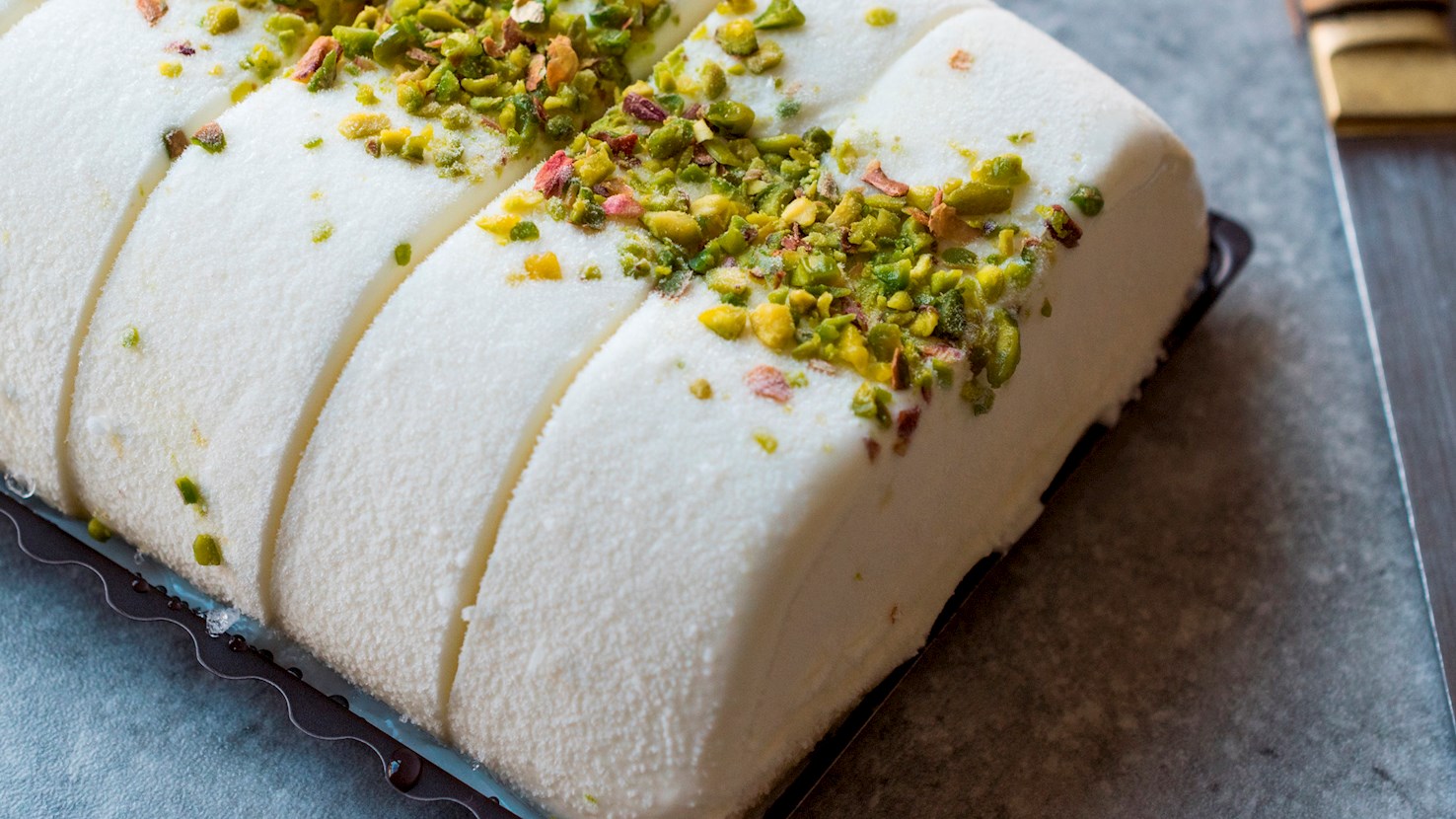
Turkish ice cream is believed to originate from the city of Maraş—hence the name—and what really sets it apart from other varieties is its resistance to melting and a particularly dense, chewy texture. These qualities are brought by adding two thickening agents to the basic milk and sugar mixture: Arab gum, also known as mastic resin, and salep—a type of flour made from the root of the early purple orchid. In fact, in the Kahramanmaraş region, ice cream typically contains distinctly more salep than usual, which is why it is sometimes called kesme dondurma—from the Turkish kesmek, meaning to cut—which is the reason why this ice cream variety is usually eaten with a knife and fork. In Türkiye, ice cream is commonly sold in the streets but also in specialized dondurması shops, whose owners will often go out of their way by producing their own salep, apart from using exclusively natural flavorings and milk from goats fed only with thyme, orchid flowers, and milkvetch.
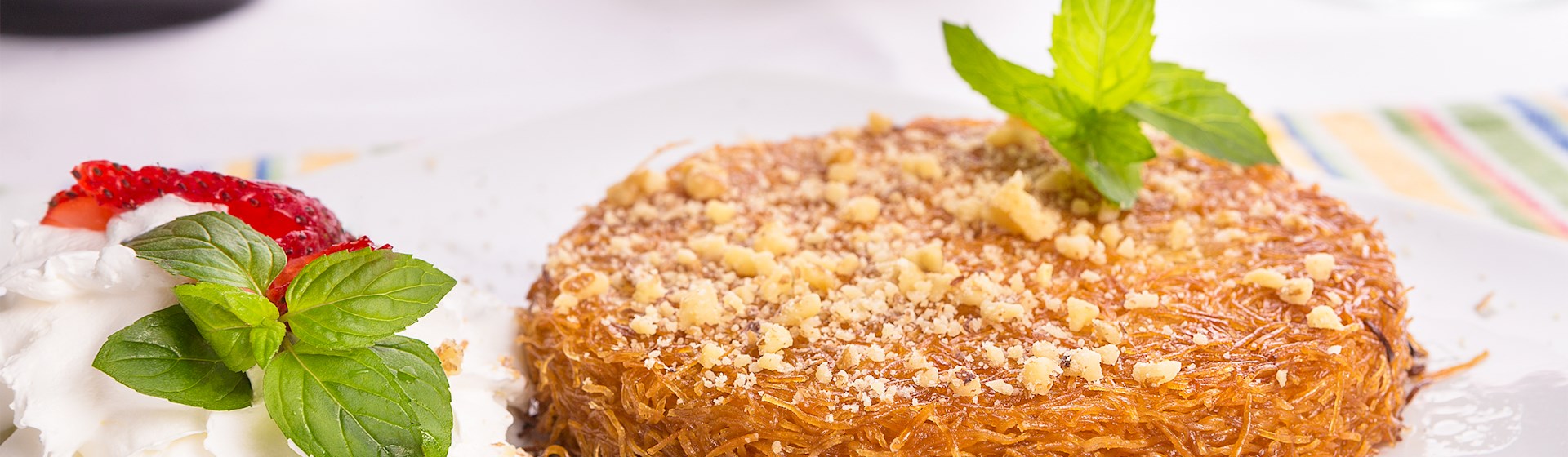
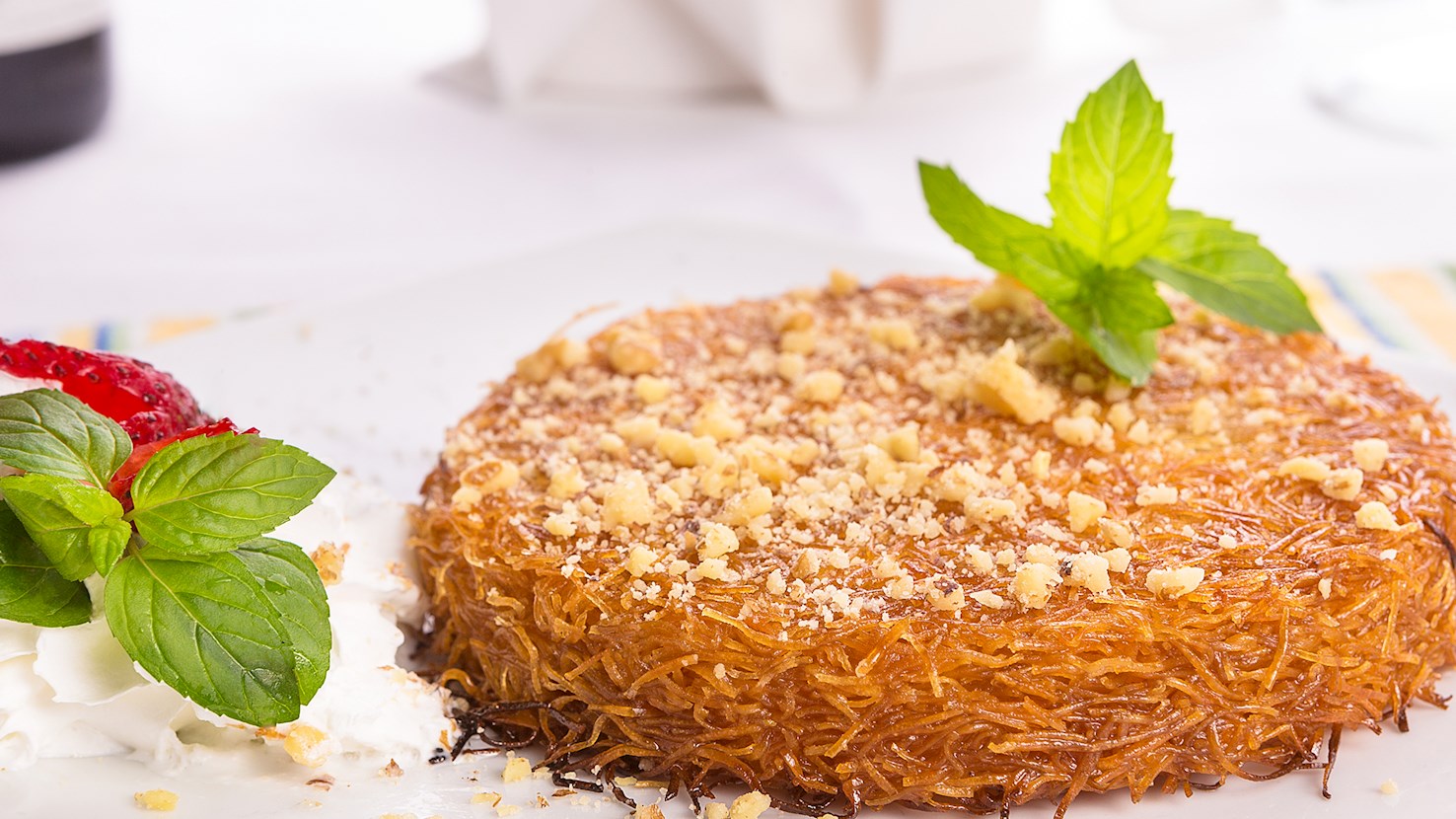
Kunāfah consists of two crunchy layers of shredded and buttered kataifi or knefe dough, filled with a luscious cheese cream that's often flavored with orange zest and cardamom, then drenched in a sugar syrup infused with lemon juice and orange blossom water. Turkish künefe is traditionally made with Hatay, Urfa, or Antep cheese. It is usually topped with pistachios and is best served warm. Elegant and amazingly simple to make, this dessert is nothing short of what cheese-filled pastry dreams are made of. Some authors speculate that it originated from the Fatimid Egypt or pre-Islamic Syria, while others claim that the Palestinian city of Nablus is its birthplace - hence the name kanafeh nabulsieh. Nevertheless, this decadent dessert has been a part of a long culinary tradition in Türkiye and Egypt, and it is listed as one of Egypt's national dishes.
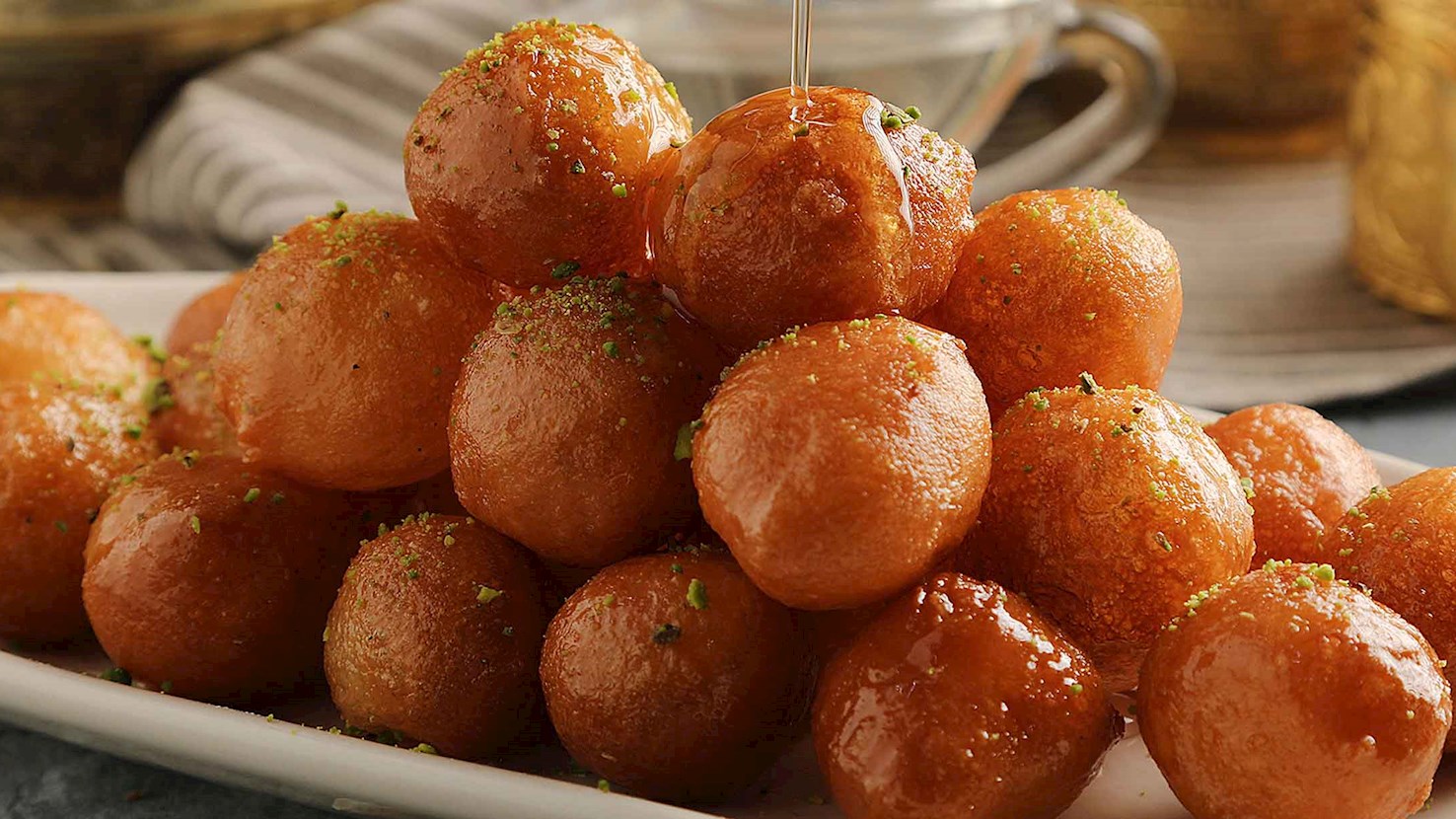
This internationally known, decadent, and sugar-packed dessert is usually made with a mixture of flour, sugar, yeast, and salt, which is deep-fried and then bathed in syrup or honey. The origin of lokma fritters is ancient but often debated. It is presumed that they first appeared in Greece or Turkey, though some suggest Arabic origin. The dish is considered to be one of the oldest recorded desserts in Greek history. It is said that the pastries were even given to winning Olympians as a treat and were called honey tokens. Loukoumades, or loukmades in Cyprus, can be found throughout the streets of Greece, in shops selling nothing else but this caloric dessert. Alternatively, loukoumades can be topped with Greek cheese, chocolate, sesame seeds, or walnuts. In Turkey, lokma fritters are best enjoyed while still warm. They are drizzled with honey or syrup and can occasionally be sprinkled with either ground cinnamon, walnuts, or pistachios. The name probably stems from from Arabic luqma, meaning bite or mouthful, and it is said that lokmas were first prepared in Turkey by the sultans' cooks in palaces of the Ottoman Empire, though the oldest documentation of a similar dish was even found in the tomb of Ramses IV. In some Middle Eastern and Levant countries, this dessert is known as luqaimat or luqmat al-qadi, which roughly translates as judge's mouthful. The deep-fried balls are usually covered with date syrup, honey, or flavored syrups, while some prefer them sprinkled with various seeds. They are also often flavored with saffron or cardamom. The dessert is traditionally made in the month of Ramadan, and consumed after iftar, or breaking the fast. The dish is also found in some African countries, where it appears under various names.
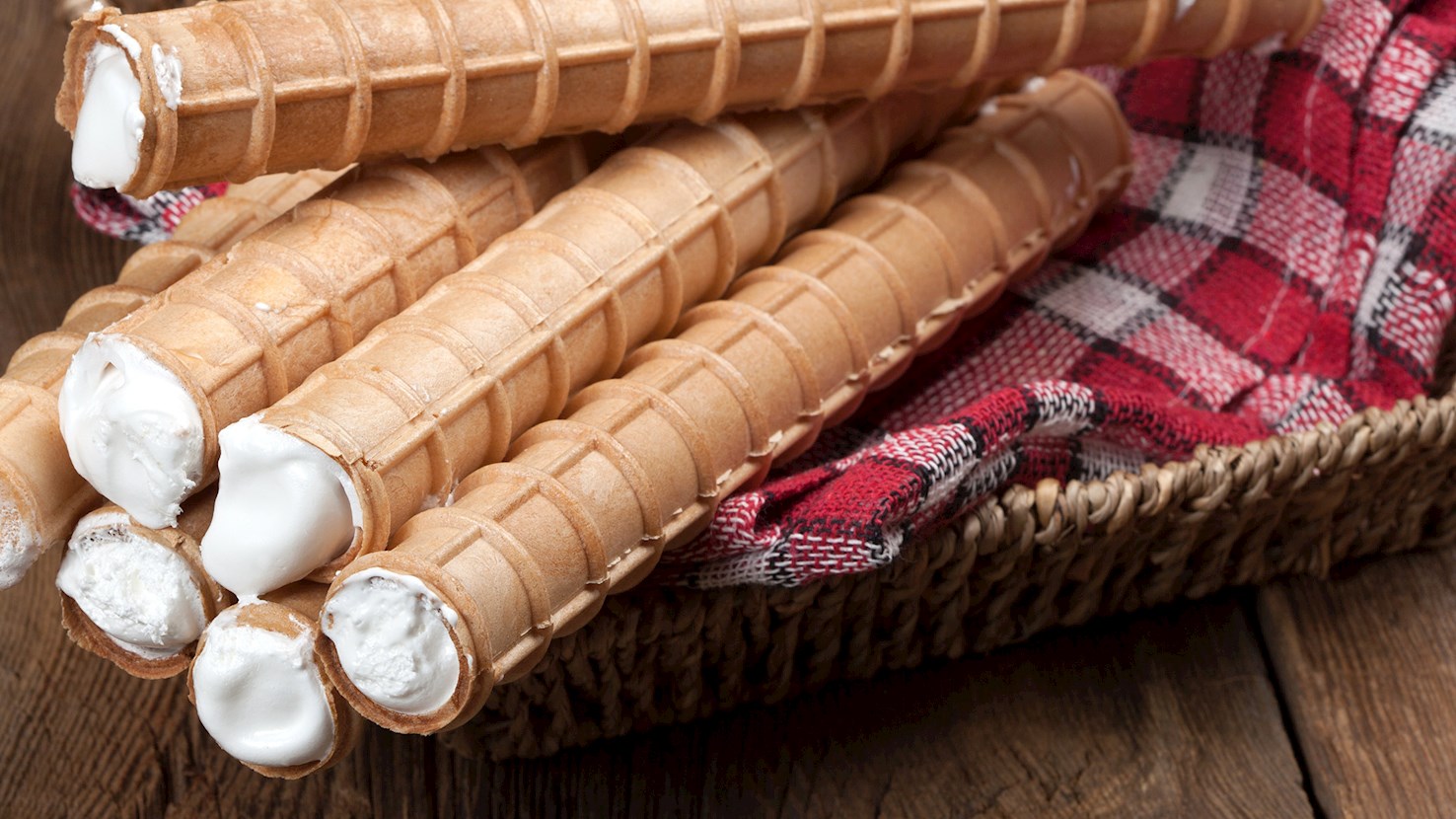
Called rurki or rurki z kremem in Poland, this sweet specialty is a type of cream roll consisting of thin pastry that’s typically filled with whipped cream or pastry cream. It is often dubbed torpedo dessert due to its characteristic shape, and apart from Poland, there’s also a long-standing tradition of preparing this dessert in other countries. The origins of rurki are often associated with Türkiye and Bulgaria, where the dessert is known as torpil tatlısı and funiiki s krem, respectively. There are many variations of this sweet delicacy regarding the ingredients used for its preparation, the appearance, texture, and flavor of the rolls, and the type of cream used for filling the pastry. In Poland, rurki cream rolls are usually long and crispy, wafer-like tubes filled with thick and subtly sweet whipped cream, and they’re a staple street snack. In other countries, the cream rolls resemble soft and buttery bread rolls with flaky texture, and they are usually filled with pastry cream or custard cream.
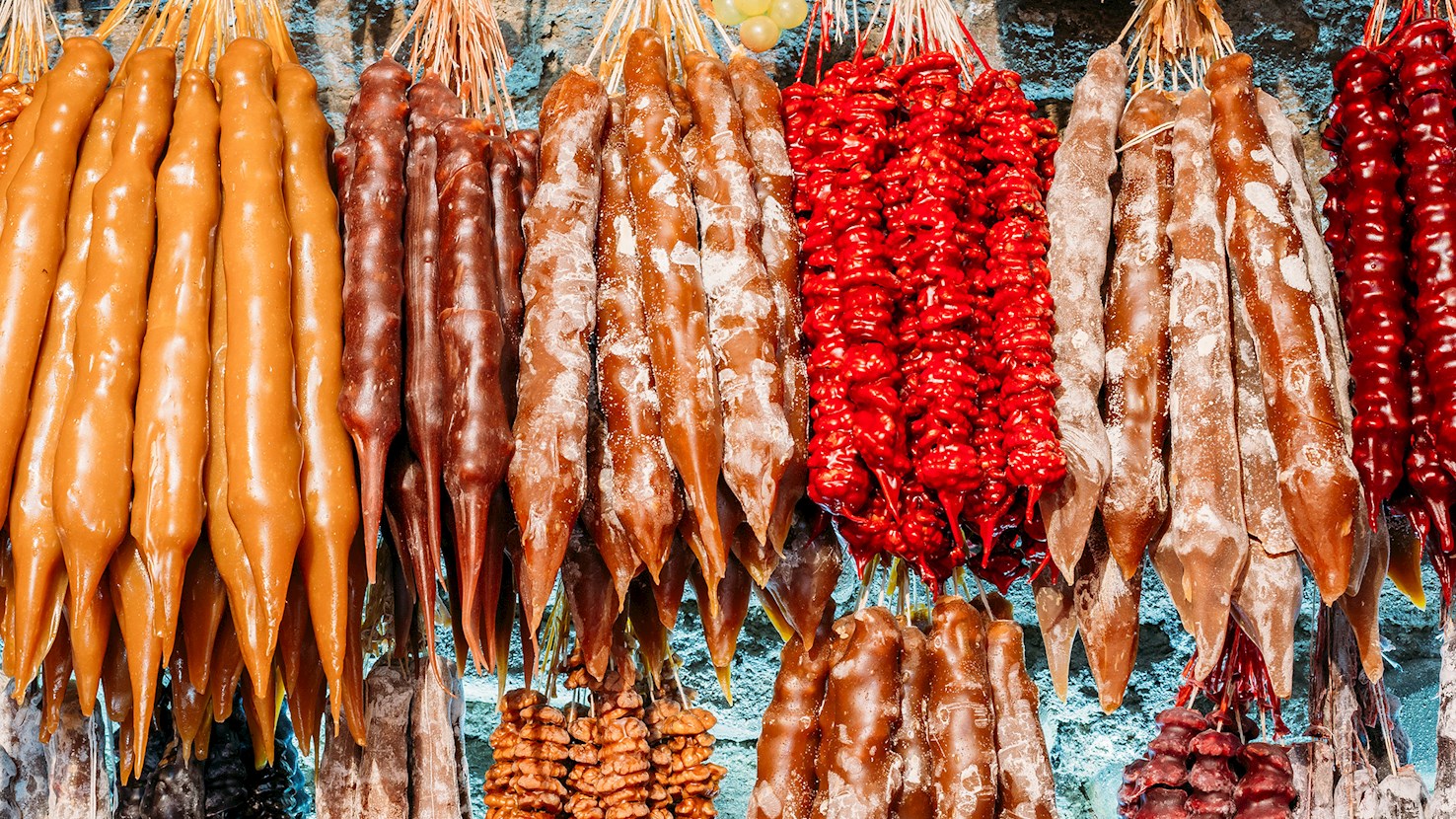
Churchkhela is a traditional Caucasian candy that is shaped into a sausage. This candy is made by dipping a long string of nuts (usually walnut halves) in concentrated grape juice, then leaving the concoction to dry. It is so healthy and so nutritious that, in the past, it was even carried by Georgian warriors on their long journeys. Although walnuts are usually used in the preparation of churchkhela, they can be replaced by almonds, hazelnuts, or raisins.
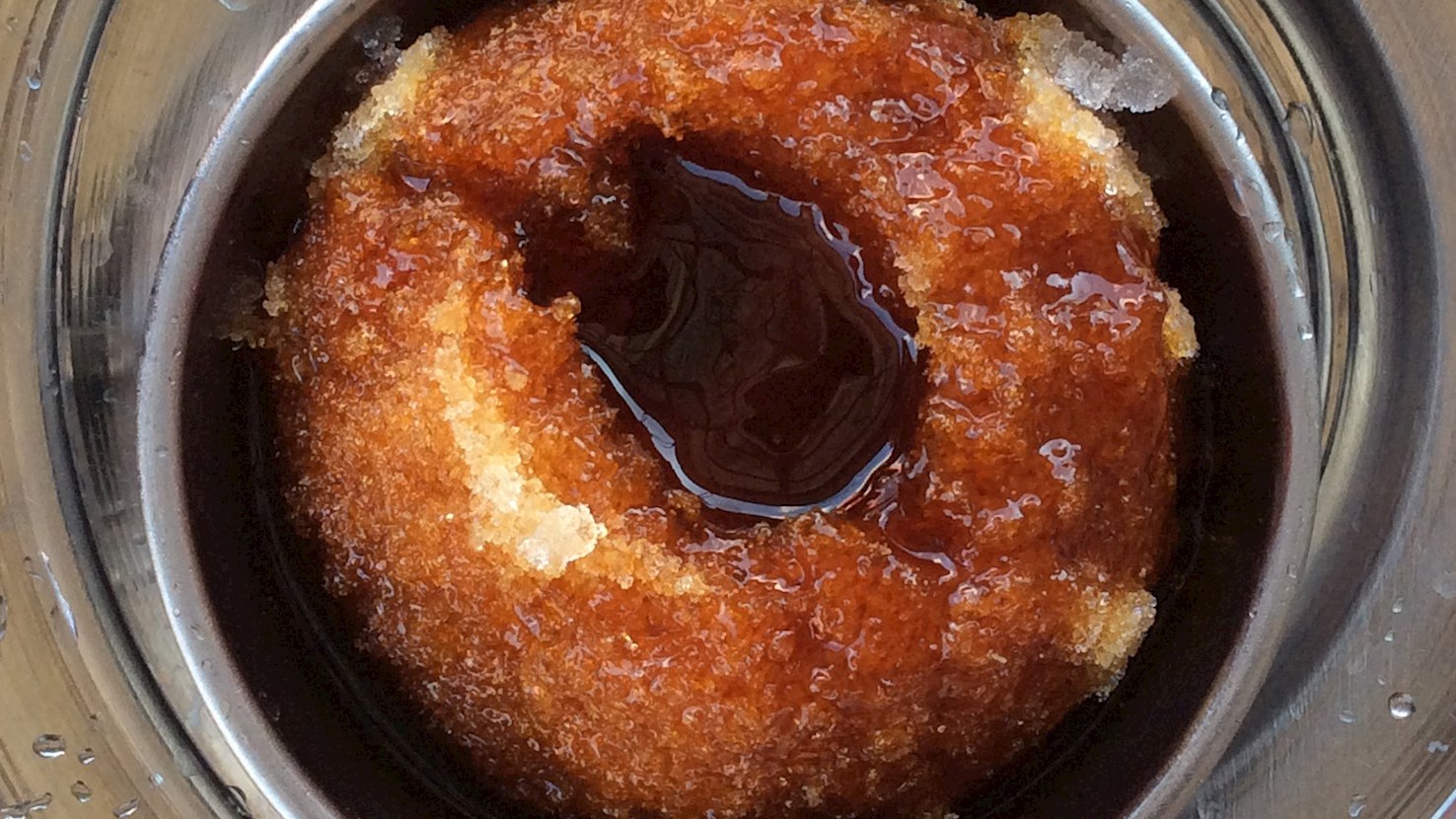
Karsambaç is a traditional dessert originating from the highlands of Mersin, most noteably the town of Çamlıyayla. This unique dessert is made with a combination of clean mountain snow and a sweet syrup such as honey, sugar syrup, or molasses. The blocks of snow are taken from the mountains with a pickaxe, and once brought to the city, the snow is grated with a knife before it's mixed with the sweet syrup. This dessert is often sold on street corners as a refreshing summer treat. It's considered to be a natural ancestor to granitas and snow cones.
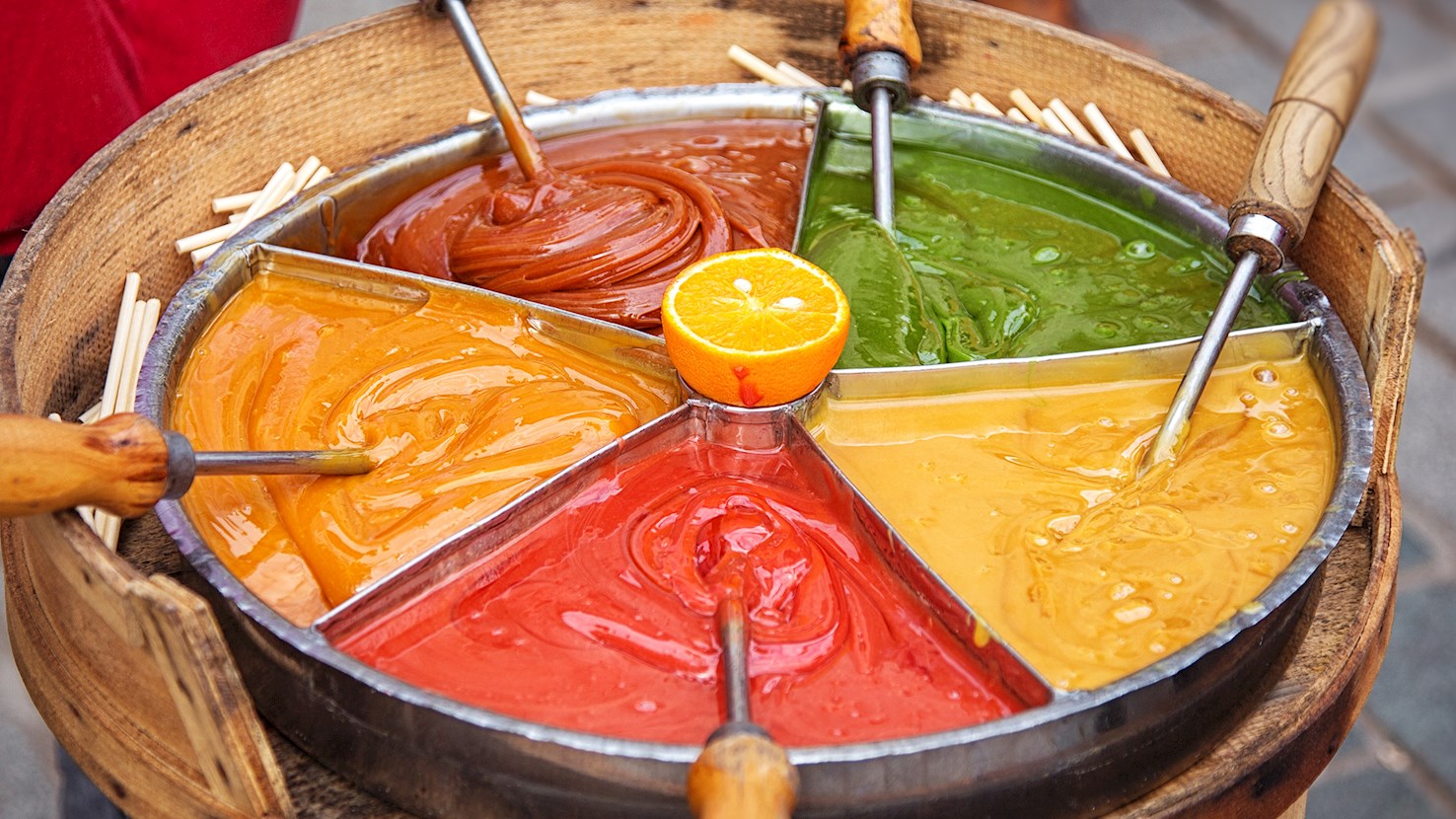
This unusual Turkish dessert is usually prepared by street vendors on small stoves with individual compartments. Each compartment is filled with a thick, colorful toffee paste that the vendor then wraps around a wooden stick, creating a sort of multicolored lollipop. The candy has a long history, presumably originating during the Ottoman Empire period, when it was mainly used as a health remedy. The modern versions of macun are quite different than the original herbal pastes, but they are characterized by their distinctive sweet and spicy flavor which is achieved by the addition of numerous spices such as aniseed, cloves, turmeric, black pepper, cinnamon, or cumin. The dish is strongly associated with the city of Manisa, where wrapped macun candies are thrown from the top of the mosque during the Mesir Macun Celebration.
TasteAtlas food rankings are based on the ratings of the TasteAtlas audience, with a series of mechanisms that recognize real users and that ignore bot,
nationalist or local patriotic ratings, and give additional value to the ratings of users that the system recognizes as knowledgeable.
For the “Top 7 Turkish Street Food Sweets” list until May 16, 2026, 3,284 ratings were recorded, of which 1,547 were recognized by the system as legitimate.
TasteAtlas Rankings should not be seen as the final global conclusion about food. Their purpose is to promote excellent local foods,
instill pride in traditional dishes, and arouse curiosity about dishes you haven’t tried.