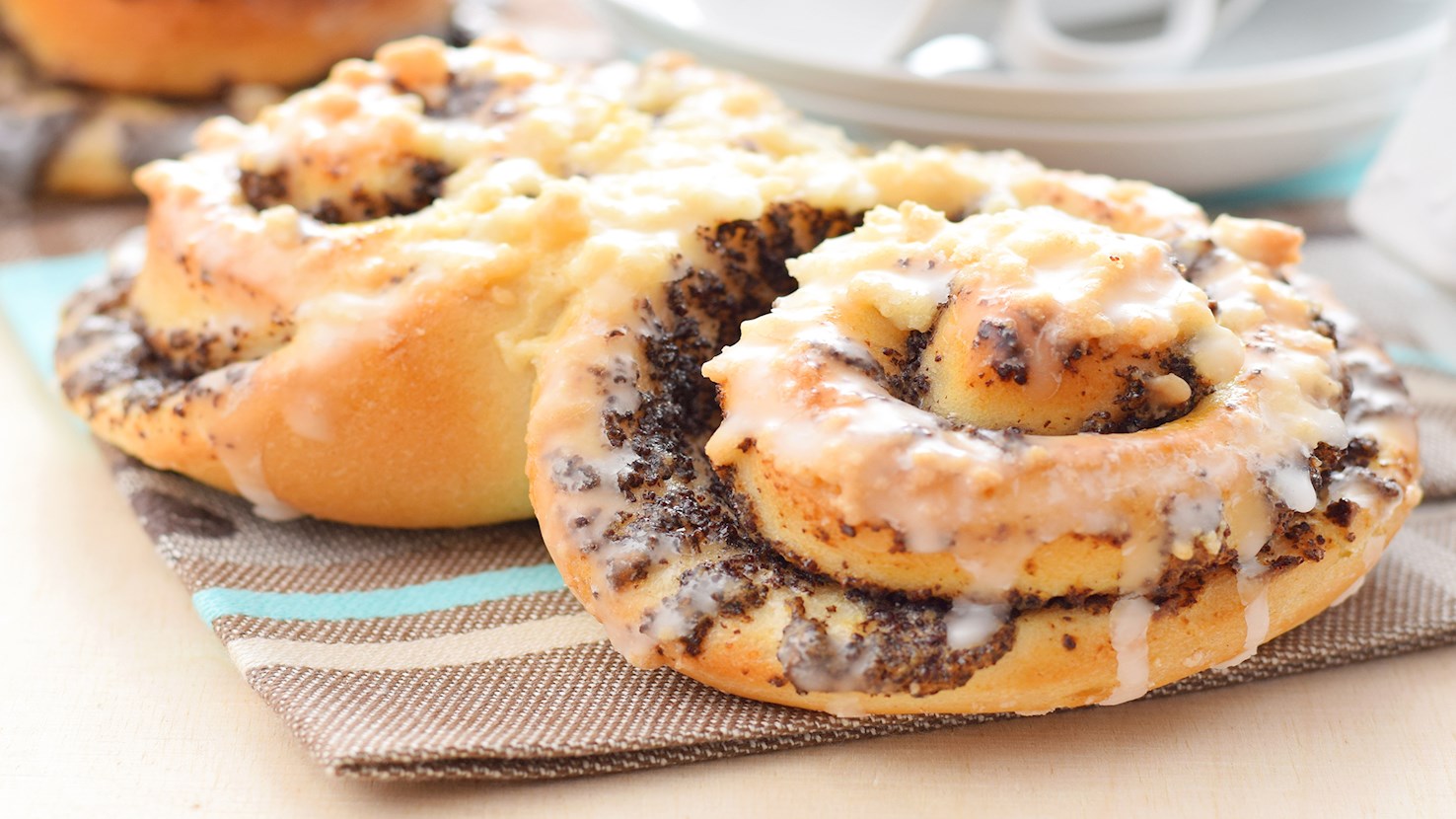
The name of this sweet German bread that translates as snail cake was inspired by its shape since it consists of numerous rolls neatly placed in a pan, whose final shape is reminiscent of snail shells. The base of the bread is prepared with a brioche-like dough that is shaped into rolls. Each roll usually consists of various fillings such as vanilla-flavored custard, cinnamon butter, fruit, raisins, poppy seeds, or marzipan. When baked, the bread is glazed or dusted with powdered sugar. In Alsace, the dish is better known as chinois.
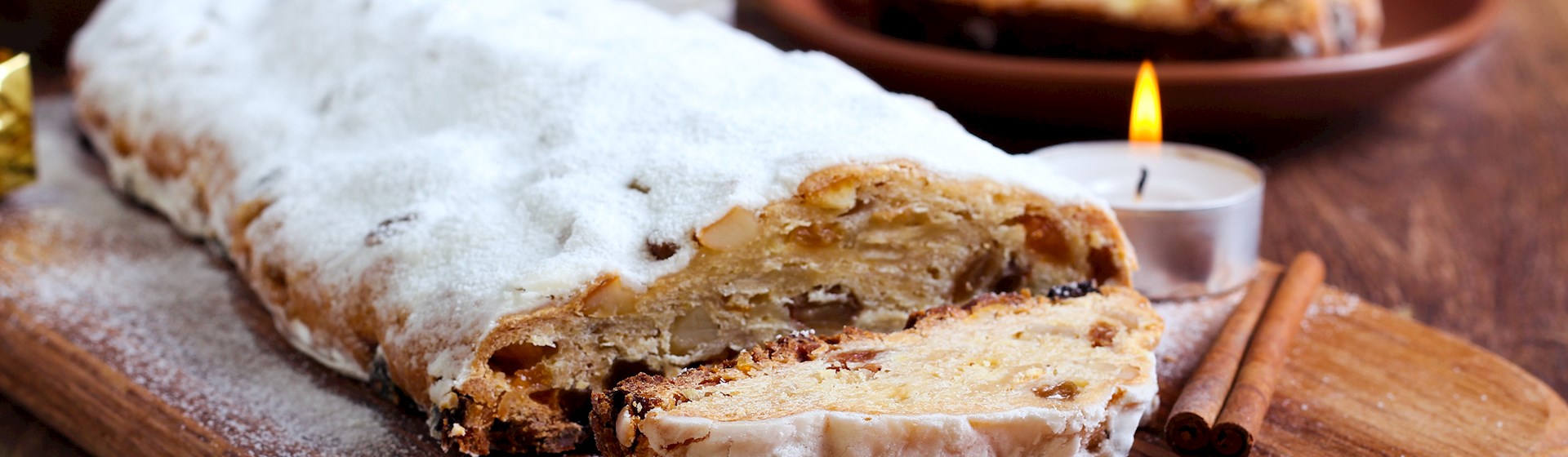
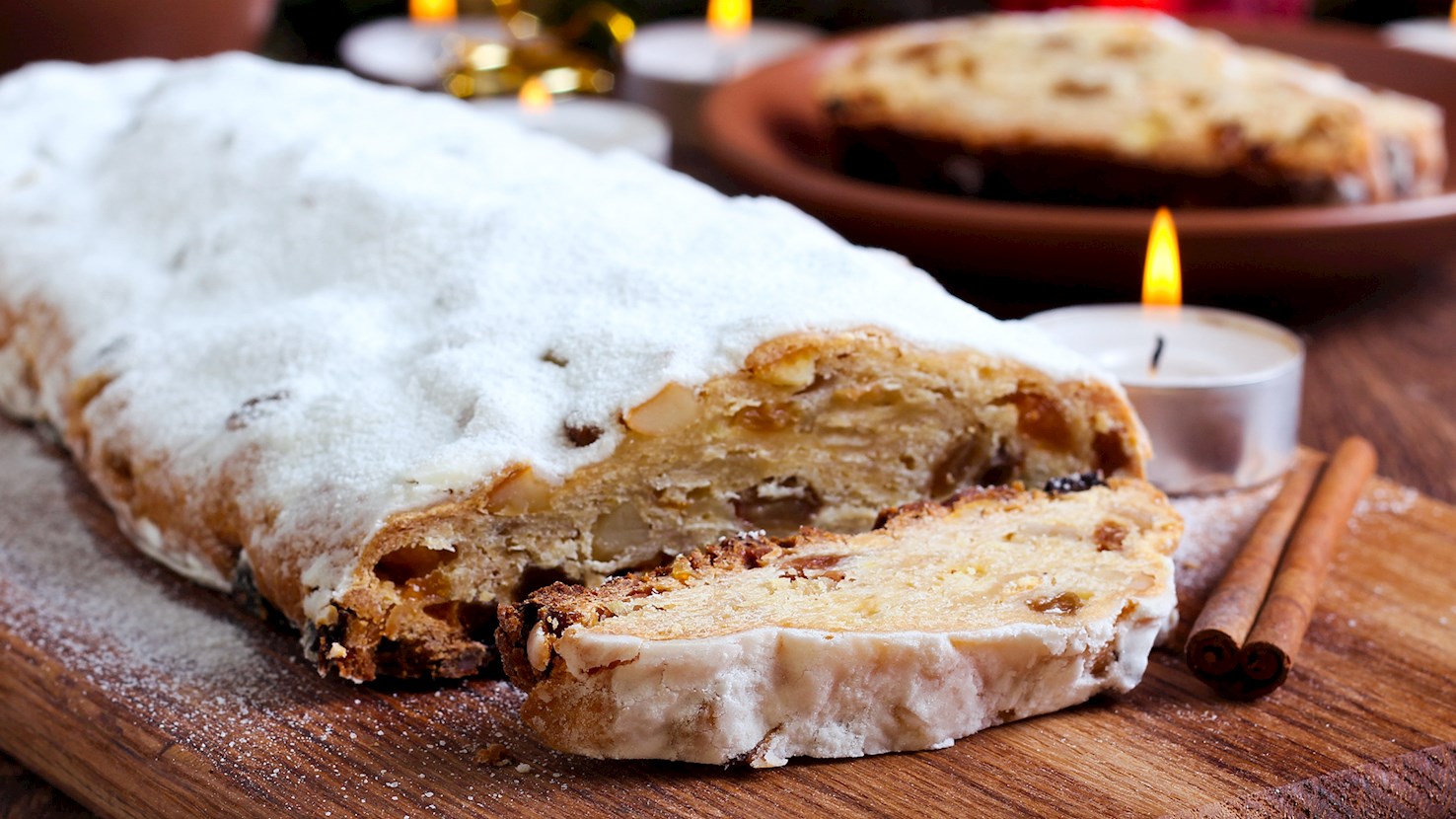
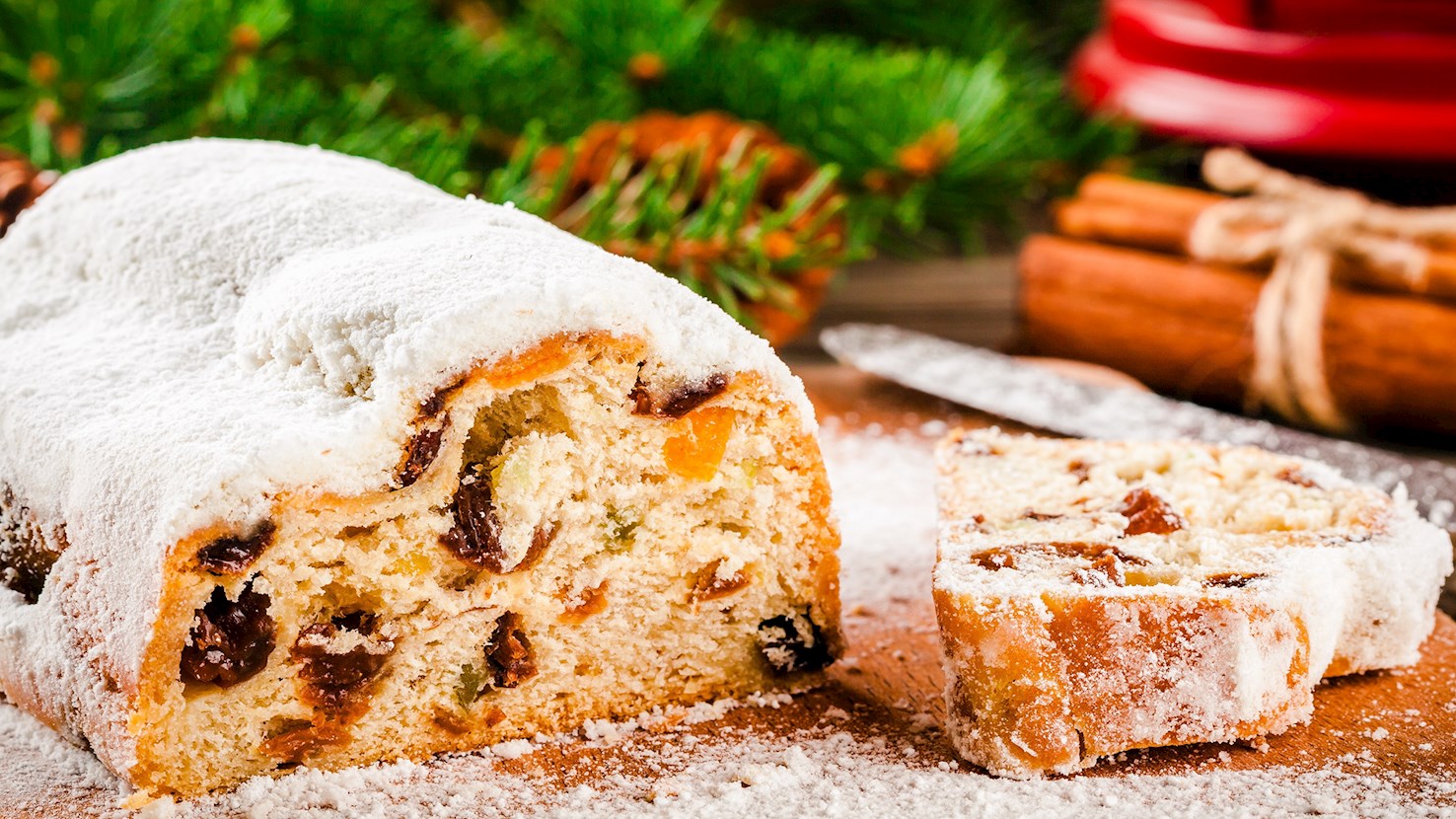
Dresdner stollen is an aromatic German fruit bread that has been closely associated with Christmas. It consists of buttery yeast dough that is spiced and usually studded with candied orange, lemon peel, sultanas, sweet and bitter almonds, and lemon zest. It is formed in large loafs, and when baked, the bread is brushed with butter and generously dusted with powdered sugar. Originally referred to as striezel, it is believed that the first stollen was not as rich as today’s versions, following the tradition of fasting during Advent. In 1490, the Pope Innocent VIII lifted the ban on baking with butter during Advent for Dresden bakers, allowing them to create more elaborate stollen versions. Because of its long history and cultural significance, this German classic has been awarded the Protected Geographical Indication status by the European Commission in 2010, which restricts the production of Dresdner stollen to the state capital Dresden and twelve municipalities in the greater Dresden area.
Stollen is one of German Christmas classics. This rich fruit bread is prepared with a buttery and sweet yeast dough that is usually spiced, lemon-flavored, and enriched with various dried fruits and marzipan. Though it may appear in different forms, it is usually oblong and covered with generous amounts of melted butter and powdered sugar. Among the different varieties, Dresdner stollen is considered as the oldest and the most popular version, whose origins date back to the 15th century. Originally, stollen was plain and prepared only with flour, yeast, and oil, and it was only in 1490, when the Pope Innocent VIII lifted the ban on baking with butter during Advent, that the stollen started to develop into a dense and rich cake that is known today.
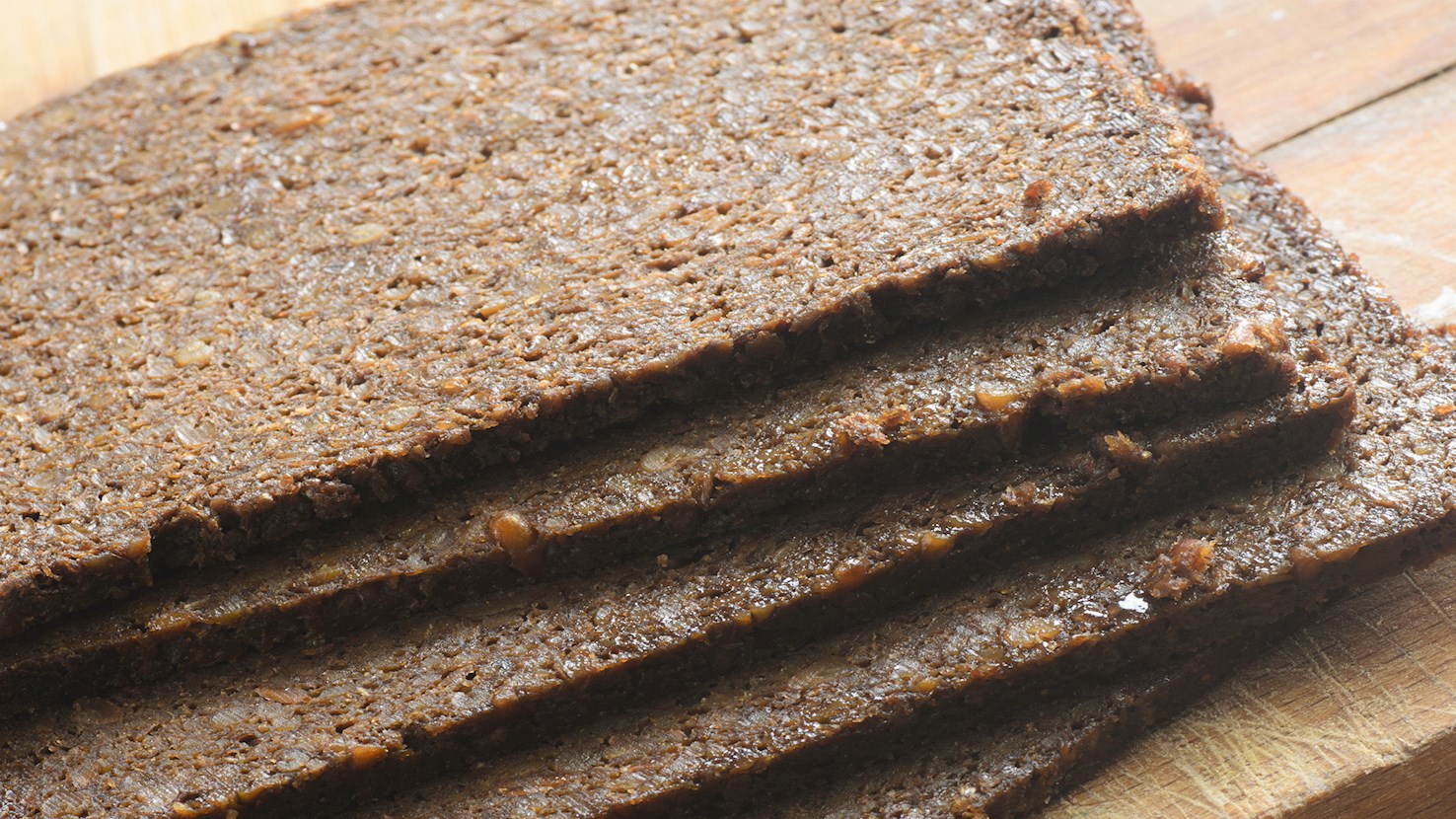
This heavy and slightly sweet rye bread is made from a sourdough starter and coarsely ground rye with whole rye berries as its base. Its name comes from the German pumpern, a synonym for being flatulent, and the male given name Nickel—a form of the name Nicholas—which was commonly associated with the devil in New High German vernacular. Thus, pumpernickel literally translates to "devil’s fart," which is a definition accepted by most publishers and dictionaries, however strange it may sound. The traditional German pumpernickel contains no coloring agents, but instead relies on the Maillard reaction to impart a deep brown color and a sweet, almost chocolatey and earthy flavor and aroma. Apart from being delicious, pumpernickel is rich in resistant starch which is known to aid digestion and benefit blood sugar regulation.
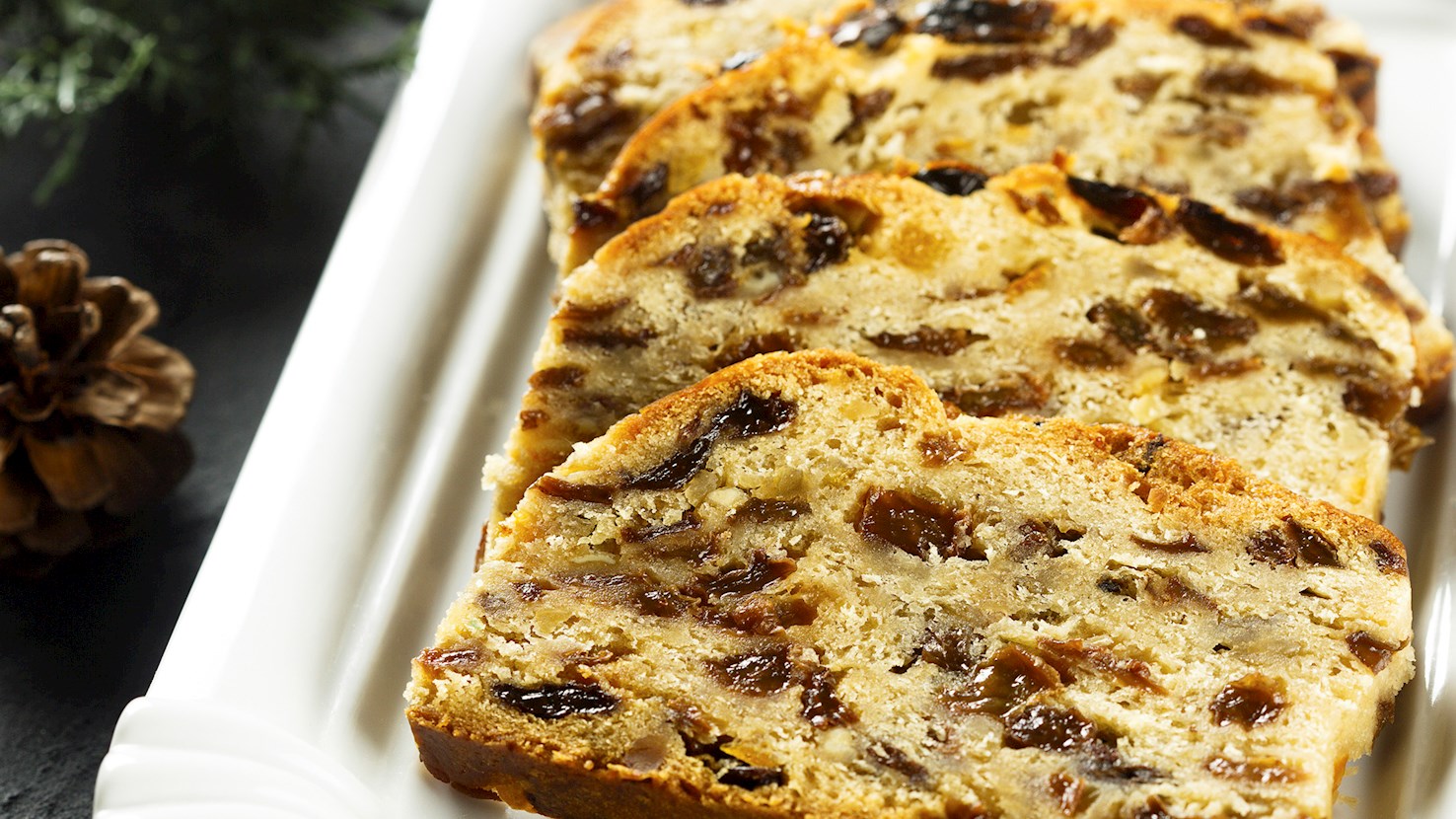
This rich sweet bread is made with a heavy yeast dough mixed with candied fruit and nuts. It is one of the many traditional specialties of Bremen's cuisine. The recipe for Klaben dates back to the 16th century, when bakers in Hanseatic League cities gained access to exotic ingredients they were able to obtain through their member cities. The sweet bread is filled with raisins, almonds, various nuts, and orange and lemon peel. It is not sugar-dusted after baking, as opposed to Dresdner Stollen. The distinctive taste of this holiday favorite comes from the addition of cardamom, rum, or nutmeg. Klaben is usually baked at the beginning of December, and it can stay fresh until Easter.
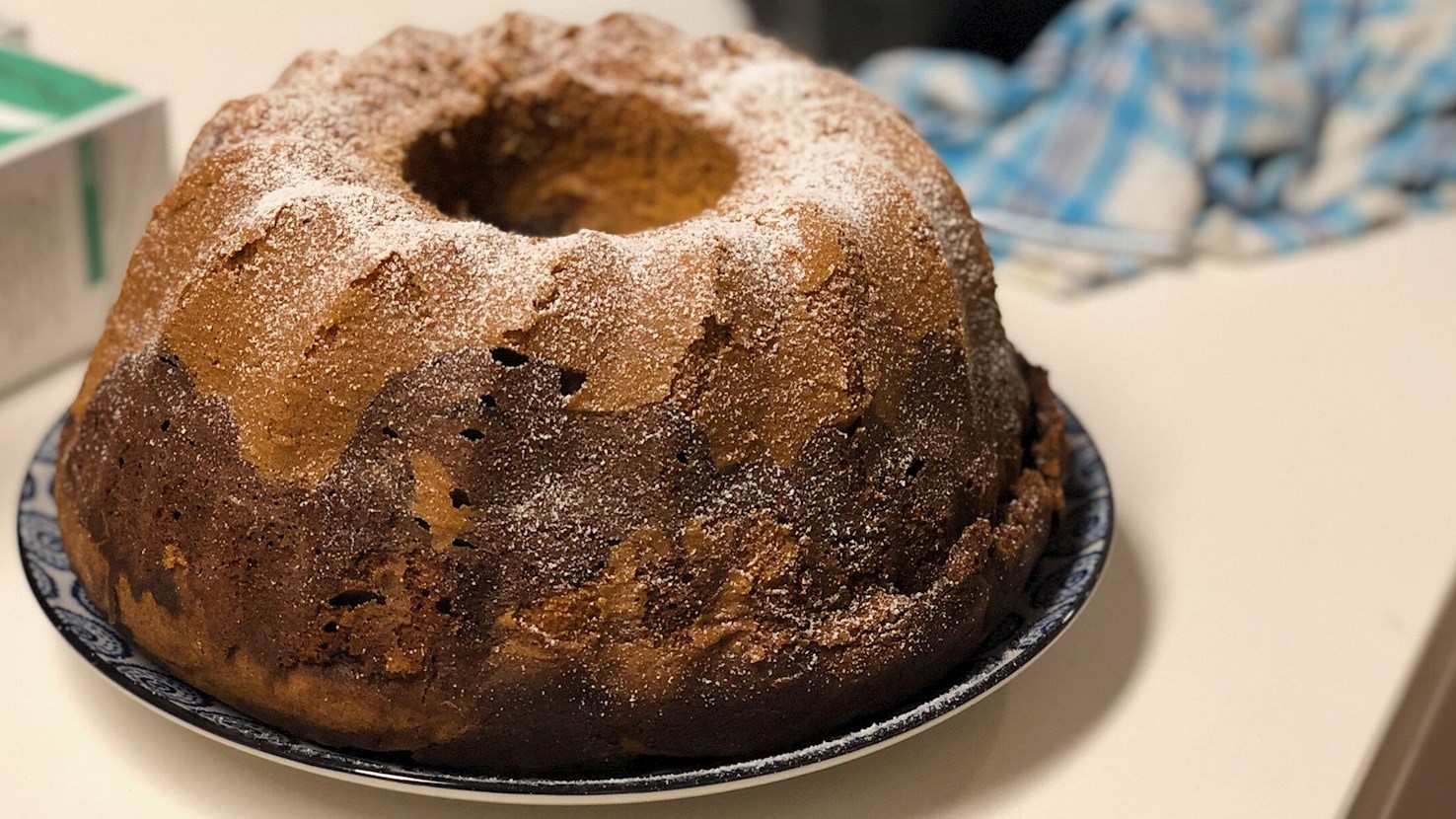
Gugelhupf is a ring-shaped sweet bread characterized by its central chimney opening, fluted vertical ridges, and a rich crumb containing butter, eggs, raisins, and candied peel, predominantly associated with Central Europe, including Austria, Germany, Switzerland, Alsace, and regions of the former Austro-Hungarian Empire. Archeological excavations in Carnuntum, a Roman military encampment in modern-day Austria, unearthed ring-shaped glazed earthenware molds dating to the Roman Empire, indicating the early use of circular baking vessels with hollow centers. The recipe evolved significantly in the late eighteenth and early nineteenth centuries with the commercial refinement of baker's yeast, which allowed pastry chefs in Vienna and Strasbourg to transition from dense bread doughs to lighter, enriched brioche-style batters. Preparation involves creating a yeast-leavened dough by combining high-protein wheat flour, warm milk, active yeast, sugar, melted butter, and egg yolks, followed by the incorporation of rum-soaked raisins, lemon zest, and sliced almonds placed strategically along the base of the fluted mold. The batter undergoes a proofing phase inside a greased copper, ceramic, or cast-iron fluted pan (Gugelhupfform) until doubled in volume before being baked at moderate temperatures, cooled, turned out upside-down, and dusted lightly with powdered sugar. The structural function of the central hollow chimney is thermodynamics: dense, highly enriched yeast doughs baked in large volumes struggle to conduct heat to their geometric center, so the interior tube allows hot air to circulate through the middle of the mold, ensuring even heat distribution, uniform rising, and complete baking without burning the outer crust. A unique production distinction exists in savory variations found in Alsace (Kougelhopf salé), where sugar and fruit are replaced with lardons, bacon, and walnuts. The sweet bread is sliced vertically into fluted wedges and eaten for breakfast, afternoon coffee hour (Jause or Kaffee und Kuchen), or Sunday family gatherings across Austria, Germany, and Eastern Europe. The buttery, egg-rich crumb and dried fruit notes pair with Viennese-style coffee drinks such as Melange and Einspänner, dark espresso, black teas, or sweet dessert wines like Alsatian Gewürztraminer, Riesling, and Austrian Auslese.
Stutzweck is a sweet yeast-leavened bread from Frankfurt am Main, shaped like a sweet roll, baked specifically for New Year’s Eve and New Year’s Day celebrations. The bread has an elongated loaf or roll shape with two rounded "heads" at each end and a series of deep slashes along the middle representing the twelve months of the year. Stutzweck became part of Frankfurt’s New Year’s customs by the early nineteenth century, with local records showing its consumption around the turn of the year and its association with luck and good fortune for the coming months, and historically, children would go house to house on New Year’s Day reciting verses and receive a stutzweck as a gift. To prepare, flour is mixed with warm milk, yeast, sugar, salt, butter, eggs, and lemon zest into a smooth, elastic dough, allowed to rise until doubled, divided, shaped into rolls with distinctive heads on each end and deep incisions in the center to mark the months, proofed briefly, and baked at moderate heat until the dough is fully cooked but still soft and pale on the surface. Common variations include differences in the number and depth of the slashes marking the months, the addition of raisins for mild sweetness, and slight changes in richness or sweetness of the dough, while the defining features remain the shaped roll with symbolic markings made for the New Year period. Stutzweck is eaten fresh or within a day of baking during New Year’s celebrations and is served in bakeries and homes in Frankfurt and the surrounding region, most often on New Year’s Day alongside hot drinks such as coffee or tea and shared as part of holiday gatherings. Its symbolic shape and markings are recognized locally as expressing hopes for good fortune in the coming year.
Ulmer Zuckerbrot is a classic sweet bread originating from Ulm, a historic city in southern Germany. This sweet bread-like treat is distinguished by its dense yet tender crumb, generously coated with coarse sugar crystals that provide a pleasant contrast in texture and sweetness. Ulmer Zuckerbrot is closely associated with festive occasions and local celebrations, where it is enjoyed as a comforting and indulgent pastry that reflects the baking heritage of the region. The history of Ulmer Zuckerbrot dates back several centuries, with its roots embedded in the artisanal baking culture of Ulm and the surrounding areas. Bakers developed this sweet bread as a special treat that combined simple ingredients like flour, yeast, butter, and sugar into a product that was both flavorful and visually appealing. Over time, Ulmer Zuckerbrot became a hallmark of regional festivities, often presented during holidays and communal gatherings. Its recipe has been preserved and adapted by generations, maintaining its distinctive character while allowing for subtle variations based on local tastes. Preparation of Ulmer Zuckerbrot involves creating a rich yeast dough that is kneaded until smooth and allowed to rise to achieve a soft, elastic texture. The dough is then shaped into loaves or rolls and coated generously with coarse sugar before baking, which caramelizes slightly in the oven, forming a sparkling crust. The baking process requires careful temperature control to ensure the bread is cooked through while preserving moisture and tenderness. Once baked, Ulmer Zuckerbrot is typically cooled and served in slices, highlighting the contrast between the sugary exterior and the soft interior. Ulmer Zuckerbrot is enjoyed primarily in Ulm and the surrounding Swabian region, often consumed alongside coffee or tea as a midday snack or dessert. It holds a special place in local culinary culture, evoking a sense of community and celebration.
TasteAtlas food rankings are based on the ratings of the TasteAtlas audience, with a series of mechanisms that recognize real users and that ignore bot,
nationalist or local patriotic ratings, and give additional value to the ratings of users that the system recognizes as knowledgeable.
For the “Top 8 German Sweet Breads” list until September 15, 2026, 848 ratings were recorded, of which 739 were recognized by the system as legitimate.
TasteAtlas Rankings should not be seen as the final global conclusion about food. Their purpose is to promote excellent local foods,
instill pride in traditional dishes, and arouse curiosity about dishes you haven’t tried.





What People Say