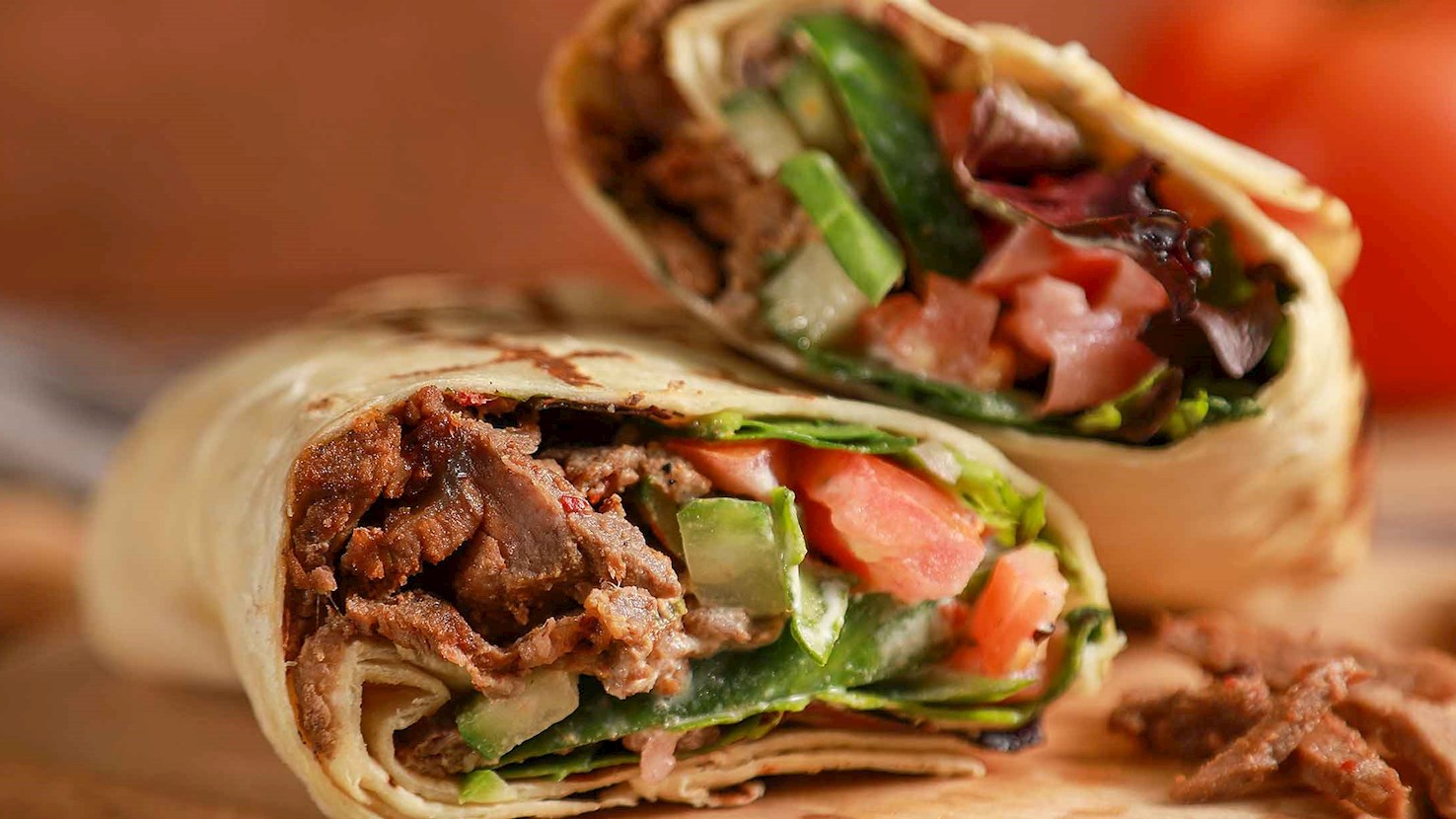
Marinated and spit-roasted, shawarma is a delicious Middle Eastern meat treat whose origins can be traced back to the Ottoman Empire era, while its name stems from the Arabic pronunciation of the Turkish word çevirme (lit. to turn; turning), and refers to the rotating skewer on which the meat is cooked. Shawarmas are made with either lamb, turkey, chicken, beef, or a mix of different meats which are slow-cooked for hours and basted in their own juices and fat, gaining an incomparable succulence, but the real secret to a perfect shawarma is in the marinade. Depending on the variety, the meat must be marinated for at least a day, preferably two, especially when using beef. These marinades are either yogurt or vinegar-based and typically include spices and flavorings such as cinnamon, cloves, cardamom, nutmeg, black pepper, allspice, dried lime, spicy paprika, garlic, ginger, lemon, bay leaf, and sometimes even orange slices. Shawarma is traditionally served either on its own or enjoyed tucked inside a warm flatbread such as pita or lavash. However, what really sets it apart from the Turkish döner kebab, Greek gyros, or other similar foods is the extent of garnishes and condiments offered with it. For example, Israeli shawarmas are typically topped with tahini and come with generous servings of hummus and pickled mango slices, while in other countries, shawarma is often complemented with garlic mayo or a zesty toumaia garlic sauce, both fresh and pickled vegetables, salads like tabbouleh or fattoush, and amba sauce–a tangy chili and mango pickle dip. Once a common staple of the Middle Eastern working man, shawarma has today become the ultimate Arabic street food, found not only in Arabia and Levant but in virtually any nook and corner of the globe.
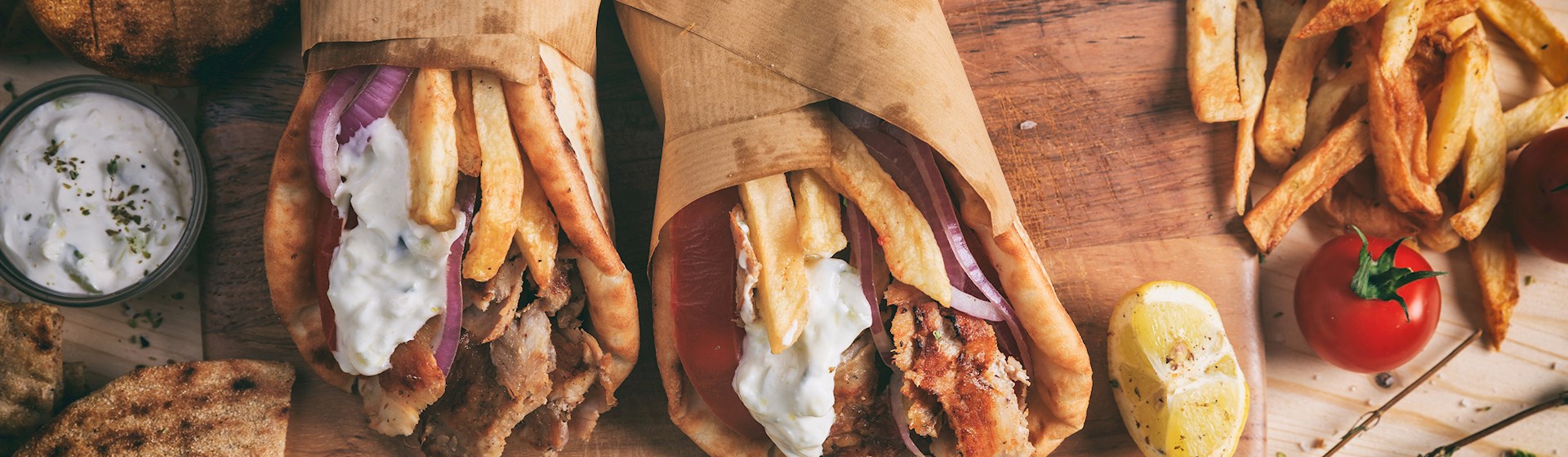
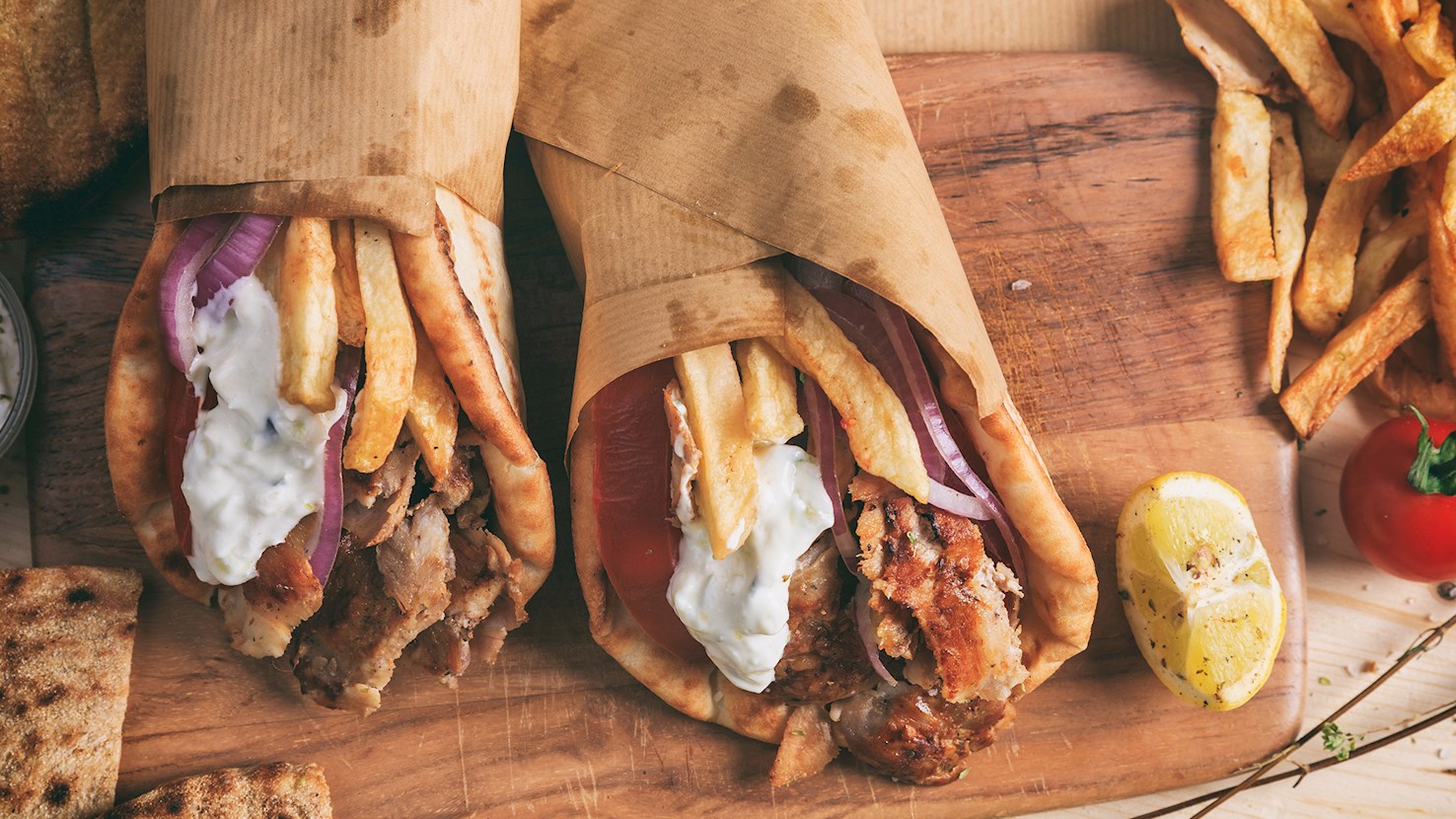
Gyros is one of the most popular Greek street food dishes, consisting of meat such as pork and chicken (in Greece) or lamb and veal (popular in other countries) cooked on a vertical spit. The meat is sliced in thin shavings and is then usually placed in a pita bread along with sauces such as tzatziki and vegetables such as tomatoes, onions, lettuce, and cucumbers. Gyros is derived from the Greek word gheereezo, meaning to turn, referring to the constantly rotating vertical spit on which the meat is cooked. Some believe that gyros originated during the time of Alexander the Great, when his soldiers skewered the meat on their swords and cooked it over a fire. Others claim that gyros was introduced to Greece in 1922, with the refugees from Constantinople and Smyrna. Many of the refugees became merchants and opened their shops with tiny holes in the wall, where gyros was sold. After WWII, gyros gained popularity and spread to Europe, Australia, and the United States. Today, gyros is known as one of the most popular street food varieties around the world.
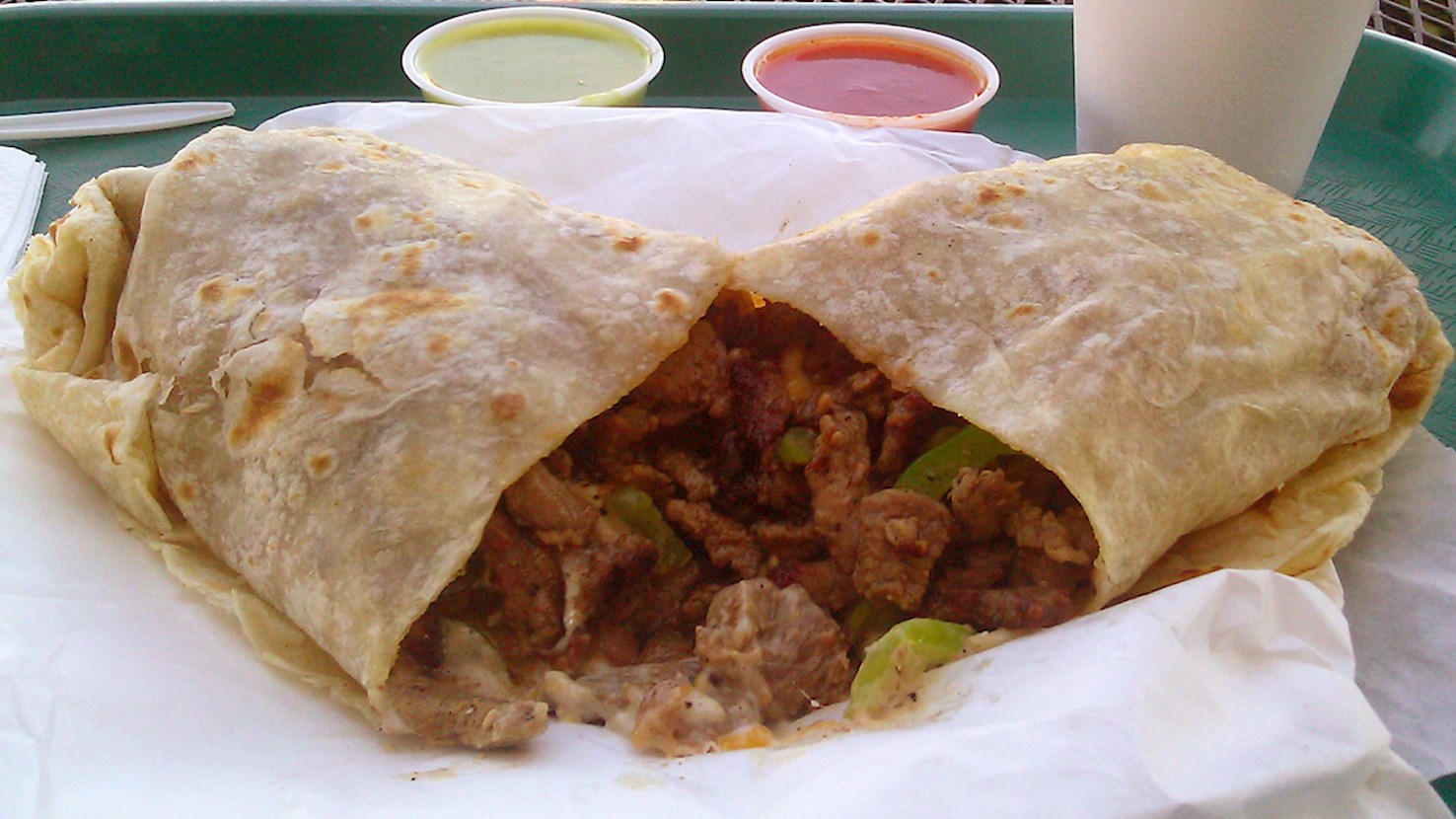
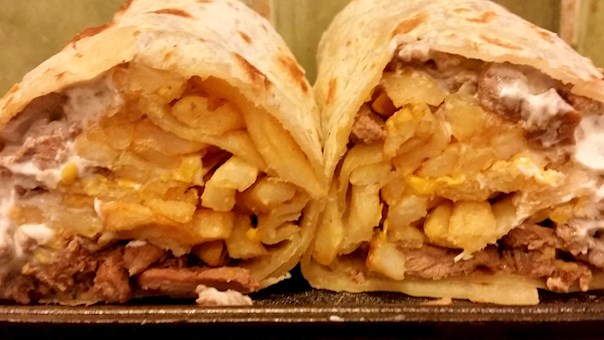
Carne asada burrito is a type of burrito that originates from San Diego. The dish consists of a large flour tortilla topped with carne asada meat, pico de gallo, and guacamole. The carne asada parts is made with a combination of beef (skirt or flank steak), lemon juice, lime juice, salt, pepper, and onions. The pico de gallo consists of tomatoes, onions, jalapenos, cilantro, lemon juice, lime juice, garlic powder, oregano, chili powder, and cumin, while the guacamole is made with avocados, pico de gallo, lemon juice, lime juice, and a dash of hot sauce. The ingredients are placed on a warm tortilla, sometimes with additional toppings such as french fries or cheese, if desired, and the tortilla is then folded to form a burrito, which is always served hot.
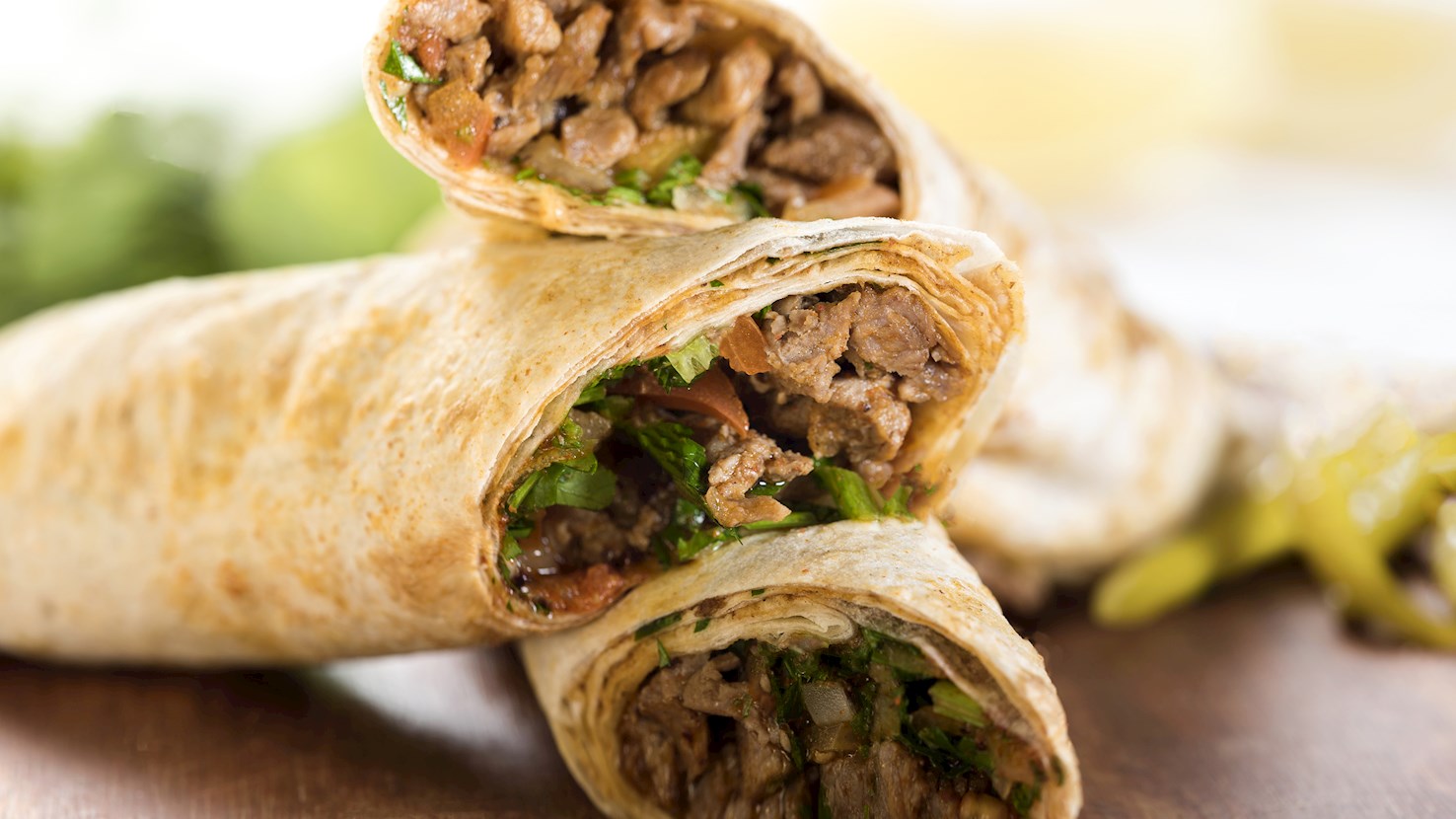
Tantuni is a traditional street food dish from Mersin, consisting of thinly sliced beef or lamb that is seasoned with Turkish spices and herbs, usually cooked with onions and tomatoes. The combination is cooked in specially designed tantuni pans. Traditionally, the dish is served rolled in lavash, with ground sumac and a lemon wedge on the side. Since every tantuni chef has his own method and secret technique of preparing the dish, it is said that the flavors of tantuni are never the same. Tantuni was originally created as a poor man's dish - it's very nutritious because it consists of meat with a lot of fat stuffed into bread. Some believe that the name of the dish refers to the sound that the meat and spices make when they are brought from the rim of the pan to its center.
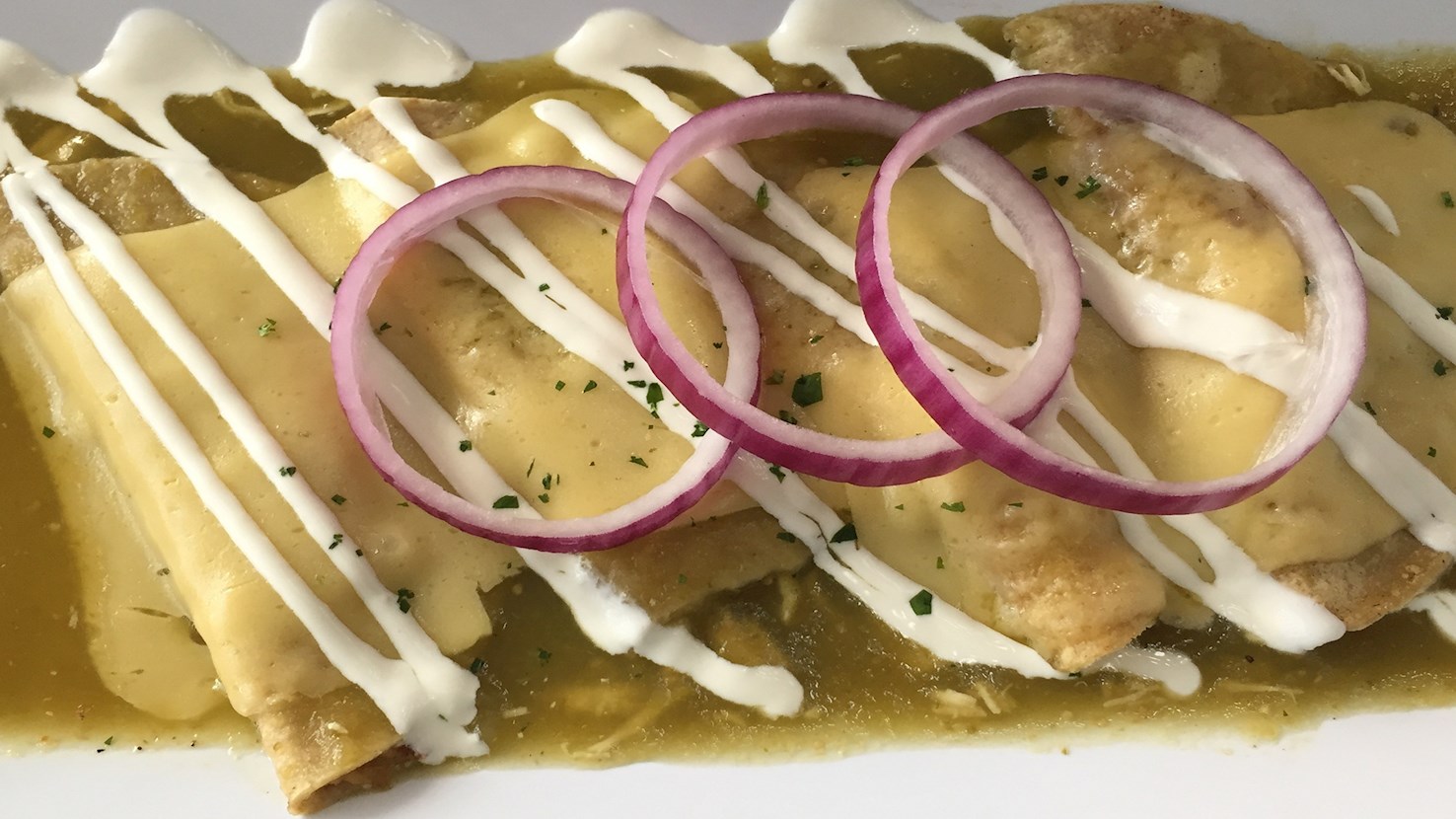
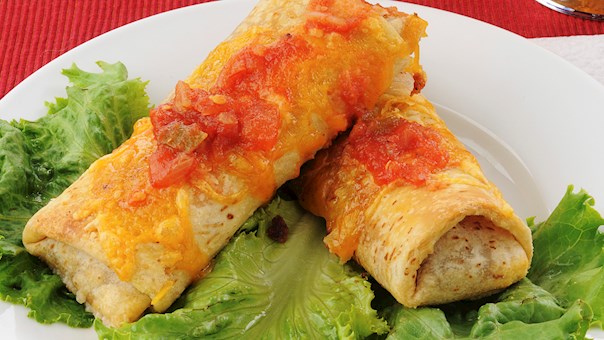
Enchilada Suiza is a popular Mexican dish consisting of enchiladas topped with a sauce based on milk or cream. The first one was made in a restaurant named Sanborn in Mexico City. The name of the dish can be translated as Swiss enchiladas because the Swiss immigrants introduced dairy-based sauces to Mexican cuisine.
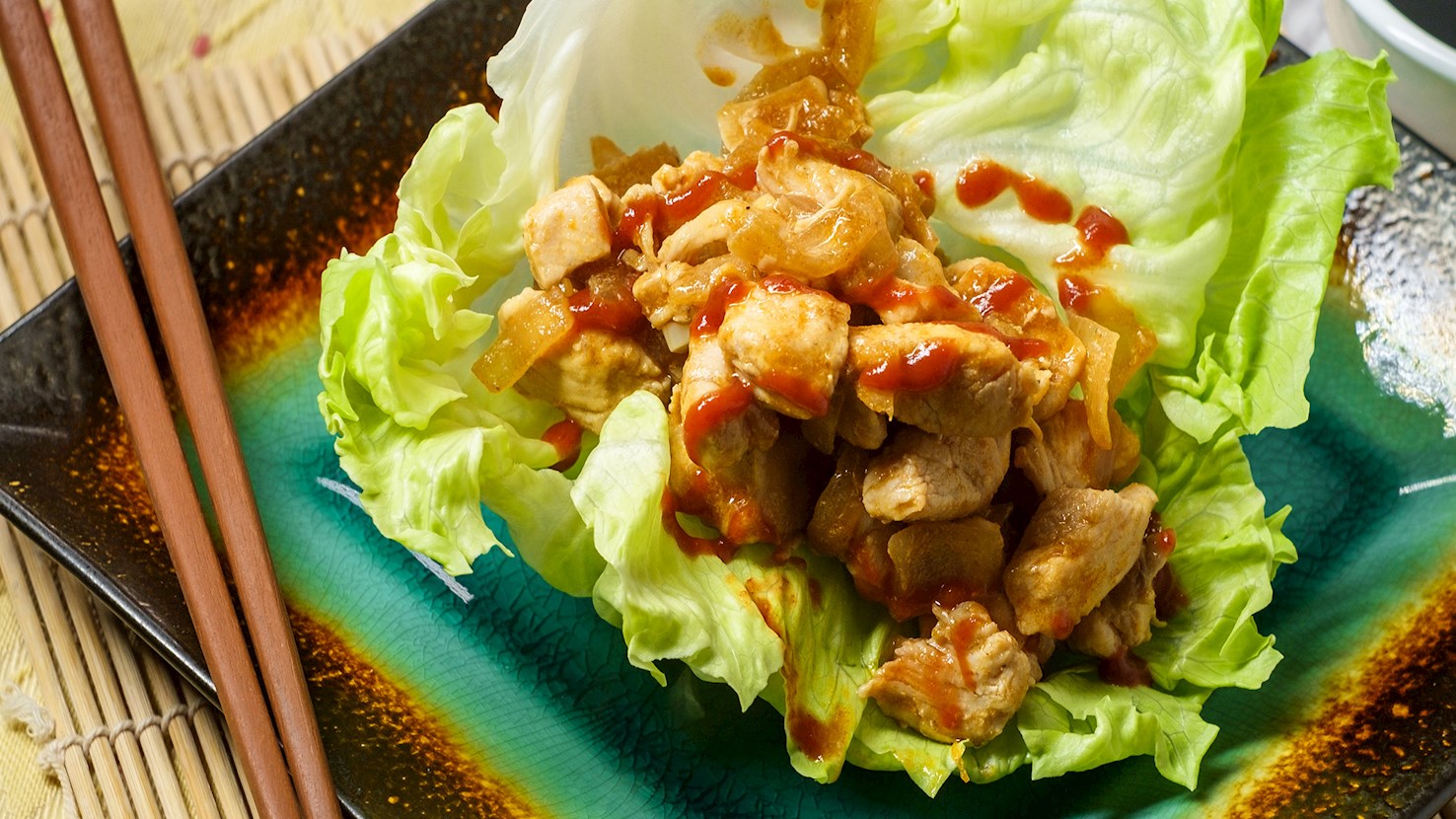
Sangchu is a ssam variety that always wrapped in lettuce. The fillings typically include rice, sliced meat, and condiments such as gochujang past, ssamjang dip, or fresh and pickled vegetables. All the elements are usually served separately, and each person is able to customize the wrapper according to their preference. Apart from meat, typically galbi (short ribs) or bulgogi, the main ingredients may also include fish or other types of seafood.
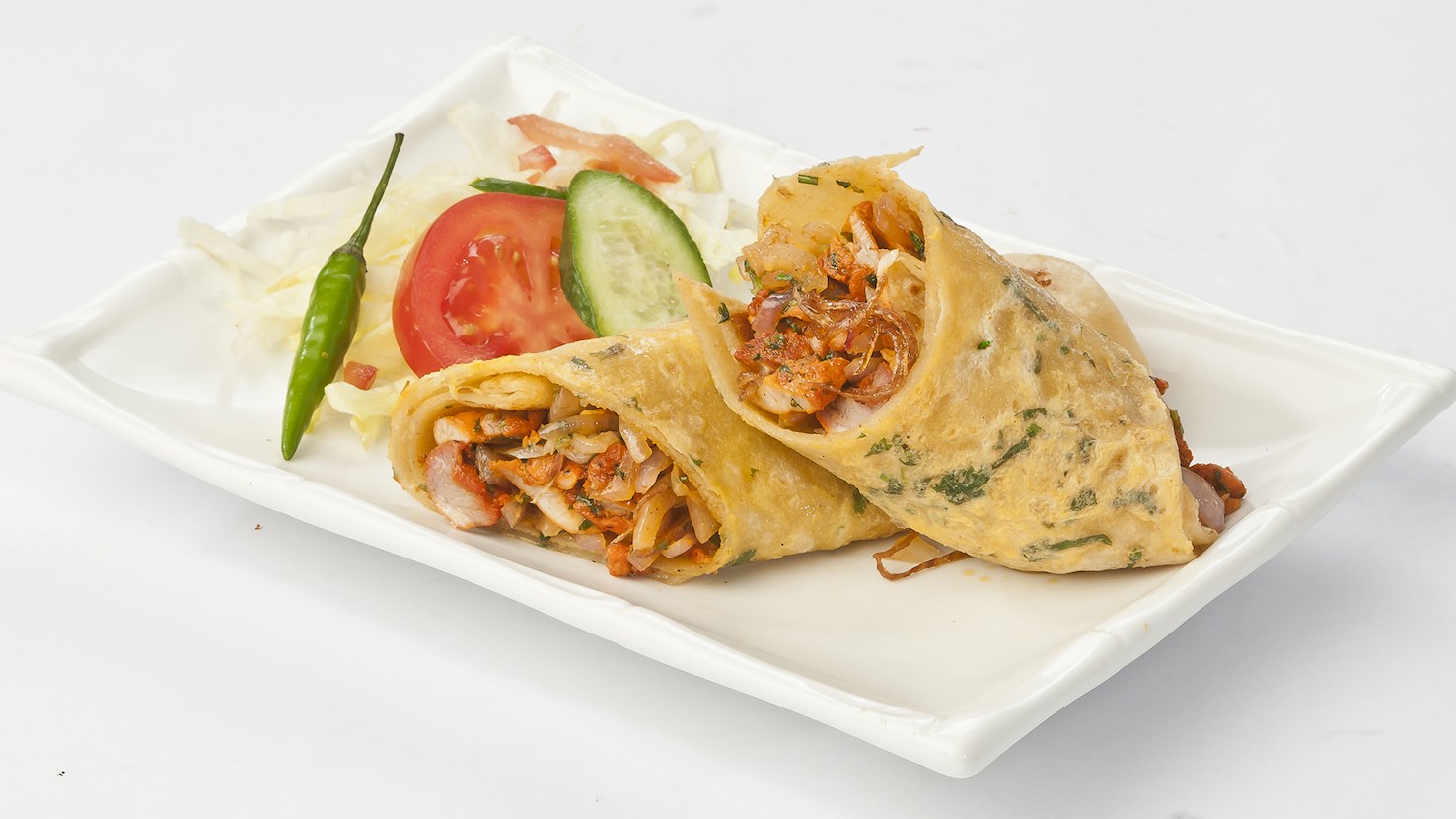
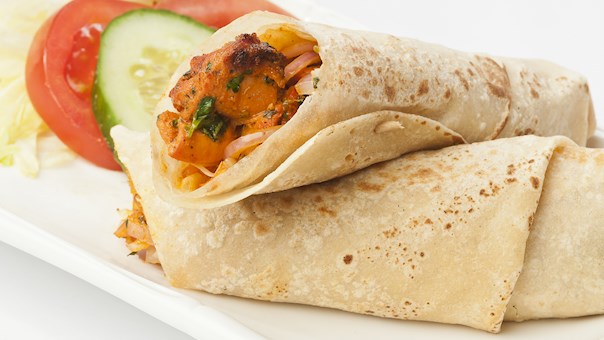
Kathi roll is an Indian street food dish hailing from Kolkata. It consists of skewered and roasted kebab meat that is wrapped in paratha flatbread. Some say that the dish was invented because the British didn't want to eat kebabs with their hands, so an ingenious person at Nizam's restaurant rolled the meat in a paratha. Initially, kathi roll was prepared with eggs and chutney along with the meat. Typically, the cook will roll the dough on a tawa, crack an egg onto it, then add the fillings. Kathi roll is traditionally wrapped in paper and served piping hot. In the 1960s, the cooks at Nizam's replaced the metal skewers with bamboo skewers, giving the dish its name, kathi roll, as kathi means stick in Bengali. Nowadays, this tasty wrap can also be found in cities such as New York City and London.
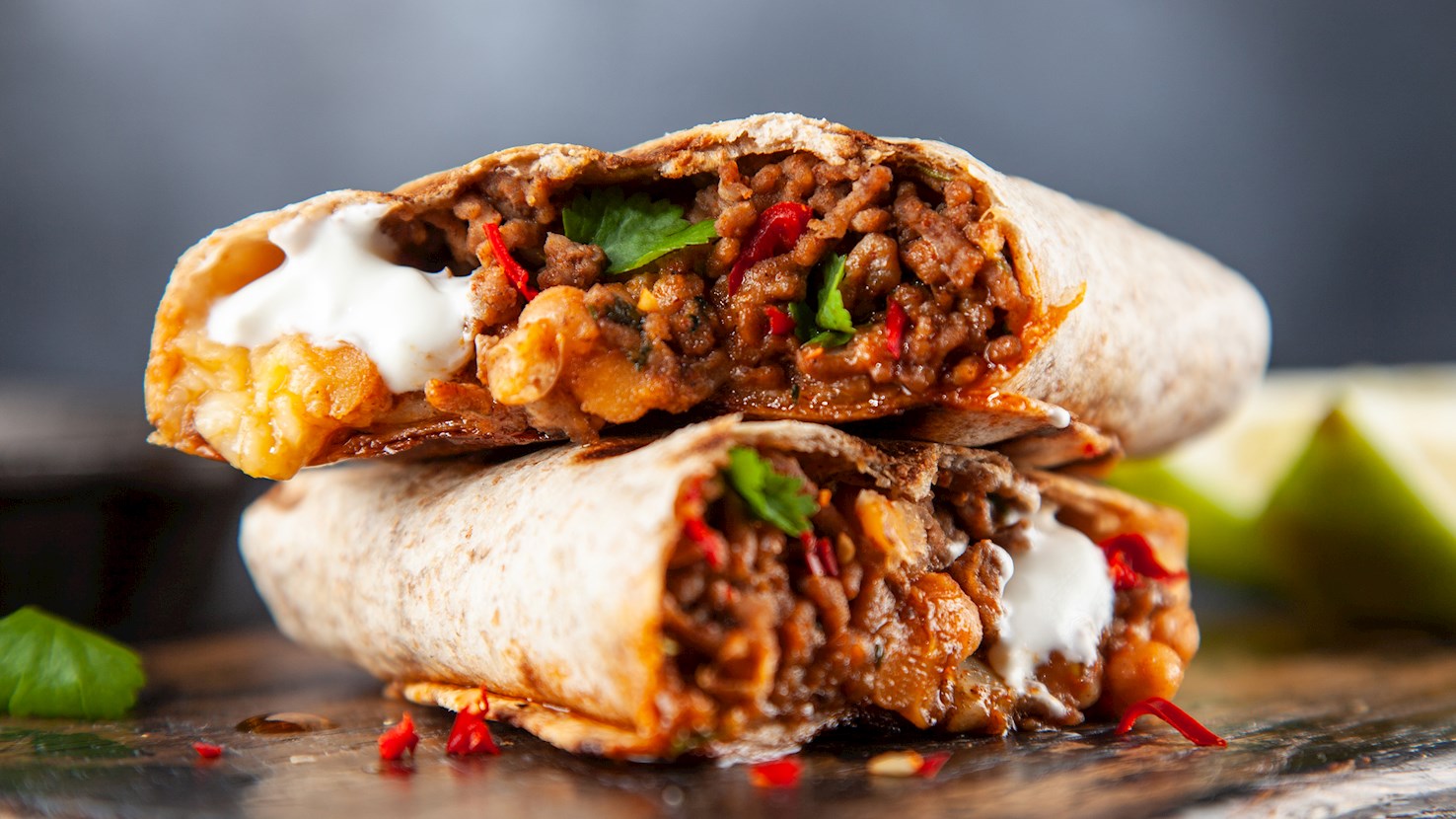
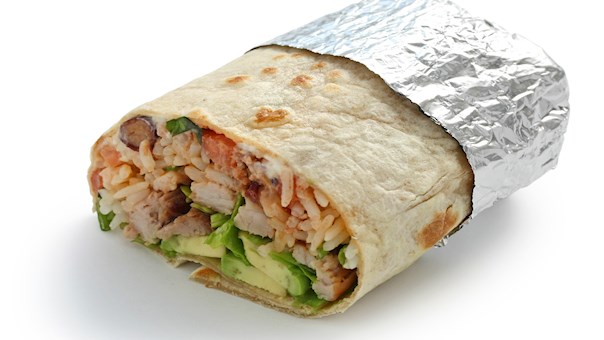
Burrito is a dish consisting of a wheat flour tortilla that is wrapped in such a way that it is possible to fully enclose the flavorful filling on the interior. The filling consists of a combination of various ingredients such as meat, beans, rice, lettuce, guacamole, and cheese, among others. Its name means little donkey in Spanish, and a popular theory suggests that it stems from the way the bedrolls and packs appeared on the donkeys that carried them. Some claim that the dish originated in the 19th century by either the vaqueros in Northern Mexico, farmers in California, or the miners from Sonora. The first appearance of burrito in American restaurants was recorded in the early 1920s in Los Angeles, when the owner Alejandro Borquez opened the Sonora Café and started serving the dish. He changed the name of the restaurant to El Cholo Spanish Café, and it's still in business. Once it became popular across the United States, numerous variations of the dish started appearing, such as Thai chicken burrito, Chinese pork burrito, and breakfast burrito.
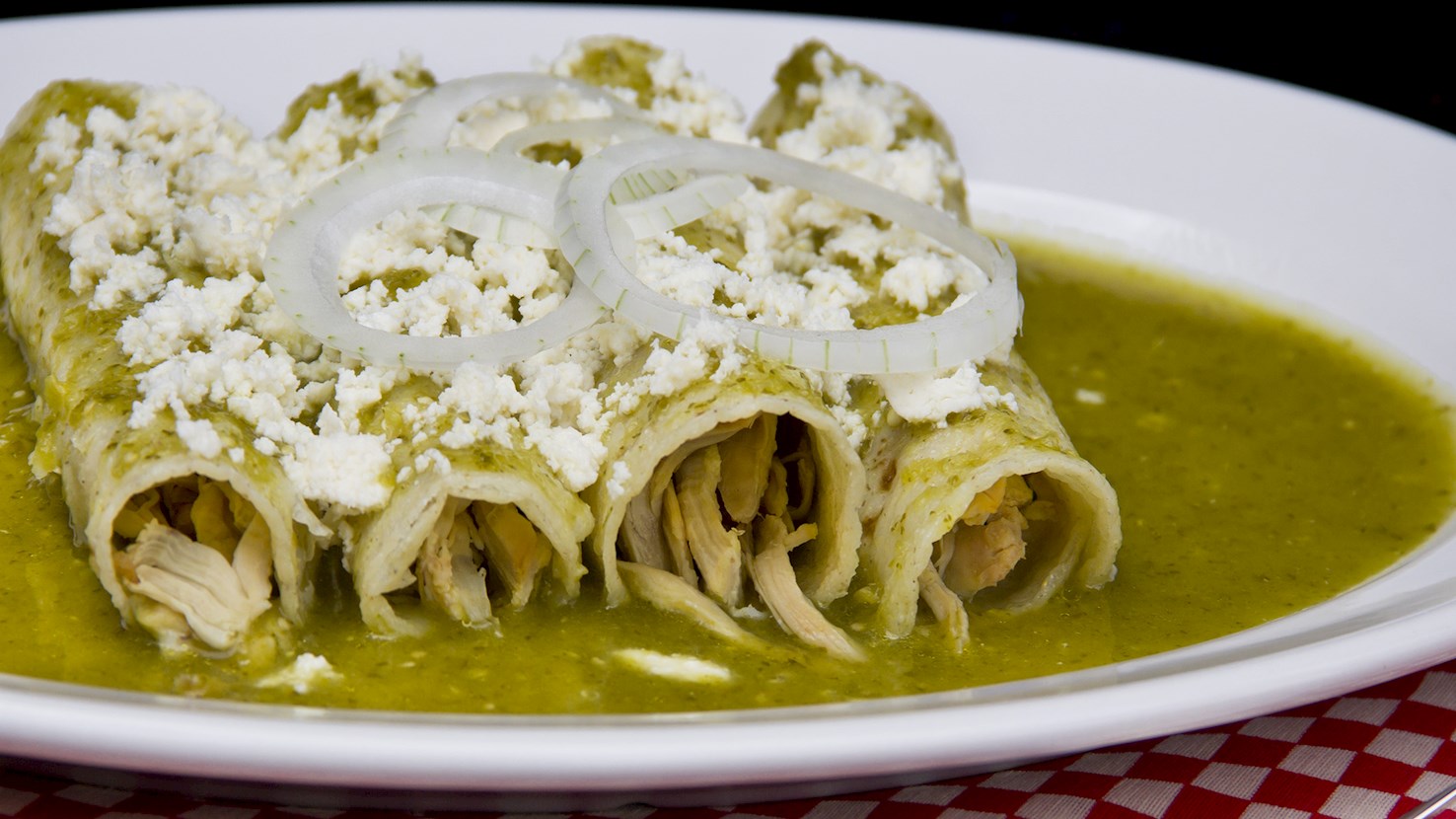
Salsa verde enchiladas is a Mexican dish prepared by covering enchiladas with green salsa. The enchiladas are traditionally filled with shredded chicken, and the salsa is made with small green tomatillos, chili peppers, coriander, parsley, onions, garlic, and oregano. Once filled with chicken, the enchiladas are covered with salsa verde, and the dish is typically topped with shredded cheese, onions, and coriander. Some cooks like to add sour cream as an additional topping, as it balances the sharp acidity of the green salsa.
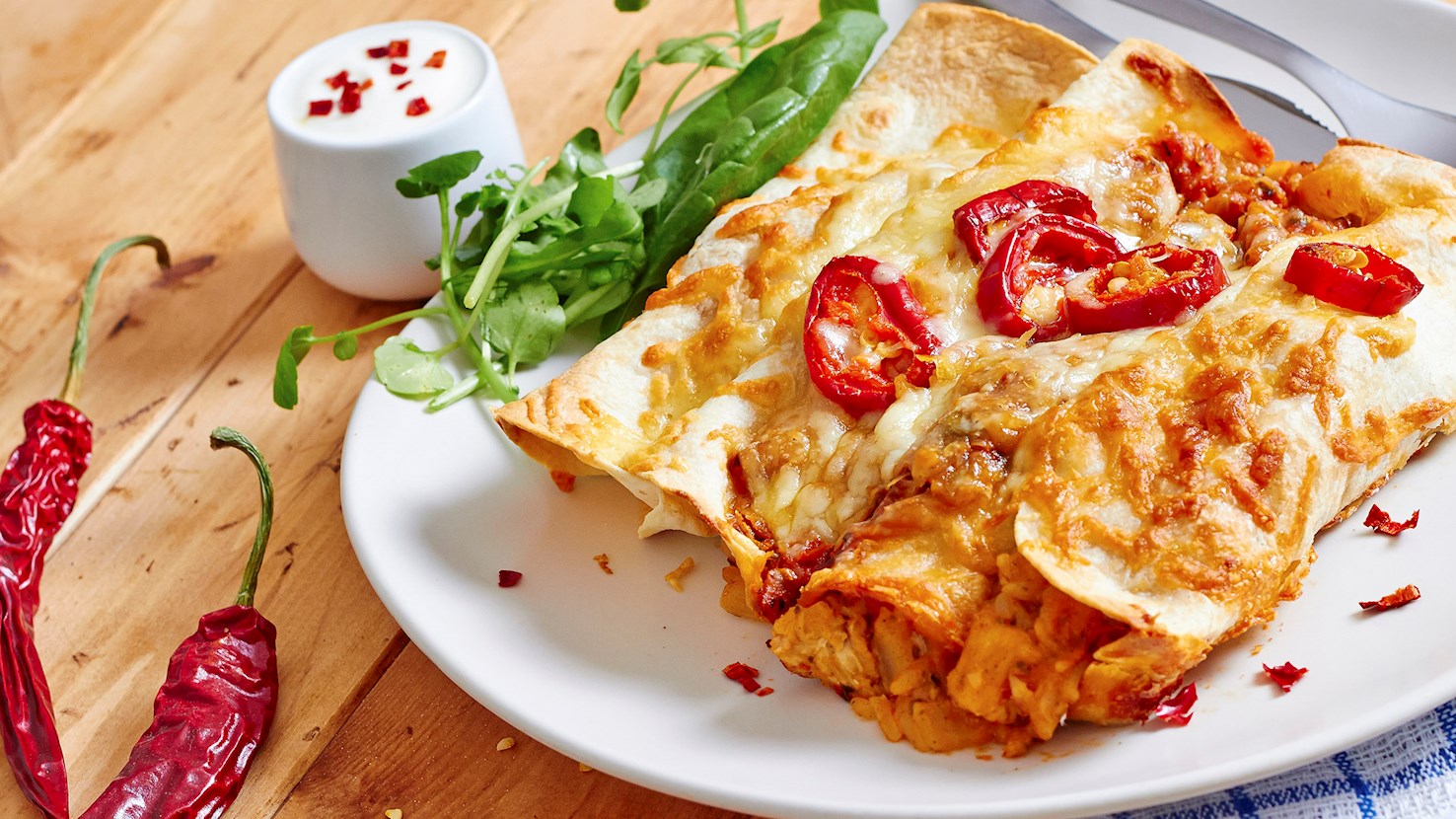
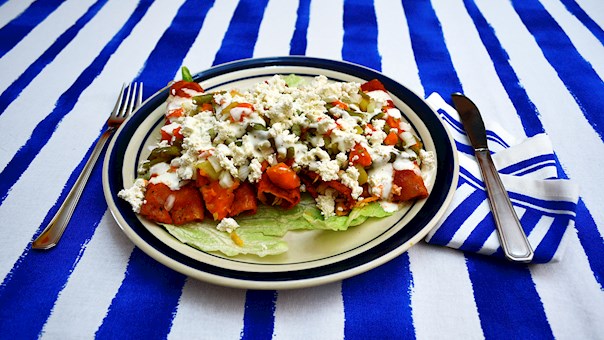
Enchiladas consist of a tortilla that is usually dipped in a chile-based sauce, then stuffed with various fillings such as cheese, meat, or fish. Then it is rolled up, baked, and topped with sauces, onions, beans, or more cheese. This highly versatile dish is believed to have originated from a Mayan dish called papadzules, consisting of corn tortillas dipped in pumpkin purée and filled with chopped boiled eggs. From there, numerous variations developed throughout Mexico and outside of its borders. The word enchilada, which first appeared in print in 1885, comes from the Spanish word enchilar, meaning to season with chile pepper. Today, there are countless versions of enchiladas. In northern Mexico's Sonora, they make them open-faced, topped with black olives and a red chile sauce, while the New Mexico version is prepared by layering the tortillas in a tall stack with cheese and onions between each layer. Enchiladas have become so popular that there is even a National Enchilada Day (in the US), celebrated every year on May 5, also known as Cinco de Mayo.
TasteAtlas food rankings are based on the ratings of the TasteAtlas audience, with a series of mechanisms that recognize real users and that ignore bot,
nationalist or local patriotic ratings, and give additional value to the ratings of users that the system recognizes as knowledgeable.
For the “Top 41 Wraps in the World” list until September 15, 2026, 8,769 ratings were recorded, of which 5,499 were recognized by the system as legitimate.
TasteAtlas Rankings should not be seen as the final global conclusion about food. Their purpose is to promote excellent local foods,
instill pride in traditional dishes, and arouse curiosity about dishes you haven’t tried.






What People Say