


Quesería La Moldera Real
Pata de Mulo Semicurado - La Trashumancia Montañesa



Goat Cheeses


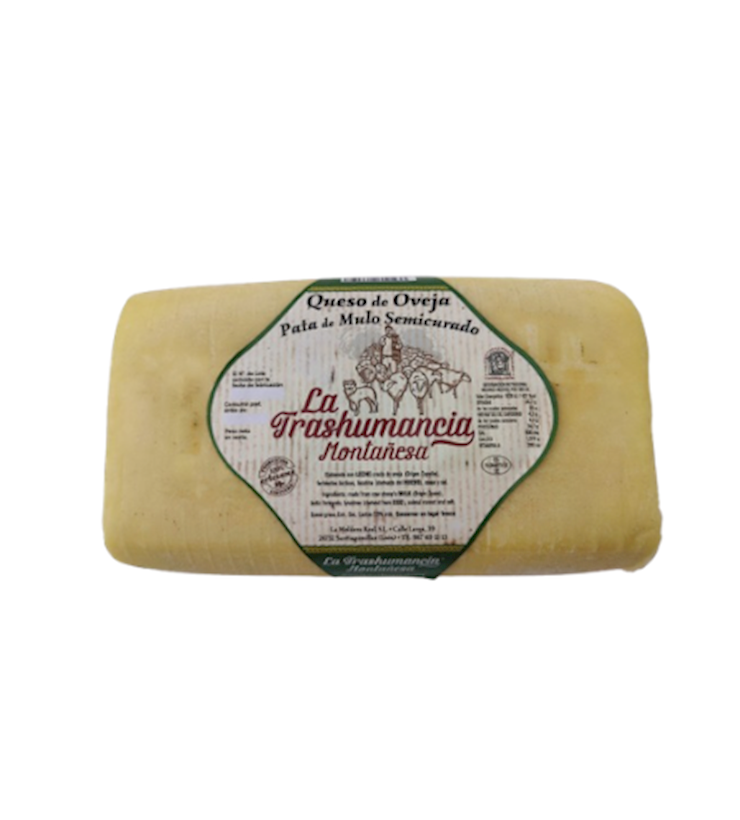
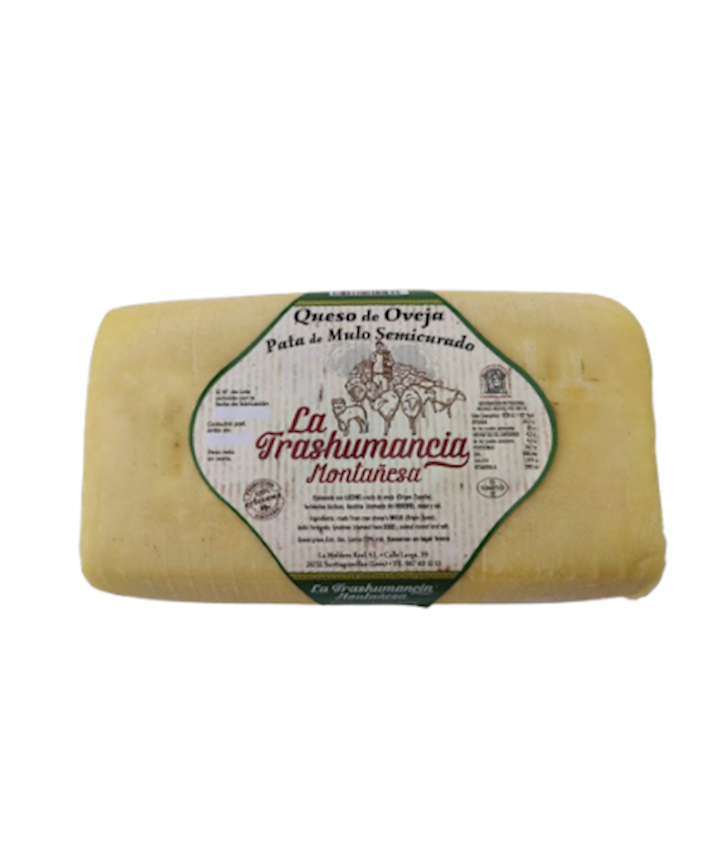
Pata de Mulo Semicurado - La Trashumancia Montañesa is a semi-cured goat’s milk cheese that follows the traditional “Pata de Mulo” format, characterized by its elongated cylindrical shape which allows for even maturation. As a semi-cured cheese, it is aged for a shorter period - typically between one and three months - resulting in a texture that is firm yet still slightly elastic and creamy at the core.
The rind remains natural and relatively light, less developed than in fully aged versions, while the interior is uniform and compact, without pronounced openings. Aromatically, it is fresher and more lactic-driven than its curado counterparts, with subtle notes of hay, mild nuttiness, and a gentle tang that adds balance.
On the palate, it is mild to medium in intensity, with a delicate goat character and a restrained spiciness that makes it approachable and versatile. The texture is smooth and cohesive, easy to slice, and melts pleasantly without becoming dry.
This cheese reflects the philosophy of La Trashumancia Montañesa, rooted in traditional practices and seasonal grazing, often linked to transhumance - the movement of herds between pastures - which contributes to its authentic, terroir-driven profile.
Producer
Quesería La Moldera Real is a family-run cheesemaker based in Santiago Millas, in the Maragatería region of León, Spain, founded in 1999 with a focus on preserving and reviving traditional local cheesemaking practices. The dairy works primarily with raw sheep’s and goat’s milk sourced from nearby farms, maintaining close control over milk quality and production.
It is particularly known for bringing back the historic “Pata de Mulo” cheese, a medieval-style cheese that had nearly disappeared, now reinterpreted through careful artisanal techniques. Production follows traditional methods, including natural coagulation, manual shaping, and controlled aging without industrial standardization, allowing each cheese to develop its own character.
The resulting cheeses typically show firm or semi-firm textures, depending on maturation, with flavor profiles that evolve from clean lactic notes to more pronounced nutty, savory, and slightly spicy tones over time. The influence of local terroir is evident in both aroma and structure, reflecting the region’s pasture and climate conditions.
In addition to traditional formats, the producer also develops cheese-based creams and variations that incorporate regional ingredients.