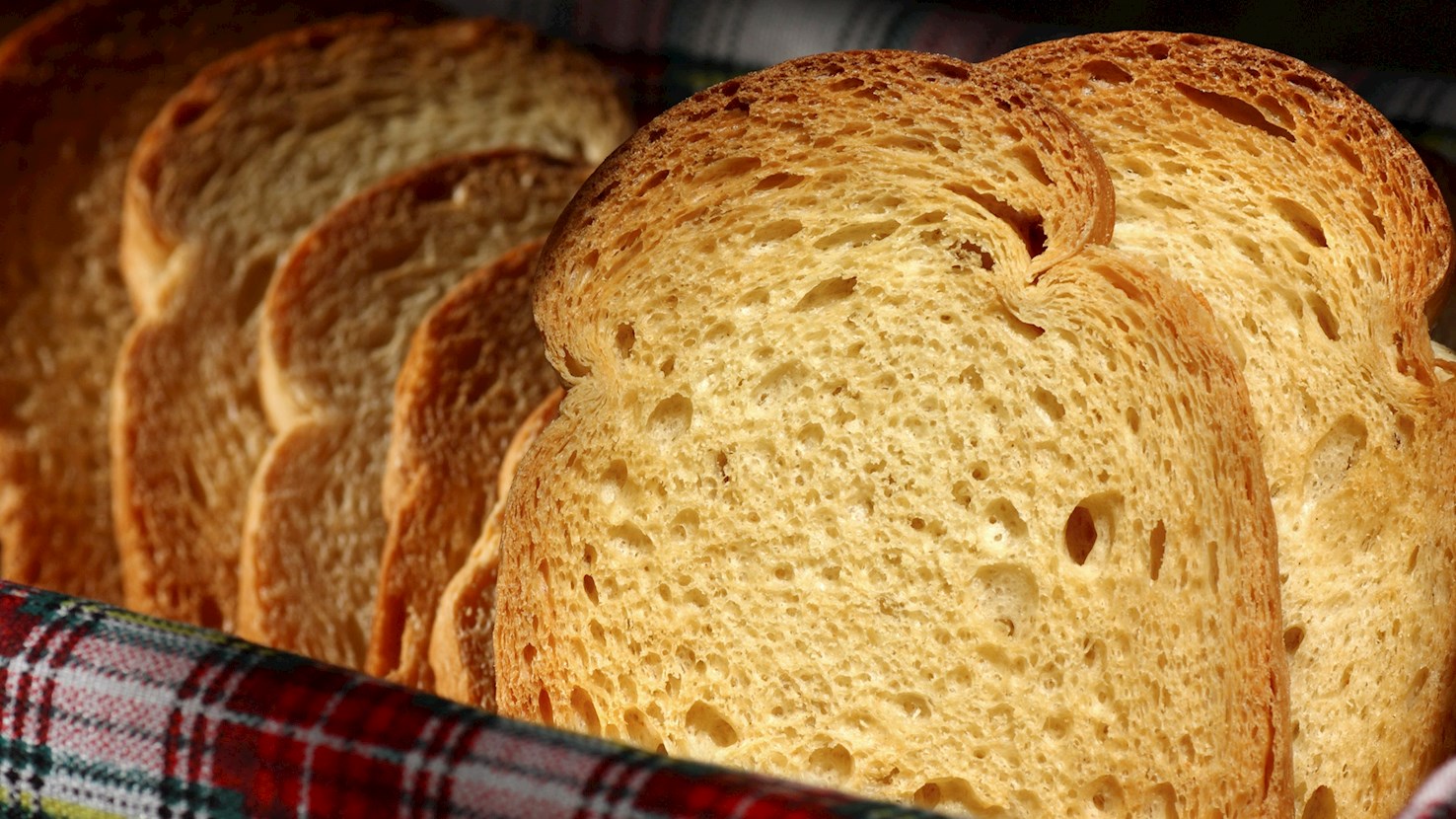
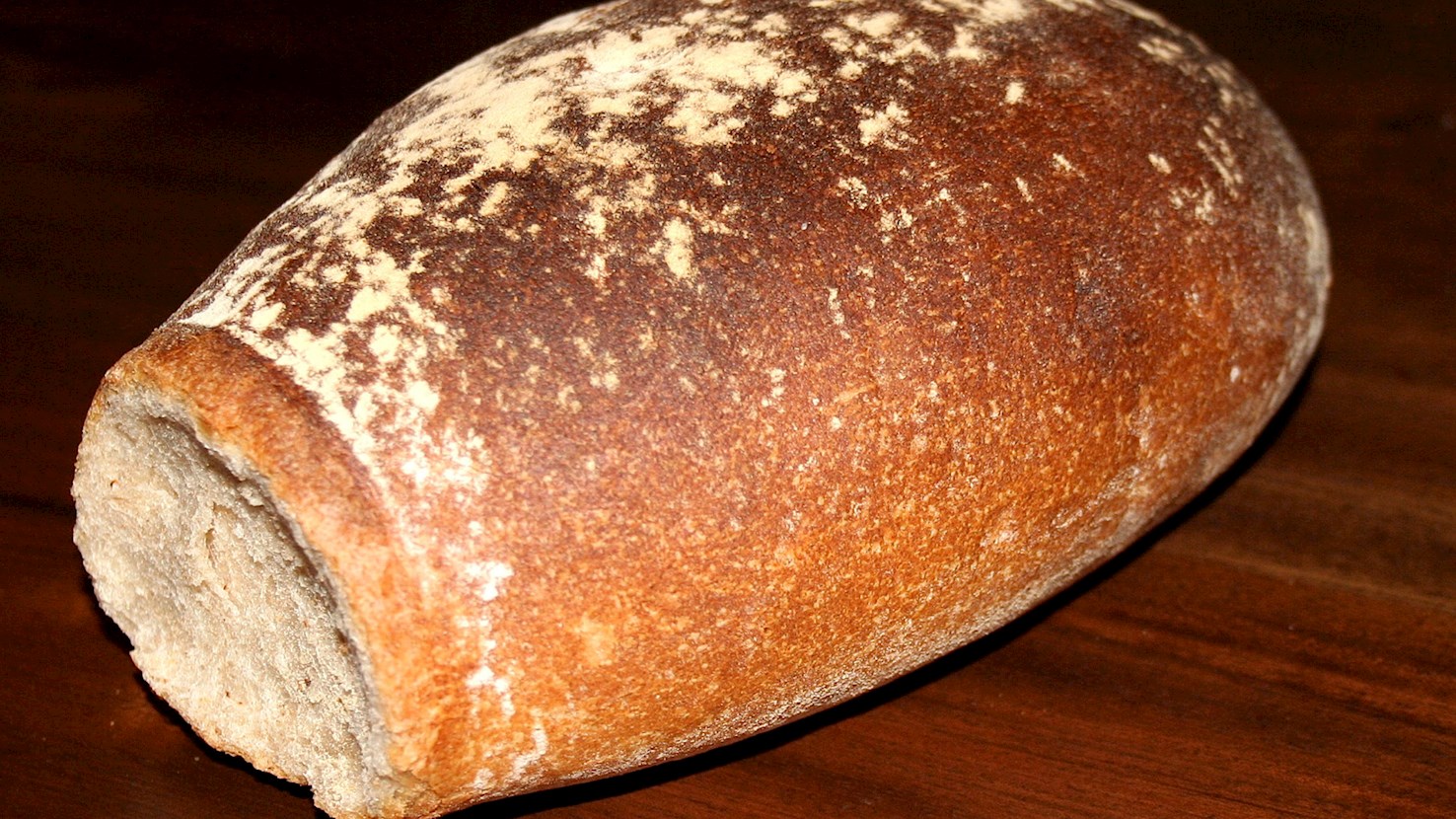
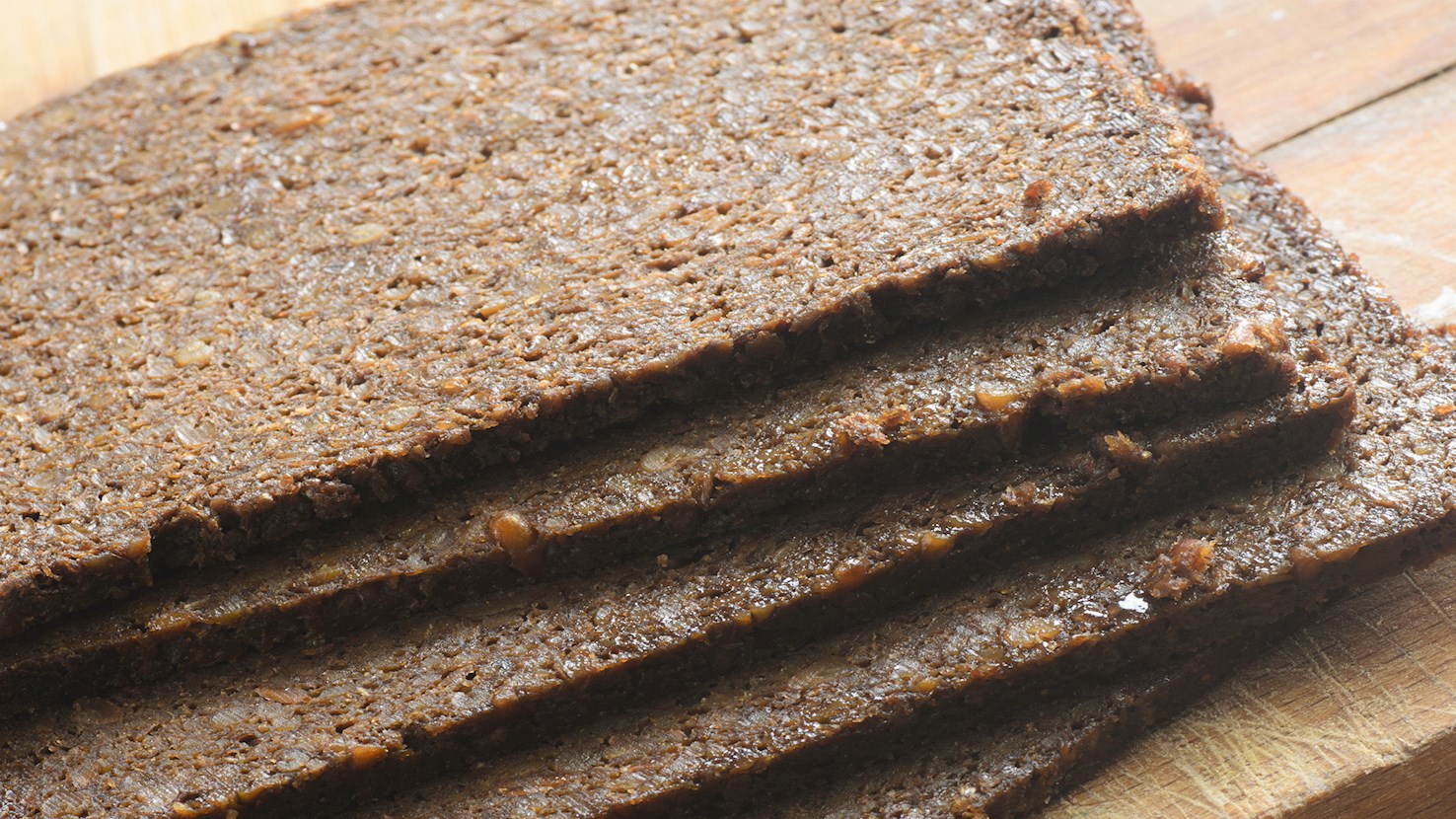
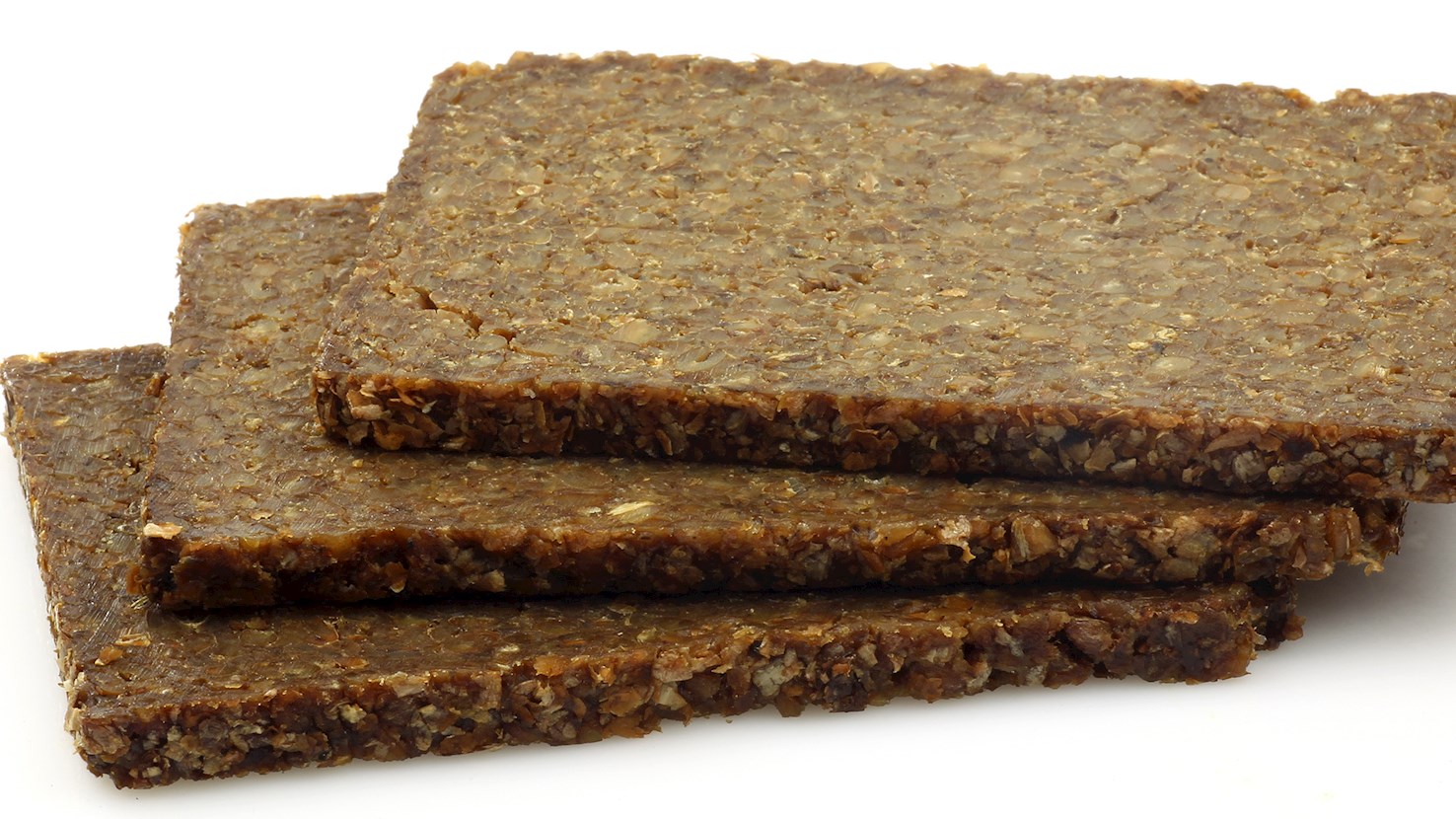
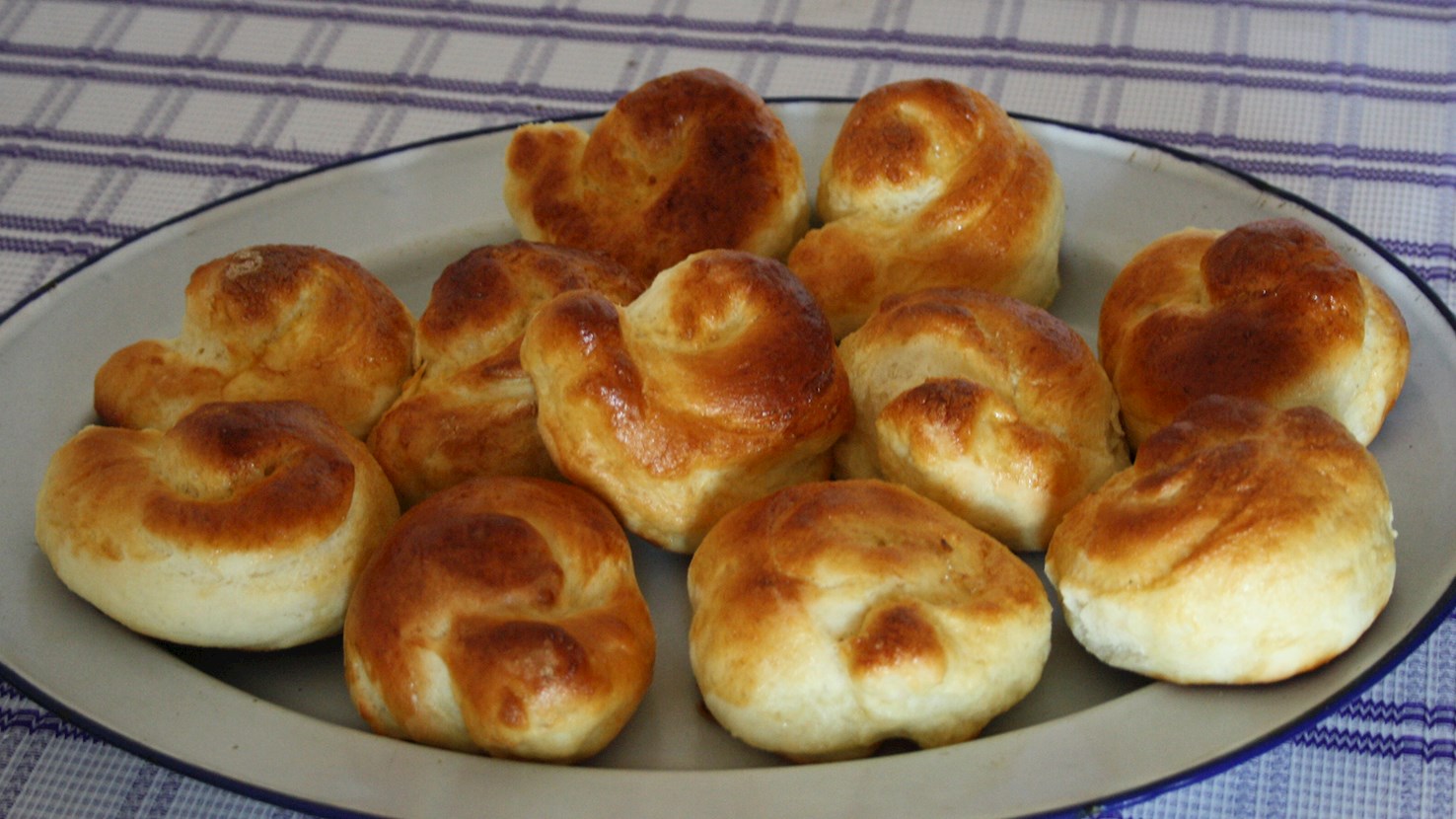
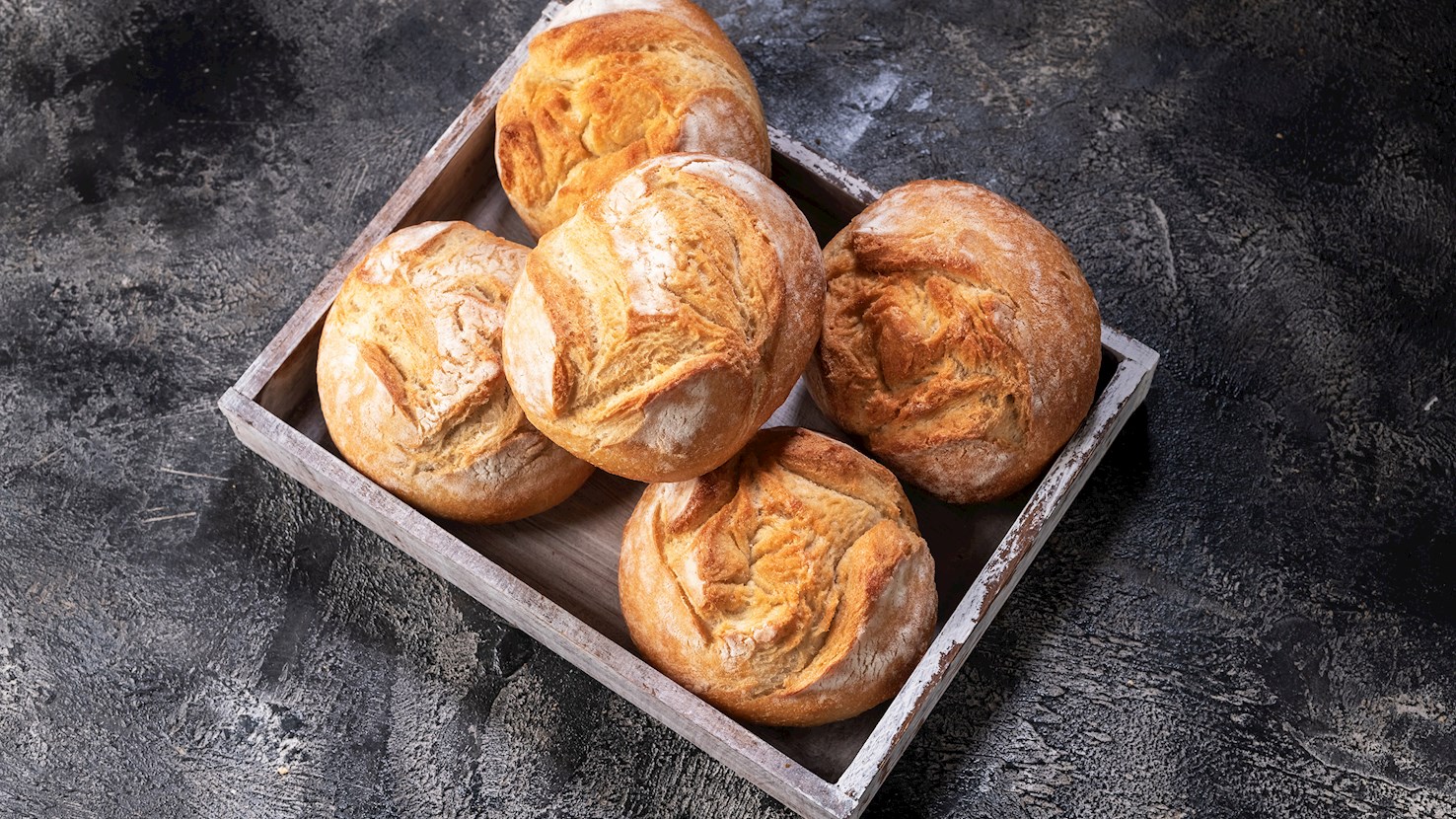
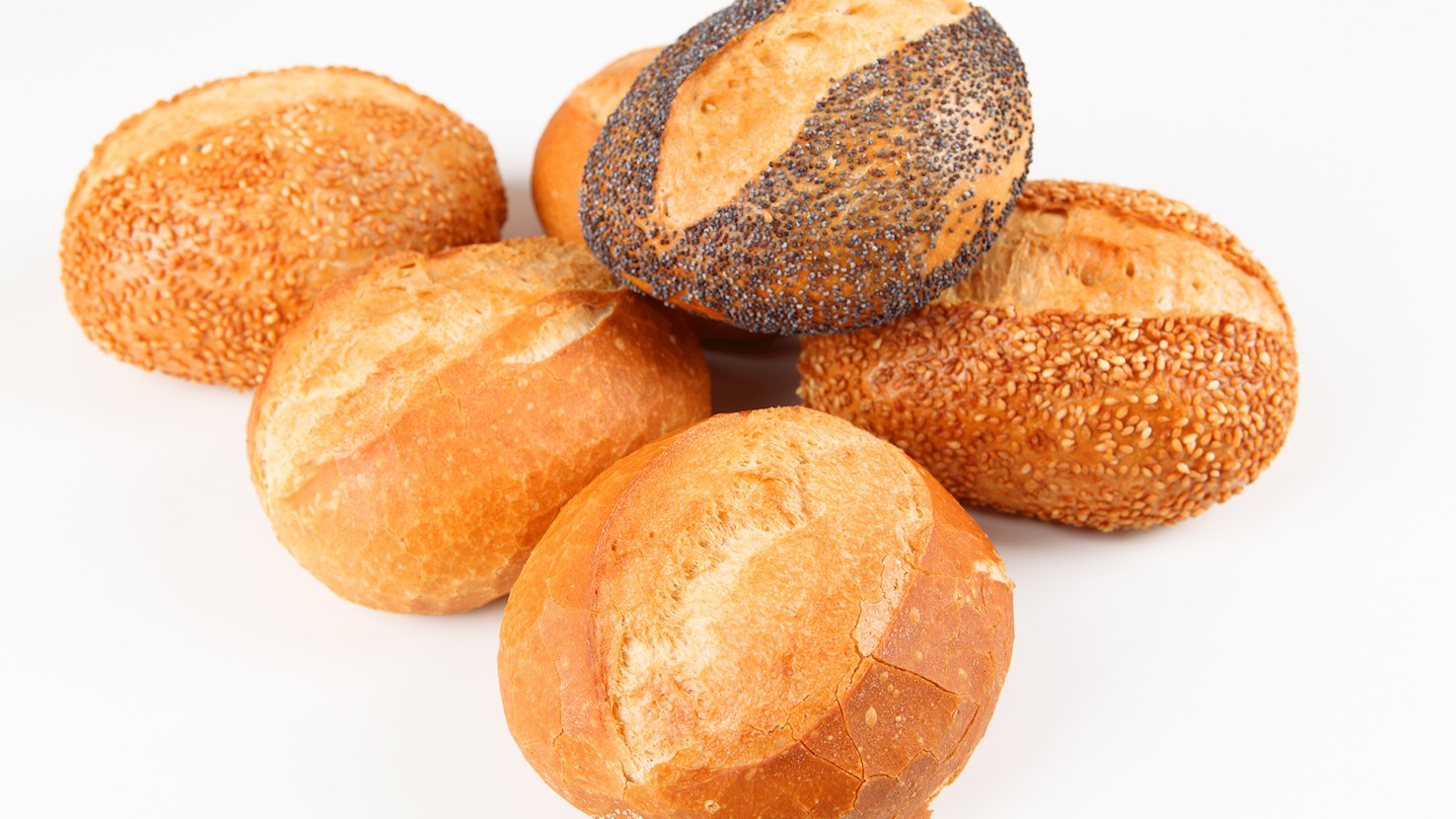
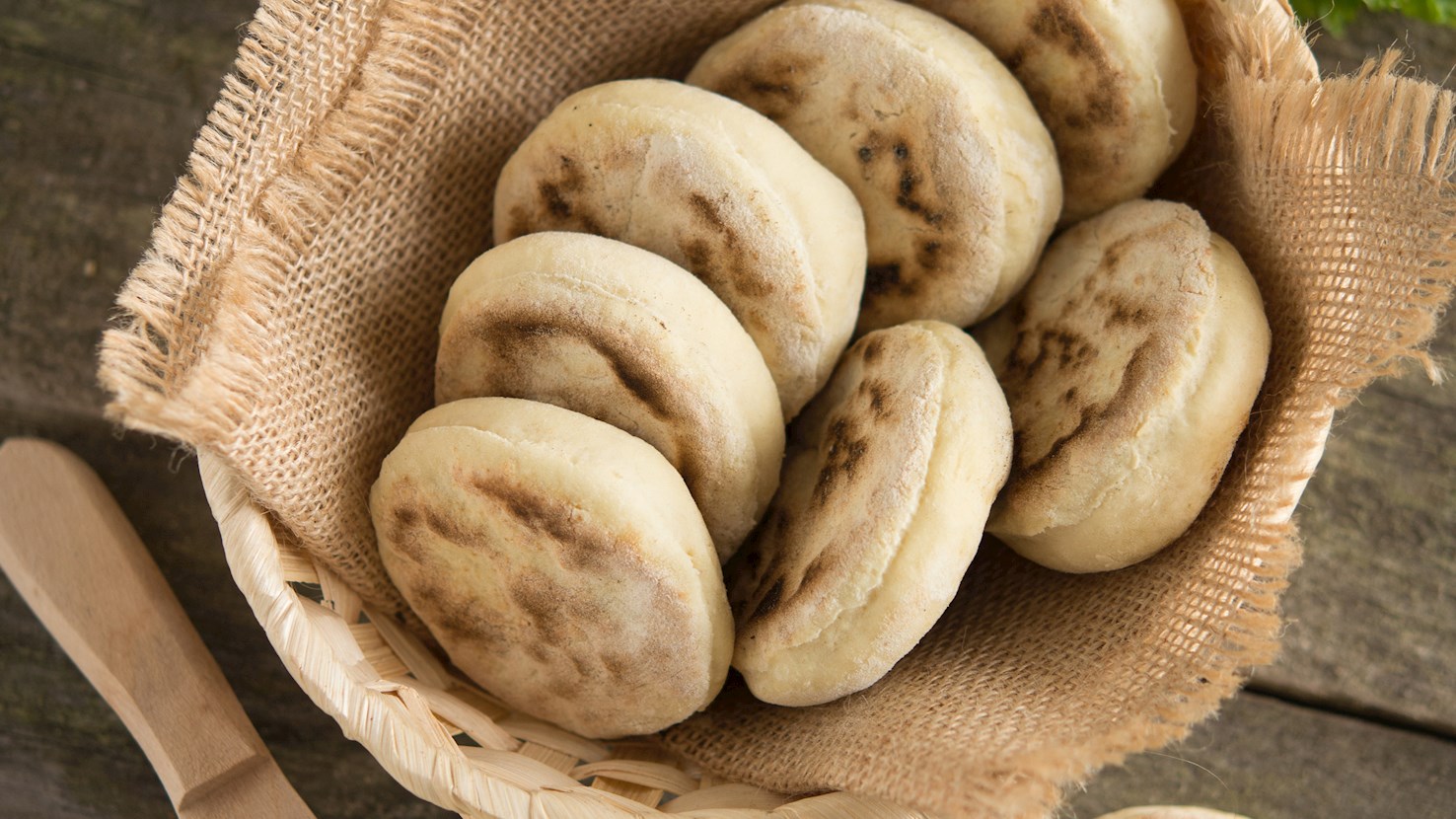
Karlovarský suchar is a rusk, a toasted bread cut in thin slices from a whole load, produced in the Karlovy Vary region in the Czech Republic. There are two varieties of the bread - special and diet versions. The bread is well baked and dried, clean, crisp and uniformly porous. It is golden brown in color, with a delicate scent of bakery goods. The taste is that of baked bread. Both versions of the bread must contain Karlovy Vary spring water. The special variety is made from wheat flour, spring water, sugar, yeast, salt, egg yolk, and flour improver. The diet version is made from the same ingredients, but sugar, egg yolks and salt are removed from the mix. When the bread is toasted, it is left to cool and sold in packs of 200 grams, ready to be enjoyed with fruit jams, butter, and tea.
Fastenwähe is a type of small Swiss bread, carnival treat, and snack originating from Basel. The dough is usually made with a combination of flour, yeast, salt, sugar, milk, eggs, caraway seeds, and butter. Once the dough has rested and doubled in size, it's divided and shaped into ovals. A knife is used to cut four slits into each piece of dough, which is then carefully stretched in order to create a shape that's similar to a cross in the middle of the dough. The dough is brushed with beaten egg yolks, sprinkled with caraway seeds, and baked until golden. Fastenwähe is especially popular during the Fasnacht (the biggest carnival in Switzerland) celebration, and it was originally enjoyed only during Lent.
Basler brot is a traditional bread originating from Basel. It is made with a starter, resulting in light and airy bread with a distinctive flavor. Other ingredients include wholegrain flour or half dark and half white flour, water, and salt. It is characterized by an aromatic crumb, high water content, and high baking temperatures. Visually, the bread is oblong, and it consists of two round loaves of bread that are combined together at the ends. The two pieces represent two Cantons – Basel countryside and Basel the city. It was first mentioned in Eugen A. Meiers 1792 book Das süsse Basel.
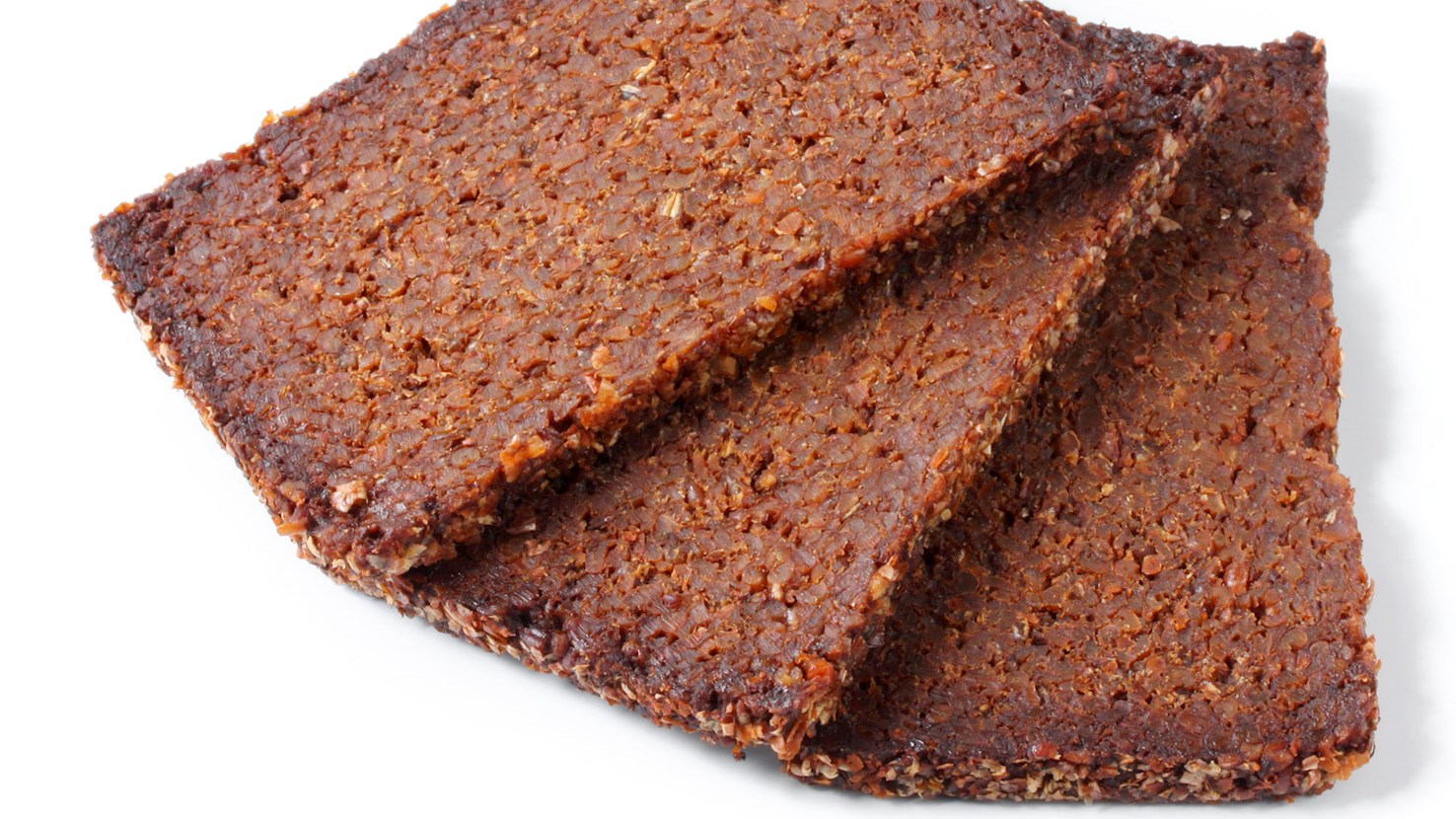
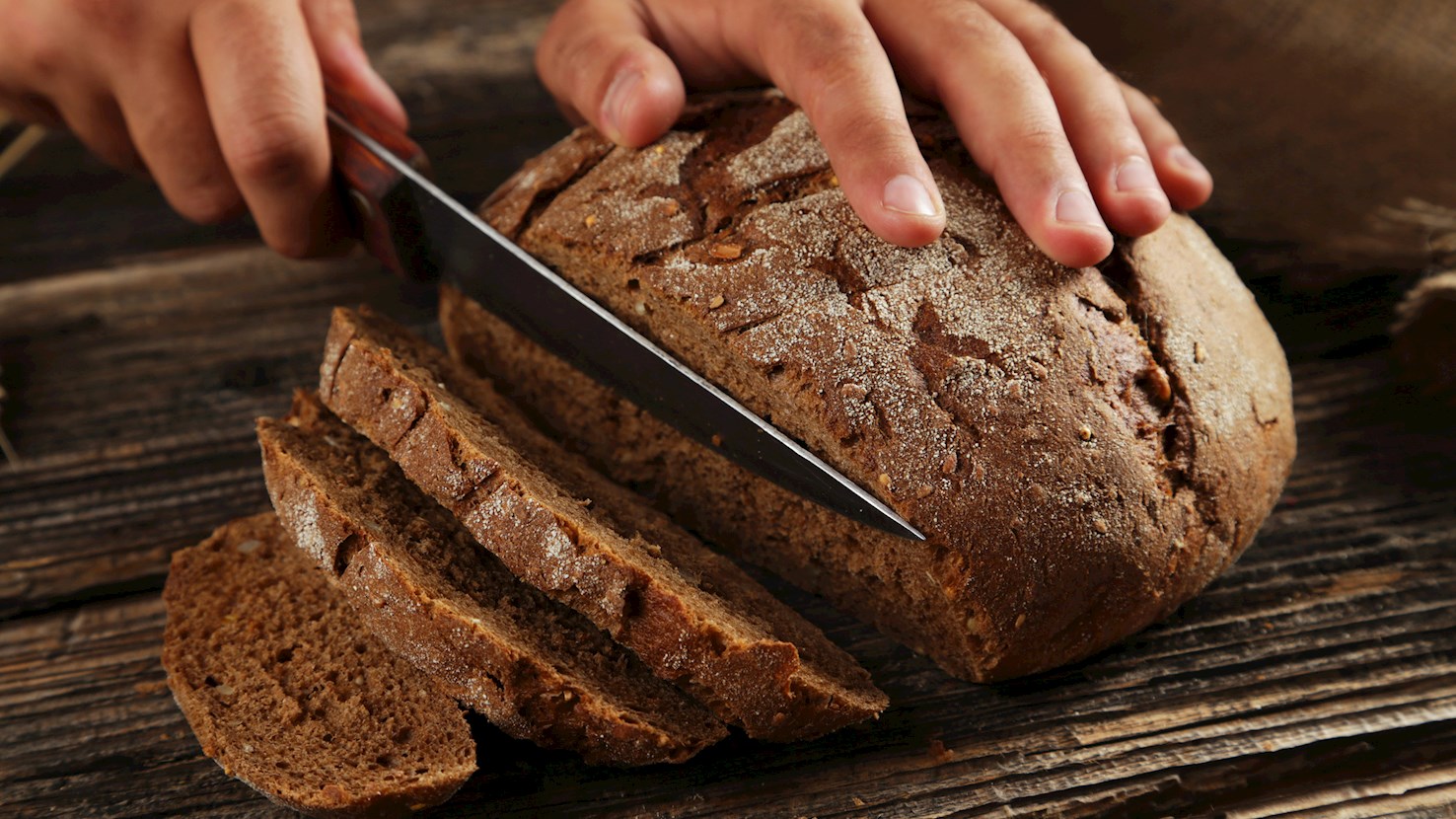
This heavy and slightly sweet rye bread is made from a sourdough starter and coarsely ground rye with whole rye berries as its base. Its name comes from the German pumpern, a synonym for being flatulent, and the male given name Nickel—a form of the name Nicholas—which was commonly associated with the devil in New High German vernacular. Thus, pumpernickel literally translates to "devil’s fart," which is a definition accepted by most publishers and dictionaries, however strange it may sound. The traditional German pumpernickel contains no coloring agents, but instead relies on the Maillard reaction to impart a deep brown color and a sweet, almost chocolatey and earthy flavor and aroma. Apart from being delicious, pumpernickel is rich in resistant starch which is known to aid digestion and benefit blood sugar regulation.
Fries roggebrood is a popular rye bread that is a specialty of the Dutch province of Friesland. Its flavor is slightly sweet and sour, similar to pumpernickel bread, while the texture is moist and dense, and its color is dark brown, almost black. Traditionally, Frisian rye bread is sliced very thinly, and in the past, it used to be paired with cheese, butter, or sugar. Today, it is typically paired with the famous Dutch pea soup called snert. It is said that the bread will keep almost indefinitely if wrapped in plastic, but it can also be sliced and frozen for even further use.
Jidáše or Judas bun is a traditional Easter bread that's shaped into a rolled rope or a noose as a reference to Judas who hanged himself after he had betrayed Jesus. They're made with a combination of flour, butter, egg yolks, cream, sugar, honey, yeast, salt, lemon zest, and sometimes nutmeg. After they've been baked, the buns are usually brushed with a glaze consisting of honey, butter, and lemon juice, and the buns are then typically eaten cold. According to local beliefs, if you eat one jidáše during the sunrise on Maundy Thursday, you'll be protected from bee stings, snake bites, and human betrayal for the whole following year.
Schlumbergerli is a traditional bread roll originating from Basel and it can be traced back to 1872. The rolls are made with a combination of flour, yeast, salt, and honey. The dough is sprayed with water and baked until golden. If properly prepared, the irregularly-cracked crust should be delicate and crisp, but still soft. These bread rolls are named after Amedée Schlumberger, a banker from France who moved to Basel and started to miss a particular French bread, so Basel bakers made him something similar, and Schlumbergerli was born. The bread is eaten for breakfast, as an accompaniment to main dishes, or on its own with sweet or savory fillings such as butter or fruit jam.
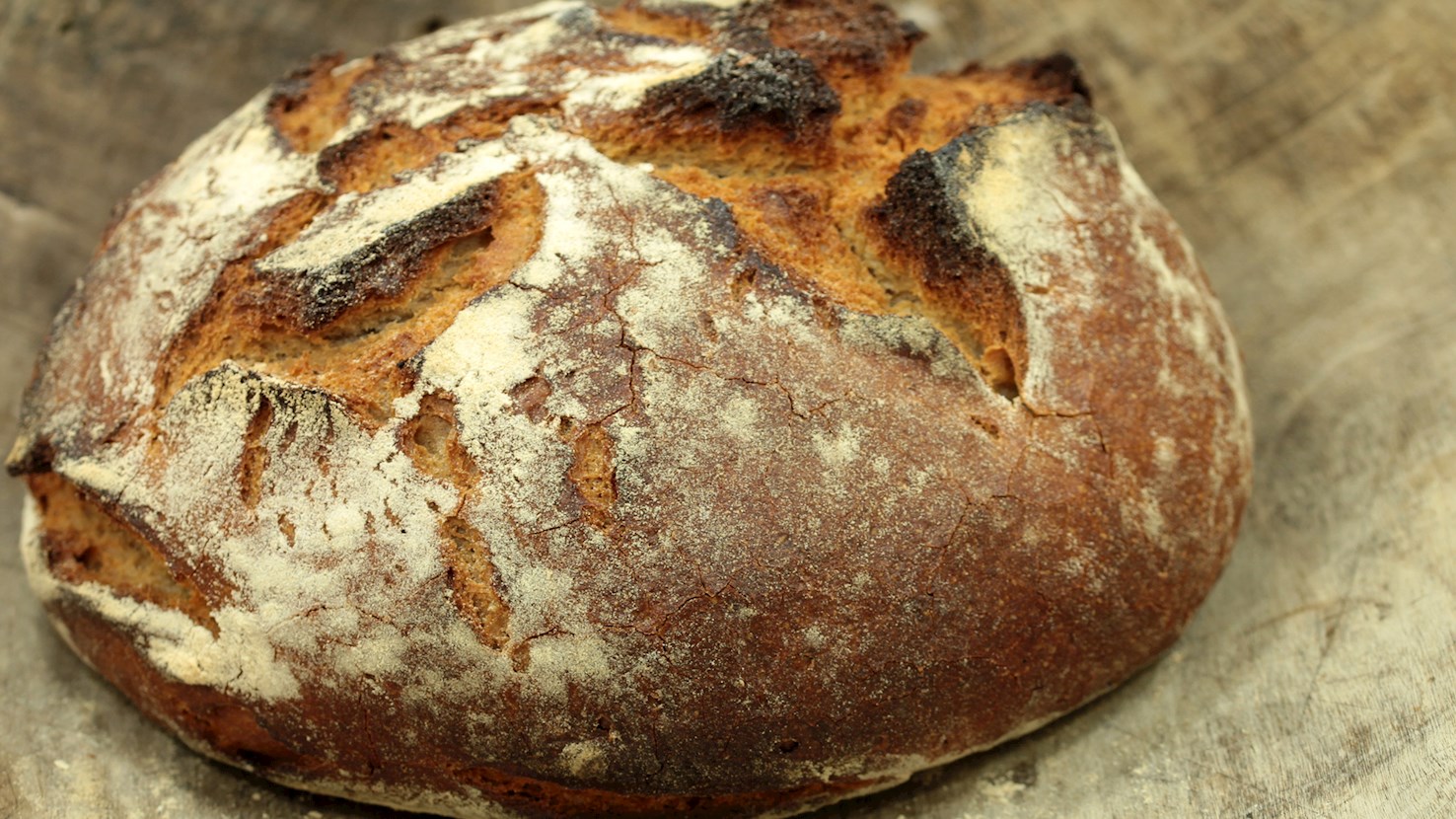
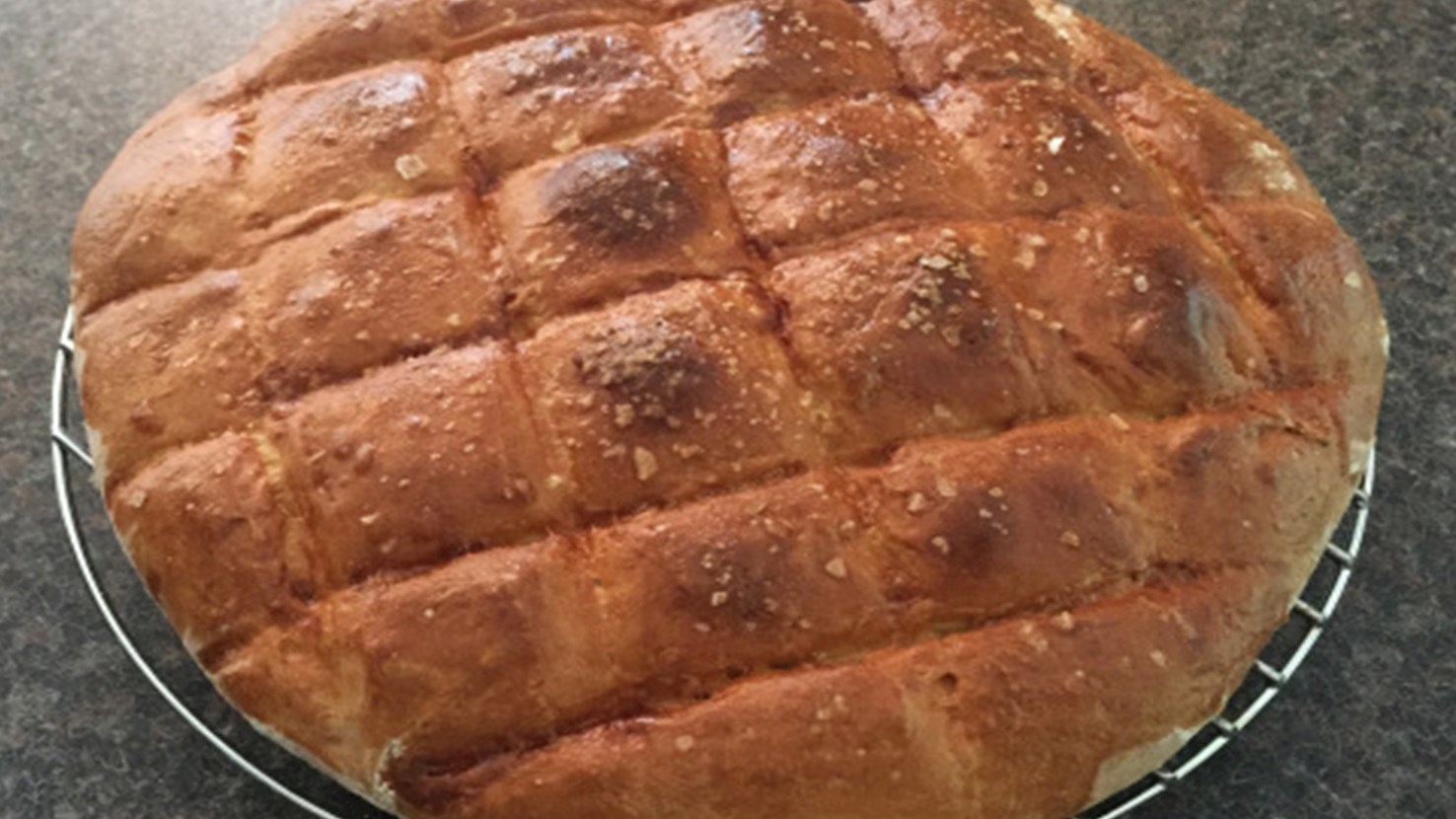
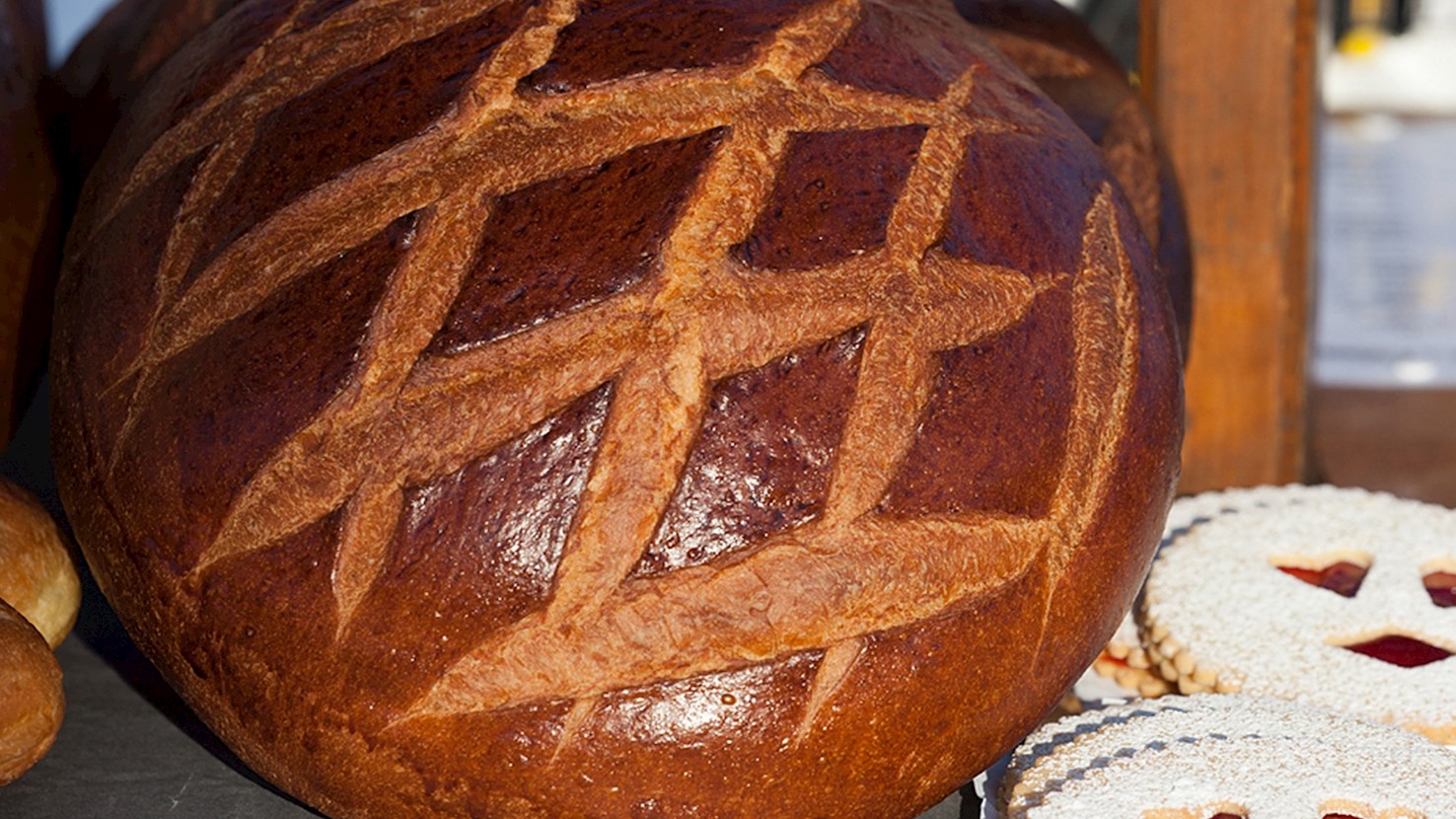
Burebrot is a Swiss bread made with a combination of rye flour, wheat flour, yeast, water, and milk. The round-shaped dough is typically cut with a knife before baking in order to create a rhombus pattern on top. The dough is first baked at a high temperature, then at a moderate temperature, creating a nice crunchy crust in the process. It is believed that burebrot was invented in 1955 by the Professional School of Richemont and Swiss Bakers’ Association as a way to use leftover milk.
St. Galler brot is a traditional bread loaf that is shaped into a round knot with a torn front. It consists of yeast, salt, water, and either strong white flour or dark wheat flour. In order to get a shiny crust, the bread is brushed with water immediately after it is taken out of the oven. This dense, dark-crusted bread usually comes in two varieties – ruch (dark bread) or halbweiss (a combination of dark and white flour). It is recommended to serve it with butter or homemade fruit jam.
First described in 1450 as the black bread of Westphalia, the famous Westfälischer Pumpernickel is a traditional all-rye bread made with either coarsely ground rye meal or a combination of rye flour and whole rye kernels. It can also be flavored with malt or sugar beet syrup. The loaves are placed in lidded pans and baked slowly at a low temperature in steam-filled ovens for anywhere from 16 to 24 hours, which gives pumpernickel its characteristic deep brown, almost black color. Pumpernickel has little or no crust, a pronounced earthy aroma, and a distinctive bittersweet flavor. It is quite dense and moist, and it has an extremely long shelf-life – when shrink-wrapped, it stays fresh for months, while canned pumpernickel can be stored for as long as two years. Even though the unique flavor and texture of pumpernickel goes well with both sweet and savory spreads, the Westphalians typically enjoy it with a thick smear of butter and a topping of ham or liver sausage.
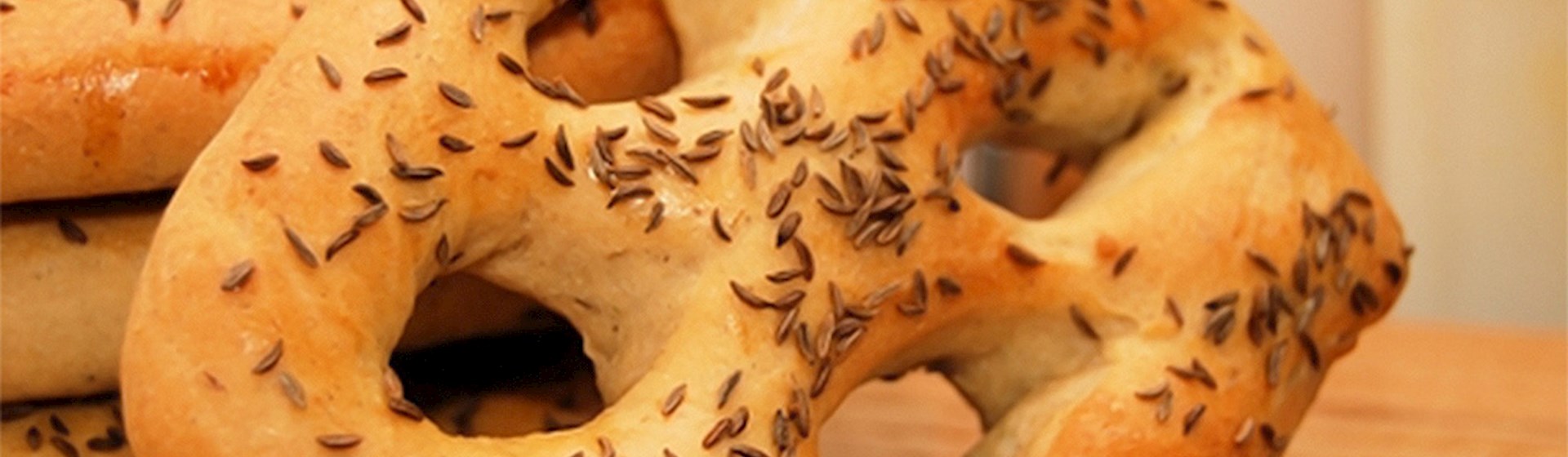
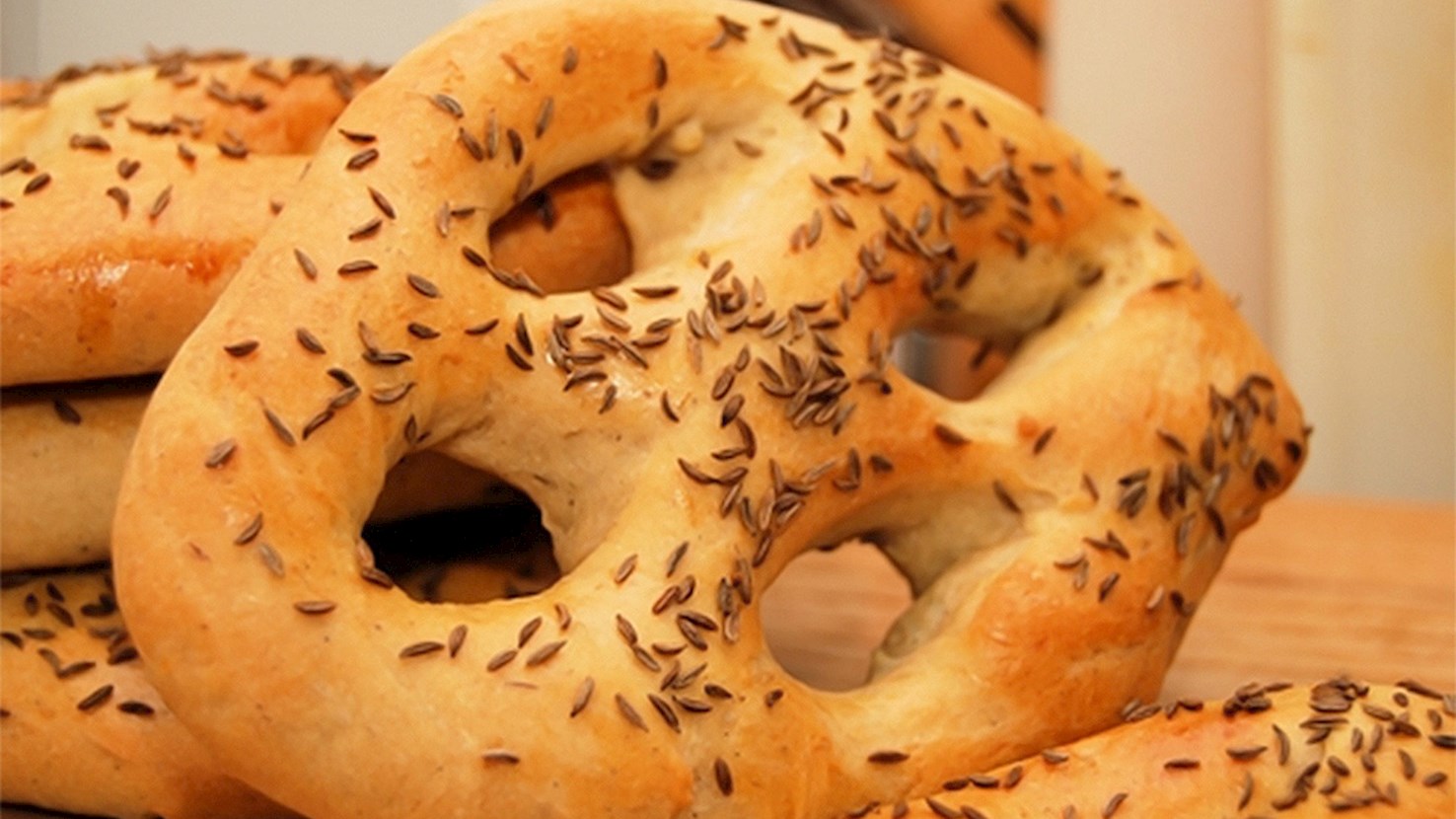
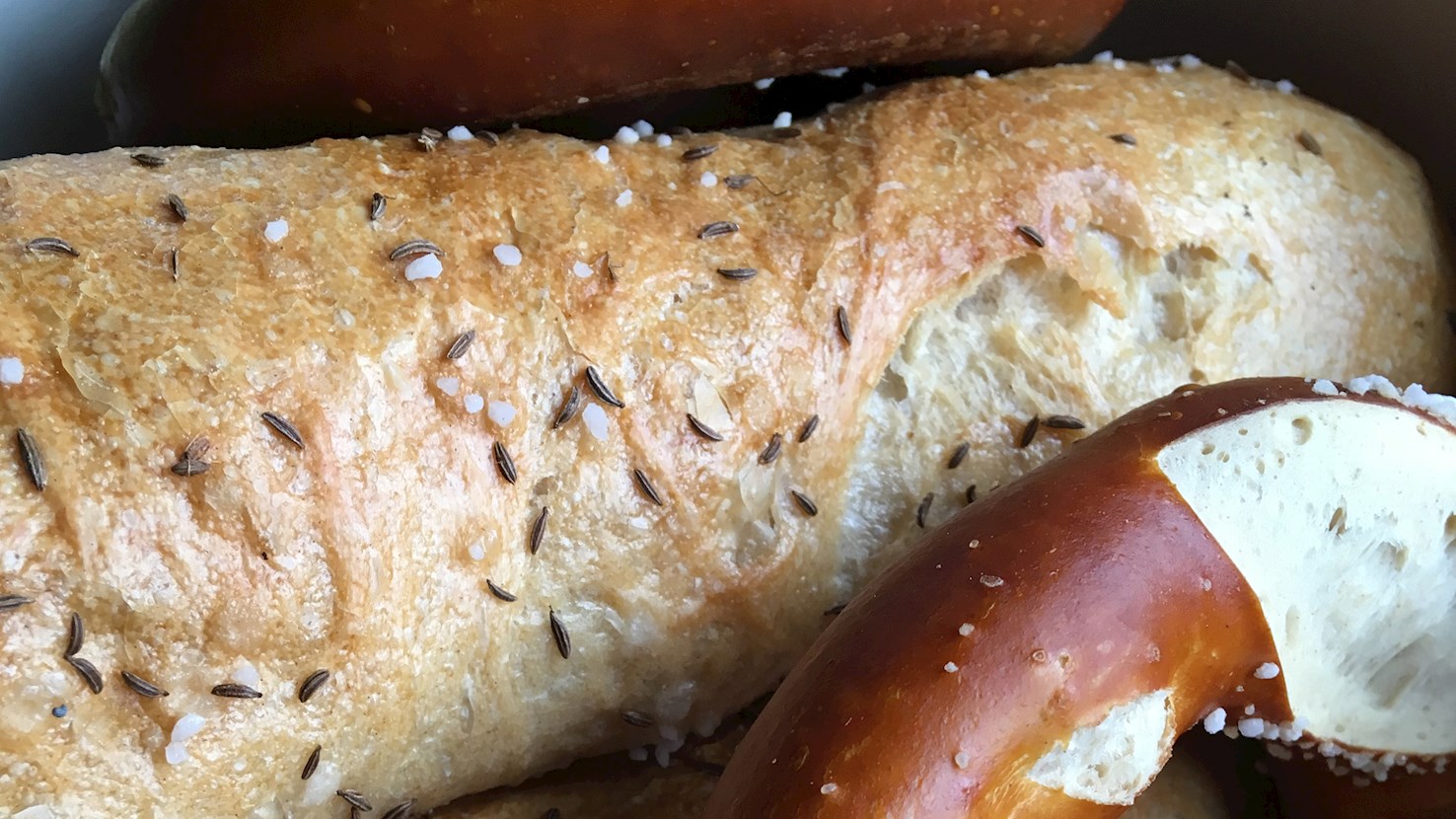
Seele is a traditional bread originating from Baden-Württemberg. The bread is usually made with a combination of wheat flour, spelt flour, yeast, salt, and water, without any additives or baking aids. Over the course of 24 hours, the dough is worked by hand several times. The small and oblong hand-shaped loaves are placed on the oven floor and the bread is baked until the crumb is moist and the crust is crisp. The crust is sprinkled with caraway seeds and coarse salt. Nowadays, only a few artisanal bakeries in the area still bake the bread using this traditional method that results in toasted aromas of the bread. Many bakeries use modern methods – the loaves are processed by machines, and the bread is less moist, while the crust is less crisp. The name seele means souls, and although the origin of the name is unclear, it's believed that it comes from the Christian All Souls' Day, when bread was given to poor people (souls) in need.
Walliser roggenbrot is a Swiss rye bread produced in the Valais region. The rustic loaf with a dense crumb must contain at least 90% whole rye flour, and it is typically made with a sourdough starter. The bread keeps for a long time, and traditionally, it used to be baked in village ovens which were fired only a few times per year, so it was quite important that the bread lasted for a few months. Nowadays, walnuts and dried fruits can be added to the bread, if desired. When consumed, the bread is thinly sliced, and it is recommended to serve it with cheese, cold cuts, and gherkins.
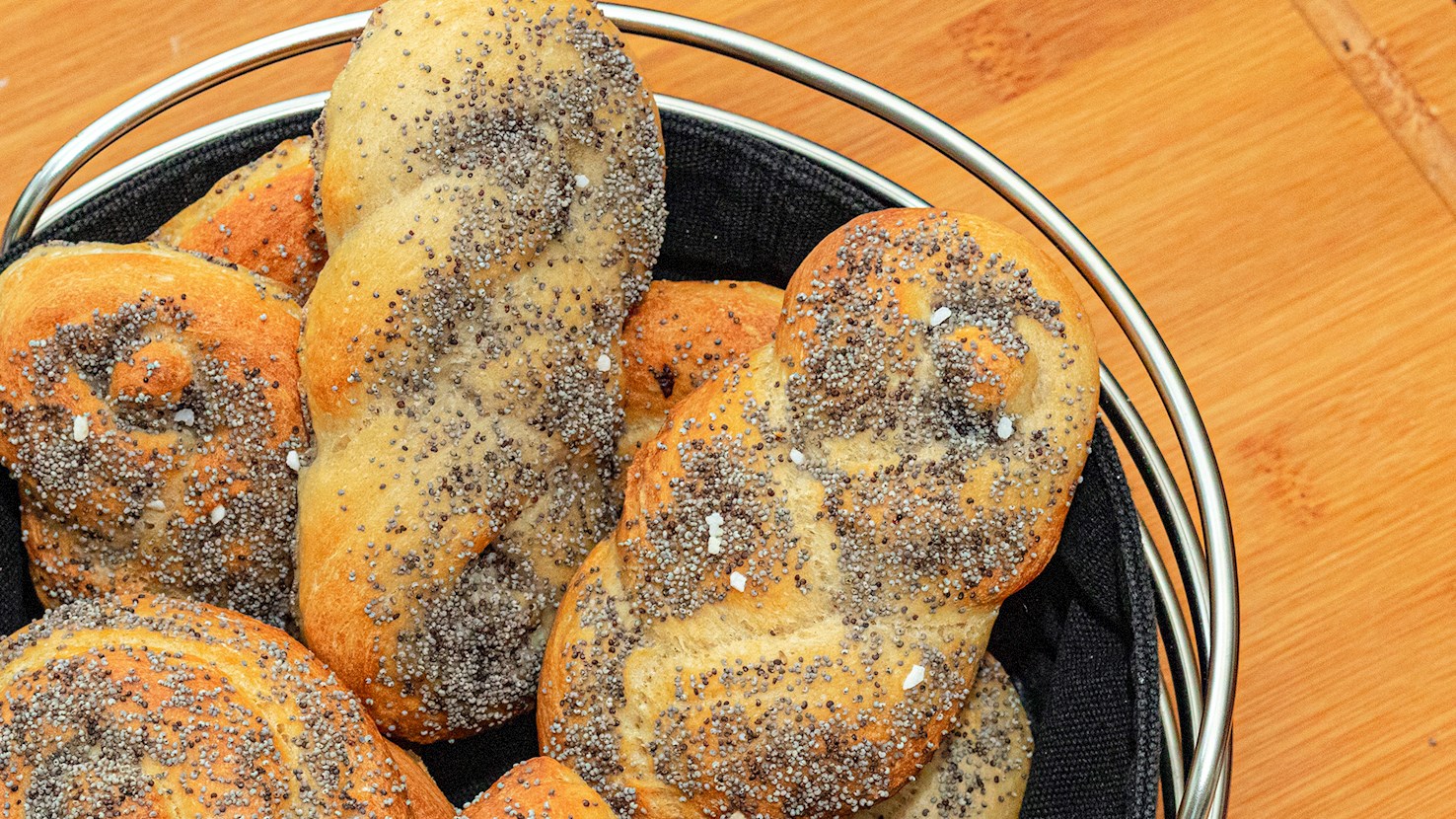
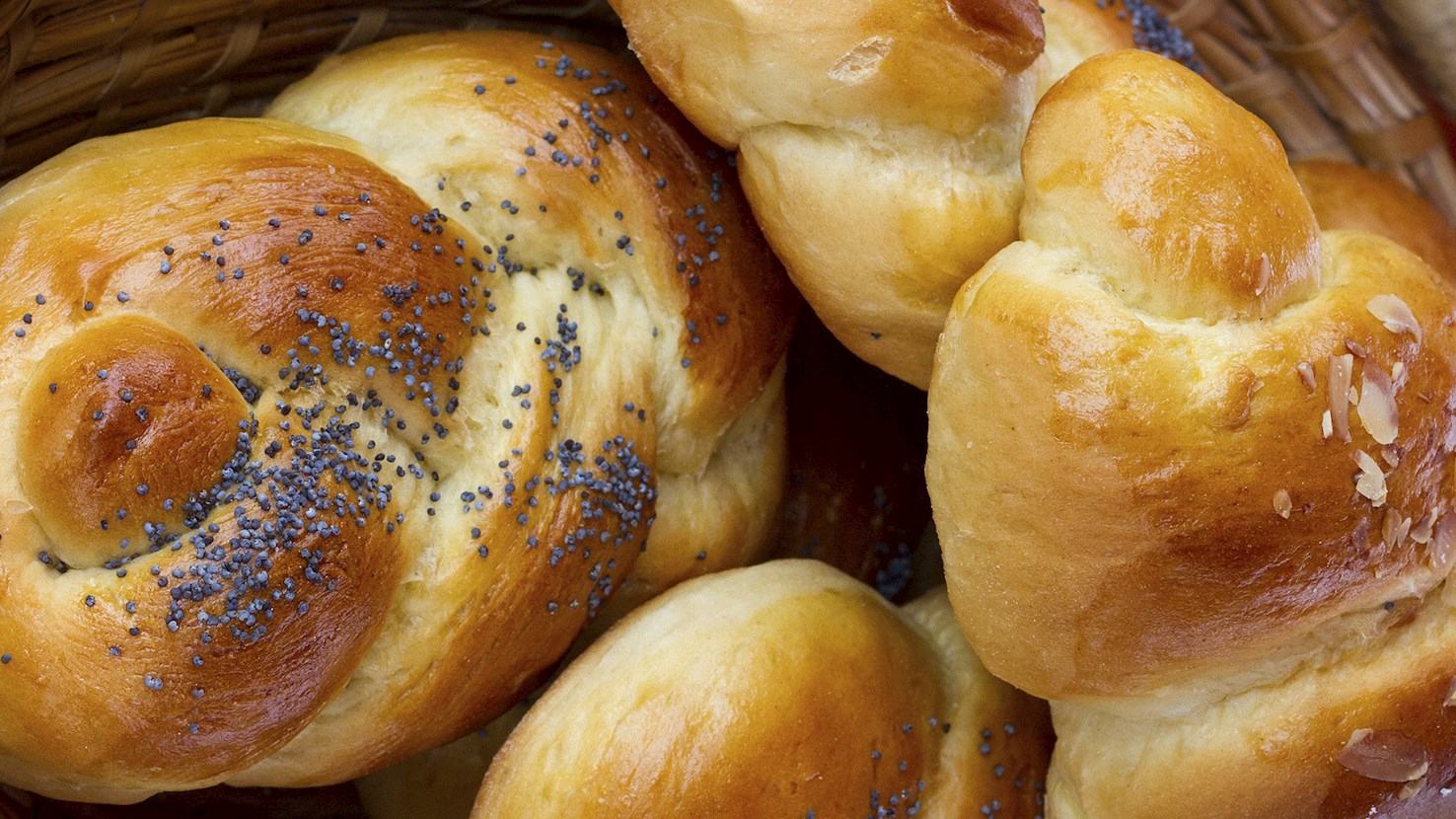
Mohnflesserl or Mohnstriezerl is a type of Austrian bread roll made with a braided or twisted shape and coated with poppy seeds ("mohn" in German). Commonly found in Austrian bakeries, Mohnflesserl rolls are known for their soft, airy interior and slightly crunchy crust. The dough is typically enriched with milk, butter, and sometimes a touch of sugar, creating a tender, mildly sweet flavor that complements the nutty, earthy taste of poppy seeds. Mohnflesserl is popular as a breakfast or snack bread, often enjoyed with butter, jam, or cheese. The twisting or braiding technique gives it a distinct appearance, resembling a small, elegant loaf, which is characteristic of Austrian and Bavarian bread-making traditions. This bread roll has become a staple in Austrian bakery culture and is widely enjoyed across the region.
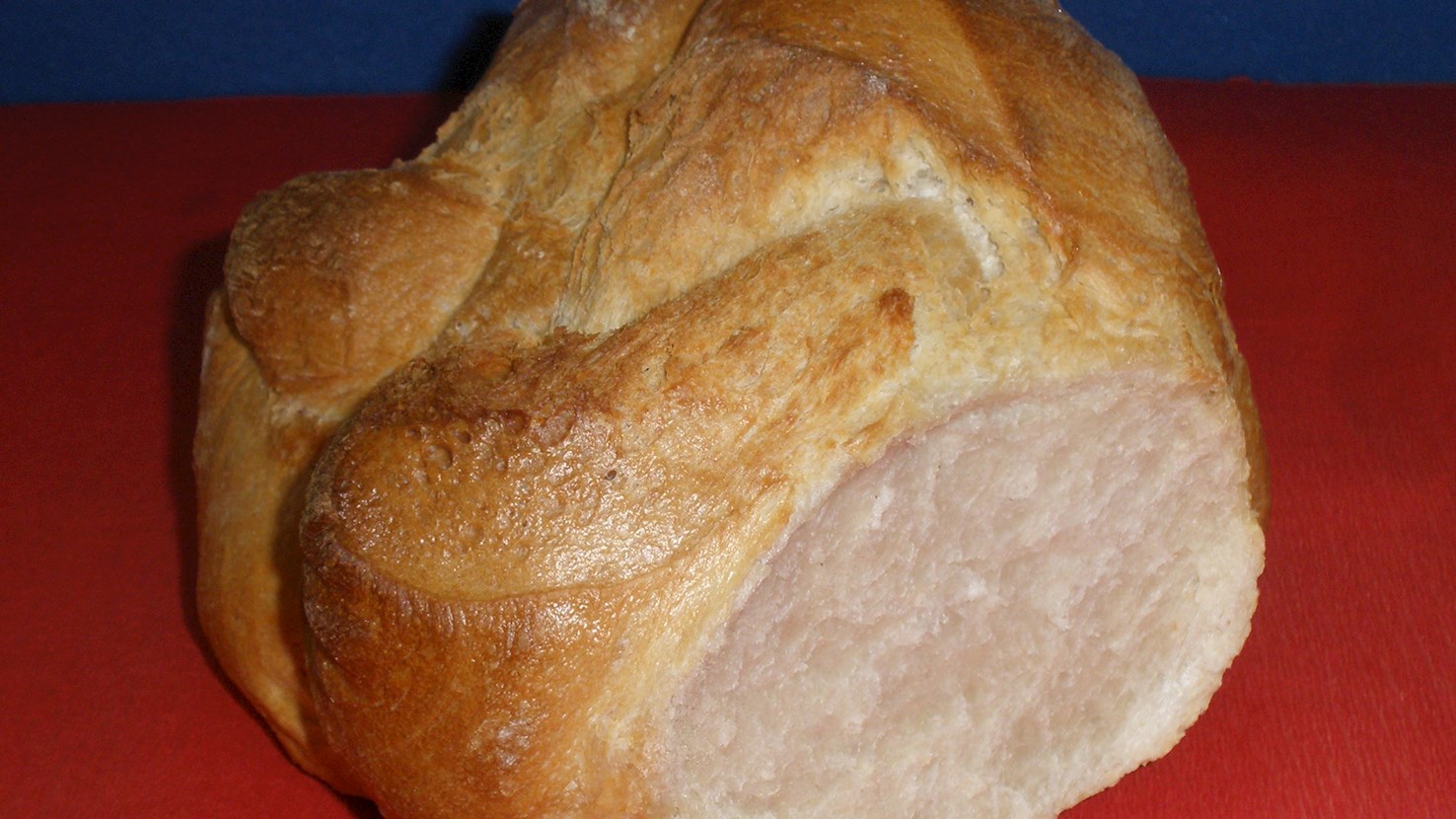
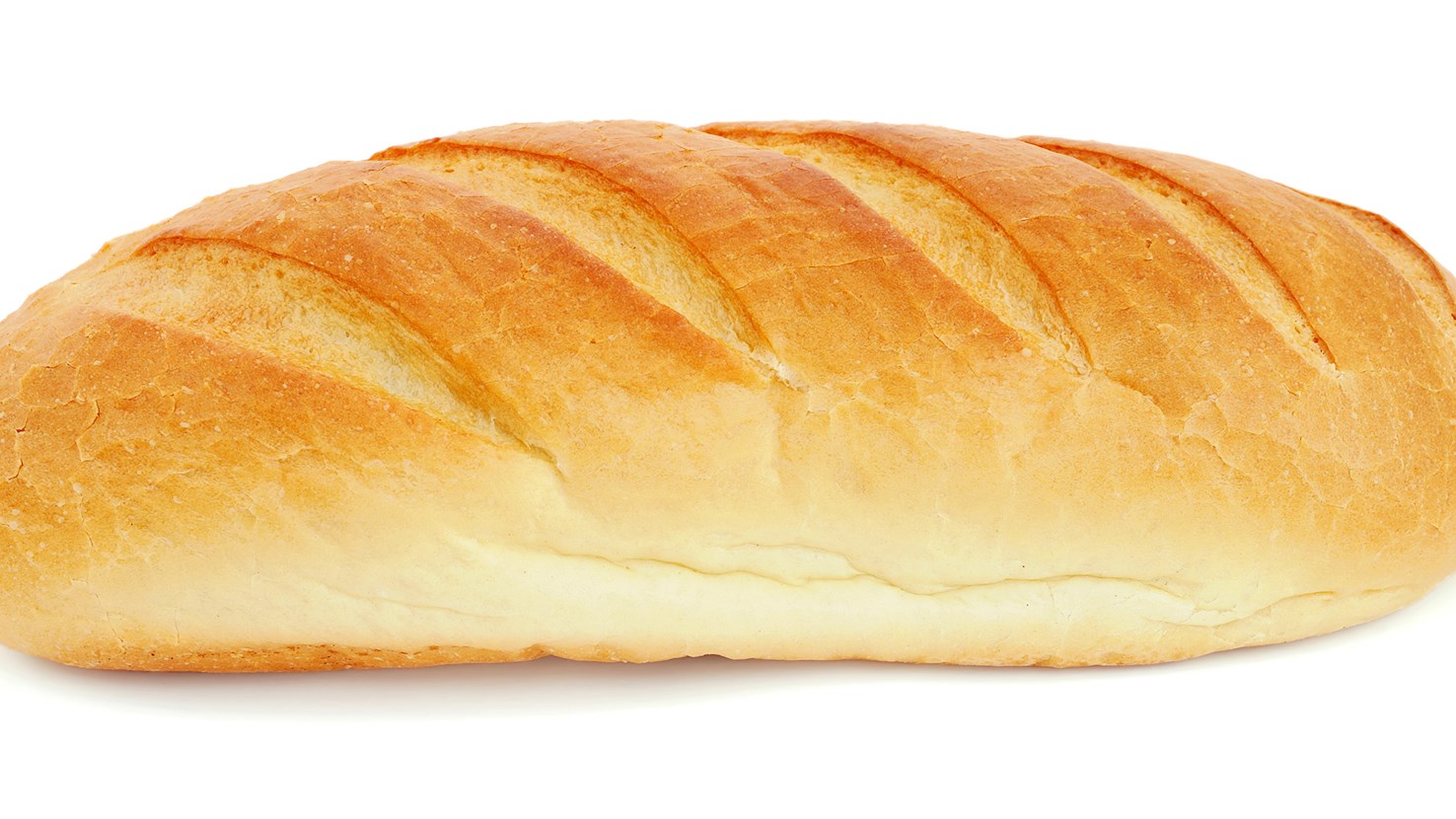
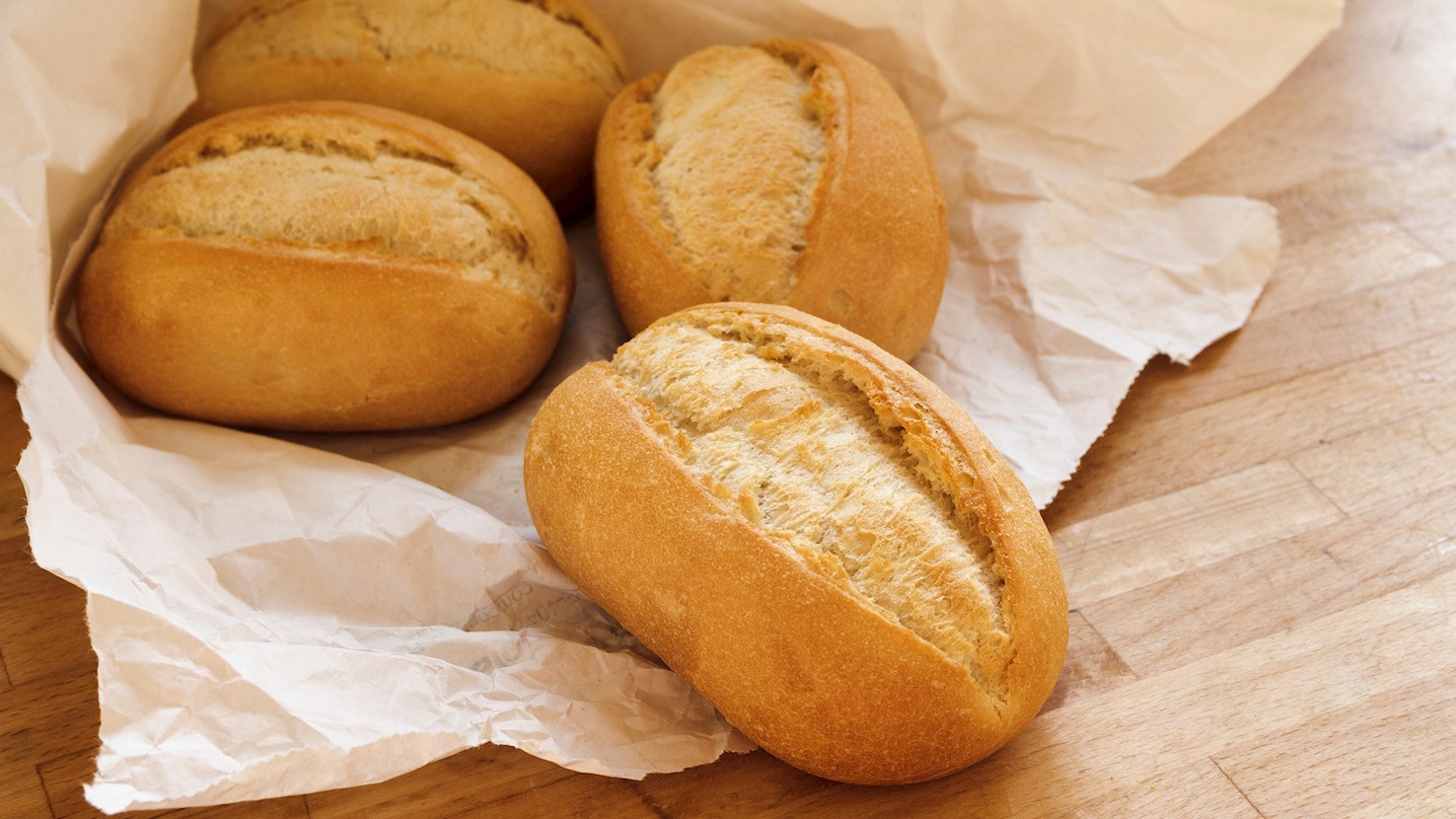
Veka is a white bread variety that is similar to the famous French baguette, commonly found in Czech, Slovak, and Polish cuisines. Made with yeasted wheat dough, it is usually shaped into small loaves, shorter and wider than the traditional baguette. When baked, the loaves attain a golden-brown crust, while the center stays soft and airy. It appears under various names and it is one of the most common bread varieties found in many Central and Eastern European countries. In the Czech Republic, it is usually used as a base for the open-faced chlebíčky sandwiches, when the slices are topped with various condiments and then served as a quick buffet snack.
Pane Valle Maggia is a traditional bread originating from Lugano in Switzerland. The dough is prepared with a combination of water, yeast, rye flour, wheat flour, sourdough starter, and sea salt. The dough is shaped into a boule and it's then baked until it develops a crispy crust. The crumb should not be very open, but not too dense either. It's recommended to cut the bread into thick slices and serve it with cold cuts and olives on the side.
Made with only four basic ingredients, this variety of flatbread is a typical product of the White Carniola region and was brought there in the 15th or the 16th century by Uskoks, Balkan migrants who settled in the highlands of southeastern Slovenia. However, it was first mentioned in Bajke in Povesti o Gorjancih, a 1882 book by Janez Trdina, a renowned Slovene historian, folk collector, author and traveler. Belokranjska pogača is about 3-4 centimeters thick, round in shape, with its surface sliced in a cross-hatched pattern. It is glazed with egg wash, generously sprinkled with coarse salt and cumin, and baked to a golden or light brown color. Freshly baked Belokranjska pogača exudes a delightful aroma of cumin and it is best enjoyed while it's still warm, broken by hand, and consumed in bite-size squares. Traditionally, this authentic Slovenian flatbread is prepared for special occasions such as the Feast of St. Martin, religious holidays, and other similar festivities.
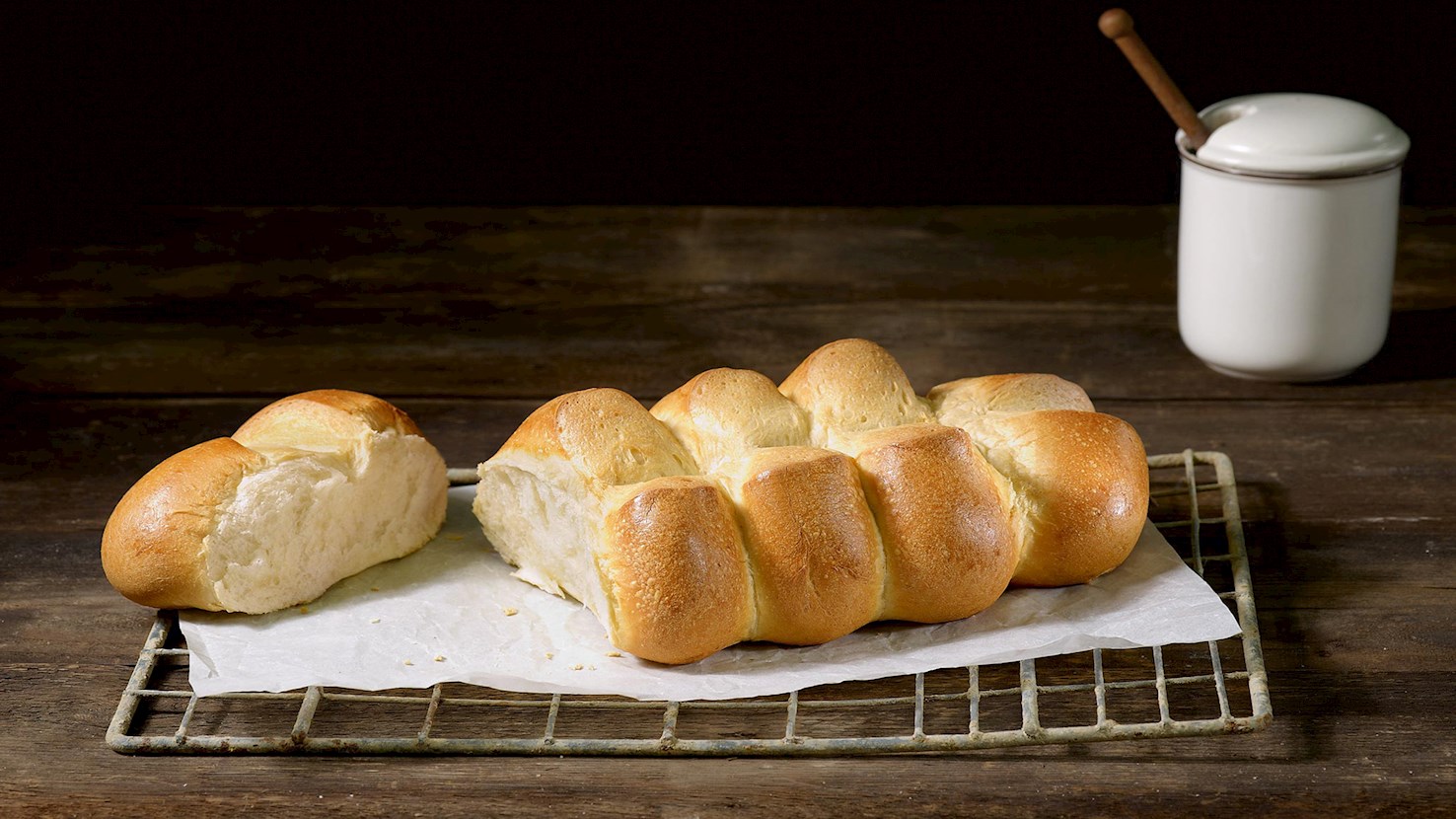
A loaf of this traditional Ticino bread usually consists of five sections which are meant to be broken apart with your hands and shared. It is traditionally made with flour, water, yeast, salt, and oil. Before baking, the dough is often brushed with milk or egg wash, resulting in a nice golden brown crust once baked. It is believed that the shape of this bread was brought over to Ticino from Italy, but it became popular throughout Switzerland in the 1950s.
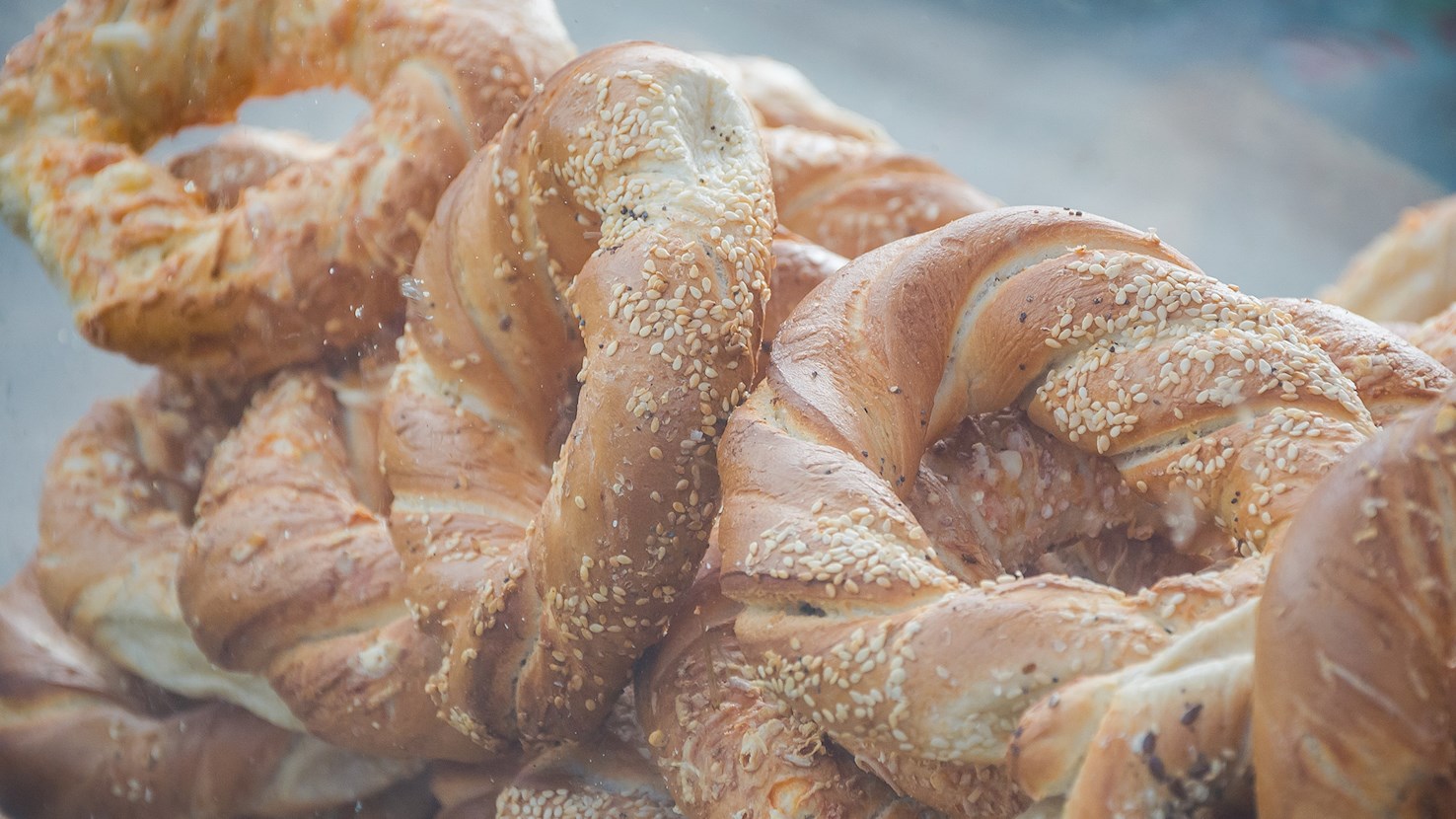
Obwarzanek krakowski is a traditional, baked pastry product shaped like a ring and produced in the Malopolskie Province, districts of Kraków and Wieliczka in Poland. Obwarzanek whose name comes from the Polish word for 'boiled', is not just any regular bagel. It is bigger than the standard bagels and is woven from two strands of dough instead of just one. Before being baked, it is boiled and can be additionally sprinkled with poppy or sesame seeds, herbs, spices, cheese, salt or onions. It has a sweetish taste and a dense, chewy texture. On the exterior, it is light or dark golden to light brown, with a glossy shade. Unlike other bagels, it is not cut in half or toasted to make sandwiches but is instead regularly eaten on its own. They are so popular that they are sold on every other street corner in Kraków, and have become an unofficial symbol of the city.
Houska is a popular Czech bread roll, simple and small in size. It is made with plain wheat flour, milk, yeast, salt, and, occasionally, eggs. Before baking, it is usually braided and shaped into a plump circular form resembling a knot. The top is sprinkled with coarse sea salt, and either caraway or poppy seeds. Baked houska is light in color; it has a crispy exterior and a light, soft center. The roll can be bought in most Czech supermarkets and bakeries. It is often consumed for breakfast, when it is served alongside a variety of sweet and savory spreads, butter, or marmalade. The name houska might also refer to another type of bread that is sweet, rich, and filled with raisins, candied fruit, and almonds, typically served for Christmas and Easter. It is more similar to challah or brioche and was originally named vánočka.
Cuchaule is a Swiss brioche-type bread with an amber color and a unique flavor. This specialty of the Fribourg region is made with flour, milk, sugar, butter, yeast, salt, eggs, and a pinch of saffron. It is typically baked for the Bénichon harvest festival, when it is traditionally spread with Bénichon mustard and butter. The mustard is made with candied sugar, vin cuit, and spices such as cinnamon, cloves, and star anise. However, cuchaule can be consumed with anything sweet or savory – from jams and honey to cheese and peanut butter.
Berliner knüppel is a traditional bread roll originating from Berlin. The bread rolls are usually made with a combination of water, flour, milk, yeast, and salt. The ingredients are mixed, the dough is kneaded, and it's then left to rest for a while. The balls of dough are pressed into disks that are folded into a halfcircle, and the dough is then rolled into a short and oblong log. The rolls are baked seam-side up in an oven with steam until golden brown. If properly baked, the crumb should be soft and fluffy, and the crust should be slightly crusty. Berliner knüppel rolls are traditionally served with ground meat patties known as buletten.
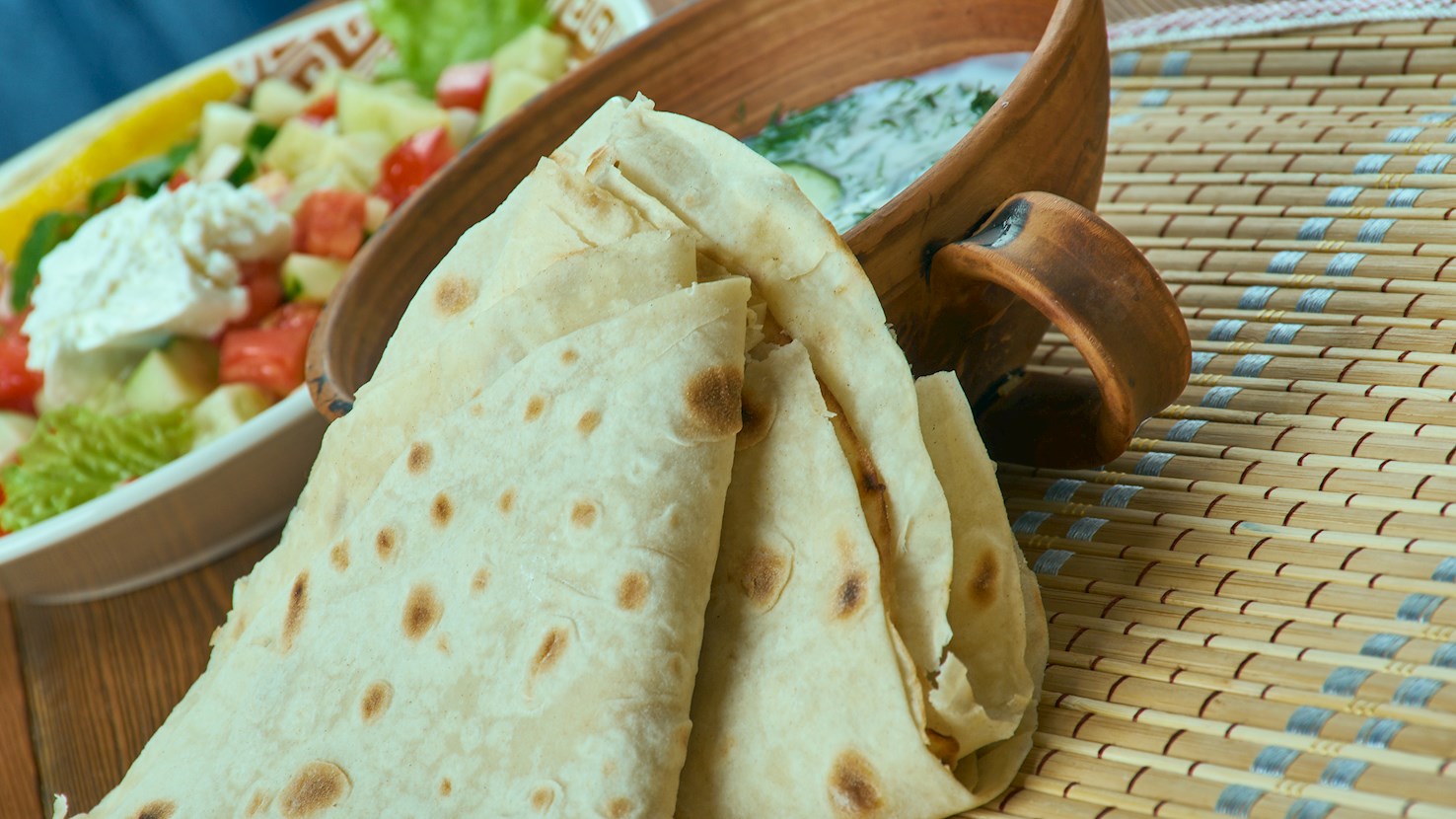
Podpłomyk is a traditional flatbread originating from Poland. This simple unyeasted flatbread is usually made with a combination of flour, water, and salt. In the past, the flatbread was made on fire-heated stones, but nowadays it's usually made on the stovetop or cooked in a pan, especially ever since the popularization of interest in premedieval everyday life. Once baked, podpłomyk is typically enjoyed with honey or different types of jam called konfitury. Some people serve it with stews or use it as a tortilla would be used.
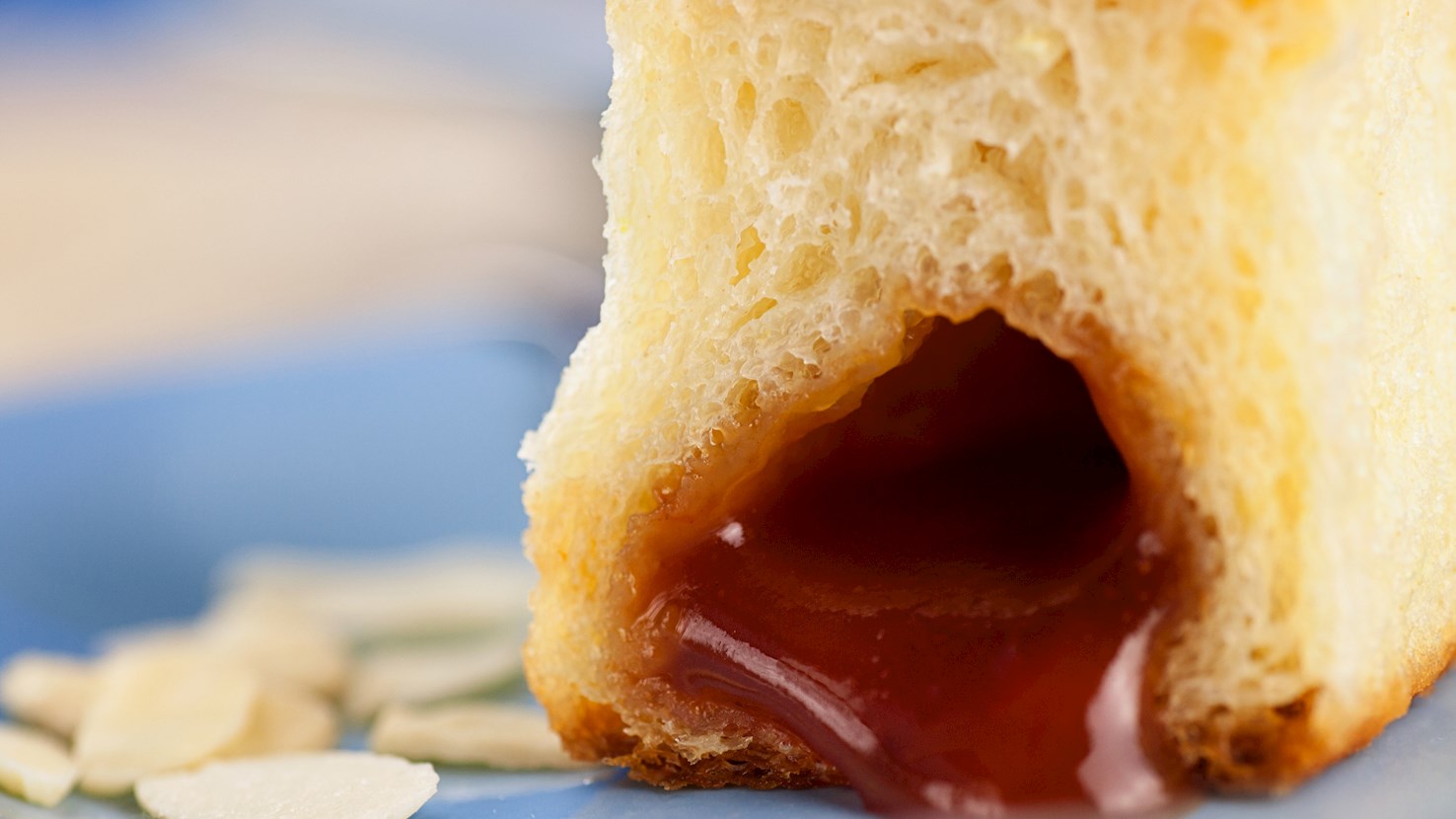
Lekváros bukta are Hungarian sweet buns filled with fruit jam. The dough consists of flour, egg yolks, sour cream, vanilla, butter, salt, yeast, and milk. Although the rolls are typically filled with plum jam, they can also be filled with walnuts, poppy seeds, or sweetened cheese. After the rolls have been baked, they are dusted with powdered sugar. It is recommended to serve them for breakfast with a cup of tea or coffee on the side.
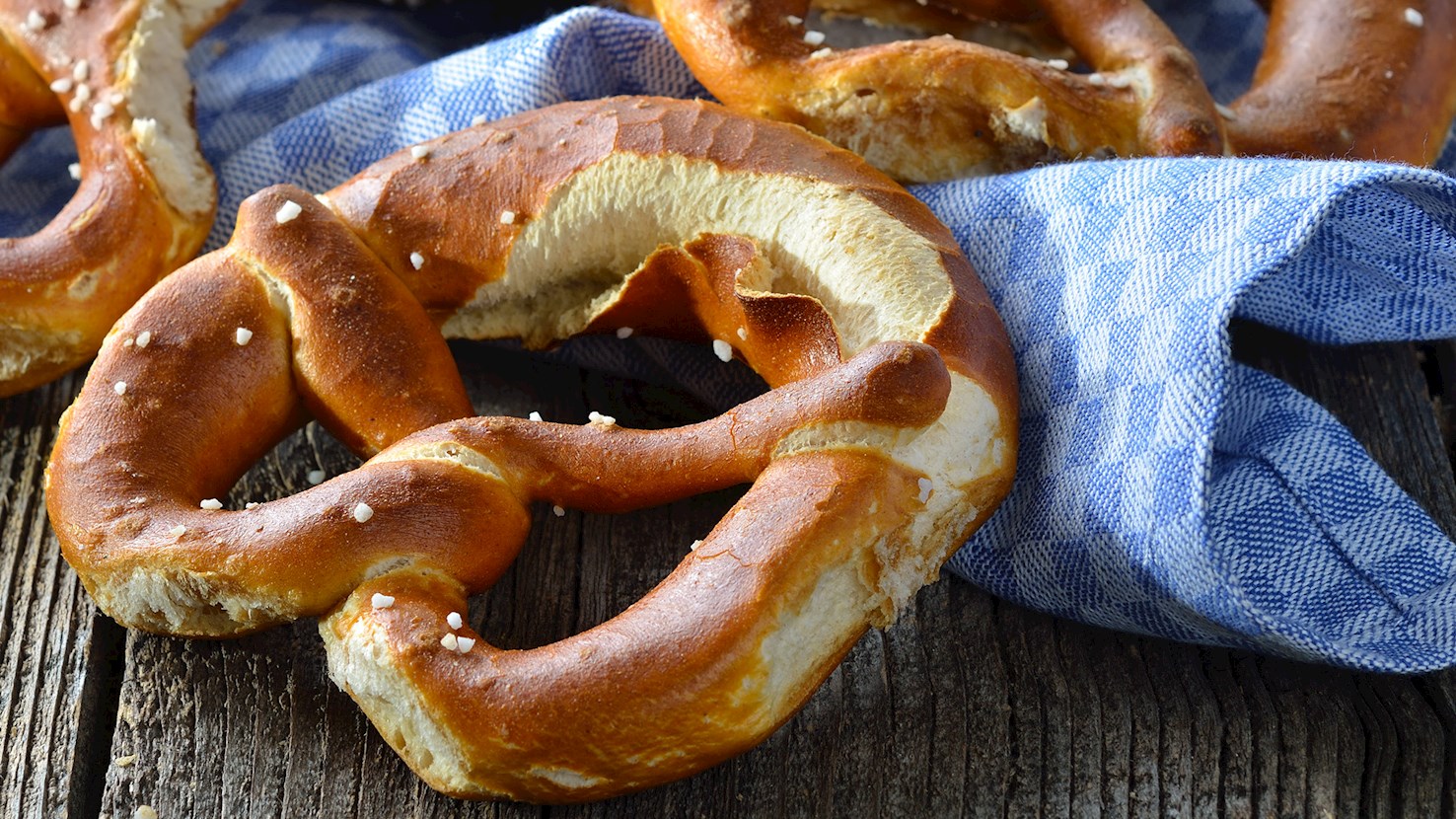
Considered an iconic symbol of Germany, the pretzel is a type of traditional baked good that is made by combining flour, salt, malt, yeast, and water. The resulting dough is then shaped into a well-known knotted shape of a pretzel before it is baked. Pretzels are often dipped in a lye solution (natronlauge in German) before they are baked, and then they are called laugenbrezel, a Bavarian-style pretzel distinguished by a nice, brown, and crispy exterior that surrounds the soft interior. Coarse salt is usually sprinkled over the surface of the pretzels, but other toppings may also be used, including sesame, pumpkin, sunflower, or poppy seeds. Regional variations of the pretzel abound, with some of them using fat to obtain a softer dough and others calling for different types of flour such as whole wheat flour or spelt flour. German pretzels come in both sweet and savory versions, and their texture may range from soft to hard. They are usually enjoyed warm as a snack with butter or along with German wurst sausages and a cold German beer on the side for an authentic German experience. The pretzel is a favorite street snack and a staple at any festival, holiday, and Christmas market in the country. Its versatile nature has given rise to numerous variations including New Year’s pretzels (neujahrbrezel), Oktoberfest pretzels (also called wiesnbrezn), and Lent pretzels (fastenbrezeln), among many others. In Alsace, France, the pretzel is known as bretzel d'Alsace.
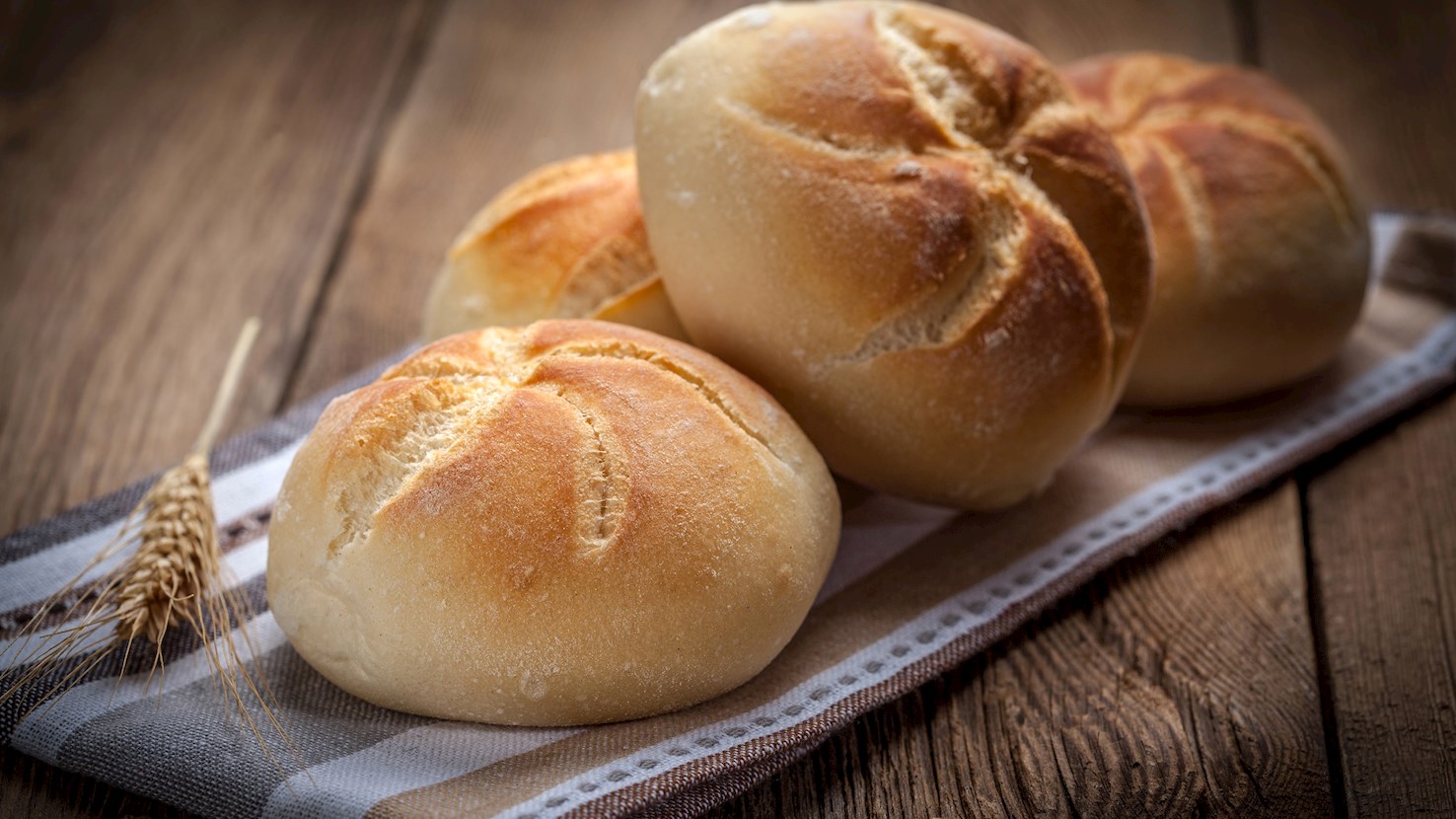
Kaisersemmel is a traditional bread roll originating from Austria. Also known as kaiser roll, it's usually made with a combination of flour, yeast, salt, sugar, and sometimes butter. The dough is shaped into rounds, and the top is divided into five segments so that the overlapping incisions form a crown. Once baked, the rolls should be crusty on the outside and fluffy on the inside. It is believed that they were named after Emperor Franz Joseph I of Austria. Nowadays, kaiser rolls are often topped with sesame seeds, sunflower seeds, poppy seeds, or linseed. They're traditionally eaten for breakfast with jam and butter, but the rolls can also be split open in order to make sandwiches, often with leberkäse in Germany and Austria.
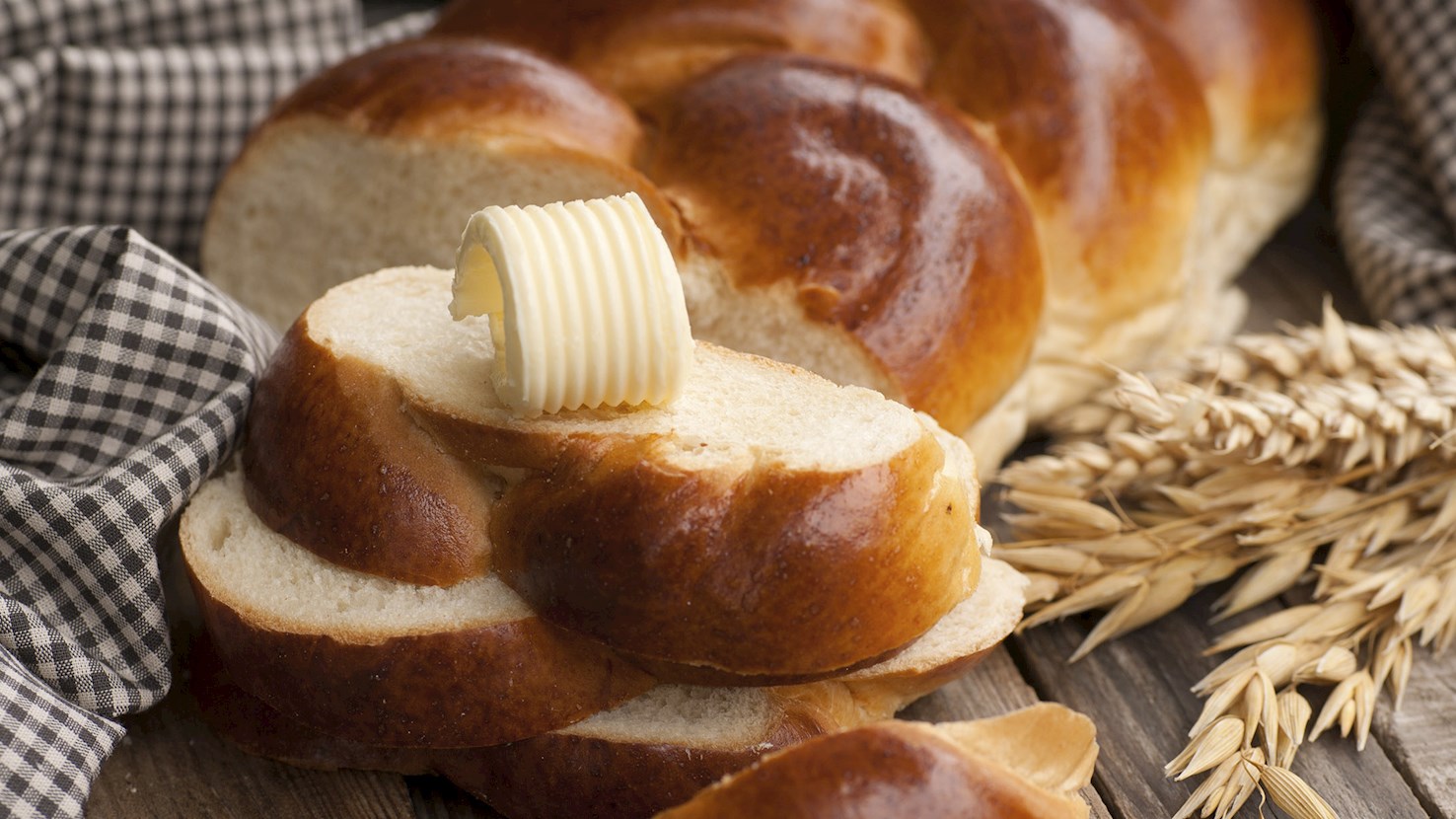
Zopf is a traditional bread consisting of flour, butter, yeast, milk, and eggs. It is characterized by its soft texture and braided appearance, similar to the Jewish bread challah. Traditionally, zopf is prepared during the weekend and consumed on Sundays, usually with butter and fruit jams. It is believed that the bread was invented in the middle of the 15th century. Originally, widows used to cut off their braided hair and bury it with their late husbands. Later on, they baked zopf and buried loaves of bread instead of hair. The name zopf literally means braid, referring to the shape of the bread. Today, zopf can also be bought in stores, although it is still more often prepared at home.
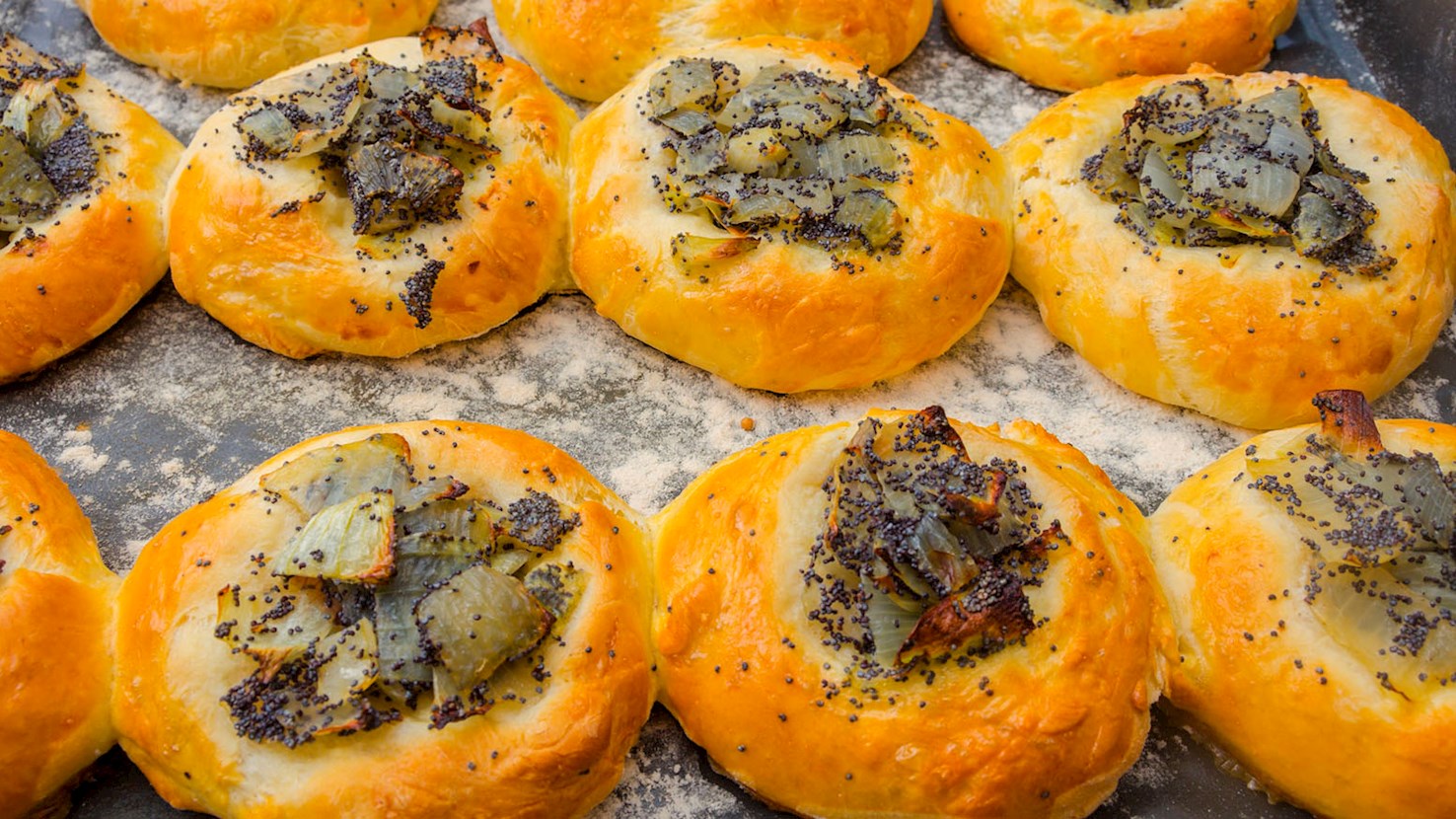
Cebularz lubelski is a round-shaped flatbread with a thickness of about 1,5 centimeters. It is produced in the Lublin Province in Poland, and only 24 bakeries make this unique product that should be eaten fresh, as it must be consumed within 48 hours of being baked. It is made with high-quality flour dough that contains twice as much sugar and margarine or butter compared to the ordinary wheat dough. The flatbread is topped with diced onions, salt, and poppy seeds, baked until it develops a golden color and an aroma characteristical of freshly fried onions. This product has Jewish origins and it was first made in the 19th century by Jews from Lublin, Kazimierz Dolny, and Zamość, but later it has spread and became popular among Poles. It currently holds a strong reputation and is often served at gatherings, events and family picnics.
Żymła is the Silesian name for a traditional white bread roll. Known as bułka in Polish, the bread roll typically has an oval shape and is often sprinkled with poppy seeds on top before baking. Apart from its everyday consumption, this bread roll is also an essential ingredient used in the preparation of the traditional Upper-Silesian blood sausage called żymlok.
Incredibly similar to Irish soda bread, the soft proziaki are traditional Polish bread rolls that originally hail from the Subcarpathian region and date back to the 19th century. Though the recipes vary across the region, they typically consist of flour, baking soda (proza), and the choice of milk, sour milk, water, sour cream, buttermilk, or kefir. In the past, they were baked on old-fashioned stove tops, but nowadays they are commonly dry-baked on classic pans. Proziaki can be paired with sweet or savory ingredients such as butter, cheese, or marmalades.
TasteAtlas food rankings are based on the ratings of the TasteAtlas audience, with a series of mechanisms that recognize real users and that ignore bot,
nationalist or local patriotic ratings, and give additional value to the ratings of users that the system recognizes as knowledgeable.
For the “29 Worst Rated Central European Breads and Flatbreads” list until July 16, 2026, 3,288 ratings were recorded, of which 2,780 were recognized by the system as legitimate.
TasteAtlas Rankings should not be seen as the final global conclusion about food. Their purpose is to promote excellent local foods,
instill pride in traditional dishes, and arouse curiosity about dishes you haven’t tried.