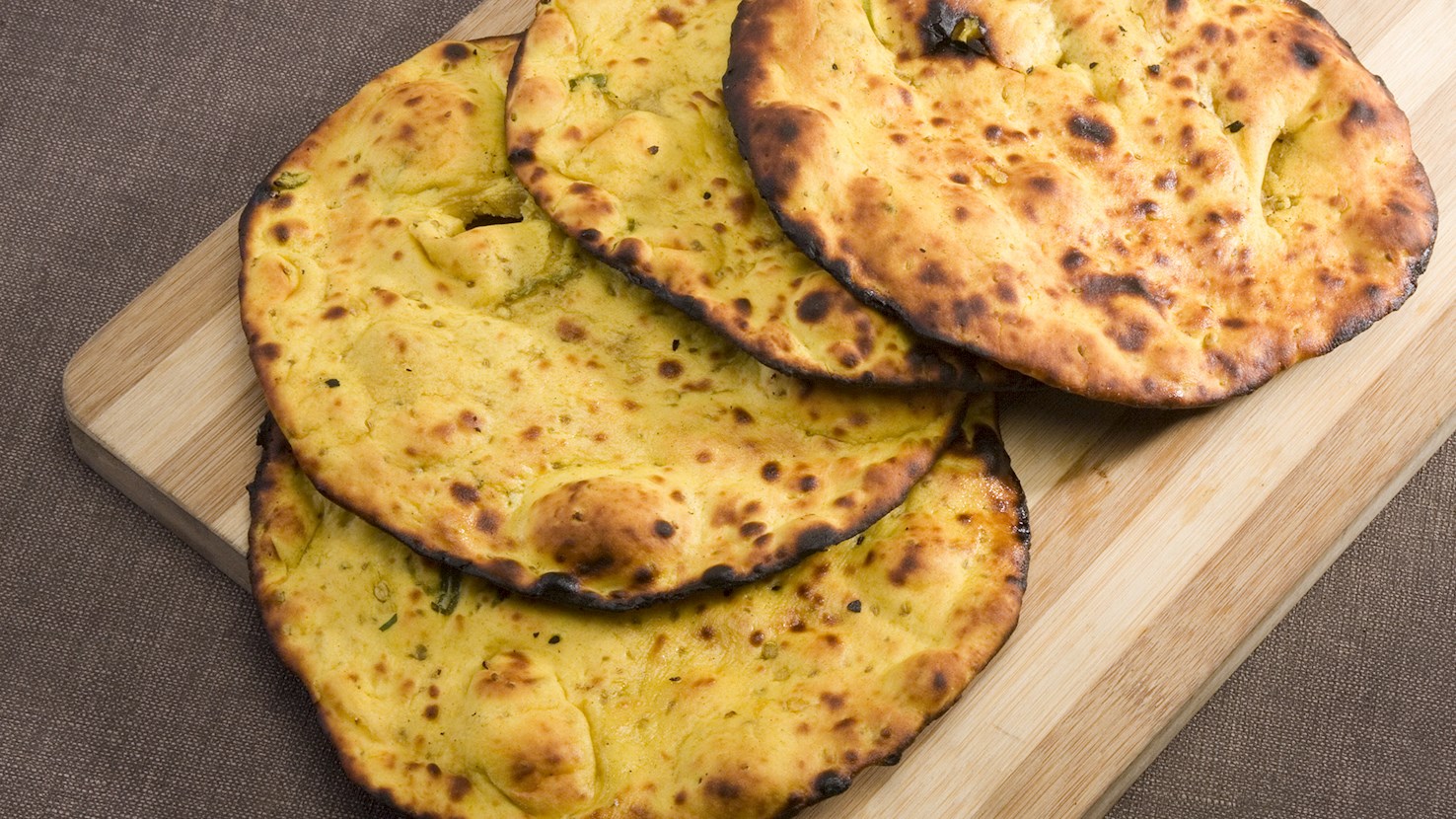
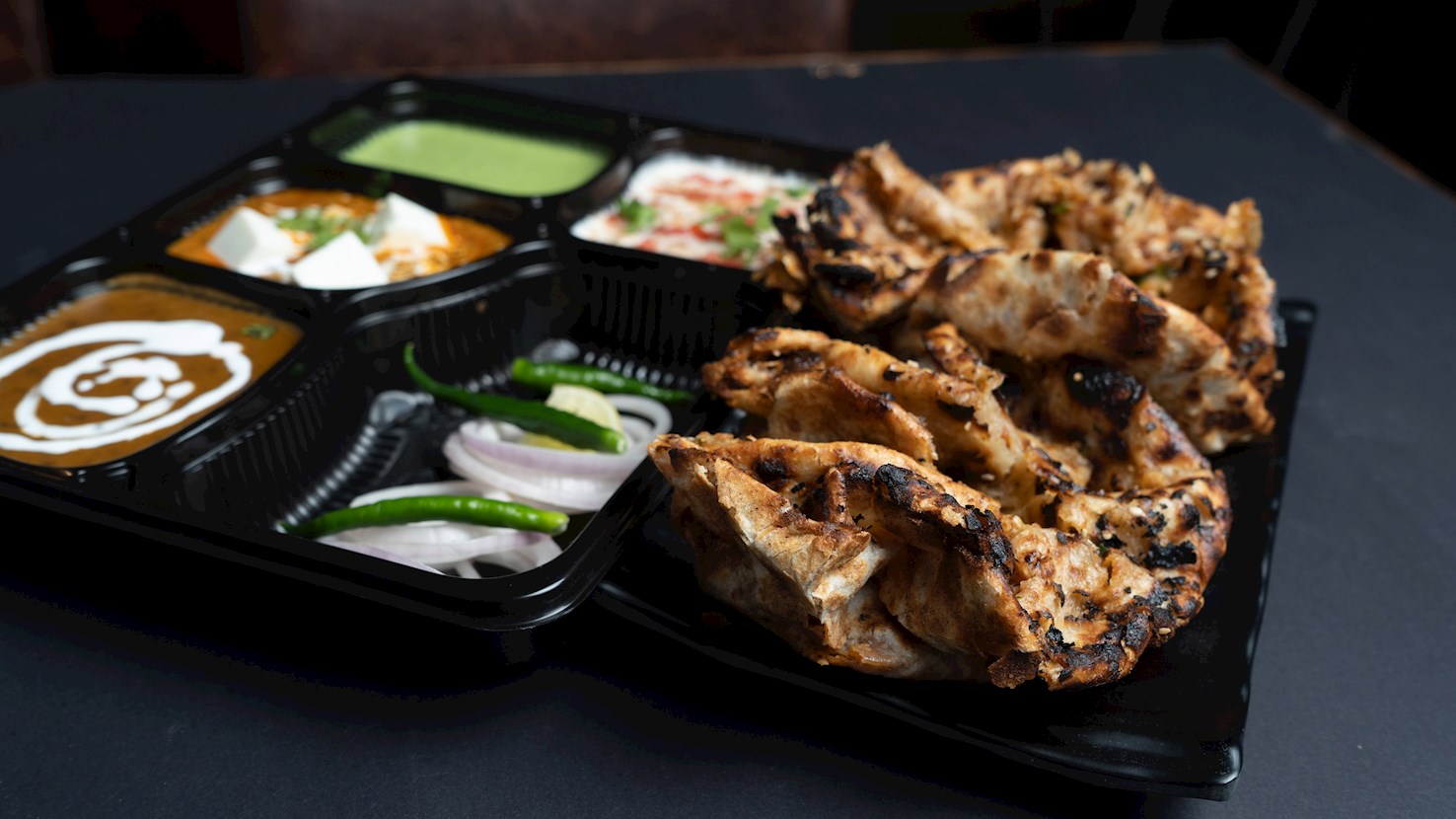
Missi roti is a North Indian variety of roti, an unleavened flatbread made by combining whole wheat flour, gram flour, salt, water, and a blend of freshly ground Indian spices such as red chili powder, cumin seed powder, carom seed powder, turmeric, coriander, and crushed dry pomegranate seeds. The resulting dough is often enhanced with sliced green chilis and finely chopped vegetables such as onions, spinach, or fenugreek leaves. The dough is then rolled into flat disks before it is traditionally cooked on a hot iron griddle called tawa until brown and slightly crispy. This spiced flatbread is usually brushed with ghee or oil and it's traditionally served piping hot with a wide variety of chutneys, curries, sabzis (mixed vegetable dishes), mixed lentil dishes, pickles, or curd. Missi roti commonly accompanies Indian breakfasts, but it can be eaten at any time of the day, and with any meal.
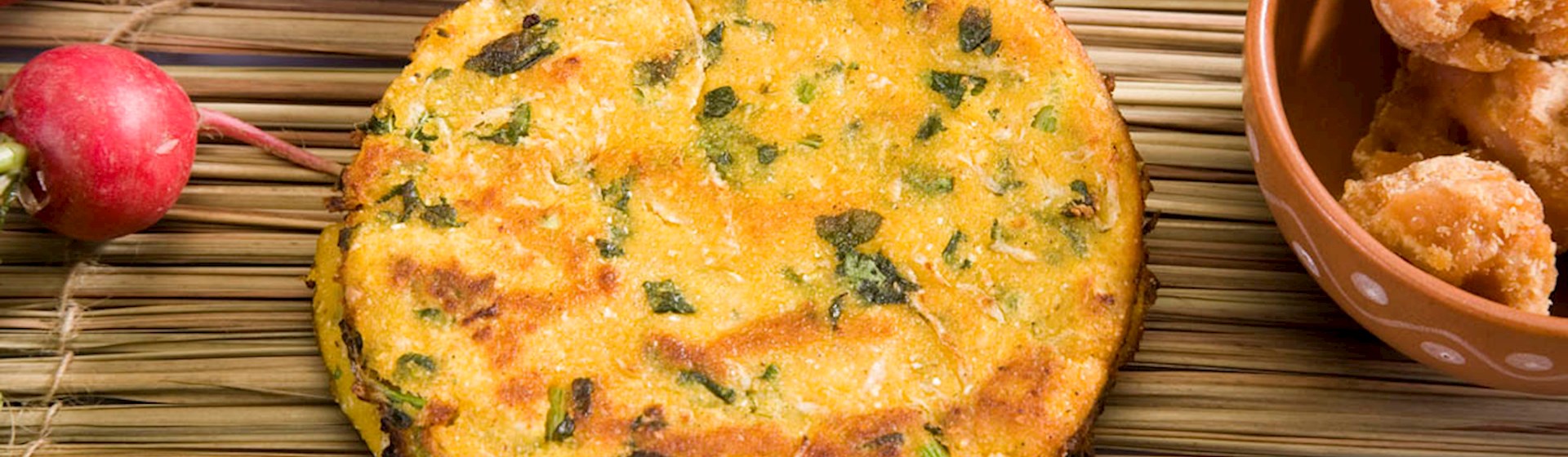
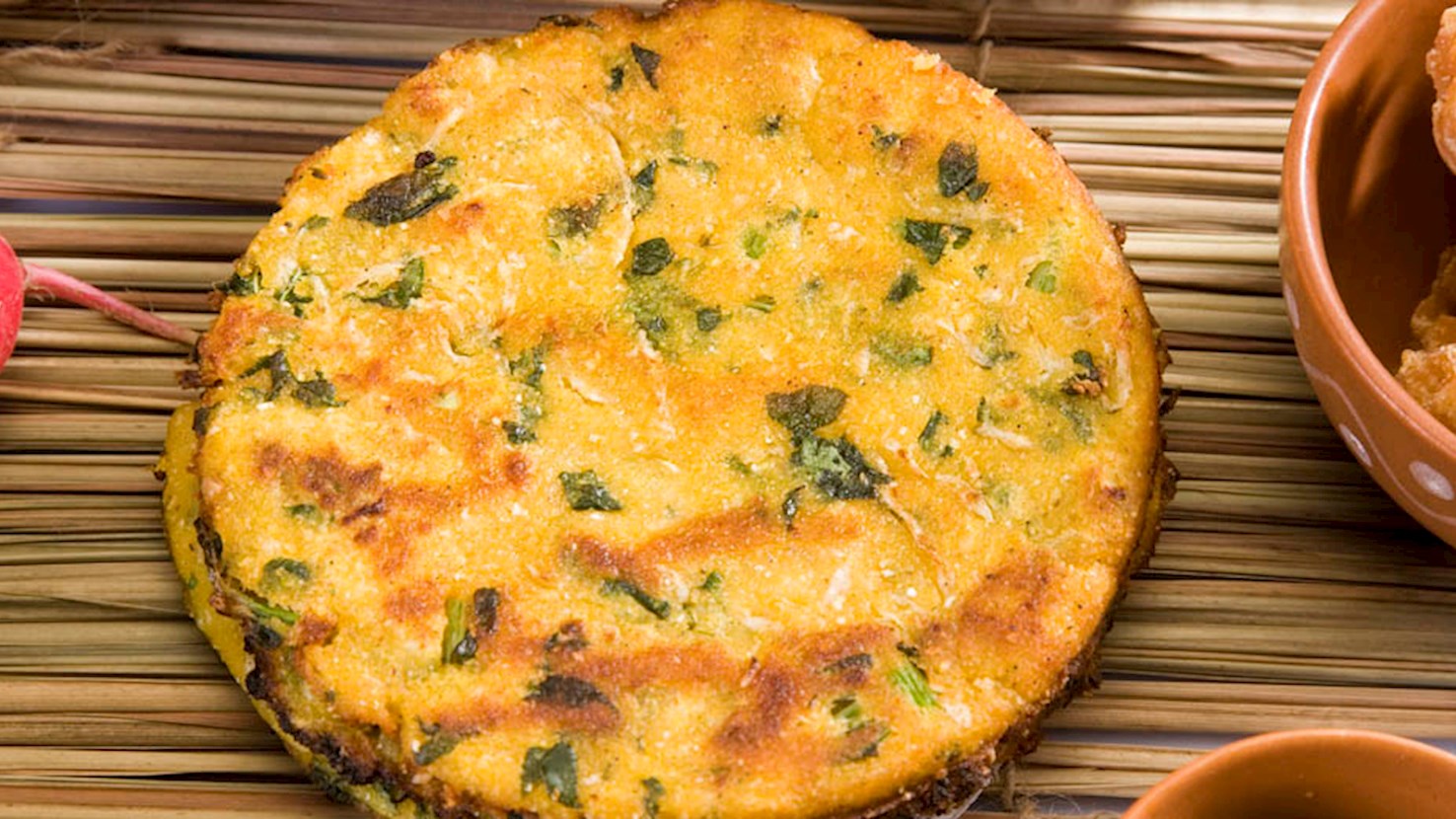
Roti is a flat, unleavened whole wheat bread, visually similar to a pancake, cooked on a traditional iron griddle called tawa, a key element of the rural cuisine of Punjabi. It is one of the most basic breads in India, a cross between pita bread and a tortilla that is buttered on one side. Makki ki roti is made from makai atta cornmeal flour, salt, and water, and once it's done, it is brushed with ghee and traditionally served piping hot with sarson da saag (cooked mustard leaves and spices), especially during the winter months. It is yellow in color and quite different from wheat flour roti. The bread is healthy, simple, nutritious and easy to prepare, so it is not a wonder that it can be found in most Punjabi homes.
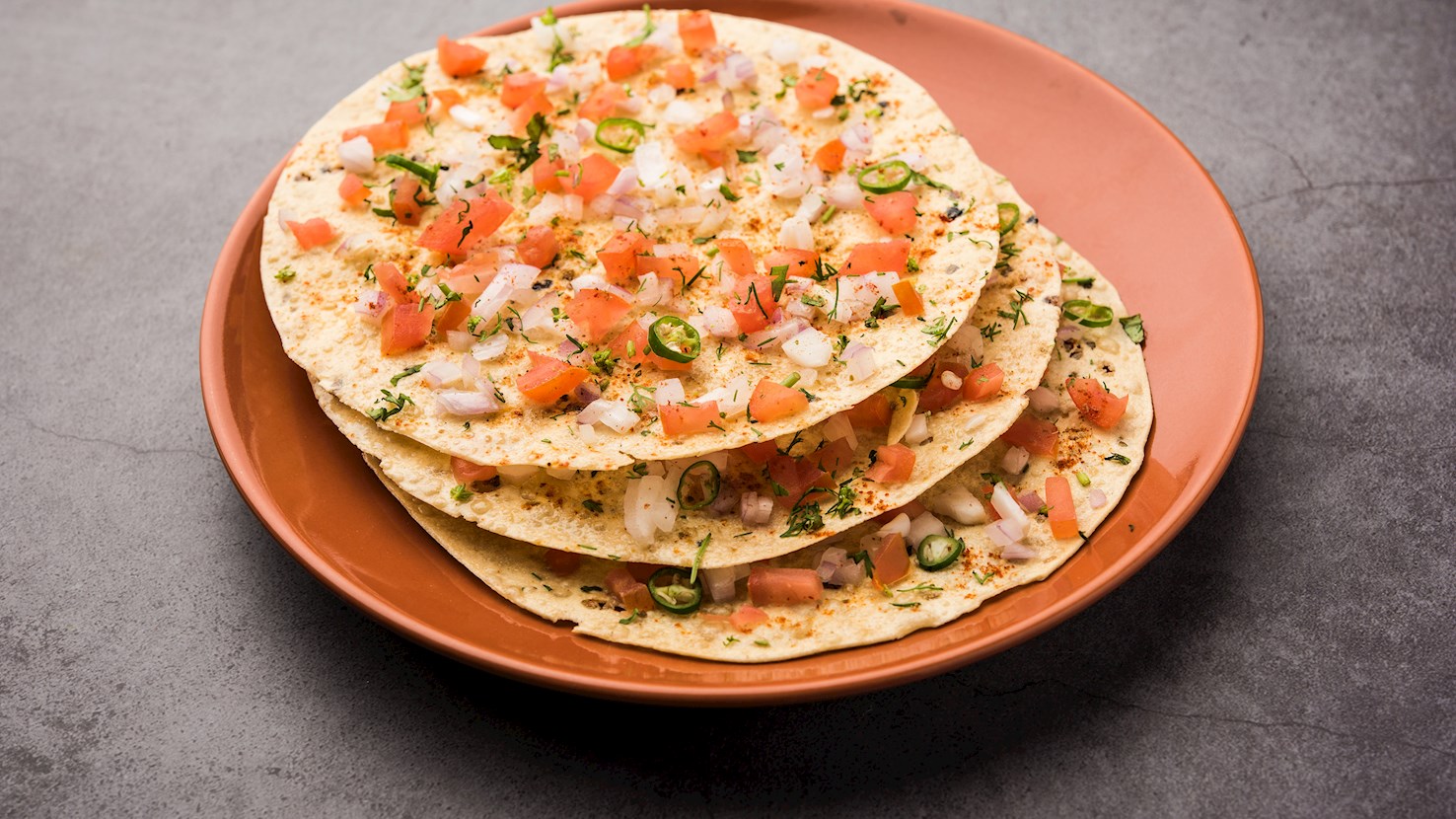
Masala papad is a traditional snack and a version of papadum flatbread that’s topped with a mix of tangy and spicy ingredients. The flatbread is roasted or fried and it’s usually made with lentil, chickpea, or rice flour. After it’s been roasted or fried until crunchy, it’s topped with a mixture of onions, tomatoes, coriander, hot chili powder, lemon juice, chaat masala, and salt. It’s important to add the topping after the flatbread has been fried or roasted, otherwise it will get soggy. If desired, additional ingredients can be added to the topping, such as cucumbers, mint leaves, carrots, or raw mango. Masala papad is traditionally served as a snack or an appetizer, but it can also be served as an accompaniment to various Indian meals.
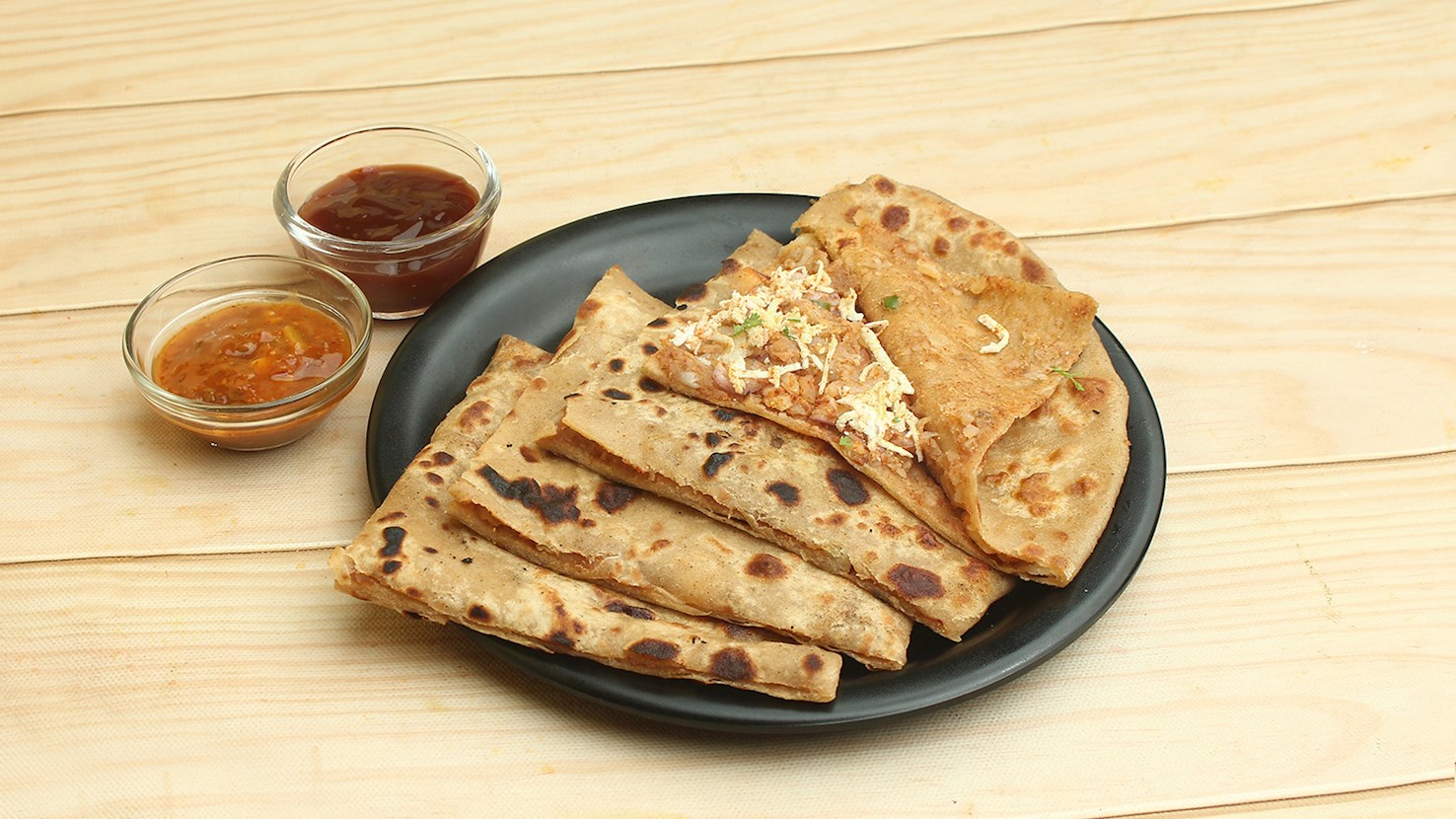
Chur chur is a traditional flatbread and a variety of naan. The dough is usually made with flour, sugar, baking powder, ghee, salt, dahi, water, and oil. Once shaped, the dough is stuffed with a mixture of boiled and mashed potatoes, grated paneer, chopped onion, hot chili peppers, ginger, red chili powder, garam masala, amchur, cumin, coriander, salt, and pepper. The stuffed dough is baked in a tandoor or cooked on a tawa until it turns golden brown. Once done, chur chur naan is lightly crushed, then brushed with ghee or butter and served as it is. If desired, the flatbread can be garnished with grated paneer on top.
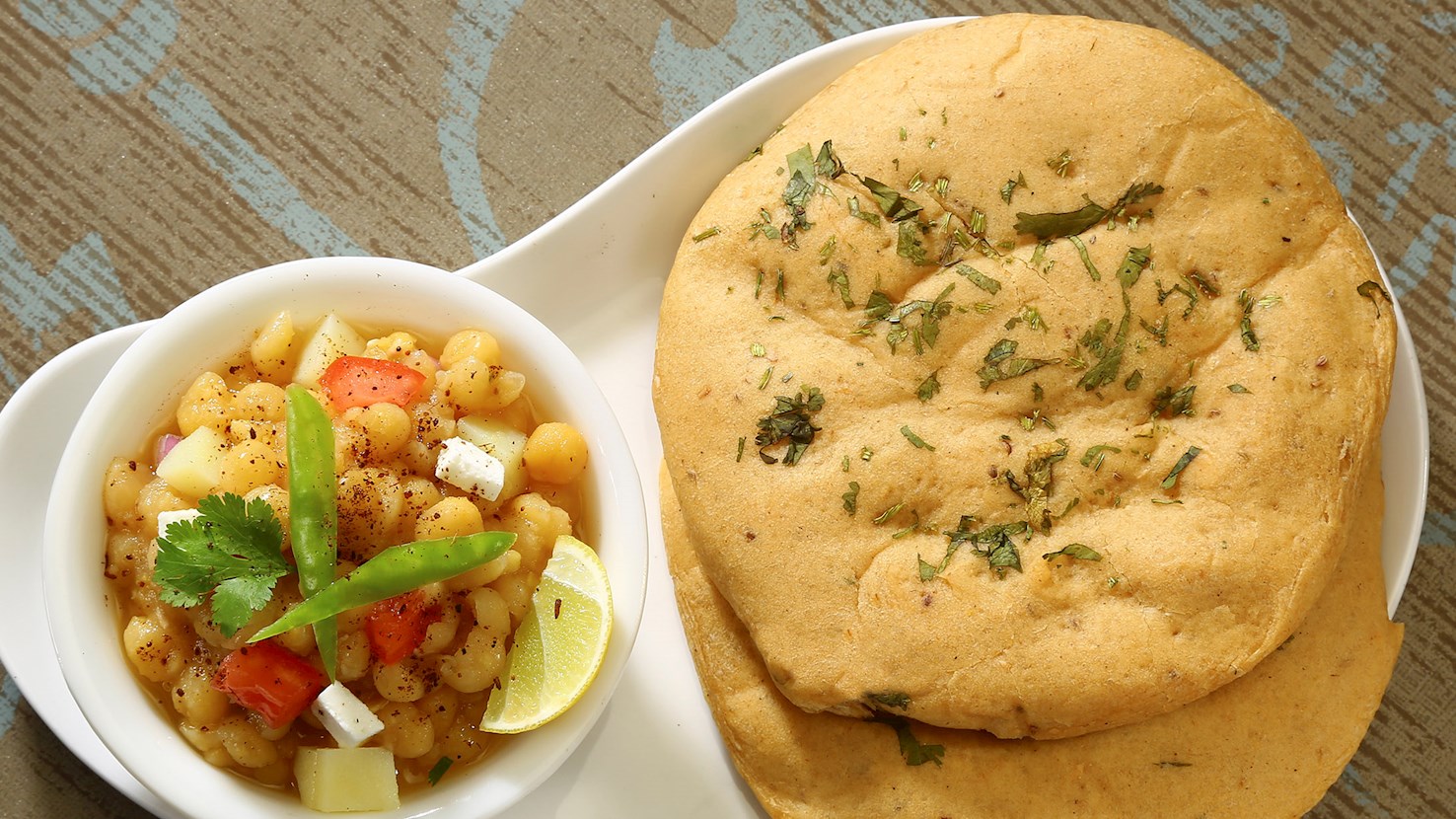
Kulcha is a flatbread from Punjab made from leavened refined wheat flour, typically baked in a clay tandoor oven, and celebrated for its soft, pillowy interior and golden-brown, blistered exterior. Kulcha is historically leavened with baking powder, baking soda, or a natural sour starter, resulting in a unique, slightly denser yet exquisitely flaky crumb. The bread holds an esteemed place in Indian royal history, famously tracing back to the courts of the Nizams of Hyderabad in the 18th century, where legend states that the first Nizam, Mir Qamar-ud-Din, chose the simple kulcha as the official emblem on the royal Asaf Jahi flag because a holy sufi saint had blessed his rule while offering him a handful of the humble breads. The absolute pinnacle of the craft is found in the city of Amritsar, where the world-renowned Amritsari kulcha has been elevated to an art form through meticulous dough engineering. Bakers create a laminated dough by repeatedly folding and rolling out the flour with generous layers of ghee or butter, a process similar to crafting puff pastry. This layered dough is then stuffed with a highly seasoned mixture of boiled, mashed potatoes, crumbled paneer, onions, and a vibrant spice blend featuring crushed coriander seeds, carom seeds, dried pomegranate seeds for a sharp tang, and fiery green chilies. The stuffed dough ball is meticulously flattened by hand, pressed with coriander leaves or caraway seeds, and slapped onto the scorching inner walls of a wood-fired tandoor, where it bakes rapidly as the intense heat expands the thin layers of fat, creating a shattered, crisp shell that gives way to a soft, steaming savory center. Beyond Punjab, a distinct variation thrives in Jammu, where kulcha is a soft, unstuffed pocket bread filled with spicy kidney beans, and in Uttar Pradesh, where the spongy, plain, round bread matar kulcha is paired with a tangy, dry yellow pea curry. Crushed slightly by hand immediately upon leaving the oven to release the steam and slathered with a decadent amount of white butter, kulcha is traditionally served alongside a robust bowl of chole (spicy chickpea curry), sliced raw onions, and a tangy mint chutney.
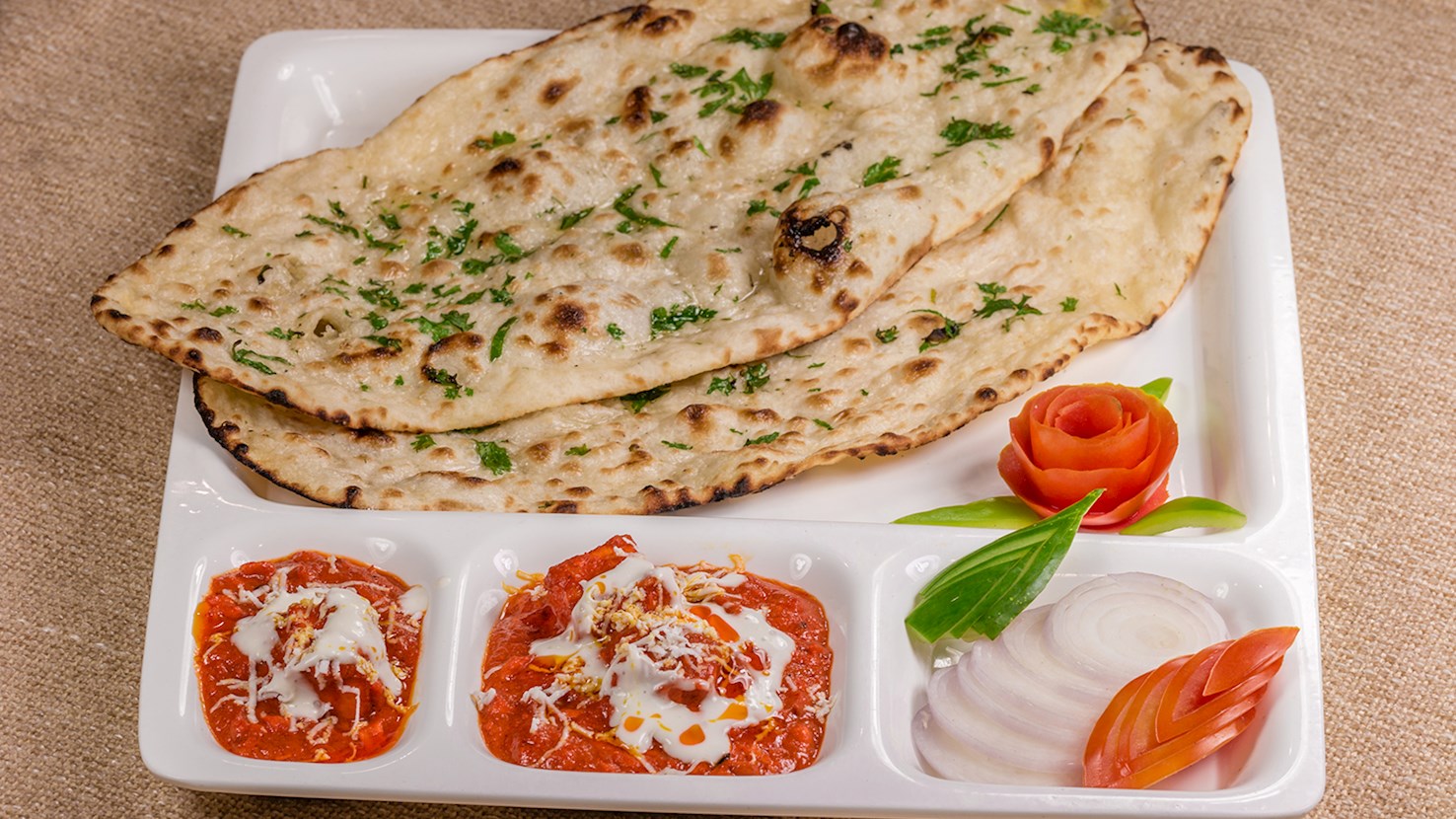
Paneer kulcha is a traditional dish that's especially popular in its flaky Amritsari-style version. The dish consists of leavened flatbread called kulcha that's stuffed with paneer cheese. Although there are many variations, the flatbread is usually stuffed with crumbled or grated paneer, chili peppers, coriander leaves, chaat masala, carom seeds, and salt. The dough for the kulcha is made with flour, dahi, ghee, sugar, salt, water, and baking soda and powder. Paneer kulcha is often prepared during winter, and it's traditionally cooked in a tandoor oven. Serve the dish with chole, raita, yogurt, or chutneys on the side.
Gobi paratha is a traditional flatbread originating from North India. This type of paratha is stuffed with spiced cauliflower. The dough is made with a combination of flour, water, salt, and oil. Once shaped, it's stuffed with spiced cauliflower, fried on both sides and brushed with butter or ghee until golden brown and fully cooked. The stuffing is typically made with a combination of cauliflower, ginger, turmeric, red chili powder, coriander, cumin, garam masala powder, dry mango powder, and salt. It's recommended to serve gobi parathas hot with chutneys, curd, raita, or Indian pickles. The dish can be found on most street food stalls in the area, where vendors serve gobi paratha for breakfast.
TasteAtlas food rankings are based on the ratings of the TasteAtlas audience, with a series of mechanisms that recognize real users and that ignore bot,
nationalist or local patriotic ratings, and give additional value to the ratings of users that the system recognizes as knowledgeable.
For the “7 Worst Rated Punjabi Breads and Flatbreads” list until July 16, 2026, 490 ratings were recorded, of which 336 were recognized by the system as legitimate.
TasteAtlas Rankings should not be seen as the final global conclusion about food. Their purpose is to promote excellent local foods,
instill pride in traditional dishes, and arouse curiosity about dishes you haven’t tried.