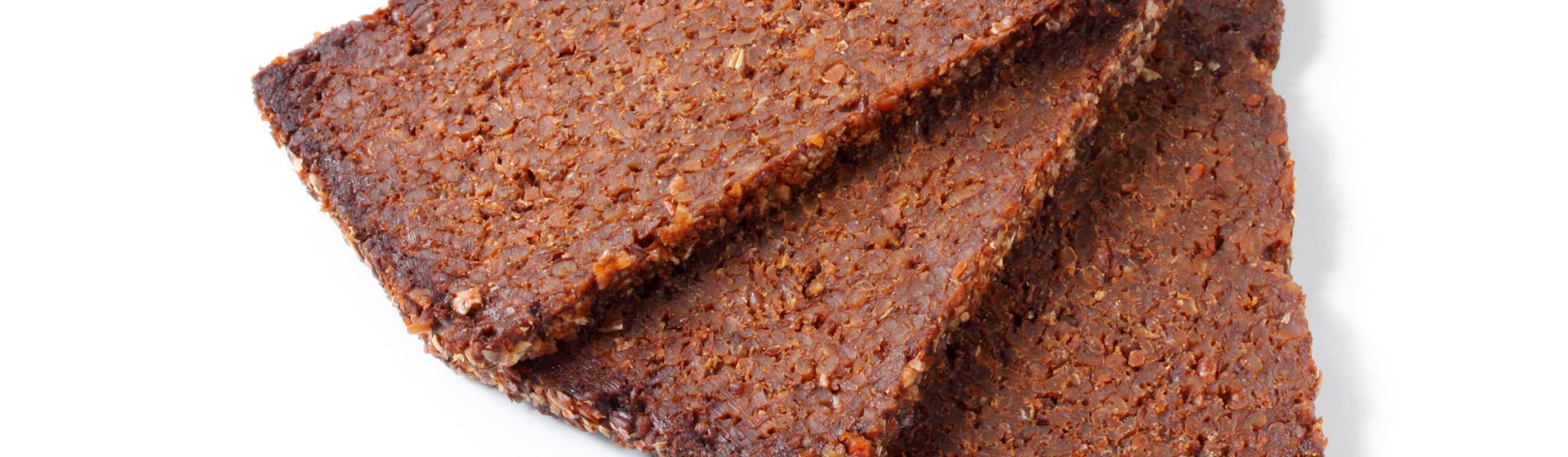
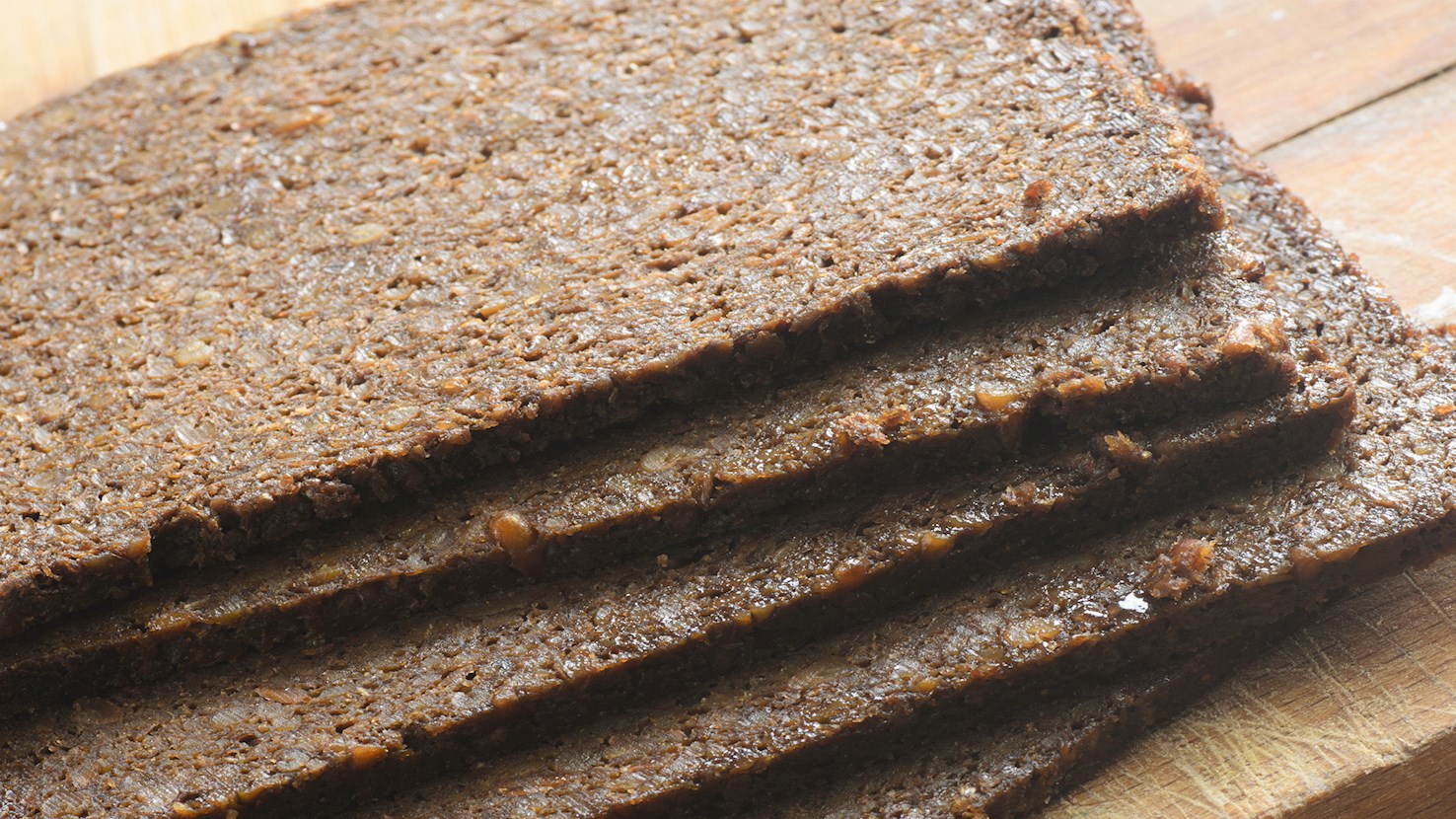
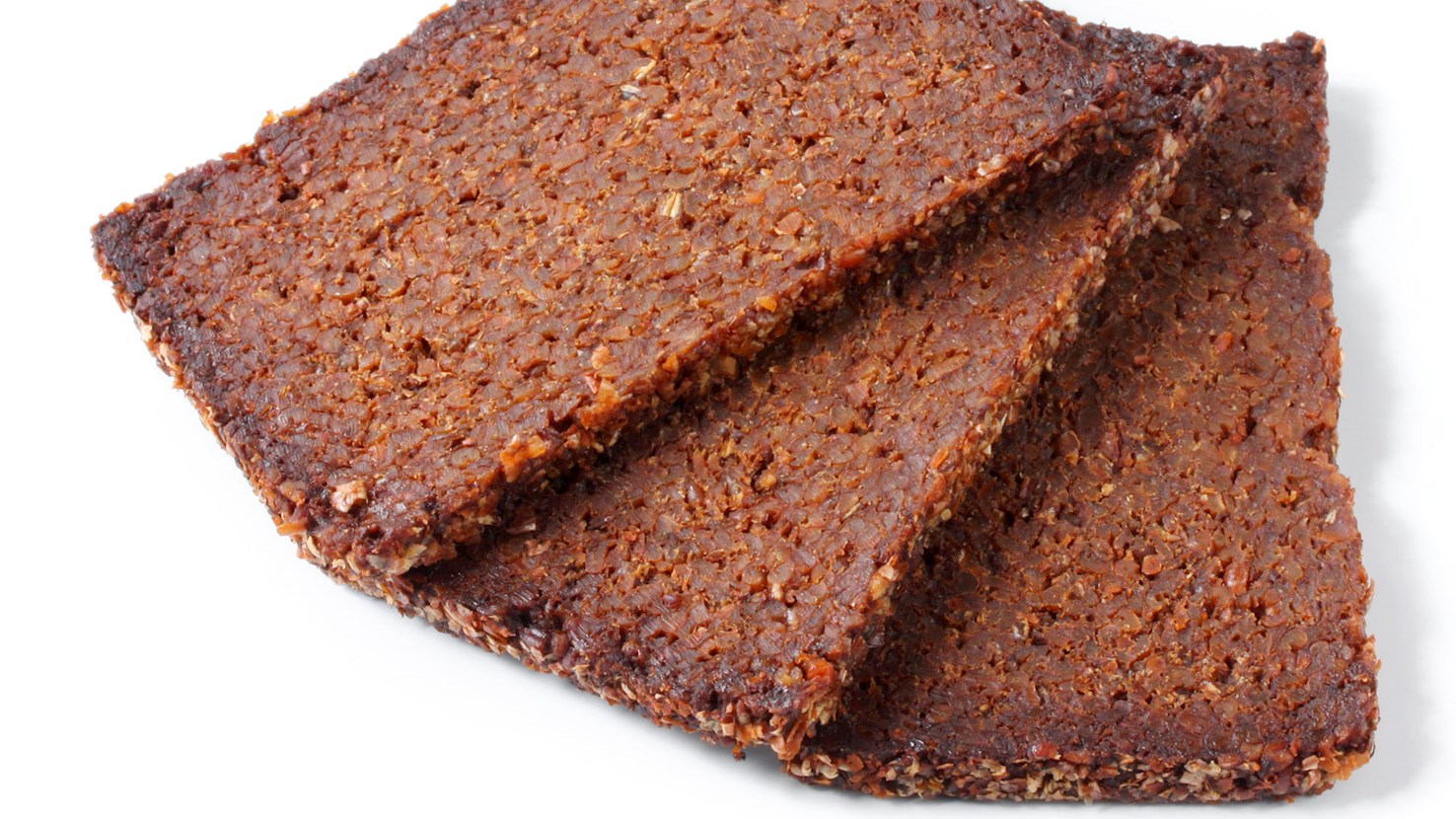
This heavy and slightly sweet rye bread is made from a sourdough starter and coarsely ground rye with whole rye berries as its base. Its name comes from the German pumpern, a synonym for being flatulent, and the male given name Nickel—a form of the name Nicholas—which was commonly associated with the devil in New High German vernacular. Thus, pumpernickel literally translates to "devil’s fart," which is a definition accepted by most publishers and dictionaries, however strange it may sound. The traditional German pumpernickel contains no coloring agents, but instead relies on the Maillard reaction to impart a deep brown color and a sweet, almost chocolatey and earthy flavor and aroma. Apart from being delicious, pumpernickel is rich in resistant starch which is known to aid digestion and benefit blood sugar regulation.
First described in 1450 as the black bread of Westphalia, the famous Westfälischer Pumpernickel is a traditional all-rye bread made with either coarsely ground rye meal or a combination of rye flour and whole rye kernels. It can also be flavored with malt or sugar beet syrup. The loaves are placed in lidded pans and baked slowly at a low temperature in steam-filled ovens for anywhere from 16 to 24 hours, which gives pumpernickel its characteristic deep brown, almost black color. Pumpernickel has little or no crust, a pronounced earthy aroma, and a distinctive bittersweet flavor. It is quite dense and moist, and it has an extremely long shelf-life – when shrink-wrapped, it stays fresh for months, while canned pumpernickel can be stored for as long as two years. Even though the unique flavor and texture of pumpernickel goes well with both sweet and savory spreads, the Westphalians typically enjoy it with a thick smear of butter and a topping of ham or liver sausage.
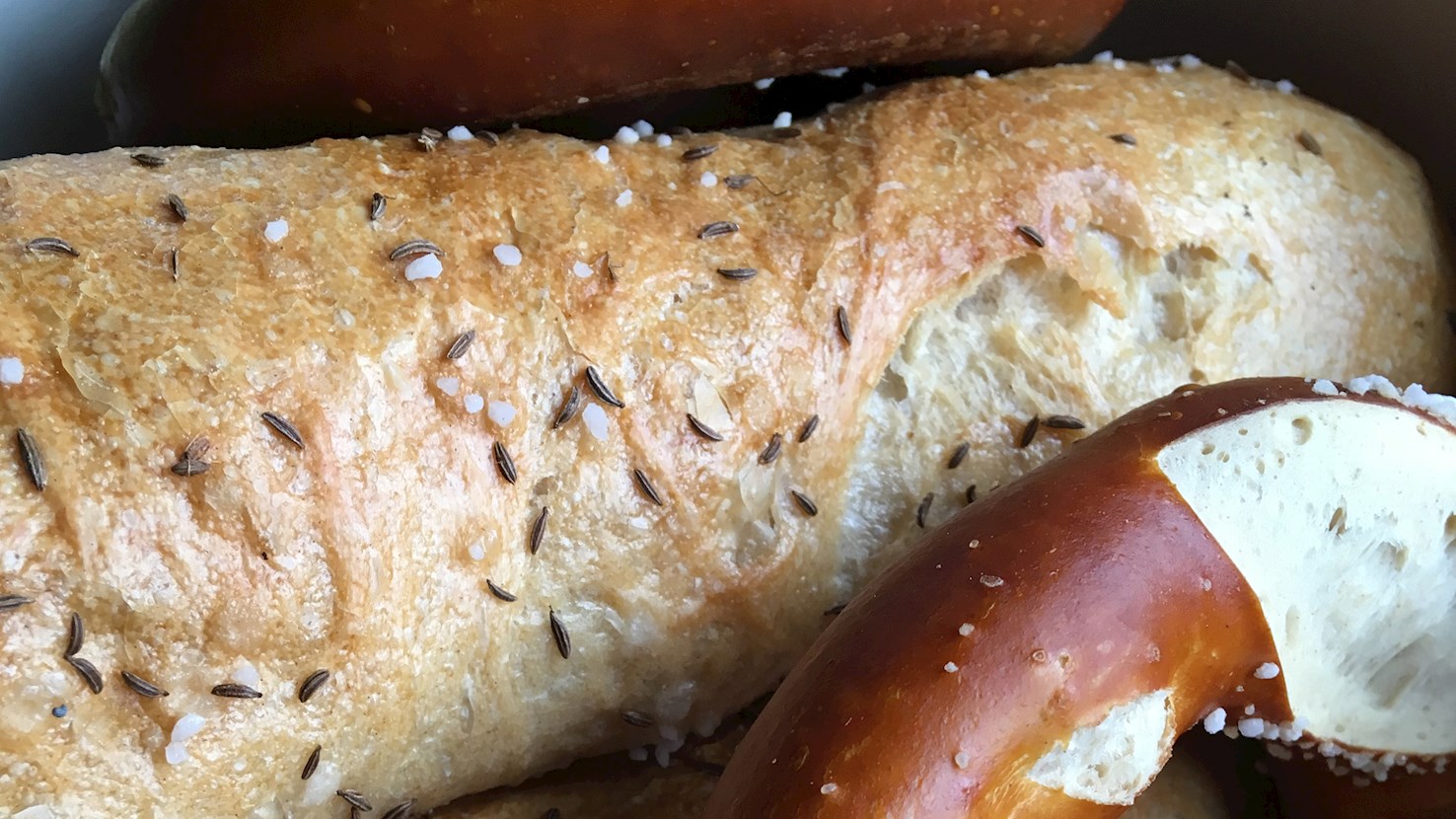
Seele is a traditional bread originating from Baden-Württemberg. The bread is usually made with a combination of wheat flour, spelt flour, yeast, salt, and water, without any additives or baking aids. Over the course of 24 hours, the dough is worked by hand several times. The small and oblong hand-shaped loaves are placed on the oven floor and the bread is baked until the crumb is moist and the crust is crisp. The crust is sprinkled with caraway seeds and coarse salt. Nowadays, only a few artisanal bakeries in the area still bake the bread using this traditional method that results in toasted aromas of the bread. Many bakeries use modern methods – the loaves are processed by machines, and the bread is less moist, while the crust is less crisp. The name seele means souls, and although the origin of the name is unclear, it's believed that it comes from the Christian All Souls' Day, when bread was given to poor people (souls) in need.
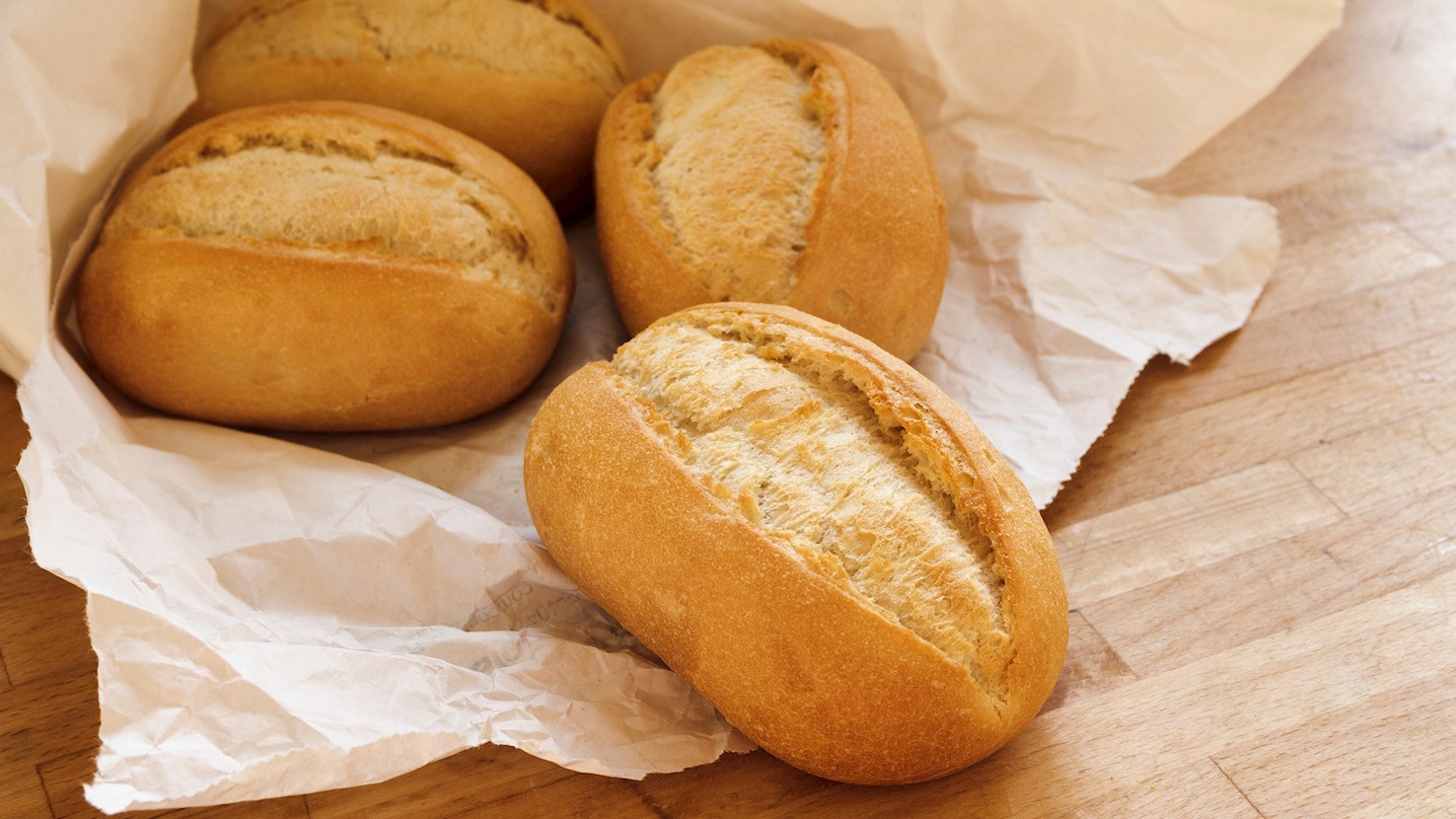
Berliner knüppel is a traditional bread roll originating from Berlin. The bread rolls are usually made with a combination of water, flour, milk, yeast, and salt. The ingredients are mixed, the dough is kneaded, and it's then left to rest for a while. The balls of dough are pressed into disks that are folded into a halfcircle, and the dough is then rolled into a short and oblong log. The rolls are baked seam-side up in an oven with steam until golden brown. If properly baked, the crumb should be soft and fluffy, and the crust should be slightly crusty. Berliner knüppel rolls are traditionally served with ground meat patties known as buletten.
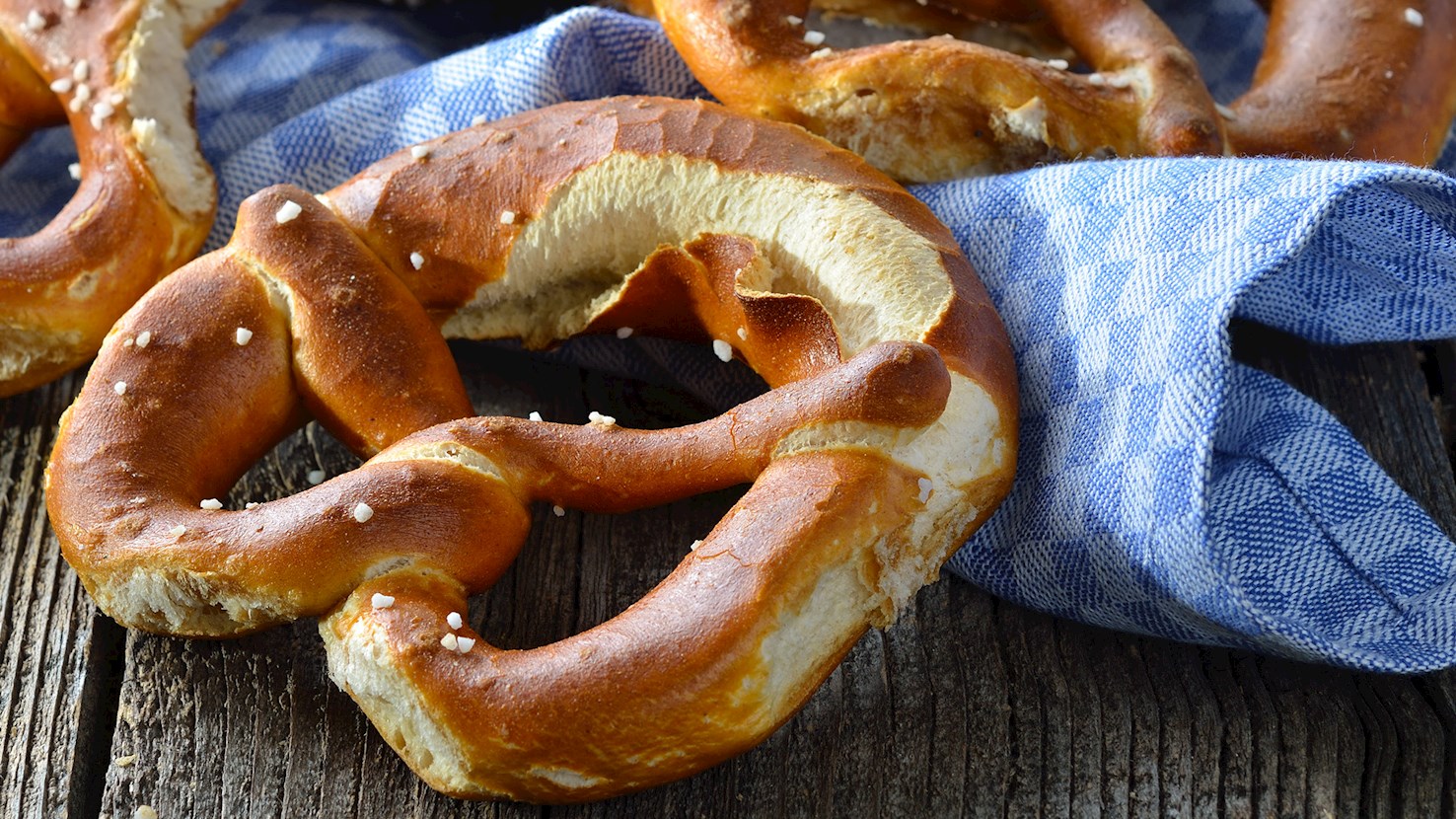
Considered an iconic symbol of Germany, the pretzel is a type of traditional baked good that is made by combining flour, salt, malt, yeast, and water. The resulting dough is then shaped into a well-known knotted shape of a pretzel before it is baked. Pretzels are often dipped in a lye solution (natronlauge in German) before they are baked, and then they are called laugenbrezel, a Bavarian-style pretzel distinguished by a nice, brown, and crispy exterior that surrounds the soft interior. Coarse salt is usually sprinkled over the surface of the pretzels, but other toppings may also be used, including sesame, pumpkin, sunflower, or poppy seeds. Regional variations of the pretzel abound, with some of them using fat to obtain a softer dough and others calling for different types of flour such as whole wheat flour or spelt flour. German pretzels come in both sweet and savory versions, and their texture may range from soft to hard. They are usually enjoyed warm as a snack with butter or along with German wurst sausages and a cold German beer on the side for an authentic German experience. The pretzel is a favorite street snack and a staple at any festival, holiday, and Christmas market in the country. Its versatile nature has given rise to numerous variations including New Year’s pretzels (neujahrbrezel), Oktoberfest pretzels (also called wiesnbrezn), and Lent pretzels (fastenbrezeln), among many others. In Alsace, France, the pretzel is known as bretzel d'Alsace.
TasteAtlas food rankings are based on the ratings of the TasteAtlas audience, with a series of mechanisms that recognize real users and that ignore bot,
nationalist or local patriotic ratings, and give additional value to the ratings of users that the system recognizes as knowledgeable.
For the “5 Worst Rated German Breads” list until June 16, 2026, 1,487 ratings were recorded, of which 1,317 were recognized by the system as legitimate.
TasteAtlas Rankings should not be seen as the final global conclusion about food. Their purpose is to promote excellent local foods,
instill pride in traditional dishes, and arouse curiosity about dishes you haven’t tried.