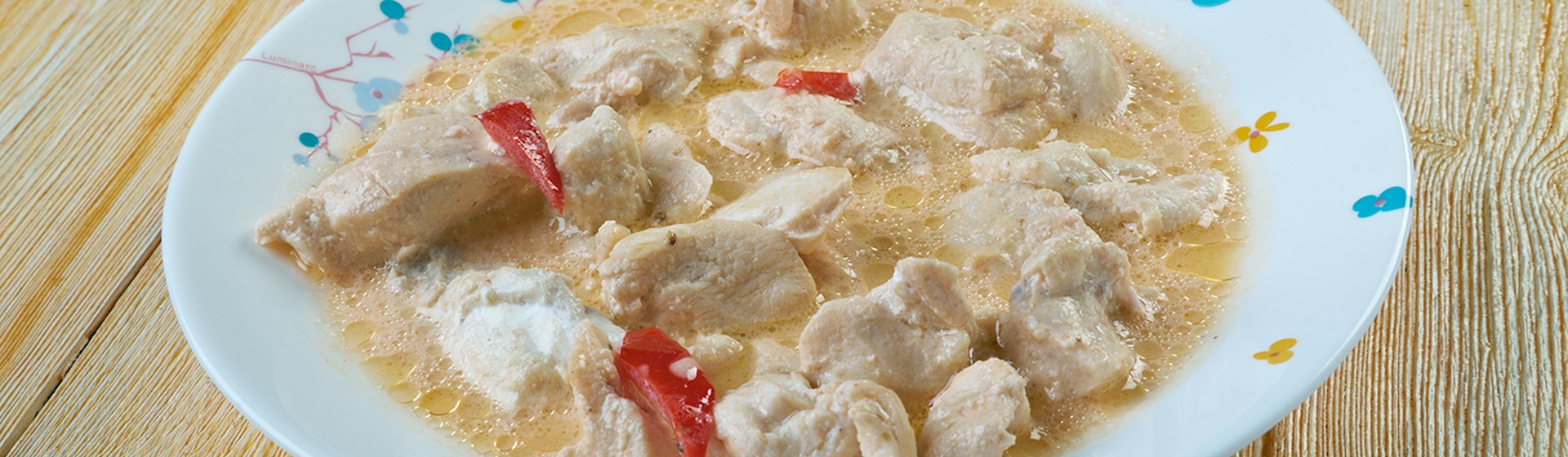
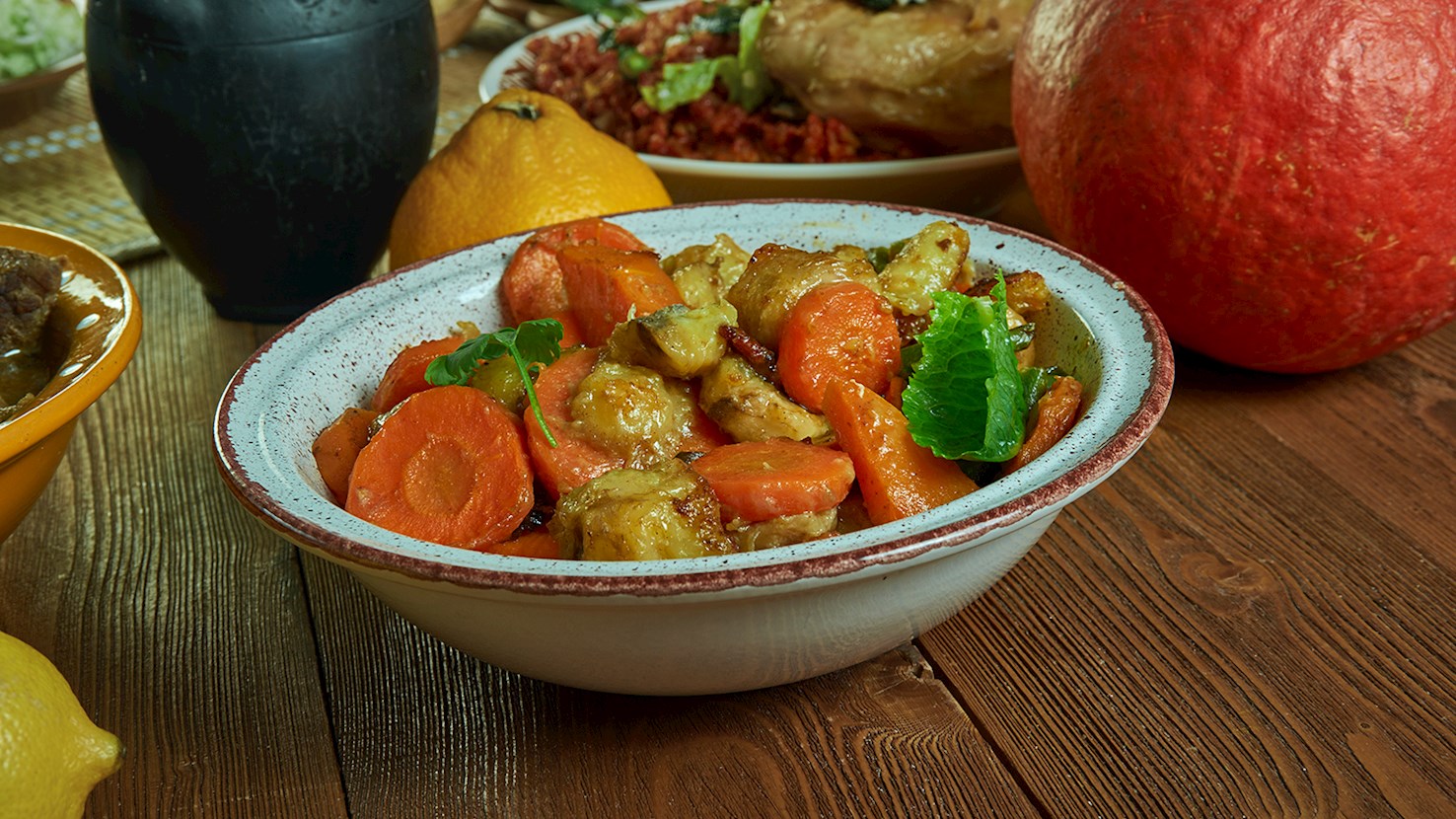
Poulet DG is a tasty Cameroonian poultry dish made with a combination of chicken and ripe plantains in a hearty tomato sauce. The dish is typically garnished with a variety of vegetables such as green beans, bell peppers, and carrots, making it visually appealing and enhancing the flavors even further. Regarding the name of the dish, poulet refers to chicken, while DG means Directeur Général in French or CEO in English, referring to the fact that poulet DG was most commonly served to people from the upper classes in the past. It is recommended to serve the dish warm and pair it with a glass of juice on the side.
Cafriela de frango is a traditional dish consisting of marinated, cooked, then grilled chicken (or hen) pieces. The marinade typically consists of hot chili peppers, crushed garlic, onions, lemon juice, salt, and oil. When the meat gets well-browned, it is served with the remaining pan sauces poured over it. It is recommended to pair cafriela de frango with fluffy white rice on the side.
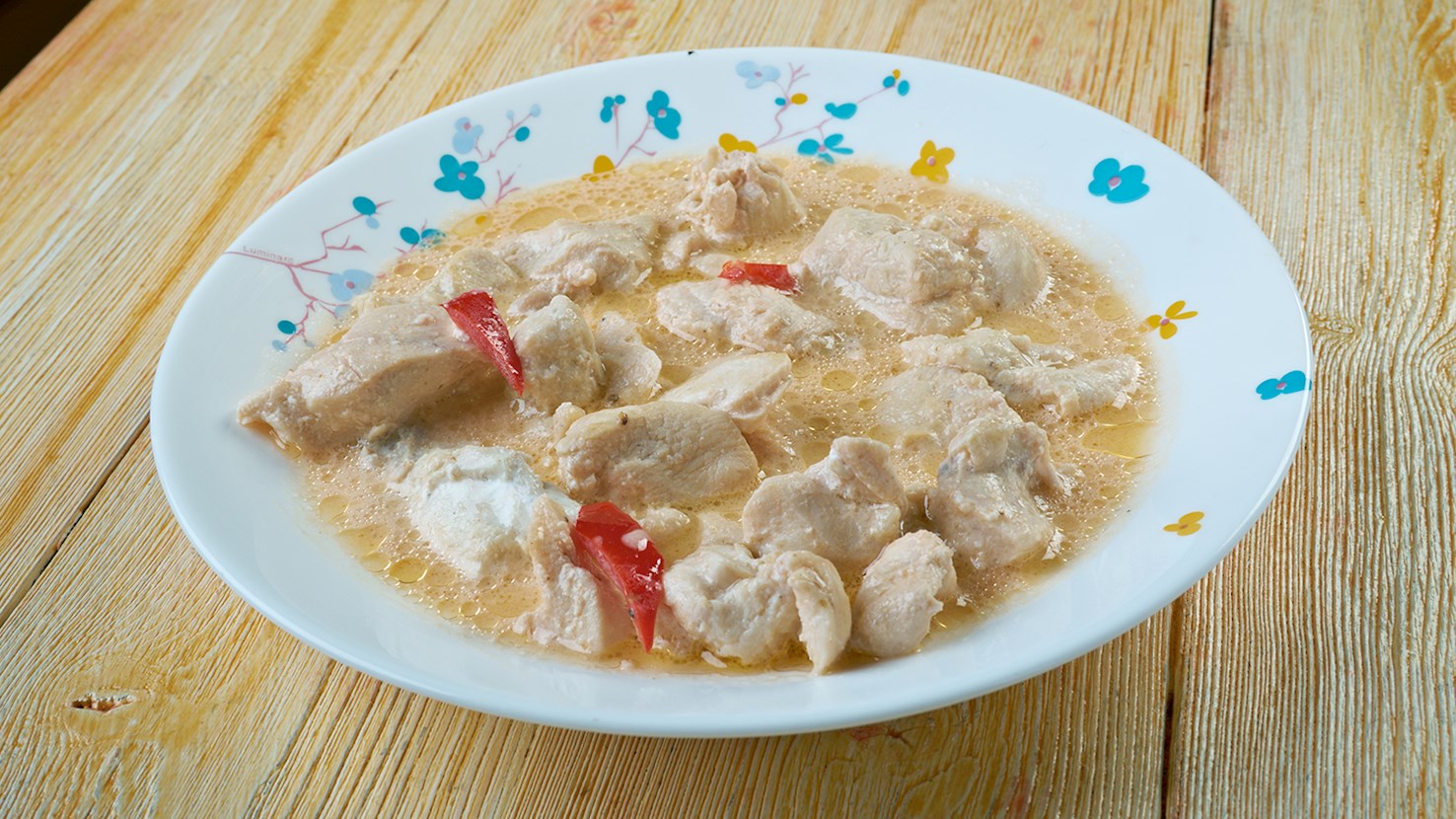
Akoho sy voanio or poulet au coco is a traditional chicken dish originating from Madagascar. It's made with a combination of chicken pieces, coconut milk, tomatoes, onions, lemon juice, ginger, garlic, cayenne pepper, and seasonings such as salt and pepper. The meat is marinated in the lemon juice with salt and pepper, and it's then placed into a pan with sautéed onions and garlic. When the chicken is nearly done, the heat is reduced and the tomatoes and ginger are added to the pan, along with coconut milk. The dish is simmered until the sauce thickens and the meat is tender and fully cooked. Akoho sy voanio must be stirred during cooking, and once done, it's traditionally served with white rice on the side. The dish is especially popular during the festive Christmas season.
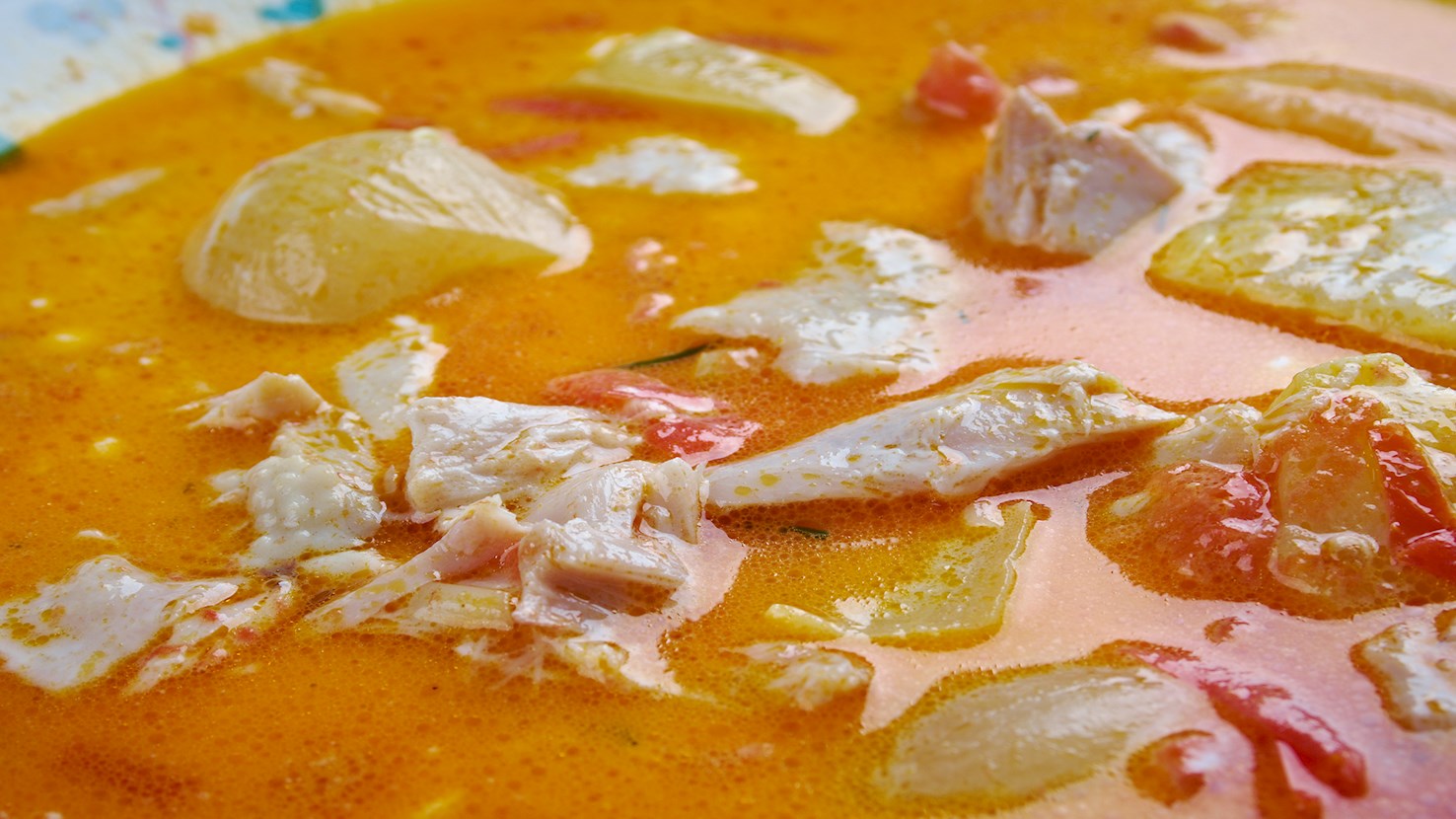
Kuku wa kupaka is a chicken dish prepared with coconut-based sauce and eaten along the Swahili coast of East Africa, most closely associated with Kenya and Tanzania, where it appears as a main course rather than a side and is served in both home cooking and coastal eateries. Its formation reflects coastal Swahili foodways shaped by Indian Ocean trade networks that introduced coconut, spices, and grilling techniques, which were integrated with locally raised poultry and cooking practices that favored layering flavor through multiple stages rather than heavy seasoning at once. Preparation begins with chicken pieces that are lightly seasoned and grilled or roasted until partially cooked, then finished in a sauce made from coconut milk cooked with onions, garlic, ginger, and mild spices, allowing the chicken to absorb the sauce while retaining a firm structure from the initial grilling. Serving brings the chicken coated in the thickened coconut sauce to the table hot, usually spooned generously over the pieces rather than reduced to a glaze, and it is presented plainly without decorative plating. It is eaten at lunch or dinner, commonly with rice dishes such as wali wa nazi or plain steamed rice, as well as flatbreads or chapati, and it pairs naturally with kachumbari or lightly dressed salads, while beverages such as water, unsweetened tea, or light fruit drinks are consumed alongside to balance the richness of the coconut sauce without overwhelming it.
TasteAtlas food rankings are based on the ratings of the TasteAtlas audience, with a series of mechanisms that recognize real users and that ignore bot,
nationalist or local patriotic ratings, and give additional value to the ratings of users that the system recognizes as knowledgeable.
For the “4 Worst Rated African Chicken Dishes” list until June 16, 2026, 1,394 ratings were recorded, of which 517 were recognized by the system as legitimate.
TasteAtlas Rankings should not be seen as the final global conclusion about food. Their purpose is to promote excellent local foods,
instill pride in traditional dishes, and arouse curiosity about dishes you haven’t tried.