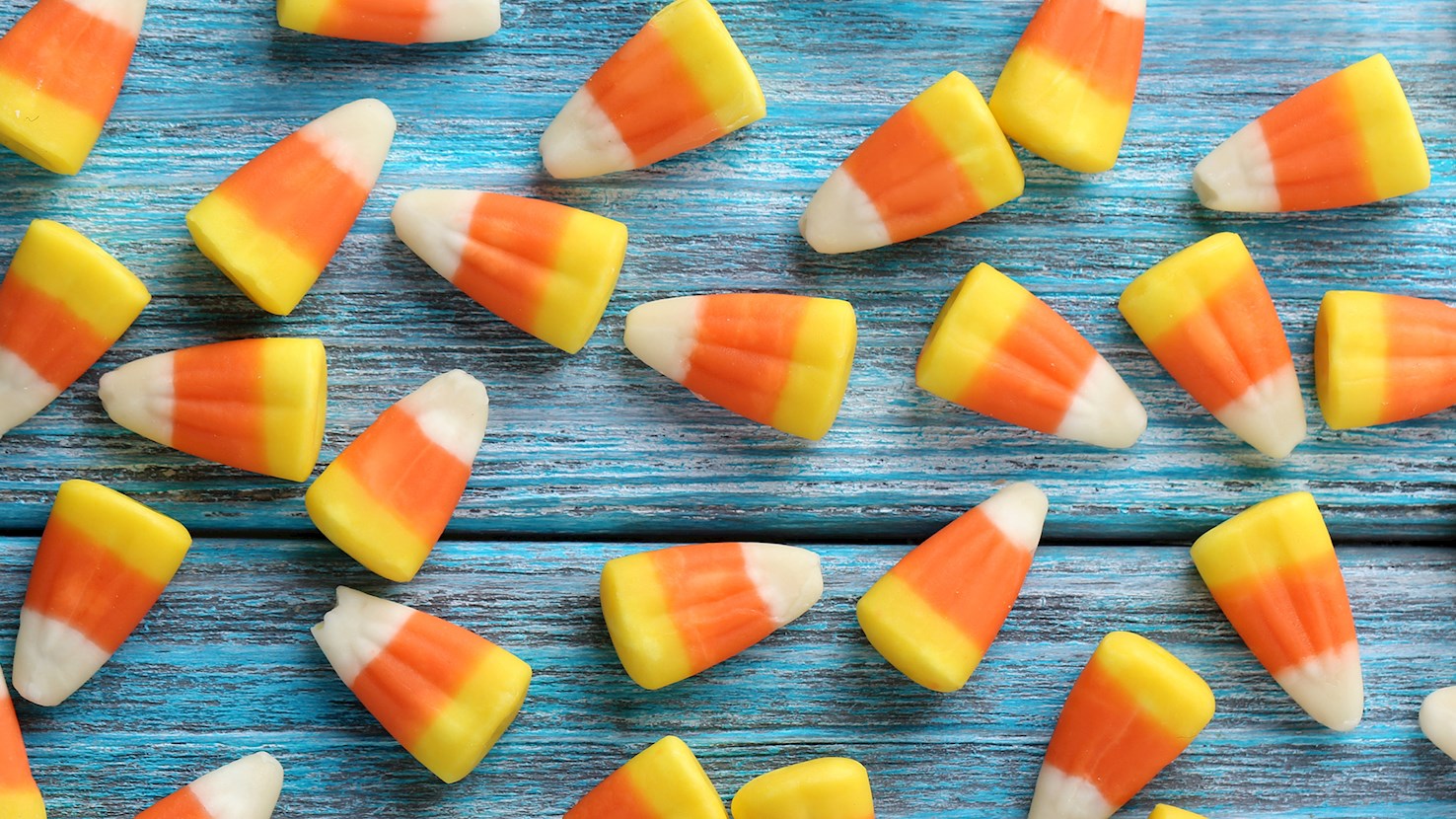
What once started out as chicken feed (the original name of the candy), has over the years become the quintessential American sweet treat called candy corn. Originally, the sweet confection was made with mellow cream - a mixture of sugar, corn syrup, and water - but it was later enhanced with the addition of fondant and marshmallow to achieve a better and smoother final product. Once cooked, the hot slurry was dyed into the three distinctive colors - orange, yellow, and white - before being poured into kernel-shaped cornstarch molds, giving the candy its characteristic dried corn kernel’s appearance, hence its name. Although its origins remain dubious, the National Confectioners Association has credited George Renninger, an employee of Wunderle Candy Company, for being the ingenious mind behind this simple creation, which is believed to have been invented sometime in the 1880s. Initially produced by the Wunderle Candy Company, the confection saw its glory days when the Goelitz Candy Company (present-day Jelly Bean Company) began its candy corn mass production in 1898. Over the years, the confection surpassed its primary role as a year-round sweet treat for farmers’ children and became the ultimate Halloween treat. The more-than-a-century-old American love-hate relationship with this candy hasn’t influenced the continuing annual production of 9 billion pieces of candy corn. To honor the confection’s yearly production, National Candy Corn Day is annually celebrated on October 30, just in time for Halloween. Apart from the classic orange-yellow-and-white variety, candy corn is nowadays available in other colors and flavors for a number of holidays, including Thanksgiving, Christmas, Valentine’s Day, and Easter.
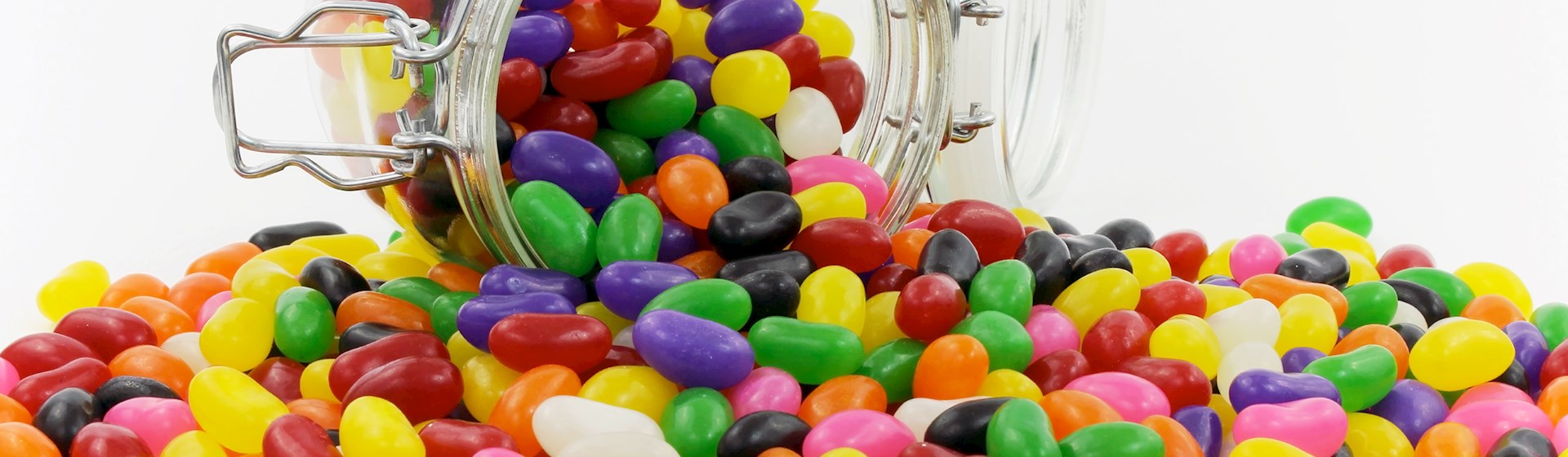
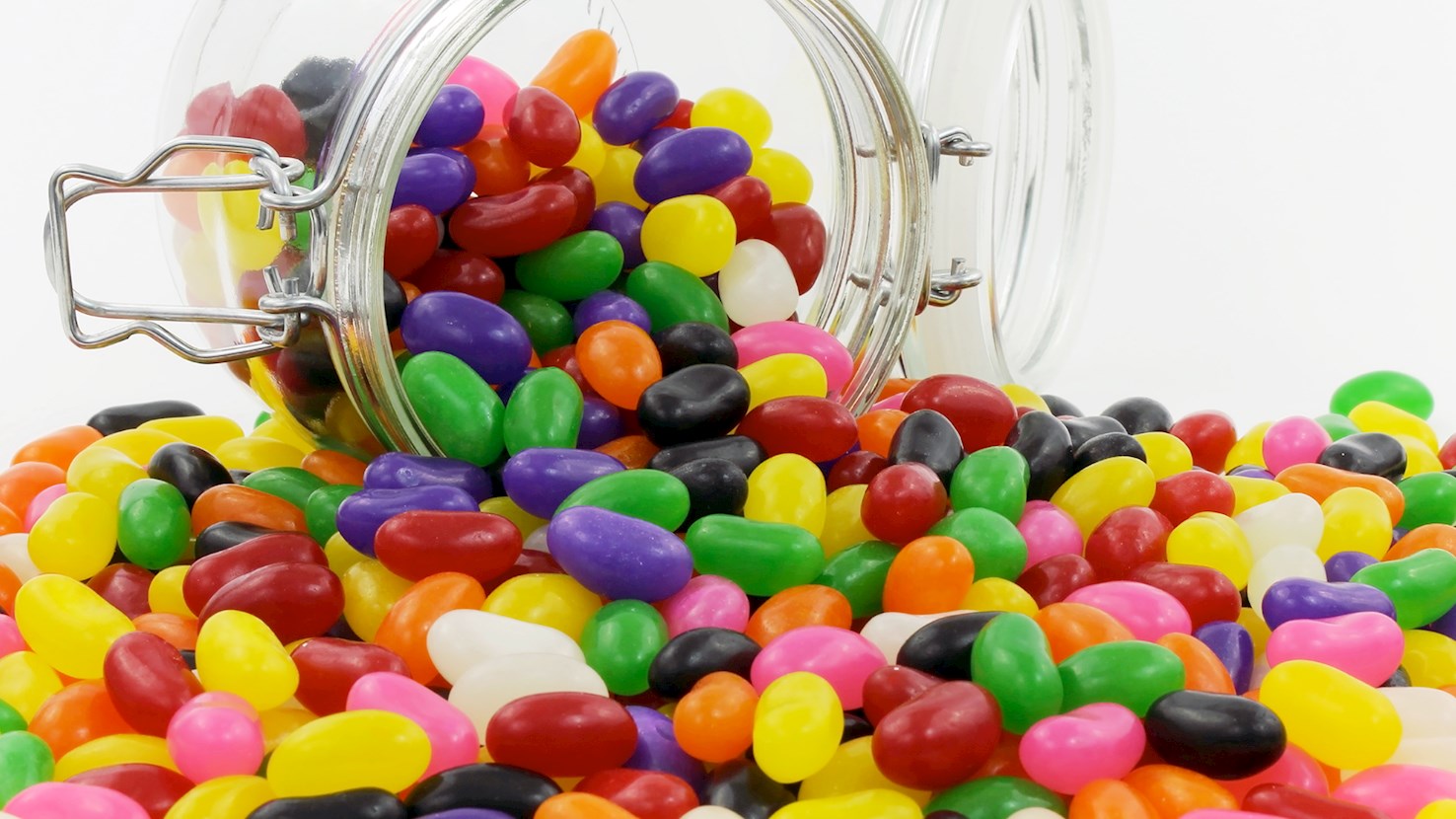
These tiny, bean-shaped sugar candies are an indelible part of the childhood memories of millions of Americans. The chewy jelly beans have a stiff exterior shell and a gelatinous interior, and they come in numerous colors and flavors. Corn syrup, sugar, and starch are the key ingredients used in their production. The earliest reference to jelly beans is closely tied to a Bostonian candy maker named William Schrafft, who first started sending these candies to Union soldiers who were fighting in the Civil War. By the 1930s, jelly beans had exploded in popularity and were sought after throughout the United States, where they were associated with Easter due to their egg-like shape. Today, jelly beans remain an American favorite, and they even have their own day - American National Jelly Bean Day, celebrated every year on April 22nd.
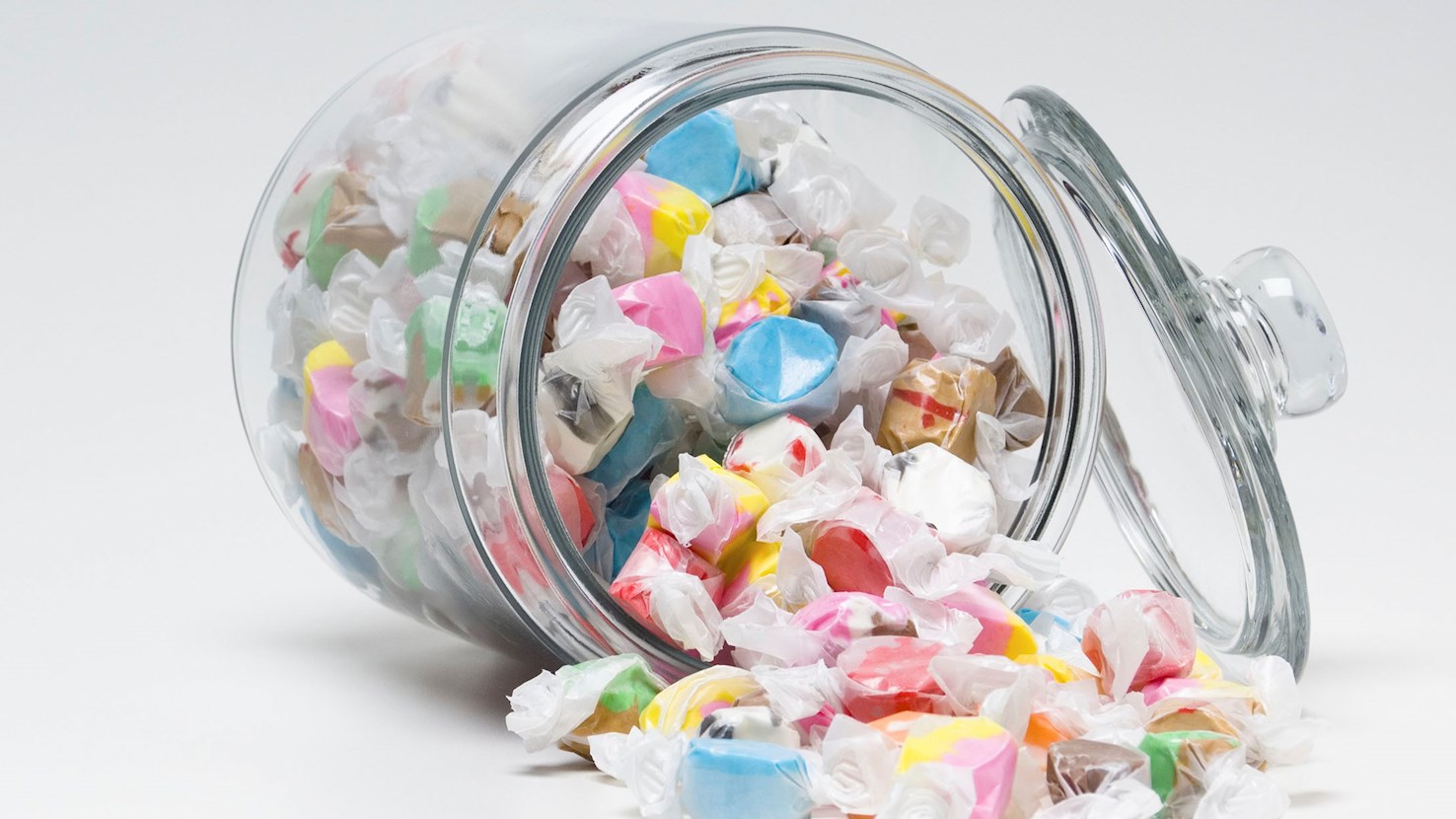
Saltwater taffy is Jersey Shore's trademark souvenir, a chewy assortment of pastel-coloured candies, each one individually wrapped in wax paper. The sweet treat has a British origin and its name is an Americanized version of the word toffee. In the late 19th century, Joseph Fralinger, glassblower by trade, opened a taffy stand on the Atlantic City beach, and the candies were a great success. Saltwater taffy consists of melted butter and sugar, cooked over an open fire and cooled on marble slabs. The method of production is unique - as the mixture cools, it is thrown onto large hooks and pulled by hand until it gets soft and chewy in texture. Although the name suggests it, the candy does not contain saltwater, instead - just a pinch of salt. With a variety of colors and flavors such as peanut butter, vanilla, and chocolate, taffy has spread far beyond Jersey Shore, its tender and chewy texture providing a hefty dose of sugar to consumers with a sweet tooth.
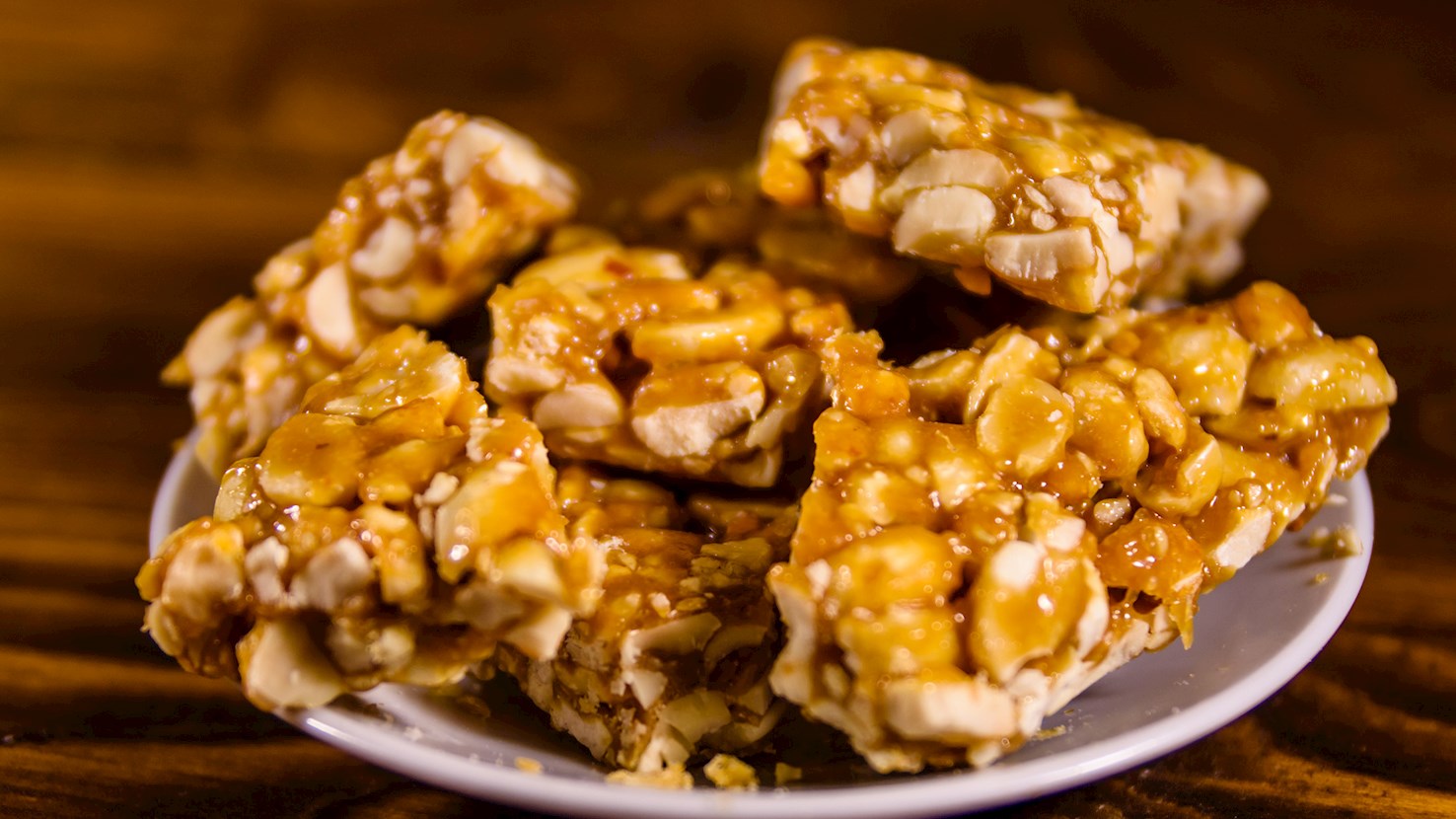
Peanut brittle is a hard candy made by cooking sugar until it caramelizes and combining it with roasted peanuts to form a crisp sheet that is broken into pieces once cooled. It is strongly associated with North America, particularly the United States, where it has become a classic confection in households and sweet shops, though similar nut brittles can be found across many cultures. Recipes resembling brittle go back centuries, with variations in Europe, the Middle East, and Asia using different nuts and sweeteners, but in America peanuts became the star ingredient due to their wide availability and cultivation in the South. Over time, it became a favored homemade treat, especially during the 19th and early 20th centuries, when candy-making in kitchens was part of holiday traditions. Making peanut brittle involves preparing a caramel base with sugar or corn syrup, often with butter for richness, and sometimes with baking soda to create a lighter texture and tiny bubbles that make the candy less dense. The roasted peanuts are stirred into the hot syrup, and the mixture is spread quickly on a greased surface or parchment paper before it hardens. Once cooled, it is broken into jagged shards, which is how the name “brittle” reflects its crackling nature. While most versions rely on peanuts, other nuts such as cashews, almonds, or pecans can be used, and some recipes include spices like cinnamon or chili powder to add a modern twist. Peanut brittle is most often enjoyed during festive seasons, particularly around Christmas, when homemade candies are shared as gifts or set out in candy dishes. It is also sold commercially year-round in tins and bags, sometimes paired with chocolate or used as a topping for ice cream. Because of its rich sweetness and nutty depth, it pairs well with black coffee, tea, or even a glass of milk, and in some creative uses it is crushed and added to baked goods or layered into desserts.
A creation that has been attributed to a San Francisco-based chocolatier called Joseph Schmidt, and believed to date back to the 1980s, the American chocolate truffle is a variation on the classic chocolate truffles originating in France. Molded into its characteristic half-egg shape, the American truffle typically consists of a blend of dark chocolate, milk chocolate, and optionally butterfat or solid coconut oil. Apart from its unique shape and its relatively larger size compared to other truffle varieties, another distinguishing trait of the American-style chocolate truffle is that it is entirely surrounded by smooth, melted chocolate, originally using only authentic Belgian chocolate. Once the chocolate covering hardens, it is thought to significantly prolong the truffle’s shelf life. In America, these chocolate truffles are available in a wide range of flavors, fillings, and finishes. There are even holiday-inspired chocolate truffles in various shapes such as the beautifully adorned and colored large egg-shaped and heart-shaped truffles for Easter and Valentine’s Day, respectively.
Pecan pralines are traditional Cajun sweets originating from Louisiana. The first pralines were brought to New Orleans from France by the Ursuline nuns in 1727. Due to the fact that almonds were scarce, cooks began using pecans from native Louisiana trees, and the predecessors of modern pecan pralines were born. They were first prepared as individual pecans covered in sugary coating. Nowadays, they are made with a combination of pecans, butter, vanilla, milk, and sugar. The ingredients are simply cooked together until the mixture thickens and the pecans stay suspended in it. Once hardened, pecan pralines are ready to be enjoyed.
TasteAtlas food rankings are based on the ratings of the TasteAtlas audience, with a series of mechanisms that recognize real users and that ignore bot,
nationalist or local patriotic ratings, and give additional value to the ratings of users that the system recognizes as knowledgeable.
For the “6 Worst Rated American Confectioneries” list until May 21, 2026, 790 ratings were recorded, of which 745 were recognized by the system as legitimate.
TasteAtlas Rankings should not be seen as the final global conclusion about food. Their purpose is to promote excellent local foods,
instill pride in traditional dishes, and arouse curiosity about dishes you haven’t tried.