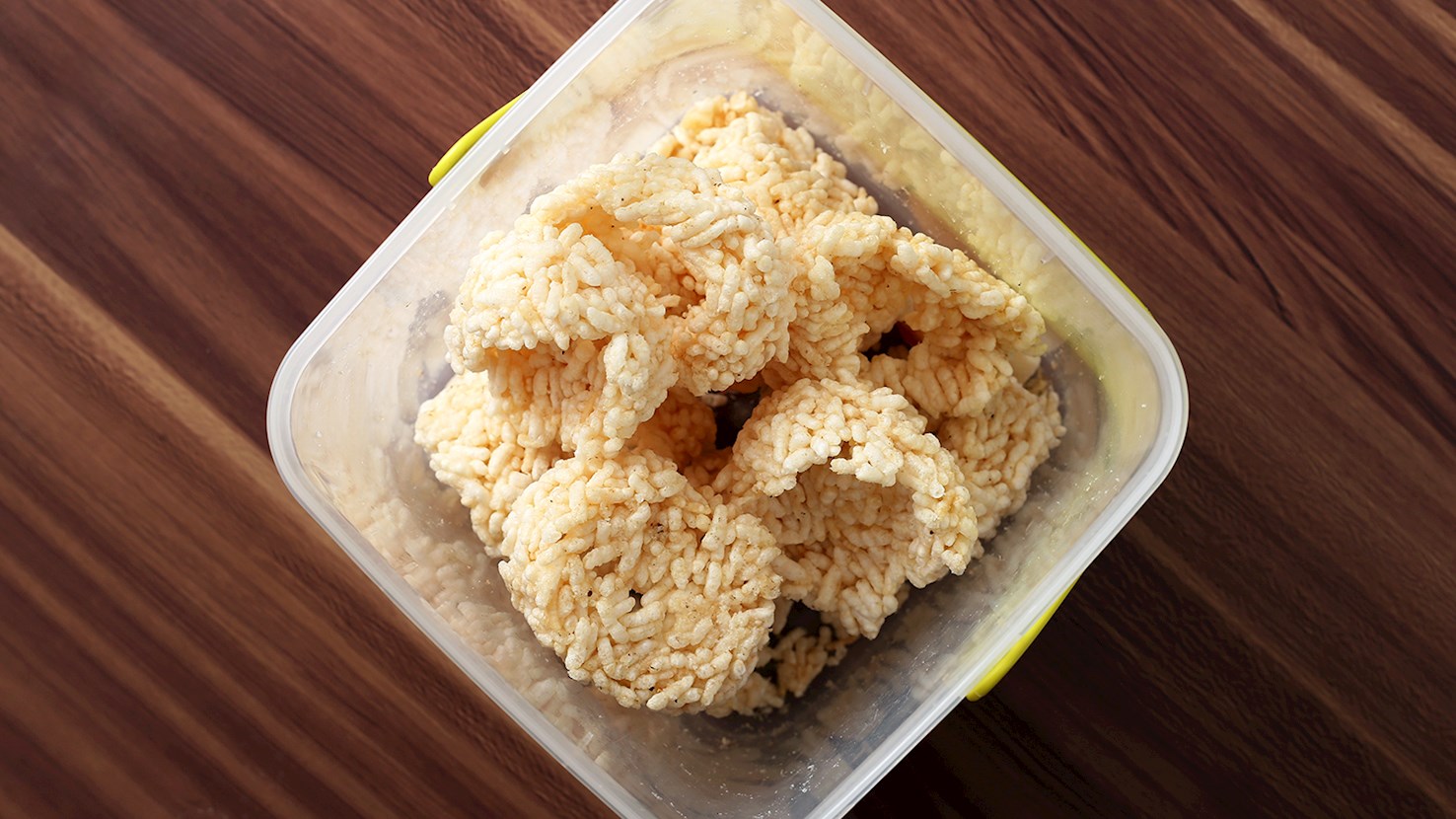
Rengginang is a crispy rice cracker snack that originates from Indonesia, especially popular on the islands of Java and Bali. It is prepared by taking cooked glutinous rice and forming it into small, thick discs or patties, which are then sun-dried until all moisture has evaporated. The drying process is essential because it ensures that when the pieces are later deep-fried, they become light, airy, and crunchy without absorbing excess oil. Rengginang differs from other rice crackers in Southeast Asia because it uses whole grains of sticky rice rather than rice flour, giving it a distinctive chewy interior despite the crisp exterior. The snack is commonly seasoned with salt, sometimes enhanced with shrimp paste, garlic, or fermented fish to create a savory profile. Once fried, the rice cakes can be stored for long periods in airtight containers, making them convenient for households as a snack to accompany tea or coffee or to serve during festive occasions. In many regions of Java, rengginang is made at home, but it is also widely produced commercially and sold in markets in clear plastic bags or boxes. The shape, size, and flavoring can vary by region and family recipe, with some versions using sweet palm sugar syrup drizzled on top before drying to create a mildly sweet alternative.
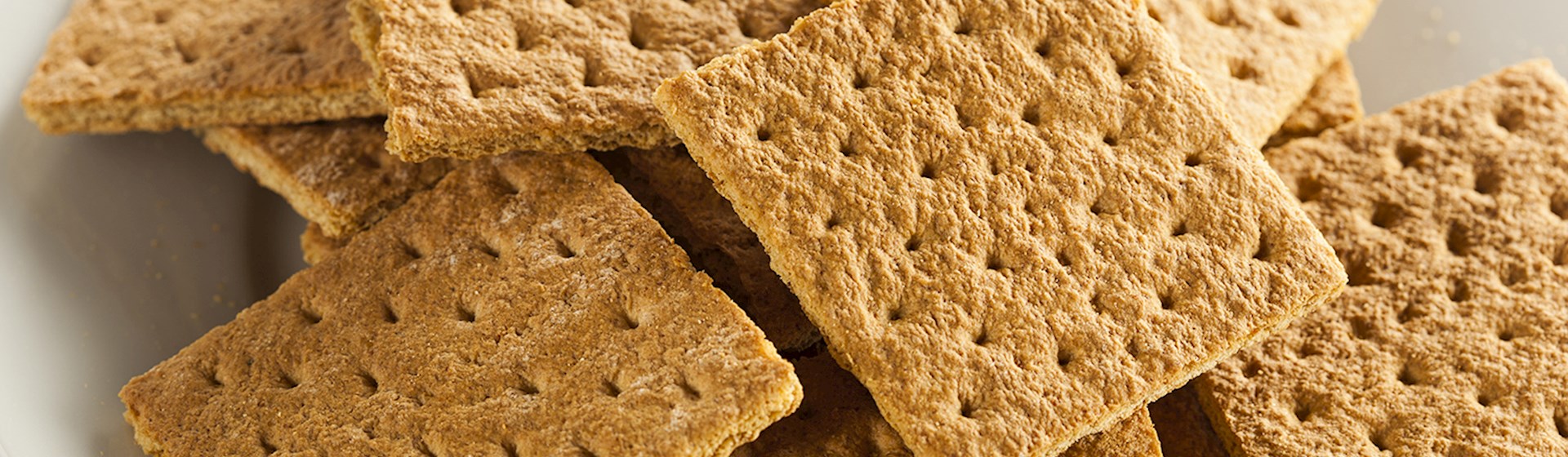
Graham cracker is a sweet American cracker made with graham flour and usually flavored with honey or cinnamon. The crackers date back to the early 1880s, when they were made with graham flour, lard or shortening, salt, molasses, and oil. They were invented by Sylvester Graham, a Presbyterian minister who introduced them in hopes to end masturbation – he believed that a radical vegetarian diet without white flour and spices would end lustful behaviour. Nowadays, the crackers are used in the preparation of s'mores, while graham cracker crumbs are used for pies, cheesecakes, and moon pies. In the Philippines, an icebox cake known as mango float uses graham crackers, cream, and mangoes.
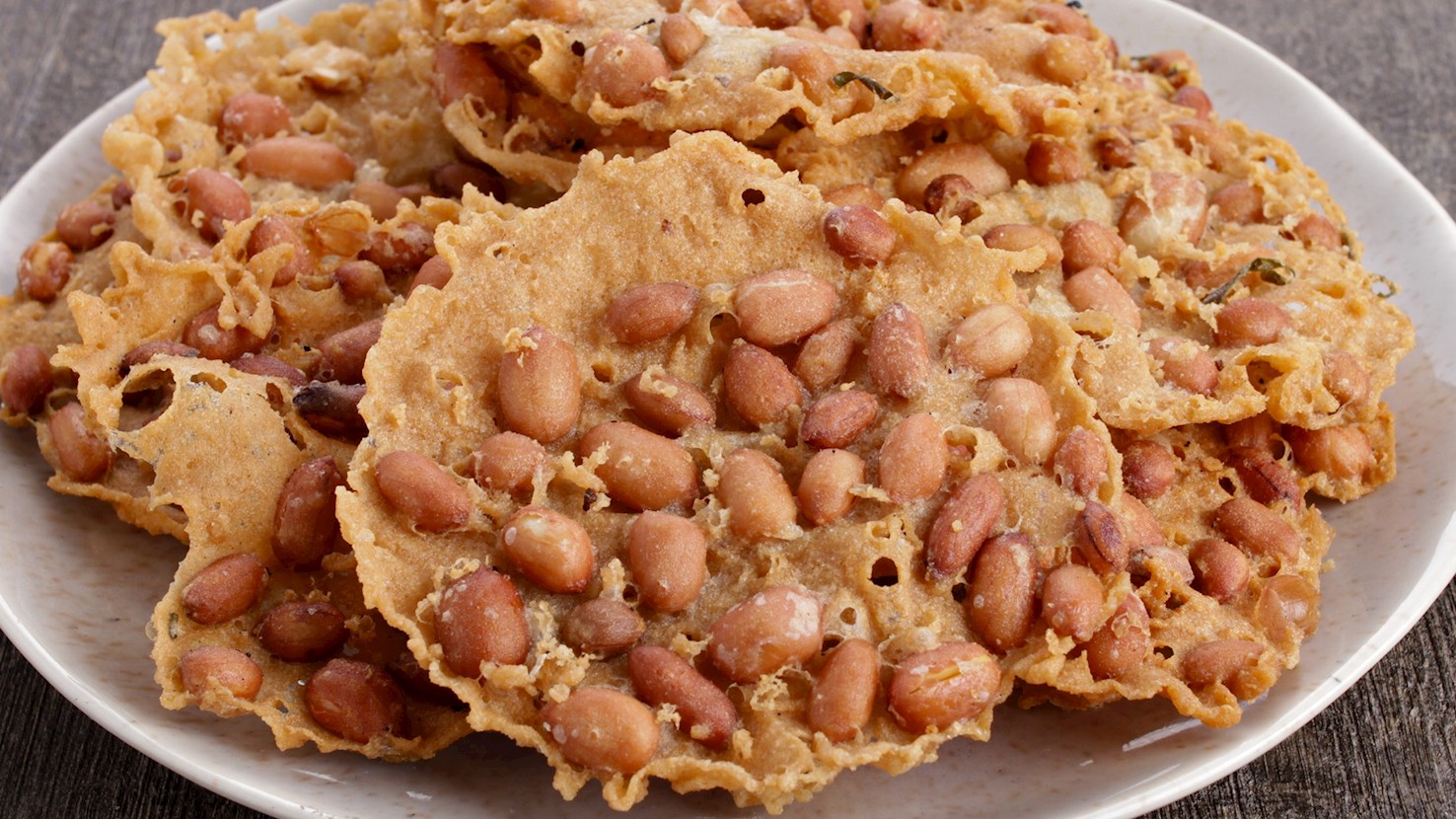
Rempeyek, also known simply as peyek, is a traditional Indonesian deep-fried cracker made from a spiced rice flour batter and typically studded with peanuts, anchovies (ikan teri), or other ingredients like mung beans, shrimp, or soybeans. Crisp, savory, and aromatic, rempeyek is a popular side dish and snack across Indonesia, especially in Java, where it's often served alongside dishes like nasi pecel, nasi gudeg, or soto. The batter is made by mixing rice flour with coconut milk or water, flavored with garlic, coriander, candlenuts, kaffir lime leaves, and salt, forming a fragrant, slightly runny mixture. A handful of peanuts or anchovies is added to the batter or scattered on top as it's ladled into hot oil in thin layers, creating irregular, lacy crisps with golden-brown edges. The result is a light, crunchy cracker with bursts of nutty and salty flavor, and a satisfying crackle in every bite. Rempeyek is prized not only for its crunch and flavor, but also for its versatility. While peanut rempeyek (rempeyek kacang) is the most common, regional versions include rempeyek udang (with small shrimp), rempeyek bayam (with spinach leaves), and even modern interpretations using tempeh or seeds. Rempeyek is traditionally produced in Indonesian households as a homemade snack using family recipes, but it is nowdays widely produced on an industrial scale by local food manufacturers and sold in markets, supermarkets, and packaged snack brands across Indonesia and Southeast Asia.
TasteAtlas food rankings are based on the ratings of the TasteAtlas audience, with a series of mechanisms that recognize real users and that ignore bot,
nationalist or local patriotic ratings, and give additional value to the ratings of users that the system recognizes as knowledgeable.
For the “3 Worst Rated Crackers in the World” list until June 16, 2026, 278 ratings were recorded, of which 258 were recognized by the system as legitimate.
TasteAtlas Rankings should not be seen as the final global conclusion about food. Their purpose is to promote excellent local foods,
instill pride in traditional dishes, and arouse curiosity about dishes you haven’t tried.