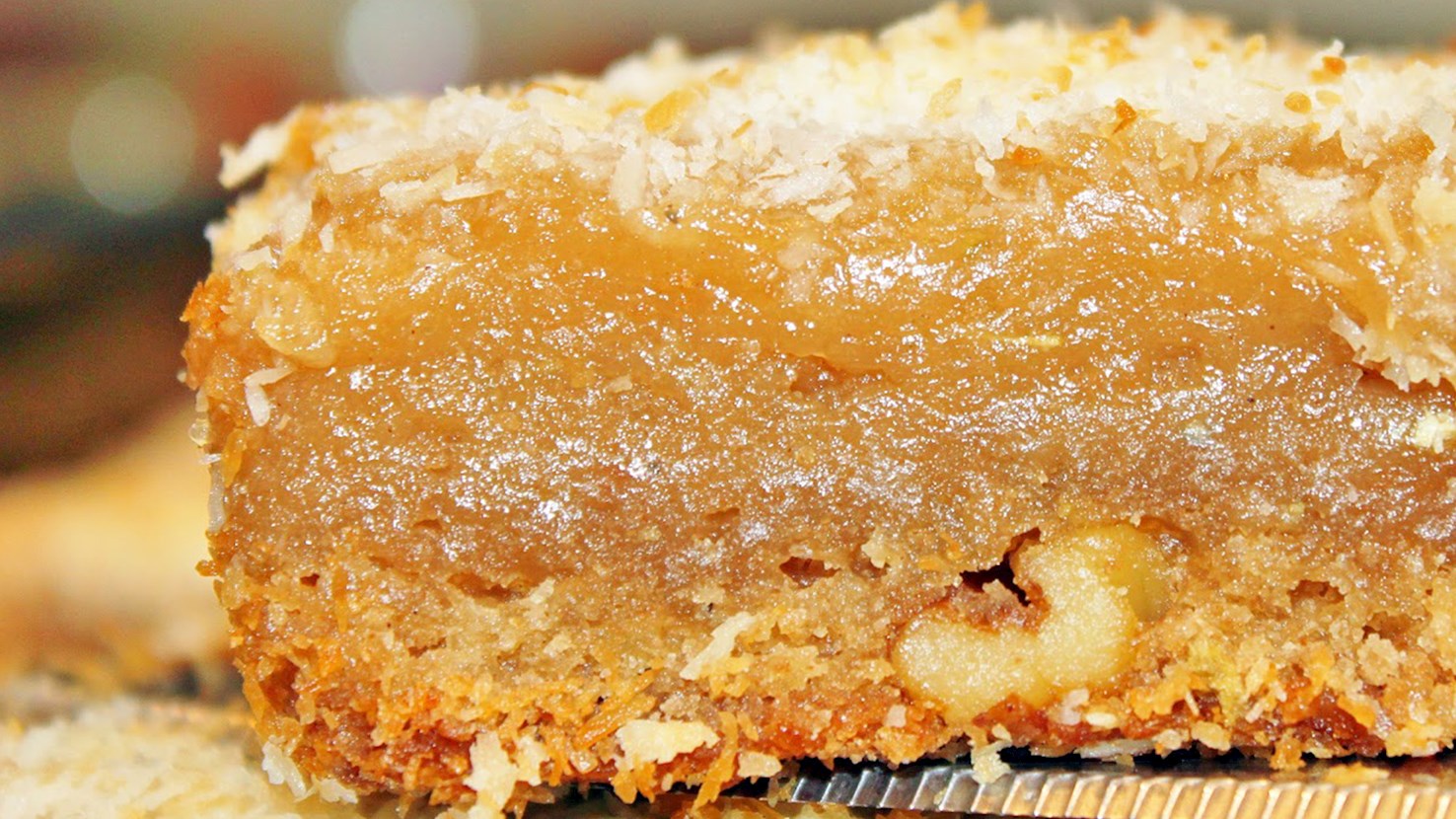
Daheen is a rich, syrup-soaked dessert that originates from Najaf. The dessert is named after the clarified butter used in its preparation, called dihin. The recipe for daheen has been passed down through generations, and is often prepared during festive occasions, religious holidays, and family gatherings. The dessert’s unique appeal lies in its balance of sweetness and subtle aromatic hints, often enhanced by spices such as cardamom or rose water that complement the syrup’s richness. The process of making daheen involves both baking and careful soaking, creating a dessert that is simultaneously firm and succulent. Preparation begins with a batter made from flour, eggs, sugar, and oil, mixed to a smooth consistency and then baked until it develops a golden crust. A syrup, infused with sugar and aromatic spices, is then poured over the hot cake, allowing it to absorb the syrup fully. This soaking process ensures the final dish is soft and saturated with syrup, making each bite luscious and flavorful. Daheen is typically served in small squares or slices and enjoyed with tea or coffee.
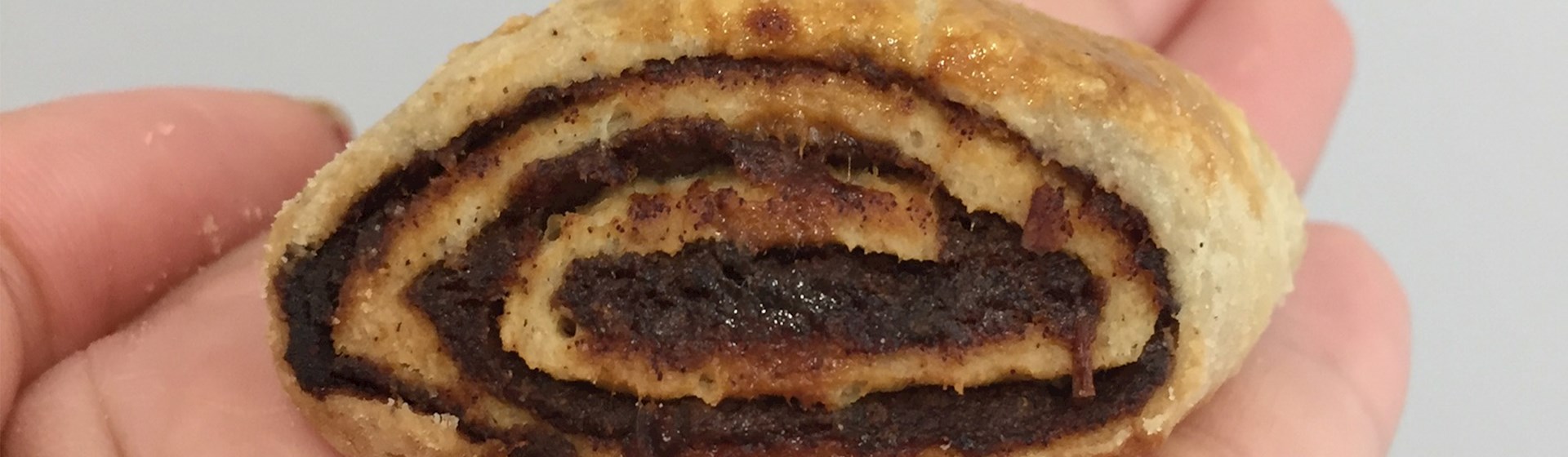
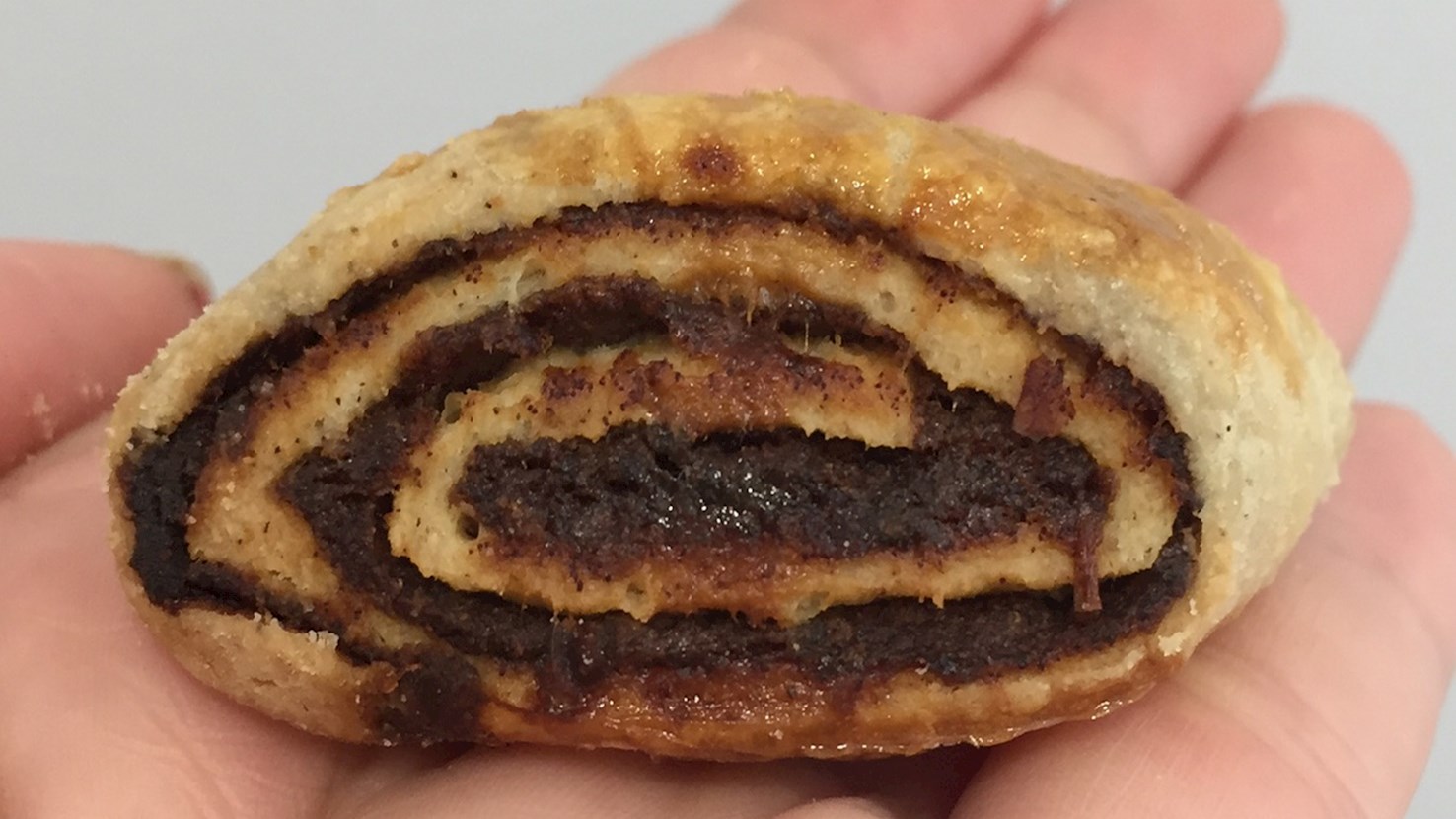
Kleicha is a filled cookie that comes from Iraq and is considered by many to be the national cookie of the country. It is usually made with a lightly spiced dough that can be filled with dates, nuts, or sweetened sesame mixtures, and its distinctive feature is the variety of shapes it can take, from simple rolled crescents to patterned discs pressed with wooden molds. Its connection to festive occasions and family gatherings has made it an essential part of Iraqi culinary identity, particularly during celebrations such as Eid and Christmas among the country’s Christian communities. The origins of kleicha are closely tied to Iraq’s long history of date cultivation and its role as a hub of trade across Mesopotamia. Dates, a key ingredient in many fillings, have been central to Iraqi sweets for centuries, while the use of aromatic spices such as cardamom reflects the country’s position along spice trade routes. Over time, kleicha evolved into a celebratory sweet baked in large batches for holidays and shared among neighbors, becoming a symbol of hospitality and togetherness. Recipes were often passed down within families, and the design of the cookies carried cultural significance, as some molds were carved with patterns unique to households. Preparing kleicha involves making a dough with flour, yeast, butter or oil, sugar, and spices such as cardamom. Once the dough has risen, it is divided into portions, filled with date paste or nut mixtures, then shaped. The date version is often rolled into logs and sliced, while other versions are shaped into crescents or pressed into round molds that leave decorative imprints. After shaping, the cookies are brushed with egg wash for color and baked until golden. The balance of a slightly crisp exterior with a tender, spiced interior makes them distinct. The sweetness of the dates pairs especially well with strong black tea, which is the most common accompaniment in Iraq.
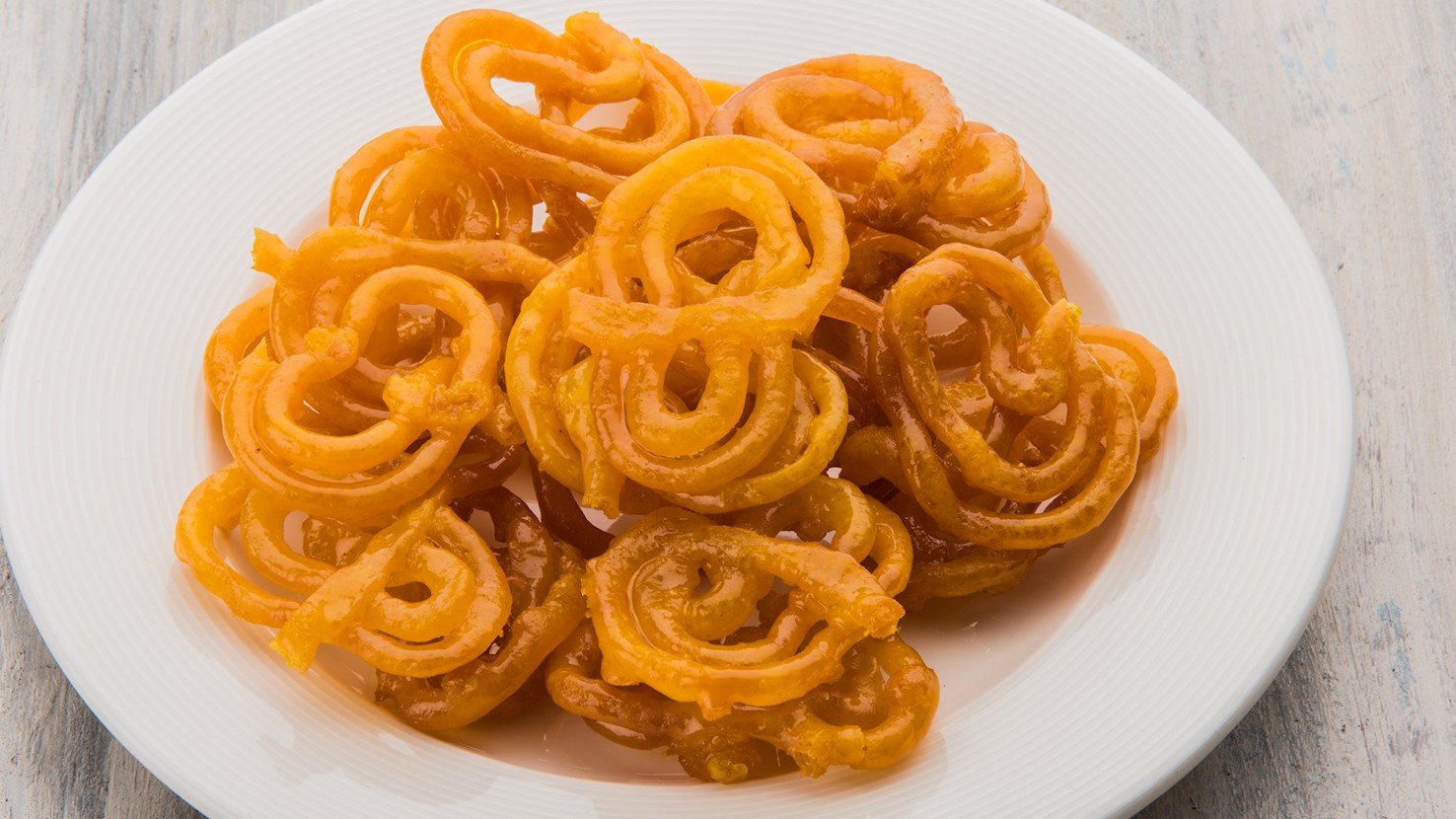
Zulbia is a sweet confection prepared by deep-frying thin coils of fermented batter and then soaking them in a fragrant sugar syrup. Although it is believed to have its origins in Persia, zulbia or jalebi is an international dessert with variations that spread throughout the Middle East, India, and Asia. Its golden color and delicate crispness have made it a favorite accompaniment to tea in both homes and pastry shops. To make zulbia, a batter is prepared by mixing refined flour with yogurt or fermented starter, a little cornstarch, baking soda, and sometimes a splash of rosewater. The batter is rested to develop a slight tang and a smooth consistency. Using a special funnel or piping bag, it is poured into hot oil in looping, spiral patterns that expand and puff as they fry. The pieces are turned until evenly golden and crisp, then immediately immersed in warm syrup made with sugar, water, saffron, rosewater, and sometimes a dash of lemon juice to prevent crystallization. After a short soak, they are removed and set to drain on racks, leaving them saturated but not soggy. The flavor is sweet and floral, with a hint of acidity from the syrup balancing the richness of the fried dough. Because it holds up well over time, zulbia is often prepared in large batches to be served over several days or packaged as a gift. Historical records suggest that variations of zulbia were made across Persia and the Indian subcontinent as early as the medieval period, with recipes spreading along trade routes and adapting to local tastes.
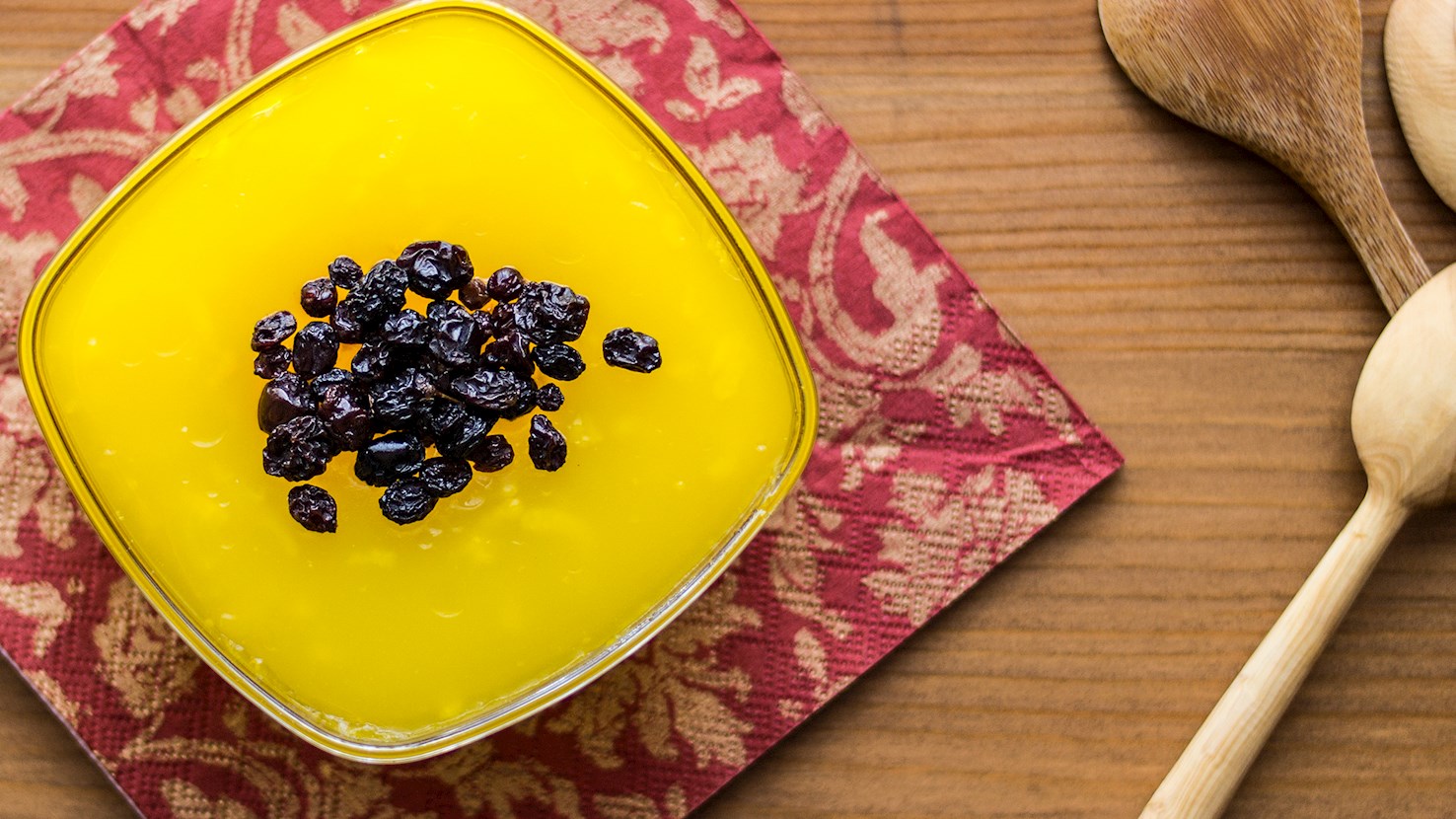
Zerde is a saffron-scented rice pudding found across Türkiye, Iran, and Iraq, celebrated for its bright golden color and delicate sweetness. In Türkiye, it is especially popular in the southeastern regions, where it is commonly prepared for weddings, festive occasions, and religious gatherings. However, its roots reach further east, reflecting the culinary exchanges between Persian and Mesopotamian kitchens over many centuries. Historical records trace the origins of zerde back to ancient Persia, where cooks used saffron and other spices to transform rice into celebratory desserts. The Persian word zard means “yellow,” describing the vivid hue that defines this dish. From Persia, recipes spread westward into Mesopotamia, present-day Iraq, where saffron rice sweets became part of courtly cuisine. Later, with the expansion of the Seljuk and Ottoman empires, these preparations took hold in Anatolia and evolved into regional variations. In Türkiye, zerde developed distinct features, including the use of rose water, pine nuts, and currants, while in Iran and Iraq, versions with slightly different flavorings and proportions persisted alongside similar desserts like sholeh zard. Preparation starts by cooking rice in water instead of milk, which sets zerde apart from other puddings. Saffron, diluted in warm water, imparts both flavor and its characteristic color. Sugar, rose water, and sometimes a little turmeric or cardamom are added to build a layered aroma. When the pudding reaches the right consistency, it is ladled into bowls and garnished with blanched almonds, pine nuts, currants, or pistachios, then served warm or at room temperature. Among the notable aspects of zerde is that it is traditionally made without dairy, making it suitable for communal events when lighter, plant-based desserts are preferred. The dish is still served today in Türkiye during religious holidays like Muharram, in Iran for festive meals, and in Iraq as part of special family gatherings.
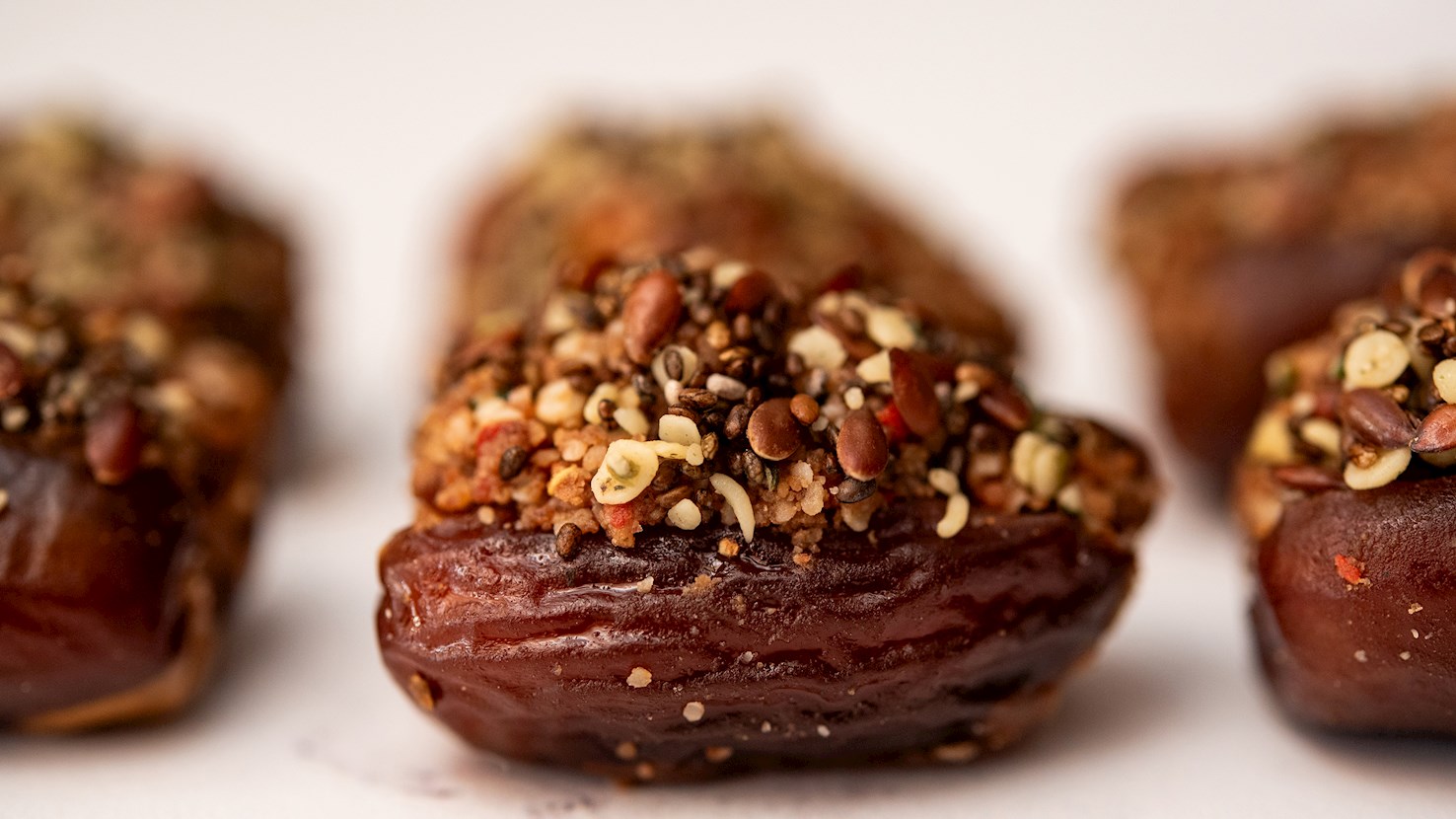
Tamr mahshi is a Middle Eastern sweet made of dates that are pitted and stuffed with nuts or other fillings, often served as a festive treat or alongside tea and coffee. It comes from regions where date palms flourish, such as Iraq, Saudi Arabia, and the Levant, and reflects the long-standing role of dates in both daily life and celebration. The practice of enhancing dates with fillings has roots in ancient Mesopotamia and the Arabian Peninsula, where dates were not only a staple source of energy but also a fruit associated with hospitality and abundance. Adding nuts like almonds, pistachios, or walnuts transformed them from a simple snack into a refined confection often prepared for gatherings, weddings, and religious observances. To prepare tamr mahshi, the process begins with selecting plump, high-quality dates, which are carefully slit to remove the pit. A nut or other filling is then inserted, with the most common choices being almonds, walnuts, or pistachios. In some variations, spiced nuts, candied citrus peel, or marzipan-like pastes are used, while the exterior may be rolled in sesame seeds, shredded coconut, or powdered sugar. The dish requires no cooking, relying instead on the natural sweetness and sticky texture of the dates to hold the filling in place. Tamr mahshi is eaten throughout the Middle East and by diaspora communities worldwide. It is most often served during Ramadan to break the fast, as dates are traditionally the first food consumed after sunset. Beyond that, it appears at festive gatherings, weddings, and as a gesture of hospitality when guests are welcomed. It pairs beautifully with strong Arabic coffee or mint tea, as the bitterness of the drink balances the richness of the stuffed dates.
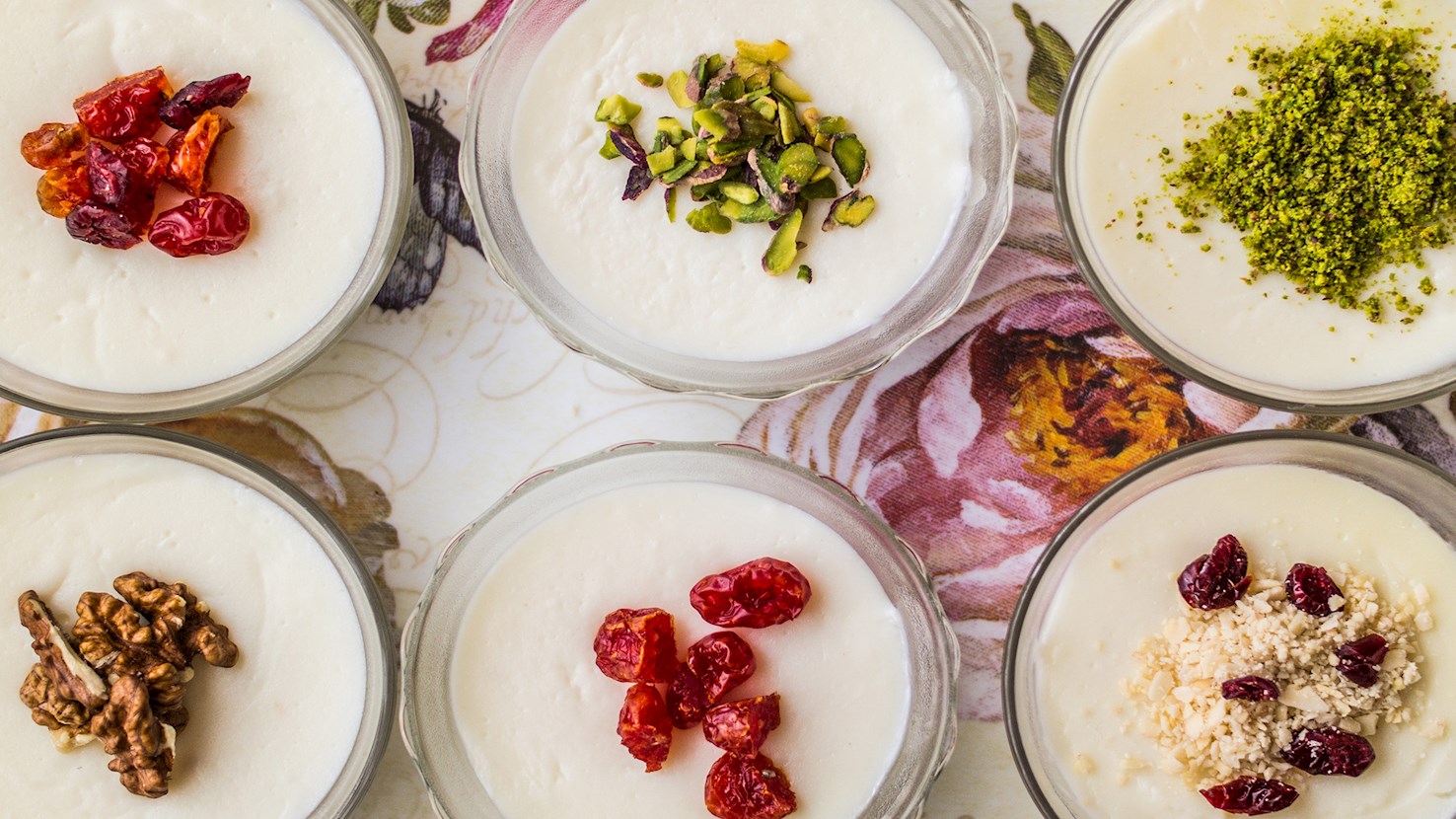
Muhallebi is a milk-based dessert widely known across the Middle East, Eastern Mediterranean, and North Africa. It is a smooth, lightly sweetened pudding made from milk thickened with rice flour, cornstarch, or semolina, and flavored with ingredients such as rosewater, orange blossom water, or mastic. The dessert has deep roots in Ottoman and Arab cuisines, where it became a staple of both palace and household cooking. Variations exist throughout the region under different names, including malabi in Israel, mahalabia in Egypt, and mahalabiyeh in Lebanon and Syia, all sharing a similar base of milk and starch with slight differences in flavoring and garnish. Muhallebi developed within the culinary traditions of the eastern Mediterranean, influenced by Persian and Arab sweet-making practices that emphasized dairy-based desserts flavored with floral essences. It became especially prominent in the Ottoman Empire, where palace chefs refined the recipe into a smooth, delicate pudding served chilled. Over time, it spread throughout the empire’s territories, blending with local ingredients and preferences. In Turkey, muhallebi remains part of daily dessert culture, sold in dessert shops and restaurants specializing in milk-based sweets, known as “sütlü tatlılar.” Preparation begins by mixing starch or rice flour with a portion of cold milk until smooth. The remaining milk is heated with sugar over medium heat, and the starch mixture is slowly whisked in to avoid lumps. The pudding is cooked until it thickens to a creamy consistency and begins to coat the spoon. At this point, flavorings such as rosewater, orange blossom water, or mastic are added, and the mixture is poured into bowls or molds to cool and set. Once firm, it is typically chilled before serving. The texture should be silky and light, with a mild sweetness balanced by the fragrance of the added flavoring. Muhallebi is often garnished with ground nuts such as pistachios or almonds, shredded coconut, or a thin layer of syrup. In some versions, a fruit compote or rose-flavored syrup is spooned on top to add color and acidity. Turkish-style muhallebi is commonly unflavored and served plain or dusted with cinnamon, while Levantine and Egyptian versions lean toward floral and aromatic notes. A baked variation, known as “fırın muhallebi,” develops a golden crust on top while maintaining a soft center. It is eaten year-round, often as a light dessert after meals or as a refreshing treat during warm weather. It is served in cafés, sweet shops, and homes, especially during religious festivals and gatherings. Muhallebi pairs well with Turkish tea, mint tea, or lightly roasted coffee, which balance its sweetness. Its simplicity, gentle flavor, and adaptability have made it one of the most enduring dairy desserts of the Eastern Mediterranean, linking diverse regional cuisines through a shared culinary foundation.
TasteAtlas food rankings are based on the ratings of the TasteAtlas audience, with a series of mechanisms that recognize real users and that ignore bot,
nationalist or local patriotic ratings, and give additional value to the ratings of users that the system recognizes as knowledgeable.
For the “6 Worst Rated Iraqi Desserts” list until May 21, 2026, 1,307 ratings were recorded, of which 430 were recognized by the system as legitimate.
TasteAtlas Rankings should not be seen as the final global conclusion about food. Their purpose is to promote excellent local foods,
instill pride in traditional dishes, and arouse curiosity about dishes you haven’t tried.