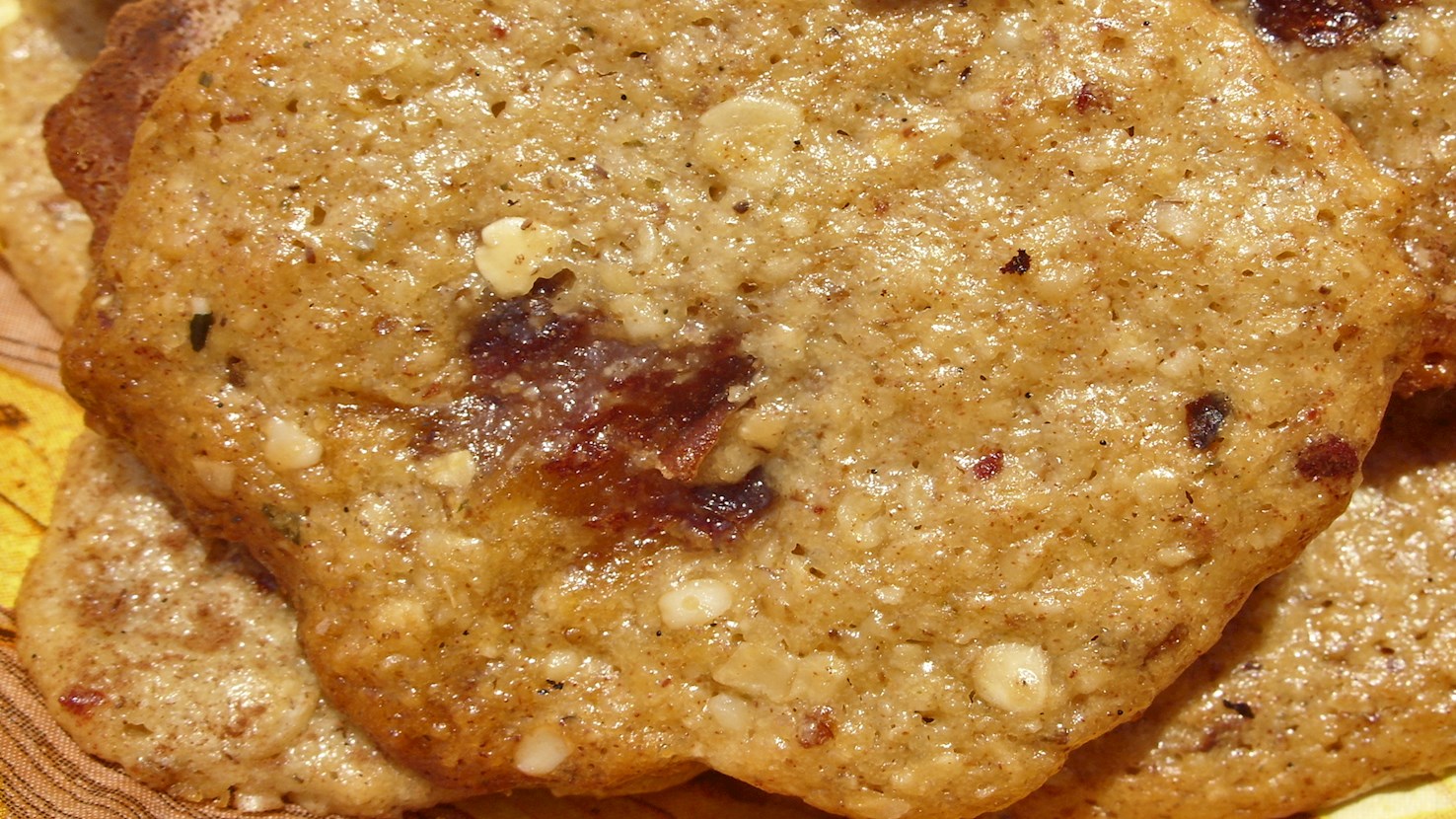
Tahini cookies are baked sweets made with tahini, the sesame seed paste that is widely used across the cuisines of the Eastern Mediterranean and parts of the Middle East, where sesame cultivation and milling have been present for centuries. They emerged from regions where tahini was already a common pantry ingredient, especially in areas of present-day Lebanon, Israel, Palestine, Turkey, and parts of Greece, gaining presence in home kitchens and bakeries as sesame-based confectionery evolved. Their development followed the spread of sesame grinding techniques and the growing use of tahini in both savory and sweet preparations, which eventually led bakers to incorporate it into flour-based doughs that could be shaped and baked easily. The cookies are usually made by mixing tahini with sugar, flour, and a fat source such as butter or oil, creating a dense dough that needs no complicated handling and often relies on the natural richness of sesame for flavor. They are baked until lightly set, resulting in a crumbly texture that comes from the high fat content of the sesame paste rather than from large amounts of added butter, and this reliance on tahini for both structure and flavor is a distinguishing feature. Some versions may include vanilla, citrus zest, or a small amount of leavening, but many rely on the purity of sesame without elaborate additives. They are eaten throughout the year in households, cafés, and bakeries, often as an accompaniment to coffee or tea, and they pair well with beverages that balance their richness, including unsweetened black tea, Arabic coffee, espresso, or mildly acidic herbal infusions.
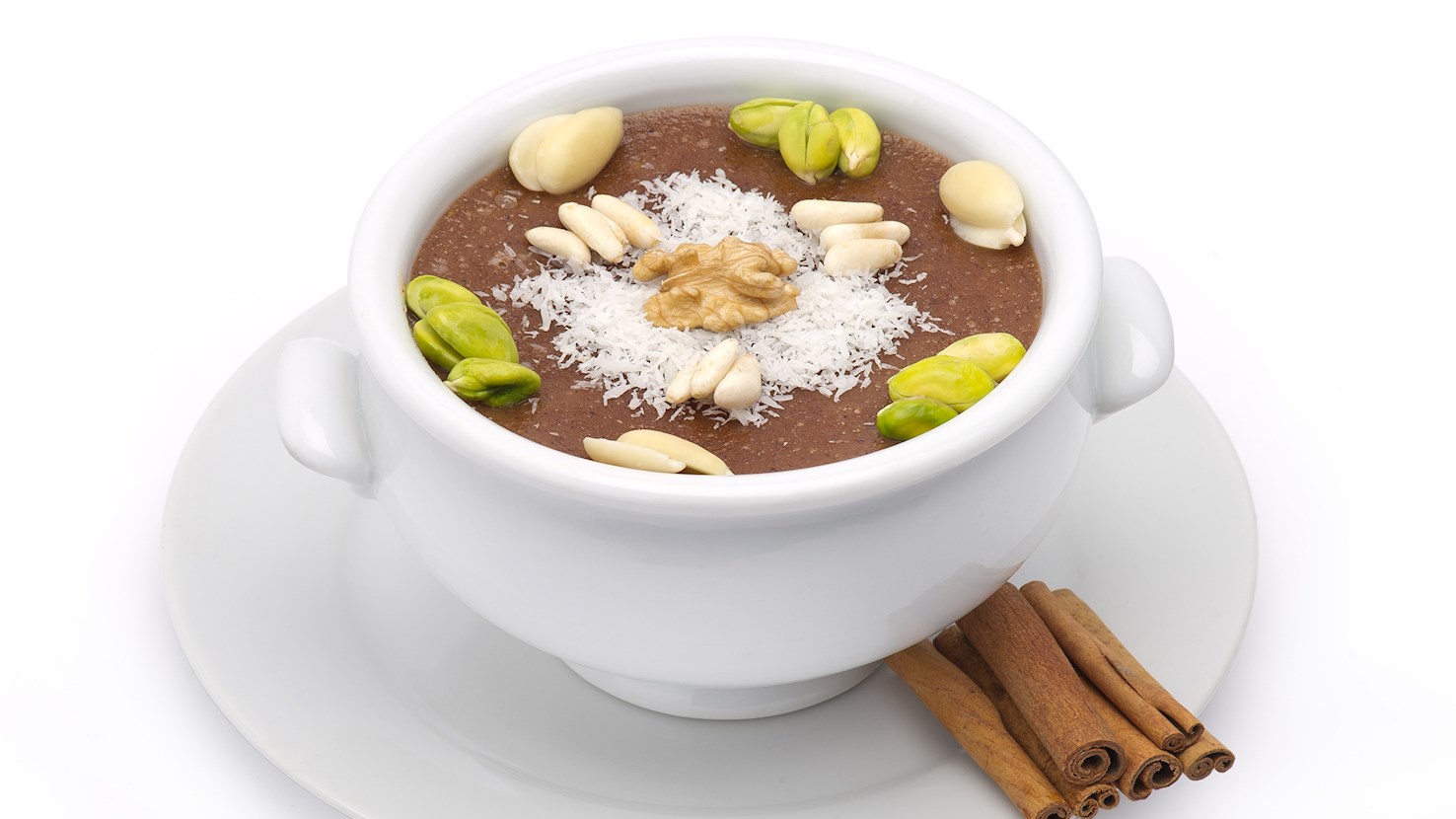
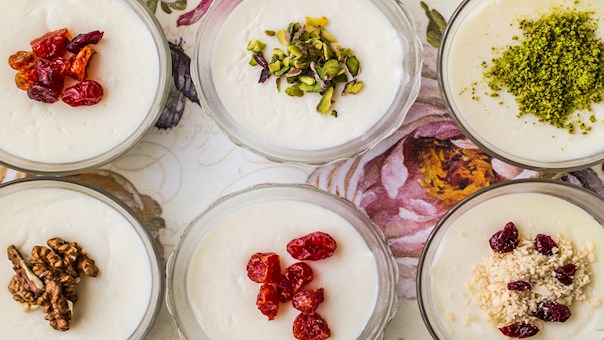
The traditional Levantine rice pudding called meghli is a vegan, gluten, and dairy-free dish that is traditionally consumed to celebrate the birth of a baby. It is also said that the brown color of the spiced pudding is symbolic for the richness of soil, while the rough texture of the nuts on top represents growing seeds. In addition to those symbolic meanings, the caraway in the pudding is thought to assist new mothers with lactation and bloat reduction. Meghli is made with rice flour, caraway, water, sugar, spices, a variety of nuts and spices, and is then cooked over low heat until the mixture can hold itself when tilted. It can be enjoyed both warm or cold.
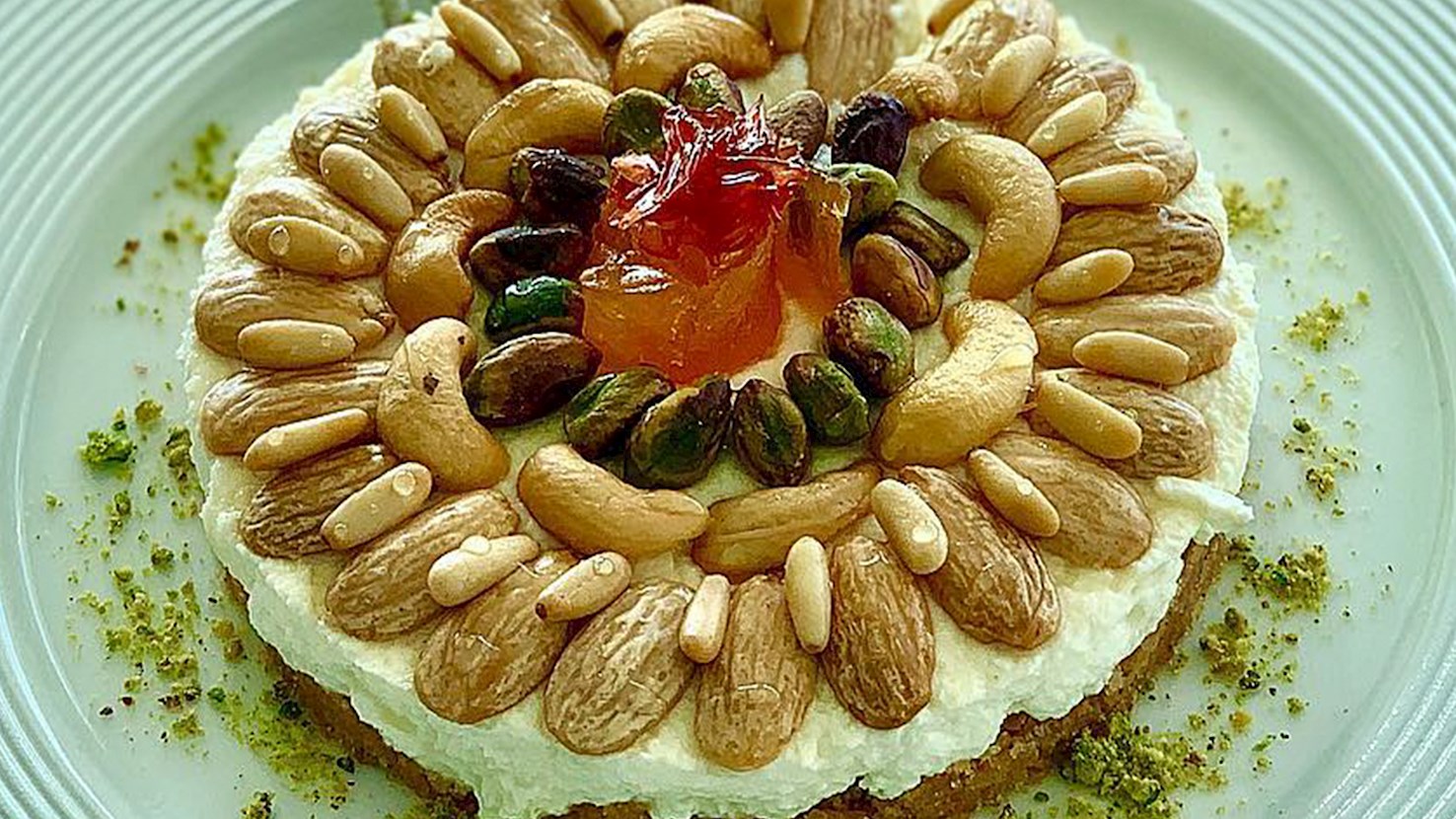
Mafroukeh is a traditional dessert that combines semolina dough and ashta—clotted cream that is often flavored with orange blossom and rose water. The dough is usually made by blending semolina flour, orange blossom and rose water, butter, (optionally nuts), and sugar syrup until the desired consistency is achieved. Traditionally, semolina mixture is flattened and is then topped with ashta and garnishes such as slivered almonds or ground pistachios, but modern variations may come in different forms and sizes. This sweet treat is a staple dessert served during various special occasions and Ramadan.
Asawer is prepared with phyllo dough that is rolled and swirled to create a small, round baklava. Before it is rolled, phyllo sheets are occasionally sprinkled with ground nuts, and when baked, this round pastry is doused in rose-flavored sugar syrup, while the center is filled with ground or roughly chopped nuts such as pistachios, cashews, or pine nuts. Asawer, which translates as a bracelet, is typically associated with Lebanon.
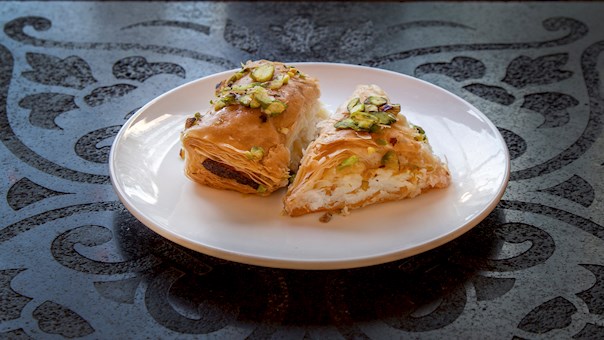
This baklava variety consists of layered rectangular sheets of phyllo dough that are filled with various chopped nuts. Each corner of the dough is raised to partially enclose the filling, creating a small parcel-like treat that is then doused in butter and syrup. Bukaj baklava is usually associated with Lebanon, and it is traditionally filled with pistachios or a combination of pine nuts and cashews. Its name stems from the Arabic bukjah—referring to an old tradition of creating a parcel from a piece of fabric. In the United States, it is occasionally known as bird’s nest baklava.
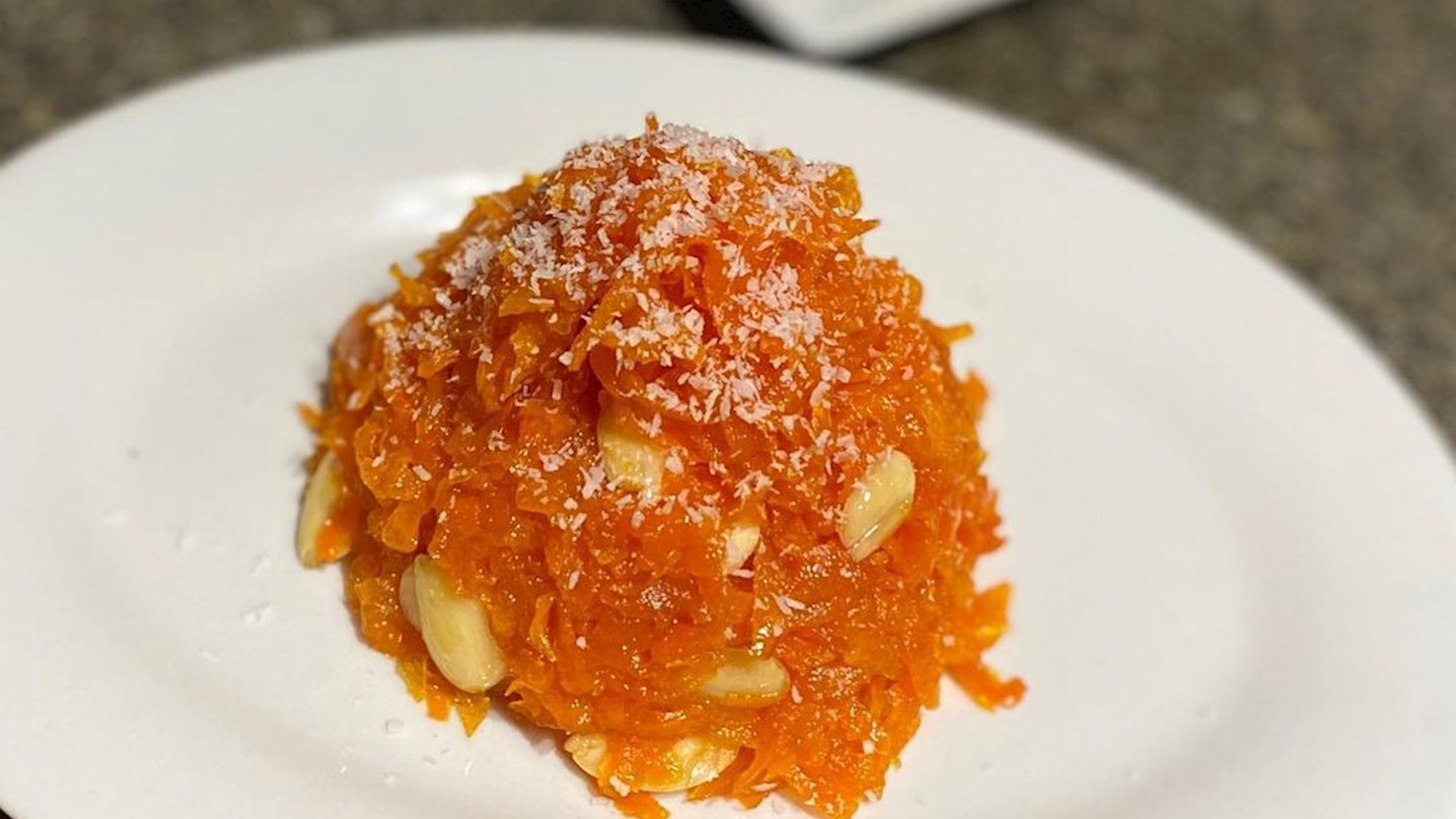
Jazarieh is a Lebanese and Syrian treat consisting of either grated pumpkin shreds or grared carrots that are cooked in a sweet sugar syrup. The dish is mainly enjoyed as a dessert, and it typically has a soft, jam-like texture. Occasionally, carrots or pumpkin shreds are spiced or combined with nuts, and the dish is usually served garnished with pistachios, blanched almonds, or walnuts. The name jazarieh stems from the word jazar (carrot) due to the orange color of the pumpkin that resembles carrots. In Syria, jazarieh is particularly connected with the city Latakia.
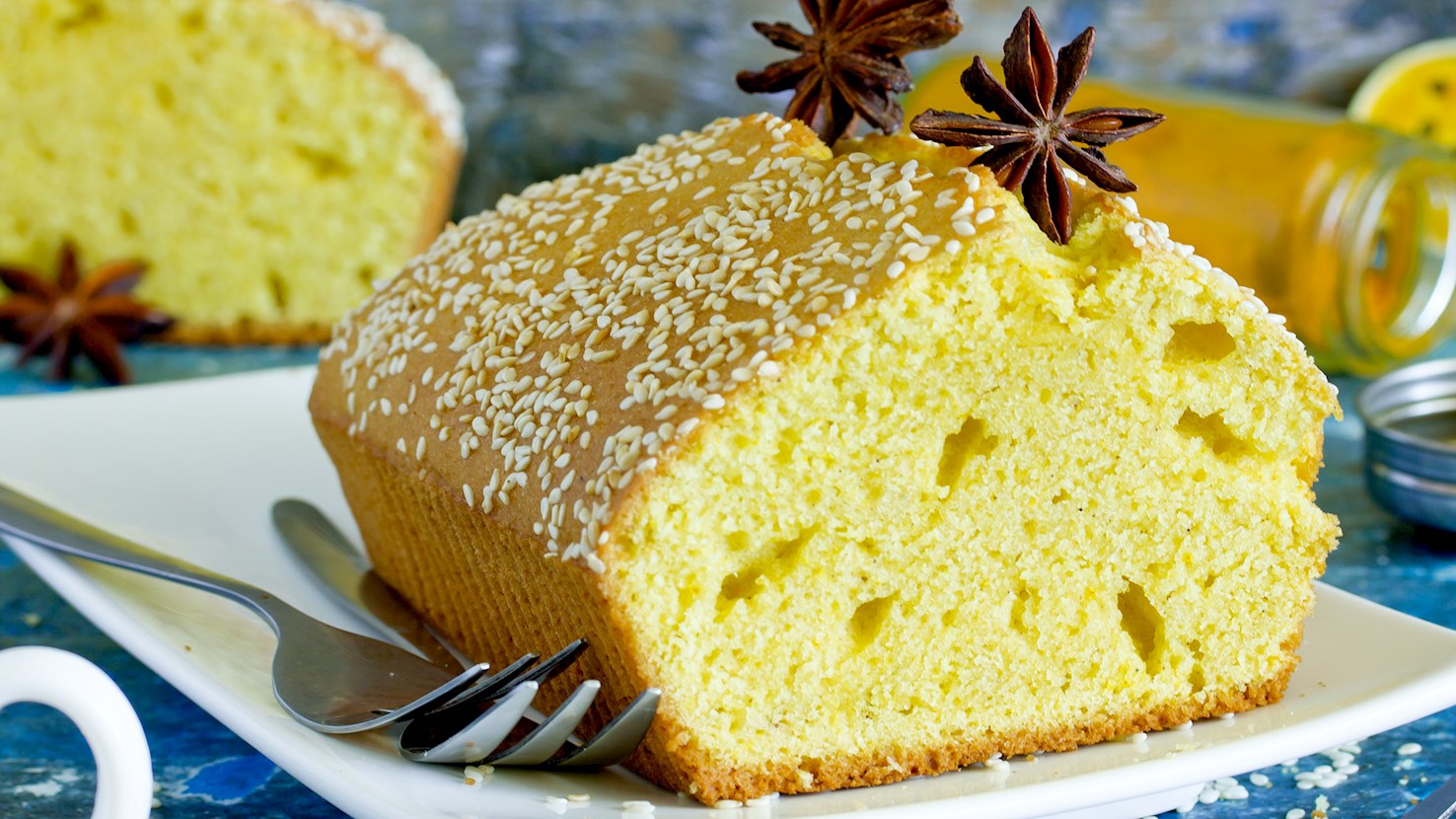
Sfouf is a popular Lebanese dessert that is mostly consumed during special occasions, be it a birthday, a family reunion, a religious holiday, or afternoon tea. The cake is characterized by its yellow color, largely due to the base of turmeric and semolina. Sfouf can also contain pine nuts, sesame paste, and aniseed, and it is often topped with slivered almonds. This Lebanese classic can be made in moist or dry varieties, and it is best enjoyed with a hot cup of coffee or tea.
Faysalieh is triangle-shaped baklava combining a nut filling and an outer shell that is made from thin threads of kataifi (knefe) dough. The pastry is typically filled with pistachios, but some varieties replace the nut filling with cream. These triangular pockets are baked and then doused in sugar syrup, but should always remain crispy. They are typically associated with Lebanon.
This baklava variety consists of chopped or ground nuts that are placed between two layers of shredded or ground kataifi (knefe) dough. The nut filling typically includes pistachios, cashews, or pine nuts, and the whole pastry is doused in sweet syrup and results in soft and moist baklava. Basma is always served well-chilled, cut into squares, and decorated with grounds nuts. Apart from Lebanon, this baklava variety is also common in Palestine, Syria, and Jordan.
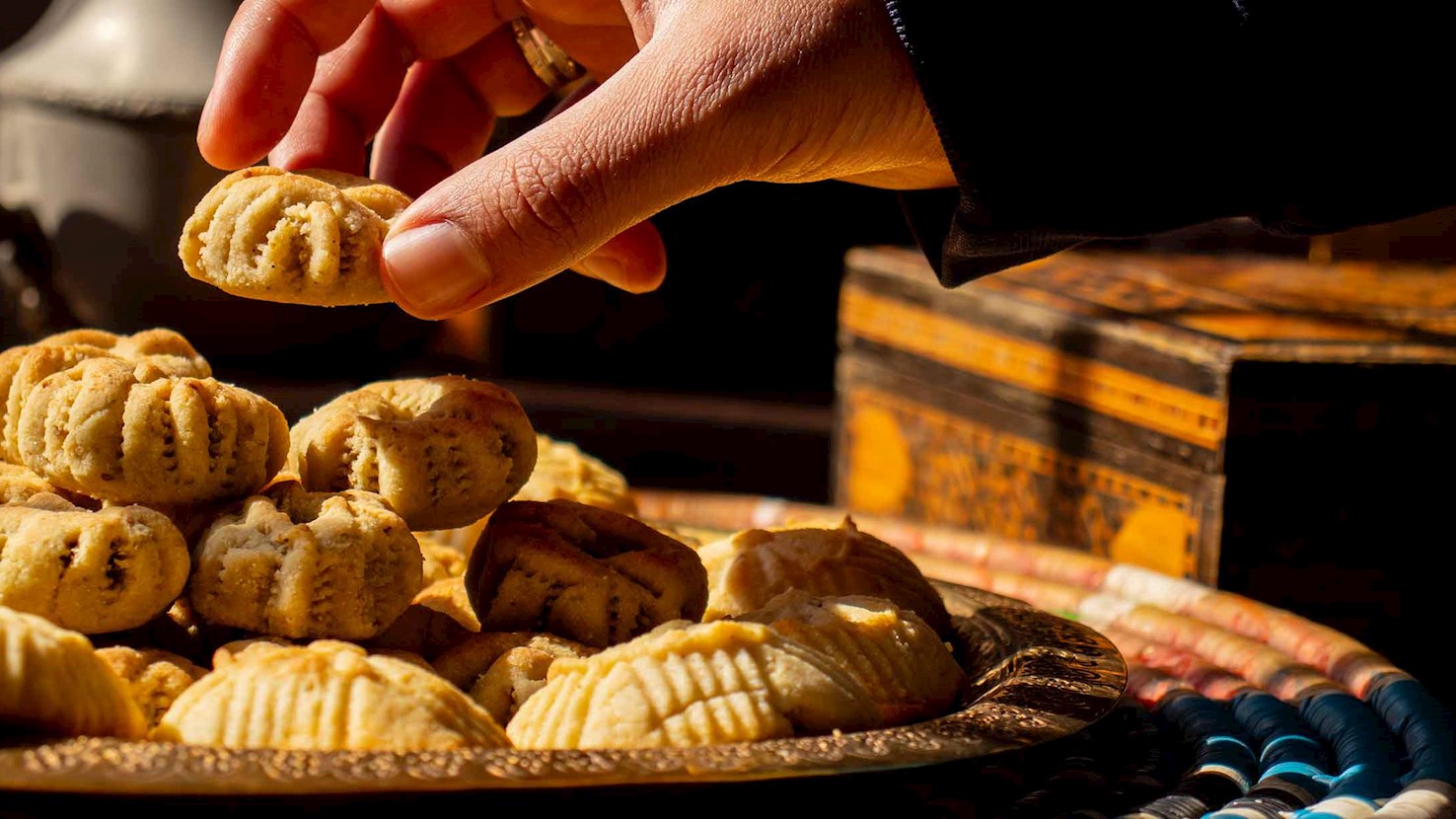
Ma’amoul is a filled baked pastry made from a short dough of semolina or flour and fat, shaped into small rounds or domes and filled with dates, walnuts, or pistachios, widely prepared across the eastern Mediterranean and the Levant, particularly in Lebanon, Syria, Palestine, Jordan, and parts of Iraq, where it is closely associated with religious holidays and communal baking. Its development is tied to the long cultivation of wheat, dates, and nuts in these regions and to festive baking practices that required pastries capable of being prepared in advance, stored briefly, and shared widely, with molded decoration emerging as a way to distinguish fillings and standardize appearance when large quantities were produced at home or in neighborhood bakeries. Preparation begins with a dough made from semolina or a semolina-flour mixture combined with clarified butter or oil, lightly sweetened and often scented with rose water or orange blossom water, rested to allow the grains to absorb fat, then portioned and filled with date paste or finely chopped nuts mixed with sugar and aromatic water, after which each piece is pressed into a carved wooden mold to imprint a pattern before being unmolded and baked until set but not deeply browned. Serving usually involves allowing the pastries to cool fully so the structure firms, with some versions dusted lightly with powdered sugar while others, especially date-filled ones, are left plain, and they are presented in assortments where shape and surface design indicate the filling inside rather than labeling. A defining feature of ma’amoul is the use of molded decoration as an integral part of the pastry rather than a garnish, creating a visual code that is widely understood within the region and allowing different fillings to coexist on the same plate without confusion. It is eaten primarily during major holidays and family gatherings, offered to guests in homes and served in cafés during festive periods, typically consumed by hand alongside plain coffee, Arabic coffee, or unsweetened tea, with the bitterness of the beverage balancing the richness of the dough and the sweetness of the filling.
TasteAtlas food rankings are based on the ratings of the TasteAtlas audience, with a series of mechanisms that recognize real users and that ignore bot,
nationalist or local patriotic ratings, and give additional value to the ratings of users that the system recognizes as knowledgeable.
For the “15 Worst Rated Lebanese Desserts” list until September 15, 2026, 4,750 ratings were recorded, of which 1,009 were recognized by the system as legitimate.
TasteAtlas Rankings should not be seen as the final global conclusion about food. Their purpose is to promote excellent local foods,
instill pride in traditional dishes, and arouse curiosity about dishes you haven’t tried.






What People Say