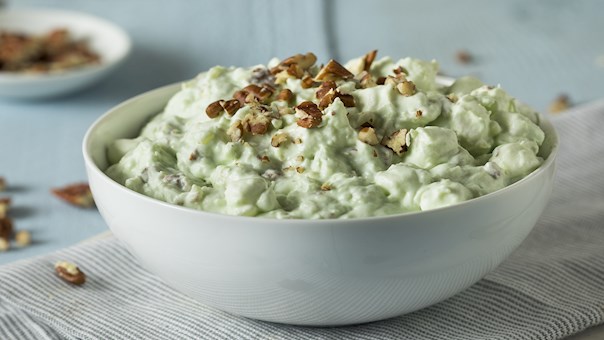
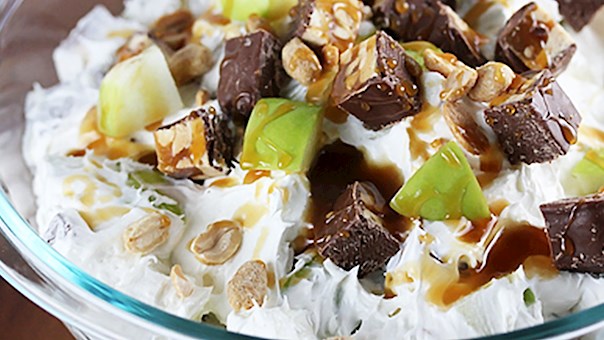
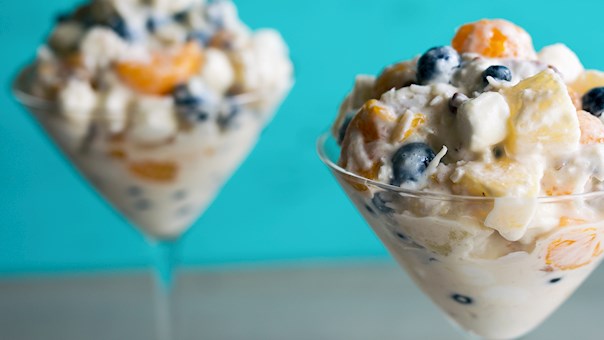
Originating from Minnesota, cookie salad is a simple dessert beloved by children made by combining fudge stripe shortbread cookies, buttermilk, vanilla pudding, whipped cream, and mandarin oranges. Additional ingredients may include berries, but Oreo cookies are strictly prohibited.
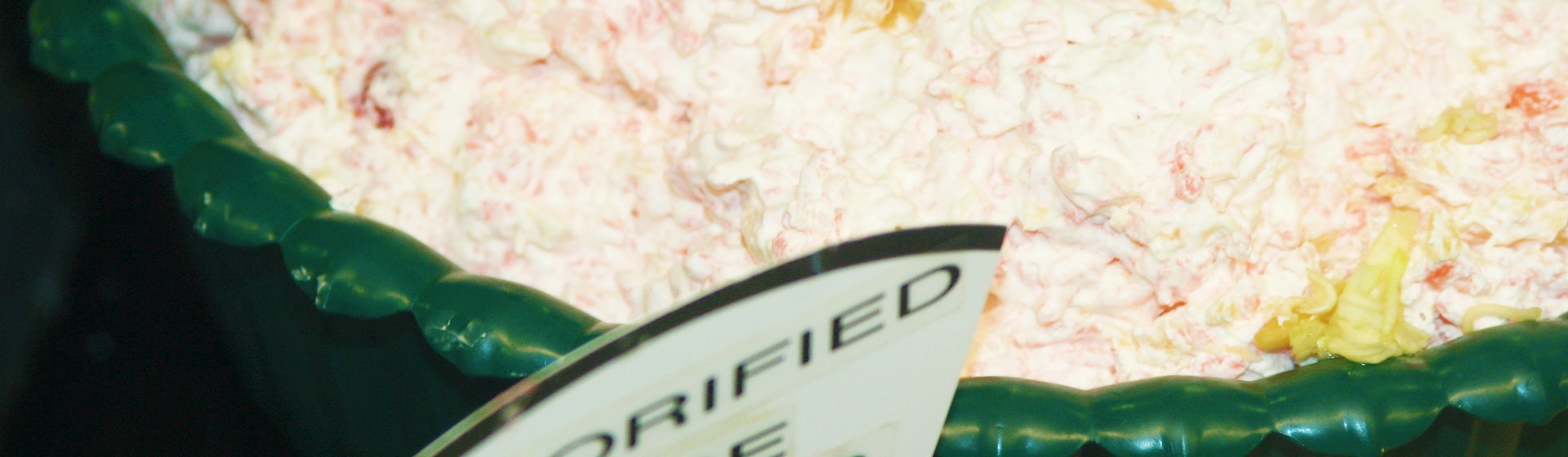
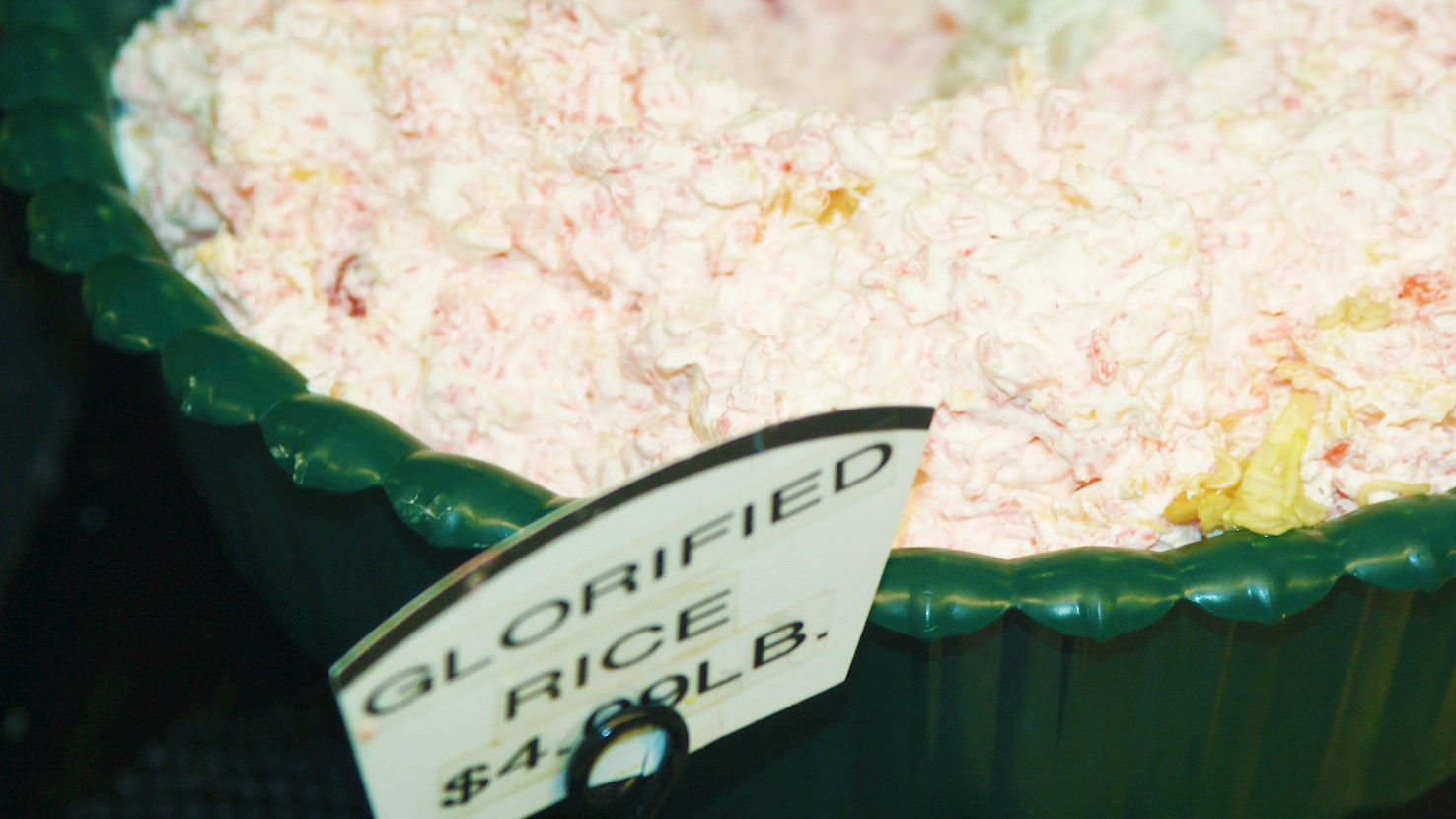
Glorified rice is an American Midwestern dessert consisting of rice, canned pineapple chunks, and whipped cream. The dish is traditionally garnished with a few maraschino cherries on top. Purists claim that the rice should always be cooked in cream in order to develop a tender, melting texture. The dessert was at its most popular from the 1930s to the 1950s, with numerous variations and additions such as bananas, apples, nuts, and gelatin. Today, glorified rice is mostly popular in rural Midwestern areas, and can often be found at church gatherings and potluck dinners.
Ducana is a dessert dish that is popular on the Caribbean islands of Antigua, Montserrat and St. Vincent and the Grenadines. The dish is a type of dumpling made with coconut and sweet potatoes, often cooked in banana leaves. It is usually served with stewed or salted fish, and is a common staple food for many locals that enjoy the contrast of sweet and savory flavors. Some say that the sweet potato is best used in the preparation of ducana, as the islands are brimming with sweet potatoes that were cultivated by the Arawak Indians a long time ago. Ducana can also be consumed cold, or thinly sliced and lightly fried as a snack. A must-have for both the tourists and the locals, the dish is often made on Good Friday, when the islanders traditionally avoid meat.
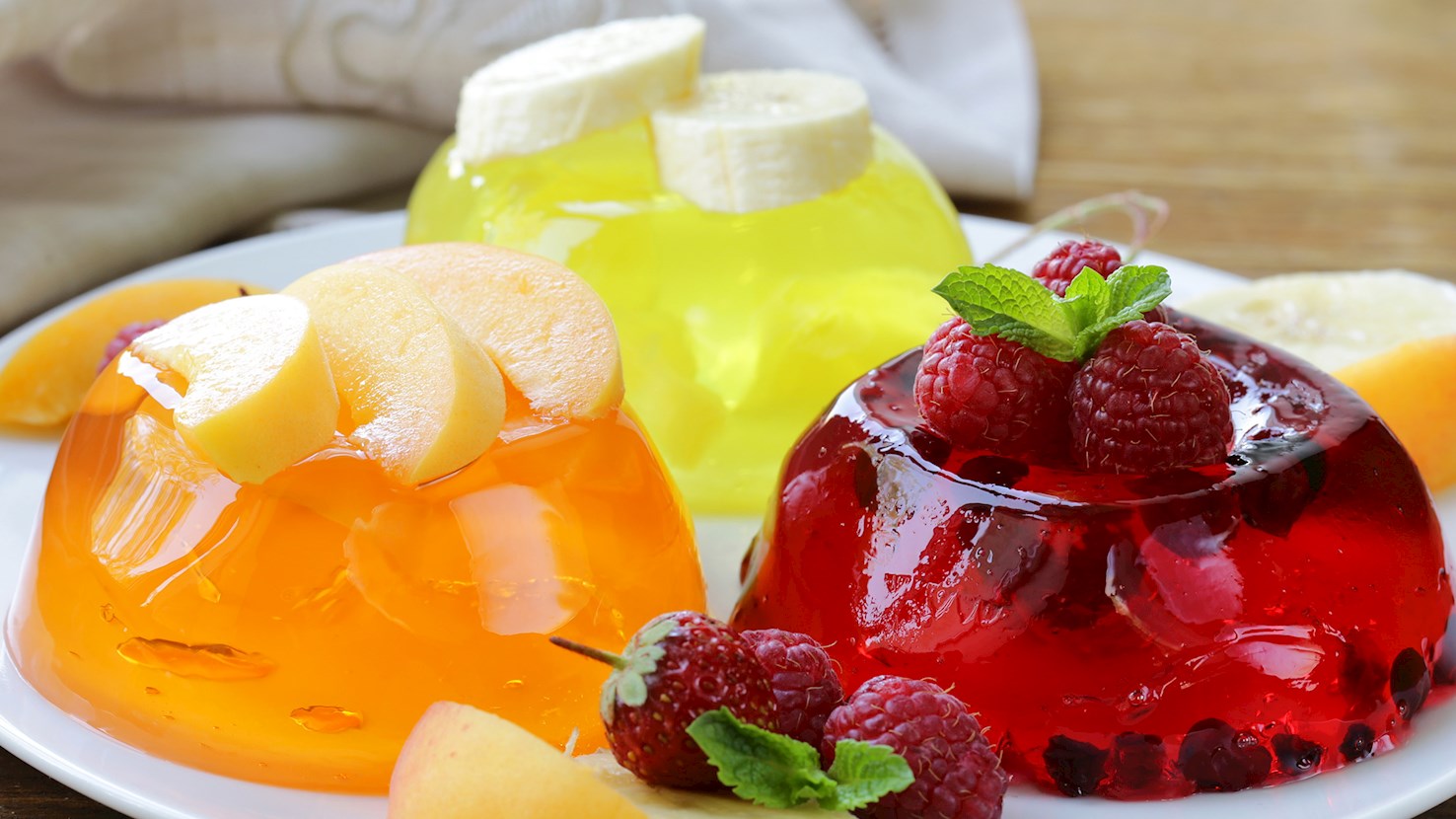
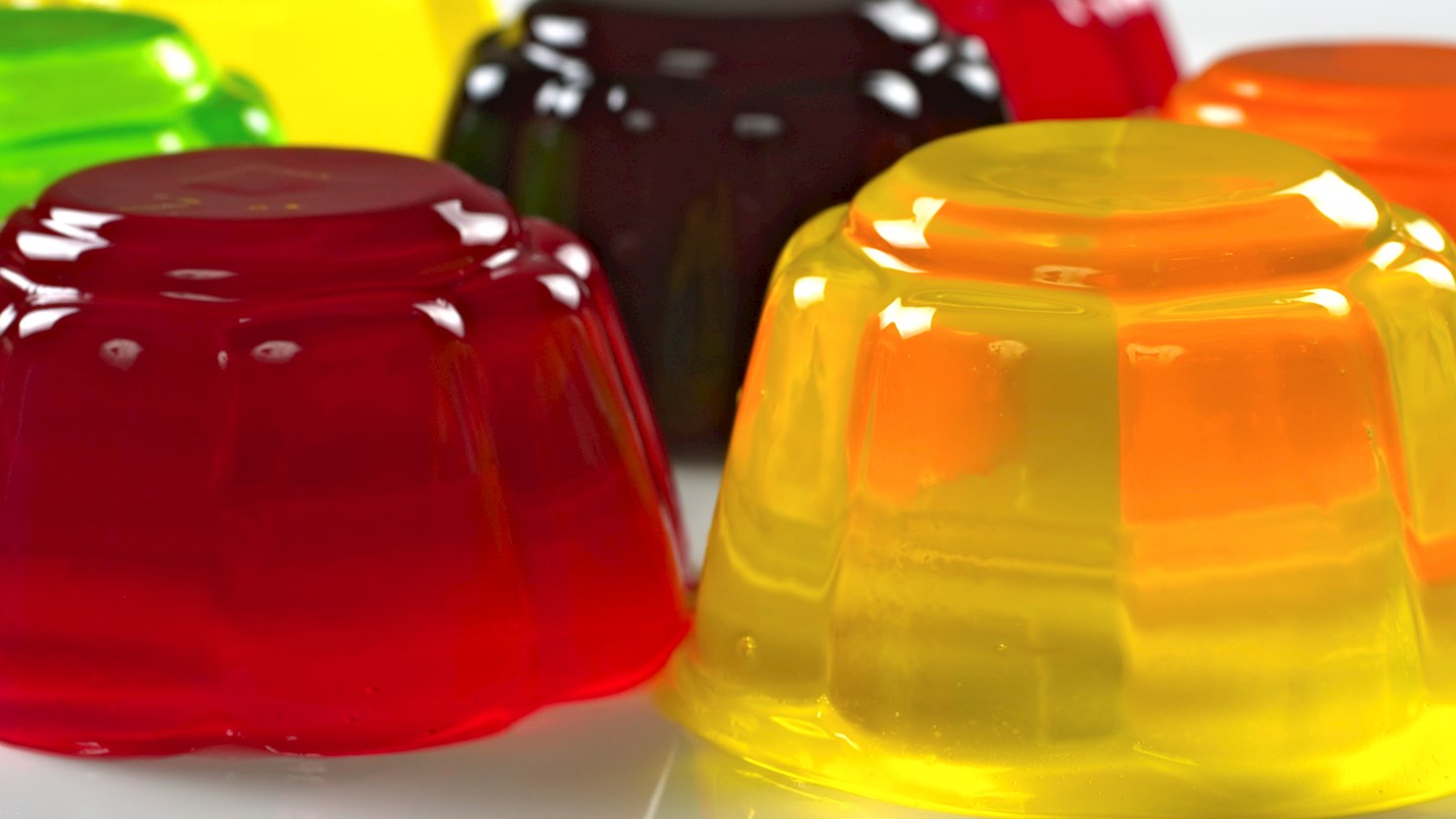
Gelatin dessert is a sweet food that's made using gelatin, a protein obtained from animal collagen. This protein has the ability to gel or solidify liquids, making it a popular ingredient in various desserts. The use of gelatin dates back to ancient times. As early as the 1400s, gelatin was extracted from animal bones and used in various culinary applications in Europe. The development of pre-packaged, powdered gelatin in the 19th century made it accessible to a broader audience. In 1845, industrialist Peter Cooper obtained the first patent for a gelatin dessert powder, though it didn't immediately catch on. A gelatin dessert is typically made by dissolving gelatin powder in hot water and then adding sugar and flavorings such as fruit juice, artificial flavors, or other sweeteners. The mixture is then chilled until it sets into a jelly-like consistency. One of the most well-known examples of a gelatin dessert is the brand Jell-O, which comes in various flavors. Homemade versions can include additional ingredients such as pieces of fruit, whipped cream, or other decorative elements. Some vegetarians and vegans avoid gelatin since it's derived from animal sources. Alternative gelling agents like agar-agar, derived from seaweed, can be used to create similar desserts that don't contain animal products.
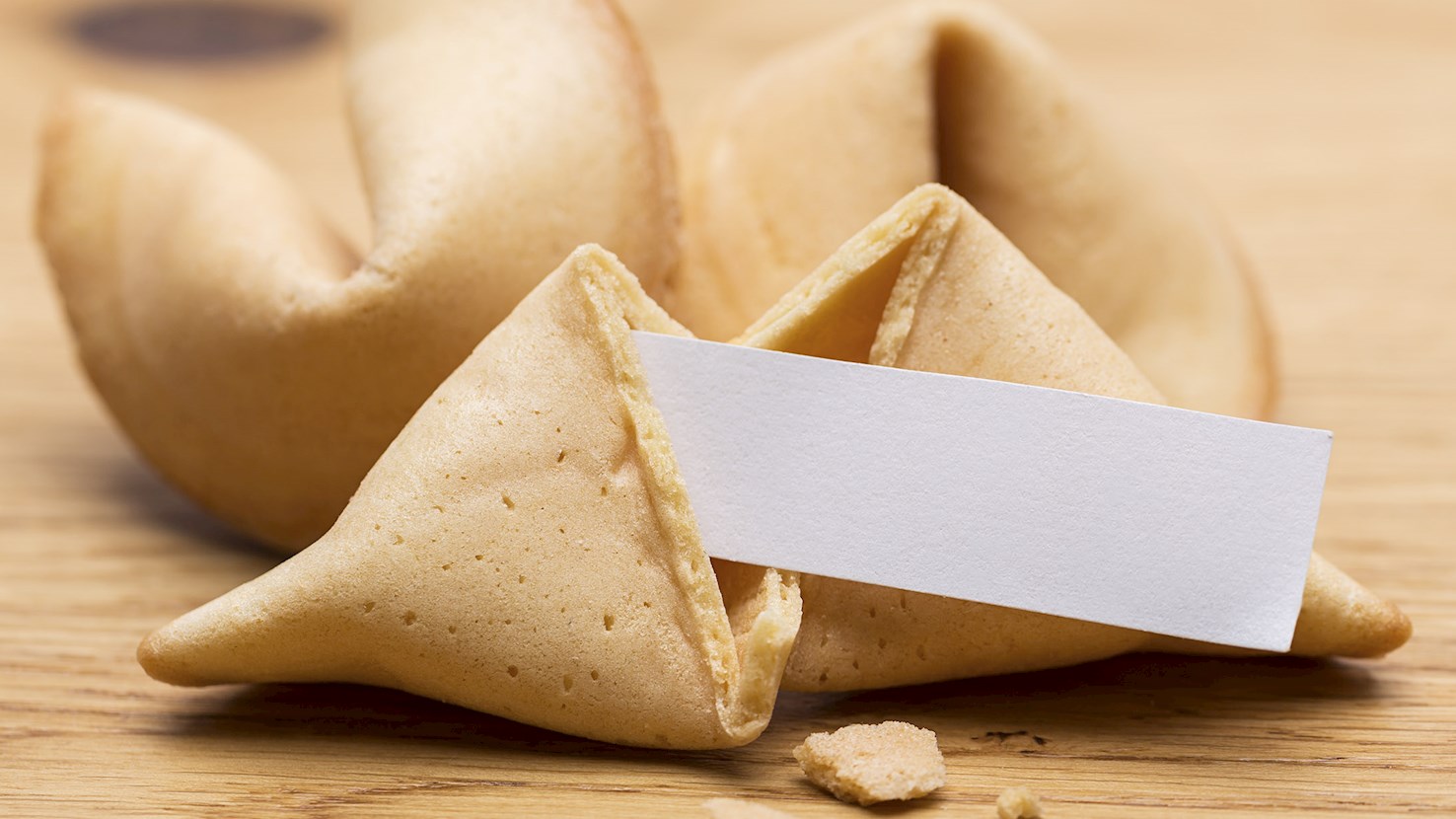
The intriguing fortune cookies are crispy folded wafers hiding an entertaining "fortune" inside. The "fortune" is a written note; a proverb or a universal prophecy believed to predict the person’s future. The cookies are made with egg whites, flour, sesame oil, and sugar, and have a slight vanilla flavor. They are rolled in flat, perfectly round shapes, then baked. Before they are folded, when they are still hot and pliable, the written fortune is nestled inside the cookie. As they cool, the fortune cookies harden and achieve their distinctively crunchy texture. Even though they are usually associated with Chinese restaurants, where they are served at the end of the meal, their origin is believed to be hidden in the Japanese culture. They are closely associated with o-mikuji, the Japanese tradition of placing fortunes at Buddhist and Shinto temples and are somewhat similar to Japanese cookies tsujiura senbei, which are slightly larger and darker in color. The origin of the westernized fortune cookie is vague, but it is believed it primarily appeared in California at the beginning of the 20th century. It is still disputed whether it was invented in Los Angeles by a Chinese immigrant David Jung, the founder of the Hong Kong Noodle Company, or in San Francisco by a native Japanese Makoto Hagiwara, a gardener who designed the Japanese Tea Garden. Today, most fortune cookies are produced in the United States, with the biggest factory located in Brooklyn. They constitute an important part of American culture and Chinese-American cuisine. Outside the United States, they can be found in numerous Chinese restaurants around the world, but are rarely found in China.
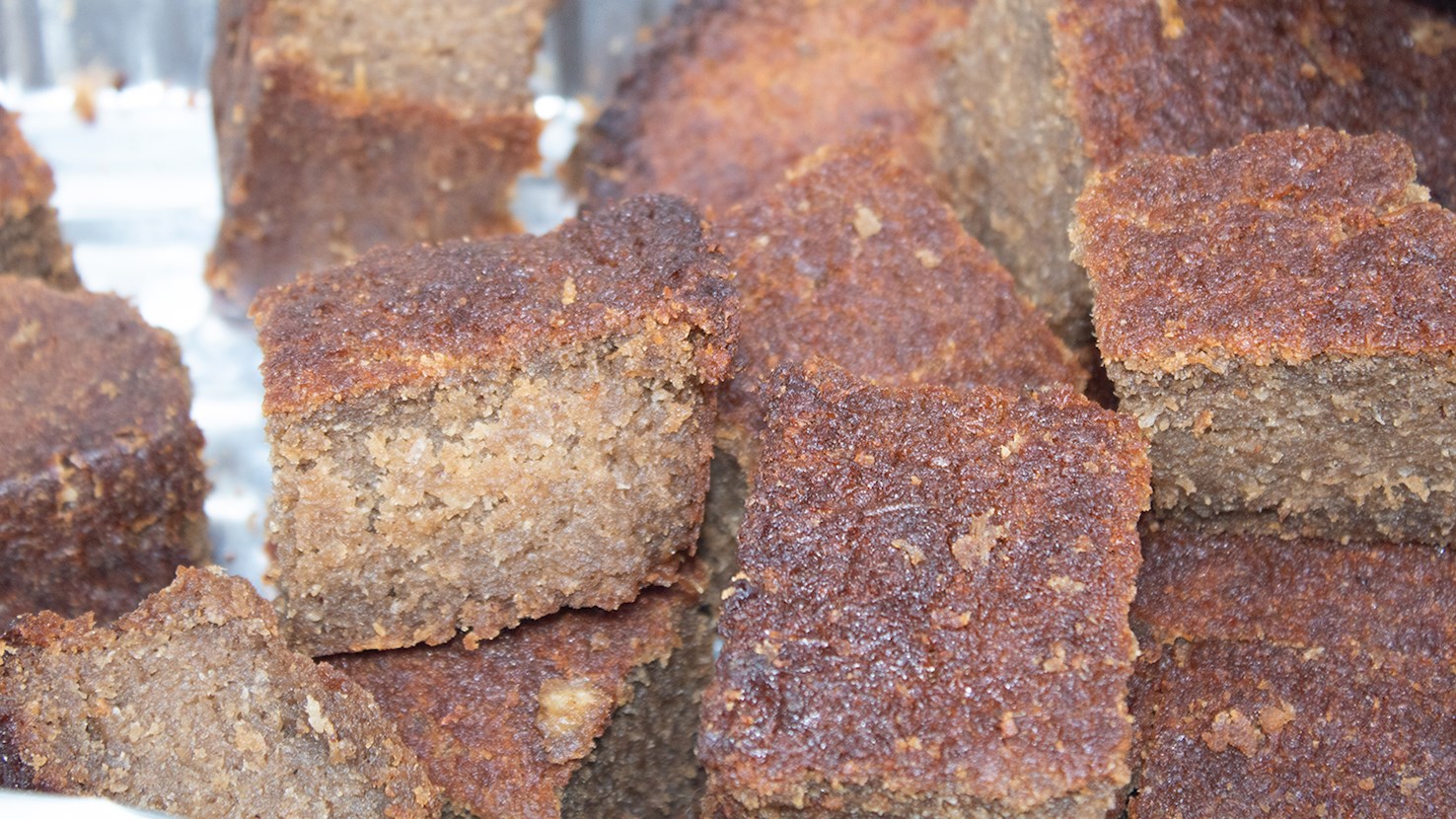
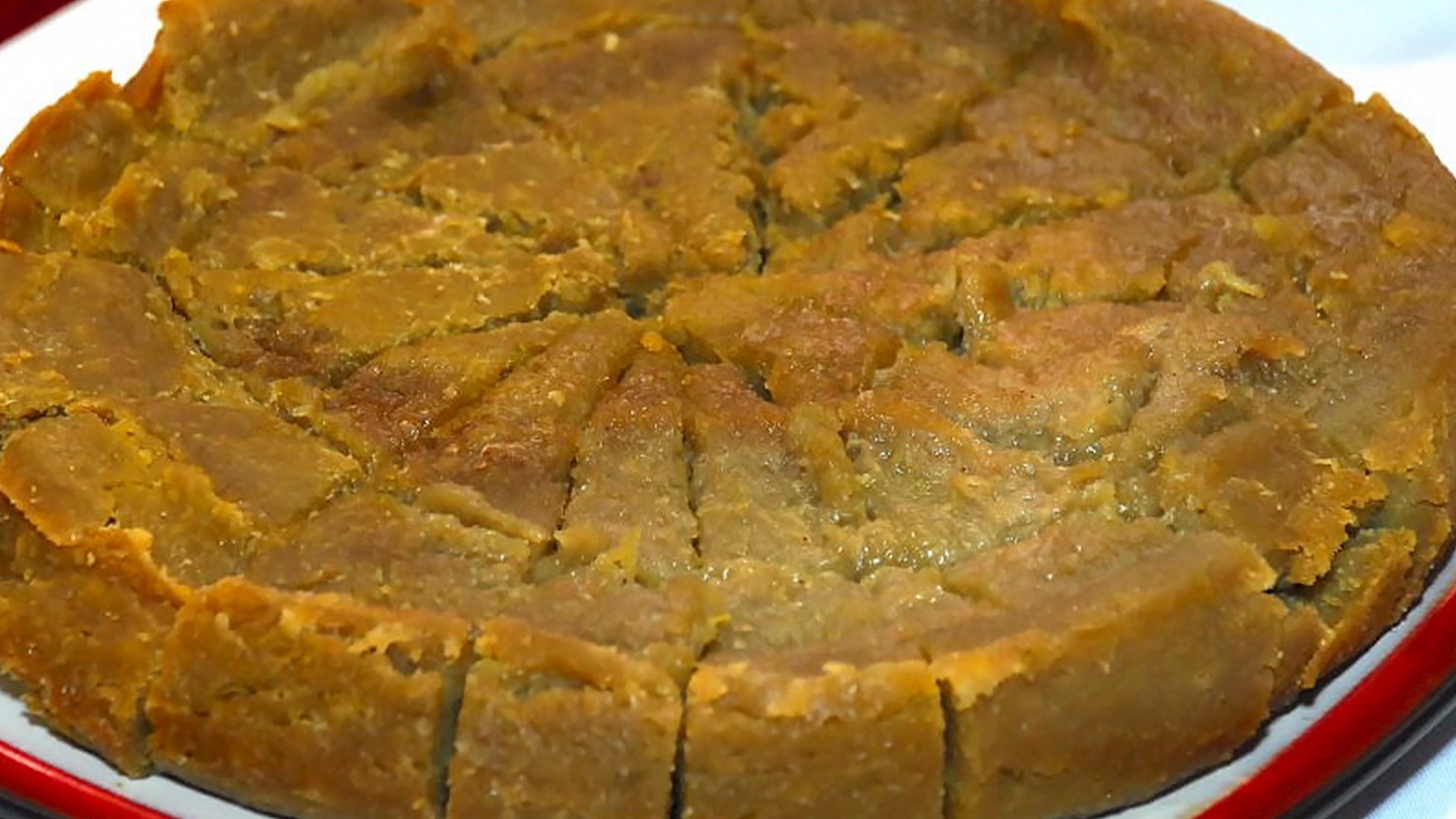
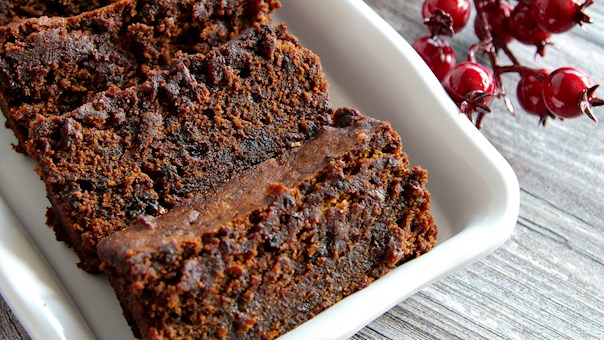
Sweet potato pudding is a Jamaican baked dessert made from grated sweet potato mixed with coconut milk, sugar, spices, and flavorings, then baked until it becomes a firm, sliceable pudding with a dense, moist consistency. It is widely eaten across Jamaica at home, at bakeries, and at weekend food stalls, especially on Saturdays. The dish uses local sweet potatoes, which are typically yellow or orange and have a firmer texture than many North American varieties, giving the pudding its characteristic structure. Its development can be traced to West African culinary practices brought to Jamaica, where grated root vegetables were often combined with coconut-based liquids and baked or steamed. Sweet potatoes became a major crop in Jamaica during the colonial period, and by the eighteenth and nineteenth centuries they were commonly used in both savory and sweet preparations. As coconut milk became a standard ingredient in rural Jamaican cooking, the combination of grated sweet potato, coconut milk, sugar, and spices such as nutmeg and allspice evolved into a baked pudding known throughout the island. Notes from nineteenth-century Jamaican household manuscripts, along with references in early twentieth-century local cookbooks, show the dish already well-established. Over time, cooks refined the mixture and baking method and developed the “soft top,” a slightly creamy layer formed by adding extra coconut milk near the end of baking. Preparation begins by peeling and grating sweet potatoes finely so they create a natural batter when mixed with coconut milk. Sugar, vanilla, nutmeg, allspice, sometimes cinnamon, and a bit of salt are added, along with grated coconut or raisins depending on household preference. Melted butter is sometimes incorporated. The mixture is poured into a greased baking pan and baked slowly for a long period, often an hour and a half or more. Near the end of baking, additional sweetened coconut milk may be poured on top to form the soft top layer, which is a distinctive feature of many Jamaican versions. When finished, the pudding is firm throughout but moist, with a slightly caramelized top and edges. Sweet potato pudding is eaten throughout Jamaica as a snack, dessert, or weekend treat. It is often sold in squares or slices at markets, cookshops, and roadside vendors. It pairs well with beverages such as ginger beer, sorrel drink, cocoa tea, coffee, or a cold glass of milk. Some people enjoy it alongside savory dishes, but it is most commonly served on its own due to its rich, filling nature.
Jell-O is an extremely popular, branded, simple gelatin dessert from the United States. Gelatin, the main ingredient in Jell-O is made by extracting collagen from the boiled bones of animals. Jell-O was invented in 1897 by Pearle Wait, who experimented with gelatine and invented a new, fruit-flavored dessert. His wife May loved it and named it Jell-O. The couple sold the patent and the name to their neighbour, Frank Woodward, who excelled in marketing the new product via ads, recipe books, and Jell-O molds. Because of his marketing techniques, Jell-O became one of the most popular brands in American history. Today, it is used in numerous gelatin desserts, puddings, and cream pies, and comes in an extremely wide variety of flavors such as apricot, lemon, grape, mango, peach, pineapple, tropical fusion, and watermelon.
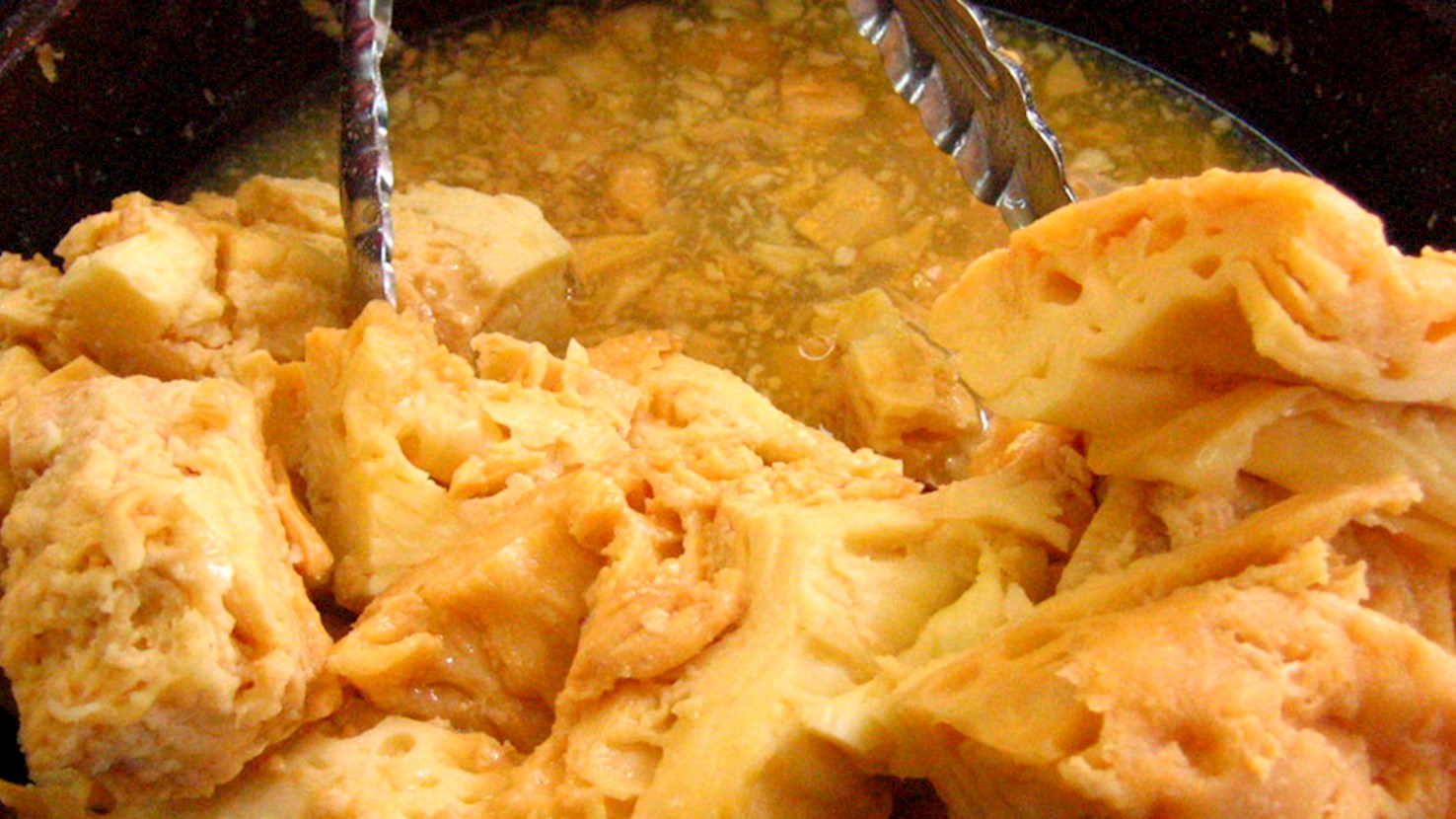
Chongos Zamoranos is a Mexican dessert prepared with raw milk, egg yolks, and rennet tablets. The dish is ready when the milk curdles and develops a rubbery, sponge-like consistency, and it is then flavored with cinnamon and sugar. This dessert is traditionally prepared in earthenware clay pots (cazuelas), and it is served by topping the curds with sugar syrup that has separated in the pot. The word chongos in the name of the dessert means curds. Chongos Zamoranos is so popular in Mexico that it can even be bought in cans. It is believed that this dessert was invented in the colonial-era convents in the town of Zamora, hence the name. Nowadays, there are many presentations of chongos Zamoranos with different flavors, and people sometimes add liquor, coloring, or dried fruits into the dessert.
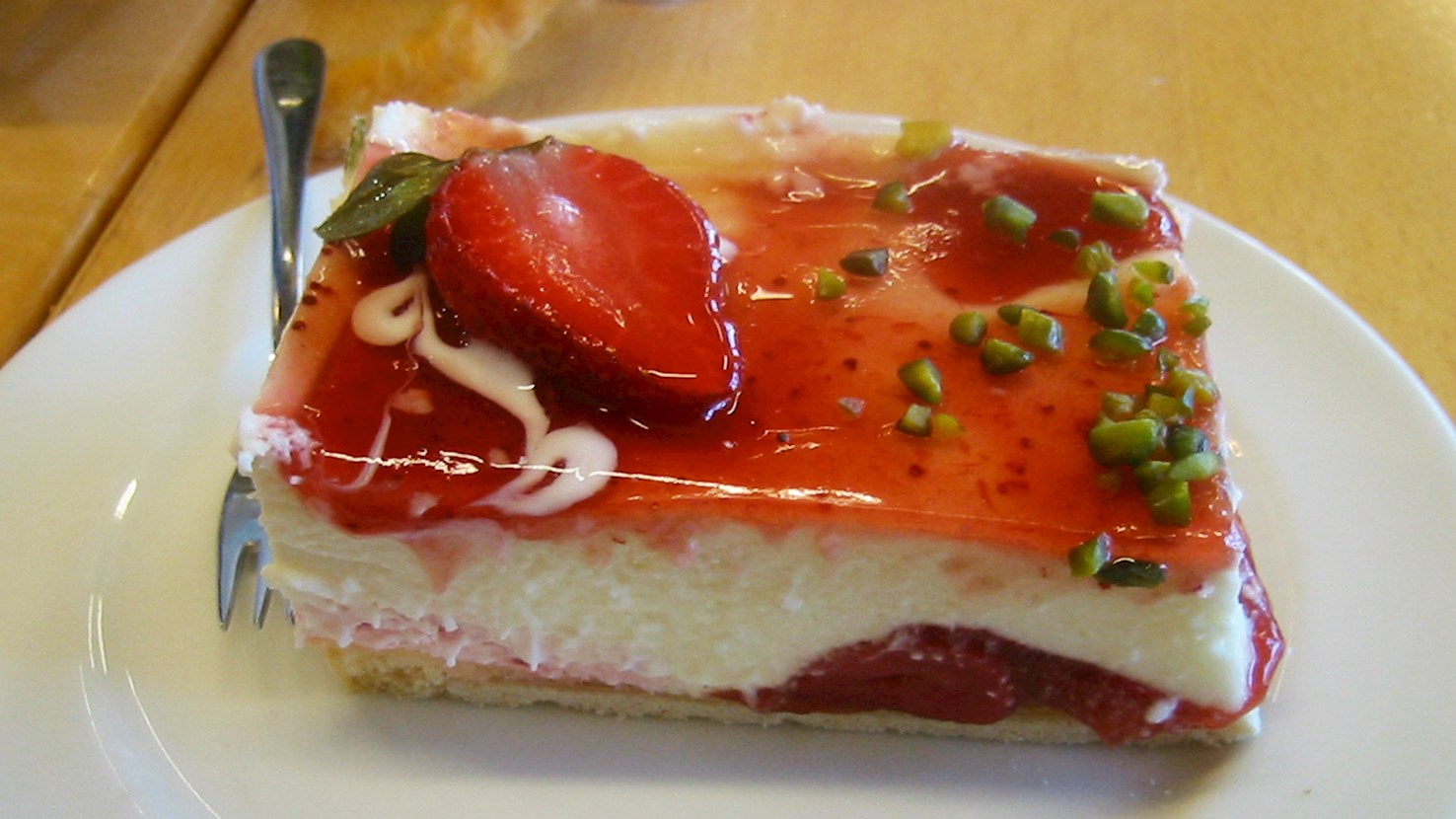
This unusual American dessert salad is especially popular in Minnesota. It consists of cream cheese, graham crackers, milk, strawberries, and strawberry gelatin, although it can be enriched by the addition of canned pineapple, walnuts, or marshmallows. The combination of these ingredients is typically refrigerated in order to set. Strawberry delight is sometimes prepared for Thanksgiving and Christmas, and it is still a staple of many potlucks in the American South.
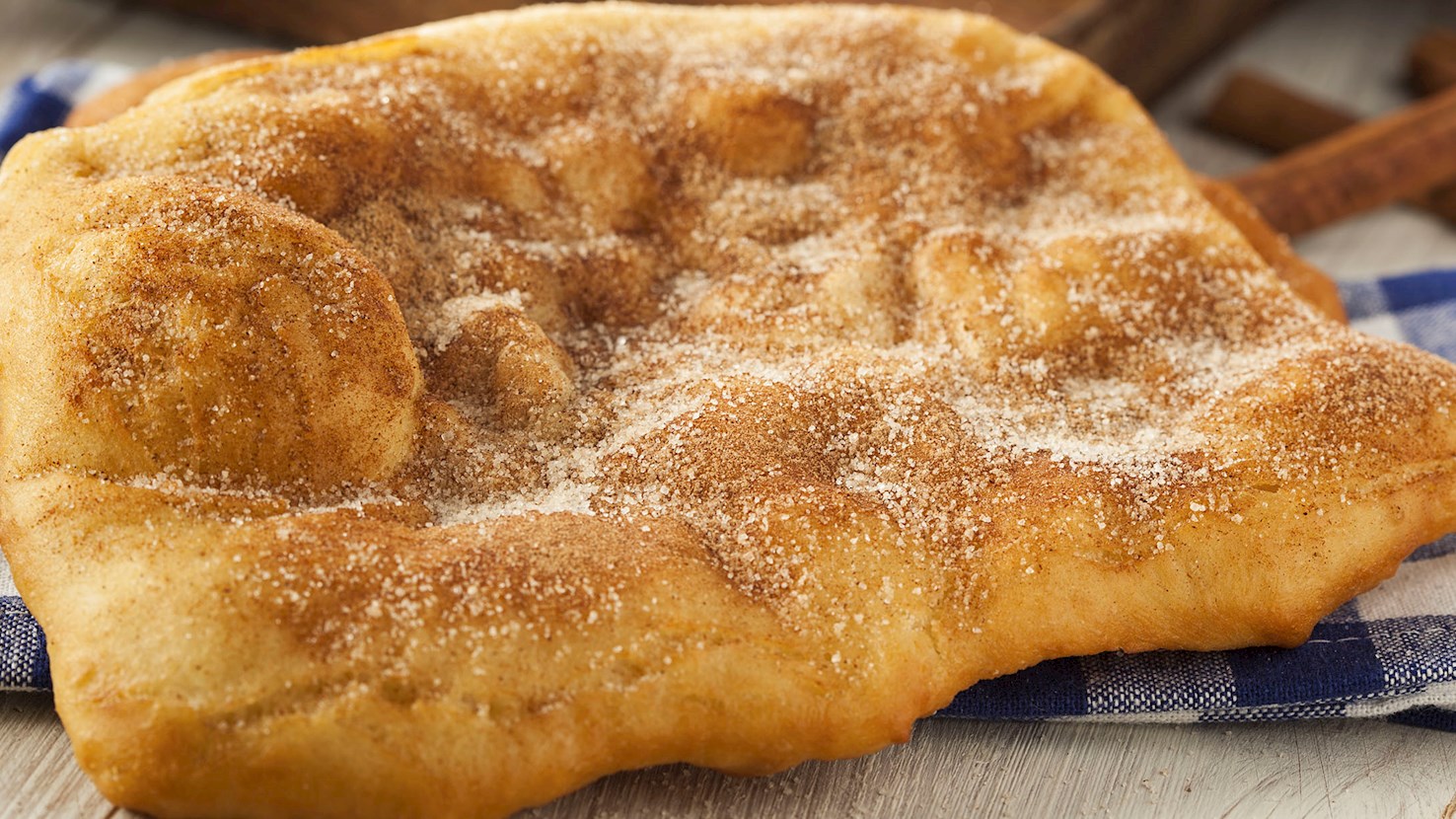
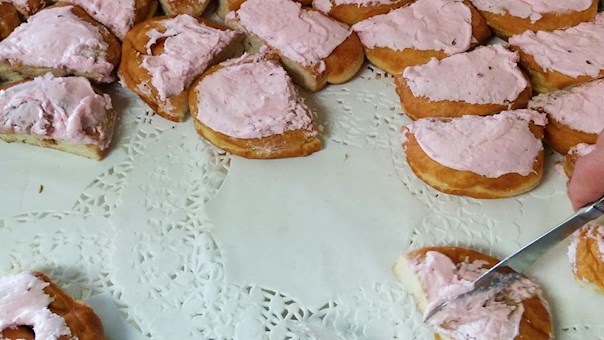
The Rhode Island doughboy is typically a large, flattened square of pizza dough that is deep-fried until golden brown, then dusted with a hefty dose of powdered sugar. It's always served piping hot. Some say that the taste of melting sugar against the warm, chewy dough can be addictive, so the treat is often found at carnivals throughout Rhode Island or in the neighbouring regions. The best doughboys are said to be sold at the oldest beach stand in the state, called Iggy's Doughboys and Chowder House, where one can choose between regular, powdered or cinnamon sugar toppings, served in a grease-stained paper bag and ready to be enjoyed.
TasteAtlas food rankings are based on the ratings of the TasteAtlas audience, with a series of mechanisms that recognize real users and that ignore bot,
nationalist or local patriotic ratings, and give additional value to the ratings of users that the system recognizes as knowledgeable.
For the “100 Worst Rated North American Desserts” list until May 21, 2026, 22,141 ratings were recorded, of which 19,574 were recognized by the system as legitimate.
TasteAtlas Rankings should not be seen as the final global conclusion about food. Their purpose is to promote excellent local foods,
instill pride in traditional dishes, and arouse curiosity about dishes you haven’t tried.