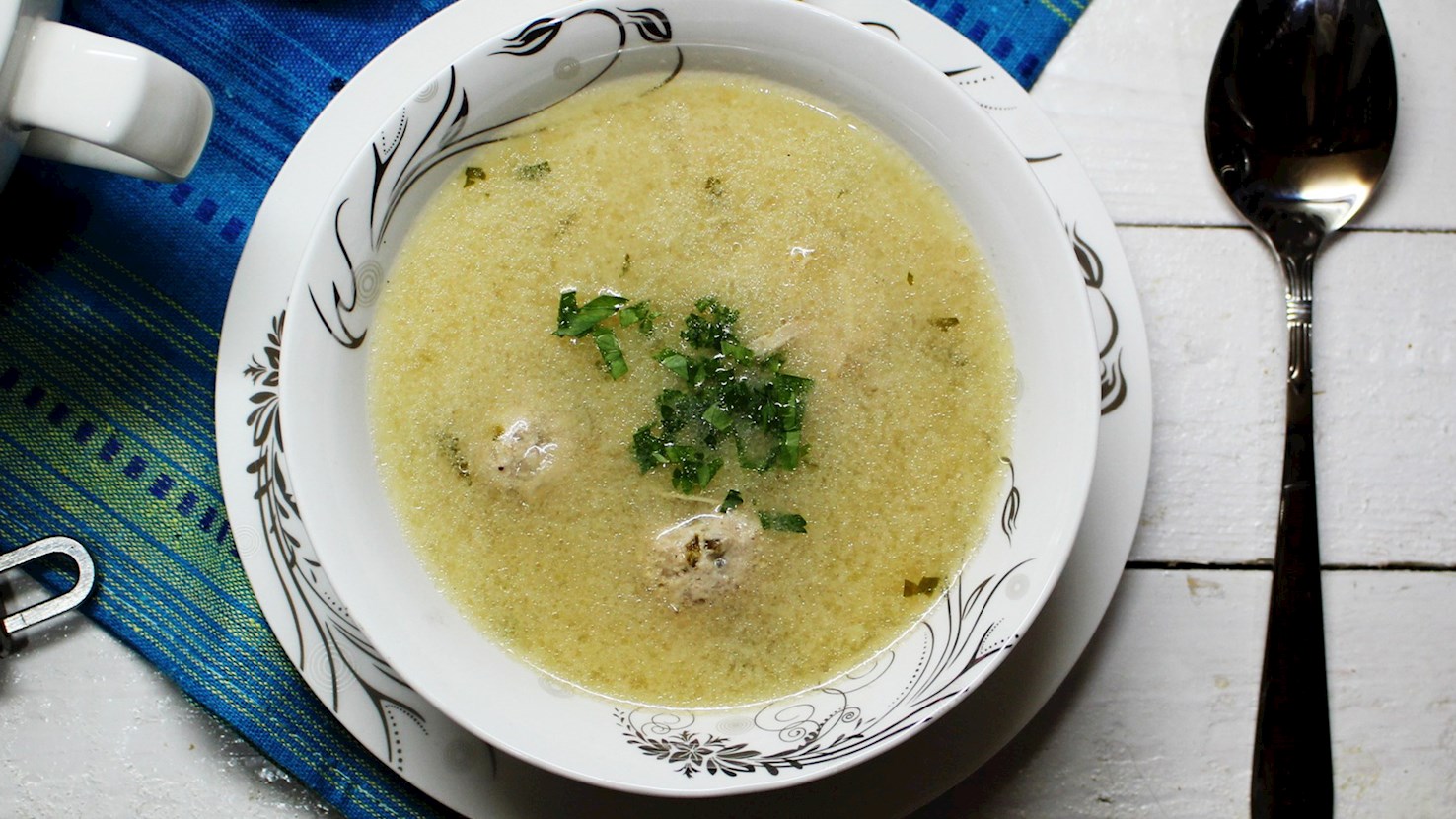
Chorba beïda is a rich and nourishing Algerian white chicken soup that's traditionally prepared for Ramadan. It's usually made with a combination of chicken, onions, carrots, celery, garlic, butter, cinnamon, chickpeas, and seasonings. The chicken pieces are first browned and the vegetables are cooked until they soften. Water is added to the pot and the soup is simmered for a while along with chickpeas. Near the end of cooking, a combination of egg yolks, lemon juice, and parsley or coriander is stirred into the soup. When served, chorba beïda is often accompanied by crusty bread on the side.
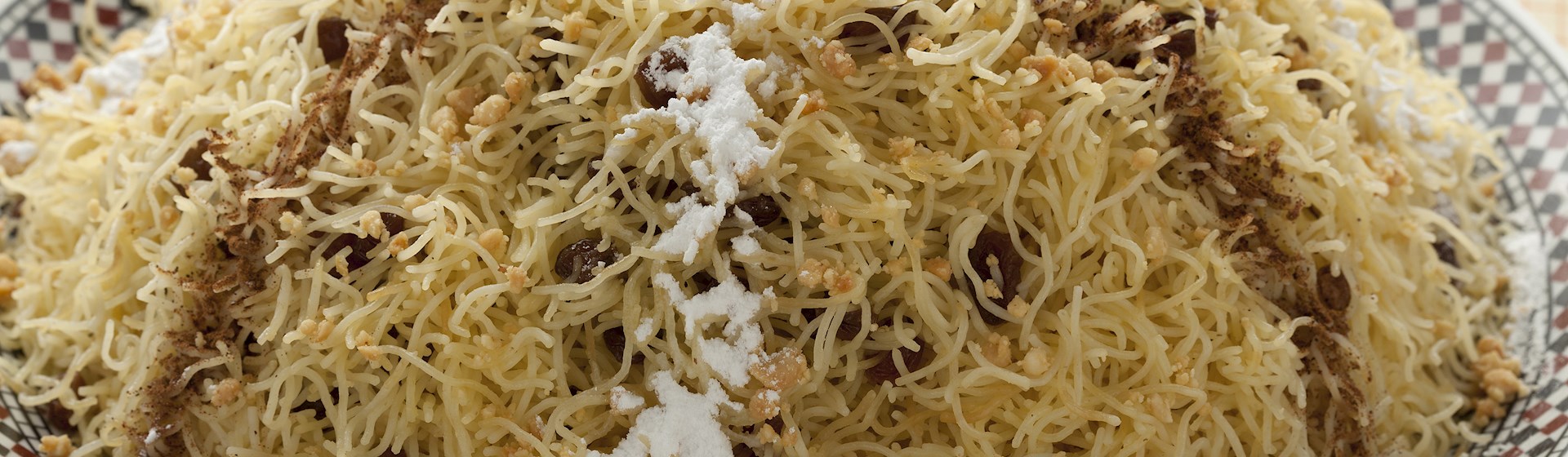
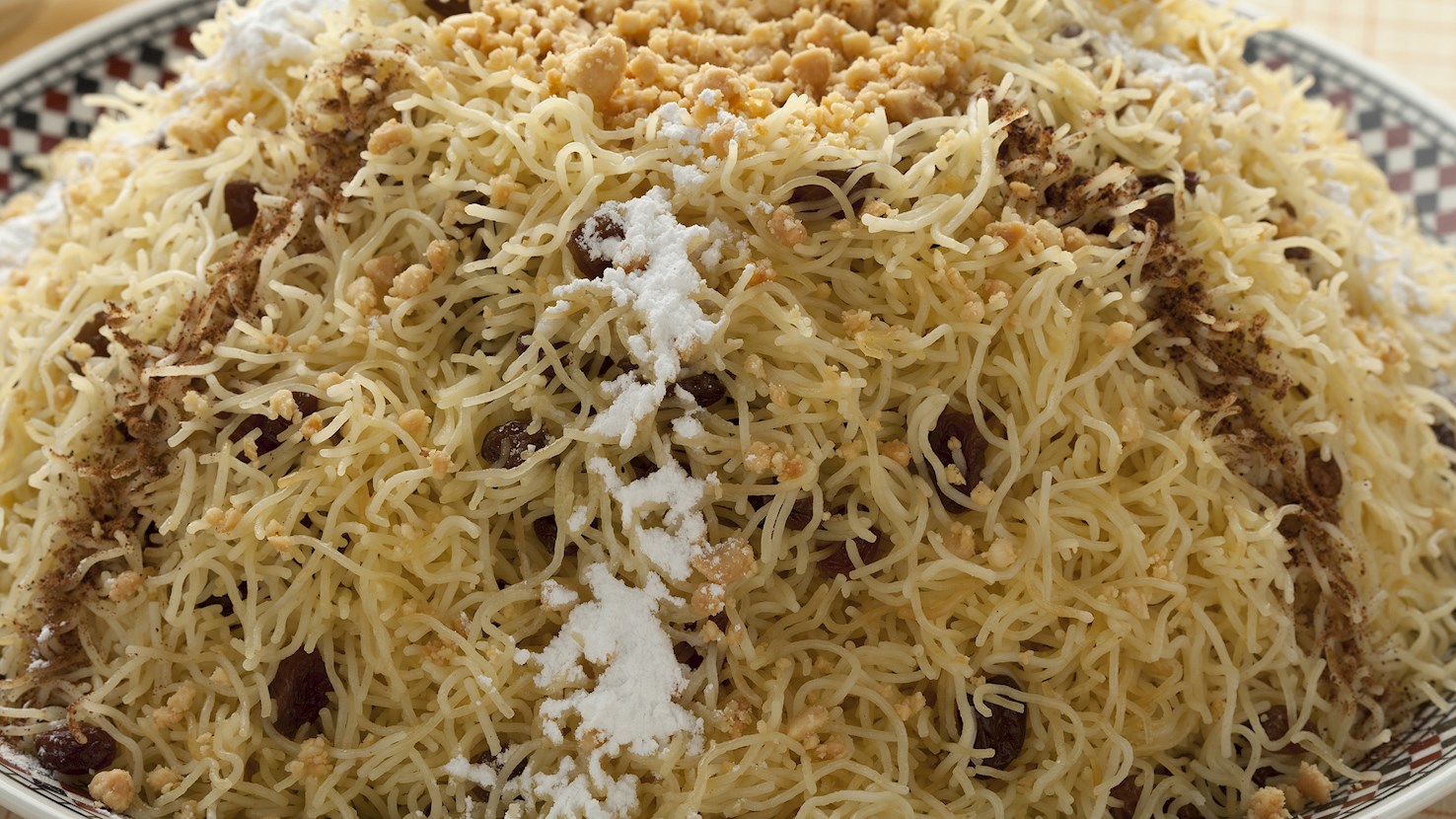
Seffa is a North African dish, particularly associated with Moroccan and Algerian cuisines, consisting of steamed couscous or vermicelli noodles that are sweetened and garnished with a mixture of powdered sugar, cinnamon, and often decorated with toasted almonds or other nuts. This dish represents a unique blend of sweet and savory flavors, commonly served as a celebratory or festive dish in family gatherings and special occasions across the Maghreb region. The origins of seffa trace back to the Berber and Arab culinary traditions of the area, where the use of couscous as a staple grain was complemented by local spices and nuts to create dishes that balance texture and taste. Historically, it emerged as a dish that bridges everyday ingredients with ceremonial contexts, demonstrating the adaptability of couscous beyond its common savory presentations. The preparation of seffa involves steaming the couscous or vermicelli multiple times to achieve a light and fluffy texture, which is then carefully mixed with butter or olive oil. Once cooked, the dish is arranged in a mound or layered on a serving plate before being generously sprinkled with cinnamon and powdered sugar, which adds a fragrant sweetness. Toasted almonds or pine nuts are scattered on top to provide a contrasting crunch and nutty aroma. Sometimes, seffa is served alongside meat such as chicken or lamb, offering a balance between sweet and savory components that reflect the culinary harmony characteristic of North African fare. The dish requires patience and skill, as the couscous must be steamed properly to avoid clumping, and the final presentation emphasizes both aesthetic appeal and flavor complexity. Seffa is typically enjoyed as part of family meals, during religious celebrations, or at weddings, often marking the end of a meal or serving as a special treat. In Moroccan and Algerian homes, serving seffa is a gesture of hospitality and care, symbolizing abundance and the blending of cultural influences in Maghreb cuisine.
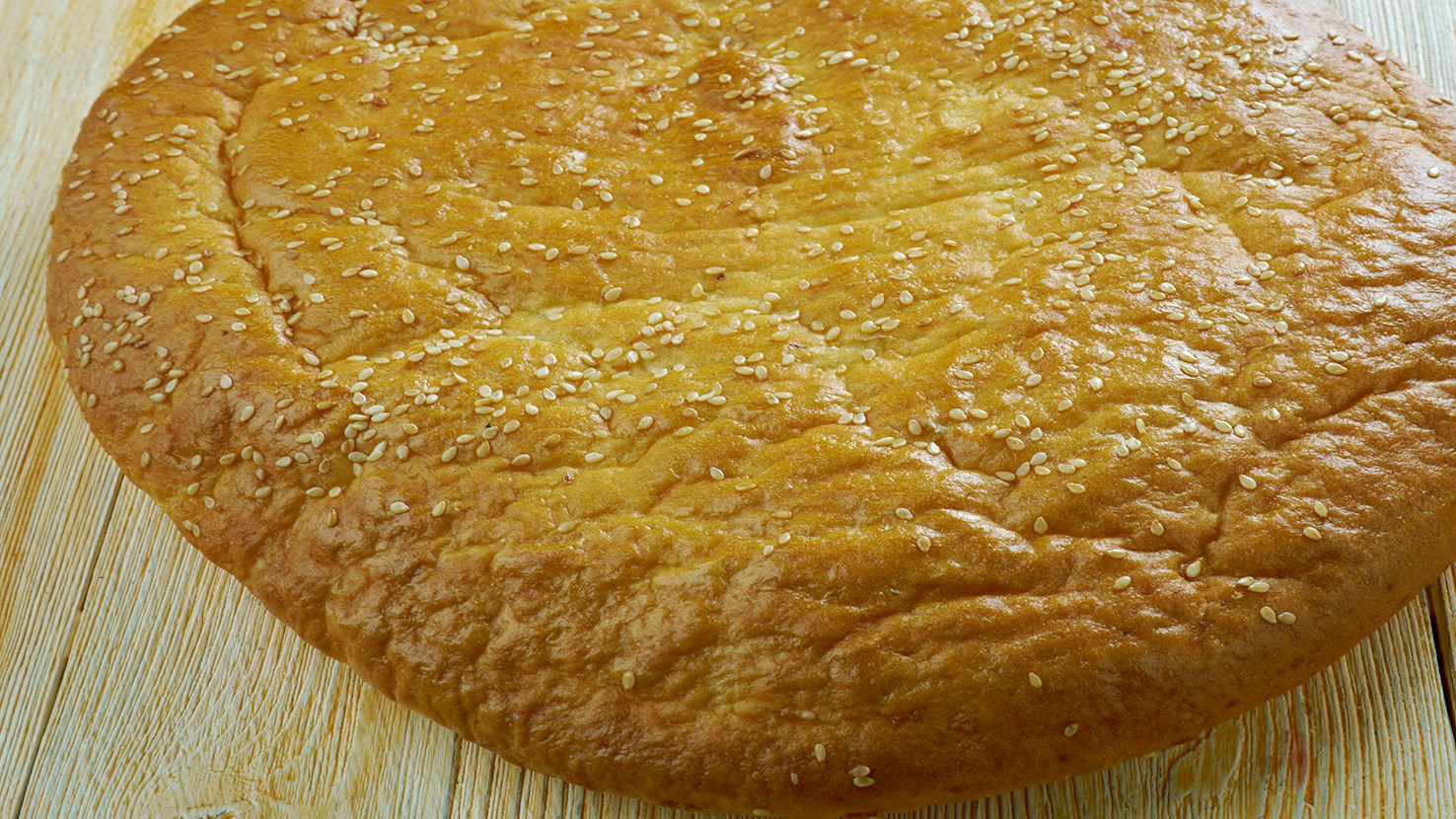
Khobz el dar is an Algerian and Moroccan bread that requires no kneading. It consists of semolina, salt, sugar, yeast, oil, eggs, milk, and optional sesame seeds for decoration. Once it has been baked, the bread develops a soft and tender texture and a slightly sweet flavor. This bread can be found it almost every household in Algeria, hence its name, which translates to bread of the house.
Bradj, also known as mbardja, mteqba, or mbarja, is a traditional diamond-shaped pastry from the northeast, traditional consumed in Constantinois, Jijel, Bibans, and Kabylie region. This diamond-shaped delicacy consists of two layers of semolina dough (kesra) filled with a date paste (ghers). The preparation starts with a dough of semolina mixed with oil, water, and salt, which is then shaped, filled, and cooked on a griddle or heavy pan. It is often flavored with cinnamon and sometimes cloves. Bradj is typically prepared in spring and served with leben, rayeb, or mint tea.
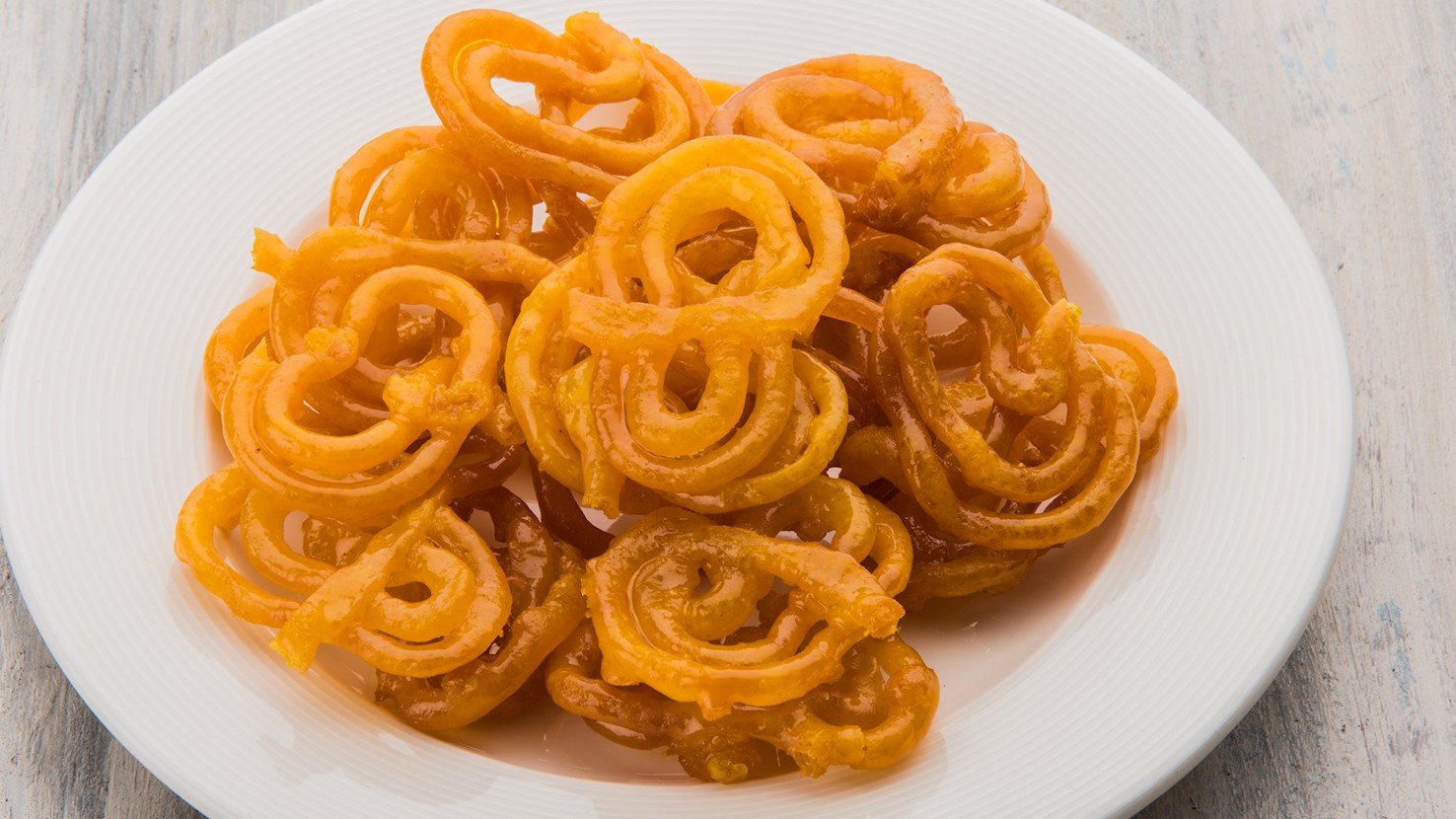
Zulbia is a sweet confection prepared by deep-frying thin coils of fermented batter and then soaking them in a fragrant sugar syrup. Although it is believed to have its origins in Persia, zulbia or jalebi is an international dessert with variations that spread throughout the Middle East, India, and Asia. Its golden color and delicate crispness have made it a favorite accompaniment to tea in both homes and pastry shops. To make zulbia, a batter is prepared by mixing refined flour with yogurt or fermented starter, a little cornstarch, baking soda, and sometimes a splash of rosewater. The batter is rested to develop a slight tang and a smooth consistency. Using a special funnel or piping bag, it is poured into hot oil in looping, spiral patterns that expand and puff as they fry. The pieces are turned until evenly golden and crisp, then immediately immersed in warm syrup made with sugar, water, saffron, rosewater, and sometimes a dash of lemon juice to prevent crystallization. After a short soak, they are removed and set to drain on racks, leaving them saturated but not soggy. The flavor is sweet and floral, with a hint of acidity from the syrup balancing the richness of the fried dough. Because it holds up well over time, zulbia is often prepared in large batches to be served over several days or packaged as a gift. Historical records suggest that variations of zulbia were made across Persia and the Indian subcontinent as early as the medieval period, with recipes spreading along trade routes and adapting to local tastes.
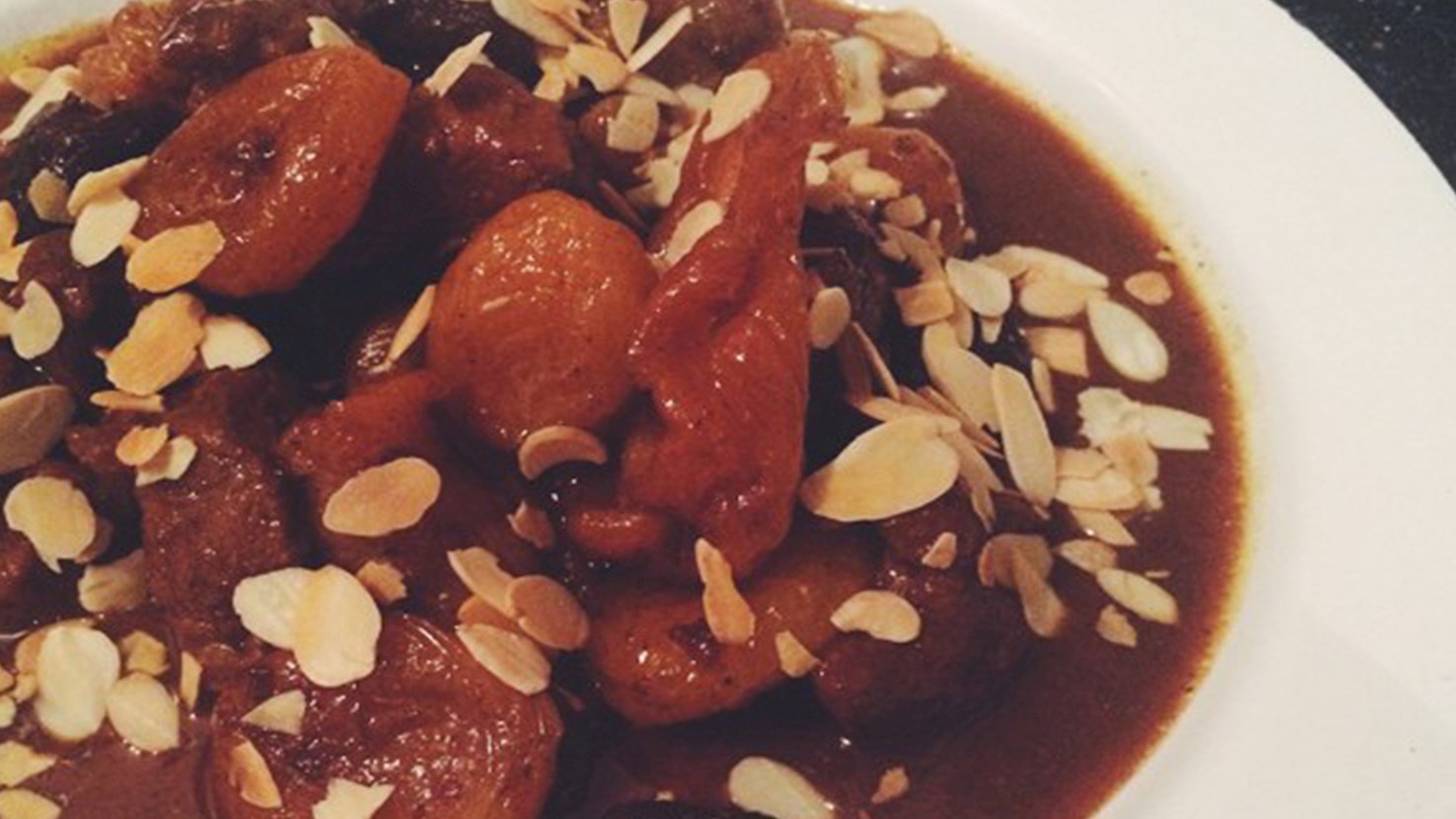
Lham (lit. meat) lahlou (lit. sweet) is an Algerian dish consisting of pieces of lamb stewed in a sweet syrup with fruit and various spices such as cinnamon and star anise. The dish often employs fruits such as prunes, quince, apples, pears, apricot, and raisins. It is typically reserved for Ramadan, when the dish is used to break the fast. Because it is full of sugar, lham lahlou is excellent for keeping the energy levels up for nightly prayers.
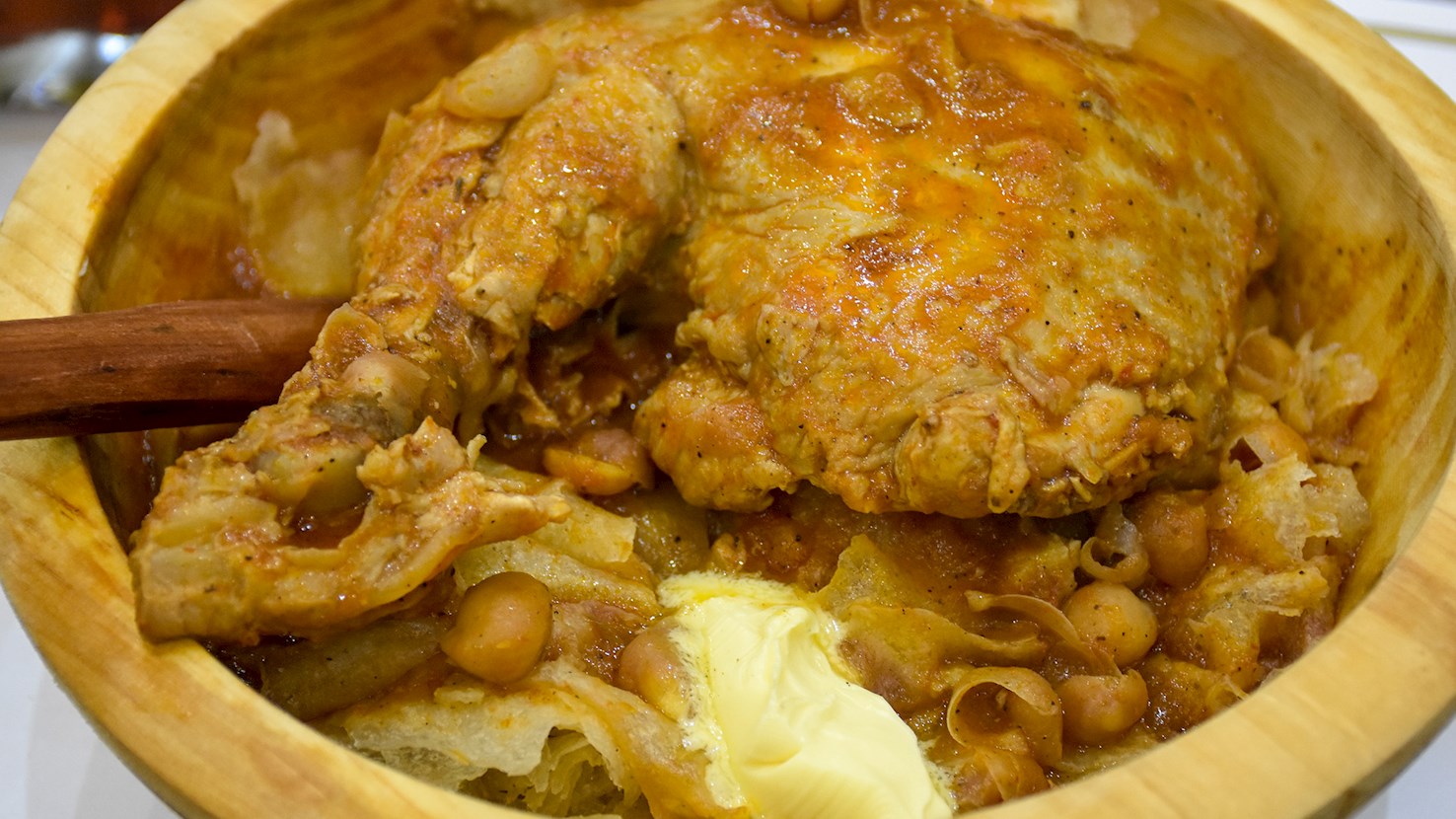
Chakhchoukha is a flavorful Algerian stew consisting of torn pieces of a thin, round flatbread known as rougag, and marqa – a stew made with diced lamb, tomatoes, chickpeas, onions, and flavorings such as cumin, ras el hanout, caraway, galangal, lavender, and red chili peppers. The dish is especially popular at celebrations and festivities. It is believed that the dish was invented by shepherds who needed a hearty meal when they came home on cold nights. The name of the dish can be roughly translated to torn flatbread, referring to the key ingredient of chakhchoukha.
Rougag is a type of flatbread mostly associated with Algeria and Tunisia, although it is often used in the cuisines of other North African countries. It is made with semolina and wheat flour dough and prepared on a tajine or a cast-iron skillet. After it's cooked, rougag is folded and paired with various local dishes or torn into pieces and used as an ingredient in stews and pilafs.
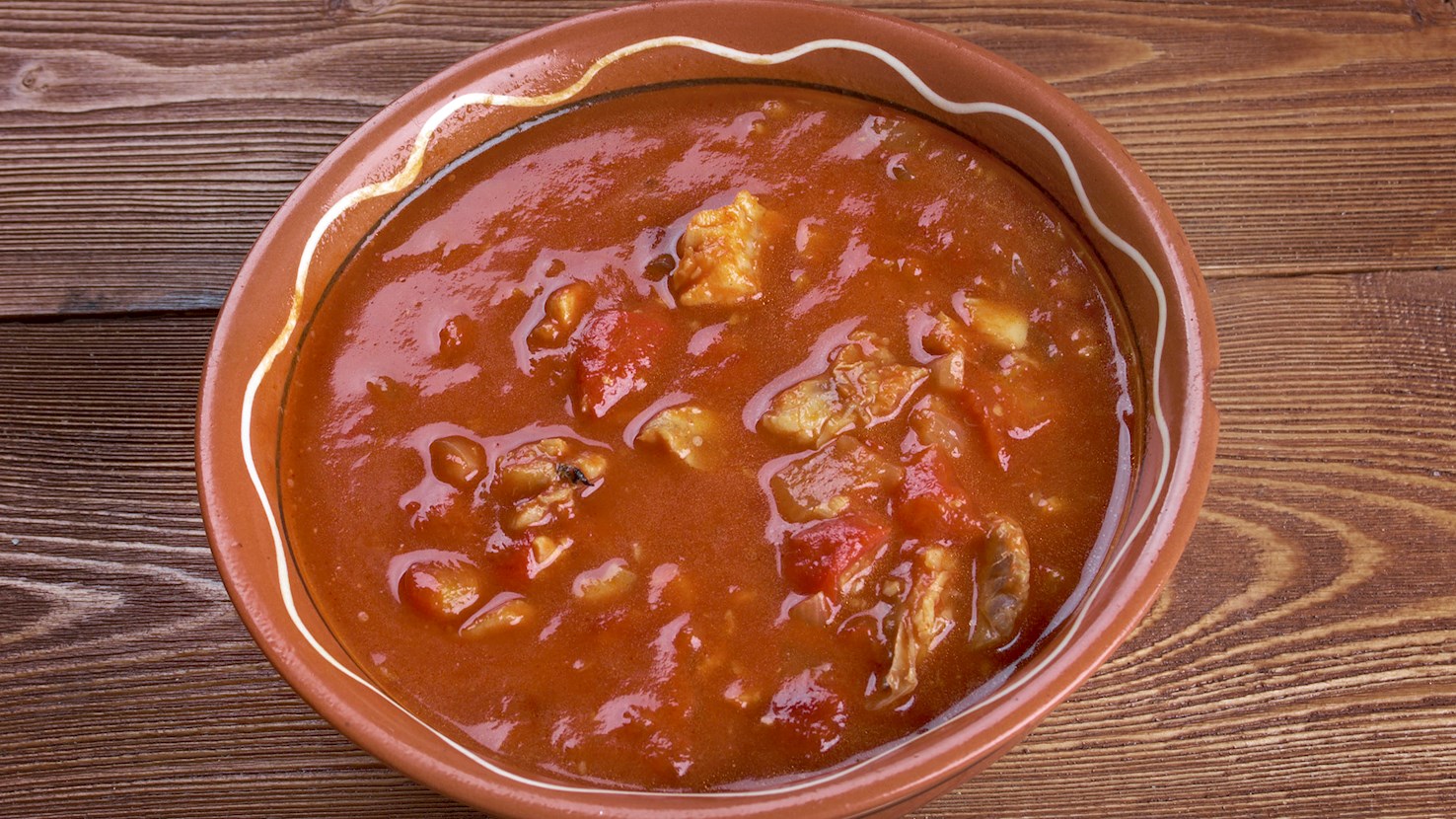
The traditional soup known as chorba frik is one of the staples of Algerian diet. It is a tomato-based soup made with meat, chickpeas, and an ancient grain called freekeh (or frik). The dish is seasoned with traditional Algerian spices such as mint or coriander, which give the dish a typical oriental flavor. The main ingredient, frik, is a grain that is frequently used in many Algerian dishes. This ancient cereal, familiar to the Mediterranean and Arabic countries, has an unusual green color, and resembles the more popular bulgur. Chorba frik is a dish that is usually associated with the eastern parts of the country, but it can be found throughout Algeria. Since it is highly nutritious, it is often served on its own. Various breads or a traditional Algerian flatbread, kesra, are usually served on the side. The dish is typically served on Ramadan, after breaking the fast. On Ramadan, a bowl of chorba frik is usually served with borek – a crispy pastry filled with minced meat.
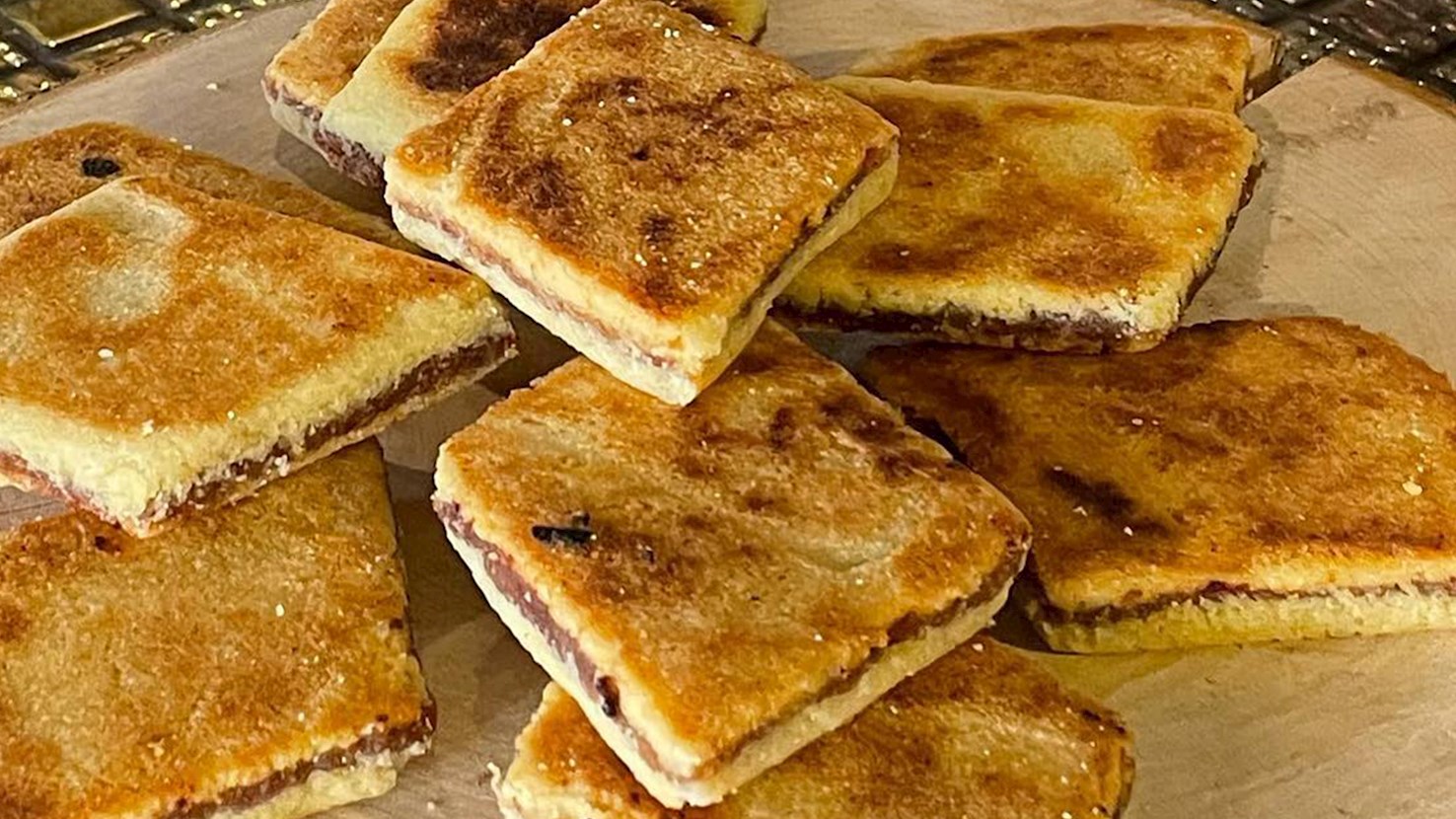
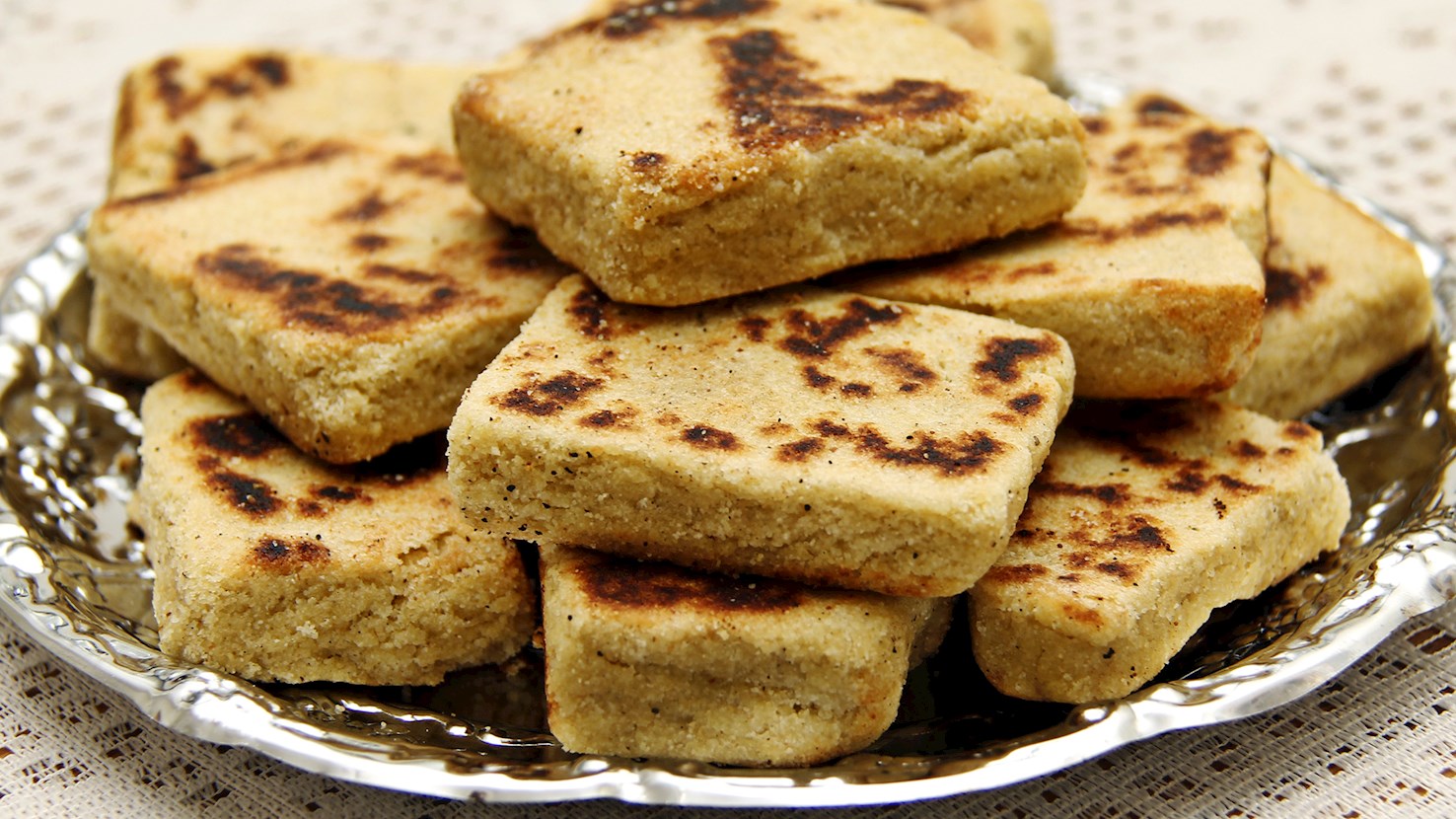
Mbesses, also known in some parts of Algeria as mtekba or mtaqba, is a thick semolina galette made with durum-wheat semolina, fat, salt, and water. It has a crisp, golden exterior and a tender, crumbly interior and is commonly eaten warm with honey, butter, jam, coffee or tea. The dough is based on medium or coarse semolina rather than ordinary wheat flour. Melted butter, clarified butter known as smen, vegetable oil, or a combination of fats is worked thoroughly into the semolina. The mixture is rubbed between the hands so that the grains are evenly coated with fat, a step that gives mbesses its characteristic sandy, crumbly texture. Water is then added gradually until the semolina holds together as a firm dough. Some versions perfume the water with orange-blossom water, while others use plain water and keep the flavor almost entirely focused on the toasted semolina and butter. The dough is handled gently rather than kneaded like bread, since too much kneading can make the finished galette tougher. After resting, the dough is flattened into a relatively thick round or slab and cut into diamonds, squares, or individual rounds. One common method is to cook the pieces on a dry Algerian tajine, griddle, or heavy frying pan over moderate heat. They are cooked slowly on both sides until golden and lightly crisp outside while remaining soft and crumbly in the center. Another way to prepare it is to fry it in oil rather than cook it on a dry griddle. The semolina pieces are fried until golden, drained, and often dipped in warm honey while still hot. This produces a richer, sweeter mbesses with a slightly crisper surface. Both fried and griddled versions appear in Algerian cooking, rather than one being a modern modification of the other. Honey is one of the most familiar accompaniments. It may be drizzled over the warm mbesses or used to soak the surface more generously. Butter, jam and olive oil can also be served alongside it. Nuts and sesame seeds can be added, but they are not essential to the traditional version. Mbesses can be mildly sweet or almost savory depending on the recipe. Some versions contain a little sugar, while others contain none at all. Some regional and household versions also include aromatic additions such as fennel, anise, nigella, or thyme. The dish belongs to Algeria's long tradition of foods made from durum-wheat semolina, an ingredient that also forms the basis of couscous, several flatbreads and numerous pastries. Its precise date and place of origin are not documented, so it cannot reliably be traced to early-20th-century farm workers or described as having been invented specifically as a portable food for agricultural laborers. Mbesses is commonly served for breakfast or as an afternoon snack and pairs especially well with coffee, mint tea, or lben, a fermented milk drink. It is best eaten warm or at room temperature, when the outside remains lightly crisp, and the fat-rich semolina interior is still tender. One closely related use of mbesses is in rfiss, particularly in eastern Algeria. The cooked semolina galette is crumbled and combined with ingredients such as butter and sugar to make a richer dish served on celebrations and special occasions.
TasteAtlas food rankings are based on the ratings of the TasteAtlas audience, with a series of mechanisms that recognize real users and that ignore bot,
nationalist or local patriotic ratings, and give additional value to the ratings of users that the system recognizes as knowledgeable.
For the “11 Worst Rated Algerian Foods” list until October 17, 2026, 11,013 ratings were recorded, of which 2,417 were recognized by the system as legitimate.
TasteAtlas Rankings should not be seen as the final global conclusion about food. Their purpose is to promote excellent local foods,
instill pride in traditional dishes, and arouse curiosity about dishes you haven’t tried.





What People Say