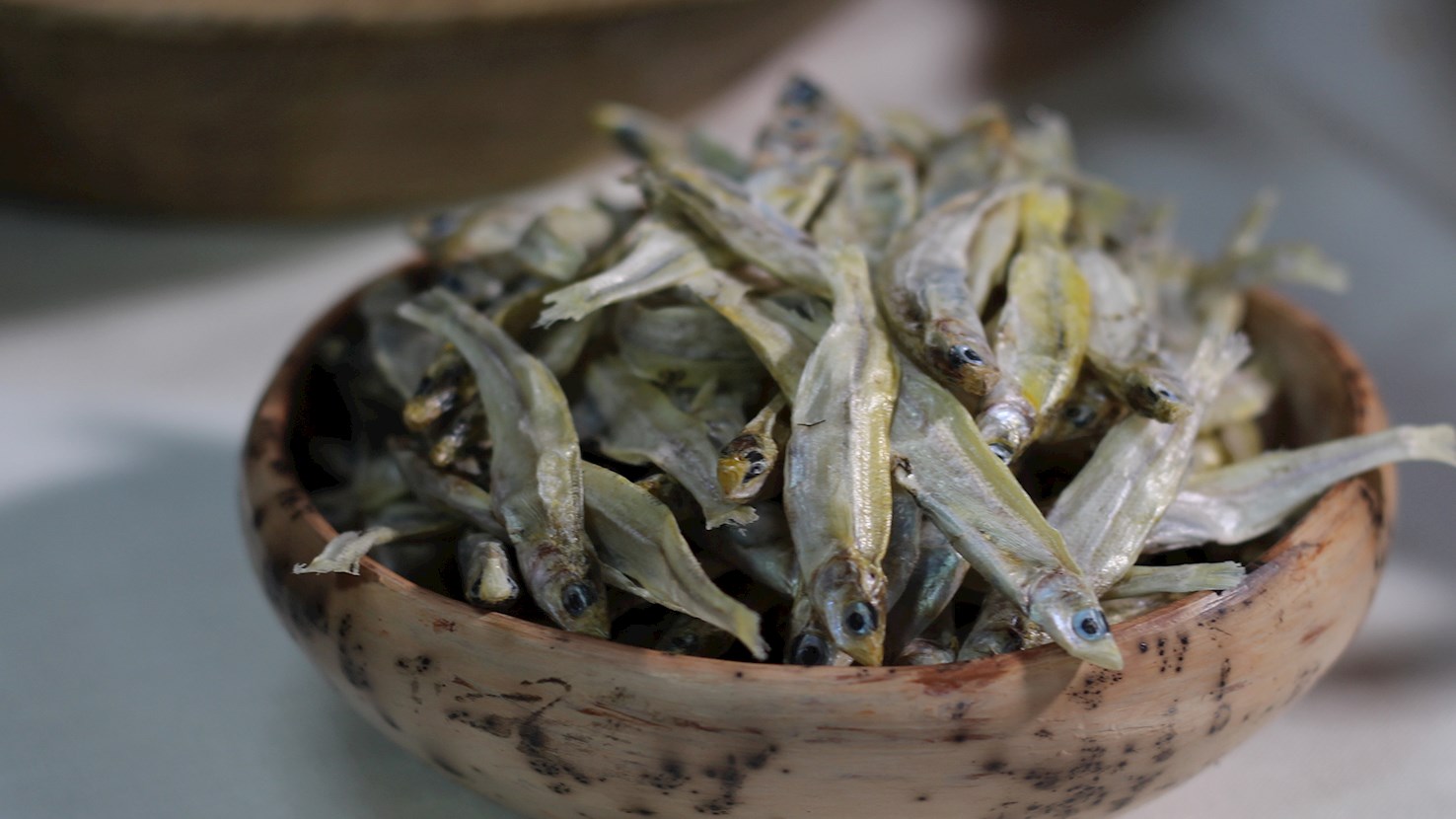
Charales are tiny, slender freshwater fish that are heavily salted, dried in the sun, and rapidly deep-fried whole until they achieve a completely brittle, crunchy texture. These silver minnows originate exclusively from the large inland lakes of central North America, specifically thriving within Lake Chapala and Lake Pátzcuaro. Indigenous groups inhabiting these shorelines relied heavily on these abundant catches centuries before European contact, utilizing intense sunlight to draw out all moisture and permanently preserve the harvest for long-term storage. The entire fish remains intact—including the head, eyes, fragile bones, and fins. After a rigorous coating in coarse salt, the minnows sit on flat mats in direct sunlight for several days until they are entirely dehydrated. Once cured and hardened, handfuls of the stiff fish plunge into vats of boiling vegetable oil for just a few moments. The sudden, extreme heat instantly crisps the microscopic bones and further dehydrates the flesh, resulting in a shatteringly crisp bite. When served strictly as a fast street food, vendors scoop the golden minnows into small paper cones or thin bags. Customers stand by the carts and immediately squeeze fresh lime wedges directly over the pile, aggressively shaking the container to distribute the acidic juice alongside heavy dashes of liquid chili sauce and salt. The sharp citrus briefly softens the outermost skin, while the core remains completely rigid, allowing individuals to consume the entire seasoned animal in one quick, highly textured mouthful. Some regional markets toss the unseasoned crispy fish directly into a hot pan with pureed tomatillos, cilantro, and fiery serrano chilies, letting the brittle bodies simmer and soften slightly as they absorb the bright green sauce. Another distinct variation involves whisking the whole dried fish into a thick egg batter and pan-frying the mixture into wide, savory omelets, which then simmer slowly in a deep red, garlic-infused tomato broth alongside diced potatoes and carrots. There is also a dried version of charales that is especially popular during Lent, when the fish is cooked with nopales, green salsa, and wild herbs.
Betabeles is a traditional beet salad. It's usually made with a combination of beets, sugar, cornstarch, orange juice, lemon juice, grated orange zest, salt, and pepper. The beets are boiled in a saucepan until the skin blisters, and the beets are then drained, cooled, and the skin is peeled off. Other ingredients are mixed in a saucepan and boiled until the sugar and cornstarch dissolve. The beets are added to the pan, the mixture is seasoned with salt and pepper and heated until the beets become hot. This beet salad is served immediately, while still warm.
Frijoles puercos estilo Jalisco is a traditional dish originating from Jalisco. These refried beans have a number of varieties, and this is the Jalisco-style preparation that's usually served as a snack with drinks. The dish is usually made with a combination of cooked beans, chorizo, olives, jalapeños, bacon, lard, and shredded cheese such as queso ranchero or romano. The chorizo is crumbled and cooked with chopped baon in lard, then set aside. The beans are then cooked in the remaining lard, mashed, and mixed with the bacon, olives, chili peppers, and chorizo. The top is sprinkled with cheese, and the mixture is then served with toasted tortillas.
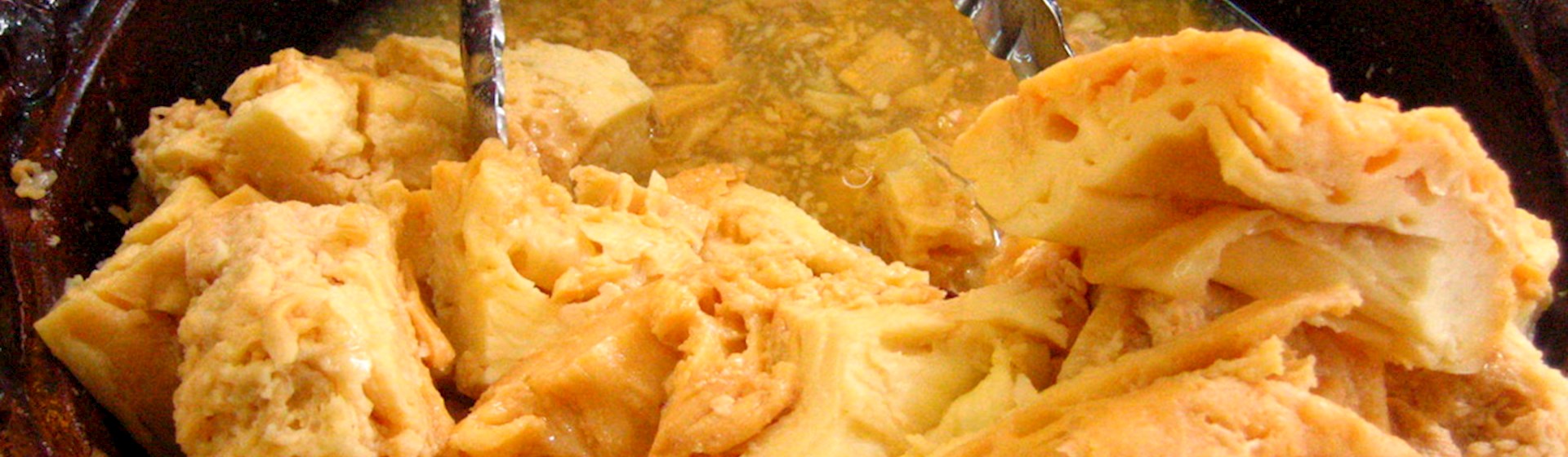
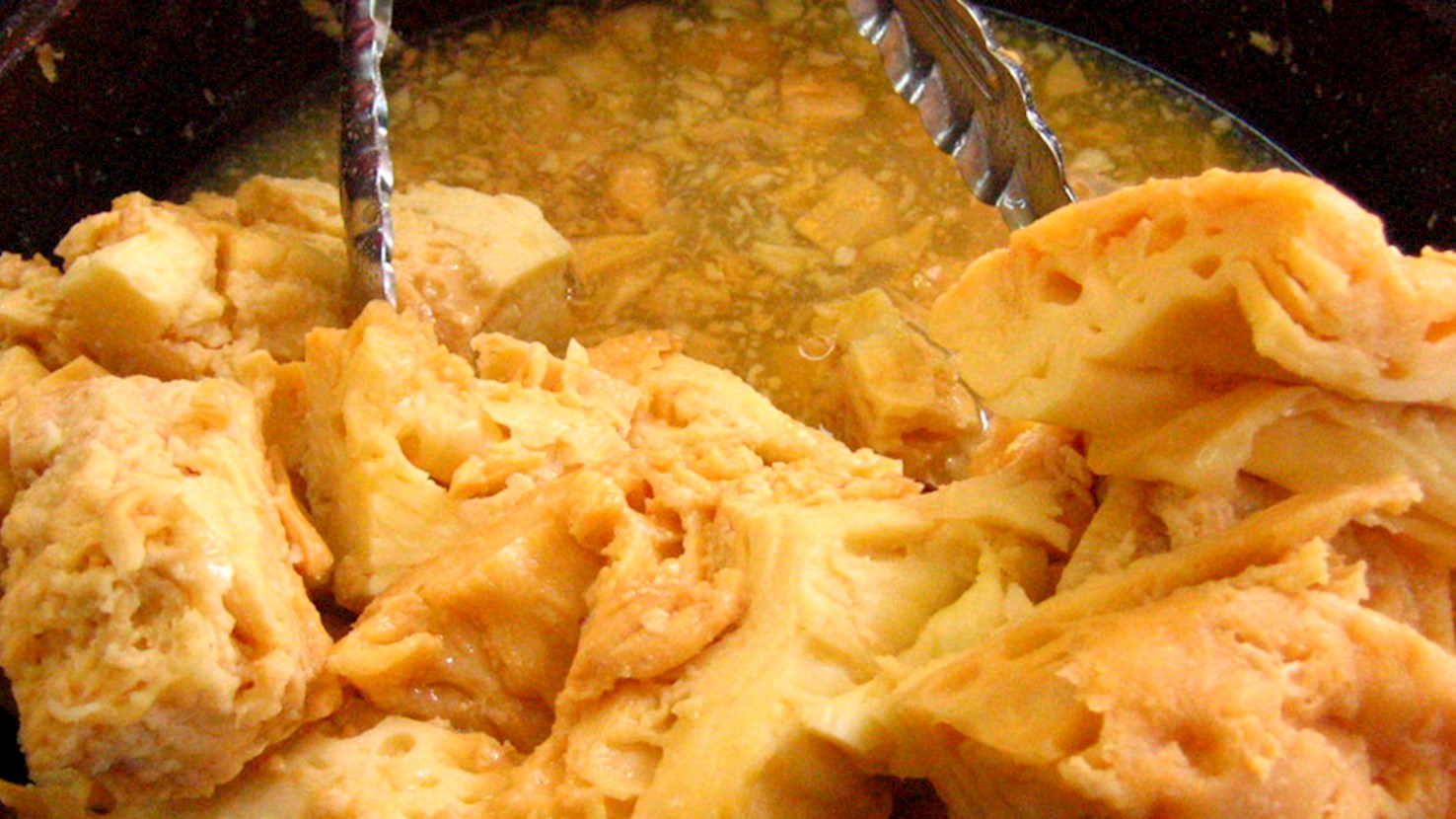
Chongos Zamoranos are a milk-curd dessert from Zamora, Michoacán, made by coagulating milk and slowly cooking the curds with sugar and cinnamon until they develop a soft, slightly chewy texture and sit in a sweet, aromatic syrup. The curds contract as they cook, forming irregular folds and knots rather than smooth cubes, while the liquid gradually becomes concentrated and takes on a pale golden to amber color. The dessert is usually served with plenty of its syrup and can be eaten warm, at room temperature, or chilled, although cool and room-temperature versions are especially common. It is generally served in a small bowl or dessert dish and eaten with a spoon. The texture is tender, spongy, and slightly springy rather than genuinely rubbery, and the curds remain juicy because they are stored and served in the syrup. The dessert is strongly associated with Zamora and the dairy-producing region surrounding the city. Its precise origin is not documented. One longstanding account places its beginnings in convent kitchens during the viceregal period, while other local stories describe it as the result of experiments or accidents involving curdled milk. What is clear is that it developed in an area with a strong dairy culture and uses the same basic principle that underlies many milk-curd products: separating milk into curds and whey, then transforming the curds through prolonged cooking. Chongos Zamoranos became commercially important during the early 20th century. Industrial production is generally dated to around 1934, when María Luisa Verduzco Vaca began producing and selling them through her Zamora confectionery business, La Regional. Commercial canning made it possible to distribute the dessert well beyond Michoacán and helped turn it into one of Zamora's best-known foods. Canned chongos Zamoranos remain widely available, although the dessert is still made at home and by small confectionery businesses. The basic ingredients are whole cow's milk, a coagulating agent, sugar, and cinnamon. Rennet is a common way to set the milk and can be used in liquid form or as a tablet dissolved in water. Some recipes instead curdle the milk with lemon juice or another acid, although the resulting texture can differ. Raw milk is not required, and pasteurized whole milk works well. Artisanal production can use a copper pot, but it is not essential. The milk is warmed gently and combined with the rennet, then left undisturbed until it sets into a soft curd. Once firm, the curd is cut into large pieces or scored into a grid. The pot is then heated slowly with sugar and cinnamon. As the curds warm, they shrink and release whey. The sugar dissolves into this liquid, gradually creating the syrup in which the chongos continue to cook. The curds should not be stirred aggressively because they need to retain their irregular shape. Prolonged cooking concentrates both the milk and sugar, giving the chongos their characteristic folded appearance, firmer surface, and soft, porous interior. White granulated sugar is extremely common and is not a modern departure from a mandatory piloncillo recipe. Piloncillo can also be used, either alone or together with white sugar, and produces a darker syrup with stronger caramel and molasses notes. The syrup therefore ranges from relatively pale and clear to deep amber depending on the type of sugar and the length of cooking. Likewise, cinnamon is usually specified simply as cinnamon sticks; Ceylon cinnamon is not required. The combination of milk, sugar, cinnamon, and curdling agent is more fundamental than the exact variety of sugar or cinnamon. During the slow simmer, the whey does not disappear. Instead, it becomes part of the dessert's syrup as water evaporates and the dissolved sugar concentrates. This distinguishes chongos Zamoranos from cheese, where much of the whey is drained away. The curds remain immersed in the sweet liquid and absorb some of it as they cook. The finished pieces have an irregular, wrinkled appearance and a texture that is denser than custard but much softer and wetter than most cheeses. The flavor is primarily milky, caramelized, and cinnamon-scented. Long cooking creates deeper cooked-milk notes, while piloncillo, when used, adds a stronger cane-sugar flavor. Some modern versions include vanilla, but it isn't necessary. Contemporary variations also use liqueurs, dried fruits, nuts, and other flavorings, but rum and tequila are additions rather than defining ingredients. Artificial coloring is likewise not required; the characteristic golden or amber color can develop naturally as the milk and sugar cook. Chongos Zamoranos are generally served as a dessert with enough syrup to keep the curds moist.
Colima-style ceviche is made with a combination of finely chopped white fish, lime juice, salt, and onions. The liquid is strained after the fish has marinated, and ingredients such as tomatoes, chili peppers, carrots, olives, vinegar, coriander, and olive oil are added later, making this a dry-style ceviche with no excess liquid. It is recommended to serve Colima-style ceviche with toasted tortillas and hot sauce.
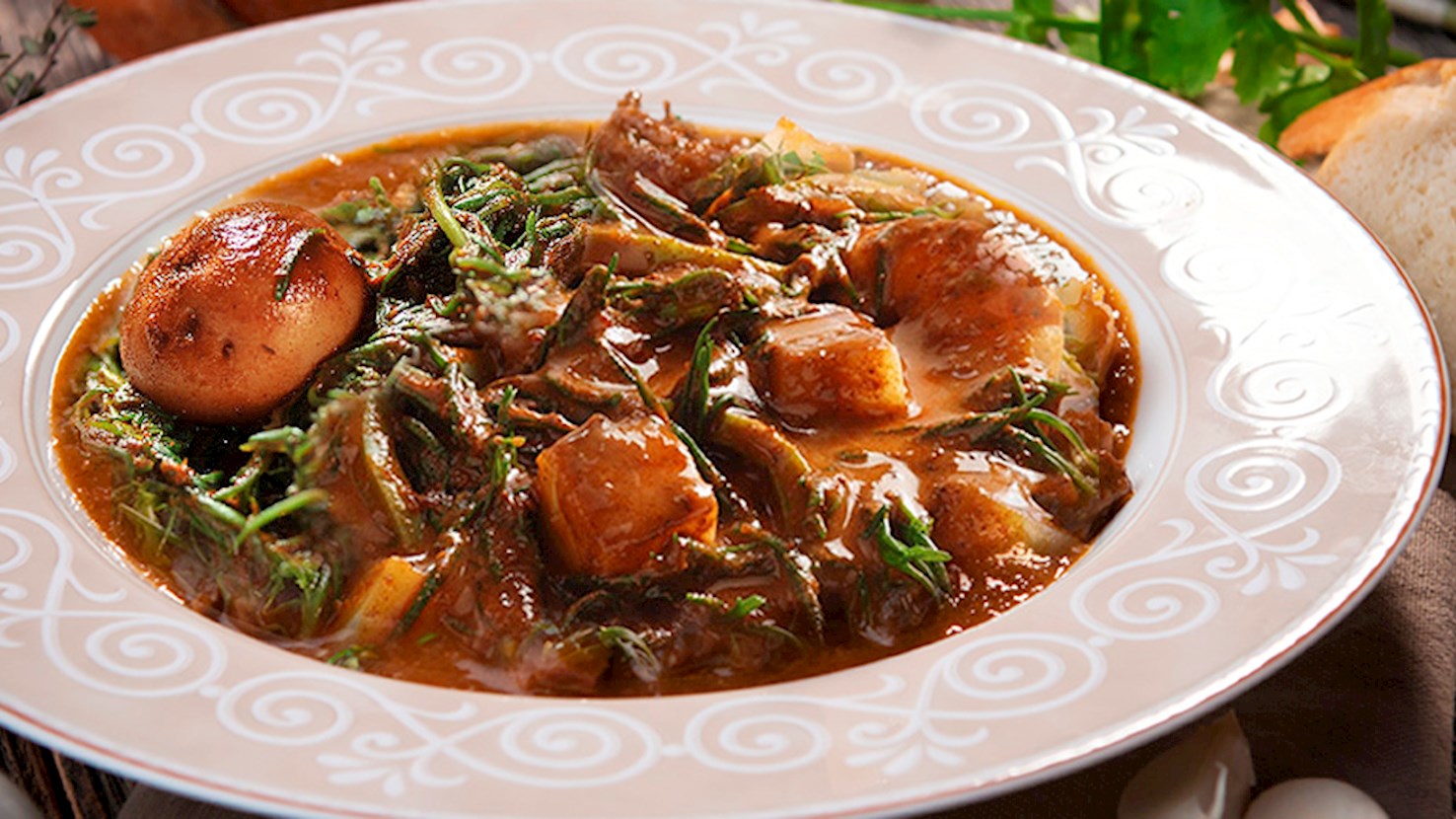
Romeritos is a traditional dish from the southern parts of the country, usually prepared during the festive Christmas season and Lent. The name of the dish comes from a wild plant with the same name, similar to rosemary in appearance, and to spinach in terms of its tart and slightly salty flavor. The dish appears on the tables of both rich and poor people, and is usually prepared in a thick mole sauce with potatoes, nopales cactus, and dried shrimp patties.
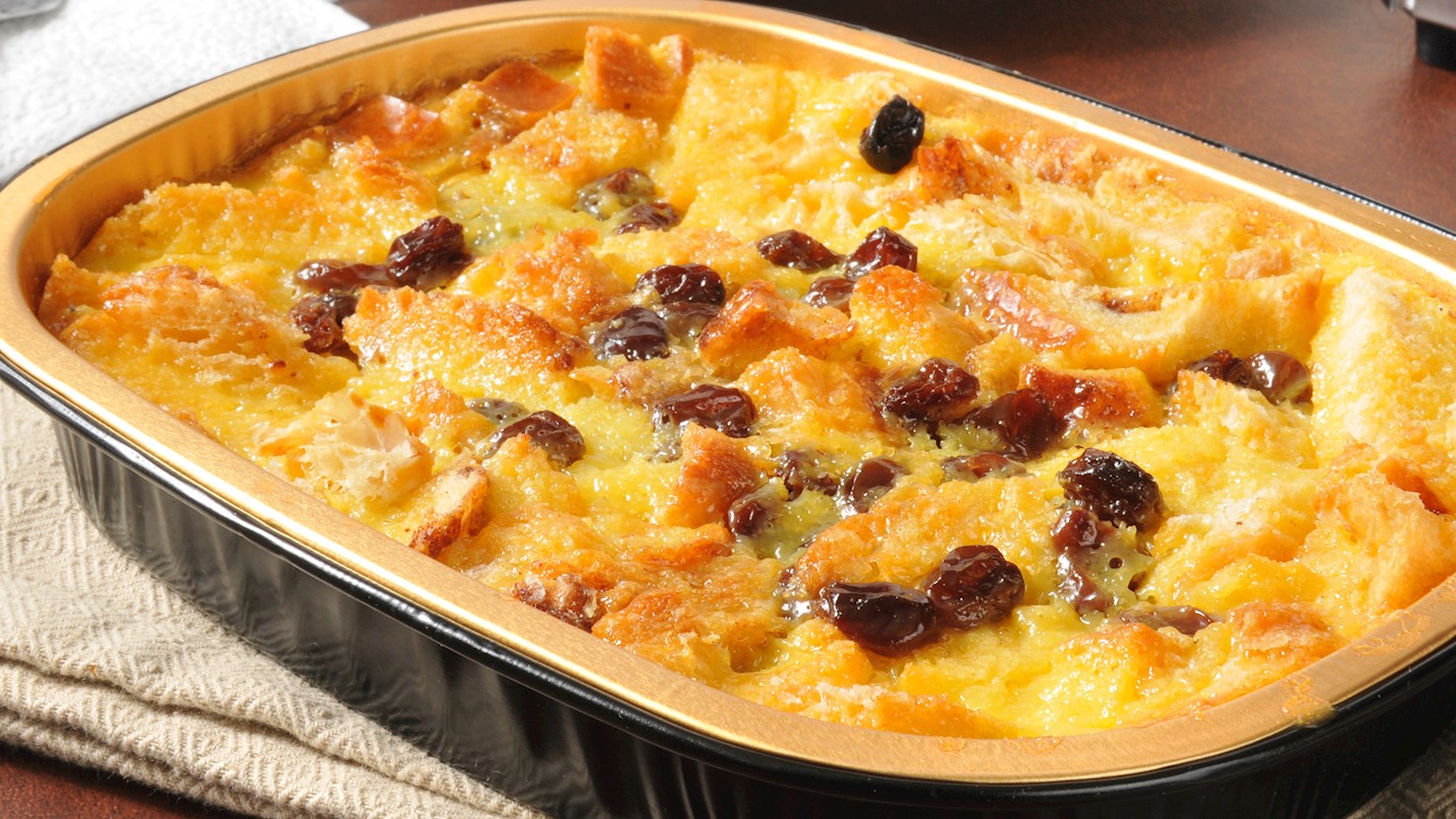
Aromatic capirotada is the Mexican version of bread pudding, consisting of old bread, chunks of nuts and fruits, cinnamon, brown sugar, sweet syrup, and cheese on top. The combination of these ingredients is traditionally baked in an oven. Fruits might include coconuts, apples, bananas, raisins, and dates, while nuts range from peanuts to pine nuts. Capirotada was originally a savory dish in pre-colonial Spain, when it was mostly associated with the Jewish people and the Moors. Over time, the dish made its way to the New World, where it became the tasty dessert that we know today. It is closely associated with Lent, being a great way to use up all of the leftovers before fasting. Capirotada is traditionally consumed on Fridays and Holy Days, and numerous Mexican people associate it with the Passion of Christ – the bread symbolizes Christ's body, the syrup is for blood, raisins are for nails, while the cheese symbolizes the Holy Shroud.
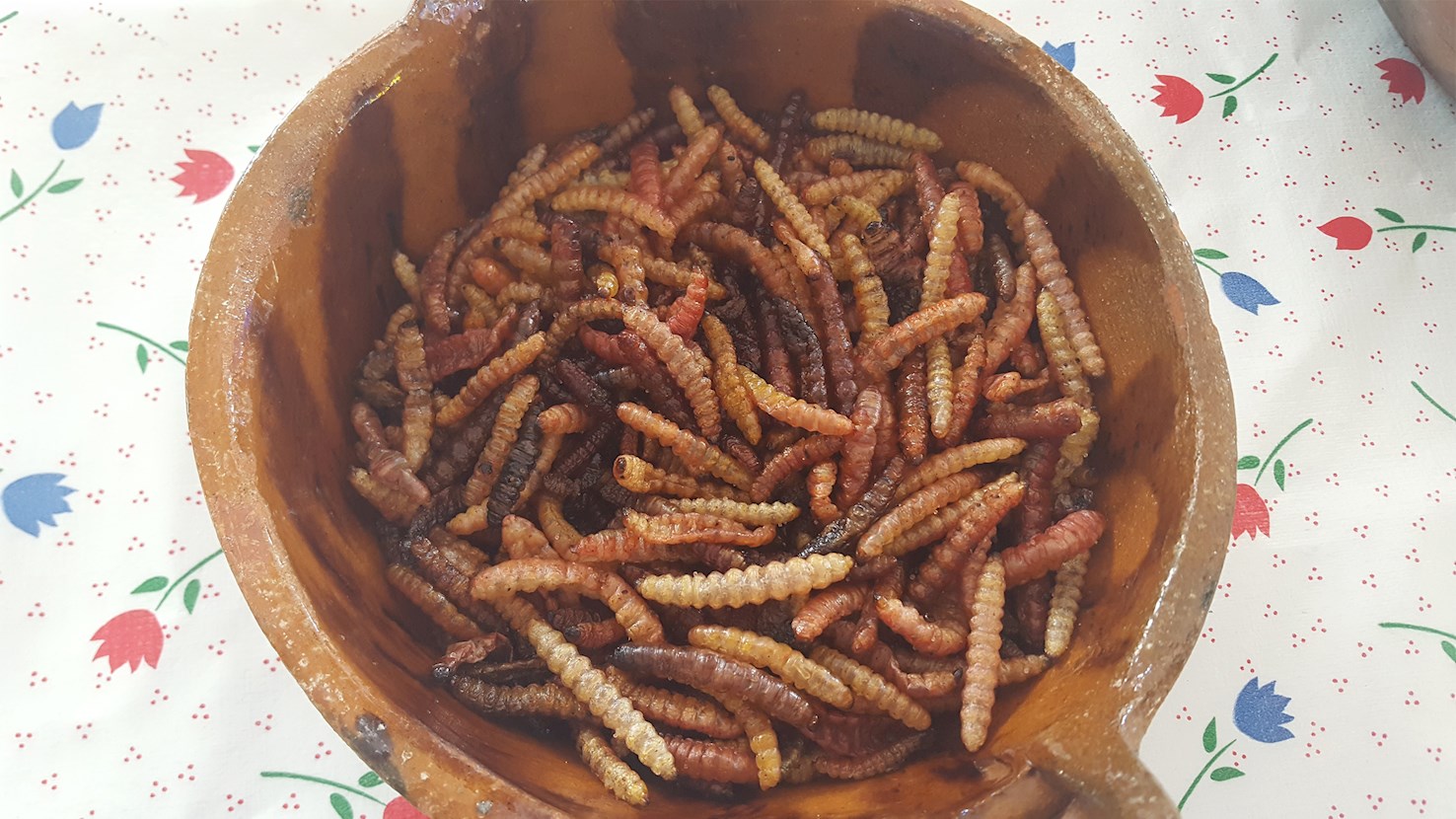
Chinicuiles is a Mexican dish prepared with maguey worms that infest the root of the maguey and agave plants before they're harvested for human consumption. They're traditionally harvested in Tlaxcala and Hidalgo. These worms are the same ones that can be found at the bottom of a mezcal bottle. They are red, fleshy, and very nutritious, containing high amounts of protein. The worms can be roasted or deep-fried, and they are usually served in a warm tortilla with green tomatoes, lime, chili, and salt. Chinicuiles can often be found in Oaxaca's markets. The flavor is nutty, compared to pork cracklings.
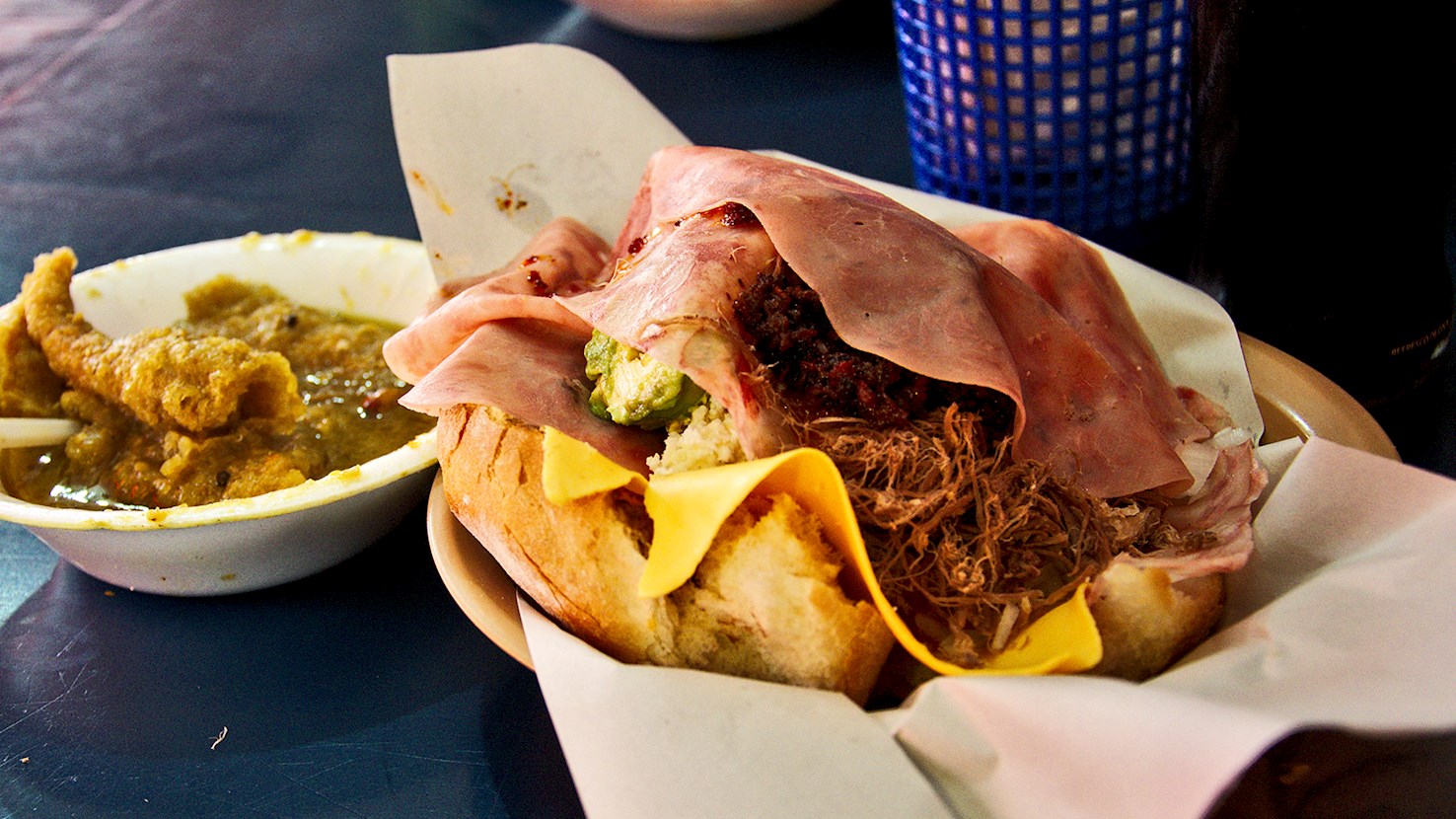
Torta de la barda is a traditional sandwich originating from the city of Tampico. The base is a crusty white bread roll called telera, bolillo, pan blanco, birote, or pan francés, depending on the region. The rolls are filled with shredded beef, pork rinds in green salsa, refried beans, pork cheese head, thinly sliced ham, cheese, tomatoes, onions, avocado slices, and Mexican chorizo. The sandwich is stuffed with a large number of ingredients because it was originally sold to marine and train station workers in the early 1930s from small stands that were setlled along the fence (barda) of the Tampico Marine Terminal and near the train station. Nowadays, during Lent, the sandwich is prepared with canned sardines instead of the meat fillings.
Jumiles are Mexican stinkbugs that were consumed since pre-Columbian times as a snack, a medicine, and an aphrodisiac. These bugs are usually toasted in a skillet, then used as a taco filling. They can also be ground and added to salsas or guacamole. The flavor of jumiles is often described as a mix between mint and cinnamon, somewhat sweet and bitter. In the past, Mexican Indians used them to treat liver, stomach, and kidney problems, but these bugs also have anesthetic and analgesic properties, useful when numbing a toothache. Jumiles are especially popular in Taxco.
TasteAtlas food rankings are based on the ratings of the TasteAtlas audience, with a series of mechanisms that recognize real users and that ignore bot,
nationalist or local patriotic ratings, and give additional value to the ratings of users that the system recognizes as knowledgeable.
For the “80 Worst Rated Mexican Foods” list until September 16, 2026, 44,701 ratings were recorded, of which 21,997 were recognized by the system as legitimate.
TasteAtlas Rankings should not be seen as the final global conclusion about food. Their purpose is to promote excellent local foods,
instill pride in traditional dishes, and arouse curiosity about dishes you haven’t tried.







What People Say