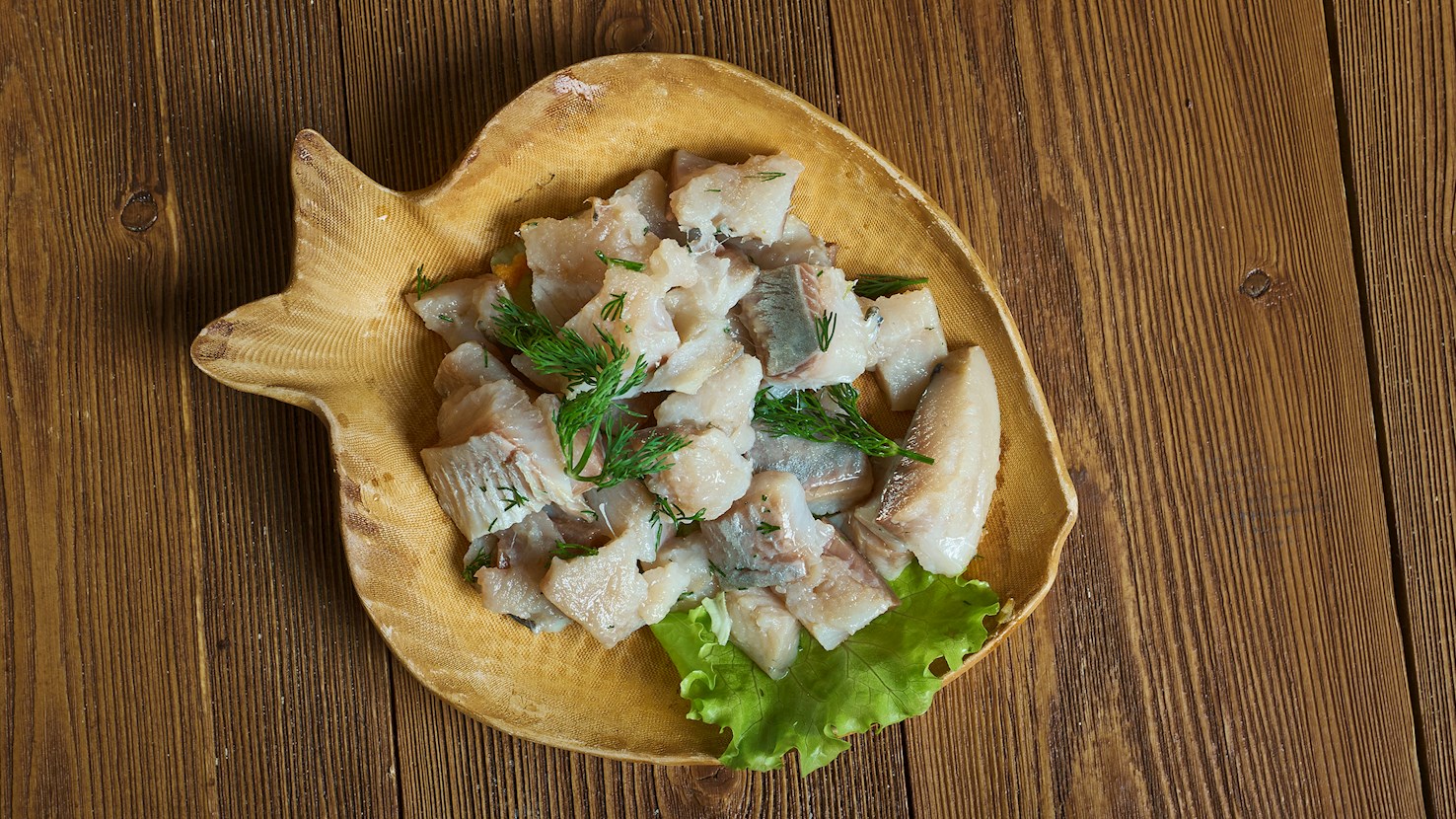
Indigirka is a Russian fish salad that has its origins in Yakutia (Sakha). It consists of diced frozen fish that is combined with onions, oil, salt, and pepper. The salad is typically made from whitefish such as broad whitefish (also known as chir), nelma, and muksun, and it is traditionally served in ice bowls. Indigirka salad first appeared in the middle of the 20th century and was named after the Indigirka River, one of the major Yakutian rivers. It is believed it was created by chef Innokenty Tarbakhov, who based it on a similar ethnic Yakutian dish made with raw fish called raw in the Yakut language or five minutes in Russian. The salad is occasionally accompanied by lemon wedges, but modern variations may include fish roe, fennel, as well as various dressings. This well-chilled appetizer ideally pairs with vodka.
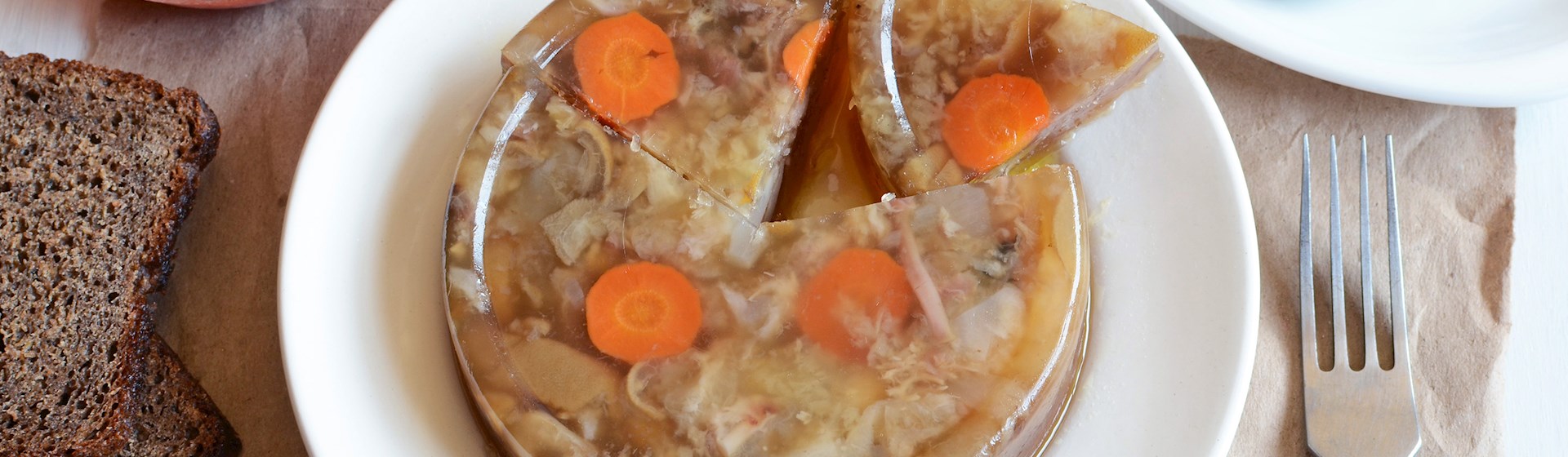
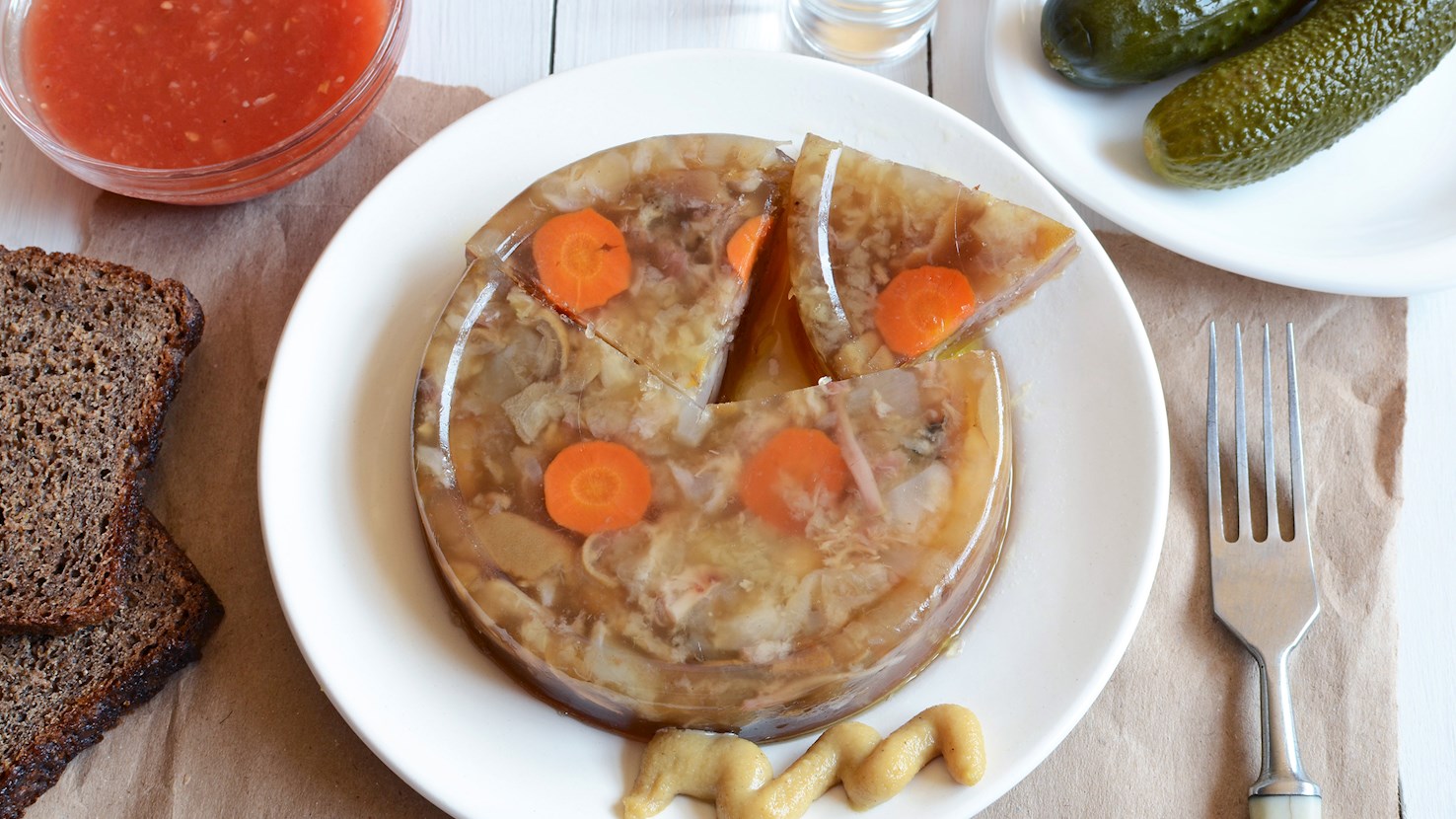
Kholodets is a traditional dish consisting of meat in gelatine. The name is derived from the Russian word kholod, meaning cold, referring to the fact that kholodets is always served cold. It is believed that the dish gained popularity during the 19th century, and it was mostly consumed by servants at the time. Kholodets is served as an appetizer, and it is recommended to pair it with a strong horseradish sauce, a bit of hot Russian mustard, and a glass of vodka.
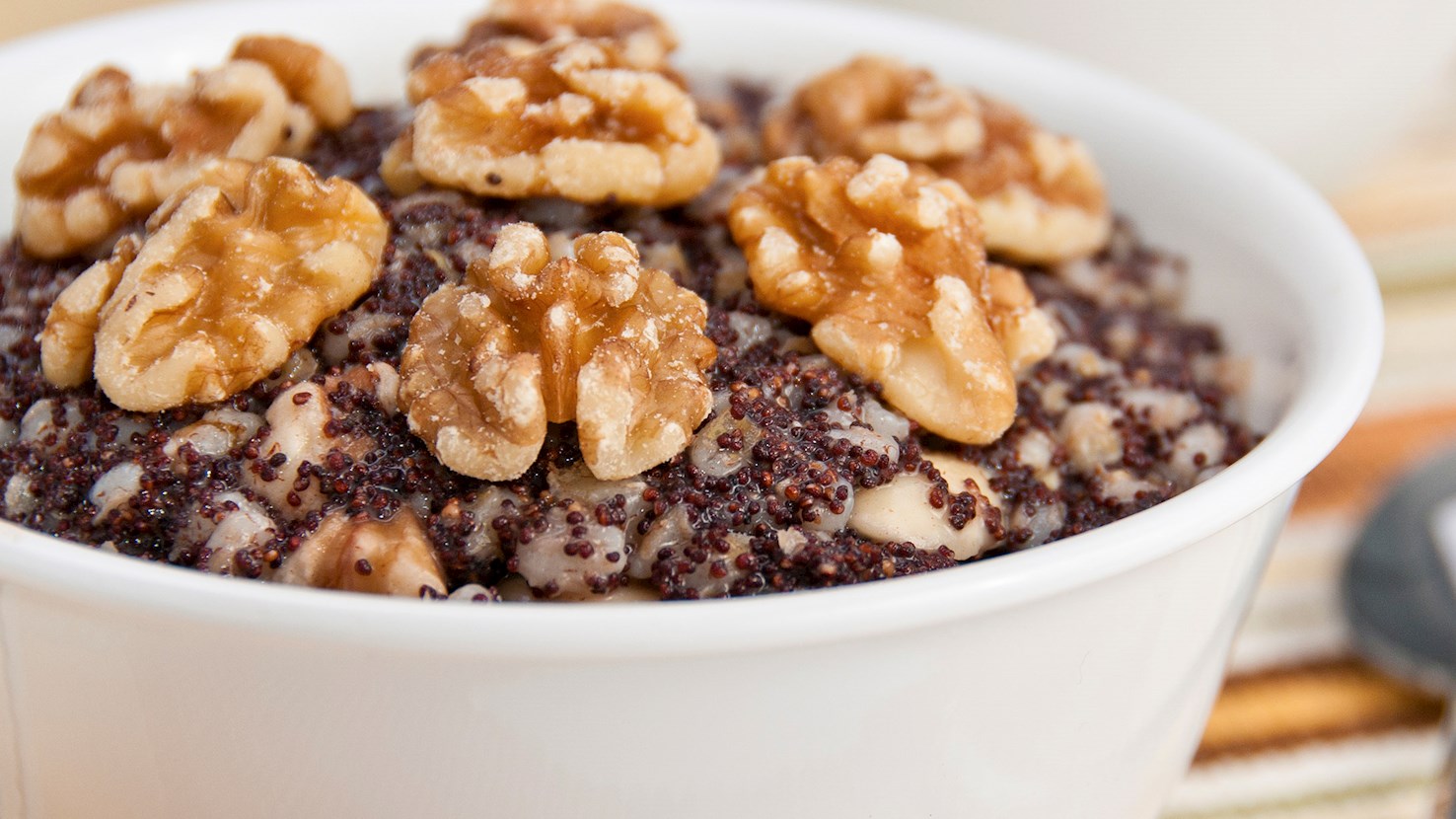
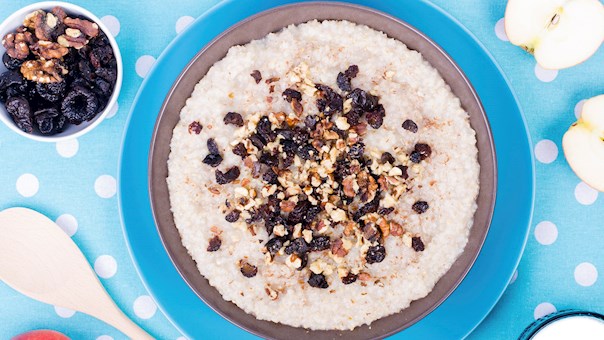
Kutia is a Ukrainian, Russian, Belarusian, and Polish sweet grain pudding that is traditionally served as part of a twelve-meal Christmas Eve supper. Interestingly enough, this festive treat is believed to have existed long before Christianity. It is made with wheat, berries, honey or sugar, nuts, raisins, and poppy seeds.On Christmas Eve, before consuming the dish, a small bowl of kutia is traditionally placed outdoors as a bribe to Father Frost, then some of the kutia is tossed to the ceiling, and the number of grains that stick to the ceiling are used to predict next year's agricultural prosperity.
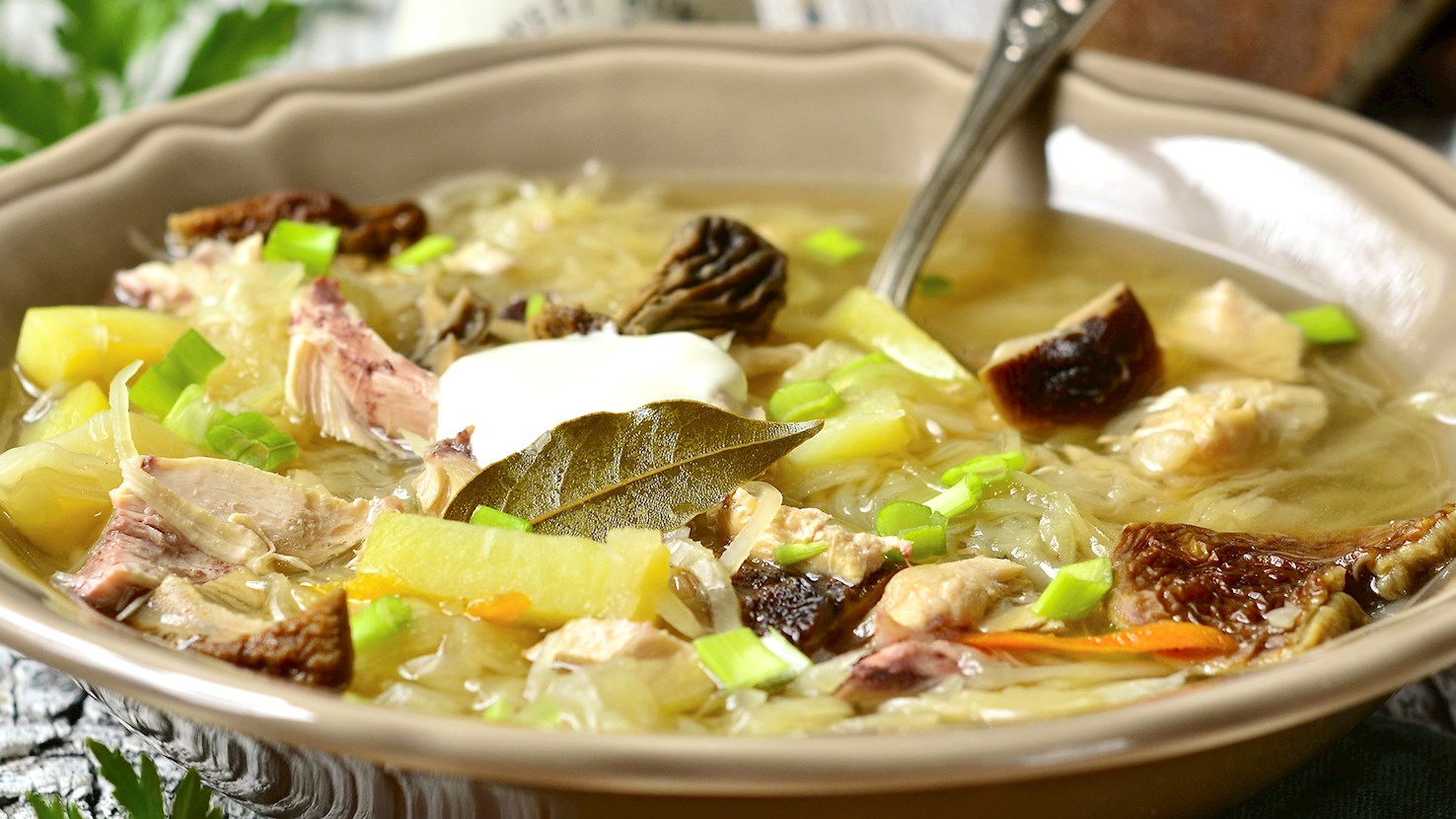
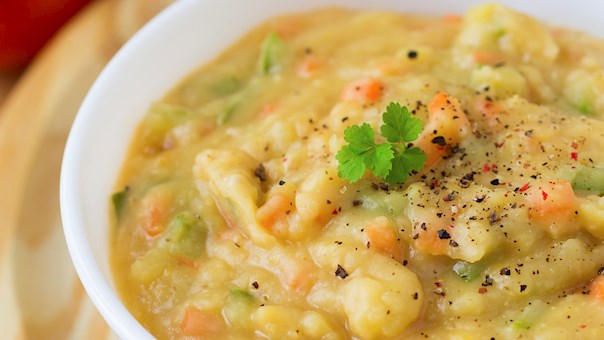
Shchi is a popular, traditional Russian soup made with sour cabbage, meat, mushrooms, flour, and seasonings. Originally, cabbage and meat such as beef, poultry, or pork were cooked separately, and smetana cream was added later as a garnish. The soup has been known since the 9th century, and over time, the ingredients have changed, so today the flour is not added to the dish, the spices are expanded with bay leaves and pepper, and meat is sometimes replaced by fish. Depending on the region, shchi may be called differently: if it's made with meat, it is called bogatye (rich), and if there is no meat, it is called pustye (empty) or bednye (poor). Shchi is traditionally served with a few slices of rye bread on the side.
Mishka na severe or Bear in the North started as an iconic Soviet candy from Leningrad, but over time it's been made into a cake inspired by the candy's flavors. Although there's no standard recipe, and every household had its own version, the cake's layers are usually made with a combination of flour, sugar, sour cream, butter, cocoa powder, baking soda, vanilla, and salt, while the creamy filling that goes between the layers is made with sour cream, powdered sugar, and walnuts or hazelnuts. Once assembled, the surface of the cake is covered with the remaining creamy filling, and it's then decorated with chopped nuts. After it has been well chilled, it's recommended to serve the cake with a cup of tea on the side.
Talkish kaleve is a traditional dessert originating from Tatarstan. These small pyramids are usually made with a combination of wheat flour, butter, honey, sugar, and water. The butter and flour are cooked in a pan, and the combination is then mixed with honey, water, and sugar. The complicated process of making talkish kaleve involves chilling the mass until it thickens, and it's then stretched, folded, and stretched again until it splits into thin white fibers.. The fibers are placed in small cups and left to chill before they're taken out of the cups and served.
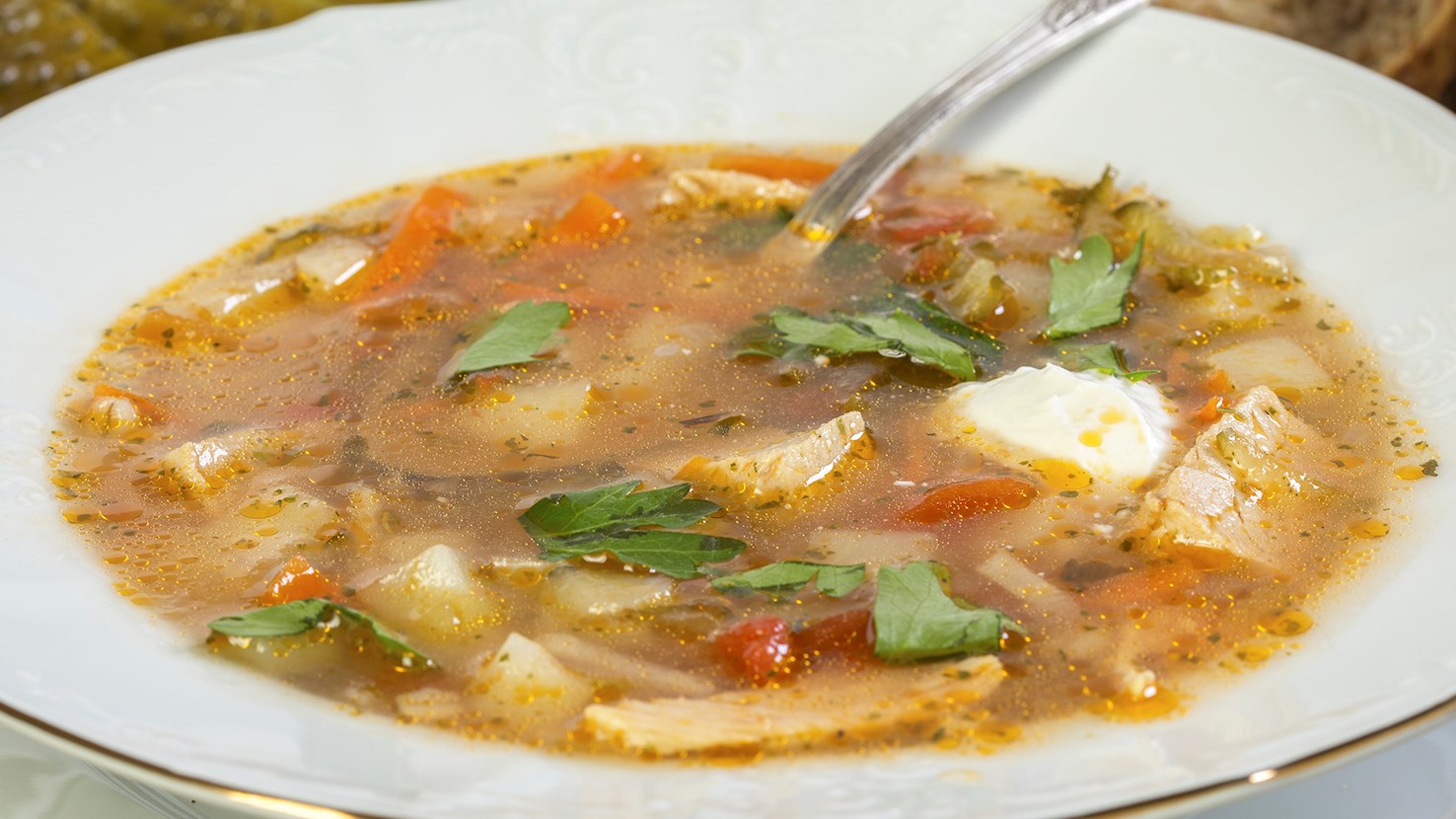
Rassolnik is a popular Russian soup with a unique aroma and flavor coming from pickled cucumbers, pearl barley, vegetables such as potatoes, onions, and carrots, fresh herbs, and offal such as chicken liver and beef or pork kidneys. Originally, rassolnik was called kalya and was made with fish instead of offal. It was often prepared as a meal for kings and nobles. Since the 19th century, kalya became rassolnik, and fish was left out of the equation. It is believed that rassolnik has great hangover-curing properties and today, the soup is usually garnished with finely chopped dill and a dollop of sour cream on top.
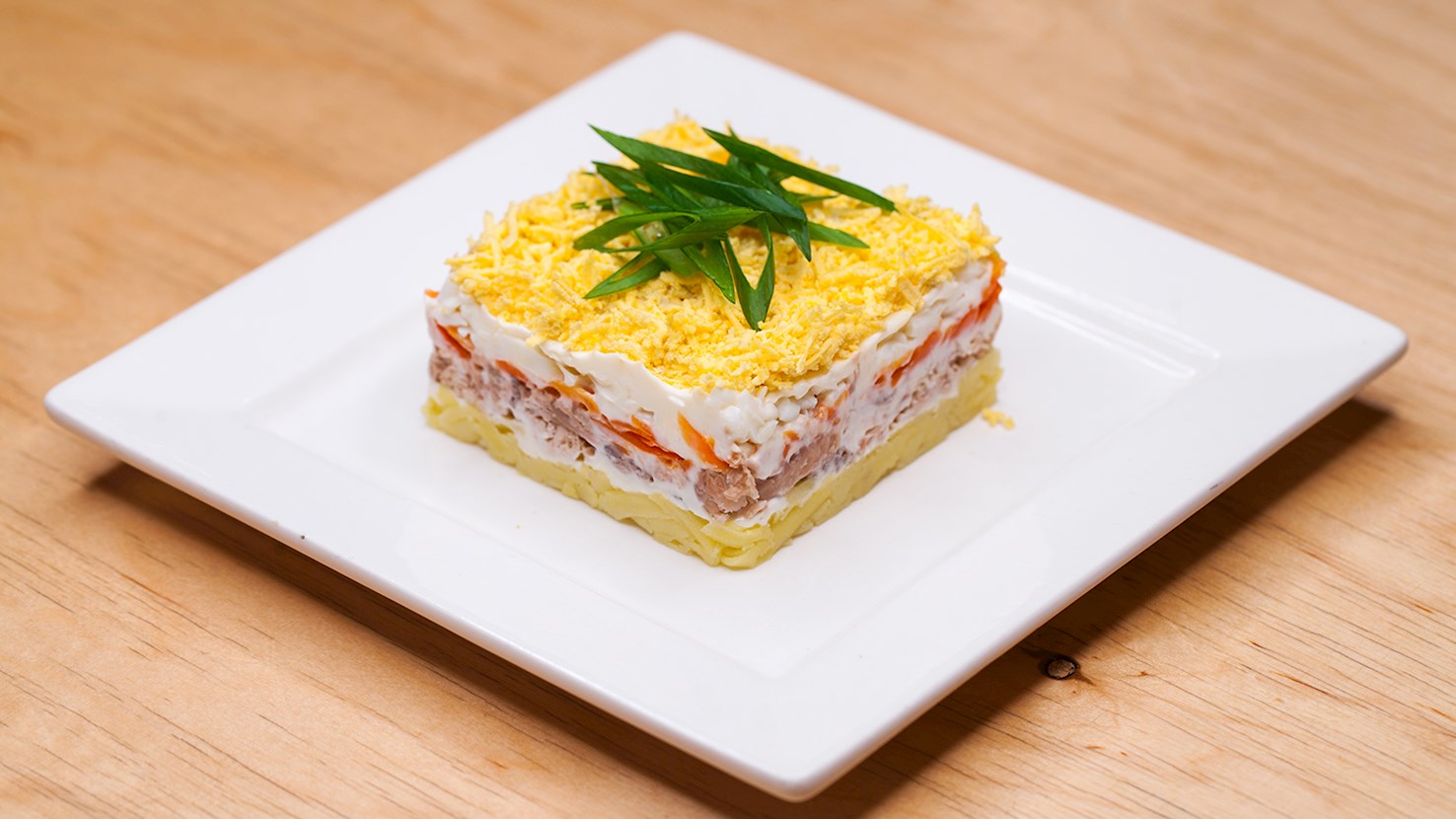
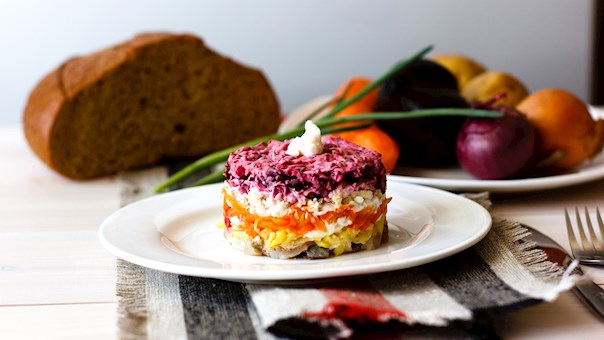
Mimoza is a traditional salad. It's prepared by layering different ingredients, and each one is separated by a light layer of mayonnaise. The ingredients include canned and mashed fish such as tuna, mackerel, salmon, or trout, boiled egg whites and yolks, onions, crumbled cheese, and sometimes boiled potatoes and carrots. Almost all of the ingredients used in the salad are finely grated. The boiled egg yolks are usually the final layer, hence the name of the salad, because it looks similar to the spring flowers. The salad is often garnished with chopped dill before serving.
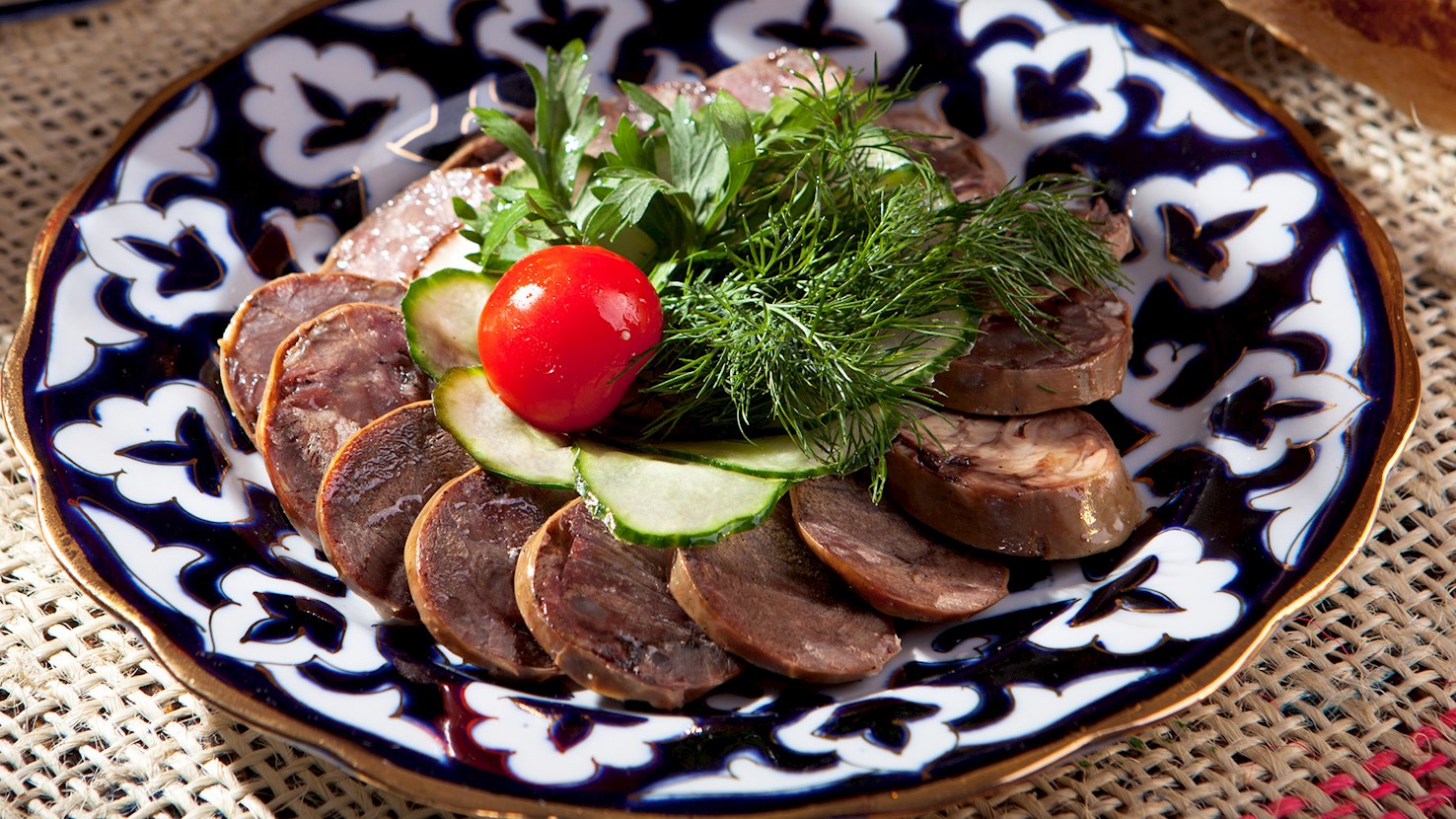
Qazı is a sausage made from horse rib meat and fat, prepared and consumed across Central Asia with its strongest identification in Kazakhstan, where it is regarded as a formal meat item associated with guest meals and ceremonial tables rather than daily cooking. Its formation is rooted in steppe pastoral systems in which horses played a central role in transport, economy, and food supply, and where slaughtering a horse was an infrequent but socially significant event that required preserving valuable cuts in ways that maintained both nutritional value and structure, leading to the development of whole-cut sausages that relied on salting, drying, and boiling rather than grinding or heavy seasoning. Preparation begins by separating rib meat and attached fat from the horse, cutting it into long strips, seasoning primarily with salt and occasionally black pepper or garlic, then stuffing the pieces tightly into cleaned horse intestines, tying the casing at intervals, and allowing the sausage to dry for a controlled period before being slowly boiled until fully cooked, with care taken to avoid splitting so the fat remains enclosed. Serving typically involves slicing the cooked qazı into thick rounds and arranging it prominently on a platter or incorporating it into dishes built around dough and broth such as beshbarmak, while in some contexts it is cooled and served in thinner slices as part of a cold meat spread. What distinguishes qazı is that it is made from intact muscle and fat rather than minced meat, preserving a visible pattern inside each slice and linking the product directly to a specific anatomical cut, a practice that reinforces its status and limits substitution with other meats. It is eaten during large family gatherings, weddings, commemorative meals, and honored guest occasions, shared communally and often served early in the meal, and it pairs naturally with flat noodles or dough sheets, onions softened in broth, and clear soups, while beverages such as black tea, fermented mare’s milk, or lightly salted broth accompany it to balance its richness without adding sweetness or acidity.
Kissel is an interesting fruit combination, often referred to as a dessert drink or soup, usually made with refreshing summer berries. It is prepared with water, mashed fruit or fruit juice, and thickening agents such as cornstarch or potato starch. Kissel can be served hot or cold, and depending on the amount of starch, its consistency varies from liquid to firm and creamy. Liquid kissel is most often served as a drink, or a soup variation, when it is combined with sliced fruit and eaten with a spoon. The firm variety is usually eaten as a refreshing cold dessert, commonly topped with cream, and often combined with pancakes and waffles. Russians prefer to make their traditional kissel with cranberries, cherries, and redcurrants. However, kissel and its variations are also commonly eaten in Poland, Lithuania, Finland, Ukraine, Latvia, and Estonia. Typically, each country has a special and favorite fruit to employ in kissel, such as gooseberries, raspberries, and even the tart rhubarb. In Russia, kissel is regarded as an ancient dish, with its first written mention dating back to the 12th century. It is an important part of Russian tradition and a dish often described in myths and folk tales. Today, in Russian households is it usually prepared with a store-bought powder mix, but the freshly prepared kissel, with luscious summer fruit, is still considered the ultimate version of the dish.
TasteAtlas food rankings are based on the ratings of the TasteAtlas audience, with a series of mechanisms that recognize real users and that ignore bot,
nationalist or local patriotic ratings, and give additional value to the ratings of users that the system recognizes as knowledgeable.
For the “40 Worst Rated Russian Foods” list until September 16, 2026, 8,808 ratings were recorded, of which 6,290 were recognized by the system as legitimate.
TasteAtlas Rankings should not be seen as the final global conclusion about food. Their purpose is to promote excellent local foods,
instill pride in traditional dishes, and arouse curiosity about dishes you haven’t tried.







What People Say