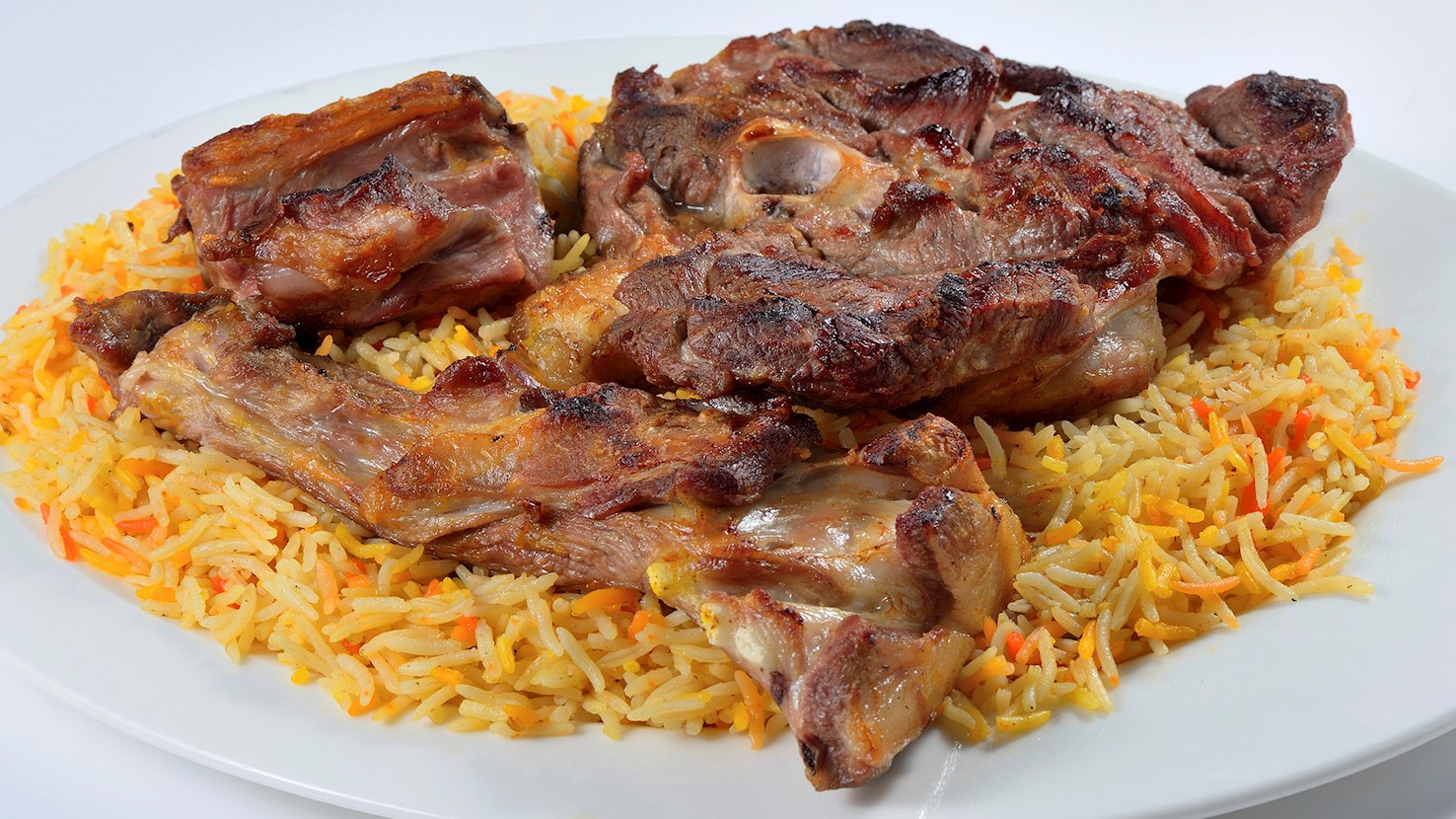
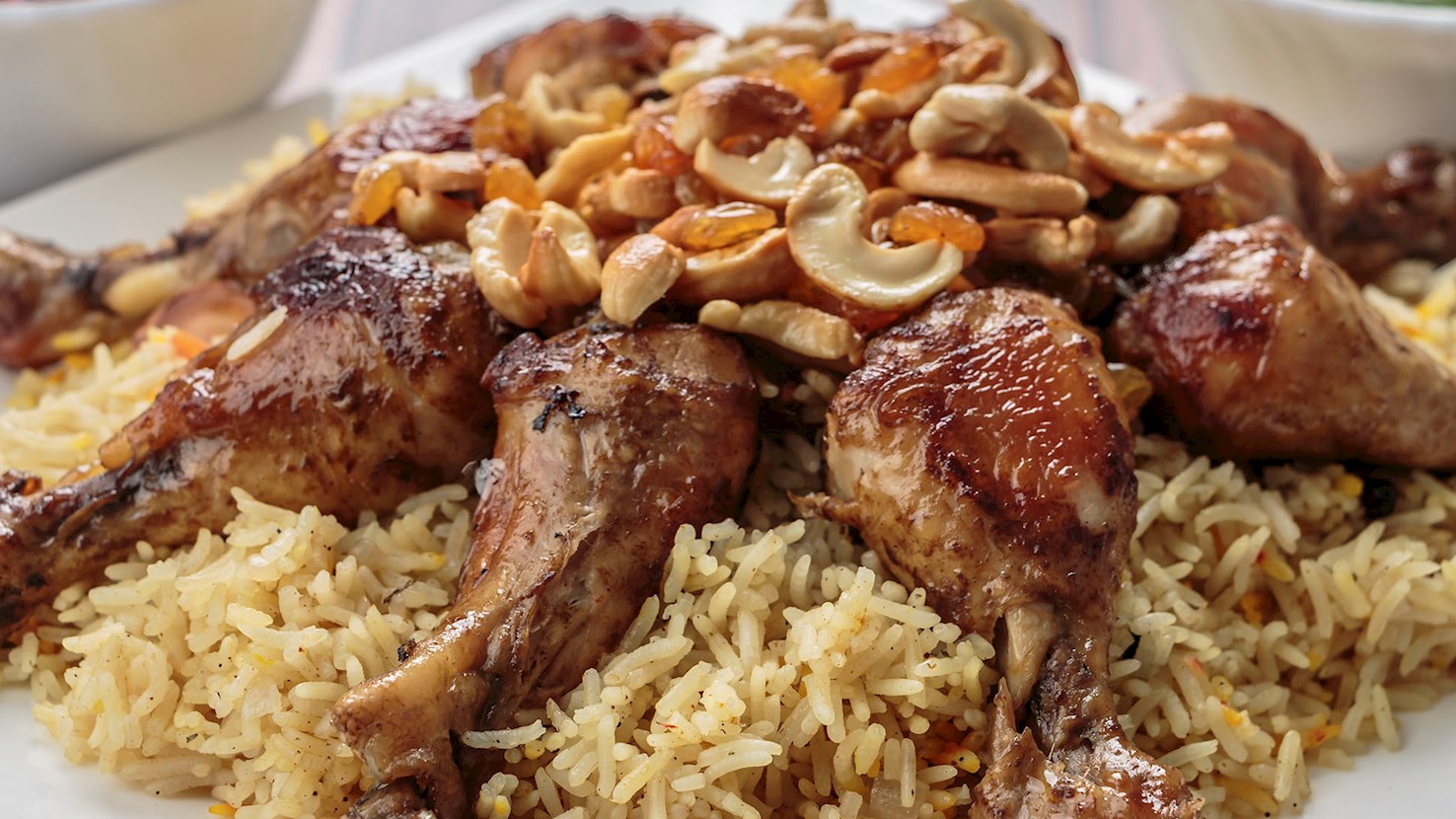
Madfoon is one of numerous Arabian meals made with a combination of meat and rice. This signature dish is differentiated by a cooking technique in which the marinated meat is cooked in an underground hole where it is placed on the sand and surrounded by charcoal. The smoke and heat slowly cook the meat, keeping it succulent and tender while providing it with a slightly smoky flavor and aroma. It is believed that this cooking method was inherited from the nomadic period, when traditional ovens did not exist and cooking meat underground was a convenient way to utilize nature and keep the meat protected from hungry predators. Nowadays, the madfoon technique - usually associated with the Yemeni city of Al Hudaydah - has been slightly modernized, but continues to produce the same authentic dish. It is prepared with chicken and lamb (with meat left on the bone) that is spiced with coriander, cumin, pepper, cloves, and turmeric. After several hours of cooking, the meat is tender and moist, thoroughly infused with spices. The meat is served on top of saffron rice, and it is usually accompanied by yogurt and a spicy chili sauce. Since it takes a lot of time to prepare and cook madfoon, it is only found in specialized restaurants across the Arabian Peninsula.
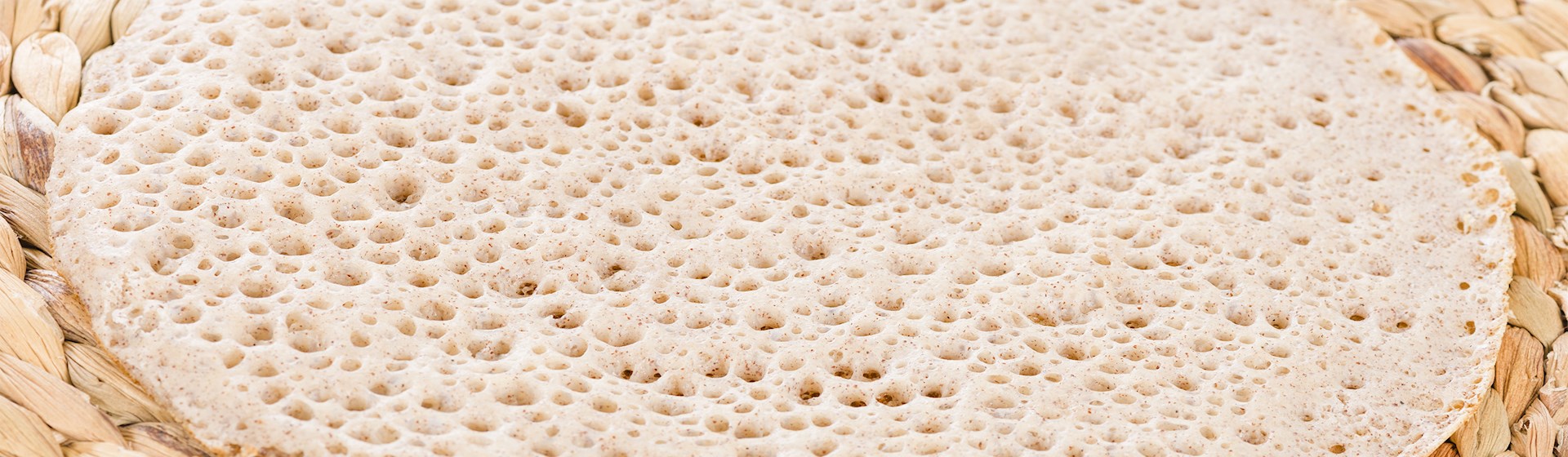
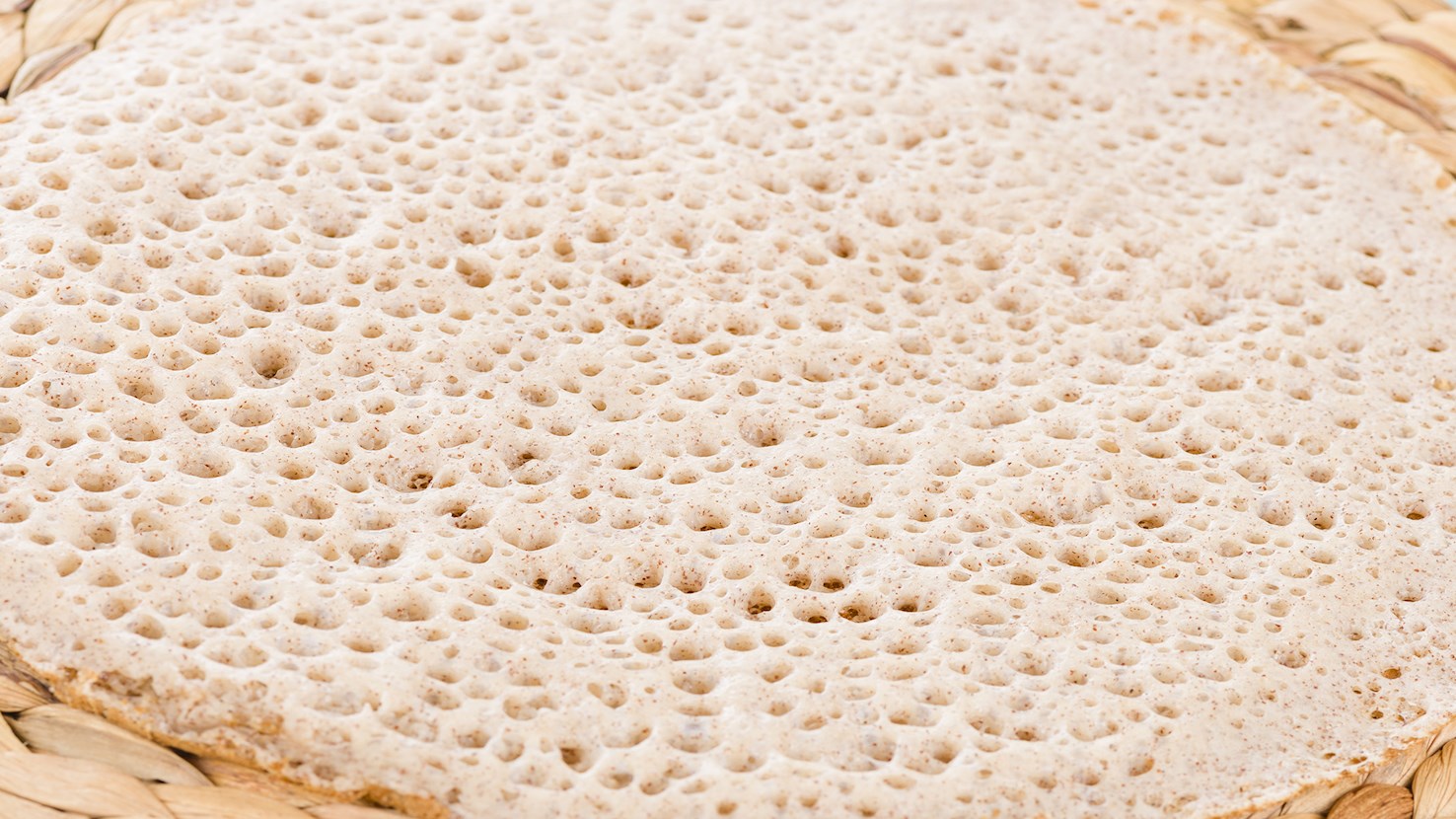
Lahoh is a spongy flatbread popular throughout Somalia, Ethiopia, and Djibouti, among others. It is characterized by its circular shape with numerous holes on the surface. This pancake-like bread is made with plain flour, unlike its cousin injera which is usually made with teff flour. Lahoh can be consumed with both sweet and savory ingredients and dishes such as honey, sugar, stews, or soups.
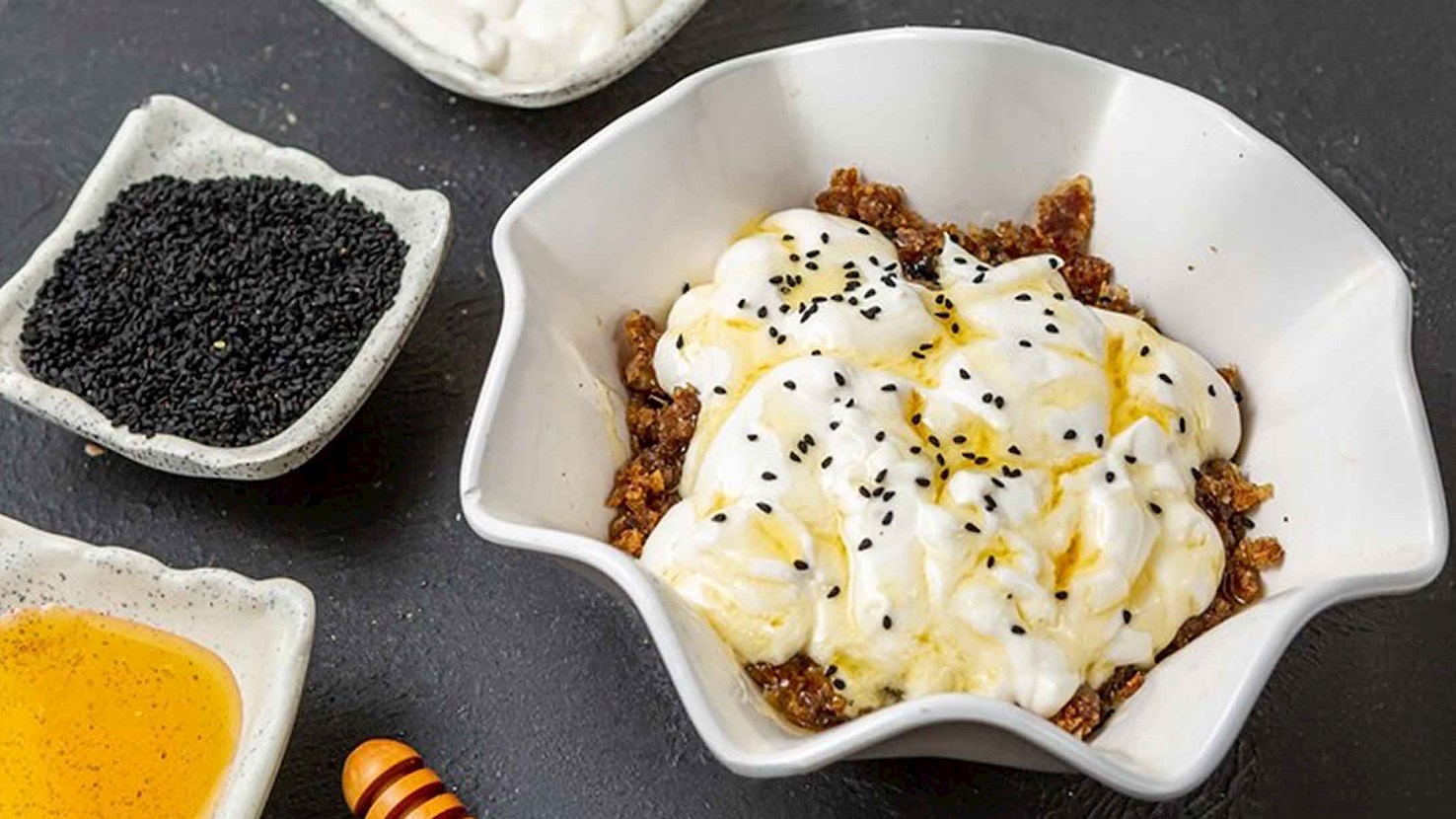
Masoub is a Yemeni dessert that is popular throughout the Arabian peninsula. In its basic form, the dish consists of mashed bananas and bread that are usually enriched with butter, cream, spices, honey, and dates. Masoub is traditionally served on large plates, and it is meant to be enjoyed as a communal meal. It is often served as a breakfast dish, and usually comes garnished with cream, condensed milk, nuts, or honey.
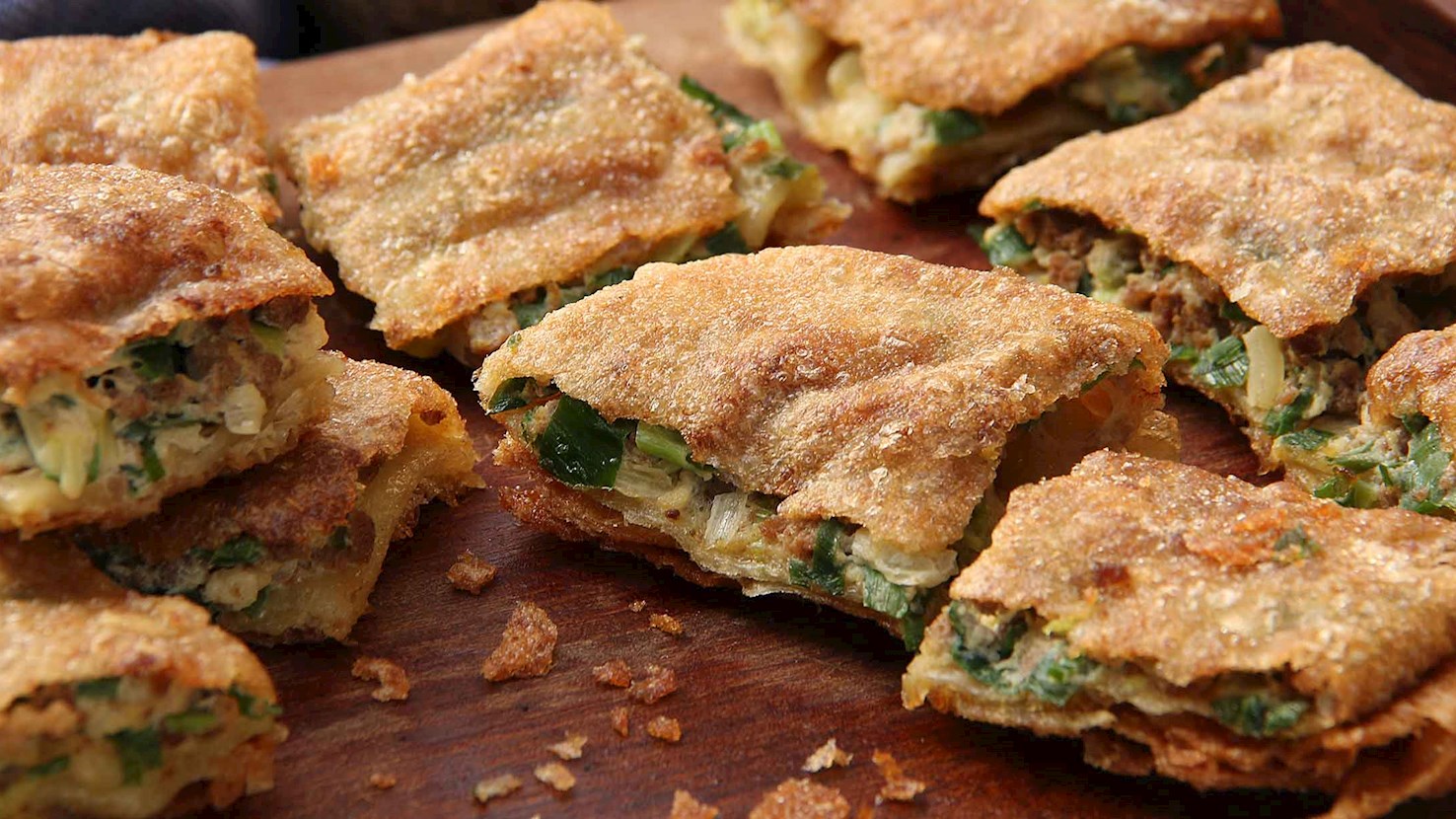
Martabak is a roti-like stuffed and fried pancake which is often served as a popular street food item in countries such as Saudi Arabia, Yemen, Indonesia, and Malaysia. Although the fillings may vary, some of the most popular ones include ground meat, eggs, garlic, onions, peppers, curry, and ghee. Fresh herbs such as coriander and mint are often used for additional flavoring. The flatbread dough is supposed to be extremely thin and requires a lot of expertise. Another name for the dish is mutabbaq, an Arabic word meaning folded, referring to the way in which the stretchy dough is folded around the filling during cooking. The end product is usually shaped like a rectangle, right after it develops a golden brown color on both sides. It is believed that martabak was invented in Yemen and Saudi Arabia around the same time, and as both countries have a large Indian population, it soon spread to other regions of the Arabic world, India, and Persia. Today, when martabak is not served fresh from street stalls, it can be found in numerous stores in its finished form, while sweet varieties called martabak manis are especially popular - filled with chocolate, peanuts, and sugar.
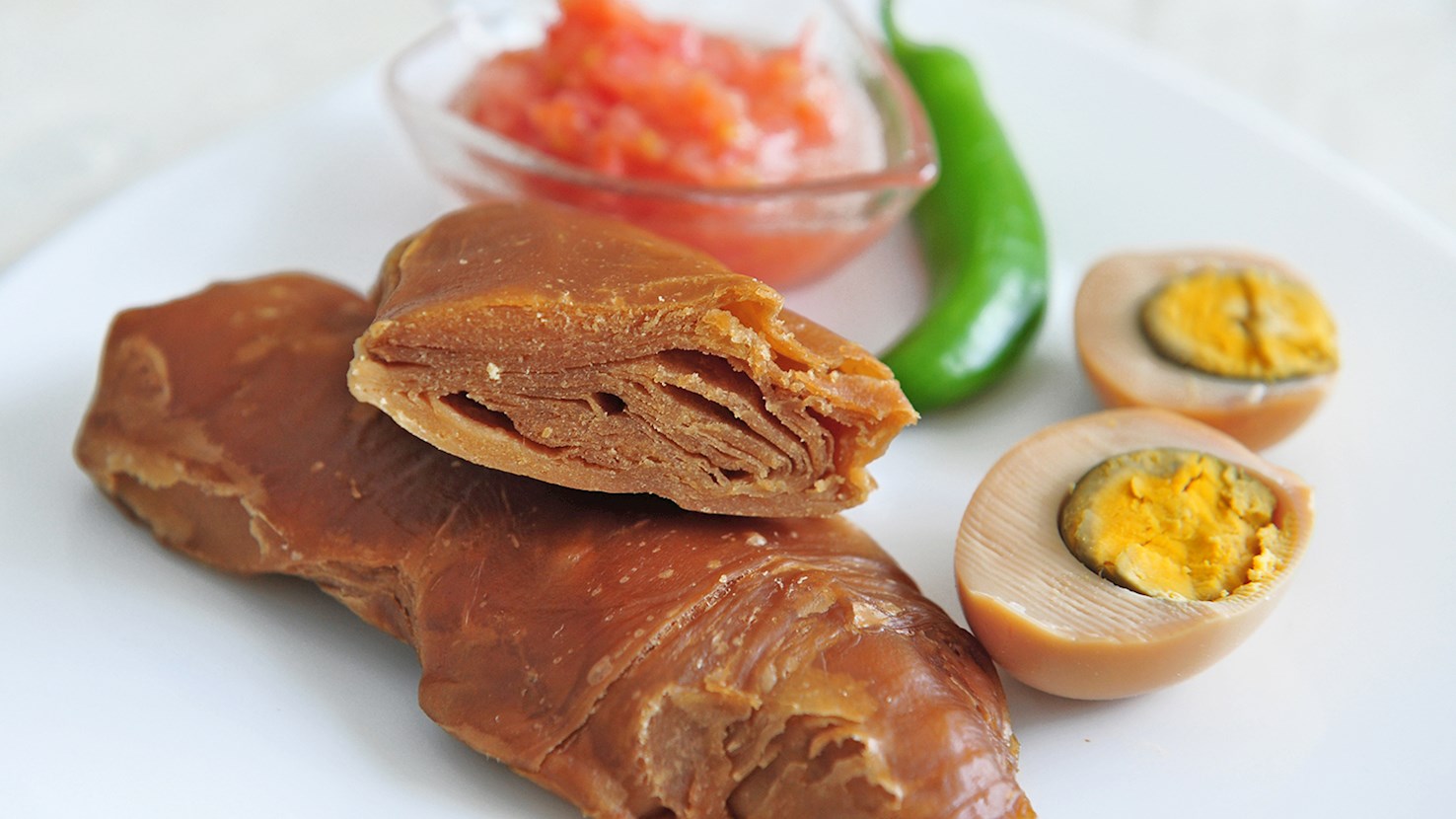
Jachnun is a slow-cooked, rolled dough dish from the cuisine of Yemenite Jews, prepared for consumption on Shabbat morning and today widely eaten in Israel. It consists of thinly stretched dough brushed with fat, rolled tightly, placed in a pot, and cooked at low heat overnight until it becomes soft, amber-colored, and slightly sweet. Its development took place among Jewish communities in Yemen, where cooks adapted local dough-making practices to meet the requirement of preparing Shabbat food in advance without active cooking on the day of rest. The long, low-temperature cooking method made use of the communal oven or a covered home vessel that maintained steady heat until morning. The ingredients were simple and based on what was reliably available, such as flour, water, clarified butter or later margarine, and a small amount of sweetener, with the slow cooking contributing strongly to the final flavor and texture. Preparation begins by kneading a soft, elastic dough and allowing it to rest so it can be stretched easily. The dough is then rolled out very thin, brushed with fat, folded and rolled into a compact cylinder, and arranged in a lidded pot. A small amount of fat or parchment is placed at the bottom to prevent sticking, and eggs in their shells are often added to the pot so they slowly cook alongside the jachnun. The pot is kept at low heat, traditionally overnight, until the dough darkens and takes on a tender, layered consistency. Jachnun is eaten in Israel in homes, bakeries, cafés, and weekend food stalls, especially on Saturday mornings. It is served with grated tomatoes, hard-boiled eggs, schug, and sometimes yogurt-based sauces depending on the household custom. It pairs well with tea or light herbal infusions, and in modern settings it is sometimes served with fresh salads or simple cold drinks that balance its richness and mild sweetness.
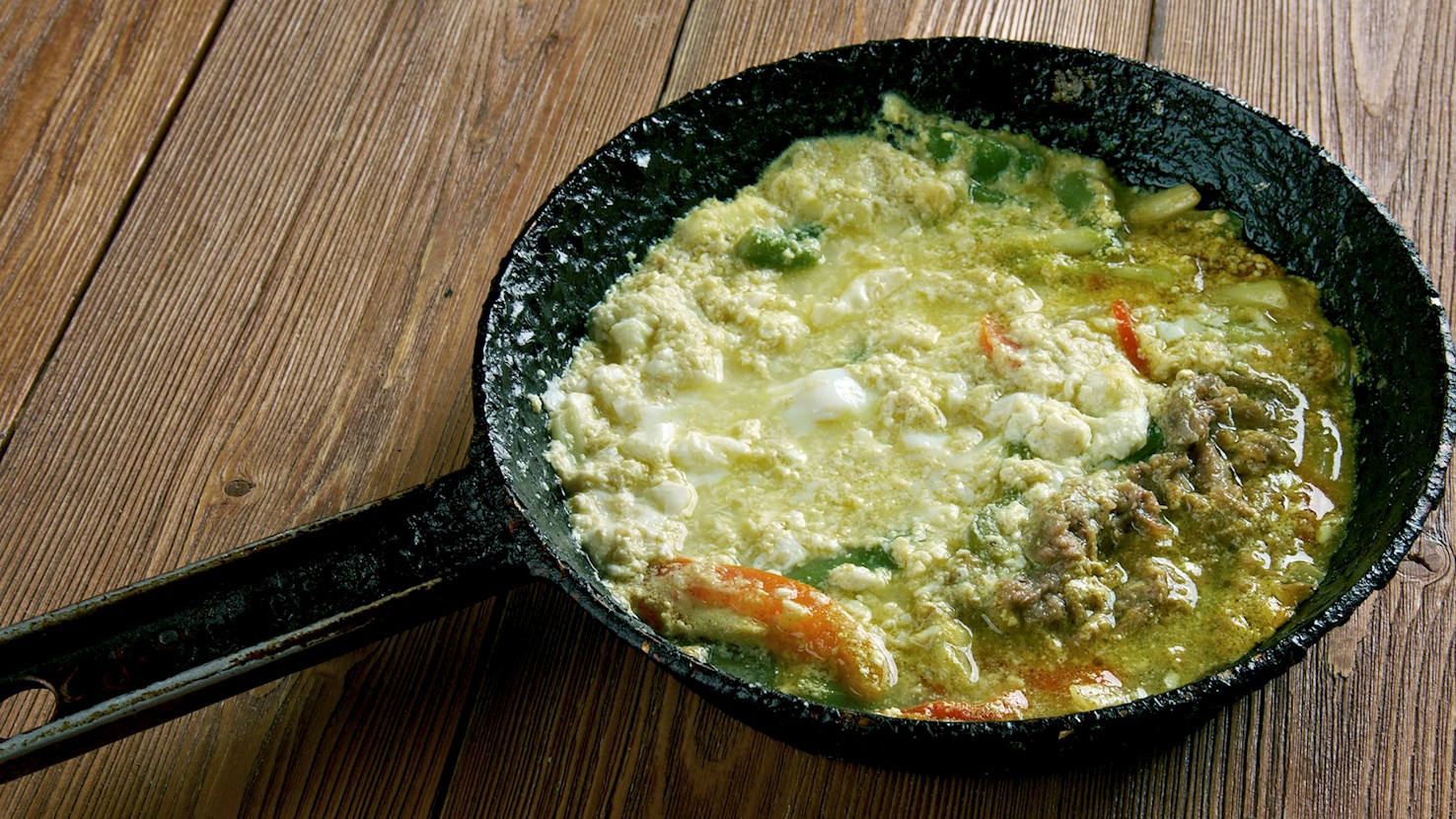
Saltah is the national dish of Yemen, a hearty stew usually eaten for lunch. It can be prepared with or without meat. The key ingredients in saltah are hilbeh, a condiment based on fenugreek, and zhug, a condiment consisting of chillies, oil, cumin, garlic and coriander. Hilbeh and zhug are added to the brown stew that often contains lamb or chicken meat, if used at all. It is quite likely that the dish is of Turkish origin when it was made from leftover ingredients. Common accompaniments to saltah include rice, tomato, potatoes, vegetables and scrambled eggs, and saltah is traditionally served piping hot in a metal or stone bowl and eaten with Yemeni flatbread that can serve as a utensil to scoop up the food.
Mandi is Yemen's national dish (also popular in Saudi Arabia), consisting of lamb or chicken meat, fragrant basmati rice and a mixture of various spices. If lamb is used in the dish, it should be small-sized and as young as possible, to further enhance the flavors. To make mandi, the meat should be cooked in the tandoor, a specially designed hole in the ground covered with clay and charcoal, acting as an oven for the suspended meat above it. It is then closed and no smoke is allowed to go outside as it flavors the meat instead. When the meat is tender and juicy, it is served with rice and accompaniments such as salads, yogurt, and spicy tomato chutneys. Beloved in all of the Arabian Peninsula, mandi is often served for special events, such as feasts and weddings.
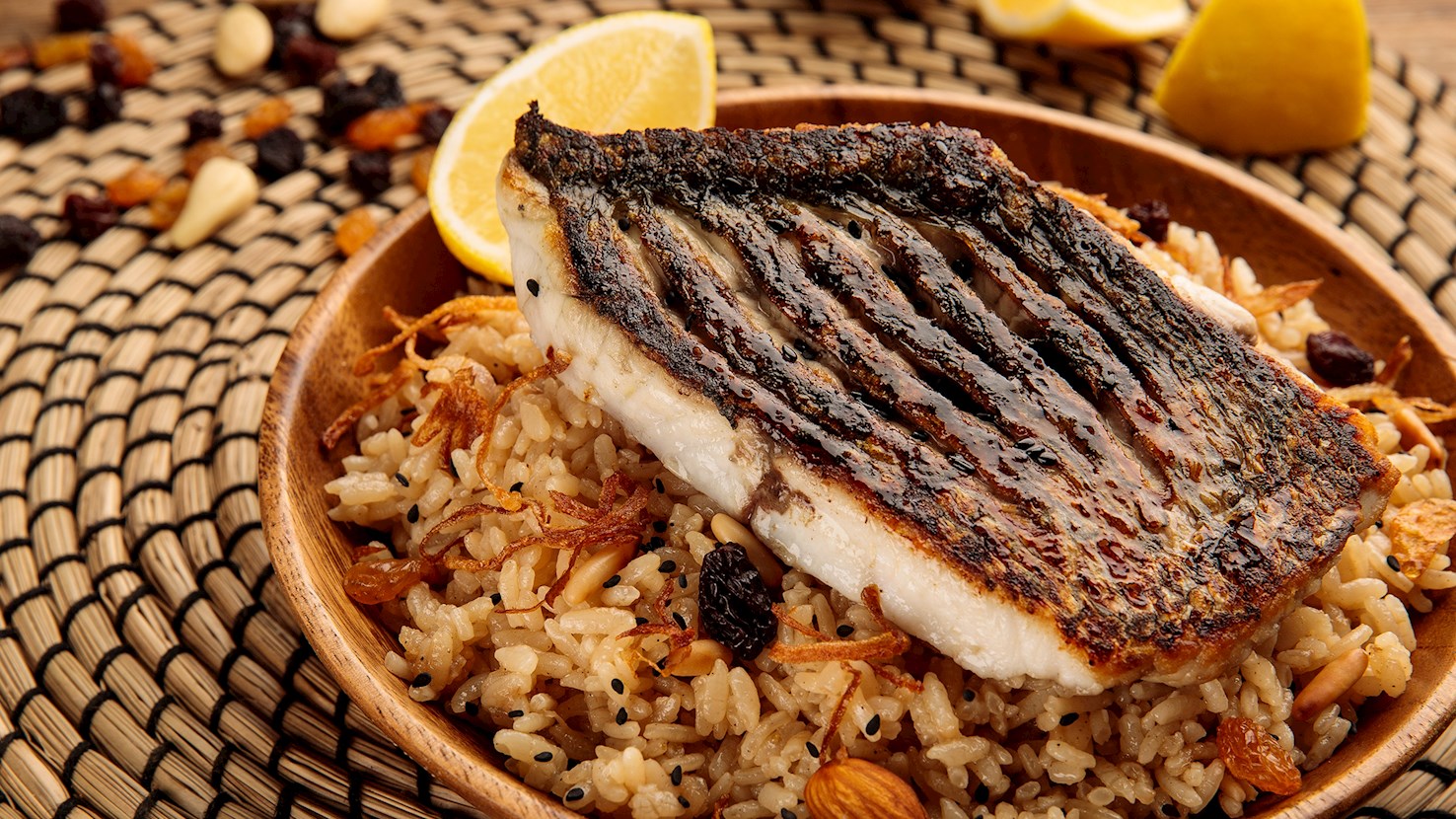
This traditional combination of rice and fish is typically prepared with white fish such as sea bass or red snapper. The fish is fried or baked separately, while the rice is cooked in a special fish broth that is prepared with fried onions and bahārāt - a traditional spice blend that usually employs allspice, peppercorns, cassia, coriander, cardamom, cumin, and chili peppers or paprika. The dish is traditionally served on one plate, topped with lightly toasted pine nuts and slivered almonds. If desired, a special sauce can be served on the side.
TasteAtlas food rankings are based on the ratings of the TasteAtlas audience, with a series of mechanisms that recognize real users and that ignore bot,
nationalist or local patriotic ratings, and give additional value to the ratings of users that the system recognizes as knowledgeable.
For the “8 Worst Rated Yemeni Foods” list until June 16, 2026, 1,674 ratings were recorded, of which 701 were recognized by the system as legitimate.
TasteAtlas Rankings should not be seen as the final global conclusion about food. Their purpose is to promote excellent local foods,
instill pride in traditional dishes, and arouse curiosity about dishes you haven’t tried.