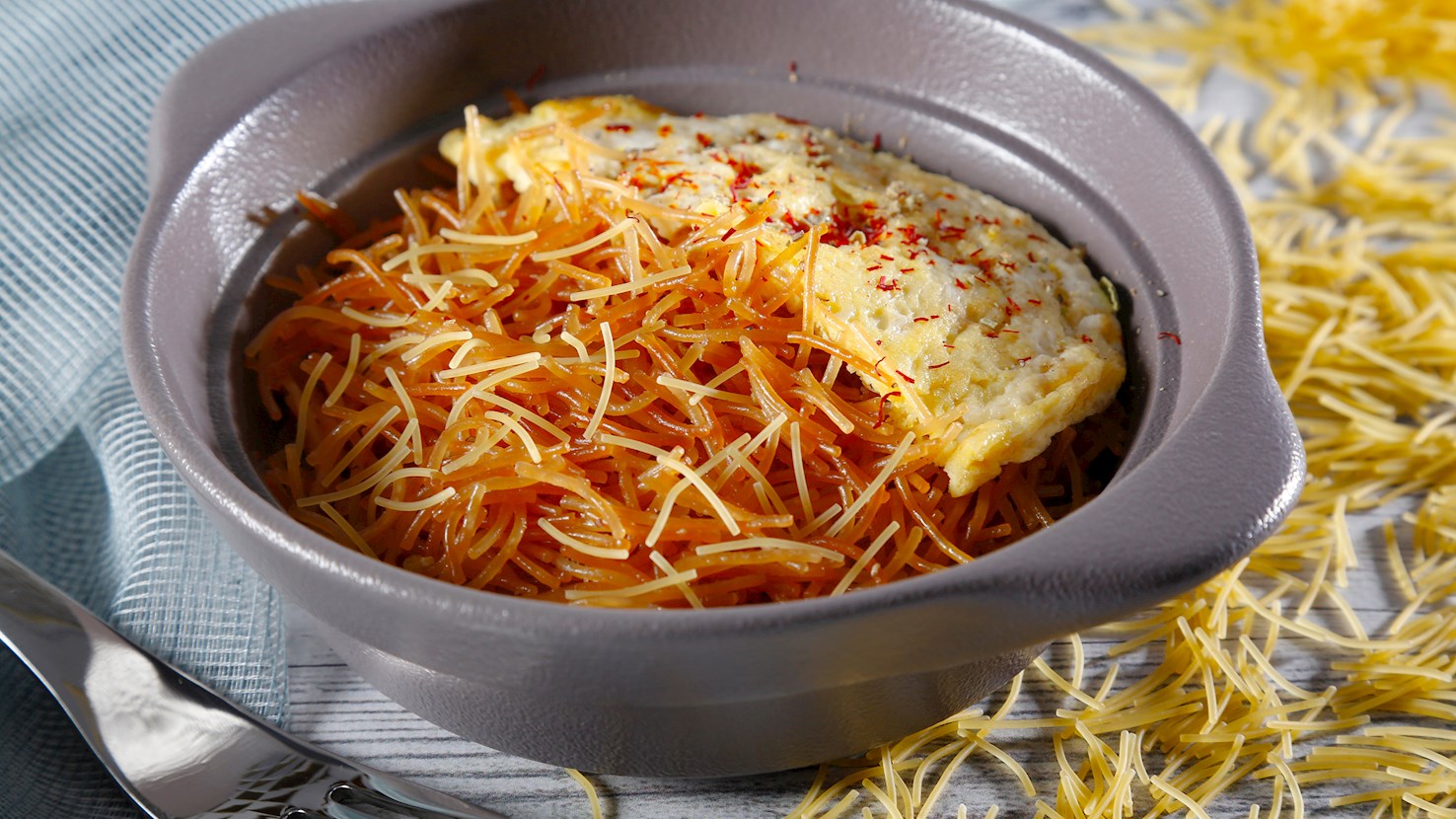
The sweet and savory balaleet is a breakfast dish that can be found in the Arab states of the Persian Gulf. It is typically made with vermicelli, eggs, cardamom, saffron, butter, and water, but it can also include rosewater, nuts, dried fruits, and honey. The aromatic mixture is topped with an omelet and served hot or cold, usually for breakfast. During the month of Ramadan, however, it is also served for dinner.
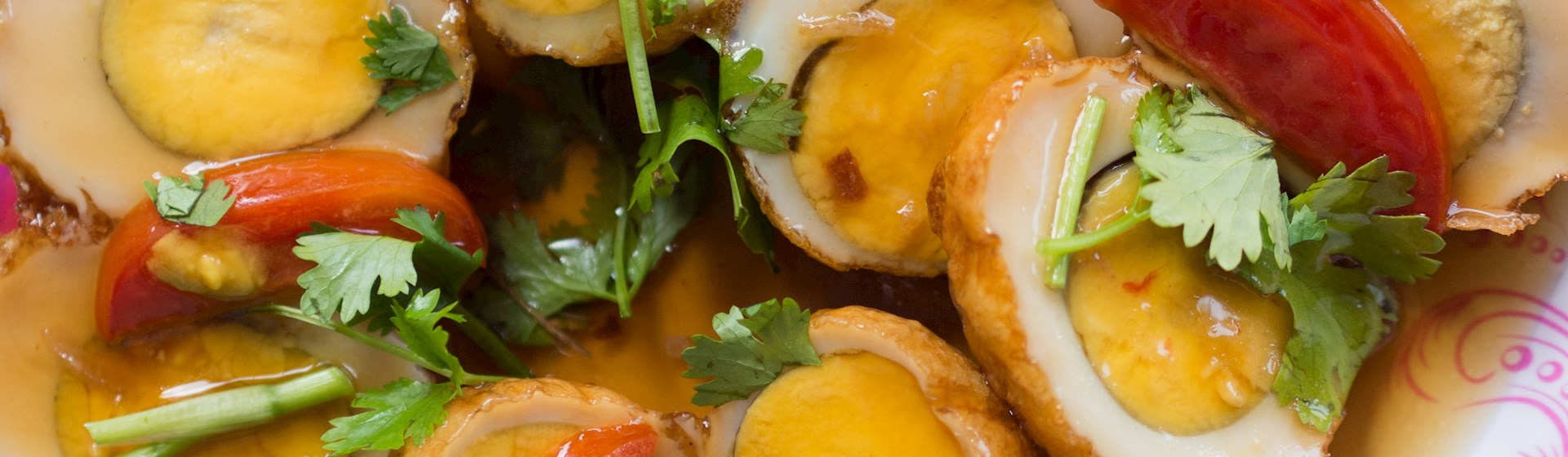
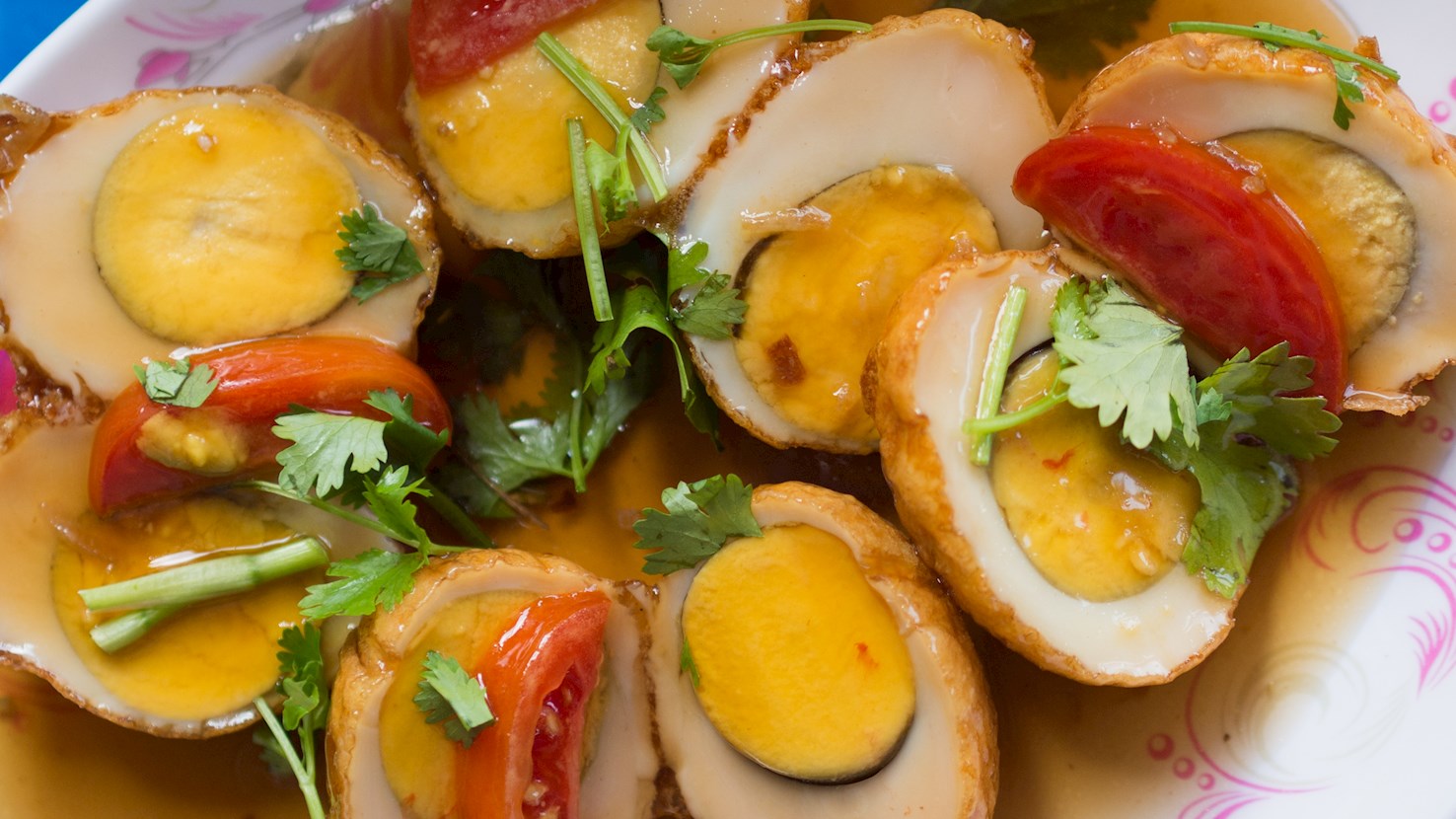
Khai luk khoei or son-in-law eggs is a traditional dish from Thailand. It's made with a combination of hard-boiled eggs, sugar, fish sauce, shallots, chili peppers, tamarind pulp, and cilantro sprigs for garnish. The peeled, hard-boiled eggs are fried in hot oil, then taken out to cool down. A sauce consisting of shallot oil, fish sauce, tamarind pulp, water, and sugar is then prepared in the same pan until it develops a slightly thick consistency. The eggs are then sliced in half, arranged on a platter, and drizzled over with the sauce. Before serving, this sweet and sour dish is garnished with cilantro sprigs, chili peppers, and fried shallots. The name of the dish can mean one or two things: some believe that the golden eggs act as a symbol of wealth (apparently a son-in-law wanted to impress his mother-in-law so he prepared this dish), while others claim that the eggs stand for the son-in-law's testicles - if he doesn't act properly with his wife, his mother-in-law would come and cook this dish the first time, but next time she'd threaten to use his testicles in the dish instead of the eggs.
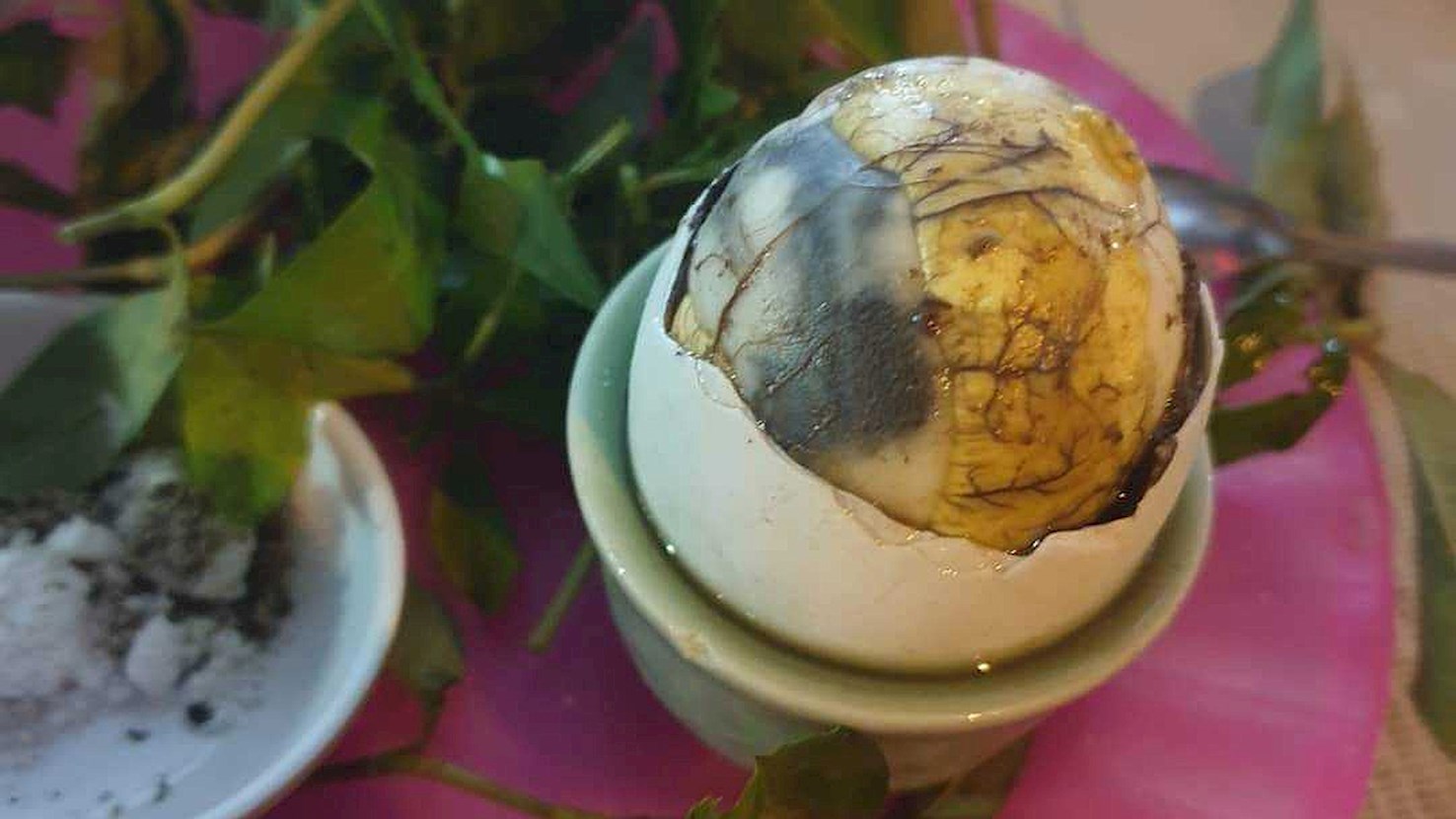
Balut is a popular, although unusual Filipino delicacy, served everywhere from street stalls to upscale restaurants. It is a duck egg that has been hard-boiled, fertilized, and incubated. Traditionally, the cooked embryo is consumed straight from the shell. It is considered an aphrodisiac that is commonly paired with a cold beer on the side. The dish can be seasoned with chili, garlic, vinegar, salt, lemon juice, ground pepper, and mint leaves. It can also be cooked in omelets or used as a filling for pastries. Although balut is closely associated with Filipino cuisine and has achieved popularity throughout the world, it is still considered a poor man's meal in the Philippines.
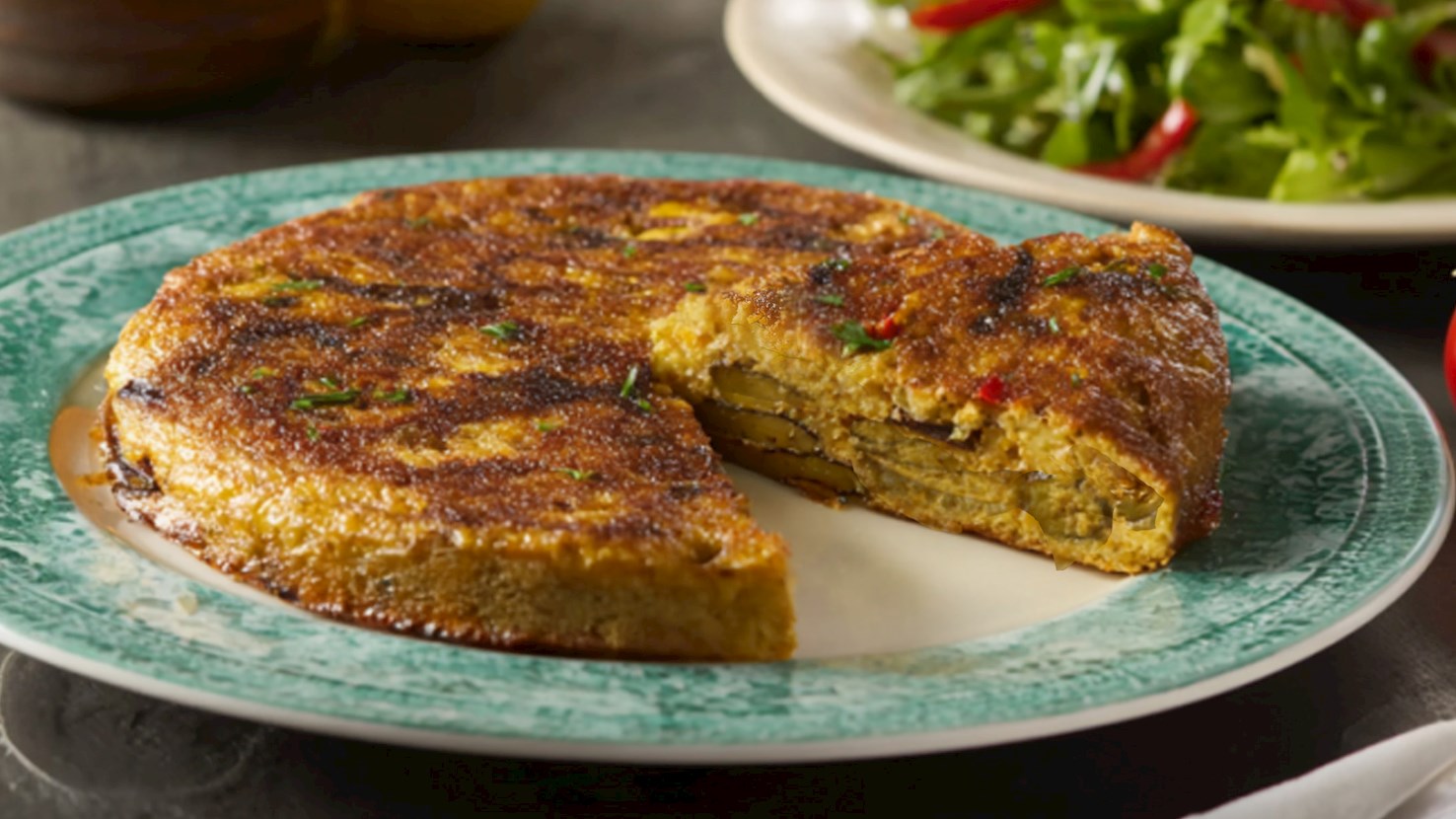
Kuku bademjan is a savory Persian egg-based dish prepared with eggplants, commonly enjoyed across Iran as a main or side course. It belongs to the broader family of kuku recipes, which are similar to frittatas and often combine eggs with vegetables or herbs. The history of kuku as a cooking method dates back centuries, with references in Persian culinary manuscripts to dishes that bind seasonal vegetables with eggs to create a nourishing and economical meal. Over time, variations developed to showcase regional produce, and eggplant became a favored choice because of its soft texture and ability to absorb flavors. As eggplants spread from India and the Middle East to Iran, they gained prominence in many dishes, including stews and kuku preparations. To make kuku bademjan, eggplants are peeled and sliced before being salted and left to rest briefly to reduce bitterness. They are then fried or sautéed in oil until tender and lightly golden. In a bowl, the cooked eggplants are combined with beaten eggs, finely chopped onions, turmeric, salt, black pepper, and sometimes crushed garlic or fresh herbs such as parsley or dill. This mixture is poured into a skillet and cooked over gentle heat until the eggs set and the edges become crisp. In some recipes, the pan is briefly finished in the oven to firm the center without burning the bottom. Kuku bademjan is cut into wedges or squares for serving. It can be served hot, warm, or cold, and is often accompanied by fresh herbs, flatbreads like lavash or sangak, and a side of yogurt or torshi (pickled vegetables). The combination of soft eggplant and fluffy eggs creates a texture that pairs well with rice dishes and salads. Kuku bademjan is commonly eaten at family gatherings, picnics, and as part of shared meals where multiple small dishes are presented together.
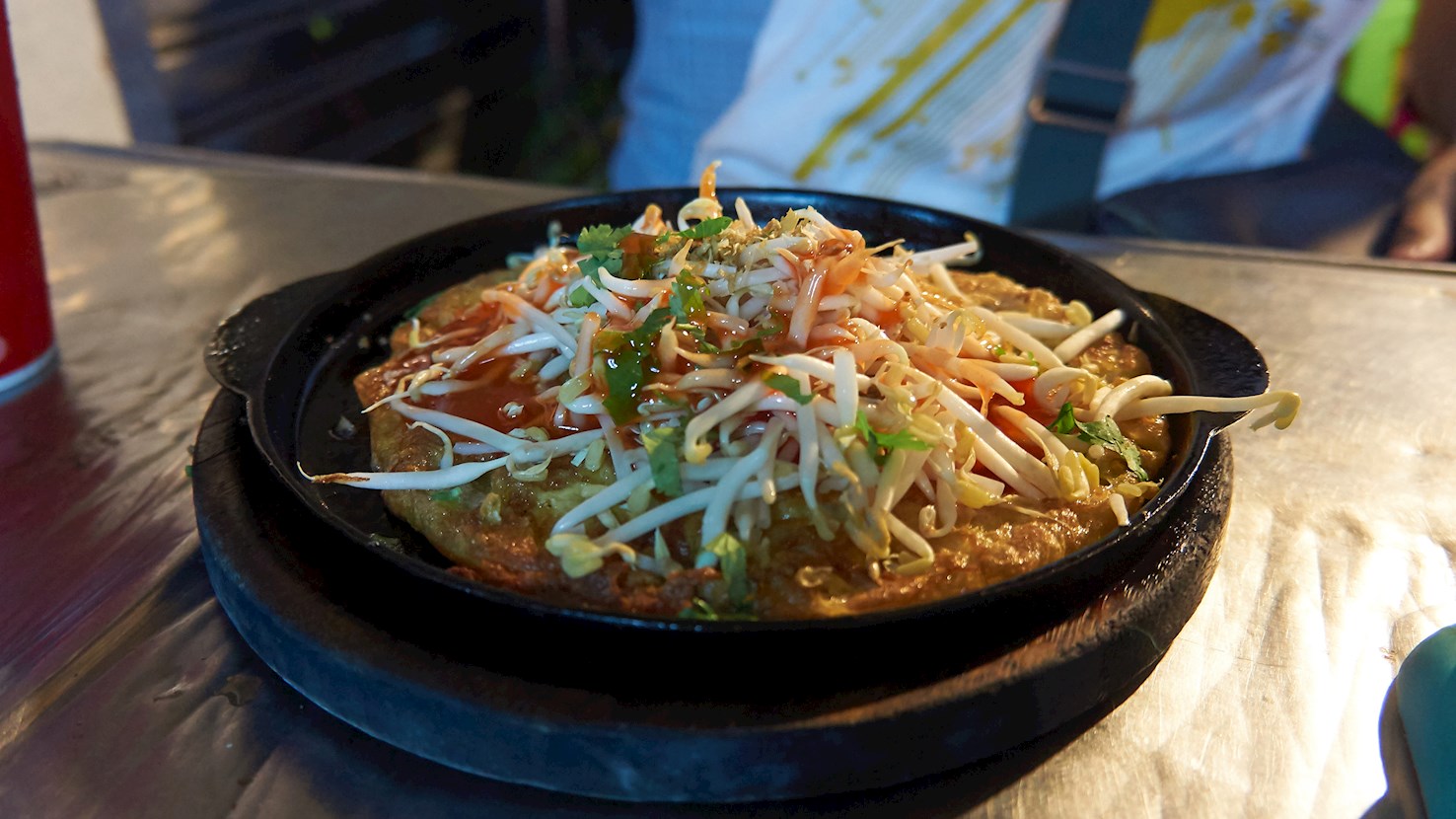
Hoy tod is a traditional dish that's commonly sold at street food stands. This crispy omelet is prepared with plump oysters or mussels (or both) and bean sprouts that are fried after being coated in savory egg batter. Once fried, the omelet is typically garnished with spring onions and served with assorted condiments such as green chili sauce, fish sauce with chili peppers, or tomato sauce. There's also the spongy and gooey version called or suan, and it's said that men usually prefer or suan, while women opt for the crispy hoy tod.
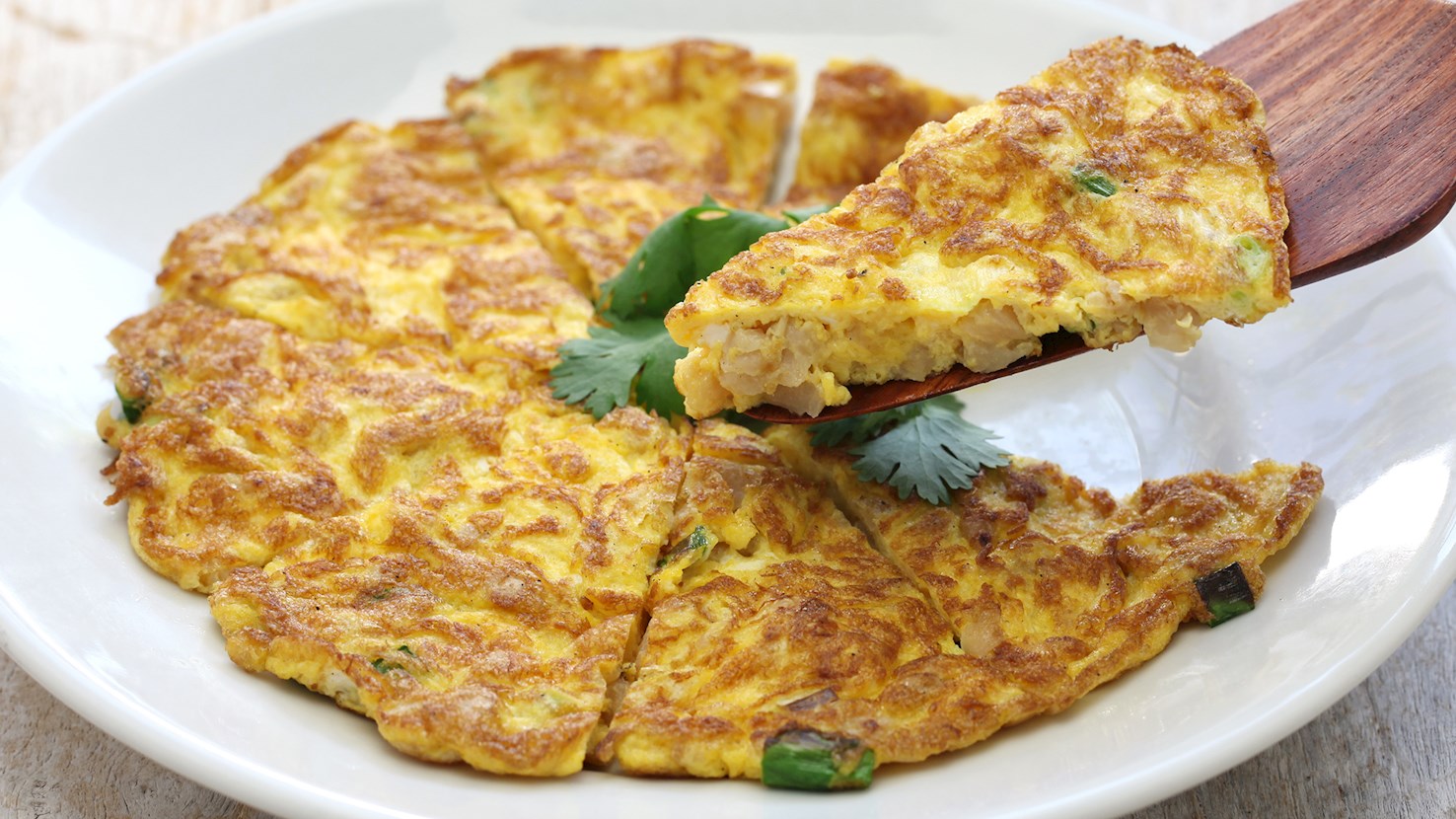
Dried radish omelet is a traditional dish consisting of beaten eggs combined with dried daikon radishes. The mixture of eggs, finely chopped dried radishes, and green onions is usually fried in a wok until lightly browned on both sides. The dried radishes are briefly stir-fried before they are added to the beaten egg mixture for a more aromatic dish. Light and fragrant, dried radish omelet is a typical Taiwanese breakfast meal, usually eaten alongside rice porridge. Sun-dried daikon radishes, one of the main ingredients of this dish, are sold in numerous Asian markets and are often used in Taiwanese and Chinese cuisines. This simple Taiwanese omelet is also available in Taiwanese restaurants.
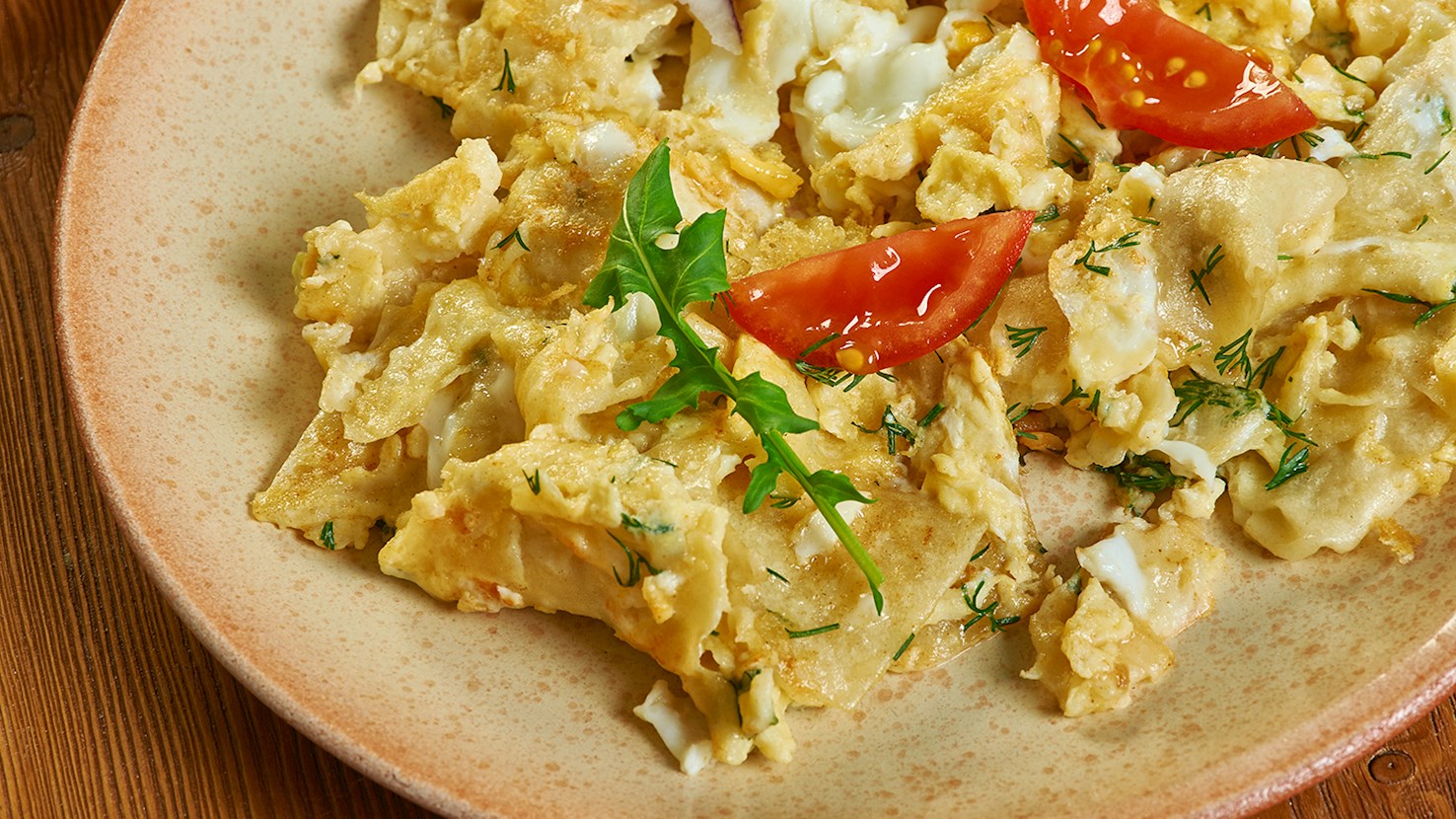
Matzah brei is a dish made from broken matzah softened in water and cooked with beaten eggs, eaten primarily during Passover in Jewish households. It comes from Ashkenazi Jewish communities in Central and Eastern Europe, where home cooks adapted matzah, the only permitted bread during the holiday, into various preparations that could substitute for everyday dishes normally made with leavened bread. As families sought versatile ways to use matzah during the week-long observance, combining it with eggs became a practical approach that produced a filling meal suited to breakfast or light dinner. Preparation involves breaking sheets of matzah into pieces, briefly soaking them in water until pliable, draining them, and mixing them with beaten eggs; the mixture is then cooked in a pan with oil or butter until set. The final texture ranges from soft and custardy to crisp and browned depending on how long it cooks and how much fat is used. Versions differ by region and preference, with some cooks adding salt and frying it plainly, while others prepare sweet variations using sugar, cinnamon or fruit. It can be served either like a pancake, flipped as a single mass, or scrambled into smaller pieces, with both forms considered equally authentic. Matzah brei is eaten in Jewish homes during Passover across many countries, served hot and often paired with yogurt, fruit, jam, sour cream, maple syrup, tea or coffee, depending on whether it is made in a savory or sweet style.
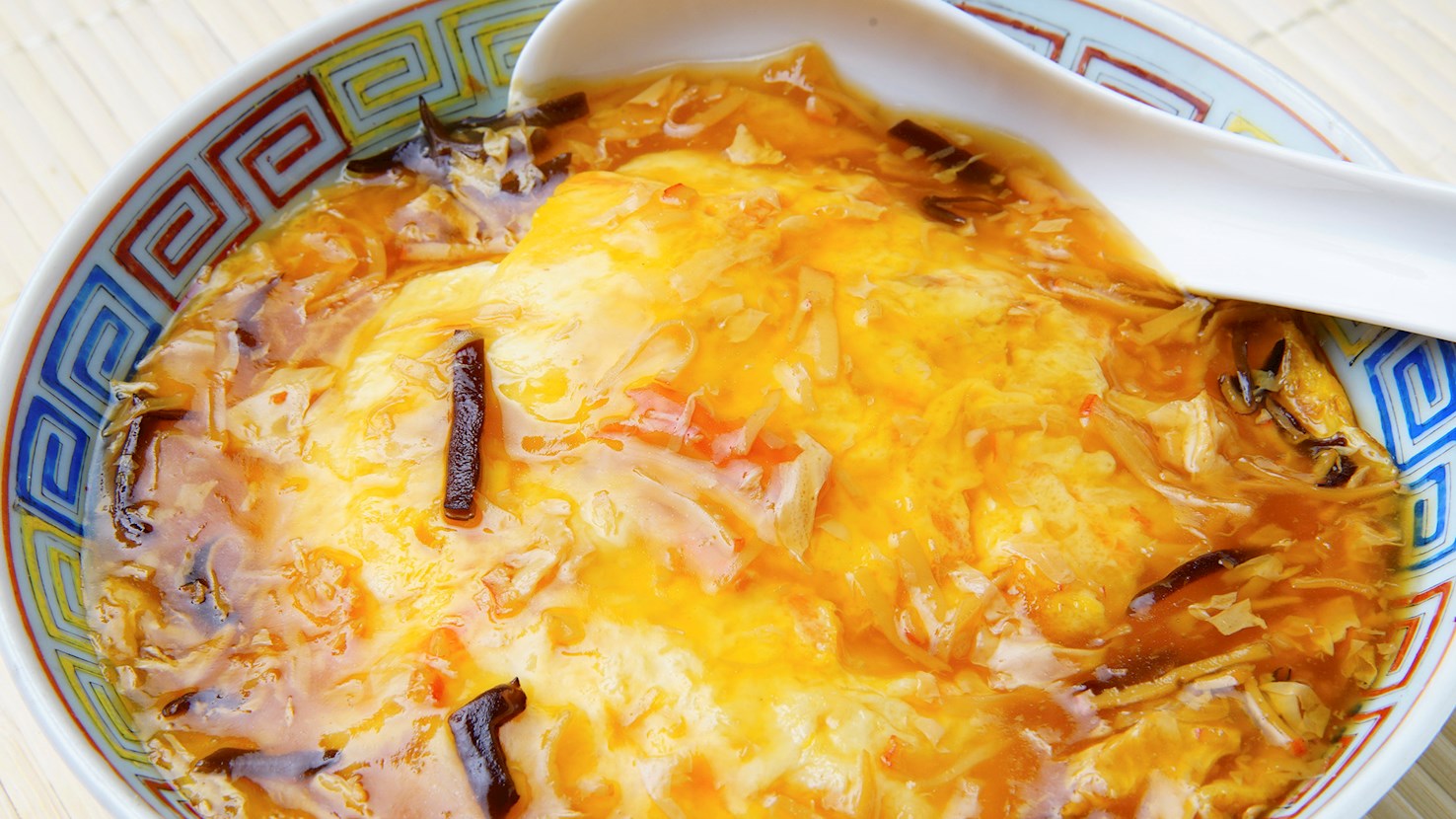
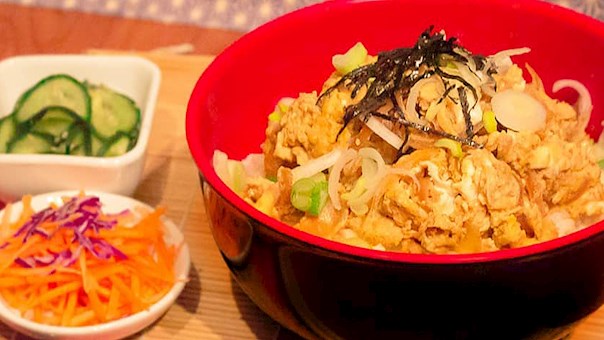
Tenshindon is a simple Japanese dish which combines crab meat omelet and rice. It belongs to the broad category of donburi dishes, which includes many Japanese ingredients and meals that are served over rice. The central part of every tenshindon is the omelet which employs crab meat, the authentic Japanese negi onions, and (occasionally) mushrooms, peas, and sliced ginger. The dish is assembled and usually served in a bowl, in which the rice is placed first, and the omelet is positioned on top. The final addition is a thick sauce that is generously poured over the dish. It is made with different combinations of soy sauce, vinegar, sugar, rice wine, sesame oil, oyster sauce, chicken broth, starch, and occasionally ketchup. Depending on the location, the sauce can have a more sour, vinegary taste, preferred in the Kanto region, or the sweeter variety, typically found in the Kansai area. Even though this traditional Japanese specialty was named after the Chinese city of Tianjin, there is no similar and corresponding dish found in the Chinese gastronomy. It is believed that the name was given because the city was a major rice trade location, and the dish was primarily made with rice which originated from Tianjin. Today it can be found in many Japanese restaurants, and is commonly prepared as a quick and nutritious homemade meal. It makes an excellent quick lunch, or a hearty and satisfying dinner.
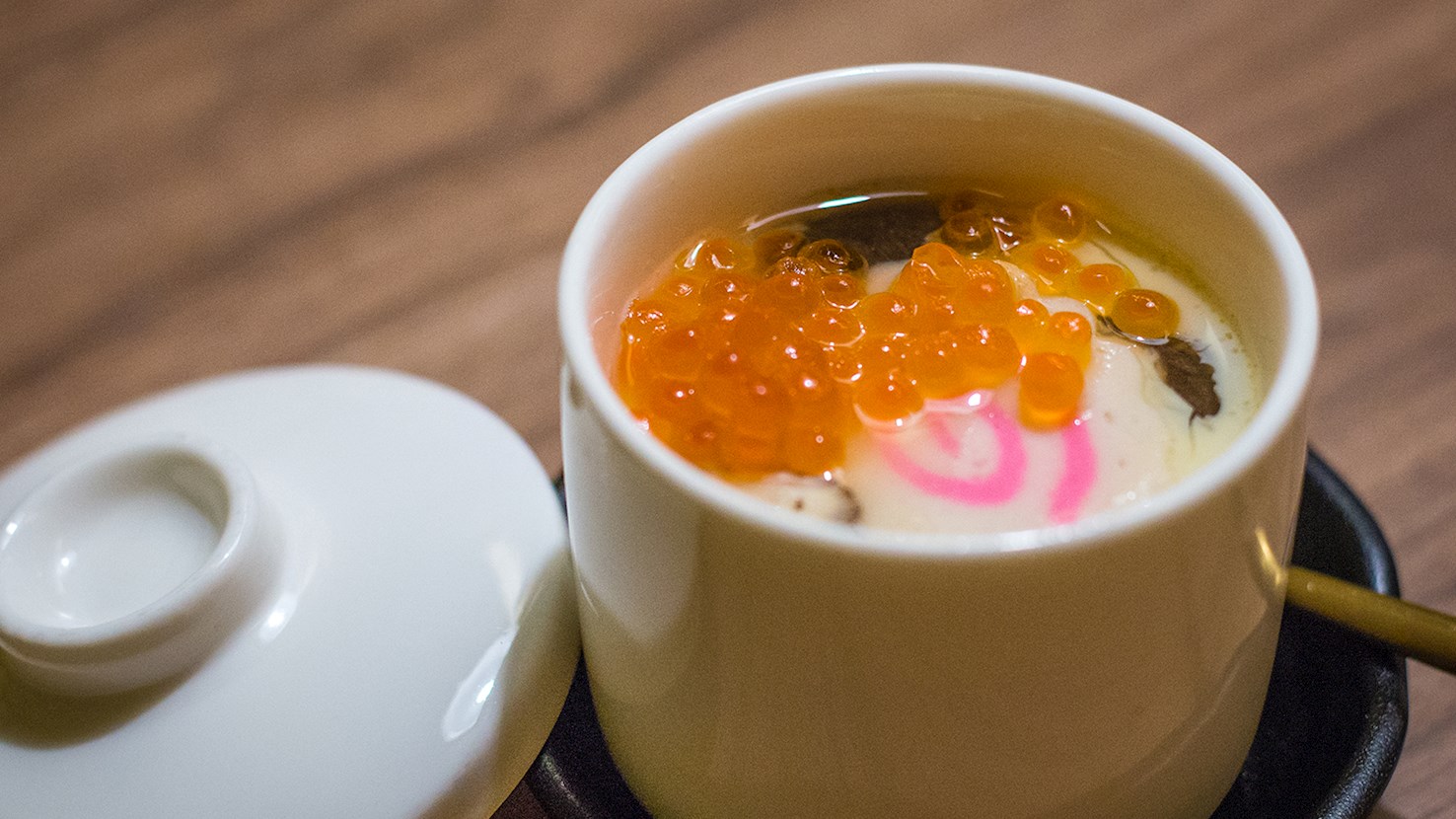
Ikura chawanmushi is a traditional egg-based dish. Chawanmushi is a soft egg custard that's steamed until the texture becomes silky smooth. The eggs are often flavored with dashi, soy sauce, or seafood stock. In this version, chawanmushi is topped with ikura (salmon roe) before serving, providing a salty pop and a nice textural contrast. This delicate dish can be served hot, warm, or cold in a small lidded cup, and since it can't be eaten with chopsticks, it's one of few Japanese dishes that are traditionally consumed with a spoon. Ikura chawanmushi is traditionally served as an appetizer.
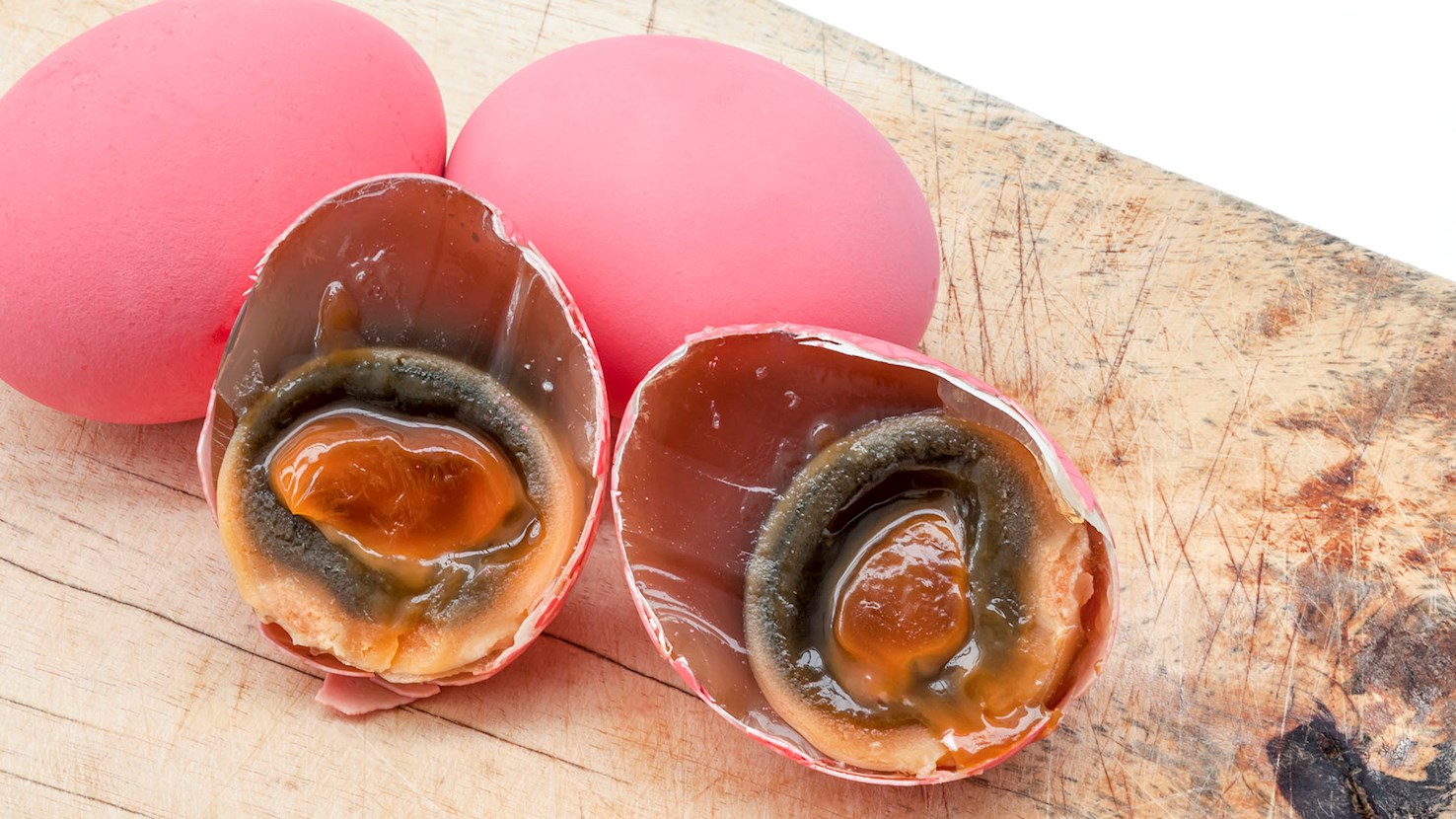
Pi dan, commonly known as a century egg, is a preserved egg product created by burying duck, quail, or chicken eggs in a highly alkaline mixture of clay, wood ash, salt, quicklime, and rice hulls for several weeks to several months. Historical accounts trace the discovery of this preservation method to Hunan during the Ming Dynasty, roughly six hundred years ago. A homeowner allegedly found duck eggs resting in a shallow pool of slaked lime used for mortar during household construction. Tasting these accidentally preserved eggs prompted the creation of a deliberate manufacturing process with added salt to improve the final flavor. The modern preservation process coats the raw egg with a paste of alkaline materials, which gradually raises the egg's internal pH from around 9 to 12 or higher. This severe chemical shift breaks down complex, flavorless proteins and fats into smaller, highly flavorful chemical compounds. The egg white transforms into a translucent, dark brown jelly with a salty taste. The yolk simultaneously turns into a dark green or grey creamy substance with a strong odor of sulfur and ammonia. The rice hulls prevent the eggs from sticking together in the curing vessel and form a protective crust on the outer shell. Certain curing methods produce delicate, white crystalline patterns resembling pine branches on the surface of the translucent egg white. People eat the preserved eggs on their own as a snack or slice them and add them to a warm bowl of rice congee with minced lean pork. Slices of pickled sweet ginger root frequently accompany the egg to cut through the rich, alkaline flavor. A popular serving method involves arranging wedges of the dark egg over a block of chilled silken tofu before pouring a dressing of soy sauce, black vinegar, sesame oil, and chopped cilantro over the plate.
TasteAtlas food rankings are based on the ratings of the TasteAtlas audience, with a series of mechanisms that recognize real users and that ignore bot,
nationalist or local patriotic ratings, and give additional value to the ratings of users that the system recognizes as knowledgeable.
For the “35 Worst Rated Asian Egg Dishes” list until August 16, 2026, 4,575 ratings were recorded, of which 3,109 were recognized by the system as legitimate.
TasteAtlas Rankings should not be seen as the final global conclusion about food. Their purpose is to promote excellent local foods,
instill pride in traditional dishes, and arouse curiosity about dishes you haven’t tried.






What People Say