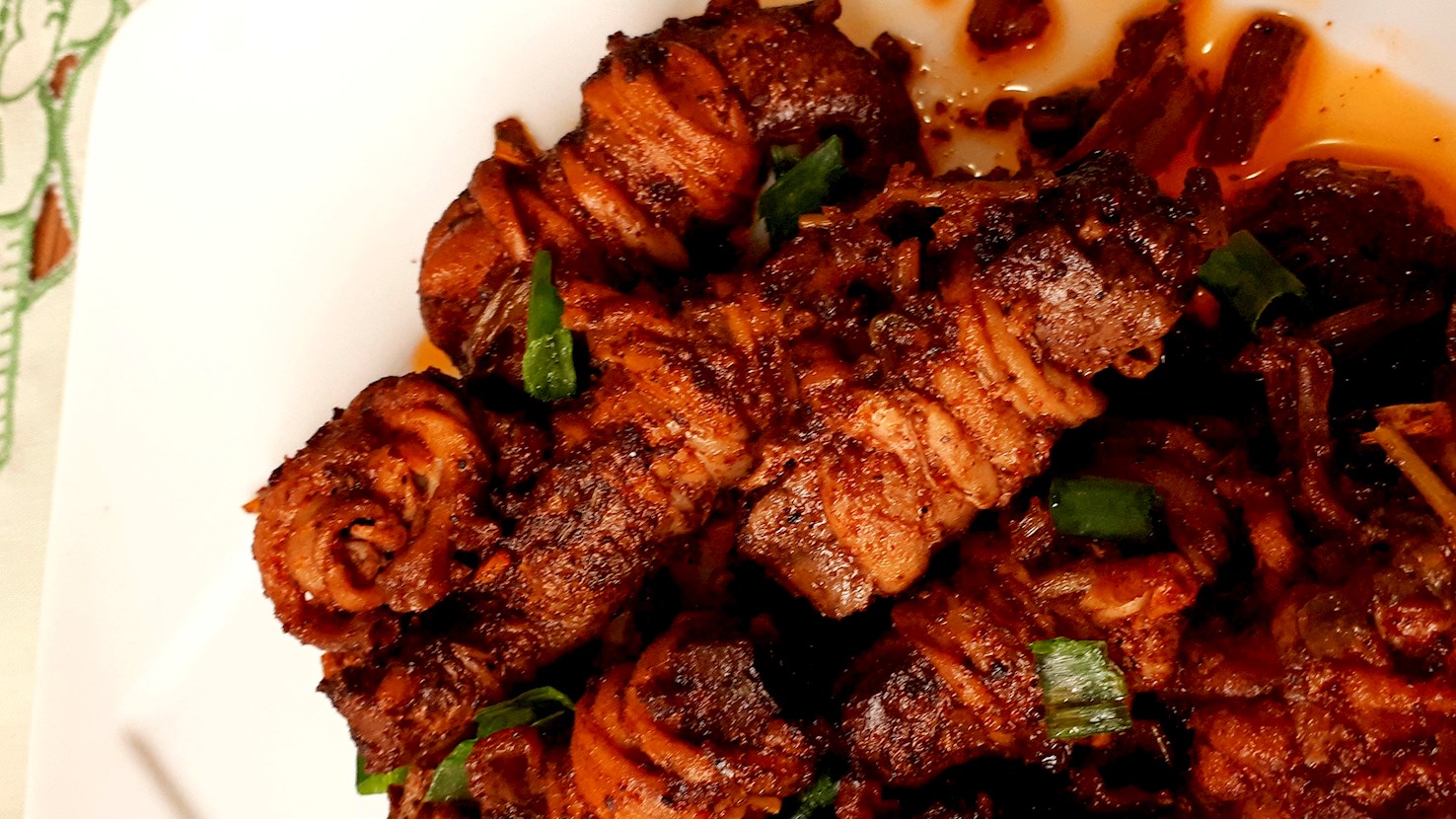
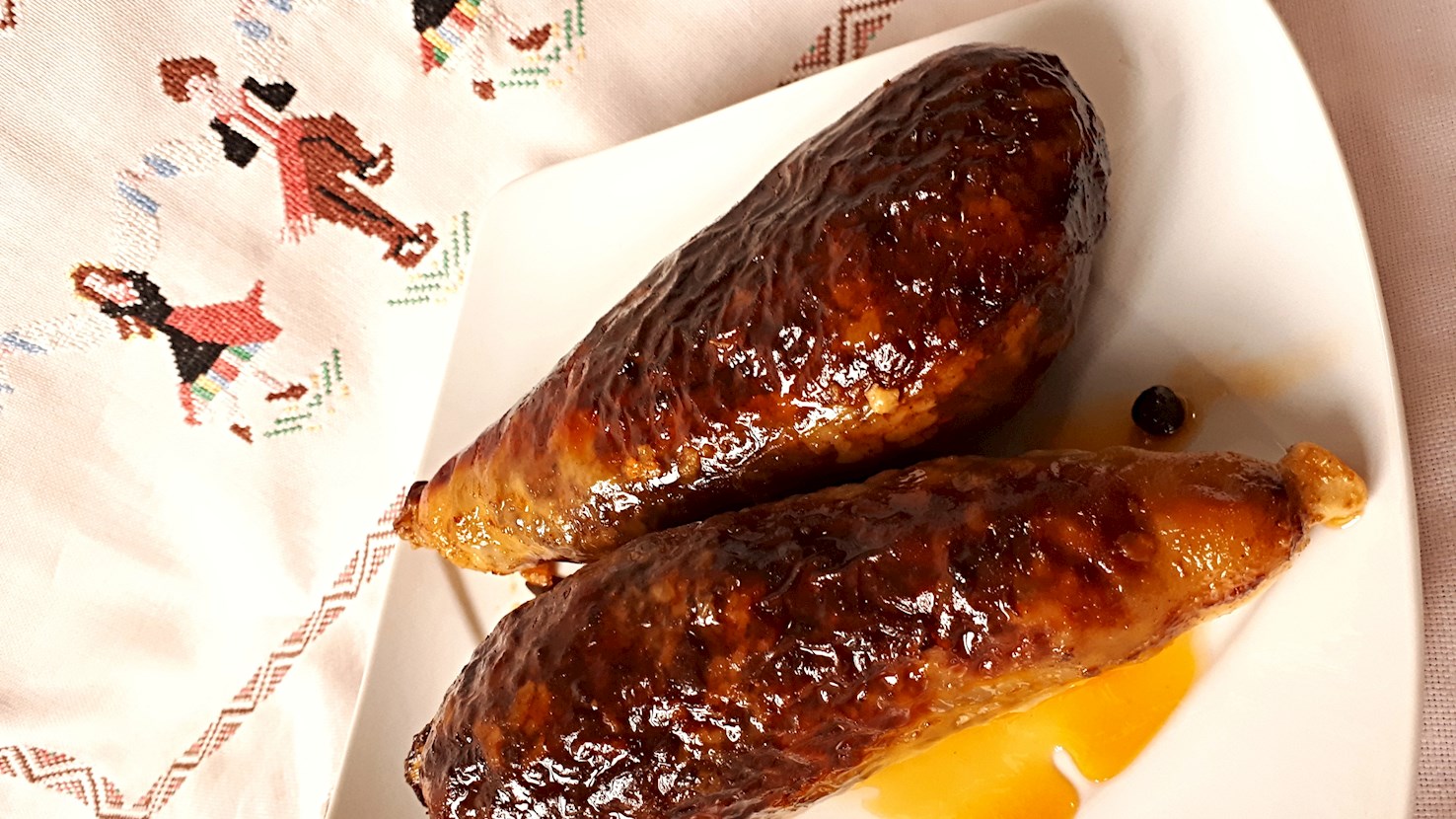
Kukurec is a North Macedonian lamb specialty made with knitted lamb intestines, strips of lamb tripe, and sometimes lamb sweetbreads. The process of making this specialty from scratch is quite laborious, which is why many opt for buying one from a butcher’s. Traditionally, well cleaned and boiled kukurec is roasted in an earthenware vessel along with chopped garlic, boiled carrots, bay leaves, dried mint leaves, mixed spices, seasonings, water, meat stock, and optionally wine for flavor. Zaprshka, or roux, consisting of a combination of flour, paprika, Bukovska pepper, and oil is added to the dish to thicken the sauce. This North Macedonian specialty is typically prepared for Easter, usually served with the cooking sauce or sour milk.
Simit-pogacha is a traditional North Macedonian specialty originating from Skopje. It consists of a bun that is stuffed with - you'd never guess it – burek, which is a flaky layered pie that's typically filled with meat, cheese, or greens. However, the burek that is used in simit-pogacha is plain and not filled with anything. This unusual dish is traditionally consumed for breakfast or during the morning. Because it's quite dry, locals eat it with yogurt. In Turkey, the dish is known as Skopska simit-pogacha, and in Skopje, only one baker is still making simit-pogacha using traditional methods - with yeast made from smashed chickpeas, which gives the bun a unique flavor.
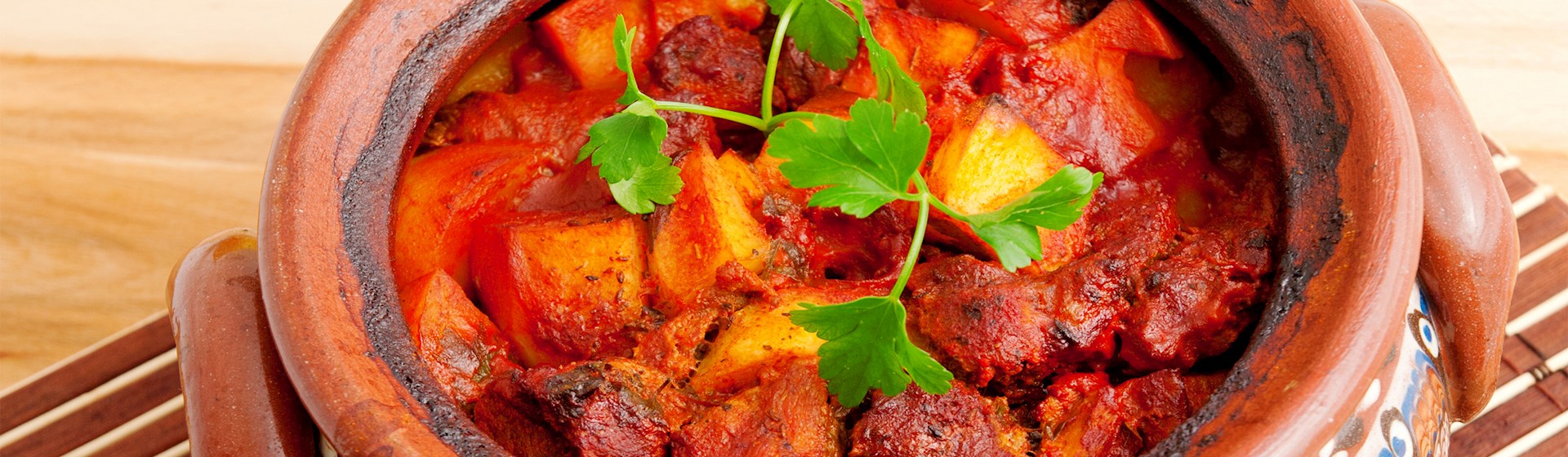
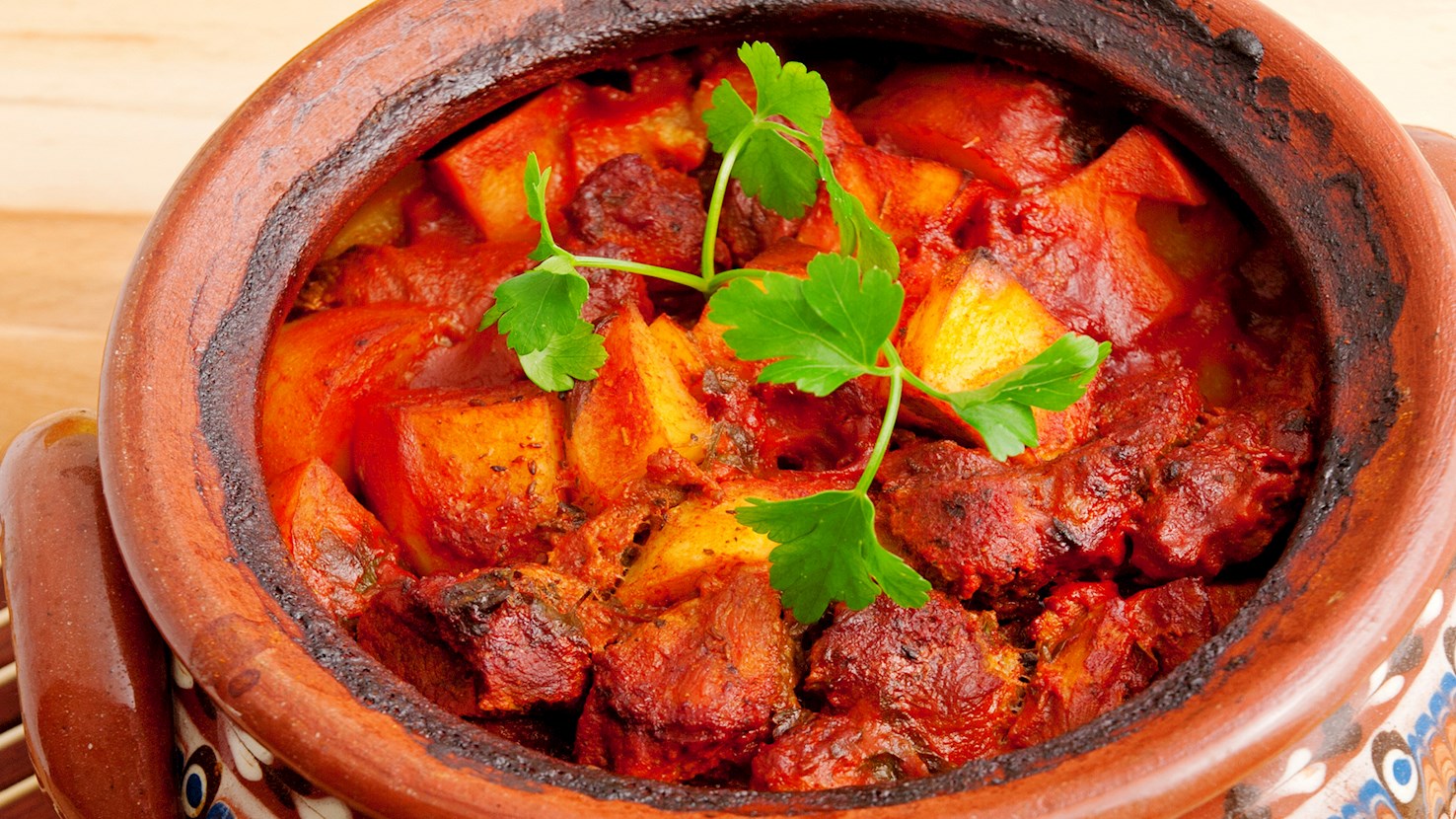
Chomlek is a traditional North Macedonian stew that is typically prepared with veal or baby beef, a generous amount of tiny, walnut-sized onion bulbs (called kokar or arpadzik in Macedonian), and garlic. Depending on the recipe, either red or white wine is added to the mixture, while other common ingredients contained in the dish include dried red peppers, carrots, tomato purée, parsley, or mushrooms. Chomlek is usually seasoned with salt, black pepper, red pepper, and bay leaves. It is customarily prepared in a traditional earthenware dish or pot, with the lid placed on top and firmly secured and sealed with dough. Even though this delicacy is a rather straightforward dish, it is also time-consuming and takes hours to cook. North Macedonian chomlek is mostly associated with the southwest and Pelagonija regions of the country, especially with Bitola, Prilep, Ohrid, and Krushevo, with each town having their own version of the dish: bitolski chomlek, prilepski chomlek, ohridski chomlek, and krushevski chomlek. These chomlek variations use more or less the same ingredients with slight differences. In North Macedonia, chomlek is a typical winter dish, usually eaten for lunch, and there’s a long-standing tradition of preparing this dish for New Year’s celebrations in the towns of Bitola and Prilep. The stew is typically enjoyed with a glass of red wine on the side, and it is recommended to dip some bread in it while eating it. The origins of this specialty most likely stem from Turkish cuisine, which is suggested by the dish’s name, which derives from the Turkish word çömlek, meaning earthenware pot. Some varieties of this traditional stew can be found in other Balkan countries, and it is mainly associated with the traditional cuisine of neighboring Bulgaria, particularly that of Blagoevgrad Province.
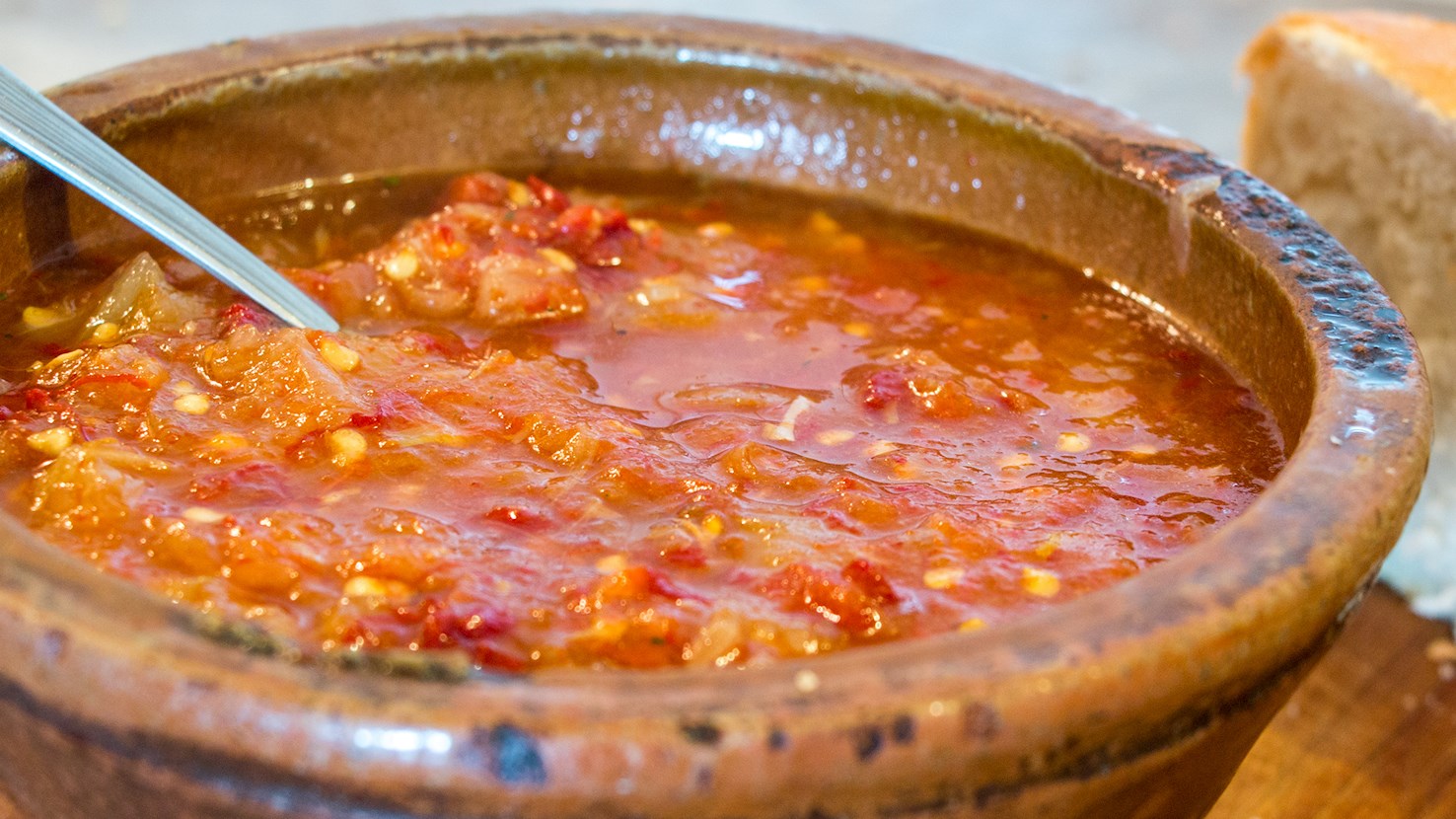
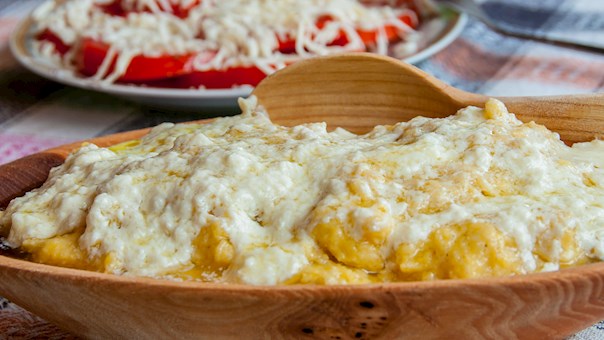
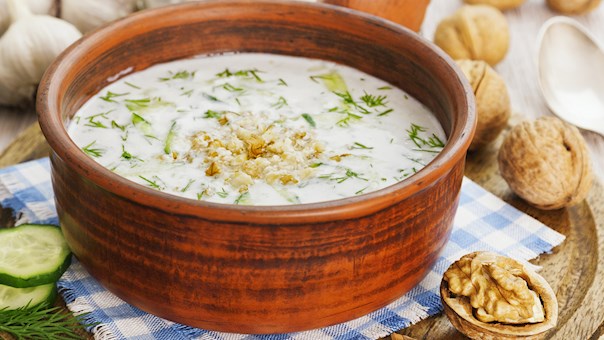
Makalo is a very traditional North Macedonian dish based on garlic. The most basic type of makalo is made with garlic, warm oil or butter, wine vinegar, lukewarm water, and salt, which are added to a wooden bowl and mixed thoroughly. Dried red peppers, chopped parsley, hot pepper flakes, walnuts, milk, or yogurt are often added to this dish. There is a variety of makalo dishes that can include roasted hot peppers, eggplants, green tomatoes, fresh or roasted red tomatoes, or boiled potatoes. Makalo can be served as a meze dip or an appetizer, depending on the ingredients used in it, and it is typically eaten with lots of bread and white brine cheese. It also makes for a great accompaniment to barbecued meat.
Širden is a North Macedonian delicacy made by stuffing the abomasum (stomach lining) of lamb or sheep with a combination of three types of chopped meat, paprika, onions, and seasonings such as salt and black pepper. The opening is sewn and closed, and širden is baked with lard in a traditional earthenware vessel. It is usually served with the same sauce from the vessel and a glass of red wine on the side.
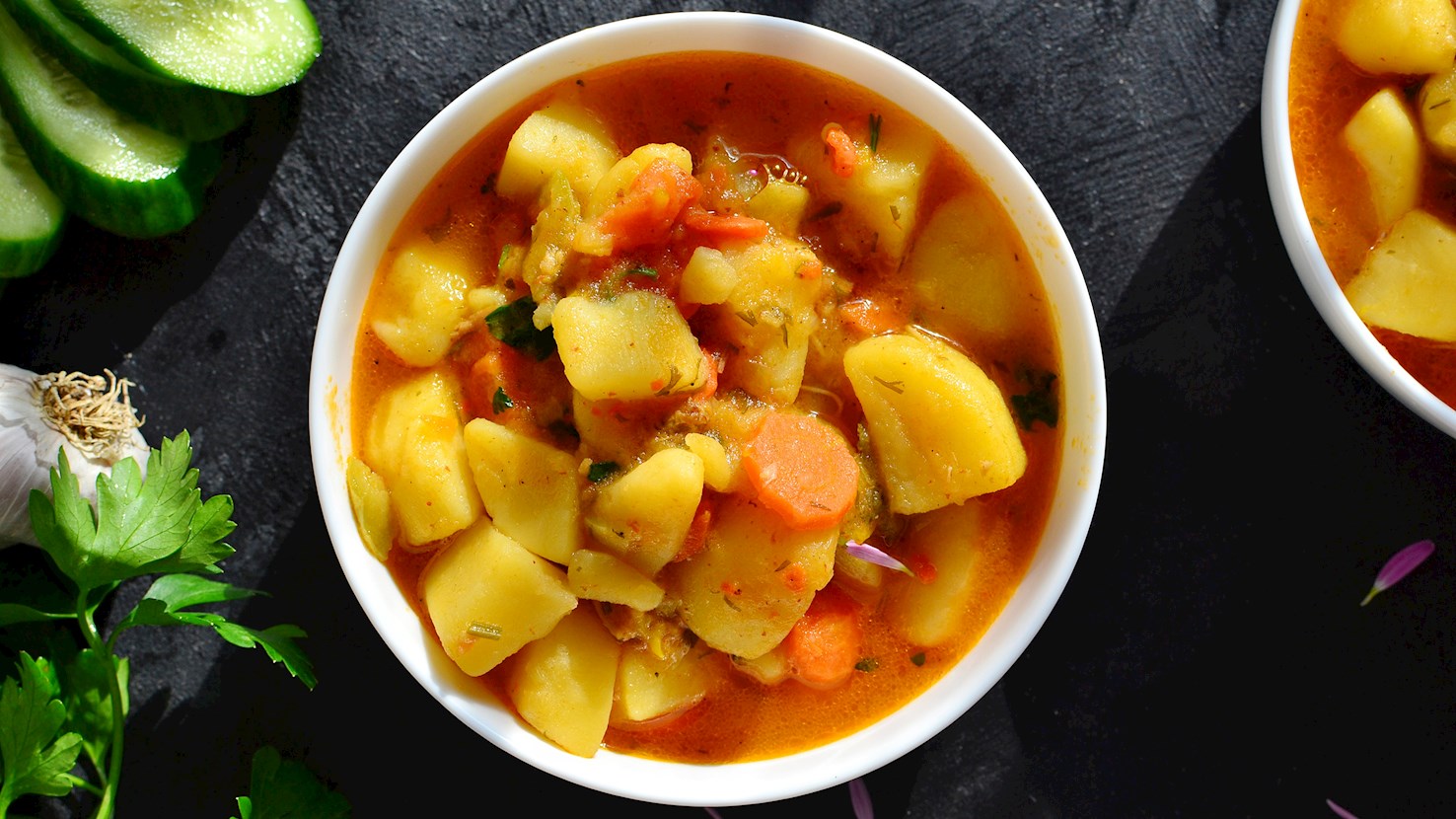
Kompir mandza is a simple North Macedonian potato stew that is considered a poor man's meal in some parts of the country. Apart from potatoes, the stew consists of onions, carrots, garlic, oil, powdered paprika, seasonings, and optional flour for additional thickening. The stew is served warm, garnished with fresh parsley, and it is recommended to pair it with a salad on the side.
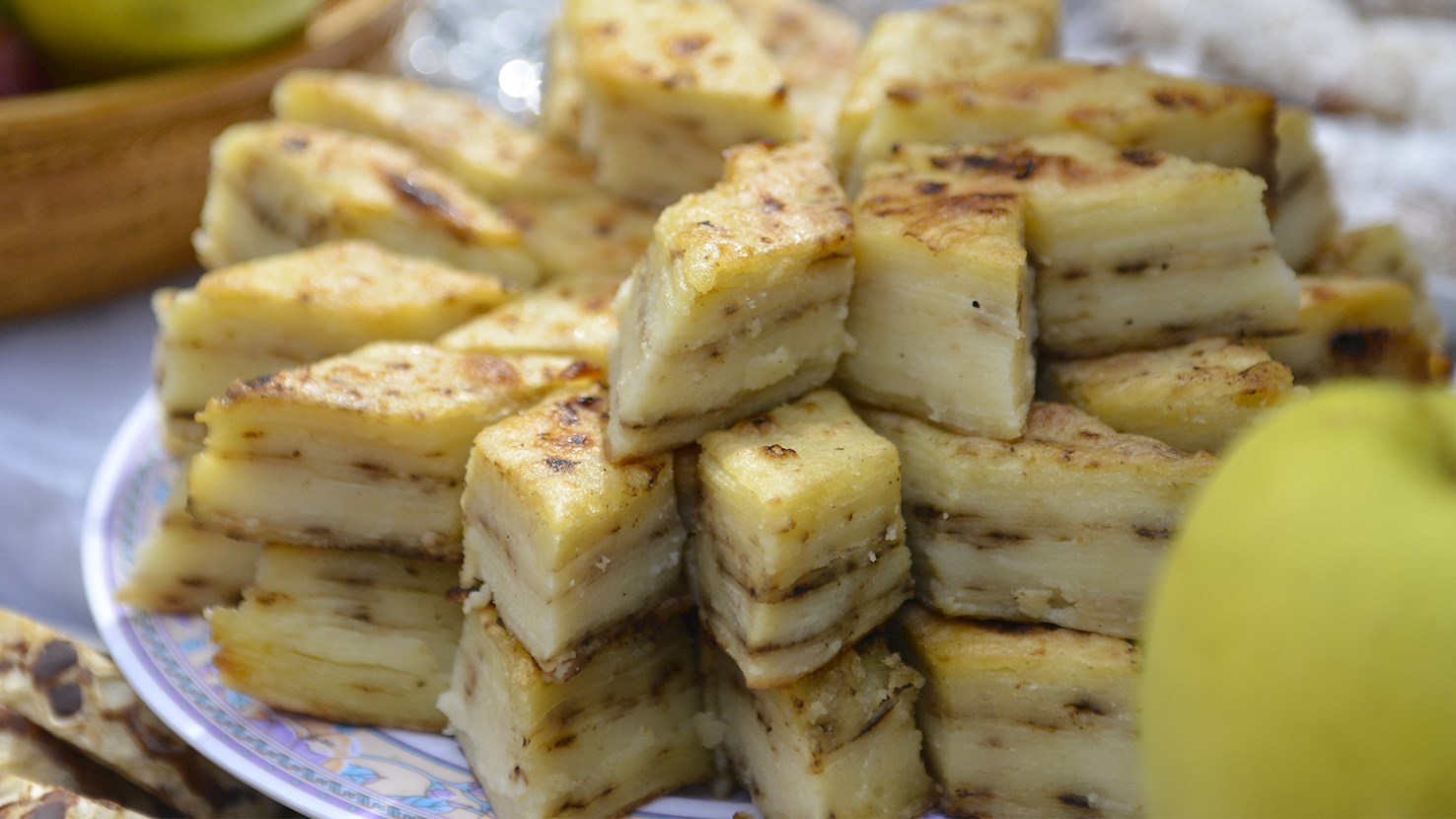
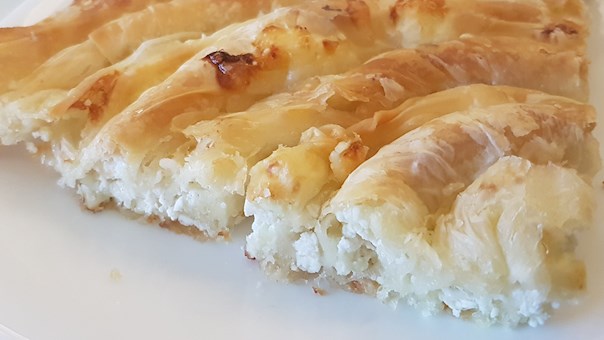
This round North Macedonian pie is traditionally associated with Ohrid and the entire Southwestern region. It is prepared with a simple flour batter that is repeatedly poured in a pan, and while it bakes, each layer is coated in oil. The pie was traditionally made in a sač – a traditional bell-shaped vessel that is placed on a fireplace, while the lid is covered with ash and coals. Traditionally, gomleze is cut into diamond shapes and is usually quite large. Modern variations often include eggs and crumbled white cheese.
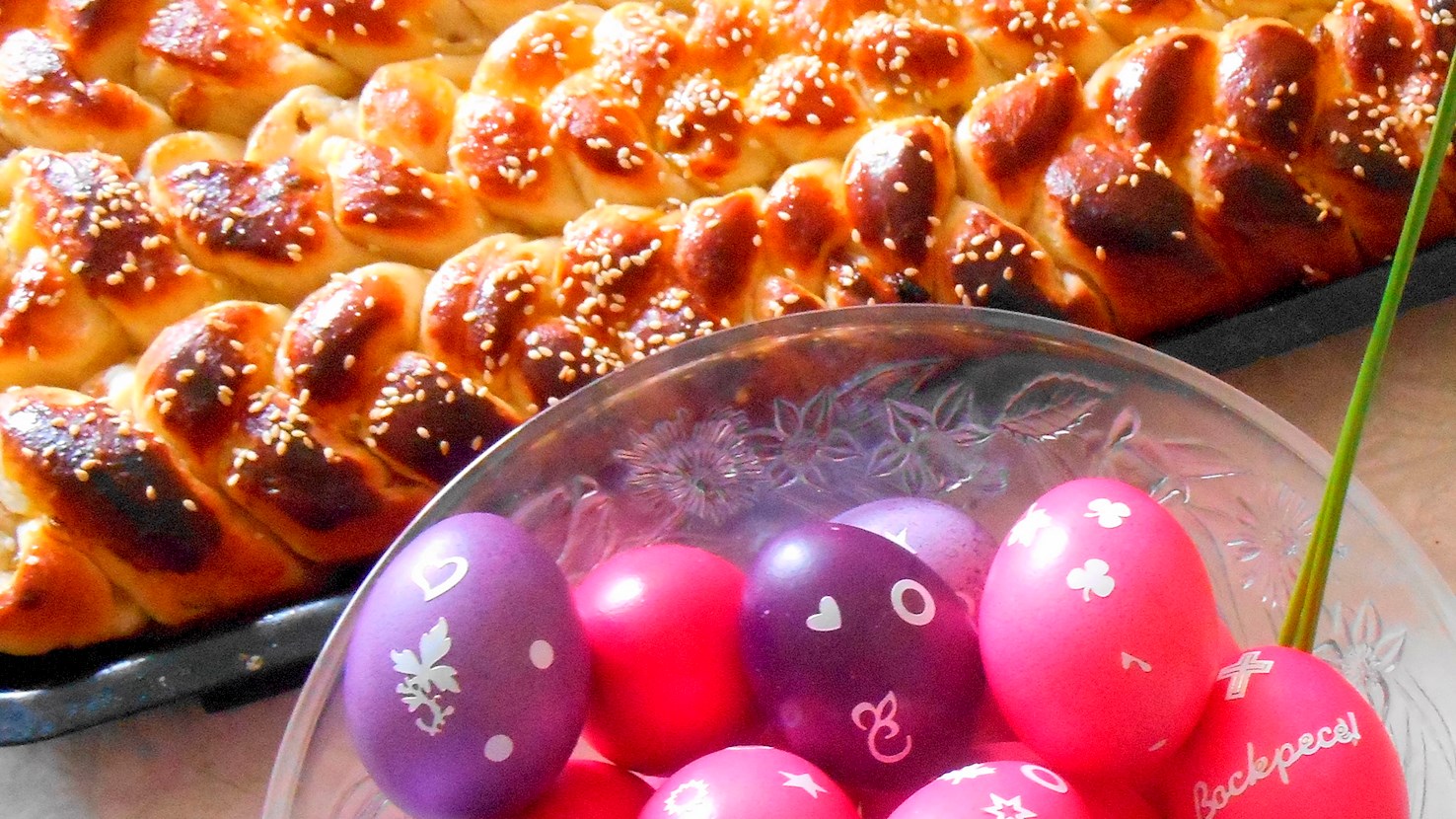
Kozinjak or milibrod is a sweet yeasted bread with soft, moist, and thread-like texture, usually flavored with lemon zest or orange zest, and filled with dried fruits, typically raisins soaked in rum or orange juice. The dough is braided, brushed with a yolk-milk mixture on top, and then baked in a well-oiled baking tray or high bread pan in the oven. Once baked, kozinjak is generously sprinkled with sugar to form a sugar crust, or dusted with powdered sugar before serving. Poppy seeds and different types of fruit jams are also used as common kozinjak fillings. This sweet bread is usually prepared for holidays, especially for Easter and Christmas, and it is also consumed in neighboring Bulgaria, where it is known as kozunak. Some make this sweet treat more frequently and consume it as a light dessert or with a glass of milk for breakfast.
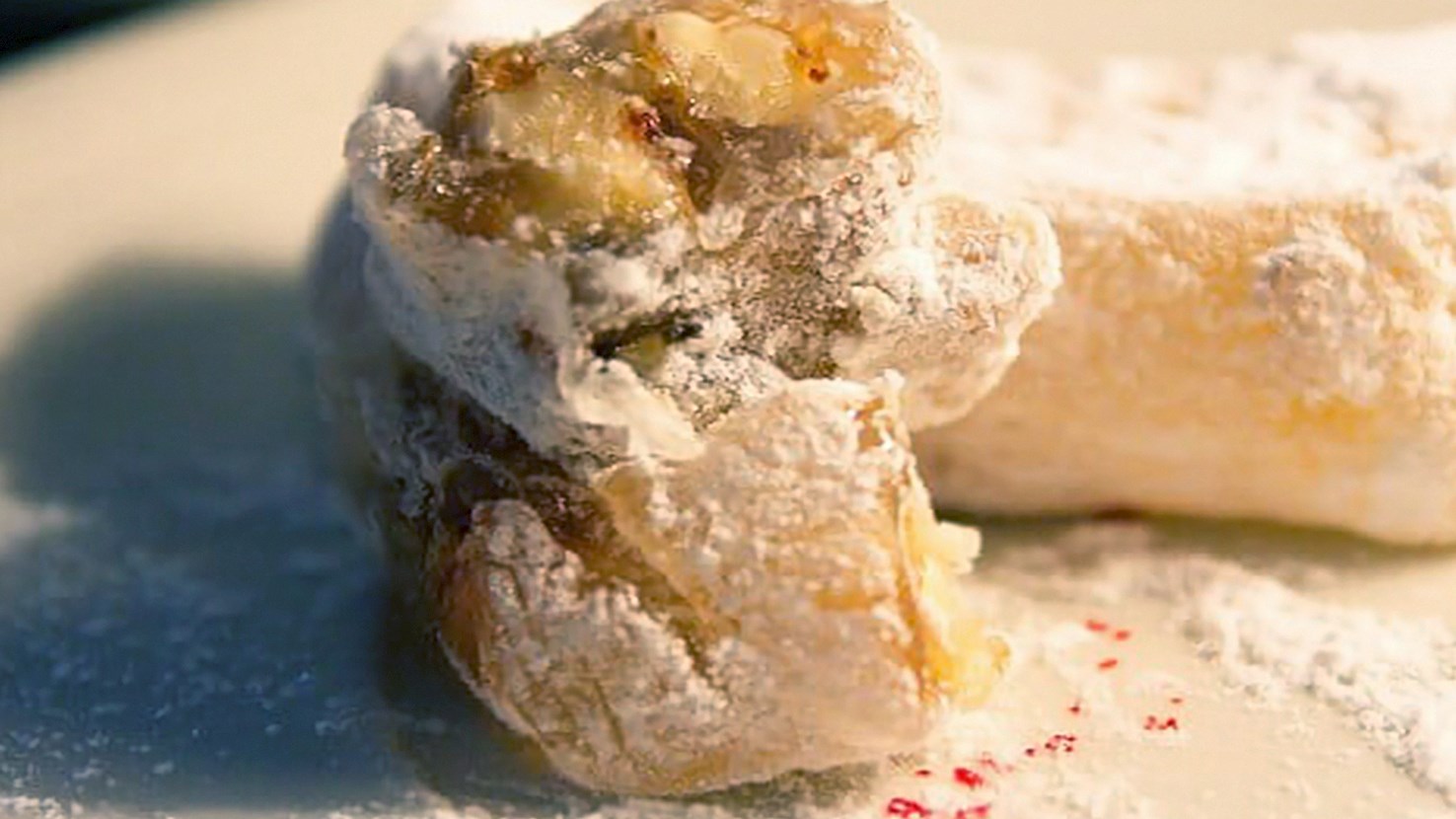
Krushevo lokum is the North Macedonian version of Turkish delight, made with a mixture of water, sugar, starch, and lemon acid, which is cooked in a large copper vessel. Once ready, the hot lokum mixture is carefully dripped onto wooden trays and allowed to rest for a whole day before it is cut into small cubes and dusted with powdered sugar. Krushevo lokum is handmade, except for the stirring part, and has two varieties: one is sade lokum, or plain lokum with no added ingredients, and the other one is lokum with walnuts. The preparation of this North Macedonian delicacy is a family tradition that started almost 100 years ago. Although the ingredients are simple, they have to be used in the right ratio to produce the desired product. Krushevo lokum is sold in a little sweet shop, called Balkan, located in Krushevo. In this town, it is a custom to serve freshly prepared coffee with lokum on the side. This delicacy is typically consumed during holidays such as Proshteni pokladi, or Prochka, name days, memorials, and weddings.
Recognized as the first Slow Food Presidium item of North Macedonia, wild fig slatko, or slatko od divi smokvi, as it is known in Macedonian, is a type of fruit preserve that is made with wild figs. This preserve has traditionally been produced in the Southeastern region of the country, in the municipalities of Gevgelija, Valandovo, Bogdanci, and Dojran, where wild fig trees are abundant. Customarily, it has been the task of men to gather the small green, pear-shaped fruits of the wild fig tree just as they start to ripen, while women have been responsible for cleaning the figs and preparing the preserve. The making of wild fig slatko (slatko, meaning sweet in Macedonian) is a long and laborious process that involves boiling the whole fruits nine times to eliminate the bitter-flavored, milky latex they contain before simmering them in a sugar syrup until the syrup has thickened. Lemon juice or citric acid is typically added to the preserve to help the figs retain their distinctive color and shape. Once done, the preserve is traditionally stored in clean glass jars. The flavor of this preserve is sweet with a slightly astringent finish, while the aromas are herbal and spicy, with subtle notes of caramel. In North Macedonia, wild fig slatko is typically prepared for family consumption only, although efforts are being made to promote the product on the market as well. Although it is most commonly enjoyed on its own, wild fig slatko can also be used as a topping for ice cream or a filling for pancakes, and it may be incorporated into a variety of desserts such as cakes or cookies.
TasteAtlas food rankings are based on the ratings of the TasteAtlas audience, with a series of mechanisms that recognize real users and that ignore bot,
nationalist or local patriotic ratings, and give additional value to the ratings of users that the system recognizes as knowledgeable.
For the “14 Worst Rated Macedonian Foods” list until May 22, 2026, 2,323 ratings were recorded, of which 975 were recognized by the system as legitimate.
TasteAtlas Rankings should not be seen as the final global conclusion about food. Their purpose is to promote excellent local foods,
instill pride in traditional dishes, and arouse curiosity about dishes you haven’t tried.