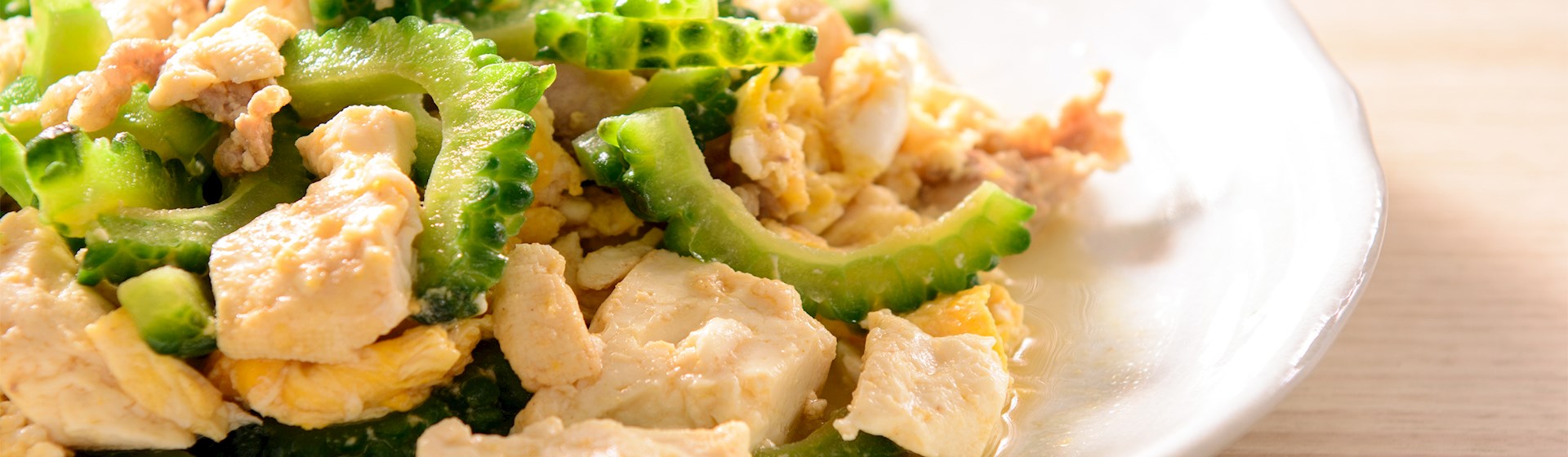
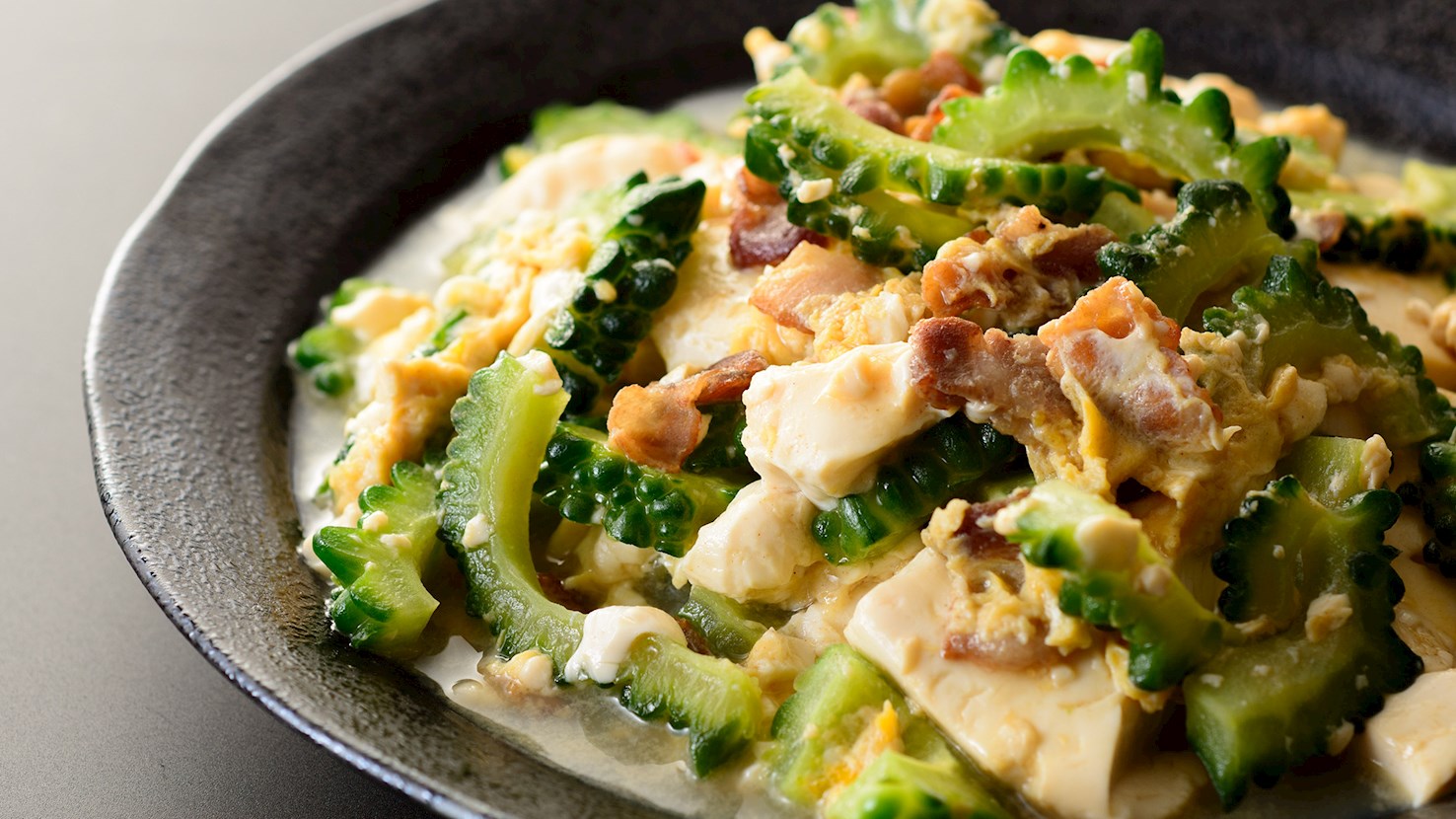
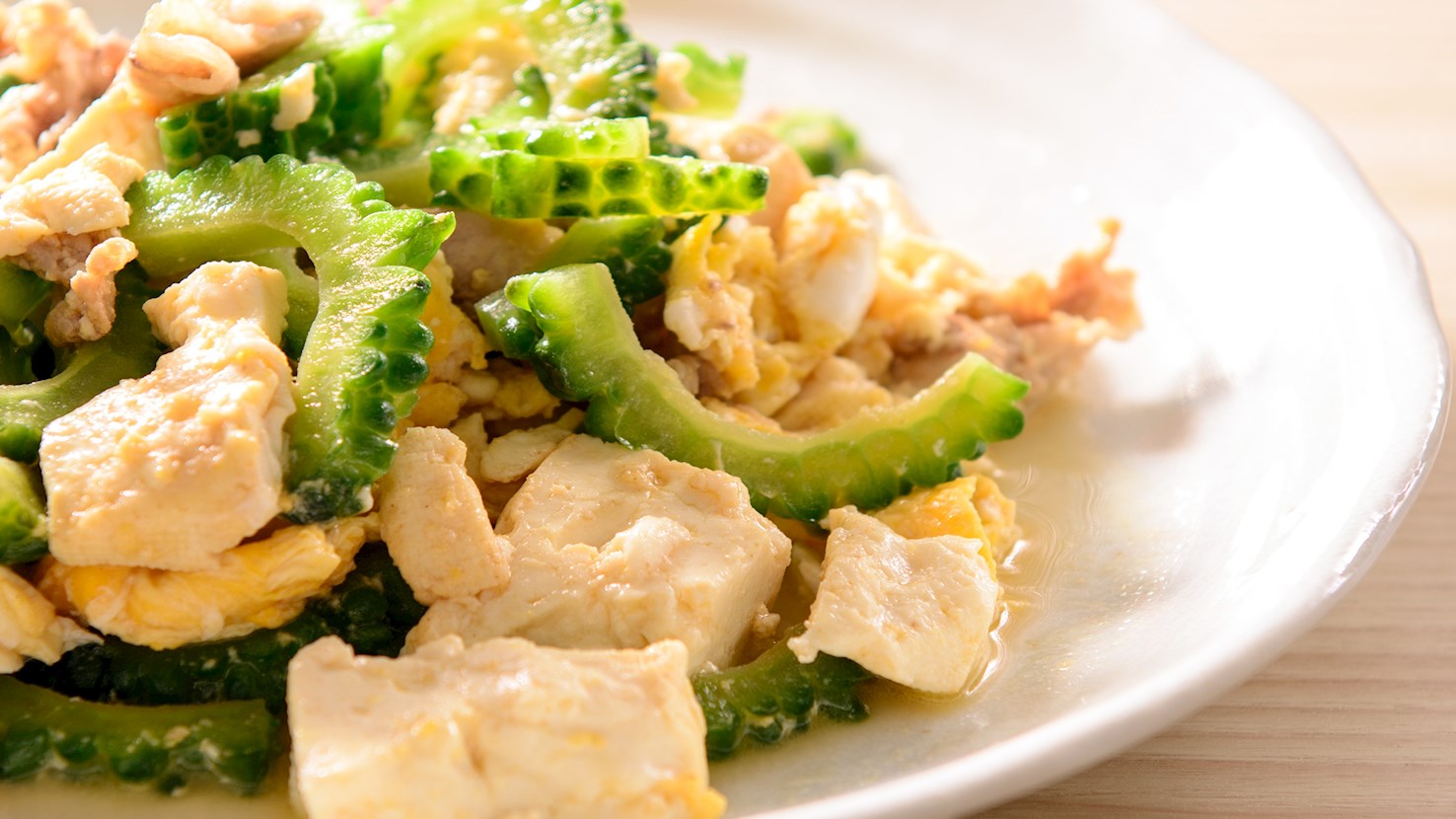
Chanpuru is a group of Japanese stir-fry dishes typically associated with Okinawa. The name of the dish roughly translates as somethingmixed, and the ingredients usually include tofu, various vegetables, meat, as well as fish or seafood, and particularly on Okinawa the popular American Spam (canned meat). The most common version of chanpuru is made with bitter melon, and it goes under the name goya chanpuru, while other popular versions include noodle-based somen chanpuru and a variety made with a type of wheat gluten (fu). The dish is usually seasoned with soy sauce or sake, and a plate of chanpuru is often served sprinkled with fish flakes.
Among the broad group of Japanese chanpuru dishes, goya chanpuru is the most traditional version prepared with stir-fried bitter melon, eggs, pork, and tofu. It is often blended with various seasonings and vegetables. Occasionally, the dish is served sprinkled with fish flakes and accompanied by rice. This colorful and nutritious summer stir-fry is the signature dish of Okinawa island. It has recently grown in popularity and can also be found in other parts of Japan.
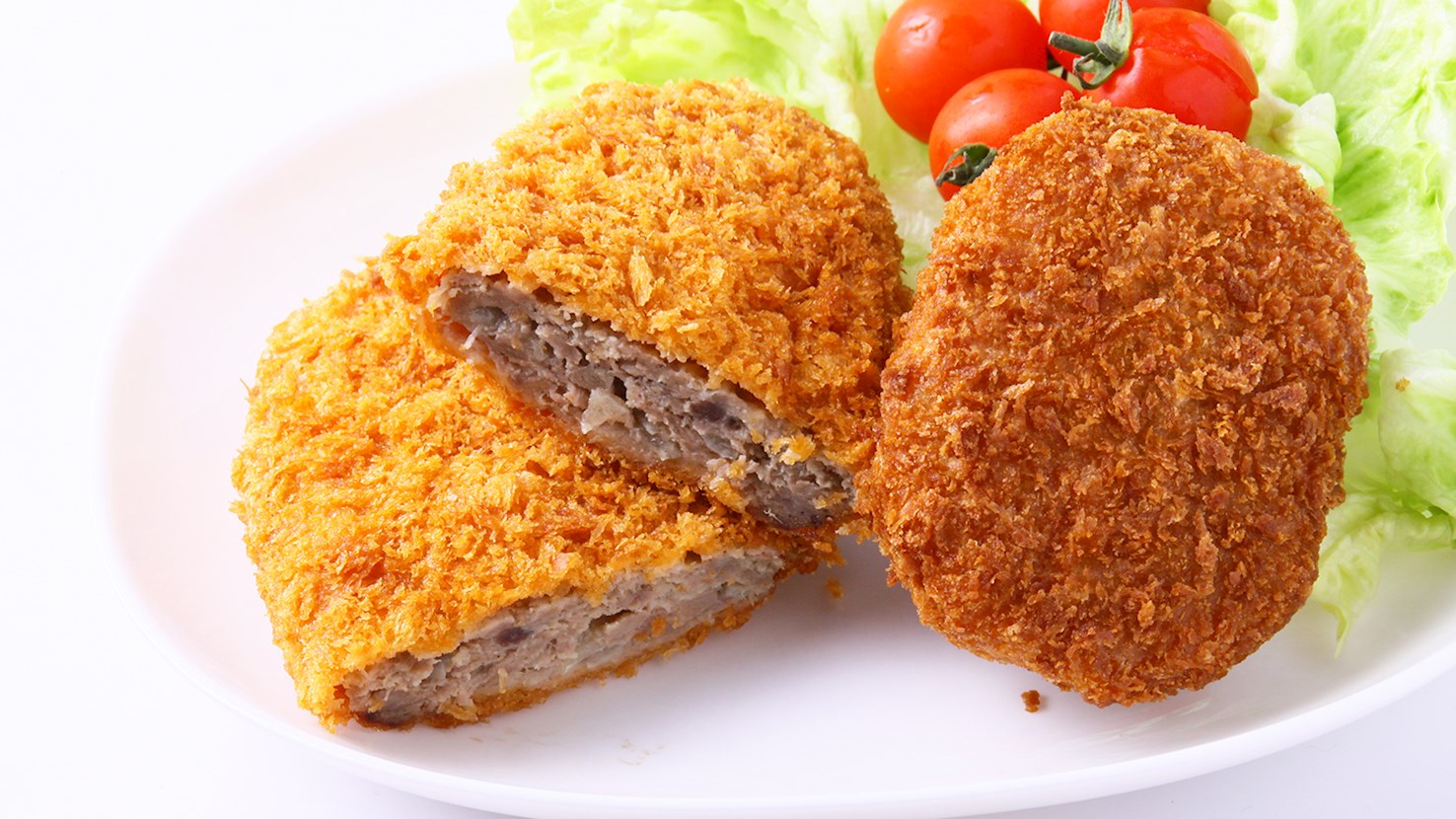
Menchi katsu is a traditional dish and a type of katsu. This ground meat cutlet is made with a combination of ground beef, ground pork, onions, panko breadcrumbs, oil, eggs, milk, black pepper, and nutmeg. Once shaped, the patties are dredged in flour, beaten eggs, and panko breadcrumbs, then fried in hot oil until golden and crispy. The dish is usually served with white rice, miso soup, and the thick and tangy katsu sauce on the side. Menchi katsu originated in Tokyo and it dates back to the Meiji Era. Nowadays, some of the best menchi katsus can be found at butcher shops, where they use the freshest meat to form the cutlets.
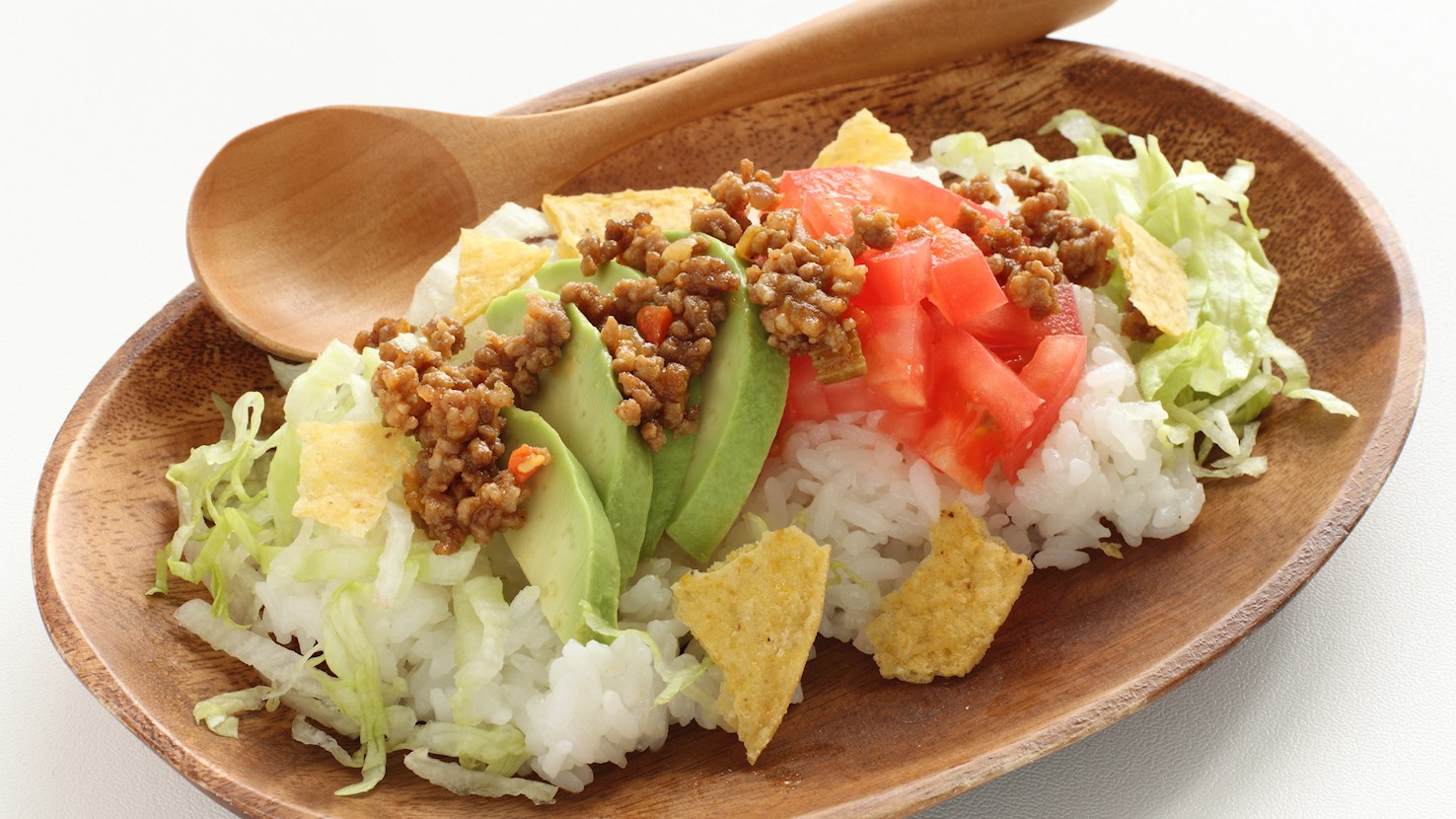
Taco rice is a Japanese dish hailing from Okinawa. It was created in 1984 as a dish for the US soldiers stationed in the prefecture. The dish consists of ground beef, cheese, lettuce, and tomatoes served on a bed of short grain rice. The whole dish is traditionally topped with salsa. The meat is seasoned with taco seasoning or a combination of common Japanese condiments if the taco seasoning is unavailable. What was once created for the American soldiers is now one of the best known dishes in Okinawa, and it's recommended to accompany it with koregusu, a condiment similar to chili vodka.
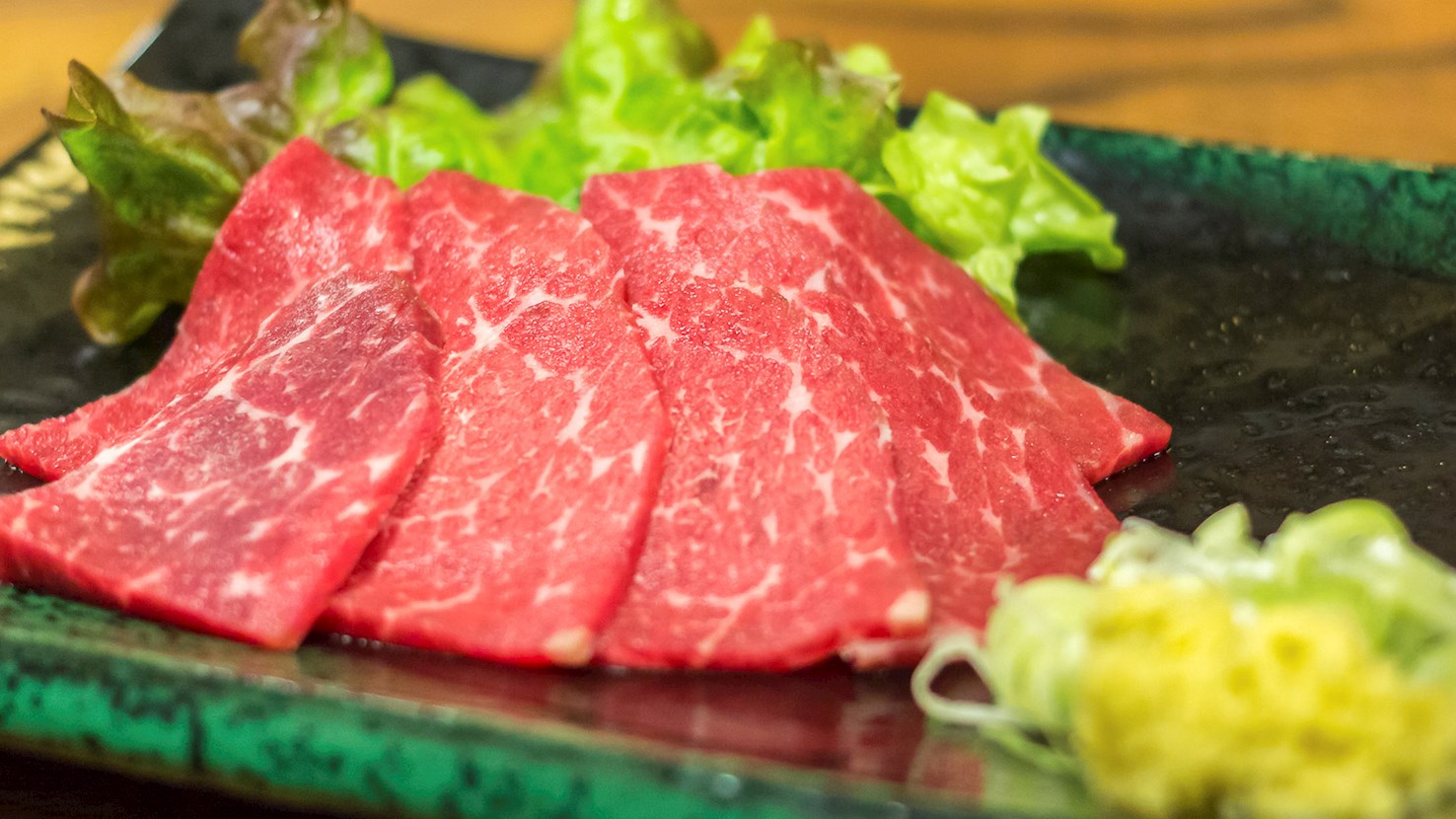
Japanese basashi is an unusual dish which incorporates thin slices of raw horse meat. It belongs to the popular and broad group of sashimi dishes and is considered to be a unique Japanese delicacy. Horse meat is usually leaner than other, more traditional types, it has a slightly sweet flavor, and depending on the maturity, its color can range from pink to dark red. Traditionally, three different meat cuts are used to prepare basashi. One variety includes completely trimmed meat, without any excess fat on the meat or around the meat pieces. It comes thinly sliced and has a slightly tougher texture. With an appealing color combination and perfect texture, one of the favorite options is the cut which includes meat pieces thoroughly marbled with fatty streaks. The rarest one is the incredibly soft, extremely fatty cut, usually taken from the neck of the animal. Although an unusual ingredient in the global gastronomy, horse meat is a tradition in Japanese culture. It is often associated with the prefecture of Kumamoto, but it can occasionally be found in other Japanese regions. The popularity of horse meat has grown since the end of the First World War, after which it became an increasingly common household ingredient. Nowadays, basashi can be found in many izayaka bars served alongside soy sauce, grated ginger, and garlic. It is usually paired with sake, the traditional Japanese rice wine.
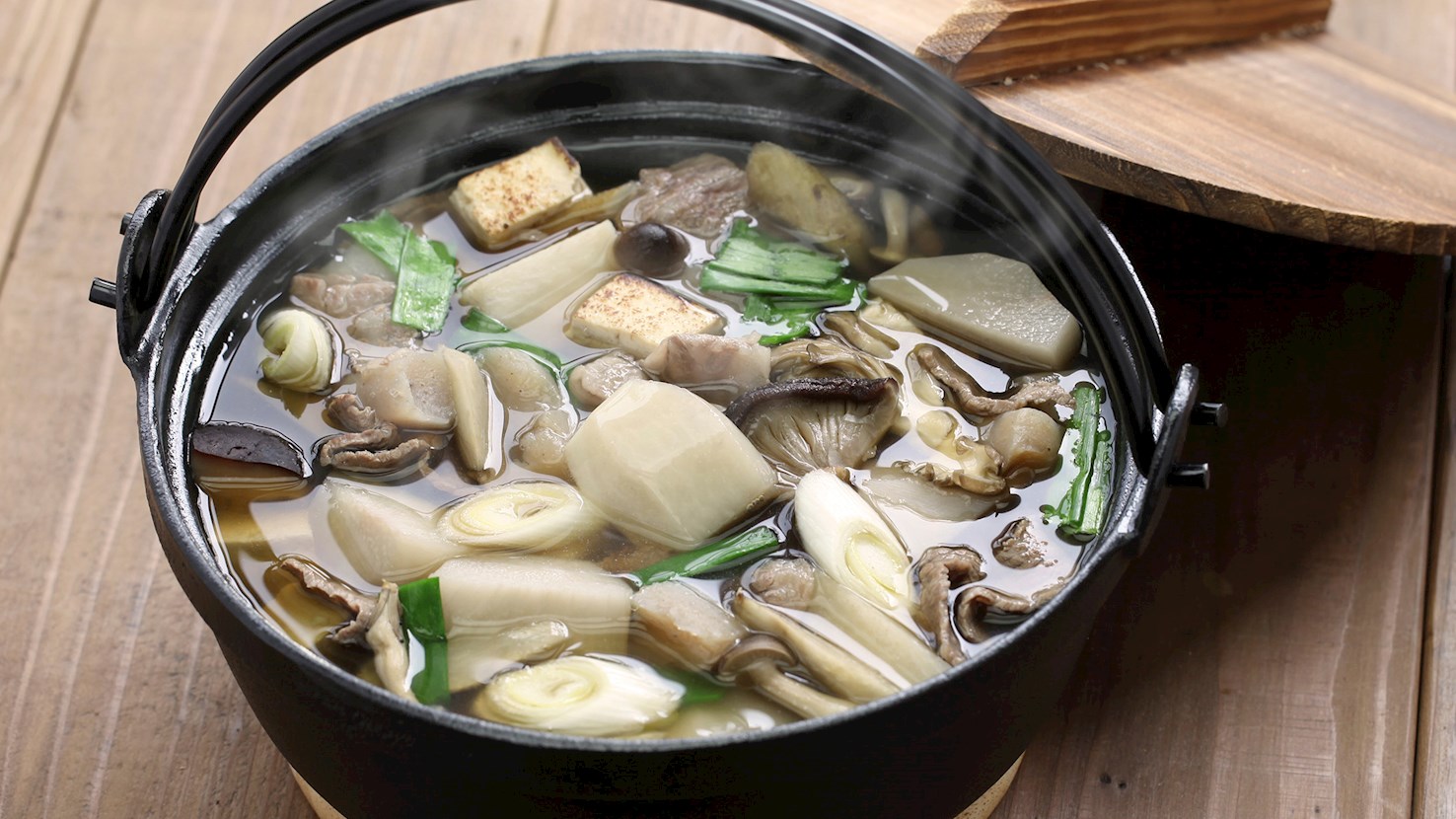
Imoni is a hearty Japanese meat stew with many regional varieties. It is most commonly consumed in the Tohoku region, where most prefectures have their favorite imoni style and a preferred choice of ingredients. In the Yamagata prefecture, imoni is usually prepared with beef and various vegetables, all doused in a slightly sweet broth made with soy sauce, sake, and sugar. In the neighboring Miyagi prefecture, a crucial element is miso paste, which is added to the soy sauce broth. An entirely different style is employed in the city of Shonai, where the favorite choice of meat is pork, which is paired with miso-based soups. Regardless of the choice of meat and the type of broth, most imoni versions include sweet taro roots and a variety of different vegetables such as konnyaku, Welsh onion, cabbage, or mushrooms. Imoni is a seasonal dish, typically prepared during the colder seasons, and it is culturally significant for many citizens. One of the ancient traditions in Yamagata are the communal festivities where friends and family gather on the river banks and cook imoni in large pots over an open fire. Each September, the city of Yamagata organizes the annual Imoni Festival, where this comforting stew is cooked in an enormous six-meter pot.
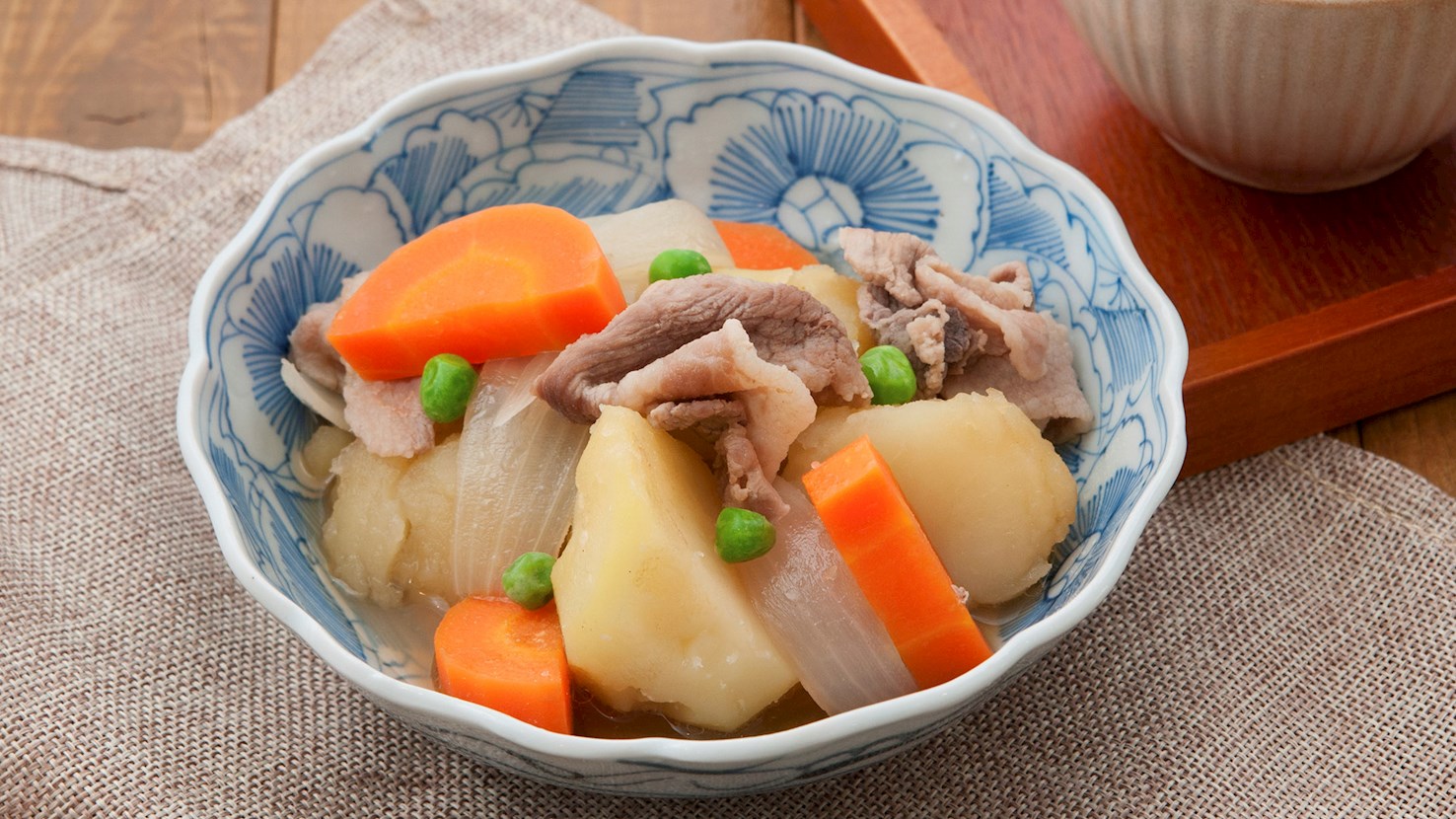
Nikujaga is a dish of thinly sliced meat, starchy potatoes, and sweet onions, gently simmered to tender perfection in a savory-sweet broth made from dashi, soy sauce, sake, and mirin. Translating literally to "meat and potatoes," this soulful stew is widely celebrated across Japan as the ultimate ofukuro no aji, or "taste of mother's cooking," evoking a deep sense of nostalgia and domestic warmth. The dish traces its origins to the late 19th century, during the Meiji period, with culinary legend attributing its creation to Admiral Tōgō Heihachirō of the Imperial Japanese Navy, who, having studied in Portsmouth, England, supposedly ordered his naval chefs to recreate the hearty beef stews he had enjoyed abroad. Lacking European staples like red wine, butter, and demi-glace, the resourceful cooks turned to traditional Japanese pantry items to flavor the broth, inadvertently creating a masterpiece of cultural adaptation that seamlessly blended Western stewing concepts with classic Japanese flavor profiles. The preparation of nikujaga relies heavily on the harmonious absorption of flavors, often using an otoshibuta—a traditional drop lid that rests directly on the simmering ingredients—to prevent the delicate potatoes from breaking apart and to ensure the sweet, umami-rich liquid is evenly distributed. Regional variations dictate the choice of protein, with highly marbled, thinly sliced beef favored in western regions like Kansai, and pork taking precedence in eastern areas like Kanto, yet both versions typically include translucent shirataki (konjac) noodles, which act as miraculous flavor sponges. Once cooked properly, the meat melts in the mouth, the carrots and onions offer a gentle sweetness, and the potatoes, thoroughly saturated with the mahogany cooking liquid, become incredibly rich and savory. Nikujaga is served simply alongside a steaming bowl of short-grain white rice and a comforting cup of miso soup.
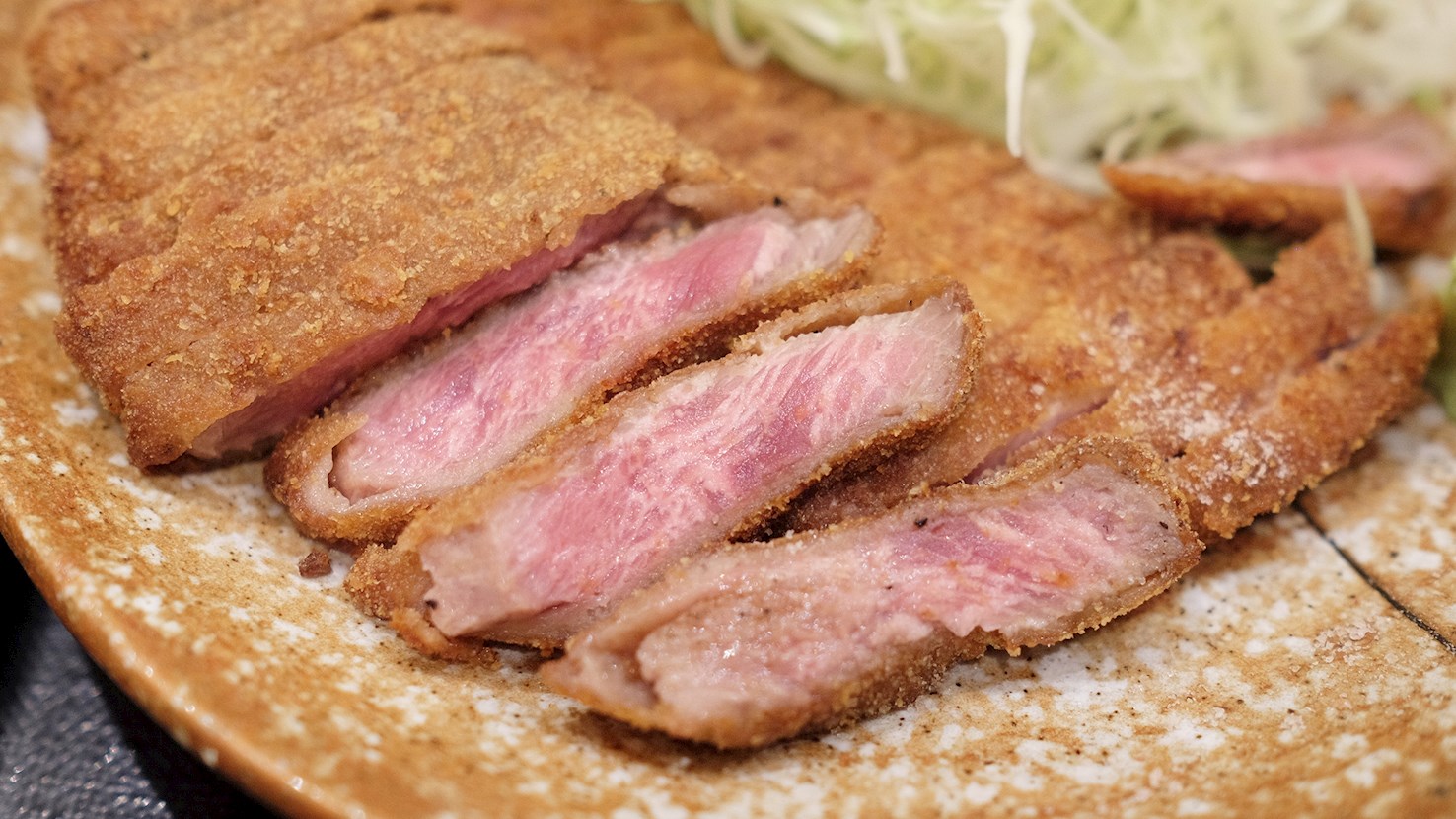
Gyukatsu is a deep-fried beef cutlet that is traditionally made with wagyu beef. The cutlet is seasoned and coated in breadcrumbs before it is shortly fried until crispy. It is then served sliced into bite-size pieces. In restaurants, gyukatsu is usually accompanied by various sides that may include miso soup, sliced cabbage or other vegetables, pickled vegetables, dipping sauces, wasabi, barley rice, or tororo—grated yams. Optionally, a portable grill will be provided if a guest wants to additionally grill each piece of gyukatsu because most restaurants prepare the meat raw to medium rare.
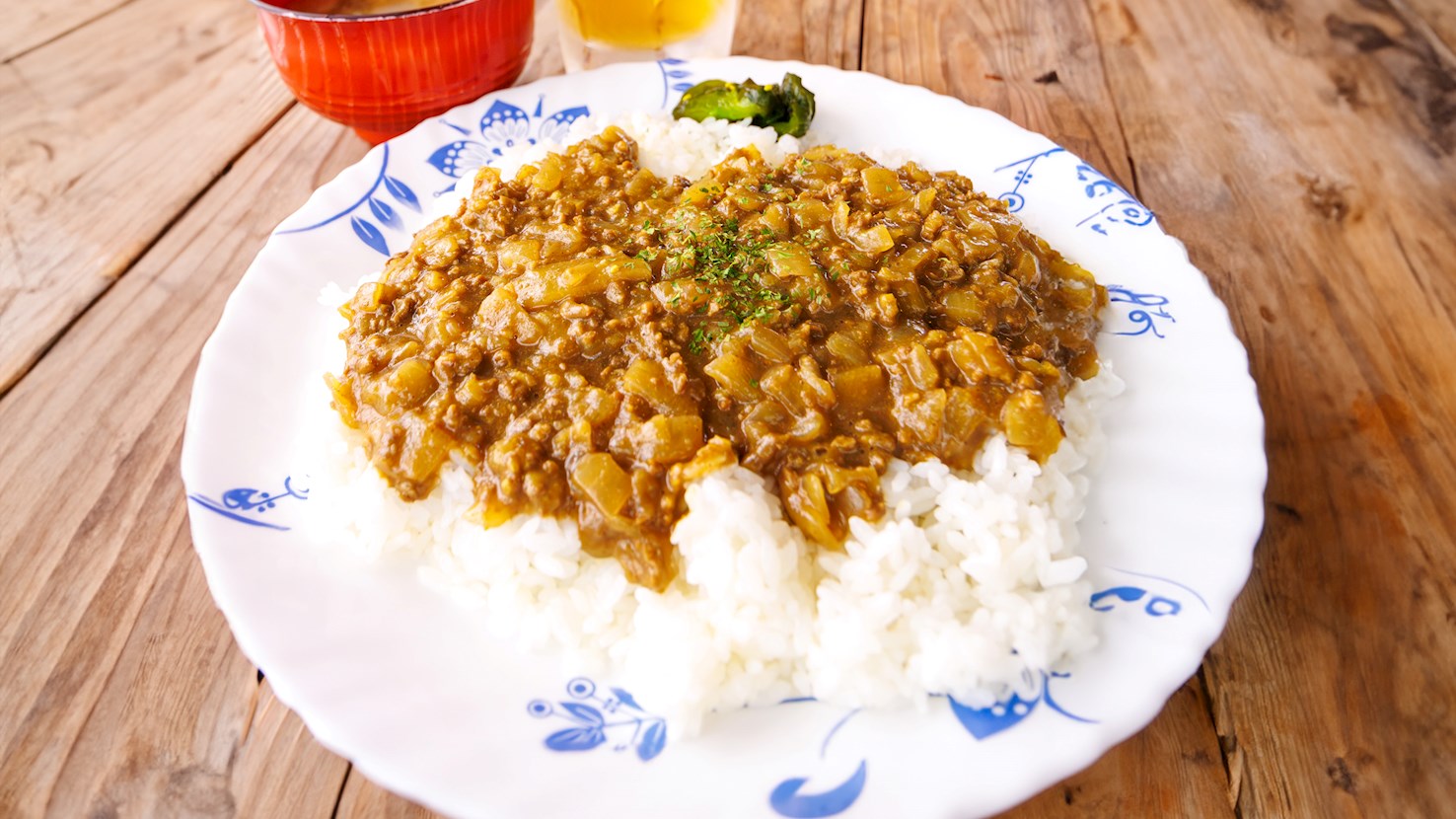
Dorai karē or dry curry is a simple Japanese dish including curry fried rice and a thick and dry curry meat sauce on top of the rice. When made at home, it is often prepared by using leftovers. The curry meat sauce is typically made with a combination of ground beef, vegetables, curry powder, and soup stock. It is believed that dorai karē was based on an Indian dish called keema curry.
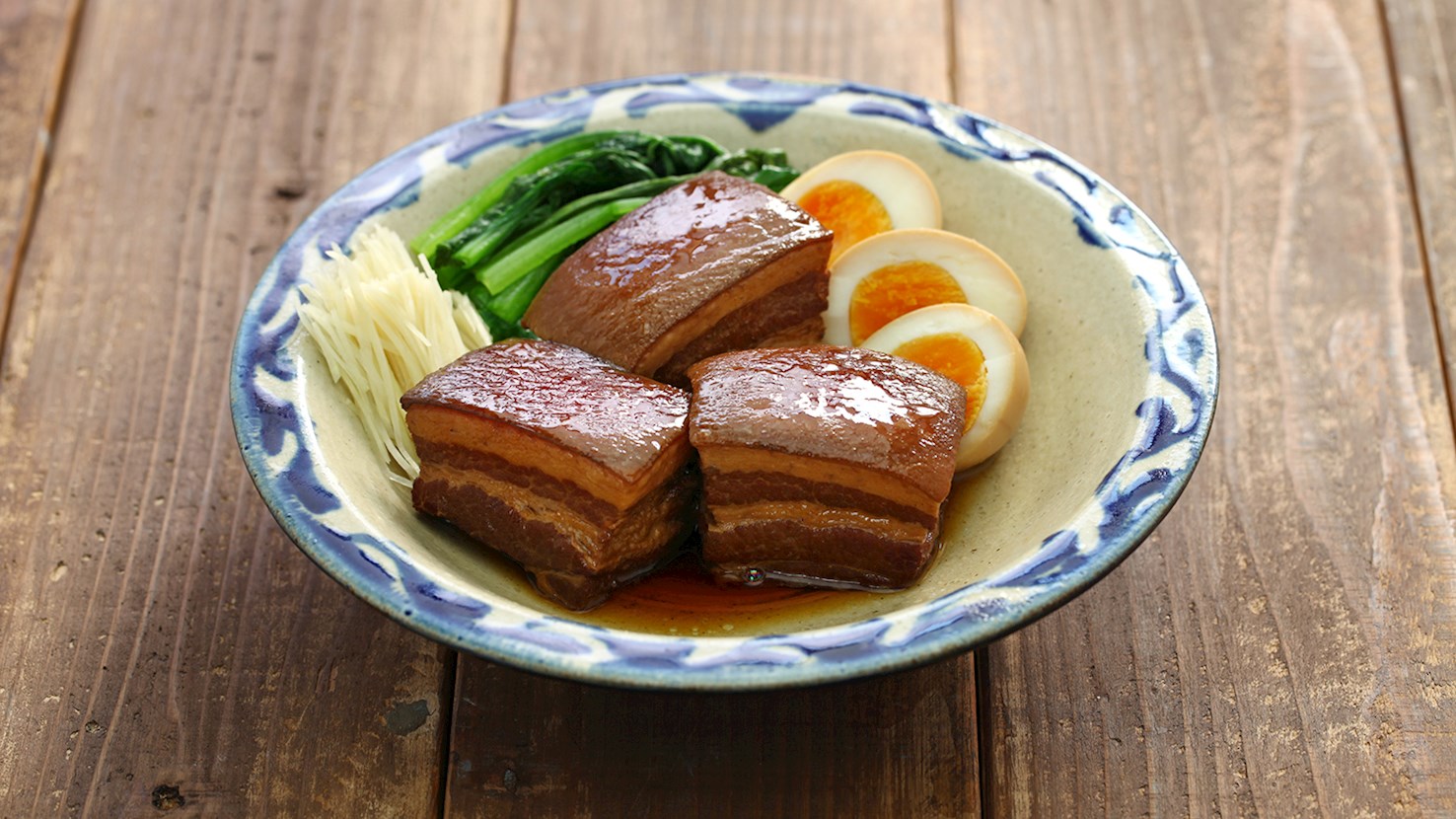
Rafute is a traditional dish originating from Okinawa. The main compoment of the dish is braised pork belly, but every restaurant has its own variation. In order to prepare it, the pork belly is usually slowly cooked in black sugar, soy sauce, and awamori (Okinawan distilled liquor). The origins of rafute are believed to come from a Chinese dish called dong po rou. While the pork is simmering, the fat renders and becomes gelatinous. When eaten with chopsticks, the meat just falls apart due to the long slow-cooking process. It's recommended to serve it with steamed white rice or noodles on the side and pair it with an ice-cold beer.
TasteAtlas food rankings are based on the ratings of the TasteAtlas audience, with a series of mechanisms that recognize real users and that ignore bot,
nationalist or local patriotic ratings, and give additional value to the ratings of users that the system recognizes as knowledgeable.
For the “11 Worst Rated Japanese Meat Dishes” list until October 15, 2026, 2,441 ratings were recorded, of which 2,125 were recognized by the system as legitimate.
TasteAtlas Rankings should not be seen as the final global conclusion about food. Their purpose is to promote excellent local foods,
instill pride in traditional dishes, and arouse curiosity about dishes you haven’t tried.



What People Say