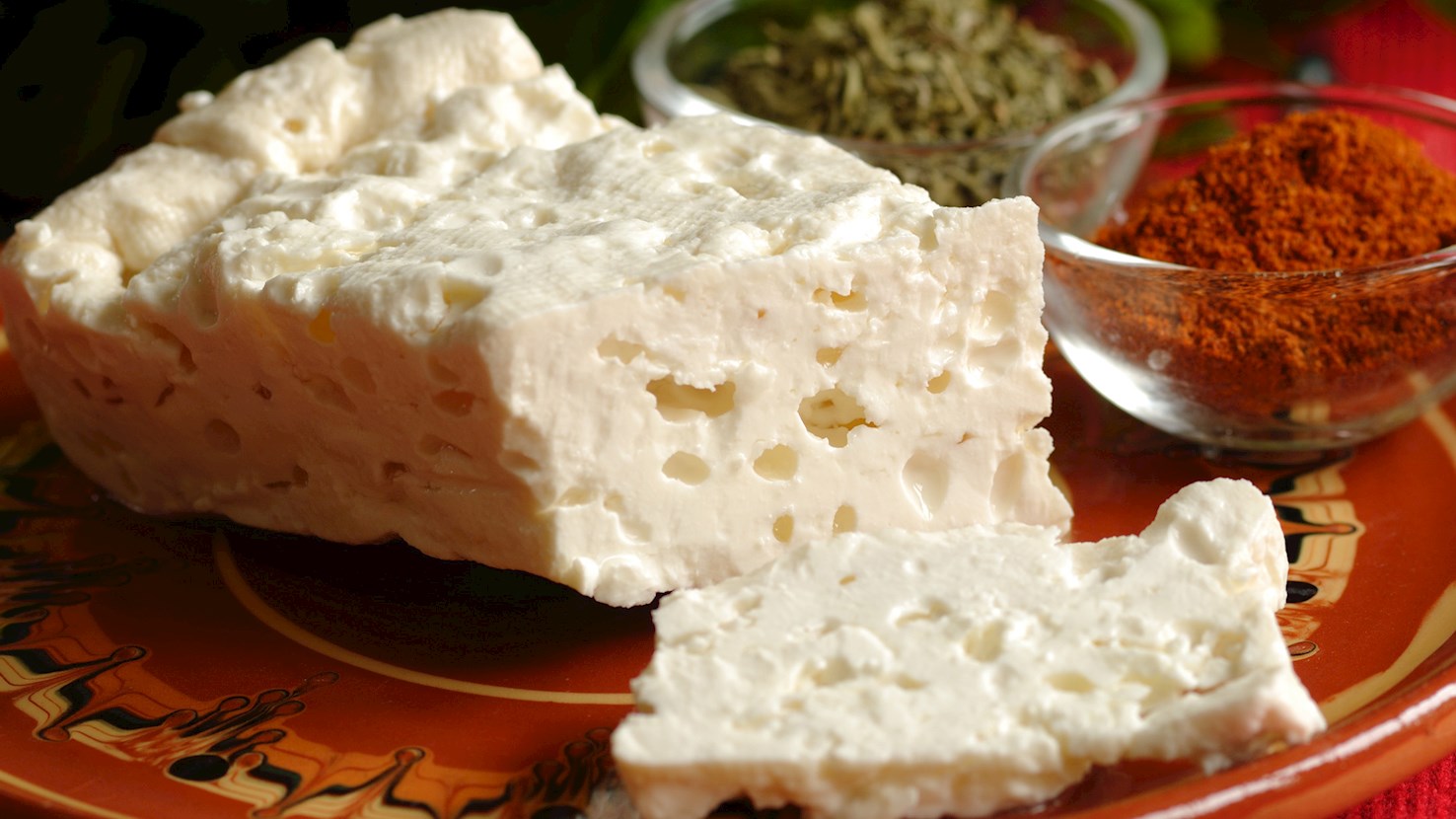
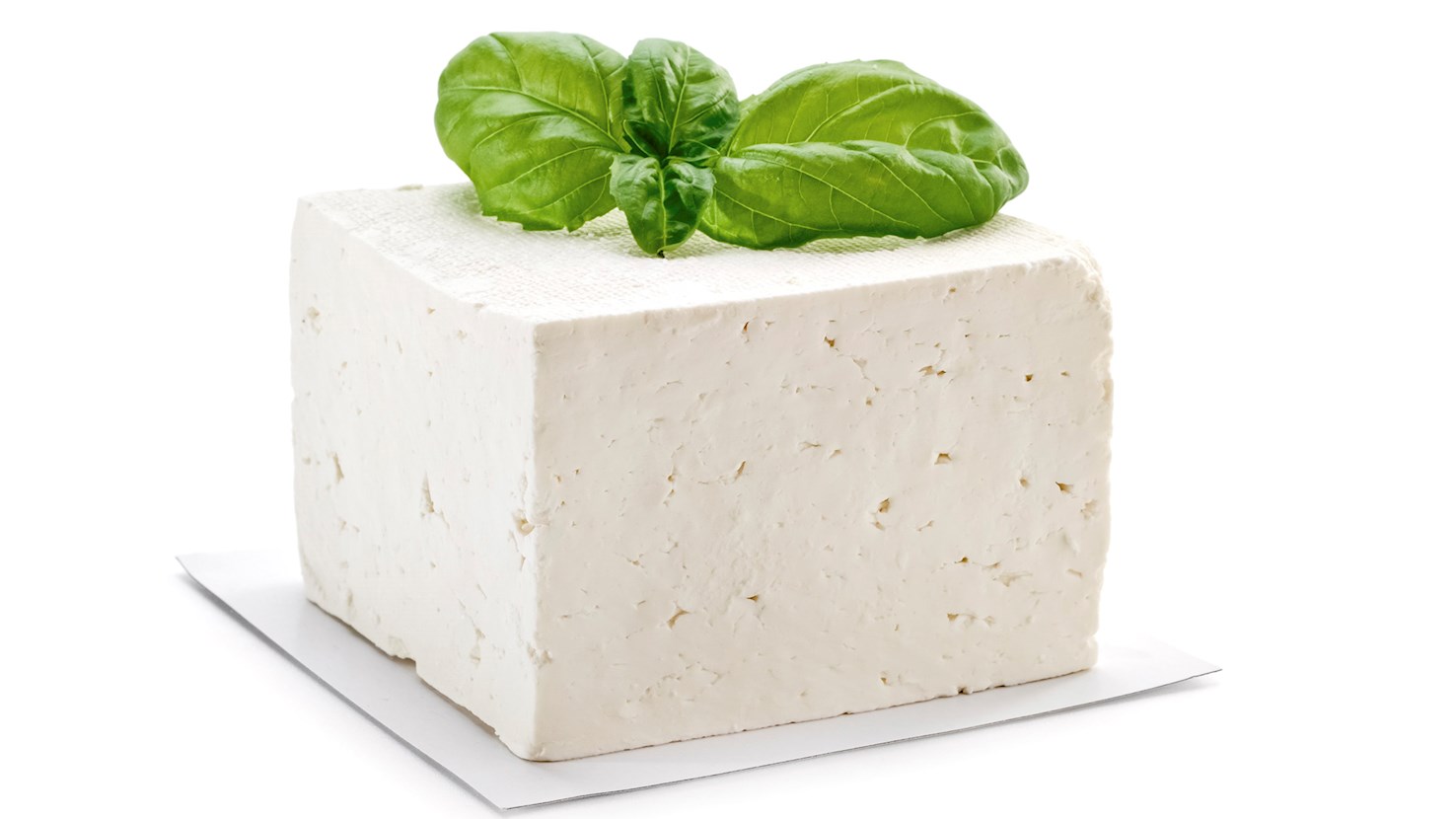
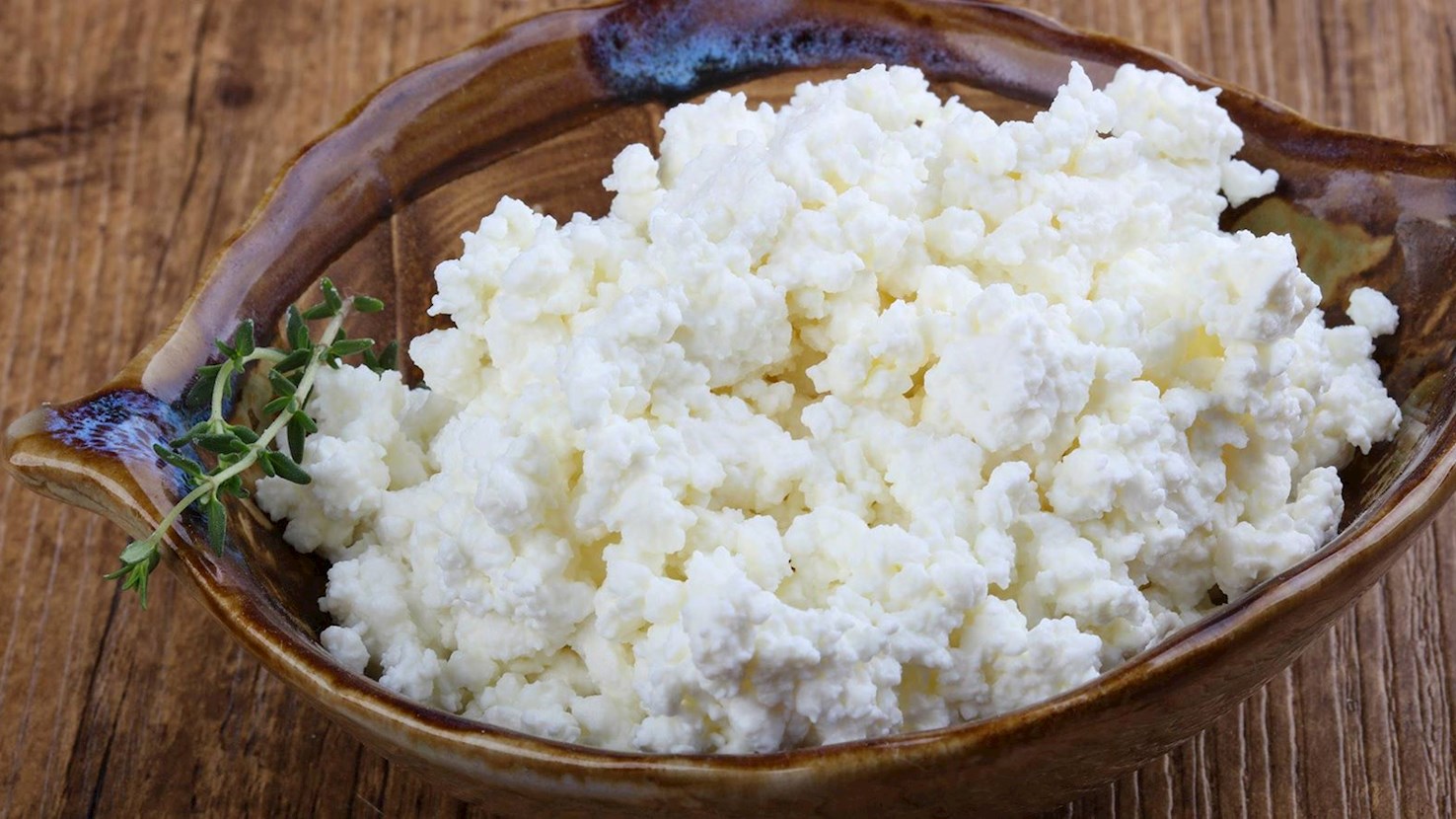
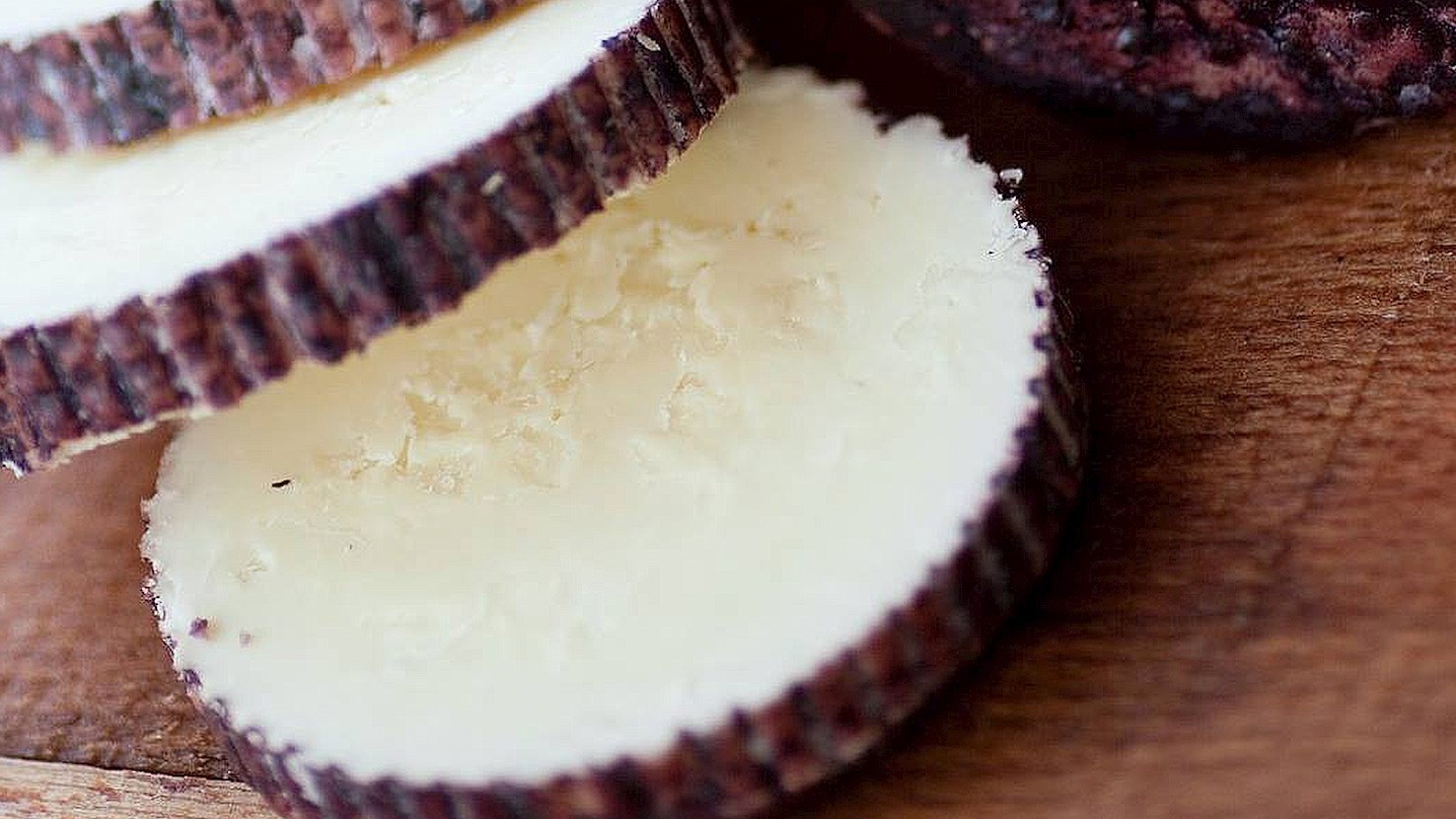
Bulgarsko byalo salamureno sirene is a soft cheese unique to Bulgaria due to a specific lactose-tolerant bacteria used in its production process. This bacteria plays a role in converting milk into yogurt and then into sirene cheese. It is a fermented dairy product that can be made from full-fat cow's, sheep's, goat's, buffalo's, or mixed milk. It includes added yeasts containing strains such as Lactococcus lactis subsp. lactis and Lactobacillus casei, and symbiotic yeasts from Lactobacillus delbrueckii subsp. bulgaricus. Bulgarsko byalo salamureno sirene is slightly crumbly and has a dry matter content of at least 46–48%. In 2023, it was recognized with a Protected Designation of Origin (PDO) status by the European Union, which means that the name is reserved exclusively for cheese produced in Bulgaria using traditional methods.
Kathoura is a traditional cheese produced on the island of Ikaria by local farmers. The cheese is made mainly from fresh goat’s milk of local, free-range goats that graze on various wild aromatic herbs, plants, and bushes which are growing on the island’s mountains. According to the traditional method of production, the milk is cooked, mixed with salt, and it is then allowed to cool down slightly before it is combined with rennet. After separating the curd from the whey, the curd is strained through a thick cheesecloth until all the remaining whey has drained off. Kathoura is a white cheese that can be eaten fresh, right after it’s been drained, or it can be preserved in barrels or tins with brine after it’s been cut into thick slices and salted. Fresh kathoura is often compared to mozzarella due to its soft and spongy texture and mild aromas and flavors. A slightly spicy and salty flavor may also characterize some versions of the cheese, and as the cheese matures, it typically develops a more intense, savory-sour flavor and a harder texture. Also called kathouritsa (or small kathoura), the cheese is consumed daily either as an accompaniment to various local specialties, but it's also used as an ingredient in pies (kathouropita) or for stuffing vegetables. It is recommended to pair it with local figs, Icarian honey, and cured ham, serve it on slices of toast drizzled with honey on top, or enjoy it with a glass of local raki.
This soft, spreadable cheese has been made in the municipalities of Siteia, Makry Yialos, Itanos, and Lefki for over 50 years. It is produced from goat or sheep milk from the local breeds, which feed on a diet of local herbs and aromatic plants. Sheep milk is only used when not enough goat milk is available, but in this case the fat content is adjusted to keep the fat content of the final product under 46%. The cheese is white with a creamy or granular texture. Its taste is fresh, acidic, and slightly salty – this is because salt is added to the milk before the acidification stage, which results in the final drained product having a milder taste. It is recommended to serve Xygalo as an hors d’oeuvre or to serve it in a salad with an olive oil vinaigrette dressing.
Krasotiri Ko or Tiri tis Possias is a traditional soft cheese hailing from the island of Kos. The cheese is made from pasteurized or raw goat's or sheep's milk or a blend of the two. It's ripened for a minimum of one day in brine, and then for at least one month in a thick combination of boiled red wine sediment (also known as possia). Krasotiri ko has a reddish natural rind, but on the inside it's completely white. The cheese is shaped into long cylinders with visible indentations from the cheese molds on the exterior. The aromas are reminiscent of wine, while the flavor is milky and acidic. On Kos, this cheese is often included on the 'Greek Breafkast' menus in the island's hotels. For the best experience, serve it with watermelon or pair it with Greek coffee.
Talagani is a Greek cheese typically made from a mixture of sheep's and goat's milk, originating in the Peloponnese region. The cheese has a firm texture and a rich, slightly tangy flavor (it is often compared to halloumi, the popular Cypriot cheese). Due to its high melting point, it retains its shape under heat, making it ideal for grilling or frying, after which it will have a crispy exterior and a soft, melted interior. Talagani is perfect for salads and as a snack with a drizzle of lemon juice or honey, but it can be used in various sweet and savory dishes.
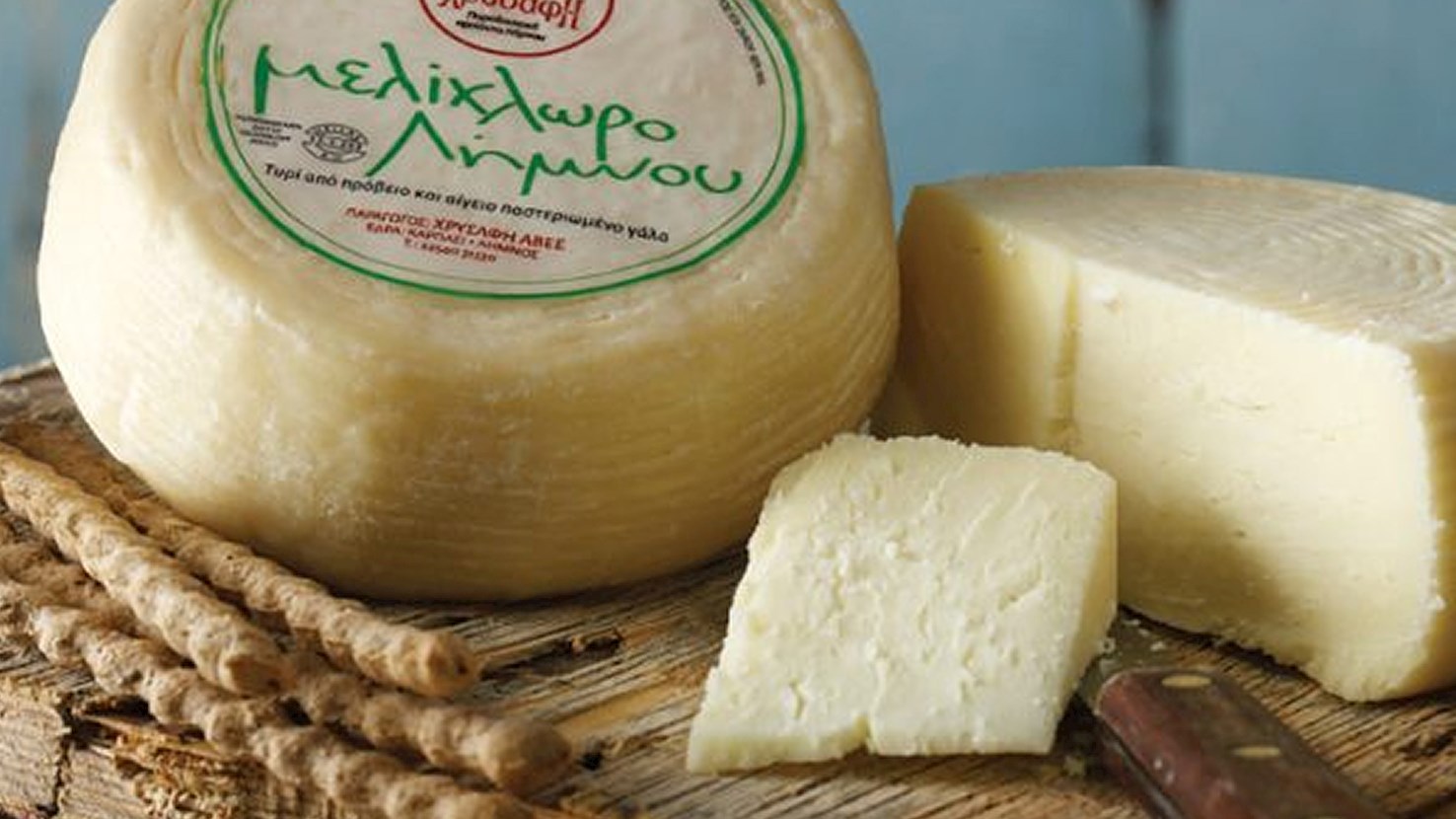
Melichloro is a traditional cheese produced on the island of Lemnos. The cheese is made from fresh sheep's and goat's milk. Its texture is hard, while the flavors are rich and complex, capturing the scent of herbs and wildflowers that grow on the island. Melichloro matures in dark and dry rooms, and it's drained at the end of spring, when humidity is as low as possible so that maximum drainage can be achieved. The result is a hard cheese that's ideal for grating over various dishes. It's recommended to serve Melichloro with thyme honey and walnut halves. Pair it with ouzo or tsipouro grape distillate.
Hailing from Crete, Anthogalo is a creamy fior di latte cheese that was first made by Polyphemus, according to mythology. The sheep's milk is heated, and when it starts to boil, yogurt and rennet added, and the combination is mixed with a wooden spoon. The part of the milk that rises when boiled is strained in a cheesecloth and left to dry in a cool, well-ventilated, and dark place. After a few days, the cheese is placed in a jar and refrigerated. The texture of Anthogalo is creamy, buttery, and spreadable. It goes well on potatoes, meat, vegetables, salads, pasta, or risotto, but perhaps the best combination is anthogalo on rusks with honey.
Traditionally produced in the Greek regions of Thessaly and Western and Central Macedonia, Batzos is a hard to semi-hard, brined, rindless cheese made from fresh or pasteurized sheep's or goat's milk or a combination of the two. The flavor of this square shaped cheese ranges from salty and sour to slightly spicy. Compared to other similar cheeses, Batzos has a low fat content of about 20%, which makes it suitable for low-calorie diets. It is usually enjoyed fresh as a table cheese but can also be used as an ingredient in a number of typical Greek salad dishes.
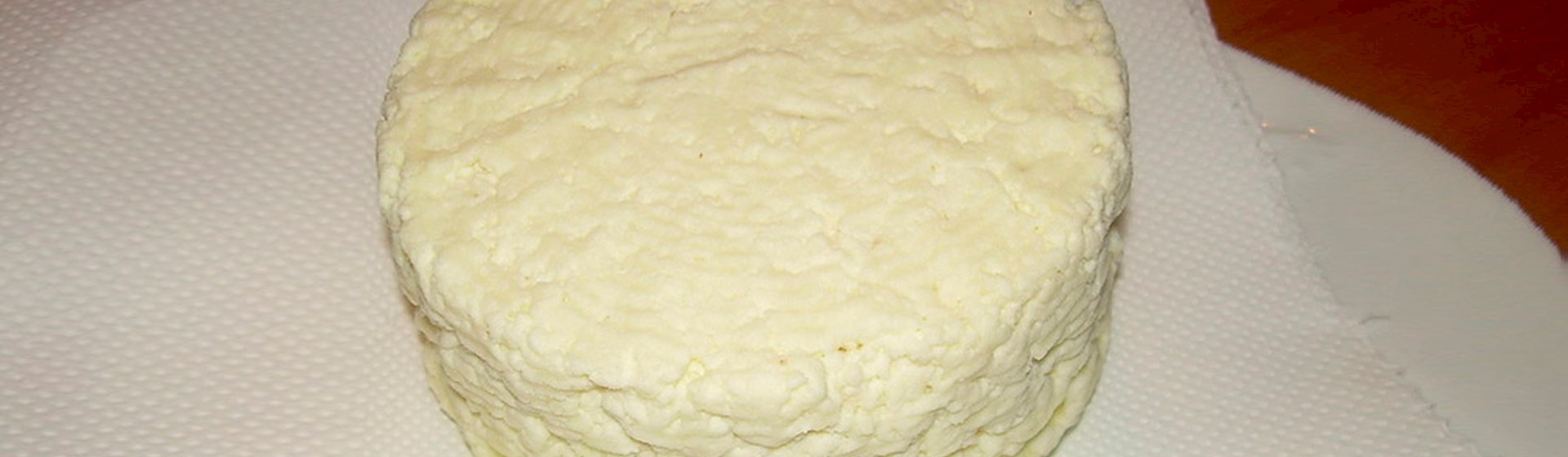
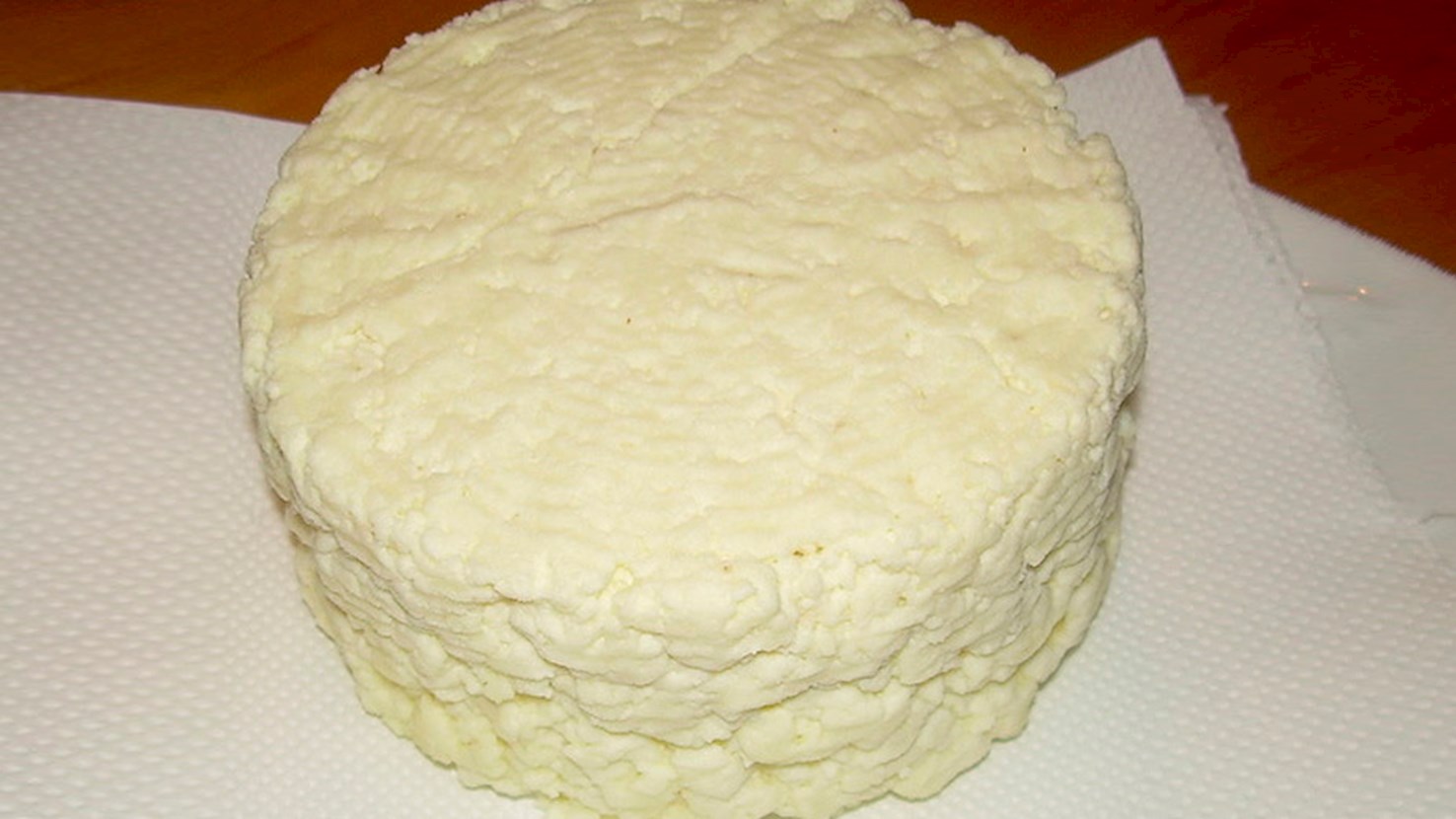
Gjizë is a type of dry curded cheese, made from yogurt and citric acid. The texture and taste resemble a sour ricotta, but gjizë can be enriched with garlic, herbs, salt or other spices. There are two methods of making gjizë. One is to combine the ingredients, put them in a cheesecloth, and let it hang for five to six hours. The other method involves heating up the combined yogurt and citrus juice in a pan and simmering it on low heat. The proteins bind together quicker and release some excess liquid, so it takes less time for yogurt to curdle and become cheese. Gjizë can be consumed as it is, used as a filling for burek, or as a part of another typical Albanian dish, Fërgesë.
Krasotyri is a traditional cheese originating from Kos. The cheese is made from sheep's or goat's milk (or a combination). The milk is warmed, pasteurized, placed into containers, then traditional elongated wicker molds where it drains. After it's out of the mold, the cheese is placed in brine, drained, then combined with wine sediment and left to age for up to 20 days. The result is a distinct flavor of wine. The texture is delicate and soft, and the aromas are reminiscent of wine. It's recommended to serve Krasotyri with homemade bread and vegetables drizzled with olive oil.
TasteAtlas food rankings are based on the ratings of the TasteAtlas audience, with a series of mechanisms that recognize real users and that ignore bot,
nationalist or local patriotic ratings, and give additional value to the ratings of users that the system recognizes as knowledgeable.
For the “10 Worst Rated Southeastern European Pasteurized Milk Cheeses” list until May 22, 2026, 4,715 ratings were recorded, of which 1,725 were recognized by the system as legitimate.
TasteAtlas Rankings should not be seen as the final global conclusion about food. Their purpose is to promote excellent local foods,
instill pride in traditional dishes, and arouse curiosity about dishes you haven’t tried.