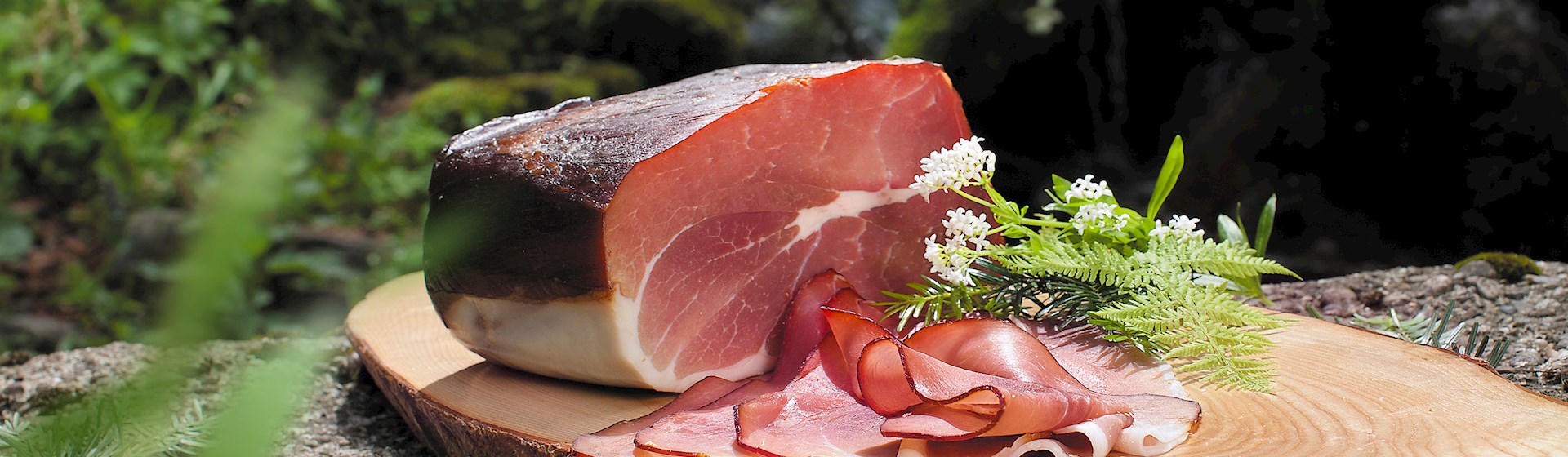
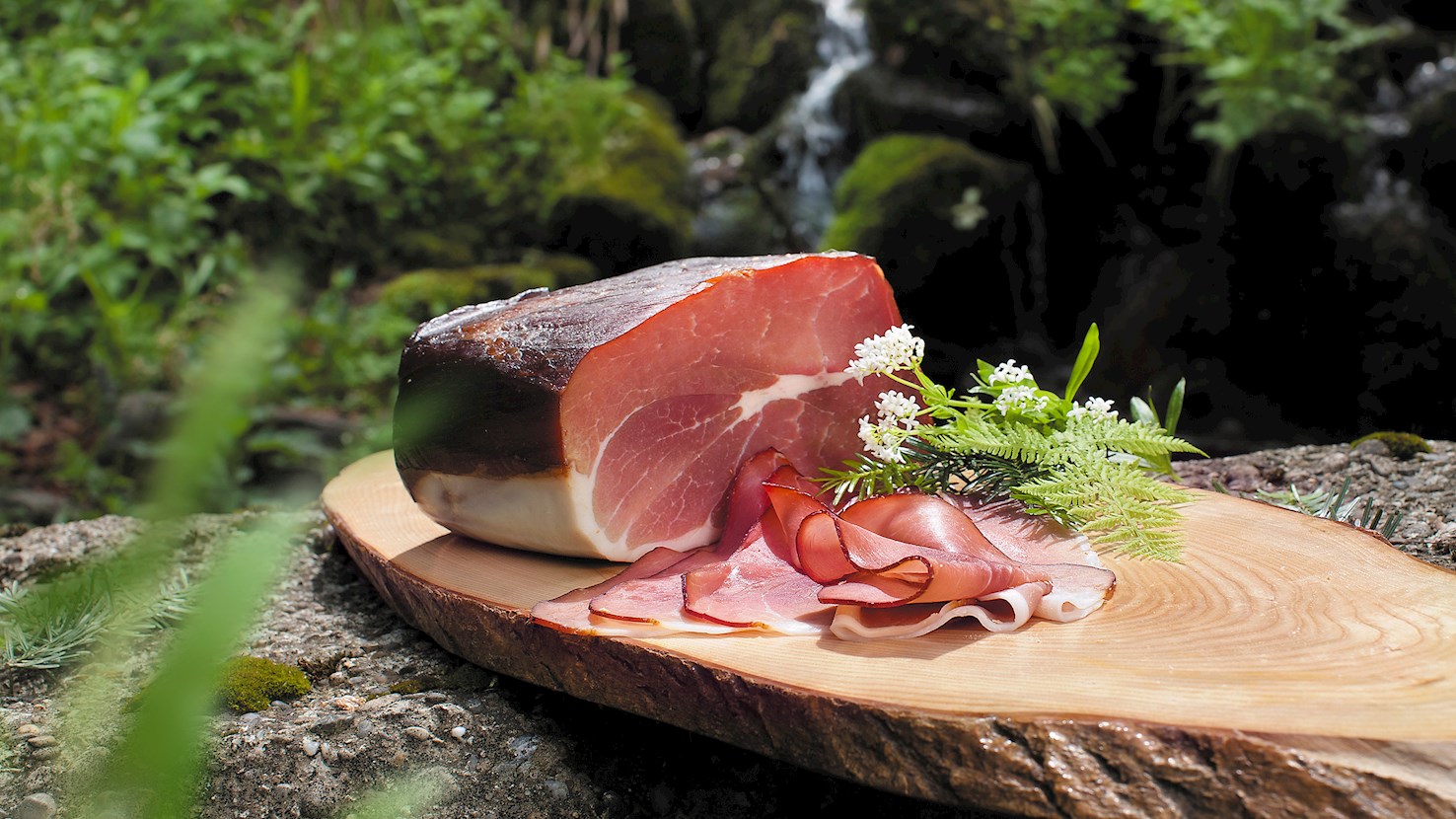
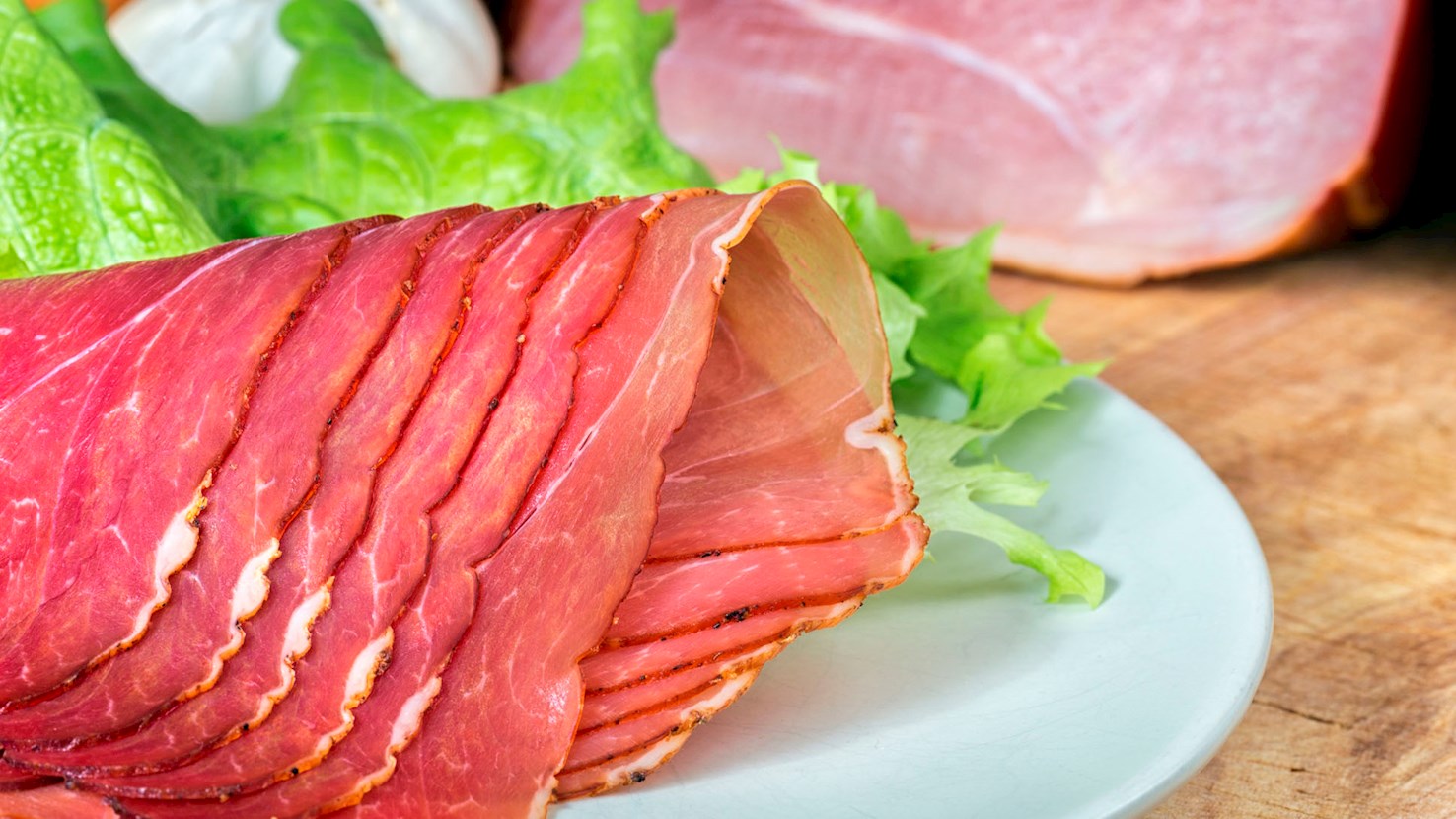
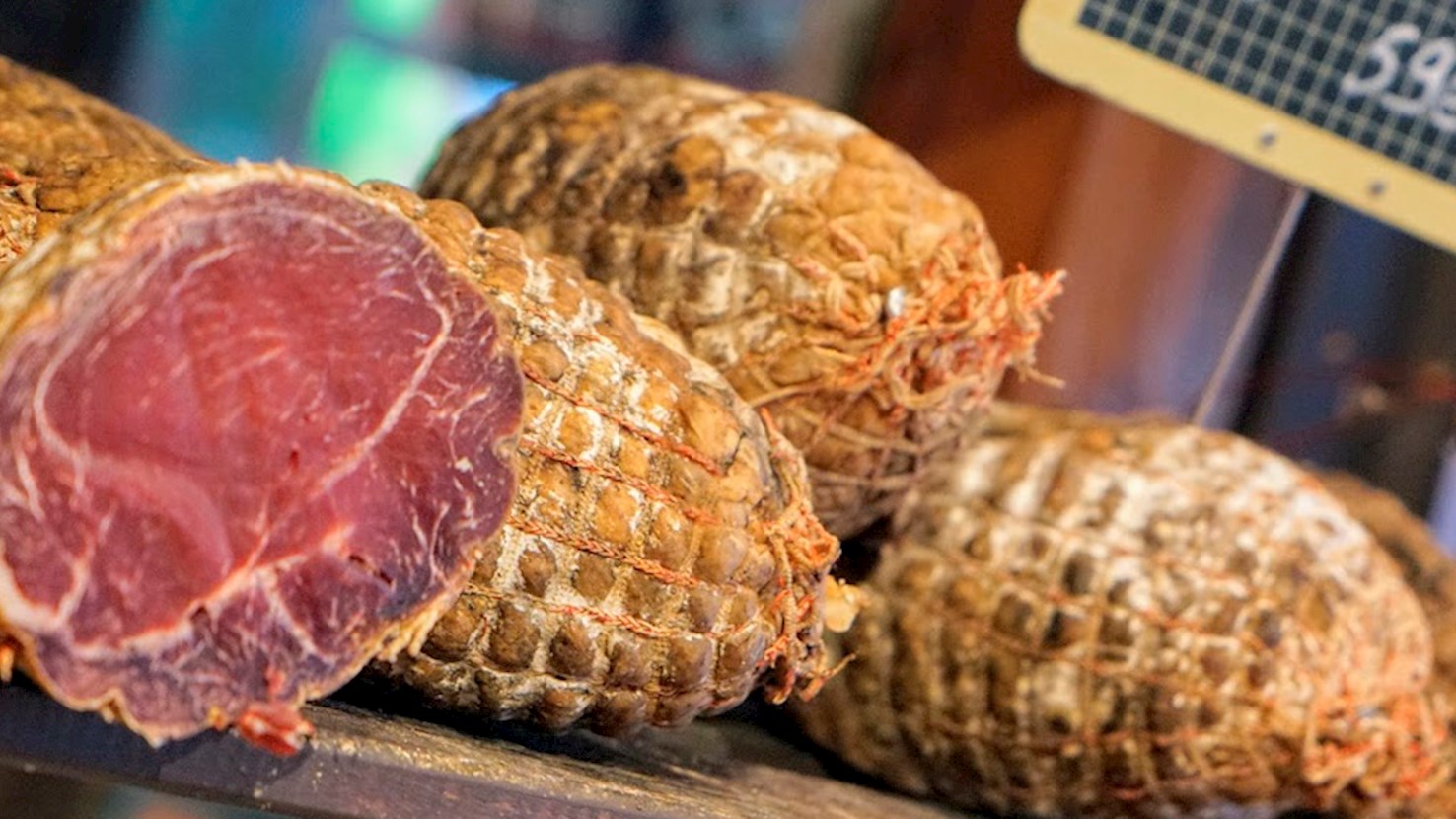
Jambon de la borne is a smoked ham prepared in the Swiss canton of Fribourg. Made with well-chilled, fresh pork leg that is carefully rubbed with salt, sugar, saltpeter, and spices such as pepper, cloves, juniper, and bay leaves, jambon de la borne must be left to rest in a mixture of salt and spices for at least 6 weeks before being smoked - strictly with wood-fired smoke. This cured delicacy is best enjoyed as a starter paired with slices of bread, or as a flavor enhancer in various savory dishes. Jambon de la borne is also an inevitable part of a traditional meal prepared for Bénichon, Fribourg’s thanksgiving festival.
Walliser rohschinken is a cured and dried raw pork ham hailing from the Canton of Valais. Only high-quality pork legs that have been obtained from pigs which are exclusively raised and slaughtered in Switzerland can be used in the preparation of this meat specialty. The ham is dry-salted, seasoned with herbs and spices, and then chilled before it is parboiled for a few days inside a stocking or a net. The meat is then dried, pressed, and allowed to mature for several weeks. The whole process of making the ham typically lasts about 6 to 10 weeks, and it yields an excellent dried pork ham that has been officially rewarded with a Protected Geographical Indication (PGI) status since 2015. The pork ham is consumed at various celebratory events and it is available at numerous café-restaurants and winemakers’ cellars in the region.
This Croatian prosciutto hails from the island of Krk, and what makes it unique is the specific way of production which is a peculiar blend of the two traditional ham curing methods. Unlike its Istrian and Dalmatian counterparts which are, respectively, trimmed of skin and smoked, Krk prosciutto is a non-smoked ham cured skin-on after being dry-salted with sea salt flavored with pepper, rosemary, and bay leaf. Despite being equipped with the latest technological solutions, the manufacturers of Krčki pršut use a natural system of curing whenever possible, which means the hams are left to dry and mature in the strong, salt-bearing Bora wind, characteristic for the Adriatic. This results in a more delicate, sweet to mildly salty flavor with pronounced notes of slow-matured pig meat. An essential part of any appetizer platter of the local cuisine, Krk prosciutto is best enjoyed with some aromatic sheep milk cheese and a chilled glass of dry white Žlahtina, the island's best-known wine.
Salaisons Fumées - Marque Nationale Grand-Duché de Luxembourg are hams made with legs of pork which must carry the national protected Luxembourg brand name for pork or the equivalent foreign designation. The ham has a distinctive flavor owed to the long curing time of at least 10 months and the smoking process, which is typical for Luxembourg hams. The hams are thoroughly examined before being placed on the market and branded with a special stamp. Although this product is made throughout the whole year, the production usually takes place during the autumn and winter months. These hams are made in a traditional way by approximately 20 butchers or sausage makers. Salaisons Fumées are sold as whole and usually enjoyed as a tasty snack, eaten with bread or used as an ingredient in many recipes.
The gold standard of Slovenian cured meats - Kraški pršut, also known as Karst prosciutto or simply Karst ham, is a non-smoked, dry-cured ham with more than a hundred years old tradition. Its truly authentic flavor is the result of favorable climate conditions in the Karst region, which have a direct influence on the dynamic of drying and aging. Regardless of today's technological innovations, the manufacturers of this prized ham have retained the traditional methods of production. Rich in vitamins and minerals, this extremely nutritional dry-cured ham also has an even higher protein content than the one found in cooked meat. The meat is salted twice, using only coarse salt from the Slovenian coastal region, and then left to age at a temperature of approximately 12-16°C. This natural dry-curing process doesn’t include any kind of heat or smoking treatment, just the traditional Slovenian know-how. Salted and exposed to air from the very beginning, the prosciutto gradually starts to dry, and after a while, the salt is washed off. To remove the last of the natural juices, the prosciutto is pressed into its distinctive flattened guitar-like shape and prepared for maturing, which takes about 12-16 months, depending on the size of the ham. Like most other hams of the prosciutto variety, Kraški pršut is best enjoyed sliced into thin, almost see-through strips, and traditionally served as a cold appetizer accompanied with homemade bread, cheese, olives or sometimes sweet melons.
The pork used to make this ham originates from the region of Westphalia, which is known for its traditional pig farming. The recipe is guarded as a trade secret, and every step in the production process is carried out entirely by hand. The process begins by rubbing salt of a special consistency with added herbs or spices into the ham and bone, which is then left to cure and dry in aging rooms for an extended period of time. To produce the smoked version, the hams are left in a smoking chamber over a beech and juniper wood fire. This process may take time, but it results in a characteristic dark red meat, golden-yellow rind, and a particularly mild and nutty flavor. To enjoy this delicacy, slice it thinly and serve it as an appetizer with pretzels and cheese.
Traditionally produced using an age-old Flemish method, ganda ham is a dry-salted meat specialty hailing from Belgium. The meat product consists only of high-quality Belgian pork and dry sea salt (La Baleine) from Montpellier. Entirely natural and free of any additives, the ham is typically dry-salted twice over a period of several weeks, then allowed to age for 8 weeks, and it is finally left to dry in special drying lockers for 10 or 16 months, a period during which it acquires its outstanding flavor, color, and aroma. To retain their tenderness and avoid crust on their surface, the hams are typically thinly covered with lard, which is rinsed off after the natural drying process. Ganda ham is sold in a variety of forms, including whole hams, half hams, de-boned hams, or bone-in hams. Numerous dishes can be prepared with this ham, including sandwiches and tapas or sophisticated delicacies in which the ham is paired with vegetables, melons, asparagus, or goat's cheese.
Black Forest ham is the best-selling smoked ham in Europe. It is made from the hind leg of the pig, spiced according to producers' own traditional recipes, and cold smoked using fir wood from the Black Forest. The spices used are salt, garlic, coriander, pepper, and juniper berries. As a result, the ham has a dark layer of meat on the outside but a vibrant red color on the inside with a typical smoky aroma. Black Forest ham is boneless and always contains about 20% fat, and it has a nutty and spicy flavor. This ham is easily found in many restaurants, and may be eaten raw or used as an ingredient in cooked dishes.
Ardennes ham is a cured meat product made in the Wallonian provinces of Luxembourg, Liege and Namur. For the perfect Jambon d'Ardenne each ham is first dry-salted and then immersed into brine to soak in the flavors of a traditional mix of spices such as thyme, laurel, juniper berries and cloves. After the salting, the hams are slow smoked over beech or oak sawdust, which gives this Belgian delicacy its characteristic bouquet. Enjoyed throughout Belgium, this ham is marketed in a variety of cuts: Jambon d'Ardenne refers to a whole bone-in ham; a highly prized boneless center cut is called Fleur or Coeur d'Ardenne, and there's also Noix de Jambon d'Ardenne, which is actually the smallest muscle of the ham and its leanest cut. Ardennes ham is usually served alongside raw vegetables and fruits but it is also an essential ingredient in the preparation of traditional Belgian omelettes and pancakes.
TasteAtlas food rankings are based on the ratings of the TasteAtlas audience, with a series of mechanisms that recognize real users and that ignore bot,
nationalist or local patriotic ratings, and give additional value to the ratings of users that the system recognizes as knowledgeable.
For the “9 Worst Rated Central European Dry-cured Hams” list until June 16, 2026, 691 ratings were recorded, of which 437 were recognized by the system as legitimate.
TasteAtlas Rankings should not be seen as the final global conclusion about food. Their purpose is to promote excellent local foods,
instill pride in traditional dishes, and arouse curiosity about dishes you haven’t tried.