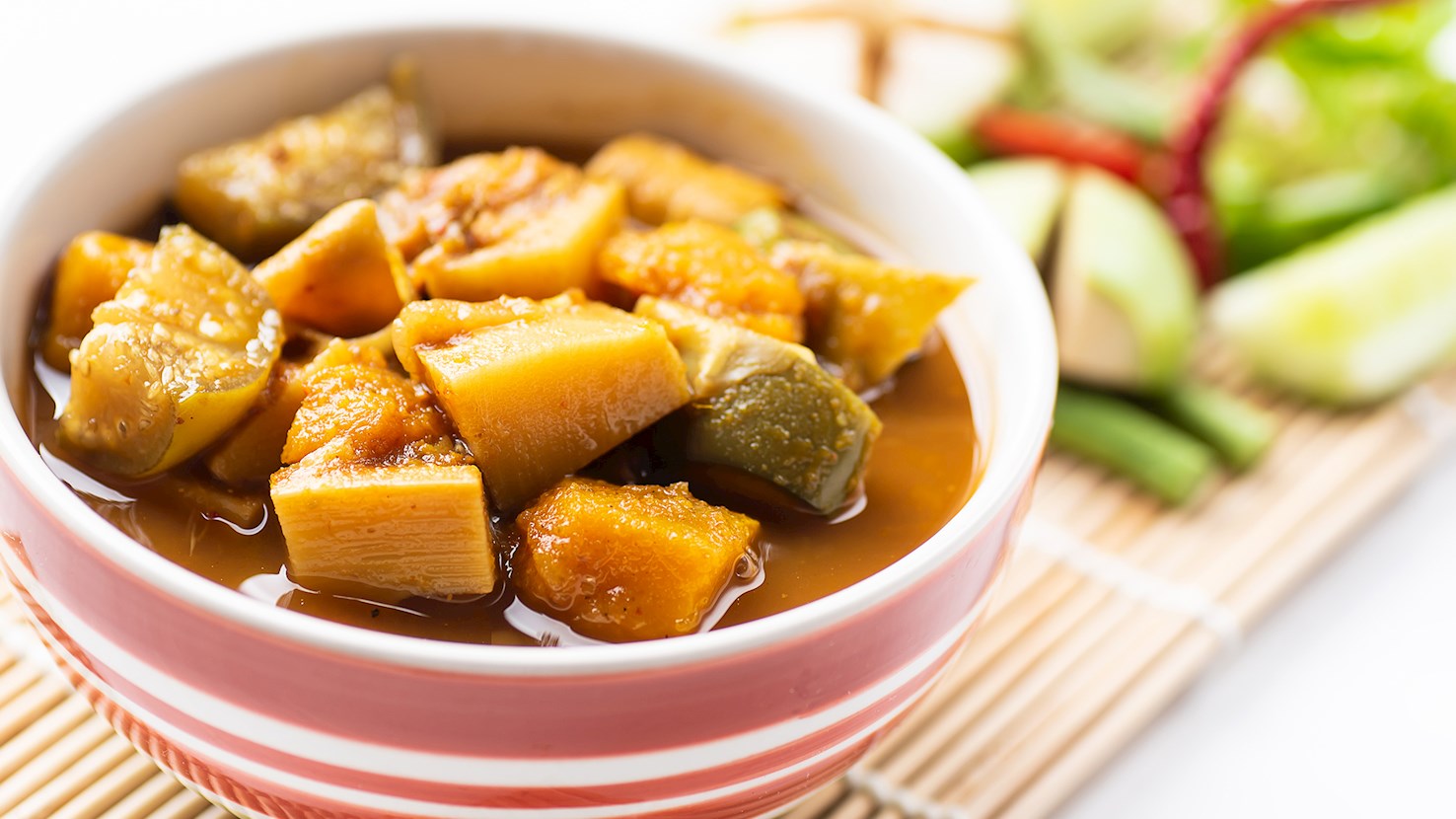
This thick and aromatic fish curry originated in southern Thailand. The base of the dish is prepared with tai pla—fermented fish entrails—and a spicy curry paste consisting of chili peppers, galangal, shrimp paste, turmeric, shallots, and lemongrass. Other additions usually include dry fish, diced eggplant, bamboo shoots, string beans, or other vegetables. Because of its intensity and strong, pungent aromas, kaeng tai pla is best served with steamed rice on the side. Traditionally, this Thai curry was only prepared with fish, and most varieties do not use coconut milk.
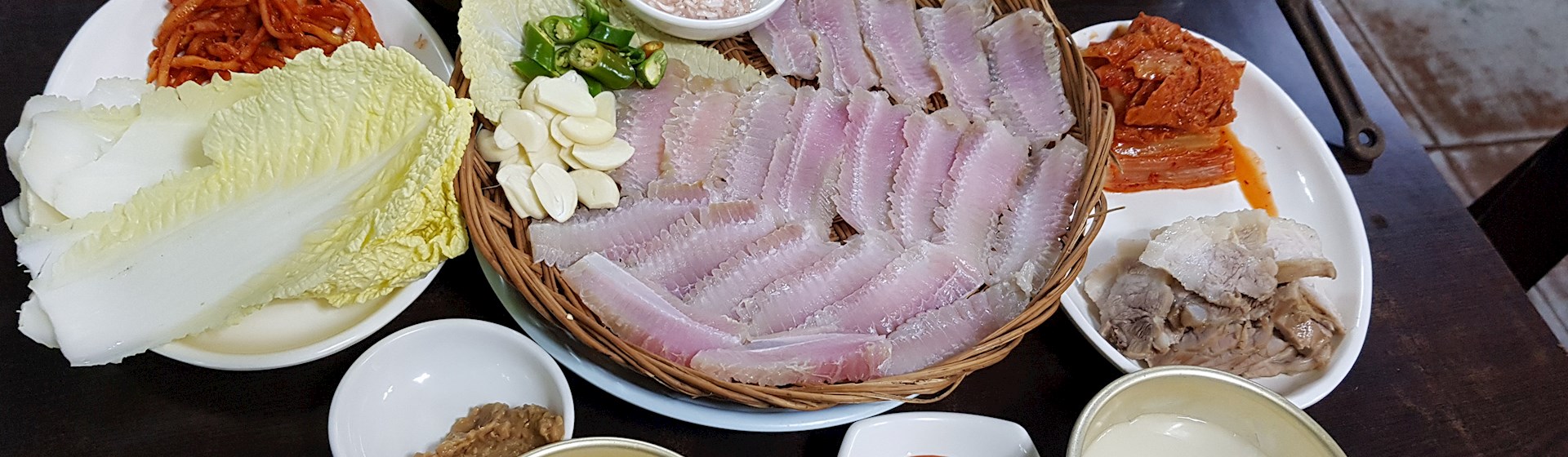
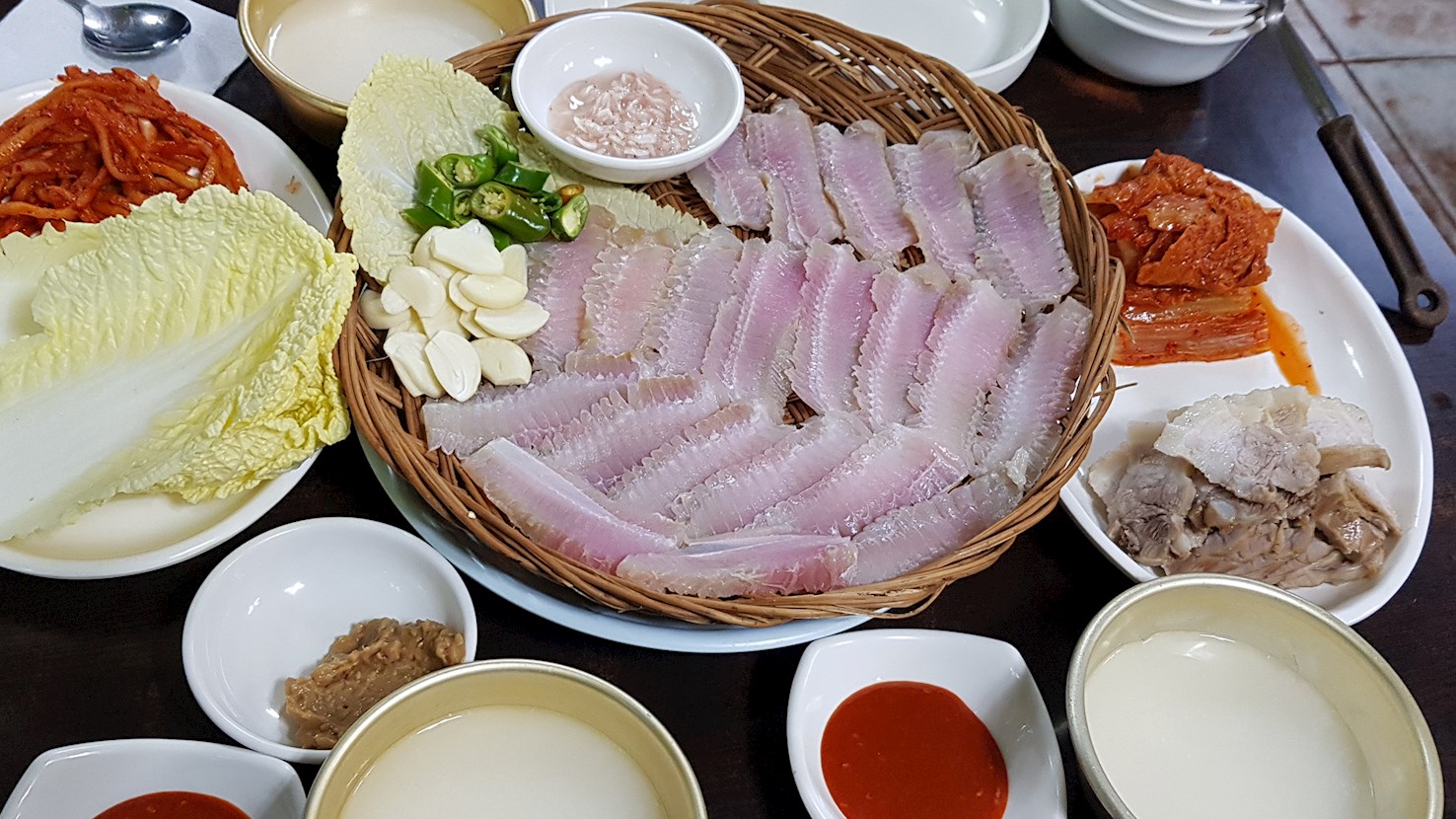
Hailing from the province of Jeolla, hongeo or hongeo-hoe is a South Korean specialty that consists of skate that gets fermented in its urine. This cartilaginous fish is known to eliminate urine through its skin, thus allowing for natural fermentation to take place in the flesh and helping to preserve it. The process lends the fish its signature aromas that bring to mind the strong and pungent odors of ammonia and dirty public toilets. As this unpleasant odor follows diners long after they’ve had their share of hongeo, restaurants which specialize in this delicacy often offer their customers services such as keeping their jackets in sealed bags and spraying them with deodorant upon leaving. Odor aside, the fish is appreciated for its chewy texture, distinctive flavor, and the unusual, stinging sensation it leaves in the mouth due to high levels of ammonia. Hongeo is typically paired with slices of steamed pork belly and kimchi, a combination that is called samhap, and it is commonly washed down with alcoholic beverages such as soju (a distilled Korean spirit) or makgeolli (rice wine). This pungent-smelling dish is mainly associated with the city of Mokpo, where it has played a significant role in the region’s economy and culture.
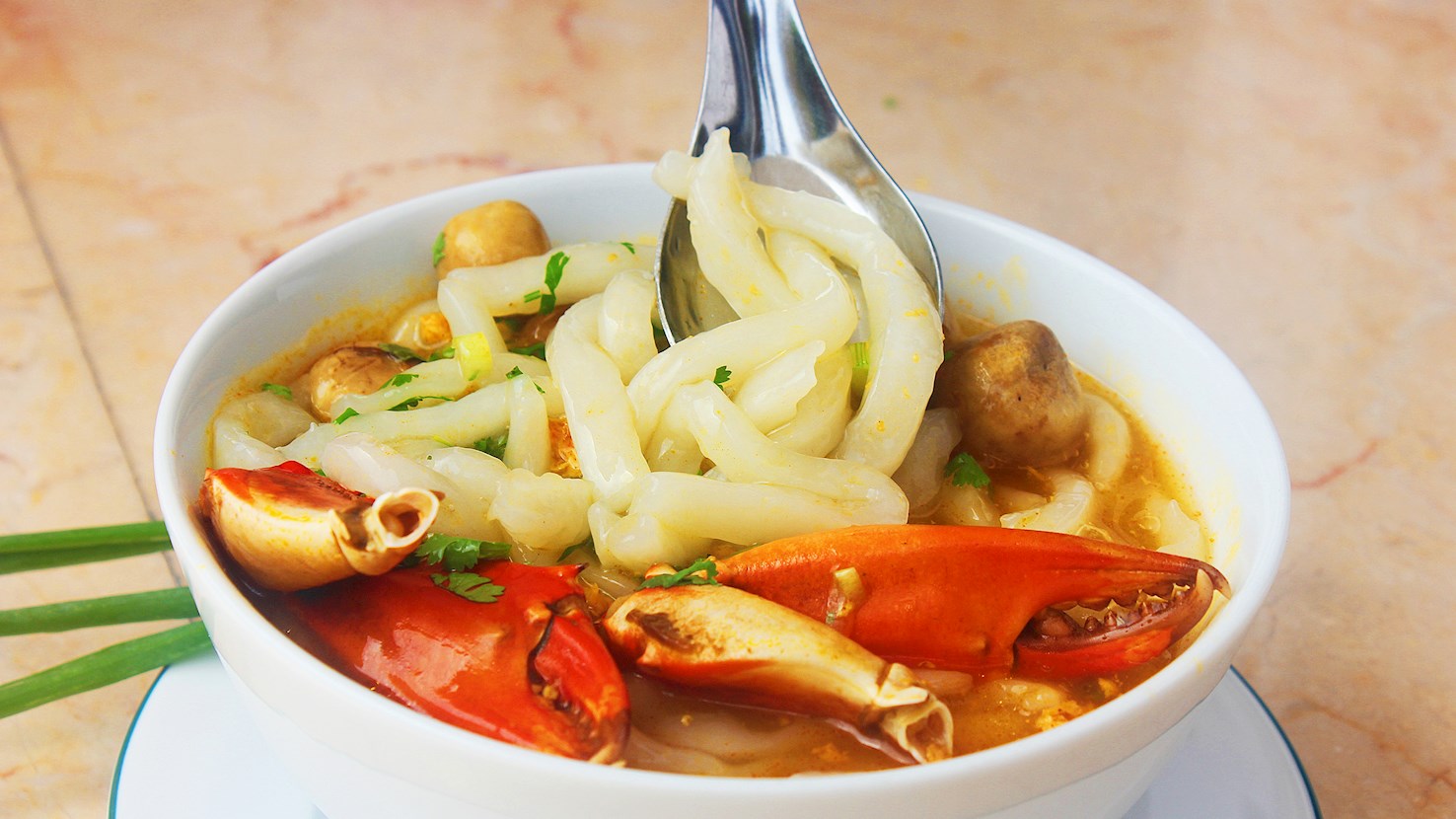
Banh canh cua is a traditional noodle soup. The noodles contain both rice and tapioca flour and they're characterized by their thickness, similar to the famous Japanese udon. These thick and slightly chewy noodles are enriched with crab meat and a rich broth. Common additions include quail eggs, shallots, garlic, or shrimp balls. It's recommended to slurp loudly while eating these noodles because that's how the dish is traditionally eaten. Banh canh cua is typically garnished with chopped green onions, cilantro, and bean sprouts, while lime wedges are often served on the side.
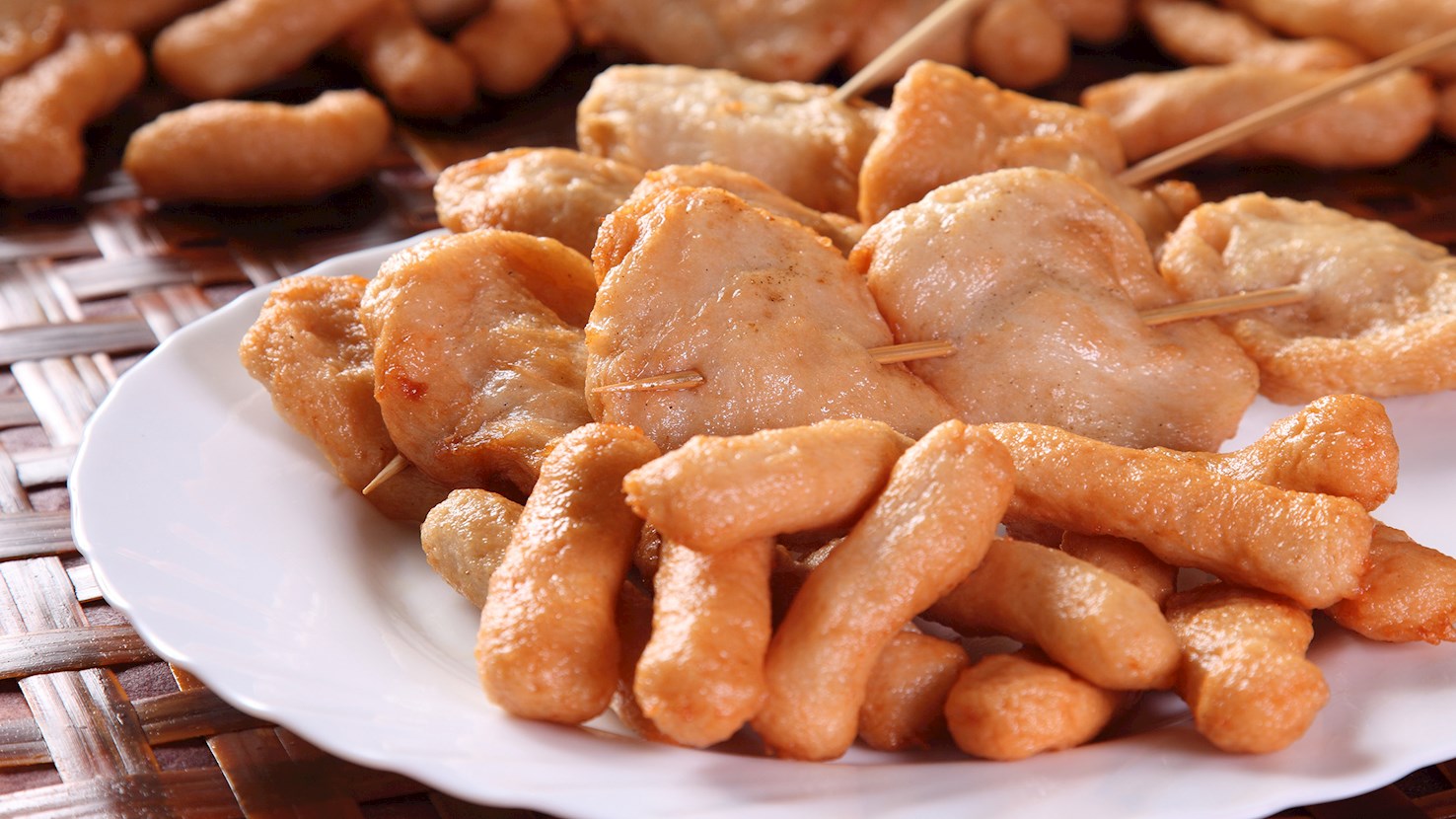
Tian bu la are Taiwanese fish cakes made with a thick paste which incorporates mild white fish fillets, eggs, and potato or tapioca flour. The generously seasoned mixture is piped directly in the sizzling oil, then deep-fried until golden brown. The fish cakes are usually shaped in long and thin cylindrical forms, but they are sometimes flattened into thick, round discs. Even though they can be eaten immediately after frying, the Taiwanese traditionally boil them on low heat in a soy-sauce-based broth, which allows the crispy skin to soften, and the cake to infuse with all the pungent broth flavors. If it is served as a crispy treat, it is usually skewered and enjoyed as a snack on the go. Fried and boiled versions are usually offered in traditional Taiwanese eateries alongside other deep-fried treats such as fish balls or tofu. They are served in bowls and smothered with a sticky brown sauce made with chili paste, soy sauce, miso, and sugar. Traditionally, the sauce leftovers are later mixed with the broth in which the cakes were boiled in order to create a flavorful soup eaten at the end of a meal. Both tian bu la varieties are staples of Taiwanese night markets and one of the favorite Taiwanese street food items.
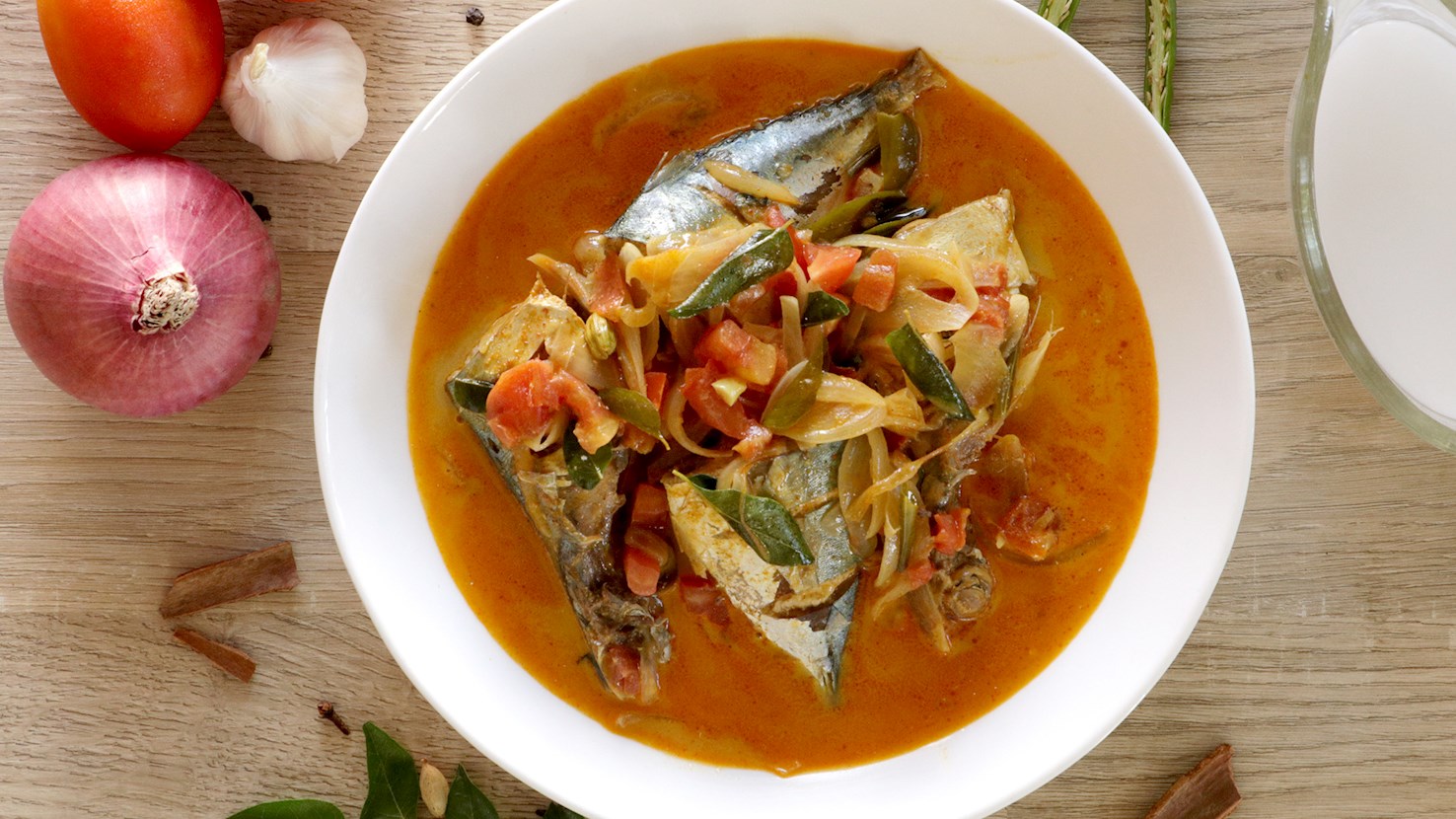
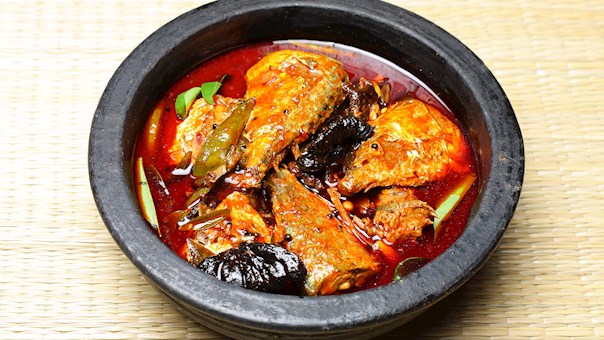
Nadan meen curry is a traditional fish curry typical of the Kerala region in India, "nadan" translating to rustic or traditional, and "meen" meaning fish in Malayalam, the local language. This curry is recognized for its robust flavors, attributed to the luscious combination of coconut milk and a variety of spices like fenugreek seeds, mustard seeds, and curry leaves, coupled with the tangy presence of tamarind or kokum. The fish, usually a type that's local and fresh, is simmered gently in this rich, aromatic gravy until it's cooked to perfection. Often, slices of green mango are added for an extra layer of tartness, complementing the spicy, creamy nature of the curry. Nadan meen curry is typically served with rice or a traditional flatbread, offering a heartwarming meal that reflects the coastal culinary heritage of Kerala.
Nanbanzuke is a Japanese dish consisting of fried fish that is marinated in vinegar and served with vegetables. The fish used for nanbazuke is usually small yellowtail, smelt, blue mackerel, or whiting, while the marinade typically consists of vinegar, sake, mirin, soy sauce, and sugar. The vegetables which are marinated with the fish include onions, cucumbers, red chili, and carrots. Immediately after the fish has been fried, it should be placed in the marinade so it can absorb it. Once prepared, nanbanzuke is traditionally served chilled or at room temperature, making it ideal for hot summer days. The word nanban means foreign, referring to Portugal and Spain who introduced deep-frying, onions, and hot peppers to Japan, while the word zuke or dzuke means marinated.
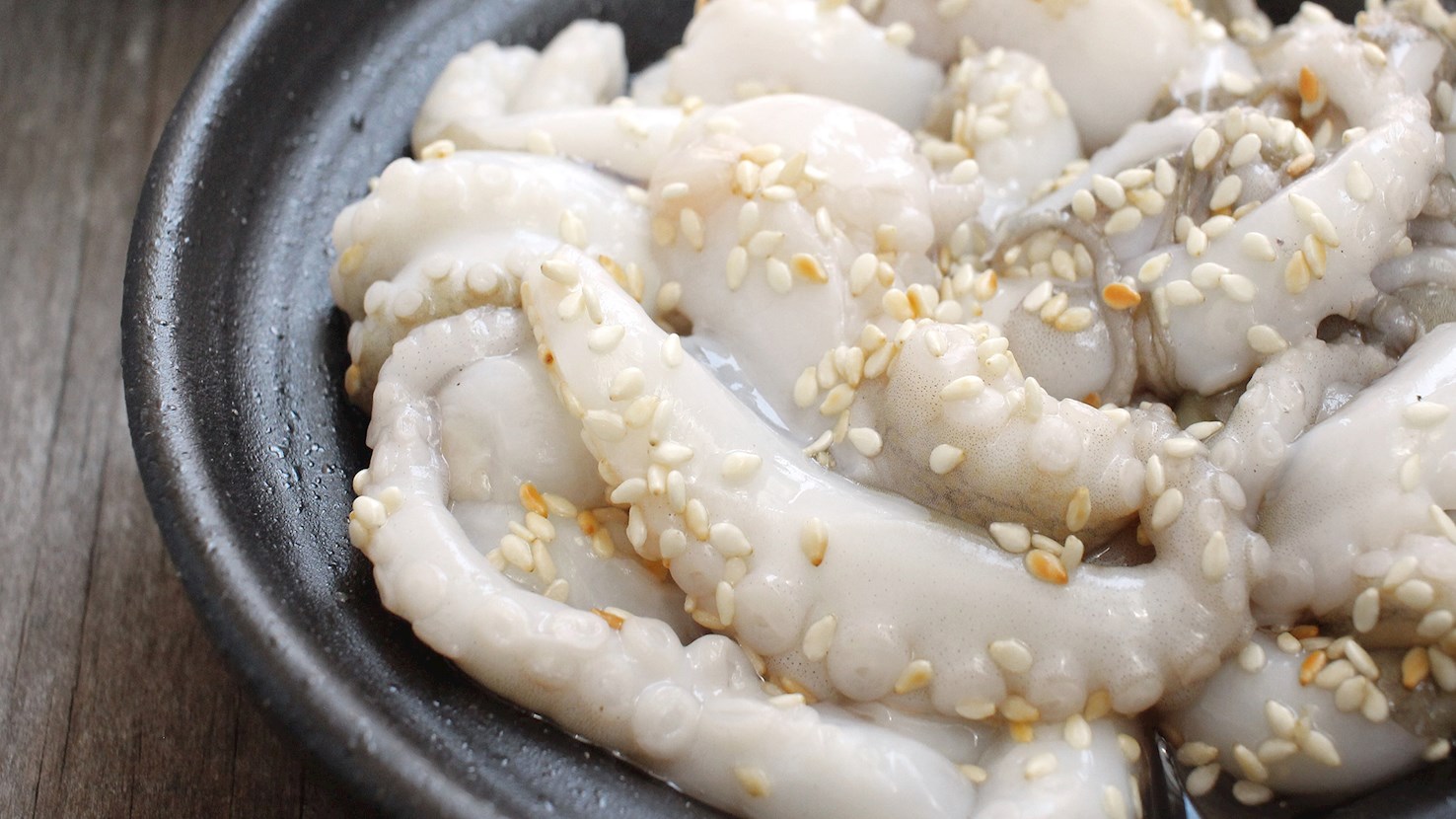
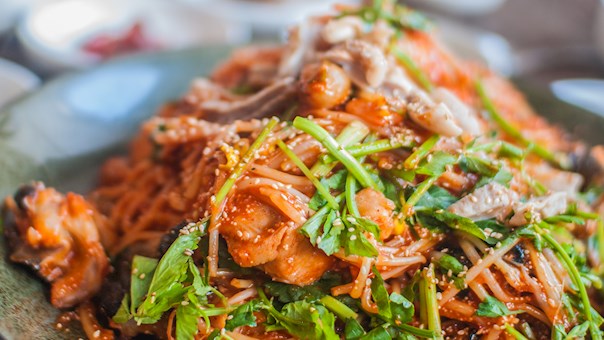
Salty, sticky, and chewy, sannakji is a raw baby octopus that is chopped and traditionally served drizzled with sesame oil. Interestingly, as the dish is served instantly after chopping, some of the pieces are still in motion, twitching on the plate. The dish can be commonly found at Korean street food stalls, and it is recommended to pair it with ssamjang and green tea. A popular Korean movie with a cult following called Oldboy (2003, dir. Park Chan-wook) depicted the dish in one of its most disturbing scenes. Just make sure to chew sannakji while eating, as there have been a few cases in which the octopus grasped onto the diner's esophagus, choking them to death in the process.
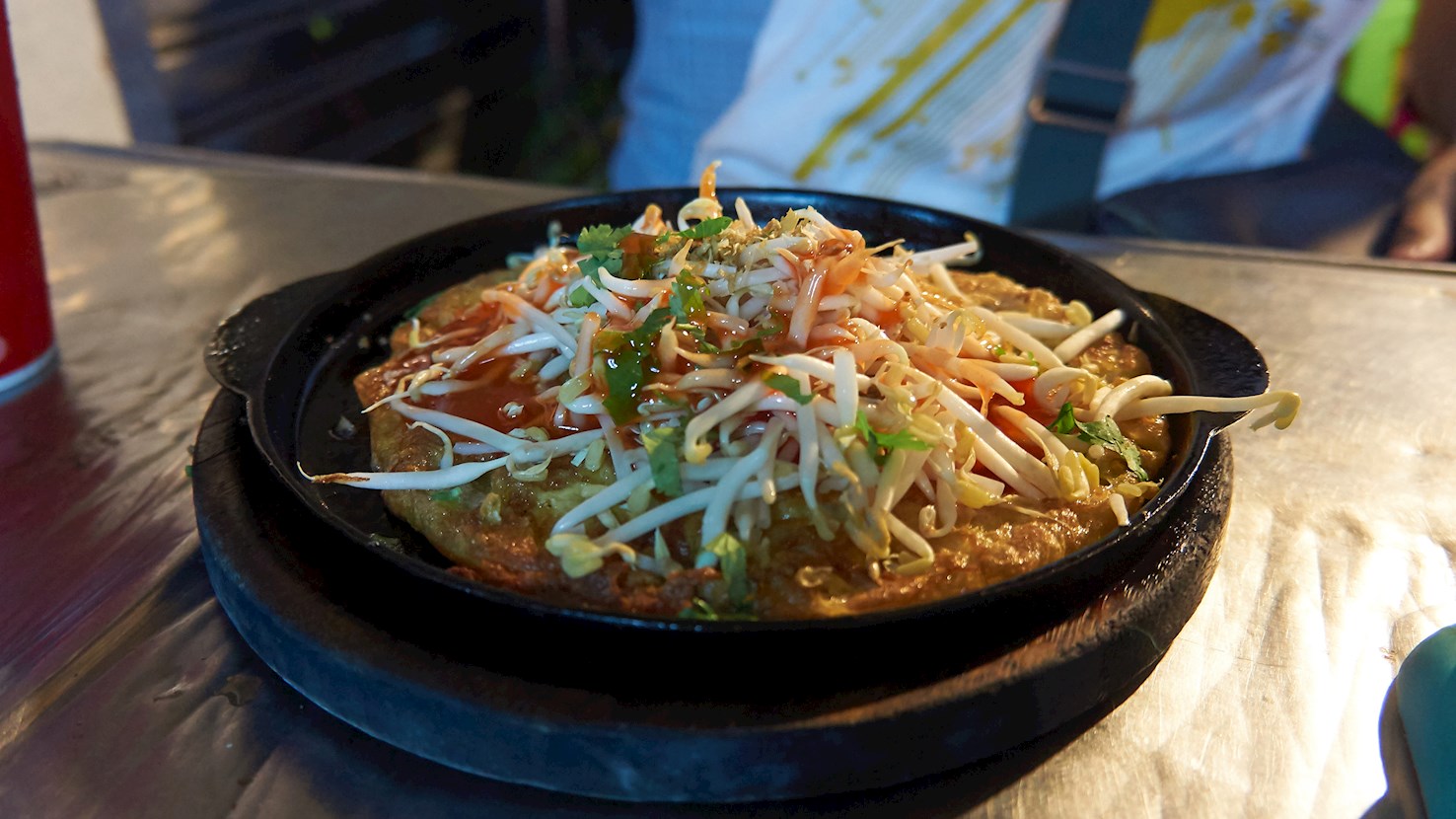
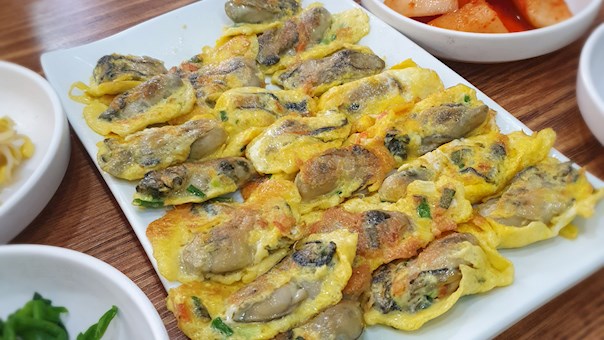
Hoy tod is a traditional dish that's commonly sold at street food stands. This crispy omelet is prepared with plump oysters or mussels (or both) and bean sprouts that are fried after being coated in savory egg batter. Once fried, the omelet is typically garnished with spring onions and served with assorted condiments such as green chili sauce, fish sauce with chili peppers, or tomato sauce. There's also the spongy and gooey version called or suan, and it's said that men usually prefer or suan, while women opt for the crispy hoy tod.
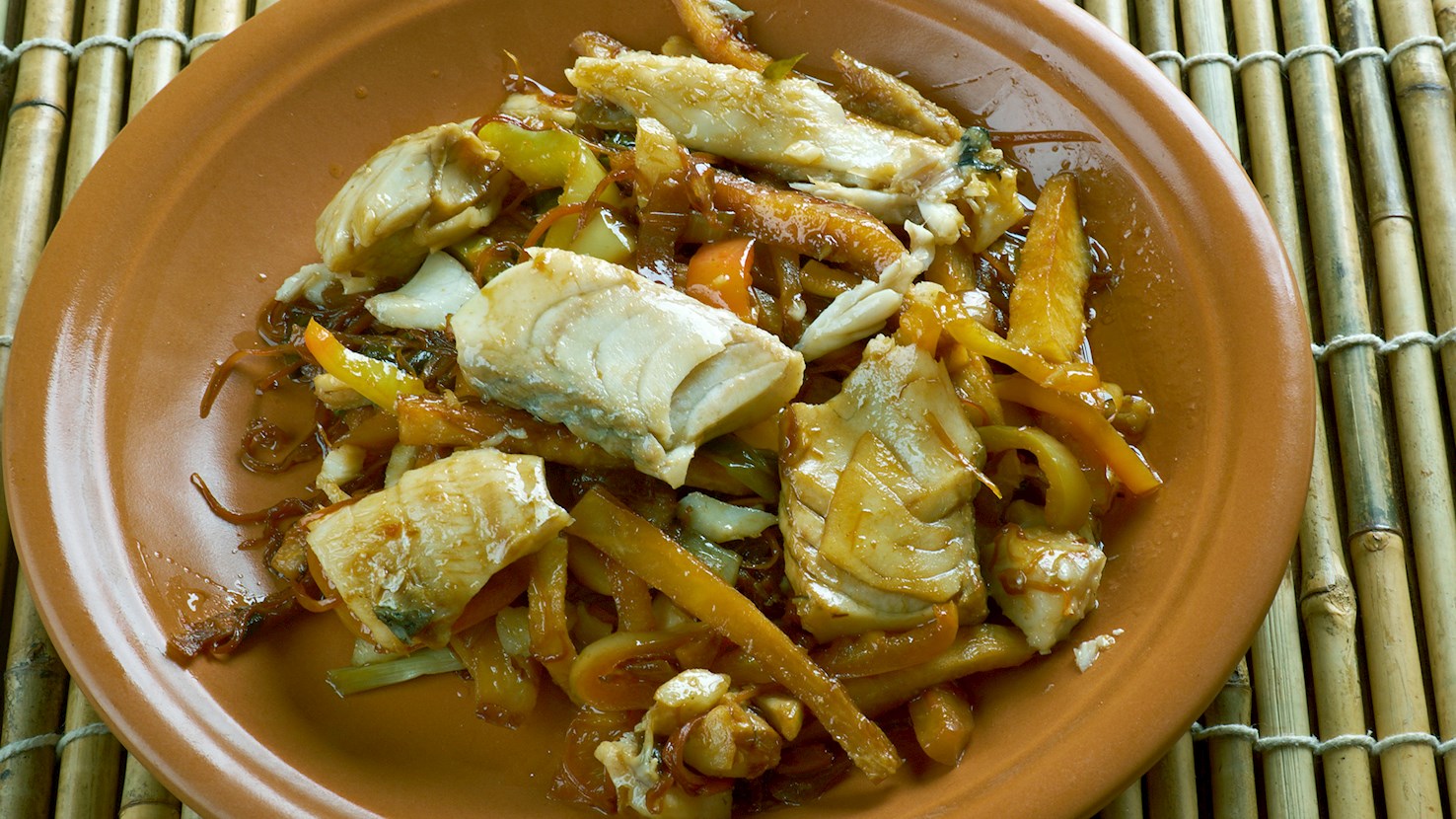
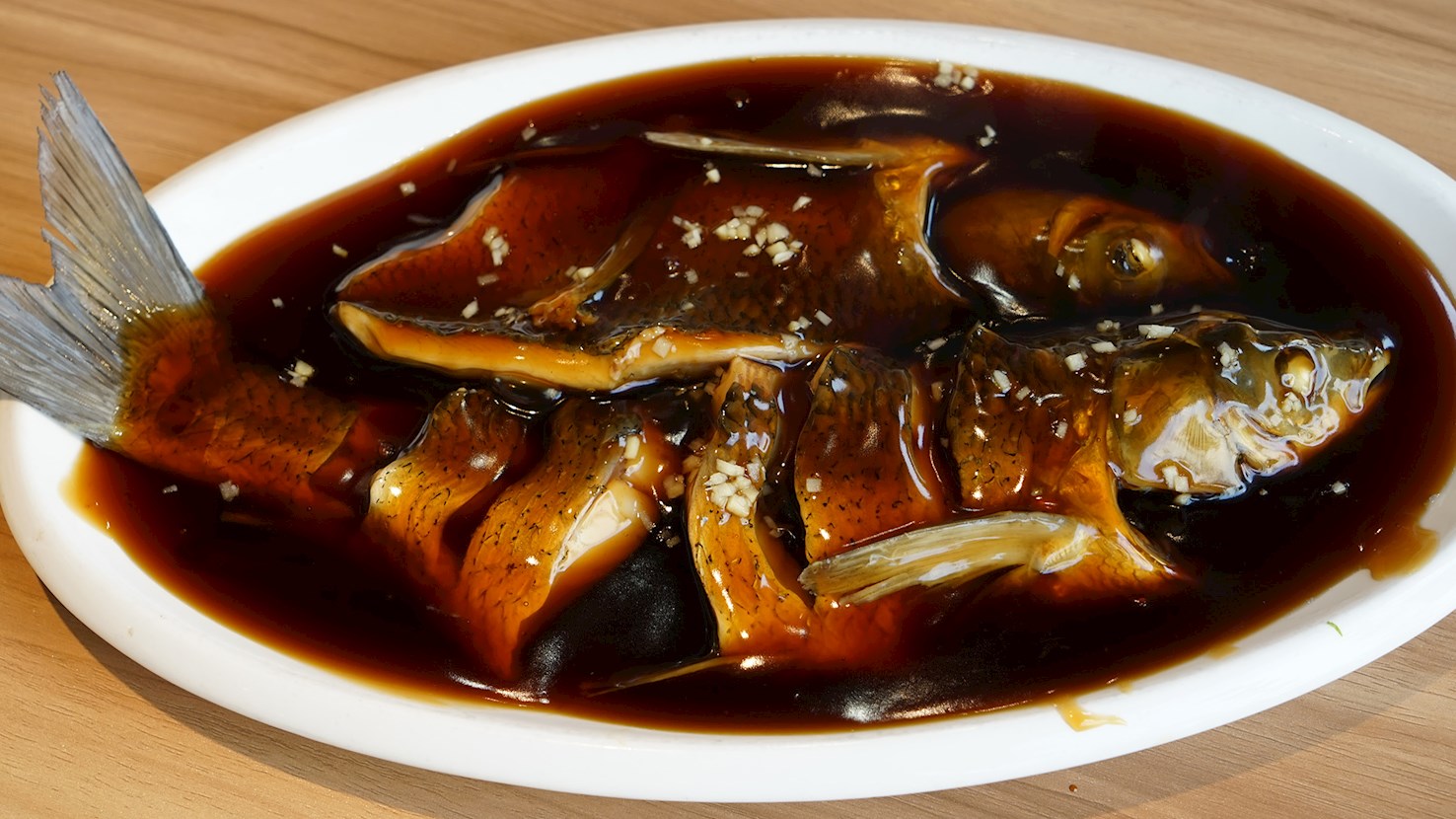
Xīhú cùyú is a West Lake vinegar fish dish from Hangzhou in Zhejiang Province, made with grass carp cooked in a sweet–sour sauce based on Zhejiang vinegar. It is closely associated with the waters around West Lake, where freshwater fish have long been central to local cuisine and where mild, clean-tasting carp provided a suitable base for sauces that emphasize clarity and balance. The dish formed in an environment where Zhejiang vinegars, especially those from nearby regions, were already established in household cooking, and Hangzhou cooks began preparing fish by first poaching or steaming it until just cooked and then coating it with a vinegar–sugar reduction that highlighted the fish’s natural flavor without masking it. Preparation begins with selecting a fresh grass carp, typically around one kilogram, cleaning it carefully, and cutting shallow diagonal slits along the body to ensure even cooking and better absorption of the sauce. The fish is either steamed or briefly cooked in hot water until the flesh sets, then removed and placed on a serving plate. A sauce is prepared separately by heating vinegar, sugar, a small amount of soy sauce, and sometimes rice wine, reducing the mixture until it becomes glossy and slightly thick. The hot sauce is poured over the warm fish so the flavor adheres to the surface while the interior remains tender. The dish is eaten in Hangzhou restaurants, banquet settings, and home kitchens, especially during seasons when fresh grass carp is plentiful. It is typically served with plain rice, mild vegetable dishes, or light broths that complement the sweet–sour profile. It pairs well with Longjing tea, which is native to the region, or with simple, non-aromatic white wines that do not compete with the vinegar’s flavor.
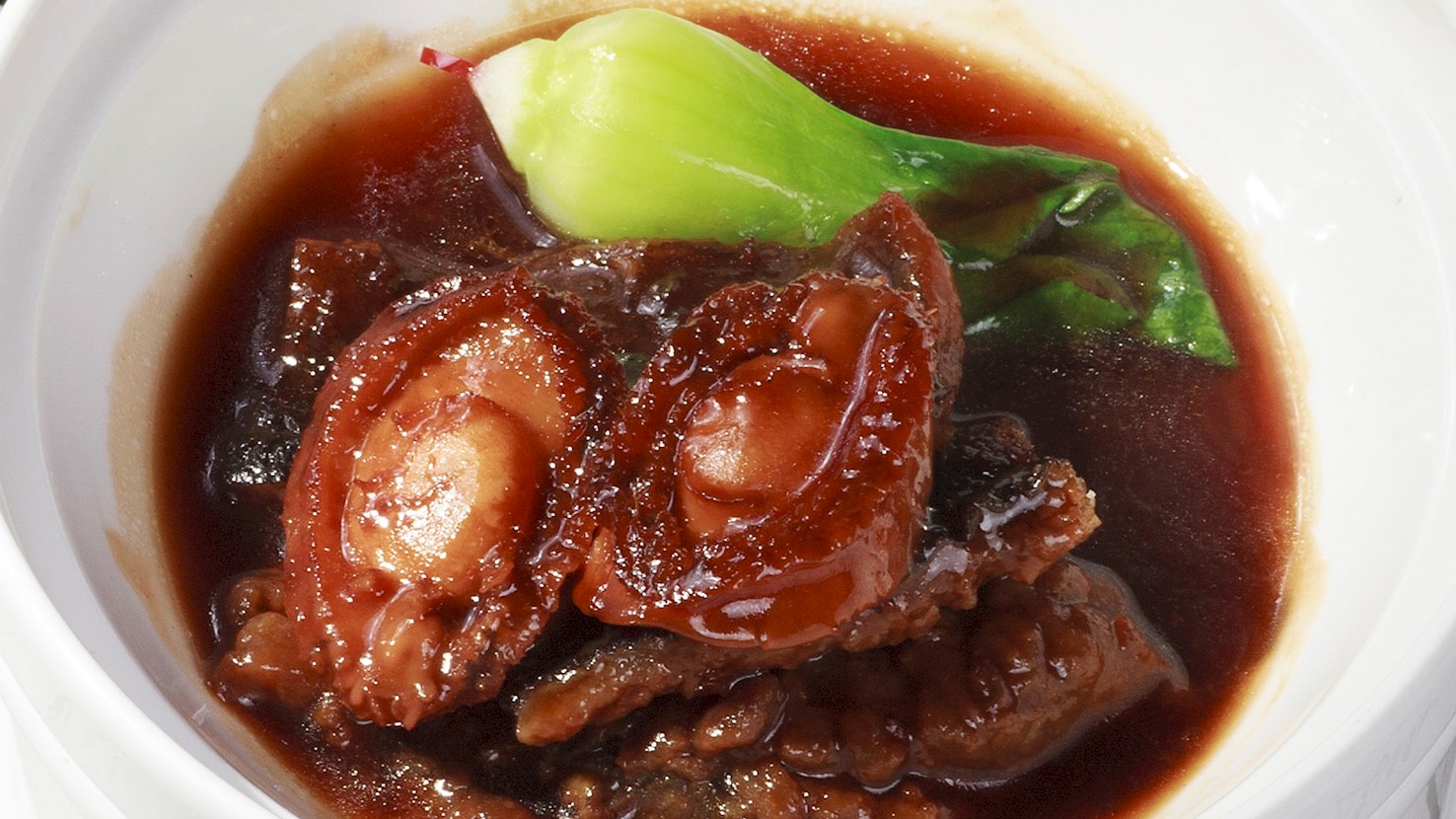
Men bao yu is a luxurious and highly esteemed delicacy of whole abalones meticulously slow-braised in a rich, deeply savory soy sauce-based liquid until they achieve a velvety, meltingly tender texture. Originating from the refined culinary traditions of Guangdong, this Cantonese masterpiece can be prepared with either exceptionally fresh abalones—which offer a delicate, oceanic sweetness and require less cooking time—or premium dried abalones, which must be painstakingly rehydrated over several days. The braising technique remains a rigorous, multi-hour endeavor. To build the dish's extraordinarily complex flavor profile, the abalones are typically nestled in a heavy clay pot or wok alongside a generous aromatic bed of scallions, smashed ginger, garlic, and fresh coriander. Because abalone naturally has a subtle, clean taste, elite chefs invariably introduce collagen-rich secondary ingredients into the braise, such as pork ribs, old hen, or premium Jinhua ham. As the pot gently simmers for hours, the abalone acts as a sponge, absorbing the profound, meaty essence of the poultry and pork while releasing its own delicate maritime flavors into the broth. Once the abalone meat reaches a perfectly succulent, slightly yielding consistency, the cooking liquid is strained, aggressively reduced, and glossed with a touch of oyster sauce, Shaoxing wine, and a cornstarch slurry to create a brilliant, mahogany-hued glaze. This luscious sauce is then generously ladled over the hot, glistening abalones, which are frequently arranged over a bed of crisp, blanched bok choy or lettuce for a vibrant visual and textural contrast. It is a dish almost exclusively reserved for momentous occasions, high-end banquets, and Lunar New Year feasts.
TasteAtlas food rankings are based on the ratings of the TasteAtlas audience, with a series of mechanisms that recognize real users and that ignore bot,
nationalist or local patriotic ratings, and give additional value to the ratings of users that the system recognizes as knowledgeable.
For the “100 Worst Rated Asian Seafood Dishes” list until September 16, 2026, 9,912 ratings were recorded, of which 7,566 were recognized by the system as legitimate.
TasteAtlas Rankings should not be seen as the final global conclusion about food. Their purpose is to promote excellent local foods,
instill pride in traditional dishes, and arouse curiosity about dishes you haven’t tried.






What People Say