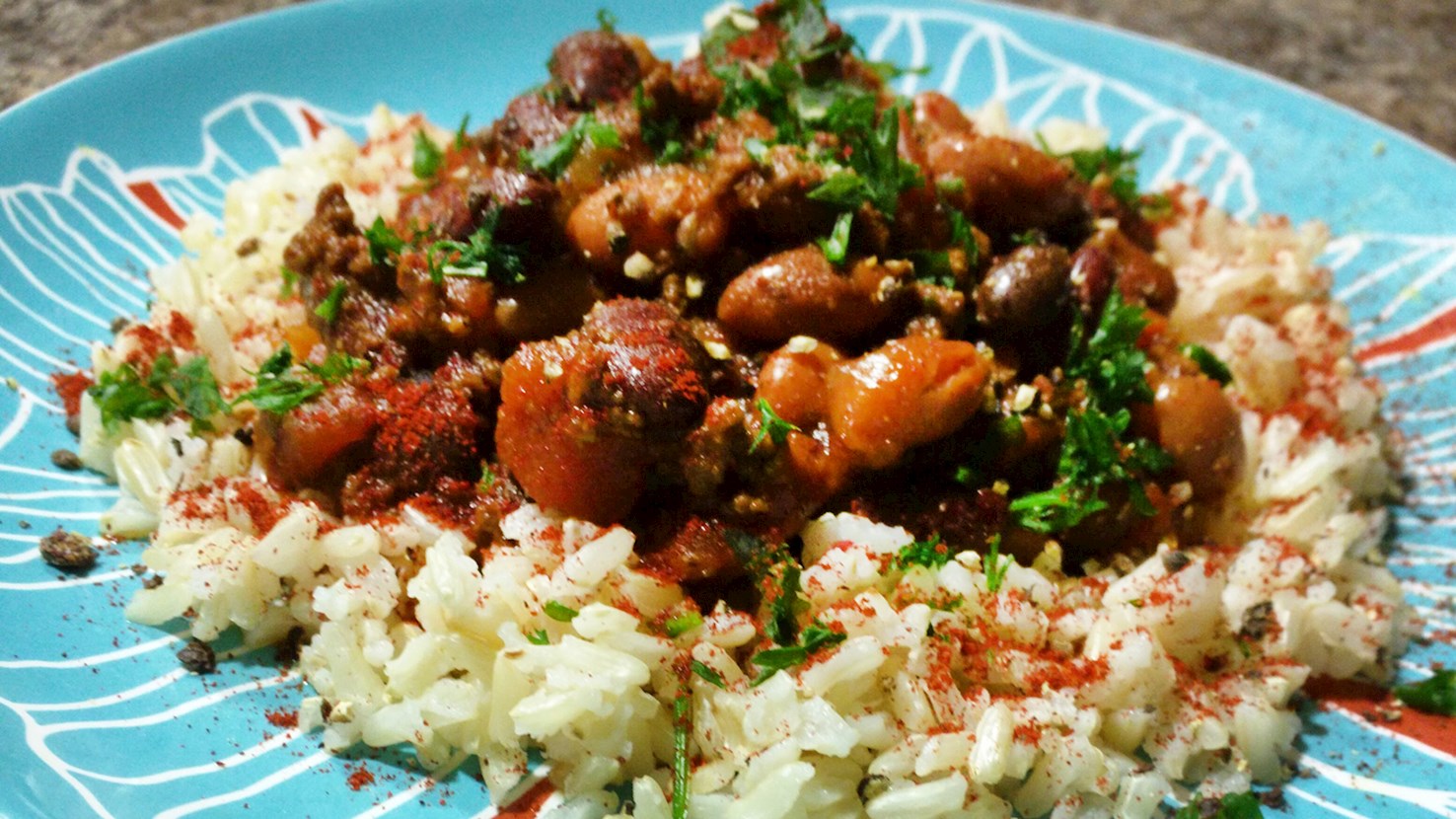
Orez shu’it is a rice-and-beans dish made with white rice, small white beans, tomato, and mild spices, widely eaten in Israeli homes and strongly associated with Jerusalem’s Mizrahi communities. Its roots lie in Jewish communities from Iraq, Egypt, and parts of the Levant, where rice dishes were central to everyday cooking and legumes provided an accessible source of protein. As these communities settled in Israel during the mid-twentieth century, their domestic cooking traditions were carried with them, and orez shu’it became one of the dishes that merged into the larger landscape of Israeli home cuisine. Preparation begins by soaking white beans, commonly navy beans or small local varieties, until they soften enough to cook evenly. They are then simmered with tomato paste or fresh tomato, onions, salt, and spices such as turmeric, cumin, or paprika, depending on regional style. The rice is added once the beans are partially cooked, and water is measured so that both rice and beans finish together, producing a cohesive pot where the grains remain separate but lightly coated in the tomato base. In some households the rice is cooked separately and mixed with the beans at the end, while others cook everything in a single pot. The texture ranges from light and fluffy to slightly saucier depending on the amount of tomato and liquid. Some versions include garlic, peppers, or small amounts of oil, but the core identity is the combination of rice, beans, and mild seasoning. Orez shu’it is eaten primarily in Israeli homes rather than in commercial settings and is common in households with roots in Iraq, Egypt, Yemen, and other Middle Eastern regions. It is served as a main or side dish, often accompanied by salads such as chopped vegetable salad, cabbage salad, or pickled vegetables. It pairs well with yogurt drinks, lemonade, and sparkling water, and it is frequently eaten alongside grilled meats, schnitzel, or vegetable stews, forming part of an everyday Israeli table.
Salatim refers to a varied group of small salads and spreads served at the beginning of meals in Israel and in many Middle Eastern Jewish households and restaurants. The term comes from the Hebrew plural of “salad,” and it is used to describe an assortment rather than a single recipe, usually arranged together on the table before the main dishes arrive. The practice developed from a combination of regional influences brought by Jewish communities from North Africa, the Levant, and parts of the Mediterranean, each contributing salads made from vegetables, legumes, herbs, or cooked ingredients. As these communities settled in Israel during the twentieth century, their culinary habits merged, and the serving of numerous small plates became a characteristic opening course in home meals, market eateries, and grill restaurants. Preparation depends entirely on the type of salad being made. Common components include eggplant cooked in various methods, chopped vegetable salads with tomato and cucumber, tahini-based spreads, carrot salads seasoned with cumin, beet purées, spicy pepper mixes such as matboucha, and chickpea or bean salads. Many salatim rely on simple techniques such as roasting, boiling, chopping, or marinating, and they are seasoned with lemon juice, vinegar, olive oil, garlic, herbs, and mild or hot spices depending on regional style. The variety is central to the concept, and the selection often changes according to season, availability of produce, and the preferences of the cook. A noteworthy point is that salatim are served simultaneously, allowing diners to mix flavors freely, and the assortment often includes both cooked and raw items, as well as spicy and mild plates arranged together. Salatim are eaten throughout Israel in home kitchens, hummus shops, grill restaurants, and cafés, and they appear at festive meals as well as everyday lunches. They are typically eaten with pita, laffa, or other flatbreads used to scoop the salads, and they accompany grilled meats, fish, falafel, schnitzel, or vegetarian dishes. Beverages that pair well with salatim include lemonade, soda water, arak-based drinks, dry white wine, and light beers, all of which complement the varied flavors without overwhelming them.
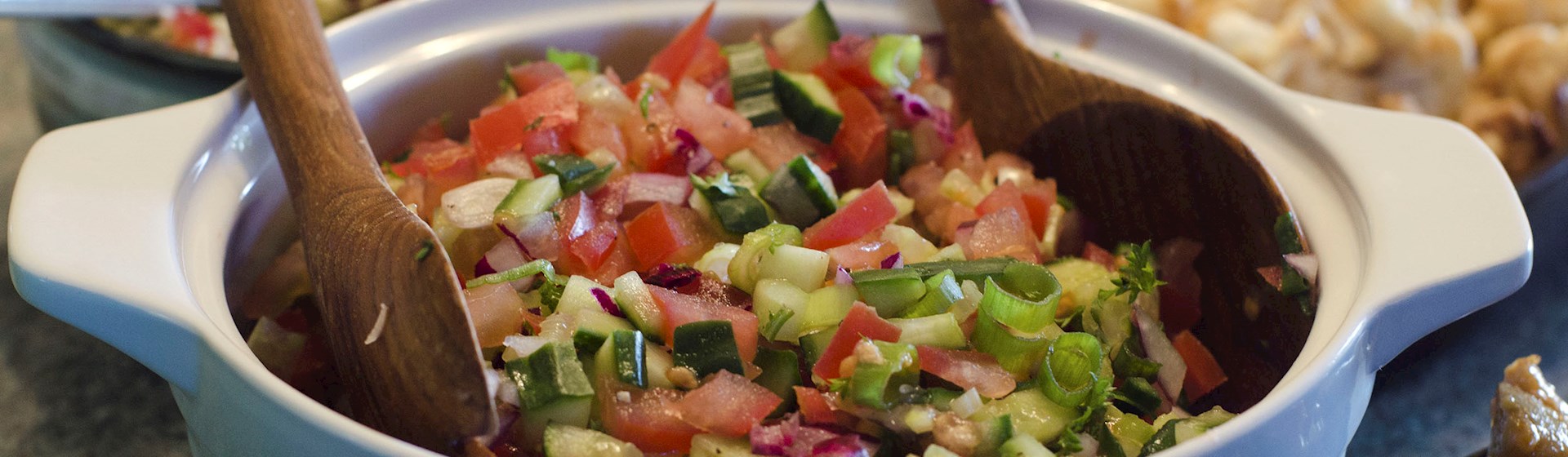
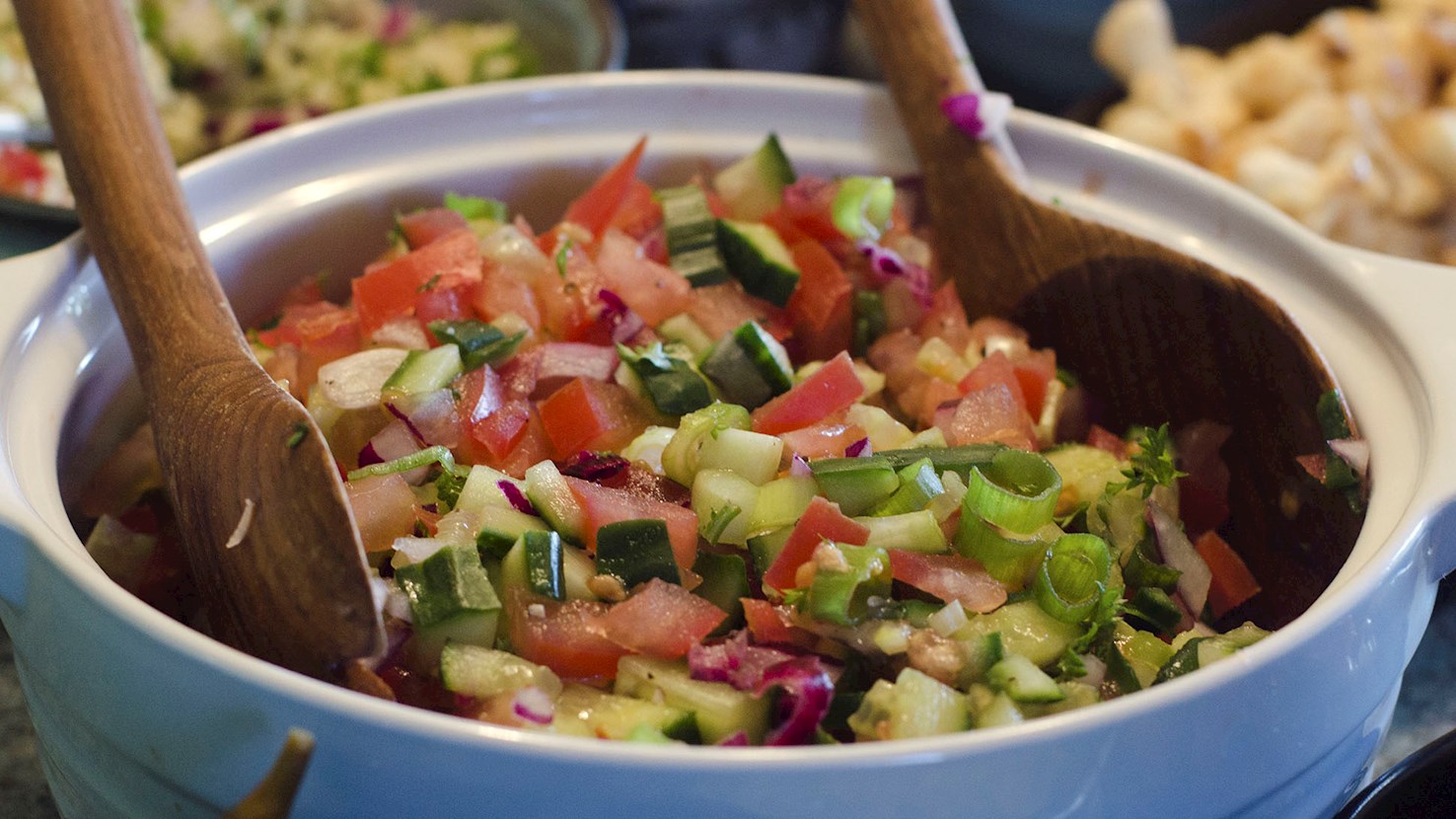
Israeli salad is a finely chopped vegetable dish commonly served across Israel and in Jewish and Middle Eastern cuisines. It typically consists of diced tomatoes, cucumbers, onions, and parsley dressed with olive oil, lemon juice, salt, and pepper. The salad is light, fresh, and quick to prepare, often considered a cornerstone of Israeli daily meals and a reflection of the region’s reliance on local produce. Unlike many composed salads, Israeli salad emphasizes uniform chopping and balance of texture, allowing each ingredient to contribute evenly to the overall flavor. The dish developed from Levantine vegetable salads such as the Arab “salata” and Turkish “çoban salatası,” both based on fresh seasonal produce dressed simply with oil and citrus. In the early 20th century, Jewish immigrants arriving from Eastern Europe and North Africa adapted these regional dishes using locally available ingredients, creating a version that became common in kibbutz dining halls and household breakfasts. Its simplicity, reliance on raw vegetables, and minimal seasoning suited the warm Mediterranean climate and agricultural lifestyle. Over time, it became emblematic of Israeli cuisine, representing a merging of influences from Middle Eastern, North African, and European food cultures. Preparation begins by finely dicing firm tomatoes and crisp cucumbers into small, even cubes. Onion and parsley are added, sometimes with green pepper or scallion. The vegetables are mixed gently and dressed with olive oil, freshly squeezed lemon juice, salt, and black pepper. Some variations include a touch of sumac, mint, or za’atar for additional flavor, while others use vinegar instead of lemon juice. The key to the salad lies in the fineness and consistency of the chop, which creates a uniform blend of flavor and texture without excess liquid. Israeli salad is served throughout the day, from breakfast to dinner. It is commonly paired with eggs, labneh, or hummus in the morning, served alongside grilled meats or falafel for lunch, or used as a topping for pita sandwiches and shawarma. In restaurants and homes, it often appears as part of a larger mezze spread, complementing other dishes such as tahini, baba ghanoush, and pickled vegetables. The salad is eaten year-round, but especially in warm months, and it pairs naturally with cold drinks such as mint lemonade, arak, or light white wines. Its freshness and adaptability allow it to fit both simple meals and elaborate spreads, maintaining a consistent presence in Israeli and Middle Eastern dining as a versatile accompaniment defined by precision, freshness, and balance.
TasteAtlas food rankings are based on the ratings of the TasteAtlas audience, with a series of mechanisms that recognize real users and that ignore bot,
nationalist or local patriotic ratings, and give additional value to the ratings of users that the system recognizes as knowledgeable.
For the “3 Worst Rated Israeli Side Dishes” list until May 21, 2026, 2,027 ratings were recorded, of which 1,164 were recognized by the system as legitimate.
TasteAtlas Rankings should not be seen as the final global conclusion about food. Their purpose is to promote excellent local foods,
instill pride in traditional dishes, and arouse curiosity about dishes you haven’t tried.