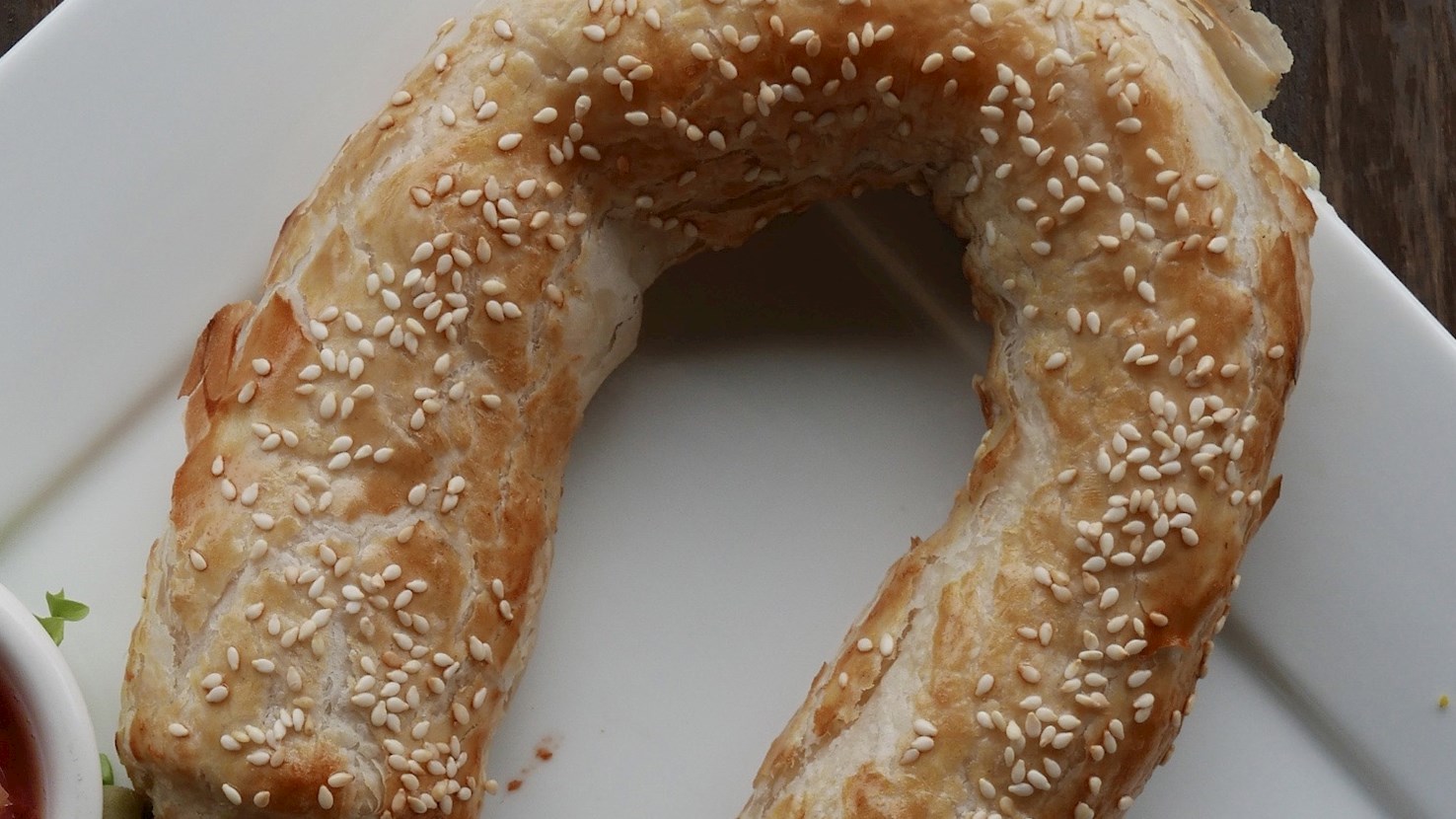
Ziva is a Yemenite-Israeli pastry made from laminated dough filled with cheese and often accompanied by hard-boiled eggs, grated tomato, and zhug. It is believed that ziva was invented in 1989 by Neri Avneri at Nargilla restaurant. It is sold in Israel in cafés, home kitchens, and small eateries specializing in Yemenite-influenced foods. The dish developed within the broader context of Yemenite Jewish cooking after communities settled in Israel, where cooks adapted malawach-style laminated doughs to create a baked, sealed pastry that could hold fillings without collapsing. As access to Israeli dairy products increased, a cheese-based version became established, shaping the dish into its current form. Preparation begins with a dough made from flour, water, salt, and oil or margarine. After resting, the dough is stretched thin and coated with fat to create layers similar to those in malawach or jachnun. Instead of rolling, the sheet is folded around a cheese mixture, commonly soft white cheeses such as gvina levana or feta-style cheeses, and shaped into a square. The pastry is transferred to a baking sheet and baked at high heat until the layers puff and the surface turns crisp and browned. The texture depends on how thinly the dough is stretched and how evenly the fat is distributed, producing a flaky exterior with a soft interior. Some versions incorporate nigella or sesame seeds on top before baking, adding aroma and slight crunch, and the filling can vary by household or region, with additions such as olives or herbs. Ziva is eaten throughout Israel, particularly on weekends or as a lunch dish in places that serve Yemenite breads and pastries. It is commonly served with salads, hard-boiled eggs, tomato relish, and spicy sauces. Beverages that accompany it include mint tea, fresh lemonade, cold yogurt drinks, and light beers, all of which complement the pastry’s buttery texture and salty cheese filling.
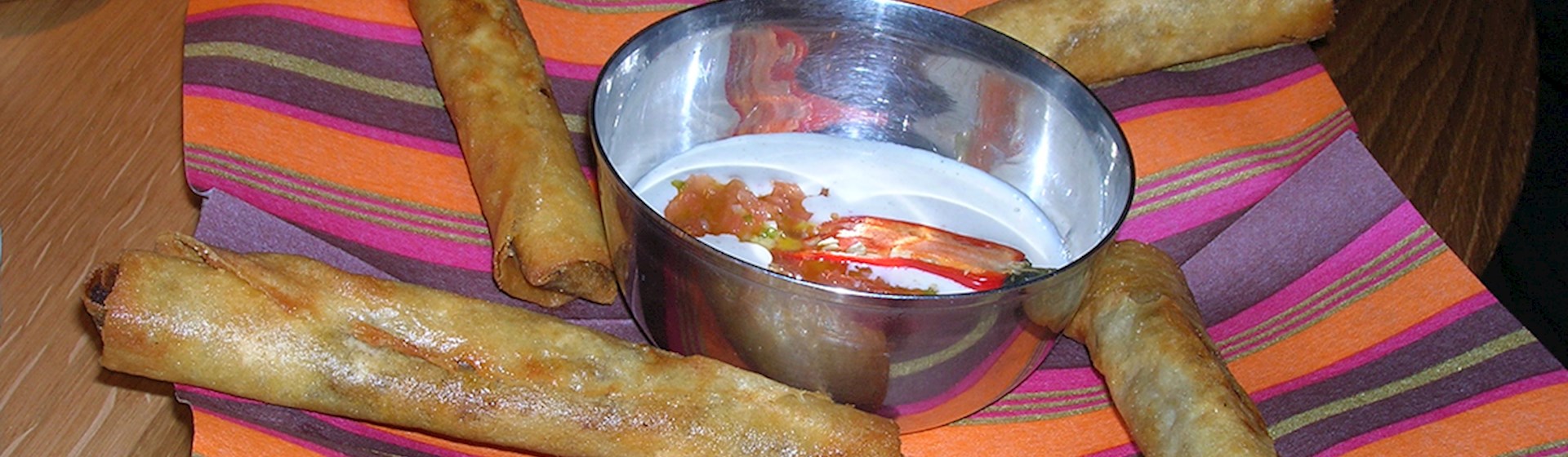
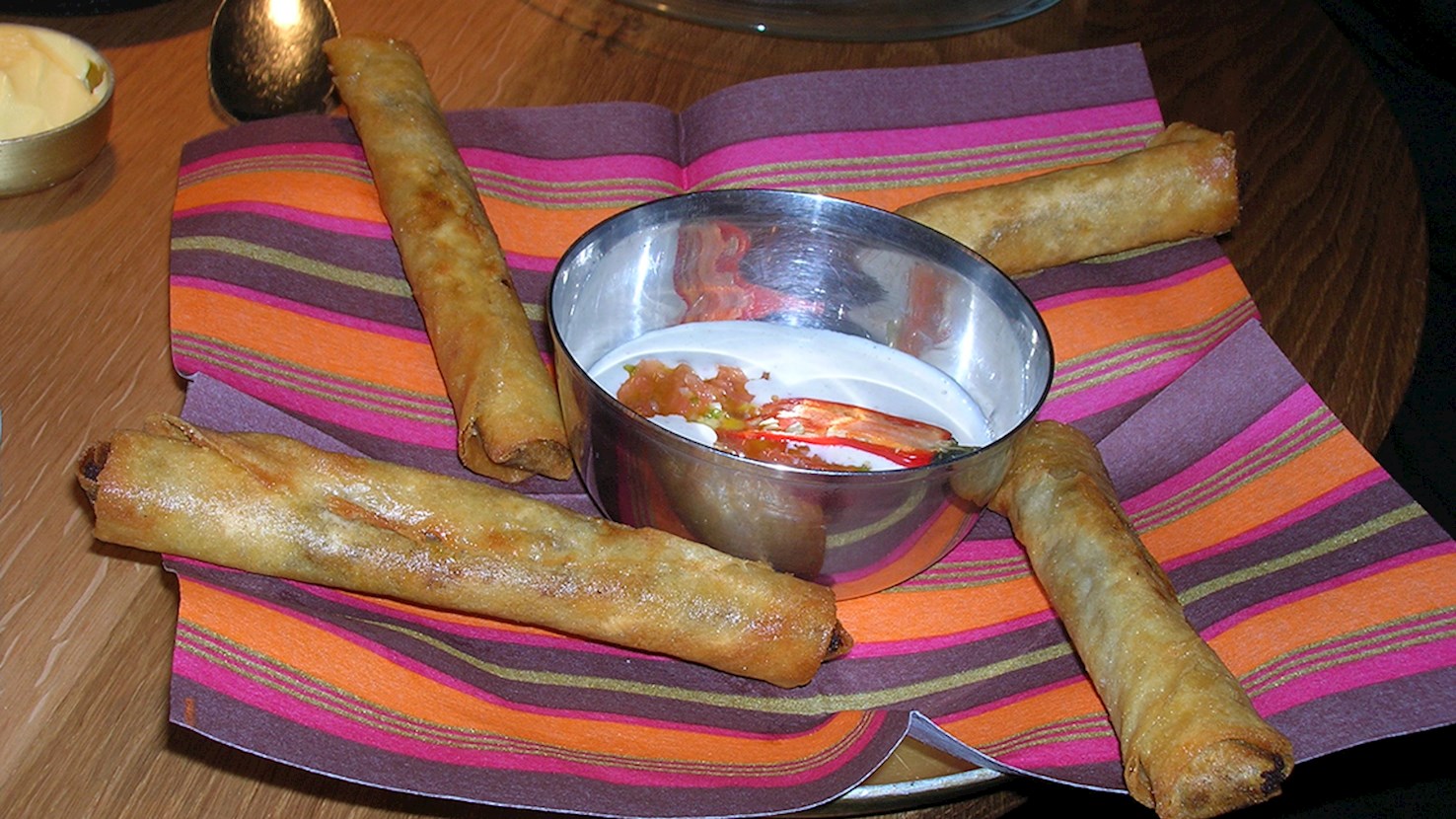
Moroccan cigars are slim, crisp, fried rolls filled most often with spiced ground meat and served as appetizers or snacks in North African and Middle Eastern Jewish cuisines, particularly in communities with roots in Morocco. Despite the name, they have no relation to tobacco products; the term refers only to their cylindrical shape. They emerged from the broader Moroccan practice of using thin pastry sheets for savory and sweet fillings, a technique seen in dishes such as briouat, where phyllo-like warqa dough is wrapped around seasoned mixtures. As Moroccan Jews migrated to Israel and other countries during the twentieth century, the dish became widely known in new settings and eventually entered Israeli street food, catering menus, and home cooking. Preparation begins by making or buying thin pastry sheets, warqa or phyllo, cut into long strips. The filling is cooked beforehand and typically includes ground beef or lamb sautéed with onions and seasoned with paprika, cumin, turmeric, pepper, salt, and sometimes cilantro or parsley. Once cooled, a small amount of filling is placed at one end of the pastry strip, which is then rolled tightly into a cylinder and sealed with a bit of flour paste or egg wash. The rolls are fried in oil until golden and crisp, though some cooks choose to bake them for a lighter version. Variations include chicken fillings, vegetable mixtures, potato-based fillings, or spicier versions using harissa or hot pepper pastes, all shaped in the same narrow form that defines the dish. Moroccan cigars are eaten in Morocco, Israel, and diaspora Jewish communities during holiday meals, Shabbat dinners, and family gatherings, and they also appear as mezze or snacks in restaurants. They are commonly served alongside salads, tahini, preserved lemon sauces, or dips made from peppers or eggplant. They pair well with mint tea, light beers, lemon-based drinks, and dry white wines, which balance the richness of the fried pastry and the spices in the filling.
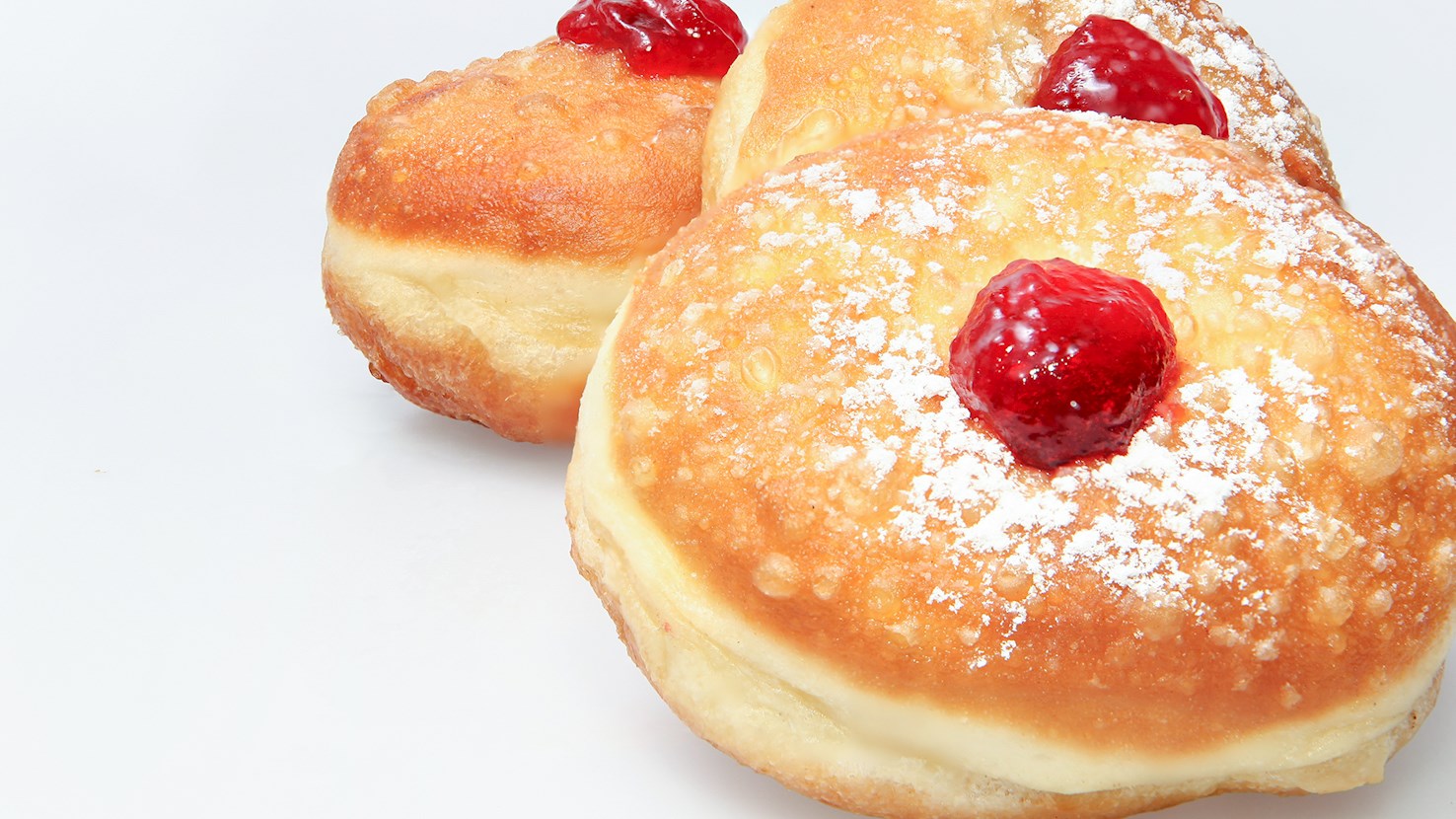
Sufganiyah is a round, deep-fried doughnut filled most commonly with jam and widely associated with Jewish communities, particularly in Israel, where it is produced in large quantities during Hanukkah and sold in bakeries, cafés, and markets. Its development traces to earlier European jelly-filled pastries such as the German Berliner and Central European sufganiyot-style fried doughs that Jewish migrants adopted and adapted, eventually becoming integrated into local cuisines in the Levant during the twentieth century when commercial bakeries began standardizing the recipe and promoting it as a convenient holiday food that aligned with the regional emphasis on cooking with oil during the season. The dough is usually made from flour, eggs, yeast, sugar, and fat, mixed into a soft enriched dough that is left to rise before being shaped into small rounds, proofed again, and fried in oil until golden, after which they are filled through a small opening with jam, custard, chocolate, halva cream, or other fillings introduced by modern bakeries; the surface is often dusted with powdered sugar. One notable element is the ring-less shape that sets it apart from American-style doughnuts and the focus on post-frying filling rather than mixing the flavor into the dough, a method that preserves a clear contrast between the soft interior and the filling. It is eaten primarily during Hanukkah in Israel and Jewish communities worldwide but is available year-round in many places, served with coffee, tea, hot chocolate, and other warm drinks that balance the sweetness and richness of the fried dough.
TasteAtlas food rankings are based on the ratings of the TasteAtlas audience, with a series of mechanisms that recognize real users and that ignore bot,
nationalist or local patriotic ratings, and give additional value to the ratings of users that the system recognizes as knowledgeable.
For the “3 Worst Rated Israeli Snacks” list until September 16, 2026, 1,559 ratings were recorded, of which 895 were recognized by the system as legitimate.
TasteAtlas Rankings should not be seen as the final global conclusion about food. Their purpose is to promote excellent local foods,
instill pride in traditional dishes, and arouse curiosity about dishes you haven’t tried.


What People Say