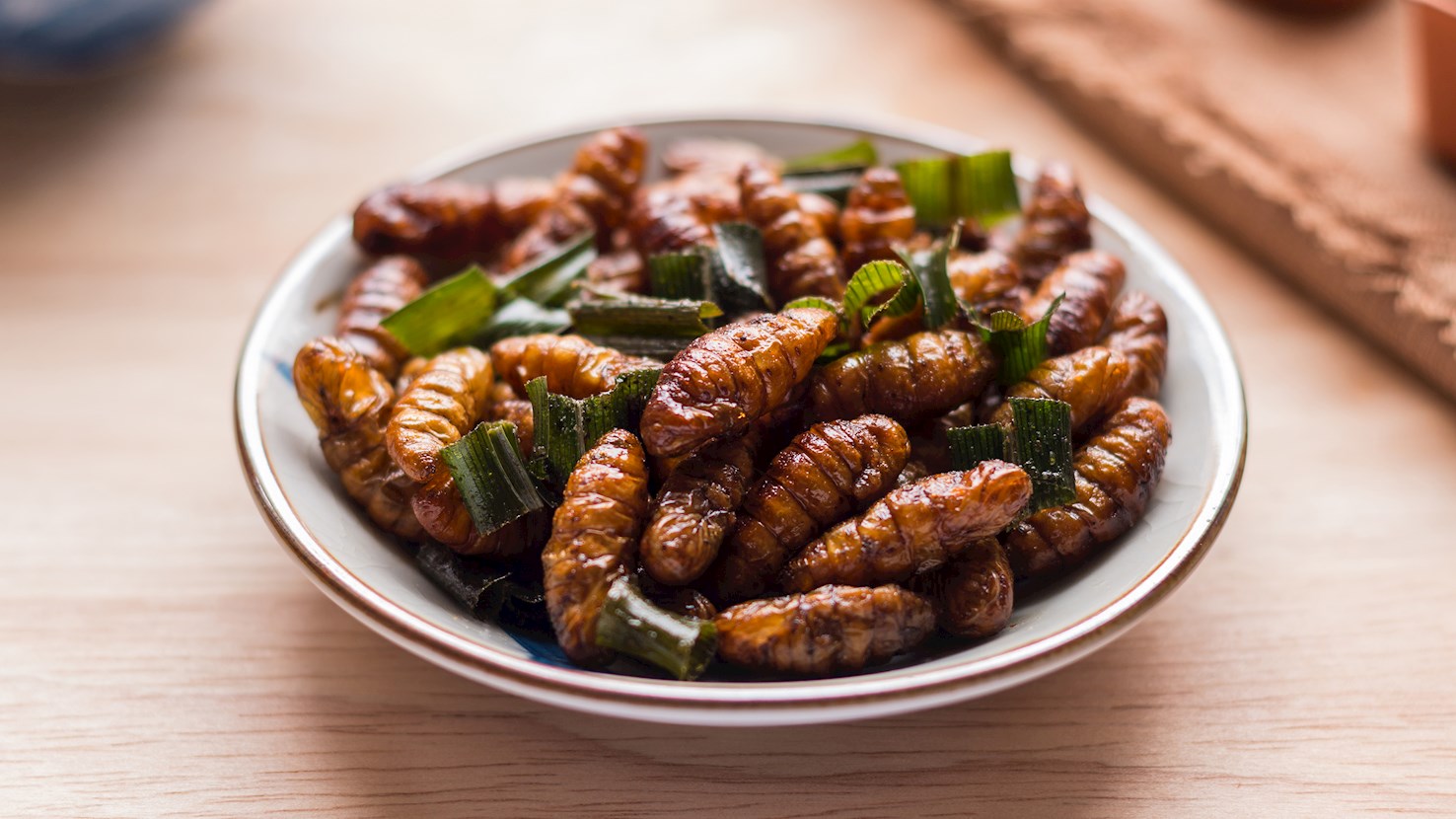
Hon mhai is a traditional insect dish that's especially popular in Bangkok. It's made by deep-frying silk worms, then seasoning them with salt, pepper, and sometimes a secret sauce that's prepared by the vendor, because the snack is usually sold from street carts. Once fried, the silk worms turn crunchy and greasy, while the flavor is sometimes described as slgihtly bitter. Hon mhai silk worms are prized because they're rich in protein and some believe that they have medicinal properties.
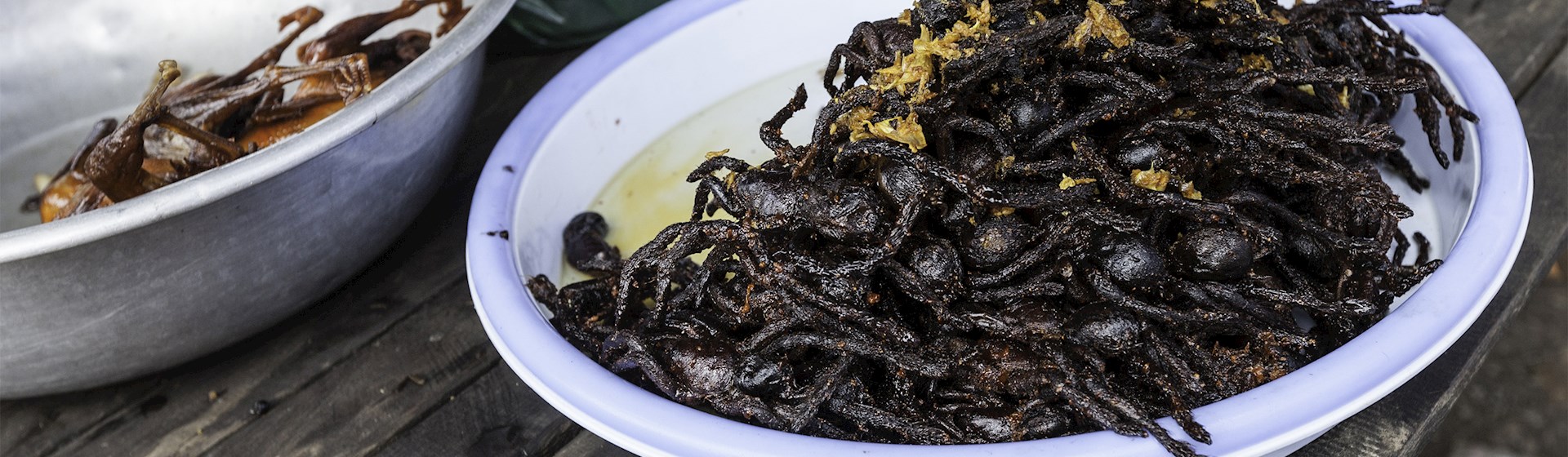
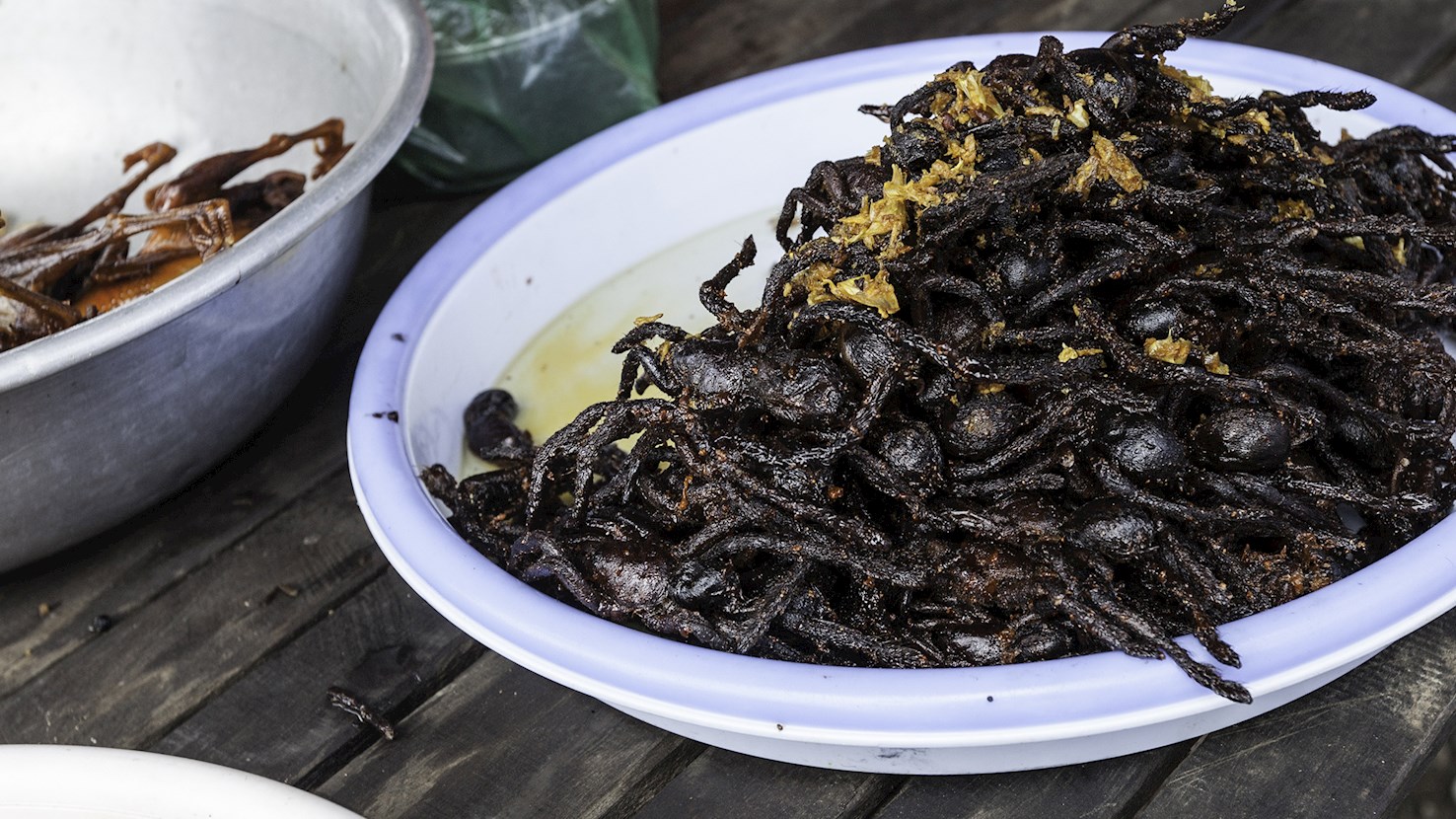
The city of Skuon in Cambodia is so infested with spiders that the nearly-starved locals have adapted and started consuming them in the 1970s, and the practice has continued ever since. It is no wonder that the city is known as Spider Town or Spiderville. The spiders (usually tarantulas) are breaded and deep-fried in hot oil, then served with some fresh local herbs on a bed of rice or noodles. The flavor of these critters has been described as a cross between cod and chicken – at least the hairy legs are supposed to taste so, because consumers are warned not to bite into the abdomen, which contains spiders’ internal organs and bodily fluids.
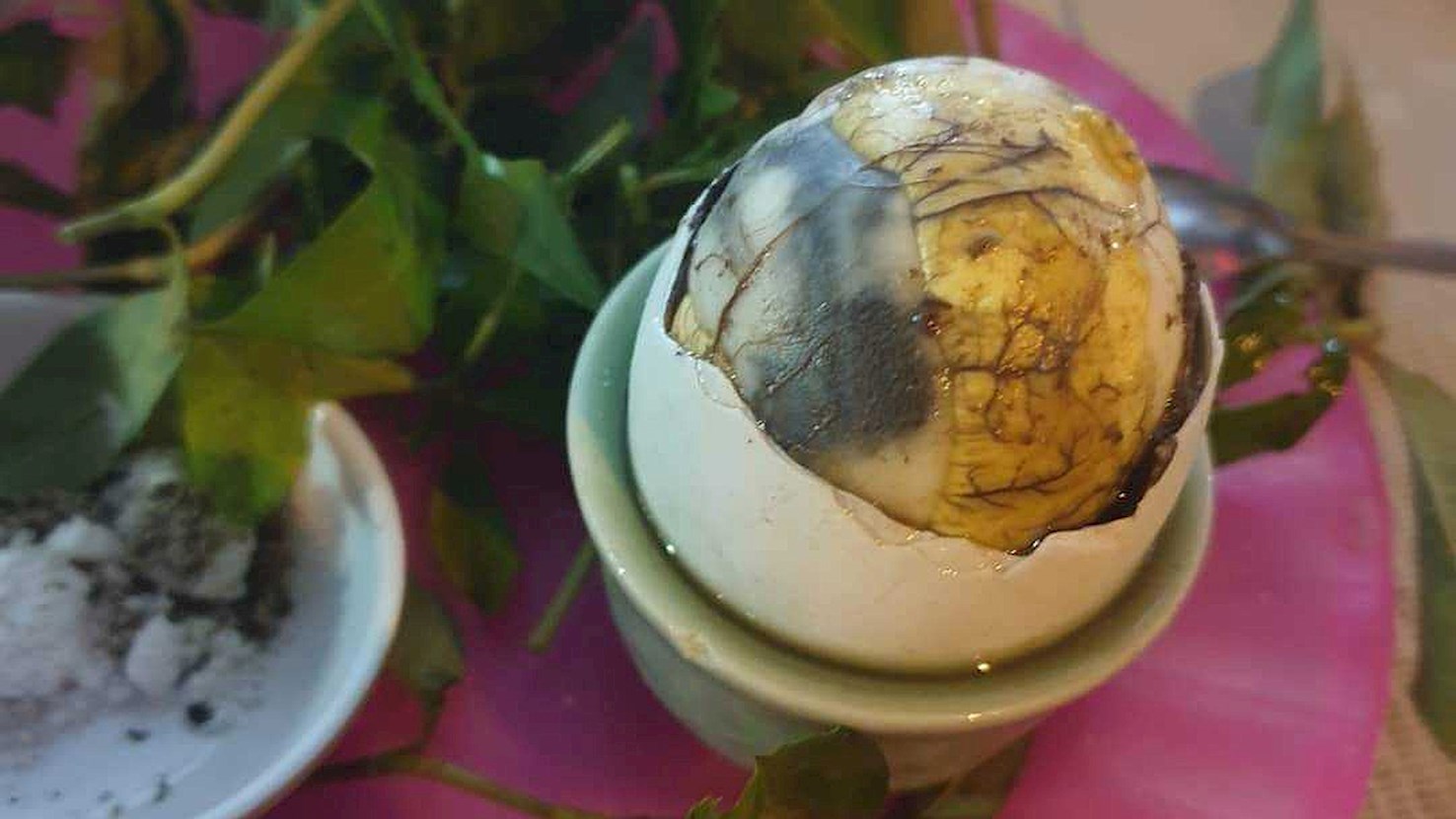
Balut is a popular, although unusual Filipino delicacy, served everywhere from street stalls to upscale restaurants. It is a duck egg that has been hard-boiled, fertilized, and incubated. Traditionally, the cooked embryo is consumed straight from the shell. It is considered an aphrodisiac that is commonly paired with a cold beer on the side. The dish can be seasoned with chili, garlic, vinegar, salt, lemon juice, ground pepper, and mint leaves. It can also be cooked in omelets or used as a filling for pastries. Although balut is closely associated with Filipino cuisine and has achieved popularity throughout the world, it is still considered a poor man's meal in the Philippines.
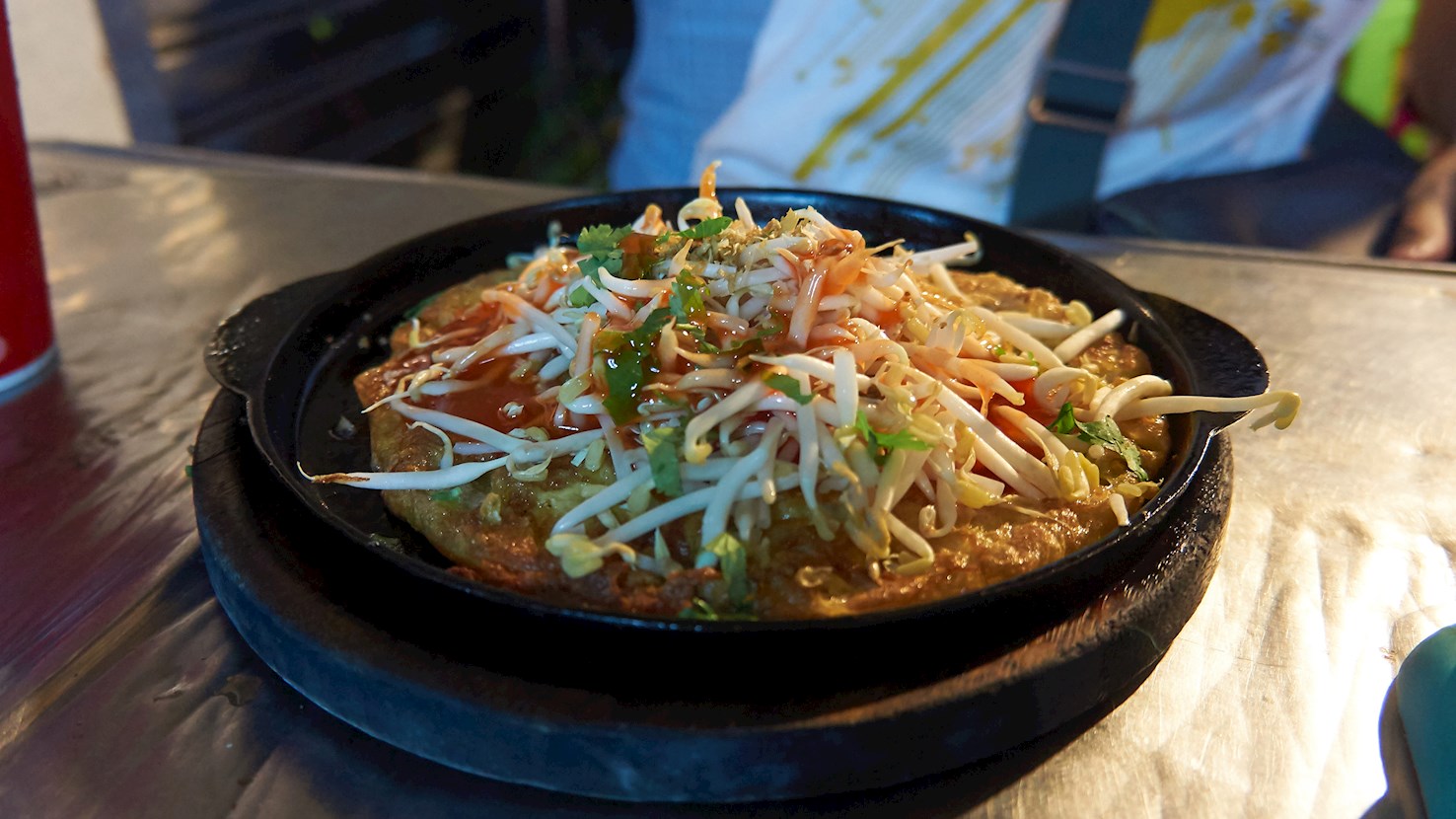
Hoy tod is a traditional dish that's commonly sold at street food stands. This crispy omelet is prepared with plump oysters or mussels (or both) and bean sprouts that are fried after being coated in savory egg batter. Once fried, the omelet is typically garnished with spring onions and served with assorted condiments such as green chili sauce, fish sauce with chili peppers, or tomato sauce. There's also the spongy and gooey version called or suan, and it's said that men usually prefer or suan, while women opt for the crispy hoy tod.
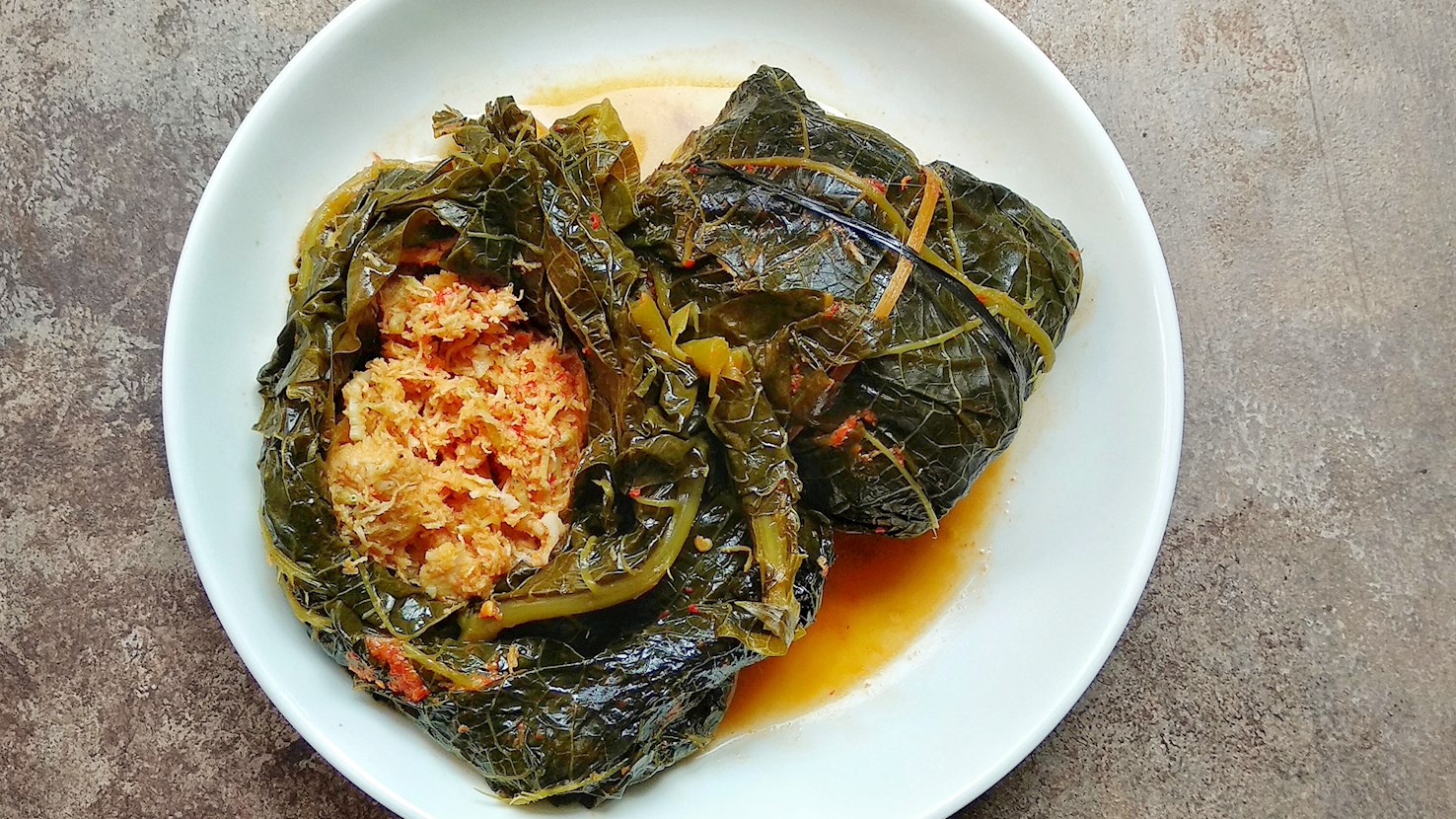
Buntil is a savory Indonesian dish originating from Central Java, that features grated coconut meat mixed with anchovies or dried shrimp, chilies, shallots, and a medley of spices, all tightly wrapped in leaves (typically cassava, papaya, or taro) and then slowly simmered in a rich, spiced coconut milk broth until tender and deeply infused with flavor. This dish is widely associated with home-style cooking in Javanese households, often appearing at communal feasts or during the fasting month of Ramadan, where it is served as part of the evening meal to break the fast. Buntil’s appeal lies in its layered textures and the way it transforms modest ingredients into a dish that feels both hearty and refined. The leaves, once fibrous and raw, become soft and succulent through slow simmering, while the filling takes on a buttery yet structured consistency. While buntil is most often encountered in Javanese kitchens and local warungs, its reputation has spread across the archipelago, appreciated for both its comforting familiarity and its subtle sophistication.
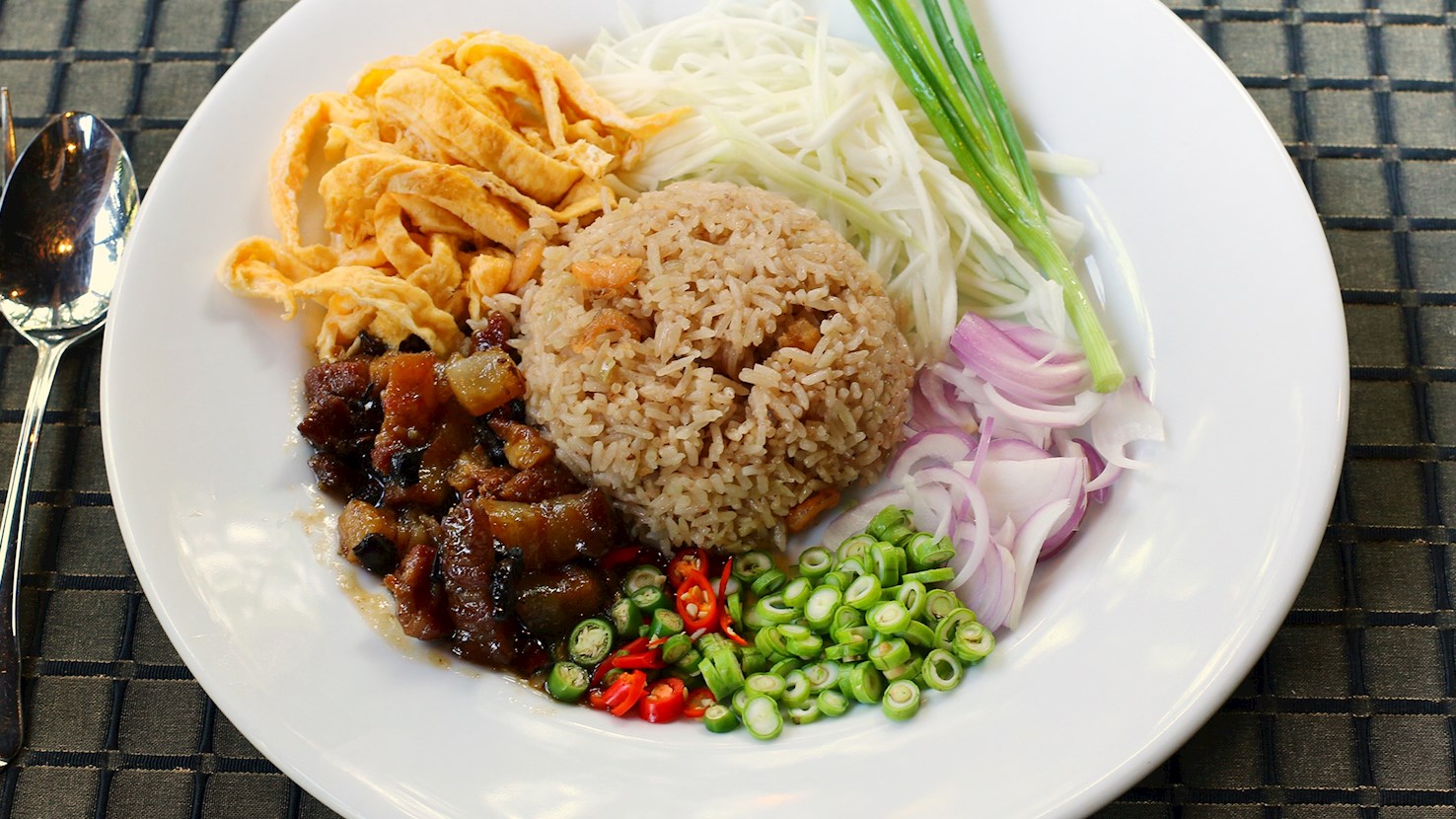
Khao khluk kapi is a Thai rice dish made with cooked rice that is fried with shrimp paste, and then topped with or served alongside a number of ingredients, including crispy dried shrimps, slices of sweet pork or chicken, chilis, raw mango gratings, red onions, omelet shavings, cucumbers, green onions, and cilantro. All these ingredients combined into one make for a colorful dish and create an explosion of flavors and textures in the mouth. This delicious rice and shrimp paste dish is usually sold as a takeaway food at many street stalls throughout Thailand.
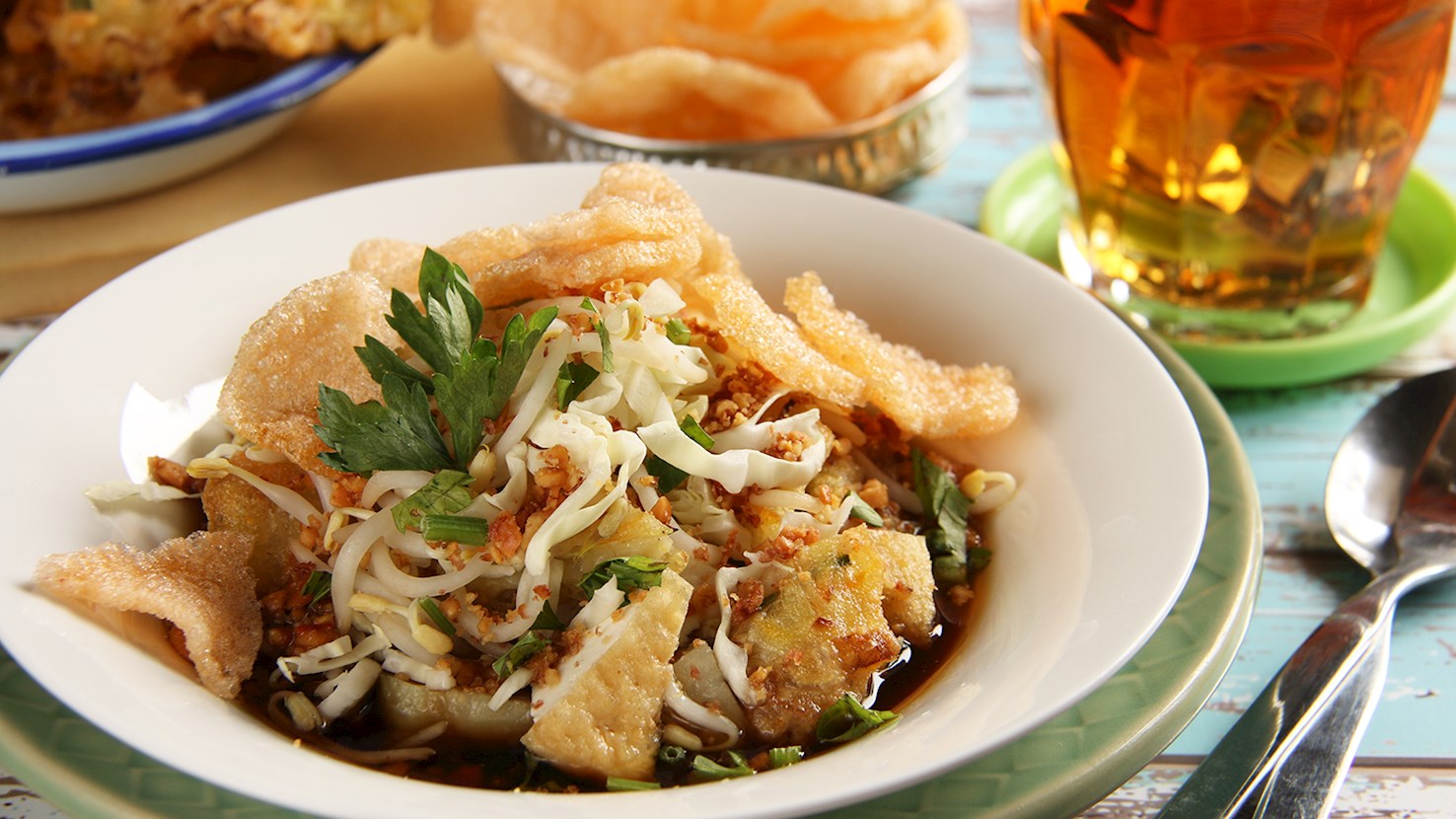
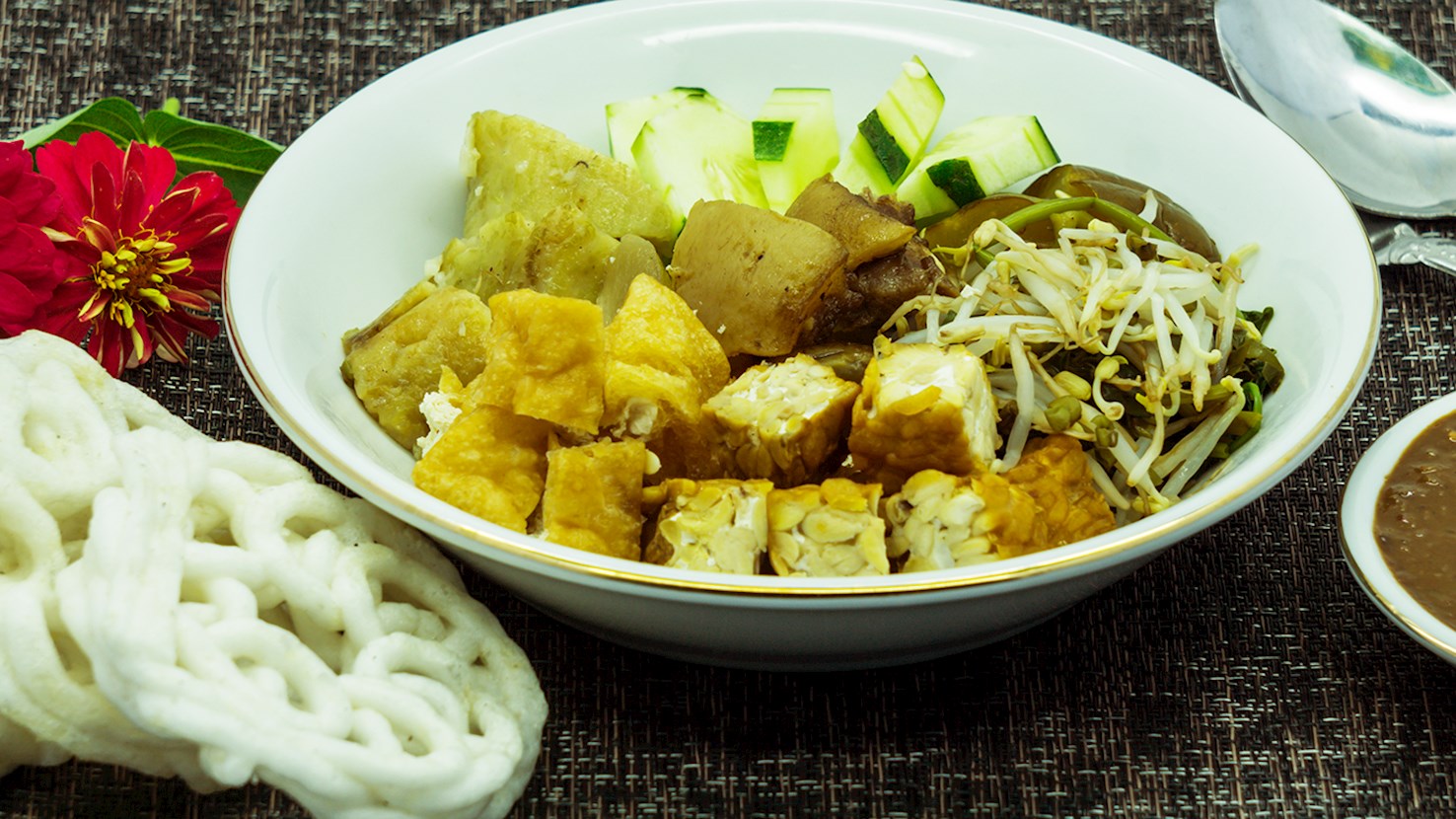
Kupat tahu is an Indonesian dish composed of compressed rice cakes (kupat) and fried tofu (tahu), typically served with peanut sauce and a variety of fresh and savory toppings. It originates from Central Java and West Java, with notable regional versions in cities like Magelang, Singaparna, and Bandung, each offering subtle differences in preparation and flavor. The dish showcases the balance of textures and tastes that characterize Javanese and Sundanese cuisines: soft, chewy rice cakes, crisp tofu, and a rich, slightly sweet peanut sauce made with garlic, chili, palm sugar, and sometimes a touch of tamarind or sweet soy sauce. It is often garnished with bean sprouts, fried shallots, and krupuk, offering contrast in both texture and temperature. Kupat tahu is commonly sold at street stalls and small eateries, especially in the morning or around lunchtime, and is known for being filling, affordable, and comforting. Its variations reflect local preferences: some versions are more garlicky or spicy, others emphasize sweetness or the inclusion of additional vegetables. While modest in appearance, kupat tahu is celebrated for its satisfying combination of plant-based ingredients and its ability to showcase the depth of flavor achieved through minimal but carefully balanced components. It remains a popular everyday food across Java, often prepared at home or enjoyed at warung-style establishments.
Rujak petis is a savory fruit and vegetable salad that comes from Ponorogo, East Java. The dish is recognized by its distinctive dark sauce made with petis, a thick, sweet fermented shrimp paste that gives it a rich umami flavor. Unlike many other rujak varieties that lean toward sour and sweet profiles, rujak petis is characterized by a pronounced salty depth balanced with palm sugar and tamarind. The base of the salad typically includes slices of cucumber, jicama, unripe mango, water spinach stems, bean sprouts, and sometimes steamed vegetables like long beans. These fresh, crisp ingredients are combined with the sauce just before serving to preserve their texture. Preparation of rujak petis begins by pounding roasted peanuts, bird’s eye chilies, and garlic into a coarse paste. Palm sugar is added along with tamarind water, salt, and a generous portion of petis udang. The mixture is stirred until smooth, forming a thick, sticky dressing that clings to every piece of fruit and vegetable. In many households and street stalls, vendors keep the sauce ready in large bowls and assemble each portion to order by mixing the sauce with freshly cut produce. The final result is a complex combination of crunchy, refreshing bites coated with a concentrated sweet-salty dressing. Rujak petis is widely enjoyed as a snack or light meal, especially during the afternoon. It is often served on banana leaves or small paper wrappers, and sometimes accompanied by krupuk crackers for additional crunch. While it is closely associated with Surabaya and other cities in East Java, variations of rujak petis are found throughout the province, with slight differences in the ratio of petis to palm sugar or in the kinds of vegetables used. The sauce itself is also used in other dishes such as tahu tek and lontong balap, reflecting its importance in East Javanese cooking. Vendors often prepare the petis themselves by simmering shrimp stock and reducing it to a syrupy paste, ensuring a more robust and complex flavor than factory-made versions. In recent years, packaged rujak petis sauce has become popular among people living outside Java, helping spread the dish beyond its original region.
Bánh tiêu are deep-fried and subtly sweet Vietnamese doughnuts. They are prepared with wheat flour and usually come topped with sesame seeds. During the frying process, the doughnuts expand and develop their typical puffed and hollowed appearance. Often compared and associated with Chinese youtiao crullers, it is believed that bánh tiêu have an ancient Chinese origin, but they remain a traditional Vietnamese specialty that is mainly enjoyed as a convenient street food snack. These crispy doughnuts are best served warm and freshly prepared.
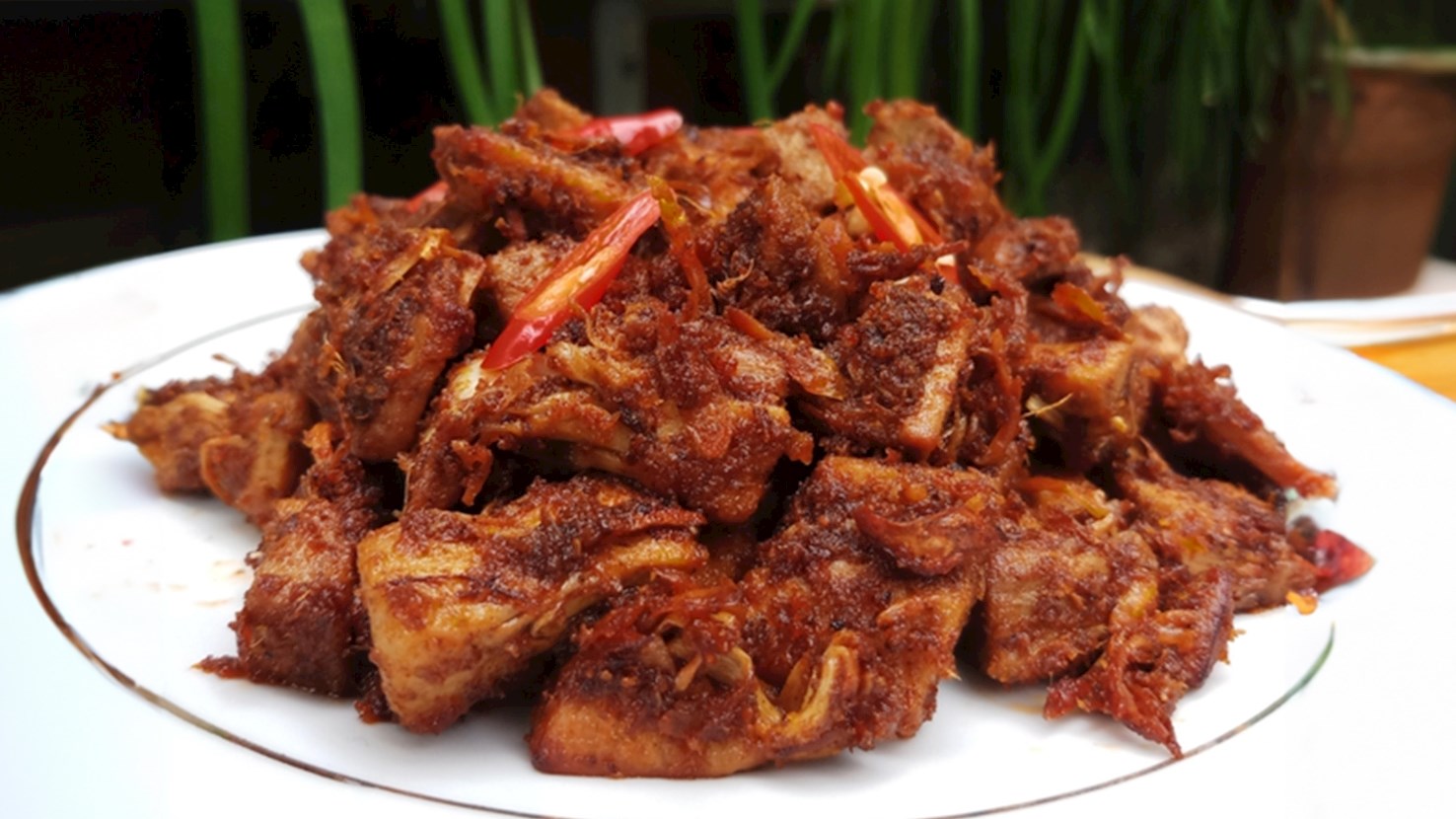
Jackfruit rendang is a vegetarian or vegan version of the classic Indonesian dish known as rendang. Traditional rendang is a rich and tender coconut beef stew that's slow-cooked in coconut milk and a mixture of lemongrass, galangal, garlic, turmeric, ginger, and chilies, among other ingredients. In the jackfruit version, young, unripe jackfruit is used as a substitute for beef. Young jackfruit has a neutral taste and a meaty texture, making it an excellent plant-based alternative for absorbing the complex flavors of the rendang sauce. When cooked, the jackfruit becomes tender and flaky, mimicking the texture of slow-cooked meat. Jackfruit rendang is prepared similarly to the meat version, starting with sautéing a spice paste (rempah) made from grinding together the spices and aromatics. Coconut milk is then added, along with the jackfruit and sometimes kaffir lime leaves and tamarind paste for additional flavor. The mixture is simmered slowly until the jackfruit is tender and has absorbed the flavors of the spices, and the coconut milk has reduced to a thick, rich sauce that clings to the jackfruit pieces. Jackfruit rendang is usually served with rice, much like the original meat-based rendang.
TasteAtlas food rankings are based on the ratings of the TasteAtlas audience, with a series of mechanisms that recognize real users and that ignore bot,
nationalist or local patriotic ratings, and give additional value to the ratings of users that the system recognizes as knowledgeable.
For the “96 Worst Rated Southeast Asian Street Food” list until September 16, 2026, 13,000 ratings were recorded, of which 9,343 were recognized by the system as legitimate.
TasteAtlas Rankings should not be seen as the final global conclusion about food. Their purpose is to promote excellent local foods,
instill pride in traditional dishes, and arouse curiosity about dishes you haven’t tried.






What People Say