




shutterstock

12 Worst Rated Eastern European Vegetarian Dishes

Last updated on June 16, 2026
01

Yalanchi

3.3 ·

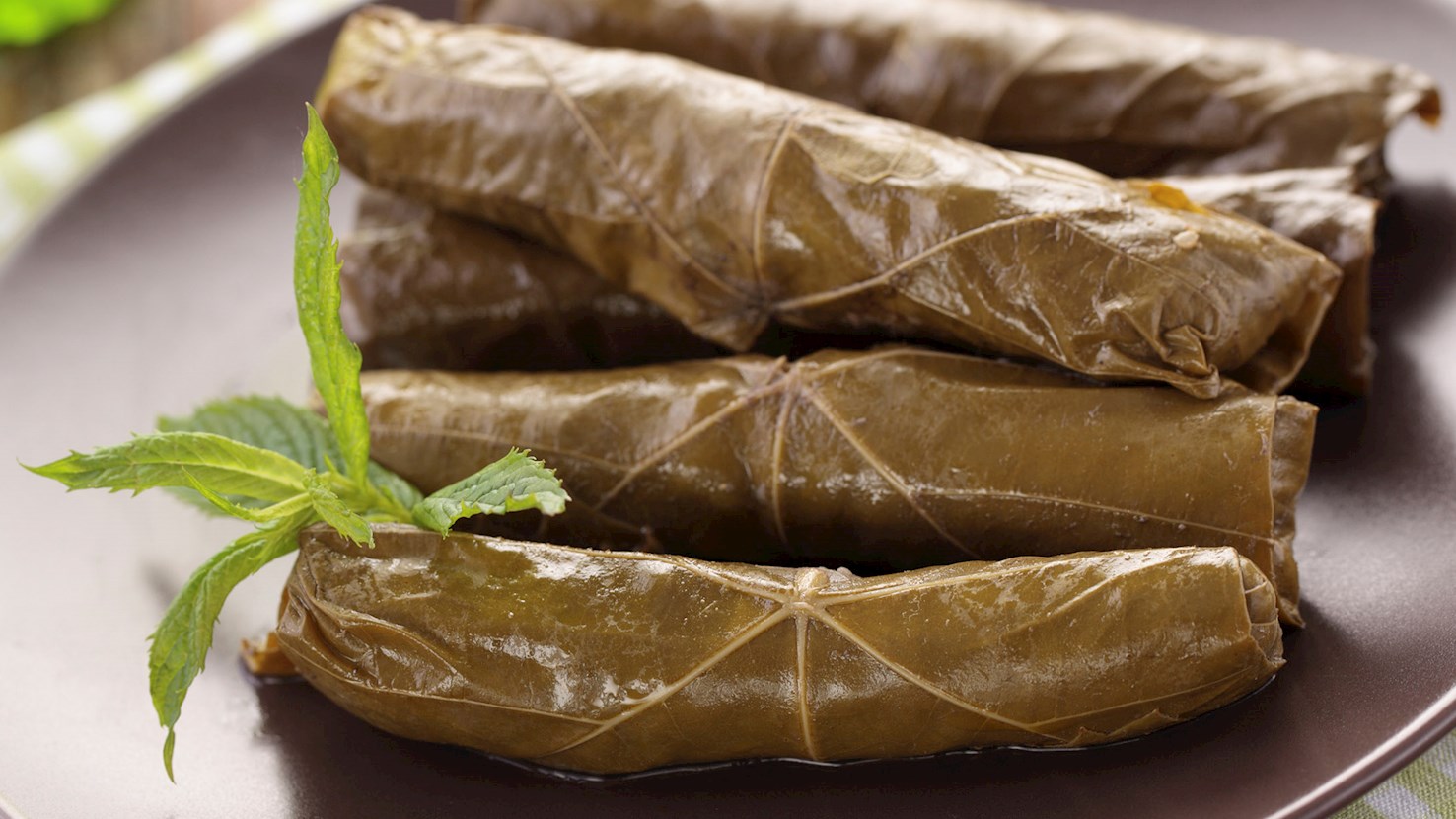
Yalanchi is a cold, meatless stuffed grape leaf appetizer native to Armenia and the broader Middle Eastern region. The Turkish name translates directly to "liar" or "fake," describing a culinary deception in which the expensive meat filling of traditional dolma is replaced with a seasoned rice and onion mixture. Developed during the Ottoman era, this vegetarian recipe served as both an economic necessity and a strict dietary practice for religious fasting periods, particularly Lent in the Armenian Apostolic Church. To begin the construction, fresh or brined grapevine leaves are blanched in hot water to increase pliability and remove excess salt. The filling requires heavily sweating finely minced onions in a copious amount of olive oil until translucent and sweet. Short-grain white rice, toasted pine nuts, and dried Zante currants are subsequently folded into the hot oil. A dense blend of aromatics, specifically fresh parsley, dill, mint, ground allspice, and cinnamon, is stirred into the grains to establish a complex, sweet, and savory flavor profile. After the rice mixture cools, a small spoonful is placed near the stem of each prepared grape leaf. The lateral edges of the leaf are folded inward over the filling, and the entire leaf is rolled tightly toward the tip to form a compact, cylindrical cigar shape. These constructed rolls are packed tightly in concentric circles inside a heavy-bottomed pot lined with torn or imperfect grape leaves to prevent scorching. A liquid mixture of water, fresh lemon juice, and additional olive oil is poured over the arranged bundles. To prevent unraveling during cooking, an inverted ceramic plate is placed directly on top of the food to apply pressure. Gentle simmering over low heat continues until the liquid is entirely absorbed and the rice becomes tender. The cooked leaves must be chilled thoroughly before consumption. The cold rolls are arranged on a platter, drizzled with raw olive oil, and garnished with fresh lemon wedges. Sharp citrus acidity cuts through the rich olive oil and balances the sweetness of the currants and warm spices. This vegetarian staple is widely consumed as a foundational mezze component during the summer months, holiday feasts, and weddings. usually with a salad or matzoon (Armenian yogurt) on the side.

02

Koliva

3.3 ·

Koliva is a traditional dish consisting of a combination of any of the following ingredients: boiled wheat kernels, honey, sugar, sesame seeds, walnuts, raisins, anise, almonds, and pomegranate seeds. In the Orthodox Christian religion, it is used as a ritual dish that is prepared for funerals, memorials, Lent, Slava, or Christmas, since it symbolizes death and resurrection. This unique porridge is traditionally served with powdered sugar on top, while it is customary to stick a candle in the center and light it at the beginning of the service, then extinguish it at the end.

03

Kasha

3.4 ·

The fundamental dish of Russian cuisine is known as kasha, a porridge that has represented an essential Russian meal for centuries. Russian kasha refers to various dishes which are created with cereals, most commonly rice, wheat, or millet, and pseudocereals like buckwheat and quinoa. The dish is usually boiled in water and milk, and ranges from sweet to savory in flavor. It can be modified by numerous additions such as fresh or dried fruit, preserves, cheese, butter, vegetables, nuts, or honey. In the past, the porridge was traditionally prepared in cast iron pots and slowly baked in the oven during the night. This authentic Russian dish holds a strong symbolic meaning–it is the first solid meal served to children, and is typically served during funerals, thus symbolizing the circle of life. Varieties of the dish, prepared with different cereals, are often found in other Slavic countries such as Ukraine, Poland, and Belarus.

04

Eetch

3.4 ·

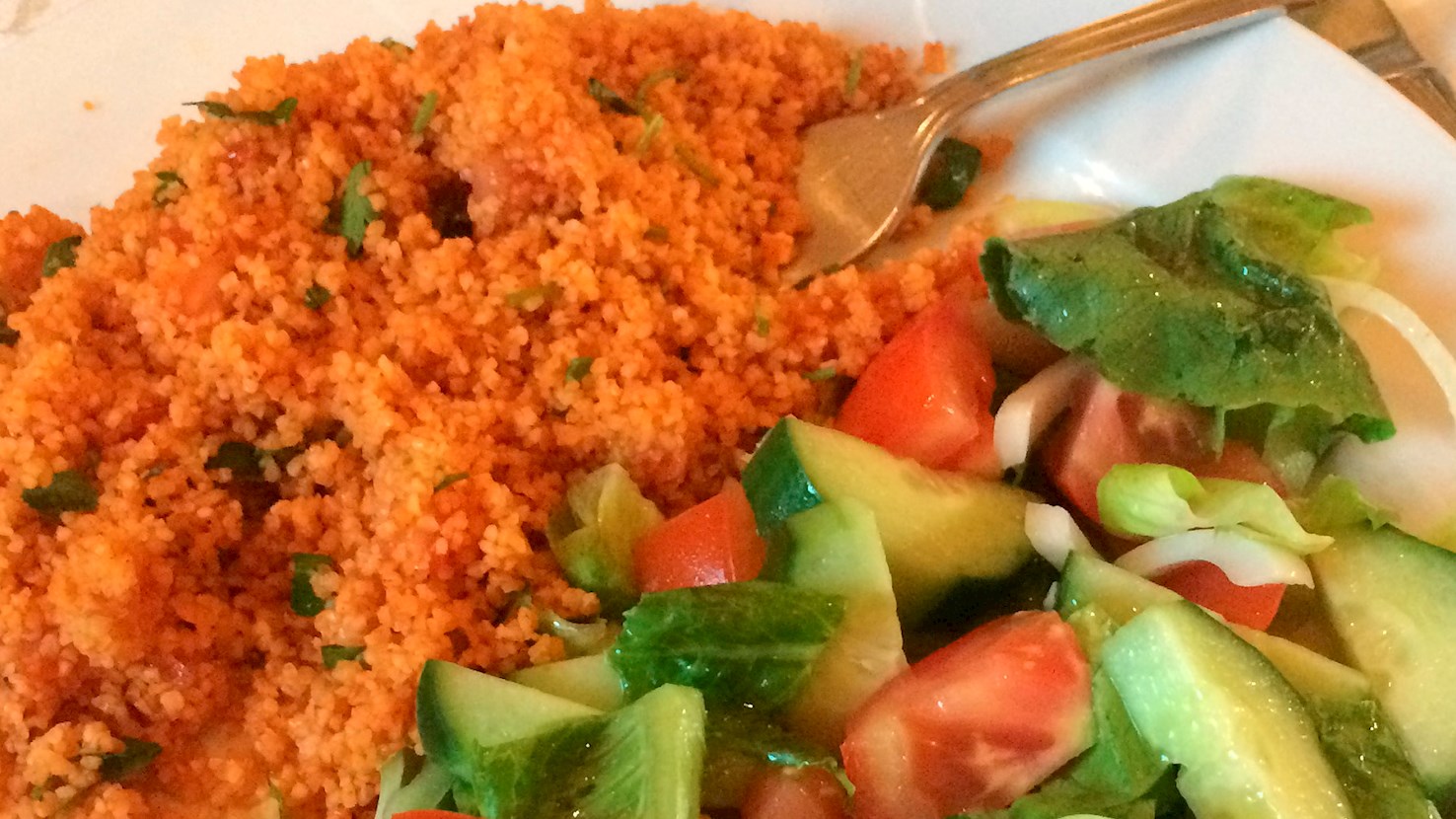
Eetch is a traditional dish mainly consisting of bulgur. It is typically consumed as a salad, a side dish, or as a spread over slices of bread or crackers. A common Lenten dish, eetch, also known as mock kheyma or meatless kheyma, has numerous variations, but the typical ingredients include fine bulgur, onions, tomatoes, tomato paste, bell peppers, lemon juice, olive oil, green onions, parsley, spices, and seasonings, incorporated well to make a robust and fragrant dish. Tangy, sweet, and savory, the bulgur mixture is consumed warm, at room temperature, or chilled, usually drizzled with some olive oil and garnished with chopped parsley, green onions, and (sometimes) pomegranate seeds. Reminiscent in flavor of the Levantine dish known as tabbouleh, eetch is commonly eaten with pita bread and makes a perfect accompaniment to grilled or roasted meat or fish dishes.

05

Dovga

3.5 ·

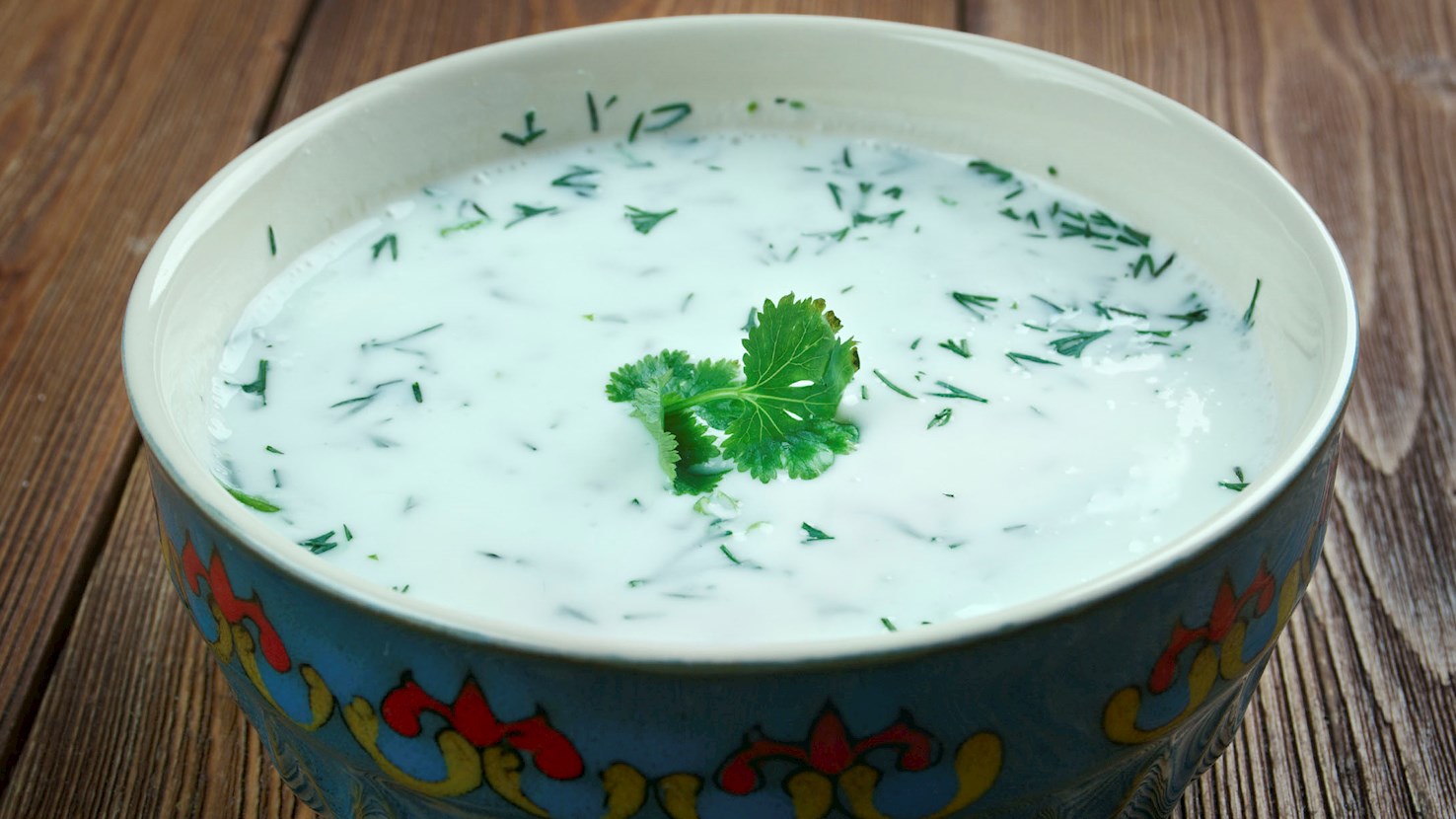
Dovga is a soup made by cooking yogurt with a variety of fresh herbs such as dill, mint, and coriander. It is the national dish of Azerbaijan and can be served either cold in the summer as a refreshment, or warm in the winter. If it's served chilled, it is often ladled into traditional, deep bowls called kasa, placed right next to the serving plates for the main dish. Unlike regular soups, Azerbaijani soups are more concentrated and dense in consistency. Dovga is also traditionally served at the wedding tables, not as a first course but between meat dishes, acting as a digestion booster.

Best restaurants
06

Vinegret

3.6 ·

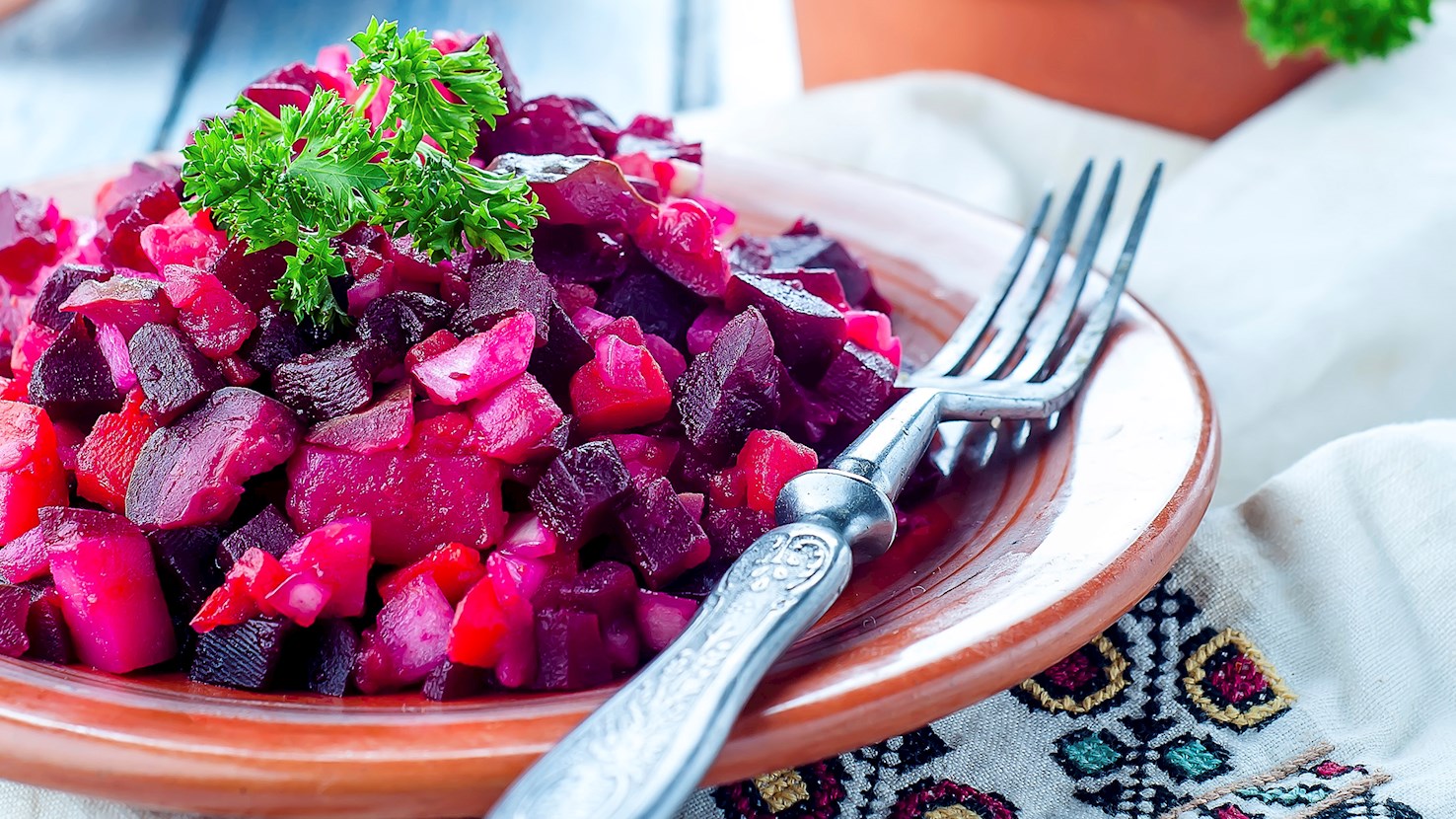
Originally invented in the 19th century, vinegret is the oldest, extremely popular Russian salad usually consisting of boiled beets, potatoes, and carrots combined with diced pickles, sauerkraut, and onions. The name of the salad is derived from the French term vinaigrette, which denotes an oily salad dressing in France. Vinegret is traditionally dressed with a combination of oil, vinegar or lemon juice, and sometimes mustard. It is often prepared for holidays and on festive events such as New Year's celebrations, so it is recommended to make it a day in advance. Customarily, the salad is served with Russian black bread on the side, along with meat or fish such as sausages or herrings.

07

Topik

3.6 ·

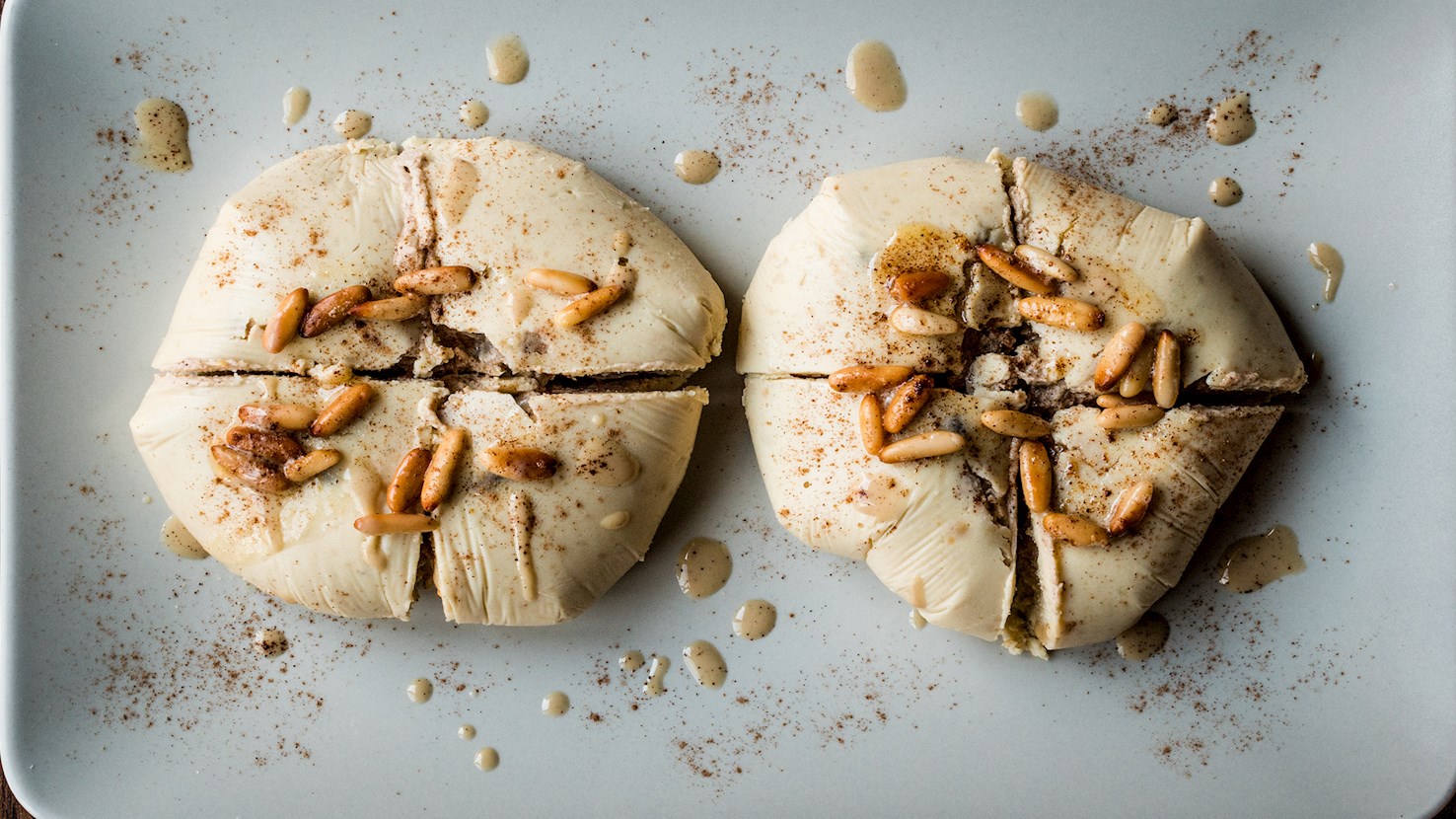
This Armenian vegetarian dish is traditionally consumed during Lent. Topik consists of a potato and chickpea shell that is wrapped around a paste-like filling of onions, currants, pine nuts, tahini, and olive oil. The filling is typically flavored with cinnamon and allspice, and the dish is usually served drizzled with lemon juice and sprinkled with cinnamon.

08

Çoban salatası

3.7 ·

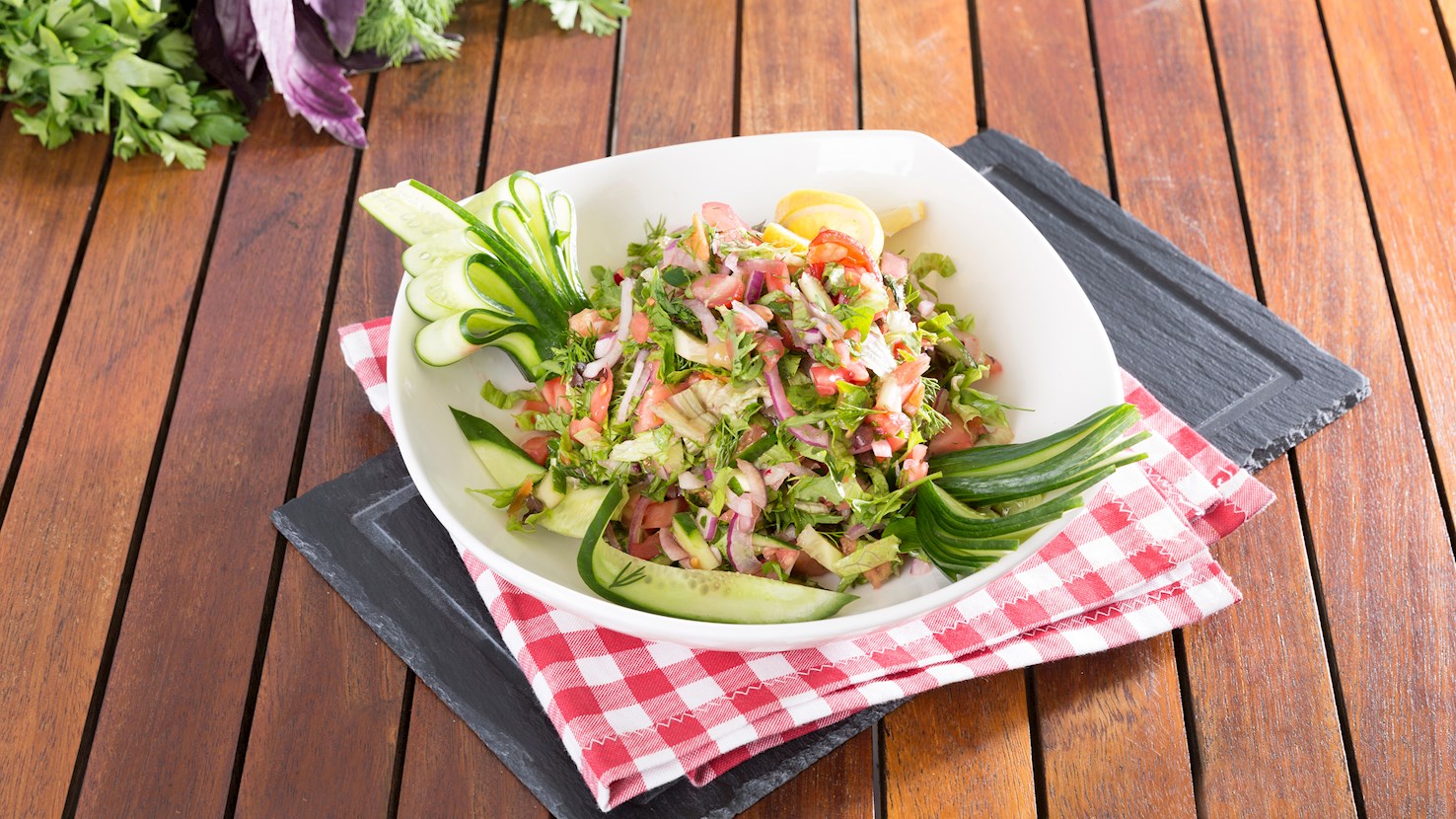
Çoban salatası or shepherd's salad is a traditional salad that can be found throughout the country, especially during summer. It's also popular in Azerbaijanai cuisine. The salad is made with a combination of chopped tomatoes, cucumbers, onions, green peppers, lemon juice, olive oil, and parsley. The ingredients are finely chopped, dressed with olive oil, seasoned with salt and pepper, then mixed together. It's recommended to serve this simple salad with crusty bread on the side for mopping up the juices.

09

Kherson-Style Eggplants

3.7 ·

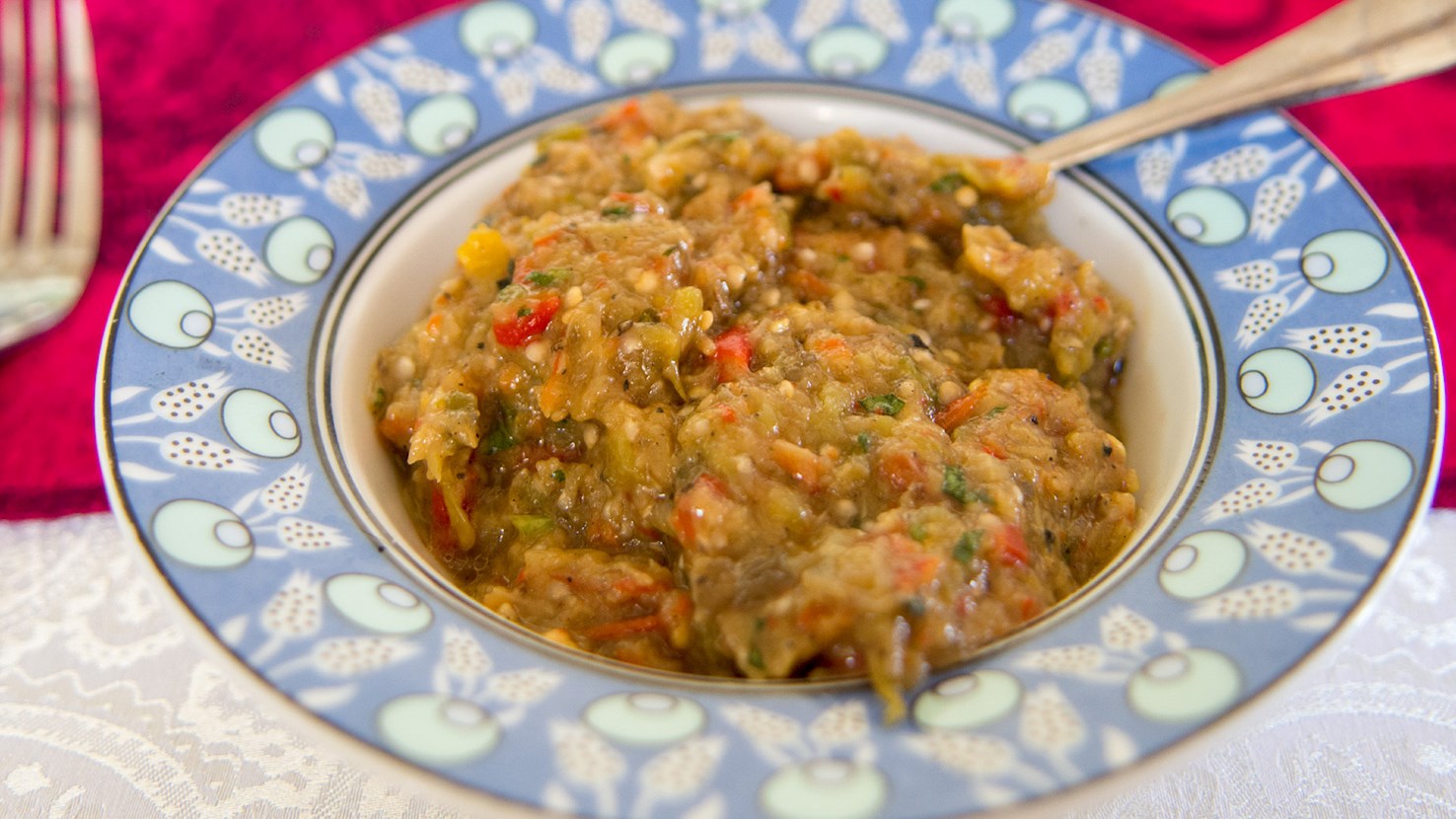
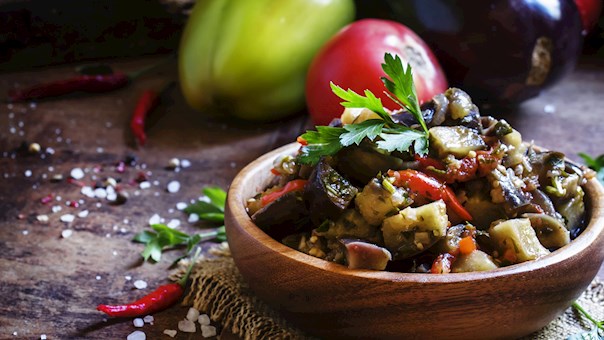
Kherson-style eggplants is a traditional dish originating from Kherson, a region with abundant eggplants. The dish is usually made with a combination of eggplants, tomatoes, bell peppers, onions, garlic, lemon juice, sunflower oil, sugar, salt, and black pepper. The vegetables are washed and peeled. The eggplants and bell peppers are cut in half and roasted in the oven, while the tomatoes are blanched and cut into cubes. The eggplants, bell peppers, and tomatoes are mixed with garlic, grated onions, lemon juice, oil, and seasonings. The mixture is stirred until smooth, and it's then typically served as an appetizer with bread or croutons.

10

Manqal salatı

3.8 ·

Manqal salatı is a refreshing Azerbaijani salad that is especially popular during summer. It consists of eggplants, tomatoes, bell peppers, hot peppers, and onions. The vegetables are traditionally grilled on skewers on a mangal (Caucasian-style grill), then chopped and combined with minced garlic, olive oil, and fresh herbs such as cilantro, dill, or basil. The salad is usually served as an accompaniment to grilled meat dishes, but it can also be served with bread or a piece of Motal cheese.

11

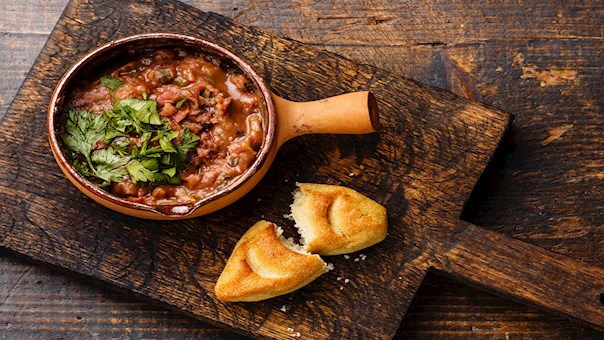
Lobio

3.9 ·
12

Ajapsandali

3.9 ·
Read more
View all
View map
About this ranking

TasteAtlas food rankings are based on the ratings of the TasteAtlas audience, with a series of mechanisms that recognize real users and that ignore bot, nationalist or local patriotic ratings, and give additional value to the ratings of users that the system recognizes as knowledgeable. For the “12 Worst Rated Eastern European Vegetarian Dishes” list until June 16, 2026, 1,421 ratings were recorded, of which 705 were recognized by the system as legitimate. TasteAtlas Rankings should not be seen as the final global conclusion about food. Their purpose is to promote excellent local foods, instill pride in traditional dishes, and arouse curiosity about dishes you haven’t tried.

Similar lists