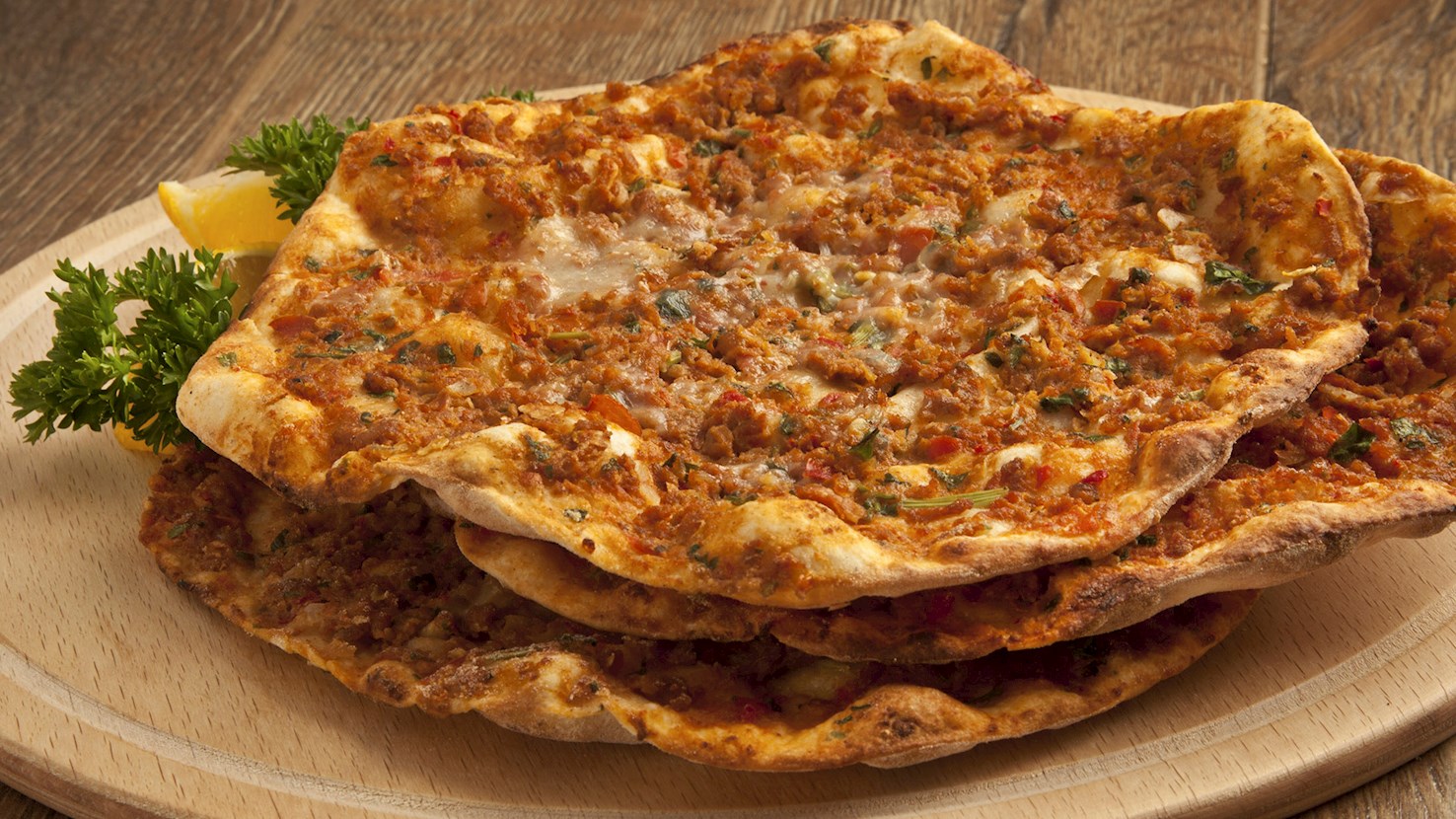
Even though lahmacun is popularly nicknamed Turkish pizza, it's origin is disputed and can be traced to Armenia, Syria, Lebanon, and Turkiye. It can be found at numerous street stalls as well as in virtually any traditional restaurant, but also in kebab eateries where they typically serve mini lahmacuns as appetizers. The perfect lahmacun is made by rolling a ball of sturdy semolina dough into a thin disc which is only lightly spread with meat - either lamb or beef, minced to a paste together with chili, onions, and other seasonings. The dish is then shortly baked in a super-hot (and preferably wood-fired) oven. Lahmacun is best served hot with a drizzle of lemon juice. It is traditionally enjoyed folded around the crispy onions and a parsley salad known as piyaz. It is recommended to pair lahmacun either with the salty, cold yogurt beverage called ayran, or şalgam suyu, the barrel-fermented juice of red carrot pickles, which is salted, spiced, and flavored with the aromatic turnip called çelem.
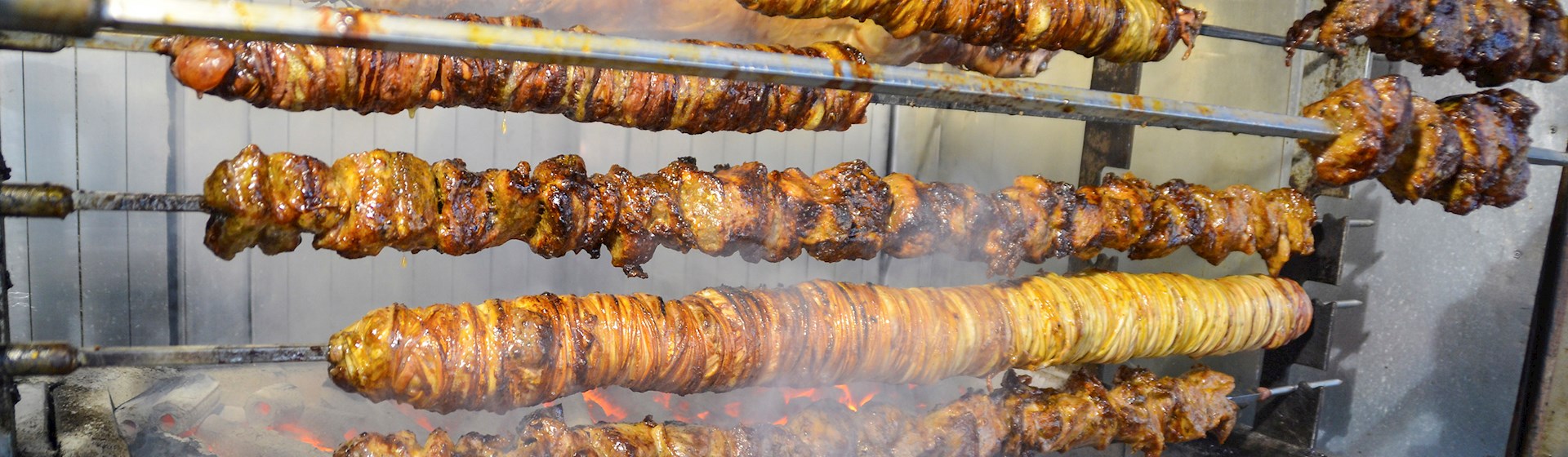
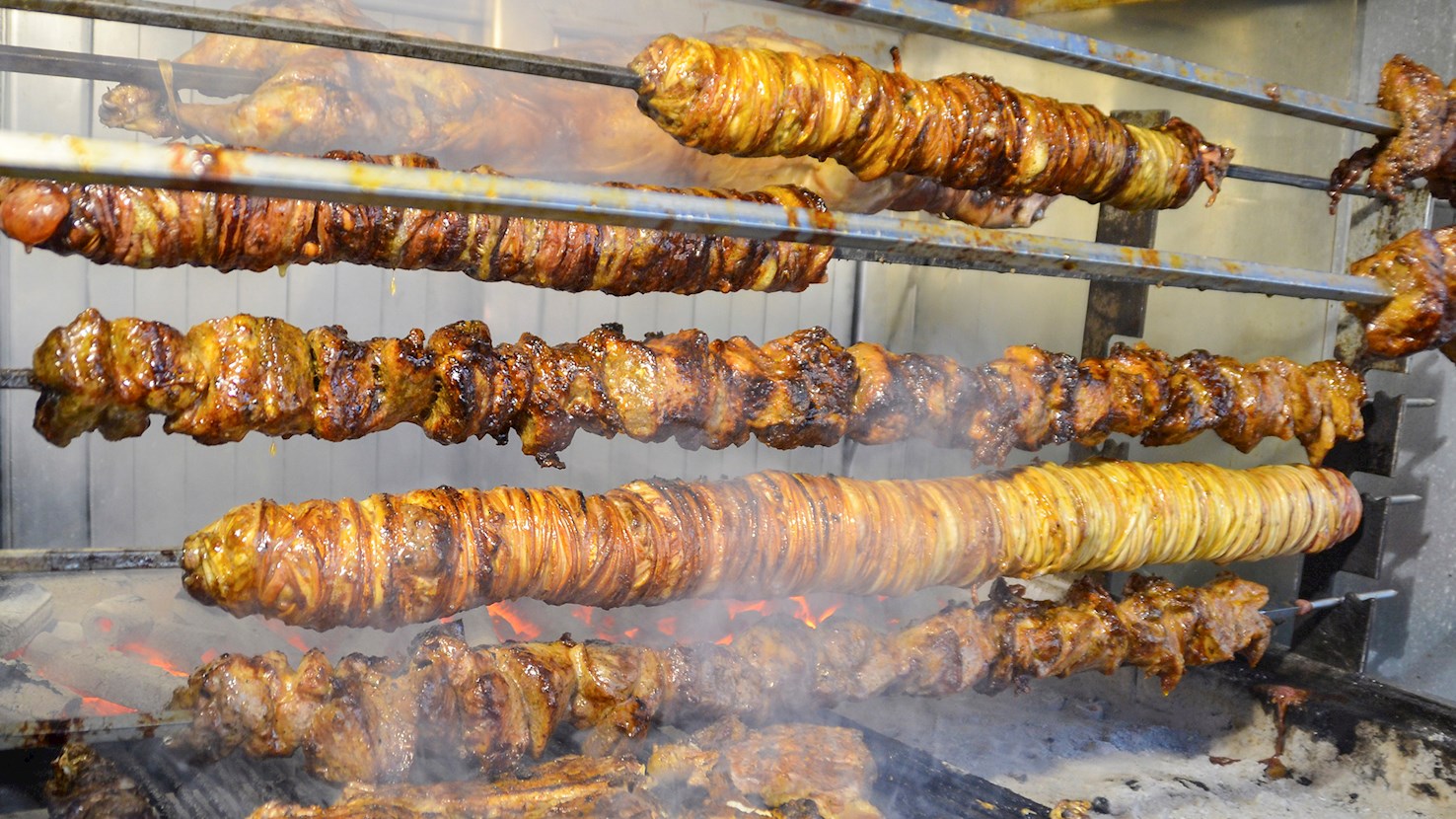
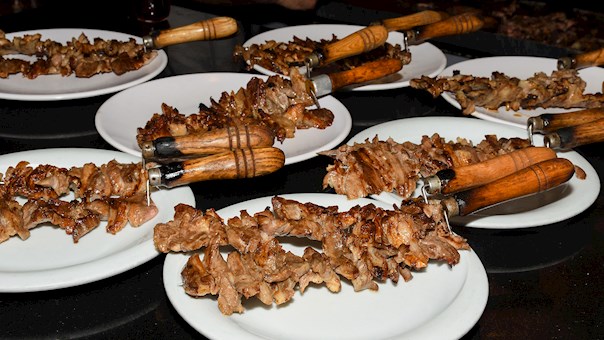
Kokoreç is a traditional dish that's also popular in other countries, especially in Greece, where it's known as kokoretsi. However, there are some differences between the Turkish and Greek versions. In Greek cuisine, people use lamb offal such as lungs, kidneys, hearts, and liver, and in Türkiye, they use small and large intestine and sweetbreads without any additional ingredients. For the Turkish version, kokoreç, the ingredients are rinsed and cleaned, then wrapped onto iron skewers to be grilled over charcoal. Once done, the dish is usually served with bread or tucked inside the bread with various spices such as oregano, cumin, and chili flakes. You can find this dish at street food vendors or in countless kokoreç restaurants.
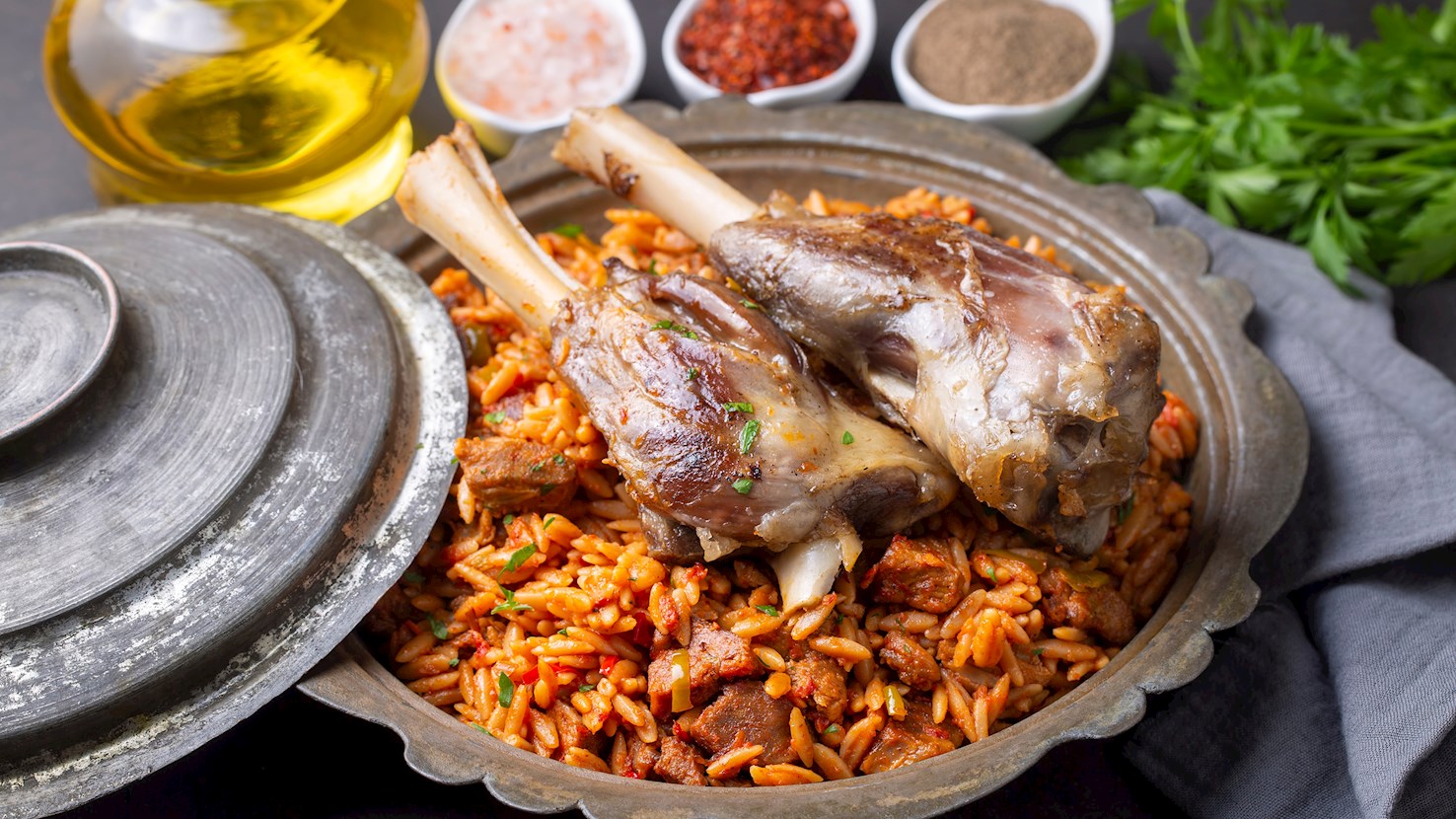
Ankara tava is a traditional dish originating from Ankara. The dish is often made with a combination of lamb, orzo pasta, oil, hot peppers, tomatoes, onions, tomato paste, garlic, cumin, salt, and black pepper. The peppers and onions are seasoned with cumin and black pepper, then cooked in oil with tomato paste, garlic, and tomatoes in order to make a tomato sauce. The meat is cubed and cooked in a bit of water until it evaporates. The small orzo pasta is cooked in a pilaf pot with the tomato sauce and some water until tender. Once done, the cooked meat is mixed with the contents of the pilaf and the dish is ready to be served. The lamb is sometimes replaced with veal or sheep meat, while the pasta can be replaced with vermicelli.
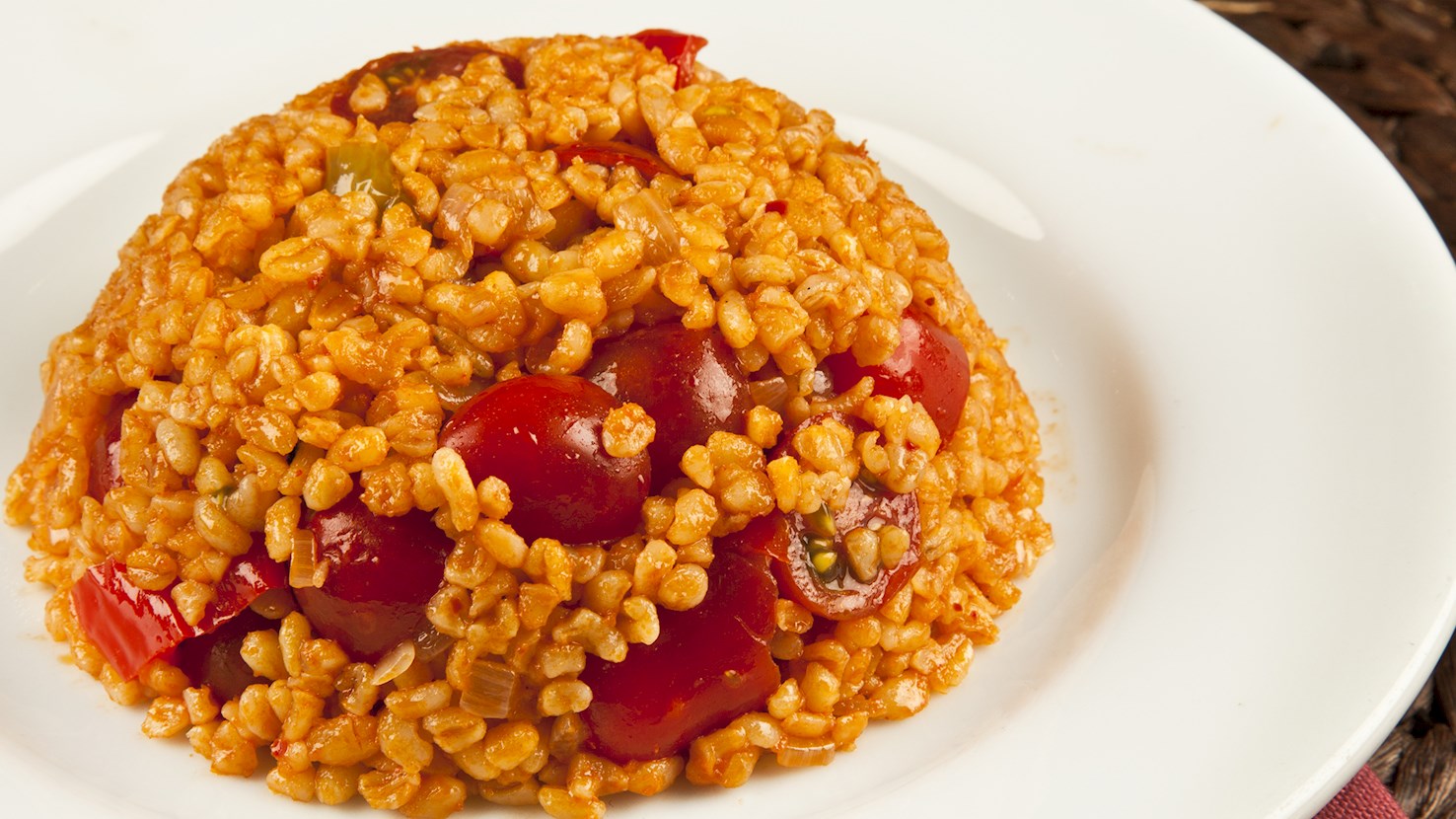
Bulgur pilavı is a nutritious Turkish pilaf that is often additionally flavored with onions, green peppers, tomatoes, and various spices. When the bulgur is tender and ready to consume, it is recommended to garnish it with fresh parsley. The dish is typically served as an accompaniment to casseroles or meat dishes such as kebap, izgara, and köfte.
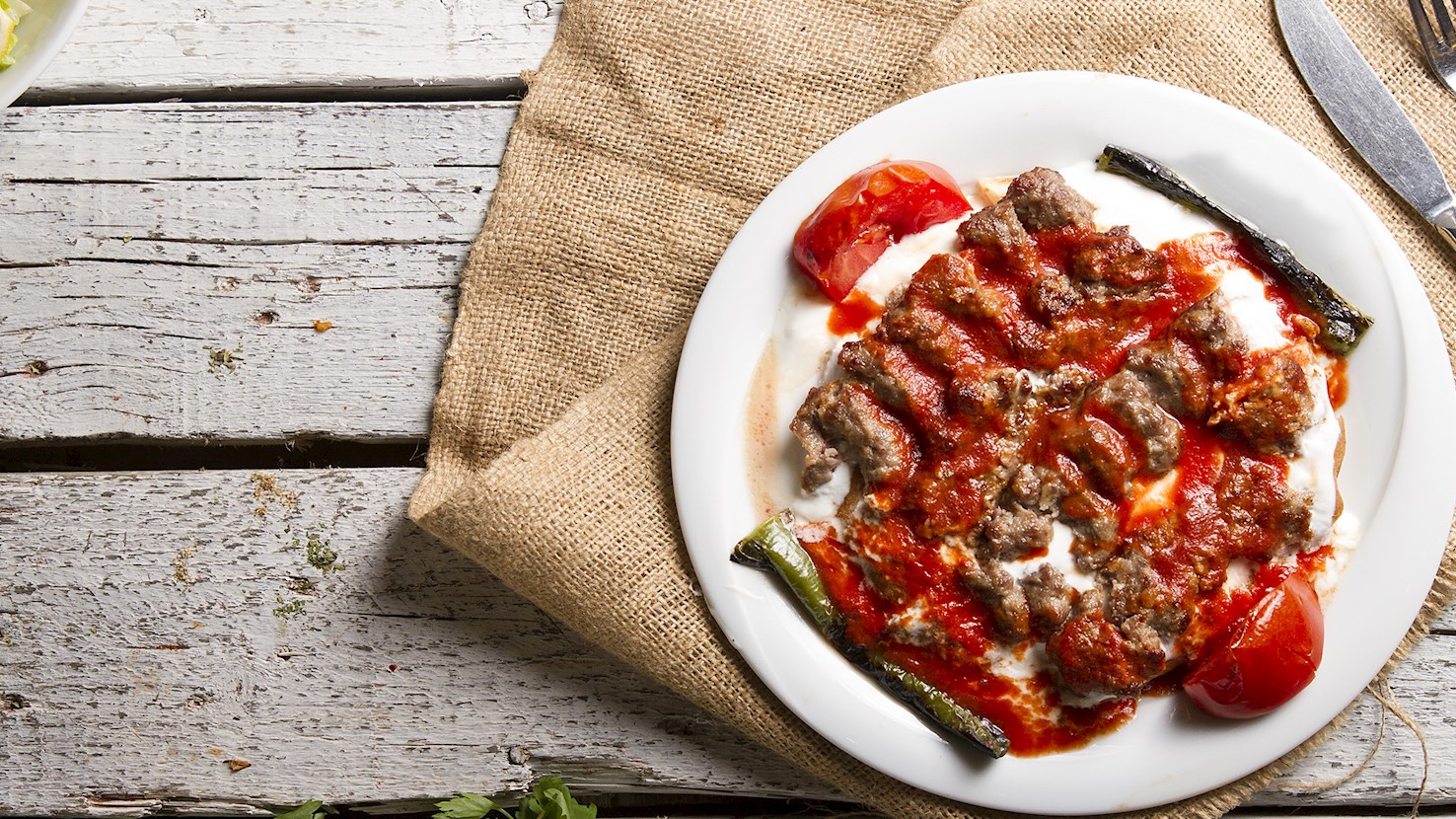
A specialty of the city of Bursa, İskender kebap is named after a butcher called İskender Efendi, who first prepared this flavorful dish. It consists of thinly sliced lamb that is grilled and combined with a spicy tomato sauce and pita bread, while melted sheep butter and yogurt are traditionally drizzled over the dish at the table. It is recommended to pair this kebap with şıra, a Turkish beverage that is known to aid digestion.
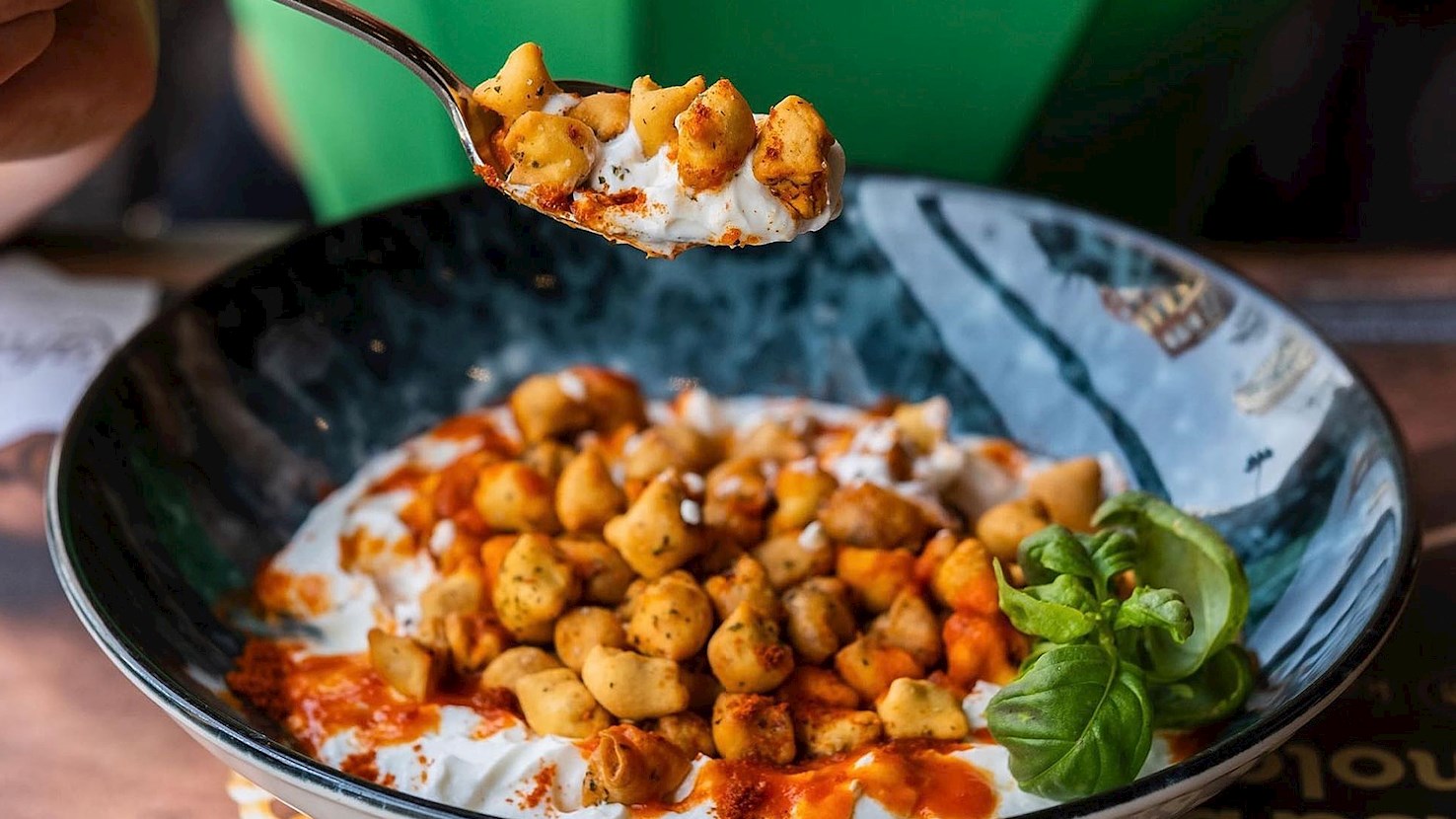
Manti are traditional Turkish dumplings filled with spiced ground meat and onions. The dumplings are most commonly topped with a sauce consisting of yogurt and garlic. The name of the dish is derived from mantu, meaning dumplings, and they were originally brought over from Central Asia to Türkiye by nomadic Turkish tribes in the 13th century. Today, manti dumplings are popular throughout Turkey, as well as in numerous other cuisines such as Armenian, Afghan, and Central Asian.
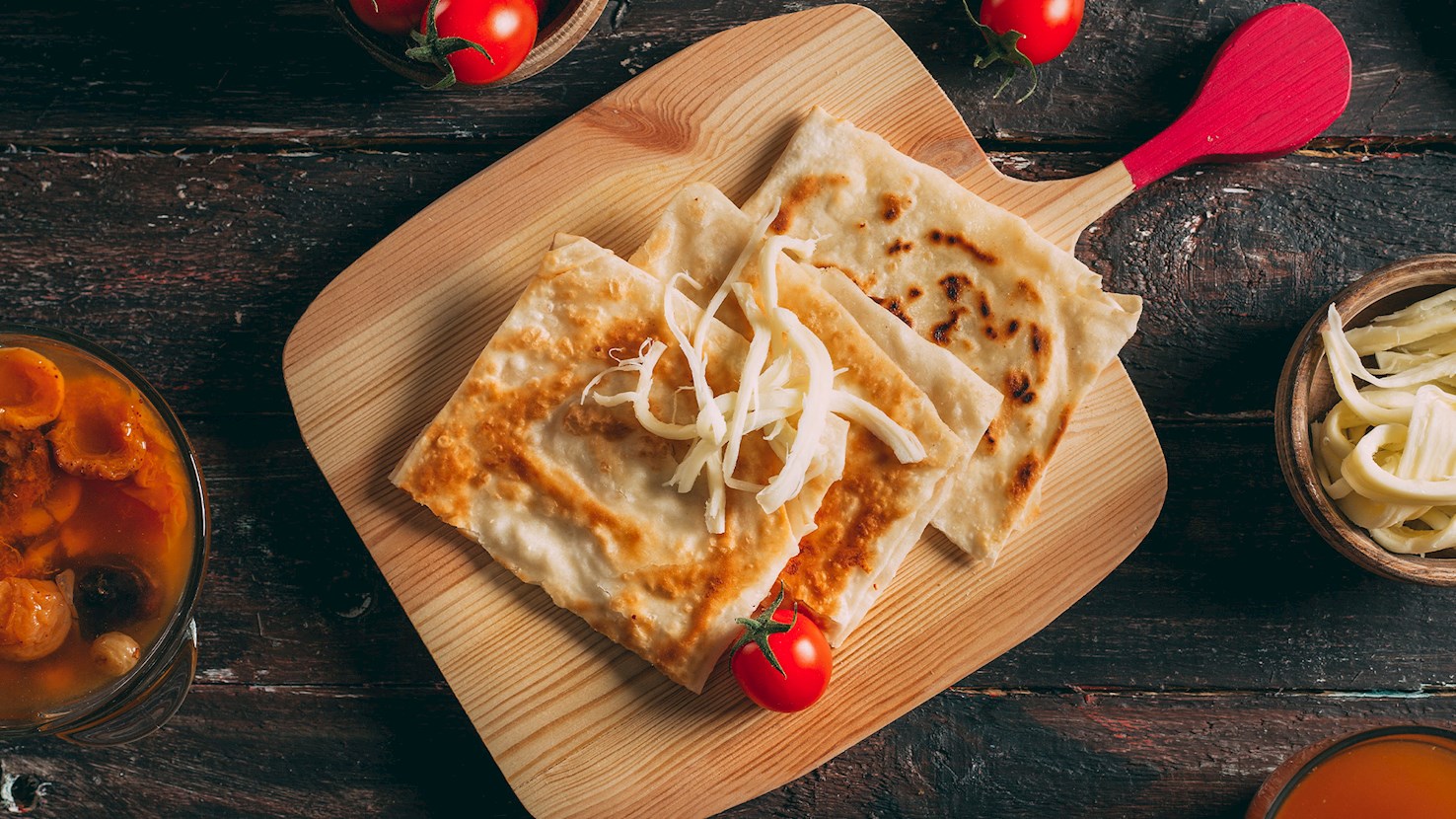
Gözleme is a savory stuffed flatbread made from hand-rolled, unleavened dough that is folded around a filling, sealed, and cooked on a hot, convex metal griddle. Its origins are tied to rural and nomadic communities of Anatolia during the early Ottoman period. The name comes from the word göz, meaning “eye,” referring to the dark blistered spots that appear on the dough when it touches the hot iron surface. Historical accounts trace the use of the convex metal griddle, known as a sac, back to the 11th century. This portable cooking surface provided a practical way for migratory tribes to prepare fast, filling food while on the move. Gözleme needs a simple dough made from wheat flour, warm water, and salt. The dough rests briefly, then is divided into small, even portions. Each piece is rolled out with a long, thin wooden rolling pin called an oklava until it becomes a large, paper-thin circle. A thin layer of filling is spread over exactly half of the dough. The empty half is folded over the filling to form a large semicircle, and the edges are pressed firmly to seal the ingredients inside. The stuffed dough is then placed directly on a blistering hot sac or heavy iron skillet. It cooks for only a few minutes on each side, until the exterior puffs slightly and develops its signature dark brown spots. As soon as it comes off the heat, the surface is brushed generously with melted butter or olive oil. This softens the crisp exterior and turns it into a pliable, rich crust. Changing the filling can dramatically alter the flavor. One of the most common versions uses crumbled white cheese mixed with raw spinach leaves and chopped parsley. Another typical filling is strongly spiced minced beef and diced white onions. Earthier variations use boiled, mashed potatoes seasoned with black pepper and red paprika. Sweet versions replace the vegetables and meat entirely with a thick layer of chocolate hazelnut spread or sweetened crushed nuts. Once cooked, the hot gözlemeis transferred straight to a wooden cutting board and quickly sliced into manageable rectangular strips. It is served while still hot, usually stacked high on a ceramic plate. A tall glass of cold salted yogurt drink or a small glass of strong black tea often accompanies it. Originally, gözleme was served for breakfast or as a light afternoon snack, but today it has a status of popular fast food that can be found throughout the country's restaurants, food carts, and cafés.
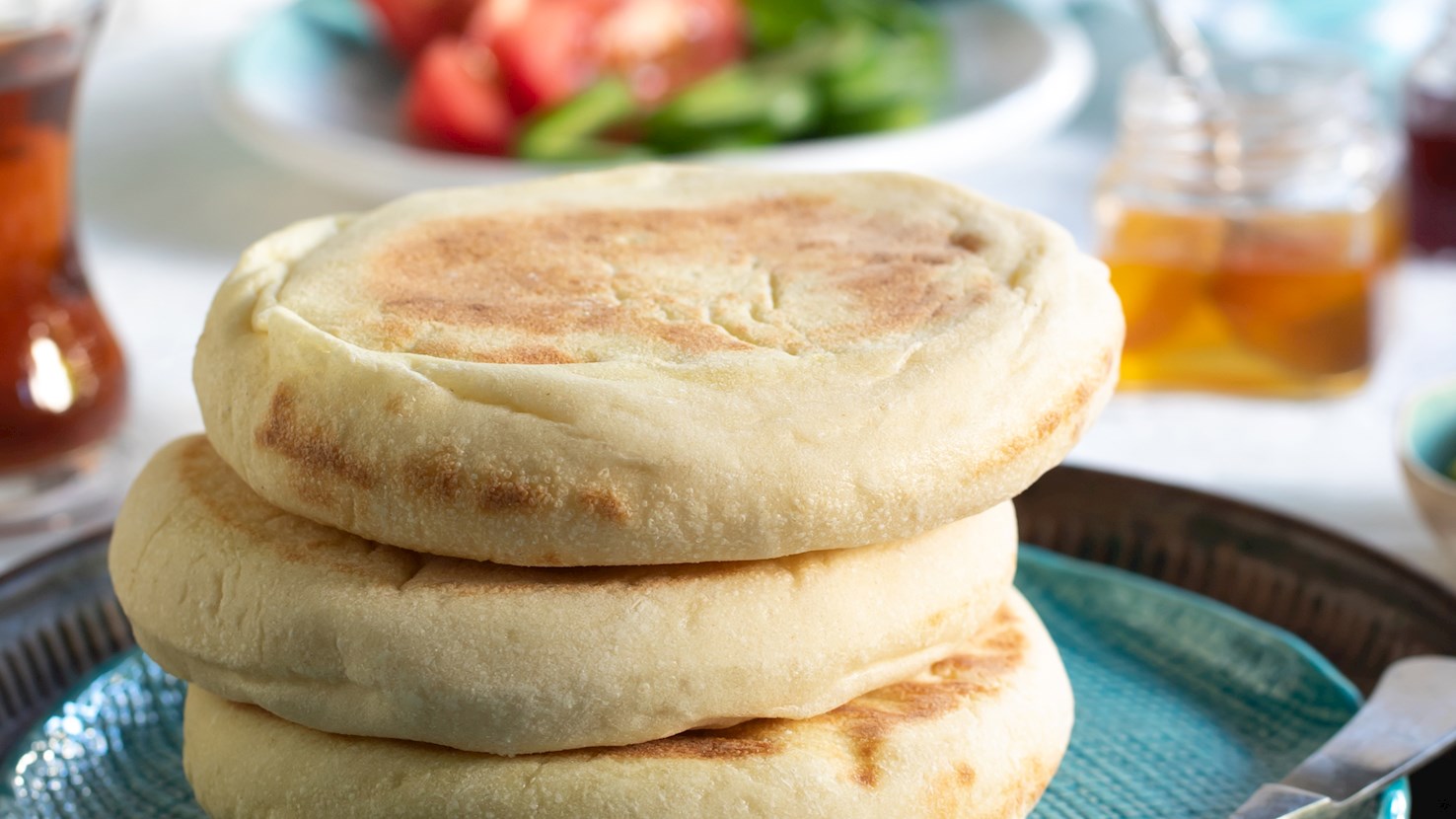
Bazlama is a thick, circular, leavened flatbread baked directly on a hot metal griddle until the interior puffs up and the exterior develops dark, charred blisters. The origins of this exact baked staple trace directly to the eleventh-century Seljuk migration across Central Asia into Anatolia. Nomadic tribes required a fast-baking, high-calorie carbohydrate that could be cooked over open campfires using a portable, convex iron plate known as a sac. The 1072 comprehensive dictionary of Turkic languages, *Dīwān Lughāt al-Turk* by Mahmud al-Kashgari, specifically details these early griddle-baked flatbreads as a fundamental dietary component for nomadic survival and daily sustenance. The dough is made with wheat flour, warm water, sea salt, and active yeast, with sometimes a generous spoonful of plain yogurt or a splash of olive oil added directly to the wet dough to impart a subtle tang and ensure a tender crumb. The dough gets kneaded vigorously into a smooth ball and sits at room temperature for several hours to expand. The swollen dough is divided into small portions, rolled flat into thick circles roughly half an inch (a centimeter and a half) tall, and placed onto a blistering-hot, dry iron skillet. The intense heat at the bottom rapidly generates steam within the dough, forcing the flat disk to inflate completely while the resting surface chars. Flipping the bread once ensures an even bake and a heavily spotted crust on both sides. The hot bread moves straight from the iron plate to the table, usually stacked high and wrapped in a thick cloth to trap the steam and maintain a soft, pliable texture. A heavy layer of fresh, cold butter immediately coats the warm surface, melting directly into the porous crust. Apart from traditional bazlama, there are also stuffed bazlama iterations that involve rolling two thin layers of dough around a dense filling of spiced minced beef, crumbled white cheese, or wilted spinach before sealing the edges and hitting the hot griddle. Bazlama is a common breakfast bread, serving as a sturdy vessel for scooping up soft cheeses, cured olives, and sliced tomatoes. A strong cup of black tea always sits nearby to wash down the heavy starches.
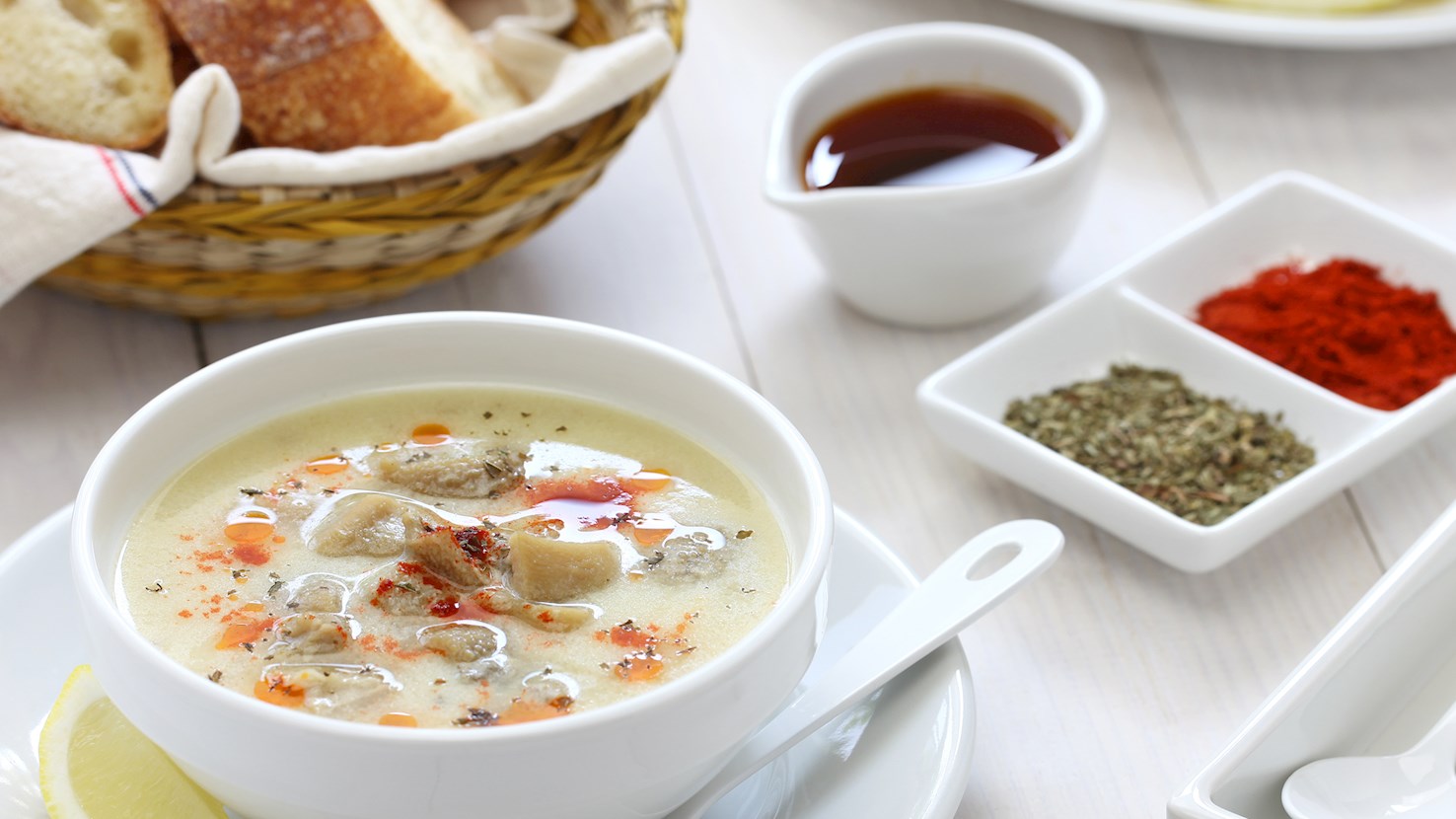
İşkembe çorbası is a traditional tripe soup that is known as a great hangover cure. It consists of tripe, water, milk, flour, butter, and egg yolks. The soup is usually seasoned with salt and finished with red pepper, vinegar, and garlic, giving it a bold flavor. It is recommended to serve the soup while still hot.
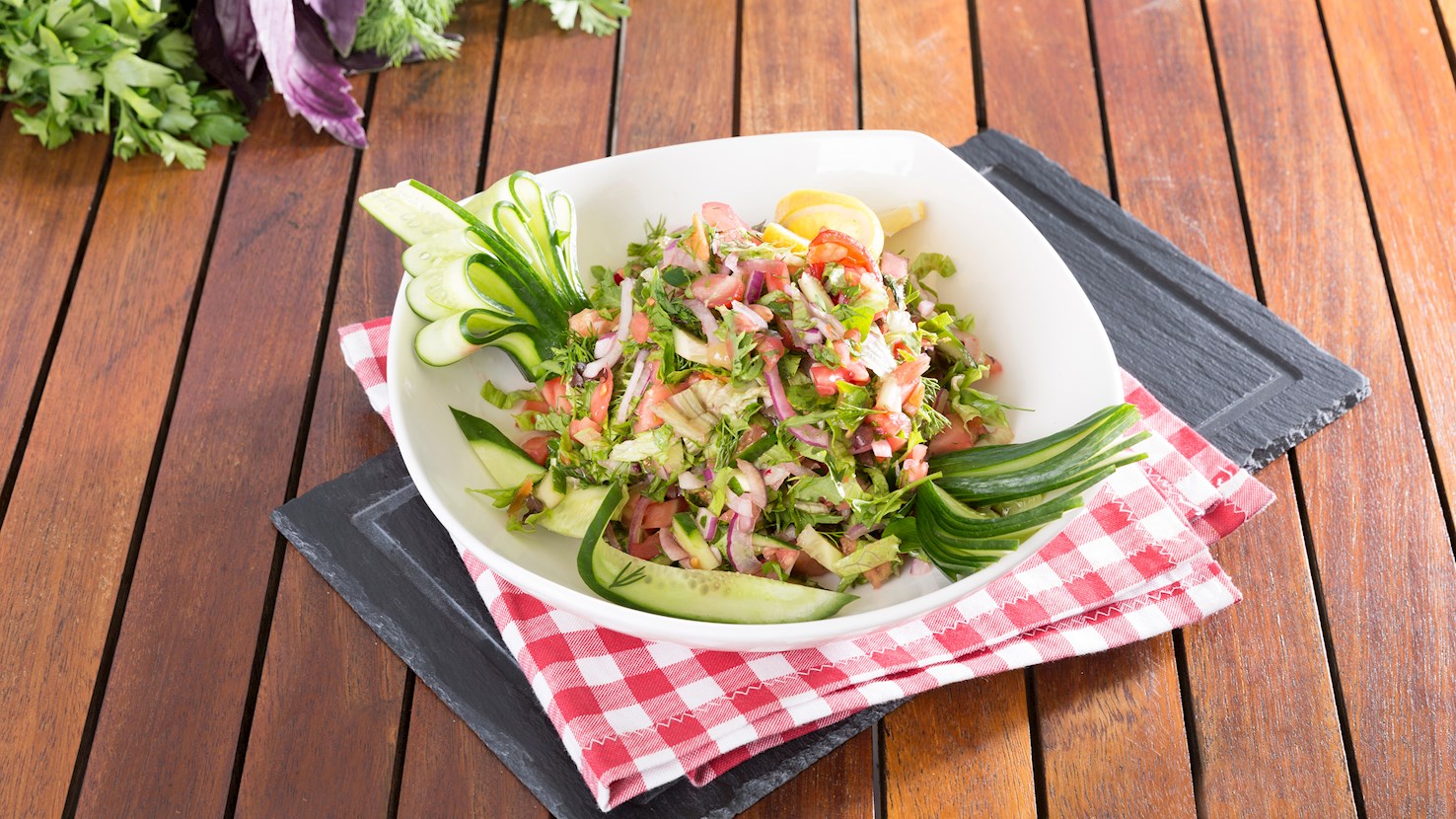
Çoban salatası or shepherd's salad is a traditional salad that can be found throughout the country, especially during summer. It's also popular in Azerbaijanai cuisine. The salad is made with a combination of chopped tomatoes, cucumbers, onions, green peppers, lemon juice, olive oil, and parsley. The ingredients are finely chopped, dressed with olive oil, seasoned with salt and pepper, then mixed together. It's recommended to serve this simple salad with crusty bread on the side for mopping up the juices.
TasteAtlas food rankings are based on the ratings of the TasteAtlas audience, with a series of mechanisms that recognize real users and that ignore bot,
nationalist or local patriotic ratings, and give additional value to the ratings of users that the system recognizes as knowledgeable.
TasteAtlas Rankings should not be seen as the final global conclusion about food. Their purpose is to promote excellent local foods,
instill pride in traditional dishes, and arouse curiosity about dishes you haven’t tried.



What People Say